
ABC Family Arquivos Brasileiros de Cardiologia International Journal of Cardiovascular Sciences ABC Heart Failure & Cardiomyopathy ABC Imagem Cardiovascular
Português English
ABC Family
Português English
  • About
    • About ABC Family
    • Internal Regulation
    • Editorial Board
    • Brazilian Society of Cardiology (SBC)
  • Issues
  • SBC Guidelines
  • Content
    • Videos
    • Podcasts
    • News
  • About
    • About ABC Family
    • Internal Regulation
    • Editorial Board
    • Brazilian Society of Cardiology (SBC)
  • Issues
  • SBC Guidelines
  • Content
    • Videos
    • Podcasts
    • News

ABC Family

  • ABC Family
  • Arquivos Brasileiros de Cardiologia
  • International Journal of Cardiovascular Sciences
  • ABC Heart Failure & Cardiomyopathy
  • ABC Imagem Cardiovascular
Search in

No content found.

Journals
Ordering
Article types
Others

  1. Home
  2. Keyword: Gender Identity
IJCS
Editorial

Gender differences in Body Adiposity and Endothelial Dysfunction in Overweight and Obese Individuals with Suboptimal Vitamin D Status

Marcelo Chiara Bertolami

The article by Faria et al. explored anthropometric indices, vascular and autonomic function in obese and overweight individuals with suboptimal vitamin D status.

Obesity has a significant impact on human health through multiple mechanisms. One potential mechanism involves the association between obesity and low vitamin D levels. The authors used advanced techniques to evaluate endothelial function in an overweight and obese population with suboptimal vitamin D levels.

[…]

  • Adiposity
  • Gender Identity
  • Obesity
  • Overweight
Read Full Article
Creative Commons Attribution (CC BY) Creative Commons license
07/08/2026 DOI: 10.36660/ijcs.20260094
Figure 1
IJCS
Editorial

Science Gender Gap: Are We in theRight Path?

Gláucia Maria Moraes de Oliveira et al. Marge Tenorio Alessandra de Sá Earp Siqueira

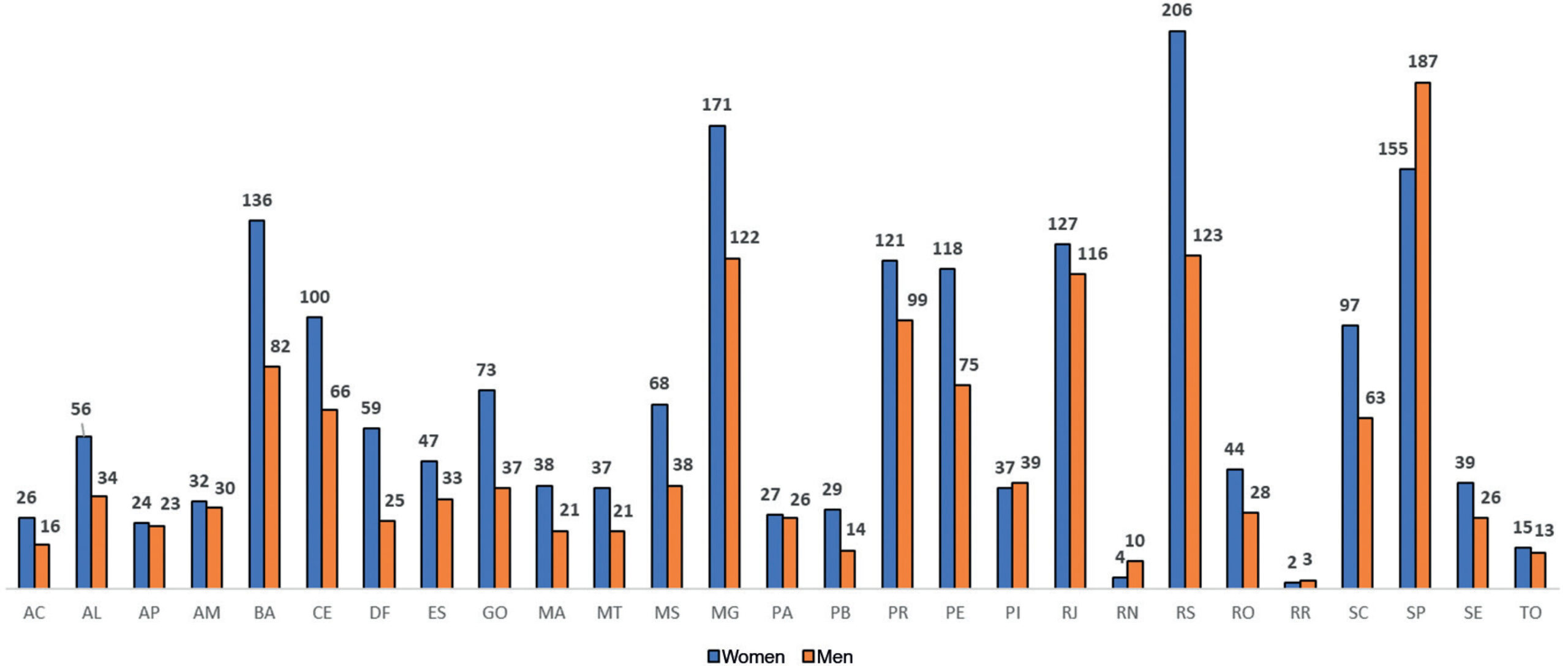
Women are entering the medical and scientific community in growing numbers, reaching and even surpassing their male counterparts in medical schools. However, a settled imbalance between men and women is still a reality in the international cardiology community despite these recent advances. The female presence in Brazilian medical schools was barely noticed until the 1960s; in the following years, there was a gradual increase in the number of women in the medical field, mainly in the first decade of the 21st century (59 % in 2020). In a 2020 demographic analysis of the Brazilian Federal Council of Medicine , men still predominated, accounting for 53.4% of all doctors in the country. Nevertheless, in the age-range below 30-years-old, women are the majority, accounting for 58.5%; the percentage of female doctors is inversely proportional to the increase in the age group, with only 21% of women in the age group above 70 years old.

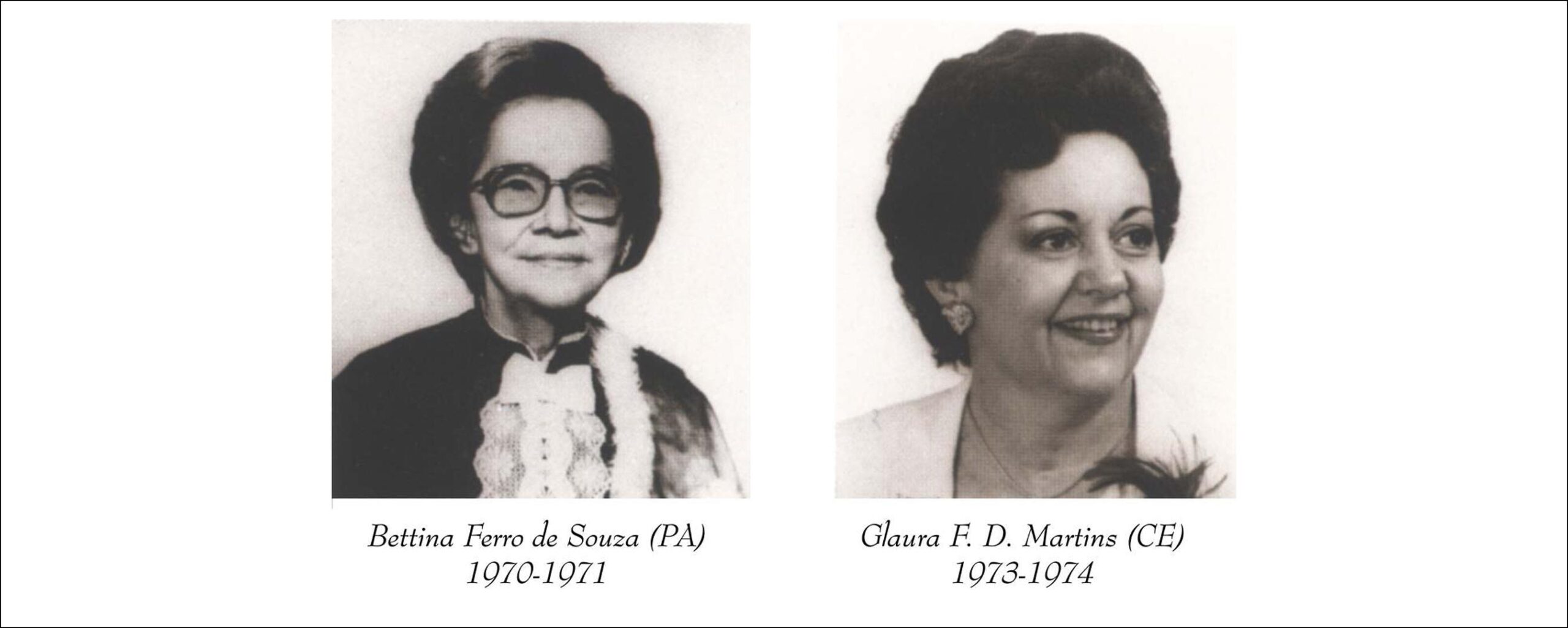
In the USA, women represent less than 15% of the cardiology workforce and less than 5% of interventional cardiologists, while in Europe, women account for only one-third of cardiologists, and 18% of women are interventionists. Currently, Brazil has nearly 500 thousand doctors, 17,802 thousand cardiologists, of which 31.1% are females, and mostly concentrated in the southeast region. In 2018, only 215 (8.6%) of a total of 2,062 cardiovascular surgeons and 7.5% of 970 interventional cardiologists were women. The Brazilian Society of Cardiology had two female presidents; and the Cardiovascular Surgery Society, the Interventional Cardiology, and the Federation of Portuguese Language Cardiology Societies had one female president. Also, in the last five years, only one fifth of the speakers in the annual congress of the Brazilian Cardiology Society were women.

[…]

  • Cardiologists
  • Cardiovascular disease
  • COVID-19
  • Ethics
  • Gender Identity
  • Pandemic
  • Women
Read Full Article
Creative Commons Attribution (CC BY) Creative Commons license
09/03/2022 DOI: 10.36660/ijcs.20220029
Gender Equity in Healthcare: An Issue of Justice or Need?
ABC
Letter to the Editor

Gender Equity in Healthcare: An Issue of Justice or Need?

Viviana Guzzo Lemke

With great interest on the topic, we read the article “The Profile of the Brazilian Cardiologist – A Sample of the Members of the Brazilian Society of Cardiology”, by Faganello et al., where the professional and personal characteristics of Brazilian cardiologists are reported. The significant gender differences were highlighted in the mini-editorial “Profile of Brazilian Cardiologists: A look on Female Leadership in Cardiology and Stress – Challenges for the Next Decade” by Mesquita et al., where peculiarities such as payment and the small number of women in Cardiology are analyzed according to an intriguing point of view.

These articles resonate with the “Women’s Letter” by Oliveira et al., a document based on current objectives, which require long-term efforts and structural changes in the medical culture, especially regarding the participation of women in executive positions in medical specialty societies and healthcare-related government bodies.

[…]

  • Cardiologists
  • Gender Identity
  • Interventionals
  • Leadership
  • Medicine/trends
  • Women
Read Full Article
Creative Commons Attribution (CC BY) Creative Commons license
02/09/2019 DOI: 10.5935/abc.20190168 Views 1
Figure 1
ABC
Editorial

Profile of Brazilian Cardiologists: An Overview of Female Leadership in Cardiology and Stress – Challenges for the Next Decade

Evandro Tinoco Mesquita et al. Eduardo Thadeu de Oliveira Correia Letícia Mara dos Santos Barbetta

Cardiology is a medical specialty that often involves outpatient and hospital activity, leading cardiovascular care in a complex setting with aging. Increasing levels of complex decision-making and knowledge about technological resources can generate overload of activities and changes in the profile of Brazilian cardiologists, such as in their compensation, free time and stress levels. As such, medical demography studies are key to understanding the dynamics of these healthcare professionals.

In the study by Faganello et al., the authors investigated the profile of Brazilian cardiologists in a cross-sectional study conducted in 2017, based on questionnaires sent by e-mail to fellow cardiologists of the Brazilian Society of Cardiology (SBC) who have been paying their membership fees regularly. Worth noting is that the likelihood of cardiologists with lower incomes not paying their membership fees is something that could generate bias in the study, thus influencing the results on their income. In addition to that, the study does not include anyone who has been exercising their professional activity without being members of SBC.

[…]

  • Cardiologists
  • Gender Identity
  • Leardership
  • Prejudice
  • Salaries and Fringe Benefits
  • Sexism
  • Women
Read Full Article
Creative Commons Attribution (CC BY) Creative Commons license
08/08/2019 DOI: 10.5935/abc.20190132 Views 1
ABC
Editorial

Gender Disparities and Outcomes Of Acute Coronary Syndromes In Brazil

Andrea De Lorenzo

Coronary artery disease (CAD) was considered, for years, a “male disease”, a concept that influenced diagnostic and clinical decision-making processes., However, currently there is consistent evidence showing that CAD is a leading cause of death in women. On the basis of pooled data from studies of the National Heart, Lung and Blood Institute (1995-2012), it is estimated that within one year after a first myocardial infarction, 18% of males and 23% of females will die, and the median survival time is, at ≥ 45 years of age, 8.2 years for males and 5.5 for females. The underestimation of cardiovascular risk among women frequently resulted in a more conservative treatment and contributed to poorer outcomes. In the last decade, several studies have assessed the issue of gender disparities in the diagnosis, treatment, and outcomes of acute coronary syndromes (ACS)., In this context, the study by Soeiro et al. contributes to the understanding of this issue by presenting data from a Brazilian registry of ACS.

In this multicenter registry, the primary endpoint was in-hospital, all-cause mortality, and the secondary endpoint was the combination of cardiogenic shock, death, reinfarction, ischemic stroke and bleeding during a mean follow-up of 8 months. Just like any registry, it has limitations, such as the absence of data on other diseases like cancer, as well as on the differences in post-discharge management, adherence to treatment, among others, all which might influence survival in any group. Nonetheless, it has a large number of patients (2,437 men and 1,308 women) and may offer an interesting view of the Brazilian scenario of gender differences in ACS.

[…]

  • Acute coronary syndrome
  • Aged, Women
  • Gender Identity
  • Myocardial Infarction
  • Percutaneous Coronary Intervention
  • Prognosis
  • Risk Factors
Read Full Article
Creative Commons Attribution (CC BY) Creative Commons license
01/11/2018 DOI: 10.5935/abc.20180210 Views 1
ABC
Editorial

Anxiety and Depression after Myocardial Infarction: Can Inflammatory Factors be Involved?

João Manoel Theotonio dos Santos

This interesting article published by Serpytis et al., evaluated the presence of depression and anxiety disorders after acute myocardial infarction, and the different forms of presentation and prevalence according to patient gender and age.

The authors observed that over a period of up to 31 days after an acute myocardial infarction, more than two-thirds of the patients had depression and /or anxiety disorders. Women had a higher prevalence of these comorbidities when compared to men and also tended to have more severe presentations of both depression and anxiety disorders. Additionally, in men, depression was more severe and anxiety disorder was less severe as they were older; whereas in women these comorbidities showed a linear presentation regarding severity, regardless of the age factor.

[…]

  • Anxiety
  • C-Reactive Protein
  • Depression
  • Gender Identity
  • Myocardial Infarction
  • Risk Factors, Inflammation
Read Full Article
Creative Commons Attribution (CC BY) Creative Commons license
01/11/2018 DOI: 10.5935/abc.20180233 Views 1
Figure 1
ABC
Original Article

Effects of Air Pollutant Exposure on Acute Myocardial Infarction, According to Gender

Tássia Soldi Tuan et al. Taís Siqueira Venâncio Luiz Fernando Costa Nascimento

Abstract

Background:

There is evidence of the effects of air pollution on hospital admissions due to cardiovascular diseases, including myocardial infarction.

Objective:

To estimate the association between exposure to air pollutants and hospital admissions due to myocardial infarction according to gender, between January 1st 2012 and December 31st 2013, in São Jose dos Campos-SP.

Methods:

An ecological time series study was carried out with daily data of admissions due to AMI, pollutants CO, O3, PM10, SO2, and NO2, according to gender. We used the Poisson regression generalized linear model to estimate the relative risks of hospital admissions with lags of 0-5 days, adjusted for temperature, humidity, seasonality and days of the week.

Results:

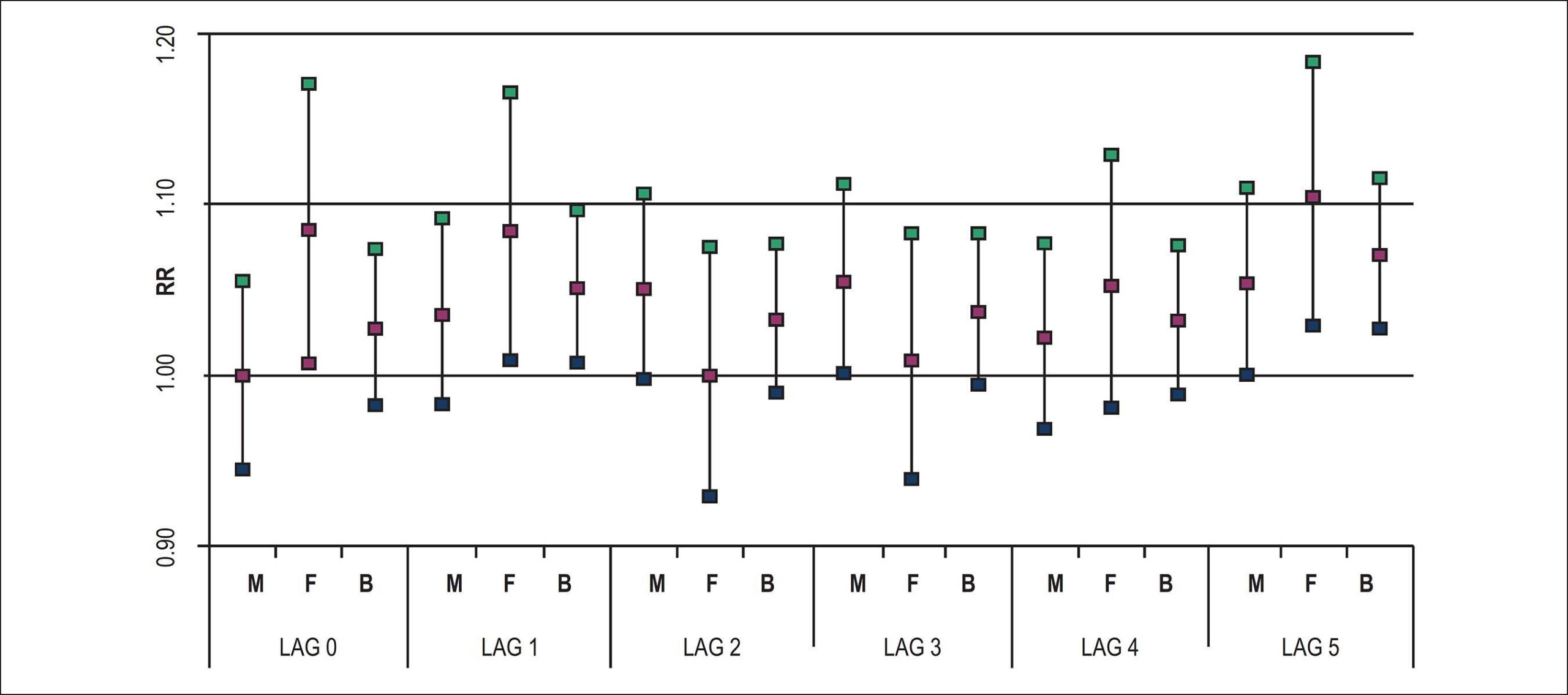
There were 1837 admissions for ischemic heart diseases, with 636 women and 1201 men. For females, the risks were significant for CO in lag 0 (RR = 1,09), lag1 (RR = 1,08) and lag 5 (RR = 1,10) and SO2 in lag 0 (RR = 1,10) and 3 (RR = 1,09). For men there was significance of the CO in, lag 3 and lag 5 (RR = 1,05). There was significance, regardless of gender, for CO at lag 1 (RR = 1,05) and lag 5 (RR = 1,07) and lag 0 for SO2 (RR = 1,06).

Conclusion:

The data presented show the important role of CO and SO2 in the genesis of myocardial infarction admissions, and responses to pollutant exposure are different if analyzed by gender and together – hence the importance of a stratified analyses.

  • Carbon Monoxide
  • Environmental Pollutants
  • Gender Identity
  • Myocardial Infarction
  • Sulfur Dioxide
Read Full Article
Creative Commons Attribution (CC BY) Creative Commons license
11/08/2016 DOI: 10.5935/abc.20160117

How to cite this article

EndNote RIS

Electronic Document Format (Vancouver)

Bertolami MC. Gender differences in Body Adiposity and Endothelial Dysfunction in Overweight and Obese Individuals with Suboptimal Vitamin D Status. International Journal of Cardiovascular Sciences 2026;39:e20260094.

Electronic Document Format (ABNT)

Bertolami, Marcelo Chiara. Gender differences in Body Adiposity and Endothelial Dysfunction in Overweight and Obese Individuals with Suboptimal Vitamin D Status. International Journal of Cardiovascular Sciences, v. 39, e20260094, Aug. 2026.

Electronic Document Format (APA)

Bertolami, M. C. (2026). Gender differences in Body Adiposity and Endothelial Dysfunction in Overweight and Obese Individuals with Suboptimal Vitamin D Status. International Journal of Cardiovascular Sciences, 39, e20260094.

Electronic Document Format (ISO)

Bertolami, Marcelo Chiara. Gender differences in Body Adiposity and Endothelial Dysfunction in Overweight and Obese Individuals with Suboptimal Vitamin D Status. International Journal of Cardiovascular Sciences [online]. 2026, vol. 39, [cited 2026-10-14], e20260094. Available from: <https://journals.cardiol.br/en/article/gender-differences-in-body-adiposity-and-endothelial-dysfunction-in-overweight-and-obese-individuals-with-suboptimal-vitamin-d-status/>. ISSN 2359-4802

EndNote RIS

Electronic Document Format (Vancouver)

Oliveira GMM, Tenorio M, Siqueira ASE. Science Gender Gap: Are We in theRight Path?. International Journal of Cardiovascular Sciences 2022;35(2):148-51.

Electronic Document Format (ABNT)

Oliveira, Gláucia Maria Moraes de; Tenorio, Marge; Siqueira, Alessandra de Sá Earp. Science Gender Gap: Are We in theRight Path?. International Journal of Cardiovascular Sciences, v. 35, n. 2, p. 148-151, Mar. 2022.

Electronic Document Format (APA)

Oliveira, G. M. M. , Tenorio, M., & Siqueira, A. S. E. (2022). Science Gender Gap: Are We in theRight Path?. International Journal of Cardiovascular Sciences, 35(2), 148-151.

Electronic Document Format (ISO)

Oliveira, Gláucia Maria Moraes de and Tenorio, Marge and Siqueira, Alessandra de Sá Earp. Science Gender Gap: Are We in theRight Path?. International Journal of Cardiovascular Sciences [online]. 2022, vol. 35, n. 2, [cited 2026-10-14], pp. 148-151. Available from: <https://journals.cardiol.br/en/article/science-gender-gap-are-we-in-theright-path/>. ISSN 2359-4802

EndNote RIS

Electronic Document Format (Vancouver)

Lemke VG. Gender Equity in Healthcare: An Issue of Justice or Need?. Arquivos Brasileiros de Cardiologia 2019;113(2):299.

Electronic Document Format (ABNT)

Lemke, Viviana Guzzo. Gender Equity in Healthcare: An Issue of Justice or Need?. Arquivos Brasileiros de Cardiologia, v. 113, n. 2, p. 299-299, Sep. 2019.

Electronic Document Format (APA)

Lemke, V. G. (2019). Gender Equity in Healthcare: An Issue of Justice or Need?. Arquivos Brasileiros de Cardiologia, 113(2), 299-299.

Electronic Document Format (ISO)

Lemke, Viviana Guzzo. Gender Equity in Healthcare: An Issue of Justice or Need?. Arquivos Brasileiros de Cardiologia [online]. 2019, vol. 113, n. 2, [cited 2026-10-14], pp. 299-299. Available from: <https://journals.cardiol.br/en/article/gender-equity-in-healthcare-an-issue-of-justice-or-need/>. ISSN 0066-782X

EndNote RIS

Electronic Document Format (Vancouver)

Mesquita ET, Correia ETO, Barbetta LMS. Profile of Brazilian Cardiologists: An Overview of Female Leadership in Cardiology and Stress – Challenges for the Next Decade. Arquivos Brasileiros de Cardiologia 2019;113(1):69-70.

Electronic Document Format (ABNT)

Mesquita, Evandro Tinoco; Correia, Eduardo Thadeu de Oliveira; Barbetta, Letícia Mara dos Santos. Profile of Brazilian Cardiologists: An Overview of Female Leadership in Cardiology and Stress – Challenges for the Next Decade. Arquivos Brasileiros de Cardiologia, v. 113, n. 1, p. 69-70, Aug. 2019.

Electronic Document Format (APA)

Mesquita, E. T., Correia, E. T. O., & Barbetta, L. M. S. (2019). Profile of Brazilian Cardiologists: An Overview of Female Leadership in Cardiology and Stress – Challenges for the Next Decade. Arquivos Brasileiros de Cardiologia, 113(1), 69-70.

Electronic Document Format (ISO)

Mesquita, Evandro Tinoco and Correia, Eduardo Thadeu de Oliveira and Barbetta, Letícia Mara dos Santos. Profile of Brazilian Cardiologists: An Overview of Female Leadership in Cardiology and Stress – Challenges for the Next Decade. Arquivos Brasileiros de Cardiologia [online]. 2019, vol. 113, n. 1, [cited 2026-10-14], pp. 69-70. Available from: <https://journals.cardiol.br/en/article/profile-of-brazilian-cardiologists-an-overview-of-female-leadership-in-cardiology-and-stress-challenges-for-the-next-decade/>. ISSN 0066-782X

EndNote RIS

Electronic Document Format (Vancouver)

Lorenzo AD. Gender Disparities and Outcomes Of Acute Coronary Syndromes In Brazil. Arquivos Brasileiros de Cardiologia 2018;111(5):654-5.

Electronic Document Format (ABNT)

Lorenzo, Andrea De. Gender Disparities and Outcomes Of Acute Coronary Syndromes In Brazil. Arquivos Brasileiros de Cardiologia, v. 111, n. 5, p. 654-655, Oct. 2018.

Electronic Document Format (APA)

Lorenzo, A. D. (2018). Gender Disparities and Outcomes Of Acute Coronary Syndromes In Brazil. Arquivos Brasileiros de Cardiologia, 111(5), 654-655.

Electronic Document Format (ISO)

Lorenzo, Andrea De. Gender Disparities and Outcomes Of Acute Coronary Syndromes In Brazil. Arquivos Brasileiros de Cardiologia [online]. 2018, vol. 111, n. 5, [cited 2026-10-14], pp. 654-655. Available from: <https://journals.cardiol.br/en/article/gender-disparities-and-outcomes-of-acute-coronary-syndromes-in-brazil/>. ISSN 0066-782X

EndNote RIS

Electronic Document Format (Vancouver)

Santos JMT. Anxiety and Depression after Myocardial Infarction: Can Inflammatory Factors be Involved?. Arquivos Brasileiros de Cardiologia 2018;111(5):684-5.

Electronic Document Format (ABNT)

Santos, João Manoel Theotonio dos. Anxiety and Depression after Myocardial Infarction: Can Inflammatory Factors be Involved?. Arquivos Brasileiros de Cardiologia, v. 111, n. 5, p. 684-685, Oct. 2018.

Electronic Document Format (APA)

Santos, J. M. T. (2018). Anxiety and Depression after Myocardial Infarction: Can Inflammatory Factors be Involved?. Arquivos Brasileiros de Cardiologia, 111(5), 684-685.

Electronic Document Format (ISO)

Santos, João Manoel Theotonio dos. Anxiety and Depression after Myocardial Infarction: Can Inflammatory Factors be Involved?. Arquivos Brasileiros de Cardiologia [online]. 2018, vol. 111, n. 5, [cited 2026-10-14], pp. 684-685. Available from: <https://journals.cardiol.br/en/article/anxiety-and-depression-after-myocardial-infarction-can-inflammatory-factors-be-involved/>. ISSN 0066-782X

EndNote RIS

Electronic Document Format (Vancouver)

Tuan TS, Venâncio TS, Nascimento LFC. Effects of Air Pollutant Exposure on Acute Myocardial Infarction, According to Gender. Arquivos Brasileiros de Cardiologia 2016;107(3):216-22.

Electronic Document Format (ABNT)

Tuan, Tássia Soldi; Venâncio, Taís Siqueira; Nascimento, Luiz Fernando Costa. Effects of Air Pollutant Exposure on Acute Myocardial Infarction, According to Gender. Arquivos Brasileiros de Cardiologia, v. 107, n. 3, p. 216-222, Aug. 2016.

Electronic Document Format (APA)

Tuan, T. S., Venâncio, T. S., & Nascimento, L. F. C. (2016). Effects of Air Pollutant Exposure on Acute Myocardial Infarction, According to Gender. Arquivos Brasileiros de Cardiologia, 107(3), 216-222.

Electronic Document Format (ISO)

Tuan, Tássia Soldi and Venâncio, Taís Siqueira and Nascimento, Luiz Fernando Costa. Effects of Air Pollutant Exposure on Acute Myocardial Infarction, According to Gender. Arquivos Brasileiros de Cardiologia [online]. 2016, vol. 107, n. 3, [cited 2026-10-14], pp. 216-222. Available from: <https://journals.cardiol.br/en/article/effects-of-air-pollutant-exposure-on-acute-myocardial-infarction-according-to-gender/>. ISSN 0066-782X

  • About ABC Family
  • Internal Regulation
  • Editorial Board
  • Brazilian Society of Cardiology (SBC)

Issues

SBC Guidelines

  • Videos
  • Podcasts
  • News