ABC Family Arquivos Brasileiros de Cardiologia International Journal of Cardiovascular Sciences ABC Heart Failure & Cardiomyopathy ABC Imagem Cardiovascular
Português English
ABC Family
Português English
  • About
    • About ABC Family
    • Internal Regulation
    • Editorial Board
    • Brazilian Society of Cardiology (SBC)
  • Issues
  • SBC Guidelines
  • Content
    • Videos
    • Podcasts
    • News
  • About
    • About ABC Family
    • Internal Regulation
    • Editorial Board
    • Brazilian Society of Cardiology (SBC)
  • Issues
  • SBC Guidelines
  • Content
    • Videos
    • Podcasts
    • News

ABC Family

  • ABC Family
  • Arquivos Brasileiros de Cardiologia
  • International Journal of Cardiovascular Sciences
  • ABC Heart Failure & Cardiomyopathy
  • ABC Imagem Cardiovascular
Search in

No content found.

Journals
Ordering
Article types
Others

  1. Home
  2. Keyword: Gender
ABC
Editorial

Women and Atrial Fibrillation: Is the Disparity in Anticoagulation Just a Question of Gender? In Search of the Brazilian Reality

Jorge Elias Neto et al. Fernando Luiz Torres Gomes

The discussion of atrial fibrillation (AF) must begin with the premise that certainly, alongside other conditions such as obesity — and in a particularly harmful partnership with it — this rhythm disturbance has emerged as a global public health problem, warranting an epidemic projection for this century.

Numerous studies have demonstrated differences in AF presentation, comorbidity burden, and admission rates between males and females. Therefore, it is critical to assess whether there are sex differences in adherence to and utilization of oral anticoagulants and outcomes based on hospital discharge status.–

[…]

  • Anticoagulation
  • Atrial Fibrillation
  • Gender
  • Risk Factors
  • Stroke
  • Women
Read Full Article
Creative Commons Attribution (CC BY) Creative Commons license
22/11/2024 DOI: 10.36660/abc.20240583i
Figure 1
ABC
Original Article

Neck Circumference and 10-Year Cardiovascular Risk at the Baseline of the ELSA-Brasil Study: Difference by Sex

Acácia Antônia Gomes de Oliveira Silva et al. Larissa Fortunato de Araujo Maria de Fátima Haueisen Sander Diniz Paulo Andrade Lotufo … Isabela Martins Bensenor Sandhi Maria Barreto Luana Giatti

Abstract

Background:

Neck circumference (NC), an indirect measure of upper-body subcutaneous adipose tissue, has been pointed out as an independent predictor of cardiometabolic diseases.

Objectives:

To assess the association between NC and 10-year cardiovascular risk in men and in women.

Methods:

Cross-sectional analysis of 13,920 participants of the (baseline) Longitudinal Study of Adult Health (ELSA-Brasil). The association between NC (used as continuous variable and grouped into quartiles) and the 10-year cardiovascular risk was estimated by the Framingham Global Risk Score and analyzed by generalized linear models after adjustments for sociodemographic characteristics, health behaviors, body mass index and waist circumference. The significance level adopted was 5%.

Results:

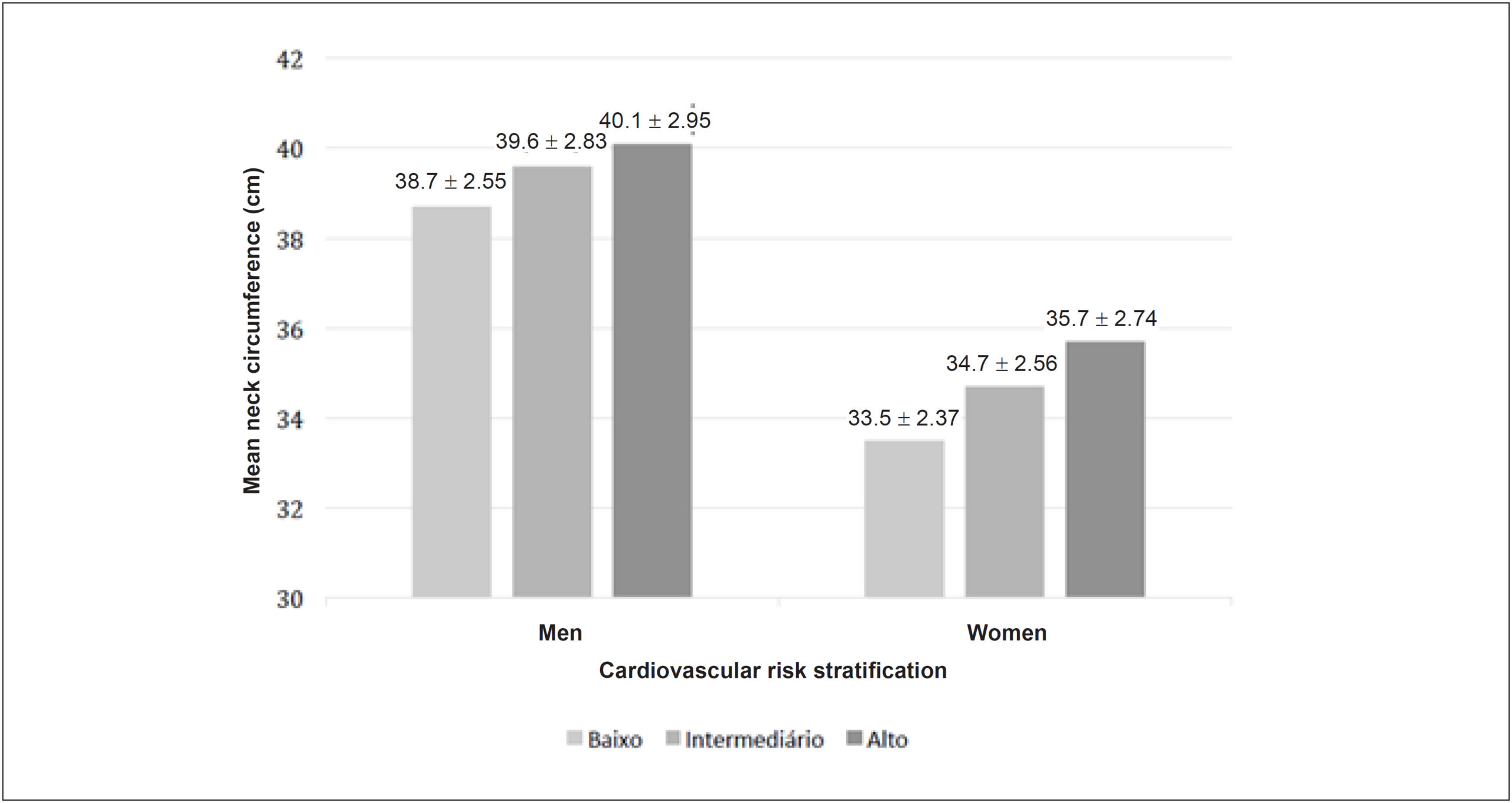
Mean NC was 39.5 cm (SD± 3.6) in men and 34.0 cm (SD±2.9) in women. After adjustments, a one-centimeter increase in NC was associated with an increment of 3% (95%CI1.02-1.03) and 5% (95% 1.04-1.05) in the arithmetic mean of the 10-year CVD risk in men and women, respectively. Men and women in the last quartile showed an increment of 18% (95%CI 1.13-1.24) and 35% (95%CI 1.28-1.43), respectively in the arithmetic mean of the 10-year CVD risk, after adjustments.

Conclusions:

We found a positive, independent association between NC and the 10-year cardiovascular disease risk. NC may contribute to the prediction of cardiovascular risk, over and above traditional anthropometric measures.

  • Adiposity
  • Cardiovacular Risk
  • Cardiovascular Diseases
  • Gender
  • Risk Factors
Read Full Article
Creative Commons Attribution (CC BY) Creative Commons license
07/12/2020 DOI: 10.36660/abc.20190289 Views 2
Figure 1
ABC
Original Article

The Profile of the Brazilian Cardiologist – A Sample of Members of the Brazilian Society of Cardiology

Lucas Simonetto Faganello et al. Mauricio Pimentel Carisi Anne Polanczyk Tiago Zimerman … Marcus Vinicius Bolivar Malachias Oscar Pereira Dutra Leandro Ioschpe Zimerman

Abstract

Background:

Data from the international literature have shown changes in the profile of cardiologists and in their medical practices. However, there is no data on this in Brazilian cardiologists.

Objective:

To evaluate professional and personal characteristics of a sample of Brazilian cardiologists.

Methods:

This was a cross-sectional study; a questionnaire was sent by e-mail to cardiologists, active members of the Brazilian Society of Cardiology in 2017. The results were analyzed, and the level of significance set at p < 0.05.

Results:

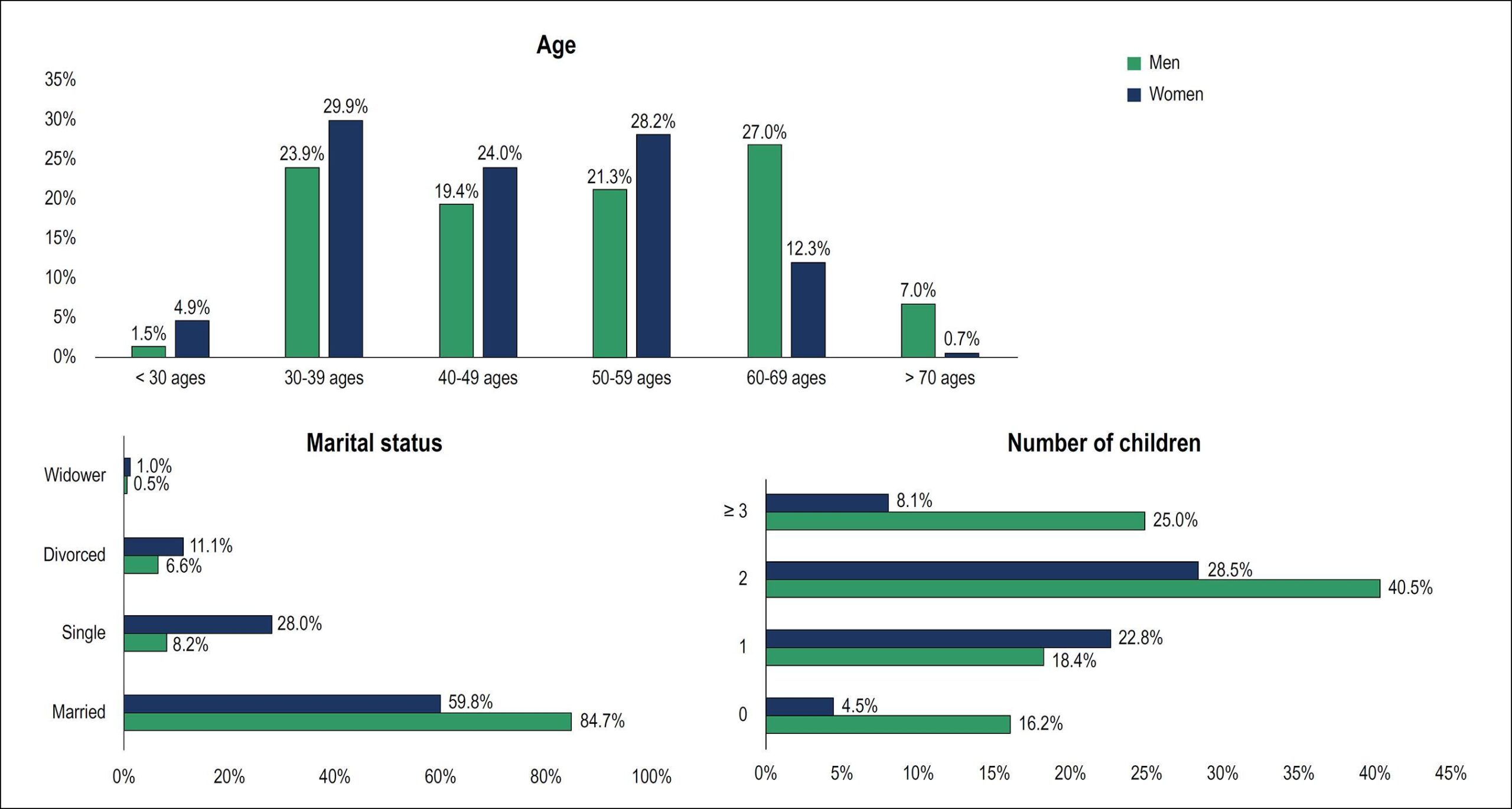
The questionnaire was sent to 13,462 cardiologists, with 2,101 (15.6%) respondents, mostly men (71.8% versus 28.2%). Age distribution and marital status were significantly different between the sexes (p < 0.001). The number of cardiologists without children was higher among women (40.5% versus 16.1%; p < 0.001). The most common place of work was the public hospital (46.5%), followed by private hospital (28.5%) and private office (21.1%). The office was the main place of work for 23.9% of men and 14% of women (p < 0.001), with predominance of individuals older than 50 years (31.7% versus 10.1%, respectively; p < 0.001). Most cardiologists (64.2%) worked more than 40 hours a week (69% of them men and 51.9% of the women; p < 0.001). Eighty-eight percent of the sample earned more than BRL 11,000 (US$ 3,473.43), and 66.5% of the men earned more than BRL 20,000 (US$ 6,315.32) per month, versus 31.2% of the women (p < 0.001). A high level of work-related stress was reported by 11.3% of respondents.

Conclusion:

Most cardiologists were men, who showed higher workload and higher income; 11.3% of the cardiologists perceived stress as a great deal.

  • Cardiologists
  • Demographic Data
  • Gender
  • Income
  • Quality of life
  • Survey and Questionnaires
Read Full Article
Creative Commons Attribution (CC BY) Creative Commons license
27/06/2019 DOI: 10.5935/abc.20190089 Views 1
Figure 1
ABC
Original Article

Paroxysmal Atrial Fibrillation in Females: Understanding gender diferences

Gabriel Odozynski et al. Alexander Romeno Janner Dal Forno Andrei Lewandowski Hélcio Garcia Nascimento André d'Avila

Abstract

Background:

The catheter ablation of atrial fibrillation (AF) is performed less frequently in women. In addition, there is divergent information in the literature regarding the effectiveness and safety for the ablative procedure to females.

Objectives:

The objective of this study was to compare the clinical characteristics and outcomes in men and women undergoing paroxysmal atrial fibrillation (PAF) ablation.

Methods:

Cohort study of patients undergoing first-ever PAF catheter ablation procedure refractory to antiarrhythmic drugs. The information was taken from patients’ records by means of a digital collection instrument and indexed to an online database (Syscardio®). Clinical characteristics and procedures were compared between each gender (M x F), adopting a level of statistical significance of 5%. The primary endpoint associated with efficacy was freedom from atrial arrhythmia over the follow-up time.

Results:

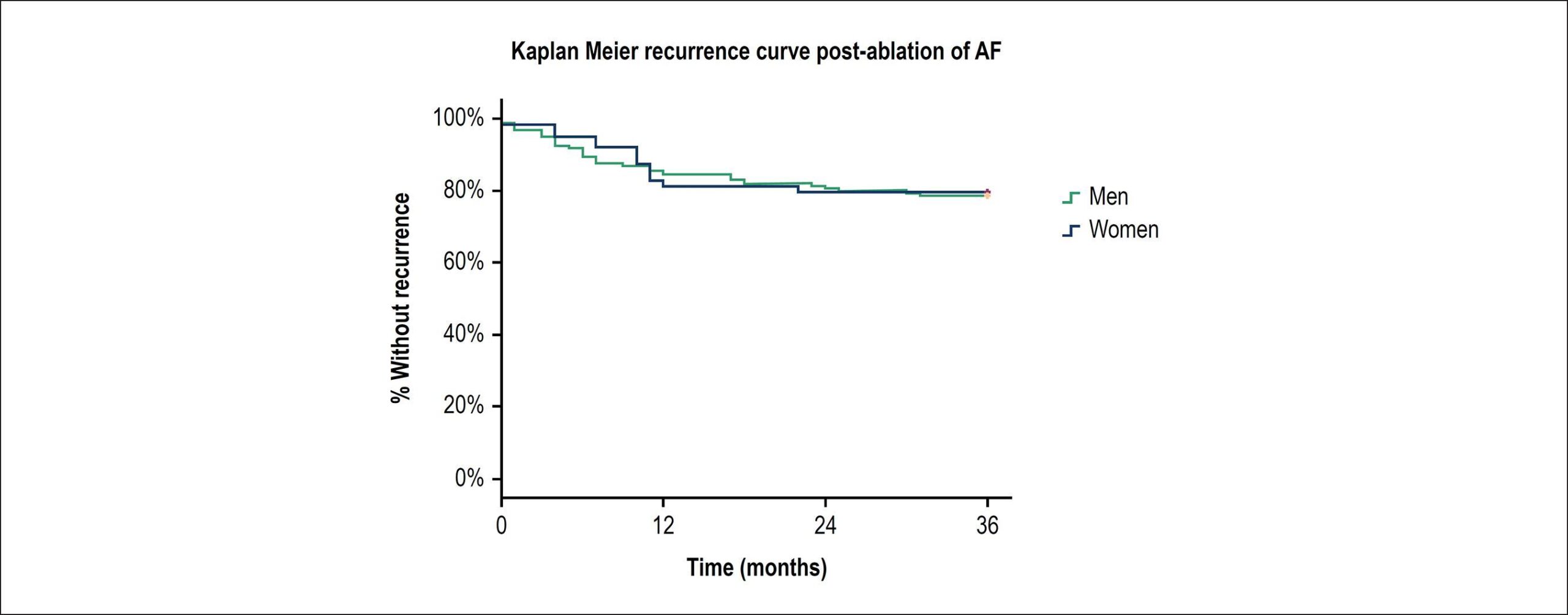
225 patients were included in the study, 64 (29%) women and 161 (71%) men. Women presented more symptoms due to AF according to the CCS-SAF score (1.8 ± 0.8M x 2.3 ± 0.8F p = 0.02) and higher CHADS2 score compared to men (0.9 ± 0.8M x 1.2 ± 1F). Post-ablation recurrence occurred in 20% of the patients, with no difference based on gender (21% M x 20% F p = 0.52). The rate of complications was less than 3% for both groups (p = 0.98).

Conclusion:

Women undergoing the first-ever PAF catheter ablation procedure present similar complication rate and clinical outcome compared to men. These findings suggest that the current underutilization of AF catheter ablation in women may represent a discrepancy in care.

  • Arrhythmias,Cardiac
  • Atrial Fibrillation
  • Cardiac Electrophysiology
  • Catheter Ablation
  • Gender
Read Full Article
Creative Commons Attribution (CC BY) Creative Commons license
03/05/2018 DOI: 10.5935/abc.20180069 Views 1
Gender influence on the immediate and medium-term progression after primary percutaneous coronary intervention and analysis of independent risk factors for death or events
ABC
Artigo Original

Gender influence on the immediate and medium-term progression after primary percutaneous coronary intervention and analysis of independent risk factors for death or events

Rodrigo Trajano Sandoval Peixoto et al. Edison Carvalho Sandoval Peixoto Marcello Augustus Sena Angelo Leone Tedeschi … Ivana Picone Borges Maurício Bastos Freitas Rachid

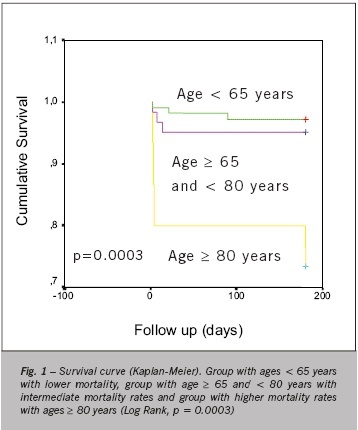
OBJECTIVE: Determine gender-related differences and risk factors for death and events, both in-hospital and at six-month evolution, of patients admitted within the first twelve hours of ST-segment elevation acute myocardial infarction and who underwent primary percutaneous coronary intervention. METHODS: Between July 1998 and December 2000, 199 consecutive patients were enrolled in the study, with elevation myocardial infarction and without cardiogenic shock, outcome, in-hospital and six-month progression were studied. RESULTS: Clinical characteristics were similar in both groups, except that women were older than men (67.04 ± 11.53 x 59.70 ± 10.88, p < 0.0001). In-hospital mortality was higher among women (9.1% x 1.5%, p = 0.0171), as was the incidence of major events (12.1% x 3.0%, p = 0.0026). The difference in mortality rates remained the same at six months (12.1% x 1.5%, p = 0.0026). The multivariate analysis predicted death: female gender and an age over eighty years, and major events and/or stable angina multivessel: disease and severe ventricular dysfunction. CONCLUSION: Female gender and an age over eighty years were independent predictors of mortality, six months of patients who had undergone primary percutaneous intervention.

  • Acute Myocardial Infarction
  • Gender
  • primary coronary angioplasty
  • Risk Factors
Read Full Article
Creative Commons Attribution (CC BY) Creative Commons license
30/03/2006 DOI: 10.1590/S0066-782X2006000300009 Views 1
ABC
Original Article

Aortic stenosis. Gender influence on left ventricular geometry and function in patients under 70 years of age

Antonio Sérgio Cordeiro da Rocha et al. Maria Auxiliadora Vellasco Pereira Nazareth de Novaes Rocha Rita de Cássia Villela Soares … Celso Garcia, Rosana Grandelle Paulo Roberto Dutra da Silva

OBJECTIVE: To verify if adaptive left ventricle (LV) characteristics are also present in individuals under 70 years of age with severe aortic stenosis (AS). METHODS: The study comprised 40 consecutive patients under 70 years of age with AS and no associated coronary artery disease, referred for valve surgery. Out of the 40 patients, 22 were men and 18 women, and the mean age was 49.8±14.3 years. Cardiac symptoms, presence of systemic hypertension (SH), functional class according to the New York Heart Association (NYHA), and valve lesion etiology were considered. LV cavity dimensions, ejection fraction (EF), fractional shortening (FS), mass (MS), and relative diastolic thickness (RDT) were examined by Doppler echocardiography. RESULTS: Fourteen (63.6%) men and 11 (61.6%) women were classified as NYHA class III/IV (p=0.70). There was no difference in the frequency of angina, syncope or dyspnea between genders. The incidence of SH was greater in women than in men (10 versus 2, p=0.0044). Women had a smaller LV end-diastolic diameter index (32.1±6.5 x 36.5±5.3mm/m², p=0.027), LV end-systolic diameter index (19.9±5.9 x 26.5±6.4mm/m², p=0.0022) and LV mass index (MS) (211.4±71.1 x 270.9±74.9g/m², p=0.017) when compared with men. EF (66.2±13.4 x 52.0±14.6%, p=0.0032), FS (37.6±10.7 x 27.9±9.6%, p=0.0046) and RDT (0.58±0.22 x 0.44±0.09, p=0.0095) were significantly greater in women than in men. CONCLUSION: It is the patient gender rather than age that influences left ventricular adaptive response to AS.

  • Aortic Stenosis
  • Gender
  • Left Ventricular Function
  • Ventricular Hypertrophy
Read Full Article
Creative Commons Attribution (CC BY) Creative Commons license
08/01/2002 DOI: 10.1590/S0066-782X1999000400007 Views 2
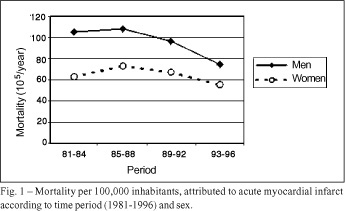
Mortality attributed to myocardial infarction in the male and female population of Salvador, BA, between 1981 and 1996
ABC
Original Article

Mortality attributed to myocardial infarction in the male and female population of Salvador, BA, between 1981 and 1996

Luiz Carlos Santana Passos et al. Antonio Alberto Lopes Ines Lessa Adelina Sanches Rogério Santos-Jesus

OBJECTIVE: To describe according to gender the trend in mortality attributed to myocardial infarction (MI) in the population of Salvador, Bahia between 1981 and 1996. METHODS: This study was on mortality due to MI estimates by period and gender of the city of Salvador, Bahia. Data from 1981 to 1996 were stratified by quadrienia, and the percentage reduction in death rate due to MI relative to the preceding period (PRR) was determined. Comparisons between genders were expressed by the male/female death ratio (DR) based on the gender-related PPR. RESULTS: An overall increase of approximately 8% was observed in the death rate attributed to MI for the period 1985-1988 (89.2/10 5 individuals / year) versus the period 1981-1984 (82.1/10(5)/ year). In the subsequent periods, overall reductions of 10% and 20.3% were observed for the periods 1989-1992 and 1993-1996, respectively. For men, the PPRs were 11.1 in the period 1989-1992 and 22.7% in the period 1993-1996. The PPRs in women were lower: 8.6% and 17.4% between 1989 and 1992, and 1993 and 1996, respectively. Death rate reduction was greater for men than women, then the male/female DR decreased from 1.66 in 1981-1984 to 1.35 in 1993-1996. CONCLUSION: The results indicate a trend towards a reduction in the death rate attributed to myocardial infarction in the city of Salvador from the second half of the 1980s onwards, striking in men.

  • Gender
  • Mortality
  • Myocardial Infarction
  • trend
Read Full Article
Creative Commons Attribution (CC BY) Creative Commons license
08/01/2002 DOI: 10.1590/S0066-782X2000000400004 Views 1

How to cite this article

EndNote RIS

Electronic Document Format (Vancouver)

Elias Neto J, Gomes FLT. Women and Atrial Fibrillation: Is the Disparity in Anticoagulation Just a Question of Gender? In Search of the Brazilian Reality. Arquivos Brasileiros de Cardiologia 2024;121(9):e20240583.

Electronic Document Format (ABNT)

Elias Neto, Jorge; Gomes, Fernando Luiz Torres. Women and Atrial Fibrillation: Is the Disparity in Anticoagulation Just a Question of Gender? In Search of the Brazilian Reality. Arquivos Brasileiros de Cardiologia, v. 121, n. 9, e20240583, Nov. 2024.

Electronic Document Format (APA)

Elias Neto, J., & Gomes, F. L. T. (2024). Women and Atrial Fibrillation: Is the Disparity in Anticoagulation Just a Question of Gender? In Search of the Brazilian Reality. Arquivos Brasileiros de Cardiologia, 121(9), e20240583.

Electronic Document Format (ISO)

Elias Neto, Jorge and Gomes, Fernando Luiz Torres. Women and Atrial Fibrillation: Is the Disparity in Anticoagulation Just a Question of Gender? In Search of the Brazilian Reality. Arquivos Brasileiros de Cardiologia [online]. 2024, vol. 121, n. 9, [cited 2026-10-14], e20240583. Available from: <https://journals.cardiol.br/en/article/women-and-atrial-fibrillation-is-the-disparity-in-anticoagulation-just-a-question-of-gender-in-search-of-the-brazilian-reality/>. ISSN 0066-782X

EndNote RIS

Electronic Document Format (Vancouver)

Silva AAGO, Araujo LF, Diniz MFHS, Lotufo PA, Bensenor IM, Barreto SM, Giatti L, et al. Neck Circumference and 10-Year Cardiovascular Risk at the Baseline of the ELSA-Brasil Study: Difference by Sex. Arquivos Brasileiros de Cardiologia 2020;115(5):840-8.

Electronic Document Format (ABNT)

Silva, Acácia Antônia Gomes de Oliveira; Araujo, Larissa Fortunato de; Diniz, Maria de Fátima Haueisen Sander; Lotufo, Paulo Andrade; Bensenor, Isabela Martins; Barreto, Sandhi Maria; Giatti, Luana. Neck Circumference and 10-Year Cardiovascular Risk at the Baseline of the ELSA-Brasil Study: Difference by Sex. Arquivos Brasileiros de Cardiologia, v. 115, n. 5, p. 840-848, Dec. 2020.

Electronic Document Format (APA)

Silva, A. A. G. O., Araujo, L. F. , Diniz, M. F. H. S., Lotufo, P. A., Bensenor, I. M., Barreto, S. M., & Giatti, L. (2020). Neck Circumference and 10-Year Cardiovascular Risk at the Baseline of the ELSA-Brasil Study: Difference by Sex. Arquivos Brasileiros de Cardiologia, 115(5), 840-848.

Electronic Document Format (ISO)

Silva, Acácia Antônia Gomes de Oliveira and Araujo, Larissa Fortunato de and Diniz, Maria de Fátima Haueisen Sander and Lotufo, Paulo Andrade and Bensenor, Isabela Martins and Barreto, Sandhi Maria and Giatti, Luana. Neck Circumference and 10-Year Cardiovascular Risk at the Baseline of the ELSA-Brasil Study: Difference by Sex. Arquivos Brasileiros de Cardiologia [online]. 2020, vol. 115, n. 5, [cited 2026-10-14], pp. 840-848. Available from: <https://journals.cardiol.br/en/article/neck-circumference-and-10-year-cardiovascular-risk-at-the-baseline-of-the-elsa-brasil-study-difference-by-sex/>. ISSN 0066-782X

EndNote RIS

Electronic Document Format (Vancouver)

Faganello LS, Pimentel M, Polanczyk CA, Zimerman T, Malachias MVB, Dutra OP, Zimerman LI, et al. The Profile of the Brazilian Cardiologist – A Sample of Members of the Brazilian Society of Cardiology. Arquivos Brasileiros de Cardiologia 2019;113(1):62-8.

Electronic Document Format (ABNT)

Faganello, Lucas Simonetto; Pimentel, Mauricio; Polanczyk, Carisi Anne; Zimerman, Tiago; Malachias, Marcus Vinicius Bolivar; Dutra, Oscar Pereira; Zimerman, Leandro Ioschpe. The Profile of the Brazilian Cardiologist – A Sample of Members of the Brazilian Society of Cardiology. Arquivos Brasileiros de Cardiologia, v. 113, n. 1, p. 62-68, Jun. 2019.

Electronic Document Format (APA)

Faganello, L. S., Pimentel, M., Polanczyk, C. A., Zimerman, T., Malachias, M. V. B., Dutra, O. P., & Zimerman, L. I. (2019). The Profile of the Brazilian Cardiologist – A Sample of Members of the Brazilian Society of Cardiology. Arquivos Brasileiros de Cardiologia, 113(1), 62-68.

Electronic Document Format (ISO)

Faganello, Lucas Simonetto and Pimentel, Mauricio and Polanczyk, Carisi Anne and Zimerman, Tiago and Malachias, Marcus Vinicius Bolivar and Dutra, Oscar Pereira and Zimerman, Leandro Ioschpe. The Profile of the Brazilian Cardiologist – A Sample of Members of the Brazilian Society of Cardiology. Arquivos Brasileiros de Cardiologia [online]. 2019, vol. 113, n. 1, [cited 2026-10-14], pp. 62-68. Available from: <https://journals.cardiol.br/en/article/the-profile-of-the-brazilian-cardiologist-a-sample-of-members-of-the-brazilian-society-of-cardiology/>. ISSN 0066-782X

EndNote RIS

Electronic Document Format (Vancouver)

Odozynski G, Forno ARJD, Lewandowski A, Nascimento HG, d’Avila A. Paroxysmal Atrial Fibrillation in Females: Understanding gender diferences. Arquivos Brasileiros de Cardiologia 2018;110(5):449-54.

Electronic Document Format (ABNT)

Odozynski, Gabriel; Forno, Alexander Romeno Janner Dal; Lewandowski, Andrei; Nascimento, Hélcio Garcia; d’Avila, André. Paroxysmal Atrial Fibrillation in Females: Understanding gender diferences. Arquivos Brasileiros de Cardiologia, v. 110, n. 5, p. 449-454, May. 2018.

Electronic Document Format (APA)

Odozynski, G., Forno, A. R. J. D., Lewandowski, A., Nascimento, H. G., & d’Avila, A. (2018). Paroxysmal Atrial Fibrillation in Females: Understanding gender diferences. Arquivos Brasileiros de Cardiologia, 110(5), 449-454.

Electronic Document Format (ISO)

Odozynski, Gabriel and Forno, Alexander Romeno Janner Dal and Lewandowski, Andrei and Nascimento, Hélcio Garcia and d’Avila, André. Paroxysmal Atrial Fibrillation in Females: Understanding gender diferences. Arquivos Brasileiros de Cardiologia [online]. 2018, vol. 110, n. 5, [cited 2026-10-14], pp. 449-454. Available from: <https://journals.cardiol.br/en/article/paroxysmal-atrial-fibrillation-in-females-understanding-gender-diferences/>. ISSN 0066-782X

EndNote RIS

Electronic Document Format (Vancouver)

Peixoto RTS, Peixoto ECS, Sena MA, Tedeschi AL, Borges IP, Rachid MBF. Gender influence on the immediate and medium-term progression after primary percutaneous coronary intervention and analysis of independent risk factors for death or events. Arquivos Brasileiros de Cardiologia 2006;86(3):211-8.

Electronic Document Format (ABNT)

Peixoto, Rodrigo Trajano Sandoval; Peixoto, Edison Carvalho Sandoval; Sena, Marcello Augustus; Tedeschi, Angelo Leone; Borges, Ivana Picone; Rachid, Maurício Bastos Freitas. Gender influence on the immediate and medium-term progression after primary percutaneous coronary intervention and analysis of independent risk factors for death or events. Arquivos Brasileiros de Cardiologia, v. 86, n. 3, p. 211-218, Mar. 2006.

Electronic Document Format (APA)

Peixoto, R. T. S., Peixoto, E. C. S., Sena, M. A., Tedeschi, A. L., Borges, I. P., & Rachid, M. B. F. (2006). Gender influence on the immediate and medium-term progression after primary percutaneous coronary intervention and analysis of independent risk factors for death or events. Arquivos Brasileiros de Cardiologia, 86(3), 211-218.

Electronic Document Format (ISO)

Peixoto, Rodrigo Trajano Sandoval and Peixoto, Edison Carvalho Sandoval and Sena, Marcello Augustus and Tedeschi, Angelo Leone and Borges, Ivana Picone and Rachid, Maurício Bastos Freitas. Gender influence on the immediate and medium-term progression after primary percutaneous coronary intervention and analysis of independent risk factors for death or events. Arquivos Brasileiros de Cardiologia [online]. 2006, vol. 86, n. 3, [cited 2026-10-14], pp. 211-218. Available from: <https://journals.cardiol.br/en/article/gender-influence-on-the-immediate-and-medium-term-progression-after-primary-percutaneous-coronary-intervention-and-analysis-of-independent-risk-factors-for-death-or-events/>. ISSN 0066-782X

EndNote RIS

Electronic Document Format (Vancouver)

Rocha ASC, Pereira MAV, Rocha NN, Soares RCV, Garcia C, Grandelle R, Silva PRD, et al. Aortic stenosis. Gender influence on left ventricular geometry and function in patients under 70 years of age. Arquivos Brasileiros de Cardiologia 2002;72(4):479-82.

Electronic Document Format (ABNT)

Rocha, Antonio Sérgio Cordeiro da; Pereira, Maria Auxiliadora Vellasco; Rocha, Nazareth de Novaes; Soares, Rita de Cássia Villela; Garcia, Celso; Grandelle, Rosana; Silva, Paulo Roberto Dutra da. Aortic stenosis. Gender influence on left ventricular geometry and function in patients under 70 years of age. Arquivos Brasileiros de Cardiologia, v. 72, n. 4, p. 479-482, Jan. 2002.

Electronic Document Format (APA)

Rocha, A. S. C. , Pereira, M. A. V., Rocha, N. N., Soares, R. C. V., Garcia, C., Grandelle, R., & Silva, P. R. D. (2002). Aortic stenosis. Gender influence on left ventricular geometry and function in patients under 70 years of age. Arquivos Brasileiros de Cardiologia, 72(4), 479-482.

Electronic Document Format (ISO)

Rocha, Antonio Sérgio Cordeiro da and Pereira, Maria Auxiliadora Vellasco and Rocha, Nazareth de Novaes and Soares, Rita de Cássia Villela and Garcia, Celso and Grandelle, Rosana and Silva, Paulo Roberto Dutra da. Aortic stenosis. Gender influence on left ventricular geometry and function in patients under 70 years of age. Arquivos Brasileiros de Cardiologia [online]. 2002, vol. 72, n. 4, [cited 2026-10-14], pp. 479-482. Available from: <https://journals.cardiol.br/en/article/aortic-stenosis-gender-influence-on-left-ventricular-geometry-and-function-in-patients-under-70-years-of-age/>. ISSN 0066-782X

EndNote RIS

Electronic Document Format (Vancouver)

Passos LCS, Lopes AA, Lessa I, Sanches A, Santos-Jesus R. Mortality attributed to myocardial infarction in the male and female population of Salvador, BA, between 1981 and 1996. Arquivos Brasileiros de Cardiologia 2002;74(4):332-4.

Electronic Document Format (ABNT)

Passos, Luiz Carlos Santana; Lopes, Antonio Alberto; Lessa, Ines; Sanches, Adelina; Santos-Jesus, Rogério. Mortality attributed to myocardial infarction in the male and female population of Salvador, BA, between 1981 and 1996. Arquivos Brasileiros de Cardiologia, v. 74, n. 4, p. 332-334, Jan. 2002.

Electronic Document Format (APA)

Passos, L. C. S., Lopes, A. A., Lessa, I., Sanches, A., & Santos-Jesus, R. (2002). Mortality attributed to myocardial infarction in the male and female population of Salvador, BA, between 1981 and 1996. Arquivos Brasileiros de Cardiologia, 74(4), 332-334.

Electronic Document Format (ISO)

Passos, Luiz Carlos Santana and Lopes, Antonio Alberto and Lessa, Ines and Sanches, Adelina and Santos-Jesus, Rogério. Mortality attributed to myocardial infarction in the male and female population of Salvador, BA, between 1981 and 1996. Arquivos Brasileiros de Cardiologia [online]. 2002, vol. 74, n. 4, [cited 2026-10-14], pp. 332-334. Available from: <https://journals.cardiol.br/en/article/mortality-attributed-to-myocardial-infarction-in-the-male-and-female-population-of-salvador-ba-between-1981-and-1996/>. ISSN 0066-782X

  • About ABC Family
  • Internal Regulation
  • Editorial Board
  • Brazilian Society of Cardiology (SBC)

Issues

SBC Guidelines

  • Videos
  • Podcasts
  • News