ABC Family Arquivos Brasileiros de Cardiologia International Journal of Cardiovascular Sciences ABC Heart Failure & Cardiomyopathy ABC Imagem Cardiovascular
Português English
ABC Family
Português English
  • About
    • About ABC Family
    • Internal Regulation
    • Editorial Board
    • Brazilian Society of Cardiology (SBC)
  • Issues
  • SBC Guidelines
  • Content
    • Videos
    • Podcasts
    • News
  • About
    • About ABC Family
    • Internal Regulation
    • Editorial Board
    • Brazilian Society of Cardiology (SBC)
  • Issues
  • SBC Guidelines
  • Content
    • Videos
    • Podcasts
    • News

ABC Family

  • ABC Family
  • Arquivos Brasileiros de Cardiologia
  • International Journal of Cardiovascular Sciences
  • ABC Heart Failure & Cardiomyopathy
  • ABC Imagem Cardiovascular
Search in

No content found.

Journals
Ordering
Article types
Others

  1. Home
  2. Keyword: Leukocyte Count
Figure 1
IJCS
Review Article

Neutrophil-Lymphocyte Ratio in Cardiovascular Disease Risk Assessment

Heitor Oliveira Santos et al. Luiz Fernando Moreira Izidoro

Abstract

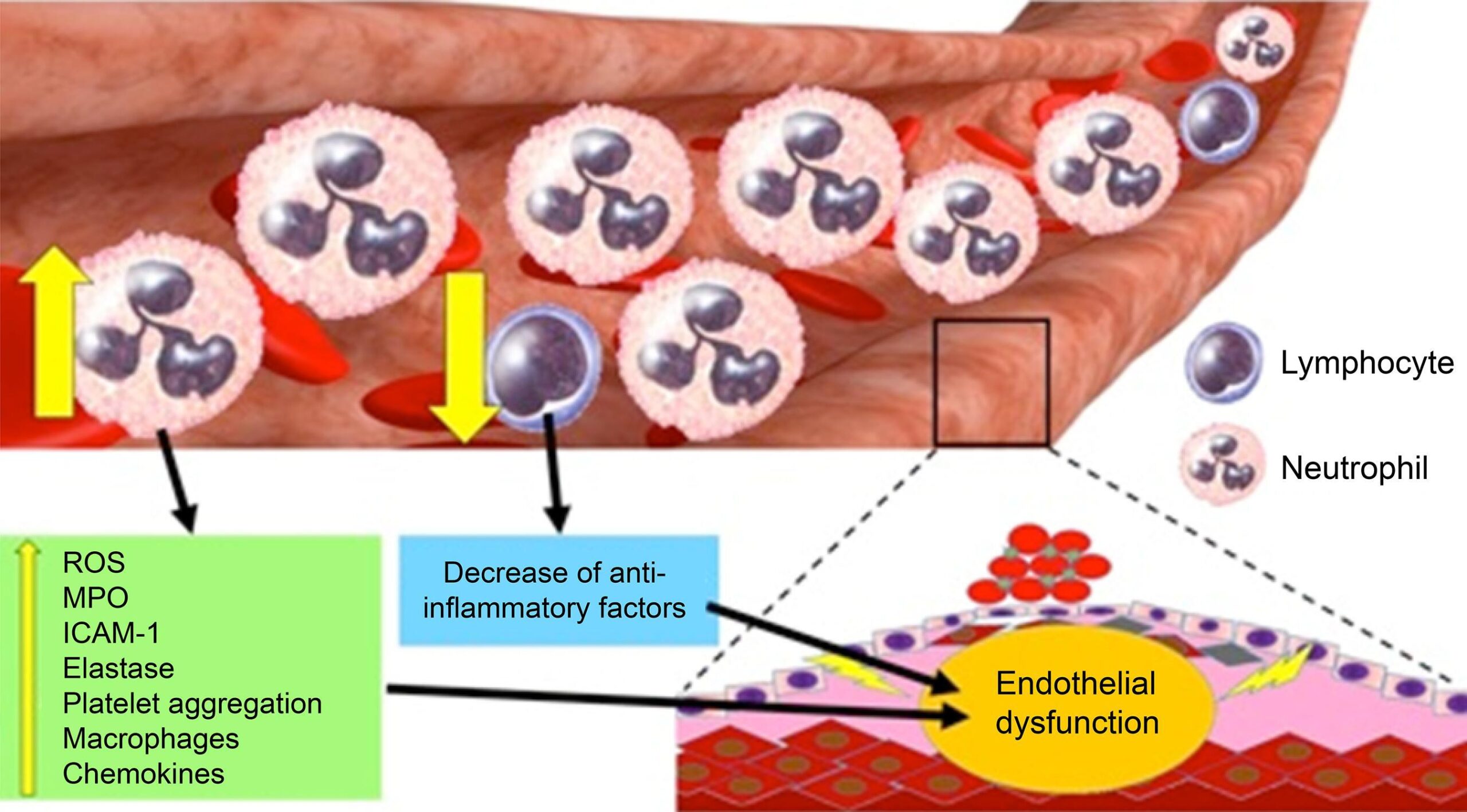
The development of cardiovascular diseases with atherosclerotic origin is associated with a severe inflammatory process. Neutrophils and lymphocytes are cells sensitive to this type of disorder and their ratio, known as the NLR (neutrophil/lymphocyte ratio), has shown to be useful in clinical practice. The aim of this study was to assess the role of NLR in cardiovascular disease risk assessment. We carried out a literature review in the PubMed databases searching for articles published between 2001 to 2017 and found that NLR is in fact a useful marker for cardiovascular disease. Using NLR in patients at cardiovascular risk would be useful to delineate the prognosis of patients with this disease pattern.

  • Atherosclerosis / physiopathology
  • Biomarkers
  • Cardiovascular Diseases/physiopathology
  • Inflammation
  • Leukocyte Count
  • Neutrophils
Read Full Article
Creative Commons Attribution (CC BY) Creative Commons license
02/07/2018 DOI: 10.5935/2359-4802.20180038 Views 1
Figure 1
ABC
Original Article

Neutrophil-to-Lymphocyte Ratio and Platelet-to-Lymphocyte Ratio are Predictors of Heart Failure

Erdal Durmus et al. Tarik Kivrak Fethullah Gerin Murat Sunbul … Ibrahim Sari Okan Erdogan

Abstract

Background:

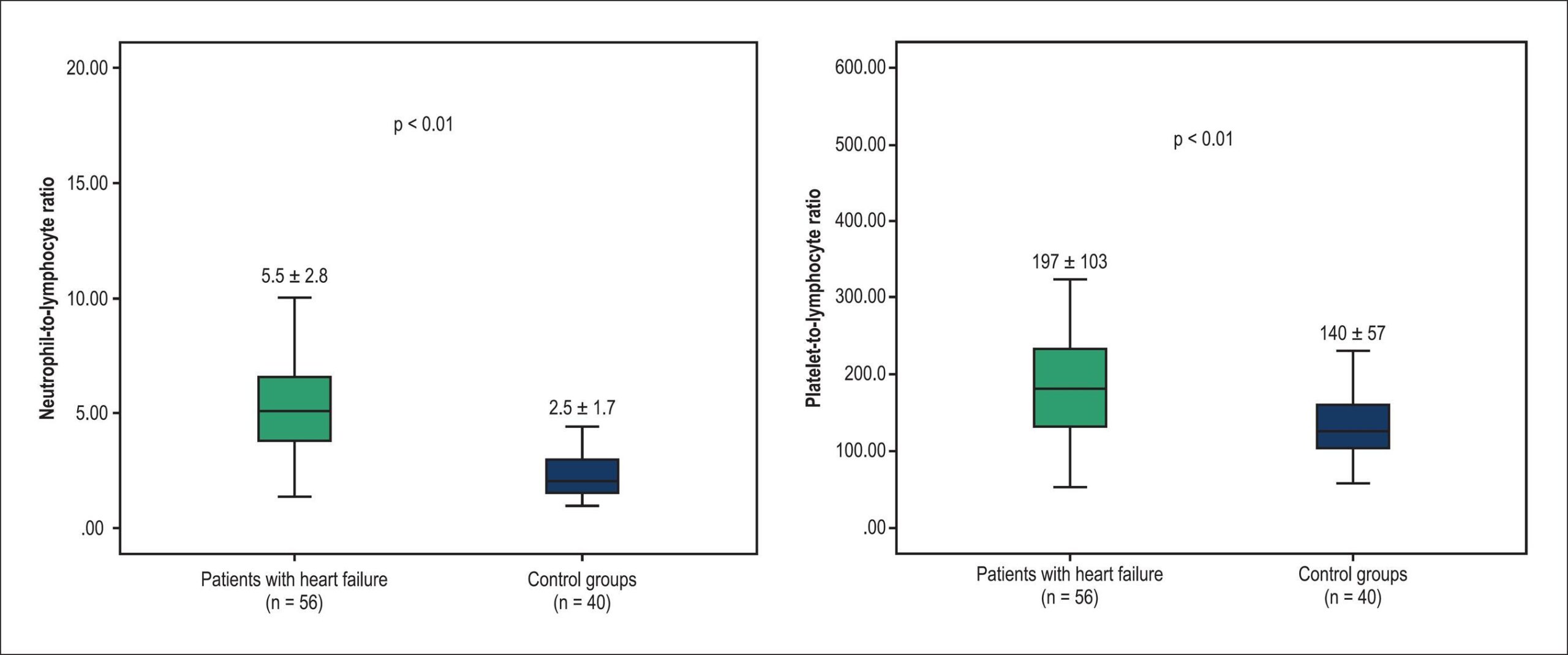
Neutrophil-to-lymphocyte ratio (NLR) and platelet-to-lymphocyte ratio (PLR) are inflammatory markers used as prognostic factors in various diseases. The aims of this study were to compare the PLR and the NLR of heart failure (HF) patients with those of age-sex matched controls, to evaluate the predictive value of those markers in detecting HF, and to demonstrate the effect of NLR and PLR on mortality in HF patients during follow-up.

Methods:

This study included 56 HF patients and 40 controls without HF. All subjects underwent transthoracic echocardiography to evaluate cardiac functions. The NLR and the PLR were calculated as the ratio of neutrophil count to lymphocyte count and as the ratio of platelet count to lymphocyte count, respectively. All HF patients were followed after their discharge from the hospital to evaluate mortality, cerebrovascular events, and re-hospitalization.

Results:

The NLR and the PLR of HF patients were significantly higher compared to those of the controls (p < 0.01). There was an inverse correlation between the NLR and the left ventricular ejection fraction of the study population (r: -0.409, p < 0.001). The best cut-off value of NLR to predict HF was 3.0, with 86.3% sensitivity and 77.5% specificity, and the best cut-off value of PLR to predict HF was 137.3, with 70% sensitivity and 60% specificity. Only NLR was an independent predictor of mortality in HF patients. A cut-off value of 5.1 for NLR can predict death in HF patients with 75% sensitivity and 62% specificity during a 12.8-month follow-up period on average.

Conclusion:

NLR and PLR were higher in HF patients than in age-sex matched controls. However, NLR and PLR were not sufficient to establish a diagnosis of HF. NLR can be used to predict mortality during the follow-up of HF patients.

  • Heart Failure / blood
  • Heart Failure / diagnosis
  • Leukocyte Count
  • Lymphocyte Count
  • multivariate analysis
  • Neutrophils / cytology
Read Full Article
Creative Commons Attribution (CC BY) Creative Commons license
03/11/2015 DOI: 10.5935/abc.20150126 Views 1
Prognostic factors in patients with acute coronary syndrome without ST segment elevation
ABC
Artigo Original

Prognostic factors in patients with acute coronary syndrome without ST segment elevation

Jessica Carolina Matos D'Almeida Santos et al. Mário de Seixas Rocha Marcos da Silva Araújo

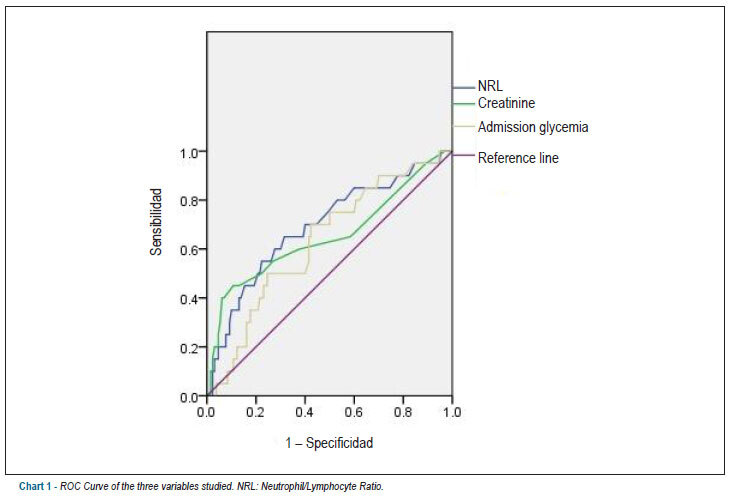
BACKGROUND: In patients with acute coronary syndromes (ACS) without ST segment elevation (SSE), it is suggested that a series of markers (inflammatory cells, hyperglycemia and renal function) can identify individuals with increased risk for cardiovascular events. OBJECTIVE: To evaluate the impact of these laboratory parameters on intra-hospital outcomes of patients with ACS with no SSE. METHODS: We prospectively evaluated 195 patients consecutively admitted with ACS with no SSE. Demographic and clinical laboratory data were recorded during the course of the hospitalization period in relation to the occurrence of combined events. RESULTS: Mean age was 67 ± 12 years, and 52% were men. In analyzing the area under the ROC curve, only neutrophil/lymphocyte ratios (AUC: 70%, CI 95% 56%-82%, p = 0.006) and creatinine (AUC: 62%, CI 95% 50%-80%, p = 0.03) discriminated those patients with ACS with no SSE who presented an adverse outcome. The patients who suffered an adverse event during hospitalization had lower lymphocyte counts (1502 ± 731/mm ³ vs. 2020 ± 862/mm³; p = 0.002), lower glomerular filtration rates (51 ± 27 mL / min vs. 77 ± 34 mL/min; p < 0,001) and higher serum creatinine levels (2.1 ± 2.7 mg/dL vs. 1.1 ± 1.3 mg/dL; p = 0.047) than those who progressed through hospitalization without incident. The logistic regression analysis showed that variables remaining as independent and significant predictors were: glomerular filtration rate (OR: 1.03; CI 95%: 1.00 – 1.13, p = 0.002), and lymphocyte count (OR: 1.02; CI95%: 1.01 to 1.04, p = 0.03). CONCLUSION: Assessment of renal function and lymphocyte count provide potentially useful information for the prognostic stratification in patients with ACS with no SSE (Arq Bras Cardiol. 2013; [online].ahead print, PP.0-0).

  • Acute coronary syndrome
  • Hyperglycemia
  • Leukocyte Count
  • Renal Insufficiency
Read Full Article
Creative Commons Attribution (CC BY) Creative Commons license
12/04/2013 DOI: 10.5935/abc.20130077 Views 1
ABC
Artigo Original

Association between inflammatory markers and cardiovascular risk factors in women from Kolkata, W.B, India

Debdutta Ganguli et al. Nilanjan Das Indranil Saha Krishna Rao Sanapala … Debnath Chaudhuri Saurabh Ghosh Sanjit Dey

BACKGROUND: Recent research has focused on the use of inflammatory biomarkers in the prediction of cardiovascular risk. However, information is scant regarding the association between these inflammatory markers with other cardiovascular risk factors in Asian Indians, particularly in women. OBJECTIVE: To explore the association between inflammatory markers such as high-sensitivity C-reactive protein (hs-CRP) and white blood cell (WBC) count and cardiovascular risk factors such as overall and central adiposity, blood pressure, lipid and lipoprotein variables and fasting glucose. METHODS: We conducted a cross-sectional analysis on 100 women aged 35-80 years. Participants were selected following cluster sampling methodology from 12 different randomly selected urban wards of Kolkata Municipal Corporation. RESULTS: Hs-CRP has a significant association with body mass index (BMI) ( p < 0.001) and waist circumference (WC) (p = 0.002). Significant inverse associations were observed between high-density lipoprotein cholesterol (HDL-C) and both inflammatory markers, hs-CRP (p = 0.031) and WBC count, (p = 0.014). Apolipoprotein A1 (Apo A1) was also negatively associated with hs-CRP. WBC count has significant correlation with fasting glucose and total cholesterol (TC) /HDL-C ratio. Using logistic regression, adjusting for age, BMI (odds ratio/OR, 1.186; confidence interval/CI, 1.046-1.345; p=0.008) and WC (OR, 1.045; CI, 1.005-1.087; p=0.027) were the covariates significantly associated with hs-CRP. CONCLUSION: In the present study, risk factors like BMI, WC, and HDL-C and apo A1 show significant association with hs-CRP. WBC count was significantly correlated with HDL-C, fasting glucose, TC/HDL-C ratio in women.

  • Adiposity
  • Dyslipidemias
  • India
  • Inflammation
  • Leukocyte Count
  • reactive protein C
  • Risk Factors
  • Women
Read Full Article
Creative Commons Attribution (CC BY) Creative Commons license
22/12/2010 DOI: 10.1590/S0066-782X2010005000165

How to cite this article

EndNote RIS

Electronic Document Format (Vancouver)

Santos HO, Izidoro LFM. Neutrophil-Lymphocyte Ratio in Cardiovascular Disease Risk Assessment. International Journal of Cardiovascular Sciences 2018;31(5):532-7.

Electronic Document Format (ABNT)

Santos, Heitor Oliveira; Izidoro, Luiz Fernando Moreira. Neutrophil-Lymphocyte Ratio in Cardiovascular Disease Risk Assessment. International Journal of Cardiovascular Sciences, v. 31, n. 5, p. 532-537, Jul. 2018.

Electronic Document Format (APA)

Santos, H. O., & Izidoro, L. F. M. (2018). Neutrophil-Lymphocyte Ratio in Cardiovascular Disease Risk Assessment. International Journal of Cardiovascular Sciences, 31(5), 532-537.

Electronic Document Format (ISO)

Santos, Heitor Oliveira and Izidoro, Luiz Fernando Moreira. Neutrophil-Lymphocyte Ratio in Cardiovascular Disease Risk Assessment. International Journal of Cardiovascular Sciences [online]. 2018, vol. 31, n. 5, [cited 2026-10-14], pp. 532-537. Available from: <https://journals.cardiol.br/en/article/neutrophil-lymphocyte-ratio-in-cardiovascular-disease-risk-assessment/>. ISSN 2359-4802

EndNote RIS

Electronic Document Format (Vancouver)

Durmus E, Kivrak T, Gerin F, Sunbul M, Sari I, Erdogan O. Neutrophil-to-Lymphocyte Ratio and Platelet-to-Lymphocyte Ratio are Predictors of Heart Failure. Arquivos Brasileiros de Cardiologia 2015;105(6):606-13.

Electronic Document Format (ABNT)

Durmus, Erdal; Kivrak, Tarik; Gerin, Fethullah; Sunbul, Murat; Sari, Ibrahim; Erdogan, Okan. Neutrophil-to-Lymphocyte Ratio and Platelet-to-Lymphocyte Ratio are Predictors of Heart Failure. Arquivos Brasileiros de Cardiologia, v. 105, n. 6, p. 606-613, Nov. 2015.

Electronic Document Format (APA)

Durmus, E., Kivrak, T., Gerin, F., Sunbul, M., Sari, I., & Erdogan, O. (2015). Neutrophil-to-Lymphocyte Ratio and Platelet-to-Lymphocyte Ratio are Predictors of Heart Failure. Arquivos Brasileiros de Cardiologia, 105(6), 606-613.

Electronic Document Format (ISO)

Durmus, Erdal and Kivrak, Tarik and Gerin, Fethullah and Sunbul, Murat and Sari, Ibrahim and Erdogan, Okan. Neutrophil-to-Lymphocyte Ratio and Platelet-to-Lymphocyte Ratio are Predictors of Heart Failure. Arquivos Brasileiros de Cardiologia [online]. 2015, vol. 105, n. 6, [cited 2026-10-14], pp. 606-613. Available from: <https://journals.cardiol.br/en/article/neutrophil-to-lymphocyte-ratio-and-platelet-to-lymphocyte-ratio-are-predictors-of-heart-failure/>. ISSN 0066-782X

EndNote RIS

Electronic Document Format (Vancouver)

Santos JCMD, Rocha MS, Araújo MS. Prognostic factors in patients with acute coronary syndrome without ST segment elevation. Arquivos Brasileiros de Cardiologia 2013;100(5):412-21.

Electronic Document Format (ABNT)

Santos, Jessica Carolina Matos D’Almeida; Rocha, Mário de Seixas; Araújo, Marcos da Silva. Prognostic factors in patients with acute coronary syndrome without ST segment elevation. Arquivos Brasileiros de Cardiologia, v. 100, n. 5, p. 412-421, Apr. 2013.

Electronic Document Format (APA)

Santos, J. C. M. D., Rocha, M. S., & Araújo, M. S. (2013). Prognostic factors in patients with acute coronary syndrome without ST segment elevation. Arquivos Brasileiros de Cardiologia, 100(5), 412-421.

Electronic Document Format (ISO)

Santos, Jessica Carolina Matos D’Almeida and Rocha, Mário de Seixas and Araújo, Marcos da Silva. Prognostic factors in patients with acute coronary syndrome without ST segment elevation. Arquivos Brasileiros de Cardiologia [online]. 2013, vol. 100, n. 5, [cited 2026-10-14], pp. 412-421. Available from: <https://journals.cardiol.br/en/article/prognostic-factors-in-patients-with-acute-coronary-syndrome-without-st-segment-elevation/>. ISSN 0066-782X

EndNote RIS

Electronic Document Format (Vancouver)

Ganguli D, Das N, Saha I, Sanapala KR, Chaudhuri D, Ghosh S, Dey S, et al. Association between inflammatory markers and cardiovascular risk factors in women from Kolkata, W.B, India. Arquivos Brasileiros de Cardiologia 2010;96(1):38-46.

Electronic Document Format (ABNT)

Ganguli, Debdutta; Das, Nilanjan; Saha, Indranil; Sanapala, Krishna Rao; Chaudhuri, Debnath; Ghosh, Saurabh; Dey, Sanjit. Association between inflammatory markers and cardiovascular risk factors in women from Kolkata, W.B, India. Arquivos Brasileiros de Cardiologia, v. 96, n. 1, p. 38-46, Dec. 2010.

Electronic Document Format (APA)

Ganguli, D., Das, N., Saha, I., Sanapala, K. R., Chaudhuri, D., Ghosh, S., & Dey, S. (2010). Association between inflammatory markers and cardiovascular risk factors in women from Kolkata, W.B, India. Arquivos Brasileiros de Cardiologia, 96(1), 38-46.

Electronic Document Format (ISO)

Ganguli, Debdutta and Das, Nilanjan and Saha, Indranil and Sanapala, Krishna Rao and Chaudhuri, Debnath and Ghosh, Saurabh and Dey, Sanjit. Association between inflammatory markers and cardiovascular risk factors in women from Kolkata, W.B, India. Arquivos Brasileiros de Cardiologia [online]. 2010, vol. 96, n. 1, [cited 2026-10-14], pp. 38-46. Available from: <https://journals.cardiol.br/en/article/association-between-inflammatory-markers-and-cardiovascular-risk-factors-in-women-from-kolkata-w-b-india/>. ISSN 0066-782X

  • About ABC Family
  • Internal Regulation
  • Editorial Board
  • Brazilian Society of Cardiology (SBC)

Issues

SBC Guidelines

  • Videos
  • Podcasts
  • News