| ABC
ABC Family Arquivos Brasileiros de Cardiologia International Journal of Cardiovascular Sciences ABC Heart Failure & Cardiomyopathy ABC Imagem Cardiovascular
Português English
ABC Family | ABC
Português English
  • About
    • About the Journal
    • Internal Regulation
    • Editors Section
    • Editorial Board
    • History
    • SBC Award
  • Instructions to Authors
    • Guidelines for Publication
    • Editorial Policy
    • Ethics Policy
    • Policy on the Use of Artificial Intelligence
    • Mandatory Publication Form
    • Publication Fee
  • Issues
  • SBC Guidelines
  • Abstracts
    • How to Publish an Abstract Supplement?
    • Supplements from the Brazilian Congress of Cardiology
  • About
    • About the Journal
    • Internal Regulation
    • Editors Section
    • Editorial Board
    • History
    • SBC Award
  • Instructions to Authors
    • Guidelines for Publication
    • Editorial Policy
    • Ethics Policy
    • Policy on the Use of Artificial Intelligence
    • Mandatory Publication Form
    • Publication Fee
  • Issues
  • SBC Guidelines
  • Abstracts
    • How to Publish an Abstract Supplement?
    • Supplements from the Brazilian Congress of Cardiology

ABC Family

  • ABC Family
  • Arquivos Brasileiros de Cardiologia
  • International Journal of Cardiovascular Sciences
  • ABC Heart Failure & Cardiomyopathy
  • ABC Imagem Cardiovascular
Search in

No content found.

Journals
Ordering
Article types
Others

  1. Home
  2. ABC
  3. Issues
  4. 2022, Volume 118, Number 2
Original Article

Clinical, Laboratory, and Imaging Profile in Patients with Systemic Amyloidosis in a Brazilian Cardiology Referral Center

Fábio Fernandes et al. Aristóteles Comte de Alencar Neto Bruno Vaz Kerges Bueno Caio Rebouças Fonseca Cafezeiro … João Henrique Rissato Roberta Shcolnik Szor Mariana Lombardi Peres de Carvalho Wilson Mathias Júnior Angelina Maria Martins Lino Jussara Bianchi Castelli Evandro de Oliveira Souza Félix José Alvarez Ramires Viviane Tiemi Hotta José Soares Júnior Caio de Assis Moura Tavares José Eduardo Krieger Carlos Eduardo Rochitte André Dabarian Ludhmila Abrahão Hajjar Roberto Kalil Filho Charles Mady

Abstract

Background

Systemic amyloidosis is a disease with heterogeneous clinical manifestations. Diagnosis depends on clinical suspicion combined with specific complementary methods.

Objective

To describe the clinical, laboratory, electrocardiographic, and imaging profile in patients with systemic amyloidosis with cardiac involvement.

Methods

This study was conducted with a convenience sample, analyzing clinical, laboratory, electrocardiographic, echocardiographic, nuclear medicine, and magnetic resonance data. Statistical significance was set at p < 0.05.

Results

A total of 105 patients were evaluated (median age of 66 years), 62 of whom were male. Of all patients, 83 had transthyretin (ATTR) amyloidosis, and 22 had light chain (AL) amyloidosis. With respect to ATTR cases, 68.7% were the hereditary form (ATTRh), and 31.3% were wild type (ATTRw). The most prevalent mutations were Val142Ile (45.6%) and Val50Met (40.3%). Time from onset of symptoms to diagnosis was 0.54 and 2.15 years, in the AL and ATTR forms, respectively (p < 0.001). Cardiac involvement was observed in 77.9% of patients with ATTR and in 90.9% of those with AL. Alterations were observed in atrioventricular and intraventricular conduction in 20% and 27.6% of patients, respectively, with 33.7% in ATTR and 4.5% in AL (p = 0.006). In the ATTRw form, there were more atrial arrhythmias than in ATTRh (61.5% versus 22.8%; p = 0.001). On echocardiogram, median septum thickness in ATTRw, ATTRh, and AL was 15 mm, 12 mm, and 11 mm, respectively (p = 0.193). Elevated BNP was observed in 89.5% of patients (median 249, ICR 597.7), and elevated troponin was observed in 43.2%.

Conclusion

In this setting, it was possible to characterize cardiac involvement in systemic amyloidosis in its different subtypes by means of clinical history and the diagnostic methods described.
  • Amyloidosis
  • Diagnosis Imaging
  • Heart Failure
  • Hypertrophic Cardiomyopathy
  • Immunoglobulin Light Chains
  • Prealbumin
Read Full Article
Creative Commons Attribution (CC BY) Creative Commons license
07/03/2022 DOI: 10.36660/abc.20201003 Views 1
Editorial

Parahissian Cardiac Stimulation – New Alternative for More Physiological Stimulation of the Heart?

Rodrigo M. Kulchetscki et al. Mauricio Scanavacca

Since the implantation of the first cardiac pacemaker in 1958, artificial cardiac pacing has been the subject of innumerable research, great technical improvement, and technological innovations. Thus, the correction of bradyarrhythmias using implantable electronic devices is the area in which one of the greatest advances in knowledge within Interventional Cardiology has been observed.

More recently, the description of a new technique, the so-called physiological cardiac stimulation, caused great enthusiasm among specialists and a real transformation in the evolution of patients. Physiological stimulation includes a set of methods intended to electrically stimulate, directly or indirectly, the intraventricular conduction system of the heart. Its great benefit is to minimize the deleterious effects caused by direct stimulation of the right ventricular myocardium (RV), which generates dyssynchrony and possible left ventricular contractile dysfunction in the medium and long term. ,

[…]

  • Eletric Stimulation Cardiac/instrumentation
  • Pacemarkr, Artificial/trends
  • Therapy Electric Stimulation/trends
Read Full Article
Creative Commons Attribution (CC BY) Creative Commons license
07/03/2022 DOI: 10.36660/abc.20220016
Figure 1
Original Article

Rationale and Design of the COVID-19 Outpatient Prevention Evaluation (COPE – Coalition V) Randomized Clinical Trial: Hydroxychloroquine vs. Placebo in Non-Hospitalized Patients

Haliton Alves de Oliveira Junior et al. Cleusa P. Ferri Icaro Boszczowski Gustavo B. F. Oliveira … Alexandre B. Cavalcanti Regis G. Rosa Renato D. Lopes Luciano C. P. Azevedo Viviane C. Veiga Otavio Berwanger Álvaro Avezum

Abstract

Background

Despite the need for targeting specific therapeutic options for coronavirus disease 2019 (COVID-19), there has been no evidence of effectiveness of any specific treatment for the outpatient clinical setting. There are few randomized studies evaluating hydroxychloroquine (HCQ) in non-hospitalized patients. These studies indicate no benefit from the use of HCQ, but they assessed different primary outcomes and presented important biases for outcome evaluation.

Objective

To evaluate if HCQ may prevent hospitalization due to COVID-19 compared to a matching placebo.

Methods

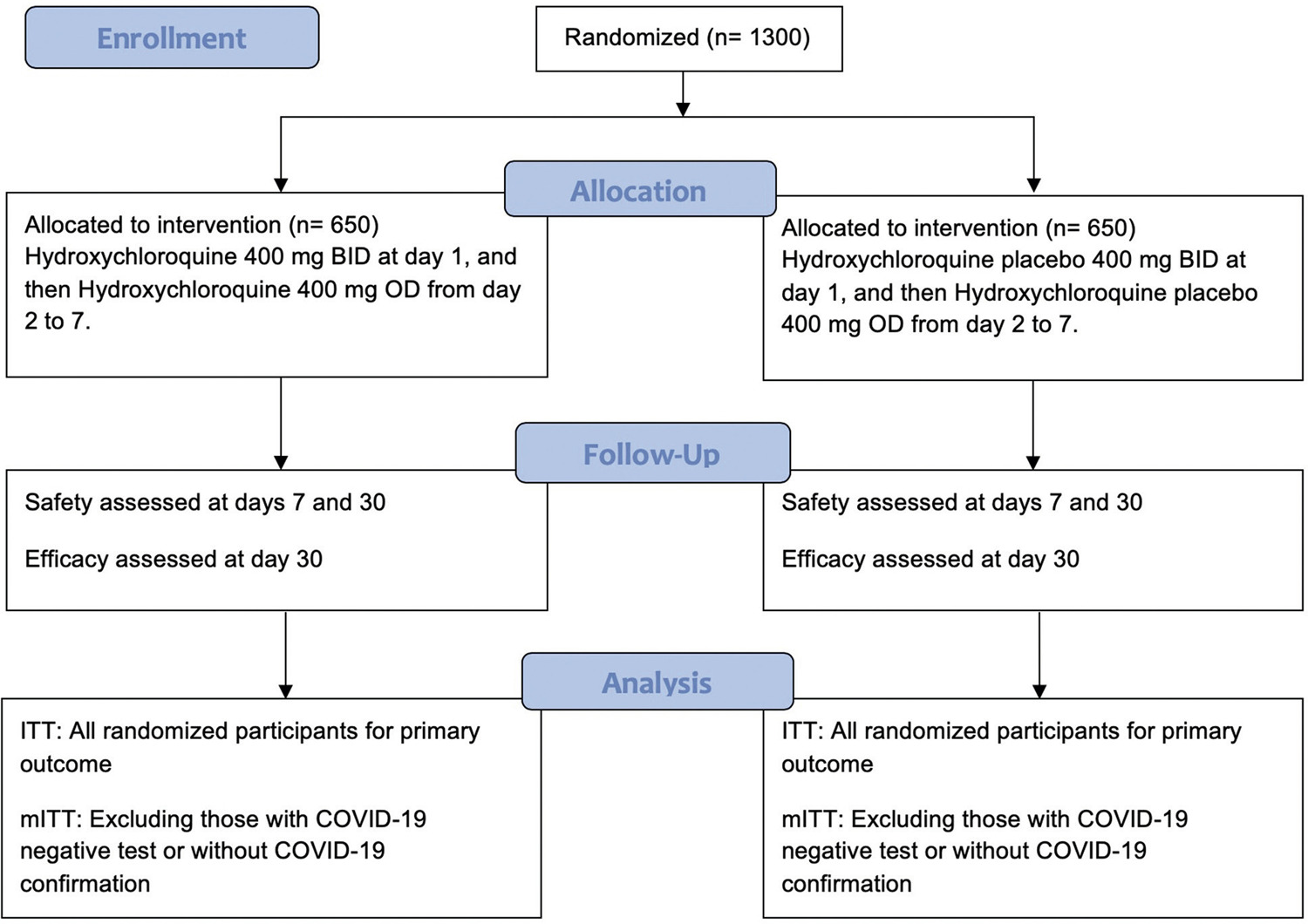
The COVID-19 Outpatient Prevention Evaluation (COPE) study is a pragmatic, randomized, double-blind, placebo-controlled clinical trial evaluating the use of HCQ (800 mg on day 1 and 400 mg from day 2 to day 7) or matching placebo for the prevention of hospitalization due to COVID-19 in early non-hospitalized confirmed or suspected cases. Inclusion criteria are adults (≥ 18 years) seeking medical care with mild symptoms of COVID-19, with randomization ≤ 7 days after symptom onset, without indication of hospitalization at study screening, and with at least one risk factor for complication (> 65 years; hypertension; diabetes mellitus; asthma; chronic obstructive pulmonary disease or other chronic lung diseases; smoking; immunosuppression; or obesity). All hypothesis tests will be two-sided. A p-value < 0.05 will be considered statistically significant in all analyses. Clinicaltrials.gov: NCT04466540.

Results

Clinical outcomes will be centrally adjudicated by an independent clinical event committee blinded to the assigned treatment groups. The primary efficacy endpoint will be assessed following the intention-to-treat principle.

Conclusion

This study has the potential to reliably answer the scientific question of HCQ use in outpatients with COVID-19. To our knowledge, this is the largest trial evaluating HCQ in non-hospitalized individuals with COVID-19.

  • COVID-19
  • Hydroxychloroquine
  • Randomized Controlled Trial
  • SARS-CoV-2
Read Full Article
Creative Commons Attribution (CC BY) Creative Commons license
07/03/2022 DOI: 10.36660/abc.20210832 Views 2
Figure 1
Atualização

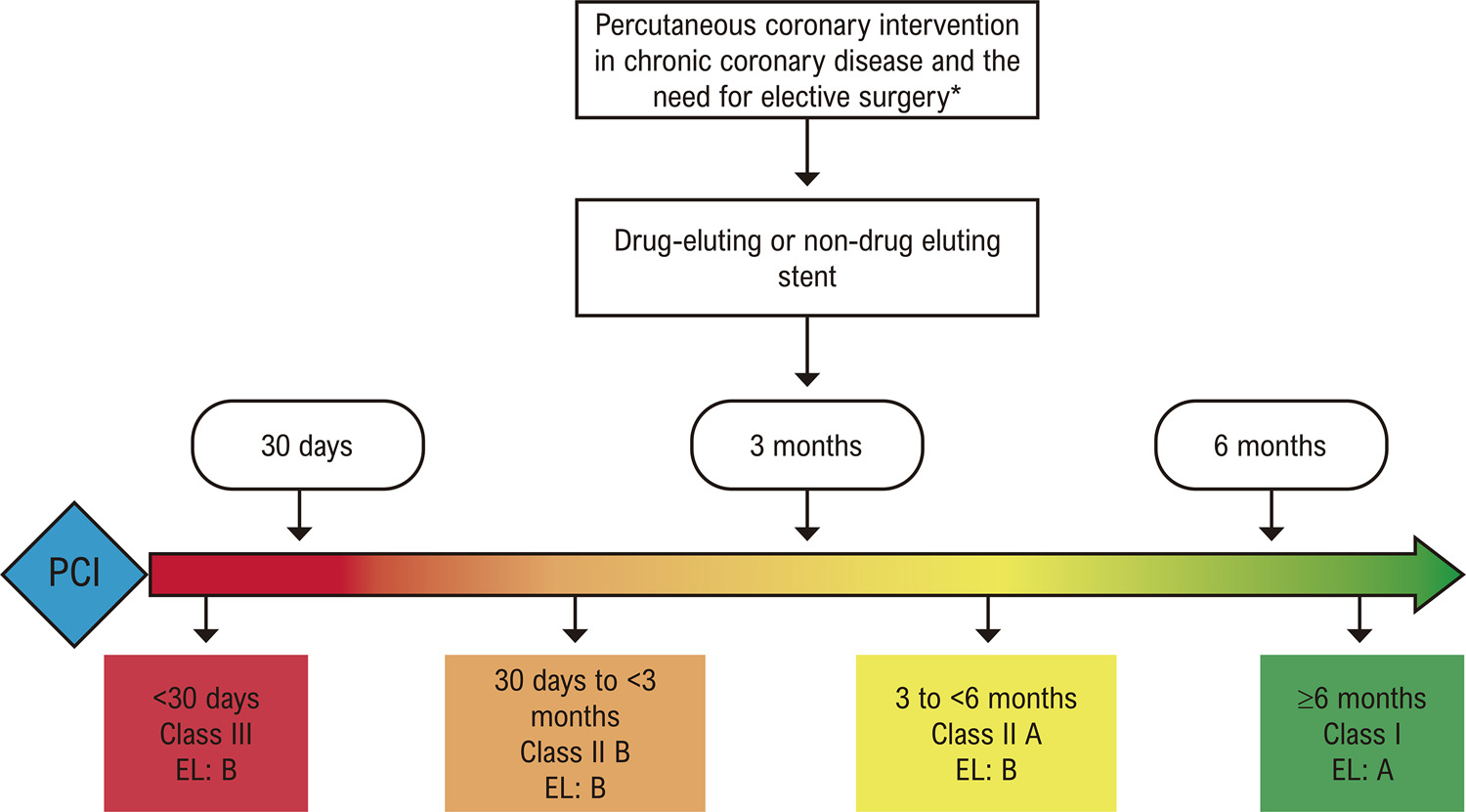
Update of the Brazilian Society of Cardiology’s Perioperative Cardiovascular Assessment Guideline: Focus on Managing Patients with Percutaneous Coronary Intervention – 2022

Daniela Calderaro et al. Luciana Dornfeld Bichuette Pamela Camara Maciel Francisco Akira Malta Cardozo … Henrique Barbosa Ribeiro Danielle Menosi Gualandro Luciano Moreira Baracioli Alexandre de Matos Soeiro Carlos Vicente Serrano Jr. Ricardo Alves da Costa Bruno Caramelli

1. Introduction

The care of patients undergoing percutaneous coronary intervention (PCI) and the eventual need for early non-cardiac surgery is one of the topics that generates the most debate in perioperative medicine, as it involves important questions about the management of antithrombotic therapy, in addition to the usual management issues of cardiac risk in coronary artery disease. On the one hand, the hemorrhagic risk inherent in surgery and potentiated by antiplatelet agents must be managed. On the other, the increased risk of stent thrombosis must also be considered, especially if dual antiplatelet therapy (DAPT) is shortened. Elements such as the urgency and extent of the surgical procedure, the patient’s clinical status, coronary angioplasty data (eg, the elapsed interval), an elective or emergency context, the primary results, and the stent type are essential for individualizing recommendations, considering both hemorrhagic risk ( ) and thrombotic risk ( ).

[…]

Read Full Article
Creative Commons Attribution (CC BY) Creative Commons license
07/03/2022 DOI: 10.36660/abc.20220039
Editorial

Amyloidosis for Cardiologists

Roberto Coury Pedrosa

We now know that cardiac amyloidosis (CA) is more frequent than traditionally considered and that it is particularly relevant in patients over 65 years with heart failure or aortic stenosis. Nowadays, given the relevance of CA for cardiologists, its prevalence is still a problem, and efforts must be made to speed up diagnosis and maximize opportunities for new disease-modifying treatments. – In Brazil, it is estimated that there are more than 5,000 patients with the transthyretin amyloidosis variant (ATTRv) with polyneuropathy, where cardiac involvement also plays an important role. We found that 26% of patients with V30M ATTRv-PN from our referral center registered in THAOS are late-onset cases (LO). In these patients, we found interventricular septum hypertrophy in almost 70% and abnormal ECG in almost 90%. Interestingly, 78% of the patients with LO-V30M and cardiomyopathy did not have symptoms of heart failure.

In our country, there are neither public nor private health policies specifically designed to monitor and follow-up patients with CA. Similarly, very little is known about the repercussions of this disease on mortality rates. – Many structural barriers are difficult to overcome, such as lack of implementation of screening programs and lack of validated diagnostic tests, particularly in rural areas. There is no entity that monitors these processes, and positive cases may not receive confirmation or access to treatment. The genetic sequencing of the TTR gene is a new tool, but it is not yet available in general laboratories; it is restricted to clinical research in hospitals or universities. We believe that many patients with CA die from this disease due to lack of appropriate and adequate medical care. , We consider it urgent to adopt measures that can improve this situation.

[…]

  • Amyloidosis Cardiomyopathy
Read Full Article
Creative Commons Attribution (CC BY) Creative Commons license
07/03/2022 DOI: 10.36660/abc.20210959
Editorial

Left Bundle Pacing: Has Cardiac Pacing Changed Forever?

José Carlos Pachón-M et al. Juán Carlos Pachón-M Carlos Thiene C. Pachón

A hidden and deleterious side effect

Despite the great benefit of the AV synchronized pacing, the endocardial lead at the apex of the right ventricle remained causing unwanted pacing with wide QRS and complete left bundle branch block effect, with significant dyssynchrony of the left ventricular walls given rise to a second problem: the “Ventricular Pacemaker Syndrome or Wide QRS Syndrome”, whose prevention and treatment gave origin to resynchronization therapy. – . Despite being present in the entire cardiac stimulation, this dyssynchrony was neglected for a long time due to the great benefit resulting of the bradycardia correction.

[…]

  • Bradyarrhythmias
  • Cardiac Pacemaker Artificial
  • Cardiac Resynchronization
  • Dilated Cardiomyopathy
  • Syncope
Read Full Article
Creative Commons Attribution (CC BY) Creative Commons license
07/03/2022 DOI: 10.36660/abc.20211004
Original Article

Interleukin-35 Levels in Patients with Stable Coronary Artery Disease

Ersan Oflar et al. Mustafa Hakan Sahin Bulent Demir Abdulcelil Sait Ertugrul … Didem Melis Oztas Metin Onur Beyaz Murat Ugurlucan Fatma Nihan Turhan Caglar

Abstract

Background

It has been shown that interleukin-35 (IL-35) subunits are strongly expressed in atherosclerotic plaques in humans. Therefore, it is considered to play a role in atherosclerosis.

Objectives

In this study, IL-35 levels were compared with the control group in patients with stable coronary artery disease (CAD), and the association between IL-35 levels and the lesion type, lesion severity and extension was investigated with the Gensini score (GS) and the Syntax score (SS) in the patient group.

Methods

Sixty patients (18 female and 42 male) with CAD diagnosed by coronary angiography, who presented with typical chest pain and positive noninvasive cardiac stress test, and 46 patients (18 female and 28 male) with normal coronary lumenogram, were included in this study. Gensini and Syntax scores were calculated in the patient group, and these values were compared with IL-35 levels. Non-normally distributed variables were analyzed by the Mann-Whitney U test, whereas normally distributed parameters were assessed by Student’s t-test. The difference between categorical variables were evaluated by the Chi-square or Fisher test. P-values<0.05 were considered as statistically significant.

Results

No significant differences were observed between patients and the control group in terms of demographic characteristics and laboratory findings. Compared to the control group, IL-35 levels of the CAD group were considerably lower (36.9±63.9 ng/ml vs. 33.2±13.2 ng/ml, p<0.008). Although not statistically significant, IL-35 levels were higher in patients with low SS than among those with high SS (33.2±13.7 vs. 31.8±8.9, p=0.51). The IL-35 values of the patients with high GS were significantly lower than in patients with low GS (35±17.4 vs. 30.7±8.6, p=0.043).

Conclusion

It has been shown that IL-35 levels can be a new biomarker for stable CAD, and IL-35 is associated with the extension of CAD.

  • Atherosclerosis
  • Coronary Artery Disease
  • Gensini score
  • Interleukin 35
  • SYNTAX score
Read Full Article
Creative Commons Attribution (CC BY) Creative Commons license
07/03/2022 DOI: 10.36660/abc.20200945
Editorial

Pterostilbene after Acute Myocardial Infarction: Effect on Heart and Lung Tissues

Bruna Paola Murino Rafacho

Cardiovascular diseases are the main cause of death worldwide. , In Brazil, ischemic heart diseases are the leading cause of cardiovascular death, and acute myocardial infarction presented a mortality rate of 9.06% until October 2021.

Myocardial ischemia generates reactive oxygen species (ROS) and reactive nitrogen species (RNS), which, in turn, increases pro-inflammatory mediators that might activate different pathways to promote repairing of the infarcted region, a process known as cardiac remodeling. – However, when there is prolonged production of reactive species, incapacity of the antioxidant system and amplification of inflammatory and metabolic changes in the heart, non-infarcted region is impaired, leading to progressive changes in ventricular geometry. Progressively, changes can occur in the left and right ventricles associated with hemodynamic changes in the pulmonary vessels and consequent pulmonary hypertension. , In this context, the search for treatments that might attenuate cardiac and pulmonary changes focusing on redox balance stand out.

[…]

  • Acute Myocardial Infarction
  • Oxidative Stress
  • Pterostilbene
Read Full Article
Creative Commons Attribution (CC BY) Creative Commons license
07/03/2022 DOI: 10.36660/abc.20211017
Figure 1
Brief Communication

Risk Stratification and Cardiac Sympathetic Activity Assessment Using Myocardial [123I] MIBG Imaging in Renal Denervation

Joana Delgado-Silva et al. Ana Paula Moreira Gracinda Costa Lino Gonçalves

Abstract

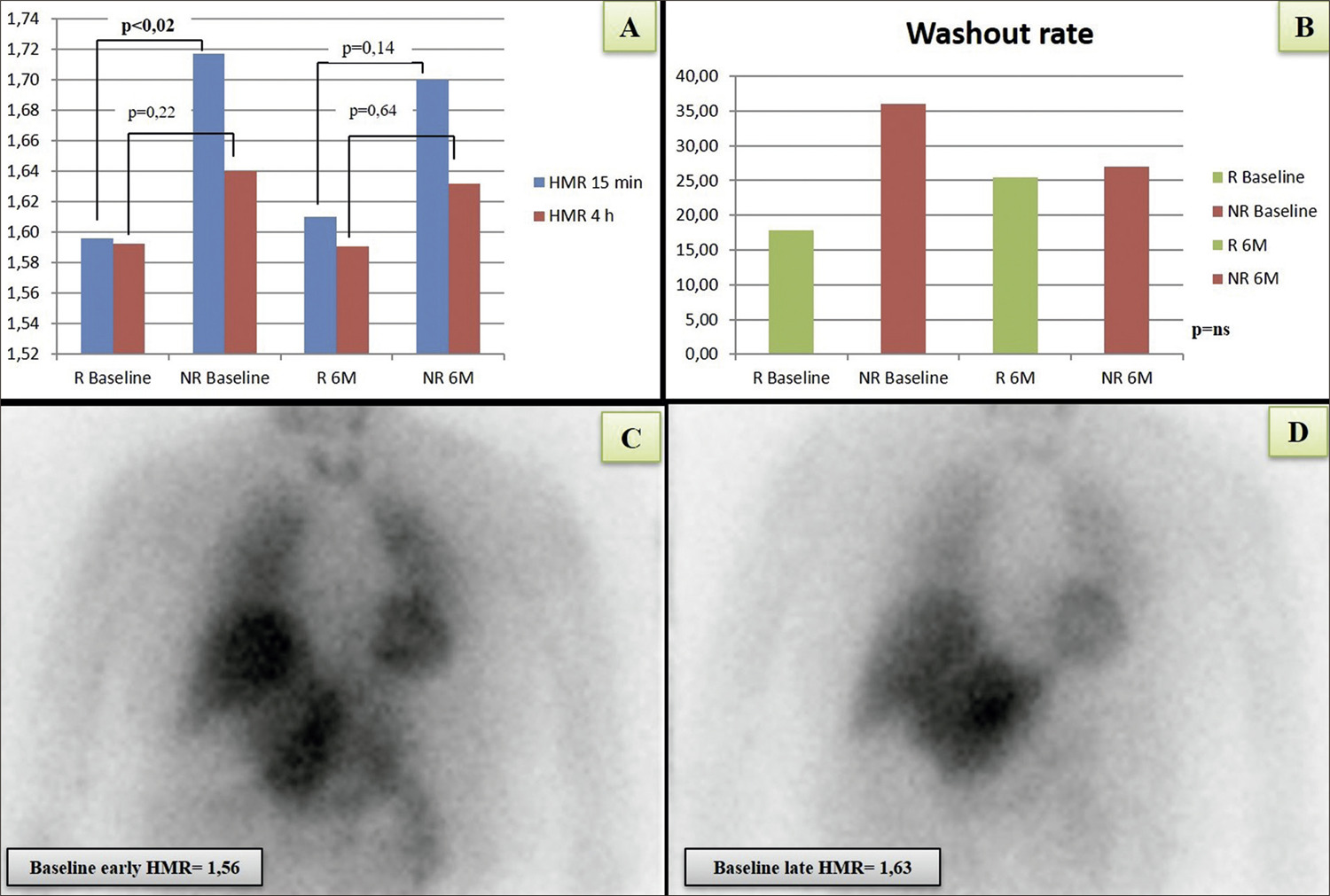
Hyperactivation of the sympathetic nervous system plays a central role in the pathophysiology of hypertension. The aim of this study was to assess cardiac sympathetic activity and investigate the role of myocardial123I-labelled meta-iodo benzyl guanidine ([123I] MIBG) scintigraphy in cardiovascular risk stratification of patients with resistant hypertension treated with renal denervation (RDN). Eighteen patients were included in this prospective study (mean age 56 ± 10 years old, 27.8% females). Transthoracic echocardiogram, general blood analysis and myocardial ([123I] MIBG scintigraphy were performed before and six-months after RDN. A patient was considered a responder (R) if a drop ≥ 5mmHg on mean systolic ambulatory blood pressure (BP) monitoring was observed at the six-month follow-up. 66.7% of patients were R (drop in systolic BP of 20.6 ± 14.5mmHg, vs minus 8 ± 11.6mmHg in non-responders (NR), p=0.001). Early heart-mediastinum ratio (HMR) was significantly lower at baseline in the R group (1.6 ± 0.1 vs 1.72 ± 0.1, p<0.02) but similar at six months. Considering both instants in time, the R group had lower early HMR values than the NR group (p<0.05). Both the late HMR and the washout rate were identical and no significant correlation between response to RDN or any MIBG imaging index was found. Renal denervation effectively lowered blood pressure in the majority of patients but [123I] MIBG was not useful in predicting the response. However, there was evidence of sympathetic overdrive and, both early and late HMR were overall reduced, probably putting this population at a higher risk of adverse events.

  • 3-iodobenzylguanidine
  • Kidney/denervation
  • Myocardial/diagnostic imaging
  • Radionuclide Imaging
  • Resistant Hypertension
  • Sympathetic Nervous System
Read Full Article
Creative Commons Attribution (CC BY) Creative Commons license
07/03/2022 DOI: 10.36660/abc.20201253 Views 2
Original Article

Left Bundle Branch Pacing of His-Purkinje Conduction System: Initial Experience

Alexander Romeno Janner Dal Forno et al. Caique M. P. Ternes João Vítor Ternes Rech Helcio Garcia Nascimento … Andrei Lewandowski Grazyelle Damasceno Andre d’Avila

Abstract

Background

Conventional right ventricular pacing increases the risk of atrial fibrillation and heart failure in pacemaker patients. Stimulation of the left bundle branch (LBB) of the His-Purkinje system can prevent the unwanted outcomes of right ventricular pacing.

Objective

To retrospectively analyze the intraoperative outcomes, electrocardiographic and clinical data from the initial follow-up of patients submitted to stimulation of the LBB.

Methods

The electronic parameters of the implant and of possible early complications of 52 consecutive patients submitted to stimulation of the conduction system were evaluated. The adopted significance level was 0.05.

Results

Fifty-two patients underwent left bundle branch stimulation, with 50 successful procedures; 69.2% of the patients were male, and the median and interquartile range of age at the time of implantation was 73.5 (65.0-80.0) years. The pre-implant QRS duration was 146 (104-175) ms and 120 (112-130) ms after the procedure. The left ventricle activation time was 78 (70-84) ms. The R-wave amplitude was 12.00 (7.95-15.30) mV, with a stimulation threshold of 0.5 (0.4-0.7) V x 0.4 ms and impedance of 676 (534-780) ohms. The procedure duration was 116 (90-130) min, and the fluoroscopy time was 14.2 (10.0-21.6) min.

Conclusion

Cardiac stimulation of the His-Purkinje conduction system through the stimulation of the left bundle branch is a safe and feasible technique. In this study, it showed a high success rate, with low procedure and fluoroscopy periods, achieving adequate electronic measurements.

  • Artificial Cardiac Pacing
  • Artificial Pacemaker
  • Electric Stimulation Therapy
Read Full Article
Creative Commons Attribution (CC BY) Creative Commons license
07/03/2022 DOI: 10.36660/abc.20201085 Views 1
Original Article

Ventricular Synchrony in Para-Hisian Cardiac Pacing as an Alternative for Physiological Cardiac Activation (Indirect Recruitment of the His Bundle?)

Andres Di Leoni Ferrari et al. Guilherme Ferreira Gazzoni Luis Manuel Ley Domingues Jessica Caroline Feltrin Willes … Gustavo Chiari Cabral Flavio Vinicius Costa Ferreira Laura Orlandini Lodi Gustavo Reis

Abstract

Background

Artificial cardiac pacing by direct or indirect His bundle capture results in synchronous ventricular contraction (physiological pacing).

Objectives

To compare cardiac synchronization, technical characteristics, and electronic parameters between two techniques of indirect His-bundle pacing: non-selective (NS-HBP) vs para-Hisian pacing (PHP).

Methods

The experimental intervention (between November 2019 and April 2020) consisted of implanting a DDD pacemaker in patients who had left ventricular ejection fraction (LVEF) > 35%. The resulting cardiac synchronization was compared using an electrocardiographic algorithm that analyzed QRS variation and the technical characteristics of non-selective Hisian pacing (DDD-His) and para-Hisian pacing (DDD-Var).

Results

Of 51 total patients (men: 28), 66.7% (34) were allocated to the DDD-Var group and 33.3% (17) to the DDD-His group. The mean ages in each group were 74 and 79 years, respectively. In the DDD-Var group, QRS variation (ventricular synchrony) improved after implantation (p < 0.001). In post-implantation ECG, 91.2% of the DDD-Var group presented a physiological pacing pattern, which was similar to the DDD-His group (88.2%; p = 0.999). The paced QRS axis was also similar (physiological) for both groups. Intraoperative fluoroscopy time (XRay) during implantation was lower for the para-Hisian technique (median 7 min in the DDD-Var group vs 21 min in the DDD-His group, p < 0.001). The mean QRS duration increased in the DDD-Var group (114.7 ms pre-implantation vs 128.2 ms post-implantation, p = 0.044). The mean post-implantation R-wave amplitude was 11.2 mV in the DDD-Var group vs 6.0 mV in the DDD-His group, p = 0.001.

Conclusion

Para-Hisian pacing appears to indirectly recruit the His bundle, which would make this an effective and comparable strategy for physiological pacing, resulting in synchronous ventricular contraction similar to that of non-selective Hisian pacing.

  • Artificial Cardiac Pacing
  • Artificial Pacemaker
  • Electric Stimulation Therapy
Read Full Article
Creative Commons Attribution (CC BY) Creative Commons license
07/03/2022 DOI: 10.36660/abc.20201233 Views 1
Editorial

Food Intake among the Diabetic and Non-Diabetic Elderly Population in Brazil

Mariana de Souza Dorna

With the growth in the general population and, consequently, in the elderly population, concerns about mental health and the quality of life of these individuals have also risen. Data from the International Diabetes Federation (IDF) suggest that, in 2019, approximately 463 million adults (20-79 years of age) have received a diabetes mellitus (DM) diagnosis. Among them, 1 in every 5 are elderly individuals. – According to the IDF, Brazil ranks 5thin relation to the number of people diagnosed with DM.

A sedentary lifestyle and an unbalanced diet are among the main factors for the development of DM. Nonetheless, epidemiological studies, which search for associations between food consumption and DM, are limited. By contrast, eating standards based on the consumption of ultraprocessed foods and the greater intake of fresh fruits and vegetables has proven to be effective in both the prevention and management of chronic non-communicable diseases (NCDs). This diet standard, known as “Mediterranean”, is gaining ground, as it promotes healthy lifestyles and a high regard for seasonal foods.

[…]

  • Aged
  • Diabetes Mellitus
  • Diet Mediterranean, Risk Factors
  • Elderly Population
  • Epidemiology
  • Feeding
  • Fruits
  • Sedentarism
  • Vegetables
Read Full Article
Creative Commons Attribution (CC BY) Creative Commons license
07/03/2022 DOI: 10.36660/abc.20211001 Views 1
Figure 1
Original Article

Eating Behavior of Older Adults with and Without Diabetes: The Vigitel Survey, Brazil, 2016

Daniela de Assumpção et al. Ana Maria Pita Ruiz Flavia Silva Arbex Borim Anita Liberalesso Neri … Deborah Carvalho Malta Priscila Maria Stolses Bergamo Francisco

Abstract

Background

A healthy diet is a protection factor against type 2 diabetes and plays an important role in the treatment of the disease, as well as associated comorbidities.

Objective

Characterize the eating habits of older adults (≥ 65 years) with and without diabetes residing in capital cities and the Federal District of Brazil.

Methods

A cross-sectional study was conducted using data from the Surveillance of Risk and Protection Factors for Chronic Diseases Through a Telephone Survey (Vigitel, 2016). The prevalence of diabetes mellitus was estimated according to sociodemographic variables, physical inactivity level, self-rated health status and body mass index. Dietary habits were assessed based on the frequency (weekly and daily) of consumption of healthy and unhealthy foods and the replacement of food by snacks. Differences were determined using Pearson’s chi-square test (Rao-Scott), with the significance level set at 5%.

Results

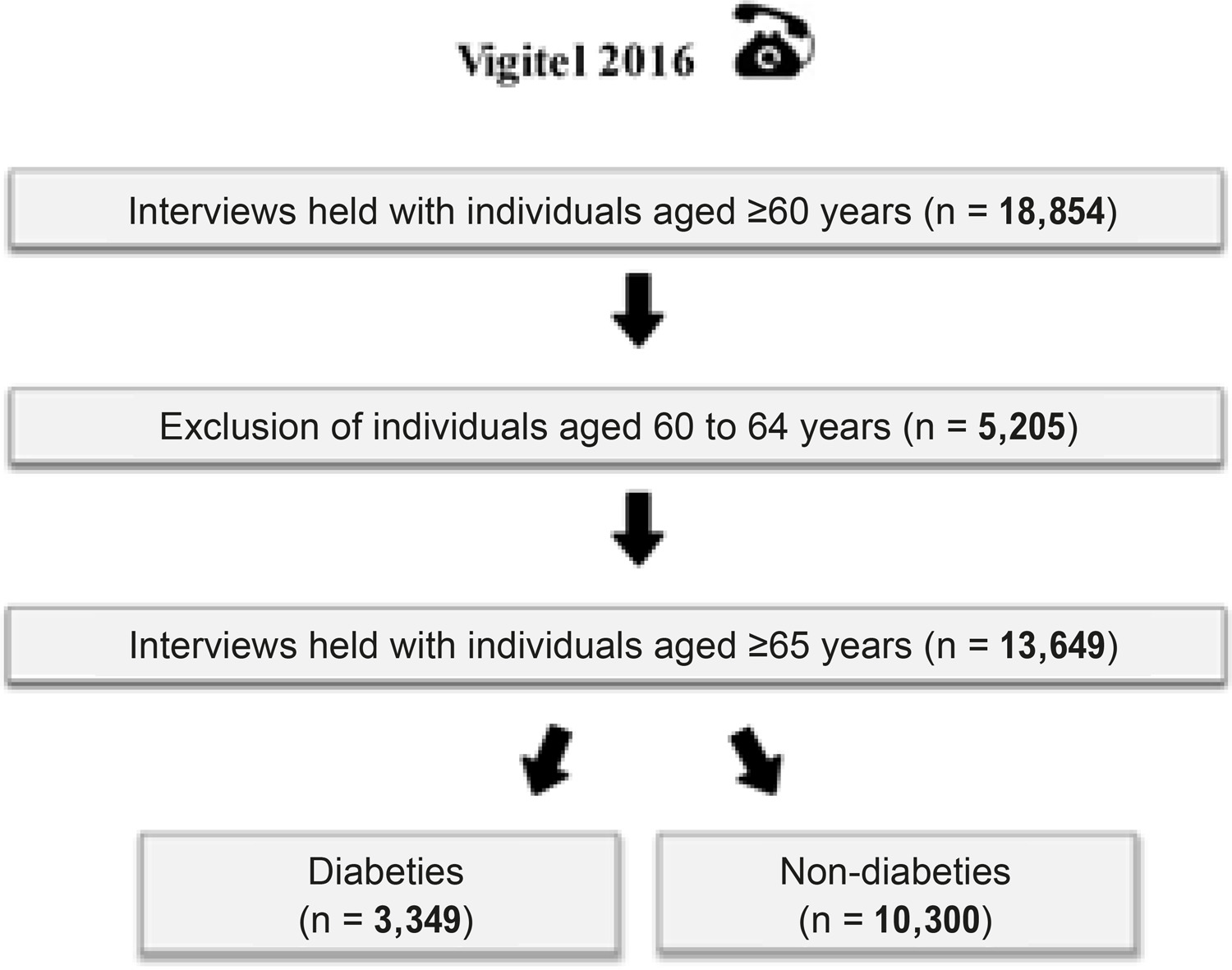
A total of 13,649 older adults were interviewed. The prevalence of self-reported diabetes was 27.2% (95% CI: 25.5; 29.0). Compared to non-diabetics, diabetic individuals had a higher consumption of raw vegetables (32.1% vs. 26.5%/3-4 days/week) and lower consumption of chicken (3.8% vs. 6.4%/hardly ever/never), fruit juice (24.0% vs. 29.6%) and sweets (6.8% vs. 16.2%) ≥ 5 days/week. Compared to non-diabetics, diabetic individuals consumed more skim milk (51.5% vs. 44.6%) and diet soda (60.0% vs. 17.3%) ≥ 5 days/week, raw vegetables (9.1% vs. 2.5%/at dinner) and sweets (37.7% vs. 20.5%/twice/day) 3-4 days/week.

Conclusion

The observed differences emphasize the need for healthy eating interventions for all older adults, as well as specific counseling for those with diabetes.

  • Aged
  • Diabetes Mellitus
  • Eating
  • Health Surveys
Read Full Article
Creative Commons Attribution (CC BY) Creative Commons license
07/03/2022 DOI: 10.36660/abc.20201204 Views 1
Figure 1
Research Letter

A Step-By-Step Fight for Life in a Young Woman with High-Risk Pulmonary Embolism and Bilateral Renal Artery Occlusion

Miruna Stefan et al. Roxana Cristina Rimbas Rozina Vornicu Ruxandra Daneţ … Vlad Damian Vintila Bogdan Dorobat Alexandra Carp Vinereanu Dragos

Introduction

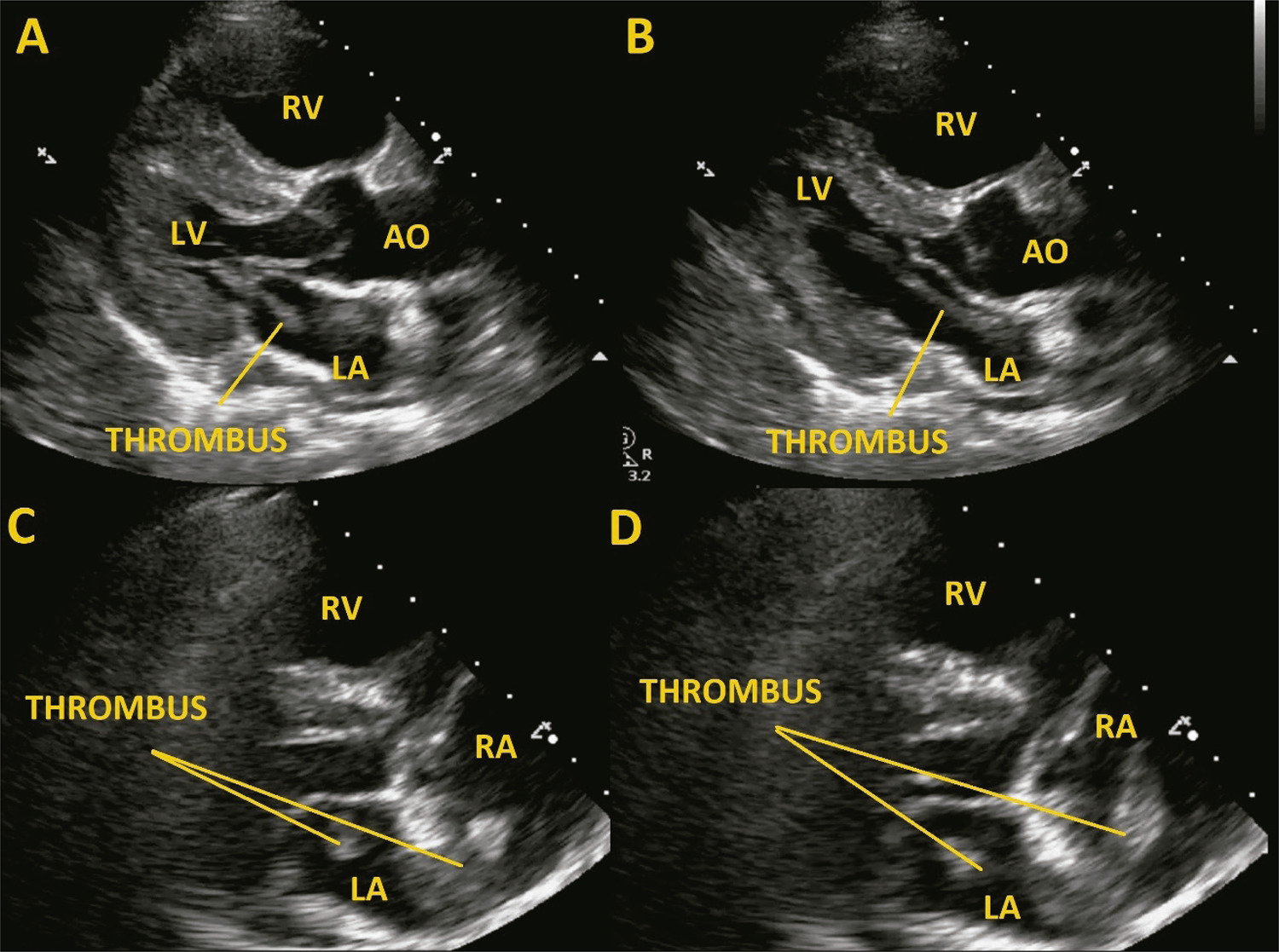
Right heart thrombus-in-transit is rare in the context of acute pulmonary embolism (APE) and is associated with high mortality and morbidity. , Transthoracic echocardiography (TTE) should always be performed in patients presenting dyspnea, chest pain, and hemodynamic instability. This case illustrates the importance of multimodality imaging in managing difficult cases with APE and right heart thrombus in transit, as well as the complications of this condition. A therapeutic approach should be decided on by multidisciplinary teams.

[…]

  • Multimodal Imaging
  • Pulmonary embolism
  • Thrombolytic Therapy
Read Full Article
Creative Commons Attribution (CC BY) Creative Commons license
07/03/2022 DOI: 10.36660/abc.20210189
Editorial

Treatment Evolution and the Impact of Pre-Surgical Predictors on Outcomes of Patients with Congenital Heart Disease

Maurice Zanini

Congenital heart disease (CHD) is the most common class among malformations. These are important malformations that can compromise the patient’s survival and quality of life. Although there is slight variation among many population-based studies, CHD occurs in approximately 1% of live births (data range from 4 to 10 per 1000 live births), with a similar prevalence worldwide. It is also the main cause of mortality from birth, and its incidence is considered high given its severity. –

Critical CHD is often lethal in the absence of treatment. Since the first repair using cardiopulmonary bypass in 1953, accurate diagnosis and effective treatment have become feasible, even in the case of more complex congenital heart lesions. Effective surgical therapies have increased life expectancy.

[…]

  • Heart Defects,Congenital/surgery
  • Pre-Operative Period
  • Retrospective Studies
  • Risk Assessment
  • Risk Factors
  • Survival
Read Full Article
Creative Commons Attribution (CC BY) Creative Commons license
07/03/2022 DOI: 10.36660/abc.20220020 Views 2
Figure 1
Editorial

Special Considerations in the Prevention of Cardiovascular Disease in Women

Gláucia Maria Moraes de Oliveira et al. Nanette Kasss Wenger

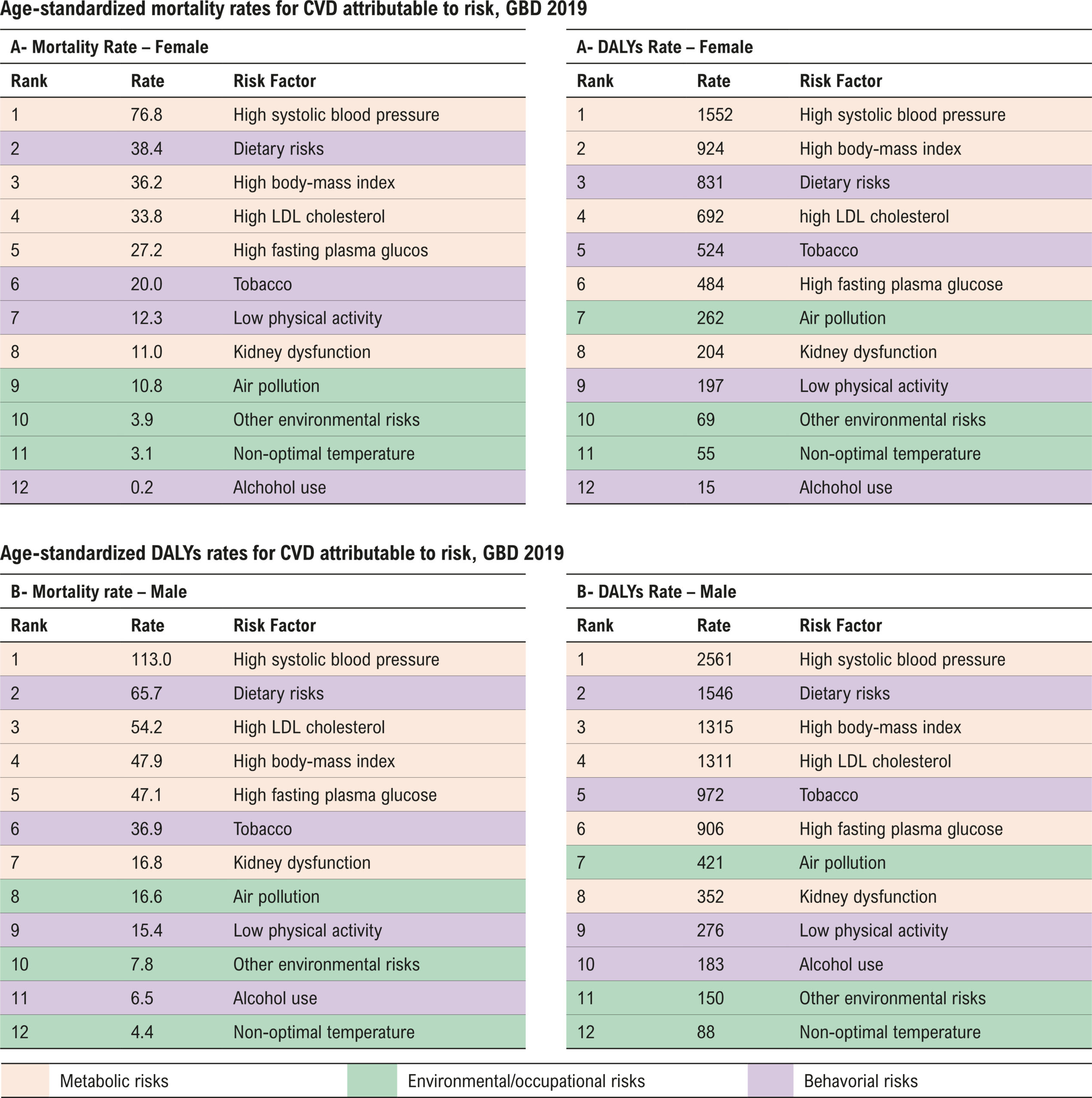
Cardiovascular Diseases (CVD) are the major cause of death and disability in Brazil, in women and men. According to the GBD 2019 Study estimates, among CVDs, IHD was the number 1 cause of death in Brazil, followed by Stroke. IHD was responsible for 12.03% (II95 10.66%-12.88%) and 12.2% (II95 11 .5%-12.77%) , of deaths and 4.78 %(II95 4.08%-5.47%) and 6.48% (II95 5.92%-7.05%) of Disability Adjusted Life Years (DALYs) , in women and men, respectively. Deaths and DALYs from Stroke were higher in women than in men, 10.39% (II95 9.25-11.11%) and 8.41% (II95 7.84%-8.83%) of the deaths and 4.62% (II 4.01%-5.18%) and 4.19% of DALYs (3.82%-4.53%), respectively.

In 2019, in Brazil, the incidence rate of IHD (mainly myocardial infarction) standardized by age was 78 (II 95%, 69-88) per 100,000 in women and 148 (II 95%, 130-166) per 100,000 in men. Regarding chronic IHD (previous AMI, stable angina or ischemic heart failure), the age-standardized prevalence rate was 1,046 (II 95%, 905-1,209) per 100,000 women and 2,534 (II 95%, 2,170-2,975) per 100,000 men. The PNS 2013, a household-based epidemiological survey with nationally representative interviews, using the “WHO/Rose Angina Questionnaire,” reported that the prevalence of mild angina (grade I) was 9.1% (95%CI 8.5 – 9.7) and 5.9% (5.3 – 6.4), in women and men respectively. Regarding moderate/severe angina (grade II), in the 2019 PNS, it was also 5.5% more frequent in women than in men. 3.3%.

[…]

  • Cardiovascular disease
  • Prevention
  • Women
Read Full Article
Creative Commons Attribution (CC BY) Creative Commons license
07/03/2022 DOI: 10.36660/abc.20220028
Editorial

Interleukin 35 (IL35): A New Biomarker for Coronary Artery Disease?

Gilson Soares Feitosa

In general terms, biomarkers are biologic parameters associated with an illness’s presence and severity. Biomarkers can be detected by several means, including the physical exam and evaluation by laboratory tests or by image.

A more recent and objectively directed definition restricts its realms to a proteic substance – enzyme, hormone or without known function- that relates to health status, indicating a good status of health or disease, thus allowing for diagnosing a given disease, or its severity, or else being a therapeutic target, or serving the purpose of therapeutic guidance, that can be obtained from the blood, urine, saliva or other body fluids or tissues.

[…]

  • Biomarkers
  • Coronary Artery Disease
  • Cytokines
  • Diagnostic Imaging
  • Interleukin 35
  • Troponin
Read Full Article
Creative Commons Attribution (CC BY) Creative Commons license
07/03/2022 DOI: 10.36660/abc.20210991 Views 2
Figure 1
Original Article

Impact of Preoperative Functional Capacity on Postoperative Outcomes in Congenital Heart Surgery: An Observational and Prospective Study

Angela Sachiko Inoue et al. Antônio Augusto Barbosa Lopes Ana Cristina Sayuri Tanaka Maria Ignêz Zanetti Feltrim … Filomena R.B.G. Galas Juliano Pinheiro Almeida Ludhmila Abrahão Hajjar Emilia Nozawa

Abstract

Background

Despite advances in surgical technique and postoperative care in congenital heart disease, cardiovascular morbidity is still high.

Objective

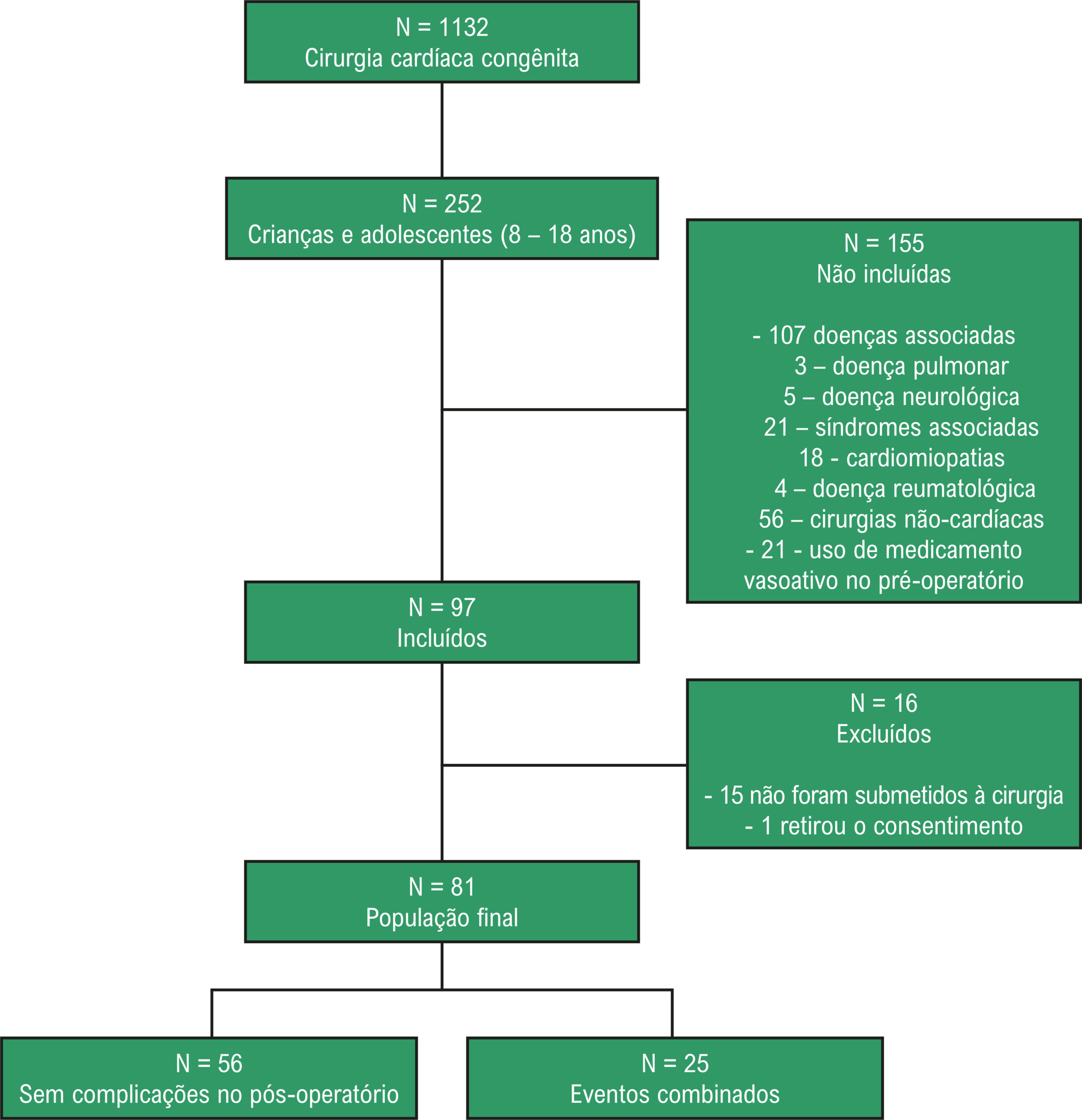
To evaluate the association between preoperative cardiovascular fitness of children and adolescents, measured by the 6-minute walk test (6MWT) and Heart Rate Variability (HRV), and the occurrence of cardiogenic, septic shock and death in the postoperative period.

Methods

Prospective, observational clinic study including 81 patients aged from 8 to 18 years. In the preoperative period, the 6MWT (distance walked and SpO2) and HRV were performed. The adjusted risk score for surgeries for congenital heart disease (RACHS-1) was applied to predict the surgical risk factor for mortality. The occurrence of at least one of the listed complications was considered as a combined event. P values < 0.05 were considered as significant.

Results

Of the patients, 59% were male, with mean age of 12 years; 33% were cyanotic; and 72% had undergone previous cardiac surgery. Cardiogenic shock was the most common complication, and 31% had a combined event. Prior to surgery, type of current heart disease, RACHS-1, SpO2at rest, during the 6MWT and recovery were selected for the multivariate analysis. The SpO2at recovery by the 6MWT remained as an independent risk factor (OR 0.93, 95%CI [0.88 – 0.99], p=0.02) for the increasing occurrence of combined events.

Conclusion

SpO2after the application of the 6MWT in the preoperative period was an independent predictor of prognosis in children and adolescents undergoing surgical correction; the walked distance and the HRV did not present this association.

  • Heart Defects, Congenital
  • Heart Rate
  • Physical Functional Performance
  • postoperative complications
  • Walk Test
Read Full Article
Creative Commons Attribution (CC BY) Creative Commons license
07/03/2022 DOI: 10.36660/abc.20201137
Editorial

Computational Fluid Dynamics (CFD) For Predicting Pathological Changes In The Aorta: Is It Ready For Clinical Use?

Dominik Obrist et al. Hendrik von Tengg-Kobligk

Patient-specific modelling

Patient-specific models have been successfully deployed by many researchers. Nevertheless, the translation of high-resolution radiological data into geometrical vascular models for CFD remains a time-intensive task which is often cumbersome and requires trained specialists. There is a lack of automated segmentation and meshing tools for biomedical tasks. Recent developments based on deep neural networks may provide acceptable solutions for clinical use.

The setting of boundary conditions (e.g., velocity profiles at inflow/outflow) requires great care, because boundary conditions have a strong effect on the quality of the results. Therefore, it is useful to include flow measurements at well-defined locations (e.g., 2D+time or 3D+time blood flow MRI) into radiologic protocols. Next to the adequate choice of the modality and body location, this requires appropriate temporal and spatial resolution of the scans.

[…]

  • Biomedical Engineering
  • Cardiovascular Diseases/diagnosis
  • Cardiovascular Diseases/phyiopathology
  • Computer Assisted
  • Computer Simulation
  • Image Processing
  • Prosthesis Design
  • Prosthesis Implantation
Read Full Article
Creative Commons Attribution (CC BY) Creative Commons license
07/03/2022 DOI: 10.36660/abc.20220040 Views 1
Editorial

Neoplasms and the Evaluation of Risk of Cardiovascular Disease

Cristina Salvadori Bittar

Cardiovascular disease (CVD) and neoplasms are currently the two leading causes of mortality in Brazil and in the world. Both the incidence of cancer and neoplasms increase with age, with 77% of cancer cases being diagnosed in patients older than 55 and, concomitantly, the cardiovascular risk is also higher in male patients older than 55 and women older than 65. In Brazil, in 2016, CVDs had the highest rates of mortality and disability-adjusted years of life lost, in both sexes.

Due to the great impact of the two most prevalent diseases that emerge in parallel and interact with each other, it is important to consider how to manage these two diseases individually and from a population point of view. In addition, few studies have explored the population of individuals with a double burden of these diseases.

[…]

  • Coronary Angiography/methods
  • Coronary Artery Disease / complications
  • Lung Neoplasms/complications
  • Percutaneous Coronary Intervention/methods
  • Severity of Illness Index
Read Full Article
Creative Commons Attribution (CC BY) Creative Commons license
07/03/2022 DOI: 10.36660/abc.20220007
Figure 1
Original Article

Computational Fluid Dynamics to Assess the Future Risk of Ascending Aortic Aneurysms

Gabriela de C. Almeida et al. Bruno Alvares de Azevedo Gomes Fabiula Schwartz de Azevedo Karim Kalaun … Ivan Ibanez Pedro S. Teixeira Ilan Gottlieb Marcelo M. Melo Glaucia Maria Moraes de Oliveira Angela O. Nieckele

Abstract

Background

A methodology to identify patients with ascending aortic aneurysm (AsAA) under high risk for aortic growth is not completely defined

Objetive

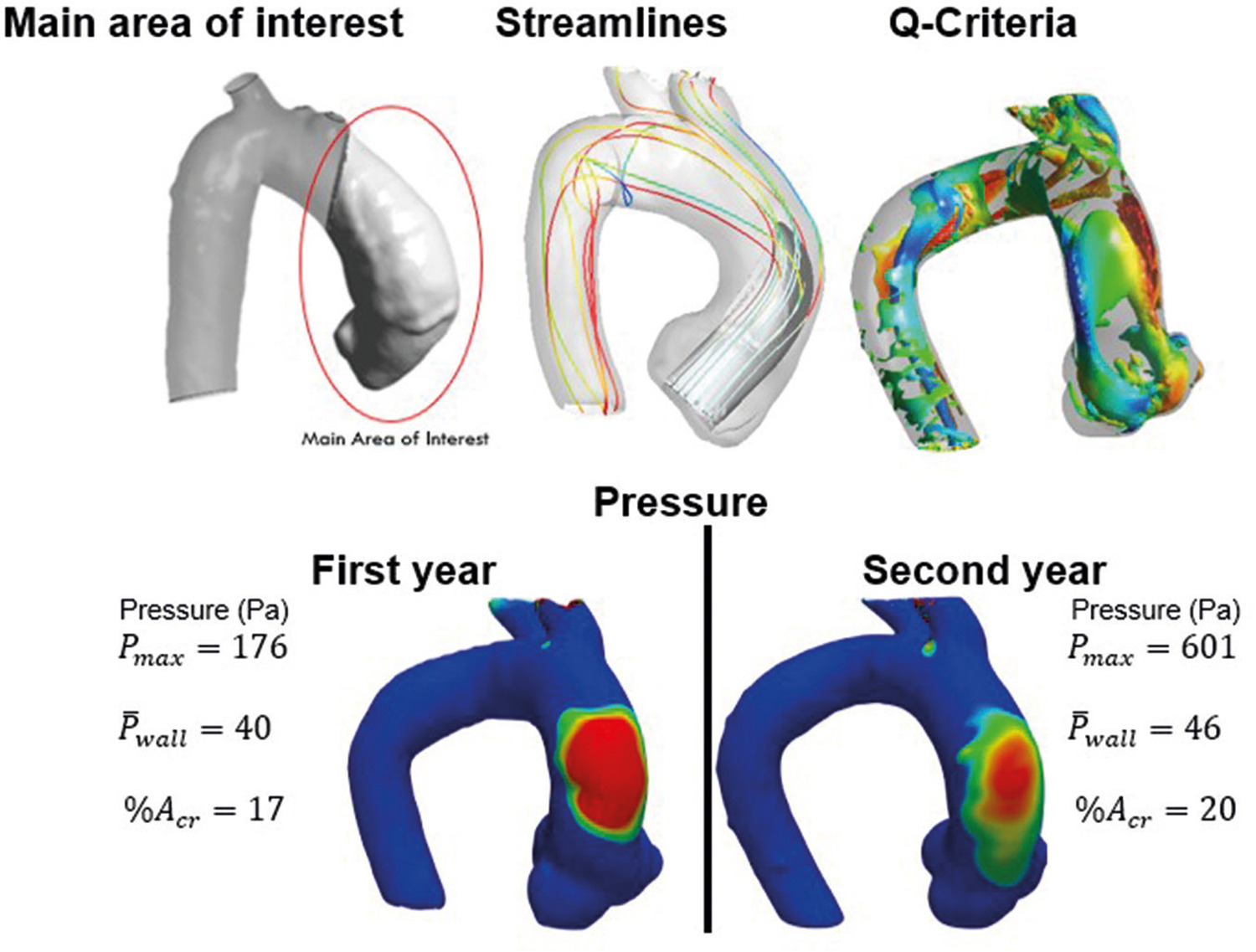
This research seeks to numerically characterize the aortic blood flow by relating the resulting mechanical stress distribution with AsAA growth.

Methods

Analytical, observational, single-center study in which a computational fluid dynamics (CFD) protocol was applied to aortic computed tomography angiogram (CTA) images of patients with AsAA. Two CTA exams taken at a minimum interval of one year were obtained. From the CTA-gathered images, three-dimensional models were built, and clinical data were registered. Study of velocity field and coherent structures (vortices) was performed aiming to relate them to the presence or absence of aneurysm growth, as well as comparing them to the patients’ clinical data. The Kolmogorov-Smirnov test was used to evaluate the normality of the distribution, and the non-parametric Wilcoxon signed-rank test, for non-normal distribution, was used to compare the paired data of the aortic angles. Statistical significance was set at 5%.

Results

The incident jet in the aortic wall generated recirculation areas in the posterior region of the jet, inducing complex vortices formation in the group with aneurysm growth, leading to an average pressure increase in the ascending aortic wall between exams. In the group without aneurysm growth, the average pressure decreased.

Conclusion

This pilot study showed that CFD based on CTA may in the near future be a tool to help identify flow patterns associated with AsAA remodeling process.

  • Aortic Aneurysm
  • Hemodynamics
  • Patient-Specific Modeling
  • thoracic
Read Full Article
Creative Commons Attribution (CC BY) Creative Commons license
07/03/2022 DOI: 10.36660/abc.20200926 Views 1
Editorial

The Importance of Time-Course Studies Using Experimental Models of Cardiac Diseases

Diego Santos Souza et al. Danilo Roman-Campos

According to the American College of Cardiology, Heart Failure (HF) Syndrome is defined as a complex clinical syndrome that results from any structural or functional impairment of ventricular filling or ejection of blood. The etiological agent of the clinical syndrome of HF may result from different causes, which impact the prognosis and impose the necessity for specific treatment strategies, underlining the relevance of specific data elements for emphasizing these differences in HF, including the time course evolution of HF. This view is similar to the current Brazilian guideline for HF. Despite improvement in HF treatment and management, with a reduction in overall mortality rate over time, the death number and economic costs are still high. In 2014 a deep revision including 197 countries showed that HF’s overall global economic cost in 2012 was estimated at $108 billion per annum. Importantly, HF spending was largely different in high-income, middle, and low-income countries. For example, between 2014-2020, the annual median total medical costs for heart failure care were estimated at $24,383 per patient in the United States of America, meanwhile in Brazil in 2015, the average cost per patient with HF was 1,569 US$, taking into account the exchange rate in 2015. The high cost per patient is probably related to the lack of effective therapies to improve human health during HF. Then unveiling the molecular basis of cardiac remodeling found in the disease is one of the main challenges in cardiovascular medicine.

In the last years, significant advances in understanding molecular mechanisms of adaptive and maladaptive hypertrophy and heart failure in response to stress signals have shown that many extracellular factors and signaling pathways are involved in the remodeling of cardiomyocytes, the working cells found in the heart tissue. Since the time course of HF is etiological-dependent, it is fundamental to understand how the HF syndrome develops. For example, the intracellular dynamics of Ca2are modified in the different etiologies of HF with reduced (HFrEF) or preserved (HFpEF) ejection fraction. In animal models of diabetic or hypertensive HFpEF and HFrEF, studies have shown that magnitude and kinetics of Ca2release remain unchanged in both HFpEF models but impaired in HFrEF. Although Sarco/endoplasmic reticulum Ca2adenosine triphosphatase-2a (SERCA) protein density was reduced in these HFrEF and HFpEF models, in the HFpEF model for hypertension, this is offset by increased PLB phosphorylation (Phospholamban is a protein able to modulate SERCA2A), but not in diabetic HFrEF and HFpEF resulting in delay intracellular Ca2reuptake by SERCA.

[…]

  • Cardiovascular Diseases
  • Health Care Costs
  • Heart Failure
  • Mortality
  • Myoctes Cardiac
  • Rats
  • Ventricular Remodeling
Read Full Article
Creative Commons Attribution (CC BY) Creative Commons license
07/03/2022 DOI: 10.36660/abc.20210997 Views 1
Figure 1
Original Article

Pterostilbene Reduces Experimental Myocardial Infarction-Induced Oxidative Stress in Lung and Right Ventricle

Silvio Tasca et al. Cristina Campos Denise Lacerda Vanessa D. Ortiz … Patrick Turck Sara E. Bianchi Alexandre L. de Castro Adriane Belló-Klein Valquiria Bassani Alex Sander da Rosa Araújo

Abstract

Background

Pterostilbene (PS), a natural and antioxidant polyphenolic compound emerges as a promising intervention in improving the myocardial infarction (MI) damages.

Objetives

This study aimed to evaluate PS actions in promoting redox homeostasis in lungs and right ventricle (RV) of infarcted animals.

Methods

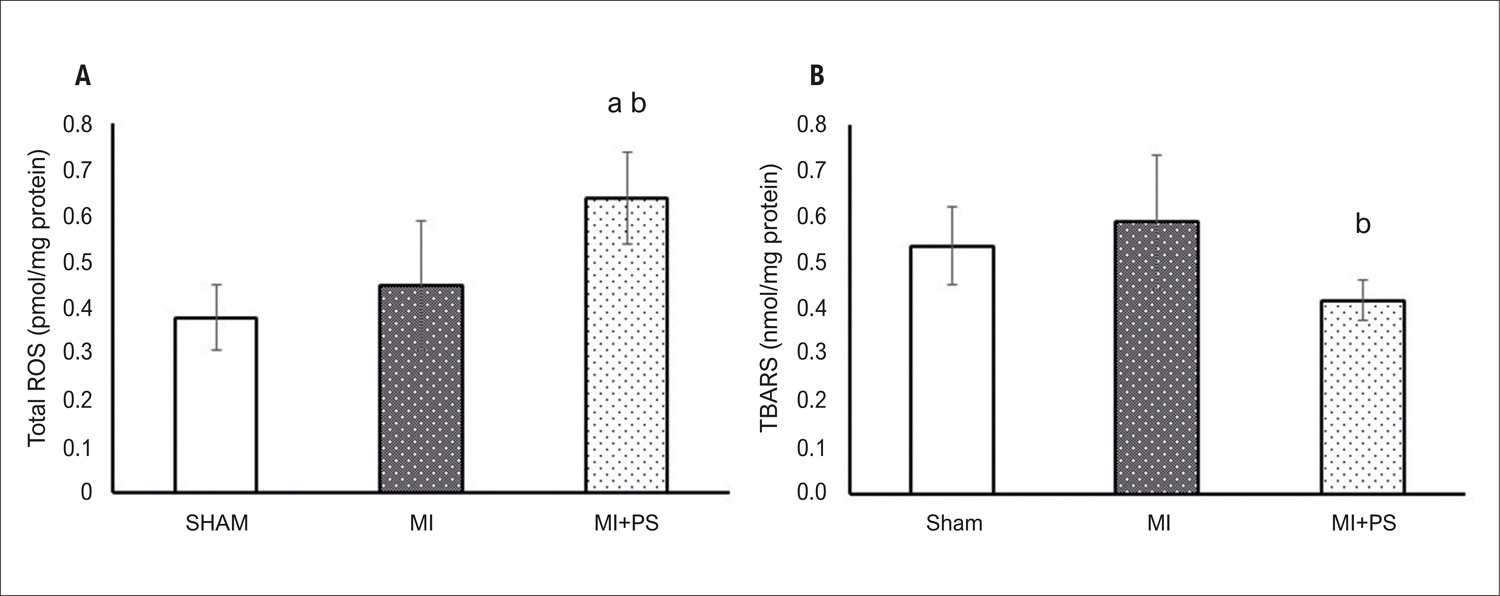
Male Wistar rats (60 day-old) were randomized into three groups: SHAM, MI (infarcted), and MI+PS (MI+pterostilbene). Seven days after MI procedure, rats were treated with PS (100 mg/kg/day) via gavage for eight days. Animals were euthanized and the lungs and RV were harvested for analyses of redox balance (Differences were considered significant when p<0.05).

Results

Our results show that MI triggers a redox disruption scenario in RV and lungs, which can contribute to MI-induced damage on these organs. Consistently, PS mitigated oxidative stress and restored antioxidant defenses (GSH in lungs: SHAM= 0.79±0.07; MI=0.67±0.05; MI+PS=0.86±0.14; p<0.05), indicating its protective role in this scenario.

Conclusions

Our work evidences the PS potential use as an adjuvant therapeutic approach after MI focusing on protecting pulmonary and right-sided heart tissues.

  • Antioxidants
  • Homeostasis
  • Hormesis
  • Myocardial Infarction
  • NADPH Oxidases
  • Oxidative Stress, Nitric Oxidase Synthase
  • Pterostilbene
  • Rats
Read Full Article
Creative Commons Attribution (CC BY) Creative Commons license
07/03/2022 DOI: 10.36660/abc.20201155 Views 2
Original Article

Association between the Severity of Coronary Artery Disease and Lung Cancer: A Pilot Cross-Sectional Study

Mingzhuang Sun et al. Qian Yang Meng Li Jing Jing … Hao Zhou Yundai Chen Shunying Hu

Abstract

Background

The direct relationship between coronary artery disease (CAD) and lung cancer is not well known.

Objective

To investigate the association between the anatomical severity of CAD and lung cancer.

Methods

Three-hundred study patients, including 75 recently diagnosed lung cancer patients and 225 matched non-cancer patients, underwent coronary angiography during hospitalization without previous percutaneous coronary intervention (PCI) or coronary artery bypass grafting (CABG). The SYNTAX score (SXscore) was used to assess the severity of CAD. A high SXscore (SXhigh) grade was defined as SXscore > 15 (the highest quartile of the SXscore). The Cochran-Armitage test for trend was used to assess the distribution of patients’ SXscores. Logistic regression analysis was used to assess the association between the severity of CAD and lung cancer. P-values were set when significance level was 5%.

Results

The distribution trend of patients’ SXscore by quartiles was different between lung cancer patients and control patients (from the lowest to the highest quartile: 20.0%, 20.0%, 24.0%, 36.0% vs. 26.7%, 26.2%, 25.8%, 21.3%, p=0.022). The SX high rate was higher in lung cancer patients than in control patients (36.0% vs. 21.3%, p=0.011).The highest quartile of the SXscore showed higher risk of lung cancer in comparison to the lowest quartile (OR: 2,250, 95%CI: 1,077 to 4,699 ; P-trend= 0.016). After adjustment, patients in the highest quartile of the SXscore had higher risk of lung cancer (OR: 2,149, 95%CI: 1,008 to 4,584; P-trend= 0.028). Patients with high SXscore (> 15) had 1,985 times more chances of having lung cancer (95%CI: 1,105–3,563, P= 0.022).

Conclusions

The anatomical severity of CAD is associated with the risk of lung cancer, which indicates that a thorough lung cancer screening may be significant among severe CAD patients.

  • Coronary Angiography/methods
  • Coronary Artery Disease / complications
  • Lung Neoplasms/complications
  • Percutaneous Coronary Intervention/methods
  • Severity of Illness Index
Read Full Article
Creative Commons Attribution (CC BY) Creative Commons license
07/03/2022 DOI: 10.36660/abc.20200478

Could not load more articles. Please try again.

How to cite this article

EndNote RIS

Electronic Document Format (Vancouver)

Fernandes F, Alencar Neto AC, Bueno BVK, Cafezeiro CRF, Rissato JH, Szor RS, Carvalho MLP, et al. Clinical, Laboratory, and Imaging Profile in Patients with Systemic Amyloidosis in a Brazilian Cardiology Referral Center. Arquivos Brasileiros de Cardiologia 2022;118(2):422-3.

Electronic Document Format (ABNT)

Fernandes, Fábio; Alencar Neto, Aristóteles Comte de; Bueno, Bruno Vaz Kerges; Cafezeiro, Caio Rebouças Fonseca; Rissato, João Henrique; Szor, Roberta Shcolnik; Carvalho, Mariana Lombardi Peres de; Mathias Júnior, Wilson; Lino, Angelina Maria Martins; Castelli, Jussara Bianchi; Souza, Evandro de Oliveira; Ramires, Félix José Alvarez; Hotta, Viviane Tiemi; Soares Júnior, José; Tavares, Caio de Assis Moura; Krieger, José Eduardo; Rochitte, Carlos Eduardo; Dabarian, André; Hajjar, Ludhmila Abrahão; Kalil Filho, Roberto; Mady, Charles. Clinical, Laboratory, and Imaging Profile in Patients with Systemic Amyloidosis in a Brazilian Cardiology Referral Center. Arquivos Brasileiros de Cardiologia, v. 118, n. 2, p. 422-432, Mar. 2022.

Electronic Document Format (APA)

Fernandes, F., Alencar Neto, A. C. , Bueno, B. V. K., Cafezeiro, C. R. F., Rissato, J. H., Szor, R. S., Carvalho, M. L. P. , Mathias Júnior, W., Lino, A. M. M., Castelli, J. B., Souza, E. O., Ramires, F. J. A., Hotta, V. T., Soares Júnior, J., Tavares, C. A. M., Krieger, J. E., Rochitte, C. E., Dabarian, A., Hajjar, L. A., Kalil Filho, R., & Mady, C. (2022). Clinical, Laboratory, and Imaging Profile in Patients with Systemic Amyloidosis in a Brazilian Cardiology Referral Center. Arquivos Brasileiros de Cardiologia, 118(2), 422-432.

Electronic Document Format (ISO)

Fernandes, Fábio and Alencar Neto, Aristóteles Comte de and Bueno, Bruno Vaz Kerges and Cafezeiro, Caio Rebouças Fonseca and Rissato, João Henrique and Szor, Roberta Shcolnik and Carvalho, Mariana Lombardi Peres de and Mathias Júnior, Wilson and Lino, Angelina Maria Martins and Castelli, Jussara Bianchi and Souza, Evandro de Oliveira and Ramires, Félix José Alvarez and Hotta, Viviane Tiemi and Soares Júnior, José and Tavares, Caio de Assis Moura and Krieger, José Eduardo and Rochitte, Carlos Eduardo and Dabarian, André and Hajjar, Ludhmila Abrahão and Kalil Filho, Roberto and Mady, Charles. Clinical, Laboratory, and Imaging Profile in Patients with Systemic Amyloidosis in a Brazilian Cardiology Referral Center. Arquivos Brasileiros de Cardiologia [online]. 2022, vol. 118, n. 2, [cited 2026-10-14], pp. 422-432. Available from: <https://journals.cardiol.br/en/article/clinical-laboratory-and-imaging-profile-in-patients-with-systemic-amyloidosis-in-a-brazilian-cardiology-referral-center/>. ISSN 0066-782X

EndNote RIS

Electronic Document Format (Vancouver)

Kulchetscki RM, Scanavacca M. Parahissian Cardiac Stimulation – New Alternative for More Physiological Stimulation of the Heart?. Arquivos Brasileiros de Cardiologia 2022;118(2):503-4.

Electronic Document Format (ABNT)

Kulchetscki, Rodrigo M.; Scanavacca, Mauricio. Parahissian Cardiac Stimulation – New Alternative for More Physiological Stimulation of the Heart?. Arquivos Brasileiros de Cardiologia, v. 118, n. 2, p. 503-504, Mar. 2022.

Electronic Document Format (APA)

Kulchetscki, R. M., & Scanavacca, M. (2022). Parahissian Cardiac Stimulation – New Alternative for More Physiological Stimulation of the Heart?. Arquivos Brasileiros de Cardiologia, 118(2), 503-504.

Electronic Document Format (ISO)

Kulchetscki, Rodrigo M. and Scanavacca, Mauricio. Parahissian Cardiac Stimulation – New Alternative for More Physiological Stimulation of the Heart?. Arquivos Brasileiros de Cardiologia [online]. 2022, vol. 118, n. 2, [cited 2026-10-14], pp. 503-504. Available from: <https://journals.cardiol.br/en/article/parahissian-cardiac-stimulation-new-alternative-for-more-physiological-stimulation-of-the-heart/>. ISSN 0066-782X

EndNote RIS

Electronic Document Format (Vancouver)

Oliveira Junior HA, Ferri CP, Boszczowski I, Oliveira GBF, Cavalcanti AB, Rosa RG, Lopes RD, et al. Rationale and Design of the COVID-19 Outpatient Prevention Evaluation (COPE – Coalition V) Randomized Clinical Trial: Hydroxychloroquine vs. Placebo in Non-Hospitalized Patients. Arquivos Brasileiros de Cardiologia 2022;118(2):378-87.

Electronic Document Format (ABNT)

Oliveira Junior, Haliton Alves de; Ferri, Cleusa P.; Boszczowski, Icaro; Oliveira, Gustavo B. F.; Cavalcanti, Alexandre B.; Rosa, Regis G.; Lopes, Renato D.; Azevedo, Luciano C. P.; Veiga, Viviane C.; Berwanger, Otavio; Avezum, Álvaro. Rationale and Design of the COVID-19 Outpatient Prevention Evaluation (COPE – Coalition V) Randomized Clinical Trial: Hydroxychloroquine vs. Placebo in Non-Hospitalized Patients. Arquivos Brasileiros de Cardiologia, v. 118, n. 2, p. 378-387, Mar. 2022.

Electronic Document Format (APA)

Oliveira Junior, H. A. , Ferri, C. P., Boszczowski, I., Oliveira, G. B. F., Cavalcanti, A. B., Rosa, R. G., Lopes, R. D., Azevedo, L. C. P., Veiga, V. C., Berwanger, O., & Avezum, (2022). Rationale and Design of the COVID-19 Outpatient Prevention Evaluation (COPE – Coalition V) Randomized Clinical Trial: Hydroxychloroquine vs. Placebo in Non-Hospitalized Patients. Arquivos Brasileiros de Cardiologia, 118(2), 378-387.

Electronic Document Format (ISO)

Oliveira Junior, Haliton Alves de and Ferri, Cleusa P. and Boszczowski, Icaro and Oliveira, Gustavo B. F. and Cavalcanti, Alexandre B. and Rosa, Regis G. and Lopes, Renato D. and Azevedo, Luciano C. P. and Veiga, Viviane C. and Berwanger, Otavio and Avezum, Álvaro. Rationale and Design of the COVID-19 Outpatient Prevention Evaluation (COPE – Coalition V) Randomized Clinical Trial: Hydroxychloroquine vs. Placebo in Non-Hospitalized Patients. Arquivos Brasileiros de Cardiologia [online]. 2022, vol. 118, n. 2, [cited 2026-10-14], pp. 378-387. Available from: <https://journals.cardiol.br/en/article/rationale-and-design-of-the-covid-19-outpatient-prevention-evaluation-cope-coalition-v-randomized-clinical-trial-hydroxychloroquine-vs-placebo-in-non-hospitalized-patients/>. ISSN 0066-782X

EndNote RIS

Electronic Document Format (Vancouver)

Calderaro D, Bichuette LD, Maciel PC, Cardozo FAM, Ribeiro HB, Gualandro DM, Baracioli LM, et al. Update of the Brazilian Society of Cardiology’s Perioperative Cardiovascular Assessment Guideline: Focus on Managing Patients with Percutaneous Coronary Intervention – 2022. Arquivos Brasileiros de Cardiologia 2022;118(2):536-47.

Electronic Document Format (ABNT)

Calderaro, Daniela; Bichuette, Luciana Dornfeld; Maciel, Pamela Camara; Cardozo, Francisco Akira Malta; Ribeiro, Henrique Barbosa; Gualandro, Danielle Menosi; Baracioli, Luciano Moreira; Soeiro, Alexandre de Matos; Serrano Jr., Carlos Vicente; Costa, Ricardo Alves da; Caramelli, Bruno. Update of the Brazilian Society of Cardiology’s Perioperative Cardiovascular Assessment Guideline: Focus on Managing Patients with Percutaneous Coronary Intervention – 2022. Arquivos Brasileiros de Cardiologia, v. 118, n. 2, p. 536-547, Mar. 2022.

Electronic Document Format (APA)

Calderaro, D., Bichuette, L. D., Maciel, P. C., Cardozo, F. A. M., Ribeiro, H. B., Gualandro, D. M., Baracioli, L. M., Soeiro, A. M., Serrano Jr., C. V., Costa, R. A. , & Caramelli, B. (2022). Update of the Brazilian Society of Cardiology’s Perioperative Cardiovascular Assessment Guideline: Focus on Managing Patients with Percutaneous Coronary Intervention – 2022. Arquivos Brasileiros de Cardiologia, 118(2), 536-547.

Electronic Document Format (ISO)

Calderaro, Daniela and Bichuette, Luciana Dornfeld and Maciel, Pamela Camara and Cardozo, Francisco Akira Malta and Ribeiro, Henrique Barbosa and Gualandro, Danielle Menosi and Baracioli, Luciano Moreira and Soeiro, Alexandre de Matos and Serrano Jr., Carlos Vicente and Costa, Ricardo Alves da and Caramelli, Bruno. Update of the Brazilian Society of Cardiology’s Perioperative Cardiovascular Assessment Guideline: Focus on Managing Patients with Percutaneous Coronary Intervention – 2022. Arquivos Brasileiros de Cardiologia [online]. 2022, vol. 118, n. 2, [cited 2026-10-14], pp. 536-547. Available from: <https://journals.cardiol.br/en/article/update-of-the-brazilian-society-of-cardiologys-perioperative-cardiovascular-assessment-guideline-focus-on-managing-patients-with-percutaneous-coronary-intervention-2022/>. ISSN 0066-782X

EndNote RIS

Electronic Document Format (Vancouver)

Pedrosa RC. Amyloidosis for Cardiologists. Arquivos Brasileiros de Cardiologia 2022;118(2):433-4.

Electronic Document Format (ABNT)

Pedrosa, Roberto Coury. Amyloidosis for Cardiologists. Arquivos Brasileiros de Cardiologia, v. 118, n. 2, p. 433-434, Mar. 2022.

Electronic Document Format (APA)

Pedrosa, R. C. (2022). Amyloidosis for Cardiologists. Arquivos Brasileiros de Cardiologia, 118(2), 433-434.

Electronic Document Format (ISO)

Pedrosa, Roberto Coury. Amyloidosis for Cardiologists. Arquivos Brasileiros de Cardiologia [online]. 2022, vol. 118, n. 2, [cited 2026-10-14], pp. 433-434. Available from: <https://journals.cardiol.br/en/article/amyloidosis-for-cardiologists/>. ISSN 0066-782X

EndNote RIS

Electronic Document Format (Vancouver)

Pachón-M JC, Pachón-M JC, Pachón CTC. Left Bundle Pacing: Has Cardiac Pacing Changed Forever?. Arquivos Brasileiros de Cardiologia 2022;118(2):517-8.

Electronic Document Format (ABNT)

Pachón-M, José Carlos; Pachón-M, Juán Carlos; Pachón, Carlos Thiene C.. Left Bundle Pacing: Has Cardiac Pacing Changed Forever?. Arquivos Brasileiros de Cardiologia, v. 118, n. 2, p. 517-518, Mar. 2022.

Electronic Document Format (APA)

Pachón-M, J. C., Pachón-M, J. C., & Pachón, C. T. C. (2022). Left Bundle Pacing: Has Cardiac Pacing Changed Forever?. Arquivos Brasileiros de Cardiologia, 118(2), 517-518.

Electronic Document Format (ISO)

Pachón-M, José Carlos and Pachón-M, Juán Carlos and Pachón, Carlos Thiene C.. Left Bundle Pacing: Has Cardiac Pacing Changed Forever?. Arquivos Brasileiros de Cardiologia [online]. 2022, vol. 118, n. 2, [cited 2026-10-14], pp. 517-518. Available from: <https://journals.cardiol.br/en/article/left-bundle-pacing-has-cardiac-pacing-changed-forever/>. ISSN 0066-782X

EndNote RIS

Electronic Document Format (Vancouver)

Oflar E, Sahin MH, Demir B, Ertugrul AS, Oztas DM, Beyaz MO, Ugurlucan M, et al. Interleukin-35 Levels in Patients with Stable Coronary Artery Disease. Arquivos Brasileiros de Cardiologia 2022;118(2):400-8.

Electronic Document Format (ABNT)

Oflar, Ersan; Sahin, Mustafa Hakan; Demir, Bulent; Ertugrul, Abdulcelil Sait; Oztas, Didem Melis; Beyaz, Metin Onur; Ugurlucan, Murat; Caglar, Fatma Nihan Turhan. Interleukin-35 Levels in Patients with Stable Coronary Artery Disease. Arquivos Brasileiros de Cardiologia, v. 118, n. 2, p. 400-408, Mar. 2022.

Electronic Document Format (APA)

Oflar, E., Sahin, M. H., Demir, B., Ertugrul, A. S., Oztas, D. M., Beyaz, M. O., Ugurlucan, M., & Caglar, F. N. T. (2022). Interleukin-35 Levels in Patients with Stable Coronary Artery Disease. Arquivos Brasileiros de Cardiologia, 118(2), 400-408.

Electronic Document Format (ISO)

Oflar, Ersan and Sahin, Mustafa Hakan and Demir, Bulent and Ertugrul, Abdulcelil Sait and Oztas, Didem Melis and Beyaz, Metin Onur and Ugurlucan, Murat and Caglar, Fatma Nihan Turhan. Interleukin-35 Levels in Patients with Stable Coronary Artery Disease. Arquivos Brasileiros de Cardiologia [online]. 2022, vol. 118, n. 2, [cited 2026-10-14], pp. 400-408. Available from: <https://journals.cardiol.br/en/article/interleukin-35-levels-in-patients-with-stable-coronary-artery-disease/>. ISSN 0066-782X

EndNote RIS

Electronic Document Format (Vancouver)

Rafacho BPM. Pterostilbene after Acute Myocardial Infarction: Effect on Heart and Lung Tissues. Arquivos Brasileiros de Cardiologia 2022;118(2):446-7.

Electronic Document Format (ABNT)

Rafacho, Bruna Paola Murino. Pterostilbene after Acute Myocardial Infarction: Effect on Heart and Lung Tissues. Arquivos Brasileiros de Cardiologia, v. 118, n. 2, p. 446-447, Mar. 2022.

Electronic Document Format (APA)

Rafacho, B. P. M. (2022). Pterostilbene after Acute Myocardial Infarction: Effect on Heart and Lung Tissues. Arquivos Brasileiros de Cardiologia, 118(2), 446-447.

Electronic Document Format (ISO)

Rafacho, Bruna Paola Murino. Pterostilbene after Acute Myocardial Infarction: Effect on Heart and Lung Tissues. Arquivos Brasileiros de Cardiologia [online]. 2022, vol. 118, n. 2, [cited 2026-10-14], pp. 446-447. Available from: <https://journals.cardiol.br/en/article/pterostilbene-after-acute-myocardial-infarction-effect-on-heart-and-lung-tissues/>. ISSN 0066-782X

EndNote RIS

Electronic Document Format (Vancouver)

Delgado-Silva J, Moreira AP, Costa G, Gonçalves L. Risk Stratification and Cardiac Sympathetic Activity Assessment Using Myocardial [123I] MIBG Imaging in Renal Denervation. Arquivos Brasileiros de Cardiologia 2022;118(2):519-24.

Electronic Document Format (ABNT)

Delgado-Silva, Joana; Moreira, Ana Paula; Costa, Gracinda; Gonçalves, Lino. Risk Stratification and Cardiac Sympathetic Activity Assessment Using Myocardial [123I] MIBG Imaging in Renal Denervation. Arquivos Brasileiros de Cardiologia, v. 118, n. 2, p. 519-524, Mar. 2022.

Electronic Document Format (APA)

Delgado-Silva, J., Moreira, A. P., Costa, G., & Gonçalves, L. (2022). Risk Stratification and Cardiac Sympathetic Activity Assessment Using Myocardial [123I] MIBG Imaging in Renal Denervation. Arquivos Brasileiros de Cardiologia, 118(2), 519-524.

Electronic Document Format (ISO)

Delgado-Silva, Joana and Moreira, Ana Paula and Costa, Gracinda and Gonçalves, Lino. Risk Stratification and Cardiac Sympathetic Activity Assessment Using Myocardial [123I] MIBG Imaging in Renal Denervation. Arquivos Brasileiros de Cardiologia [online]. 2022, vol. 118, n. 2, [cited 2026-10-14], pp. 519-524. Available from: <https://journals.cardiol.br/en/article/risk-stratification-and-cardiac-sympathetic-activity-assessment-using-myocardial-123i-mibg-imaging-in-renal-denervation/>. ISSN 0066-782X

EndNote RIS

Electronic Document Format (Vancouver)

Forno ARJD, Ternes CMP, Rech JVT, Nascimento HG, Lewandowski A, Damasceno G, d’Avila A, et al. Left Bundle Branch Pacing of His-Purkinje Conduction System: Initial Experience. Arquivos Brasileiros de Cardiologia 2022;118(2):505-16.

Electronic Document Format (ABNT)

Forno, Alexander Romeno Janner Dal; Ternes, Caique M. P.; Rech, João Vítor Ternes; Nascimento, Helcio Garcia; Lewandowski, Andrei; Damasceno, Grazyelle; d’Avila, Andre. Left Bundle Branch Pacing of His-Purkinje Conduction System: Initial Experience. Arquivos Brasileiros de Cardiologia, v. 118, n. 2, p. 505-516, Mar. 2022.

Electronic Document Format (APA)

Forno, A. R. J. D., Ternes, C. M. P., Rech, J. V. T., Nascimento, H. G., Lewandowski, A., Damasceno, G., & d’Avila, A. (2022). Left Bundle Branch Pacing of His-Purkinje Conduction System: Initial Experience. Arquivos Brasileiros de Cardiologia, 118(2), 505-516.

Electronic Document Format (ISO)

Forno, Alexander Romeno Janner Dal and Ternes, Caique M. P. and Rech, João Vítor Ternes and Nascimento, Helcio Garcia and Lewandowski, Andrei and Damasceno, Grazyelle and d’Avila, Andre. Left Bundle Branch Pacing of His-Purkinje Conduction System: Initial Experience. Arquivos Brasileiros de Cardiologia [online]. 2022, vol. 118, n. 2, [cited 2026-10-14], pp. 505-516. Available from: <https://journals.cardiol.br/en/article/left-bundle-branch-pacing-of-his-purkinje-conduction-system-initial-experience/>. ISSN 0066-782X

EndNote RIS

Electronic Document Format (Vancouver)

Ferrari ADL, Gazzoni GF, Domingues LML, Willes JCF, Cabral GC, Ferreira FVC, Lodi LO, et al. Ventricular Synchrony in Para-Hisian Cardiac Pacing as an Alternative for Physiological Cardiac Activation (Indirect Recruitment of the His Bundle?). Arquivos Brasileiros de Cardiologia 2022;118(2):488-502.

Electronic Document Format (ABNT)

Ferrari, Andres Di Leoni; Gazzoni, Guilherme Ferreira; Domingues, Luis Manuel Ley; Willes, Jessica Caroline Feltrin; Cabral, Gustavo Chiari; Ferreira, Flavio Vinicius Costa; Lodi, Laura Orlandini; Reis, Gustavo. Ventricular Synchrony in Para-Hisian Cardiac Pacing as an Alternative for Physiological Cardiac Activation (Indirect Recruitment of the His Bundle?). Arquivos Brasileiros de Cardiologia, v. 118, n. 2, p. 488-502, Mar. 2022.

Electronic Document Format (APA)

Ferrari, A. D. L., Gazzoni, G. F., Domingues, L. M. L., Willes, J. C. F., Cabral, G. C., Ferreira, F. V. C., Lodi, L. O., & Reis, G. (2022). Ventricular Synchrony in Para-Hisian Cardiac Pacing as an Alternative for Physiological Cardiac Activation (Indirect Recruitment of the His Bundle?). Arquivos Brasileiros de Cardiologia, 118(2), 488-502.

Electronic Document Format (ISO)

Ferrari, Andres Di Leoni and Gazzoni, Guilherme Ferreira and Domingues, Luis Manuel Ley and Willes, Jessica Caroline Feltrin and Cabral, Gustavo Chiari and Ferreira, Flavio Vinicius Costa and Lodi, Laura Orlandini and Reis, Gustavo. Ventricular Synchrony in Para-Hisian Cardiac Pacing as an Alternative for Physiological Cardiac Activation (Indirect Recruitment of the His Bundle?). Arquivos Brasileiros de Cardiologia [online]. 2022, vol. 118, n. 2, [cited 2026-10-14], pp. 488-502. Available from: <https://journals.cardiol.br/en/article/ventricular-synchrony-in-para-hisian-cardiac-pacing-as-an-alternative-for-physiological-cardiac-activation-indirect-recruitment-of-the-his-bundle/>. ISSN 0066-782X

EndNote RIS

Electronic Document Format (Vancouver)

Dorna MS. Food Intake among the Diabetic and Non-Diabetic Elderly Population in Brazil. Arquivos Brasileiros de Cardiologia 2022;118(2):398-9.

Electronic Document Format (ABNT)

Dorna, Mariana de Souza. Food Intake among the Diabetic and Non-Diabetic Elderly Population in Brazil. Arquivos Brasileiros de Cardiologia, v. 118, n. 2, p. 398-399, Mar. 2022.

Electronic Document Format (APA)

Dorna, M. S. (2022). Food Intake among the Diabetic and Non-Diabetic Elderly Population in Brazil. Arquivos Brasileiros de Cardiologia, 118(2), 398-399.

Electronic Document Format (ISO)

Dorna, Mariana de Souza. Food Intake among the Diabetic and Non-Diabetic Elderly Population in Brazil. Arquivos Brasileiros de Cardiologia [online]. 2022, vol. 118, n. 2, [cited 2026-10-14], pp. 398-399. Available from: <https://journals.cardiol.br/en/article/food-intake-among-the-diabetic-and-non-diabetic-elderly-population-in-brazil/>. ISSN 0066-782X

EndNote RIS

Electronic Document Format (Vancouver)

Assumpção D, Ruiz AMP, Borim FSA, Neri AL, Malta DC, Francisco PMSB. Eating Behavior of Older Adults with and Without Diabetes: The Vigitel Survey, Brazil, 2016. Arquivos Brasileiros de Cardiologia 2022;118(2):388-97.

Electronic Document Format (ABNT)

Assumpção, Daniela de; Ruiz, Ana Maria Pita; Borim, Flavia Silva Arbex; Neri, Anita Liberalesso; Malta, Deborah Carvalho; Francisco, Priscila Maria Stolses Bergamo. Eating Behavior of Older Adults with and Without Diabetes: The Vigitel Survey, Brazil, 2016. Arquivos Brasileiros de Cardiologia, v. 118, n. 2, p. 388-397, Mar. 2022.

Electronic Document Format (APA)

Assumpção, D. , Ruiz, A. M. P., Borim, F. S. A., Neri, A. L., Malta, D. C., & Francisco, P. M. S. B. (2022). Eating Behavior of Older Adults with and Without Diabetes: The Vigitel Survey, Brazil, 2016. Arquivos Brasileiros de Cardiologia, 118(2), 388-397.

Electronic Document Format (ISO)

Assumpção, Daniela de and Ruiz, Ana Maria Pita and Borim, Flavia Silva Arbex and Neri, Anita Liberalesso and Malta, Deborah Carvalho and Francisco, Priscila Maria Stolses Bergamo. Eating Behavior of Older Adults with and Without Diabetes: The Vigitel Survey, Brazil, 2016. Arquivos Brasileiros de Cardiologia [online]. 2022, vol. 118, n. 2, [cited 2026-10-14], pp. 388-397. Available from: <https://journals.cardiol.br/en/article/eating-behavior-of-older-adults-with-and-without-diabetes-the-vigitel-survey-brazil-2016/>. ISSN 0066-782X

EndNote RIS

Electronic Document Format (Vancouver)

Stefan M, Rimbas RC, Vornicu R, Daneţ R, Vintila VD, Dorobat B, Carp A, et al. A Step-By-Step Fight for Life in a Young Woman with High-Risk Pulmonary Embolism and Bilateral Renal Artery Occlusion. Arquivos Brasileiros de Cardiologia 2022;118(2):530-5.

Electronic Document Format (ABNT)

Stefan, Miruna; Rimbas, Roxana Cristina; Vornicu, Rozina; Daneţ, Ruxandra; Vintila, Vlad Damian; Dorobat, Bogdan; Carp, Alexandra; Dragos, Vinereanu. A Step-By-Step Fight for Life in a Young Woman with High-Risk Pulmonary Embolism and Bilateral Renal Artery Occlusion. Arquivos Brasileiros de Cardiologia, v. 118, n. 2, p. 530-535, Mar. 2022.

Electronic Document Format (APA)

Stefan, M., Rimbas, R. C., Vornicu, R., Daneţ, R., Vintila, V. D., Dorobat, B., Carp, A., & Dragos, V. (2022). A Step-By-Step Fight for Life in a Young Woman with High-Risk Pulmonary Embolism and Bilateral Renal Artery Occlusion. Arquivos Brasileiros de Cardiologia, 118(2), 530-535.

Electronic Document Format (ISO)

Stefan, Miruna and Rimbas, Roxana Cristina and Vornicu, Rozina and Daneţ, Ruxandra and Vintila, Vlad Damian and Dorobat, Bogdan and Carp, Alexandra and Dragos, Vinereanu. A Step-By-Step Fight for Life in a Young Woman with High-Risk Pulmonary Embolism and Bilateral Renal Artery Occlusion. Arquivos Brasileiros de Cardiologia [online]. 2022, vol. 118, n. 2, [cited 2026-10-14], pp. 530-535. Available from: <https://journals.cardiol.br/en/article/a-step-by-step-fight-for-life-in-a-young-woman-with-high-risk-pulmonary-embolism-and-bilateral-renal-artery-occlusion/>. ISSN 0066-782X

EndNote RIS

Electronic Document Format (Vancouver)

Zanini M. Treatment Evolution and the Impact of Pre-Surgical Predictors on Outcomes of Patients with Congenital Heart Disease. Arquivos Brasileiros de Cardiologia 2022;118(2):420-1.

Electronic Document Format (ABNT)

Zanini, Maurice. Treatment Evolution and the Impact of Pre-Surgical Predictors on Outcomes of Patients with Congenital Heart Disease. Arquivos Brasileiros de Cardiologia, v. 118, n. 2, p. 420-421, Mar. 2022.

Electronic Document Format (APA)

Zanini, M. (2022). Treatment Evolution and the Impact of Pre-Surgical Predictors on Outcomes of Patients with Congenital Heart Disease. Arquivos Brasileiros de Cardiologia, 118(2), 420-421.

Electronic Document Format (ISO)

Zanini, Maurice. Treatment Evolution and the Impact of Pre-Surgical Predictors on Outcomes of Patients with Congenital Heart Disease. Arquivos Brasileiros de Cardiologia [online]. 2022, vol. 118, n. 2, [cited 2026-10-14], pp. 420-421. Available from: <https://journals.cardiol.br/en/article/treatment-evolution-and-the-impact-of-pre-surgical-predictors-on-outcomes-of-patients-with-congenital-heart-disease/>. ISSN 0066-782X

EndNote RIS

Electronic Document Format (Vancouver)

Oliveira GMM, Wenger NK. Special Considerations in the Prevention of Cardiovascular Disease in Women. Arquivos Brasileiros de Cardiologia 2022;118(2):374-7.

Electronic Document Format (ABNT)

Oliveira, Gláucia Maria Moraes de; Wenger, Nanette Kasss. Special Considerations in the Prevention of Cardiovascular Disease in Women. Arquivos Brasileiros de Cardiologia, v. 118, n. 2, p. 374-377, Mar. 2022.

Electronic Document Format (APA)

Oliveira, G. M. M. , & Wenger, N. K. (2022). Special Considerations in the Prevention of Cardiovascular Disease in Women. Arquivos Brasileiros de Cardiologia, 118(2), 374-377.

Electronic Document Format (ISO)

Oliveira, Gláucia Maria Moraes de and Wenger, Nanette Kasss. Special Considerations in the Prevention of Cardiovascular Disease in Women. Arquivos Brasileiros de Cardiologia [online]. 2022, vol. 118, n. 2, [cited 2026-10-14], pp. 374-377. Available from: <https://journals.cardiol.br/en/article/special-considerations-in-the-prevention-of-cardiovascular-disease-in-women/>. ISSN 0066-782X

EndNote RIS

Electronic Document Format (Vancouver)

Feitosa GS. Interleukin 35 (IL35): A New Biomarker for Coronary Artery Disease?. Arquivos Brasileiros de Cardiologia 2022;118(2):409-10.

Electronic Document Format (ABNT)

Feitosa, Gilson Soares. Interleukin 35 (IL35): A New Biomarker for Coronary Artery Disease?. Arquivos Brasileiros de Cardiologia, v. 118, n. 2, p. 409-410, Mar. 2022.

Electronic Document Format (APA)

Feitosa, G. S. (2022). Interleukin 35 (IL35): A New Biomarker for Coronary Artery Disease?. Arquivos Brasileiros de Cardiologia, 118(2), 409-410.

Electronic Document Format (ISO)

Feitosa, Gilson Soares. Interleukin 35 (IL35): A New Biomarker for Coronary Artery Disease?. Arquivos Brasileiros de Cardiologia [online]. 2022, vol. 118, n. 2, [cited 2026-10-14], pp. 409-410. Available from: <https://journals.cardiol.br/en/article/interleukin-35-il35-a-new-biomarker-for-coronary-artery-disease/>. ISSN 0066-782X

EndNote RIS

Electronic Document Format (Vancouver)

Inoue AS, Lopes AAB, Tanaka ACS, Feltrim MIZ, Galas FR, Almeida JP, Hajjar LA, et al. Impact of Preoperative Functional Capacity on Postoperative Outcomes in Congenital Heart Surgery: An Observational and Prospective Study. Arquivos Brasileiros de Cardiologia 2022;118(2):411-9.

Electronic Document Format (ABNT)

Inoue, Angela Sachiko; Lopes, Antônio Augusto Barbosa; Tanaka, Ana Cristina Sayuri; Feltrim, Maria Ignêz Zanetti; Galas, Filomena R.B.G.; Almeida, Juliano Pinheiro; Hajjar, Ludhmila Abrahão; Nozawa, Emilia. Impact of Preoperative Functional Capacity on Postoperative Outcomes in Congenital Heart Surgery: An Observational and Prospective Study. Arquivos Brasileiros de Cardiologia, v. 118, n. 2, p. 411-419, Mar. 2022.

Electronic Document Format (APA)

Inoue, A. S., Lopes, A. A. B., Tanaka, A. C. S., Feltrim, M. I. Z., Galas, F. R., Almeida, J. P., Hajjar, L. A., & Nozawa, E. (2022). Impact of Preoperative Functional Capacity on Postoperative Outcomes in Congenital Heart Surgery: An Observational and Prospective Study. Arquivos Brasileiros de Cardiologia, 118(2), 411-419.

Electronic Document Format (ISO)

Inoue, Angela Sachiko and Lopes, Antônio Augusto Barbosa and Tanaka, Ana Cristina Sayuri and Feltrim, Maria Ignêz Zanetti and Galas, Filomena R.B.G. and Almeida, Juliano Pinheiro and Hajjar, Ludhmila Abrahão and Nozawa, Emilia. Impact of Preoperative Functional Capacity on Postoperative Outcomes in Congenital Heart Surgery: An Observational and Prospective Study. Arquivos Brasileiros de Cardiologia [online]. 2022, vol. 118, n. 2, [cited 2026-10-14], pp. 411-419. Available from: <https://journals.cardiol.br/en/article/impact-of-preoperative-functional-capacity-on-postoperative-outcomes-in-congenital-heart-surgery-an-observational-and-prospective-study/>. ISSN 0066-782X

EndNote RIS

Electronic Document Format (Vancouver)

Obrist D, Tengg-Kobligk H. Computational Fluid Dynamics (CFD) For Predicting Pathological Changes In The Aorta: Is It Ready For Clinical Use?. Arquivos Brasileiros de Cardiologia 2022;118(2):461-2.

Electronic Document Format (ABNT)

Obrist, Dominik; Tengg-Kobligk, Hendrik von. Computational Fluid Dynamics (CFD) For Predicting Pathological Changes In The Aorta: Is It Ready For Clinical Use?. Arquivos Brasileiros de Cardiologia, v. 118, n. 2, p. 461-462, Mar. 2022.

Electronic Document Format (APA)

Obrist, D., & Tengg-Kobligk, H. (2022). Computational Fluid Dynamics (CFD) For Predicting Pathological Changes In The Aorta: Is It Ready For Clinical Use?. Arquivos Brasileiros de Cardiologia, 118(2), 461-462.

Electronic Document Format (ISO)

Obrist, Dominik and Tengg-Kobligk, Hendrik von. Computational Fluid Dynamics (CFD) For Predicting Pathological Changes In The Aorta: Is It Ready For Clinical Use?. Arquivos Brasileiros de Cardiologia [online]. 2022, vol. 118, n. 2, [cited 2026-10-14], pp. 461-462. Available from: <https://journals.cardiol.br/en/article/computational-fluid-dynamics-cfd-for-predicting-pathological-changes-in-the-aorta-is-it-ready-for-clinical-use/>. ISSN 0066-782X

EndNote RIS

Electronic Document Format (Vancouver)

Bittar CS. Neoplasms and the Evaluation of Risk of Cardiovascular Disease. Arquivos Brasileiros de Cardiologia 2022;118(2):486-7.

Electronic Document Format (ABNT)

Bittar, Cristina Salvadori. Neoplasms and the Evaluation of Risk of Cardiovascular Disease. Arquivos Brasileiros de Cardiologia, v. 118, n. 2, p. 486-487, Mar. 2022.

Electronic Document Format (APA)

Bittar, C. S. (2022). Neoplasms and the Evaluation of Risk of Cardiovascular Disease. Arquivos Brasileiros de Cardiologia, 118(2), 486-487.

Electronic Document Format (ISO)

Bittar, Cristina Salvadori. Neoplasms and the Evaluation of Risk of Cardiovascular Disease. Arquivos Brasileiros de Cardiologia [online]. 2022, vol. 118, n. 2, [cited 2026-10-14], pp. 486-487. Available from: <https://journals.cardiol.br/en/article/neoplasms-and-the-evaluation-of-risk-of-cardiovascular-disease/>. ISSN 0066-782X

EndNote RIS

Electronic Document Format (Vancouver)

Almeida GC, Gomes BAA, Azevedo FS, Kalaun K, Ibanez I, Teixeira PS, Gottlieb I, et al. Computational Fluid Dynamics to Assess the Future Risk of Ascending Aortic Aneurysms. Arquivos Brasileiros de Cardiologia 2022;118(2):448-60.

Electronic Document Format (ABNT)

Almeida, Gabriela de C.; Gomes, Bruno Alvares de Azevedo; Azevedo, Fabiula Schwartz de; Kalaun, Karim; Ibanez, Ivan; Teixeira, Pedro S.; Gottlieb, Ilan; Melo, Marcelo M.; Oliveira, Glaucia Maria Moraes de; Nieckele, Angela O.. Computational Fluid Dynamics to Assess the Future Risk of Ascending Aortic Aneurysms. Arquivos Brasileiros de Cardiologia, v. 118, n. 2, p. 448-460, Mar. 2022.

Electronic Document Format (APA)

Almeida, G. C., Gomes, B. A. A., Azevedo, F. S. , Kalaun, K., Ibanez, I., Teixeira, P. S., Gottlieb, I., Melo, M. M., Oliveira, G. M. M. , & Nieckele, A. O. (2022). Computational Fluid Dynamics to Assess the Future Risk of Ascending Aortic Aneurysms. Arquivos Brasileiros de Cardiologia, 118(2), 448-460.

Electronic Document Format (ISO)

Almeida, Gabriela de C. and Gomes, Bruno Alvares de Azevedo and Azevedo, Fabiula Schwartz de and Kalaun, Karim and Ibanez, Ivan and Teixeira, Pedro S. and Gottlieb, Ilan and Melo, Marcelo M. and Oliveira, Glaucia Maria Moraes de and Nieckele, Angela O.. Computational Fluid Dynamics to Assess the Future Risk of Ascending Aortic Aneurysms. Arquivos Brasileiros de Cardiologia [online]. 2022, vol. 118, n. 2, [cited 2026-10-14], pp. 448-460. Available from: <https://journals.cardiol.br/en/article/computational-fluid-dynamics-to-assess-the-future-risk-of-ascending-aortic-aneurysms/>. ISSN 0066-782X

EndNote RIS

Electronic Document Format (Vancouver)

Souza DS, Roman-Campos D. The Importance of Time-Course Studies Using Experimental Models of Cardiac Diseases. Arquivos Brasileiros de Cardiologia 2022;118(2):476-7.

Electronic Document Format (ABNT)

Souza, Diego Santos; Roman-Campos, Danilo. The Importance of Time-Course Studies Using Experimental Models of Cardiac Diseases. Arquivos Brasileiros de Cardiologia, v. 118, n. 2, p. 476-477, Mar. 2022.

Electronic Document Format (APA)

Souza, D. S., & Roman-Campos, D. (2022). The Importance of Time-Course Studies Using Experimental Models of Cardiac Diseases. Arquivos Brasileiros de Cardiologia, 118(2), 476-477.

Electronic Document Format (ISO)

Souza, Diego Santos and Roman-Campos, Danilo. The Importance of Time-Course Studies Using Experimental Models of Cardiac Diseases. Arquivos Brasileiros de Cardiologia [online]. 2022, vol. 118, n. 2, [cited 2026-10-14], pp. 476-477. Available from: <https://journals.cardiol.br/en/article/the-importance-of-time-course-studies-using-experimental-models-of-cardiac-diseases/>. ISSN 0066-782X

EndNote RIS

Electronic Document Format (Vancouver)

Tasca S, Campos C, Lacerda D, Ortiz VD, Turck P, Bianchi SE, Castro AL, et al. Pterostilbene Reduces Experimental Myocardial Infarction-Induced Oxidative Stress in Lung and Right Ventricle. Arquivos Brasileiros de Cardiologia 2022;118(2):435-4.

Electronic Document Format (ABNT)

Tasca, Silvio; Campos, Cristina; Lacerda, Denise; Ortiz, Vanessa D.; Turck, Patrick; Bianchi, Sara E.; Castro, Alexandre L. de; Belló-Klein, Adriane; Bassani, Valquiria; Araújo, Alex Sander da Rosa. Pterostilbene Reduces Experimental Myocardial Infarction-Induced Oxidative Stress in Lung and Right Ventricle. Arquivos Brasileiros de Cardiologia, v. 118, n. 2, p. 435-445, Mar. 2022.

Electronic Document Format (APA)

Tasca, S., Campos, C., Lacerda, D., Ortiz, V. D., Turck, P., Bianchi, S. E., Castro, A. L. , Belló-Klein, A., Bassani, V., & Araújo, A. S. R. (2022). Pterostilbene Reduces Experimental Myocardial Infarction-Induced Oxidative Stress in Lung and Right Ventricle. Arquivos Brasileiros de Cardiologia, 118(2), 435-445.

Electronic Document Format (ISO)

Tasca, Silvio and Campos, Cristina and Lacerda, Denise and Ortiz, Vanessa D. and Turck, Patrick and Bianchi, Sara E. and Castro, Alexandre L. de and Belló-Klein, Adriane and Bassani, Valquiria and Araújo, Alex Sander da Rosa. Pterostilbene Reduces Experimental Myocardial Infarction-Induced Oxidative Stress in Lung and Right Ventricle. Arquivos Brasileiros de Cardiologia [online]. 2022, vol. 118, n. 2, [cited 2026-10-14], pp. 435-445. Available from: <https://journals.cardiol.br/en/article/pterostilbene-reduces-experimental-myocardial-infarction-induced-oxidative-stress-in-lung-and-right-ventricle/>. ISSN 0066-782X

EndNote RIS

Electronic Document Format (Vancouver)

Sun M, Yang Q, Li M, Jing , Zhou H, Chen Y, Hu S, et al. Association between the Severity of Coronary Artery Disease and Lung Cancer: A Pilot Cross-Sectional Study. Arquivos Brasileiros de Cardiologia 2022;118(2):478-85.

Electronic Document Format (ABNT)

Sun, Mingzhuang; Yang, Qian; Li, Meng; Jing, ; Zhou, Hao; Chen, Yundai; Hu, Shunying. Association between the Severity of Coronary Artery Disease and Lung Cancer: A Pilot Cross-Sectional Study. Arquivos Brasileiros de Cardiologia, v. 118, n. 2, p. 478-485, Mar. 2022.

Electronic Document Format (APA)

Sun, M., Yang, Q., Li, M., Jing, , Zhou, H., Chen, Y., & Hu, S. (2022). Association between the Severity of Coronary Artery Disease and Lung Cancer: A Pilot Cross-Sectional Study. Arquivos Brasileiros de Cardiologia, 118(2), 478-485.

Electronic Document Format (ISO)

Sun, Mingzhuang and Yang, Qian and Li, Meng and Jing and Zhou, Hao and Chen, Yundai and Hu, Shunying. Association between the Severity of Coronary Artery Disease and Lung Cancer: A Pilot Cross-Sectional Study. Arquivos Brasileiros de Cardiologia [online]. 2022, vol. 118, n. 2, [cited 2026-10-14], pp. 478-485. Available from: <https://journals.cardiol.br/en/article/association-between-the-severity-of-coronary-artery-disease-and-lung-cancer-a-pilot-cross-sectional-study/>. ISSN 0066-782X

Sede – Rio de Janeiro
Av. Marechal Câmara, 160
3º andar – Sala: 330 – Centro
Rio de Janeiro – CEP: 20020-907
Tel.: (55 +21) 3478-2700
ou (21) 99386-3961
E-mail: revista@cardiol.br

Sede – São Paulo
Alameda Santos, 705 – 11º andar
Cerqueira César | São Paulo
CEP: 01419-001
Tel.: (55 +11) 3411-5500
E-mail: revista@cardiol.br

  • About the Journal
  • Internal Regulation
  • Editors Section
  • Editorial Board
  • History
  • SBC Award

  • Guidelines for Publication
  • Editorial Policy
  • Ethics Policy
  • Policy on the Use of Artificial Intelligence
  • Mandatory Publication Form
  • Publication Fee

Issues

SBC Guidelines

  • How to Publish an Abstract Supplement?
  • Supplements from the Brazilian Congress of Cardiology