ABC Family Arquivos Brasileiros de Cardiologia International Journal of Cardiovascular Sciences ABC Heart Failure & Cardiomyopathy ABC Imagem Cardiovascular
Português English
ABC Family
Português English
  • About
    • About ABC Family
    • Internal Regulation
    • Editorial Board
    • Brazilian Society of Cardiology (SBC)
  • Issues
  • SBC Guidelines
  • Content
    • Videos
    • Podcasts
    • News
  • About
    • About ABC Family
    • Internal Regulation
    • Editorial Board
    • Brazilian Society of Cardiology (SBC)
  • Issues
  • SBC Guidelines
  • Content
    • Videos
    • Podcasts
    • News

ABC Family

  • ABC Family
  • Arquivos Brasileiros de Cardiologia
  • International Journal of Cardiovascular Sciences
  • ABC Heart Failure & Cardiomyopathy
  • ABC Imagem Cardiovascular
Search in

No content found.

Journals
Ordering
Article types
Others

  1. Home
  2. Keyword: Aortic Aneurysm
Figure 1
ABCIC
Case Report

Use of Contrast-Enhanced Ultrasound for the Diagnosis of Endoleak After EVAR: A Case Report

Ana Carolina N. Netto Djaló et al. Glauber Lutterbach de Oliveira Pires Adriana Ferraz Carlos Gustavo Abath … Idalécio Souto Fonseca Filho Milena O. Marques

Introduction

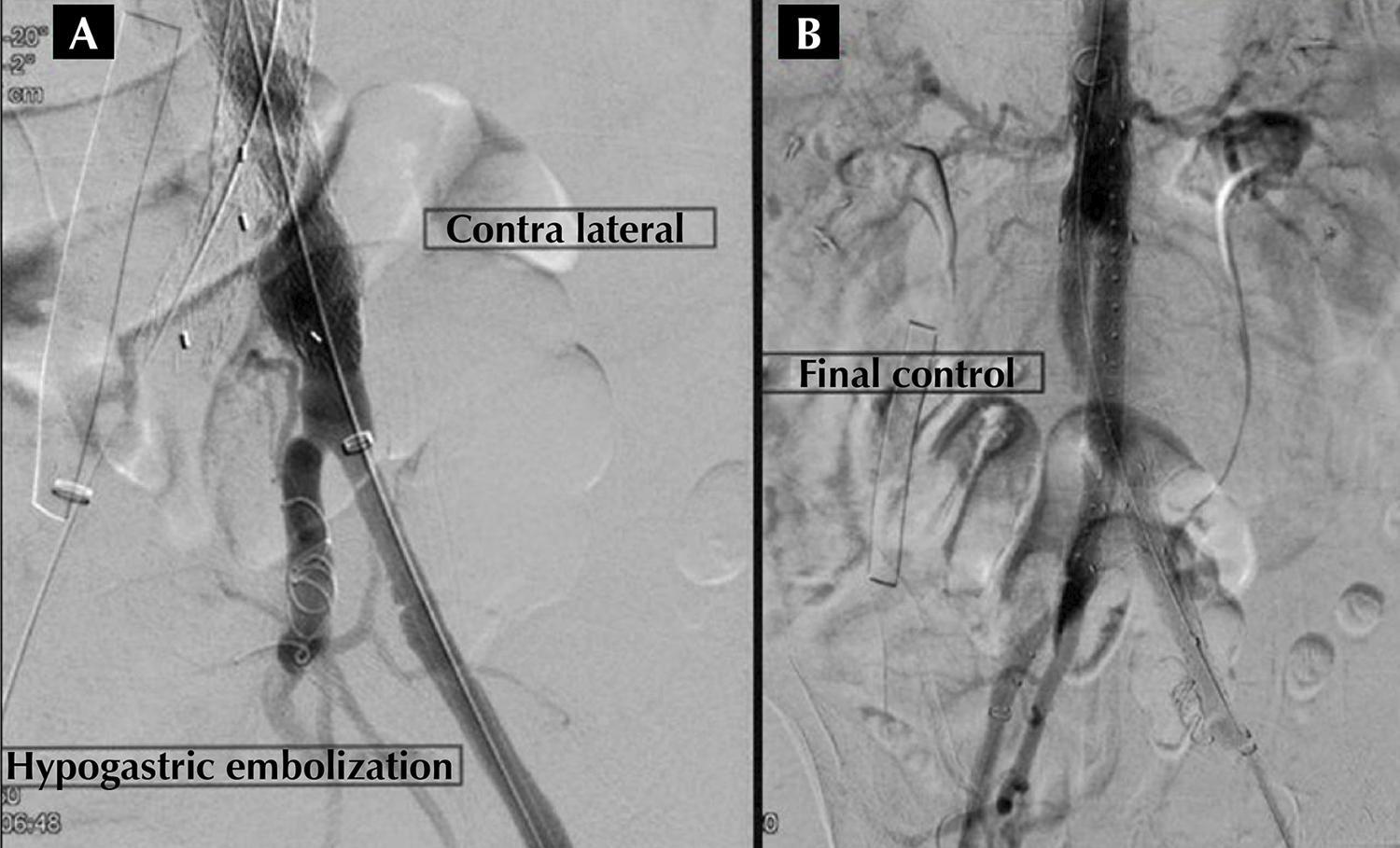
Abdominal aortic aneurysm (AAA), with an estimated prevalence of 4–8% and a higher incidence in men, older people, hypertensive patients, and smokers, can be treated with surgical or endovascular aneurysm repair (EVAR). When well-indicated, EVAR is primarily used since it is less invasive and has lower morbidity and mortality rates. However, due to possible complications, routine clinical and imaging surveillance is necessary to identify or prevent periprosthetic leaks (endoleaks) associated with aneurysmal disease progression.

Accordingly, computed tomography angiography (CTA) has always been considered the gold standard for endoleak surveillance due to its high image quality and usefulness for two- and three-dimensional reconstruction; however, its use of iodinated contrast and exposure to ionizing radiation are disadvantages. Therefore, other post-EVAR control imaging methods such as contrast-enhanced ultrasound (CEUS) have been studied as an endoleak dynamic and high-quality assessment method.,

[…]
  • abdominal
  • Aortic Aneurysm
  • Endoleak
Read Full Article
Creative Commons Attribution (CC BY) Creative Commons license
17/08/2022 DOI: 10.47593/2675-312X/20223503eabc315
Figure 1
ABC
Original Article

Computational Fluid Dynamics to Assess the Future Risk of Ascending Aortic Aneurysms

Gabriela de C. Almeida et al. Bruno Alvares de Azevedo Gomes Fabiula Schwartz de Azevedo Karim Kalaun … Ivan Ibanez Pedro S. Teixeira Ilan Gottlieb Marcelo M. Melo Glaucia Maria Moraes de Oliveira Angela O. Nieckele

Abstract

Background

A methodology to identify patients with ascending aortic aneurysm (AsAA) under high risk for aortic growth is not completely defined

Objetive

This research seeks to numerically characterize the aortic blood flow by relating the resulting mechanical stress distribution with AsAA growth.

Methods

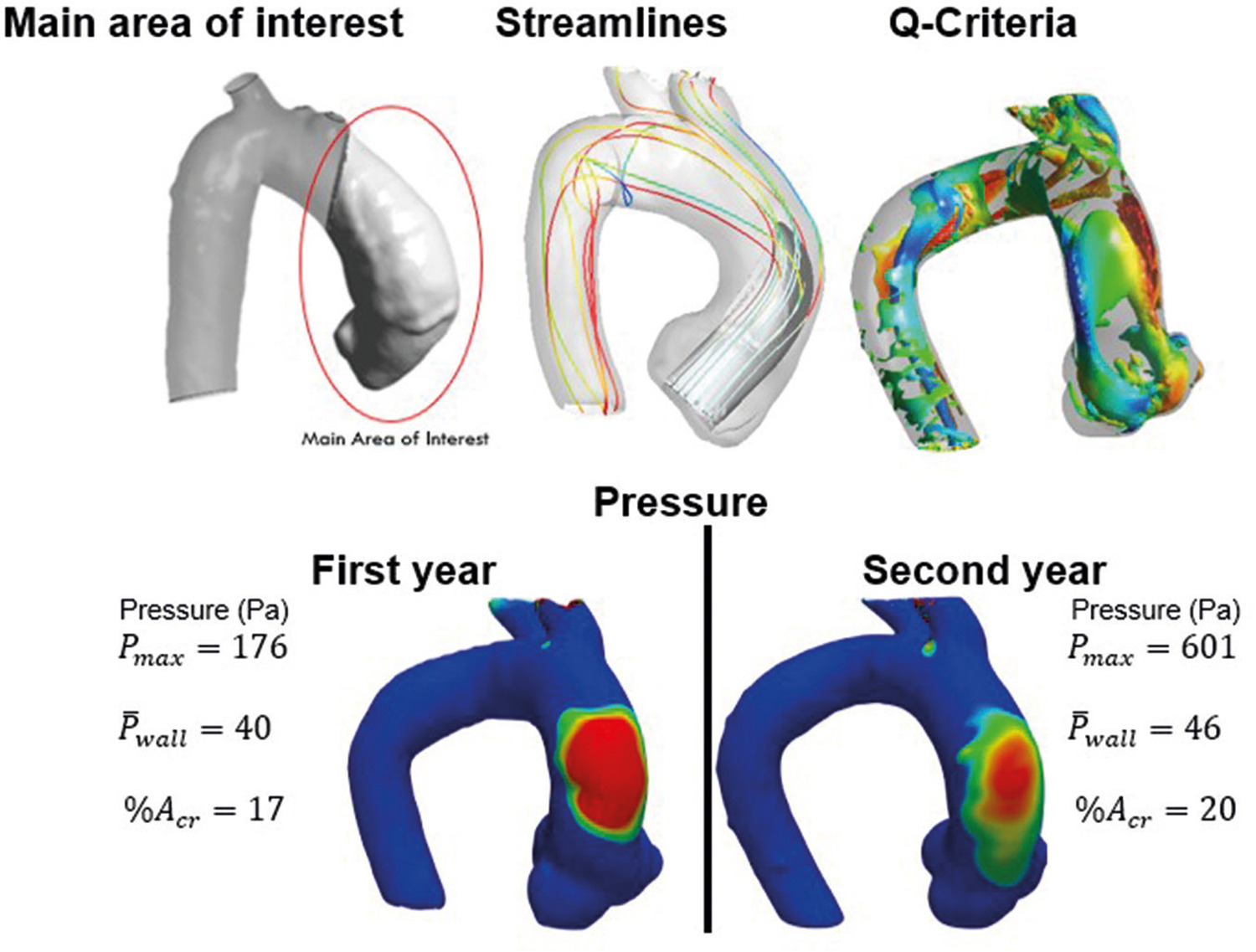
Analytical, observational, single-center study in which a computational fluid dynamics (CFD) protocol was applied to aortic computed tomography angiogram (CTA) images of patients with AsAA. Two CTA exams taken at a minimum interval of one year were obtained. From the CTA-gathered images, three-dimensional models were built, and clinical data were registered. Study of velocity field and coherent structures (vortices) was performed aiming to relate them to the presence or absence of aneurysm growth, as well as comparing them to the patients’ clinical data. The Kolmogorov-Smirnov test was used to evaluate the normality of the distribution, and the non-parametric Wilcoxon signed-rank test, for non-normal distribution, was used to compare the paired data of the aortic angles. Statistical significance was set at 5%.

Results

The incident jet in the aortic wall generated recirculation areas in the posterior region of the jet, inducing complex vortices formation in the group with aneurysm growth, leading to an average pressure increase in the ascending aortic wall between exams. In the group without aneurysm growth, the average pressure decreased.

Conclusion

This pilot study showed that CFD based on CTA may in the near future be a tool to help identify flow patterns associated with AsAA remodeling process.

  • Aortic Aneurysm
  • Hemodynamics
  • Patient-Specific Modeling
  • thoracic
Read Full Article
Creative Commons Attribution (CC BY) Creative Commons license
07/03/2022 DOI: 10.36660/abc.20200926 Views 1
ABCIC
Image

A Deceiving Aorta

Helder Santos et al. Hugo Miranda Inês Almeida Mariana Santos … Samuel Almeida Lurdes Almeida

[…]

  • Aortic Aneurysm
  • Aortic Dissection
  • Tomography
  • Transthoracic Echocardiography
Read Full Article
Creative Commons Attribution (CC BY) Creative Commons license
14/01/2022 DOI: 10.5935/2318-8219.20190055
Figure 1
ABC
Clinicoradiological Session

Case 5 / 2014 – 26-year-old Male with Moderate Stenosis of Bivalved Aortic Valve and Dilation of Ascending Aorta

Edmar Atik et al. Ricardo Ribeiro Dias José Lázaro Andrade

Complementary tests

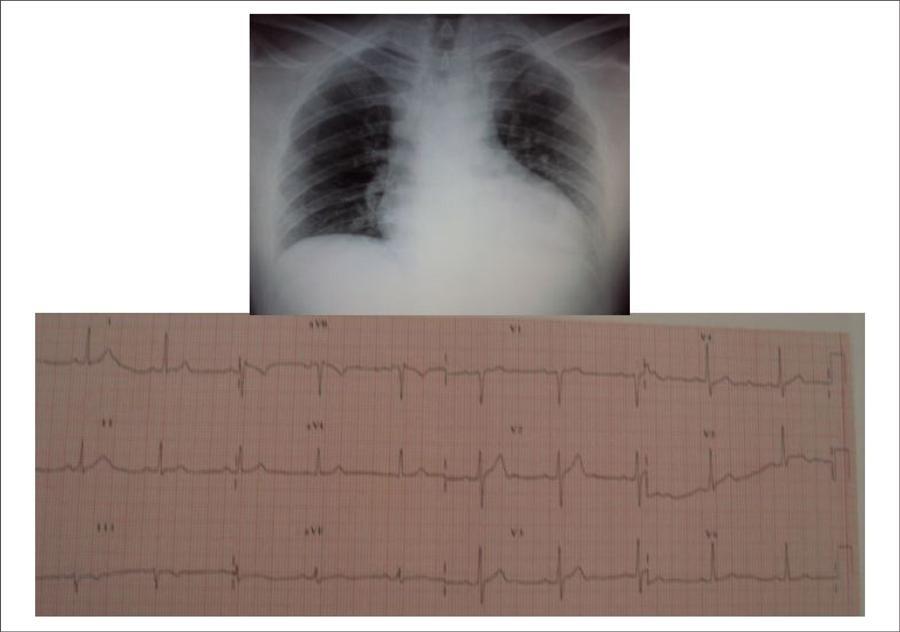
Electrocardiogram: () presented normal sinus rhythm and morphology of P, QRS and T waves, without signs of cavity overload. Ventricular repolarization was normal. AP: +40º, AQRS: 0º, AT: 20 º.

Chest radiography: Shows normal heart region and pulmonary vascular markings on expiration radiography. Mild dilation on upper right arch indicating dilation of ascending aorta ().

[…]

  • Aorta/abnormalities
  • Aortic Aneurysm
  • Aortic Valve Stenosis
Read Full Article
Creative Commons Attribution (CC BY) Creative Commons license
01/08/2014 DOI: 10.5935/abc.20140084
Figure 1
ABC
Anatomopathological Session

Case 1/2014 – Syncope Due to Cardiogenic Shock in a 25-year-old Male Patient

Tiago Rodrigues Politi et al. Paulo Gutierrez

Clinical aspects

This is a case of a male patient, 25 years of age with no previously described clinical history that sought medical attention complaining of malaise and feeling faint. The clinical picture had started 1 hour before he sought the local hospital emergency room. The patient clinical evolution was dramatic, presenting at the examination as shock, initially of undetermined etiology, going to aortic dissection and cardiac tamponade, and culminating in death within hours of symptom onset, before any surgical intervention. Acute dissection of the ascending aorta was then identified, with rapid and catastrophic clinical deterioration, a determining factor for the diagnosis to be attained as early as possible, as well as an early and accurate intervention.

Acute aortic dissection is a cardiovascular emergency with high mortality, ranging from 50 to 68% in 48 hours, 70% at 1 week and 85% in 1 month. The intimal tear is transversal, located in 70% of cases in the aorta ascending (just above the aortic valve), 20% in the descending aorta after the aortic arch, and 10% in the transverse aorta. Once started, the dissection progression can be distal, retrograde or occur in both directions and be of varying extension , . In the present case, the aortic dissection started in the ascending portion, retrograde, with bending of the anterior plan between the true and false lumen, generating a mechanical obstruction to the left ventricular outflow tract ().

[…]

  • Aneurysm, Dissecting
  • Aortic Aneurysm
  • Cardiogenic
  • Shock
  • Syncope
Read Full Article
Creative Commons Attribution (CC BY) Creative Commons license
25/03/2014 DOI: 10.5935/abc.20140020
ABC
Artigo Original

Features of the onset of Takayasu's arteritis acccording to gender

Andrea Rocha de Saboia Mont'Alverne et al. Luiz Eduardo de Paula Samuel Katsuyuki Shinjo

BACKGROUND: Although there are various published epidemiological studies regarding Takayasu’s arteritis (TA), none have analyzed the influence of gender on the clinical and laboratory manifestations or vascular alterations at disease onset. OBJECTIVES: To analyze the influence of gender on clinical and laboratory manifestations and variations in vascular imaging at TA onset. METHODS: A retrospective, unicentric cohort study that evaluated 55 consecutive TA patients between 1982 and 2012. All available clinical data and laboratory test results related to the onset of the disease were analyzed. We included only patients aged 12-35 years at diagnosis to exclude age-related factors. RESULTS: We analyzed 17 men and 38 women, mostly Caucasian, with a comparable mean age between genders. There was no gender difference regarding the clinical or laboratory characteristics, comorbidities, or smoking habit, except for abdominal pain, which was more common in men. Regarding vascular lesions, the presence of ascending aortic aneurysms was significantly more frequent in males. Male gender represented an independent risk factor for the occurrence of abdominal pain and ascending aortic aneurysms in TA patients. CONCLUSION: Abdominal pain and ascending aortic aneurysms occurred more frequently in men with TA, suggesting a more severe disease profile in males.

  • abdominal
  • Abdominal Pain
  • Aortic Aneurysm
  • Cohort Studies
  • Female
  • Male
  • Takayasu Arteritis
Read Full Article
Creative Commons Attribution (CC BY) Creative Commons license
27/08/2013 DOI: 10.5935/abc.20130180
Case 05/12: a 67 year-old hypertensive woman with atrial fibrillation who presented shock followed by cardiac arrest with pulseless electric activity two months after surgical repair of ascending aorta aneurysm
ABC
Correlação Clínico-Radiográfica

Case 05/12: a 67 year-old hypertensive woman with atrial fibrillation who presented shock followed by cardiac arrest with pulseless electric activity two months after surgical repair of ascending aorta aneurysm

Fernanda Marinho Mangione et al. Thiago Nunes Pereira Leite Paulo Sampaio Gutierrez

ANATOMOPATHOLOGICAL SESSION

Case 05/12 – a 67 year-old hypertensive woman with atrial fibrillation who presented shock followed by cardiac arrest with pulseless electric activity two months after surgical repair of ascending aorta aneurysm

[…]

  • Aortic Aneurysm
  • Atrial Fibrillation
  • Heart Arrest
  • Hypertension
  • Shock
Read Full Article
Creative Commons Attribution (CC BY) Creative Commons license
22/11/2012 DOI: 10.1590/S0066-782X2012001400015
Aortic aneurysm rupture into the esophagus
ABC
Case Report

Aortic aneurysm rupture into the esophagus

Christiano da Silveira de Barcellos et al. Paulo Ceratti de Azambuja Marcelo Kunh Momolli Clóvis Manfredini Rigoni … Marcelo Lopes Henrique Biavatti Wagnes Franceschi Claudio Borges Fortes

We present the case of a patient with a descending aorta aneurysm rupture into the esophagus, which, after aortoplasty with Dacron tube interposition and suture of esophageal laceration, developed a pleural-esophagus fistula on the 3rd postoperative day. She needed re-intervention and intensive care, followed by adequate recovery. Considering this unusual case and the knowledge acquired through its management, we reviewed the literature in order to discuss the best alternative for the correction of this rare and often fatal form of presentation of aortic diseases.

  • Aortic Aneurysm
  • aortic ruptura
  • esophageal fistula
Read Full Article
Creative Commons Attribution (CC BY) Creative Commons license
05/01/2009 DOI: 10.1590/S0066-782X2008001800012 Views 1
Ischemic preconditioning and spinal cord function monitoring in the descending thoracic aorta approach
ABC
Artigo Original

Ischemic preconditioning and spinal cord function monitoring in the descending thoracic aorta approach

Bernardo Assumpção de Mônaco et al. Anderson Benício Ivan Salvador Bonillo Contreras Larissa Eckmann Mingrone … Gerson Ballester Luiz Felipe Pinho Moreira

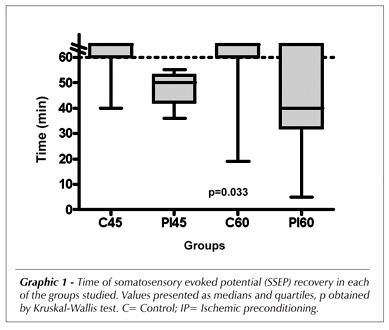
OBJECTIVES: To evaluate the effectiveness of acute ischemic preconditioning (IP), based on somatosensory evoked potentials (SSEP) monitoring, as a method of spinal cord protection and to asses SSEP importance in spinal cord neuromonitoring. METHODS: Twenty-eight dogs were submitted to spinal cord ischemic injury attained by descending thoracic aorta cross-clamping. In the C45 group, the aortic cross-clamping time was 45 min (n=7); in the IP45 group, the dogs were submitted to IP before the aortic cross-clamping for 45 min (n=7). In the C60 group, the dogs were submitted to 60 min of aortic cross-clamping (n=7), as in the IP60 group that was previously submitted to IP. The IP cycles were determined based on SSEP changes. RESULTS: Tarlov scores of the IP groups were significantly better than those of the controls (p = 0.005). Paraplegia was observed in 3 dogs from C45 and in 6 from C60 group, although all dogs from IP45 group were neurologically normal, as 4 dogs from IP60. There was a significant correlation between SSEP recovery time until one hour of aortic reperfusion and the neurological status (p = 0.011), showing sensitivity of 75% and specificity of 83%. CONCLUSION: Repetitive acute IP based on SSEP is a protection factor during spinal cord ischemia, decreasing paraplegia incidence. SSEP monitoring seems to be a good neurological injury assessment method during surgical procedures that involve spinal cord ischemia.

  • Aortic Aneurysm
  • evoked potencial
  • Ischemic Preconditioning
  • spinal cord
Read Full Article
Creative Commons Attribution (CC BY) Creative Commons license
21/05/2007 DOI: 10.1590/S0066-782X2007000300007 Views 2
Prevalence and risk factors for combined coronary artery disease and aortic aneurysm
ABC
Artigo Original

Prevalence and risk factors for combined coronary artery disease and aortic aneurysm

Carlos Romério Costa Ferro et al. Dinaldo Cavalcanti de Oliveira Fábio de Freitas Guimarães Guerra Alexandre Jorge de Lucena … Fabiana Piech Nunes Sergio Tranchesi Ortiz Enilton Sergio Tabosa Egito Luis Carlos Bento de Sousa Adib Domingos Jatene Leopoldo Soares Piegas

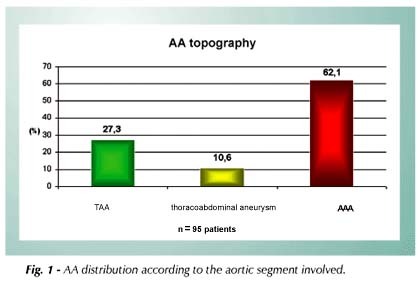
OBJECTIVE: To evaluate CAD prevalence in patients with aortic aneurysm, as well as differences related to aneurysm topographies. To describe the primary risk factors for CAD related to this association and their occasional differences according to AA topographies. METHODS: This was an open, prospective, nonrandomized study that evaluated 95 patients (66 men and 33 women, mean age 63 ± 11.8). All patients, asymptomatic for CAD, had undergone aortic CT and coronary angiography. According to the AA topography, they were classified into three groups: 1) patients with thoracic aortic aneurysm (TAA); 2) thoracoabdominal aortic aneurysm (TAAA); and 3) abdominal aortic aneurysm (AAA). A database was created to store information from clinical data and complementary examinations. Statistical analysis was performed using the Student’s t test or analysis of variance (ANOVA) for continuous variables and chi-square test for categorical variables. P values 70% and 19 (31.6%), > 50%. Fifteen patients (25%) had single-vessel disease, 11 (18%) had two-vessel disease, and 34 (57%) had three-vessel disease. CONCLUSION: Asymptomatic CAD is highly prevalent in AA patients, particularly among those with AAA. Study results suggest the need for diagnostic stratification for CAD in patients with AA, especially those with AAA.

  • Aortic Aneurysm
  • Coronary Artery Disease
  • Risk Factors
Read Full Article
Creative Commons Attribution (CC BY) Creative Commons license
07/03/2007 DOI: 10.1590/S0066-782X2007000100007

How to cite this article

EndNote RIS

Electronic Document Format (Vancouver)

Djaló ACNN, Pires GLO, Ferraz A, Abath CG, Fonseca Filho IS, Marques MO. Use of Contrast-Enhanced Ultrasound for the Diagnosis of Endoleak After EVAR: A Case Report. ABC Imagem Cardiovascular 2022;35(3):eabc315.

Electronic Document Format (ABNT)

Djaló, Ana Carolina N. Netto; Pires, Glauber Lutterbach de Oliveira; Ferraz, Adriana; Abath, Carlos Gustavo; Fonseca Filho, Idalécio Souto; Marques, Milena O.. Use of Contrast-Enhanced Ultrasound for the Diagnosis of Endoleak After EVAR: A Case Report. ABC Imagem Cardiovascular, v. 35, n. 3, eabc315, Aug. 2022.

Electronic Document Format (APA)

Djaló, A. C. N. N., Pires, G. L. O., Ferraz, A., Abath, C. G., Fonseca Filho, I. S., & Marques, M. O. (2022). Use of Contrast-Enhanced Ultrasound for the Diagnosis of Endoleak After EVAR: A Case Report. ABC Imagem Cardiovascular, 35(3), eabc315.

Electronic Document Format (ISO)

Djaló, Ana Carolina N. Netto and Pires, Glauber Lutterbach de Oliveira and Ferraz, Adriana and Abath, Carlos Gustavo and Fonseca Filho, Idalécio Souto and Marques, Milena O.. Use of Contrast-Enhanced Ultrasound for the Diagnosis of Endoleak After EVAR: A Case Report. ABC Imagem Cardiovascular [online]. 2022, vol. 35, n. 3, [cited 2026-10-14], eabc315. Available from: <https://journals.cardiol.br/en/article/use-of-contrast-enhanced-ultrasound-for-the-diagnosis-of-endoleak-after-evar-a-case-report/>. ISSN 2318-8219

EndNote RIS

Electronic Document Format (Vancouver)

Almeida GC, Gomes BAA, Azevedo FS, Kalaun K, Ibanez I, Teixeira PS, Gottlieb I, et al. Computational Fluid Dynamics to Assess the Future Risk of Ascending Aortic Aneurysms. Arquivos Brasileiros de Cardiologia 2022;118(2):448-60.

Electronic Document Format (ABNT)

Almeida, Gabriela de C.; Gomes, Bruno Alvares de Azevedo; Azevedo, Fabiula Schwartz de; Kalaun, Karim; Ibanez, Ivan; Teixeira, Pedro S.; Gottlieb, Ilan; Melo, Marcelo M.; Oliveira, Glaucia Maria Moraes de; Nieckele, Angela O.. Computational Fluid Dynamics to Assess the Future Risk of Ascending Aortic Aneurysms. Arquivos Brasileiros de Cardiologia, v. 118, n. 2, p. 448-460, Mar. 2022.

Electronic Document Format (APA)

Almeida, G. C., Gomes, B. A. A., Azevedo, F. S. , Kalaun, K., Ibanez, I., Teixeira, P. S., Gottlieb, I., Melo, M. M., Oliveira, G. M. M. , & Nieckele, A. O. (2022). Computational Fluid Dynamics to Assess the Future Risk of Ascending Aortic Aneurysms. Arquivos Brasileiros de Cardiologia, 118(2), 448-460.

Electronic Document Format (ISO)

Almeida, Gabriela de C. and Gomes, Bruno Alvares de Azevedo and Azevedo, Fabiula Schwartz de and Kalaun, Karim and Ibanez, Ivan and Teixeira, Pedro S. and Gottlieb, Ilan and Melo, Marcelo M. and Oliveira, Glaucia Maria Moraes de and Nieckele, Angela O.. Computational Fluid Dynamics to Assess the Future Risk of Ascending Aortic Aneurysms. Arquivos Brasileiros de Cardiologia [online]. 2022, vol. 118, n. 2, [cited 2026-10-14], pp. 448-460. Available from: <https://journals.cardiol.br/en/article/computational-fluid-dynamics-to-assess-the-future-risk-of-ascending-aortic-aneurysms/>. ISSN 0066-782X

EndNote RIS

Electronic Document Format (Vancouver)

Santos H, Miranda H, Almeida I, Santos M, Almeida S, Almeida L. A Deceiving Aorta. Arquivos Brasileiros de Cardiologia Imagem cardiovascular 2022;32(4):345.

Electronic Document Format (ABNT)

Santos, Helder; Miranda, Hugo; Almeida, Inês; Santos, Mariana; Almeida, Samuel; Almeida, Lurdes. A Deceiving Aorta. Arquivos Brasileiros de Cardiologia Imagem cardiovascular, v. 32, n. 4, p. 345-345, Jan. 2022.

Electronic Document Format (APA)

Santos, H., Miranda, H., Almeida, I., Santos, M., Almeida, S., & Almeida, L. (2022). A Deceiving Aorta. Arquivos Brasileiros de Cardiologia Imagem cardiovascular, 32(4), 345-345.

Electronic Document Format (ISO)

Santos, Helder and Miranda, Hugo and Almeida, Inês and Santos, Mariana and Almeida, Samuel and Almeida, Lurdes. A Deceiving Aorta. Arquivos Brasileiros de Cardiologia Imagem cardiovascular [online]. 2022, vol. 32, n. 4, [cited 2026-10-14], pp. 345-345. Available from: <https://journals.cardiol.br/en/article/a-deceiving-aorta/>. ISSN 2318-8219

EndNote RIS

Electronic Document Format (Vancouver)

Atik E, Dias RR, Andrade JL. Case 5 / 2014 – 26-year-old Male with Moderate Stenosis of Bivalved Aortic Valve and Dilation of Ascending Aorta. Arquivos Brasileiros de Cardiologia 2014;103(2):e20-1.

Electronic Document Format (ABNT)

Atik, Edmar; Dias, Ricardo Ribeiro; Andrade, José Lázaro. Case 5 / 2014 – 26-year-old Male with Moderate Stenosis of Bivalved Aortic Valve and Dilation of Ascending Aorta. Arquivos Brasileiros de Cardiologia, v. 103, n. 2, p. e20-e21, Jul. 2014.

Electronic Document Format (APA)

Atik, E., Dias, R. R., & Andrade, J. L. (2014). Case 5 / 2014 – 26-year-old Male with Moderate Stenosis of Bivalved Aortic Valve and Dilation of Ascending Aorta. Arquivos Brasileiros de Cardiologia, 103(2), e20-e21.

Electronic Document Format (ISO)

Atik, Edmar and Dias, Ricardo Ribeiro and Andrade, José Lázaro. Case 5 / 2014 – 26-year-old Male with Moderate Stenosis of Bivalved Aortic Valve and Dilation of Ascending Aorta. Arquivos Brasileiros de Cardiologia [online]. 2014, vol. 103, n. 2, [cited 2026-10-14], pp. e20-e21. Available from: <https://journals.cardiol.br/en/article/case-5-2014-26-year-old-male-with-moderate-stenosis-of-bivalved-aortic-valve-and-dilation-of-ascending-aorta/>. ISSN 0066-782X

EndNote RIS

Electronic Document Format (Vancouver)

Politi TR, Gutierrez P. Case 1/2014 – Syncope Due to Cardiogenic Shock in a 25-year-old Male Patient. Arquivos Brasileiros de Cardiologia 2014;102(2):e11.

Electronic Document Format (ABNT)

Politi, Tiago Rodrigues; Gutierrez, Paulo. Case 1/2014 – Syncope Due to Cardiogenic Shock in a 25-year-old Male Patient. Arquivos Brasileiros de Cardiologia, v. 102, n. 2, e11, Mar. 2014.

Electronic Document Format (APA)

Politi, T. R., & Gutierrez, P. (2014). Case 1/2014 – Syncope Due to Cardiogenic Shock in a 25-year-old Male Patient. Arquivos Brasileiros de Cardiologia, 102(2), e11.

Electronic Document Format (ISO)

Politi, Tiago Rodrigues and Gutierrez, Paulo. Case 1/2014 – Syncope Due to Cardiogenic Shock in a 25-year-old Male Patient. Arquivos Brasileiros de Cardiologia [online]. 2014, vol. 102, n. 2, [cited 2026-10-14], e11. Available from: <https://journals.cardiol.br/en/article/case-1-2014-syncope-due-to-cardiogenic-shock-in-a-25-year-old-male-patient/>. ISSN 0066-782X

EndNote RIS

Electronic Document Format (Vancouver)

Mont’Alverne ARS, Paula LE, Shinjo SK. Features of the onset of Takayasu’s arteritis acccording to gender. Arquivos Brasileiros de Cardiologia 2013;101(4):359-63.

Electronic Document Format (ABNT)

Mont’Alverne, Andrea Rocha de Saboia; Paula, Luiz Eduardo de; Shinjo, Samuel Katsuyuki. Features of the onset of Takayasu’s arteritis acccording to gender. Arquivos Brasileiros de Cardiologia, v. 101, n. 4, p. 359-363, Aug. 2013.

Electronic Document Format (APA)

Mont’Alverne, A. R. S., Paula, L. E. , & Shinjo, S. K. (2013). Features of the onset of Takayasu’s arteritis acccording to gender. Arquivos Brasileiros de Cardiologia, 101(4), 359-363.

Electronic Document Format (ISO)

Mont’Alverne, Andrea Rocha de Saboia and Paula, Luiz Eduardo de and Shinjo, Samuel Katsuyuki. Features of the onset of Takayasu’s arteritis acccording to gender. Arquivos Brasileiros de Cardiologia [online]. 2013, vol. 101, n. 4, [cited 2026-10-14], pp. 359-363. Available from: <https://journals.cardiol.br/en/article/features-of-the-onset-of-takayasus-arteritis-acccording-to-gender/>. ISSN 0066-782X

EndNote RIS

Electronic Document Format (Vancouver)

Mangione FM, Leite TNP, Gutierrez PS. Case 05/12: a 67 year-old hypertensive woman with atrial fibrillation who presented shock followed by cardiac arrest with pulseless electric activity two months after surgical repair of ascending aorta aneurysm. Arquivos Brasileiros de Cardiologia 2012;99(5):153-8.

Electronic Document Format (ABNT)

Mangione, Fernanda Marinho; Leite, Thiago Nunes Pereira; Gutierrez, Paulo Sampaio. Case 05/12: a 67 year-old hypertensive woman with atrial fibrillation who presented shock followed by cardiac arrest with pulseless electric activity two months after surgical repair of ascending aorta aneurysm. Arquivos Brasileiros de Cardiologia, v. 99, n. 5, p. 153-158, Nov. 2012.

Electronic Document Format (APA)

Mangione, F. M., Leite, T. N. P., & Gutierrez, P. S. (2012). Case 05/12: a 67 year-old hypertensive woman with atrial fibrillation who presented shock followed by cardiac arrest with pulseless electric activity two months after surgical repair of ascending aorta aneurysm. Arquivos Brasileiros de Cardiologia, 99(5), 153-158.

Electronic Document Format (ISO)

Mangione, Fernanda Marinho and Leite, Thiago Nunes Pereira and Gutierrez, Paulo Sampaio. Case 05/12: a 67 year-old hypertensive woman with atrial fibrillation who presented shock followed by cardiac arrest with pulseless electric activity two months after surgical repair of ascending aorta aneurysm. Arquivos Brasileiros de Cardiologia [online]. 2012, vol. 99, n. 5, [cited 2026-10-14], pp. 153-158. Available from: <https://journals.cardiol.br/en/article/case-05-12-a-67-year-old-hypertensive-woman-with-atrial-fibrillation-who-presented-shock-followed-by-cardiac-arrest-with-pulseless-electric-activity-two-months-after-surgical-repair-of-ascending-aort/>. ISSN 0066-782X

EndNote RIS

Electronic Document Format (Vancouver)

Barcellos CS, Azambuja PC, Momolli MK, Rigoni CM, Lopes M, Biavatti H, Franceschi W, et al. Aortic aneurysm rupture into the esophagus. Arquivos Brasileiros de Cardiologia 2009;91(6):e53-5.

Electronic Document Format (ABNT)

Barcellos, Christiano da Silveira de; Azambuja, Paulo Ceratti de; Momolli, Marcelo Kunh; Rigoni, Clóvis Manfredini; Lopes, Marcelo; Biavatti, Henrique; Franceschi, Wagnes; Fortes, Claudio Borges. Aortic aneurysm rupture into the esophagus. Arquivos Brasileiros de Cardiologia, v. 91, n. 6, p. e53-e55, Jan. 2009.

Electronic Document Format (APA)

Barcellos, C. S. , Azambuja, P. C. , Momolli, M. K., Rigoni, C. M., Lopes, M., Biavatti, H., Franceschi, W., & Fortes, C. B. (2009). Aortic aneurysm rupture into the esophagus. Arquivos Brasileiros de Cardiologia, 91(6), e53-e55.

Electronic Document Format (ISO)

Barcellos, Christiano da Silveira de and Azambuja, Paulo Ceratti de and Momolli, Marcelo Kunh and Rigoni, Clóvis Manfredini and Lopes, Marcelo and Biavatti, Henrique and Franceschi, Wagnes and Fortes, Claudio Borges. Aortic aneurysm rupture into the esophagus. Arquivos Brasileiros de Cardiologia [online]. 2009, vol. 91, n. 6, [cited 2026-10-14], pp. e53-e55. Available from: <https://journals.cardiol.br/en/article/aortic-aneurysm-rupture-into-the-esophagus/>. ISSN 0066-782X

EndNote RIS

Electronic Document Format (Vancouver)

Mônaco BA, Benício A, Contreras ISB, Mingrone LE, Ballester G, Moreira LFP. Ischemic preconditioning and spinal cord function monitoring in the descending thoracic aorta approach. Arquivos Brasileiros de Cardiologia 2007;88(3):291-6.

Electronic Document Format (ABNT)

Mônaco, Bernardo Assumpção de; Benício, Anderson; Contreras, Ivan Salvador Bonillo; Mingrone, Larissa Eckmann; Ballester, Gerson; Moreira, Luiz Felipe Pinho. Ischemic preconditioning and spinal cord function monitoring in the descending thoracic aorta approach. Arquivos Brasileiros de Cardiologia, v. 88, n. 3, p. 291-296, May. 2007.

Electronic Document Format (APA)

Mônaco, B. A. , Benício, A., Contreras, I. S. B., Mingrone, L. E., Ballester, G., & Moreira, L. F. P. (2007). Ischemic preconditioning and spinal cord function monitoring in the descending thoracic aorta approach. Arquivos Brasileiros de Cardiologia, 88(3), 291-296.

Electronic Document Format (ISO)

Mônaco, Bernardo Assumpção de and Benício, Anderson and Contreras, Ivan Salvador Bonillo and Mingrone, Larissa Eckmann and Ballester, Gerson and Moreira, Luiz Felipe Pinho. Ischemic preconditioning and spinal cord function monitoring in the descending thoracic aorta approach. Arquivos Brasileiros de Cardiologia [online]. 2007, vol. 88, n. 3, [cited 2026-10-14], pp. 291-296. Available from: <https://journals.cardiol.br/en/article/ischemic-preconditioning-and-spinal-cord-function-monitoring-in-the-descending-thoracic-aorta-approach/>. ISSN 0066-782X

EndNote RIS

Electronic Document Format (Vancouver)

Ferro CRC, Oliveira DC, Guerra FFG, Lucena AJ, Nunes FP, Ortiz ST, Egito EST, et al. Prevalence and risk factors for combined coronary artery disease and aortic aneurysm. Arquivos Brasileiros de Cardiologia 2007;88(1):40-4.

Electronic Document Format (ABNT)

Ferro, Carlos Romério Costa; Oliveira, Dinaldo Cavalcanti de; Guerra, Fábio de Freitas Guimarães; Lucena, Alexandre Jorge de; Nunes, Fabiana Piech; Ortiz, Sergio Tranchesi; Egito, Enilton Sergio Tabosa; Sousa, Luis Carlos Bento de; Jatene, Adib Domingos; Piegas, Leopoldo Soares. Prevalence and risk factors for combined coronary artery disease and aortic aneurysm. Arquivos Brasileiros de Cardiologia, v. 88, n. 1, p. 40-44, Mar. 2007.

Electronic Document Format (APA)

Ferro, C. R. C., Oliveira, D. C. , Guerra, F. F. G., Lucena, A. J. , Nunes, F. P., Ortiz, S. T., Egito, E. S. T., Sousa, L. C. B. , Jatene, A. D., & Piegas, L. S. (2007). Prevalence and risk factors for combined coronary artery disease and aortic aneurysm. Arquivos Brasileiros de Cardiologia, 88(1), 40-44.

Electronic Document Format (ISO)

Ferro, Carlos Romério Costa and Oliveira, Dinaldo Cavalcanti de and Guerra, Fábio de Freitas Guimarães and Lucena, Alexandre Jorge de and Nunes, Fabiana Piech and Ortiz, Sergio Tranchesi and Egito, Enilton Sergio Tabosa and Sousa, Luis Carlos Bento de and Jatene, Adib Domingos and Piegas, Leopoldo Soares. Prevalence and risk factors for combined coronary artery disease and aortic aneurysm. Arquivos Brasileiros de Cardiologia [online]. 2007, vol. 88, n. 1, [cited 2026-10-14], pp. 40-44. Available from: <https://journals.cardiol.br/en/article/prevalence-and-risk-factors-for-combined-coronary-artery-disease-and-aortic-aneurysm/>. ISSN 0066-782X

  • About ABC Family
  • Internal Regulation
  • Editorial Board
  • Brazilian Society of Cardiology (SBC)

Issues

SBC Guidelines

  • Videos
  • Podcasts
  • News