ABC Family Arquivos Brasileiros de Cardiologia International Journal of Cardiovascular Sciences ABC Heart Failure & Cardiomyopathy ABC Imagem Cardiovascular
Português English
ABC Family
Português English
  • About
    • About ABC Family
    • Internal Regulation
    • Editorial Board
    • Brazilian Society of Cardiology (SBC)
  • Issues
  • SBC Guidelines
  • Content
    • Videos
    • Podcasts
    • News
  • About
    • About ABC Family
    • Internal Regulation
    • Editorial Board
    • Brazilian Society of Cardiology (SBC)
  • Issues
  • SBC Guidelines
  • Content
    • Videos
    • Podcasts
    • News

ABC Family

  • ABC Family
  • Arquivos Brasileiros de Cardiologia
  • International Journal of Cardiovascular Sciences
  • ABC Heart Failure & Cardiomyopathy
  • ABC Imagem Cardiovascular
Search in

No content found.

Journals
Ordering
Article types
Others

  1. Home
  2. Keyword: Severity of Illness Index
My Approach to Assessing Mitral Regurgitation with Splay: What Does It Mean for Severity?
ABCIC
Review Article

My Approach to Assessing Mitral Regurgitation with Splay: What Does It Mean for Severity?

Gustavo Nishida et al. Natasha Soares Simões dos Santos Jorge Eduardo Assef Andrea de Andrade Vilela

Abstract

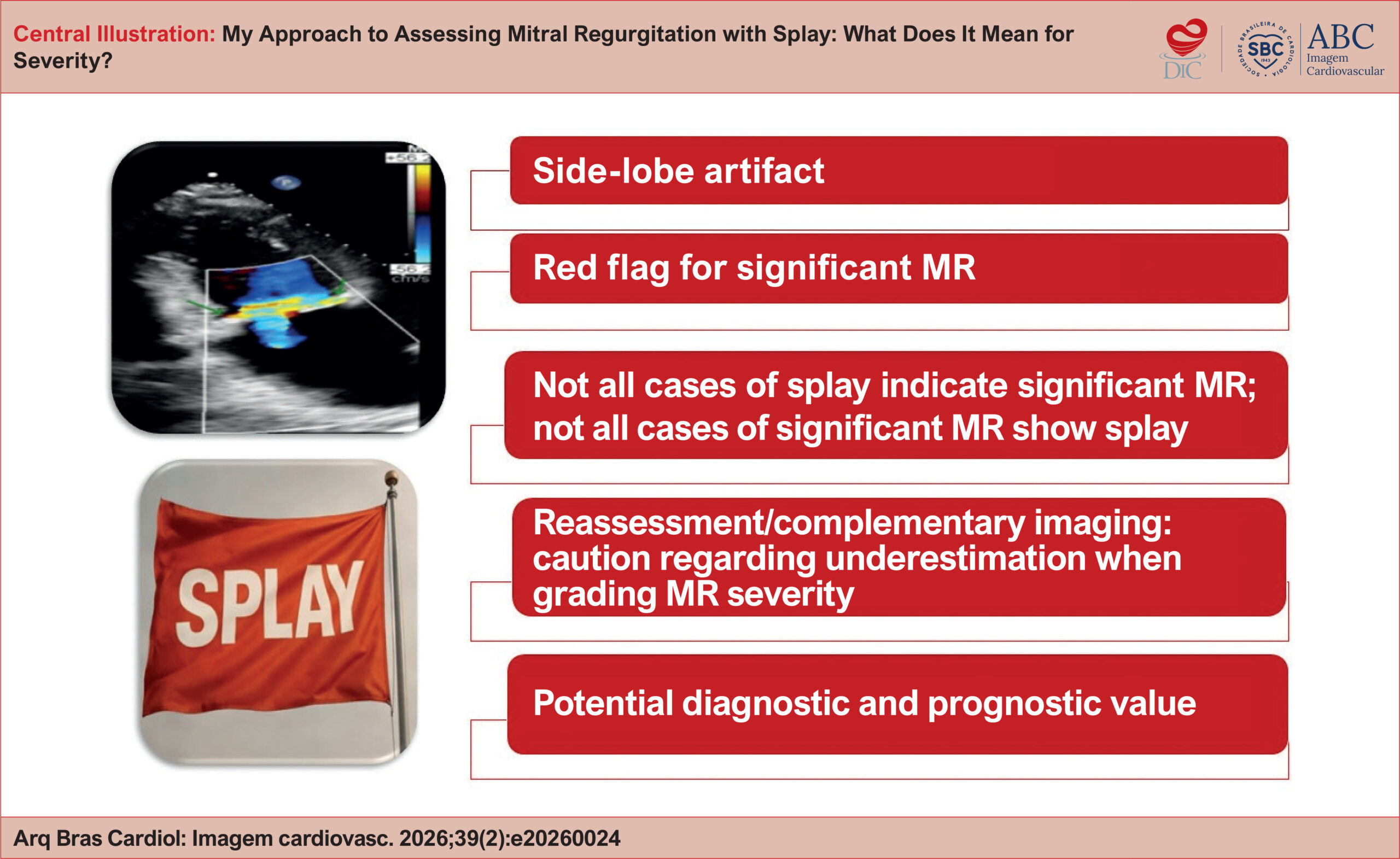
Echocardiographic assessment of mitral regurgitation (MR) is multiparametric and often challenging. The artifact known as splay has been described as an additional tool for estimating the severity of regurgitation. The term refers to a side-lobe artifact that forms a horizontal arc on color Doppler imaging. This same phenomenon can also be observed in other valvular heart diseases, such as aortic regurgitation. In 2020, Wiener et al. reported that splay was present in 81% of cases of significant MR, reaching 93% in eccentric jets, whereas the prevalence was only 16% in mild MR. Verbeke et al. associated the artifact with larger regurgitant volumes. A splay width greater than 29 mm was identified as an independent predictor of adverse cardiovascular outcomes. Although its presence alone does not denote severe MR, splay acts as a red flag, suggesting that regurgitation may be greater than it appears and indicating the need for careful reassessment of the transthoracic echocardiogram or, possibly, complementary transesophageal echocardiography. Further evidence and systematic evaluations are needed to investigate the best strategy for incorporating these data into the multiparametric approach to MR.
  • Echocardiography
  • Mitral Valve Insufficiency
  • Severity of Illness Index
Read Full Article
Creative Commons Attribution (CC BY) Creative Commons license
10/07/2026 DOI: 10.36660/abcimg.20260024i
Central Illustration
IJCS
Original Article

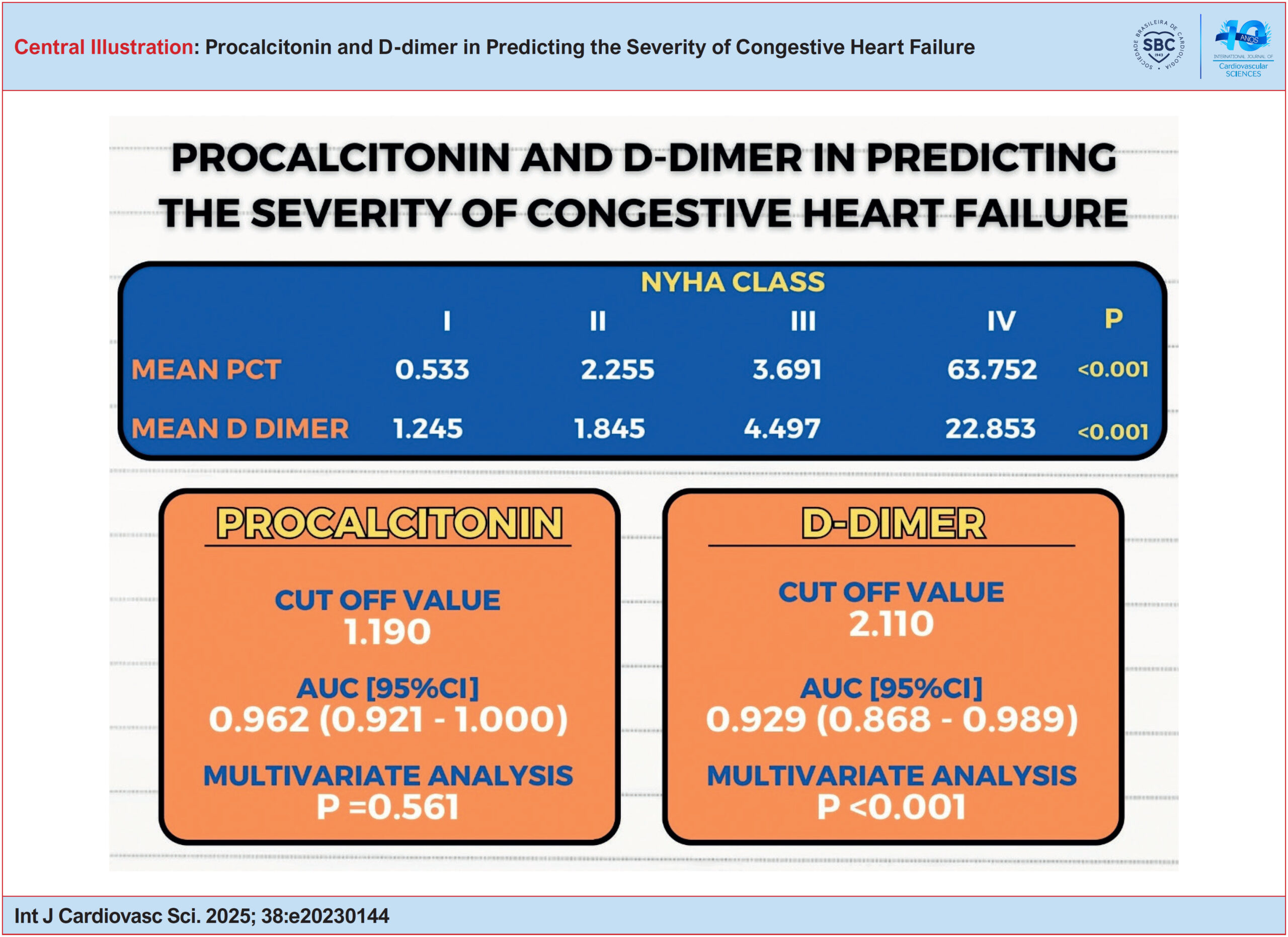
Procalcitonin and D-dimer in Predicting the Severity of Congestive Heart Failure

Bryan Gervais de Liyis et al. Jane Carissa Sutedja I Gede Krisna Arim Sadeva Viona Mareska … Albert Salim George David Made Favian Budi Gunawan Jocelin Nathaniela Desak Made Wihandani Bagus Ari Pradnyana Dwi Sutanegara

Abstract

Background:

Congestive heart failure (CHF) is an intricate clinical syndrome that significantly contributes to morbidity and mortality. Despite extensive advancements, research on markers of severity in CHF remains scarce.

Objectives:

This study aims to evaluate procalcitonin (PCT) and D-dimer as severity predictors in CHF.

Methods:

CHF patients were included in this retrospective single-center study between January to December 2022. The population group was randomized and classified as stages I to IV based on the New York Heart Association (NYHA) functional classification system. Mean differences and multivariate analysis were performed with a statistical significance at p < 0.05.

Results:

A total of 72 CHF patients were included in the study. The correlation analysis revealed that PCT (p ≤ 0.001), D-dimer (p ≤ 0.001), and systolic blood pressure (SBP) (p = 0.005) were all found to be correlated to the CHF stages. In the analysis of mean differences, PCT (p < 0.001) and D-dimer (p < 0.001) showed significant variation across the CHF stages. The optimal PCT and D-dimer cut-off values were 1.190 ng/mL and 2.110 ng/mL respectively. Conversely, the area under the receiver operating characteristic (ROC) curve was significant for both PCT (Area Under the Curve [AUC]: 0.962; 95% CI: 0.921-1.000; p < 0.001) and D-dimer (AUC: 0.929; 95% CI: 0.868-0.989; p < 0.001). Meanwhile, through multivariate analysis, D-dimer is significantly correlated with the various CHF stages (95% CI: 0.034-0.101, p < 0.001) but not for PCT (95% CI: 0.009–0.017, p = 0.561).

Conclusion:

A significant association between D-dimer levels and CHF stages was found, suggesting the potential of D-dimer as a valuable marker of severity in CHF patients.

  • Heart Failure
  • Procalcitonin
  • Severity of Illness Index
Read Full Article
Creative Commons Attribution (CC BY) Creative Commons license
11/04/2025 DOI: 10.36660/ijcs.20230144
ABC
Original Article

Association between the Severity of Coronary Artery Disease and Lung Cancer: A Pilot Cross-Sectional Study

Mingzhuang Sun et al. Qian Yang Meng Li Jing Jing … Hao Zhou Yundai Chen Shunying Hu

Abstract

Background

The direct relationship between coronary artery disease (CAD) and lung cancer is not well known.

Objective

To investigate the association between the anatomical severity of CAD and lung cancer.

Methods

Three-hundred study patients, including 75 recently diagnosed lung cancer patients and 225 matched non-cancer patients, underwent coronary angiography during hospitalization without previous percutaneous coronary intervention (PCI) or coronary artery bypass grafting (CABG). The SYNTAX score (SXscore) was used to assess the severity of CAD. A high SXscore (SXhigh) grade was defined as SXscore > 15 (the highest quartile of the SXscore). The Cochran-Armitage test for trend was used to assess the distribution of patients’ SXscores. Logistic regression analysis was used to assess the association between the severity of CAD and lung cancer. P-values were set when significance level was 5%.

Results

The distribution trend of patients’ SXscore by quartiles was different between lung cancer patients and control patients (from the lowest to the highest quartile: 20.0%, 20.0%, 24.0%, 36.0% vs. 26.7%, 26.2%, 25.8%, 21.3%, p=0.022). The SX high rate was higher in lung cancer patients than in control patients (36.0% vs. 21.3%, p=0.011).The highest quartile of the SXscore showed higher risk of lung cancer in comparison to the lowest quartile (OR: 2,250, 95%CI: 1,077 to 4,699 ; P-trend= 0.016). After adjustment, patients in the highest quartile of the SXscore had higher risk of lung cancer (OR: 2,149, 95%CI: 1,008 to 4,584; P-trend= 0.028). Patients with high SXscore (> 15) had 1,985 times more chances of having lung cancer (95%CI: 1,105–3,563, P= 0.022).

Conclusions

The anatomical severity of CAD is associated with the risk of lung cancer, which indicates that a thorough lung cancer screening may be significant among severe CAD patients.

  • Coronary Angiography/methods
  • Coronary Artery Disease / complications
  • Lung Neoplasms/complications
  • Percutaneous Coronary Intervention/methods
  • Severity of Illness Index
Read Full Article
Creative Commons Attribution (CC BY) Creative Commons license
07/03/2022 DOI: 10.36660/abc.20200478
ABC
Editorial

Neoplasms and the Evaluation of Risk of Cardiovascular Disease

Cristina Salvadori Bittar

Cardiovascular disease (CVD) and neoplasms are currently the two leading causes of mortality in Brazil and in the world. Both the incidence of cancer and neoplasms increase with age, with 77% of cancer cases being diagnosed in patients older than 55 and, concomitantly, the cardiovascular risk is also higher in male patients older than 55 and women older than 65. In Brazil, in 2016, CVDs had the highest rates of mortality and disability-adjusted years of life lost, in both sexes.

Due to the great impact of the two most prevalent diseases that emerge in parallel and interact with each other, it is important to consider how to manage these two diseases individually and from a population point of view. In addition, few studies have explored the population of individuals with a double burden of these diseases.

[…]

  • Coronary Angiography/methods
  • Coronary Artery Disease / complications
  • Lung Neoplasms/complications
  • Percutaneous Coronary Intervention/methods
  • Severity of Illness Index
Read Full Article
Creative Commons Attribution (CC BY) Creative Commons license
07/03/2022 DOI: 10.36660/abc.20220007
Figure 1
ABC
Original Article

Performance of Severity Indices to Estimate Postoperative Complications of Myocardial Revascularization

Silvana Alves dos Santos Franzotti et al. Dyenily Alessi Sloboda Juliana Rosendo Silva Ellian Amorim Santos Souza … Jessica Zamora Reboreda Renata Eloah de Lucena Ferretti-Rebustini Lilia de Souza Nogueira

Abstract

Background

Patients in the postoperative period of myocardial revascularization (Coronary Artery Bypass Grafting – CABG) surgery admitted to the intensive care unit (ICU) are at risk of complications which increase the length of stay and morbidity and mortality. Therefore, early recognition of these risks is essential to optimize prevention strategies and a satisfactory clinical outcome.

Objective

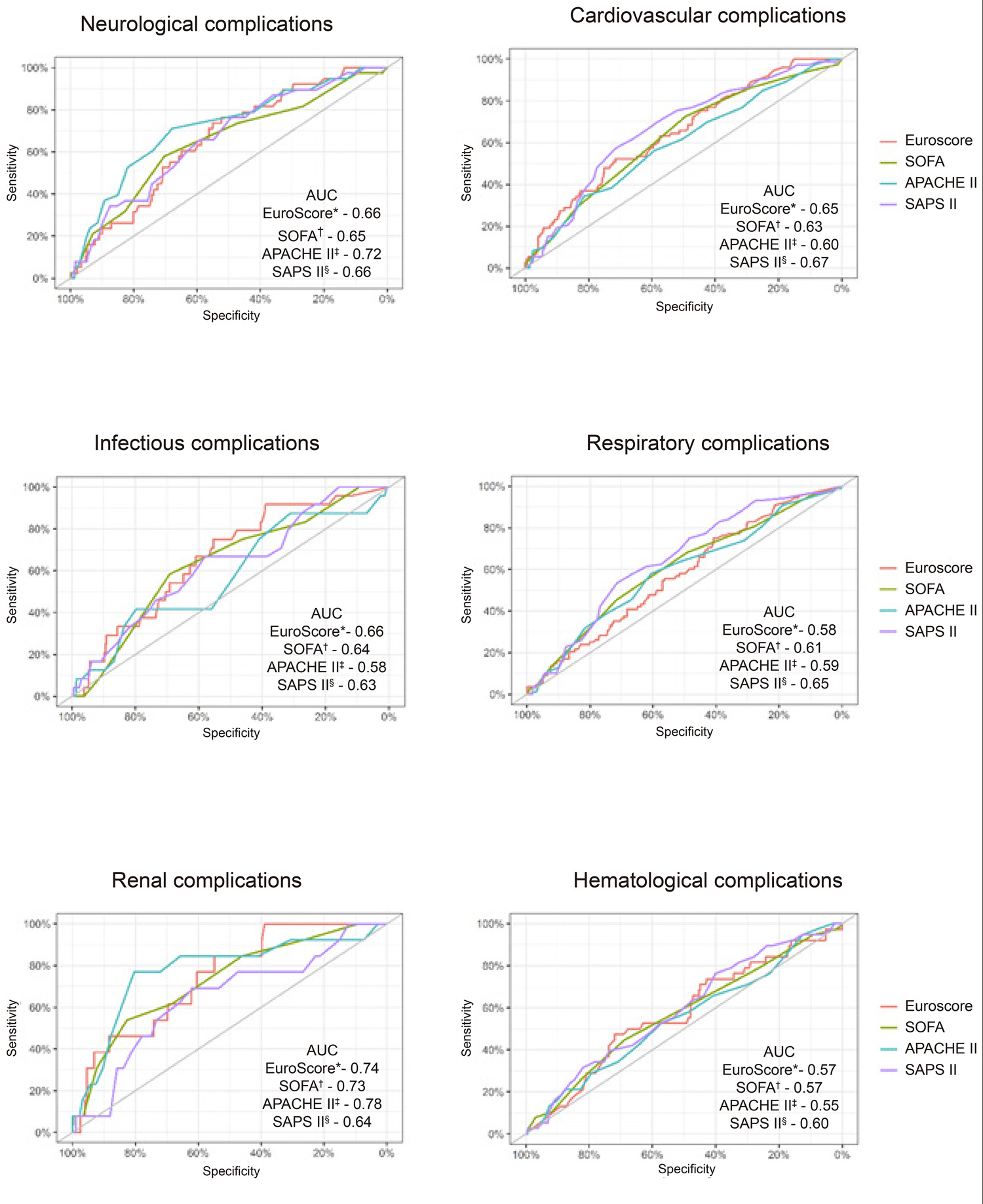
To analyze the performance of severity indices in predicting complications in patients in the postoperative of CABG during the ICU stay.

Methods

A cross-sectional study with retrospective analysis of electronic medical records of patients aged ≥ 18 years who underwent isolated CABG and were admitted to the ICU of a cardiology hospital in São Paulo, Brazil. The areas under the receiver operating characteristic curves (AUC) with a 95% confidence interval were analyzed to verify the accuracy of the European System for Cardiac Operative Risk Evaluation (EuroScore), Acute Physiology and Chronic Health Evaluation (APACHE II), Simplified Acute Physiology Score (SAPS II) and Sequential Organ Failure Assessment (SOFA) indices in predicting complications.

Results

The sample consisted of 366 patients (64.58 ± 9.42 years; 75.96% male). The complications identified were: respiratory (24.32%), cardiovascular (19.95%), neurological (10.38%), hematological (10.38%), infectious (6.56%) and renal (3.55%). APACHE II showed satisfactory performance for predicting neurological (AUC 0.72) and renal (AUC 0.78) complications.

Conclusion

APACHE II excelled in predicting neurological and renal complications. None of the indices performed well in predicting the other analyzed complications. Therefore, severity indices should not be used indiscriminately in order to predict all complications frequently presented by patients after CABG. (Arq Bras Cardiol. 2020; 115(3):452-459)

  • Cardiovascular Diseases/complications
  • Cardiovascular Diseases/surgery
  • Indicators of Morbidity and Mortality
  • Intensive Care Units
  • Myocardial Revascularization / complications
  • Postoperative Care
  • Severity of Illness Index
Read Full Article
Creative Commons Attribution (CC BY) Creative Commons license
28/09/2020 DOI: 10.36660/abc.20190120 Views 1
Figure 1
IJCS
Original Article

Performance of a Hematological Scoring System in Predicting All-Cause Mortality in Patients with Acute Myocardial Infarction

José Gildo de Moura Monteiro Júnior et al. Dilênia de Oliveira Cipriano Torres Maria Cleide Freire Clementino da Silva Tácio Rian Nogueira Príncipe … Rhayssa Barbosa de Vasconcelos Maria Eduarda Cavalcanti de Brito Maria Alice Aquino Limeira Ana Célia Oliveira dos Santos Ulisses Ramos Montarroyos Dário Celestino Sobral Filho

Abstract

Background:

The presence of nucleated red blood cells (NRBCs) and increases in mean platelet volume (MPV) and neutrophil to lymphocyte ratio (NLR) in peripheral circulation are associated with poorer prognosis in patients with acute coronary disease.

Objective:

We developed a scoring system for in-hospital surveillance of all-cause mortality using hematological laboratory parameters in patients with acute myocardial infarction (AMI).

Methods:

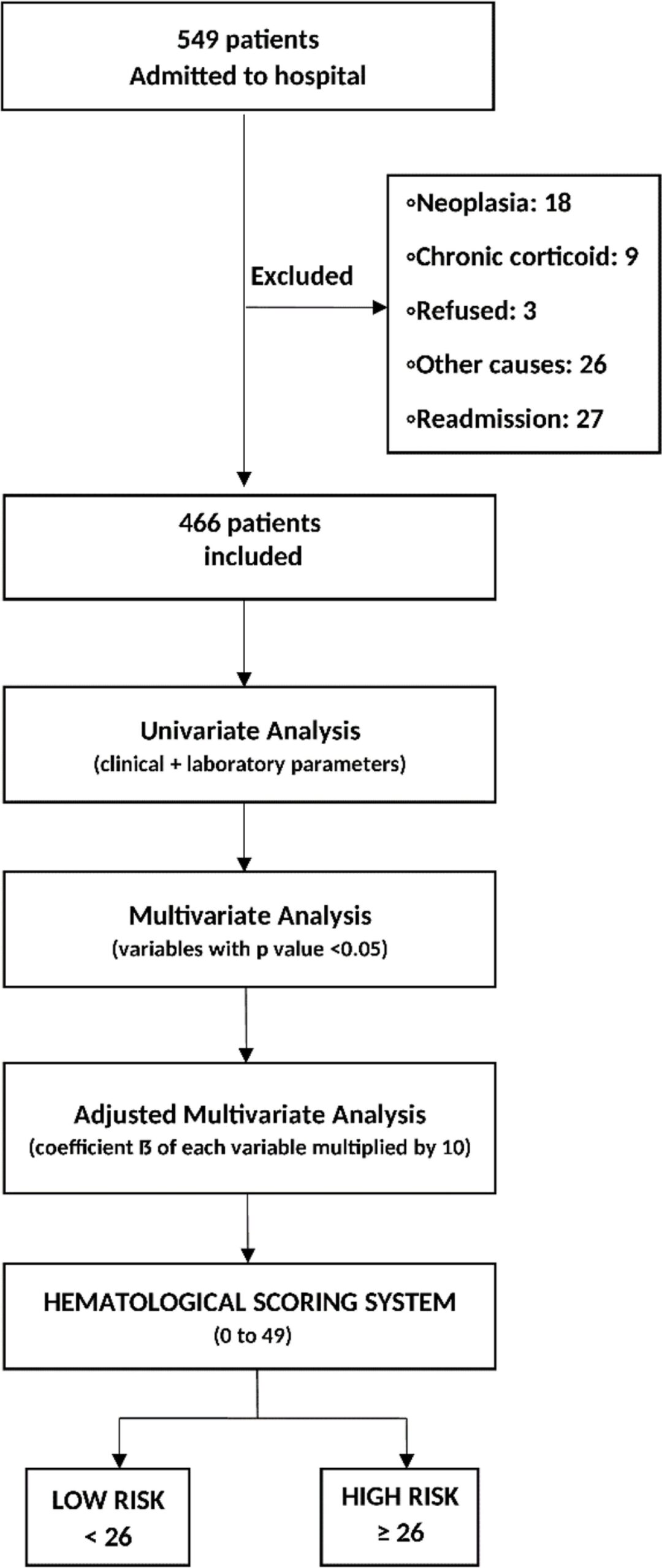
Patients admitted for AMI were recruited in this prospective study. Exclusion criteria were age younger than 18 years, glucocorticoid therapy, cancer or hematological diseases and readmissions. NRBCs, MPV and NLR were measured during hospitalization. The scoring system was developed in three steps: first, the magnitude of the association of clinical and laboratory parameters with in-hospital mortality was measured by odds ratio (OR), second, a multivariate logistic regression model was conducted with all variables significantly (p < 0.05) associated with the outcome, and third, a β-coefficient was estimated by multivariate logistic regression with hematological parameters with a p < 0.05.

Results:

A total of 466 patients (mean age were 64.2 ± 12.8 years, 61.6% male) were included in this study. A hematological scoring system ranging from 0 to 49, where higher values were associated with higher risk of in-hospital death. The best performance was registered for a cut-off value of 26 with sensitivity of 89.1% and specificity of 67.2%, positive predictive value of 26.8% (95% CI: 0.204 – 0.332) and negative predictive value of 97.9% (95% CI: 0.962 – 0.996). The area under the curve for the scoring system was 0.868 (95% CI: 0.818 – 0.918).

Conclusions:

Here we propose a hematological scoring system for surveillance tool during hospitalization of patients with acute myocardial infarction. Based on total blood count parameters, the instrument can evaluate inflammation and hypoxemia due to in-hospital complications and, consequently, predict in-hospital mortality.

  • Coronary Artery Diseases
  • Mean Platelet Volume
  • Mortality
  • Myocardial Infarction
  • neutrophil-to-lymphocyte ratio
  • Nucleated Red Blood Cells
  • Scoring System
  • Severity of Illness Index
Read Full Article
Creative Commons Attribution (CC BY) Creative Commons license
03/02/2020 DOI: 10.36660/ijcs.20190094
Figure 1
IJCS
Original Article

Assessment of the Relationship of Ankle-Brachial Index With Coronary Artery Disease Severity

Andrea Mabilde Petracco et al. Luiz Carlos Bodanese Gustavo Farias Porciúncula Gabriel Santos Teixeira … Denise de Oliveira Pellegrini Luiz Claudio Danzmann Ricardo Medeiros Pianta João Batista Petracco

Abstract

Background:

Peripheral Artery Disease (PAD) is associated with cardiovascular events and can be diagnosed and estimated by use of the Ankle-Brachial Index (ABI). ABI is a worsening factor in the stratification of cardiovascular risk, but its contribution to define the severity of coronary artery disease has not been well established.

Objectives:

To compare the ABI value with the coronary atherosclerotic disease severity by use of the Syntax Score (SS) in patients with Acute Coronary Syndrome (ACS).

Methods:

This prospective study measured the ABI of all patients with ACS consecutively admitted to the São Lucas Hospital of PUCRS from May to September 2016, and compared the ABI values with the SS and ACS types of those patients. The analyzes were performed considering the 95%confidence interval (a = 5%).

Results:

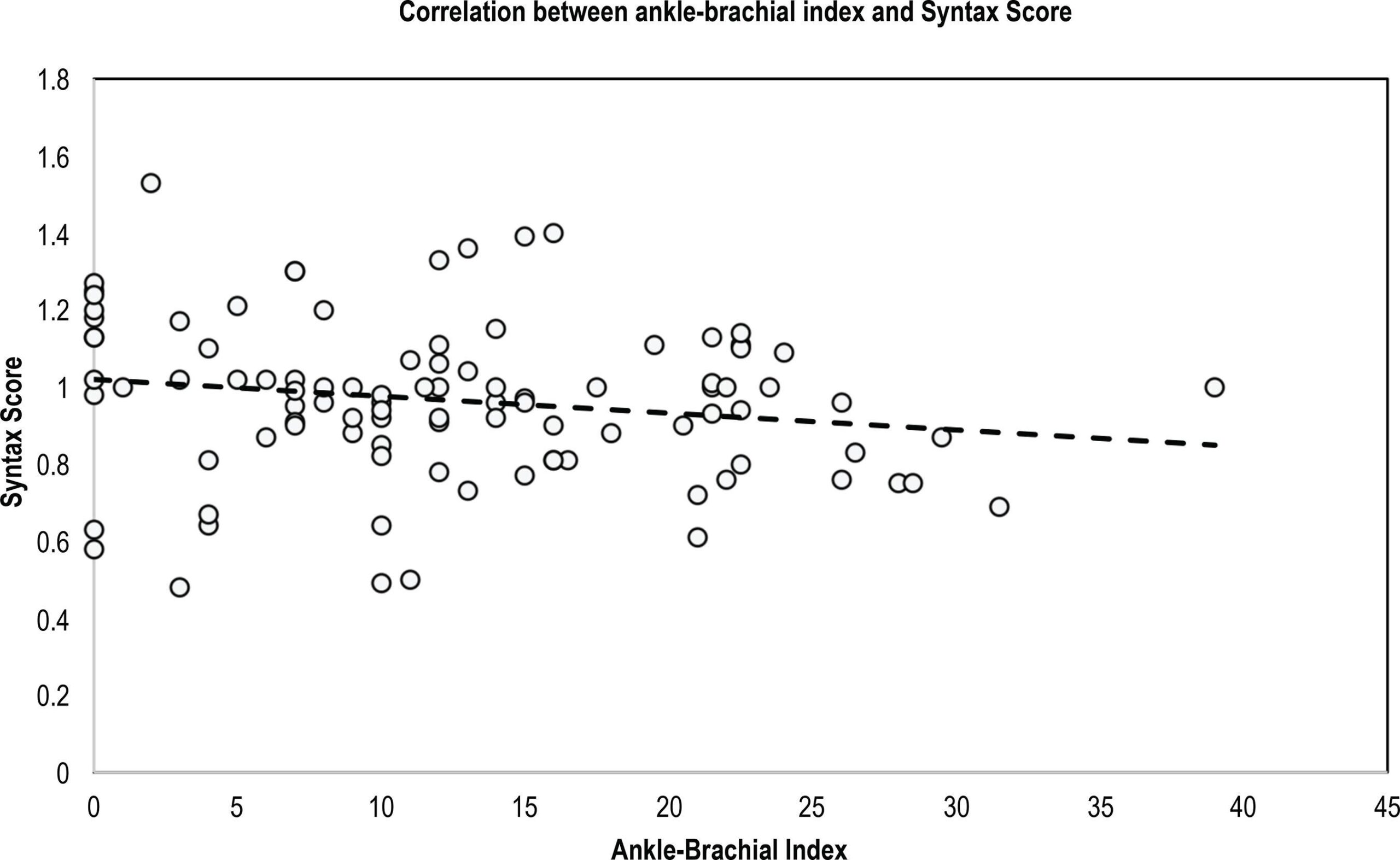
This study assessed 101 patients [mean age, 62.6 ± 12.0 years; 58 men (57.4%)], 74 (82.2%) were hypertensive, 33 (45.8%) had diabetes and 46 (45,5%) had ST-elevation acute myocardial infarction (STEMI). The PAD severity was not related to the anatomical severity of the coronary artery disease (CAD). We found a significant association of intermediate SS with non-ST-elevation acute myocardial infarction (NSTEMI), and of low SS with unstable angina (UA) [OR (95% CI): 1.11 (1.03-1.20) (p = 0.004)], which remained after multivariate analysis adjusted to age, smoking, family history of CAD and previous CAD [(OR 95%): 1.13 (1.02-1.25) (p = 0.019)].

Conclusions:

Patients with ABI < 0.9 showed no association with higher disease complexity determined by the SS in patients with ACS. Patients with NSTEMI were more associated with an intermediate risk on the SS.

  • Acute Coronary Syndrome, Coronary Artery Disease
  • Ankle Brachial Index
  • Atherosclerosis, Peripheral Arterial Disease
  • Severity of Illness Index
Read Full Article
Creative Commons Attribution (CC BY) Creative Commons license
01/01/2018 DOI: 10.5935/2359-4802.20170094 Views 1
Figure 1
ABC
Original Article

Validation of the Killip-Kimball Classification and Late Mortality after Acute Myocardial Infarction

Bruno Henrique Gallindo de Mello et al. Gustavo Bernardes F. Oliveira Rui Fernando Ramos Bernardo Baptista C. Lopes … Cecília Bitarães S. Barros Erick de Oliveira Carvalho Fabio Bellini P. Teixeira Guilherme D'Andréa S. Arruda Maria Sol Calero Revelo Leopoldo Soares Piegas

Background:

The classification or index of heart failure severity in patients with acute myocardial infarction (AMI) was proposed by Killip and Kimball aiming at assessing the risk of in-hospital death and the potential benefit of specific management of care provided in Coronary Care Units (CCU) during the decade of 60.

Objective:

To validate the risk stratification of Killip classification in the long-term mortality and compare the prognostic value in patients with non-ST-segment elevation MI (NSTEMI) relative to patients with ST-segment elevation MI (STEMI), in the era of reperfusion and modern antithrombotic therapies.

Methods:

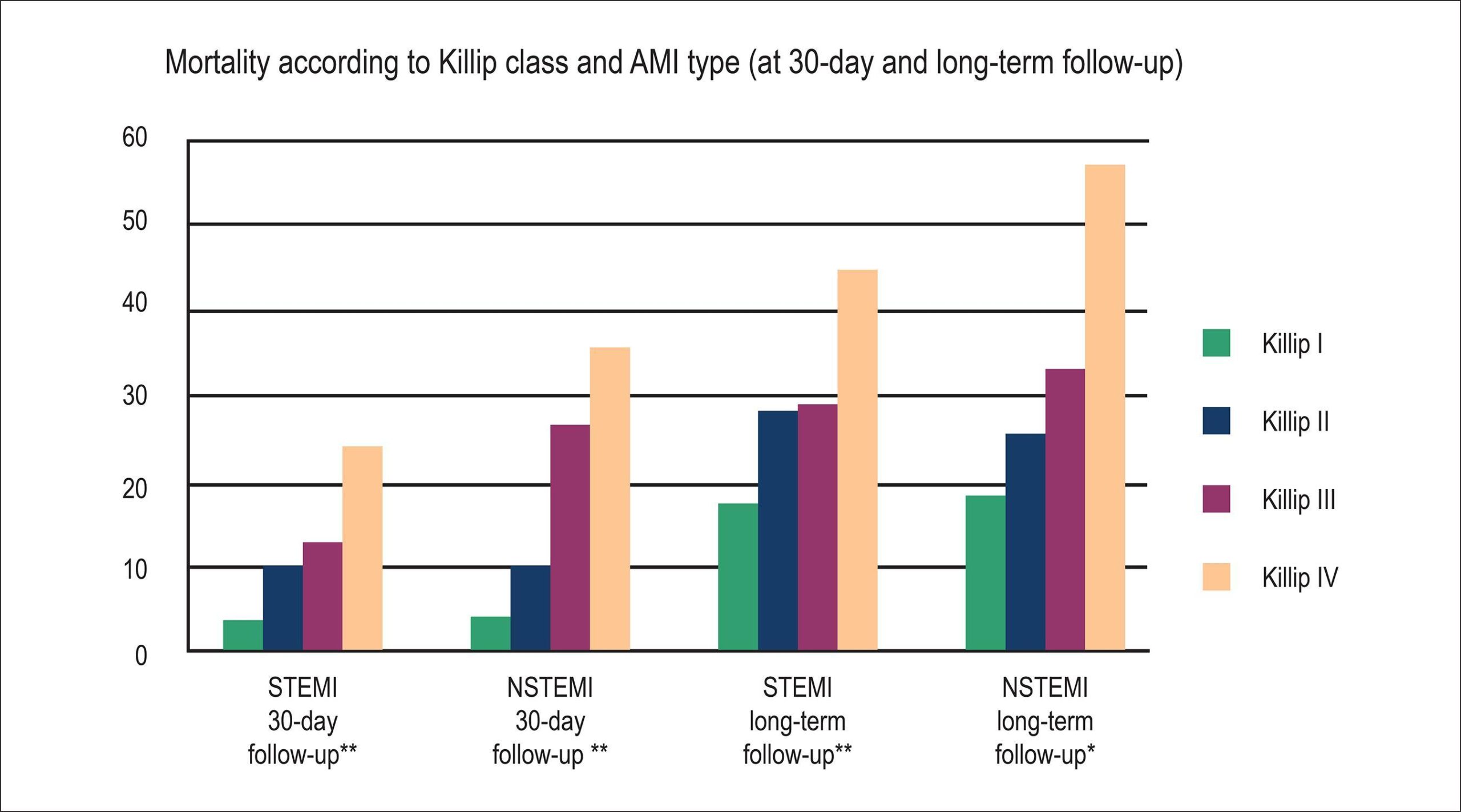
We evaluated 1906 patients with documented AMI and admitted to the CCU, from 1995 to 2011, with a mean follow-up of 05 years to assess total mortality. Kaplan-Meier (KM) curves were developed for comparison between survival distributions according to Killip class and NSTEMI versus STEMI. Cox proportional regression models were developed to determine the independent association between Killip class and mortality, with sensitivity analyses based on type of AMI. Results: The proportions of deaths and the KM survival distributions were significantly different across Killip class >1 (p <0.001) and with a similar pattern between patients with NSTEMI and STEMI. Cox models identified the Killip classification as a significant, sustained, consistent predictor and independent of relevant covariables (Wald χ2 16.5 [p = 0.001], NSTEMI) and (Wald χ2 11.9 [p = 0.008], STEMI).

Conclusion:

The Killip and Kimball classification performs relevant prognostic role in mortality at mean follow-up of 05 years post-AMI, with a similar pattern between NSTEMI and STEMI patients.

  • Heart Failure / mortality
  • Myocardial Infarction/mortality
  • Prognosis
  • Severity of Illness Index
Read Full Article
Creative Commons Attribution (CC BY) Creative Commons license
09/07/2014 DOI: 10.5935/abc.20140091

How to cite this article

EndNote RIS

Electronic Document Format (Vancouver)

Nishida G, Santos NSS, Assef JE, Vilela AA. My Approach to Assessing Mitral Regurgitation with Splay: What Does It Mean for Severity?. ABC Imagem Cardiovascular 2026;39(2):e20260024.

Electronic Document Format (ABNT)

Nishida, Gustavo; Santos, Natasha Soares Simões dos; Assef, Jorge Eduardo; Vilela, Andrea de Andrade. My Approach to Assessing Mitral Regurgitation with Splay: What Does It Mean for Severity?. ABC Imagem Cardiovascular, v. 39, n. 2, e20260024, Jul. 2026.

Electronic Document Format (APA)

Nishida, G., Santos, N. S. S. , Assef, J. E., & Vilela, A. A. (2026). My Approach to Assessing Mitral Regurgitation with Splay: What Does It Mean for Severity?. ABC Imagem Cardiovascular, 39(2), e20260024.

Electronic Document Format (ISO)

Nishida, Gustavo and Santos, Natasha Soares Simões dos and Assef, Jorge Eduardo and Vilela, Andrea de Andrade. My Approach to Assessing Mitral Regurgitation with Splay: What Does It Mean for Severity?. ABC Imagem Cardiovascular [online]. 2026, vol. 39, n. 2, [cited 2026-10-14], e20260024. Available from: <https://journals.cardiol.br/en/article/my-approach-to-assessing-mitral-regurgitation-with-splay-what-does-it-mean-for-severity/>. ISSN 2318-8219

EndNote RIS

Electronic Document Format (Vancouver)

Liyis BG, Sutedja JC, Sadeva IGKA, Mareska V, Salim A, David G, Gunawan MFB, et al. Procalcitonin and D-dimer in Predicting the Severity of Congestive Heart Failure. International Journal of Cardiovascular Sciences 2025;38:e20230144.

Electronic Document Format (ABNT)

Liyis, Bryan Gervais de; Sutedja, Jane Carissa; Sadeva, I Gede Krisna Arim; Mareska, Viona; Salim, Albert; David, George; Gunawan, Made Favian Budi; Nathaniela, Jocelin; Wihandani, Desak Made; Sutanegara, Bagus Ari Pradnyana Dwi. Procalcitonin and D-dimer in Predicting the Severity of Congestive Heart Failure. International Journal of Cardiovascular Sciences, v. 38, e20230144, Apr. 2025.

Electronic Document Format (APA)

Liyis, B. G. , Sutedja, J. C., Sadeva, I. G. K. A., Mareska, V., Salim, A., David, G., Gunawan, M. F. B., Nathaniela, J., Wihandani, D. M., & Sutanegara, B. A. P. D. (2025). Procalcitonin and D-dimer in Predicting the Severity of Congestive Heart Failure. International Journal of Cardiovascular Sciences, 38, e20230144.

Electronic Document Format (ISO)

Liyis, Bryan Gervais de and Sutedja, Jane Carissa and Sadeva, I Gede Krisna Arim and Mareska, Viona and Salim, Albert and David, George and Gunawan, Made Favian Budi and Nathaniela, Jocelin and Wihandani, Desak Made and Sutanegara, Bagus Ari Pradnyana Dwi. Procalcitonin and D-dimer in Predicting the Severity of Congestive Heart Failure. International Journal of Cardiovascular Sciences [online]. 2025, vol. 38, [cited 2026-10-14], e20230144. Available from: <https://journals.cardiol.br/en/article/procalcitonin-and-d-dimer-in-predicting-the-severity-of-congestive-heart-failure/>. ISSN 2359-4802

EndNote RIS

Electronic Document Format (Vancouver)

Sun M, Yang Q, Li M, Jing , Zhou H, Chen Y, Hu S, et al. Association between the Severity of Coronary Artery Disease and Lung Cancer: A Pilot Cross-Sectional Study. Arquivos Brasileiros de Cardiologia 2022;118(2):478-85.

Electronic Document Format (ABNT)

Sun, Mingzhuang; Yang, Qian; Li, Meng; Jing, ; Zhou, Hao; Chen, Yundai; Hu, Shunying. Association between the Severity of Coronary Artery Disease and Lung Cancer: A Pilot Cross-Sectional Study. Arquivos Brasileiros de Cardiologia, v. 118, n. 2, p. 478-485, Mar. 2022.

Electronic Document Format (APA)

Sun, M., Yang, Q., Li, M., Jing, , Zhou, H., Chen, Y., & Hu, S. (2022). Association between the Severity of Coronary Artery Disease and Lung Cancer: A Pilot Cross-Sectional Study. Arquivos Brasileiros de Cardiologia, 118(2), 478-485.

Electronic Document Format (ISO)

Sun, Mingzhuang and Yang, Qian and Li, Meng and Jing and Zhou, Hao and Chen, Yundai and Hu, Shunying. Association between the Severity of Coronary Artery Disease and Lung Cancer: A Pilot Cross-Sectional Study. Arquivos Brasileiros de Cardiologia [online]. 2022, vol. 118, n. 2, [cited 2026-10-14], pp. 478-485. Available from: <https://journals.cardiol.br/en/article/association-between-the-severity-of-coronary-artery-disease-and-lung-cancer-a-pilot-cross-sectional-study/>. ISSN 0066-782X

EndNote RIS

Electronic Document Format (Vancouver)

Bittar CS. Neoplasms and the Evaluation of Risk of Cardiovascular Disease. Arquivos Brasileiros de Cardiologia 2022;118(2):486-7.

Electronic Document Format (ABNT)

Bittar, Cristina Salvadori. Neoplasms and the Evaluation of Risk of Cardiovascular Disease. Arquivos Brasileiros de Cardiologia, v. 118, n. 2, p. 486-487, Mar. 2022.

Electronic Document Format (APA)

Bittar, C. S. (2022). Neoplasms and the Evaluation of Risk of Cardiovascular Disease. Arquivos Brasileiros de Cardiologia, 118(2), 486-487.

Electronic Document Format (ISO)

Bittar, Cristina Salvadori. Neoplasms and the Evaluation of Risk of Cardiovascular Disease. Arquivos Brasileiros de Cardiologia [online]. 2022, vol. 118, n. 2, [cited 2026-10-14], pp. 486-487. Available from: <https://journals.cardiol.br/en/article/neoplasms-and-the-evaluation-of-risk-of-cardiovascular-disease/>. ISSN 0066-782X

EndNote RIS

Electronic Document Format (Vancouver)

Franzotti SAS, Sloboda DA, Silva JR, Souza EAS, Reboreda JZ, Ferretti-Rebustini REL, Nogueira LS, et al. Performance of Severity Indices to Estimate Postoperative Complications of Myocardial Revascularization. Arquivos Brasileiros de Cardiologia 2020;115(3):452-9.

Electronic Document Format (ABNT)

Franzotti, Silvana Alves dos Santos; Sloboda, Dyenily Alessi; Silva, Juliana Rosendo; Souza, Ellian Amorim Santos; Reboreda, Jessica Zamora; Ferretti-Rebustini, Renata Eloah de Lucena; Nogueira, Lilia de Souza. Performance of Severity Indices to Estimate Postoperative Complications of Myocardial Revascularization. Arquivos Brasileiros de Cardiologia, v. 115, n. 3, p. 452-459, Sep. 2020.

Electronic Document Format (APA)

Franzotti, S. A. S., Sloboda, D. A., Silva, J. R., Souza, E. A. S., Reboreda, J. Z., Ferretti-Rebustini, R. E. L., & Nogueira, L. S. (2020). Performance of Severity Indices to Estimate Postoperative Complications of Myocardial Revascularization. Arquivos Brasileiros de Cardiologia, 115(3), 452-459.

Electronic Document Format (ISO)

Franzotti, Silvana Alves dos Santos and Sloboda, Dyenily Alessi and Silva, Juliana Rosendo and Souza, Ellian Amorim Santos and Reboreda, Jessica Zamora and Ferretti-Rebustini, Renata Eloah de Lucena and Nogueira, Lilia de Souza. Performance of Severity Indices to Estimate Postoperative Complications of Myocardial Revascularization. Arquivos Brasileiros de Cardiologia [online]. 2020, vol. 115, n. 3, [cited 2026-10-14], pp. 452-459. Available from: <https://journals.cardiol.br/en/article/performance-of-severity-indices-to-estimate-postoperative-complications-of-myocardial-revascularization/>. ISSN 0066-782X

EndNote RIS

Electronic Document Format (Vancouver)

Monteiro Júnior JGM, Torres DOC, Silva MCFC, Príncipe TRN, Vasconcelos RB, Brito MEC, Limeira MAA, et al. Performance of a Hematological Scoring System in Predicting All-Cause Mortality in Patients with Acute Myocardial Infarction. International Journal of Cardiovascular Sciences 2020;33(4):380-8.

Electronic Document Format (ABNT)

Monteiro Júnior, José Gildo de Moura; Torres, Dilênia de Oliveira Cipriano; Silva, Maria Cleide Freire Clementino da; Príncipe, Tácio Rian Nogueira; Vasconcelos, Rhayssa Barbosa de; Brito, Maria Eduarda Cavalcanti de; Limeira, Maria Alice Aquino; Santos, Ana Célia Oliveira dos; Montarroyos, Ulisses Ramos; Sobral Filho, Dário Celestino. Performance of a Hematological Scoring System in Predicting All-Cause Mortality in Patients with Acute Myocardial Infarction. International Journal of Cardiovascular Sciences, v. 33, n. 4, p. 380-388, Feb. 2020.

Electronic Document Format (APA)

Monteiro Júnior, J. G. M., Torres, D. O. C., Silva, M. C. F. C. , Príncipe, T. R. N., Vasconcelos, R. B. , Brito, M. E. C. , Limeira, M. A. A., Santos, A. C. O. , Montarroyos, U. R., & Sobral Filho, D. C. (2020). Performance of a Hematological Scoring System in Predicting All-Cause Mortality in Patients with Acute Myocardial Infarction. International Journal of Cardiovascular Sciences, 33(4), 380-388.

Electronic Document Format (ISO)

Monteiro Júnior, José Gildo de Moura and Torres, Dilênia de Oliveira Cipriano and Silva, Maria Cleide Freire Clementino da and Príncipe, Tácio Rian Nogueira and Vasconcelos, Rhayssa Barbosa de and Brito, Maria Eduarda Cavalcanti de and Limeira, Maria Alice Aquino and Santos, Ana Célia Oliveira dos and Montarroyos, Ulisses Ramos and Sobral Filho, Dário Celestino. Performance of a Hematological Scoring System in Predicting All-Cause Mortality in Patients with Acute Myocardial Infarction. International Journal of Cardiovascular Sciences [online]. 2020, vol. 33, n. 4, [cited 2026-10-14], pp. 380-388. Available from: <https://journals.cardiol.br/en/article/performance-of-a-hematological-scoring-system-in-predicting-all-cause-mortality-in-patients-with-acute-myocardial-infarction/>. ISSN 2359-4802

EndNote RIS

Electronic Document Format (Vancouver)

Petracco AM, Bodanese LC, Porciúncula GF, Teixeira GS, Pellegrini DO, Danzmann LC, Pianta RM, et al. Assessment of the Relationship of Ankle-Brachial Index With Coronary Artery Disease Severity. International Journal of Cardiovascular Sciences 2018;31(1):47-55.

Electronic Document Format (ABNT)

Petracco, Andrea Mabilde; Bodanese, Luiz Carlos; Porciúncula, Gustavo Farias; Teixeira, Gabriel Santos; Pellegrini, Denise de Oliveira; Danzmann, Luiz Claudio; Pianta, Ricardo Medeiros; Petracco, João Batista. Assessment of the Relationship of Ankle-Brachial Index With Coronary Artery Disease Severity. International Journal of Cardiovascular Sciences, v. 31, n. 1, p. 47-55, Dec. 2017.

Electronic Document Format (APA)

Petracco, A. M., Bodanese, L. C., Porciúncula, G. F., Teixeira, G. S., Pellegrini, D. O., Danzmann, L. C., Pianta, R. M., & Petracco, J. B. (2018). Assessment of the Relationship of Ankle-Brachial Index With Coronary Artery Disease Severity. International Journal of Cardiovascular Sciences, 31(1), 47-55.

Electronic Document Format (ISO)

Petracco, Andrea Mabilde and Bodanese, Luiz Carlos and Porciúncula, Gustavo Farias and Teixeira, Gabriel Santos and Pellegrini, Denise de Oliveira and Danzmann, Luiz Claudio and Pianta, Ricardo Medeiros and Petracco, João Batista. Assessment of the Relationship of Ankle-Brachial Index With Coronary Artery Disease Severity. International Journal of Cardiovascular Sciences [online]. 2018, vol. 31, n. 1, [cited 2026-10-14], pp. 47-55. Available from: <https://journals.cardiol.br/en/article/assessment-of-the-relationship-of-ankle-brachial-index-with-coronary-artery-disease-severity/>. ISSN 2359-4802

EndNote RIS

Electronic Document Format (Vancouver)

Mello BHG, Oliveira GBF, Ramos RF, Lopes BBC, Barros CBS, Carvalho EO, Teixeira FBP, et al. Validation of the Killip-Kimball Classification and Late Mortality after Acute Myocardial Infarction. Arquivos Brasileiros de Cardiologia 2014;103(2):107-1.

Electronic Document Format (ABNT)

Mello, Bruno Henrique Gallindo de; Oliveira, Gustavo Bernardes F.; Ramos, Rui Fernando; Lopes, Bernardo Baptista C.; Barros, Cecília Bitarães S.; Carvalho, Erick de Oliveira; Teixeira, Fabio Bellini P.; Arruda, Guilherme D’Andréa S.; Revelo, Maria Sol Calero; Piegas, Leopoldo Soares. Validation of the Killip-Kimball Classification and Late Mortality after Acute Myocardial Infarction. Arquivos Brasileiros de Cardiologia, v. 103, n. 2, p. 107-117, Jul. 2014.

Electronic Document Format (APA)

Mello, B. H. G. , Oliveira, G. B. F., Ramos, R. F., Lopes, B. B. C., Barros, C. B. S., Carvalho, E. O., Teixeira, F. B. P., Arruda, G. D. S., Revelo, M. S. C., & Piegas, L. S. (2014). Validation of the Killip-Kimball Classification and Late Mortality after Acute Myocardial Infarction. Arquivos Brasileiros de Cardiologia, 103(2), 107-117.

Electronic Document Format (ISO)

Mello, Bruno Henrique Gallindo de and Oliveira, Gustavo Bernardes F. and Ramos, Rui Fernando and Lopes, Bernardo Baptista C. and Barros, Cecília Bitarães S. and Carvalho, Erick de Oliveira and Teixeira, Fabio Bellini P. and Arruda, Guilherme D’Andréa S. and Revelo, Maria Sol Calero and Piegas, Leopoldo Soares. Validation of the Killip-Kimball Classification and Late Mortality after Acute Myocardial Infarction. Arquivos Brasileiros de Cardiologia [online]. 2014, vol. 103, n. 2, [cited 2026-10-14], pp. 107-117. Available from: <https://journals.cardiol.br/en/article/validation-of-the-killip-kimball-classification-and-late-mortality-after-acute-myocardial-infarction/>. ISSN 0066-782X

  • About ABC Family
  • Internal Regulation
  • Editorial Board
  • Brazilian Society of Cardiology (SBC)

Issues

SBC Guidelines

  • Videos
  • Podcasts
  • News