ABC Family Arquivos Brasileiros de Cardiologia International Journal of Cardiovascular Sciences ABC Heart Failure & Cardiomyopathy ABC Imagem Cardiovascular
Português English
ABC Family
Português English
  • About
    • About ABC Family
    • Internal Regulation
    • Editorial Board
    • Brazilian Society of Cardiology (SBC)
  • Issues
  • SBC Guidelines
  • Content
    • Videos
    • Podcasts
    • News
  • About
    • About ABC Family
    • Internal Regulation
    • Editorial Board
    • Brazilian Society of Cardiology (SBC)
  • Issues
  • SBC Guidelines
  • Content
    • Videos
    • Podcasts
    • News

ABC Family

  • ABC Family
  • Arquivos Brasileiros de Cardiologia
  • International Journal of Cardiovascular Sciences
  • ABC Heart Failure & Cardiomyopathy
  • ABC Imagem Cardiovascular
Search in

No content found.

Journals
Ordering
Article types
Others

  1. Home
  2. Keyword: Electric Stimulation Therapy
IJCS
Editorial

Oriented Magnetic Fields and Blood Pressure

Sayuri Inuzuka

Hypertension is a combination of genetic, environmental, and social factors, defined by blood pressure levels in which the benefits of treatment outweigh the risks. The global prevalence of hypertension is approximately 1.3 billion adults. The blood pressure control rates in developing countries in 2019 were 23% in women and 18% in men.

Treatments range from lifestyle modification, medication treatment, and use of medical devices. The prevalence of resistant arterial hypertension is estimated between 12% to 15% among patients with hypertension. Up to half of patients with resistant hypertension are partially or not adherent to pharmacological treatment. The World Health Organization (WHO) has identified five dimensions for treatment adherence, shown in .

[…]

  • Catalogs, Commercial as Topic
  • Electric Stimulation Therapy
  • Hypertension
  • Magnetic Fields Therapy
  • Medical Devices
Read Full Article
Creative Commons Attribution (CC BY) Creative Commons license
28/11/2022 DOI: 10.36660/ijcs.20220167 Views 1
ABC
Editorial

Fibrillatory Wave Amplitude: Should We Use It Routinely in Clinical Practice?

Andre Assis L. Carmo

Atrial fibrillation (AF) is the most prevalent sustained arrhythmia worldwide and is associated with an increased burden of morbidity and mortality in different clinical scenarios, even for patients with optimal anticoagulation and rate control treatment., Although previous studies did not show the benefit of rhythm control strategy compared to rate-control,, recent data suggest that current rhythm control strategies, in addition to symptom control, can improve hard clinical outcomes, including mortality and stroke.,

Rhythm control strategy refers to attempts to restore or maintain sinus rhythm and includes antiarrhythmic drugs, electrical cardioversion and atrial fibrillation ablation. Despite progressive improvement in rhythm control strategies over the years, a substantial amount of failure in maintaining sinus rhythm, mainly in patients with persistent forms of AF, underscores the importance of properly selecting patients for rhythm-control strategies.

[…]

  • Atrial Fibrillation
  • Electric Stimulation Therapy
  • Heart Rate
  • Practice Guideline
Read Full Article
Creative Commons Attribution (CC BY) Creative Commons license
25/11/2022 DOI: 10.36660/abc.20220680 Views 1
ABC
Original Article

Ventricular Synchrony in Para-Hisian Cardiac Pacing as an Alternative for Physiological Cardiac Activation (Indirect Recruitment of the His Bundle?)

Andres Di Leoni Ferrari et al. Guilherme Ferreira Gazzoni Luis Manuel Ley Domingues Jessica Caroline Feltrin Willes … Gustavo Chiari Cabral Flavio Vinicius Costa Ferreira Laura Orlandini Lodi Gustavo Reis

Abstract

Background

Artificial cardiac pacing by direct or indirect His bundle capture results in synchronous ventricular contraction (physiological pacing).

Objectives

To compare cardiac synchronization, technical characteristics, and electronic parameters between two techniques of indirect His-bundle pacing: non-selective (NS-HBP) vs para-Hisian pacing (PHP).

Methods

The experimental intervention (between November 2019 and April 2020) consisted of implanting a DDD pacemaker in patients who had left ventricular ejection fraction (LVEF) > 35%. The resulting cardiac synchronization was compared using an electrocardiographic algorithm that analyzed QRS variation and the technical characteristics of non-selective Hisian pacing (DDD-His) and para-Hisian pacing (DDD-Var).

Results

Of 51 total patients (men: 28), 66.7% (34) were allocated to the DDD-Var group and 33.3% (17) to the DDD-His group. The mean ages in each group were 74 and 79 years, respectively. In the DDD-Var group, QRS variation (ventricular synchrony) improved after implantation (p < 0.001). In post-implantation ECG, 91.2% of the DDD-Var group presented a physiological pacing pattern, which was similar to the DDD-His group (88.2%; p = 0.999). The paced QRS axis was also similar (physiological) for both groups. Intraoperative fluoroscopy time (XRay) during implantation was lower for the para-Hisian technique (median 7 min in the DDD-Var group vs 21 min in the DDD-His group, p < 0.001). The mean QRS duration increased in the DDD-Var group (114.7 ms pre-implantation vs 128.2 ms post-implantation, p = 0.044). The mean post-implantation R-wave amplitude was 11.2 mV in the DDD-Var group vs 6.0 mV in the DDD-His group, p = 0.001.

Conclusion

Para-Hisian pacing appears to indirectly recruit the His bundle, which would make this an effective and comparable strategy for physiological pacing, resulting in synchronous ventricular contraction similar to that of non-selective Hisian pacing.

  • Artificial Cardiac Pacing
  • Artificial Pacemaker
  • Electric Stimulation Therapy
Read Full Article
Creative Commons Attribution (CC BY) Creative Commons license
07/03/2022 DOI: 10.36660/abc.20201233 Views 1
ABC
Original Article

Left Bundle Branch Pacing of His-Purkinje Conduction System: Initial Experience

Alexander Romeno Janner Dal Forno et al. Caique M. P. Ternes João Vítor Ternes Rech Helcio Garcia Nascimento … Andrei Lewandowski Grazyelle Damasceno Andre d’Avila

Abstract

Background

Conventional right ventricular pacing increases the risk of atrial fibrillation and heart failure in pacemaker patients. Stimulation of the left bundle branch (LBB) of the His-Purkinje system can prevent the unwanted outcomes of right ventricular pacing.

Objective

To retrospectively analyze the intraoperative outcomes, electrocardiographic and clinical data from the initial follow-up of patients submitted to stimulation of the LBB.

Methods

The electronic parameters of the implant and of possible early complications of 52 consecutive patients submitted to stimulation of the conduction system were evaluated. The adopted significance level was 0.05.

Results

Fifty-two patients underwent left bundle branch stimulation, with 50 successful procedures; 69.2% of the patients were male, and the median and interquartile range of age at the time of implantation was 73.5 (65.0-80.0) years. The pre-implant QRS duration was 146 (104-175) ms and 120 (112-130) ms after the procedure. The left ventricle activation time was 78 (70-84) ms. The R-wave amplitude was 12.00 (7.95-15.30) mV, with a stimulation threshold of 0.5 (0.4-0.7) V x 0.4 ms and impedance of 676 (534-780) ohms. The procedure duration was 116 (90-130) min, and the fluoroscopy time was 14.2 (10.0-21.6) min.

Conclusion

Cardiac stimulation of the His-Purkinje conduction system through the stimulation of the left bundle branch is a safe and feasible technique. In this study, it showed a high success rate, with low procedure and fluoroscopy periods, achieving adequate electronic measurements.

  • Artificial Cardiac Pacing
  • Artificial Pacemaker
  • Electric Stimulation Therapy
Read Full Article
Creative Commons Attribution (CC BY) Creative Commons license
07/03/2022 DOI: 10.36660/abc.20201085 Views 1
Figure 1
IJCS
Original Article

Neuromuscular Electrical Stimulation on Hemodynamic and Respiratory Response in Patients Submitted to Cardiac Surgery: Pilot Randomized Clinical Trial

Telma Cristina Fontes Cerqueira et al. Manoel Luiz de Cerqueira Neto Auristela Julia Guilhermino Carvalho Géssica Uruga Oliveira … Amaro Afrânio de Araújo Filho Vitor Oliveira Carvalho Lucas de Assis Pereira Cacau Walderi Monteiro da Silva Júnior José Teles de Mendonça Valter Joviniano de Santana Filho

Abstract

Background:

Neuromuscular electrical stimulation seems to be a promising option to intensify the rehabilitation and improve the exercise capacity of patients in the immediate postoperative period of cardiac surgery.

Objective:

This study aimed to evaluate the hemodynamic (heart rate, systolic blood pressure, diastolic blood pressure, and mean blood pressure) and respiratory (respiratory rate and oxygen saturation) responses to neuromuscular electrical stimulation in the immediate postoperative period in patients submitted to cardiac surgery and to verify its feasibility and safety.

Methods:

This is a pilot randomized controlled trial, wherein critical patients in the immediate postoperative period of cardiac surgery were randomly assigned to a control group, using sham neuromuscular electrical stimulation, or an experimental group, submitted to neuromuscular electrical stimulation sessions (FES), for 60 min, with a 50-Hz frequency, 200-µs pulse duration, time on: 3 s, and time off: 9 s. Data distribution was evaluated by the Shapiro-Wilk test. The analysis of variance was used and a p-value < 0.05 was considered significant.

Results:

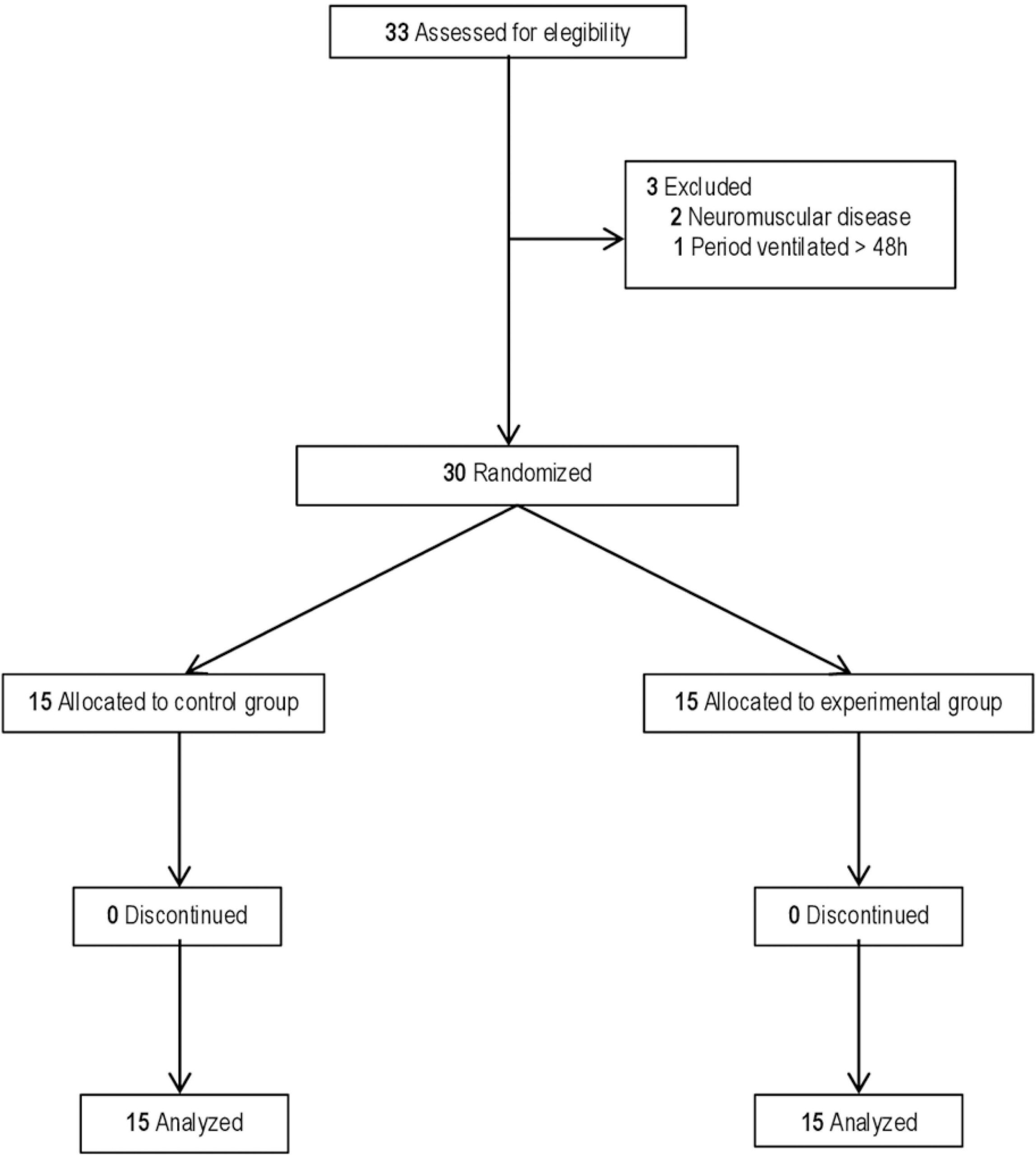
Thirty patients were included in the study. The neuromuscular electrical stimulation was applied within the first 23.13 ± 5.24 h after cardiac surgery, and no changes were found regarding the hemodynamic and respiratory variables between the patients who underwent neuromuscular electrical stimulation, and those in the control group.

Conclusions:

In the present study, neuromuscular electrical stimulation did not promote changes in hemodynamic and respiratory responses of patients in the immediate postoperative period of cardiac surgery.

  • Blood Pressure
  • Cardiac Rehabilitation
  • Diagnosis of Health Situation
  • Electric Stimulation Therapy
  • Heart Rate
  • Oxygen Level
  • Thoracic Surgery
Read Full Article
Creative Commons Attribution (CC BY) Creative Commons license
01/04/2019 DOI: 10.5935/2359-4802.20190028 Views 2

How to cite this article

EndNote RIS

Electronic Document Format (Vancouver)

Inuzuka S. Oriented Magnetic Fields and Blood Pressure. International Journal of Cardiovascular Sciences 2022;35(6):706-7.

Electronic Document Format (ABNT)

Inuzuka, Sayuri. Oriented Magnetic Fields and Blood Pressure. International Journal of Cardiovascular Sciences, v. 35, n. 6, p. 706-707, Nov. 2022.

Electronic Document Format (APA)

Inuzuka, S. (2022). Oriented Magnetic Fields and Blood Pressure. International Journal of Cardiovascular Sciences, 35(6), 706-707.

Electronic Document Format (ISO)

Inuzuka, Sayuri. Oriented Magnetic Fields and Blood Pressure. International Journal of Cardiovascular Sciences [online]. 2022, vol. 35, n. 6, [cited 2026-10-14], pp. 706-707. Available from: <https://journals.cardiol.br/en/article/oriented-magnetic-fields-and-blood-pressure/>. ISSN 2359-4802

EndNote RIS

Electronic Document Format (Vancouver)

Carmo AAL. Fibrillatory Wave Amplitude: Should We Use It Routinely in Clinical Practice?. Arquivos Brasileiros de Cardiologia 2022;119(5):789-90.

Electronic Document Format (ABNT)

Carmo, Andre Assis L.. Fibrillatory Wave Amplitude: Should We Use It Routinely in Clinical Practice?. Arquivos Brasileiros de Cardiologia, v. 119, n. 5, p. 789-790, Nov. 2022.

Electronic Document Format (APA)

Carmo, A. A. L. (2022). Fibrillatory Wave Amplitude: Should We Use It Routinely in Clinical Practice?. Arquivos Brasileiros de Cardiologia, 119(5), 789-790.

Electronic Document Format (ISO)

Carmo, Andre Assis L.. Fibrillatory Wave Amplitude: Should We Use It Routinely in Clinical Practice?. Arquivos Brasileiros de Cardiologia [online]. 2022, vol. 119, n. 5, [cited 2026-10-14], pp. 789-790. Available from: <https://journals.cardiol.br/en/article/fibrillatory-wave-amplitude-should-we-use-it-routinely-in-clinical-practice/>. ISSN 0066-782X

EndNote RIS

Electronic Document Format (Vancouver)

Ferrari ADL, Gazzoni GF, Domingues LML, Willes JCF, Cabral GC, Ferreira FVC, Lodi LO, et al. Ventricular Synchrony in Para-Hisian Cardiac Pacing as an Alternative for Physiological Cardiac Activation (Indirect Recruitment of the His Bundle?). Arquivos Brasileiros de Cardiologia 2022;118(2):488-502.

Electronic Document Format (ABNT)

Ferrari, Andres Di Leoni; Gazzoni, Guilherme Ferreira; Domingues, Luis Manuel Ley; Willes, Jessica Caroline Feltrin; Cabral, Gustavo Chiari; Ferreira, Flavio Vinicius Costa; Lodi, Laura Orlandini; Reis, Gustavo. Ventricular Synchrony in Para-Hisian Cardiac Pacing as an Alternative for Physiological Cardiac Activation (Indirect Recruitment of the His Bundle?). Arquivos Brasileiros de Cardiologia, v. 118, n. 2, p. 488-502, Mar. 2022.

Electronic Document Format (APA)

Ferrari, A. D. L., Gazzoni, G. F., Domingues, L. M. L., Willes, J. C. F., Cabral, G. C., Ferreira, F. V. C., Lodi, L. O., & Reis, G. (2022). Ventricular Synchrony in Para-Hisian Cardiac Pacing as an Alternative for Physiological Cardiac Activation (Indirect Recruitment of the His Bundle?). Arquivos Brasileiros de Cardiologia, 118(2), 488-502.

Electronic Document Format (ISO)

Ferrari, Andres Di Leoni and Gazzoni, Guilherme Ferreira and Domingues, Luis Manuel Ley and Willes, Jessica Caroline Feltrin and Cabral, Gustavo Chiari and Ferreira, Flavio Vinicius Costa and Lodi, Laura Orlandini and Reis, Gustavo. Ventricular Synchrony in Para-Hisian Cardiac Pacing as an Alternative for Physiological Cardiac Activation (Indirect Recruitment of the His Bundle?). Arquivos Brasileiros de Cardiologia [online]. 2022, vol. 118, n. 2, [cited 2026-10-14], pp. 488-502. Available from: <https://journals.cardiol.br/en/article/ventricular-synchrony-in-para-hisian-cardiac-pacing-as-an-alternative-for-physiological-cardiac-activation-indirect-recruitment-of-the-his-bundle/>. ISSN 0066-782X

EndNote RIS

Electronic Document Format (Vancouver)

Forno ARJD, Ternes CMP, Rech JVT, Nascimento HG, Lewandowski A, Damasceno G, d’Avila A, et al. Left Bundle Branch Pacing of His-Purkinje Conduction System: Initial Experience. Arquivos Brasileiros de Cardiologia 2022;118(2):505-16.

Electronic Document Format (ABNT)

Forno, Alexander Romeno Janner Dal; Ternes, Caique M. P.; Rech, João Vítor Ternes; Nascimento, Helcio Garcia; Lewandowski, Andrei; Damasceno, Grazyelle; d’Avila, Andre. Left Bundle Branch Pacing of His-Purkinje Conduction System: Initial Experience. Arquivos Brasileiros de Cardiologia, v. 118, n. 2, p. 505-516, Mar. 2022.

Electronic Document Format (APA)

Forno, A. R. J. D., Ternes, C. M. P., Rech, J. V. T., Nascimento, H. G., Lewandowski, A., Damasceno, G., & d’Avila, A. (2022). Left Bundle Branch Pacing of His-Purkinje Conduction System: Initial Experience. Arquivos Brasileiros de Cardiologia, 118(2), 505-516.

Electronic Document Format (ISO)

Forno, Alexander Romeno Janner Dal and Ternes, Caique M. P. and Rech, João Vítor Ternes and Nascimento, Helcio Garcia and Lewandowski, Andrei and Damasceno, Grazyelle and d’Avila, Andre. Left Bundle Branch Pacing of His-Purkinje Conduction System: Initial Experience. Arquivos Brasileiros de Cardiologia [online]. 2022, vol. 118, n. 2, [cited 2026-10-14], pp. 505-516. Available from: <https://journals.cardiol.br/en/article/left-bundle-branch-pacing-of-his-purkinje-conduction-system-initial-experience/>. ISSN 0066-782X

EndNote RIS

Electronic Document Format (Vancouver)

Cerqueira TCF, Cerqueira Neto ML, Carvalho AJG, Oliveira GU, Araújo Filho AA, Carvalho VO, Cacau LAP, et al. Neuromuscular Electrical Stimulation on Hemodynamic and Respiratory Response in Patients Submitted to Cardiac Surgery: Pilot Randomized Clinical Trial. International Journal of Cardiovascular Sciences 2019;32(5):483-9.

Electronic Document Format (ABNT)

Cerqueira, Telma Cristina Fontes; Cerqueira Neto, Manoel Luiz de; Carvalho, Auristela Julia Guilhermino; Oliveira, Géssica Uruga; Araújo Filho, Amaro Afrânio de; Carvalho, Vitor Oliveira; Cacau, Lucas de Assis Pereira; Silva Júnior, Walderi Monteiro da; Mendonça, José Teles de; Santana Filho, Valter Joviniano de. Neuromuscular Electrical Stimulation on Hemodynamic and Respiratory Response in Patients Submitted to Cardiac Surgery: Pilot Randomized Clinical Trial. International Journal of Cardiovascular Sciences, v. 32, n. 5, p. 483-489, Mar. 2019.

Electronic Document Format (APA)

Cerqueira, T. C. F., Cerqueira Neto, M. L. , Carvalho, A. J. G., Oliveira, G. U., Araújo Filho, A. A. , Carvalho, V. O., Cacau, L. A. P., Silva Júnior, W. M. , Mendonça, J. T. , & Santana Filho, V. J. (2019). Neuromuscular Electrical Stimulation on Hemodynamic and Respiratory Response in Patients Submitted to Cardiac Surgery: Pilot Randomized Clinical Trial. International Journal of Cardiovascular Sciences, 32(5), 483-489.

Electronic Document Format (ISO)

Cerqueira, Telma Cristina Fontes and Cerqueira Neto, Manoel Luiz de and Carvalho, Auristela Julia Guilhermino and Oliveira, Géssica Uruga and Araújo Filho, Amaro Afrânio de and Carvalho, Vitor Oliveira and Cacau, Lucas de Assis Pereira and Silva Júnior, Walderi Monteiro da and Mendonça, José Teles de and Santana Filho, Valter Joviniano de. Neuromuscular Electrical Stimulation on Hemodynamic and Respiratory Response in Patients Submitted to Cardiac Surgery: Pilot Randomized Clinical Trial. International Journal of Cardiovascular Sciences [online]. 2019, vol. 32, n. 5, [cited 2026-10-14], pp. 483-489. Available from: <https://journals.cardiol.br/en/article/neuromuscular-electrical-stimulation-on-hemodynamic-and-respiratory-response-in-patients-submitted-to-cardiac-surgery-pilot-randomized-clinical-trial/>. ISSN 2359-4802

  • About ABC Family
  • Internal Regulation
  • Editorial Board
  • Brazilian Society of Cardiology (SBC)

Issues

SBC Guidelines

  • Videos
  • Podcasts
  • News