ABC Family Arquivos Brasileiros de Cardiologia International Journal of Cardiovascular Sciences ABC Heart Failure & Cardiomyopathy ABC Imagem Cardiovascular
Português English
ABC Family
Português English
  • About
    • About ABC Family
    • Internal Regulation
    • Editorial Board
    • Brazilian Society of Cardiology (SBC)
  • Issues
  • SBC Guidelines
  • Content
    • Videos
    • Podcasts
    • News
  • About
    • About ABC Family
    • Internal Regulation
    • Editorial Board
    • Brazilian Society of Cardiology (SBC)
  • Issues
  • SBC Guidelines
  • Content
    • Videos
    • Podcasts
    • News

ABC Family

  • ABC Family
  • Arquivos Brasileiros de Cardiologia
  • International Journal of Cardiovascular Sciences
  • ABC Heart Failure & Cardiomyopathy
  • ABC Imagem Cardiovascular
Search in

No content found.

Journals
Ordering
Article types
Others

  1. Home
  2. Keyword: Dilated Cardiomyopathy
Figure 1
ABCIC
Case Report

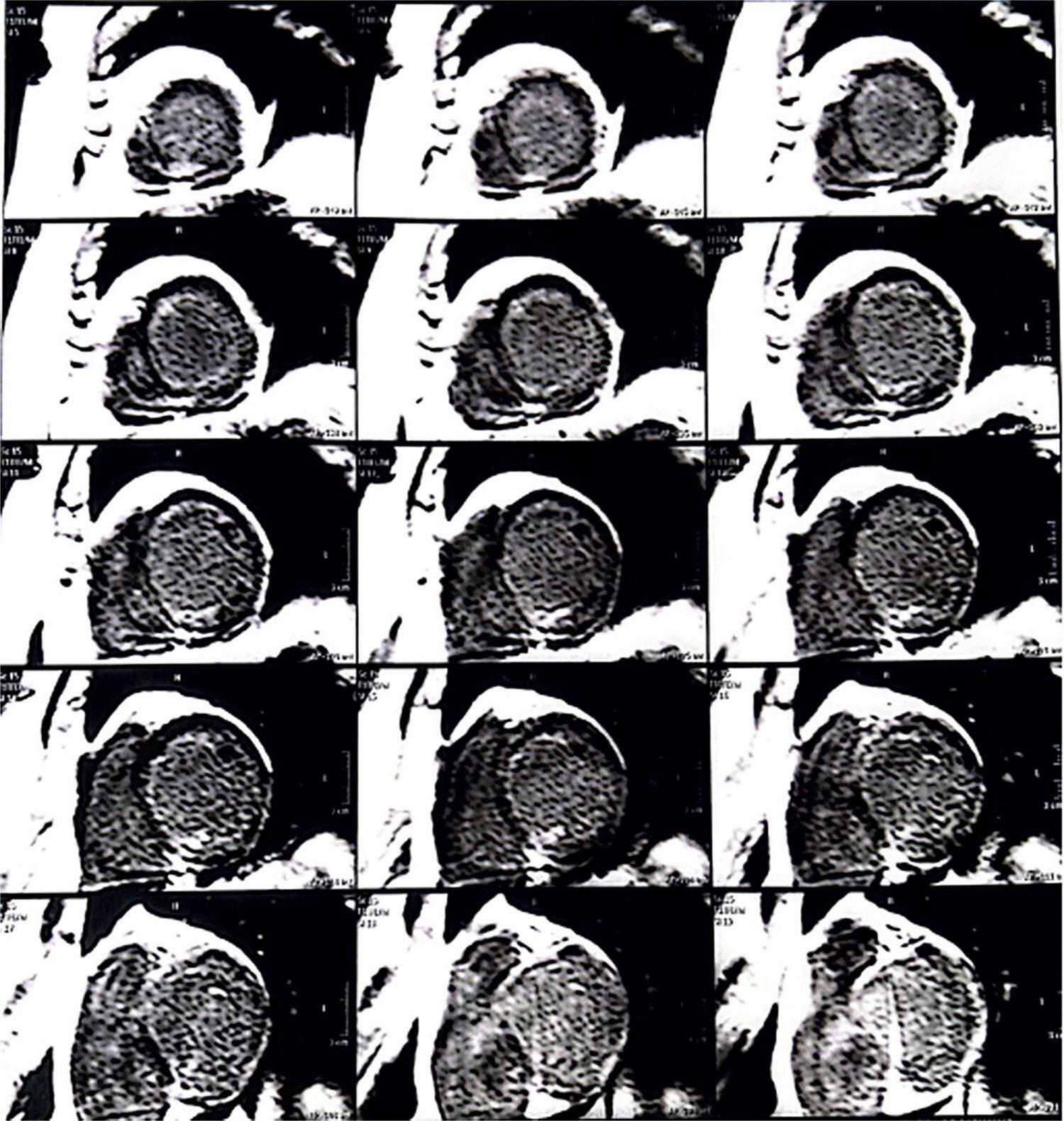
Dilated Cardiomyopathy as a Rare Initial Manifestation of ANCA-positive Microscopic Polyangiitis: Case Report

Karoline Gonzaga Costa et al. Maria Estefânia Bosco Otto André Felipe Lobão Fernandes Nathália de Macêdo Assunção … Mariana Ubaldo Barbosa Paiva Rosyane Luz Rufino de Lima Rita Mikelle Soares Dias

Introduction

Antineutrophil cytoplasmic antibody (ANCA)-associated vasculitis constitute a group of systemic small-vessel inflammatory diseases characterized by pauci-immune necrotizing vasculitis and multisystem involvement, including granulomatosis with polyangiitis (GPA), eosinophilic granulomatosis with polyangiitis (EGPA), and microscopic polyangiitis (MPA).– MPA is classically associated with rapidly progressive glomerulonephritis and alveolar hemorrhage, conditions that carry high morbidity and mortality when not promptly recognized and treated.,

In addition to predominant renal and pulmonary involvement, there is growing evidence that patients with ANCA-associated vasculitis have an increased cardiovascular risk, related not only to traditional factors but also to disease-specific mechanisms such as persistent inflammation, endothelial dysfunction, and accelerated atherosclerosis.– Studies suggest a higher incidence of major cardiovascular events (myocardial infarction, stroke, and heart failure) compared with the general population.

[…]
  • Anti-Neutrophil Cytoplasmic Antibody-Associated Vasculitis
  • Dilated Cardiomyopathy
  • Echocardiography
  • Microscopic Polyangiitis
Read Full Article
Creative Commons Attribution (CC BY) Creative Commons license
31/07/2026 DOI: 10.36660/abcimg.20260038i Views 1
Central Illustration
ABCHF
Review Article

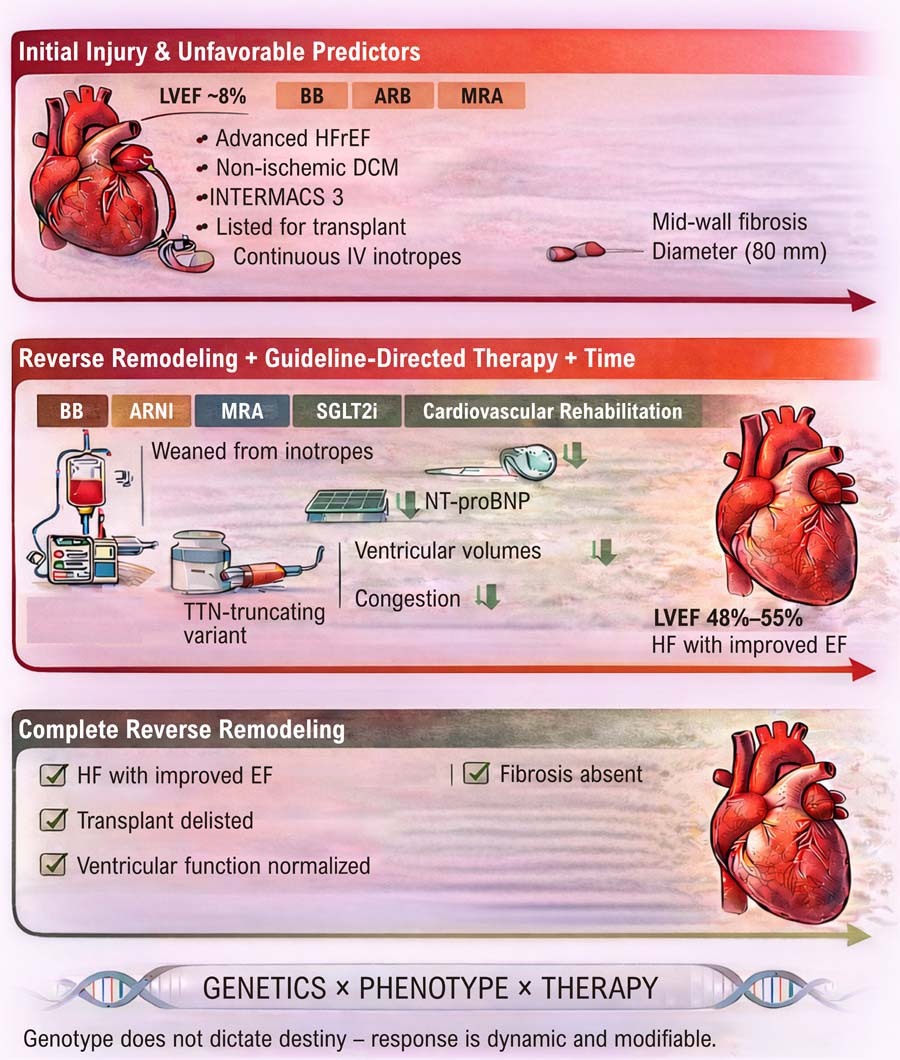
Reverse Remodeling and Genetics: A Review Based on a Clinical Case Description that Challenges Current Evidence and Logic

Helena Garcia Betinardi Bernardi et al. Silas Furquim Renata Lopes Hames Jorge Henrique Yoschimoto Koroishi … Jairo Alves Pinheiro Junior Stevan Krieger Martins

Abstract

Cardiac remodeling, present in heart failure (HF), is a compensatory biological process following an initial myocardial injury that gradually becomes maladaptive, leading to clinical deterioration and chronic HF. Reverse remodeling (RR), which has been increasingly addressed, occurs when the geometry and/or function of the left ventricle recover in response to treatment, approaching normal cardiac structure. RR is associated with a better prognosis. Factors associated with RR include female sex, non-ischemic etiology, mild to moderate HF, lower fibrotic burden, elevated blood pressure permitting medical optimization, shorter disease duration, and preserved renal function. However, growing knowledge of genetic factors in HF etiology has provided important insights into their role in treatment response and prognosis. To illustrate and discuss these emerging topics, we report a case of advanced HF involving RR and a genetic variant, reviewing current recommendations for management.

  • Dilated Cardiomyopathy
  • Genetics
  • Heart Failure
  • Heart Transplantation
  • Reverse Remodeling
Read Full Article
Creative Commons Attribution (CC BY) Creative Commons license
31/12/2025 DOI: 10.36660/abchf.20250026i
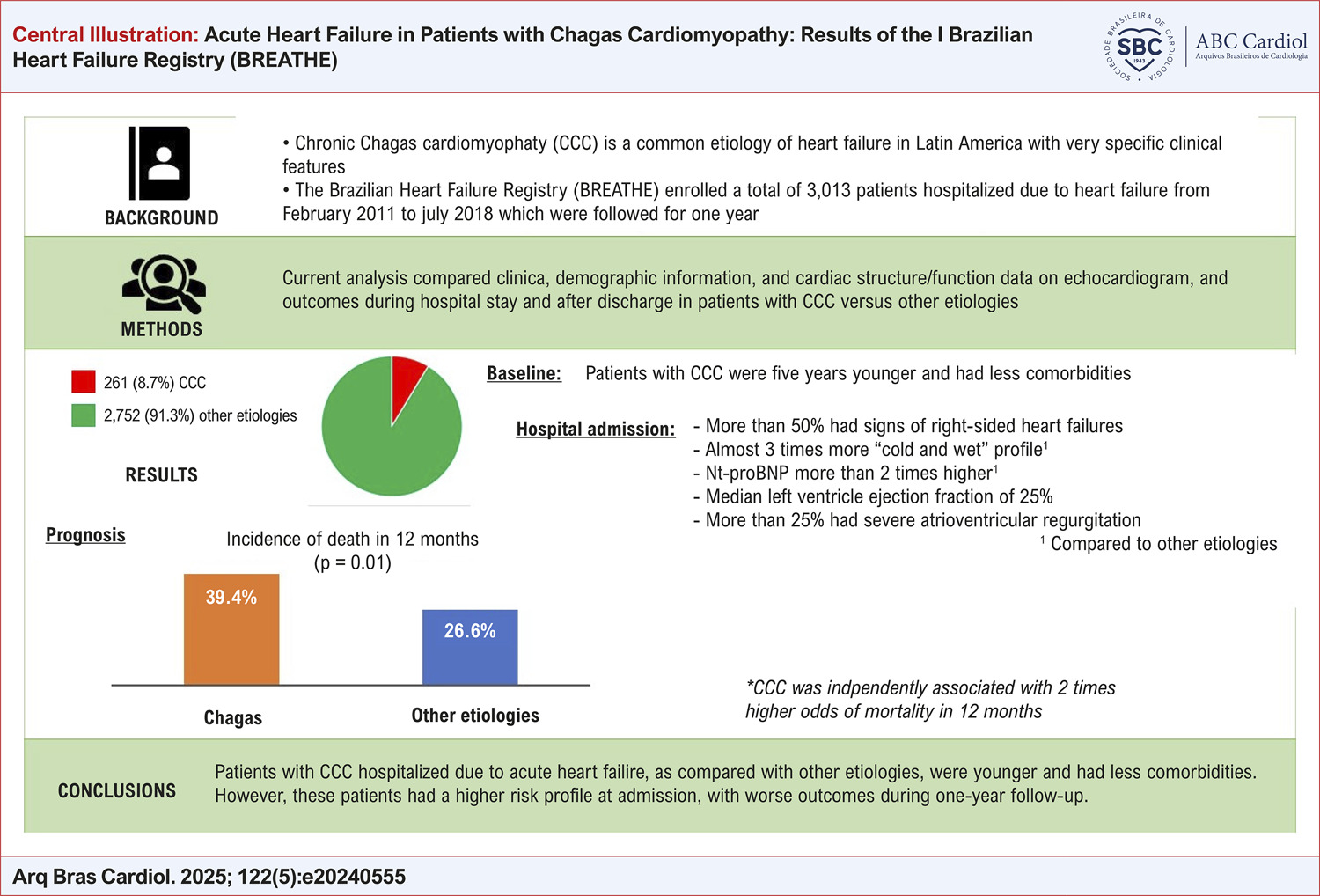
Acute Heart Failure in Patients with Chagas Cardiomyopathy: Results of the I Brazilian Heart Failure Registry (BREATHE)
ABC
Original Article

Acute Heart Failure in Patients with Chagas Cardiomyopathy: Results of the I Brazilian Heart Failure Registry (BREATHE)

Pedro Gabriel Melo de Barros e Silva et al. Denilson Campos Albuquerque Renato Delascio Lopes Paulo Roberto Nogueira … Aguinaldo F Freitas Jr Carlos Vieira Nascimento Charles Mady Elizabete Silva dos Santos Mauro Esteves Hernandes Maria Alayde Mendonça Rivera João David de Souza Neto Alvaro Rabelo Manoel Fernandes Canesin Helder Reis Anderson da Costa Armstrong Conrado Hoffmann Renato Hideo Nakagawa Santos Isabella de Andrade Jesuino Luis Eduardo Rohde Lidia Zytinsky Moura Fabiana Goulart Marcondes-Braga Evandro Tinoco Mesquita José Albuquerque de Figueiredo Neto Ricardo Mourilhe-Rocha Luís Beck-da-Silva Mucio Tavares Oliveira Junior Marcus Vinicius Simões

Abstract

Background

Although the clinical features of chronic Chagas’ cardiomyopathy (CCC) have been well established, clinical data about the patients are scarce.

Objectives

The current analysis reports the results of the I Brazilian Heart Failure Registry (BREATHE) assessing baseline characteristics and clinical outcomes of patients with acute heart failure due to CCC.

Methods

BREATHE enrolled a total of 3,013 adult patients hospitalized with acute heart failure. We analyzed comparatively 261 (8.7%) patients with chronic CCC and 2,752 (91.3%) patients with other etiologies. Clinical and demographic information, cardiac structure/function data on echocardiogram and outcomes during the hospital stay and after discharge were assessed in both groups. Uni and multivariate tests were performed and a p-value <0.05 was considered statistically significant.

Results

Patients with CCC presented lower systolic blood pressure (108.3 ± 26.1 vs 128.3 ± 30.3 mmHg, p<0.001) and left ventricle ejection fraction (25.4 [19 – 36]% vs 37 [27 – 54] %, p<0.001) with higher rates of jugular vein distension (54.8% vs 38.9%, p<0.001), hepatomegaly (47.9% vs 25.6%, p<0.001), and “cold and wet” clinical hemodynamic profile (27.2% vs 10.6%, p<0.001). Patients with CCC presented higher rate of the composite death or heart transplantation (17.4% vs. 11.1%, p=0.004), and higher cumulative incidence of death after 3 months (16.5% vs 10.8%, p=0.017), 6 months (25.3% vs 17.2%, p=0.006), and 12 months (39.4% vs 26.6%, p<0.001). Besides, CCC was independently associated with 12-month mortality risk with odds ratio = 2.02 (95% IC: 1.47-2.77).

Conclusion

Patients with CCC, hospitalized due to acute heart failure, in comparison to other etiologies, presented a higher risk profile that was associated with a poorer outcome during hospital stay and after discharge.

  • Chagas Cardiomyopathy
  • Chagas disease
  • Dilated Cardiomyopathy
  • Heart Failure
Read Full Article
Creative Commons Attribution (CC BY) Creative Commons license
06/06/2025 DOI: 10.36660/abc.20240555i Views 1
Central Illustration
ABCHF
Review Article

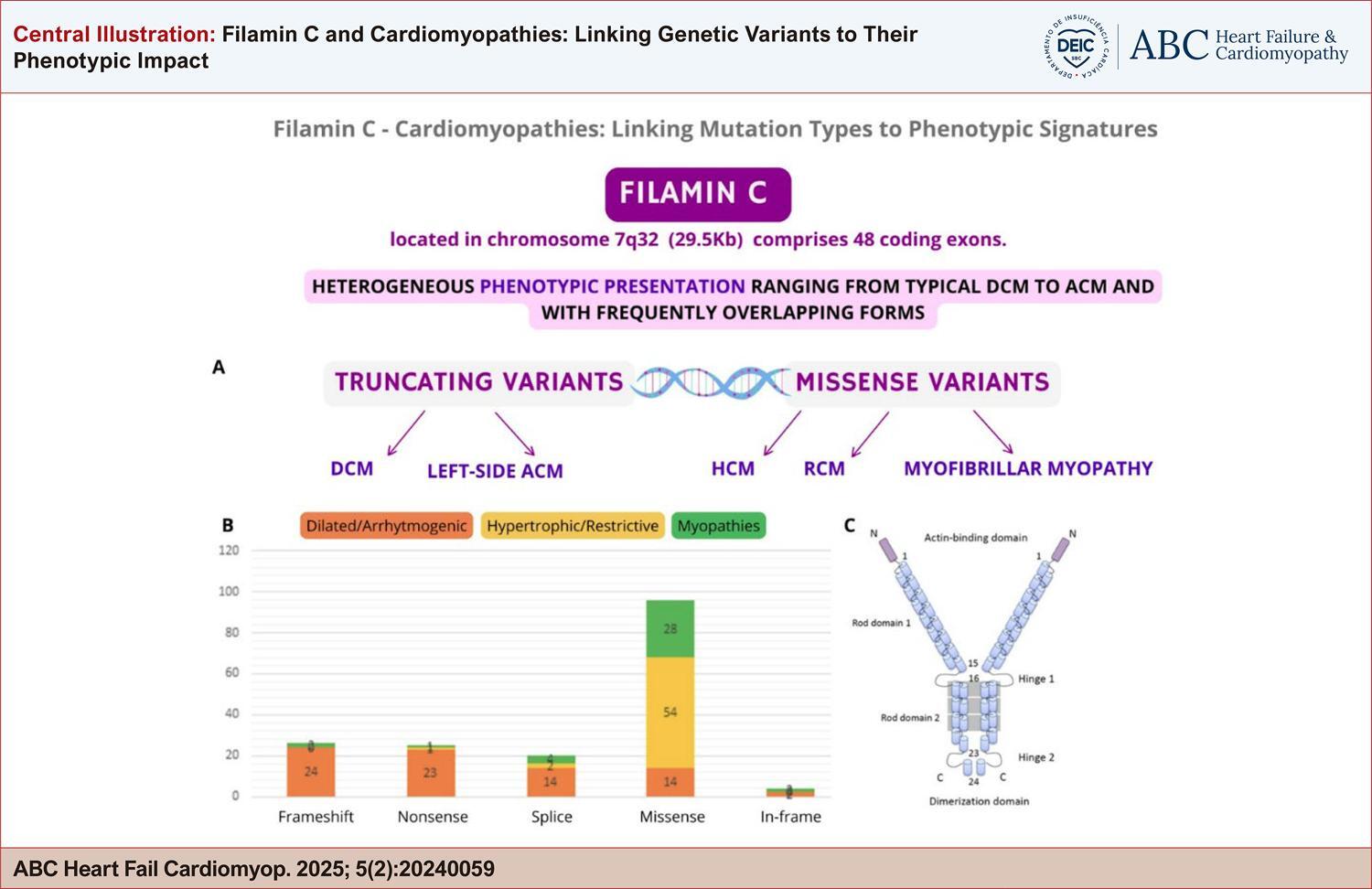
Filamin C and Cardiomyopathies: Linking Genetic Variants to Their Phenotypic Impact

Natália Olivetti et al. Márya Pagotti Bruno Moreira Santos Marjorie Mizuta … Bianca Linnenkamp Paula de Mendonça Senra Fernanda Andrade Mariana Lombardi Peres de Carvalho Luciana Sacilotto José Eduardo Krieger

Abstract

Filamin C (FLNC) plays a critical role in maintaining the structural integrity of muscle cells, particularly within the cardiac sarcomere. Pathogenic variants in the FLNC gene are increasingly recognized as significant contributors to a diverse range of cardiomyopathies, including dilated (DCM), hypertrophic (HCM), arrhythmogenic (ACM), and restrictive cardiomyopathy (RCM). This review explores the genotype-phenotype correlations in FLNC-related cardiomyopathies, emphasizing how the type and location of genetic variants influence the clinical presentation. Truncating variants are primarily associated with DCM and ACM, characterized by a high risk of arrhythmic events and severe outcomes, while missense variants often lead to HCM and RCM, with unique phenotypic features. The review also discusses the inheritance patterns, molecular mechanisms, and clinical phenotypes of FLNC-associated myopathies, highlighting the need for genetic testing in risk stratification and management. Future perspectives emphasize the importance of expanding research into the underlying mechanisms of FLNC variants and their interactions with other genetic and environmental factors. This integrated understanding is critical for improving the clinical management of patients with FLNC-related cardiomyopathies.

  • Arrhythmogenic right ventricular dysplasia;
  • Dilated Cardiomyopathy
  • Filamins
  • Hypertrophic Cardiomyopathy
  • Restrictive cardiomyopathy
Read Full Article
Creative Commons Attribution (CC BY) Creative Commons license
05/06/2025 DOI: 10.36660/abchf.20240059i
Central Illustration
ABCHF
Review Article

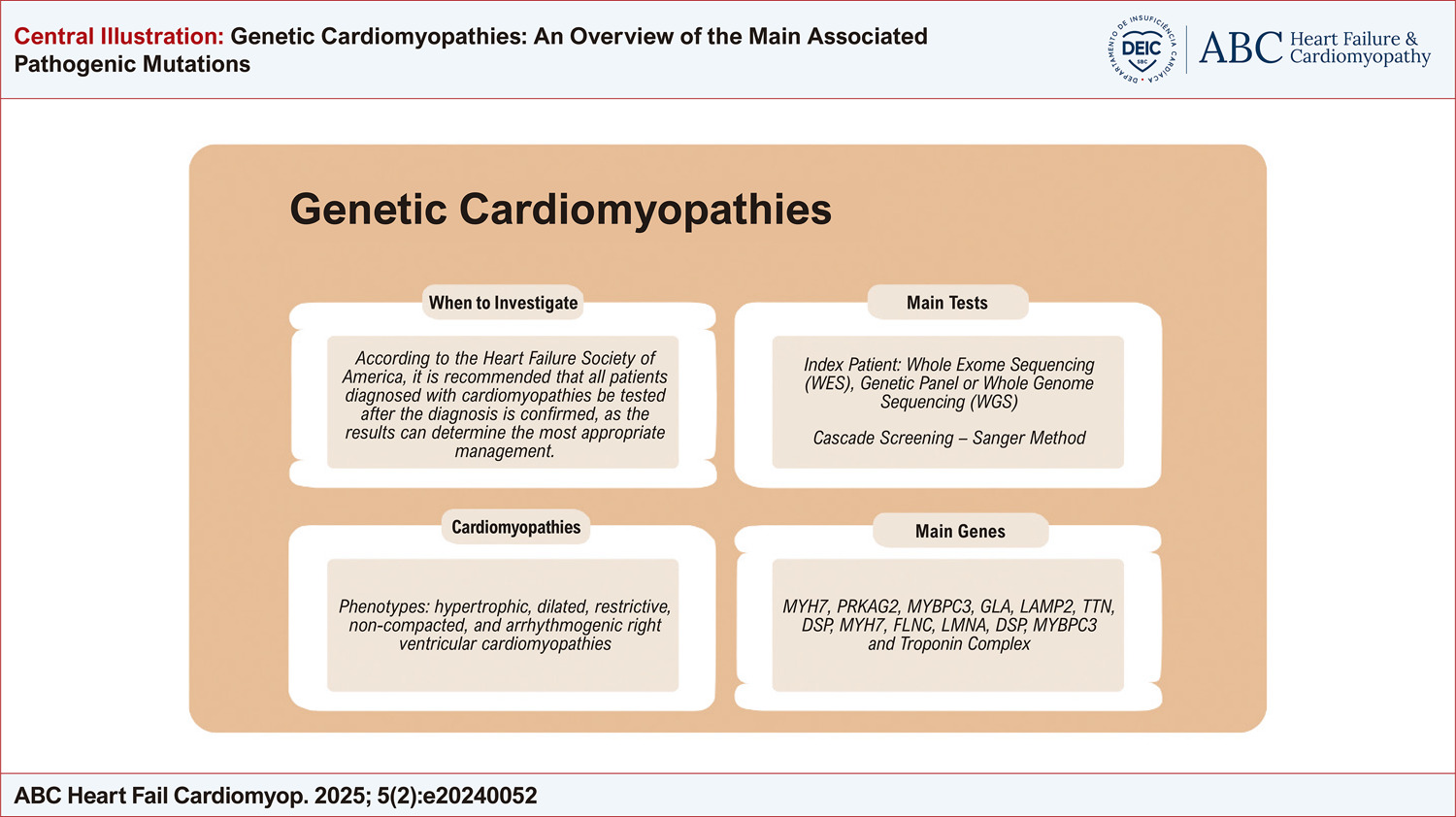
Genetic Cardiomyopathies: An Overview of the Main Associated Pathogenic Mutations

Flavia Misawa Hama et al. Edson Gabriel Rocha Estela Azeka

Abstract

Cardiomyopathies are pathological conditions associated with progressive dysfunction of cardiomyocytes, excluding situations in which other concomitant diseases may justify such progression. Their presentations can evolve with several phenotypes, the main ones being hypertrophic, dilated, restrictive, non-compacted, and arrhythmogenic phenotypes of the right ventricle (). Regarding this topic’s relevance, dilated and hypertrophic cardiomyopathies have a genetic origin in 30 to 50% of cases, evaluating these etiologies is a crucial tool in patient management. Assessing the risk of genetic transmission and the likelihood of phenotypic manifestation across generations requires identifying and classifying each gene’s inheritance pattern and mutation type associated with structural cardiomyopathy. Additionally, determining the structural protein affected facilitates understanding the pathophysiological phenomenon and the phenotype manifested by the variant carrier. Considering the growing advent of the genetic approach to cardiomyopathies, the Heart Failure Society of America, in collaboration with the American College of Medical Genetics and Genomics, developed a guide for the investigation and follow-up of these cases. However, in this study, the time to request the genetic tests was not evaluated. It is recommended that the tests be requested at any time after diagnosis confirmation since their results can contribute to guiding the most appropriate follow-up approach. Despite the multitude of existing variants related to genetic cardiomyopathies, some are of greater clinical interest due to their impact on risk stratification and interest in family screening, namely: MYH7, PRKAG2, MYBPC3, GLA, LAMP2, TTN, DSP, MYH7, FLNC, LMNA, DSP, MYBPC3 and Troponin Complex (). Recognizing the main mutations associated with cardiomyopathies and the phenotypes related to them enables a more individualized medicine approach with early interventions and risk stratification. Genetic evaluation is essential for screening family members and optimizing patient management, which may vary depending on the identified mutation.

  • Cardiomyopathies
  • Dilated Cardiomyopathy
  • Hypertrophic Cardiomyopathy
Read Full Article
Creative Commons Attribution (CC BY) Creative Commons license
26/05/2025 DOI: 10.36660/abchf.20240052i Views 1
Central Illustration
ABCHF
Review Article

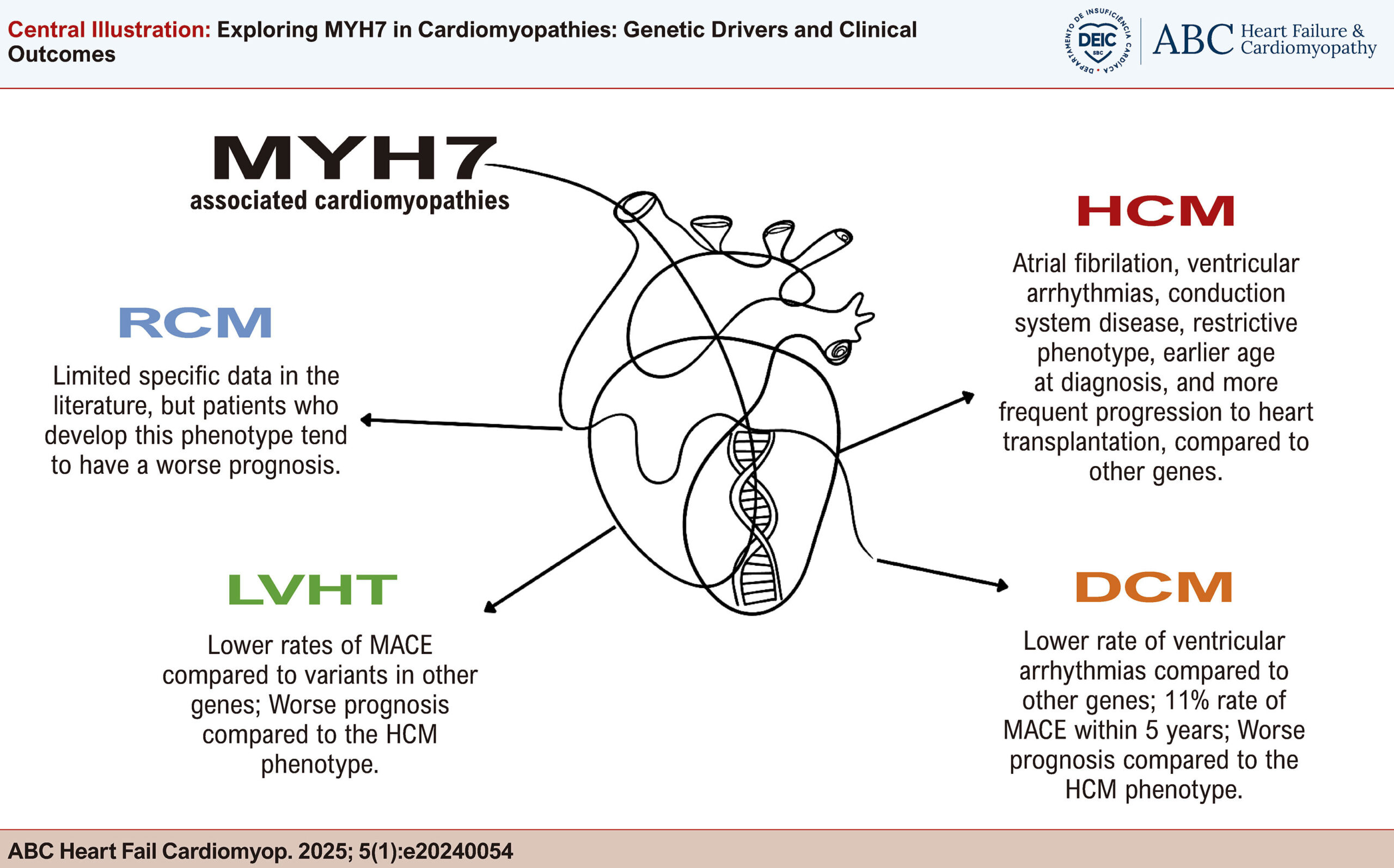
Exploring MYH7 in Cardiomyopathies: Genetic Drivers and Clinical Outcomes

Lucas Vieira Lacerda Pires et al. Vinícius Machado Correia Layara Fernanda Vicente Pereira Lipari Fernanda Almeida Andrade … Fábio Fernandes Vagner Madrini Junior Mariana Lombardi Peres de Carvalho Giovanna Napolitano Elisangela Aparecida da Silva Kelvin Henrique Vilalva Vitória Pelegrino do Val José Eduardo Krieger

Abstract

The MYH7 gene, which encodes the beta-myosin heavy chain, is a critical component in the structural and functional integrity of cardiac and skeletal muscle cells. Variants in MYH7 are among the most common genetic causes of cardiomyopathies, particularly hypertrophic cardiomyopathy (HCM) and dilated cardiomyopathy (DCM), and have also been implicated in restrictive cardiomyopathy (RCM) and left ventricular hypertrabeculation (LVHT). This review explores the molecular mechanisms by which MYH7 variants lead to these diverse phenotypes, focusing on the genotype-phenotype correlations that underlie the clinical manifestations of each condition. MYH7 variants are primarily missense variants concentrated in the myosin head domain, affecting the contractile function of the protein. These variants lead to a wide spectrum of cardiac abnormalities, from thickening of the myocardial walls to dilation of the cardiac chambers. The review also addresses the broader implications of MYH7 mutations, including their role in skeletal myopathies and potential associations with cancer. Understanding the pathogenic mechanisms of MYH7 variants not only increases diagnostic accuracy but also informs the development of targeted therapies. As the integration of genetic knowledge into clinical practice continues to evolve, the MYH7 gene remains a critical focus for advancing the management and treatment of cardiomyopathies, offering patients hope for improved clinical outcomes through precision medicine.

  • Dilated Cardiomyopathy
  • Genetic Cardiomyopathies
  • Hypertrophic Cardiomyopathy
  • MYH7
  • Sarcomeric Genes
Read Full Article
Creative Commons Attribution (CC BY) Creative Commons license
30/04/2025 DOI: 10.36660/abchf.20240054i
Central Illustration
ABCHF
Review Article

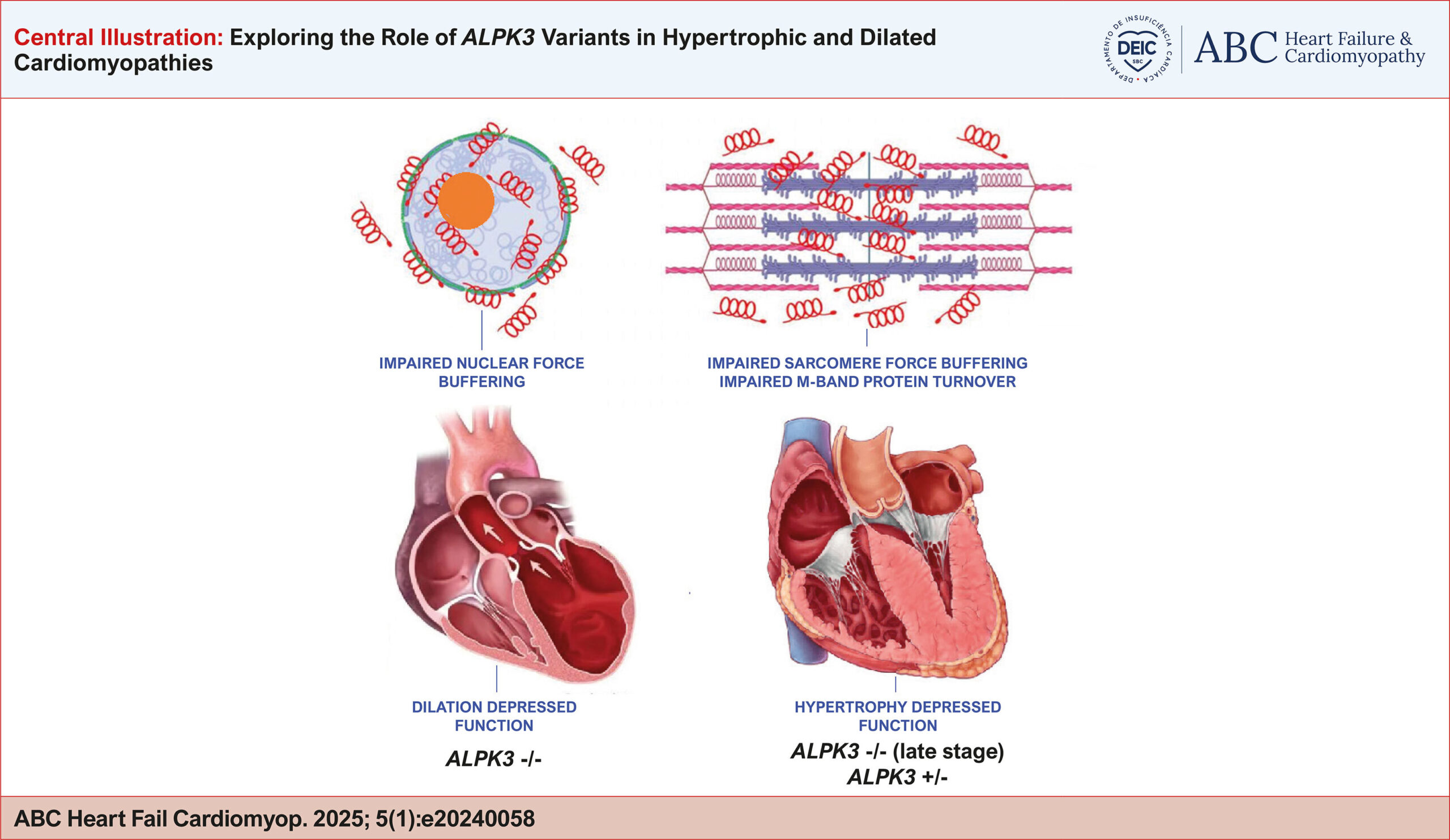
Exploring the Role of ALPK3 Variants in Hypertrophic and Dilated Cardiomyopathies

Fernanda Almeida Andrade et al. Bruno de Oliveira Stephan Silas Ramos Furquim Bianca Domit Werner Linnenkamp … Lucas Vieira Lacerda Pires Vitória Pelegrino do Val Nara Alves Buriti Layara Fernanda Vicente Pereira Lipari Vinícius Machado Correia José Eduardo Krieger

Abstract

Alpha-protein kinase 3 (ALPK3) variants, particularly truncating mutations (ALPK3tv), have been associated with both hypertrophic cardiomyopathy (HCM) and dilated cardiomyopathy (DCM), contributing to phenotypic variability and severe clinical outcomes. HCM is characterized by left ventricular hypertrophy (LVH) not attributable to other causes and is a common genetic disorder, often linked to pathogenic variants in sarcomeric genes. However, clinical genetic testing fails to identify a causative mutation in approximately 40% of the cases, suggesting the involvement of non-sarcomeric genes such as ALPK3. Recent studies have revealed that biallelic ALPK3tv is associated with severe early-onset cardiomyopathy. Patients may exhibit a clinical progression from DCM in infancy to HCM, with impaired systolic function in later life. The HCM phenotype in these individuals is often characterized by extensive myocardial fibrosis, apical or concentric patterns of left ventricular hypertrophy, and a low prevalence of left ventricular outflow tract obstruction. ALPK3tv carriers are also at risk for progressive myocardial dysfunction, heart failure, and, in some cases, sudden cardiac death. The molecular mechanisms underlying ALPK3-related cardiomyopathy involve the disruption of key structural and regulatory proteins, such as myomesins, which are essential for sarcomere integrity and cardiomyocyte force buffering. The discovery of ALPK3 variants in underrepresented populations further highlights the importance of genetic research in diverse cohorts. Understanding the clinical and molecular consequences of ALPK3 variants could lead to more precise diagnostic and therapeutic approaches for cardiomyopathies associated with this gene.

  • Dilated Cardiomyopathy
  • Hypertrophic Cardiomyopathy
  • Population Biological Variation
  • Sarcomeres
Read Full Article
Creative Commons Attribution (CC BY) Creative Commons license
01/04/2025 DOI: 10.36660/abchf.20240058 Views 1
Figure 1
ABCHF
Case Report

Dilated Cardiomyopathy Associated With A Novel Truncated Filamin C Variant Mimicking Cardiac Amyloidosis: A Diagnostic Challenge

Kelson Kemuel Confessor de Sousa et al. Ferdinand Gilbert Saraiva da Silva Maia Rosiane Viana Zuza Diniz Carla Karini R. A. Costa … Beatriz Andrade da Costa Fabio Mastrocola

Introduction

Filamins interconnect actin filaments and form a broad network in cardiac and skeletal muscle cells by anchoring membrane proteins to the cytoskeleton. Filamin C, encoded by the FLNC gene, is one of three filamin-related proteins and binds to several proteins in the Z-disc of the sarcomere. Mutations in FLNC were initially associated with skeletal myofibrillar myopathy but are now recognized as associated with dilated and arrhythmogenic cardiomyopathy phenotypes, with autosomal dominant inheritance and an estimated penetrance of 92–97%, and are included in the genetic screening of patients with arrhythmogenic heart disease and sudden cardiac death. The prevalence of pathogenic FLNC variants is 1–4.5% among patients with dilated cardiomyopathy (DCM) and up to 6% in patients with arrhythmogenic cardiomyopathy.,

We describe the case of a patient with a novel truncated variant in the filamin C gene with a DCM phenotype who, during clinical follow-up and etiological investigation, presented imaging exams mimicking cardiac amyloidosis.

[…]

  • Amyloidosis
  • Cardiac Arrhythmias
  • Dilated Cardiomyopathy
  • Genetic Testing
Read Full Article
Creative Commons Attribution (CC BY) Creative Commons license
28/03/2025 DOI: 10.36660/abchf.20240053i Views 1
ABC
Editorial

Cardiac Implantable Electronic Devices in Chagasic and Non-Chagasic Patients: A Critical Look at the Prognosis

Fernanda Almeida Andrade

Factors that may explain the results

One possible explanation for the lack of significant difference in prognosis between patients with and without Chagas disease may be related to improvements in clinical management and the structuring of health care for this population over the past few years., The study was conducted in a tertiary referral center, with likely access to cutting-edge technology and specialized monitoring. Specialized outpatient follow-up programs and adherence to recommended treatments may have reduced the disparities in outcomes between the two groups.

Furthermore, the study analyzed patient data across three different eras, which allowed for the assessment of possible changes over time. The fact that there were no differences in mortality between chagasic and non-chagasic patients in each of these eras reinforces the idea that progress in treatment, both clinical and surgical, may have diluted the adverse prognostic impact previously attributed to ChC.,

[…]

  • Artificial Pacemaker
  • Cardiac Resynchronization Therapy
  • Chagas disease
  • Dilated Cardiomyopathy
Read Full Article
Creative Commons Attribution (CC BY) Creative Commons license
02/12/2024 DOI: 10.36660/abc.20240629i Views 2
The Role of TTN Gene Variants in Dilated Cardiomyopathy
ABCHF
Review Article

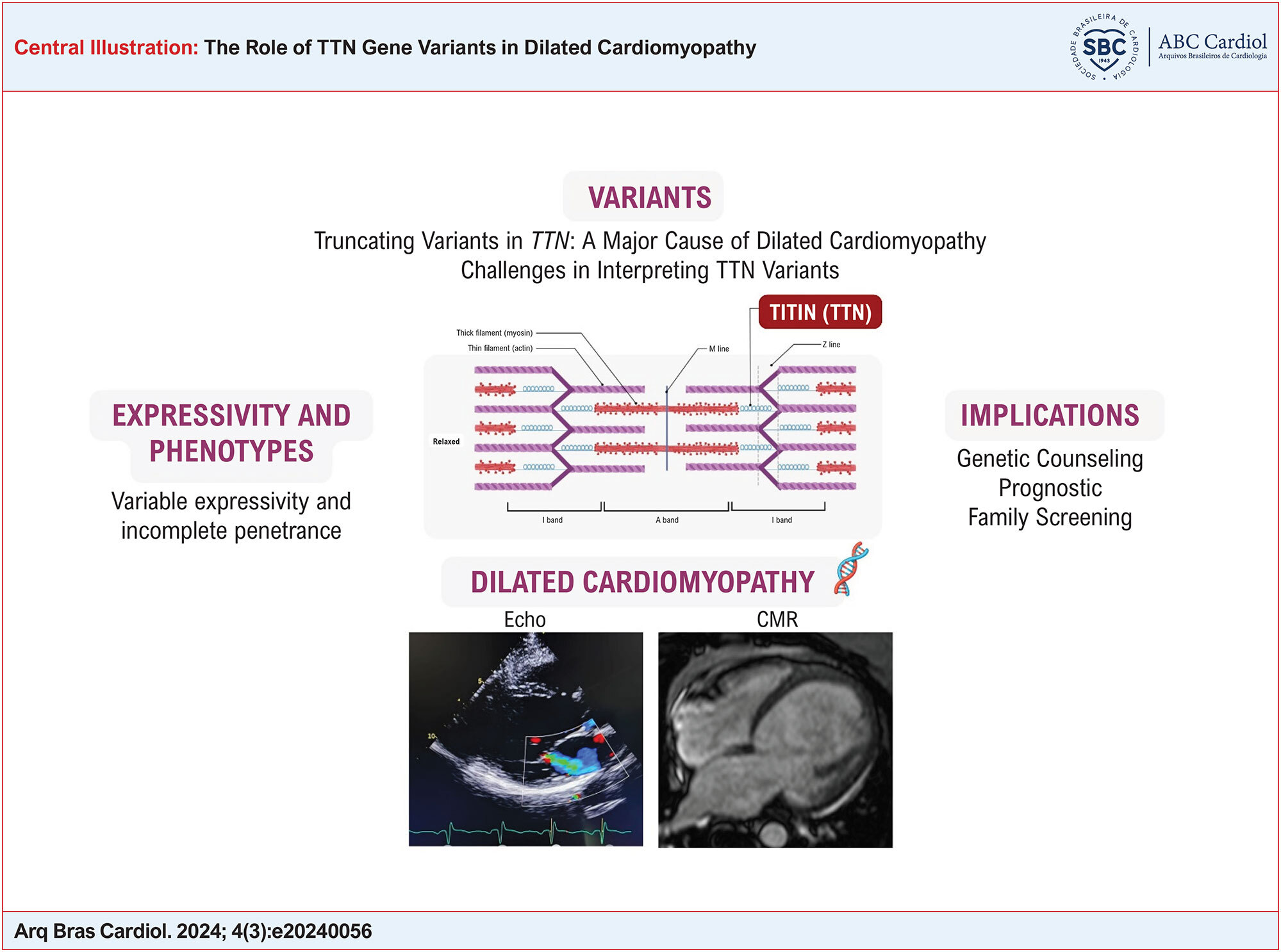
The Role of TTN Gene Variants in Dilated Cardiomyopathy

Silas Ramos Furquim et al. Paula de Mendonça Senra Bianca Domit Werner Linnenkamp Kelvin Henrique Vilalva … Marjorie Hayashida Mizuta Bruno Moreira dos Santos Bruno de Oliveira Stephan Elisangela Aparecida da Silva Nara Alves Buriti Vitória Pelegrino do Val Fernanda Almeida Andrade Jose Eduardo Krieger

Abstract

Titin, encoded by the TTN gene, is the largest human protein, essential for maintaining muscle cell stability and regulating myocardial contraction. TTN truncating variants (TTNtv) have emerged as the most common genetic cause of dilated cardiomyopathy (DCM), accounting for up to 25% of familial cases and 18% of sporadic cases. This review examines the complex relationship between TTN variants and DCM, highlighting the challenges posed by incomplete penetrance and variable expressivity. While truncating variants primarily in the A-band region are linked to DCM, not all carriers exhibit clinical symptoms, indicating the influence of additional genetic and environmental factors. We also discuss the prognostic implications of TTN variants, which, despite similar clinical outcomes to other DCM cases, demonstrate a higher rate of reverse remodeling in response to heart failure treatment. Emerging therapeutic strategies targeting the underlying molecular mechanisms of TTN variants, including mTOR inhibitors and CRISPR-based gene editing, offer promising avenues for personalized treatment. Understanding the genetic underpinnings of TTN-related DCM is crucial for improving diagnosis, family screening, and therapeutic outcomes, paving the way for more effective management of this complex condition.

  • Dilated Cardiomyopathy
  • Genes
  • Titin
Read Full Article
Creative Commons Attribution (CC BY) Creative Commons license
18/10/2024 DOI: 10.36660/abchf.20240056i Views 1
Figure 1
IJCS
Case Report

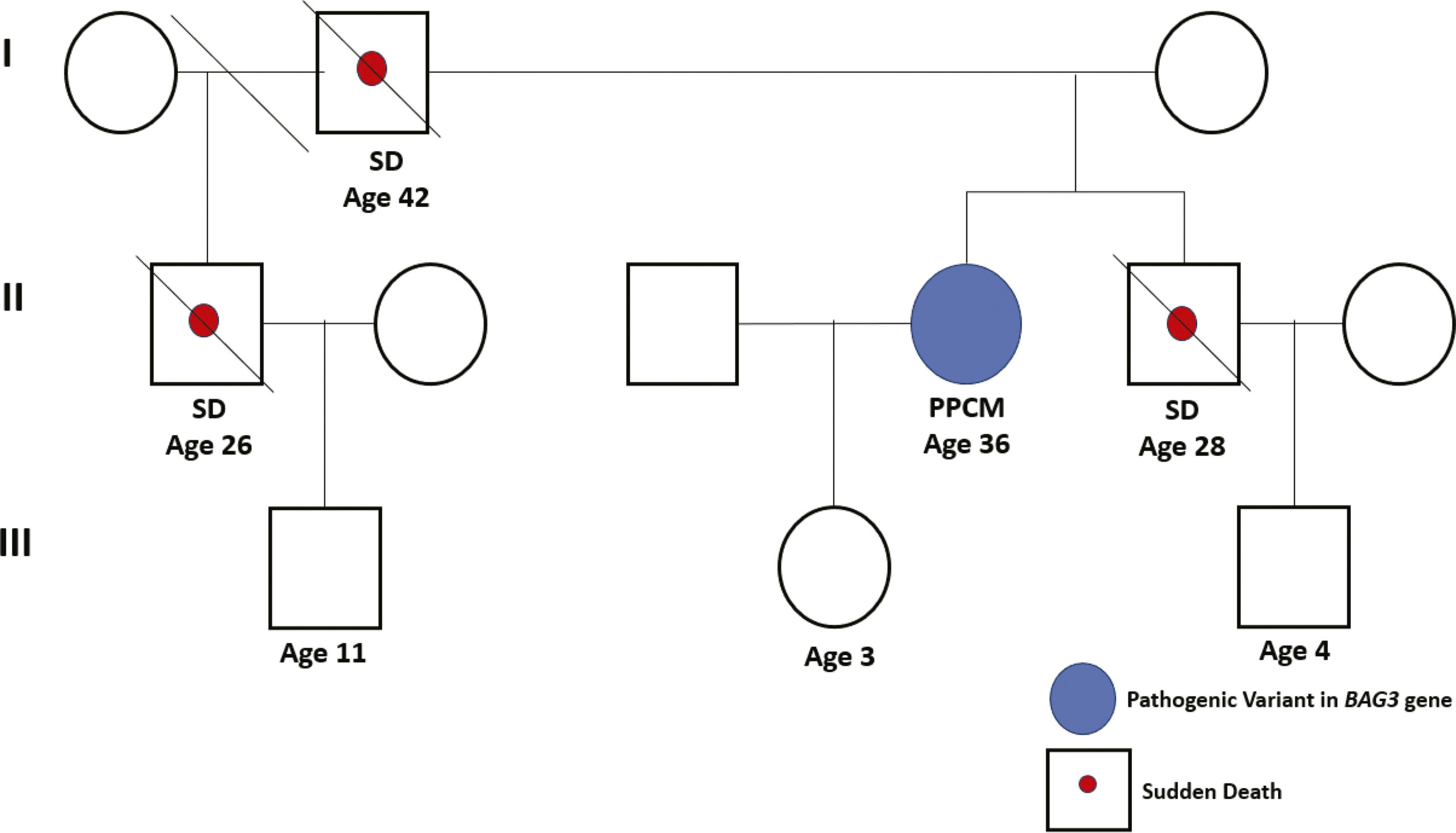
Pathogenic BAG3 Variant in Peripartum Cardiomyopathy and Significant Family History of Sudden Death

Antonio Pedro Lima Costa Pereira et al. Eduarda Vieira Rodrigues Eduardo Marinho Tassi Maria Angelica de Faria Domingues de Lima Fabio de Souza

Abstract

The BAG3 gene encodes the BAG3 protein, a multifunctional chaperone involved in proteostasis and protection of cardiomyocytes. Pathogenic BAG3 variants have previously been associated with dilated cardiomyopathy (DCM), including peripartum cardiomyopathy (PPCM). We present the case of a woman who complained of palpitations during the late postpartum period and was diagnosed with left ventricular dysfunction; genetic testing revealed a pathogenic variant of the BAG3 gene. Several cases of sudden death were noted in her family history. After 3 years of follow-up, ventricular function was significantly improved with regular cardiovascular medication, and no symptoms were reported. We emphasize the role of genetic testing in this case.

  • Dilated Cardiomyopathy
  • Peripartum Period
  • Sudden Death
Read Full Article
Creative Commons Attribution (CC BY) Creative Commons license
06/09/2024 DOI: 10.36660/ijcs.20240007 Views 2
Figure 1
ABC
Case Report

Acute Myocarditis as the Initial Presentation of Desmoplakin Mutation – Broadening the Differential Diagnosis

Hideki Koike et al. Amr Idris Justin Berger Victor Y. Cheng … Jay Sengupta João L. Cavalcante

Introduction

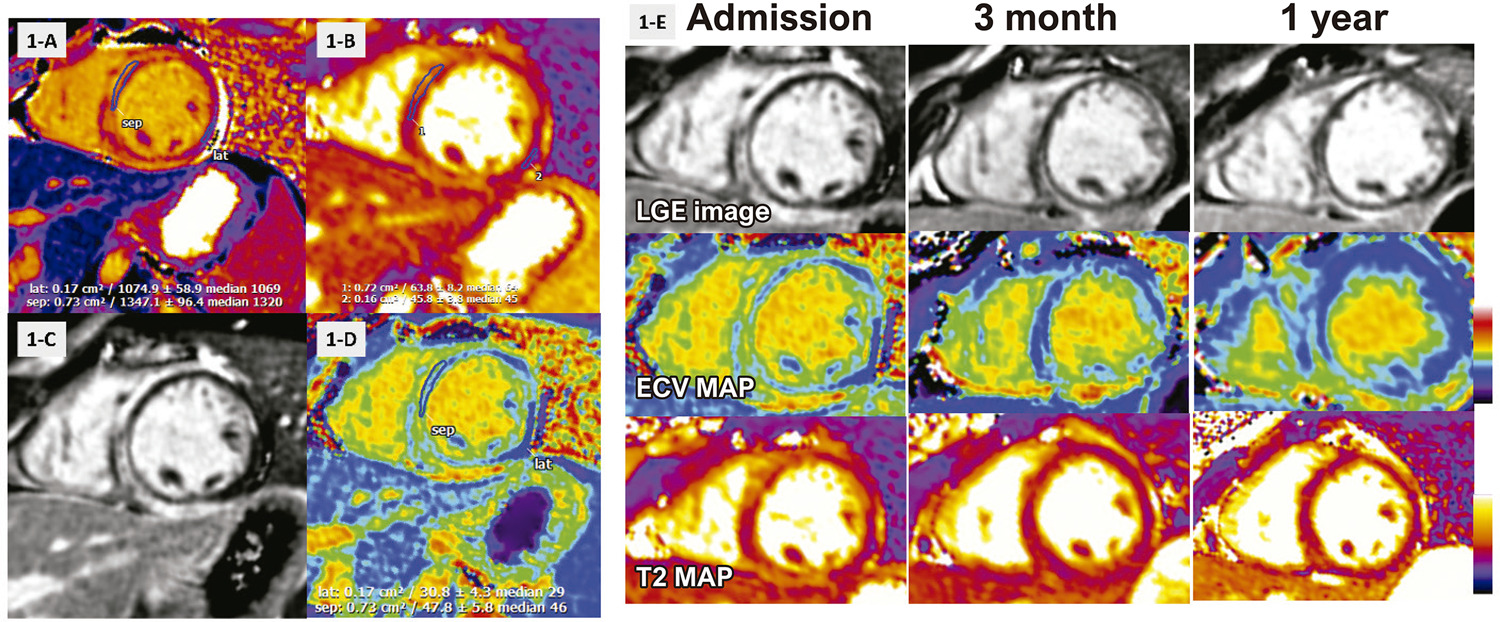
Genetic cardiomyopathy related to desmoplakin (DSP) mutation can start its clinical manifestation with chest pain symptoms, along with transient troponin elevation configuring first manifest as acute myocarditis, sometimes in a relapsing pattern. It is clear that the revised Task Force criteria for genetic cardiomyopathy will miss many cases, particularly those with left-sided dominance. This case reports highlights to understand that genetic cardiomyopathy, particularly with DSP mutation, can present with acute myocarditis and to understand that cardiovascular magnetic resonance (CMR) imaging could raise the possibility of arrhythmogenic cardiomyopathy and predict ventricular tachyarrhythmias despite preserved LVEF.

[…]

  • Dilated Cardiomyopathy
  • Gadolinium
  • Myocardium
Read Full Article
Creative Commons Attribution (CC BY) Creative Commons license
03/05/2024 DOI: 10.36660/abc.20230541i Views 1
Figure 1
ABCHF
Original Article

Efficacy of Different Cumulative Doses of Doxorubicin in the Induction of a Dilated Cardiomyopathy Model in Rats

Denise Mayumi Tanaka et al. João Lucas O’Connell Camila Godoy Fabricio Minna Moreira Dias Romano … Erica Carolina Campos Luciano Fonseca Lemos de Oliveira André Schmidt Eduardo Elias Vieira de Carvalho Marcus Vinícius Simões

Abstract

Background:

Doxorubicin (DOXO) has been used to induce dilated cardiomyopathy (DCM) in experimental models.

Objective:

To analyze cardiac changes after DOXO infusion and define the most effective protocol to reproduce an experimental model of DCM.

Methods:

Male Wistar rats were divided into 4 groups and received increasing cumulative doses of DOXO (at a rate of 2 mg/kg/week) or saline solution: the control group (CTR) received saline solution, Group D-8 received a total infusion of 8 mg/kg, Group D-12 received 12 mg/kg, and Group D-16 received 6 mg/kg. All animals underwent echocardiography at baseline and after the end of infusion. The animals were then euthanized and cardiac tissue was collected for histological analysis.

Results:

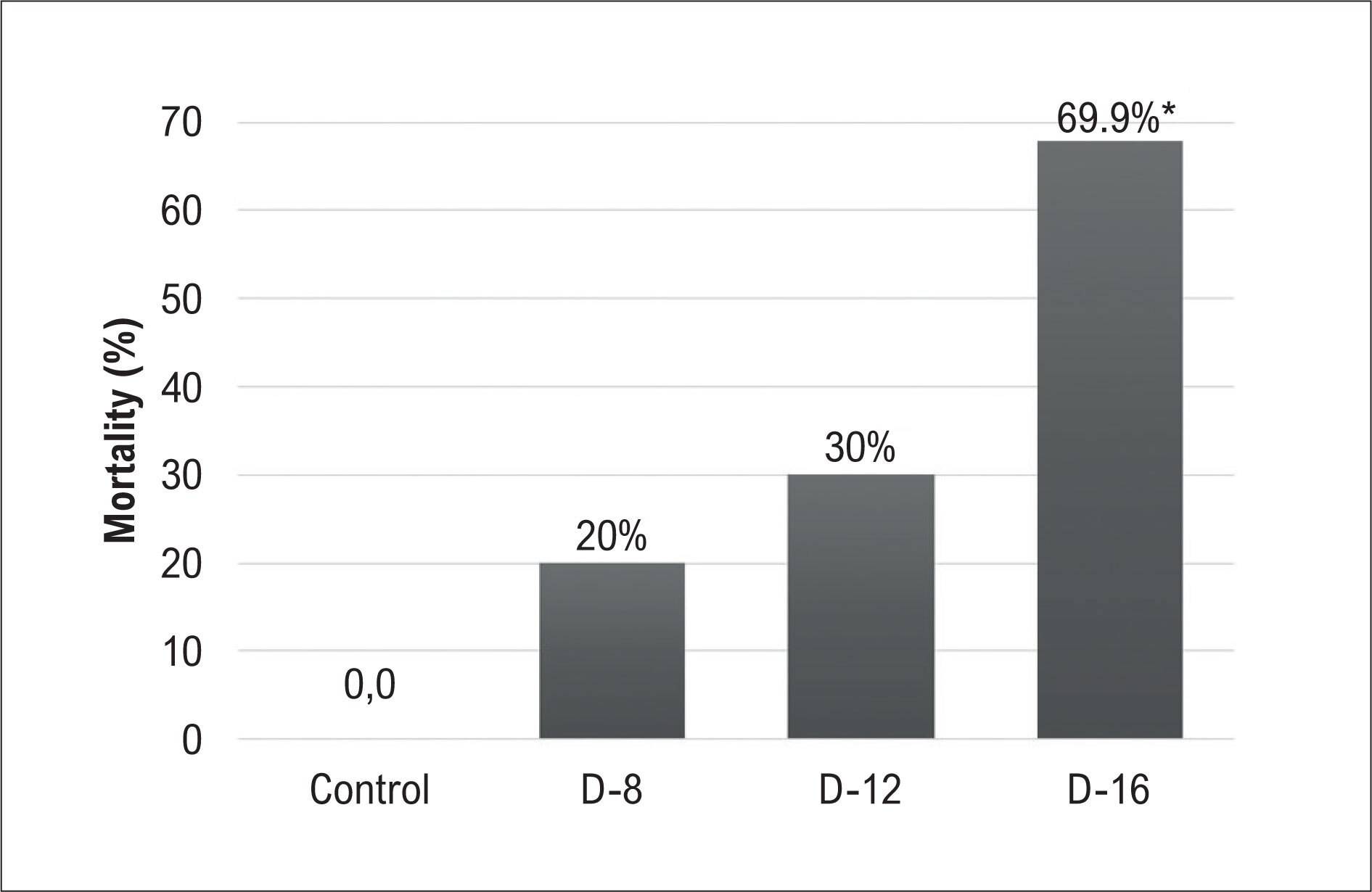
Mortality rates were 20% (D-8), 30% (D-12), and 67.6% (D-16). The 8 mg/kg dose was not associated with a significant reduction in left ventricular ejection fraction (LVEF) or an increase in left ventricular end-diastolic diameter (LVEDD). There was significant LVEF impairment with 12 mg/kg and 16 mg/kg doses compared to the control (68.3±5% vs 58.4±9%, p < 0.01, for CTR-12 vs D-12; and 66.0±6% vs 47.6±15%, p < 0.01, for CTR-16 vs D-16). Histological analyses revealed a greater percentage of fibrosis in D-12 (10.6±3.3%) and D-16 (9.8±2.3%) compared to CTR (2.3±1.0%), p < 0.001.

Conclusions:

The DOXO dose of 16 mg/kg was associated with severe cardiac changes and high mortality. Thus, we propose a DOXO dose of 12 mg/kg as the most appropriate and effective for inducing DCM with an acceptable mortality rate.

  • Cardiotoxicity
  • Dilated Cardiomyopathy
  • Doxorubicin
  • Heart Failure
  • Left Ventricular Dysfunction
Read Full Article
Creative Commons Attribution (CC BY) Creative Commons license
01/12/2022 DOI: 10.36660/abchf.20220074
Figure 1
ABC
Original Article

Albumin-Bilirubin Score to Predict Outcomes in Patients with Idiopathic Dilated Cardiomyopathy

Mei Jiang et al. Xue-biao Wei Jie-leng Huang Ze-da-zhong Su … Ying-wen Lin Dan-qing Yu

Abstract

Background:

Liver dysfunction is a postulated variable for poor prognosis in dilated cardiomyopathy (DCM).

Objective:

This study aimed to investigate the prognostic value of the albumin-bilirubin (ALBI) score, a relatively new model for evaluating liver function, in patients with idiopathic DCM.

Methods:

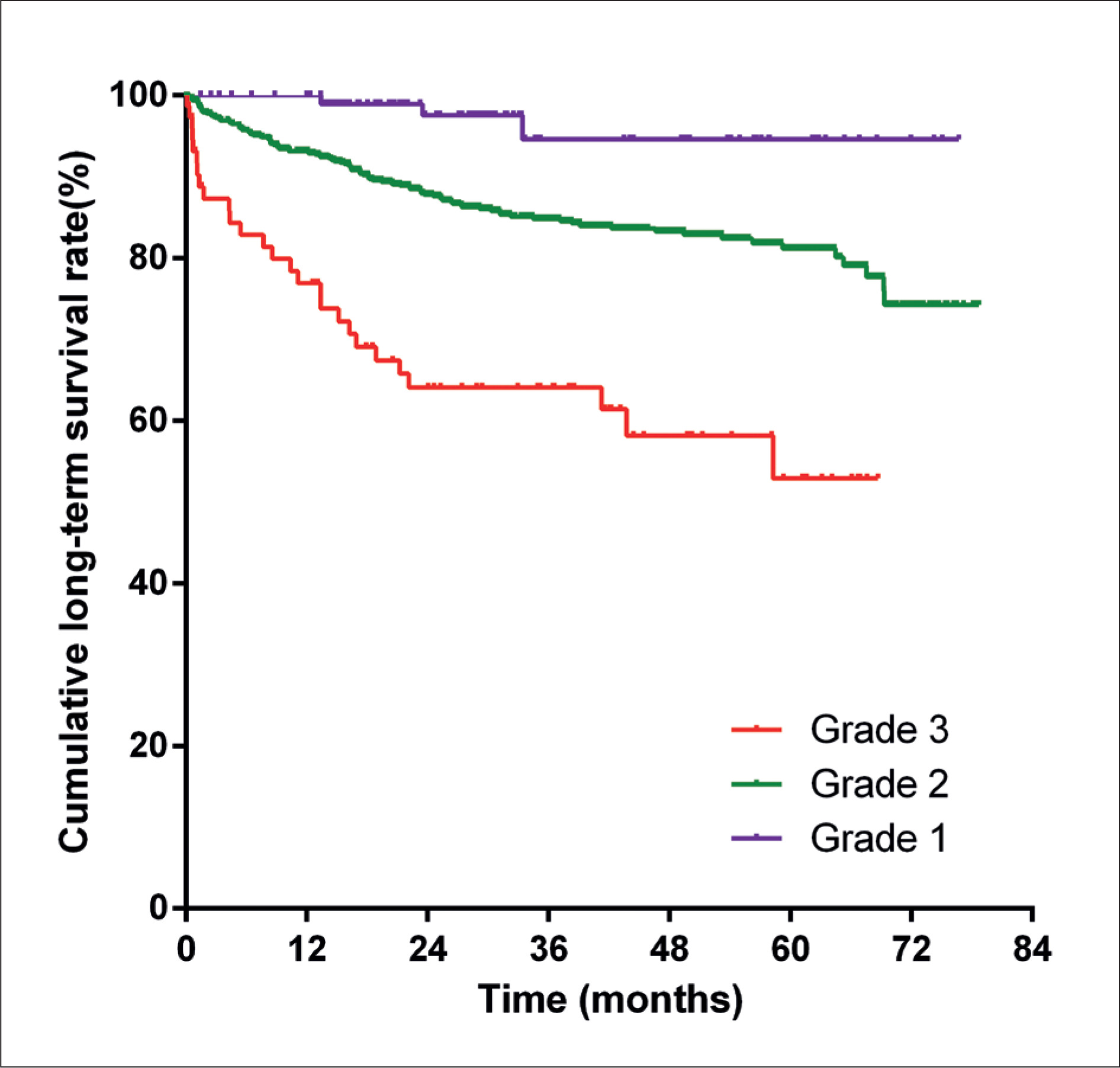
A total of 1025 patients with idiopathic DCM were retrospectively included and divided into three groups based on ALBI scores: grade 1 (≤ −2.60, n = 113), grade 2 (−2.60 to −1.39, n = 835), and grade 3 (> −1.39, n = 77). The association of ALBI score with in-hospital major adverse clinical events (MACEs) and long-term mortality was analyzed. P-value less than 0.05 was considered statistically significant.

Results:

The in-hospital MACEs rate was significantly higher in the grade 3 patients (2.7% versus 7.1% versus 24.7%, p < 0.001). Multivariate analysis showed that ALBI score was an independent predictor for in-hospital MACEs (adjusted odds ratio = 2.80, 95%CI: 1.63 – 4.80, p < 0.001). After a median 27-month follow-up, 146 (14.2%) patients died. The Kaplan–Meier curve indicated that the cumulative rate of long-term survival was significantly lower in patients with higher ALBI grade (log-rank = 45.50, p < 0.001). ALBI score was independently associated with long-term mortality (adjusted hazard ratio = 2.84, 95%CI: 1.95 – 4.13, p < 0.001).

Conclusion:

ALBI score as a simple risk model could be considered a risk-stratifying tool for patients with idiopathic DCM.

  • Dilated Cardiomyopathy
  • Heart Failure
  • Prognosis
Read Full Article
Creative Commons Attribution (CC BY) Creative Commons license
10/06/2022 DOI: 10.36660/abc.20210035 Views 1
ABC
Editorial

Left Bundle Pacing: Has Cardiac Pacing Changed Forever?

José Carlos Pachón-M et al. Juán Carlos Pachón-M Carlos Thiene C. Pachón

A hidden and deleterious side effect

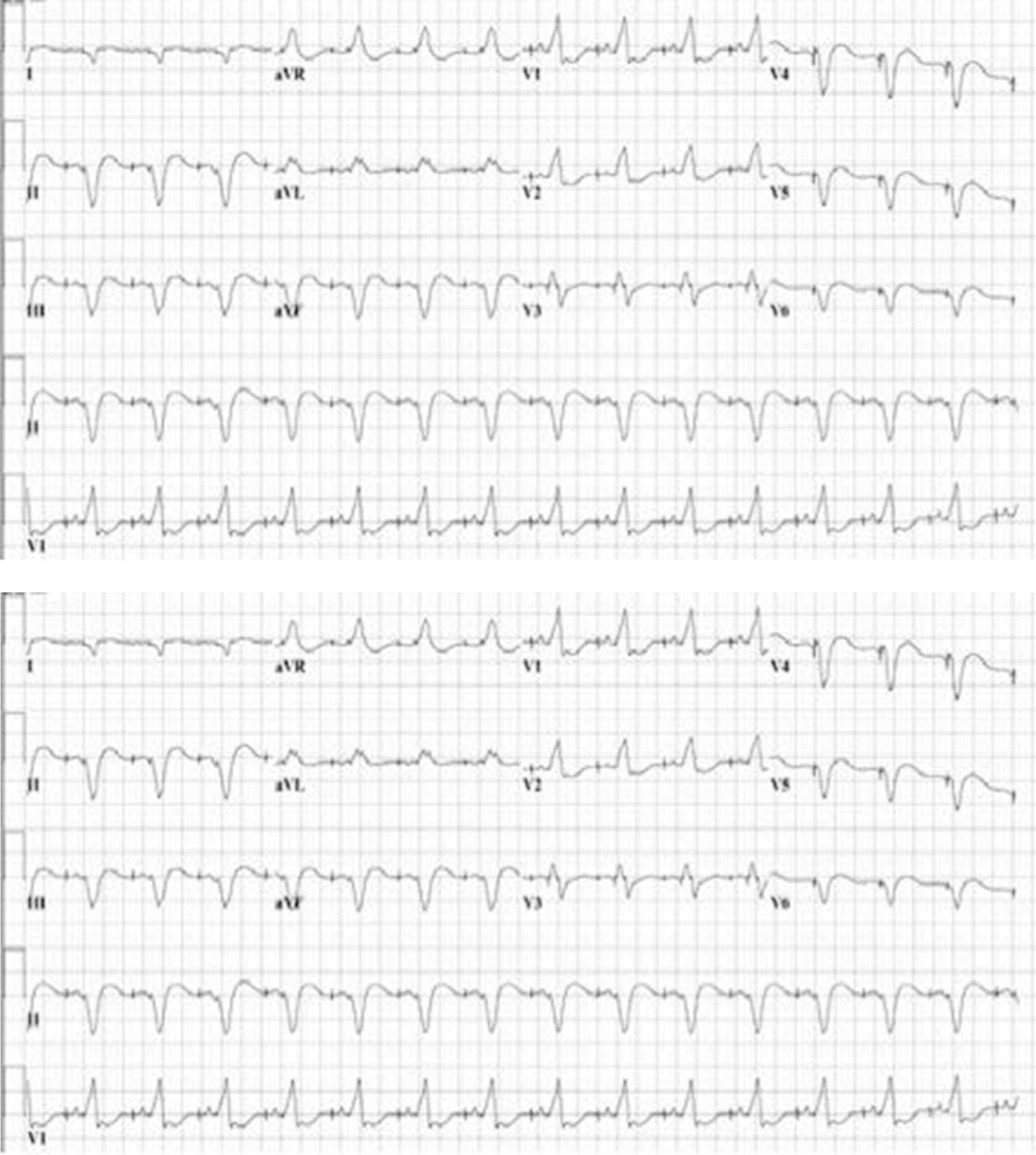
Despite the great benefit of the AV synchronized pacing, the endocardial lead at the apex of the right ventricle remained causing unwanted pacing with wide QRS and complete left bundle branch block effect, with significant dyssynchrony of the left ventricular walls given rise to a second problem: the “Ventricular Pacemaker Syndrome or Wide QRS Syndrome”, whose prevention and treatment gave origin to resynchronization therapy. – . Despite being present in the entire cardiac stimulation, this dyssynchrony was neglected for a long time due to the great benefit resulting of the bradycardia correction.

[…]

  • Bradyarrhythmias
  • Cardiac Pacemaker Artificial
  • Cardiac Resynchronization
  • Dilated Cardiomyopathy
  • Syncope
Read Full Article
Creative Commons Attribution (CC BY) Creative Commons license
07/03/2022 DOI: 10.36660/abc.20211004
Figure 1
IJCS
Case Report

Acute Heart Failure Exacerbation in the Setting of Electrical Storm: Total Artificial Heart vs. Ventricle Assist Device

Juan Simon Rico et al. Daniela Arango-Isaza Megha Prasad Clara Saldarriaga

Introduction

Total artificial heart (TAH) is a novel device with over a thousand implantations worldwide, being a suitable option for patients as a bridge to transplantation (BTT). The following case was the second implantation of a TAH at our institution.

[…]

  • Arrhythmias Cardiac
  • Cardiac Resynchronization Therapy
  • Defibrillators, Implantable
  • Dilated Cardiomyopathy
  • Heart Failure
Read Full Article
Creative Commons Attribution (CC BY) Creative Commons license
01/01/2019 DOI: 10.5935/2359-4802.20180078
Cardiac resynchronization therapy improves the uptake of MIBI-99mTc and cardiac function
ABC
Relato de Caso

Cardiac resynchronization therapy improves the uptake of MIBI-99mTc and cardiac function

Simone Cristina Soares Brandão et al. Maria Clementina Giorgi Silvana D'Orio Nishioka Martino Martinelli Filho … José Soares Jr. José Cláudio Meneghetti

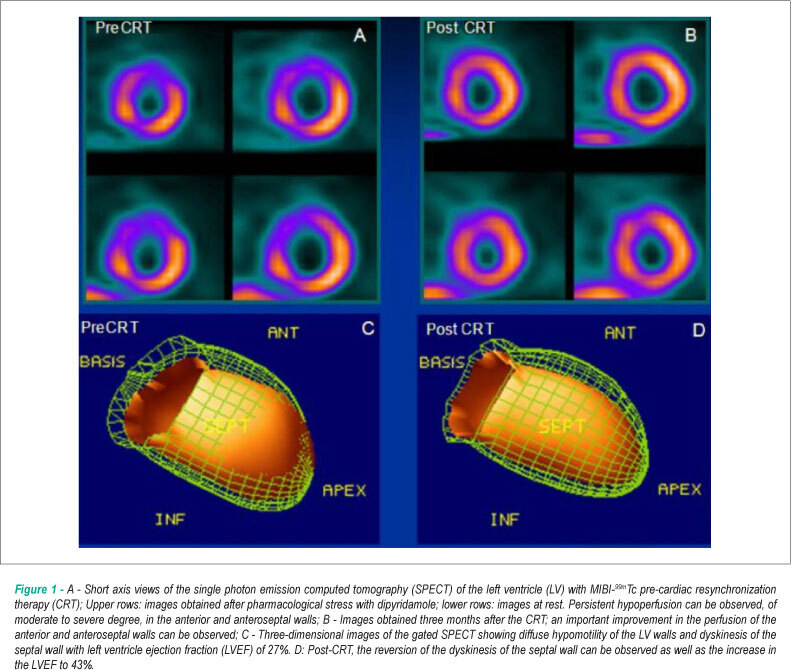
This case shows the improvement promoted by cardiac resynchronization therapy (CRT) on myocardial perfusion and left ventricular (LV) performance assessed by gated myocardial perfusion scintigraphy. The patient had idiopathic dilated cardiomyopathy, left bundle branch block and severe heart failure despite optimized medical treatment. After CRT, clinical improvement, QRS reduction and improvement of previously hypoperfused anterior and septal walls were observed. There was also decrease in LV end-diastolic and systolic volumes and increase in LV ejection fraction.

  • Dilated Cardiomyopathy
  • Left Ventricular Function
  • myocardial perfusion
  • Ventricular Function
Read Full Article
Creative Commons Attribution (CC BY) Creative Commons license
01/10/2008 DOI: 10.1590/S0066-782X2008001500013
ABC
Artigo Original

Hemodynamic evaluation and clinical outcome of children candidates for heart transplantation with severe dilated cardiomyopathy

Estela Azeka et al. Miguel Barbero Marcial Paulo Roberto Camargo Luiz Kajita … Ana Cristina Aliman José Otávio C. Auler Edmar Atik Munir Ebaid

PURPOSE: To evaluate hemodynamic parameters and clinical outcome of children with severe cardiomyopathy who are candidates for heart transplantation. METHODS: Twenty four children aged from 4 months to 10 years and 8 months (mean 3.7±2.5 years) from February 1992 to May 1996, were submitted to hemodynamic study and the following parameters were measured: cardiac output, mean pulmonary artery pressure (MPAP) and capillary wedge pressure. The pulmonary vascular resistance index (PVRI) and transpulmonary pressure gradient (TGP) were calculated. RESULTS: Ten (41.6%) children were transplanted (group A), 5 (20.8%) are still waiting heart transplantation (group B) and 9 (37.6%) died (group C). The mean age of the B and C group were significantly different. The PVRI, MPAP and TPG were significant lower in group A than group C (p=0.01; p=0.044 and p=0.023 respectively). CONCLUSION: The profile of the hemodynamic parameters of children with severe dilated cardiomyopathy was compatible with the clinical findings. The age was the only difference comparing groups B and C. PVRI, MPAP and TPG were significant factors between group A and C. The older the patient, the worse was the prognosis.

  • Child
  • Dilated Cardiomyopathy
  • Heart Transplantation
Read Full Article
Creative Commons Attribution (CC BY) Creative Commons license
31/01/2007 DOI: 10.1590/S0066-782X1998001100004
Mitral Valve Replacement and Remodeling of the Left Ventricle in Dilated Cardiomyopathy with Mitral Regurgitation: Initial Results
ABC
Original Article

Mitral Valve Replacement and Remodeling of the Left Ventricle in Dilated Cardiomyopathy with Mitral Regurgitation: Initial Results

Luiz Boro Puig et al. Fábio Antonio Gaiotto José de Lima Oliveira Júnior Mirian Magalhães Pardi … Fernando Bacal Charles Mady Fábio Fernandes Giovanni Bellotti José Antonio Franchini Ramires Sérgio Almeida de Oliveira

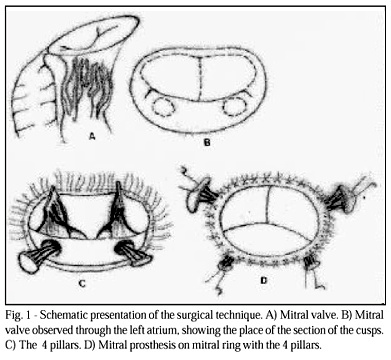
OBJECTIVE: This study evaluated the effects of a new method of mitral valve replacement on left ventricular (LV) remodeling and heart failure functional class. METHODS: Eight patients (6 men) with severe mitral regurgitation from end-stage dilated cardiomyopathy underwent surgery. Five patients were in functional class (FC) IV, 2 were in FC III and 1 was in FC III/IV. Age ranged from 33 to 63 years. Both the anterior and posterior leaflets of the mitral valve were divided into hemileaflets. The resultant 4 pedicles were displaced under traction toward the left atrium and anchored between the mitral annulus and an implanted valvular prosthesis. The beating heart facilitated ideal chordae tendineae positioning. RESULTS: All patients survived and were discharged from the hospital. After a mean follow-up period of 6.5 months (1-12 m), 5 patients were in FC I; 2 in FC I/II; and 1 in FC II. The preoperative ejection fraction ranged from 19% to 30% (mean: 25.7±3.4 %), and the postoperative ejection fraction ranged from 21% to 40% (mean: 31.1± 5.8%). Doppler echocardiography showed evidence of LV remodeling in 4 patients, including lateral wall changes and a tendency of the LV cavity to return to its elliptical shape. CONCLUSION: This technique of mitral valve replacement, involving new positioning of the chordae tendineae, allowed LV remodeling and improvement in FC during this brief follow-up period.

  • Dilated Cardiomyopathy
  • left ventricular remodeling
  • mitral valve replacement
Read Full Article
Creative Commons Attribution (CC BY) Creative Commons license
31/01/2007 DOI: 10.1590/S0066-782X2002000200011 Views 1
The role of storage of interstitial myocardial collagen on the overlife rate of patients with idiopathic and chagasic dilated cardiomyopathy
ABC
Artigo Original

The role of storage of interstitial myocardial collagen on the overlife rate of patients with idiopathic and chagasic dilated cardiomyopathy

Vera Lopes Nunes et al. Felix José Alvarez Ramires Walace de Souza Pimentel Fábio Fernandes … Barbara Maria Ianni Charles Mady

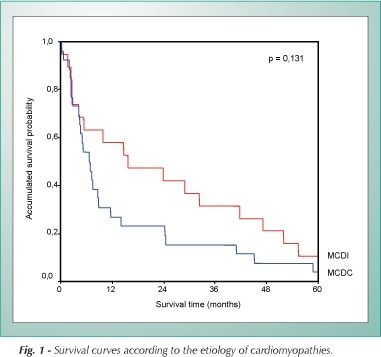
OBJECTIVE: To find out whether there is a correlation between a myocardial structural marker and the overlife rate of patients with dilated cardiomyopathy. METHODS: Using endomyocardial biopsy and 2D-echocardiogram, we studied nine patients with no changes in myocardial structure (control) and 45 patients with severe dilated cardiomyopathy of idiopathic etiology (IDCM) and of Chagasic etiology (CDCM). We analyzed the correlation between the quantity of interstitial myocardial collagen (ICVF) and the overlife rates of these patients. We also evaluated the difference in ICVF between these groups and whether fibrosis interfered on the geometry and function of the myocardium. RESULTS: We observed that ICVF was 15 times higher in cardiomyopathy patients than in the control group, but there was no difference in ICVF between CDCM and IDCM (*p < 0.001) patients. There was no correlation between ICVF and the overlife rate in cardiomyopathy patients (IDCM p = 0.249, and CDCM p = 0.587). We observed a significant correlation between ICVF and left ventricular ejection fraction (LVEF) only for IDCM. There was no correlation between ICVF and left ventricular diastolic diameter in either etiology. CONCLUSION: There was no difference in myocardial fibrosis between patients with CDCM or IDCM, and there was no correlation between fibrosis and the prognosis either for IDCM or CDCM. There was a correlation between myocardial fibrosis and LVEF only for IDCM.

  • collagen
  • Dilated Cardiomyopathy
  • Myocardium
  • Prognosis
Read Full Article
Creative Commons Attribution (CC BY) Creative Commons license
18/01/2007 DOI: 10.1590/S0066-782X2006001900012 Views 2
Effects of metoprolol tartrate therapy in patients with heart failure
ABC
Artigo Original

Effects of metoprolol tartrate therapy in patients with heart failure

José Albuquerque de Figueiredo Neto et al. Charles Mady César Grupi

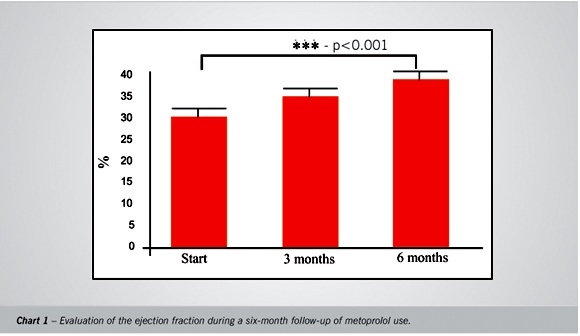
OBJECTIVE: To study the effects of metoprolol tartrate therapy in patients with heart failure. METHODS: Fifty patients (36 males) aged 52±14.8 yrs, with functional class II to IV heart failure (HF) and left ventricular ejection fraction (LVFE) < 45%, assessed by radionuclide ventriculography, were evaluated in a retrospective study. Metoprolol tartrate was added to the usual therapy, with a starting dose of 12.5 mg, which was increased weekly to a maximum of 200 mg/day, according to patients’ tolerance. Clinical evaluation, electrocardiogram, Doppler echocardiogram, 24-h Holter monitoring and radionuclide ventriculography were carried out in the pre-treatment phase and repeated three and six months after the start of therapy. RESULTS: At the end of six months, there was functional class (NYHA) improvement with a reduction from 3.04±0.11 to 1.66±0.06(p<0.001). Ejection fraction increased from 29.84+1.61% to 38.56±1.95% (p< 0.001). The left ventricular diastolic diameter showed a reduction from 67.70±1.31 mm to 63.96±1.29 mm (p<0.001), and the left ventricular systolic diameter showed a reduction from 54.80±1.67 mm to 48.58±1.38 (p0.05). Cardiac frequency decreased from 78.84±1.68 to 67.48±1.86 b.p.m. (p<0.001). CONCLUSION: The adding of metoprolol tartrate to the usual heart failure therapy is followed by an increase of ejection fraction, functional class improvement, and decrease of ventricular diameters and cardiac frequency. These results suggest anti-remodeling effects in patients with HF who utilize metoprolol tartrate in addition to the usual therapy.

  • Beta-blocker
  • Dilated Cardiomyopathy
  • Heart Failure
Read Full Article
Creative Commons Attribution (CC BY) Creative Commons license
16/10/2006 DOI: 10.1590/S0066-782X2006001600016 Views 1
Score for nutritional status evaluation: the role played in the prognostic stratification of dilated cardiomyopathy and advanced heart failure patients
ABC
Artigo Original

Score for nutritional status evaluation: the role played in the prognostic stratification of dilated cardiomyopathy and advanced heart failure patients

Luiz Guilherme Veloso et al. Antonio Carlos Pereira-Barretto Mucio Tavares de Oliveira Junior Robson Tadeu Munhoz … Paulo César Morgado José Antonio Franchini Ramires

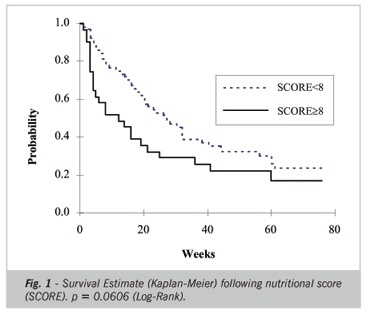
OBJECTIVE: Develop a method for the evaluation of patient’s nutritional status through a score that expresses universal nutritional status, as well as investigate if that score would be efficient for the prognostic stratification of advanced heart failure (HF) pts. METHODS: The score was reached by the selection of evaluation methods that would quantify nutritional status: ideal body weight percentage, thickness of tricipital skinfold, percentiles for arm muscular mass circumference, albumin serum level, lymphocyte total count. In order to be validated, the score was applied to a group of 95 pts. Pts were under 65 years old no evidence of consumptive diseases. The score was analyzed to confirm whether it would keep correlation with HF clinical data and whether it would stratify its prognostic. RESULTS: Nutritional status suggesting moderate or severe malnutrition could be observed in 31/95 (32.6%). No correlation was found between nutritional score values and the duration of symptoms, or the level of ventricular dysfunction. Pts with high nutritional score showed a trend towards higher mortality rate (p=0.0606). CONCLUSION: Those data suggest malnutrition is reported by 1/3 of pts with advanced HF. A score comprising 5 parameters for nutritional status showed good correlation with the clinical, global evaluation of pts with HF. A score over 8 identified pts with higher probability of death as outcome, confirming that pts under higher malnutrition exhibit worse evolution.

  • cardiac cachexia
  • Dilated Cardiomyopathy
  • malnutrition
Read Full Article
Creative Commons Attribution (CC BY) Creative Commons license
28/09/2006 DOI: 10.1590/S0066-782X2006001500017 Views 1
Early results of bone marrow cell transplantation to the myocardium of patients with heart failure due to chagas disease
ABC
Artigo Original

Early results of bone marrow cell transplantation to the myocardium of patients with heart failure due to chagas disease

Fábio Vilas-Boas et al. Gilson S. Feitos Milena B.P. Soares Augusto Mota … Joel Alves Pinho-Filho Augusto José Gonçalves Almeida Marcus Vinicius Andrade Heitor G. Carvalho Adriano Dourado-Oliveira Ricardo Ribeiro-dos-Santos

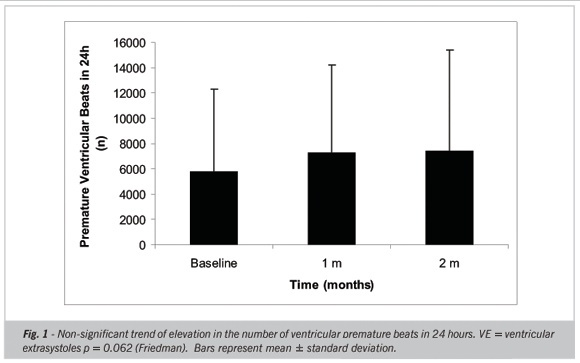
OBJECTIVE: To evaluate early effects of bone marrow cell transplantation to the myocardium of patients with heart failure (CHF) due to Chagas disease. METHODS: We studied 28 patients (mean age 52.2 ± 9.9), of whom 24 were male. Despite optimized treatment, 25 patients were in NYHA class III and three patients, in NYHA class IV. The procedure consisted of aspiration of 50 mL of bone marrow, separation of the mononuclear fraction, and intracoronary injection. Effects on left ventricle ejection fraction (LVEF), distance walked in the six-minute walking test, quality-of-life, NYHA class, arrhythmogenic and biochemical parameters, were all evaluated. RESULTS: There were no complications directly related to the procedure. Baseline left ventricular ejection fraction was 20.1 ± 6.8%, and 60 days after transplantation it increased to 23.0 ± 9.0%, p = 0.02. Significant improvements were observed in the NYHA class (3.1 ± 0.3 to 1.8 ± 0.5; p < 0.0001); quality-of-life (50.9 ± 11.7 to 21.8 ± 13.4; p < 0.0001); and distance walked in six minutes (355 ± 136 m to 443 ± 110 m; p = 0,003). The number of ventricular premature beats in 24 hours tended to increase (5,322 ± 4,977 to 7,441 ± 7,955; p = 0,062), but without increase in ventricular tachycardia episodes (61 ± 127 to 54 ± 127; p = 0.27). CONCLUSION: Our data demonstrate for the first time that intracoronary injection of bone marrow mononuclear cells is feasible and suggest that it may be potentially safe and effective in patients with CHF due to Chagas disease.

  • cell therapy
  • Chagas disease
  • Dilated Cardiomyopathy
  • Heart Failure
  • Stem cell
Read Full Article
Creative Commons Attribution (CC BY) Creative Commons license
28/09/2006 DOI: 10.1590/S0066-782X2006001500014 Views 1
Technical aspects of coronary sinus catheterization based on the atrial component of the intracavitary electrogram and radiological anatomy during the implantation procedure of a biventricular pacemaker
ABC
Artigo Original

Technical aspects of coronary sinus catheterization based on the atrial component of the intracavitary electrogram and radiological anatomy during the implantation procedure of a biventricular pacemaker

Fernando Sérgio Oliva de Souza et al. Nicola Luciano Mortati Domingo Marcolino Braile Reinaldo Wilson Vieira … Salomon Ordinola Rojas Alessandre Caputo Rabelo Januário Manuel de Souza Sérgio Almeida de Oliveira

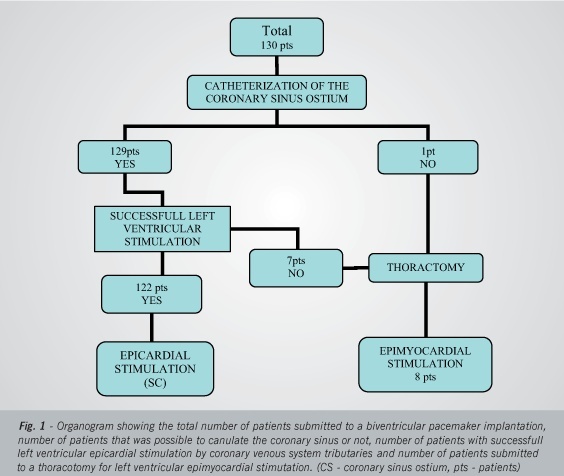
OBJECTIVE: To present a technical proposal based on the experience of 130 implantations using a simplified technique for coronary sinus catheterization, based on the atrial component of the intracavitary electrogram and radiological anatomy. METHODS: From October, 2001 to October, 2004, 130 biventricular pacemaker implantations were performed, using radiological anatomy and observation of the intracavitary electrogram, focusing on the atrial component. RESULTS: The implantation of the system using left ventricular pacing via coronary sinus was not possible in 8 patients. Difficulties on the cannulation of the coronary ostium were felt in 12 patients and difficulties of lead advancement through the coronary sinus were felt in 15 patients. The mean time of radioscopy utilization was 18.69 min. CONCLUSION: The implantation technique, using the atrial component morphology of the intracavitary electrogram and radiological anatomy showed to be workless, safe and effective for the cannulation of the coronary sinus ostium requesting reduced time of radioscopy.

  • congestive heart failure
  • Dilated Cardiomyopathy
  • Pacemaker
Read Full Article
Creative Commons Attribution (CC BY) Creative Commons license
25/04/2006 DOI: 10.1590/S0066-782X2006000400005

Could not load more articles. Please try again.

How to cite this article

EndNote RIS

Electronic Document Format (Vancouver)

Costa KG, Otto MEB, Fernandes AFL, Assunção NM, Paiva MUB, Lima RLR, Dias RMS, et al. Dilated Cardiomyopathy as a Rare Initial Manifestation of ANCA-positive Microscopic Polyangiitis: Case Report. ABC Imagem Cardiovascular 2026;39(2):e20260038.

Electronic Document Format (ABNT)

Costa, Karoline Gonzaga; Otto, Maria Estefânia Bosco; Fernandes, André Felipe Lobão; Assunção, Nathália de Macêdo; Paiva, Mariana Ubaldo Barbosa; Lima, Rosyane Luz Rufino de; Dias, Rita Mikelle Soares. Dilated Cardiomyopathy as a Rare Initial Manifestation of ANCA-positive Microscopic Polyangiitis: Case Report. ABC Imagem Cardiovascular, v. 39, n. 2, e20260038, Jul. 2026.

Electronic Document Format (APA)

Costa, K. G., Otto, M. E. B., Fernandes, A. F. L., Assunção, N. M., Paiva, M. U. B., Lima, R. L. R. , & Dias, R. M. S. (2026). Dilated Cardiomyopathy as a Rare Initial Manifestation of ANCA-positive Microscopic Polyangiitis: Case Report. ABC Imagem Cardiovascular, 39(2), e20260038.

Electronic Document Format (ISO)

Costa, Karoline Gonzaga and Otto, Maria Estefânia Bosco and Fernandes, André Felipe Lobão and Assunção, Nathália de Macêdo and Paiva, Mariana Ubaldo Barbosa and Lima, Rosyane Luz Rufino de and Dias, Rita Mikelle Soares. Dilated Cardiomyopathy as a Rare Initial Manifestation of ANCA-positive Microscopic Polyangiitis: Case Report. ABC Imagem Cardiovascular [online]. 2026, vol. 39, n. 2, [cited 2026-10-14], e20260038. Available from: <https://journals.cardiol.br/en/article/dilated-cardiomyopathy-as-a-rare-initial-manifestation-of-anca-positive-microscopic-polyangiitis-case-report/>. ISSN 2318-8219

EndNote RIS

Electronic Document Format (Vancouver)

Bernardi HGB, Furquim S, Hames RL, Koroishi JHY, Pinheiro Junior JA, Martins SK. Reverse Remodeling and Genetics: A Review Based on a Clinical Case Description that Challenges Current Evidence and Logic. ABC Heart Fail Cardiomyop 2025;5(4):e20250026.

Electronic Document Format (ABNT)

Bernardi, Helena Garcia Betinardi; Furquim, Silas; Hames, Renata Lopes; Koroishi, Jorge Henrique Yoschimoto; Pinheiro Junior, Jairo Alves; Martins, Stevan Krieger. Reverse Remodeling and Genetics: A Review Based on a Clinical Case Description that Challenges Current Evidence and Logic. ABC Heart Fail Cardiomyop, v. 5, n. 4, e20250026, Dec. 2025.

Electronic Document Format (APA)

Bernardi, H. G. B., Furquim, S., Hames, R. L., Koroishi, J. H. Y., Pinheiro Junior, J. A., & Martins, S. K. (2025). Reverse Remodeling and Genetics: A Review Based on a Clinical Case Description that Challenges Current Evidence and Logic. ABC Heart Fail Cardiomyop, 5(4), e20250026.

Electronic Document Format (ISO)

Bernardi, Helena Garcia Betinardi and Furquim, Silas and Hames, Renata Lopes and Koroishi, Jorge Henrique Yoschimoto and Pinheiro Junior, Jairo Alves and Martins, Stevan Krieger. Reverse Remodeling and Genetics: A Review Based on a Clinical Case Description that Challenges Current Evidence and Logic. ABC Heart Fail Cardiomyop [online]. 2025, vol. 5, n. 4, [cited 2026-10-14], e20250026. Available from: <https://journals.cardiol.br/en/article/reverse-remodeling-and-genetics-a-review-based-on-a-clinical-case-description-that-challenges-current-evidence-and-logic/>

EndNote RIS

Electronic Document Format (Vancouver)

Silva PGMB, Albuquerque DC, Lopes RD, Nogueira PR, Freitas Jr AF, Nascimento CV, Mady C, et al. Acute Heart Failure in Patients with Chagas Cardiomyopathy: Results of the I Brazilian Heart Failure Registry (BREATHE). Arquivos Brasileiros de Cardiologia 2025;122(5):e20240555.

Electronic Document Format (ABNT)

Silva, Pedro Gabriel Melo de Barros e; Albuquerque, Denilson Campos; Lopes, Renato Delascio; Nogueira, Paulo Roberto; Freitas Jr, Aguinaldo F; Nascimento, Carlos Vieira; Mady, Charles; Santos, Elizabete Silva dos; Hernandes, Mauro Esteves; Rivera, Maria Alayde Mendonça; Souza Neto, João David de; Rabelo, Alvaro; Canesin, Manoel Fernandes; Reis, Helder; Armstrong, Anderson da Costa; Hoffmann, Conrado; Santos, Renato Hideo Nakagawa; Jesuino, Isabella de Andrade; Rohde, Luis Eduardo; Moura, Lidia Zytinsky; Marcondes-Braga, Fabiana Goulart; Mesquita, Evandro Tinoco; Figueiredo Neto, José Albuquerque de; Mourilhe-Rocha, Ricardo; Beck-da-Silva, Luís; Oliveira Junior, Mucio Tavares; Simões, Marcus Vinicius. Acute Heart Failure in Patients with Chagas Cardiomyopathy: Results of the I Brazilian Heart Failure Registry (BREATHE). Arquivos Brasileiros de Cardiologia, v. 122, n. 5, e20240555, Jun. 2025.

Electronic Document Format (APA)

Silva, P. G. M. B. , Albuquerque, D. C., Lopes, R. D., Nogueira, P. R., Freitas Jr, A. F., Nascimento, C. V., Mady, C., Santos, E. S. , Hernandes, M. E., Rivera, M. A. M., Souza Neto, J. D. , Rabelo, A., Canesin, M. F., Reis, H., Armstrong, A. C., Hoffmann, C., Santos, R. H. N., Jesuino, I. A., Rohde, L. E., Moura, L. Z., Marcondes-Braga, F. G., Mesquita, E. T., Figueiredo Neto, J. A. , Mourilhe-Rocha, R., Beck-da-Silva, L., Oliveira Junior, M. T., & Simões, M. V. (2025). Acute Heart Failure in Patients with Chagas Cardiomyopathy: Results of the I Brazilian Heart Failure Registry (BREATHE). Arquivos Brasileiros de Cardiologia, 122(5), e20240555.

Electronic Document Format (ISO)

Silva, Pedro Gabriel Melo de Barros e and Albuquerque, Denilson Campos and Lopes, Renato Delascio and Nogueira, Paulo Roberto and Freitas Jr, Aguinaldo F and Nascimento, Carlos Vieira and Mady, Charles and Santos, Elizabete Silva dos and Hernandes, Mauro Esteves and Rivera, Maria Alayde Mendonça and Souza Neto, João David de and Rabelo, Alvaro and Canesin, Manoel Fernandes and Reis, Helder and Armstrong, Anderson da Costa and Hoffmann, Conrado and Santos, Renato Hideo Nakagawa and Jesuino, Isabella de Andrade and Rohde, Luis Eduardo and Moura, Lidia Zytinsky and Marcondes-Braga, Fabiana Goulart and Mesquita, Evandro Tinoco and Figueiredo Neto, José Albuquerque de and Mourilhe-Rocha, Ricardo and Beck-da-Silva, Luís and Oliveira Junior, Mucio Tavares and Simões, Marcus Vinicius. Acute Heart Failure in Patients with Chagas Cardiomyopathy: Results of the I Brazilian Heart Failure Registry (BREATHE). Arquivos Brasileiros de Cardiologia [online]. 2025, vol. 122, n. 5, [cited 2026-10-14], e20240555. Available from: <https://journals.cardiol.br/en/article/acute-heart-failure-in-patients-with-chagas-cardiomyopathy-results-of-the-i-brazilian-heart-failure-registry-breathe/>. ISSN 0066-782X

EndNote RIS

Electronic Document Format (Vancouver)

Olivetti N, Pagotti M, Santos BM, Mizuta M, Linnenkamp B, Senra PM, Andrade F, et al. Filamin C and Cardiomyopathies: Linking Genetic Variants to Their Phenotypic Impact. ABC Heart Fail Cardiomyop 2025;5(2):20240059.

Electronic Document Format (ABNT)

Olivetti, Natália; Pagotti, Márya; Santos, Bruno Moreira; Mizuta, Marjorie; Linnenkamp, Bianca; Senra, Paula de Mendonça; Andrade, Fernanda; Carvalho, Mariana Lombardi Peres de; Sacilotto, Luciana; Krieger, José Eduardo. Filamin C and Cardiomyopathies: Linking Genetic Variants to Their Phenotypic Impact. ABC Heart Fail Cardiomyop, v. 5, n. 2, 20240059, Jun. 2025.

Electronic Document Format (APA)

Olivetti, N., Pagotti, M., Santos, B. M., Mizuta, M., Linnenkamp, B., Senra, P. M., Andrade, F., Carvalho, M. L. P. , Sacilotto, L., & Krieger, J. E. (2025). Filamin C and Cardiomyopathies: Linking Genetic Variants to Their Phenotypic Impact. ABC Heart Fail Cardiomyop, 5(2), 20240059.

Electronic Document Format (ISO)

Olivetti, Natália and Pagotti, Márya and Santos, Bruno Moreira and Mizuta, Marjorie and Linnenkamp, Bianca and Senra, Paula de Mendonça and Andrade, Fernanda and Carvalho, Mariana Lombardi Peres de and Sacilotto, Luciana and Krieger, José Eduardo. Filamin C and Cardiomyopathies: Linking Genetic Variants to Their Phenotypic Impact. ABC Heart Fail Cardiomyop [online]. 2025, vol. 5, n. 2, [cited 2026-10-14], 20240059. Available from: <https://journals.cardiol.br/en/article/filamin-c-and-cardiomyopathies-linking-genetic-variants-to-their-phenotypic-impact/>

EndNote RIS

Electronic Document Format (Vancouver)

Hama FM, Rocha EG, Azeka E. Genetic Cardiomyopathies: An Overview of the Main Associated Pathogenic Mutations. ABC Heart Fail Cardiomyop 2025;5(2):e20240052.

Electronic Document Format (ABNT)

Hama, Flavia Misawa; Rocha, Edson Gabriel; Azeka, Estela. Genetic Cardiomyopathies: An Overview of the Main Associated Pathogenic Mutations. ABC Heart Fail Cardiomyop, v. 5, n. 2, e20240052, May. 2025.

Electronic Document Format (APA)

Hama, F. M., Rocha, E. G., & Azeka, E. (2025). Genetic Cardiomyopathies: An Overview of the Main Associated Pathogenic Mutations. ABC Heart Fail Cardiomyop, 5(2), e20240052.

Electronic Document Format (ISO)

Hama, Flavia Misawa and Rocha, Edson Gabriel and Azeka, Estela. Genetic Cardiomyopathies: An Overview of the Main Associated Pathogenic Mutations. ABC Heart Fail Cardiomyop [online]. 2025, vol. 5, n. 2, [cited 2026-10-14], e20240052. Available from: <https://journals.cardiol.br/en/article/genetic-cardiomyopathies-an-overview-of-the-main-associated-pathogenic-mutations/>

EndNote RIS

Electronic Document Format (Vancouver)

Pires LVL, Correia VM, Lipari LFVP, Andrade FA, Fernandes F, Madrini Junior V, Carvalho MLP, et al. Exploring MYH7 in Cardiomyopathies: Genetic Drivers and Clinical Outcomes. ABC Heart Fail Cardiomyop 2025;5(1):e20240054.

Electronic Document Format (ABNT)

Pires, Lucas Vieira Lacerda; Correia, Vinícius Machado; Lipari, Layara Fernanda Vicente Pereira; Andrade, Fernanda Almeida; Fernandes, Fábio; Madrini Junior, Vagner; Carvalho, Mariana Lombardi Peres de; Napolitano, Giovanna; Silva, Elisangela Aparecida da; Vilalva, Kelvin Henrique; Val, Vitória Pelegrino do; Krieger, José Eduardo. Exploring MYH7 in Cardiomyopathies: Genetic Drivers and Clinical Outcomes. ABC Heart Fail Cardiomyop, v. 5, n. 1, e20240054, Apr. 2025.

Electronic Document Format (APA)

Pires, L. V. L., Correia, V. M., Lipari, L. F. V. P., Andrade, F. A., Fernandes, F., Madrini Junior, V., Carvalho, M. L. P. , Napolitano, G., Silva, E. A. , Vilalva, K. H., Val, V. P. , & Krieger, J. E. (2025). Exploring MYH7 in Cardiomyopathies: Genetic Drivers and Clinical Outcomes. ABC Heart Fail Cardiomyop, 5(1), e20240054.

Electronic Document Format (ISO)

Pires, Lucas Vieira Lacerda and Correia, Vinícius Machado and Lipari, Layara Fernanda Vicente Pereira and Andrade, Fernanda Almeida and Fernandes, Fábio and Madrini Junior, Vagner and Carvalho, Mariana Lombardi Peres de and Napolitano, Giovanna and Silva, Elisangela Aparecida da and Vilalva, Kelvin Henrique and Val, Vitória Pelegrino do and Krieger, José Eduardo. Exploring MYH7 in Cardiomyopathies: Genetic Drivers and Clinical Outcomes. ABC Heart Fail Cardiomyop [online]. 2025, vol. 5, n. 1, [cited 2026-10-14], e20240054. Available from: <https://journals.cardiol.br/en/article/exploring-myh7-in-cardiomyopathies-genetic-drivers-and-clinical-outcomes/>

EndNote RIS

Electronic Document Format (Vancouver)

Andrade FA, Stephan BO, Furquim SR, Linnenkamp BDW, Pires LVL, Val VP, Buriti NA, et al. Exploring the Role of ALPK3 Variants in Hypertrophic and Dilated Cardiomyopathies. ABC Heart Fail Cardiomyop 2025;5(1):e20240058.

Electronic Document Format (ABNT)

Andrade, Fernanda Almeida; Stephan, Bruno de Oliveira; Furquim, Silas Ramos; Linnenkamp, Bianca Domit Werner; Pires, Lucas Vieira Lacerda; Val, Vitória Pelegrino do; Buriti, Nara Alves; Lipari, Layara Fernanda Vicente Pereira; Correia, Vinícius Machado; Krieger, José Eduardo. Exploring the Role of ALPK3 Variants in Hypertrophic and Dilated Cardiomyopathies. ABC Heart Fail Cardiomyop, v. 5, n. 1, e20240058, Mar. 2025.

Electronic Document Format (APA)

Andrade, F. A., Stephan, B. O., Furquim, S. R., Linnenkamp, B. D. W., Pires, L. V. L., Val, V. P. , Buriti, N. A., Lipari, L. F. V. P., Correia, V. M., & Krieger, J. E. (2025). Exploring the Role of ALPK3 Variants in Hypertrophic and Dilated Cardiomyopathies. ABC Heart Fail Cardiomyop, 5(1), e20240058.

Electronic Document Format (ISO)

Andrade, Fernanda Almeida and Stephan, Bruno de Oliveira and Furquim, Silas Ramos and Linnenkamp, Bianca Domit Werner and Pires, Lucas Vieira Lacerda and Val, Vitória Pelegrino do and Buriti, Nara Alves and Lipari, Layara Fernanda Vicente Pereira and Correia, Vinícius Machado and Krieger, José Eduardo. Exploring the Role of ALPK3 Variants in Hypertrophic and Dilated Cardiomyopathies. ABC Heart Fail Cardiomyop [online]. 2025, vol. 5, n. 1, [cited 2026-10-14], e20240058. Available from: <https://journals.cardiol.br/en/article/exploring-the-role-of-alpk3-variants-in-hypertrophic-and-dilated-cardiomyopathies/>

EndNote RIS

Electronic Document Format (Vancouver)

Sousa KKC, Maia FGSS, Diniz RVZ, Costa CKRA, Costa BA, Mastrocola F. Dilated Cardiomyopathy Associated With A Novel Truncated Filamin C Variant Mimicking Cardiac Amyloidosis: A Diagnostic Challenge. ABC Heart Fail Cardiomyop 2025;5(1):e20240053.

Electronic Document Format (ABNT)

Sousa, Kelson Kemuel Confessor de; Maia, Ferdinand Gilbert Saraiva da Silva; Diniz, Rosiane Viana Zuza; Costa, Carla Karini R. A.; Costa, Beatriz Andrade da; Mastrocola, Fabio. Dilated Cardiomyopathy Associated With A Novel Truncated Filamin C Variant Mimicking Cardiac Amyloidosis: A Diagnostic Challenge. ABC Heart Fail Cardiomyop, v. 5, n. 1, e20240053, Mar. 2025.

Electronic Document Format (APA)

Sousa, K. K. C. , Maia, F. G. S. S., Diniz, R. V. Z., Costa, C. K. R. A., Costa, B. A. , & Mastrocola, F. (2025). Dilated Cardiomyopathy Associated With A Novel Truncated Filamin C Variant Mimicking Cardiac Amyloidosis: A Diagnostic Challenge. ABC Heart Fail Cardiomyop, 5(1), e20240053.

Electronic Document Format (ISO)

Sousa, Kelson Kemuel Confessor de and Maia, Ferdinand Gilbert Saraiva da Silva and Diniz, Rosiane Viana Zuza and Costa, Carla Karini R. A. and Costa, Beatriz Andrade da and Mastrocola, Fabio. Dilated Cardiomyopathy Associated With A Novel Truncated Filamin C Variant Mimicking Cardiac Amyloidosis: A Diagnostic Challenge. ABC Heart Fail Cardiomyop [online]. 2025, vol. 5, n. 1, [cited 2026-10-14], e20240053. Available from: <https://journals.cardiol.br/en/article/dilated-cardiomyopathy-associated-with-a-novel-truncated-filamin-c-variant-mimicking-cardiac-amyloidosis-a-diagnostic-challenge/>

EndNote RIS

Electronic Document Format (Vancouver)

Andrade FA. Cardiac Implantable Electronic Devices in Chagasic and Non-Chagasic Patients: A Critical Look at the Prognosis. Arquivos Brasileiros de Cardiologia 2024;121(9):e20240629.

Electronic Document Format (ABNT)

Andrade, Fernanda Almeida. Cardiac Implantable Electronic Devices in Chagasic and Non-Chagasic Patients: A Critical Look at the Prognosis. Arquivos Brasileiros de Cardiologia, v. 121, n. 9, e20240629, Dec. 2024.

Electronic Document Format (APA)

Andrade, F. A. (2024). Cardiac Implantable Electronic Devices in Chagasic and Non-Chagasic Patients: A Critical Look at the Prognosis. Arquivos Brasileiros de Cardiologia, 121(9), e20240629.

Electronic Document Format (ISO)

Andrade, Fernanda Almeida. Cardiac Implantable Electronic Devices in Chagasic and Non-Chagasic Patients: A Critical Look at the Prognosis. Arquivos Brasileiros de Cardiologia [online]. 2024, vol. 121, n. 9, [cited 2026-10-14], e20240629. Available from: <https://journals.cardiol.br/en/article/cardiac-implantable-electronic-devices-in-chagasic-and-non-chagasic-patients-a-critical-look-at-the-prognosis/>. ISSN 0066-782X

EndNote RIS

Electronic Document Format (Vancouver)

Furquim SR, Senra PM, Linnenkamp BDW, Vilalva KH, Mizuta MH, Santos BM, Stephan BO, et al. The Role of TTN Gene Variants in Dilated Cardiomyopathy. ABC Heart Fail Cardiomyop 2024;4(3):e20240056.

Electronic Document Format (ABNT)

Furquim, Silas Ramos; Senra, Paula de Mendonça; Linnenkamp, Bianca Domit Werner; Vilalva, Kelvin Henrique; Mizuta, Marjorie Hayashida; Santos, Bruno Moreira dos; Stephan, Bruno de Oliveira; Silva, Elisangela Aparecida da; Buriti, Nara Alves; Val, Vitória Pelegrino do; Andrade, Fernanda Almeida; Krieger, Jose Eduardo. The Role of TTN Gene Variants in Dilated Cardiomyopathy. ABC Heart Fail Cardiomyop, v. 4, n. 3, e20240056, Oct. 2024.

Electronic Document Format (APA)

Furquim, S. R., Senra, P. M., Linnenkamp, B. D. W., Vilalva, K. H., Mizuta, M. H., Santos, B. M. , Stephan, B. O., Silva, E. A. , Buriti, N. A., Val, V. P. , Andrade, F. A., & Krieger, J. E. (2024). The Role of TTN Gene Variants in Dilated Cardiomyopathy. ABC Heart Fail Cardiomyop, 4(3), e20240056.

Electronic Document Format (ISO)

Furquim, Silas Ramos and Senra, Paula de Mendonça and Linnenkamp, Bianca Domit Werner and Vilalva, Kelvin Henrique and Mizuta, Marjorie Hayashida and Santos, Bruno Moreira dos and Stephan, Bruno de Oliveira and Silva, Elisangela Aparecida da and Buriti, Nara Alves and Val, Vitória Pelegrino do and Andrade, Fernanda Almeida and Krieger, Jose Eduardo. The Role of TTN Gene Variants in Dilated Cardiomyopathy. ABC Heart Fail Cardiomyop [online]. 2024, vol. 4, n. 3, [cited 2026-10-14], e20240056. Available from: <https://journals.cardiol.br/en/article/the-role-of-ttn-gene-variants-in-dilated-cardiomyopathy/>

EndNote RIS

Electronic Document Format (Vancouver)

Pereira APLC, Rodrigues EV, Tassi EM, Lima MAFD, Souza F. Pathogenic BAG3 Variant in Peripartum Cardiomyopathy and Significant Family History of Sudden Death. International Journal of Cardiovascular Sciences 2024;37:e20240007.

Electronic Document Format (ABNT)

Pereira, Antonio Pedro Lima Costa; Rodrigues, Eduarda Vieira; Tassi, Eduardo Marinho; Lima, Maria Angelica de Faria Domingues de; Souza, Fabio de. Pathogenic BAG3 Variant in Peripartum Cardiomyopathy and Significant Family History of Sudden Death. International Journal of Cardiovascular Sciences, v. 37, e20240007, Sep. 2024.

Electronic Document Format (APA)

Pereira, A. P. L. C., Rodrigues, E. V., Tassi, E. M., Lima, M. A. F. D. , & Souza, F. (2024). Pathogenic BAG3 Variant in Peripartum Cardiomyopathy and Significant Family History of Sudden Death. International Journal of Cardiovascular Sciences, 37, e20240007.

Electronic Document Format (ISO)

Pereira, Antonio Pedro Lima Costa and Rodrigues, Eduarda Vieira and Tassi, Eduardo Marinho and Lima, Maria Angelica de Faria Domingues de and Souza, Fabio de. Pathogenic BAG3 Variant in Peripartum Cardiomyopathy and Significant Family History of Sudden Death. International Journal of Cardiovascular Sciences [online]. 2024, vol. 37, [cited 2026-10-14], e20240007. Available from: <https://journals.cardiol.br/en/article/pathogenic-bag3-variant-in-peripartum-cardiomyopathy-and-significant-family-history-of-sudden-death/>. ISSN 2359-4802

EndNote RIS

Electronic Document Format (Vancouver)

Koike H, Idris A, Berger J, Cheng VY, Sengupta J, Cavalcante JL. Acute Myocarditis as the Initial Presentation of Desmoplakin Mutation – Broadening the Differential Diagnosis. Arquivos Brasileiros de Cardiologia 2024;121(4):e20230541.

Electronic Document Format (ABNT)

Koike, Hideki; Idris, Amr; Berger, Justin; Cheng, Victor Y.; Sengupta, Jay; Cavalcante, João L.. Acute Myocarditis as the Initial Presentation of Desmoplakin Mutation – Broadening the Differential Diagnosis. Arquivos Brasileiros de Cardiologia, v. 121, n. 4, e20230541, May. 2024.

Electronic Document Format (APA)

Koike, H., Idris, A., Berger, J., Cheng, V. Y., Sengupta, J., & Cavalcante, J. L. (2024). Acute Myocarditis as the Initial Presentation of Desmoplakin Mutation – Broadening the Differential Diagnosis. Arquivos Brasileiros de Cardiologia, 121(4), e20230541.

Electronic Document Format (ISO)

Koike, Hideki and Idris, Amr and Berger, Justin and Cheng, Victor Y. and Sengupta, Jay and Cavalcante, João L.. Acute Myocarditis as the Initial Presentation of Desmoplakin Mutation – Broadening the Differential Diagnosis. Arquivos Brasileiros de Cardiologia [online]. 2024, vol. 121, n. 4, [cited 2026-10-14], e20230541. Available from: <https://journals.cardiol.br/en/article/acute-myocarditis-as-the-initial-presentation-of-desmoplakin-mutation-broadening-the-differential-diagnosis/>. ISSN 0066-782X

EndNote RIS

Electronic Document Format (Vancouver)

Tanaka DM, O’Connell JL, Fabricio CG, Romano MMD, Campos EC, Oliveira LFL, Schmidt A, et al. Efficacy of Different Cumulative Doses of Doxorubicin in the Induction of a Dilated Cardiomyopathy Model in Rats. ABC: Heart Failure & Cardiomyopathy 2022;2(3):242-9.

Electronic Document Format (ABNT)

Tanaka, Denise Mayumi; O’Connell, João Lucas; Fabricio, Camila Godoy; Romano, Minna Moreira Dias; Campos, Erica Carolina; Oliveira, Luciano Fonseca Lemos de; Schmidt, André; Carvalho, Eduardo Elias Vieira de; Simões, Marcus Vinícius. Efficacy of Different Cumulative Doses of Doxorubicin in the Induction of a Dilated Cardiomyopathy Model in Rats. ABC: Heart Failure & Cardiomyopathy, v. 2, n. 3, p. 242-249, Nov. 2022.

Electronic Document Format (APA)

Tanaka, D. M., O’Connell, J. L., Fabricio, C. G., Romano, M. M. D., Campos, E. C., Oliveira, L. F. L. , Schmidt, A., Carvalho, E. E. V. , & Simões, M. V. (2022). Efficacy of Different Cumulative Doses of Doxorubicin in the Induction of a Dilated Cardiomyopathy Model in Rats. ABC: Heart Failure & Cardiomyopathy, 2(3), 242-249.

Electronic Document Format (ISO)

Tanaka, Denise Mayumi and O’Connell, João Lucas and Fabricio, Camila Godoy and Romano, Minna Moreira Dias and Campos, Erica Carolina and Oliveira, Luciano Fonseca Lemos de and Schmidt, André and Carvalho, Eduardo Elias Vieira de and Simões, Marcus Vinícius. Efficacy of Different Cumulative Doses of Doxorubicin in the Induction of a Dilated Cardiomyopathy Model in Rats. ABC: Heart Failure & Cardiomyopathy [online]. 2022, vol. 2, n. 3, [cited 2026-10-14], pp. 242-249. Available from: <https://journals.cardiol.br/en/article/efficacy-of-different-cumulative-doses-of-doxorubicin-in-the-induction-of-a-dilated-cardiomyopathy-model-in-rats/>

EndNote RIS

Electronic Document Format (Vancouver)

Jiang M, Wei X, Huang J, Su Z, Lin Y, Yu D. Albumin-Bilirubin Score to Predict Outcomes in Patients with Idiopathic Dilated Cardiomyopathy. Arquivos Brasileiros de Cardiologia 2022;118(6):1108-15.

Electronic Document Format (ABNT)

Jiang, Mei; Wei, Xue-biao; Huang, Jie-leng; Su, Ze-da-zhong; Lin, Ying-wen; Yu, Dan-qing. Albumin-Bilirubin Score to Predict Outcomes in Patients with Idiopathic Dilated Cardiomyopathy. Arquivos Brasileiros de Cardiologia, v. 118, n. 6, p. 1108-1115, Jun. 2022.

Electronic Document Format (APA)

Jiang, M., Wei, X., Huang, J., Su, Z., Lin, Y., & Yu, D. (2022). Albumin-Bilirubin Score to Predict Outcomes in Patients with Idiopathic Dilated Cardiomyopathy. Arquivos Brasileiros de Cardiologia, 118(6), 1108-1115.

Electronic Document Format (ISO)

Jiang, Mei and Wei, Xue-biao and Huang, Jie-leng and Su, Ze-da-zhong and Lin, Ying-wen and Yu, Dan-qing. Albumin-Bilirubin Score to Predict Outcomes in Patients with Idiopathic Dilated Cardiomyopathy. Arquivos Brasileiros de Cardiologia [online]. 2022, vol. 118, n. 6, [cited 2026-10-14], pp. 1108-1115. Available from: <https://journals.cardiol.br/en/article/albumin-bilirubin-score-to-predict-outcomes-in-patients-with-idiopathic-dilated-cardiomyopathy/>. ISSN 0066-782X

EndNote RIS

Electronic Document Format (Vancouver)

Pachón-M JC, Pachón-M JC, Pachón CTC. Left Bundle Pacing: Has Cardiac Pacing Changed Forever?. Arquivos Brasileiros de Cardiologia 2022;118(2):517-8.

Electronic Document Format (ABNT)

Pachón-M, José Carlos; Pachón-M, Juán Carlos; Pachón, Carlos Thiene C.. Left Bundle Pacing: Has Cardiac Pacing Changed Forever?. Arquivos Brasileiros de Cardiologia, v. 118, n. 2, p. 517-518, Mar. 2022.

Electronic Document Format (APA)

Pachón-M, J. C., Pachón-M, J. C., & Pachón, C. T. C. (2022). Left Bundle Pacing: Has Cardiac Pacing Changed Forever?. Arquivos Brasileiros de Cardiologia, 118(2), 517-518.

Electronic Document Format (ISO)

Pachón-M, José Carlos and Pachón-M, Juán Carlos and Pachón, Carlos Thiene C.. Left Bundle Pacing: Has Cardiac Pacing Changed Forever?. Arquivos Brasileiros de Cardiologia [online]. 2022, vol. 118, n. 2, [cited 2026-10-14], pp. 517-518. Available from: <https://journals.cardiol.br/en/article/left-bundle-pacing-has-cardiac-pacing-changed-forever/>. ISSN 0066-782X

EndNote RIS

Electronic Document Format (Vancouver)

Rico JS, Arango-Isaza D, Prasad M, Saldarriaga C. Acute Heart Failure Exacerbation in the Setting of Electrical Storm: Total Artificial Heart vs. Ventricle Assist Device. International Journal of Cardiovascular Sciences 2019;32(1):87-90.

Electronic Document Format (ABNT)

Rico, Juan Simon; Arango-Isaza, Daniela; Prasad, Megha; Saldarriaga, Clara. Acute Heart Failure Exacerbation in the Setting of Electrical Storm: Total Artificial Heart vs. Ventricle Assist Device. International Journal of Cardiovascular Sciences, v. 32, n. 1, p. 87-90, Dec. 2018.

Electronic Document Format (APA)

Rico, J. S., Arango-Isaza, D., Prasad, M., & Saldarriaga, C. (2019). Acute Heart Failure Exacerbation in the Setting of Electrical Storm: Total Artificial Heart vs. Ventricle Assist Device. International Journal of Cardiovascular Sciences, 32(1), 87-90.

Electronic Document Format (ISO)

Rico, Juan Simon and Arango-Isaza, Daniela and Prasad, Megha and Saldarriaga, Clara. Acute Heart Failure Exacerbation in the Setting of Electrical Storm: Total Artificial Heart vs. Ventricle Assist Device. International Journal of Cardiovascular Sciences [online]. 2019, vol. 32, n. 1, [cited 2026-10-14], pp. 87-90. Available from: <https://journals.cardiol.br/en/article/acute-heart-failure-exacerbation-in-the-setting-of-electrical-storm-total-artificial-heart-vs-ventricle-assist-device/>. ISSN 2359-4802

EndNote RIS

Electronic Document Format (Vancouver)

Brandão SCS, Giorgi MC, Nishioka SD, Martinelli Filho M, Soares Jr. J, Meneghetti JC. Cardiac resynchronization therapy improves the uptake of MIBI-99mTc and cardiac function. Arquivos Brasileiros de Cardiologia 2008;91(3):e25-8.

Electronic Document Format (ABNT)

Brandão, Simone Cristina Soares; Giorgi, Maria Clementina; Nishioka, Silvana D’Orio; Martinelli Filho, Martino; Soares Jr., José; Meneghetti, José Cláudio. Cardiac resynchronization therapy improves the uptake of MIBI-99mTc and cardiac function. Arquivos Brasileiros de Cardiologia, v. 91, n. 3, p. e25-e28, Sep. 2008.

Electronic Document Format (APA)

Brandão, S. C. S., Giorgi, M. C., Nishioka, S. D., Martinelli Filho, M., Soares Jr., J., & Meneghetti, J. C. (2008). Cardiac resynchronization therapy improves the uptake of MIBI-99mTc and cardiac function. Arquivos Brasileiros de Cardiologia, 91(3), e25-e28.

Electronic Document Format (ISO)

Brandão, Simone Cristina Soares and Giorgi, Maria Clementina and Nishioka, Silvana D’Orio and Martinelli Filho, Martino and Soares Jr., José and Meneghetti, José Cláudio. Cardiac resynchronization therapy improves the uptake of MIBI-99mTc and cardiac function. Arquivos Brasileiros de Cardiologia [online]. 2008, vol. 91, n. 3, [cited 2026-10-14], pp. e25-e28. Available from: <https://journals.cardiol.br/en/article/cardiac-resynchronization-therapy-improves-the-uptake-of-mibi-99mtc-and-cardiac-function/>. ISSN 0066-782X

EndNote RIS

Electronic Document Format (Vancouver)

Azeka E, Marcial MB, Camargo PR, Kajita L, Aliman AC, Auler JOC, Atik E, et al. Hemodynamic evaluation and clinical outcome of children candidates for heart transplantation with severe dilated cardiomyopathy. Arquivos Brasileiros de Cardiologia 2007;71(5):661-6.

Electronic Document Format (ABNT)

Azeka, Estela; Marcial, Miguel Barbero; Camargo, Paulo Roberto; Kajita, Luiz; Aliman, Ana Cristina; Auler, José Otávio C.; Atik, Edmar; Ebaid, Munir. Hemodynamic evaluation and clinical outcome of children candidates for heart transplantation with severe dilated cardiomyopathy. Arquivos Brasileiros de Cardiologia, v. 71, n. 5, p. 661-666, Jan. 2007.

Electronic Document Format (APA)

Azeka, E., Marcial, M. B., Camargo, P. R., Kajita, L., Aliman, A. C., Auler, J. O. C., Atik, E., & Ebaid, M. (2007). Hemodynamic evaluation and clinical outcome of children candidates for heart transplantation with severe dilated cardiomyopathy. Arquivos Brasileiros de Cardiologia, 71(5), 661-666.

Electronic Document Format (ISO)

Azeka, Estela and Marcial, Miguel Barbero and Camargo, Paulo Roberto and Kajita, Luiz and Aliman, Ana Cristina and Auler, José Otávio C. and Atik, Edmar and Ebaid, Munir. Hemodynamic evaluation and clinical outcome of children candidates for heart transplantation with severe dilated cardiomyopathy. Arquivos Brasileiros de Cardiologia [online]. 2007, vol. 71, n. 5, [cited 2026-10-14], pp. 661-666. Available from: <https://journals.cardiol.br/en/article/hemodynamic-evaluation-and-clinical-outcome-of-children-candidates-for-heart-transplantation-with-severe-dilated-cardiomyopathy/>. ISSN 0066-782X

EndNote RIS

Electronic Document Format (Vancouver)

Puig LB, Gaiotto FA, Oliveira Júnior JL, Pardi MM, Bacal F, Mady C, Fernandes F, et al. Mitral Valve Replacement and Remodeling of the Left Ventricle in Dilated Cardiomyopathy with Mitral Regurgitation: Initial Results. Arquivos Brasileiros de Cardiologia 2007;78(2):224-9.

Electronic Document Format (ABNT)

Puig, Luiz Boro; Gaiotto, Fábio Antonio; Oliveira Júnior, José de Lima; Pardi, Mirian Magalhães; Bacal, Fernando; Mady, Charles; Fernandes, Fábio; Bellotti, Giovanni; Ramires, José Antonio Franchini; Oliveira, Sérgio Almeida de. Mitral Valve Replacement and Remodeling of the Left Ventricle in Dilated Cardiomyopathy with Mitral Regurgitation: Initial Results. Arquivos Brasileiros de Cardiologia, v. 78, n. 2, p. 224-229, Jan. 2007.

Electronic Document Format (APA)

Puig, L. B., Gaiotto, F. A., Oliveira Júnior, J. L., Pardi, M. M., Bacal, F., Mady, C., Fernandes, F., Bellotti, G., Ramires, J. A. F., & Oliveira, S. A. (2007). Mitral Valve Replacement and Remodeling of the Left Ventricle in Dilated Cardiomyopathy with Mitral Regurgitation: Initial Results. Arquivos Brasileiros de Cardiologia, 78(2), 224-229.

Electronic Document Format (ISO)

Puig, Luiz Boro and Gaiotto, Fábio Antonio and Oliveira Júnior, José de Lima and Pardi, Mirian Magalhães and Bacal, Fernando and Mady, Charles and Fernandes, Fábio and Bellotti, Giovanni and Ramires, José Antonio Franchini and Oliveira, Sérgio Almeida de. Mitral Valve Replacement and Remodeling of the Left Ventricle in Dilated Cardiomyopathy with Mitral Regurgitation: Initial Results. Arquivos Brasileiros de Cardiologia [online]. 2007, vol. 78, n. 2, [cited 2026-10-14], pp. 224-229. Available from: <https://journals.cardiol.br/en/article/mitral-valve-replacement-and-remodeling-of-the-left-ventricle-in-dilated-cardiomyopathy-with-mitral-regurgitation-initial-results/>. ISSN 0066-782X

EndNote RIS

Electronic Document Format (Vancouver)

Nunes VL, Ramires FJA, Pimentel WS, Fernandes F, Ianni BM, Mady C. The role of storage of interstitial myocardial collagen on the overlife rate of patients with idiopathic and chagasic dilated cardiomyopathy. Arquivos Brasileiros de Cardiologia 2007;87(6):757-62.

Electronic Document Format (ABNT)

Nunes, Vera Lopes; Ramires, Felix José Alvarez; Pimentel, Walace de Souza; Fernandes, Fábio; Ianni, Barbara Maria; Mady, Charles. The role of storage of interstitial myocardial collagen on the overlife rate of patients with idiopathic and chagasic dilated cardiomyopathy. Arquivos Brasileiros de Cardiologia, v. 87, n. 6, p. 757-762, Jan. 2007.

Electronic Document Format (APA)

Nunes, V. L., Ramires, F. J. A., Pimentel, W. S., Fernandes, F., Ianni, B. M., & Mady, C. (2007). The role of storage of interstitial myocardial collagen on the overlife rate of patients with idiopathic and chagasic dilated cardiomyopathy. Arquivos Brasileiros de Cardiologia, 87(6), 757-762.

Electronic Document Format (ISO)

Nunes, Vera Lopes and Ramires, Felix José Alvarez and Pimentel, Walace de Souza and Fernandes, Fábio and Ianni, Barbara Maria and Mady, Charles. The role of storage of interstitial myocardial collagen on the overlife rate of patients with idiopathic and chagasic dilated cardiomyopathy. Arquivos Brasileiros de Cardiologia [online]. 2007, vol. 87, n. 6, [cited 2026-10-14], pp. 757-762. Available from: <https://journals.cardiol.br/en/article/the-role-of-storage-of-interstitial-myocardial-collagen-on-the-overlife-rate-of-patients-with-idiopathic-and-chagasic-dilated-cardiomyopathy/>. ISSN 0066-782X

EndNote RIS

Electronic Document Format (Vancouver)

Figueiredo Neto JA, Mady C, Grupi C. Effects of metoprolol tartrate therapy in patients with heart failure. Arquivos Brasileiros de Cardiologia 2006;87(3):329-35.

Electronic Document Format (ABNT)

Figueiredo Neto, José Albuquerque de; Mady, Charles; Grupi, César. Effects of metoprolol tartrate therapy in patients with heart failure. Arquivos Brasileiros de Cardiologia, v. 87, n. 3, p. 329-335, Oct. 2006.

Electronic Document Format (APA)

Figueiredo Neto, J. A. , Mady, C., & Grupi, C. (2006). Effects of metoprolol tartrate therapy in patients with heart failure. Arquivos Brasileiros de Cardiologia, 87(3), 329-335.

Electronic Document Format (ISO)

Figueiredo Neto, José Albuquerque de and Mady, Charles and Grupi, César. Effects of metoprolol tartrate therapy in patients with heart failure. Arquivos Brasileiros de Cardiologia [online]. 2006, vol. 87, n. 3, [cited 2026-10-14], pp. 329-335. Available from: <https://journals.cardiol.br/en/article/effects-of-metoprolol-tartrate-therapy-in-patients-with-heart-failure/>. ISSN 0066-782X

EndNote RIS

Electronic Document Format (Vancouver)

Veloso LG, Pereira-Barretto AC, Oliveira Junior MT, Munhoz RT, Morgado PC, Ramires JAF. Score for nutritional status evaluation: the role played in the prognostic stratification of dilated cardiomyopathy and advanced heart failure patients. Arquivos Brasileiros de Cardiologia 2006;87(2):178-84.

Electronic Document Format (ABNT)

Veloso, Luiz Guilherme; Pereira-Barretto, Antonio Carlos; Oliveira Junior, Mucio Tavares de; Munhoz, Robson Tadeu; Morgado, Paulo César; Ramires, José Antonio Franchini. Score for nutritional status evaluation: the role played in the prognostic stratification of dilated cardiomyopathy and advanced heart failure patients. Arquivos Brasileiros de Cardiologia, v. 87, n. 2, p. 178-184, Sep. 2006.

Electronic Document Format (APA)

Veloso, L. G., Pereira-Barretto, A. C., Oliveira Junior, M. T. , Munhoz, R. T., Morgado, P. C., & Ramires, J. A. F. (2006). Score for nutritional status evaluation: the role played in the prognostic stratification of dilated cardiomyopathy and advanced heart failure patients. Arquivos Brasileiros de Cardiologia, 87(2), 178-184.

Electronic Document Format (ISO)

Veloso, Luiz Guilherme and Pereira-Barretto, Antonio Carlos and Oliveira Junior, Mucio Tavares de and Munhoz, Robson Tadeu and Morgado, Paulo César and Ramires, José Antonio Franchini. Score for nutritional status evaluation: the role played in the prognostic stratification of dilated cardiomyopathy and advanced heart failure patients. Arquivos Brasileiros de Cardiologia [online]. 2006, vol. 87, n. 2, [cited 2026-10-14], pp. 178-184. Available from: <https://journals.cardiol.br/en/article/score-for-nutritional-status-evaluation-the-role-played-in-the-prognostic-stratification-of-dilated-cardiomyopathy-and-advanced-heart-failure-patients/>. ISSN 0066-782X

EndNote RIS

Electronic Document Format (Vancouver)

Vilas-Boas F, Feitos GS, Soares MB, Mota A, Pinho-Filho JA, Almeida AJG, Andrade MV, et al. Early results of bone marrow cell transplantation to the myocardium of patients with heart failure due to chagas disease. Arquivos Brasileiros de Cardiologia 2006;87(2):159-66.

Electronic Document Format (ABNT)

Vilas-Boas, Fábio; Feitos, Gilson S.; Soares, Milena B.P.; Mota, Augusto; Pinho-Filho, Joel Alves; Almeida, Augusto José Gonçalves; Andrade, Marcus Vinicius; Carvalho, Heitor G.; Dourado-Oliveira, Adriano; Ribeiro-dos-Santos, Ricardo. Early results of bone marrow cell transplantation to the myocardium of patients with heart failure due to chagas disease. Arquivos Brasileiros de Cardiologia, v. 87, n. 2, p. 159-166, Sep. 2006.

Electronic Document Format (APA)

Vilas-Boas, F., Feitos, G. S., Soares, M. B., Mota, A., Pinho-Filho, J. A., Almeida, A. J. G., Andrade, M. V., Carvalho, H. G., Dourado-Oliveira, A., & Ribeiro-dos-Santos, R. (2006). Early results of bone marrow cell transplantation to the myocardium of patients with heart failure due to chagas disease. Arquivos Brasileiros de Cardiologia, 87(2), 159-166.

Electronic Document Format (ISO)

Vilas-Boas, Fábio and Feitos, Gilson S. and Soares, Milena B.P. and Mota, Augusto and Pinho-Filho, Joel Alves and Almeida, Augusto José Gonçalves and Andrade, Marcus Vinicius and Carvalho, Heitor G. and Dourado-Oliveira, Adriano and Ribeiro-dos-Santos, Ricardo. Early results of bone marrow cell transplantation to the myocardium of patients with heart failure due to chagas disease. Arquivos Brasileiros de Cardiologia [online]. 2006, vol. 87, n. 2, [cited 2026-10-14], pp. 159-166. Available from: <https://journals.cardiol.br/en/article/early-results-of-bone-marrow-cell-transplantation-to-the-myocardium-of-patients-with-heart-failure-due-to-chagas-disease/>. ISSN 0066-782X

EndNote RIS

Electronic Document Format (Vancouver)

Souza FSO, Mortati NL, Braile DM, Vieira RW, Rojas SO, Rabelo AC, Souza JM, et al. Technical aspects of coronary sinus catheterization based on the atrial component of the intracavitary electrogram and radiological anatomy during the implantation procedure of a biventricular pacemaker. Arquivos Brasileiros de Cardiologia 2006;86(4):261-7.

Electronic Document Format (ABNT)

Souza, Fernando Sérgio Oliva de; Mortati, Nicola Luciano; Braile, Domingo Marcolino; Vieira, Reinaldo Wilson; Rojas, Salomon Ordinola; Rabelo, Alessandre Caputo; Souza, Januário Manuel de; Oliveira, Sérgio Almeida de. Technical aspects of coronary sinus catheterization based on the atrial component of the intracavitary electrogram and radiological anatomy during the implantation procedure of a biventricular pacemaker. Arquivos Brasileiros de Cardiologia, v. 86, n. 4, p. 261-267, Apr. 2006.

Electronic Document Format (APA)

Souza, F. S. O. , Mortati, N. L., Braile, D. M., Vieira, R. W., Rojas, S. O., Rabelo, A. C., Souza, J. M. , & Oliveira, S. A. (2006). Technical aspects of coronary sinus catheterization based on the atrial component of the intracavitary electrogram and radiological anatomy during the implantation procedure of a biventricular pacemaker. Arquivos Brasileiros de Cardiologia, 86(4), 261-267.

Electronic Document Format (ISO)

Souza, Fernando Sérgio Oliva de and Mortati, Nicola Luciano and Braile, Domingo Marcolino and Vieira, Reinaldo Wilson and Rojas, Salomon Ordinola and Rabelo, Alessandre Caputo and Souza, Januário Manuel de and Oliveira, Sérgio Almeida de. Technical aspects of coronary sinus catheterization based on the atrial component of the intracavitary electrogram and radiological anatomy during the implantation procedure of a biventricular pacemaker. Arquivos Brasileiros de Cardiologia [online]. 2006, vol. 86, n. 4, [cited 2026-10-14], pp. 261-267. Available from: <https://journals.cardiol.br/en/article/technical-aspects-of-coronary-sinus-catheterization-based-on-the-atrial-component-of-the-intracavitary-electrogram-and-radiological-anatomy-during-the-implantation-procedure-of-a-biventricular-pacemak/>. ISSN 0066-782X

  • About ABC Family
  • Internal Regulation
  • Editorial Board
  • Brazilian Society of Cardiology (SBC)

Issues

SBC Guidelines

  • Videos
  • Podcasts
  • News