| ABC
ABC Family Arquivos Brasileiros de Cardiologia International Journal of Cardiovascular Sciences ABC Heart Failure & Cardiomyopathy ABC Imagem Cardiovascular
Português English
ABC Family | ABC
Português English
  • About
    • About the Journal
    • Internal Regulation
    • Editors Section
    • Editorial Board
    • History
    • SBC Award
  • Instructions to Authors
    • Guidelines for Publication
    • Editorial Policy
    • Ethics Policy
    • Policy on the Use of Artificial Intelligence
    • Mandatory Publication Form
    • Publication Fee
  • Issues
  • SBC Guidelines
  • Abstracts
    • How to Publish an Abstract Supplement?
    • Supplements from the Brazilian Congress of Cardiology
  • About
    • About the Journal
    • Internal Regulation
    • Editors Section
    • Editorial Board
    • History
    • SBC Award
  • Instructions to Authors
    • Guidelines for Publication
    • Editorial Policy
    • Ethics Policy
    • Policy on the Use of Artificial Intelligence
    • Mandatory Publication Form
    • Publication Fee
  • Issues
  • SBC Guidelines
  • Abstracts
    • How to Publish an Abstract Supplement?
    • Supplements from the Brazilian Congress of Cardiology

ABC Family

  • ABC Family
  • Arquivos Brasileiros de Cardiologia
  • International Journal of Cardiovascular Sciences
  • ABC Heart Failure & Cardiomyopathy
  • ABC Imagem Cardiovascular
Search in

No content found.

Journals
Ordering
Article types
Others

  1. Home
  2. ABC
  3. Issues
  4. 2023, Volume 120, Number 2
Editorial

Good Practices In Cardiology – A Lesson From Performance Indicators

Otávio Azevedo Bertoletti

The World Health Organization considers the quality of care as “…the degree to which health services for individuals and populations increase the likelihood of desired health outcomes and are consistent with evidence-based professional knowledge.” In addition, it considers quality health services to be those that are effective, efficient, safe, equitable, and people-centered.

Aiming to increase the quality of cardiovascular care in Brazilian public hospitals, the Good Practices in Cardiology Program (BPC) was created, an initiative of the Sociedade Brasileira de Cardiologia (SBC) in partnership with the Ministry of Health of Brazil and support from the American Heart Association (AHA) and the Hospital HCor, through the adaptation of the AHA program entitled Get With The Guidelines® (GWTG)., The Brazilian program focuses on the most expensive heart diseases, such as acute coronary syndrome (ACS), atrial fibrillation (AF), and heart failure (HF). It seeks to reduce hospital mortality, improve hospital processes – with a focus on safety and quality of care for cardiac patients – and also recognize hospitals that achieve the proposed goals as centers of excellence in cardiology. The evaluation metric of this program is based on identifying the adherence rate of health professionals to the recommendations of the SBC and AHA guidelines in treating these three heart diseases. In addition, to analyze the effect on the outcomes, length of stay, mortality from heart disease, all-cause mortality, rehospitalization, quality of life, and patients perception of health before and after the program implementation.

[…]
  • Acute coronary syndrome
  • Cardiovascular Diseases
  • Health Care/Public Health)
  • Health Resources
  • Heart Failure
  • Quality of Health Care
Read Full Article
Creative Commons Attribution (CC BY) Creative Commons license
07/04/2023 DOI: 10.36660/abc.20230033 Views 1
Editorial

Noninvasive Cardiac Radioablation for Chagas Heart Disease

Philip C. Wiener et al. Kaitlin M.S. Moore Carlos Contreras Clifford G. Robinson Phillip S. Cuculich

Chagas heart disease is a common cause of nonischemic cardiomyopathy in Latin America. It is caused by Trypanosoma cruzi, a parasite that causes acute myopericarditis and a more chronic fibrosing cardiomyopathy. In most studies, the most common overall cause of death is sudden cardiac arrest from arrhythmias (55–60%), followed by heart failure (25–30%) and embolic events (10–15%). implantable cardioverter-defibrillator (ICD) shocks save lives from ventricular arrhythmias but are painful and associated with accelerated patterns of heart failure and death. Catheter ablation can be an effective stop-gap therapy for many patients to minimize ICD shocks from ventricular tachycardia (VT). Because of the transmural patchy nature of scar associated with Chagas disease, the best results are achieved with mapping and ablating the scar from both the endocardial and epicardial surfaces in an effort to homogenize the scar. And, yet, for many patients, VT recurs, and with it comes more ICD shocks. Recurrences of VT can be the result of incompletely treated circuits within the scar or new circuits forming over time.

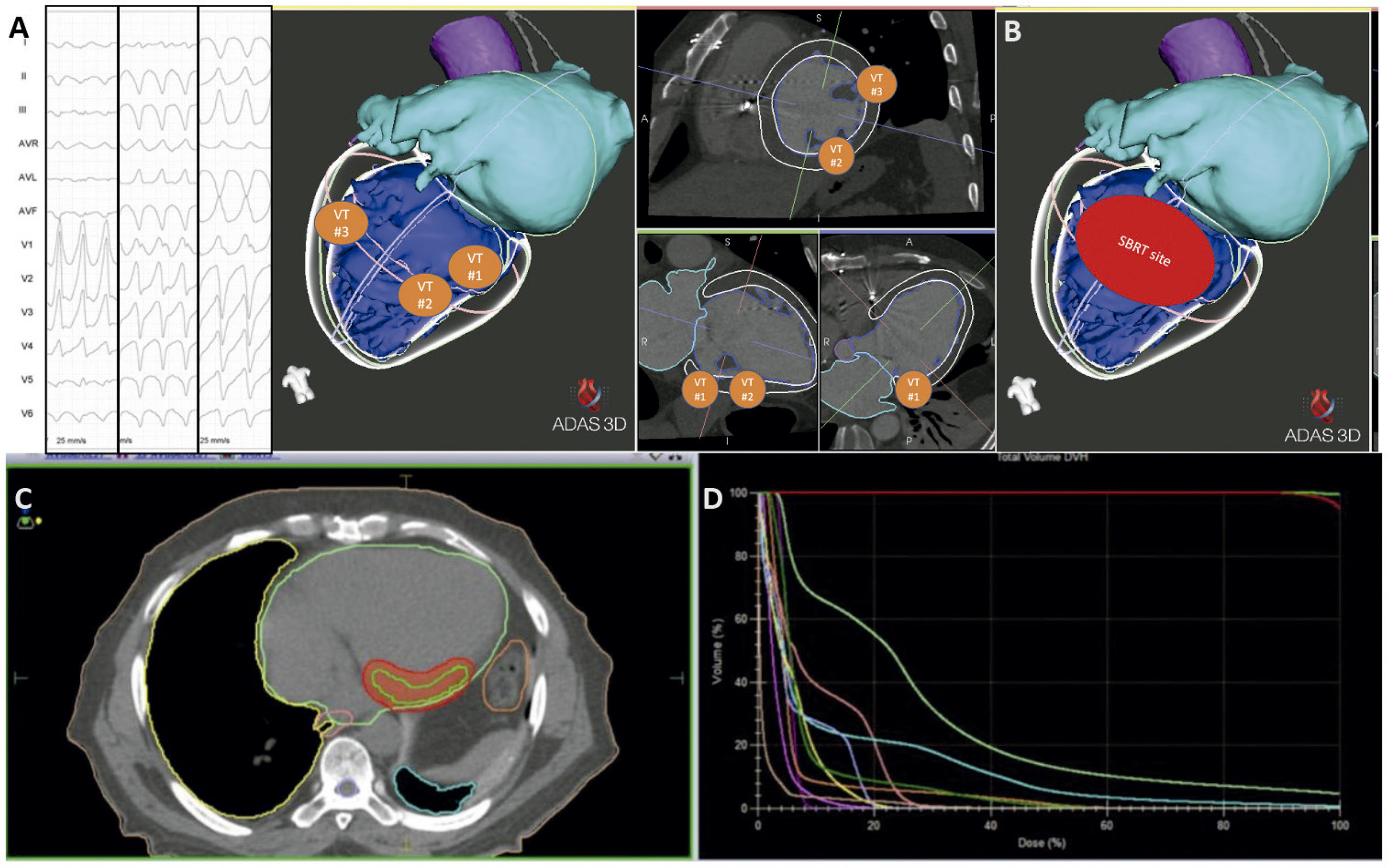
Scanavacca et al. here report the first use of an entirely noninvasive treatment by means of focused radiation in a patient with Chagas to minimize, then eliminate, VT. This therapy, known as stereotactic body radiation therapy (SBRT), has revolutionized the way that many patients with cancers are treated. SBRT is an ablative radiation modality employing advanced imaging technologies capable of accurately damaging a target tissue with a high dose of radiation, while sparing nearby normal tissues. Cardiac SBRT, or cardiac radioablation, requires close collaboration between heart rhythm, radiation oncology, and medical physics teams to develop precise and safe treatment plans within parts of scarred myocardium while avoiding healthy nearby structures. Recently, this technology has been used to treat patients with recurrent VT with promising results in patients with ischemic and various forms of nonischemic cardiomyopathies.,

[…]

  • Chagas Cardiomyopathy
  • Chagas disease
  • Radiosurgery/methods
  • Tachycardia, Ventricular
  • Use of Radiation in Medicine Research
Read Full Article
Creative Commons Attribution (CC BY) Creative Commons license
27/03/2023 DOI: 10.36660/abc.20230055 Views 1
Editorial

Cardiopulmonary Exercise Testing in Post-COVID-19 Patients: New Insights Into the Exercise Intolerance

Marina Petersen Saadi et al. Anderson Donelli da Silveira

COVID-19 has affected thousands of people worldwide, and a considerable percentage of those complain of persistent exercise limitation, unrelated to the disease`s severity and persisting even months after the infection.,It is well known that the severe form of COVID-19 predominantly involves the respiratory system, presenting with acute respiratory distress syndrome. One could speculate that the persistent functional limitation seen after infection may originate in the respiratory system, a fact reinforced by studies that showed ventilatory limitation in spirometry after hospital discharge.,

Cardiopulmonary Exercise Test (CPET) allows a complete assessment of the cardiorespiratory system. It is the gold standard exam to define prognosis in several heart and lung diseases and can discriminate the underlying mechanisms associated with reduced functional capacity.,

[…]

  • Exercise Test
  • Lung Diseases
  • lung volume measurements
  • Pandemics
  • Physical activity
  • Post-Covid-19/complications
  • Respiratory Distress Syndrome Adult/rehabilitation
  • Spirometry/methods
Read Full Article
Creative Commons Attribution (CC BY) Creative Commons license
20/03/2023 DOI: 10.36660/abc.20230058 Views 1
Figure 1
Review Article

Pacemaker Reuse in Portuguese Speaking Countries: A Clinical Reflection

Neiberg de Alcantara Lima et al. Eduardo Arrais Rocha Albertino Damasceno Ieda Prata Costa … José Ribeiro Bunda Ricardo Fernando Jorge Lopes Luis Dias Miryan Bandeira dos Prazeres Cassandra Soares Eric Puroll Kim A. Eagle Thomas C. Crawford

Abstract

There is a gap between high-income countries and others in terms of access to medical cardiac devices, such as pacemakers and implantable cardioverter defibrillators. Costs are one of the main barriers to the use of cardiac devices in these countries. There are international initiatives that aim to reduce the gap. The reuse of pacemakers has been discussed as a possible alternative to this problem. The concept of reusing pacemakers is not new; however, recent studies have proven to be safe, ethical, and effective for those who need cardiac implantable electronic devices and cannot afford them. Part of the Portuguese-speaking countries, especially in Africa, need an immediate response that benefits their countless patients who suffer from treatable arrhythmias.

  • Cardiac Pacing Artificial/trends
  • Defibrillators, Implantable
  • Health Status Disparities
  • Pacemaker, Artificial
  • Public Health,Administration
Read Full Article
Creative Commons Attribution (CC BY) Creative Commons license
13/03/2023 DOI: 10.36660/abc.20210941 Views 1
Editorial

A Biochemical Kaleidoscope Called Troponin

Fabrício Braga

“There is no such thing as new ideas. We just take a bunch of old ideas and put them into a kind of mental kaleidoscope.”

The phrase above attributed to the colossal American writer Mark Twain (1835-1910) brings me a somewhat disturbing provocation. Things are always here. Everything new has always been here and starts to “exist” until someone looks at what is old differently. For example, electrical energy has always been here, but to evolve from mysticism to domestic utility, many had to see this phenomenon differently.

[…]

  • Acute coronary syndrome
  • Biomarkers
  • Cardiovascular Diseases
  • COVID-19
  • Pandemic
  • Prognosis/trends
  • Troponin/metabolism
Read Full Article
Creative Commons Attribution (CC BY) Creative Commons license
13/03/2023 DOI: 10.36660/abc.20230031 Views 2
Editorial

Can the Measurement of Big Endothelin-1 Have a Role in Patients Admitted Due to Non-ST Segment Elevation Myocardial Infarction?

João Presume

Endothelin-1 (ET-1) is the main member of the endothelin peptide family and is one of the most potent vasoconstrictor substances known to date. It acts through ETA receptors, promoting vasoconstriction, inflammation, and cell proliferation., Several cell types synthesize this molecule, particularly the vascular endothelial and smooth muscle cells, macrophages, and fibroblasts, resulting from the cleavage of big endothelin-1 (big ET-1).The latter is an intermediate molecule from the endothelin system, which has a longer half-life (despite lower biological activity), being a more appropriate marker for the quantification of endothelin peptide activity.

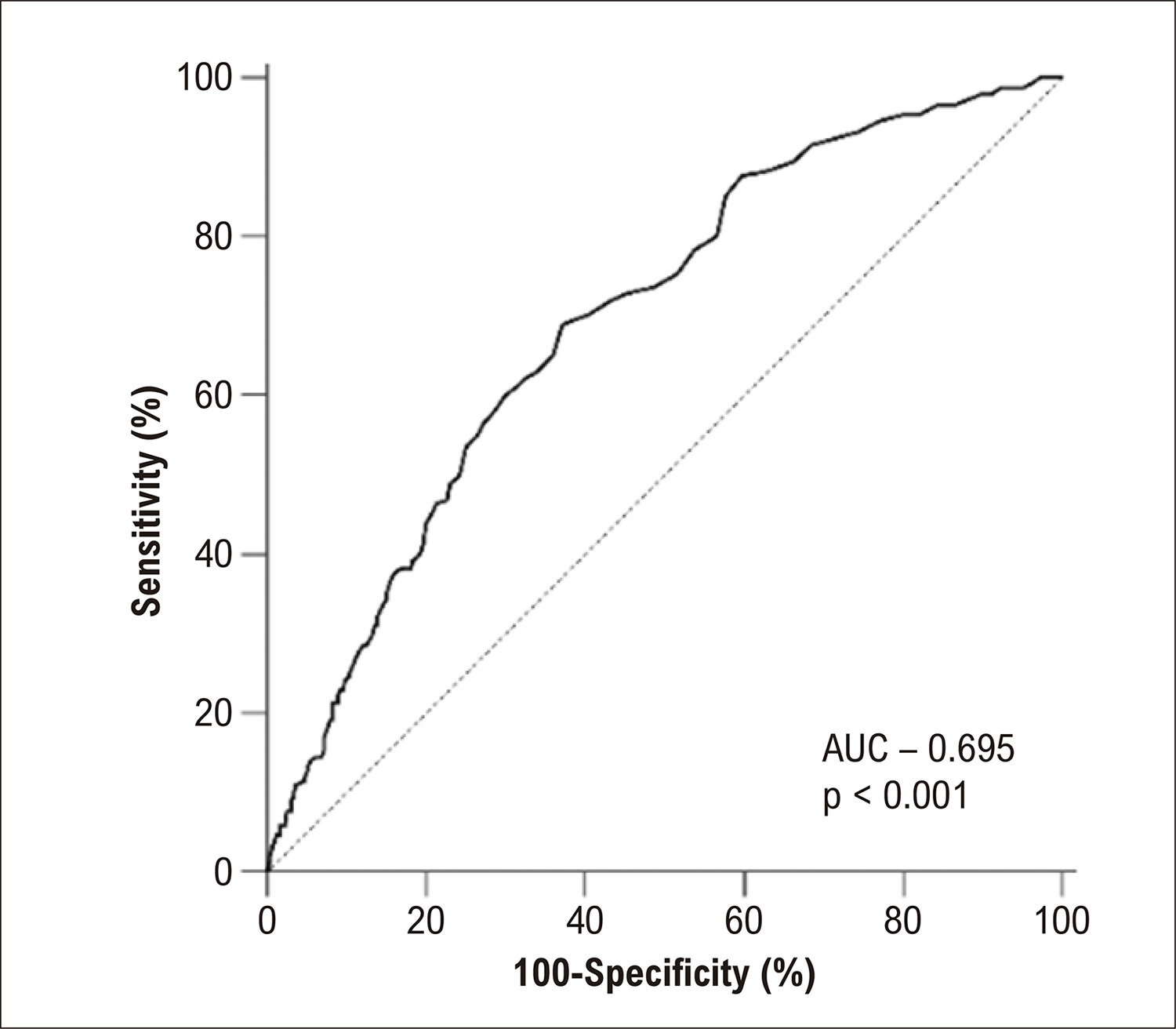
In this cross-sectional study, investigators evaluated the levels of big ET-1 in a cohort of patients with non-ST segment elevation myocardial infarction (NSTEMI). Overall, 766 patients were included, and the main objective was to explore the relationship between this marker and coronary disease burden as assessed by the SYNTAX score. After stratifying the cohort into 3 groups according to this score (low, intermediate, and high), they found that the median big ET-1 levels were progressively higher as the coronary disease became more complex (0.30 pmol/L, 0.41 pmol/L, and 0.58 pmol/L, respectively). They also found that this marker had a fair correlation with the SYNTAX score (r=0.378), which met statistical significance, and found good discrimination in identifying patients with moderate-high scores (AUC 0.695).

[…]

  • Big-Endothelin-1/trends
  • Coronary Artery Disease
  • Endothelin-1
  • Non-ST Elevated Myocardial Infarction
Read Full Article
Creative Commons Attribution (CC BY) Creative Commons license
13/03/2023 DOI: 10.36660/abc.20230013 Views 1
Figure 1
Case Report

Stereotactic Body Radiation Therapy for Recurrent Ventricular Tachycardia in Chagas Disease: First Case in Latin America

Mauricio I. Scanavacca et al. Cristiano F. Pisani Bernardo Salvajoli Rodrigo M. Kulchetscki … Marina P. Mayrink João Victor Salvajoli Roberto Kalil

Case Report

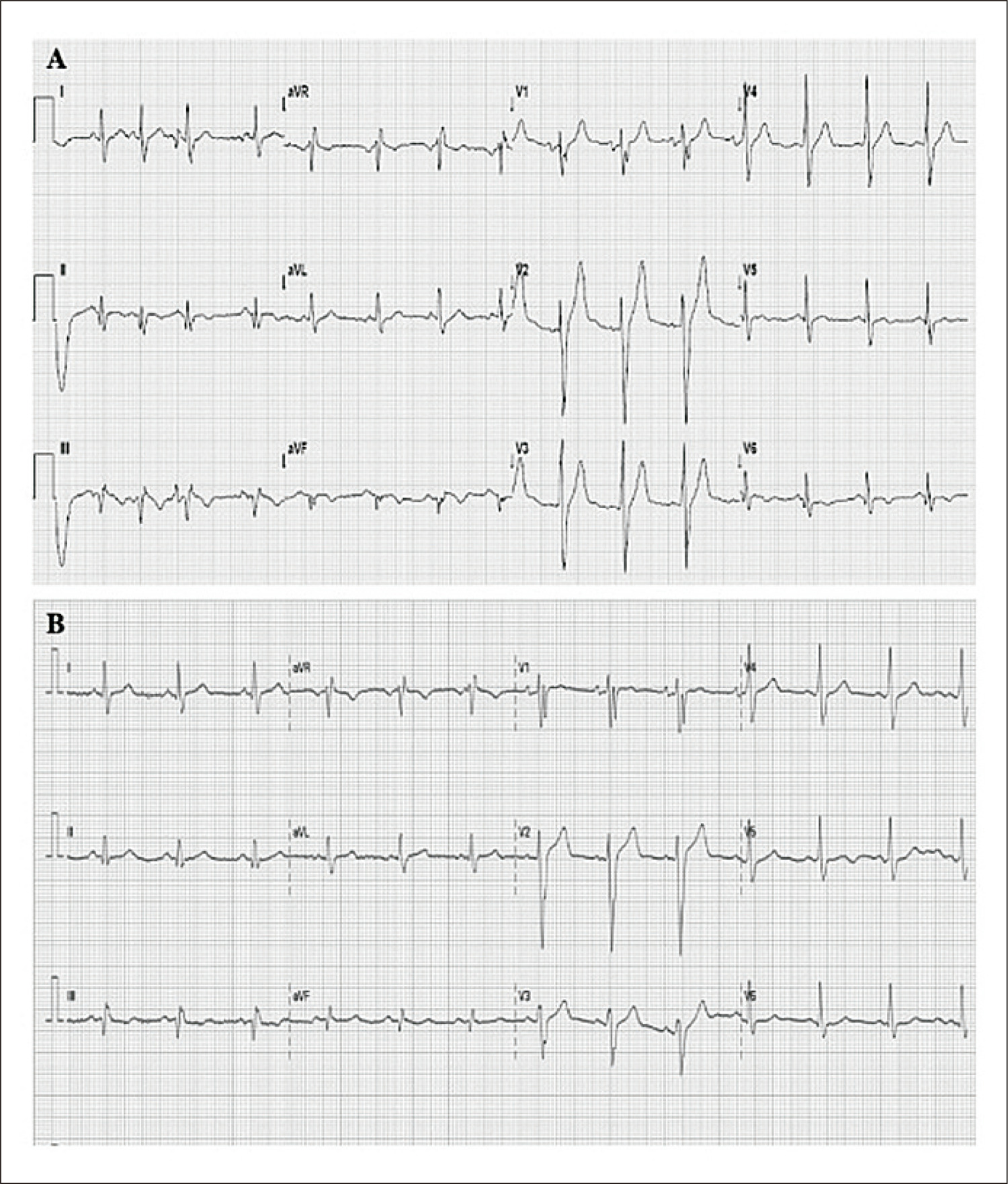
A 53-year-old male patient has been followed up at Instituto do Coração (InCor) of Hospital das Clínicas da Faculdade de Medicina da Universidade de São Paulo (HC-FMUSP) since 2018 due to CCHD and recurrent SVT; moreover, he had a double chamber ICD implanted in 2014. He had a left ventricular ejection fraction (LVEF) of 42% on transthoracic echocardiography (TTE), and ICD-appropriate therapies were identified, despite the use of amiodarone 400 mg/day, metoprolol 200 mg/day, enalapril 40 mg/day, spironolactone 25 mg/day, and furosemide 40 mg/day.

From November 2020 to June 2021, the patient was admitted several times due to episodes of SVT reverted by ICD, despite amiodarone reimpregnation, and he underwent three catheter ablation attempts, two of them complicated by hemopericardium and hemoperitoneum, which required surgical correction. Although there was an initial improvement, possibly attributed to sequential ablations, the patient experienced a recurrence in June 2021, with repeated ICD-appropriate therapies, and his inclusion in research protocol for SVT ablation by SBRT. He was classified into New York Heart Association (NYHA) functional class II/III, with worsening of LVEF (20%). After providing his free informed consent, the patient accepted to undergo SBRT.

[…]

  • Chagas disease
  • Radiotherapy
  • Ventricular tachycardia
Read Full Article
Creative Commons Attribution (CC BY) Creative Commons license
10/03/2023 DOI: 10.36660/abc.20220614 Views 2
Central Illustration
Original Article

Incidence of Arterial Hypertension is Associated with Adiposity in Children and Adolescents

Letícia Welser et al. Karin Allor Pfeiffer João Francisco de Castro Silveira Andreia Rosane de Moura Valim … Jane Dagmar Pollo Renner Cézane Priscila Reuter

Abstract

Background

The increase of hypertension in children and adolescents has attracted the attention of the scientific community largely due to its association with the obesity epidemic.

Objectives

To describe the incidence of hypertension and its relationship with the cardiometabolic and genetic profile in children and adolescents from a city in southern Brazil in a three-year period.

Methods

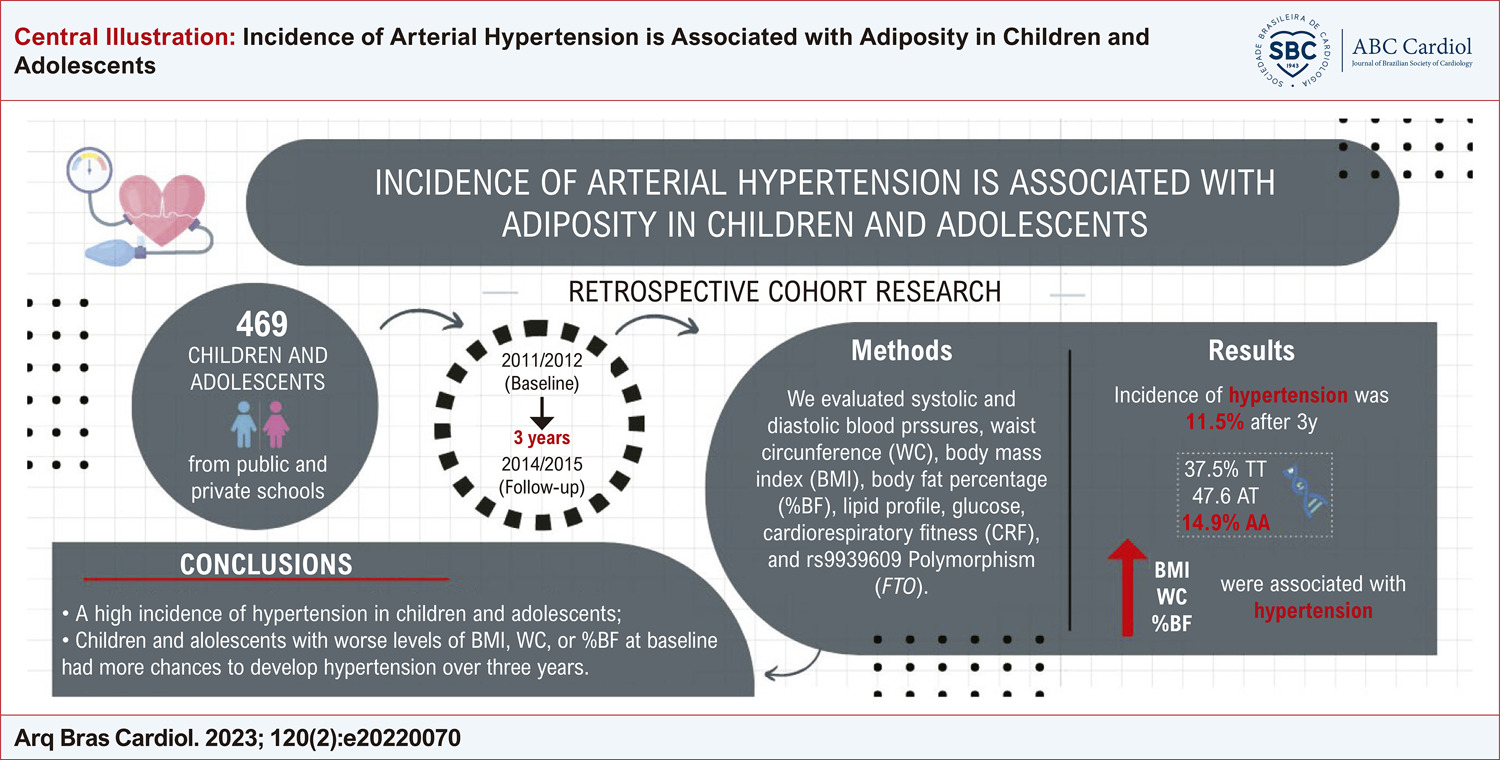
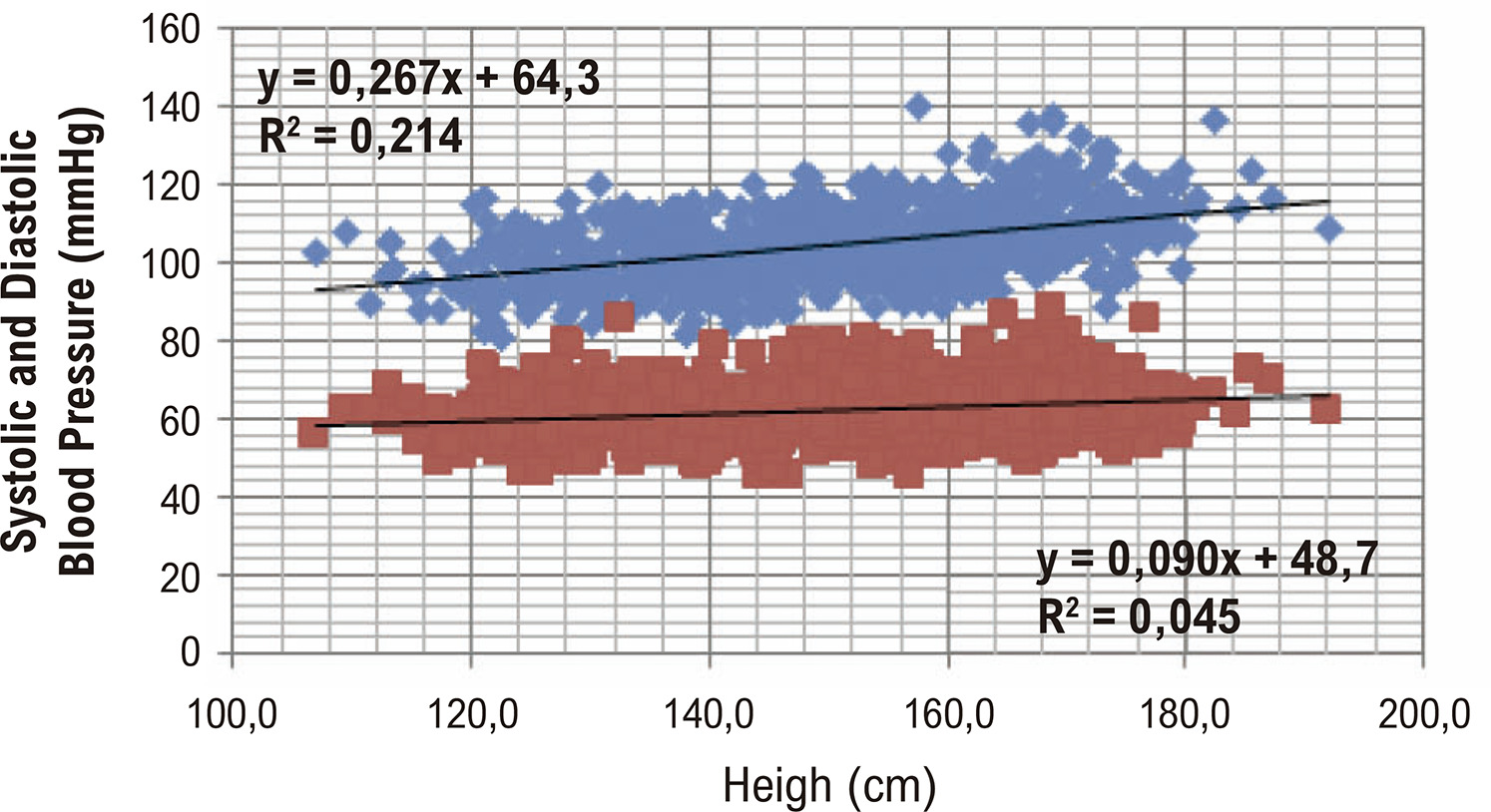
This longitudinal study followed 469 children and adolescents, aged 7-17 years old (43.1% boys), assessed at two-time points. We evaluated systolic and diastolic blood pressures (SBP and DBP), waist circumference (WC), body mass index (BMI), body fat percentage (%BF), lipid profile, glucose, cardiorespiratory fitness (CRF), and rs9939609 Polymorphism ( FTO ). Cumulative incidence of hypertension was calculated, and multinomial logistic regression was conducted. The statistical significance was established as p < 0.05.

Results

After three years, the incidence of hypertension was 11.5%. Overweight or obese individuals were more likely to become borderline hypertensive (overweight OR: 3.22, 95% CI: 1.08-9.55; obesity OR: 4.05, 95% CI: 1.68-9.75), and obese individuals were more likely to become hypertensive (obesity OR: 4.84, 95% CI: 1.57-14.95). High-risk WC and %BF values were associated with hypertension development (OR: 3.41, 95% CI: 1.26-9.19; OR: 2.49, 95% CI: 1.08-5.75, respectively).

Conclusions

We found a higher incidence of hypertension in children and adolescents as compared with previous studies. Individuals with higher values of BMI, WC and %BF at baseline were more likely to develop hypertension, suggesting the importance of adiposity in the development of hypertension even in such a young population.

  • Arterial Pressure
  • Cardiovascular Diseases
  • Obesity
Read Full Article
Creative Commons Attribution (CC BY) Creative Commons license
06/03/2023 DOI: 10.36660/abc.20220070 Views 2
Figure 1
Original Article

Association between Plasma Big Endothelin-1 Level and The Severity of Coronary Artery Disease in Patients with Non-ST Segment-Elevated Myocardial Infarction

Si-qi Lyu et al. Jun Zhu Juan Wang Shuang Wu … Han Zhang Xing-hui Shao Yan-min Yang

Abstract

Background

Early risk stratification with simple biomarkers is essential in patients with non-ST segment-elevation myocardial infarction (NSTEMI).

Objective

This study aimed to evaluate the association between plasma big endothelin-1 (ET-1) level and the SYNTAX score (SS) in patients with NSTEMI.

Methods

A total of 766 patients with NSTEMI undergoing coronary angiography were recruited. Patients were divided into three groups: low SS (≤22), intermediate SS (23-32), and high SS (>32). Spearman correlation, smooth curve fitting, logistic regression, and receiver operating characteristic (ROC) curve analysis were performed to evaluate the association between plasma big ET-1 level and the SS. A p-value <0.05 was considered statistically significant.

Results

There was a significant correlation between the big ET-1 and the SS (r=0.378, p<0.001). The smoothing curve indicated a positive correlation between the plasma big ET-1 level and the SS. The ROC curve analysis showed that the area under the curve was 0.695 (0.661-0.727) and the optimal cutoff of plasma big ET-1 level was 0.35pmol/l. Logistic regression showed that elevated big ET-1 was an independent predictor of intermediate-high SS in patients with NSTEMI, whether entered as a continuous variable [OR (95% CI): 1.110 (1.053-1.170), p<0.001] or as a categorical variable [OR (95% CI): 2.962 (2.073-4.233), p<0.001].

Conclusion

In patients with NSTEMI, the plasma big ET-1 level was significantly correlated with the SS. Elevated plasma big ET-1 level was an independent predictor for intermediate-high SS.

  • Coronary Artery Disease
  • Endotelin-1
  • Non S-T Elevated Myocardial Infarction
Read Full Article
Creative Commons Attribution (CC BY) Creative Commons license
06/03/2023 DOI: 10.36660/abc.20220294
Central Illustration
Original Article

Secondary Pharmacological Prevention of Coronary Artery Disease among Patients Submitted to Clinical Management, Percutaneous Coronary Intervention, or Coronary Artery Bypass Graft Surgery

Marcelo B. Lucca et al. Felipe C. Fuchs Adriana S. Almeida Marco V. Wainstein … Flavio D. Fuchs Sandra C. Fuchs

Abstract

Background

Secondary prevention is recommended for patients with evidence of coronary artery disease (CAD) regardless of the indication for treatment by coronary artery bypass graft surgery (CABG) or percutaneous coronary intervention (PCI).

Objectives

This study evaluated whether clinical treatment, PCI or CABG had an influence on adherence to the pharmacological secondary prevention in patients with stable CAD.

Methods

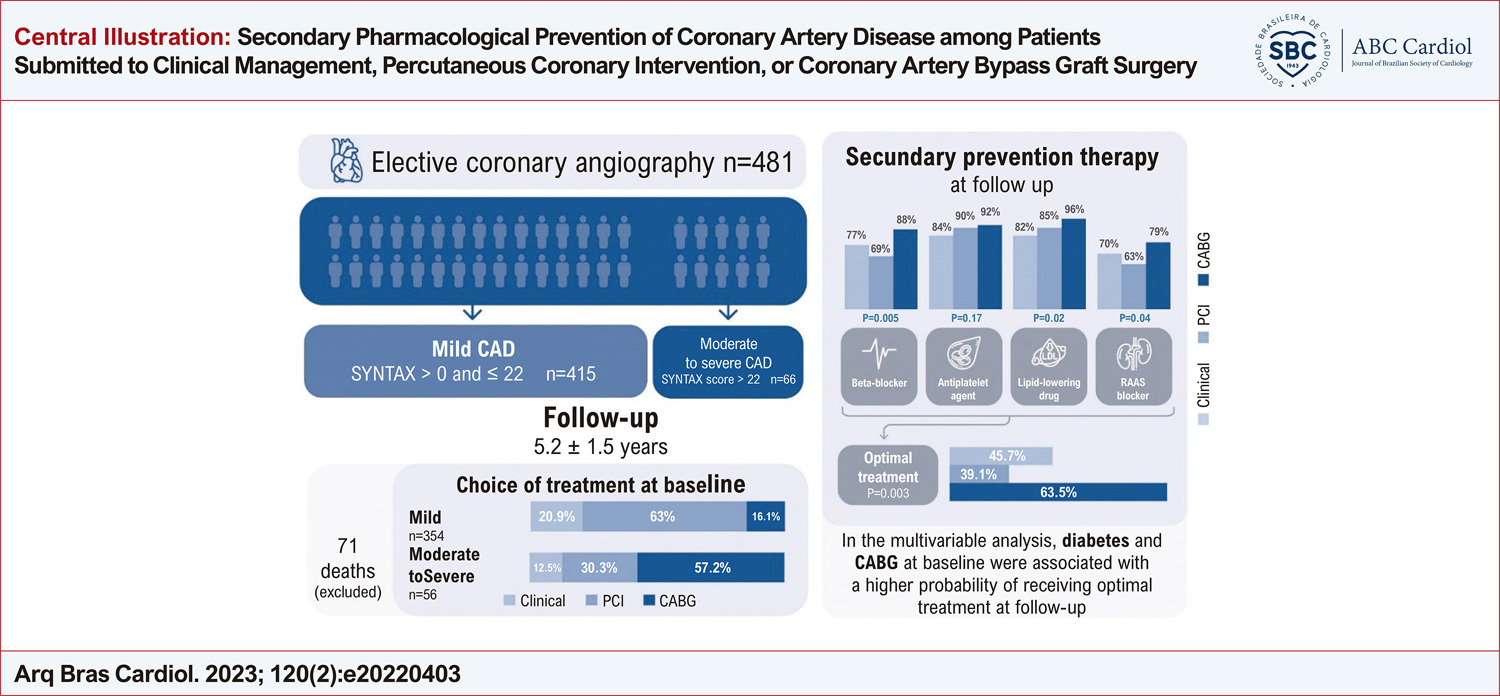
This cohort included patients aged ≥40 years with stable CAD confirmed by coronary angiography. The decision for medical treatment alone, or additionally with PCI or CABG, was made by the attending physicians. Adherence to the prescribed drugs recommended by the guidelines for secondary prevention (optimal pharmacological treatment), including antiplatelet agents, lipid-lowering drugs, beta-blockers, and renin-angiotensin-aldosterone system blockers, was assessed at follow-up. Differences were considered significant for p values <0.05.

Results

From 928 patients enrolled at baseline, 415 had mild CAD and 66 moderate to severe CAD. The average follow-up was 5.2 ± 1.5 years. Patients submitted to CABG were more likely to receive the optimal pharmacological treatment than those submitted to PCI or treated clinically (63.5% versus 39.1% versus 45.7% respectively, p=0.003). Baseline factors independently associated with greater probability of having a prescription of optimal treatment at follow-up were CABG [39% higher (6% – 83%, p=0.017) and diabetes [25% higher (1% – 56%), p=0.042] than their counterparts treated by other methods and participants without diabetes, respectively.

Conclusions

Patients with CAD submitted to CABG are more commonly treated with optimal pharmacological secondary prevention than patients treated by PCI or exclusively with medical therapy.

  • Coronary Artery Bypass
  • Coronary Artery Disease
  • Drug Therapy
  • Percutaneous Coronary Intervention
  • Secondary Prevention
Read Full Article
Creative Commons Attribution (CC BY) Creative Commons license
06/03/2023 DOI: 10.36660/abc.20220403 Views 2
Central Illustration
Original Article

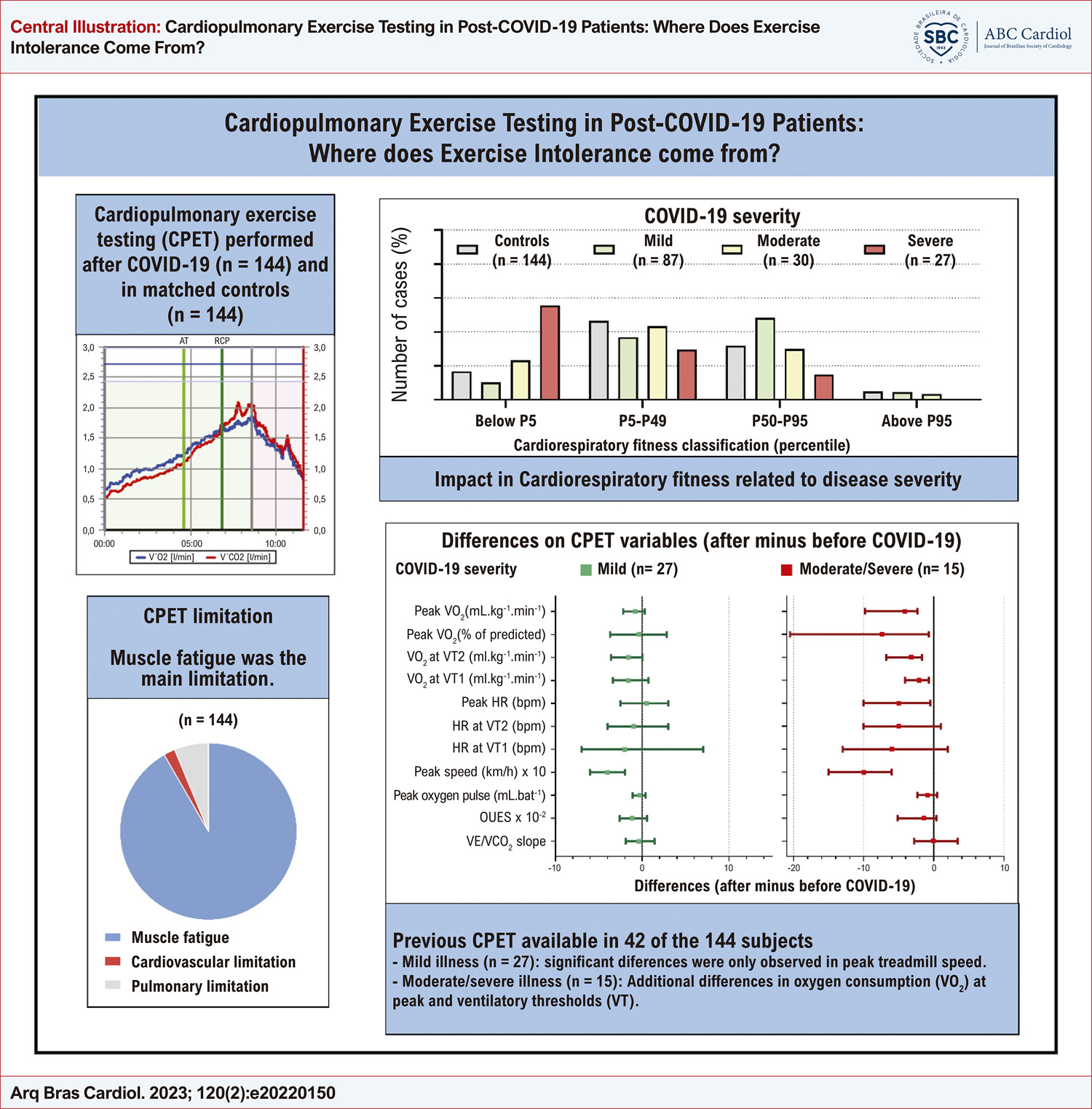
Cardiopulmonary Exercise Testing in Post-COVID-19 Patients: Where Does Exercise Intolerance Come From?

Mauricio Milani et al. Juliana Goulart Prata Oliveira Milani Graziella França Bernardelli Cipriano Lawrence Patrick Cahalin … Ricardo Stein Gerson Cipriano Jr.

Abstract

Background

Post-COVID-19 exercise intolerance is poorly understood. Cardiopulmonary exercise testing (CPET) can identify the underlying exercise limitations.

Objectives

To evaluate the source and magnitude of exercise intolerance in post-COVID-19 subjects.

Methods

Cohort study assessing subjects with different COVID-19 illness severities and a control group selected by propensity score matching. In a selected sample with CPET prior to viral infection, before and after comparisons were performed. Level of significance was 5% in the entire analysis.

Results

One hundred forty-four subjects with COVID-19 were assessed (median age: 43.0 years, 57% male), with different illness severities (60% mild, 21% moderate, 19% severe). CPET was performed 11.5 (7.0, 21.2) weeks after disease onset, with exercise limitations being attributed to the peripheral muscle (92%), and the pulmonary (6%), and cardiovascular (2%) systems. Lower median percent-predicted peak oxygen uptake was observed in the severe subgroup (72.2%) as compared to the controls (91.6%). Oxygen uptake differed among illness severities and controls at peak and ventilatory thresholds. Conversely, ventilatory equivalents, oxygen uptake efficiency slope, and peak oxygen pulse were similar. Subgroup analysis of 42 subjects with prior CPET revealed significant reduction in only peak treadmill speed in the mild subgroup and in oxygen uptake at peak and ventilatory thresholds in the moderate/severe subgroup. By contrast, ventilatory equivalents, oxygen uptake efficiency slope, and peak oxygen pulse did not change significantly.

Conclusions

Peripheral muscle fatigue was the most common exercise limitation etiology in post-COVID-19 patients regardless of the illness severity. Data suggest that treatment should emphasize comprehensive rehabilitation programs, including aerobic and muscle strengthening components.

  • Cardiorespiratory Fitness
  • COVID-19
  • Exercise Test
Read Full Article
Creative Commons Attribution (CC BY) Creative Commons license
06/03/2023 DOI: 10.36660/abc.20220150 Views 1
Figure 1
Editorial

Obesity and Risk of Hypertension: A Growing Problem in Children and Adolescents

José Geraldo Mill

Arterial hypertension (AH) affects approximately 30% of adults in Brazil. A previously rare condition in children and adolescents, this situation has been changing given the obesity pandemic currently occurring in this age group.

Primary AH is a complex disease, as its appearance depends on genetic predisposition and factors linked to lifestyle. There is still no robust and easily obtainable genetic score to be used clinically as a predictor of AH. The same does not occur with the lifestyle factors, as it is known that a sedentary lifestyle, obesity, high salt intake and insulin resistance, predisposes to blood pressure increase throughout life.

[…]

  • Adiposity
  • Adolescent
  • Child
  • Exercise
  • Hypertension / genetic
  • Lifestyle
  • Obesity
Read Full Article
Creative Commons Attribution (CC BY) Creative Commons license
06/03/2023 DOI: 10.36660/abc.20220940
Figure 1
Research Letter

Acute Coronary Syndrome in a Young Male with Long-Term Use of Anabolic-Androgenic Steroids

Daniel A. Gomes et al. Mariana Sousa Paiva Sara Ranchordás Rita Reis Santos … Jorge Ferreira Marisa Trabulo

Introduction

Anabolic-androgenic steroids (AAS) are synthetic drugs that mimic the effects of testosterone. Non-medical use of AAS is still an underrecognized but relevant public health issue and it has become increasingly common, especially in young males for physical performance or aesthetic purposes. , Despite having applicability in treating some medical conditions, AAS abuse was previously linked to atherosclerosis and premature coronary artery disease (CAD). –

[…]

  • Acute coronary syndrome
  • Anabolic Agents
  • Androgen Receptors
  • Atherosclerosis
Read Full Article
Creative Commons Attribution (CC BY) Creative Commons license
27/02/2023 DOI: 10.36660/abc.20220233
Editorial

SAGE Score and Pulse Wave Velocity in Non-Hypertensive Individuals

Alfredo José Mansur

An important step of physical examination is the evaluation of arterial pulses. On inspection, palpation and auscultation we are able to study the characteristics of the arterial pulses – symmetry, rate, rhythm, rigidity of arterial wall (mainly in carotid arteries), pulse pressure, contour, velocity of ascension of the ulse wave, thrill, bruits and murmurs. Current day technology made possible to register graphically the pulse wave and to make serial evaluations of arterial rigidity by studying central and peripheral blood pressure, central and peripheral pulse pressure, pulse wave velocity e augmentation index. , An increase in arterial rigidity leads to increase in the pulse wave velocity and the interaction between the forward pulse wave with the backward reflexion is observed in the augmentation index. Anatomical and functional changes of the arteries is one of the mechanisms involved in senescence and may constitute per se a cardiovascular risk factor. Studies of arterial rigidity were performed in patients with arterial hypertension. Indeed, the study of arterial rigidity is also interesting in samples of individuals without hypertension.

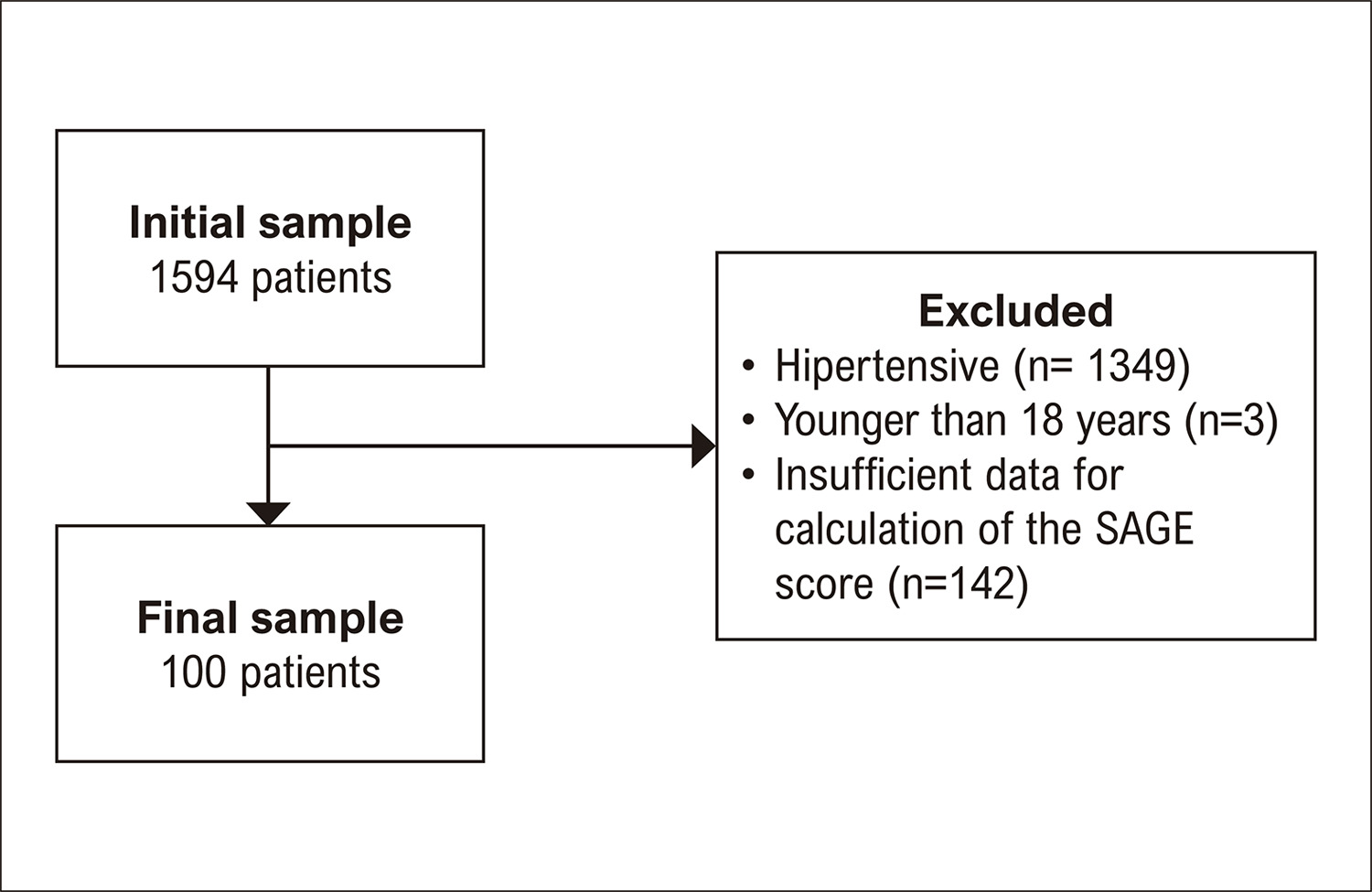
In the study researchers reported a study devised to evaluate clinical (age, peripheral systolic arterial pressure) and metabolic (serum glucose, estimated glomerular filtration rate) characteristics in a previously published score (SAGE) relative to variables of arterial rigidity evaluated non-invasively in a sample of 100 participants with normal blood pressure (n=80) or pre-hypertensive (n=20) out of a large sample of 1594 patients; diagnosis of arterial hypertension (n=1349) was an exclusion criteria for this analysis. The maximal score value is 17. The distribution of the score in this study sample ranged between 0 and 3 (64% of the sample). Median of pulse wave velocity in this study sample was 7,3 m.seg-1. The increase in cut off value of pulse wave velocity (percentis 50% – 7,3 m.seg-1e 75% – 9,8 m.seg-1) was associated with an increase in positive and negative predictive values on the basis of scores SAGE observed in the study sample. In participants with pulse wave velocity higher than 10 m.seg-1the most frequent score was 7. The authors concluded that the SAGE score might be useful to screening non hypertensive subjects with higher risk of increase in arterial rigidity. Additional studies might be of help of therapeutic interventions in these clinical scenarios, including follow-up studies provided appropriate reproducibility of the measurements.

[…]

  • Aging/physiology
  • Carotid Arteries
  • Circadian Rhythm
  • Hypertension
  • Oxidative Stress
  • Pulse Wave Analysis/methods, trends
  • Risk Factors
  • Vascular Calcification
  • Vascular Stiffness
Read Full Article
Creative Commons Attribution (CC BY) Creative Commons license
27/02/2023 DOI: 10.36660/abc.20220881 Views 1
Research Letter

Outpatient 6-Hour Levosimendan Treatment as a Bridge to Heart Transplant

António Valentim Gonçalves et al. João Pedro Reis Ana Teresa Timóteo Rui Soares … Tiago Pereira-da-Silva Valdemar Gomes Rita Ilhão Moreira Delmira Pombo Tiago Carvalho Catarina Correia Claudia Santos Rui Cruz Ferreira

Heart transplantation is the treatment of choice for selected patients with advanced heart failure (HF), improving quality of life and conferring a survival benefit compared to conventional management. However, heart transplantation depends on a donor’s presence, necessitating bridge strategies. Infusion of inotropes was suggested as one of these treatments, but a meta-analysis of randomized trials found increased mortality with long-term inotropic support, and HF guidelines do not now endorse this strategy.

The inodilator Levosimendan has arisen as a treatment option: its inotropic action can continue for up to 2 weeks while being less pro-arrhythmic than traditional inotropes. It was traditionally administered as a 24-hour infusion. Nonetheless, a 24-hour infusion necessitates at least a two-day stay in the hospital. Recently, two randomized placebo-controlled, double-blind clinical trials evaluated 6-hour cycles of Levosimendan therapy in ambulatory patients with advanced HF and demonstrated that it reduces NT-proBNP levels and admissions for acute decompensated HF. ,

[…]

  • Bridge to Transplant
  • Heart Failure
  • levosimendan
  • Outpatient Treatment
Read Full Article
Creative Commons Attribution (CC BY) Creative Commons license
27/02/2023 DOI: 10.36660/abc.20220205 Views 1
Editorial

From Volume to Value Creation in Cardiac Surgery: What is Needed to Get off the Ground in Brazil?

Omar Asdrúbal Vilca Mejia et al. Fabio Biscegli Jatene

Some characteristics favored the great development of cardiovascular surgery; among them, creativity for developing techniques and devices and, mainly, much courage. Thus, cardiovascular surgery had a fantastic evolution, driven by its impact on the patient’s quality of life, quickly becoming one of the most performed procedures in the world. Maybe this would not have happened if not for two factors: on the one hand, the improvement of technical skills as a result of the increased surgical volume, and, on the other hand, the information from the databases analyzes. , This has led to continuous improvement in perioperative techniques, devices, and outcomes.

This may explain the outcome improvement, even when procedures have become more complex and performed in increasingly severe patients. From the analysis of these records, some issues emerged to be resolved. This was when mortality risk scores were introduced to adjust and better understand the results. From that moment, and to achieve continuous improvement, implementing quality programs has become a necessity. Another important step was the hospitals’ public reporting initiatives, introducing the concept of transparency.

[…]

  • Cardiac Surgery
  • Database
  • Outcome Assessment (Health Care)
  • Patient Centered Care
  • Total Quality Management
Read Full Article
Creative Commons Attribution (CC BY) Creative Commons license
27/02/2023 DOI: 10.36660/abc.20230036
Editorial

Sit Less, Move More, and Feel Good, Folks!: Sedentary Behavior May Stake Cardiometabolic Health Through Mental Health Problems Across the Lifespan

Ceren Bicer et al. Yasin Hasan Balcioglu

We read with interest the article titled “Sedentary behavior, dietary habits and cardiometabolic risk in physically active children and adolescents”. In this study, the authors attempted to evaluate the relationship between sedentary behavior, cardiometabolic risk factors, and eating habits in physically active children and adolescents. Their results concluded that there is no association between sedentary behavior and cardiometabolic risk factors in physically active children and adolescents. However, they concluded that sedentary behavior was associated with inappropriate eating habits. Moreover, children and adolescents showing sedentary behavior were more likely to consume food in front of the television regularly and to consume at least one ultra-processed food per day while consuming less fruit. We want to address several issues in this valuable article.

Despite this study providing important findings, studies with cross-sectional design inherently have substantial limitations. Particularly when it comes to diseases such as cardiometabolic disorders, these are the results of the cumulation of risk factors over many years. A cross-sectional design for this age group may overlook the effects of sedentary behavior on cardiometabolic conditions in adulthood, as it most likely will not have enough time to demonstrate its real effect during early life.

[…]

  • adolescence
  • Adulthood
  • Cardiovascular risk
  • Eating Habits
  • Psychiatric Illness
Read Full Article
Creative Commons Attribution (CC BY) Creative Commons license
27/02/2023 DOI: 10.36660/abc.20220894 Views 1
Central Illustration
Original Article

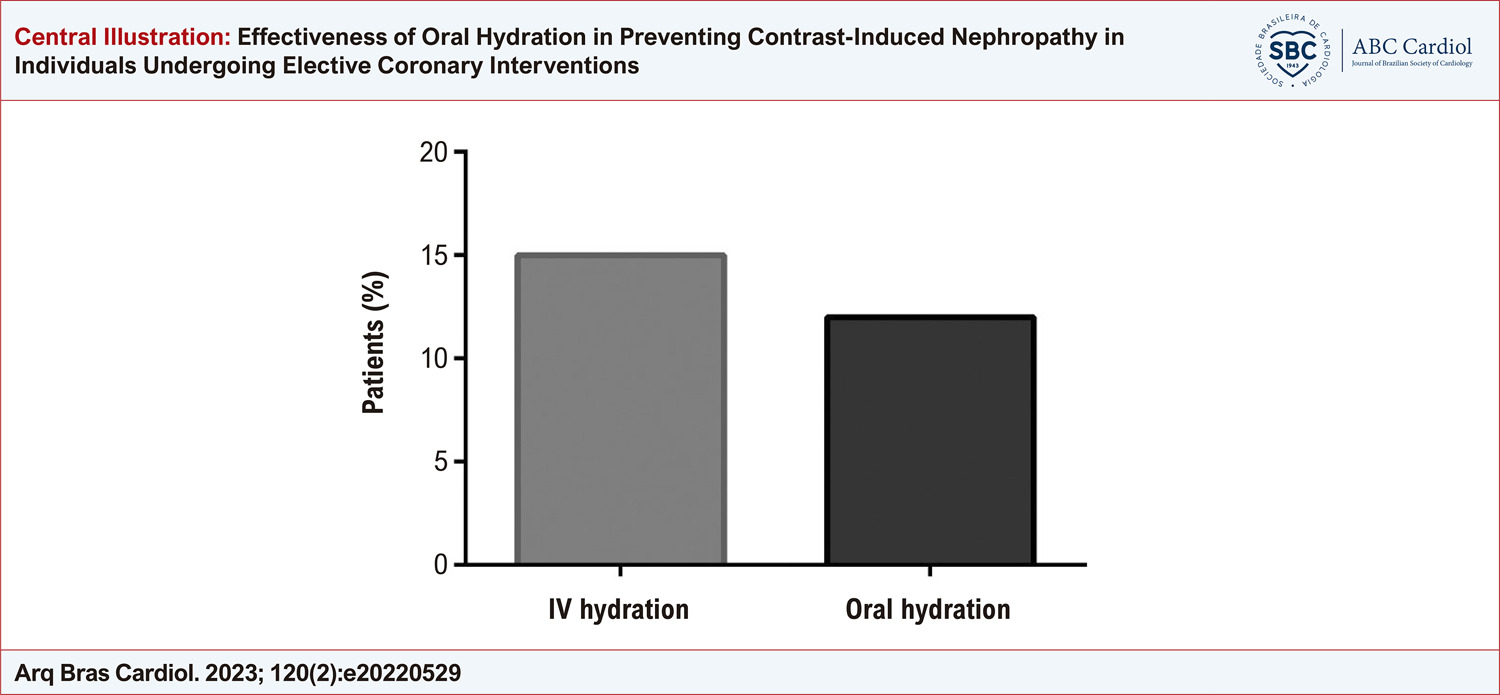
Effectiveness of Oral Hydration in Preventing Contrast-Induced Nephropathy in Individuals Undergoing Elective Coronary Interventions

Mariana Rodrigues Pioli et al. Renata Muller Couto José de Arimatéia Francisco Diego Quilles Antoniassi … Célia Regina de Souza Matheus Ynada de Olivio Gabriel Forato Anhê Silvio Giopatto Andrei C. Sposito Wilson Nadruz Otavio Rizzi Coelho-Filho Rodrigo Modolo

Abstract

Background

Contrast-induced nephropathy (CIN) is defined as worsening renal function, represented by an increase in serum creatinine of ≥ 25% or ≥ 0.5 mg/dL up to 72 h after exposure to iodinated contrast medium (ICM). The most effective preventive measure to date is intravenous hydration (IVH). Little is known about the effectiveness of outpatient oral hydration (OH).

Objetive

To investigate whether outpatient OH with water is as effective as IVH with 0.9% saline solution in preventing CIN in elective coronary procedures.

Methods

In this retrospective observational study, we analyzed the medical records and laboratory data of individuals undergoing percutaneous coronary procedures with ICM. Data collected between 2012 and 2015 refer to individuals who underwent IVH and those collected between 2016 and 2020 (after implementation of an OH protocol) correspond to individuals who underwent OH at home before and after coronary procedures as instructed by the nursing team. Statistical significance was established at α = 0.05.

Results

In total, 116 patients were included in this study: 58 in the IVH group and 58 in the OH group. An incidence of CIN of 15% (9/58) was observed in the group that received IVH and an incidence of 12% (7/58) was seen in the group that received OH (p = 0.68).

Conclusion

The OH protocol, performed by the patient, appears to be as effective as the in-hospital IVH protocol for the renal protection of individuals susceptible to CIN in elective coronary interventions. These findings should be put to test in larger trials.

  • Acute Kidney Injury
  • Angioplasty
  • Cardiac Catheterization
  • Contrast Media
Read Full Article
Creative Commons Attribution (CC BY) Creative Commons license
27/02/2023 DOI: 10.36660/abc.20220529 Views 2
Letter to the Editor

A Simple Clinical Risk Score to Predict Post-Discharge Mortality in Chinese Patients Hospitalized with Heart Failure

Guillermo Alberto Arana Morales et al. Hugo Alpaca-Salvador Ricardo Salazar-Ramírez

We have read with great interest the article published by Wang et al. on the clinical risk score to predict mortality in Chinese patients hospitalized for heart failure (HF). The authors developed a scale with five variables to predict mortality from HF after hospital discharge within one year: age, female sex, New York Heart Association (NYHA) score >3, left atrial diameter, and body mass index; with good predictive ability. One limitation of the study is the design of random division into two groups, one for the development of the predictive model and the other to evaluate its performance, which, when drawn from the same cohort, have similar characteristics and therefore the predictive performance may be overestimated.

A very interesting aspect of the study is that it focuses on the evaluation of patients with HF at hospital discharge, uses simple, easily assessable predictive variables, and predicts mortality at one year. There are a variety of studies of prognostic scores for HF, in outpatient, hospitalized, or emergency patients, and they predict mortality during hospitalization, within the first 30 days, or a year; many of them with biases that limit their validity.

[…]

  • China
  • Heart Failure / mortality
  • Hospitalization
  • Latin America
  • population
Read Full Article
Creative Commons Attribution (CC BY) Creative Commons license
27/02/2023 DOI: 10.36660/abc.2022050
Central Illustration
Original Article

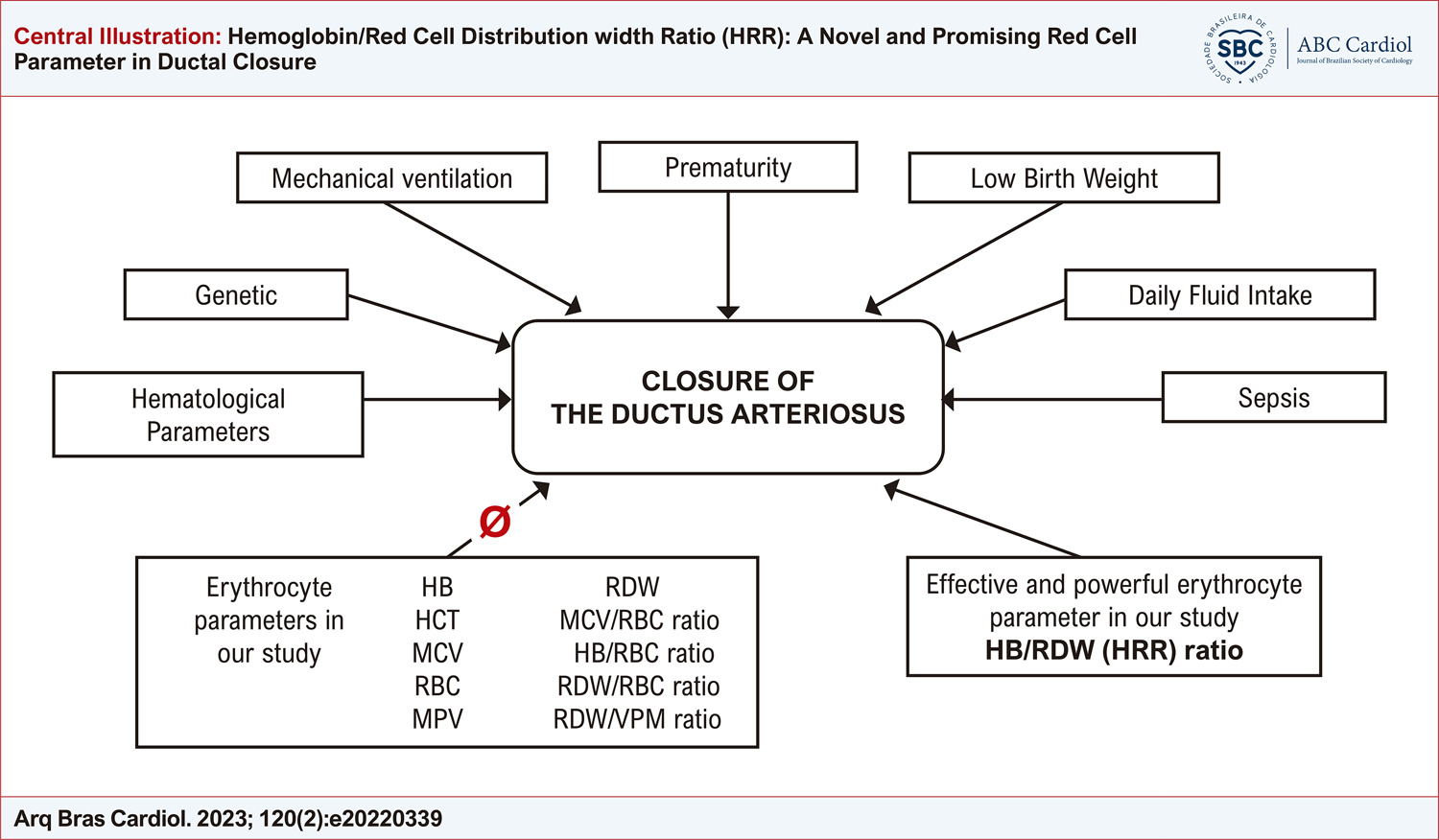
Hemoglobin/Red Cell Distribution width Ratio (HRR): A Novel and Promising Red Cell Parameter in Ductal Closure

Duran Yildiz et al. Ufuk Cakir Ali Ulaş Tugcu Burak Ceran Cuneyt Tayman

Abstract

Background

It is still unclear how effective hematological parameters are in the closure of patent ductus arteriosus (PDA).

Objectives

The primary aim of our study is to investigate the effect of hemoglobin (HB)-to-red cell distribution width (RDW) ratio (HRR) on the closure of PDA.

Methods

Premature babies with very low birth weight (VLBW: <1500 g) and <32 gestational weeks were included in the study, and all data were recorded retrospectively. Demographic characteristics, clinical results, red cell parameters, and HRR and their ratios were compared between hemodynamically significant PDA (hsPDA) and non-hsPDA groups. All results were statically analyzed, and P<0.05 was considered statistically significant.

Results

A total of 677 premature babies, 269 in the hsPDA group and 408 in the non-hsPDA group, were included in the study. Hemoglobin (HB), hematocrit (HCT), mean cell volume (MCV), red blood cell (RBC), red cell distribution width (RDW), mean platelet volume (MPV), MCV/RBC ratio, HB/RBC ratio, RDW/RBC ratio, and RDW/MPV ratio were found to be similar between hsPDA and non-hsPDA groups, (p>0.05). HRR was found to be significantly lower in the hsPDA group [median (Quartile 1 (Q1) – Q3) (Q1 – Q3): 0.93 (0.8-1.0)] compared to non-hsPDA [median ( Q1 – Q3): 1.07 (1.0-1.2)] (p<0.001). The AUC for the diagnostic value of HRR in hsPDA was 0.816, and the cutoff value was ≤0.98 (p<0.001, 95% [CI]: 0.785-0.845, sensitivity: 90%, specificity: 92%).

Conclusions

HRR value was found to be both an effective and powerful parameter in diagnosing hsPDA.

  • Ductus arteriosus, patent
  • Heart Defecys, Congenital
  • Hemoglobins
  • Infant, premature
Read Full Article
Creative Commons Attribution (CC BY) Creative Commons license
27/02/2023 DOI: 10.36660/abc.20220339 Views 1
Figure 1
Original Article

SAGE Score in Normotensive and Pre-Hypertensive Patients: A Proof of Concept

Rayne Ramos Fagundes Rigonatto et al. Priscila Valverde Oliveira Vitorino Adriana Camargo Oliveira Ana Luiza Lima Sousa … Paulo César Brandão Veiga Jardim Pedro Miguel Guimarães Marques Cunha Eduardo Costa Duarte Barbosa Panagiotis Xaplanteris Charalambos Vlachopoulos Weimar Kunz Sebba Barroso

Abstract

Background

The SAGE score was developed to detect individuals at risk for increased pulse wave velocity (PWV). So far, studies have been focused on hypertensive patients.

Objective

To assess the ability of the score to detect non-hypertensive and pre-hypertensive patients at risk for increased PWV.

Methods

Retrospective cross-sectional study of analysis of central blood pressure data and calculation of the SAGE score of non-hypertensive and pre-hypertensive patients. Each score point was analyzed for sensitivity, specificity, positive and negative predictive values, using the cut-off point for positive diagnosis a PVW ≥ 10m/s, ≥9.08 m/s (75thpercentile) and ≥7.30 m/s (50thpercentile). A p<0.05 was considered statistically significant.

Results

The sample was composed of 100 normotensive and pre-hypertensive individuals, with mean age of 52.64 ± 14.94 years and median PWV of 7.30 m/s (6.03 – 9.08). The SAGE score was correlated with age (r=0.938, p<0.001), glycemia (r=0.366, p<0.001) and glomerular filtration rate (r=-0.658, p<0.001). The area under the ROC curve was 0.968 (p<0.001) for PWV ≥ 10 m/s, 0.977 (p<0.001) for PWV ≥ 9.08 m/s and 0.967 (p<0.001) for PWV ≥ 7.30 m/s. The score 7 showed a specificity of 95.40% and sensitivity of 100% for PWV≥10 m/s. The cut-off point would be of five for a PWV≥9.08 m/s (sensitivity =96.00%, specificity = 94.70%), and two for a PWV ≥ 7.30 m/s.

Conclusion

The SAGE score could identify individuals at higher risk of arterial stiffness, using different PWV cutoff points. However, the development of a specific score for normotensive and pre-hypertensive subjects is needed.

  • Biomarkers
  • Hypertension
  • Pulse Wave Analysis
  • Risk Factors
  • Vascular Stiffness
Read Full Article
Creative Commons Attribution (CC BY) Creative Commons license
27/02/2023 DOI: 10.36660/abc.20220291 Views 1
Figure 1
Original Article

Myocardial Injury and Prognosis in Hospitalized COVID-19 Patients in Brazil: Results From The Brazilian COVID-19 Registry

Hannah Cardoso Barbosa et al. Maria Auxiliadora Parreiras Martins Jordana Cristina de Jesus Karina Cardoso Meira … Luiz Guilherme Passaglia Manuela Furtado Sacioto Adriana Falangola Benjamin Bezerra Alexandre Vargas Schwarzbold Amanda de Oliveira Maurílio Barbara Lopes Farace Carla Thais Cândida Alves da Silva Christiane Corrêa Rodrigues Cimini Daniel Vitorio Silveira Daniela do Reis Carazai Daniela Ponce Emanuel Victor Alves Costa Euler Roberto Fernandes Manenti Evelin Paola de Almeida Cenci Frederico Bartolazzi Glícia Cristina de Castro Madeira Guilherme Fagundes Nascimento Isabela Vasconcellos Pires Velloso Joanna d’Arc Lyra Batista Júlia Drumond Parreiras de Morais Juliana da Silva Nogueira Carvalho Karen Brasil Ruschel Karina Paula Medeiros Prado Martins Liege Barella Zandoná Luanna Silva Monteiro Menezes Luciane Kopittke Luís César de Castro Luiz Antônio Nasi Maiara Anschau Floriani Maíra Dias Souza Marcelo Carneiro Maria Aparecida Camargos Bicalho Maria Clara Pontello Barbosa Lima Mariana Frizzo de Godoy Milton Henriques Guimarães-Júnior Paulo Mascarenhas Mendes Polianna Delfino-Pereira Raquel Jaqueline Eder Ribeiro Renan Goulart Finger Rochele Mosmann Menezes Saionara Cristina Francisco Silvia Ferreira Araújo Talita Fischer Oliveira Thainara Conceição de Oliveira Carisi Anne Polanczyk Milena Soriano Marcolino

Abstract

Background

Cardiovascular complications of COVID-19 are important aspects of the disease’s pathogenesis and prognosis. Evidence on the prognostic role of troponin and myocardial injury in Latin American hospitalized COVID-19 patients is still scarce.

Objectives

To evaluate myocardial injury as independent predictor of in-hospital mortality and invasive mechanical ventilation support in hospitalized patients, from the Brazilian COVID-19 Registry.

Methods

This cohort study is a substudy of the Brazilian COVID-19 Registry, conducted in 31 Brazilian hospitals of 17 cities, March-September 2020. Primary outcomes included in-hospital mortality and invasive mechanical ventilation support. Models for the primary outcomes were estimated by Poisson regression with robust variance, with statistical significance of p<0.05.

Results

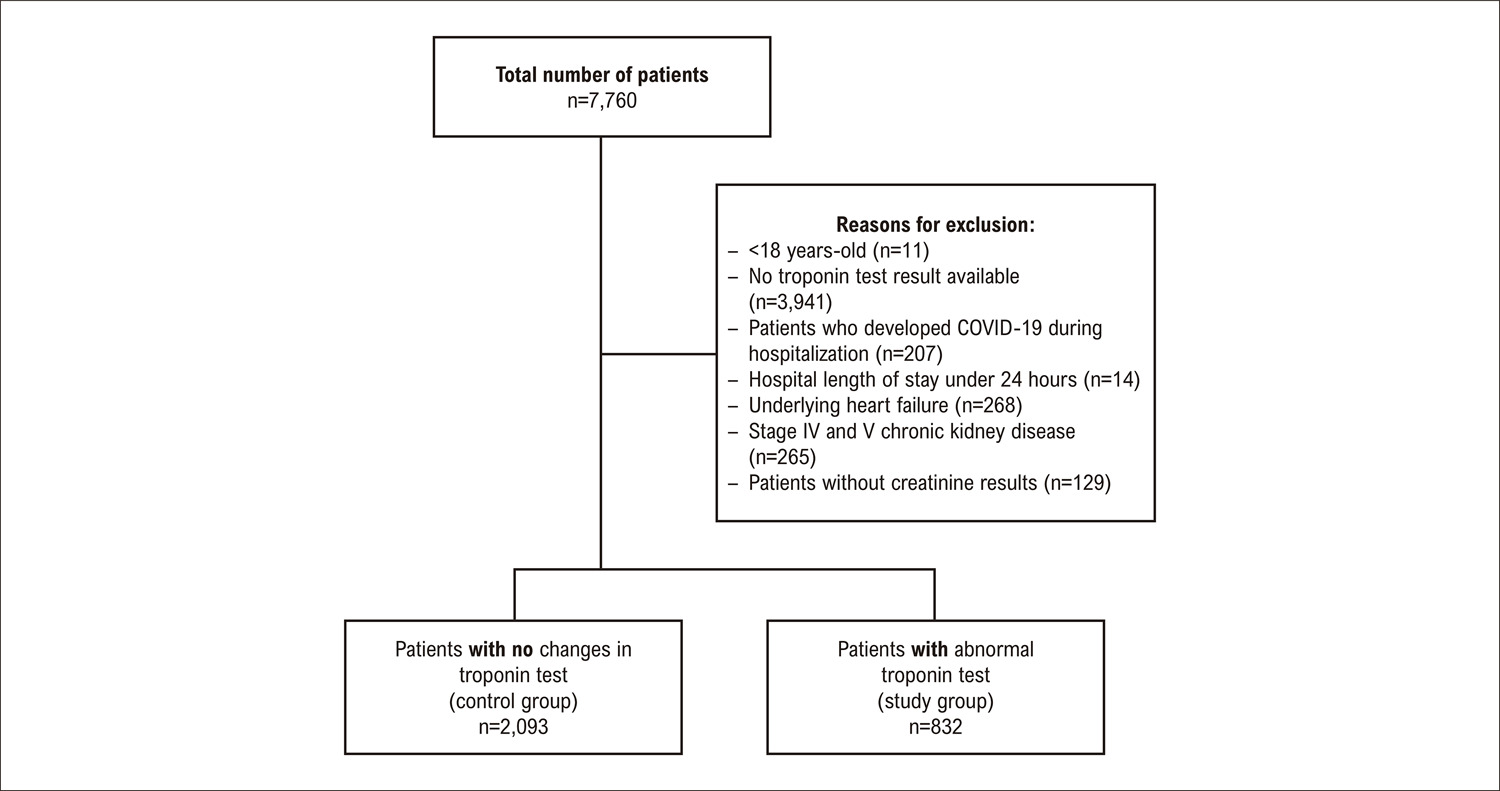
Of 2,925 patients (median age of 60 years [48-71], 57.1% men), 27.3% presented myocardial injury. The proportion of patients with comorbidities was higher among patients with cardiac injury (median 2 [1-2] vs. 1 [0-2]). Patients with myocardial injury had higher median levels of brain natriuretic peptide, lactate dehydrogenase, creatine phosphokinase, N-terminal pro-brain natriuretic peptide, and C-reactive protein than patients without myocardial injury. As independent predictors, C-reactive protein and platelet counts were related to the risk of death, and neutrophils and platelet counts were related to the risk of invasive mechanical ventilation support. Patients with high troponin levels presented a higher risk of death (RR 2.03, 95% CI 1.60-2.58) and invasive mechanical ventilation support (RR 1.87, 95% CI 1.57-2.23), when compared to those with normal troponin levels.

Conclusion

Cardiac injury was an independent predictor of in-hospital mortality and the need for invasive mechanical ventilation support in hospitalized COVID-19 patients.

  • Artificial Respiration
  • Coronavirus infections
  • COVID-19
  • Mortality
  • Troponin
Read Full Article
Creative Commons Attribution (CC BY) Creative Commons license
27/02/2023 DOI: 10.36660/abc.20220151
Figure 1
Image

A Rare Subtype of a Rare Tumor

Paulo Medeiros et al. Ana Rita Coelho João Magalhães Nuno Salomé Vítor Pereira

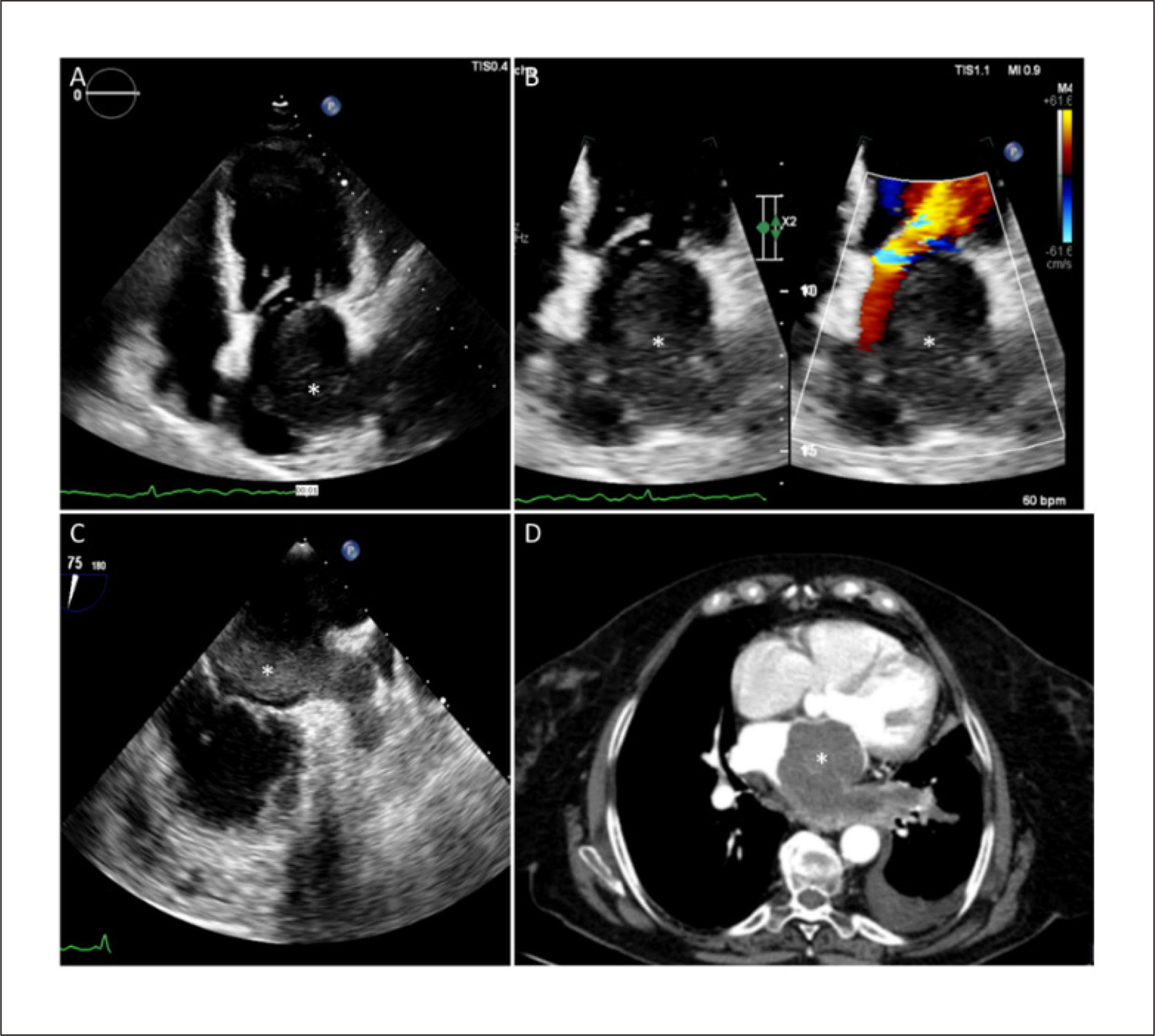
A 71-year-old woman was admitted to our center, complaining of fatigue, dyspnea, and anorexia. Physical examination revealed a grade III low-pitched diastolic murmur at the mitral focus. Transthoracic echocardiogram (TTE) showed an oval mass inside the left atrium (LA) extending from its roof to the mitral valve ( ), causing significant transmitral pressure gradient ( ). Transesophageal echocardiogram (TEE) ( ) raised the suspicion of left superior pulmonary vein involvement, which was confirmed by computed tomography (CT) angiography ( ). Cardiac magnetic resonance imaging characterized the mass as isointense on T1 and hyperintense on T2-weightened images; there was a contrast uptake, in first-passage sequences, and a heterogeneous late gadolinium enhancement ( ).

[…]

  • Diagnostic Imaging/methods
  • Heart Failure/complications
  • Heart Neoplasms/surgery
  • Mitral Valve/surgery
  • Multimodal Imaging/methods, Leiomyosarcoma/surgery
Read Full Article
Creative Commons Attribution (CC BY) Creative Commons license
27/02/2023 DOI: 10.36660/abc.20220486
Editorial

Oral Hydration May Be an Option to Prevent Contrast-Induced Nephropathy in Elective Coronary Interventions

Paulo Roberto Barbosa Evora

The study has a questionable ABC Cardio editorial profile and does not present any novelty. However, its publication decision would be useful for cardiologists in their preoperative control activity. Acute renal insufficiency is always discussed, and sometimes people say it is underestimated or overestimated.

Many studies support alternative protocols to prevent contrast-induced nephropathy (CIN) caused by iodine contrasts. It is opportune mentioning the safety of ambulatory protocols for vessels and heart exams carried out on the ambulatory “cath-lab.”

[…]

  • Cardiac Catheterization/methods
  • Fluid Therapy/methods
  • Intravenous Hidratation
  • Nephropathies/prevention and control
  • Nicorandil/therapeutic use
  • Oral Hidratation
Read Full Article
Creative Commons Attribution (CC BY) Creative Commons license
27/02/2023 DOI: 10.36660/abc.20220868 Views 1

Could not load more articles. Please try again.

How to cite this article

EndNote RIS

Electronic Document Format (Vancouver)

Bertoletti OA. Good Practices In Cardiology – A Lesson From Performance Indicators. Arquivos Brasileiros de Cardiologia 2023;120(2):e20230033.

Electronic Document Format (ABNT)

Bertoletti, Otávio Azevedo. Good Practices In Cardiology – A Lesson From Performance Indicators. Arquivos Brasileiros de Cardiologia, v. 120, n. 2, e20230033, Apr. 2023.

Electronic Document Format (APA)

Bertoletti, O. A. (2023). Good Practices In Cardiology – A Lesson From Performance Indicators. Arquivos Brasileiros de Cardiologia, 120(2), e20230033.

Electronic Document Format (ISO)

Bertoletti, Otávio Azevedo. Good Practices In Cardiology – A Lesson From Performance Indicators. Arquivos Brasileiros de Cardiologia [online]. 2023, vol. 120, n. 2, [cited 2026-10-14], e20230033. Available from: <https://journals.cardiol.br/en/article/good-practices-in-cardiology-a-lesson-from-performance-indicators/>. ISSN 0066-782X

EndNote RIS

Electronic Document Format (Vancouver)

Wiener PC, Moore KM, Contreras C, Robinson CG, Cuculich PS. Noninvasive Cardiac Radioablation for Chagas Heart Disease. Arquivos Brasileiros de Cardiologia 2023;120(2):e20230055.

Electronic Document Format (ABNT)

Wiener, Philip C.; Moore, Kaitlin M.S.; Contreras, Carlos; Robinson, Clifford G.; Cuculich, Phillip S.. Noninvasive Cardiac Radioablation for Chagas Heart Disease. Arquivos Brasileiros de Cardiologia, v. 120, n. 2, e20230055, Mar. 2023.

Electronic Document Format (APA)

Wiener, P. C., Moore, K. M., Contreras, C., Robinson, C. G., & Cuculich, P. S. (2023). Noninvasive Cardiac Radioablation for Chagas Heart Disease. Arquivos Brasileiros de Cardiologia, 120(2), e20230055.

Electronic Document Format (ISO)

Wiener, Philip C. and Moore, Kaitlin M.S. and Contreras, Carlos and Robinson, Clifford G. and Cuculich, Phillip S.. Noninvasive Cardiac Radioablation for Chagas Heart Disease. Arquivos Brasileiros de Cardiologia [online]. 2023, vol. 120, n. 2, [cited 2026-10-14], e20230055. Available from: <https://journals.cardiol.br/en/article/noninvasive-cardiac-radioablation-for-chagas-heart-disease/>. ISSN 0066-782X

EndNote RIS

Electronic Document Format (Vancouver)

Saadi MP, Silveira AD. Cardiopulmonary Exercise Testing in Post-COVID-19 Patients: New Insights Into the Exercise Intolerance. Arquivos Brasileiros de Cardiologia 2023;120(2):e20230058.

Electronic Document Format (ABNT)

Saadi, Marina Petersen; Silveira, Anderson Donelli da. Cardiopulmonary Exercise Testing in Post-COVID-19 Patients: New Insights Into the Exercise Intolerance. Arquivos Brasileiros de Cardiologia, v. 120, n. 2, e20230058, Mar. 2023.

Electronic Document Format (APA)

Saadi, M. P., & Silveira, A. D. (2023). Cardiopulmonary Exercise Testing in Post-COVID-19 Patients: New Insights Into the Exercise Intolerance. Arquivos Brasileiros de Cardiologia, 120(2), e20230058.

Electronic Document Format (ISO)

Saadi, Marina Petersen and Silveira, Anderson Donelli da. Cardiopulmonary Exercise Testing in Post-COVID-19 Patients: New Insights Into the Exercise Intolerance. Arquivos Brasileiros de Cardiologia [online]. 2023, vol. 120, n. 2, [cited 2026-10-14], e20230058. Available from: <https://journals.cardiol.br/en/article/cardiopulmonary-exercise-testing-in-post-covid-19-patients-new-insights-into-the-exercise-intolerance/>. ISSN 0066-782X

EndNote RIS

Electronic Document Format (Vancouver)

Lima NA, Rocha EA, Damasceno A, Costa IP, Ricardo JRB, Lopes FJ, Dias L, et al. Pacemaker Reuse in Portuguese Speaking Countries: A Clinical Reflection. Arquivos Brasileiros de Cardiologia 2023;120(2):e20210941.

Electronic Document Format (ABNT)

Lima, Neiberg de Alcantara; Rocha, Eduardo Arrais; Damasceno, Albertino; Costa, Ieda Prata; Ricardo, José Ribeiro Bunda; Lopes, Fernando Jorge; Dias, Luis; Soares, Miryan Bandeira dos Prazeres Cassandra; Puroll, Eric; Eagle, Kim A.; Crawford, Thomas C.. Pacemaker Reuse in Portuguese Speaking Countries: A Clinical Reflection. Arquivos Brasileiros de Cardiologia, v. 120, n. 2, e20210941, Mar. 2023.

Electronic Document Format (APA)

Lima, N. A., Rocha, E. A., Damasceno, A., Costa, I. P., Ricardo, J. R. B., Lopes, F. J., Dias, L., Soares, M. B. P. C., Puroll, E., Eagle, K. A., & Crawford, T. C. (2023). Pacemaker Reuse in Portuguese Speaking Countries: A Clinical Reflection. Arquivos Brasileiros de Cardiologia, 120(2), e20210941.

Electronic Document Format (ISO)

Lima, Neiberg de Alcantara and Rocha, Eduardo Arrais and Damasceno, Albertino and Costa, Ieda Prata and Ricardo, José Ribeiro Bunda and Lopes, Fernando Jorge and Dias, Luis and Soares, Miryan Bandeira dos Prazeres Cassandra and Puroll, Eric and Eagle, Kim A. and Crawford, Thomas C.. Pacemaker Reuse in Portuguese Speaking Countries: A Clinical Reflection. Arquivos Brasileiros de Cardiologia [online]. 2023, vol. 120, n. 2, [cited 2026-10-14], e20210941. Available from: <https://journals.cardiol.br/en/article/pacemaker-reuse-in-portuguese-speaking-countries-a-clinical-reflection/>. ISSN 0066-782X

EndNote RIS

Electronic Document Format (Vancouver)

Braga F. A Biochemical Kaleidoscope Called Troponin. Arquivos Brasileiros de Cardiologia 2023;120(2):e20230031.

Electronic Document Format (ABNT)

Braga, Fabrício. A Biochemical Kaleidoscope Called Troponin. Arquivos Brasileiros de Cardiologia, v. 120, n. 2, e20230031, Mar. 2023.

Electronic Document Format (APA)

Braga, F. (2023). A Biochemical Kaleidoscope Called Troponin. Arquivos Brasileiros de Cardiologia, 120(2), e20230031.

Electronic Document Format (ISO)

Braga, Fabrício. A Biochemical Kaleidoscope Called Troponin. Arquivos Brasileiros de Cardiologia [online]. 2023, vol. 120, n. 2, [cited 2026-10-14], e20230031. Available from: <https://journals.cardiol.br/en/article/a-biochemical-kaleidoscope-called-troponin/>. ISSN 0066-782X

EndNote RIS

Electronic Document Format (Vancouver)

Presume J. Can the Measurement of Big Endothelin-1 Have a Role in Patients Admitted Due to Non-ST Segment Elevation Myocardial Infarction?. Arquivos Brasileiros de Cardiologia 2023;120(2):e20230013.

Electronic Document Format (ABNT)

Presume, João. Can the Measurement of Big Endothelin-1 Have a Role in Patients Admitted Due to Non-ST Segment Elevation Myocardial Infarction?. Arquivos Brasileiros de Cardiologia, v. 120, n. 2, e20230013, Mar. 2023.

Electronic Document Format (APA)

Presume, J. (2023). Can the Measurement of Big Endothelin-1 Have a Role in Patients Admitted Due to Non-ST Segment Elevation Myocardial Infarction?. Arquivos Brasileiros de Cardiologia, 120(2), e20230013.

Electronic Document Format (ISO)

Presume, João. Can the Measurement of Big Endothelin-1 Have a Role in Patients Admitted Due to Non-ST Segment Elevation Myocardial Infarction?. Arquivos Brasileiros de Cardiologia [online]. 2023, vol. 120, n. 2, [cited 2026-10-14], e20230013. Available from: <https://journals.cardiol.br/en/article/can-the-measurement-of-big-endothelin-1-have-a-role-in-patients-admitted-due-to-non-st-segment-elevation-myocardial-infarction/>. ISSN 0066-782X

EndNote RIS

Electronic Document Format (Vancouver)

Scanavacca MI, Pisani CF, Salvajoli B, Kulchetscki RM, Mayrink MP, Salvajoli JV, Kalil R, et al. Stereotactic Body Radiation Therapy for Recurrent Ventricular Tachycardia in Chagas Disease: First Case in Latin America. Arquivos Brasileiros de Cardiologia 2023;120(2):e20220614.

Electronic Document Format (ABNT)

Scanavacca, Mauricio I.; Pisani, Cristiano F.; Salvajoli, Bernardo; Kulchetscki, Rodrigo M.; Mayrink, Marina P.; Salvajoli, João Victor; Kalil, Roberto. Stereotactic Body Radiation Therapy for Recurrent Ventricular Tachycardia in Chagas Disease: First Case in Latin America. Arquivos Brasileiros de Cardiologia, v. 120, n. 2, e20220614, Mar. 2023.

Electronic Document Format (APA)

Scanavacca, M. I., Pisani, C. F., Salvajoli, B., Kulchetscki, R. M., Mayrink, M. P., Salvajoli, J. V., & Kalil, R. (2023). Stereotactic Body Radiation Therapy for Recurrent Ventricular Tachycardia in Chagas Disease: First Case in Latin America. Arquivos Brasileiros de Cardiologia, 120(2), e20220614.

Electronic Document Format (ISO)

Scanavacca, Mauricio I. and Pisani, Cristiano F. and Salvajoli, Bernardo and Kulchetscki, Rodrigo M. and Mayrink, Marina P. and Salvajoli, João Victor and Kalil, Roberto. Stereotactic Body Radiation Therapy for Recurrent Ventricular Tachycardia in Chagas Disease: First Case in Latin America. Arquivos Brasileiros de Cardiologia [online]. 2023, vol. 120, n. 2, [cited 2026-10-14], e20220614. Available from: <https://journals.cardiol.br/en/article/stereotactic-body-radiation-therapy-for-recurrent-ventricular-tachycardia-in-chagas-disease-first-case-in-latin-america/>. ISSN 0066-782X

EndNote RIS

Electronic Document Format (Vancouver)

Welser L, Pfeiffer KA, Silveira JFC, Valim ARM, Renner JDP, Reuter CP. Incidence of Arterial Hypertension is Associated with Adiposity in Children and Adolescents. Arquivos Brasileiros de Cardiologia 2023;120(2):e20220070.

Electronic Document Format (ABNT)

Welser, Letícia; Pfeiffer, Karin Allor; Silveira, João Francisco de Castro; Valim, Andreia Rosane de Moura; Renner, Jane Dagmar Pollo; Reuter, Cézane Priscila. Incidence of Arterial Hypertension is Associated with Adiposity in Children and Adolescents. Arquivos Brasileiros de Cardiologia, v. 120, n. 2, e20220070, Mar. 2023.

Electronic Document Format (APA)

Welser, L., Pfeiffer, K. A., Silveira, J. F. C., Valim, A. R. M., Renner, J. D. P., & Reuter, C. P. (2023). Incidence of Arterial Hypertension is Associated with Adiposity in Children and Adolescents. Arquivos Brasileiros de Cardiologia, 120(2), e20220070.

Electronic Document Format (ISO)

Welser, Letícia and Pfeiffer, Karin Allor and Silveira, João Francisco de Castro and Valim, Andreia Rosane de Moura and Renner, Jane Dagmar Pollo and Reuter, Cézane Priscila. Incidence of Arterial Hypertension is Associated with Adiposity in Children and Adolescents. Arquivos Brasileiros de Cardiologia [online]. 2023, vol. 120, n. 2, [cited 2026-10-14], e20220070. Available from: <https://journals.cardiol.br/en/article/incidence-of-arterial-hypertension-is-associated-with-adiposity-in-children-and-adolescents/>. ISSN 0066-782X

EndNote RIS

Electronic Document Format (Vancouver)

Lyu S, Zhu J, Wang J, Wu S, Zhang H, Shao X, Yang Y, et al. Association between Plasma Big Endothelin-1 Level and The Severity of Coronary Artery Disease in Patients with Non-ST Segment-Elevated Myocardial Infarction. Arquivos Brasileiros de Cardiologia 2023;120(2):e20220294.

Electronic Document Format (ABNT)

Lyu, Si-qi; Zhu, Jun; Wang, Juan; Wu, Shuang; Zhang, Han; Shao, Xing-hui; Yang, Yan-min. Association between Plasma Big Endothelin-1 Level and The Severity of Coronary Artery Disease in Patients with Non-ST Segment-Elevated Myocardial Infarction. Arquivos Brasileiros de Cardiologia, v. 120, n. 2, e20220294, Mar. 2023.

Electronic Document Format (APA)

Lyu, S., Zhu, J., Wang, J., Wu, S., Zhang, H., Shao, X., & Yang, Y. (2023). Association between Plasma Big Endothelin-1 Level and The Severity of Coronary Artery Disease in Patients with Non-ST Segment-Elevated Myocardial Infarction. Arquivos Brasileiros de Cardiologia, 120(2), e20220294.

Electronic Document Format (ISO)

Lyu, Si-qi and Zhu, Jun and Wang, Juan and Wu, Shuang and Zhang, Han and Shao, Xing-hui and Yang, Yan-min. Association between Plasma Big Endothelin-1 Level and The Severity of Coronary Artery Disease in Patients with Non-ST Segment-Elevated Myocardial Infarction. Arquivos Brasileiros de Cardiologia [online]. 2023, vol. 120, n. 2, [cited 2026-10-14], e20220294. Available from: <https://journals.cardiol.br/en/article/association-between-plasma-big-endothelin-1-level-and-the-severity-of-coronary-artery-disease-in-patients-with-non-st-segment-elevated-myocardial-infarction/>. ISSN 0066-782X

EndNote RIS

Electronic Document Format (Vancouver)

Lucca MB, Fuchs FC, Almeida AS, Wainstein MV, Fuchs FD, Fuchs SC. Secondary Pharmacological Prevention of Coronary Artery Disease among Patients Submitted to Clinical Management, Percutaneous Coronary Intervention, or Coronary Artery Bypass Graft Surgery. Arquivos Brasileiros de Cardiologia 2023;120(2):e20220403.

Electronic Document Format (ABNT)

Lucca, Marcelo B.; Fuchs, Felipe C.; Almeida, Adriana S.; Wainstein, Marco V.; Fuchs, Flavio D.; Fuchs, Sandra C.. Secondary Pharmacological Prevention of Coronary Artery Disease among Patients Submitted to Clinical Management, Percutaneous Coronary Intervention, or Coronary Artery Bypass Graft Surgery. Arquivos Brasileiros de Cardiologia, v. 120, n. 2, e20220403, Mar. 2023.

Electronic Document Format (APA)

Lucca, M. B., Fuchs, F. C., Almeida, A. S., Wainstein, M. V., Fuchs, F. D., & Fuchs, S. C. (2023). Secondary Pharmacological Prevention of Coronary Artery Disease among Patients Submitted to Clinical Management, Percutaneous Coronary Intervention, or Coronary Artery Bypass Graft Surgery. Arquivos Brasileiros de Cardiologia, 120(2), e20220403.

Electronic Document Format (ISO)

Lucca, Marcelo B. and Fuchs, Felipe C. and Almeida, Adriana S. and Wainstein, Marco V. and Fuchs, Flavio D. and Fuchs, Sandra C.. Secondary Pharmacological Prevention of Coronary Artery Disease among Patients Submitted to Clinical Management, Percutaneous Coronary Intervention, or Coronary Artery Bypass Graft Surgery. Arquivos Brasileiros de Cardiologia [online]. 2023, vol. 120, n. 2, [cited 2026-10-14], e20220403. Available from: <https://journals.cardiol.br/en/article/secondary-pharmacological-prevention-of-coronary-artery-disease-among-patients-submitted-to-clinical-management-percutaneous-coronary-intervention-or-coronary-artery-bypass-graft-surgery/>. ISSN 0066-782X

EndNote RIS

Electronic Document Format (Vancouver)

Milani M, Milani JGPO, Cipriano GFB, Cahalin LP, Stein R, Cipriano Jr. G. Cardiopulmonary Exercise Testing in Post-COVID-19 Patients: Where Does Exercise Intolerance Come From?. Arquivos Brasileiros de Cardiologia 2023;120(2):e20220150.

Electronic Document Format (ABNT)

Milani, Mauricio; Milani, Juliana Goulart Prata Oliveira; Cipriano, Graziella França Bernardelli; Cahalin, Lawrence Patrick; Stein, Ricardo; Cipriano Jr., Gerson. Cardiopulmonary Exercise Testing in Post-COVID-19 Patients: Where Does Exercise Intolerance Come From?. Arquivos Brasileiros de Cardiologia, v. 120, n. 2, e20220150, Mar. 2023.

Electronic Document Format (APA)

Milani, M., Milani, J. G. P. O., Cipriano, G. F. B., Cahalin, L. P., Stein, R., & Cipriano Jr., G. (2023). Cardiopulmonary Exercise Testing in Post-COVID-19 Patients: Where Does Exercise Intolerance Come From?. Arquivos Brasileiros de Cardiologia, 120(2), e20220150.

Electronic Document Format (ISO)

Milani, Mauricio and Milani, Juliana Goulart Prata Oliveira and Cipriano, Graziella França Bernardelli and Cahalin, Lawrence Patrick and Stein, Ricardo and Cipriano Jr., Gerson. Cardiopulmonary Exercise Testing in Post-COVID-19 Patients: Where Does Exercise Intolerance Come From?. Arquivos Brasileiros de Cardiologia [online]. 2023, vol. 120, n. 2, [cited 2026-10-14], e20220150. Available from: <https://journals.cardiol.br/en/article/cardiopulmonary-exercise-testing-in-post-covid-19-patients-where-does-exercise-intolerance-come-from/>. ISSN 0066-782X

EndNote RIS

Electronic Document Format (Vancouver)

Mill JG. Obesity and Risk of Hypertension: A Growing Problem in Children and Adolescents. Arquivos Brasileiros de Cardiologia 2023;120(2):e20220940.

Electronic Document Format (ABNT)

Mill, José Geraldo. Obesity and Risk of Hypertension: A Growing Problem in Children and Adolescents. Arquivos Brasileiros de Cardiologia, v. 120, n. 2, e20220940, Mar. 2023.

Electronic Document Format (APA)

Mill, J. G. (2023). Obesity and Risk of Hypertension: A Growing Problem in Children and Adolescents. Arquivos Brasileiros de Cardiologia, 120(2), e20220940.

Electronic Document Format (ISO)

Mill, José Geraldo. Obesity and Risk of Hypertension: A Growing Problem in Children and Adolescents. Arquivos Brasileiros de Cardiologia [online]. 2023, vol. 120, n. 2, [cited 2026-10-14], e20220940. Available from: <https://journals.cardiol.br/en/article/obesity-and-risk-of-hypertension-a-growing-problem-in-children-and-adolescents/>. ISSN 0066-782X

EndNote RIS

Electronic Document Format (Vancouver)

Gomes DA, Paiva MS, Ranchordás S, Santos RR, Ferreira J, Trabulo M. Acute Coronary Syndrome in a Young Male with Long-Term Use of Anabolic-Androgenic Steroids. Arquivos Brasileiros de Cardiologia 2023;120(2):e20220233.

Electronic Document Format (ABNT)

Gomes, Daniel A.; Paiva, Mariana Sousa; Ranchordás, Sara; Santos, Rita Reis; Ferreira, Jorge; Trabulo, Marisa. Acute Coronary Syndrome in a Young Male with Long-Term Use of Anabolic-Androgenic Steroids. Arquivos Brasileiros de Cardiologia, v. 120, n. 2, e20220233, Feb. 2023.

Electronic Document Format (APA)

Gomes, D. A., Paiva, M. S., Ranchordás, S., Santos, R. R., Ferreira, J., & Trabulo, M. (2023). Acute Coronary Syndrome in a Young Male with Long-Term Use of Anabolic-Androgenic Steroids. Arquivos Brasileiros de Cardiologia, 120(2), e20220233.

Electronic Document Format (ISO)

Gomes, Daniel A. and Paiva, Mariana Sousa and Ranchordás, Sara and Santos, Rita Reis and Ferreira, Jorge and Trabulo, Marisa. Acute Coronary Syndrome in a Young Male with Long-Term Use of Anabolic-Androgenic Steroids. Arquivos Brasileiros de Cardiologia [online]. 2023, vol. 120, n. 2, [cited 2026-10-14], e20220233. Available from: <https://journals.cardiol.br/en/article/acute-coronary-syndrome-in-a-young-male-with-long-term-use-of-anabolic-androgenic-steroids/>. ISSN 0066-782X

EndNote RIS

Electronic Document Format (Vancouver)

Mansur AJ. SAGE Score and Pulse Wave Velocity in Non-Hypertensive Individuals. Arquivos Brasileiros de Cardiologia 2023;120(2):e20220881.

Electronic Document Format (ABNT)

Mansur, Alfredo José. SAGE Score and Pulse Wave Velocity in Non-Hypertensive Individuals. Arquivos Brasileiros de Cardiologia, v. 120, n. 2, e20220881, Feb. 2023.

Electronic Document Format (APA)

Mansur, A. J. (2023). SAGE Score and Pulse Wave Velocity in Non-Hypertensive Individuals. Arquivos Brasileiros de Cardiologia, 120(2), e20220881.

Electronic Document Format (ISO)

Mansur, Alfredo José. SAGE Score and Pulse Wave Velocity in Non-Hypertensive Individuals. Arquivos Brasileiros de Cardiologia [online]. 2023, vol. 120, n. 2, [cited 2026-10-14], e20220881. Available from: <https://journals.cardiol.br/en/article/sage-score-and-pulse-wave-velocity-in-non-hypertensive-individuals/>. ISSN 0066-782X

EndNote RIS

Electronic Document Format (Vancouver)

Gonçalves AV, Reis JP, Timóteo AT, Soares R, Pereira-da-Silva T, Gomes V, Moreira RI, et al. Outpatient 6-Hour Levosimendan Treatment as a Bridge to Heart Transplant. Arquivos Brasileiros de Cardiologia 2023;120(2):e20220205.

Electronic Document Format (ABNT)

Gonçalves, António Valentim; Reis, João Pedro; Timóteo, Ana Teresa; Soares, Rui; Pereira-da-Silva, Tiago; Gomes, Valdemar; Moreira, Rita Ilhão; Pombo, Delmira; Carvalho, Tiago; Correia, Catarina; Santos, Claudia; Ferreira, Rui Cruz. Outpatient 6-Hour Levosimendan Treatment as a Bridge to Heart Transplant. Arquivos Brasileiros de Cardiologia, v. 120, n. 2, e20220205, Feb. 2023.

Electronic Document Format (APA)

Gonçalves, A. V., Reis, J. P., Timóteo, A. T., Soares, R., Pereira-da-Silva, T., Gomes, V., Moreira, R. I., Pombo, D., Carvalho, T., Correia, C., Santos, C., & Ferreira, R. C. (2023). Outpatient 6-Hour Levosimendan Treatment as a Bridge to Heart Transplant. Arquivos Brasileiros de Cardiologia, 120(2), e20220205.

Electronic Document Format (ISO)

Gonçalves, António Valentim and Reis, João Pedro and Timóteo, Ana Teresa and Soares, Rui and Pereira-da-Silva, Tiago and Gomes, Valdemar and Moreira, Rita Ilhão and Pombo, Delmira and Carvalho, Tiago and Correia, Catarina and Santos, Claudia and Ferreira, Rui Cruz. Outpatient 6-Hour Levosimendan Treatment as a Bridge to Heart Transplant. Arquivos Brasileiros de Cardiologia [online]. 2023, vol. 120, n. 2, [cited 2026-10-14], e20220205. Available from: <https://journals.cardiol.br/en/article/outpatient-6-hour-levosimendan-treatment-as-a-bridge-to-heart-transplant/>. ISSN 0066-782X

EndNote RIS

Electronic Document Format (Vancouver)

Mejia OAV, Jatene FB. From Volume to Value Creation in Cardiac Surgery: What is Needed to Get off the Ground in Brazil?. Arquivos Brasileiros de Cardiologia 2023;120(2):e20230036.

Electronic Document Format (ABNT)

Mejia, Omar Asdrúbal Vilca; Jatene, Fabio Biscegli. From Volume to Value Creation in Cardiac Surgery: What is Needed to Get off the Ground in Brazil?. Arquivos Brasileiros de Cardiologia, v. 120, n. 2, e20230036, Feb. 2023.

Electronic Document Format (APA)

Mejia, O. A. V., & Jatene, F. B. (2023). From Volume to Value Creation in Cardiac Surgery: What is Needed to Get off the Ground in Brazil?. Arquivos Brasileiros de Cardiologia, 120(2), e20230036.

Electronic Document Format (ISO)

Mejia, Omar Asdrúbal Vilca and Jatene, Fabio Biscegli. From Volume to Value Creation in Cardiac Surgery: What is Needed to Get off the Ground in Brazil?. Arquivos Brasileiros de Cardiologia [online]. 2023, vol. 120, n. 2, [cited 2026-10-14], e20230036. Available from: <https://journals.cardiol.br/en/article/from-volume-to-value-creation-in-cardiac-surgery-what-is-needed-to-get-off-the-ground-in-brazil/>. ISSN 0066-782X

EndNote RIS

Electronic Document Format (Vancouver)

Bicer C, Balcioglu YH. Sit Less, Move More, and Feel Good, Folks!: Sedentary Behavior May Stake Cardiometabolic Health Through Mental Health Problems Across the Lifespan. Arquivos Brasileiros de Cardiologia 2023;120(2):e20220894.

Electronic Document Format (ABNT)

Bicer, Ceren; Balcioglu, Yasin Hasan. Sit Less, Move More, and Feel Good, Folks!: Sedentary Behavior May Stake Cardiometabolic Health Through Mental Health Problems Across the Lifespan. Arquivos Brasileiros de Cardiologia, v. 120, n. 2, e20220894, Feb. 2023.

Electronic Document Format (APA)

Bicer, C., & Balcioglu, Y. H. (2023). Sit Less, Move More, and Feel Good, Folks!: Sedentary Behavior May Stake Cardiometabolic Health Through Mental Health Problems Across the Lifespan. Arquivos Brasileiros de Cardiologia, 120(2), e20220894.

Electronic Document Format (ISO)

Bicer, Ceren and Balcioglu, Yasin Hasan. Sit Less, Move More, and Feel Good, Folks!: Sedentary Behavior May Stake Cardiometabolic Health Through Mental Health Problems Across the Lifespan. Arquivos Brasileiros de Cardiologia [online]. 2023, vol. 120, n. 2, [cited 2026-10-14], e20220894. Available from: <https://journals.cardiol.br/en/article/sit-less-move-more-and-feel-good-folks-sedentary-behavior-may-stake-cardiometabolic-health-through-mental-health-problems-across-the-lifespan/>. ISSN 0066-782X

EndNote RIS

Electronic Document Format (Vancouver)

Pioli MR, Couto RM, Francisco JA, Antoniassi DQ, Souza CR, Olivio MY, Anhê GF, et al. Effectiveness of Oral Hydration in Preventing Contrast-Induced Nephropathy in Individuals Undergoing Elective Coronary Interventions. Arquivos Brasileiros de Cardiologia 2023;120(2):e20220529.

Electronic Document Format (ABNT)

Pioli, Mariana Rodrigues; Couto, Renata Muller; Francisco, José de Arimatéia; Antoniassi, Diego Quilles; Souza, Célia Regina de; Olivio, Matheus Ynada de; Anhê, Gabriel Forato; Giopatto, Silvio; Sposito, Andrei C.; Nadruz, Wilson; Coelho-Filho, Otavio Rizzi; Modolo, Rodrigo. Effectiveness of Oral Hydration in Preventing Contrast-Induced Nephropathy in Individuals Undergoing Elective Coronary Interventions. Arquivos Brasileiros de Cardiologia, v. 120, n. 2, e20220529, Feb. 2023.

Electronic Document Format (APA)

Pioli, M. R., Couto, R. M., Francisco, J. A., Antoniassi, D. Q., Souza, C. R. , Olivio, M. Y. , Anhê, G. F., Giopatto, S., Sposito, A. C., Nadruz, W., Coelho-Filho, O. R., & Modolo, R. (2023). Effectiveness of Oral Hydration in Preventing Contrast-Induced Nephropathy in Individuals Undergoing Elective Coronary Interventions. Arquivos Brasileiros de Cardiologia, 120(2), e20220529.

Electronic Document Format (ISO)

Pioli, Mariana Rodrigues and Couto, Renata Muller and Francisco, José de Arimatéia and Antoniassi, Diego Quilles and Souza, Célia Regina de and Olivio, Matheus Ynada de and Anhê, Gabriel Forato and Giopatto, Silvio and Sposito, Andrei C. and Nadruz, Wilson and Coelho-Filho, Otavio Rizzi and Modolo, Rodrigo. Effectiveness of Oral Hydration in Preventing Contrast-Induced Nephropathy in Individuals Undergoing Elective Coronary Interventions. Arquivos Brasileiros de Cardiologia [online]. 2023, vol. 120, n. 2, [cited 2026-10-14], e20220529. Available from: <https://journals.cardiol.br/en/article/effectiveness-of-oral-hydration-in-preventing-contrast-induced-nephropathy-in-individuals-undergoing-elective-coronary-interventions/>. ISSN 0066-782X

EndNote RIS

Electronic Document Format (Vancouver)

Morales GAA, Alpaca-Salvador H, Salazar-Ramírez R. A Simple Clinical Risk Score to Predict Post-Discharge Mortality in Chinese Patients Hospitalized with Heart Failure. Arquivos Brasileiros de Cardiologia 2023;120(2):e20220250.

Electronic Document Format (ABNT)

Morales, Guillermo Alberto Arana; Alpaca-Salvador, Hugo; Salazar-Ramírez, Ricardo. A Simple Clinical Risk Score to Predict Post-Discharge Mortality in Chinese Patients Hospitalized with Heart Failure. Arquivos Brasileiros de Cardiologia, v. 120, n. 2, e20220250, Feb. 2023.

Electronic Document Format (APA)

Morales, G. A. A., Alpaca-Salvador, H., & Salazar-Ramírez, R. (2023). A Simple Clinical Risk Score to Predict Post-Discharge Mortality in Chinese Patients Hospitalized with Heart Failure. Arquivos Brasileiros de Cardiologia, 120(2), e20220250.

Electronic Document Format (ISO)

Morales, Guillermo Alberto Arana and Alpaca-Salvador, Hugo and Salazar-Ramírez, Ricardo. A Simple Clinical Risk Score to Predict Post-Discharge Mortality in Chinese Patients Hospitalized with Heart Failure. Arquivos Brasileiros de Cardiologia [online]. 2023, vol. 120, n. 2, [cited 2026-10-14], e20220250. Available from: <https://journals.cardiol.br/en/article/a-simple-clinical-risk-score-to-predict-post-discharge-mortality-in-chinese-patients-hospitalized-with-heart-failure-2/>. ISSN 0066-782X

EndNote RIS

Electronic Document Format (Vancouver)

Yildiz D, Cakir U, Tugcu AU, Ceran B, Tayman C. Hemoglobin/Red Cell Distribution width Ratio (HRR): A Novel and Promising Red Cell Parameter in Ductal Closure. Arquivos Brasileiros de Cardiologia 2023;120(2):e20220339.

Electronic Document Format (ABNT)

Yildiz, Duran; Cakir, Ufuk; Tugcu, Ali Ulaş; Ceran, Burak; Tayman, Cuneyt. Hemoglobin/Red Cell Distribution width Ratio (HRR): A Novel and Promising Red Cell Parameter in Ductal Closure. Arquivos Brasileiros de Cardiologia, v. 120, n. 2, e20220339, Feb. 2023.

Electronic Document Format (APA)

Yildiz, D., Cakir, U., Tugcu, A. U., Ceran, B., & Tayman, C. (2023). Hemoglobin/Red Cell Distribution width Ratio (HRR): A Novel and Promising Red Cell Parameter in Ductal Closure. Arquivos Brasileiros de Cardiologia, 120(2), e20220339.

Electronic Document Format (ISO)

Yildiz, Duran and Cakir, Ufuk and Tugcu, Ali Ulaş and Ceran, Burak and Tayman, Cuneyt. Hemoglobin/Red Cell Distribution width Ratio (HRR): A Novel and Promising Red Cell Parameter in Ductal Closure. Arquivos Brasileiros de Cardiologia [online]. 2023, vol. 120, n. 2, [cited 2026-10-14], e20220339. Available from: <https://journals.cardiol.br/en/article/hemoglobin-red-cell-distribution-width-ratio-hrr-a-novel-and-promising-red-cell-parameter-in-ductal-closure/>. ISSN 0066-782X

EndNote RIS

Electronic Document Format (Vancouver)

Rigonatto RRF, Vitorino PVO, Oliveira AC, Sousa ALL, Jardim PCBV, Cunha PMGM, Barbosa ECD, et al. SAGE Score in Normotensive and Pre-Hypertensive Patients: A Proof of Concept. Arquivos Brasileiros de Cardiologia 2023;120(2):e20200291.

Electronic Document Format (ABNT)

Rigonatto, Rayne Ramos Fagundes; Vitorino, Priscila Valverde Oliveira; Oliveira, Adriana Camargo; Sousa, Ana Luiza Lima; Jardim, Paulo César Brandão Veiga; Cunha, Pedro Miguel Guimarães Marques; Barbosa, Eduardo Costa Duarte; Xaplanteris, Panagiotis; Vlachopoulos, Charalambos; Barroso, Weimar Kunz Sebba. SAGE Score in Normotensive and Pre-Hypertensive Patients: A Proof of Concept. Arquivos Brasileiros de Cardiologia, v. 120, n. 2, e20200291, Feb. 2023.

Electronic Document Format (APA)

Rigonatto, R. R. F., Vitorino, P. V. O., Oliveira, A. C., Sousa, A. L. L., Jardim, P. C. B. V., Cunha, P. M. G. M., Barbosa, E. C. D., Xaplanteris, P., Vlachopoulos, C., & Barroso, W. K. S. (2023). SAGE Score in Normotensive and Pre-Hypertensive Patients: A Proof of Concept. Arquivos Brasileiros de Cardiologia, 120(2), e20200291.

Electronic Document Format (ISO)

Rigonatto, Rayne Ramos Fagundes and Vitorino, Priscila Valverde Oliveira and Oliveira, Adriana Camargo and Sousa, Ana Luiza Lima and Jardim, Paulo César Brandão Veiga and Cunha, Pedro Miguel Guimarães Marques and Barbosa, Eduardo Costa Duarte and Xaplanteris, Panagiotis and Vlachopoulos, Charalambos and Barroso, Weimar Kunz Sebba. SAGE Score in Normotensive and Pre-Hypertensive Patients: A Proof of Concept. Arquivos Brasileiros de Cardiologia [online]. 2023, vol. 120, n. 2, [cited 2026-10-14], e20200291. Available from: <https://journals.cardiol.br/en/article/sage-score-in-normotensive-and-pre-hypertensive-patients-a-proof-of-concept/>. ISSN 0066-782X

EndNote RIS

Electronic Document Format (Vancouver)

Barbosa HC, Martins MAP, Jesus JC, Meira KC, Passaglia LG, Sacioto MF, Bezerra AFB, et al. Myocardial Injury and Prognosis in Hospitalized COVID-19 Patients in Brazil: Results From The Brazilian COVID-19 Registry. Arquivos Brasileiros de Cardiologia 2023;120(2):e20220151.

Electronic Document Format (ABNT)

Barbosa, Hannah Cardoso; Martins, Maria Auxiliadora Parreiras; Jesus, Jordana Cristina de; Meira, Karina Cardoso; Passaglia, Luiz Guilherme; Sacioto, Manuela Furtado; Bezerra, Adriana Falangola Benjamin; Schwarzbold, Alexandre Vargas; Maurílio, Amanda de Oliveira; Farace, Barbara Lopes; Silva, Carla Thais Cândida Alves da; Cimini, Christiane Corrêa Rodrigues; Silveira, Daniel Vitorio; Carazai, Daniela do Reis; Ponce, Daniela; Costa, Emanuel Victor Alves; Manenti, Euler Roberto Fernandes; Cenci, Evelin Paola de Almeida; Bartolazzi, Frederico; Madeira, Glícia Cristina de Castro; Nascimento, Guilherme Fagundes; Velloso, Isabela Vasconcellos Pires; Batista, Joanna d’Arc Lyra; Morais, Júlia Drumond Parreiras de; Carvalho, Juliana da Silva Nogueira; Ruschel, Karen Brasil; Martins, Karina Paula Medeiros Prado; Zandoná, Liege Barella; Menezes, Luanna Silva Monteiro; Kopittke, Luciane; Castro, Luís César de; Nasi, Luiz Antônio; Floriani, Maiara Anschau; Souza, Maíra Dias; Carneiro, Marcelo; Bicalho, Maria Aparecida Camargos; Lima, Maria Clara Pontello Barbosa; Godoy, Mariana Frizzo de; Guimarães-Júnior, Milton Henriques; Mendes, Paulo Mascarenhas; Delfino-Pereira, Polianna; Ribeiro, Raquel Jaqueline Eder; Finger, Renan Goulart; Menezes, Rochele Mosmann; Francisco, Saionara Cristina; Araújo, Silvia Ferreira; Oliveira, Talita Fischer; Oliveira, Thainara Conceição de; Polanczyk, Carisi Anne; Marcolino, Milena Soriano. Myocardial Injury and Prognosis in Hospitalized COVID-19 Patients in Brazil: Results From The Brazilian COVID-19 Registry. Arquivos Brasileiros de Cardiologia, v. 120, n. 2, e20220151, Feb. 2023.

Electronic Document Format (APA)

Barbosa, H. C., Martins, M. A. P., Jesus, J. C. , Meira, K. C., Passaglia, L. G., Sacioto, M. F., Bezerra, A. F. B., Schwarzbold, A. V., Maurílio, A. O., Farace, B. L., Silva, C. T. C. A. , Cimini, C. C. R., Silveira, D. V., Carazai, D. R., Ponce, D., Costa, E. V. A., Manenti, E. R. F., Cenci, E. P. A., Bartolazzi, F., Madeira, G. C. C., Nascimento, G. F., Velloso, I. V. P., Batista, J. L., Morais, J. D. P. , Carvalho, J. S. N., Ruschel, K. B., Martins, K. P. M. P., Zandoná, L. B., Menezes, L. S. M., Kopittke, L., Castro, L. C. , Nasi, L. A., Floriani, M. A., Souza, M. D., Carneiro, M., Bicalho, M. A. C., Lima, M. C. P. B., Godoy, M. F. , Guimarães-Júnior, M. H., Mendes, P. M., Delfino-Pereira, P., Ribeiro, R. J. E., Finger, R. G., Menezes, R. M., Francisco, S. C., Araújo, S. F., Oliveira, T. F., Oliveira, T. C. , Polanczyk, C. A., & Marcolino, M. S. (2023). Myocardial Injury and Prognosis in Hospitalized COVID-19 Patients in Brazil: Results From The Brazilian COVID-19 Registry. Arquivos Brasileiros de Cardiologia, 120(2), e20220151.

Electronic Document Format (ISO)

Barbosa, Hannah Cardoso and Martins, Maria Auxiliadora Parreiras and Jesus, Jordana Cristina de and Meira, Karina Cardoso and Passaglia, Luiz Guilherme and Sacioto, Manuela Furtado and Bezerra, Adriana Falangola Benjamin and Schwarzbold, Alexandre Vargas and Maurílio, Amanda de Oliveira and Farace, Barbara Lopes and Silva, Carla Thais Cândida Alves da and Cimini, Christiane Corrêa Rodrigues and Silveira, Daniel Vitorio and Carazai, Daniela do Reis and Ponce, Daniela and Costa, Emanuel Victor Alves and Manenti, Euler Roberto Fernandes and Cenci, Evelin Paola de Almeida and Bartolazzi, Frederico and Madeira, Glícia Cristina de Castro and Nascimento, Guilherme Fagundes and Velloso, Isabela Vasconcellos Pires and Batista, Joanna d’Arc Lyra and Morais, Júlia Drumond Parreiras de and Carvalho, Juliana da Silva Nogueira and Ruschel, Karen Brasil and Martins, Karina Paula Medeiros Prado and Zandoná, Liege Barella and Menezes, Luanna Silva Monteiro and Kopittke, Luciane and Castro, Luís César de and Nasi, Luiz Antônio and Floriani, Maiara Anschau and Souza, Maíra Dias and Carneiro, Marcelo and Bicalho, Maria Aparecida Camargos and Lima, Maria Clara Pontello Barbosa and Godoy, Mariana Frizzo de and Guimarães-Júnior, Milton Henriques and Mendes, Paulo Mascarenhas and Delfino-Pereira, Polianna and Ribeiro, Raquel Jaqueline Eder and Finger, Renan Goulart and Menezes, Rochele Mosmann and Francisco, Saionara Cristina and Araújo, Silvia Ferreira and Oliveira, Talita Fischer and Oliveira, Thainara Conceição de and Polanczyk, Carisi Anne and Marcolino, Milena Soriano. Myocardial Injury and Prognosis in Hospitalized COVID-19 Patients in Brazil: Results From The Brazilian COVID-19 Registry. Arquivos Brasileiros de Cardiologia [online]. 2023, vol. 120, n. 2, [cited 2026-10-14], e20220151. Available from: <https://journals.cardiol.br/en/article/myocardial-injury-and-prognosis-in-hospitalized-covid-19-patients-in-brazil-results-from-the-brazilian-covid-19-registry/>. ISSN 0066-782X

EndNote RIS

Electronic Document Format (Vancouver)

Medeiros P, Coelho AR, Magalhães J, Salomé N, Pereira V. A Rare Subtype of a Rare Tumor. Arquivos Brasileiros de Cardiologia 2023;120(2):e20220486.

Electronic Document Format (ABNT)

Medeiros, Paulo; Coelho, Ana Rita; Magalhães, João; Salomé, Nuno; Pereira, Vítor. A Rare Subtype of a Rare Tumor. Arquivos Brasileiros de Cardiologia, v. 120, n. 2, e20220486, Feb. 2023.

Electronic Document Format (APA)

Medeiros, P., Coelho, A. R., Magalhães, J., Salomé, N., & Pereira, V. (2023). A Rare Subtype of a Rare Tumor. Arquivos Brasileiros de Cardiologia, 120(2), e20220486.

Electronic Document Format (ISO)

Medeiros, Paulo and Coelho, Ana Rita and Magalhães, João and Salomé, Nuno and Pereira, Vítor. A Rare Subtype of a Rare Tumor. Arquivos Brasileiros de Cardiologia [online]. 2023, vol. 120, n. 2, [cited 2026-10-14], e20220486. Available from: <https://journals.cardiol.br/en/article/a-rare-subtype-of-a-rare-tumor/>. ISSN 0066-782X

EndNote RIS

Electronic Document Format (Vancouver)

Evora PRB. Oral Hydration May Be an Option to Prevent Contrast-Induced Nephropathy in Elective Coronary Interventions. Arquivos Brasileiros de Cardiologia 2023;120(2):e20220868.

Electronic Document Format (ABNT)

Evora, Paulo Roberto Barbosa. Oral Hydration May Be an Option to Prevent Contrast-Induced Nephropathy in Elective Coronary Interventions. Arquivos Brasileiros de Cardiologia, v. 120, n. 2, e20220868, Feb. 2023.

Electronic Document Format (APA)

Evora, P. R. B. (2023). Oral Hydration May Be an Option to Prevent Contrast-Induced Nephropathy in Elective Coronary Interventions. Arquivos Brasileiros de Cardiologia, 120(2), e20220868.

Electronic Document Format (ISO)

Evora, Paulo Roberto Barbosa. Oral Hydration May Be an Option to Prevent Contrast-Induced Nephropathy in Elective Coronary Interventions. Arquivos Brasileiros de Cardiologia [online]. 2023, vol. 120, n. 2, [cited 2026-10-14], e20220868. Available from: <https://journals.cardiol.br/en/article/oral-hydration-may-be-an-option-to-prevent-contrast-induced-nephropathy-in-elective-coronary-interventions/>. ISSN 0066-782X

Sede – Rio de Janeiro
Av. Marechal Câmara, 160
3º andar – Sala: 330 – Centro
Rio de Janeiro – CEP: 20020-907
Tel.: (55 +21) 3478-2700
ou (21) 99386-3961
E-mail: revista@cardiol.br

Sede – São Paulo
Alameda Santos, 705 – 11º andar
Cerqueira César | São Paulo
CEP: 01419-001
Tel.: (55 +11) 3411-5500
E-mail: revista@cardiol.br

  • About the Journal
  • Internal Regulation
  • Editors Section
  • Editorial Board
  • History
  • SBC Award

  • Guidelines for Publication
  • Editorial Policy
  • Ethics Policy
  • Policy on the Use of Artificial Intelligence
  • Mandatory Publication Form
  • Publication Fee

Issues

SBC Guidelines

  • How to Publish an Abstract Supplement?
  • Supplements from the Brazilian Congress of Cardiology