ABC Family Arquivos Brasileiros de Cardiologia International Journal of Cardiovascular Sciences ABC Heart Failure & Cardiomyopathy ABC Imagem Cardiovascular
Português English
ABC Family
Português English
  • About
    • About ABC Family
    • Internal Regulation
    • Editorial Board
    • Brazilian Society of Cardiology (SBC)
  • Issues
  • SBC Guidelines
  • Content
    • Videos
    • Podcasts
    • News
  • About
    • About ABC Family
    • Internal Regulation
    • Editorial Board
    • Brazilian Society of Cardiology (SBC)
  • Issues
  • SBC Guidelines
  • Content
    • Videos
    • Podcasts
    • News

ABC Family

  • ABC Family
  • Arquivos Brasileiros de Cardiologia
  • International Journal of Cardiovascular Sciences
  • ABC Heart Failure & Cardiomyopathy
  • ABC Imagem Cardiovascular
Search in

No content found.

Journals
Ordering
Article types
Others

  1. Home
  2. Keyword: Hemoglobins
Figure 1
IJCS
Original Article

Hemoglobin/Red Cell Distribution Width Ratio is Associated With Poor Prognosis in Patients With Acute Coronary Syndrome in Long-Term Follow-Up

Oğuz Kılıç et al. Mehmet Mustu Hakan Suygun Enes Con … Ahmet Karakurt Sümeyye Fatma Özer

Abstract

Background

Acute coronary syndrome (ACS) is the most common subtype of coronary artery disease (CAD). It is one of the main reasons affecting the expected life expectancy and quality of life.

Objetives

In this study, we aimed to investigate the relationship between major adverse cardiac events (MACE) and Hemoglobin (Hb)/Red cell distribution width (RDW) in long-term follow-up after ACS.

Methods

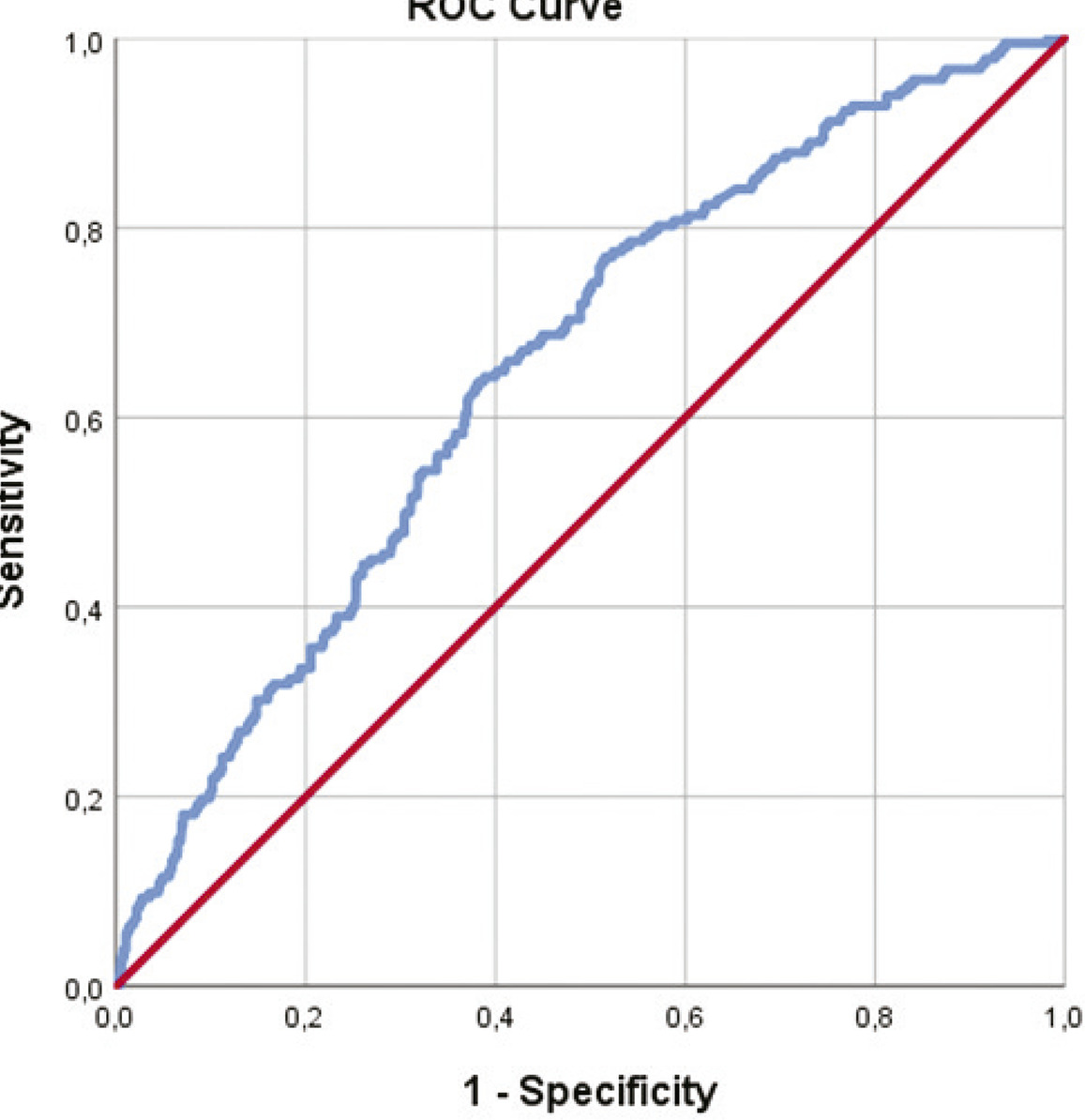
A total of 1,146 ACS patients were included in the study, being classified according to the type of myocordial infarction (MI). MACE were recorded in long-term follow-up. The relationship between Hb/RDW and MACE was investigated. The statistical analyses of Mann-Whitney U test for comparison of two independent groups and chi-square test for categorical variables were used. In order to determine the diagnostic feature of the HB/RDW ratio, the diagnostic ratios were calculated by applying Receiver Operating Characteristic Curve (ROC) analysis. A p < 0.05 value was considered statistically significant in all analyses. Results: When the patients were analyzed according to MI types — ST segment elevation myocardial infarction (STEMI)/Non-ST segment elevation myocardial infarction (NSTEMI) —, it was observed that Hb/RDW (p = 0.038) was significantly higher in the STEMI group. The Hb/RDW ratio was statistically significant in predicting mortality. As a result of ROC analysis, Area Under the Curve (AUC) = 0.654 (p < 0.001) was found. The cut-off value for the Hb/RDW ratio was calculated as 0.947. The sensitivity and specificity of 76.9% and 48.4% for the diagnostic rates obtained were moderately acceptable.

Conclusion

The Hb/RDW-long-term mortality relationship was found to be significant in ROC analysis. It can be used in clinical practice as it is cheap, easy to apply, and reduces possible bias in post-ACS follow-up.
  • Acute coronary syndrome
  • Hemoglobins
  • Inflammation
  • Mortality
  • Throcyte Indices
Read Full Article
Creative Commons Attribution (CC BY) Creative Commons license
11/03/2024 DOI: 10.36660/ijcs.20230099
Central Illustration
ABC
Original Article

Hemoglobin/Red Cell Distribution width Ratio (HRR): A Novel and Promising Red Cell Parameter in Ductal Closure

Duran Yildiz et al. Ufuk Cakir Ali Ulaş Tugcu Burak Ceran Cuneyt Tayman

Abstract

Background

It is still unclear how effective hematological parameters are in the closure of patent ductus arteriosus (PDA).

Objectives

The primary aim of our study is to investigate the effect of hemoglobin (HB)-to-red cell distribution width (RDW) ratio (HRR) on the closure of PDA.

Methods

Premature babies with very low birth weight (VLBW: <1500 g) and <32 gestational weeks were included in the study, and all data were recorded retrospectively. Demographic characteristics, clinical results, red cell parameters, and HRR and their ratios were compared between hemodynamically significant PDA (hsPDA) and non-hsPDA groups. All results were statically analyzed, and P<0.05 was considered statistically significant.

Results

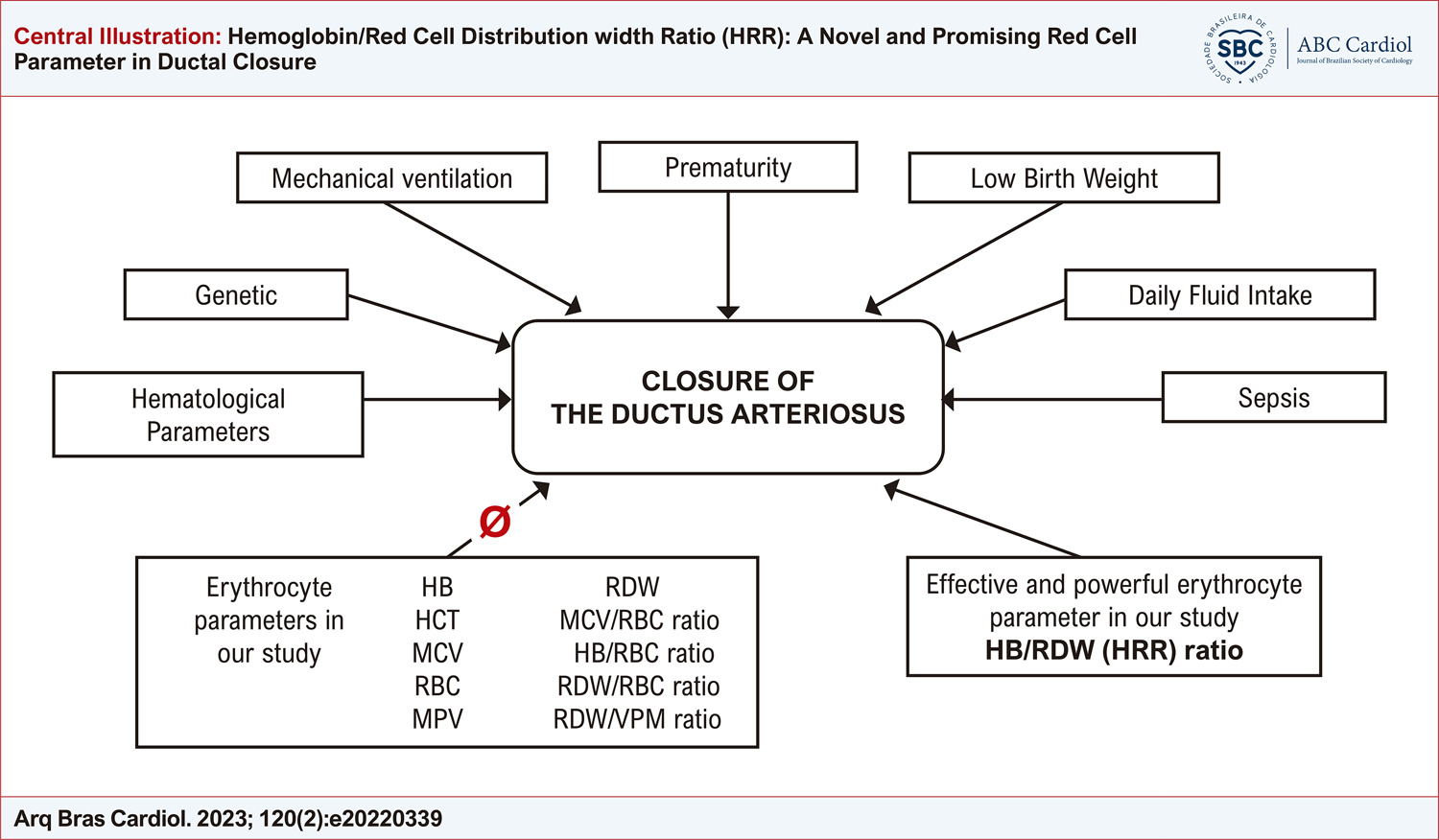
A total of 677 premature babies, 269 in the hsPDA group and 408 in the non-hsPDA group, were included in the study. Hemoglobin (HB), hematocrit (HCT), mean cell volume (MCV), red blood cell (RBC), red cell distribution width (RDW), mean platelet volume (MPV), MCV/RBC ratio, HB/RBC ratio, RDW/RBC ratio, and RDW/MPV ratio were found to be similar between hsPDA and non-hsPDA groups, (p>0.05). HRR was found to be significantly lower in the hsPDA group [median (Quartile 1 (Q1) – Q3) (Q1 – Q3): 0.93 (0.8-1.0)] compared to non-hsPDA [median ( Q1 – Q3): 1.07 (1.0-1.2)] (p<0.001). The AUC for the diagnostic value of HRR in hsPDA was 0.816, and the cutoff value was ≤0.98 (p<0.001, 95% [CI]: 0.785-0.845, sensitivity: 90%, specificity: 92%).

Conclusions

HRR value was found to be both an effective and powerful parameter in diagnosing hsPDA.

  • Ductus arteriosus, patent
  • Heart Defecys, Congenital
  • Hemoglobins
  • Infant, premature
Read Full Article
Creative Commons Attribution (CC BY) Creative Commons license
27/02/2023 DOI: 10.36660/abc.20220339 Views 1

How to cite this article

EndNote RIS

Electronic Document Format (Vancouver)

Kılıç O, Mustu M, Suygun H, Con E, Karakurt A, Özer SF. Hemoglobin/Red Cell Distribution Width Ratio is Associated With Poor Prognosis in Patients With Acute Coronary Syndrome in Long-Term Follow-Up. International Journal of Cardiovascular Sciences 2024;37:e20230099.

Electronic Document Format (ABNT)

Kılıç, Oğuz; Mustu, Mehmet; Suygun, Hakan; Con, Enes; Karakurt, Ahmet; Özer, Sümeyye Fatma. Hemoglobin/Red Cell Distribution Width Ratio is Associated With Poor Prognosis in Patients With Acute Coronary Syndrome in Long-Term Follow-Up. International Journal of Cardiovascular Sciences, v. 37, e20230099, Mar. 2024.

Electronic Document Format (APA)

Kılıç, O., Mustu, M., Suygun, H., Con, E., Karakurt, A., & Özer, S. F. (2024). Hemoglobin/Red Cell Distribution Width Ratio is Associated With Poor Prognosis in Patients With Acute Coronary Syndrome in Long-Term Follow-Up. International Journal of Cardiovascular Sciences, 37, e20230099.

Electronic Document Format (ISO)

Kılıç, Oğuz and Mustu, Mehmet and Suygun, Hakan and Con, Enes and Karakurt, Ahmet and Özer, Sümeyye Fatma. Hemoglobin/Red Cell Distribution Width Ratio is Associated With Poor Prognosis in Patients With Acute Coronary Syndrome in Long-Term Follow-Up. International Journal of Cardiovascular Sciences [online]. 2024, vol. 37, [cited 2026-10-14], e20230099. Available from: <https://journals.cardiol.br/en/article/hemoglobin-red-cell-distribution-width-ratio-is-associated-with-poor-prognosis-in-patients-with-acute-coronary-syndrome-in-long-term-follow-up/>. ISSN 2359-4802

EndNote RIS

Electronic Document Format (Vancouver)

Yildiz D, Cakir U, Tugcu AU, Ceran B, Tayman C. Hemoglobin/Red Cell Distribution width Ratio (HRR): A Novel and Promising Red Cell Parameter in Ductal Closure. Arquivos Brasileiros de Cardiologia 2023;120(2):e20220339.

Electronic Document Format (ABNT)

Yildiz, Duran; Cakir, Ufuk; Tugcu, Ali Ulaş; Ceran, Burak; Tayman, Cuneyt. Hemoglobin/Red Cell Distribution width Ratio (HRR): A Novel and Promising Red Cell Parameter in Ductal Closure. Arquivos Brasileiros de Cardiologia, v. 120, n. 2, e20220339, Feb. 2023.

Electronic Document Format (APA)

Yildiz, D., Cakir, U., Tugcu, A. U., Ceran, B., & Tayman, C. (2023). Hemoglobin/Red Cell Distribution width Ratio (HRR): A Novel and Promising Red Cell Parameter in Ductal Closure. Arquivos Brasileiros de Cardiologia, 120(2), e20220339.

Electronic Document Format (ISO)

Yildiz, Duran and Cakir, Ufuk and Tugcu, Ali Ulaş and Ceran, Burak and Tayman, Cuneyt. Hemoglobin/Red Cell Distribution width Ratio (HRR): A Novel and Promising Red Cell Parameter in Ductal Closure. Arquivos Brasileiros de Cardiologia [online]. 2023, vol. 120, n. 2, [cited 2026-10-14], e20220339. Available from: <https://journals.cardiol.br/en/article/hemoglobin-red-cell-distribution-width-ratio-hrr-a-novel-and-promising-red-cell-parameter-in-ductal-closure/>. ISSN 0066-782X

  • About ABC Family
  • Internal Regulation
  • Editorial Board
  • Brazilian Society of Cardiology (SBC)

Issues

SBC Guidelines

  • Videos
  • Podcasts
  • News