ABC Family Arquivos Brasileiros de Cardiologia International Journal of Cardiovascular Sciences ABC Heart Failure & Cardiomyopathy ABC Imagem Cardiovascular
Português English
ABC Family
Português English
  • About
    • About ABC Family
    • Internal Regulation
    • Editorial Board
    • Brazilian Society of Cardiology (SBC)
  • Issues
  • SBC Guidelines
  • Content
    • Videos
    • Podcasts
    • News
  • About
    • About ABC Family
    • Internal Regulation
    • Editorial Board
    • Brazilian Society of Cardiology (SBC)
  • Issues
  • SBC Guidelines
  • Content
    • Videos
    • Podcasts
    • News

ABC Family

  • ABC Family
  • Arquivos Brasileiros de Cardiologia
  • International Journal of Cardiovascular Sciences
  • ABC Heart Failure & Cardiomyopathy
  • ABC Imagem Cardiovascular
Search in

No content found.

Journals
Ordering
Article types
Others

  1. Home
  2. Keyword: Patient Centered Care
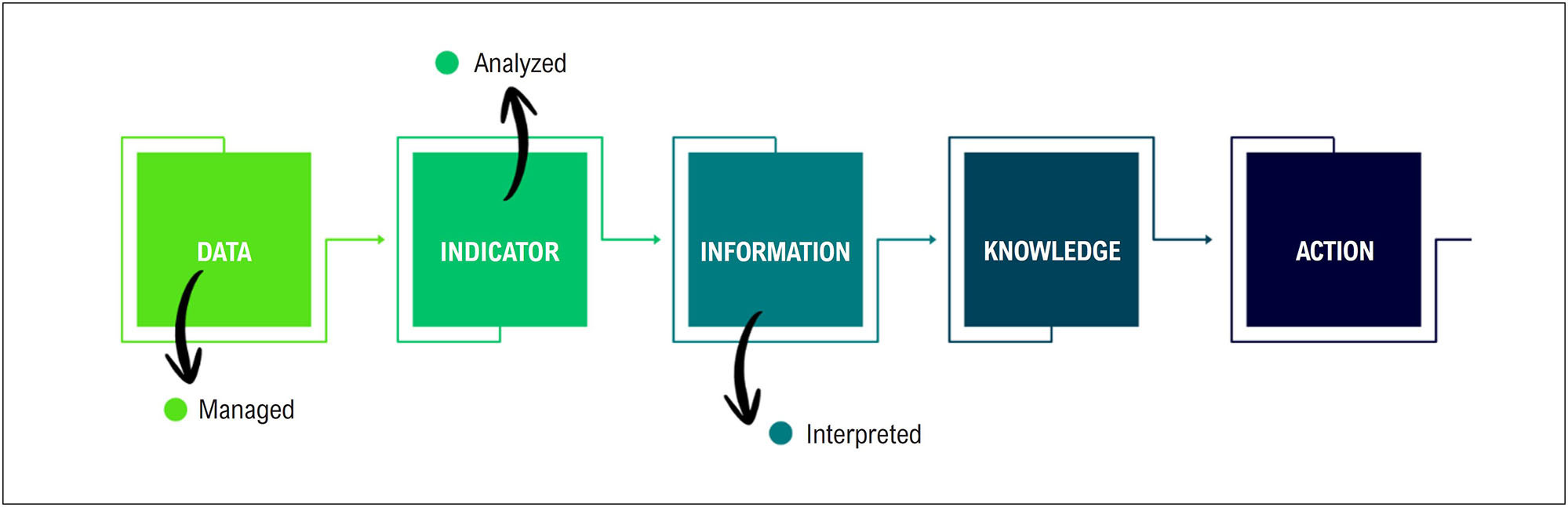
Figure 1
ABCHF
Viewpoint

Measuring What Matters: A Unified Framework for High-Value Heart Failure Care in Brazil

Sabrina Bernardez-Pereira et al. Giovana Alvarez Marcelo Franken Pedro Alves Lemos Neto … Germano Emílio Conceição Souza Fernando Bacal

Introduction

In Brazil, heart failure (HF) remains one of the leading causes of cardiovascular hospitalization and mortality, placing substantial pressure on the public health system. Despite therapeutic advances, significant gaps persist, as fragmented information systems, heterogeneous indicators, and limited integration of the patient perspective continue to predominate across both the public and private sectors.,

Critically, value-based healthcare, defined as health outcomes achieved relative to the resources expended, requires systematic measurement of waste and low-value care. Identifying avoidable hospitalizations, redundant testing, and delayed therapy optimization is essential for improving outcomes and ensuring health system sustainability., Economic analyses in Brazil demonstrate that inefficient HF management generates substantial costs: approximately 70% of HF-related expenditures arise from hospitalizations, many of which could be prevented through optimized outpatient care and stronger integration with primary care.

[…]

  • Heart Failure
  • Patient Centered Care
  • Quality of Health Care
Read Full Article
Creative Commons Attribution (CC BY) Creative Commons license
08/07/2026 DOI: 10.36660/abchf.2026009i Views 2
ABC
Editorial

From Volume to Value Creation in Cardiac Surgery: What is Needed to Get off the Ground in Brazil?

Omar Asdrúbal Vilca Mejia et al. Fabio Biscegli Jatene

Some characteristics favored the great development of cardiovascular surgery; among them, creativity for developing techniques and devices and, mainly, much courage. Thus, cardiovascular surgery had a fantastic evolution, driven by its impact on the patient’s quality of life, quickly becoming one of the most performed procedures in the world. Maybe this would not have happened if not for two factors: on the one hand, the improvement of technical skills as a result of the increased surgical volume, and, on the other hand, the information from the databases analyzes. , This has led to continuous improvement in perioperative techniques, devices, and outcomes.

This may explain the outcome improvement, even when procedures have become more complex and performed in increasingly severe patients. From the analysis of these records, some issues emerged to be resolved. This was when mortality risk scores were introduced to adjust and better understand the results. From that moment, and to achieve continuous improvement, implementing quality programs has become a necessity. Another important step was the hospitals’ public reporting initiatives, introducing the concept of transparency.

[…]

  • Cardiac Surgery
  • Database
  • Outcome Assessment (Health Care)
  • Patient Centered Care
  • Total Quality Management
Read Full Article
Creative Commons Attribution (CC BY) Creative Commons license
27/02/2023 DOI: 10.36660/abc.20230036
ABC
Editorial

Toward a Patient-Centered, Data-Driven Cardiology

Antonio Luiz Ribeiro et al. Gláucia Maria Moraes de Oliveira

Beginning in the 1970s and 1980s, the emergence of randomized clinical trials and studies with large cohorts, associated with the development of the methodology for systematic reviews and meta-analyses, triggered a revolution in the way of thinking and performing healthcare practice. Evidence-based medicine (EBM), defined as the integration of the best research evidence with clinical experience and patient values, has become a new paradigm, orienting medical education and specialized publications. One of the principles of EBM was precisely the primacy of information obtained from randomized clinical trials and meta-analyses, which were placed at the top of an evidence hierarchy, valuing quantitative results more than clinical experience and expert opinion. Indeed, it has always been challenging for EBM to integrate empirical evidence with other types of medical knowledge, such as clinical expertise and pathophysiological rationale, or even with the preferences of individual patients.

The use of EBM in clinical practice also runs into the difficulty of finding robust evidence for all subgroups of clinical situations found in the real world, “gray areas” in which no reliable evidence can be obtained from the scientific literature to guide the physician in caring for his patient. Randomized clinical trials are expensive and generally require large study samples and long-term follow-up. There are several situations without evidence, or situations in which the evidence is inconsistent or of poor quality.

[…]

  • Access Health Technologies
  • Artificial Intelligence
  • Cardiology
  • Clinical Decision – Making
  • Diagnostic Equipment Digital
  • Evidence-Based Medicine/methods
  • Health Manager
  • Machine Learning/trends
  • Patient Centered Care
  • Physician-Patient Relations
Read Full Article
Creative Commons Attribution (CC BY) Creative Commons license
15/04/2019 DOI: 10.5935/abc.20190069 Views 2
ABC
Artigo Original

Evidence of healthcare quality improvement in acute myocardial infarction

Antônio Sérgio Cordeiro da Rocha et al. Mônica Peres de Araújo André Volscham Luiz Antonio Ferreira Carvalho … Ary Ribeiro Evandro Tinoco Mesquita

BACKGROUND: The monitoring of healthcare quality indicators (HCQI) is a process of utmost importance in patient healthcare services. OBJECTIVE: To evaluate whether the monitoring of HCQI and the root-cause analysis improve the healthcare quality in acute myocardial infarction (AMI). METHODS: A cross-sectional and comparative analysis of HCQI was performed in patients with AMI in the years 2006 and 2007. Of the 1,461 patients admitted with chest pain, 172 (11.7%) had a diagnosis of AMI and were included in the analysis. RESULTS: The rate of primary angioplasty was 8.47% higher in 2007 (97.3%) when compared to that in 2006 (89.7%), but this difference was not statistically significant (p = 0.35). Moreover, there was no difference regarding the time of hospitalization (4 vs 5 days, p = 0.15) and the in-hospital mortality (7.8% vs 5.1%, p = 0.67) between 2007 and 2006, respectively. However, the time to the first troponin level was 27% shorter in 2007 (69 min.; 95%CI = 44-94 min.) when compared to 2006 (95 min.; 53-136 min.) (p = 0.025). The door-to-balloon time was 12% shorter (72 ± 29 min. vs 109 ± 85 min.; p = 0.03), the rate of ASA prescription at hospital discharge was 35% higher (94.7% vs 70.3%; p = 0.002) and the rate of PCA shorter than 90 minutes was 52% higher (78.3 vs 51.4%; p = 0.03) in 2007, when compared to 2006. CONCLUSION: Our results suggest that the strategy of monitoring the HCQI and the implementation of the root-cause analysis methodology can improve the healthcare process in patients with AMI.

  • Myocardial Infarction
  • Patient Centered Care
  • Quality Indicators, Health Care
  • Quality of Health Care
Read Full Article
Creative Commons Attribution (CC BY) Creative Commons license
07/05/2010 DOI: 10.1590/S0066-782X2010005000047 Views 1

How to cite this article

EndNote RIS

Electronic Document Format (Vancouver)

Bernardez-Pereira S, Alvarez G, Franken M, Lemos Neto PA, Souza GEC, Bacal F. Measuring What Matters: A Unified Framework for High-Value Heart Failure Care in Brazil. ABC Heart Fail Cardiomyop 2026;6:e20260009.

Electronic Document Format (ABNT)

Bernardez-Pereira, Sabrina; Alvarez, Giovana; Franken, Marcelo; Lemos Neto, Pedro Alves; Souza, Germano Emílio Conceição; Bacal, Fernando. Measuring What Matters: A Unified Framework for High-Value Heart Failure Care in Brazil. ABC Heart Fail Cardiomyop, v. 6, e20260009, Jul. 2026.

Electronic Document Format (APA)

Bernardez-Pereira, S., Alvarez, G., Franken, M., Lemos Neto, P. A., Souza, G. E. C., & Bacal, F. (2026). Measuring What Matters: A Unified Framework for High-Value Heart Failure Care in Brazil. ABC Heart Fail Cardiomyop, 6, e20260009.

Electronic Document Format (ISO)

Bernardez-Pereira, Sabrina and Alvarez, Giovana and Franken, Marcelo and Lemos Neto, Pedro Alves and Souza, Germano Emílio Conceição and Bacal, Fernando. Measuring What Matters: A Unified Framework for High-Value Heart Failure Care in Brazil. ABC Heart Fail Cardiomyop [online]. 2026, vol. 6, [cited 2026-10-14], e20260009. Available from: <https://journals.cardiol.br/en/article/measuring-what-matters-a-unified-framework-for-high-value-heart-failure-care-in-brazil/>

EndNote RIS

Electronic Document Format (Vancouver)

Mejia OAV, Jatene FB. From Volume to Value Creation in Cardiac Surgery: What is Needed to Get off the Ground in Brazil?. Arquivos Brasileiros de Cardiologia 2023;120(2):e20230036.

Electronic Document Format (ABNT)

Mejia, Omar Asdrúbal Vilca; Jatene, Fabio Biscegli. From Volume to Value Creation in Cardiac Surgery: What is Needed to Get off the Ground in Brazil?. Arquivos Brasileiros de Cardiologia, v. 120, n. 2, e20230036, Feb. 2023.

Electronic Document Format (APA)

Mejia, O. A. V., & Jatene, F. B. (2023). From Volume to Value Creation in Cardiac Surgery: What is Needed to Get off the Ground in Brazil?. Arquivos Brasileiros de Cardiologia, 120(2), e20230036.

Electronic Document Format (ISO)

Mejia, Omar Asdrúbal Vilca and Jatene, Fabio Biscegli. From Volume to Value Creation in Cardiac Surgery: What is Needed to Get off the Ground in Brazil?. Arquivos Brasileiros de Cardiologia [online]. 2023, vol. 120, n. 2, [cited 2026-10-14], e20230036. Available from: <https://journals.cardiol.br/en/article/from-volume-to-value-creation-in-cardiac-surgery-what-is-needed-to-get-off-the-ground-in-brazil/>. ISSN 0066-782X

EndNote RIS

Electronic Document Format (Vancouver)

Ribeiro AL, Oliveira GMM. Toward a Patient-Centered, Data-Driven Cardiology. Arquivos Brasileiros de Cardiologia 2019;112(4):371-3.

Electronic Document Format (ABNT)

Ribeiro, Antonio Luiz; Oliveira, Gláucia Maria Moraes de. Toward a Patient-Centered, Data-Driven Cardiology. Arquivos Brasileiros de Cardiologia, v. 112, n. 4, p. 371-373, Apr. 2019.

Electronic Document Format (APA)

Ribeiro, A. L., & Oliveira, G. M. M. (2019). Toward a Patient-Centered, Data-Driven Cardiology. Arquivos Brasileiros de Cardiologia, 112(4), 371-373.

Electronic Document Format (ISO)

Ribeiro, Antonio Luiz and Oliveira, Gláucia Maria Moraes de. Toward a Patient-Centered, Data-Driven Cardiology. Arquivos Brasileiros de Cardiologia [online]. 2019, vol. 112, n. 4, [cited 2026-10-14], pp. 371-373. Available from: <https://journals.cardiol.br/en/article/toward-a-patient-centered-data-driven-cardiology/>. ISSN 0066-782X

EndNote RIS

Electronic Document Format (Vancouver)

Rocha ASC, Araújo MP, Volscham A, Carvalho LAF, Ribeiro A, Mesquita ET. Evidence of healthcare quality improvement in acute myocardial infarction. Arquivos Brasileiros de Cardiologia 2010;94(6):726-9.

Electronic Document Format (ABNT)

Rocha, Antônio Sérgio Cordeiro da; Araújo, Mônica Peres de; Volscham, André; Carvalho, Luiz Antonio Ferreira; Ribeiro, Ary; Mesquita, Evandro Tinoco. Evidence of healthcare quality improvement in acute myocardial infarction. Arquivos Brasileiros de Cardiologia, v. 94, n. 6, p. 726-729, May. 2010.

Electronic Document Format (APA)

Rocha, A. S. C. , Araújo, M. P. , Volscham, A., Carvalho, L. A. F., Ribeiro, A., & Mesquita, E. T. (2010). Evidence of healthcare quality improvement in acute myocardial infarction. Arquivos Brasileiros de Cardiologia, 94(6), 726-729.

Electronic Document Format (ISO)

Rocha, Antônio Sérgio Cordeiro da and Araújo, Mônica Peres de and Volscham, André and Carvalho, Luiz Antonio Ferreira and Ribeiro, Ary and Mesquita, Evandro Tinoco. Evidence of healthcare quality improvement in acute myocardial infarction. Arquivos Brasileiros de Cardiologia [online]. 2010, vol. 94, n. 6, [cited 2026-10-14], pp. 726-729. Available from: <https://journals.cardiol.br/en/article/evidence-of-healthcare-quality-improvement-in-acute-myocardial-infarction/>. ISSN 0066-782X

  • About ABC Family
  • Internal Regulation
  • Editorial Board
  • Brazilian Society of Cardiology (SBC)

Issues

SBC Guidelines

  • Videos
  • Podcasts
  • News