ABC Family Arquivos Brasileiros de Cardiologia International Journal of Cardiovascular Sciences ABC Heart Failure & Cardiomyopathy ABC Imagem Cardiovascular
Português English
ABC Family
Português English
  • About
    • About ABC Family
    • Internal Regulation
    • Editorial Board
    • Brazilian Society of Cardiology (SBC)
  • Issues
  • SBC Guidelines
  • Content
    • Videos
    • Podcasts
    • News
  • About
    • About ABC Family
    • Internal Regulation
    • Editorial Board
    • Brazilian Society of Cardiology (SBC)
  • Issues
  • SBC Guidelines
  • Content
    • Videos
    • Podcasts
    • News

ABC Family

  • ABC Family
  • Arquivos Brasileiros de Cardiologia
  • International Journal of Cardiovascular Sciences
  • ABC Heart Failure & Cardiomyopathy
  • ABC Imagem Cardiovascular
Search in

No content found.

Journals
Ordering
Article types
Others

  1. Home
  2. Keyword: Ductus arteriosus, patent
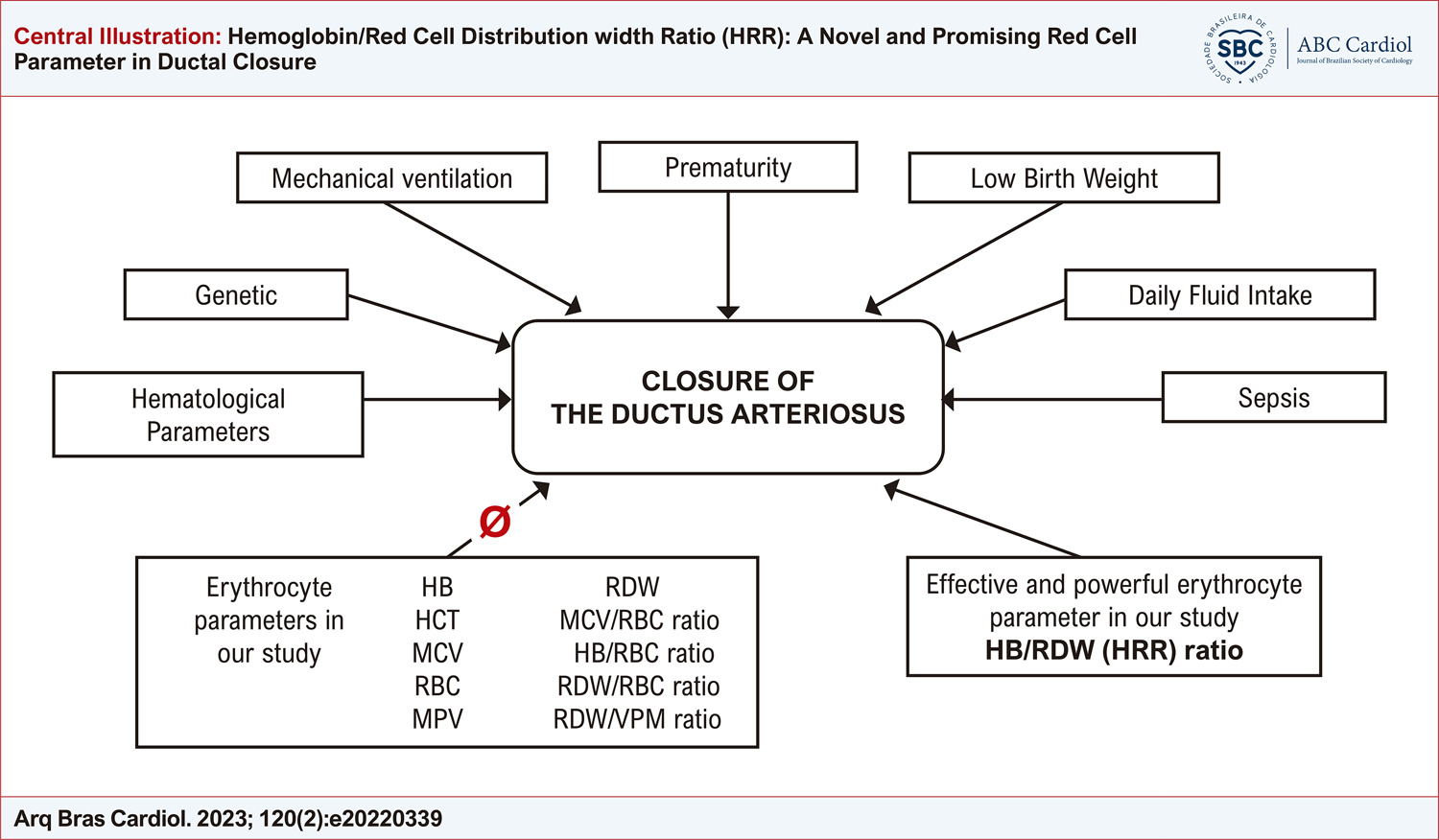
Central Illustration
ABC
Original Article

Hemoglobin/Red Cell Distribution width Ratio (HRR): A Novel and Promising Red Cell Parameter in Ductal Closure

Duran Yildiz et al. Ufuk Cakir Ali Ulaş Tugcu Burak Ceran Cuneyt Tayman

Abstract

Background

It is still unclear how effective hematological parameters are in the closure of patent ductus arteriosus (PDA).

Objectives

The primary aim of our study is to investigate the effect of hemoglobin (HB)-to-red cell distribution width (RDW) ratio (HRR) on the closure of PDA.

Methods

Premature babies with very low birth weight (VLBW: <1500 g) and <32 gestational weeks were included in the study, and all data were recorded retrospectively. Demographic characteristics, clinical results, red cell parameters, and HRR and their ratios were compared between hemodynamically significant PDA (hsPDA) and non-hsPDA groups. All results were statically analyzed, and P<0.05 was considered statistically significant.

Results

A total of 677 premature babies, 269 in the hsPDA group and 408 in the non-hsPDA group, were included in the study. Hemoglobin (HB), hematocrit (HCT), mean cell volume (MCV), red blood cell (RBC), red cell distribution width (RDW), mean platelet volume (MPV), MCV/RBC ratio, HB/RBC ratio, RDW/RBC ratio, and RDW/MPV ratio were found to be similar between hsPDA and non-hsPDA groups, (p>0.05). HRR was found to be significantly lower in the hsPDA group [median (Quartile 1 (Q1) – Q3) (Q1 – Q3): 0.93 (0.8-1.0)] compared to non-hsPDA [median ( Q1 – Q3): 1.07 (1.0-1.2)] (p<0.001). The AUC for the diagnostic value of HRR in hsPDA was 0.816, and the cutoff value was ≤0.98 (p<0.001, 95% [CI]: 0.785-0.845, sensitivity: 90%, specificity: 92%).

Conclusions

HRR value was found to be both an effective and powerful parameter in diagnosing hsPDA.
  • Ductus arteriosus, patent
  • Heart Defecys, Congenital
  • Hemoglobins
  • Infant, premature
Read Full Article
Creative Commons Attribution (CC BY) Creative Commons license
27/02/2023 DOI: 10.36660/abc.20220339 Views 1
Figure 1
ABC
Image

Oscillating Ductal Stent in Valvar Pulmonary Atresia

Arun Gopalakrishnan et al. Kavassery Mahadevan Krishnamoorthy Paidi Suresh Kumar Sivasankaran Sivasubramonian

A 2.7 kg term neonate was diagnosed on day 3 of life with Ebstein’s anomaly of the tricuspid valve, severe tricuspid regurgitation, valvar pulmonary atresia and duct-dependent pulmonary circulation. The cardiothoracic ratio was 90%, and GOSE score was 1.48. Oxygen saturation was 65% and improved to 88% on 0.005 mcg/kg/min of prostaglandin. The right ventricular systolic pressure was 40mmHg against a systolic blood pressure of 65mmHg. The child was taken up for stenting of the arterial duct on day 7 of life after the confirmation of anatomic pulmonary atresia. The long arterial duct was stented with 3.5x16mm and 3.5x8mm stents, using a 4F right femoral artery access. Both the pulmonary and aortic ends were well covered and systemic saturation improved to 85% on room air and off prostaglandin.

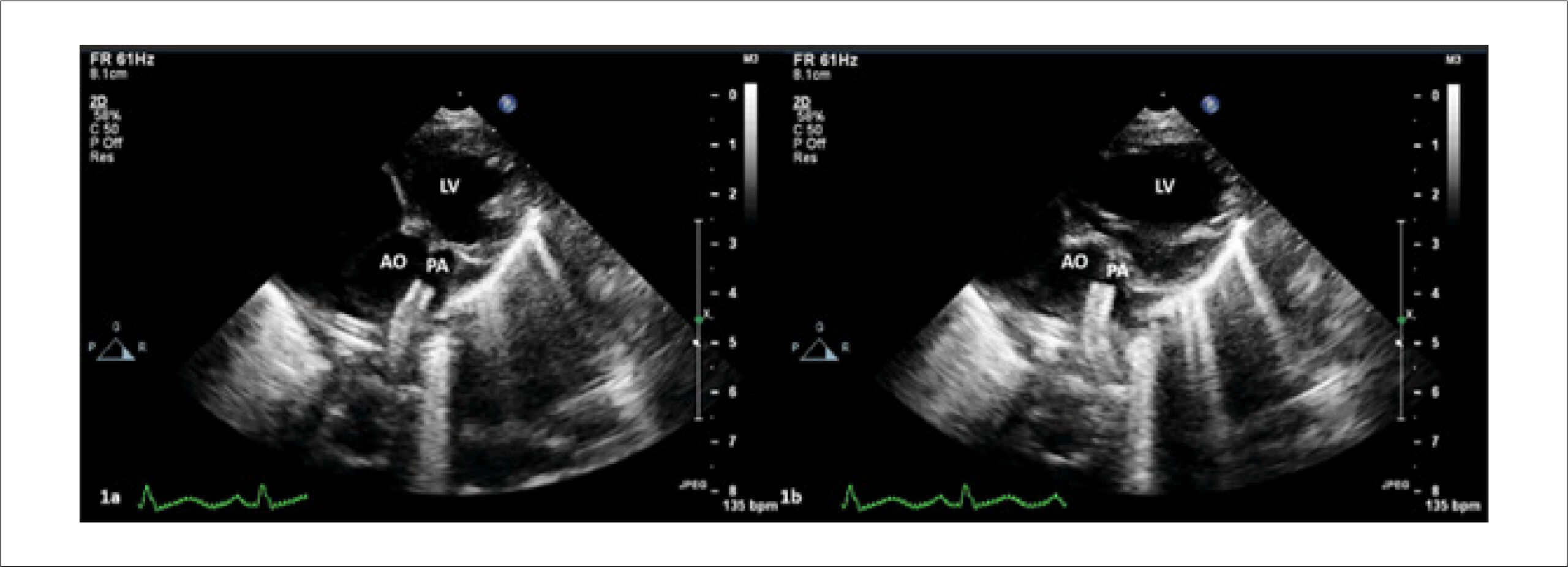
The post-procedure echocardiography confirmed a well-positioned stent with good flow. However, the stent appeared to oscillate with every cardiac cycle (, ). This “oscillating stent sign” was confirmed on the post-stenting aortic angiogram (). Valvar pulmonary atresia is associated with the well-described “seagull sign” on angiogram. Pooling of contrast in the main pulmonary artery that retains a fibrous attachment to pulmonary annular tissue leads to the seagull sign, with the branch pulmonary arteries assuming the shape of the wings of the ‘seagull’. Valvar pulmonary atresia is generally associated with a straight arterial duct inserted into the main pulmonary artery in half of the cases. Even when the duct is long and tortuous in the others, studies suggest that it is more readily negotiated during ductal stenting in valvar pulmonary atresia as opposed to long segment pulmonary atresia., The oscillation of the ductal stent in valvar pulmonary atresia with every cardiac cycle suggests that the pulmonary end of the stent is within the main pulmonary artery, which is an intrapericardial structure and faithfully reflects the mechanical contractions of the heart. We suggest that this echocardiographic finding may be utilized for the assessment of stent position with respect to the pulmonary end in valvar pulmonary atresia.

[…]

  • Ductus arteriosus, patent
  • Ebstein Anomaly
  • Echocardiography/methods
  • Heart Defects, Congenital
  • Pulmonary Atresia
Read Full Article
Creative Commons Attribution (CC BY) Creative Commons license
07/12/2020 DOI: 10.36660/abc.20190829 Views 1
Patent ductus arteriosus: endovascular treatment in adult patient
ABC
Case Report

Patent ductus arteriosus: endovascular treatment in adult patient

Diego Felipe Gaia et al. José Honório Palma Hyung Chun Kim José Augusto Marcondes de Souza … Cláudia Rodrigues Alves Enio Buffolo

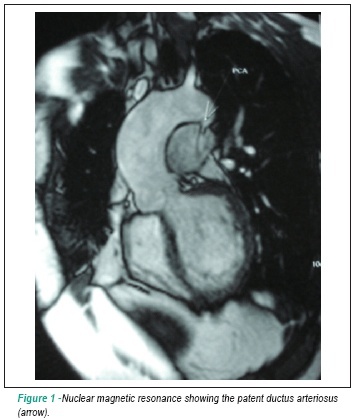
The patent ductus arteriosus (PDA) is a common type of congenital heart defect and its correction is simple when performed early in life. Surgery is performed using stitches or clips. In adults, the anomaly can lead to pulmonary hypertension and ventricular dysfunction. Surgery in adults is controversial and high-risk. This report describes an alternative endovascular approach in an adult patient.

  • Aorta, Thoracic
  • Ductus arteriosus, patent
  • endoprosthesis
  • stent-graft
Read Full Article
Creative Commons Attribution (CC BY) Creative Commons license
11/08/2008 DOI: 10.1590/S0066-782X2008001400015 Views 1
Patent ductus arteriosus treatment in the premature newborn: clinical and surgical analisys
ABC
Artigo Original

Patent ductus arteriosus treatment in the premature newborn: clinical and surgical analisys

Rafael Fagionato Locali et al. Priscila Katsumi Matsuoka Edmo Atique Gabriel Ayrton Bertini Júnior … Carlos Arnulfo La Rotta Roberto Catani Antônio Carlos de Camargo Carvalho Enio Buffolo

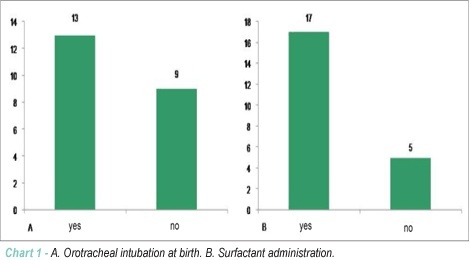
BACKGROUND: The surgical treatment of patency ductus arteriosus is indicated when the clinical intervention fails. However, this treatment may have some complications. OBJECTIVE: To analyze clinical and surgical aspects involved on the treatment of patency ductus arteriosus in premature newborn. METHODS: Twenty two premature newborns, submitted to surgical treatment for patency ductus arteriosus from January, 2000 to June, 2006, were evaluated. There were 77,3% female patients, the mean birth weight was 952,5g and the mean gestational age was 27 weeks. The use of vasoactive drugs, indometacin, echocardiograph parameters and complications, in the pre and postoperative periods were evaluated. RESULTS: In this casuistic 59,1% patients needed intratracheal intubation at birth, 77,3% needed surfactants, 59,1% used vasoactive drugs preoperative. The mean doses of indometacin were 3,43, with dose range 0,1 to 0,25 mg/Kg/day. The mean caliber of arterial duct patent was 1,96 mm. The surgical procedure was carried out through extrapleural approach in 59.1% of the patients, the mean time of postoperative intubation was 30,9 days, and 50% of the patients used vasoactive drugs postoperative. There were 18,1% postoperative complications (postoperative non-fatal complications). CONCLUSION: More than the half of the patients needed intratracheal intubation at birth, surfactant use and vasoactive drugs in the preoperative period. There was greater prevalence of the extrapleural approach during the surgery. In the postoperative period, there was less demand of vasoactive use and there was not deaths related to the surgical procedure.

  • Ductus arteriosus, patent
  • Heart Defects, Congenital
  • Infant, premature
Read Full Article
Creative Commons Attribution (CC BY) Creative Commons license
27/05/2008 DOI: 10.1590/S0066-782X2008000500007 Views 1

How to cite this article

EndNote RIS

Electronic Document Format (Vancouver)

Yildiz D, Cakir U, Tugcu AU, Ceran B, Tayman C. Hemoglobin/Red Cell Distribution width Ratio (HRR): A Novel and Promising Red Cell Parameter in Ductal Closure. Arquivos Brasileiros de Cardiologia 2023;120(2):e20220339.

Electronic Document Format (ABNT)

Yildiz, Duran; Cakir, Ufuk; Tugcu, Ali Ulaş; Ceran, Burak; Tayman, Cuneyt. Hemoglobin/Red Cell Distribution width Ratio (HRR): A Novel and Promising Red Cell Parameter in Ductal Closure. Arquivos Brasileiros de Cardiologia, v. 120, n. 2, e20220339, Feb. 2023.

Electronic Document Format (APA)

Yildiz, D., Cakir, U., Tugcu, A. U., Ceran, B., & Tayman, C. (2023). Hemoglobin/Red Cell Distribution width Ratio (HRR): A Novel and Promising Red Cell Parameter in Ductal Closure. Arquivos Brasileiros de Cardiologia, 120(2), e20220339.

Electronic Document Format (ISO)

Yildiz, Duran and Cakir, Ufuk and Tugcu, Ali Ulaş and Ceran, Burak and Tayman, Cuneyt. Hemoglobin/Red Cell Distribution width Ratio (HRR): A Novel and Promising Red Cell Parameter in Ductal Closure. Arquivos Brasileiros de Cardiologia [online]. 2023, vol. 120, n. 2, [cited 2026-10-14], e20220339. Available from: <https://journals.cardiol.br/en/article/hemoglobin-red-cell-distribution-width-ratio-hrr-a-novel-and-promising-red-cell-parameter-in-ductal-closure/>. ISSN 0066-782X

EndNote RIS

Electronic Document Format (Vancouver)

Gopalakrishnan A, Krishnamoorthy KM, Kumar PS, Sivasubramonian S. Oscillating Ductal Stent in Valvar Pulmonary Atresia. Arquivos Brasileiros de Cardiologia 2020;115(5):961-3.

Electronic Document Format (ABNT)

Gopalakrishnan, Arun; Krishnamoorthy, Kavassery Mahadevan; Kumar, Paidi Suresh; Sivasubramonian, Sivasankaran. Oscillating Ductal Stent in Valvar Pulmonary Atresia. Arquivos Brasileiros de Cardiologia, v. 115, n. 5, p. 961-963, Dec. 2020.

Electronic Document Format (APA)

Gopalakrishnan, A., Krishnamoorthy, K. M., Kumar, P. S., & Sivasubramonian, S. (2020). Oscillating Ductal Stent in Valvar Pulmonary Atresia. Arquivos Brasileiros de Cardiologia, 115(5), 961-963.

Electronic Document Format (ISO)

Gopalakrishnan, Arun and Krishnamoorthy, Kavassery Mahadevan and Kumar, Paidi Suresh and Sivasubramonian, Sivasankaran. Oscillating Ductal Stent in Valvar Pulmonary Atresia. Arquivos Brasileiros de Cardiologia [online]. 2020, vol. 115, n. 5, [cited 2026-10-14], pp. 961-963. Available from: <https://journals.cardiol.br/en/article/oscillating-ductal-stent-in-valvar-pulmonary-atresia/>. ISSN 0066-782X

EndNote RIS

Electronic Document Format (Vancouver)

Gaia DF, Palma JH, Kim HC, Souza JAM, Alves CR, Buffolo E. Patent ductus arteriosus: endovascular treatment in adult patient. Arquivos Brasileiros de Cardiologia 2008;91(2):e17-9.

Electronic Document Format (ABNT)

Gaia, Diego Felipe; Palma, José Honório; Kim, Hyung Chun; Souza, José Augusto Marcondes de; Alves, Cláudia Rodrigues; Buffolo, Enio. Patent ductus arteriosus: endovascular treatment in adult patient. Arquivos Brasileiros de Cardiologia, v. 91, n. 2, p. e17-e19, Aug. 2008.

Electronic Document Format (APA)

Gaia, D. F., Palma, J. H., Kim, H. C., Souza, J. A. M. , Alves, C. R., & Buffolo, E. (2008). Patent ductus arteriosus: endovascular treatment in adult patient. Arquivos Brasileiros de Cardiologia, 91(2), e17-e19.

Electronic Document Format (ISO)

Gaia, Diego Felipe and Palma, José Honório and Kim, Hyung Chun and Souza, José Augusto Marcondes de and Alves, Cláudia Rodrigues and Buffolo, Enio. Patent ductus arteriosus: endovascular treatment in adult patient. Arquivos Brasileiros de Cardiologia [online]. 2008, vol. 91, n. 2, [cited 2026-10-14], pp. e17-e19. Available from: <https://journals.cardiol.br/en/article/patent-ductus-arteriosus-endovascular-treatment-in-adult-patient/>. ISSN 0066-782X

EndNote RIS

Electronic Document Format (Vancouver)

Locali RF, Matsuoka PK, Gabriel EA, Bertini Júnior A, Rotta CAL, Catani R, Carvalho ACC, et al. Patent ductus arteriosus treatment in the premature newborn: clinical and surgical analisys. Arquivos Brasileiros de Cardiologia 2008;90(5):345-9.

Electronic Document Format (ABNT)

Locali, Rafael Fagionato; Matsuoka, Priscila Katsumi; Gabriel, Edmo Atique; Bertini Júnior, Ayrton; Rotta, Carlos Arnulfo La; Catani, Roberto; Carvalho, Antônio Carlos de Camargo; Buffolo, Enio. Patent ductus arteriosus treatment in the premature newborn: clinical and surgical analisys. Arquivos Brasileiros de Cardiologia, v. 90, n. 5, p. 345-349, May. 2008.

Electronic Document Format (APA)

Locali, R. F., Matsuoka, P. K., Gabriel, E. A., Bertini Júnior, A., Rotta, C. A. L., Catani, R., Carvalho, A. C. C., & Buffolo, E. (2008). Patent ductus arteriosus treatment in the premature newborn: clinical and surgical analisys. Arquivos Brasileiros de Cardiologia, 90(5), 345-349.

Electronic Document Format (ISO)

Locali, Rafael Fagionato and Matsuoka, Priscila Katsumi and Gabriel, Edmo Atique and Bertini Júnior, Ayrton and Rotta, Carlos Arnulfo La and Catani, Roberto and Carvalho, Antônio Carlos de Camargo and Buffolo, Enio. Patent ductus arteriosus treatment in the premature newborn: clinical and surgical analisys. Arquivos Brasileiros de Cardiologia [online]. 2008, vol. 90, n. 5, [cited 2026-10-14], pp. 345-349. Available from: <https://journals.cardiol.br/en/article/patent-ductus-arteriosus-treatment-in-the-premature-newborn-clinical-and-surgical-analisys/>. ISSN 0066-782X

  • About ABC Family
  • Internal Regulation
  • Editorial Board
  • Brazilian Society of Cardiology (SBC)

Issues

SBC Guidelines

  • Videos
  • Podcasts
  • News