ABC Family Arquivos Brasileiros de Cardiologia International Journal of Cardiovascular Sciences ABC Heart Failure & Cardiomyopathy ABC Imagem Cardiovascular
Português English
ABC Family
Português English
  • About
    • About ABC Family
    • Internal Regulation
    • Editorial Board
    • Brazilian Society of Cardiology (SBC)
  • Issues
  • SBC Guidelines
  • Content
    • Videos
    • Podcasts
    • News
  • About
    • About ABC Family
    • Internal Regulation
    • Editorial Board
    • Brazilian Society of Cardiology (SBC)
  • Issues
  • SBC Guidelines
  • Content
    • Videos
    • Podcasts
    • News

ABC Family

  • ABC Family
  • Arquivos Brasileiros de Cardiologia
  • International Journal of Cardiovascular Sciences
  • ABC Heart Failure & Cardiomyopathy
  • ABC Imagem Cardiovascular
Search in

No content found.

Journals
Ordering
Article types
Others

  1. Home
  2. Keyword: Radiotherapy
Figure 1
ABCIC
Editorial

Radiotherapy-Induced Heart Disease: What Can We Evaluate?

Marcelo Goulart Paiva

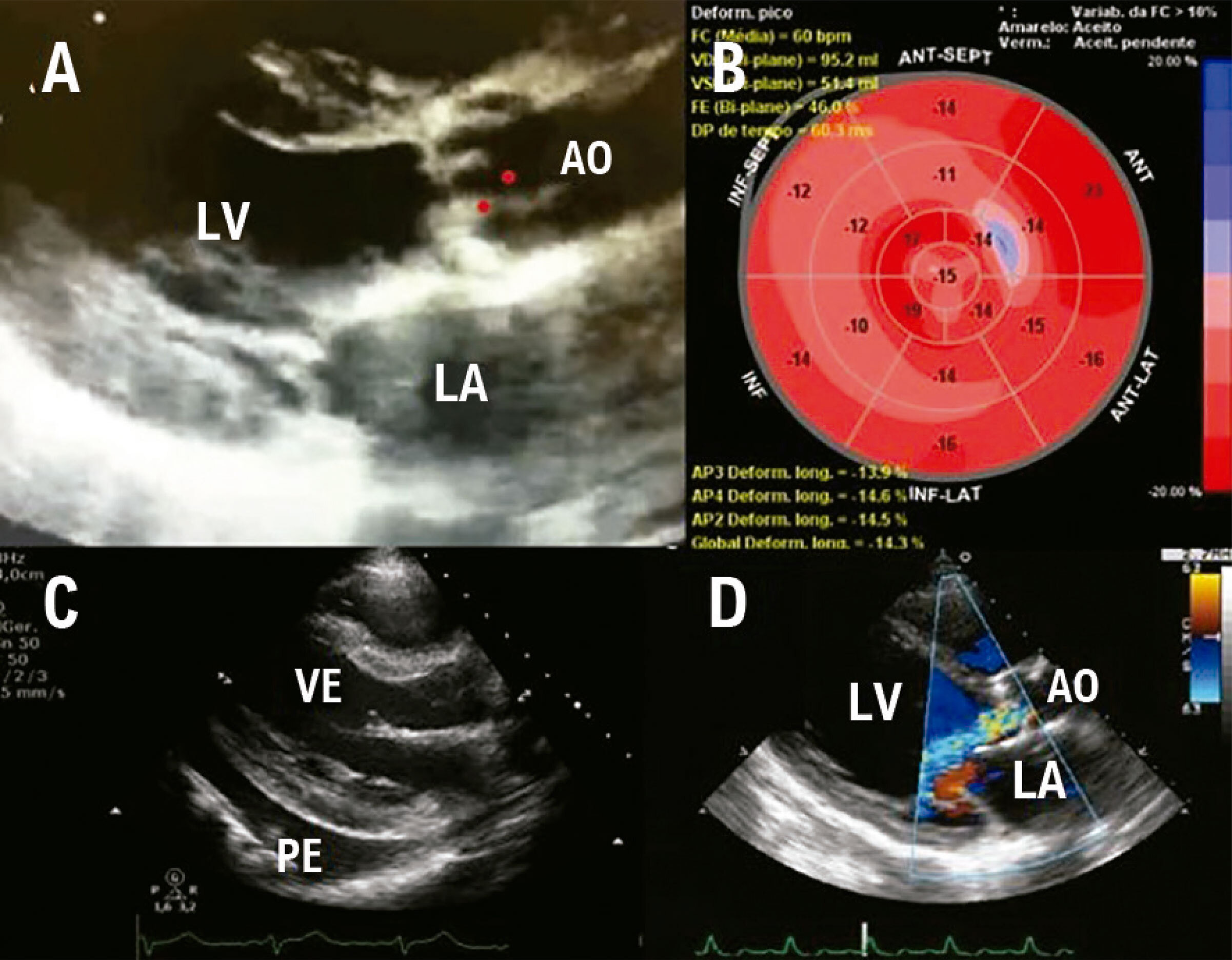
Radiotherapy (RT) has been part of oncological treatment since 1899 and is currently used with more than 50% of all patients. Breast, lung, esophagus, and lymphoma tumors are commonly submitted to RT treatment, showing improvements in the total survival and freedom from diseases. By contrast, when including mediastinal structures, such as the heart and blood vessels, in 10% to 30% of the patients, adverse cardiovascular events were observed after 5 and 10 years, defined as Radiation-Induced Heart Disease (RIHD).,

The RIHD spectrum includes pericardial diseases, coronary artery disease, valvar heart disease, cardiomyopathy, as well as conduction abnormality and dysautonomia, leading to an increase in the cardiovascular morbidity and mortality of the survivors.

[…]

  • Cardiotoxicity
  • Echocardiography
  • Radiotherapy
Read Full Article
Creative Commons Attribution (CC BY) Creative Commons license
24/03/2023 DOI: 10.36660/abcimg.2023358i Views 3
Figure 1
ABC
Case Report

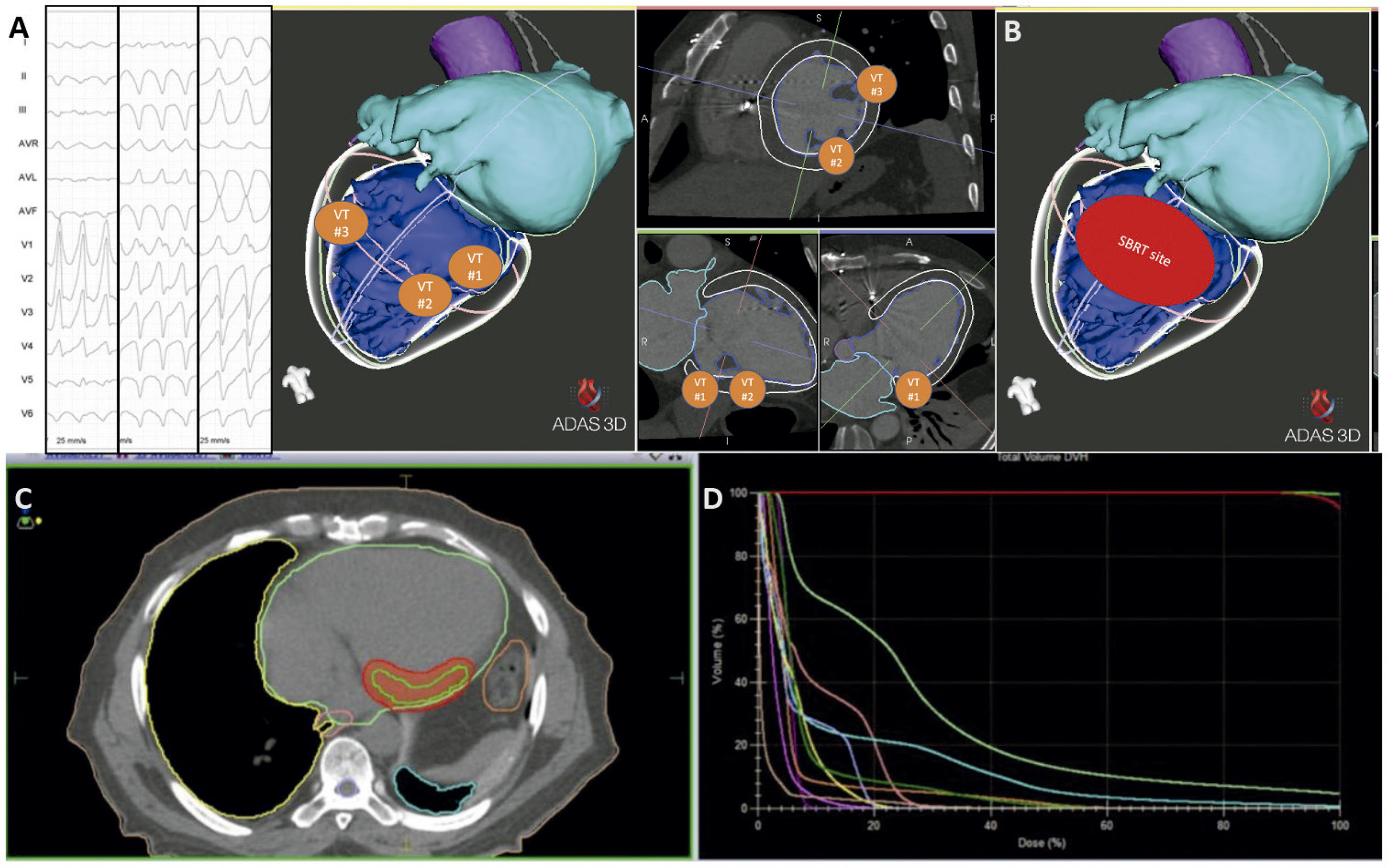
Stereotactic Body Radiation Therapy for Recurrent Ventricular Tachycardia in Chagas Disease: First Case in Latin America

Mauricio I. Scanavacca et al. Cristiano F. Pisani Bernardo Salvajoli Rodrigo M. Kulchetscki … Marina P. Mayrink João Victor Salvajoli Roberto Kalil

Case Report

A 53-year-old male patient has been followed up at Instituto do Coração (InCor) of Hospital das Clínicas da Faculdade de Medicina da Universidade de São Paulo (HC-FMUSP) since 2018 due to CCHD and recurrent SVT; moreover, he had a double chamber ICD implanted in 2014. He had a left ventricular ejection fraction (LVEF) of 42% on transthoracic echocardiography (TTE), and ICD-appropriate therapies were identified, despite the use of amiodarone 400 mg/day, metoprolol 200 mg/day, enalapril 40 mg/day, spironolactone 25 mg/day, and furosemide 40 mg/day.

From November 2020 to June 2021, the patient was admitted several times due to episodes of SVT reverted by ICD, despite amiodarone reimpregnation, and he underwent three catheter ablation attempts, two of them complicated by hemopericardium and hemoperitoneum, which required surgical correction. Although there was an initial improvement, possibly attributed to sequential ablations, the patient experienced a recurrence in June 2021, with repeated ICD-appropriate therapies, and his inclusion in research protocol for SVT ablation by SBRT. He was classified into New York Heart Association (NYHA) functional class II/III, with worsening of LVEF (20%). After providing his free informed consent, the patient accepted to undergo SBRT.

[…]

  • Chagas disease
  • Radiotherapy
  • Ventricular tachycardia
Read Full Article
Creative Commons Attribution (CC BY) Creative Commons license
10/03/2023 DOI: 10.36660/abc.20220614 Views 2
Figure 1
ABCHF
Review Article

Heart Failure with Preserved Ejection Fraction and Cancer

Antonio José Lagoeiro Jorge et al. Humberto Villacorta Luiz Claudio Danzmann Evandro Tinoco Mesquita

Abstract

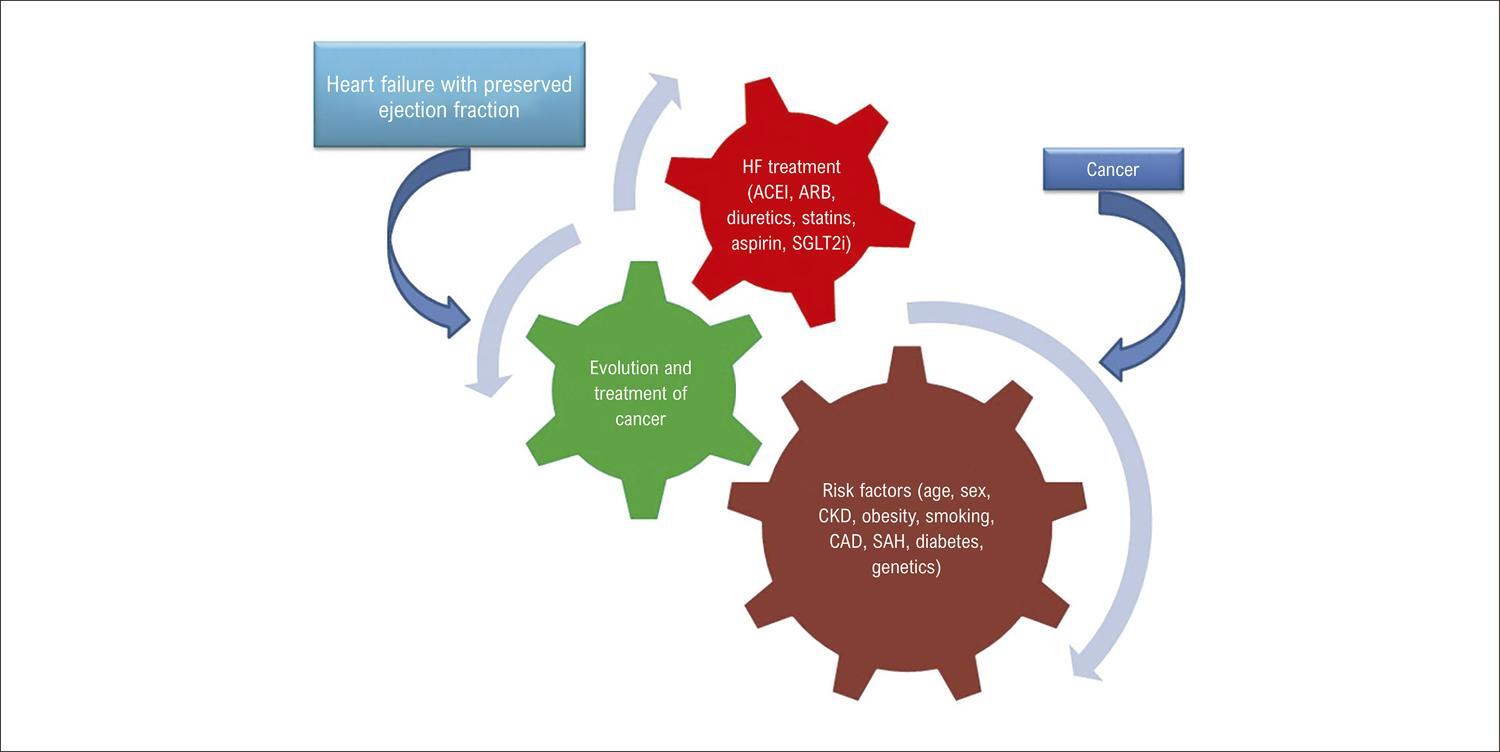
Heart failure with preserved ejection fraction (HFpEF) is associated with high morbidity and mortality. After hospitalization for heart failure, the 5-year survival of HFpEF is 35%, which is worse than many forms of cancer. HFpEF and cancer share common risk factors. The use of chemotherapy medications such as anthracyclines is associated with increased aortic stiffness and diastolic dysfunction, suggesting that anthracycline therapy may increase the risk of HFpEF, given that worsening of diastolic function, which can be associated with the occurrence of HFpEF, is an early sign of cardiotoxicity. Radiotherapy, widely used in the treatment of breast cancer, leads to an increased risk of developing heart disease since radiation induces coronary microvascular endothelial damage and inflammation, leading to microvascular rarefaction, myocardial inflammation, oxidative stress, and fibrosis, which favor the development of HFpEF. Early diagnosis of cardiotoxicity is an important issue in the care of patients with cancer, and biomarkers have been extensively studied in predicting systolic dysfunction and heart failure with reduced ejection fraction, as well as in the development of HFpEF. HFpEF and cancer have an elevated prevalence, and they share age group, risk factors, and the pathophysiological phenomenon, in which inflammation plays a preponderant role. Biomarkers, especially natriuretic peptides, and ultrasound imaging are fundamental tools in the diagnostic detection and follow-up of these patients.

  • Cancer
  • Cardiotoxicity
  • Chemotherapy
  • Heart Failure with Preserved Ejection Fraction
  • Radiotherapy
Read Full Article
Creative Commons Attribution (CC BY) Creative Commons license
18/12/2022 DOI: 10.36660/abchf.20220079 Views 1

How to cite this article

EndNote RIS

Electronic Document Format (Vancouver)

Paiva MG. Radiotherapy-Induced Heart Disease: What Can We Evaluate?. Arquivos Brasileiros de Cardiologia Imagem cardiovascular 2023;36(1):e358.

Electronic Document Format (ABNT)

Paiva, Marcelo Goulart. Radiotherapy-Induced Heart Disease: What Can We Evaluate?. Arquivos Brasileiros de Cardiologia Imagem cardiovascular, v. 36, n. 1, e358, Mar. 2023.

Electronic Document Format (APA)

Paiva, M. G. (2023). Radiotherapy-Induced Heart Disease: What Can We Evaluate?. Arquivos Brasileiros de Cardiologia Imagem cardiovascular, 36(1), e358.

Electronic Document Format (ISO)

Paiva, Marcelo Goulart. Radiotherapy-Induced Heart Disease: What Can We Evaluate?. Arquivos Brasileiros de Cardiologia Imagem cardiovascular [online]. 2023, vol. 36, n. 1, [cited 2026-10-14], e358. Available from: <https://journals.cardiol.br/en/article/radiotherapy-induced-heart-disease-what-can-we-evaluate/>. ISSN 2318-8219

EndNote RIS

Electronic Document Format (Vancouver)

Scanavacca MI, Pisani CF, Salvajoli B, Kulchetscki RM, Mayrink MP, Salvajoli JV, Kalil R, et al. Stereotactic Body Radiation Therapy for Recurrent Ventricular Tachycardia in Chagas Disease: First Case in Latin America. Arquivos Brasileiros de Cardiologia 2023;120(2):e20220614.

Electronic Document Format (ABNT)

Scanavacca, Mauricio I.; Pisani, Cristiano F.; Salvajoli, Bernardo; Kulchetscki, Rodrigo M.; Mayrink, Marina P.; Salvajoli, João Victor; Kalil, Roberto. Stereotactic Body Radiation Therapy for Recurrent Ventricular Tachycardia in Chagas Disease: First Case in Latin America. Arquivos Brasileiros de Cardiologia, v. 120, n. 2, e20220614, Mar. 2023.

Electronic Document Format (APA)

Scanavacca, M. I., Pisani, C. F., Salvajoli, B., Kulchetscki, R. M., Mayrink, M. P., Salvajoli, J. V., & Kalil, R. (2023). Stereotactic Body Radiation Therapy for Recurrent Ventricular Tachycardia in Chagas Disease: First Case in Latin America. Arquivos Brasileiros de Cardiologia, 120(2), e20220614.

Electronic Document Format (ISO)

Scanavacca, Mauricio I. and Pisani, Cristiano F. and Salvajoli, Bernardo and Kulchetscki, Rodrigo M. and Mayrink, Marina P. and Salvajoli, João Victor and Kalil, Roberto. Stereotactic Body Radiation Therapy for Recurrent Ventricular Tachycardia in Chagas Disease: First Case in Latin America. Arquivos Brasileiros de Cardiologia [online]. 2023, vol. 120, n. 2, [cited 2026-10-14], e20220614. Available from: <https://journals.cardiol.br/en/article/stereotactic-body-radiation-therapy-for-recurrent-ventricular-tachycardia-in-chagas-disease-first-case-in-latin-america/>. ISSN 0066-782X

EndNote RIS

Electronic Document Format (Vancouver)

Jorge AJL, Villacorta H, Danzmann LC, Mesquita ET. Heart Failure with Preserved Ejection Fraction and Cancer. ABC: Heart Failure & Cardiomyopathy 2022;2(4):343-5.

Electronic Document Format (ABNT)

Jorge, Antonio José Lagoeiro; Villacorta, Humberto; Danzmann, Luiz Claudio; Mesquita, Evandro Tinoco. Heart Failure with Preserved Ejection Fraction and Cancer. ABC: Heart Failure & Cardiomyopathy, v. 2, n. 4, p. 343-353, Dec. 2022.

Electronic Document Format (APA)

Jorge, A. J. L., Villacorta, H., Danzmann, L. C., & Mesquita, E. T. (2022). Heart Failure with Preserved Ejection Fraction and Cancer. ABC: Heart Failure & Cardiomyopathy, 2(4), 343-353.

Electronic Document Format (ISO)

Jorge, Antonio José Lagoeiro and Villacorta, Humberto and Danzmann, Luiz Claudio and Mesquita, Evandro Tinoco. Heart Failure with Preserved Ejection Fraction and Cancer. ABC: Heart Failure & Cardiomyopathy [online]. 2022, vol. 2, n. 4, [cited 2026-10-14], pp. 343-353. Available from: <https://journals.cardiol.br/en/article/heart-failure-with-preserved-ejection-fraction-and-cancer/>

  • About ABC Family
  • Internal Regulation
  • Editorial Board
  • Brazilian Society of Cardiology (SBC)

Issues

SBC Guidelines

  • Videos
  • Podcasts
  • News