| IJCS
ABC Family Arquivos Brasileiros de Cardiologia International Journal of Cardiovascular Sciences ABC Heart Failure & Cardiomyopathy ABC Imagem Cardiovascular
Português English
ABC Family | IJCS
Português English
  • About
    • About the Journal
    • Internal Regulation
    • Editors Section
    • Editorial Board
    • SBC Award
  • Instructions to Authors
    • Guidelines for Publication
    • Editorial Policy
    • Ethics Policy
    • Policy on the Use of Artificial Intelligence
    • Mandatory Publication Form
    • Publication Fee
  • Issues
  • SBC Guidelines
  • Abstracts
    • How to Publish an Abstract Supplement?
    • Published Supplements
  • About
    • About the Journal
    • Internal Regulation
    • Editors Section
    • Editorial Board
    • SBC Award
  • Instructions to Authors
    • Guidelines for Publication
    • Editorial Policy
    • Ethics Policy
    • Policy on the Use of Artificial Intelligence
    • Mandatory Publication Form
    • Publication Fee
  • Issues
  • SBC Guidelines
  • Abstracts
    • How to Publish an Abstract Supplement?
    • Published Supplements

ABC Family

  • ABC Family
  • Arquivos Brasileiros de Cardiologia
  • International Journal of Cardiovascular Sciences
  • ABC Heart Failure & Cardiomyopathy
  • ABC Imagem Cardiovascular
Search in

No content found.

Journals
Ordering
Article types
Others

  1. Home
  2. IJCS
  3. Issues
  4. 2020, Volume 33, Number 3
Original Article

Analysis of Adherence to Antihypertensive Drug Treatment in an Argentinean Cohort

Walter Gaston Espeche et al. Rodrigo Sabio Alejandro Diaz Roberto Parodi … Carlos Enrique Leiva Sisnieguez Roberto Antonio Flores Silvia Poppe Javier Altube Diego Grimaldi Martin Rogelio Salazar

Abstract

Background

Adherence to antihypertensive medication is a major challenge in the management of hypertension, and non-adherence is an important barrier to effective management of hypertension.

Objectives

To determine the adherence rate to hypertensive drug treatment and the factors that influence non-adherence in a cohort of the Argentinean population.

Methods

A multicenter cross-sectional study was conducted in eight cities of Argentina. Consecutive hypertensive patients seen in general practice offices, receiving pharmacological treatment for at least six months were included. Blood pressure measurements were performed by physicians during the patient visit. The level of adherence was assessed using the Morisky questionnaire, and patients were divided into non-adherent and adherent. Continuous variables were compared using independent t-test. Categorical variables were compared using the χ2 test. To identify the variables independently associated with non-adherence, a forward stepwise binary regression logistic model was performed, and the results expressed as odds ratio (OR) with 95% of confidence interval. All tests were two-tailed, and p-values < 0.05 were considered statistically significant.

Results

A total of 852 individuals (52% women, 62 ± 13 years) were included. The main reason for lack of adherence was forgetfulness of medication intake and errors in the time of intake (~ 40% in both). Individuals with more cardiovascular risk factors (smoking, diabetes, dyslipidemia and previous cardiovascular events) had lower adherence to antihypertensive treatment, and considerably younger (~ five years younger).

Conclusions

Adherence rate to antihypertensive drug treatment in our study group was higher than the one reported in previous studies, and the main reason for non-adherence was forgetfulness of medication intake. (Int J Cardiovasc Sci. 2020; 33(3):272-277)
  • antihypertensive agents
  • Cross-sectional Study
  • Hypertension/epidemiology
  • Risk Factors
Read Full Article
Creative Commons Attribution (CC BY) Creative Commons license
29/05/2020 DOI: 10.36660/ijcs.20190069 Views 1
Editorial

Metabolic Syndrome

Elizabete Viana de Freitas et al. Kalil Lays Mohallem

Introduction

Metabolic Syndrome (MS) is a complex disorder characterized by a group of Risk Factors (RF), including changes in glycemic levels, insulin resistance, lipid profile, blood pressure levels and central obesity (visceral adipose tissue – VAT), which increase the incidence of cardiovascular diseases often associated with ageing.

It is estimated to affect over 20% of the global adult population, and women are at greater risk. Central (visceral) obesity is thought to be the predominant RF for MS, especially among overweight and low-educated elderly.

[…]

  • Diabetes Mellitus, Elderly
  • Dyslipidemias
  • Hypertension
  • Metabolic Syndrome
  • Obesity
  • Prevention and Control
  • Risk Factors
Read Full Article
Creative Commons Attribution (CC BY) Creative Commons license
29/05/2020 DOI: 10.36660/ijcs.20200085
Viewpoint

Coronavirus Disease (COVID-19) Pandemic: An Opportunity Window to Implement Home-Based Cardiac Rehabilitation

Renata Rodrigues Teixeira de Castro

The World Health Organization declared that the new coronavirus outbreak is a public health emergency of pandemic proportions. The outbreak has caused various governments to take protective measures such as lockdown of cities, travel bans, prohibition of group gatherings and public events, and social distancing. Many health and exercise training facilities were closed, as well as cardiac rehabilitation services. These restrictions are disrupting people’s daily activities.

Although staying at home can contain virus spread, it will certainly reduce regular physical activity and increase sedentary behavior, which can increase the risk of development and worsening of chronic conditions. – Therefore, there is a strong evidence for continuing physical activity at home even during the pandemic situation.

[…]

  • Cardiac Rehabilitation
  • Cardiovascular Diseases
  • Comorbidity
  • Coronavirus Infections/prevention and control
  • Coronavirus/isolation & purification
  • diabetes
  • Exercise
  • Hypertension
  • Physical activity
  • Public Health Services
  • Syndrome Acute Respiratory
Read Full Article
Creative Commons Attribution (CC BY) Creative Commons license
29/05/2020 DOI: 10.36660/ijcs.20200062 Views 1
Editorial

Challenge in the Treatment of Children with Congenital Heart Disease: Reducing Waiting Time for Cardiac Surgery

Ana Flavia Malheiros Torbey et al. Aurea Grippa

Congenital heart disease is an important cause of mortality in the neonatal period. in Brazil, according to data from DATASUS from the period between 2012 and 2016, congenital heart disease is the third most common malformation in children younger than 28 days, with an estimated incidence of 1.3-1.7% and high mortality rate in this age range. They are also the third main cause of global mortality in the first 30 days of life, the main cause among congenital abnormalities. Therefore, 28,000 new cases per year are expected in Brazil. ,

The outcomes of congenital heart disease can be grouped into spontaneous resolution of minor lesions, such as some interatrial or interventricular communications or persistent arterial duct; conditions that require repair procedures (interventional catheterizations or surgeries); and those cases that only palliative procedures can be performed due to anatomical and physiological features. Thus, approximately 20% of cases do not require surgery and resolve spontaneously, and nearly half of the other 80% (22,400 children) will require cardiac surgery in the first year of life. ,

[…]

  • Health Services Accessibility
  • Heart Defects, Congenital/surgery
  • Public Health
  • Public Policy
Read Full Article
Creative Commons Attribution (CC BY) Creative Commons license
29/05/2020 DOI: 10.36660/ijcs.20190013
Editorial

Oral Contraceptives and Cardiovascular Risk: Adding Clinical Evidence to the Pathophysiology

Daniel Arthur B Kasal et al. Andrea De Lorenzo

Women cardiovascular health is an important and often neglected issue. Cardiovascular diseases (CVDs) are the main cause of death in women, in Brazil and worldwide. Oral contraceptives are the main method used for contraception in Brazil. The issue of oral contraceptives and cardiovascular risk has been raised since the first descriptions of this class of pharmaceuticals, in the 1960s. The development of low-dose combined oral contraceptives (COCs) containing ethinyl estradiol and different progestins has reduced, albeit not eliminated, cardiovascular morbidity in women taking these medications. The main side effects associated with COCs are procoagulant effects. Therefore, the use of COCs is associated with increased risk of developing acute myocardial infarction, venous thromboembolism and stroke. In addition, adverse changes in the lipid profile and glucose tolerance have been described. Clearly, ageing and exposure to other risk factors, mainly smoking and obesity, play an important role in the development of adverse outcomes related to COCs. In addition, formulations with different progestins may produce distinct effects on circulation.

Another important side effect associated with COCs is the development of hypertension. A meta-analysis including 24 studies and over 250,000 participants found a significant association between the duration of oral contraceptive use and risk of hypertension. Studies regarding the pathophysiology of this association have revealed a number of different and complementary mechanisms. These include oxidative stress, endothelial dysfunction and the activation of the Renin-Angiotensin-Aldosterone system (RAAS). In this issue, Oliveira et al., published an interesting clinical observational study, with young volunteers using low-dose COCs for at least one year, compared to women not using the medication. The authors found higher plasma renin levels in women using COC, with a strong correlation with plasma C-reactive protein (CRP). Additionally, although they did not reach the level of hypertension, systolic arterial pressure measurements of COC users were higher than those of non-users. This finding suggests that RAAS activation, if sustained, could eventually shift blood pressure in women using this medication into the hypertension range. The increase of inflammatory pathways, which is associated with RAAS activation, is also shown by the positive correlation with CRP. While the study was restricted to young and healthy participants, and COC use included five different formulations, the results add clinical evidence linking RAAS activation to oral contraceptive use, inflammation and even hypertension development, in a Brazilian sample.

[…]

  • Blood Coagulation Factors
  • Hypertension
  • Morbidity
  • Oral Contraceptives/adverse effects
  • Oxidative Stress/drug effects
  • Woman
Read Full Article
Creative Commons Attribution (CC BY) Creative Commons license
29/05/2020 DOI: 10.36660/ijcs.20200078 Views 1
Editorial

Is Bovine Heparin, an Old Fellow, a Safe Anticoagulation Approach during Extracorporeal Circulation Inside the Cardiac Operating Room?

Ivis Levy Fernandes Martins et al. Christianne Bretas Vieira Scaramello

Antithrombotic agents include anticoagulants, antiplatelet and fibrinolytic drugs. They are prescribed in several situations related to hemostasis disturbances that favor thrombi formation. Since bleeding is a common adverse effect of these drugs, a cost-benefit analysis of antithrombotic therapy prior to surgery should be performed. In order to consider the preoperative therapy for patients undergoing cardiac surgery, the risk of thrombosis must outweigh the risk of bleeding. Nonetheless, the literature has reported the use of anticoagulant therapy with unfractionated heparin (UFH) during extracorporeal circulation (ECC) inside and outside the cardiac operating room. –

The development of the heart-lung machine made ECC possible. Therefore, heart surgery became a routine practice. The literature describes that complications related to ECC have diminished due to modern monitoring, highly trained staff, special cannulation methods, as well as the latest advances in techniques. However, some authors suggest that guidelines based on more researches would improve the safety of this procedure. During cardiac surgery, ECC preserves the functional characteristics of the heart, provides a clean surgical environment and offers safety to the team.

[…]

  • blood coagulation
  • Cardiac Surgical Prcedures
  • Extracorporeal Circulation
  • Heparin
  • Patient Safety
Read Full Article
Creative Commons Attribution (CC BY) Creative Commons license
29/05/2020 DOI: 10.36660/ijcs.20200077
Viewpoint

Exercise Training: A Hero that Can Fight two Pandemics at Once

Renata Rodrigues Teixeira de Castro et al. João Giffoni da Silveira Neto Roberta Rodrigues Teixeira de Castro

The sedentarism pandemic

The WHO recommends that adults aged 18 years and older should accumulate at least 150 minutes of moderate-intensity aerobic activity, 75 minutes of vigorous-intensity aerobic activity, or a combination of both per week. People who do not meet these requirements are considered sedentary. The health benefits of physical exercise include lower risks of cardiovascular disease, hypertension, diabetes, obesity, dementia and breast and colon cancer. – Despite all these benefits, sedentarism is a pandemic, affecting 27.5% of people globally.

Sedentarism increases the risk of the world´s major non-communicable diseases. I-Min Lee et al., estimated that physical inactivity is responsible for 6% of the burden of coronary artery disease, 7% of type 2 diabetes, 10% of breast cancer and colon cancers. Thus, inactivity is considered responsible for 9% of premature mortality, globally. Actually, sedentarism kills more people annually than the COVID-19 infection.

[…]

  • Breathing Exercises/methods
  • Comorbidity
  • Coronavirus, Communicable Diseases, Emerging
  • COVID-19
  • Exercise
  • Motor Activity/methods
  • Pandemics
  • Social Isolation
Read Full Article
Creative Commons Attribution (CC BY) Creative Commons license
29/05/2020 DOI: 10.36660/ijcs.20200083 Views 1
Figure 1
Viewpoint

Covid-19 and Safety in the Cath Lab: Where We Are and Where We Are Headed

Giordana Zeferino Mariano et al. Viviana Guzzo Lemke Maria Sanali Moura Paiva Gláucia Maria Moraes de Oliveira

Safety measures in the procedure preparation stage

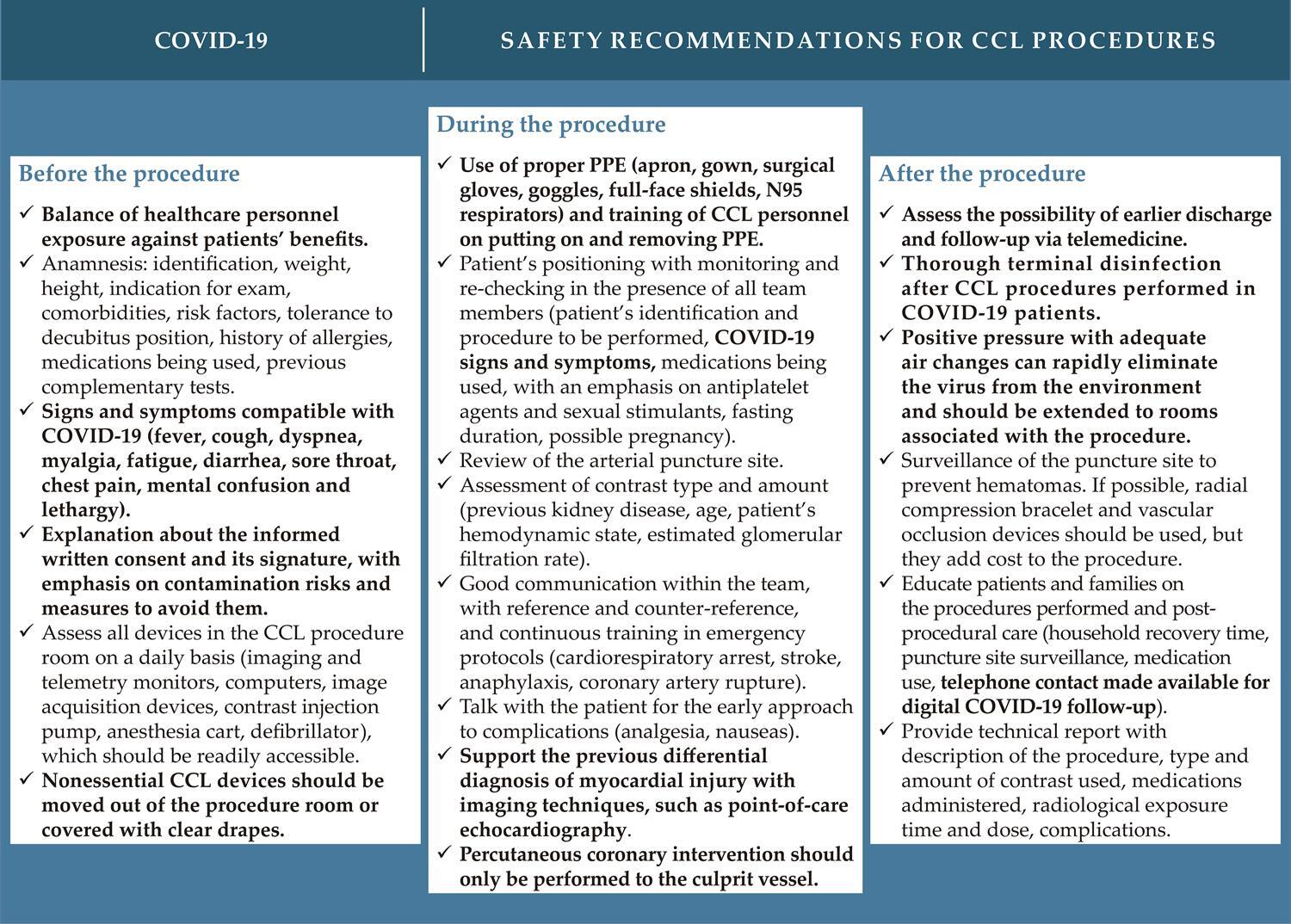
A study conducted in China with 72,314 patients with COVID-19 (44,672 laboratory-confirmed cases, 16,186 suspected cases, and 10,567 clinically diagnosed cases) has reported fever, cough, dyspnea, myalgia, fatigue and diarrhea as the most common symptoms. Other signs and symptoms have been reported, such as sore throat, chest pain, mental confusion, and lethargy. The authors have highlighted that COVID-19 had a benign course in 80% of the cases, and that many patients, although asymptomatic, could carry the virus. It is worth noting the importance of the differential diagnosis of dyspnea and fatigue, especially when associated with the other symptoms.

During a respiratory pandemic, patients and their families should be informed about the risks of contamination, despite all additional measures taken to minimize them. Because the number of elective procedures will be drastically reduced during that period, the length of hospital stay is predicted to be the minimum necessary for each protocol consensually elaborated. Moreover, defining a procedure as elective requires clinical judgement, because postponing it might have effects that will increase the likelihood of decompensation and adverse events during the pandemic, such as in high-risk patients with unstable angina. Therefore, the decision about performing a procedure should be individualized and based on the patient’s risk and benefit analysis.

[…]

  • Chest Pain
  • Coronavirus
  • Cough
  • COVID-19
  • Diarrhea
  • Dyspnea
  • Fatigue
  • Fever
  • Mental Confusion
  • Myalgia, Cardiovascular Diseases/complications
  • Pandemics
  • Pathological Conditions, Signs and Symptoms
  • Safety
Read Full Article
Creative Commons Attribution (CC BY) Creative Commons license
29/05/2020 DOI: 10.36660/ijcs.20200080 Views 1
Editorial

The Importance of Cardiovascular Risk in Primary Healthcare

Erika Maria Gonçalves Campana et al. Rafael Santos Costa

Cardiovascular Diseases (CVDs) are the leading cause of death in Brazil and worldwide, determining increased morbidity and disability-adjusted life years. The implementation of health policies, among them, encouraging healthy lifestyle habits and providing access to primary and secondary CVD prevention measures, associated with the treatment of cardiovascular (CV) events are essential to control CVD in all countries, including Brazil.

Arterial hypertension (AH) has a high prevalence in Brazil. It varies according with the population studied and the assessment method used. It is often associated with metabolic disorders, functional and/or structural changes in target organs, being worsened by the presence of other risk factors (RF), such as dyslipidemia, abdominal obesity, glucose intolerance and diabetes mellitus (DM).

[…]

  • Cardiovascular Diseases, mortality
  • Cardiovascular Diseases/prevention and control
  • Hypertension
  • Life Style
  • Obesity
  • Risk Factors
  • Treatment Adherence
Read Full Article
Creative Commons Attribution (CC BY) Creative Commons license
29/05/2020 DOI: 10.36660/ijcs.20200074 Views 2
Editorial

Hepatic Elastography in the Assessment of Heart Failure: Where We Came from and Where We Are Going

Edison Migowski

Conclusion

There seems to be a consensus that the greater the liver stiffness, the greater the risk of mortality (“Stone liver, heart in danger”, according to Pernot and Villemain) However, innumerous studies are necessary to determine which therapeutic interventions would be capable of decreasing that stiffness and whether such decrease would have a consistent impact on prognosis. Another relevant data is that we do not know exactly the amount of information that HE can add to clinical practice, in addition to the information already provided by echocardiography and BNP.

It is believed that a long way must be taken until this technique becomes a useful tool for cardiologists, with favorable impact on the management of a disease with high morbidity, mortality and cost for the healthcare system. Nevertheless, we can state that the interpretation of results by the clinician involved in the patient’s treatment will be undoubtedly crucial for its success.

[…]

  • Elasticity Imaging Techniques/methods
  • Heart Failure
  • Hospitalization
  • Liver Diseases
  • Outcomes
  • Patient Readmission
  • Prognosis
Read Full Article
Creative Commons Attribution (CC BY) Creative Commons license
29/05/2020 DOI: 10.36660/ijcs.20200070
Figure 1
Editorial

Infodemia, Fake News and Medicine: Science and The Quest for Truth

Claudio Tinoco Mesquita et al. Anderson Oliveira Flávio Luiz Seixas Aline Paes

“Falsehood flies, and the truth comes limping after it.”

Jonathan Swift

[…]

  • Coronavirus
  • disaster Medicine/ethics
  • False Representation
  • Information Dissemination
  • Information Science/trends
  • Scientific Misconduct/trends
Read Full Article
Creative Commons Attribution (CC BY) Creative Commons license
27/04/2020 DOI: 10.36660/ijcs.20200073 Views 2
Viewpoint

PARAGON-HF: Lessons Learned and Perspectives

José Francisco Kerr Saraiva et al. Isadora de Oliveira

An estimated 6.5 million Americans aged 20 and over have heart failure (HF) and projections show that the prevalence of HF will increase by 46% from 2012 to 2030, resulting in over 8 million people with HF.

Patients with HF can be stratified into different categories of left ventricular ejection fraction (LVEF), presenting different phenotypes in terms of demographics, clinical presentation, etiology and outcomes. The current classification comprises HF with reduced ejection fraction (EF) [EF ≤ 40% (HFrEF)], with intermediate EF [EF 40-50% (HFiEF), and preserved EF [EF ≥ 50% (HFpEF).,

[…]

  • Dysfunction Left Ventricular/abnormalities
  • Echocardiography/methods
  • Heart Failure/physiopathology
  • Indicators of Morbidity and Mortality
  • Neprilysin/therapeutic use
  • Risk Factors
  • Valsartan/therapeutic use
Read Full Article
Creative Commons Attribution (CC BY) Creative Commons license
17/04/2020 DOI: 10.36660/ijcs.20190222
Editorial

COVID-19: A Matter Close to the Heart

Gláucia Maria Moraes de Oliveira et al. Fausto J. Pinto

The world is facing a new challenge, the novel coronavirus disease 2019 (COVID-19), caused by a betacoronavirus named severe acute respiratory syndrome coronavirus 2 (SARS-CoV-2), phylogenetically identical to the SARS-CoV (severe acute respiratory syndrome coronavirus) and the MERS-CoV (Middle East respiratory syndrome coronavirus) responsible for innumerable deaths in China in 2003 and in the Middle East in 2012, respectively.

On March 11, 2020, the COVID-19 outbreak was characterized as a pandemic by the World Health Organization (WHO). Twenty-three days after that announcement, the cases reported reached 1,056,777 in 182 countries, with 55,781 deaths, most of which occurring in Italy, Spain, France, China and Iran. So far, Brazil has registered 8,195 cases and 335 deaths, while Portugal, 9,886 cases and 246 deaths, figures that have increased steeply since the beginning of the pandemic.

[…]

  • Cardiovascular Diseases/complications
  • Coronavirus-19 (COVID-19
  • Dyspnea
  • Fever
  • Mortality
  • Pandemics
  • Risk Factors
  • Severe Acute Respiratory Syndrome
Read Full Article
Creative Commons Attribution (CC BY) Creative Commons license
17/04/2020 DOI: 10.36660/ijcs.20200057
Original Article

Evaluation of Cardiovascular Risk in Hypertensive Individuals Attending a Primary Health Care Center

Tiago Ricardo Moreira et al. Luana Vieira Toledo Érica Toledo Mendonça Renata Maria Colodette … Luciana Saraiva Silva Rosângela Minardi Mitre Cotta

Abstract

Background:

Cardiovascular risk (CVR) stratification has traditionally been used as a strategy for the prevention of cardiovascular diseases in asymptomatic people.

Objective:

To identify the CVR in hypertensive patients attending a primary health care center, using the Framingham risk score, and to evaluate possible associations and correlations with sociodemographic, clinical and laboratory variables not included in this score. This cross-sectional study was conducted with hypertensive patients treated in a primary health care center in Brazil (n = 166).

Methods:

Data collection, administration of questionnaires, anthropometric measurements and laboratory tests were performed from July to August 2013. Multiple linear regression was used in the analysis. A two-tailed p-value < 0.05 was considered significant.

Results:

High CVR was independently associated with male sex (B = 8.73; 95%CI: 6.27: 11.19), high serum levels of total cholesterol (B = 0.05; IC95%: 0.02: 0.08), number of drugs used (B = 0.55; 95%Ci: 0.12: 0.98) and a low glomerular filtration rate (GFR) (B = -0.11; 95%CI: -0.18 : -0.03).

Conclusion:

The results of this study reinforce the importance of continuous and longitudinal care practices directed to hypertensive patients aiming at early detection of risk factors and appropriate intervention to improve the prognosis of this population.

  • Cardiovascular Diseases, mortality
  • Hypertension
  • Life Style
  • Obesity
  • Prevention and Control
  • Risk Factors
  • Sedentarism
  • Treatment Adherence anf Compliance
Read Full Article
Creative Commons Attribution (CC BY) Creative Commons license
03/02/2020 DOI: 10.36660/ijcs.20180078 Views 1
Figure 1
Original Article

QT Interval Dispersion Behavior in Patients With and Without Obstructive Coronary Artery Disease Undergoing Exercise Test

Alexandre Maulaz Barcelos et al. Marcelo Perim Baldo Sérgio Lamego Rodrigues José Geraldo Mill

Abstract

Background:

Stress test is used to detect coronary artery disease (CAD). The QTc interval dispersion (dQTc) is an electrocardiographic index of ventricular repolarization heterogeneity. Some researchers have linked transient myocardial ischemia induced by physical exertion with increased heterogeneity of ventricular repolarization measured by dQTc.

Objectives:

To study the patterns of dQT in patients with and without chronic obstructive CAD and to define a reliable cutoff point for dQT that could become a diagnostic criterion for myocardial ischemia.

Methods:

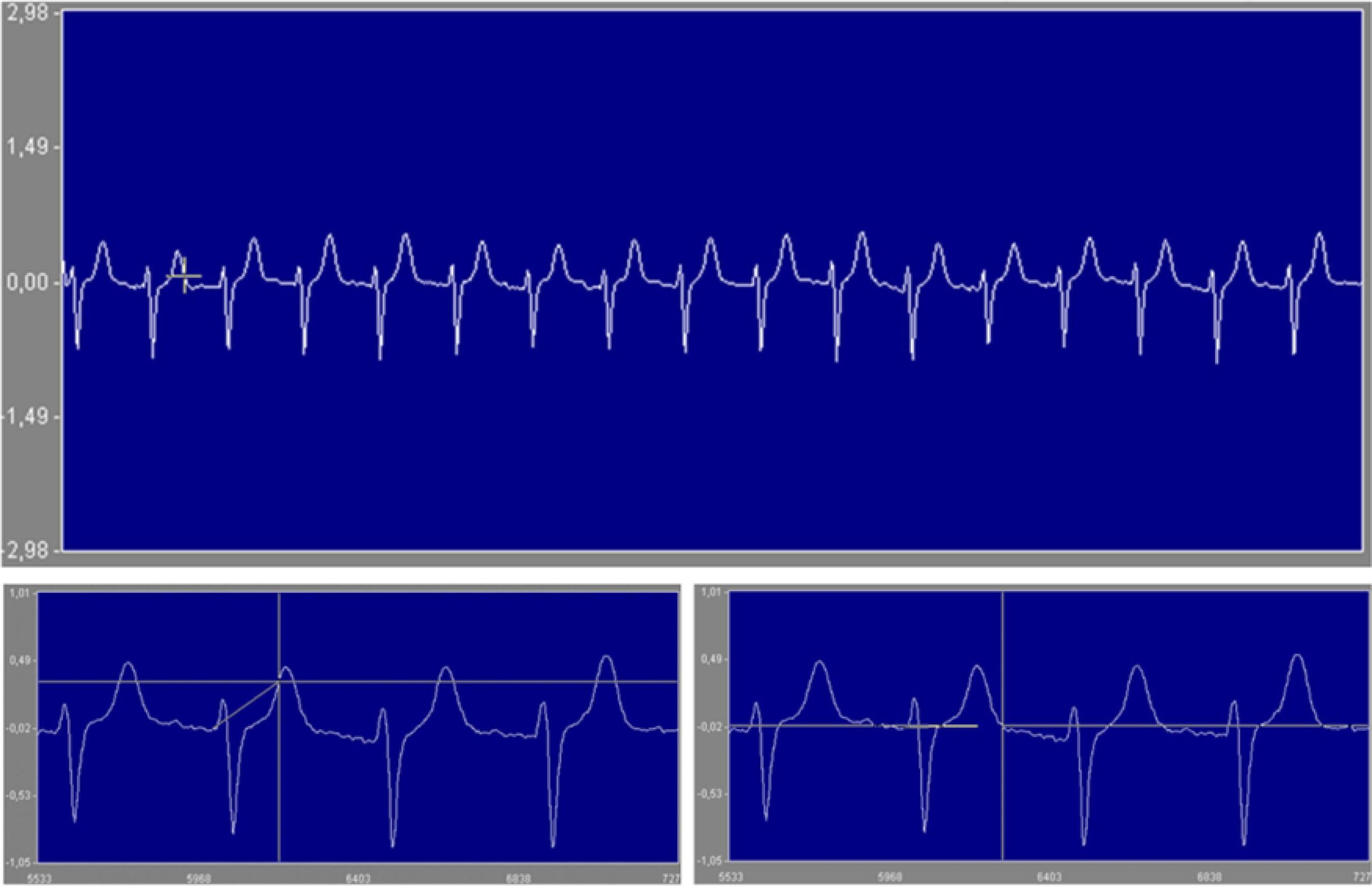
We retrospectively analyzed the electrocardiogram in resting and in exercise of 63 patients submitted to exercise test and cardiac catheterization. We divided the patients into three groups: true negative (VN), true positive (VP) and false positive (FP). VN: patients with coronary lesion lower than 70% and exercise test without myocardial ischemia; VP: individuals with stenosis greater than 70% in coronary arteries and a test suggestive of myocardial ischemia; FP: people with stenosis lower than 70% in the coronary arteries and stress test with ischemia criteria. Values of p < 0.05 were considered statistically significant.

Results:

Resting dQTc was not different among the three groups. However, for the dispersion of the QTc interval in exercise was, respectively, 47 ± 17 ms, 72 ± 42 ms, and 61 ± 31 ms for VN, VP and FP (p = 0.003).

Conclusions:

Obstructive chronic coronary disease patients have an increase in dQTc during exercise. Measurement of dQTc may be helpful in the diagnosis of myocardial ischemia in the stress test.

  • Coronary Artery Disease/physiopathology
  • Electrocardiography/method
  • electrophysiology
  • Exercise Test/method
  • Myocardial Ischemia
  • QT Dispersion Interval
Read Full Article
Creative Commons Attribution (CC BY) Creative Commons license
03/02/2020 DOI: 10.36660/ijcs.201810681 Views 2
Figure 1
Original Article

Diagnostic and Prognostic Role of Liver Elastography in Heart Failure

Diane Xavier Ávila et al. Priscila Abreu Matos Gabriel Quintino Wolney de Andrade Martins … Dalmo Machado Claudio Tinoco Mesquita Humberto Villacorta Junior

Abstract

Background:

Hepatic congestion is a frequent finding in patients with heart failure (HF). Physical examination has limitations in quantifying systemic congestion and requires correlation with echocardiographic and laboratory data (usually B-type natriuretic peptide, BNP, or N-terminal pro-B type natriuretic peptide, NT-proBNP). Hepatic elastography evaluates liver stiffness using a transducer that transmits low-frequency vibrations (50 Hz), and the speed of shear waves propagating through the tissues is measured by ultrasound. The faster the vibrations propagate in the hepatic parenchyma, the stiffer the liver, which, in case of HF, can be correlated with hepatic congestion.

Objective:

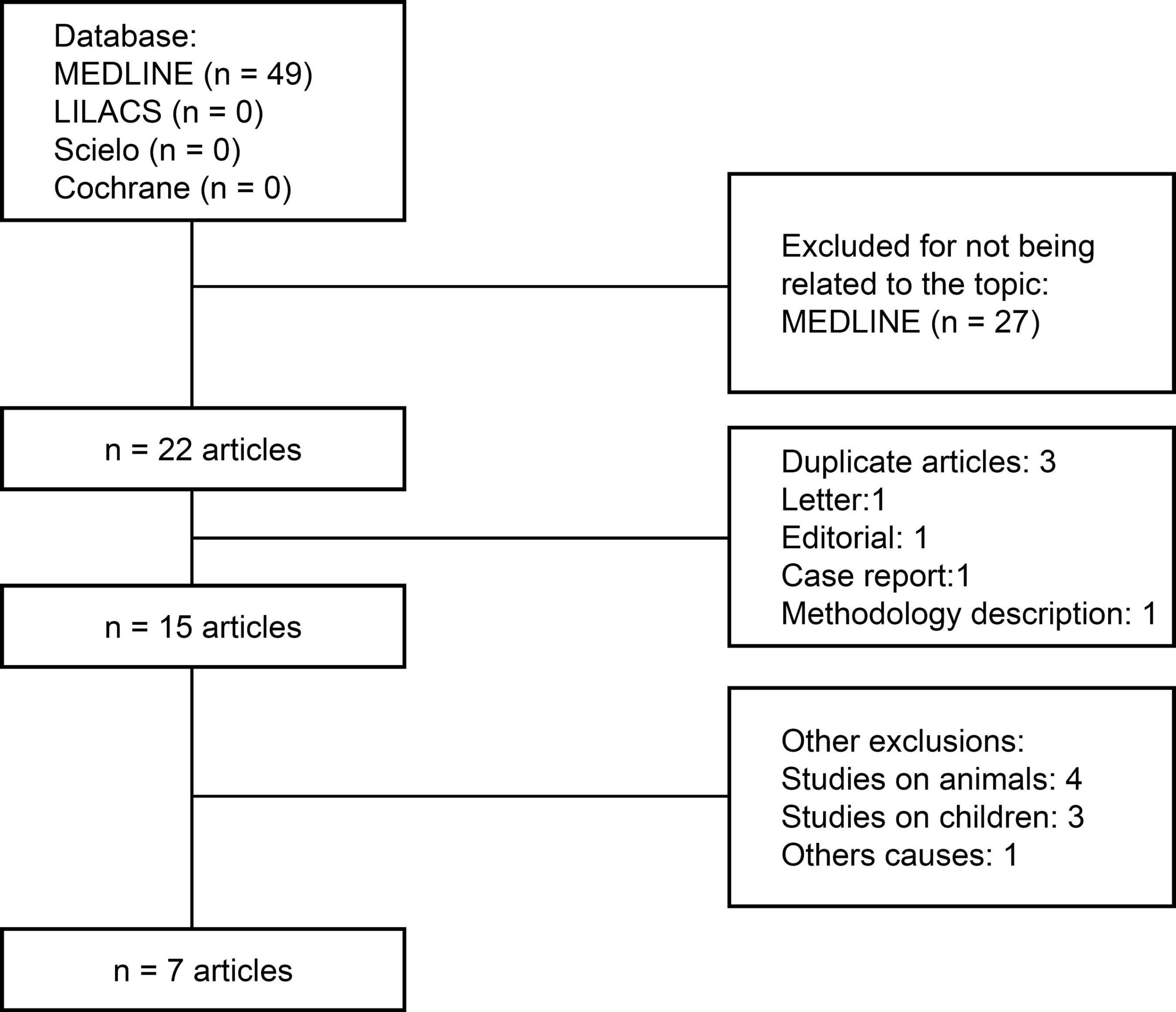
In this systematic review, case-controls, cohort studies, and randomized clinical trials were searched in MEDLINE, LILACS and Cochrane Database of Systematic Review, to evaluate the use of elastography in the detection of hepatic congestion in patients with HF.

Methods:

From the 49 articles retrieved, seven were selected for review, according to the inclusion and exclusion criteria. The most used methods for the diagnosis and evaluation of HF were echocardiography combined with BNP and NT-proBNP measurements.

Results:

Elastography performed at bedside was able to establish a significant correlation between increased liver stiffness and increased venous capillary pressure. In addition, liver elastography performed at hospital discharge was able to predict rehospitalization and mortality.

Conclusion:

Liver elastography is a non-invasive method that can be useful in predicting prognosis and mortality of individuals with HF, contributing to the clinical management of these patients.

  • Echocardiography/methods
  • Elastography
  • Heart Failure / mortality
  • Heart Failure/physiopathology
  • Hepatic Congestion
  • Hospitalizartion
  • Humans
  • Ultrassonography/ methods
Read Full Article
Creative Commons Attribution (CC BY) Creative Commons license
03/02/2020 DOI: 10.36660/ijcs.20190005 Views 1
Figure 1
Original Article

Evaluation of Polymorphisms in IL8 and IL16 Genes in Patients with Acute Coronary Syndrome

Lílian Caroliny Amorim Silva et al. Romário Martins Araújo Fábia Carla Silva Soares Roberto Pereira Werkhauser … Sergio Tavares Montenegro Tetsuo Tashiro Viviane do Carmo Vasconcelos Carvalho Silvia Maria Lucena Montenegro

Abstract

Background:

Acute coronary syndrome (ACS) is a cardiovascular disease caused by obstruction of coronary arteries by atheromatous plaque. Susceptibility to this disease may be related to genetic variations, such as single nucleotide polymorphisms (SNPs).

Objective:

In this study, we evaluated the relationship between SNPs in IL8 (rs4073; -251 A/T) and IL16 (rs11556218; T/G) genes and SCA in a Brazilian population.

Materials and Methods:

A sample of 200 patients with ACS and 50 non-ACS patients hospitalized at the Real Hospital Português, Recife – PE, Brazil, and 220 blood donors (donors) was used. Genotyping was carried out by polymerase chain reaction, and DNA sequencing. Statistical analyzes were performed using the Williams G, Chi-square and Kruskal Wallis tests, using the BioEstat 5.0 program, and the data with a value of p < 0.05 were considered significant.

Results:

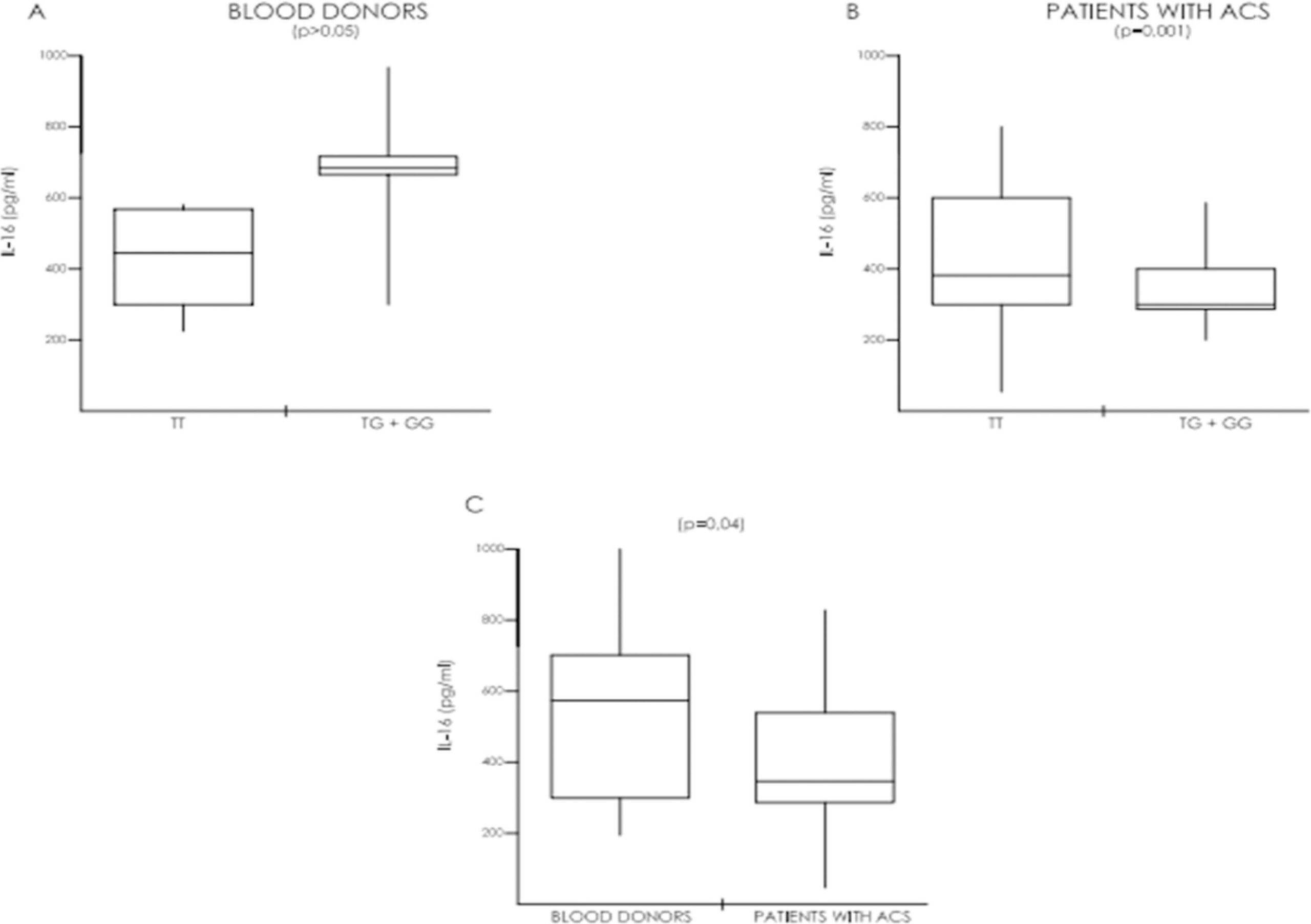
In the IL8 gene, the AT genotype was the most frequent (p > 0.05) in all three groups. In the IL16 gene, genotypic distributions were different between patients with ACS and the donor group (p = 0.002), with the most frequent G allele in the second group (p = 0.0052). The IL-16 cytokine was higher in donors than in patients with ACS (p = 0.04) and the G (TG + GG) allele had higher values of this cytokine (p = 0.01).

Conclusions:

The results demonstrate the important role of the rs11556218 SNP in IL16 gene in SCA, evidencing that the G allele may be associated with a decreased risk of the disease.

  • Acute coronary syndrome
  • Cardiovascular Diseases
  • Diabetes Mellitus
  • Dyslipideia
  • Genotype
  • Obesity
  • Sedentarism
Read Full Article
Creative Commons Attribution (CC BY) Creative Commons license
03/02/2020 DOI: 10.36660/ijcs.201810080 Views 2
Original Article

A Retrospective Study on Unfractionated Bovine Heparin Safety in On-Pump Cardiac Surgery

Fernando Antonio de Lima Torres et al. Andressa C. B Torres Allinson Ribeiro Cauê O Maia … Fernanda P Almeida João Roceto Jorge A Matkovski Matheus G Kovalski Vanessa A Pizato Tatiana M. G Cordeiro

Abstract

Background:

Heparin decreases the risks of thrombotic phenomena in extracorporeal circulation. However, it must present a robust safety profile itself, especially for bleeding. Contamination of porcine heparin demands an alternative source and consequent assessment of safety.

Objective:

To evaluate the safety of unfractionated bovine heparin during on-pump cardiac surgery.

Methods:

Descriptive, retrospective study, evaluating medical records from all patients who had on-pump cardiac surgery over four years. We observed the occurrence of bleeding, thrombocytopenia, postoperative vasoplegia, activated clotting time values and any other coagulation phenomena as safety profile parameters.

Results:

We evaluated 204 medical records reporting the use of unfractionated bovine heparin. 66.18% of the patients presented thrombocytopenia, 1.04% presented bleeding of more than 2000 mL in the first 24 hours of the postoperative period. One patient presented clots in the surgical field. Median activated clotting time was 137 seconds at baseline, 803 seconds after the first dose of heparin and, after protamine, it returns to similar baseline values, that is, 149.5 seconds.

Conclusion:

Unfractionated bovine heparin did not present unusual adverse effects and can be considered safe for on-pump cardiac surgery.

  • blood coagulation tests
  • Cardiac Surgery
  • Extracorporeal Circulation
  • Heparin/analysis, Heparin/chemistry, Heparin/standards
  • Safety
Read Full Article
Creative Commons Attribution (CC BY) Creative Commons license
03/02/2020 DOI: 10.36660/ijcs.20190043 Views 1
Figure 1
Original Article

Plasma Renin in Women Using and not Using Combined Oral Contraceptive

Sidney de Souza Oliveira et al. Jefferson Petto Diego Passos Diogo Alan Carlos Nery dos Santos … Marvyn de Santana do Sacramento Ana Marice Teixeira Ladeia

Abstract

Backgroud:

Recent studies show that women on combined oral contraceptives (COC) present abnormal fasting lipid profile, increased postprandial lipemia, plasma C-reactive protein (CRP) and blood pressure (BP) compared to women not on combined oral contraceptives. Plasma renin is one of the factors responsible for abnormal BP.

Objectives:

To assess plasma renin levels in women using or not using COC, the correlation between renin and CRP, as well as divergences in lipid profile.

Methods:

A cross-sectional study with apparently healthy women aged 20 to 30, eutrophic, irregularly active, and with fasting triglycerides < 150 mg/dL. The sample was stratified into two groups: the No Combined Oral Contraceptive Group (NCOCG), comprised of women who did not use any type of hormone contraceptive, and the Combined Oral Contraceptive Group (COCG) comprised of women on low-dose COC for at least one year. After a 12-hour fast, 5 ml of blood was collected for renin dosing and PCR. Data were analyzed by the t-Test and bidirectional Mann-Whitney Test, both with significance < 0.05.

Results:

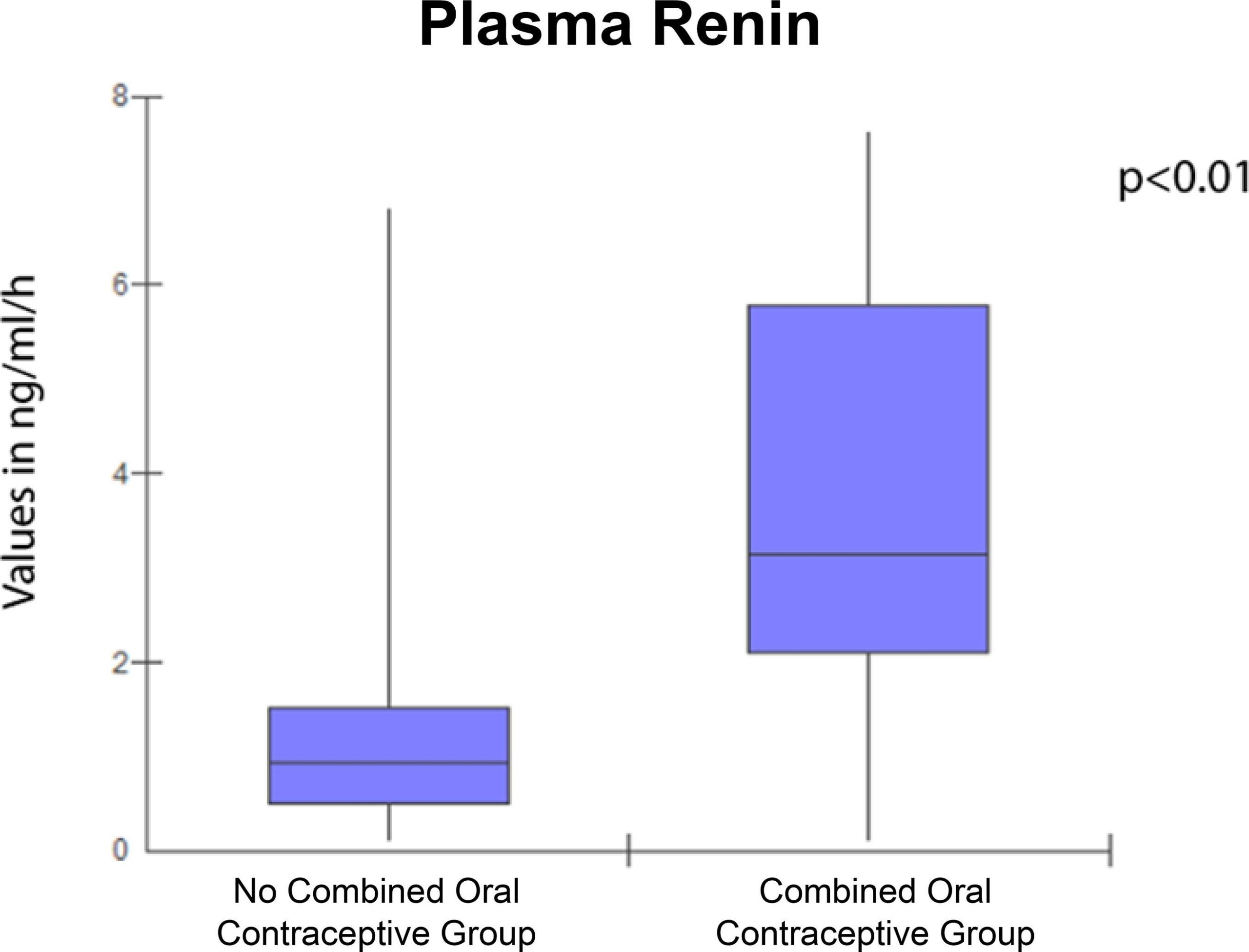
We evaluated 44 women equally distributed between the groups, age 23 ± 1.2 years, BMI 21.0 ± 3.2 kg/m2. Median and interquartile deviation of renin in the NCOCG and the COCG were, respectively, 0.5 (0.1-1.0) and 3.0 (2-6) (p < 0.01). A positive correlation between PCR and renin (p < 0.01 and r = 0.68) was found.

Conclusion:

The plasma renin levels of women using COC were higher, with a strong correlation with CRP.

  • Contraceptive Agents
  • Diabetes Mellitus
  • Dyslipidemias
  • Genetics
  • Hypertension
  • Metabolism
  • Risk Factors
  • Sedentarism, Women’s Health
Read Full Article
Creative Commons Attribution (CC BY) Creative Commons license
03/02/2020 DOI: 10.36660/ijcs.20180021 Views 1
Original Article

Association between Central Obesity and Biochemical Markers of Cardiometabolic Risk in Elderly Attended in Geriatric Ambulatory – Lagarto/SE

Ana Caroline de Souza Almeida et al. Carolina Cunha de Oliveira Emanuelle Dias Costa Adenilda Queiroz S Deiró

Abstract

Backgroud:

Central obesity, especially visceral adipose tissue (VAT), represents a health risk due to its endocrine and metabolic capacity, contributing to the development of the atherogenic profile and strongly associating with cardiovascular morbimortality.

Objective:

To identify the association between central obesity and biochemical markers of cardiometabolic risk in elderly patients treated at a geriatric outpatient clinic in Lagarto-SE.

Method:

This is a cross-sectional study of 159 elderly people of both sexes. Central adiposity was considered an independent variable, identified by measuring the Waist Circumference (WC). Total Cholesterol (TC), LDL-c, HDL-c, non-HDL-c, triglycerides, glycemia and Castelli I and II indices were considered dependent variables. Pearson’s chi-square test was used to evaluate the association between central obesity and biochemical markers of cardiometabolic risk. Those with p < 0.20 were used in the bivariate regression analysis, adopting a 95% confidence interval.

Results:

Mean age was 70.9 ± 7.5 years. Central obesity was present in 43.2% of males and 56.8% of females (p = 0.002). There was statistically significant association between HDL-c, HDL-C and Castelli I Index and central obesity. Individuals with central obesity are 2.48 and 3.13 times more likely to develop changes in HDL-C and Castelli I index, respectively.

Conclusion:

There is an association between central obesity and biochemical markers of cardiometabolic risk in the elderly.

  • Cardiovascular Diseases
  • Diabetes Mellitus
  • Dyslipidemias
  • Elderly
  • Hypertension
  • Life Style
  • Metabolic Syndrome
  • Obesity
  • Prevention and Control
  • Risk Factors
Read Full Article
Creative Commons Attribution (CC BY) Creative Commons license
03/02/2020 DOI: 10.36660/ijcs.20190055
Figure 1
Case Report

Complete Atrioventricular Block and Cardiopulmonary Involvement in Rapidly Progressive Systemic Sclerosis

Eduarda Cal Viegas et al. Diane Xavier de Ávila Eduardo Nani Silva Luís Otávio Cardoso Mocarzel Ronaldo Altenburg Gismondi

Abstract

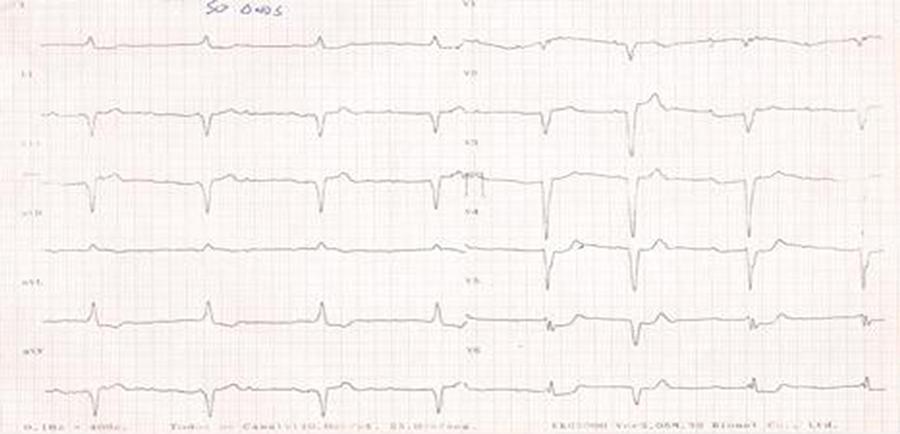
The heart and lung are target organs in systemic sclerosis (SSc) and similar symptoms (dyspnea and cough) may make the differential diagnosis between the two lesions difficult. In addition, complete atrioventricular block (CAVB) is a rare complication of this disease. This case report is about a patient with SSc and pulmonary fibrosis who was admitted to the emergency room with CAVB, heart failure (HF) and progressive worsening of the underlying disease.

  • Atrioventricular block
  • Heart Failure
  • Hypertension Pulmonary
  • Pulmonary Fibrosis
  • Scleroderma, systemic
Read Full Article
Creative Commons Attribution (CC BY) Creative Commons license
19/08/2019 DOI: 10.5935/2359-4802.20190069
Figure 1
Case Report

Acute Pericarditis in Crohn's Disease under Pharmacological Immunosuppression: A Diagnostic and Therapeutic Dilemma

Maria Trêpa et al. Isabel Neves Marta Salgado Graziela Carvalheiras Vasco Dias

Introduction

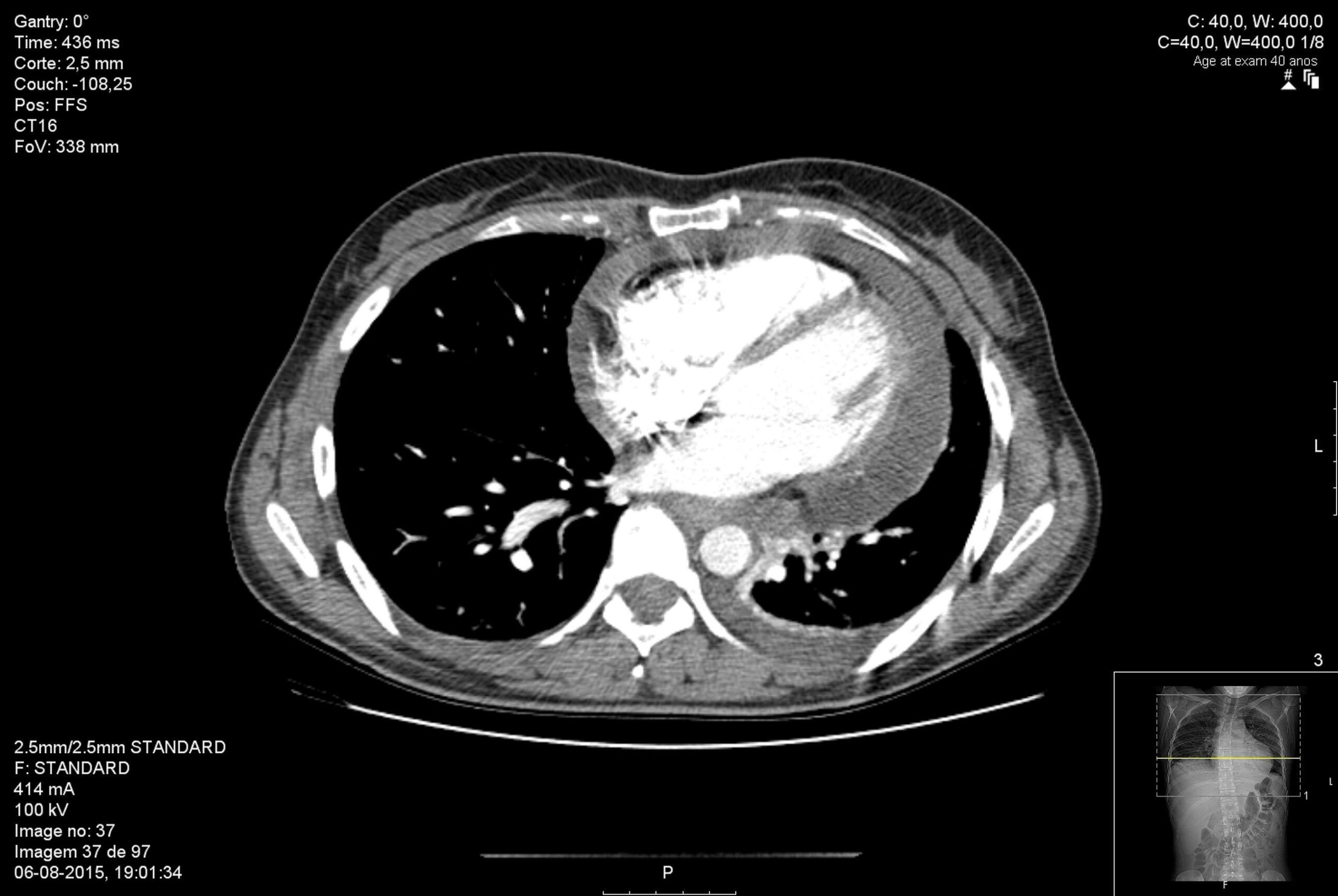
Acute pericarditis in young patients usually has a benign course. However, in those with autoimmune diseases it is mandatory to consider the risk of opportunistic infections, and of association with the underlying disease or immunomodulatory drugs. This case report aims to show possible strategies for diagnosis and treatment of this particularly complex group of patients.

[…]

  • Anti-Bacterial Agents
  • Antibiotic Prophylaxis
  • Crohn Disease
  • Fever
  • Pericarditis, Tuberculous
  • Tuberculosis
Read Full Article
Creative Commons Attribution (CC BY) Creative Commons license
15/04/2019 DOI: 10.5935/2359-4802.20190033 Views 1

How to cite this article

EndNote RIS

Electronic Document Format (Vancouver)

Espeche WG, Sabio R, Diaz A, Parodi R, Sisnieguez CEL, Flores RA, Poppe S, et al. Analysis of Adherence to Antihypertensive Drug Treatment in an Argentinean Cohort. International Journal of Cardiovascular Sciences 2020;33(3):272-7.

Electronic Document Format (ABNT)

Espeche, Walter Gaston; Sabio, Rodrigo; Diaz, Alejandro; Parodi, Roberto; Sisnieguez, Carlos Enrique Leiva; Flores, Roberto Antonio; Poppe, Silvia; Altube, Javier; Grimaldi, Diego; Salazar, Martin Rogelio. Analysis of Adherence to Antihypertensive Drug Treatment in an Argentinean Cohort. International Journal of Cardiovascular Sciences, v. 33, n. 3, p. 272-277, May. 2020.

Electronic Document Format (APA)

Espeche, W. G., Sabio, R., Diaz, A., Parodi, R., Sisnieguez, C. E. L., Flores, R. A., Poppe, S., Altube, J., Grimaldi, D., & Salazar, M. R. (2020). Analysis of Adherence to Antihypertensive Drug Treatment in an Argentinean Cohort. International Journal of Cardiovascular Sciences, 33(3), 272-277.

Electronic Document Format (ISO)

Espeche, Walter Gaston and Sabio, Rodrigo and Diaz, Alejandro and Parodi, Roberto and Sisnieguez, Carlos Enrique Leiva and Flores, Roberto Antonio and Poppe, Silvia and Altube, Javier and Grimaldi, Diego and Salazar, Martin Rogelio. Analysis of Adherence to Antihypertensive Drug Treatment in an Argentinean Cohort. International Journal of Cardiovascular Sciences [online]. 2020, vol. 33, n. 3, [cited 2026-10-14], pp. 272-277. Available from: <https://journals.cardiol.br/en/article/analysis-of-adherence-to-antihypertensive-drug-treatment-in-an-argentinean-cohort/>. ISSN 2359-4802

EndNote RIS

Electronic Document Format (Vancouver)

Freitas EV, Mohallem KL. Metabolic Syndrome. International Journal of Cardiovascular Sciences 2020;33(3):252-3.

Electronic Document Format (ABNT)

Freitas, Elizabete Viana de; Mohallem, Kalil Lays. Metabolic Syndrome. International Journal of Cardiovascular Sciences, v. 33, n. 3, p. 252-253, May. 2020.

Electronic Document Format (APA)

Freitas, E. V. , & Mohallem, K. L. (2020). Metabolic Syndrome. International Journal of Cardiovascular Sciences, 33(3), 252-253.

Electronic Document Format (ISO)

Freitas, Elizabete Viana de and Mohallem, Kalil Lays. Metabolic Syndrome. International Journal of Cardiovascular Sciences [online]. 2020, vol. 33, n. 3, [cited 2026-10-14], pp. 252-253. Available from: <https://journals.cardiol.br/en/article/metabolic-syndrome-2/>. ISSN 2359-4802

EndNote RIS

Electronic Document Format (Vancouver)

Castro RRT. Coronavirus Disease (COVID-19) Pandemic: An Opportunity Window to Implement Home-Based Cardiac Rehabilitation. International Journal of Cardiovascular Sciences 2020;33(3):282-3.

Electronic Document Format (ABNT)

Castro, Renata Rodrigues Teixeira de. Coronavirus Disease (COVID-19) Pandemic: An Opportunity Window to Implement Home-Based Cardiac Rehabilitation. International Journal of Cardiovascular Sciences, v. 33, n. 3, p. 282-283, May. 2020.

Electronic Document Format (APA)

Castro, R. R. T. (2020). Coronavirus Disease (COVID-19) Pandemic: An Opportunity Window to Implement Home-Based Cardiac Rehabilitation. International Journal of Cardiovascular Sciences, 33(3), 282-283.

Electronic Document Format (ISO)

Castro, Renata Rodrigues Teixeira de. Coronavirus Disease (COVID-19) Pandemic: An Opportunity Window to Implement Home-Based Cardiac Rehabilitation. International Journal of Cardiovascular Sciences [online]. 2020, vol. 33, n. 3, [cited 2026-10-14], pp. 282-283. Available from: <https://journals.cardiol.br/en/article/coronavirus-disease-covid-19-pandemic-an-opportunity-window-to-implement-home-based-cardiac-rehabilitation/>. ISSN 2359-4802

EndNote RIS

Electronic Document Format (Vancouver)

Torbey AFM, Grippa A. Challenge in the Treatment of Children with Congenital Heart Disease: Reducing Waiting Time for Cardiac Surgery. International Journal of Cardiovascular Sciences 2020;33(3):206-7.

Electronic Document Format (ABNT)

Torbey, Ana Flavia Malheiros; Grippa, Aurea. Challenge in the Treatment of Children with Congenital Heart Disease: Reducing Waiting Time for Cardiac Surgery. International Journal of Cardiovascular Sciences, v. 33, n. 3, p. 206-207, May. 2020.

Electronic Document Format (APA)

Torbey, A. F. M., & Grippa, A. (2020). Challenge in the Treatment of Children with Congenital Heart Disease: Reducing Waiting Time for Cardiac Surgery. International Journal of Cardiovascular Sciences, 33(3), 206-207.

Electronic Document Format (ISO)

Torbey, Ana Flavia Malheiros and Grippa, Aurea. Challenge in the Treatment of Children with Congenital Heart Disease: Reducing Waiting Time for Cardiac Surgery. International Journal of Cardiovascular Sciences [online]. 2020, vol. 33, n. 3, [cited 2026-10-14], pp. 206-207. Available from: <https://journals.cardiol.br/en/article/challenge-in-the-treatment-of-children-with-congenital-heart-disease-reducing-waiting-time-for-cardiac-surgery/>. ISSN 2359-4802

EndNote RIS

Electronic Document Format (Vancouver)

Kasal DAB, Lorenzo AD. Oral Contraceptives and Cardiovascular Risk: Adding Clinical Evidence to the Pathophysiology. International Journal of Cardiovascular Sciences 2020;33(3):215-6.

Electronic Document Format (ABNT)

Kasal, Daniel Arthur B; Lorenzo, Andrea De. Oral Contraceptives and Cardiovascular Risk: Adding Clinical Evidence to the Pathophysiology. International Journal of Cardiovascular Sciences, v. 33, n. 3, p. 215-216, May. 2020.

Electronic Document Format (APA)

Kasal, D. A. B., & Lorenzo, A. D. (2020). Oral Contraceptives and Cardiovascular Risk: Adding Clinical Evidence to the Pathophysiology. International Journal of Cardiovascular Sciences, 33(3), 215-216.

Electronic Document Format (ISO)

Kasal, Daniel Arthur B and Lorenzo, Andrea De. Oral Contraceptives and Cardiovascular Risk: Adding Clinical Evidence to the Pathophysiology. International Journal of Cardiovascular Sciences [online]. 2020, vol. 33, n. 3, [cited 2026-10-14], pp. 215-216. Available from: <https://journals.cardiol.br/en/article/oral-contraceptives-and-cardiovascular-risk-adding-clinical-evidence-to-the-pathophysiology/>. ISSN 2359-4802

EndNote RIS

Electronic Document Format (Vancouver)

Martins ILF, Scaramello CBV. Is Bovine Heparin, an Old Fellow, a Safe Anticoagulation Approach during Extracorporeal Circulation Inside the Cardiac Operating Room?. International Journal of Cardiovascular Sciences 2020;33(3):243-4.

Electronic Document Format (ABNT)

Martins, Ivis Levy Fernandes; Scaramello, Christianne Bretas Vieira. Is Bovine Heparin, an Old Fellow, a Safe Anticoagulation Approach during Extracorporeal Circulation Inside the Cardiac Operating Room?. International Journal of Cardiovascular Sciences, v. 33, n. 3, p. 243-244, May. 2020.

Electronic Document Format (APA)

Martins, I. L. F., & Scaramello, C. B. V. (2020). Is Bovine Heparin, an Old Fellow, a Safe Anticoagulation Approach during Extracorporeal Circulation Inside the Cardiac Operating Room?. International Journal of Cardiovascular Sciences, 33(3), 243-244.

Electronic Document Format (ISO)

Martins, Ivis Levy Fernandes and Scaramello, Christianne Bretas Vieira. Is Bovine Heparin, an Old Fellow, a Safe Anticoagulation Approach during Extracorporeal Circulation Inside the Cardiac Operating Room?. International Journal of Cardiovascular Sciences [online]. 2020, vol. 33, n. 3, [cited 2026-10-14], pp. 243-244. Available from: <https://journals.cardiol.br/en/article/is-bovine-heparin-an-old-fellow-a-safe-anticoagulation-approach-during-extracorporeal-circulation-inside-the-cardiac-operating-room/>. ISSN 2359-4802

EndNote RIS

Electronic Document Format (Vancouver)

Castro RRT, Silveira Neto JG, Castro RRT. Exercise Training: A Hero that Can Fight two Pandemics at Once. International Journal of Cardiovascular Sciences 2020;33(3):284-7.

Electronic Document Format (ABNT)

Castro, Renata Rodrigues Teixeira de; Silveira Neto, João Giffoni da; Castro, Roberta Rodrigues Teixeira de. Exercise Training: A Hero that Can Fight two Pandemics at Once. International Journal of Cardiovascular Sciences, v. 33, n. 3, p. 284-287, May. 2020.

Electronic Document Format (APA)

Castro, R. R. T. , Silveira Neto, J. G. , & Castro, R. R. T. (2020). Exercise Training: A Hero that Can Fight two Pandemics at Once. International Journal of Cardiovascular Sciences, 33(3), 284-287.

Electronic Document Format (ISO)

Castro, Renata Rodrigues Teixeira de and Silveira Neto, João Giffoni da and Castro, Roberta Rodrigues Teixeira de. Exercise Training: A Hero that Can Fight two Pandemics at Once. International Journal of Cardiovascular Sciences [online]. 2020, vol. 33, n. 3, [cited 2026-10-14], pp. 284-287. Available from: <https://journals.cardiol.br/en/article/exercise-training-a-hero-that-can-fight-two-pandemics-at-once/>. ISSN 2359-4802

EndNote RIS

Electronic Document Format (Vancouver)

Mariano GZ, Lemke VG, Paiva MSM, Oliveira GMM. Covid-19 and Safety in the Cath Lab: Where We Are and Where We Are Headed. International Journal of Cardiovascular Sciences 2020;33(3):288-94.

Electronic Document Format (ABNT)

Mariano, Giordana Zeferino; Lemke, Viviana Guzzo; Paiva, Maria Sanali Moura; Oliveira, Gláucia Maria Moraes de. Covid-19 and Safety in the Cath Lab: Where We Are and Where We Are Headed. International Journal of Cardiovascular Sciences, v. 33, n. 3, p. 288-294, May. 2020.

Electronic Document Format (APA)

Mariano, G. Z., Lemke, V. G., Paiva, M. S. M., & Oliveira, G. M. M. (2020). Covid-19 and Safety in the Cath Lab: Where We Are and Where We Are Headed. International Journal of Cardiovascular Sciences, 33(3), 288-294.

Electronic Document Format (ISO)

Mariano, Giordana Zeferino and Lemke, Viviana Guzzo and Paiva, Maria Sanali Moura and Oliveira, Gláucia Maria Moraes de. Covid-19 and Safety in the Cath Lab: Where We Are and Where We Are Headed. International Journal of Cardiovascular Sciences [online]. 2020, vol. 33, n. 3, [cited 2026-10-14], pp. 288-294. Available from: <https://journals.cardiol.br/en/article/covid-19-and-safety-in-the-cath-lab-where-we-are-and-where-we-are-headed/>. ISSN 2359-4802

EndNote RIS

Electronic Document Format (Vancouver)

Campana EMG, Costa RS. The Importance of Cardiovascular Risk in Primary Healthcare. International Journal of Cardiovascular Sciences 2020;33(3):225-6.

Electronic Document Format (ABNT)

Campana, Erika Maria Gonçalves; Costa, Rafael Santos. The Importance of Cardiovascular Risk in Primary Healthcare. International Journal of Cardiovascular Sciences, v. 33, n. 3, p. 225-226, May. 2020.

Electronic Document Format (APA)

Campana, E. M. G., & Costa, R. S. (2020). The Importance of Cardiovascular Risk in Primary Healthcare. International Journal of Cardiovascular Sciences, 33(3), 225-226.

Electronic Document Format (ISO)

Campana, Erika Maria Gonçalves and Costa, Rafael Santos. The Importance of Cardiovascular Risk in Primary Healthcare. International Journal of Cardiovascular Sciences [online]. 2020, vol. 33, n. 3, [cited 2026-10-14], pp. 225-226. Available from: <https://journals.cardiol.br/en/article/the-importance-of-cardiovascular-risk-in-primary-healthcare/>. ISSN 2359-4802

EndNote RIS

Electronic Document Format (Vancouver)

Migowski E. Hepatic Elastography in the Assessment of Heart Failure: Where We Came from and Where We Are Going. International Journal of Cardiovascular Sciences 2020;33(3):233-4.

Electronic Document Format (ABNT)

Migowski, Edison. Hepatic Elastography in the Assessment of Heart Failure: Where We Came from and Where We Are Going. International Journal of Cardiovascular Sciences, v. 33, n. 3, p. 233-234, May. 2020.

Electronic Document Format (APA)

Migowski, E. (2020). Hepatic Elastography in the Assessment of Heart Failure: Where We Came from and Where We Are Going. International Journal of Cardiovascular Sciences, 33(3), 233-234.

Electronic Document Format (ISO)

Migowski, Edison. Hepatic Elastography in the Assessment of Heart Failure: Where We Came from and Where We Are Going. International Journal of Cardiovascular Sciences [online]. 2020, vol. 33, n. 3, [cited 2026-10-14], pp. 233-234. Available from: <https://journals.cardiol.br/en/article/hepatic-elastography-in-the-assessment-of-heart-failure-where-we-came-from-and-where-we-are-going/>. ISSN 2359-4802

EndNote RIS

Electronic Document Format (Vancouver)

Mesquita CT, Oliveira A, Seixas FL, Paes A. Infodemia, Fake News and Medicine: Science and The Quest for Truth. International Journal of Cardiovascular Sciences 2020;33(3):203-5.

Electronic Document Format (ABNT)

Mesquita, Claudio Tinoco; Oliveira, Anderson; Seixas, Flávio Luiz; Paes, Aline. Infodemia, Fake News and Medicine: Science and The Quest for Truth. International Journal of Cardiovascular Sciences, v. 33, n. 3, p. 203-205, Apr. 2020.

Electronic Document Format (APA)

Mesquita, C. T., Oliveira, A., Seixas, F. L., & Paes, A. (2020). Infodemia, Fake News and Medicine: Science and The Quest for Truth. International Journal of Cardiovascular Sciences, 33(3), 203-205.

Electronic Document Format (ISO)

Mesquita, Claudio Tinoco and Oliveira, Anderson and Seixas, Flávio Luiz and Paes, Aline. Infodemia, Fake News and Medicine: Science and The Quest for Truth. International Journal of Cardiovascular Sciences [online]. 2020, vol. 33, n. 3, [cited 2026-10-14], pp. 203-205. Available from: <https://journals.cardiol.br/en/article/infodemia-fake-news-and-medicine-science-and-the-quest-for-truth/>. ISSN 2359-4802

EndNote RIS

Electronic Document Format (Vancouver)

Saraiva JFK, Oliveira I. PARAGON-HF: Lessons Learned and Perspectives. International Journal of Cardiovascular Sciences 2020;33(3):278-81.

Electronic Document Format (ABNT)

Saraiva, José Francisco Kerr; Oliveira, Isadora de. PARAGON-HF: Lessons Learned and Perspectives. International Journal of Cardiovascular Sciences, v. 33, n. 3, p. 278-281, Apr. 2020.

Electronic Document Format (APA)

Saraiva, J. F. K., & Oliveira, I. (2020). PARAGON-HF: Lessons Learned and Perspectives. International Journal of Cardiovascular Sciences, 33(3), 278-281.

Electronic Document Format (ISO)

Saraiva, José Francisco Kerr and Oliveira, Isadora de. PARAGON-HF: Lessons Learned and Perspectives. International Journal of Cardiovascular Sciences [online]. 2020, vol. 33, n. 3, [cited 2026-10-14], pp. 278-281. Available from: <https://journals.cardiol.br/en/article/paragon-hf-lessons-learned-and-perspectives/>. ISSN 2359-4802

EndNote RIS

Electronic Document Format (Vancouver)

Oliveira GMM, Pinto FJ. COVID-19: A Matter Close to the Heart. International Journal of Cardiovascular Sciences 2020;33(3):199-202.

Electronic Document Format (ABNT)

Oliveira, Gláucia Maria Moraes de; Pinto, Fausto J.. COVID-19: A Matter Close to the Heart. International Journal of Cardiovascular Sciences, v. 33, n. 3, p. 199-202, Apr. 2020.

Electronic Document Format (APA)

Oliveira, G. M. M. , & Pinto, F. J. (2020). COVID-19: A Matter Close to the Heart. International Journal of Cardiovascular Sciences, 33(3), 199-202.

Electronic Document Format (ISO)

Oliveira, Gláucia Maria Moraes de and Pinto, Fausto J.. COVID-19: A Matter Close to the Heart. International Journal of Cardiovascular Sciences [online]. 2020, vol. 33, n. 3, [cited 2026-10-14], pp. 199-202. Available from: <https://journals.cardiol.br/en/article/covid-19-a-matter-close-to-the-heart/>. ISSN 2359-4802

EndNote RIS

Electronic Document Format (Vancouver)

Moreira TR, Toledo LV, Mendonça T, Colodette RM, Silva LS, Cotta RMM. Evaluation of Cardiovascular Risk in Hypertensive Individuals Attending a Primary Health Care Center. International Journal of Cardiovascular Sciences 2020;33(3):217-24.

Electronic Document Format (ABNT)

Moreira, Tiago Ricardo; Toledo, Luana Vieira; Mendonça, Érica Toledo; Colodette, Renata Maria; Silva, Luciana Saraiva; Cotta, Rosângela Minardi Mitre. Evaluation of Cardiovascular Risk in Hypertensive Individuals Attending a Primary Health Care Center. International Journal of Cardiovascular Sciences, v. 33, n. 3, p. 217-224, Feb. 2020.

Electronic Document Format (APA)

Moreira, T. R., Toledo, L. V., Mendonça, T., Colodette, R. M., Silva, L. S., & Cotta, R. M. M. (2020). Evaluation of Cardiovascular Risk in Hypertensive Individuals Attending a Primary Health Care Center. International Journal of Cardiovascular Sciences, 33(3), 217-224.

Electronic Document Format (ISO)

Moreira, Tiago Ricardo and Toledo, Luana Vieira and Mendonça, Érica Toledo and Colodette, Renata Maria and Silva, Luciana Saraiva and Cotta, Rosângela Minardi Mitre. Evaluation of Cardiovascular Risk in Hypertensive Individuals Attending a Primary Health Care Center. International Journal of Cardiovascular Sciences [online]. 2020, vol. 33, n. 3, [cited 2026-10-14], pp. 217-224. Available from: <https://journals.cardiol.br/en/article/evaluation-of-cardiovascular-risk-in-hypertensive-individuals-attending-a-primary-health-care-center/>. ISSN 2359-4802

EndNote RIS

Electronic Document Format (Vancouver)

Barcelos AM, Baldo MP, Rodrigues SL, Mill JG. QT Interval Dispersion Behavior in Patients With and Without Obstructive Coronary Artery Disease Undergoing Exercise Test. International Journal of Cardiovascular Sciences 2020;33(3):263-71.

Electronic Document Format (ABNT)

Barcelos, Alexandre Maulaz; Baldo, Marcelo Perim; Rodrigues, Sérgio Lamego; Mill, José Geraldo. QT Interval Dispersion Behavior in Patients With and Without Obstructive Coronary Artery Disease Undergoing Exercise Test. International Journal of Cardiovascular Sciences, v. 33, n. 3, p. 263-271, Feb. 2020.

Electronic Document Format (APA)

Barcelos, A. M., Baldo, M. P., Rodrigues, S. L., & Mill, J. G. (2020). QT Interval Dispersion Behavior in Patients With and Without Obstructive Coronary Artery Disease Undergoing Exercise Test. International Journal of Cardiovascular Sciences, 33(3), 263-271.

Electronic Document Format (ISO)

Barcelos, Alexandre Maulaz and Baldo, Marcelo Perim and Rodrigues, Sérgio Lamego and Mill, José Geraldo. QT Interval Dispersion Behavior in Patients With and Without Obstructive Coronary Artery Disease Undergoing Exercise Test. International Journal of Cardiovascular Sciences [online]. 2020, vol. 33, n. 3, [cited 2026-10-14], pp. 263-271. Available from: <https://journals.cardiol.br/en/article/qt-interval-dispersion-behavior-in-patients-with-and-without-obstructive-coronary-artery-disease-undergoing-exercise-test/>. ISSN 2359-4802

EndNote RIS

Electronic Document Format (Vancouver)

Ávila DX, Matos PA, Quintino G, Martins WA, Machado D, Mesquita CT, Villacorta Junior H, et al. Diagnostic and Prognostic Role of Liver Elastography in Heart Failure. International Journal of Cardiovascular Sciences 2020;33(3):227-32.

Electronic Document Format (ABNT)

Ávila, Diane Xavier; Matos, Priscila Abreu; Quintino, Gabriel; Martins, Wolney de Andrade; Machado, Dalmo; Mesquita, Claudio Tinoco; Villacorta Junior, Humberto. Diagnostic and Prognostic Role of Liver Elastography in Heart Failure. International Journal of Cardiovascular Sciences, v. 33, n. 3, p. 227-232, Feb. 2020.

Electronic Document Format (APA)

Ávila, D. X., Matos, P. A., Quintino, G., Martins, W. A., Machado, D., Mesquita, C. T., & Villacorta Junior, H. (2020). Diagnostic and Prognostic Role of Liver Elastography in Heart Failure. International Journal of Cardiovascular Sciences, 33(3), 227-232.

Electronic Document Format (ISO)

Ávila, Diane Xavier and Matos, Priscila Abreu and Quintino, Gabriel and Martins, Wolney de Andrade and Machado, Dalmo and Mesquita, Claudio Tinoco and Villacorta Junior, Humberto. Diagnostic and Prognostic Role of Liver Elastography in Heart Failure. International Journal of Cardiovascular Sciences [online]. 2020, vol. 33, n. 3, [cited 2026-10-14], pp. 227-232. Available from: <https://journals.cardiol.br/en/article/diagnostic-and-prognostic-role-of-liver-elastography-in-heart-failure/>. ISSN 2359-4802

EndNote RIS

Electronic Document Format (Vancouver)

Silva LCA, Araújo RM, Soares FCS, Werkhauser RP, Montenegro ST, Tashiro T, Carvalho VCV, et al. Evaluation of Polymorphisms in IL8 and IL16 Genes in Patients with Acute Coronary Syndrome. International Journal of Cardiovascular Sciences 2020;33(3):254-62.

Electronic Document Format (ABNT)

Silva, Lílian Caroliny Amorim; Araújo, Romário Martins; Soares, Fábia Carla Silva; Werkhauser, Roberto Pereira; Montenegro, Sergio Tavares; Tashiro, Tetsuo; Carvalho, Viviane do Carmo Vasconcelos; Montenegro, Silvia Maria Lucena. Evaluation of Polymorphisms in IL8 and IL16 Genes in Patients with Acute Coronary Syndrome. International Journal of Cardiovascular Sciences, v. 33, n. 3, p. 254-262, Feb. 2020.

Electronic Document Format (APA)

Silva, L. C. A., Araújo, R. M., Soares, F. C. S., Werkhauser, R. P., Montenegro, S. T., Tashiro, T., Carvalho, V. C. V., & Montenegro, S. M. L. (2020). Evaluation of Polymorphisms in IL8 and IL16 Genes in Patients with Acute Coronary Syndrome. International Journal of Cardiovascular Sciences, 33(3), 254-262.

Electronic Document Format (ISO)

Silva, Lílian Caroliny Amorim and Araújo, Romário Martins and Soares, Fábia Carla Silva and Werkhauser, Roberto Pereira and Montenegro, Sergio Tavares and Tashiro, Tetsuo and Carvalho, Viviane do Carmo Vasconcelos and Montenegro, Silvia Maria Lucena. Evaluation of Polymorphisms in IL8 and IL16 Genes in Patients with Acute Coronary Syndrome. International Journal of Cardiovascular Sciences [online]. 2020, vol. 33, n. 3, [cited 2026-10-14], pp. 254-262. Available from: <https://journals.cardiol.br/en/article/evaluation-of-polymorphisms-in-il8-and-il16-genes-in-patients-with-acute-coronary-syndrome/>. ISSN 2359-4802

EndNote RIS

Electronic Document Format (Vancouver)

Torres FAL, Torres ACB, Ribeiro A, Maia CO, Almeida FP, Roceto J, Matkovski JA, et al. A Retrospective Study on Unfractionated Bovine Heparin Safety in On-Pump Cardiac Surgery. International Journal of Cardiovascular Sciences 2020;33(3):235-42.

Electronic Document Format (ABNT)

Torres, Fernando Antonio de Lima; Torres, Andressa C. B; Ribeiro, Allinson; Maia, Cauê O; Almeida, Fernanda P; Roceto, João; Matkovski, Jorge A; Kovalski, Matheus G; Pizato, Vanessa A; Cordeiro, Tatiana M. G. A Retrospective Study on Unfractionated Bovine Heparin Safety in On-Pump Cardiac Surgery. International Journal of Cardiovascular Sciences, v. 33, n. 3, p. 235-242, Feb. 2020.

Electronic Document Format (APA)

Torres, F. A. L., Torres, A. C. B., Ribeiro, A., Maia, C. O., Almeida, F. P., Roceto, J., Matkovski, J. A., Kovalski, M. G., Pizato, V. A., & Cordeiro, T. M. G. (2020). A Retrospective Study on Unfractionated Bovine Heparin Safety in On-Pump Cardiac Surgery. International Journal of Cardiovascular Sciences, 33(3), 235-242.

Electronic Document Format (ISO)

Torres, Fernando Antonio de Lima and Torres, Andressa C. B and Ribeiro, Allinson and Maia, Cauê O and Almeida, Fernanda P and Roceto, João and Matkovski, Jorge A and Kovalski, Matheus G and Pizato, Vanessa A and Cordeiro, Tatiana M. G. A Retrospective Study on Unfractionated Bovine Heparin Safety in On-Pump Cardiac Surgery. International Journal of Cardiovascular Sciences [online]. 2020, vol. 33, n. 3, [cited 2026-10-14], pp. 235-242. Available from: <https://journals.cardiol.br/en/article/a-retrospective-study-on-unfractionated-bovine-heparin-safety-in-on-pump-cardiac-surgery/>. ISSN 2359-4802

EndNote RIS

Electronic Document Format (Vancouver)

Oliveira SS, Petto J, Diogo DP, Santos ACN, Sacramento MS, Ladeia AMT. Plasma Renin in Women Using and not Using Combined Oral Contraceptive. International Journal of Cardiovascular Sciences 2020;33(3):208-14.

Electronic Document Format (ABNT)

Oliveira, Sidney de Souza; Petto, Jefferson; Diogo, Diego Passos; Santos, Alan Carlos Nery dos; Sacramento, Marvyn de Santana do; Ladeia, Ana Marice Teixeira. Plasma Renin in Women Using and not Using Combined Oral Contraceptive. International Journal of Cardiovascular Sciences, v. 33, n. 3, p. 208-214, Feb. 2020.

Electronic Document Format (APA)

Oliveira, S. S., Petto, J., Diogo, D. P., Santos, A. C. N. , Sacramento, M. S. , & Ladeia, A. M. T. (2020). Plasma Renin in Women Using and not Using Combined Oral Contraceptive. International Journal of Cardiovascular Sciences, 33(3), 208-214.

Electronic Document Format (ISO)

Oliveira, Sidney de Souza and Petto, Jefferson and Diogo, Diego Passos and Santos, Alan Carlos Nery dos and Sacramento, Marvyn de Santana do and Ladeia, Ana Marice Teixeira. Plasma Renin in Women Using and not Using Combined Oral Contraceptive. International Journal of Cardiovascular Sciences [online]. 2020, vol. 33, n. 3, [cited 2026-10-14], pp. 208-214. Available from: <https://journals.cardiol.br/en/article/plasma-renin-in-women-using-and-not-using-combined-oral-contraceptive/>. ISSN 2359-4802

EndNote RIS

Electronic Document Format (Vancouver)

Almeida ACS, Oliveira CC, Costa ED, Deiró AQS. Association between Central Obesity and Biochemical Markers of Cardiometabolic Risk in Elderly Attended in Geriatric Ambulatory – Lagarto/SE. International Journal of Cardiovascular Sciences 2020;33(3):245-51.

Electronic Document Format (ABNT)

Almeida, Ana Caroline de Souza; Oliveira, Carolina Cunha de; Costa, Emanuelle Dias; Deiró, Adenilda Queiroz S. Association between Central Obesity and Biochemical Markers of Cardiometabolic Risk in Elderly Attended in Geriatric Ambulatory – Lagarto/SE. International Journal of Cardiovascular Sciences, v. 33, n. 3, p. 245-251, Feb. 2020.

Electronic Document Format (APA)

Almeida, A. C. S., Oliveira, C. C. , Costa, E. D., & Deiró, A. Q. S. (2020). Association between Central Obesity and Biochemical Markers of Cardiometabolic Risk in Elderly Attended in Geriatric Ambulatory – Lagarto/SE. International Journal of Cardiovascular Sciences, 33(3), 245-251.

Electronic Document Format (ISO)

Almeida, Ana Caroline de Souza and Oliveira, Carolina Cunha de and Costa, Emanuelle Dias and Deiró, Adenilda Queiroz S. Association between Central Obesity and Biochemical Markers of Cardiometabolic Risk in Elderly Attended in Geriatric Ambulatory – Lagarto/SE. International Journal of Cardiovascular Sciences [online]. 2020, vol. 33, n. 3, [cited 2026-10-14], pp. 245-251. Available from: <https://journals.cardiol.br/en/article/association-between-central-obesity-and-biochemical-markers-of-cardiometabolic-risk-in-elderly-attended-in-geriatric-ambulatory-lagarto-se/>. ISSN 2359-4802

EndNote RIS

Electronic Document Format (Vancouver)

Viegas EC, Ávila DX, Silva EN, Mocarzel LOC, Gismondi RA. Complete Atrioventricular Block and Cardiopulmonary Involvement in Rapidly Progressive Systemic Sclerosis. International Journal of Cardiovascular Sciences 2019;33(3):299-302.

Electronic Document Format (ABNT)

Viegas, Eduarda Cal; Ávila, Diane Xavier de; Silva, Eduardo Nani; Mocarzel, Luís Otávio Cardoso; Gismondi, Ronaldo Altenburg. Complete Atrioventricular Block and Cardiopulmonary Involvement in Rapidly Progressive Systemic Sclerosis. International Journal of Cardiovascular Sciences, v. 33, n. 3, p. 299-302, Aug. 2019.

Electronic Document Format (APA)

Viegas, E. C., Ávila, D. X. , Silva, E. N., Mocarzel, L. O. C., & Gismondi, R. A. (2019). Complete Atrioventricular Block and Cardiopulmonary Involvement in Rapidly Progressive Systemic Sclerosis. International Journal of Cardiovascular Sciences, 33(3), 299-302.

Electronic Document Format (ISO)

Viegas, Eduarda Cal and Ávila, Diane Xavier de and Silva, Eduardo Nani and Mocarzel, Luís Otávio Cardoso and Gismondi, Ronaldo Altenburg. Complete Atrioventricular Block and Cardiopulmonary Involvement in Rapidly Progressive Systemic Sclerosis. International Journal of Cardiovascular Sciences [online]. 2019, vol. 33, n. 3, [cited 2026-10-14], pp. 299-302. Available from: <https://journals.cardiol.br/en/article/complete-atrioventricular-block-and-cardiopulmonary-involvement-in-rapidly-progressive-systemic-sclerosis/>. ISSN 2359-4802

EndNote RIS

Electronic Document Format (Vancouver)

Trêpa M, Neves I, Salgado M, Carvalheiras G, Dias V. Acute Pericarditis in Crohn’s Disease under Pharmacological Immunosuppression: A Diagnostic and Therapeutic Dilemma. International Journal of Cardiovascular Sciences 2019;33(3):295-8.

Electronic Document Format (ABNT)

Trêpa, Maria; Neves, Isabel; Salgado, Marta; Carvalheiras, Graziela; Dias, Vasco. Acute Pericarditis in Crohn’s Disease under Pharmacological Immunosuppression: A Diagnostic and Therapeutic Dilemma. International Journal of Cardiovascular Sciences, v. 33, n. 3, p. 295-298, Apr. 2019.

Electronic Document Format (APA)

Trêpa, M., Neves, I., Salgado, M., Carvalheiras, G., & Dias, V. (2019). Acute Pericarditis in Crohn’s Disease under Pharmacological Immunosuppression: A Diagnostic and Therapeutic Dilemma. International Journal of Cardiovascular Sciences, 33(3), 295-298.

Electronic Document Format (ISO)

Trêpa, Maria and Neves, Isabel and Salgado, Marta and Carvalheiras, Graziela and Dias, Vasco. Acute Pericarditis in Crohn’s Disease under Pharmacological Immunosuppression: A Diagnostic and Therapeutic Dilemma. International Journal of Cardiovascular Sciences [online]. 2019, vol. 33, n. 3, [cited 2026-10-14], pp. 295-298. Available from: <https://journals.cardiol.br/en/article/acute-pericarditis-in-crohns-disease-under-pharmacological-immunosuppression-a-diagnostic-and-therapeutic-dilemma/>. ISSN 2359-4802

Sede – Rio de Janeiro
Av. Marechal Câmara, 160
3º andar – Sala: 330 – Centro
Rio de Janeiro – CEP: 20020-907
Tel.: (55 +21) 3478-2700
ou (21) 99386-3961
E-mail: revista@cardiol.br

Sede – São Paulo
Alameda Santos, 705 – 11º andar
Cerqueira César | São Paulo
CEP: 01419-001
Tel.: (55 +11) 3411-5500
E-mail: revista@cardiol.br

  • About the Journal
  • Internal Regulation
  • Editors Section
  • Editorial Board
  • SBC Award

  • Guidelines for Publication
  • Editorial Policy
  • Ethics Policy
  • Policy on the Use of Artificial Intelligence
  • Mandatory Publication Form
  • Publication Fee

Issues

SBC Guidelines

  • How to Publish an Abstract Supplement?
  • Published Supplements