ABC Family Arquivos Brasileiros de Cardiologia International Journal of Cardiovascular Sciences ABC Heart Failure & Cardiomyopathy ABC Imagem Cardiovascular
Português English
ABC Family
Português English
  • About
    • About ABC Family
    • Internal Regulation
    • Editorial Board
    • Brazilian Society of Cardiology (SBC)
  • Issues
  • SBC Guidelines
  • Content
    • Videos
    • Podcasts
    • News
  • About
    • About ABC Family
    • Internal Regulation
    • Editorial Board
    • Brazilian Society of Cardiology (SBC)
  • Issues
  • SBC Guidelines
  • Content
    • Videos
    • Podcasts
    • News

ABC Family

  • ABC Family
  • Arquivos Brasileiros de Cardiologia
  • International Journal of Cardiovascular Sciences
  • ABC Heart Failure & Cardiomyopathy
  • ABC Imagem Cardiovascular
Search in

No content found.

Journals
Ordering
Article types
Others

  1. Home
  2. Keyword: Genetics
ABC
Editorial

The Thickness That Deceives: The Role of Imaging, Biopsy, and Genetics in the Evaluation of Ventricular Hypertrophy

Murillo de Oliveira Antunes

Increased ventricular wall thickness is a common finding in cardiovascular practice and is frequently attributed either to secondary myocardial hypertrophy or to sarcomeric hypertrophic cardiomyopathy (HCM). However, this phenotype may conceal a broad spectrum of genetic, infiltrative, and storage diseases, each associated with distinct prognostic implications and therapeutic strategies. Accurate differentiation between true myocardial hypertrophy and HCM phenocopies—or genocopies—remains a major diagnostic challenge and requires a multimodality approach integrating advanced cardiac imaging, endomyocardial biopsy (EMB), and genetic testing.–

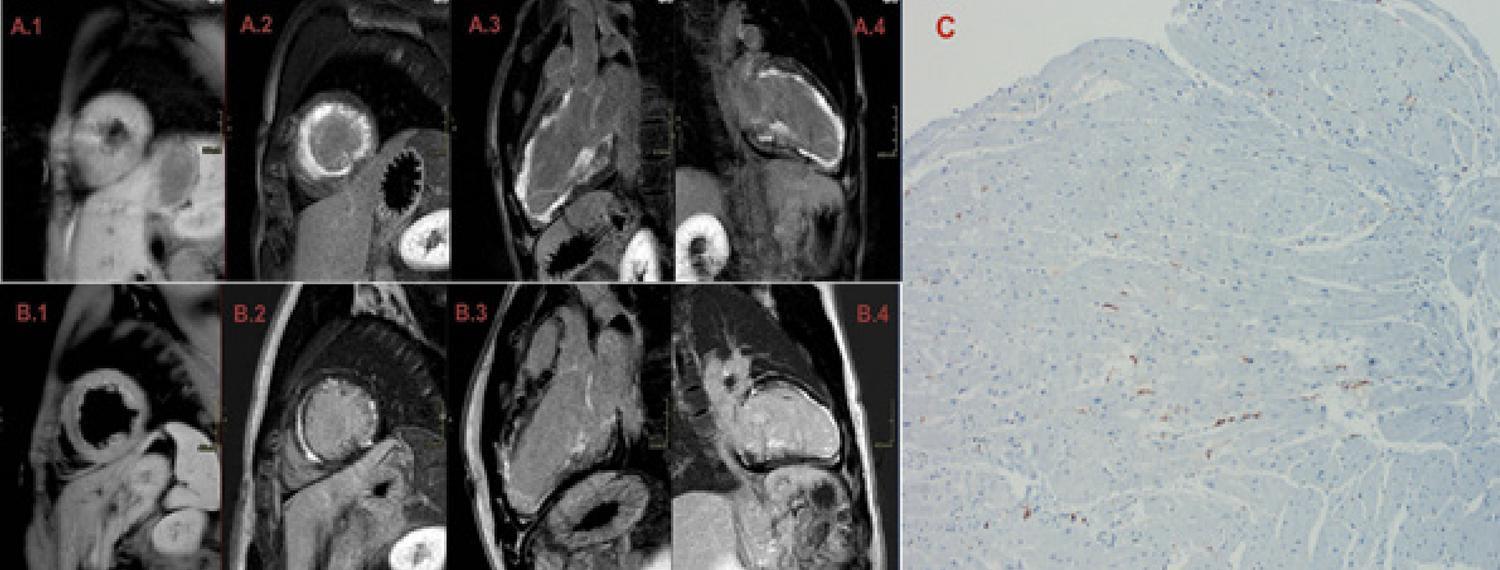
Cardiac imaging has evolved beyond morphological assessment. Cardiac magnetic resonance (CMR) with tissue characterization has become a cornerstone of noninvasive evaluation in patients with increased myocardial thickness. Parametric mapping techniques, including T1 and T2 mapping and extracellular volume (ECV) quantification, allow the detection of myocardial compositional changes such as edema, fibrosis, and infiltration, providing important diagnostic clues for conditions such as cardiac amyloidosis, Fabry disease, and glycogen storage cardiomyopathies (e.g., PRKAG2-related disease).– In addition, specific late gadolinium enhancement patterns may further support the suspicion of non-sarcomeric etiologies.,

[…]

  • Biopsy
  • Cardiomyopathies
  • Diagnostic Imaging
  • Genetics
Read Full Article
Creative Commons Attribution (CC BY) Creative Commons license
15/05/2026 DOI: 10.36660/abc.20260119i Views 1
Figure 1
ABC
Case Report

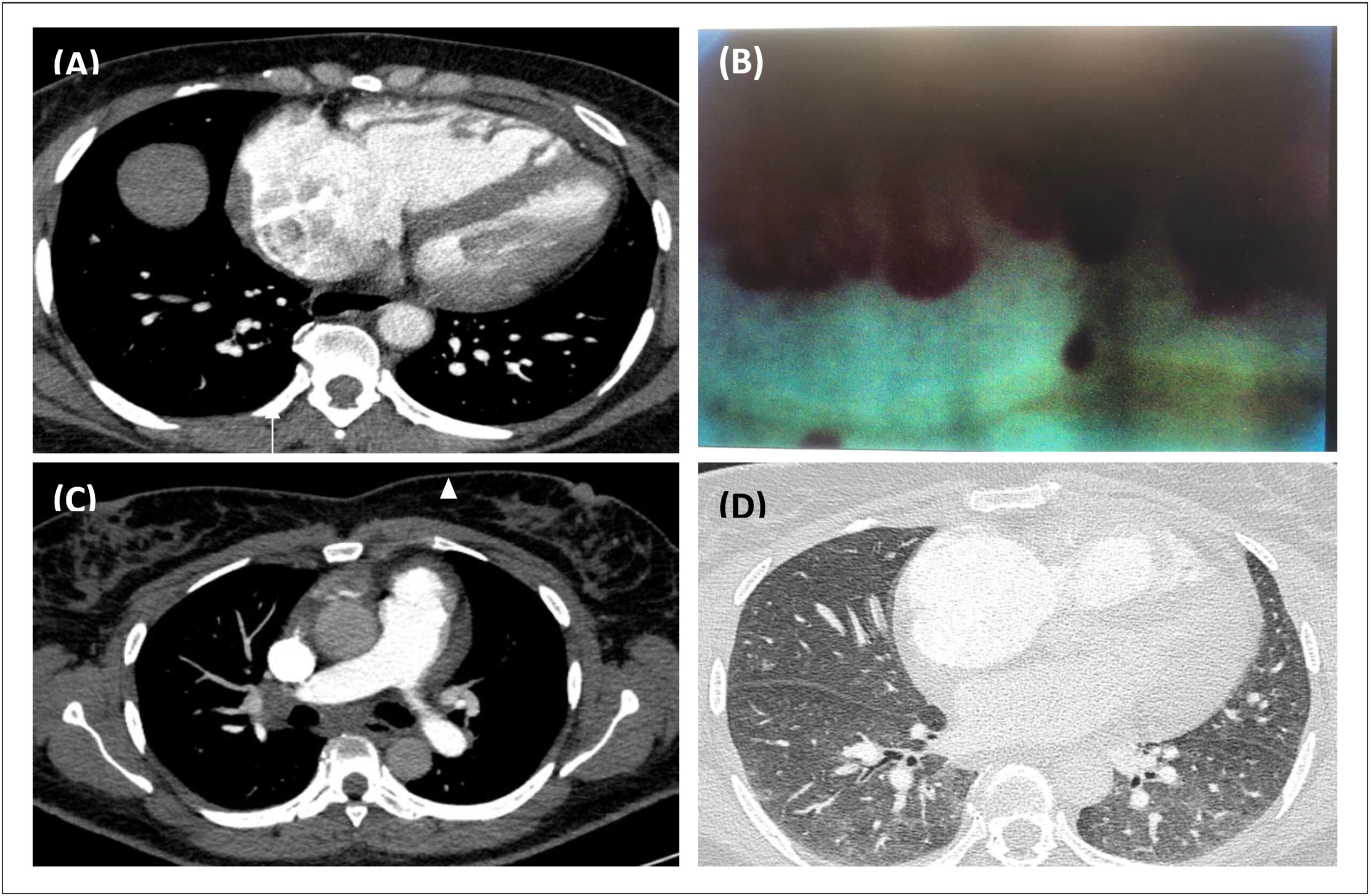
Systemic Sclerosis Associated Pulmonary Arterial Hypertension with Venous Involvement – a Novel ABCC8 Pathogenic Variant

Daniel Inácio Cazeiro et al. João Cravo Mariana Pereira Silva João R. Inácio … Oana Moldovan Catarina Sousa Catarina Lopes Resende João Eurico Fonseca Fausto J. Pinto Rui Plácido

Discussion

PAH with venous/capillary involvement (formerly referred to as pulmonary veno-occlusive disease [PVOD] /capillary hemangiomatosis) is a rare, severe form of PH, with an incidence of 0.1-0.5 cases/million/year. This condition comprises a fibroproliferative process of pulmonary venous and capillary compartments, with small vein occlusion caused by smooth muscle hypertrophy and collagen deposition.

The diagnosis of PVOD is challenging due to its non-specific presentation, often mimicking PAH. Moreover, histological confirmation via lung biopsy is contraindicated due to the significant risk of hemorrhage. Certain clinical and imaging features can facilitate a presumptive diagnosis, which include typical findings on CCTA – centrilobular ground-glass opacities, septal lines, and mediastinal lymphadenopathy, severely reduced DLCO on PFTs, and low oxygen saturation nadir during the 6MWT. PVOD manifests in two forms: hereditary, which is associated with autosomal recessive biallelic mutations in the EIF2AK4 gene, and sporadic, which presents later in life and more frequently in males. Several risk factors are linked to sporadic PVOD, including prior exposure to chemotherapy (particularly alkylating agents),, tobacco, and organic solvents such as trichloroethylene.,

[…]

  • Genetics
  • Pulmonary Hypertension
  • Therapeutics
Read Full Article
Creative Commons Attribution (CC BY) Creative Commons license
19/01/2026 DOI: 10.36660/abc.20250175i Views 3
Central Illustration
ABCHF
Review Article

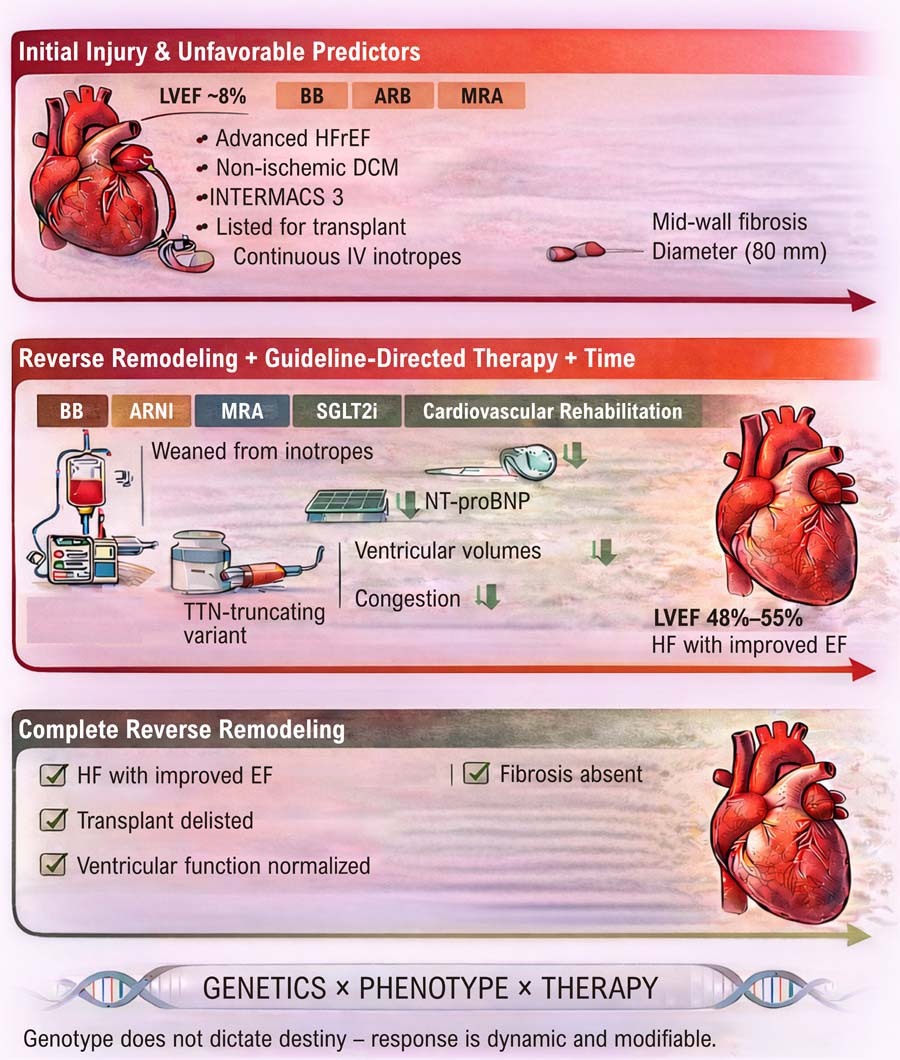
Reverse Remodeling and Genetics: A Review Based on a Clinical Case Description that Challenges Current Evidence and Logic

Helena Garcia Betinardi Bernardi et al. Silas Furquim Renata Lopes Hames Jorge Henrique Yoschimoto Koroishi … Jairo Alves Pinheiro Junior Stevan Krieger Martins

Abstract

Cardiac remodeling, present in heart failure (HF), is a compensatory biological process following an initial myocardial injury that gradually becomes maladaptive, leading to clinical deterioration and chronic HF. Reverse remodeling (RR), which has been increasingly addressed, occurs when the geometry and/or function of the left ventricle recover in response to treatment, approaching normal cardiac structure. RR is associated with a better prognosis. Factors associated with RR include female sex, non-ischemic etiology, mild to moderate HF, lower fibrotic burden, elevated blood pressure permitting medical optimization, shorter disease duration, and preserved renal function. However, growing knowledge of genetic factors in HF etiology has provided important insights into their role in treatment response and prognosis. To illustrate and discuss these emerging topics, we report a case of advanced HF involving RR and a genetic variant, reviewing current recommendations for management.

  • Dilated Cardiomyopathy
  • Genetics
  • Heart Failure
  • Heart Transplantation
  • Reverse Remodeling
Read Full Article
Creative Commons Attribution (CC BY) Creative Commons license
31/12/2025 DOI: 10.36660/abchf.20250026i
Figure 1
ABCIC
Case Report

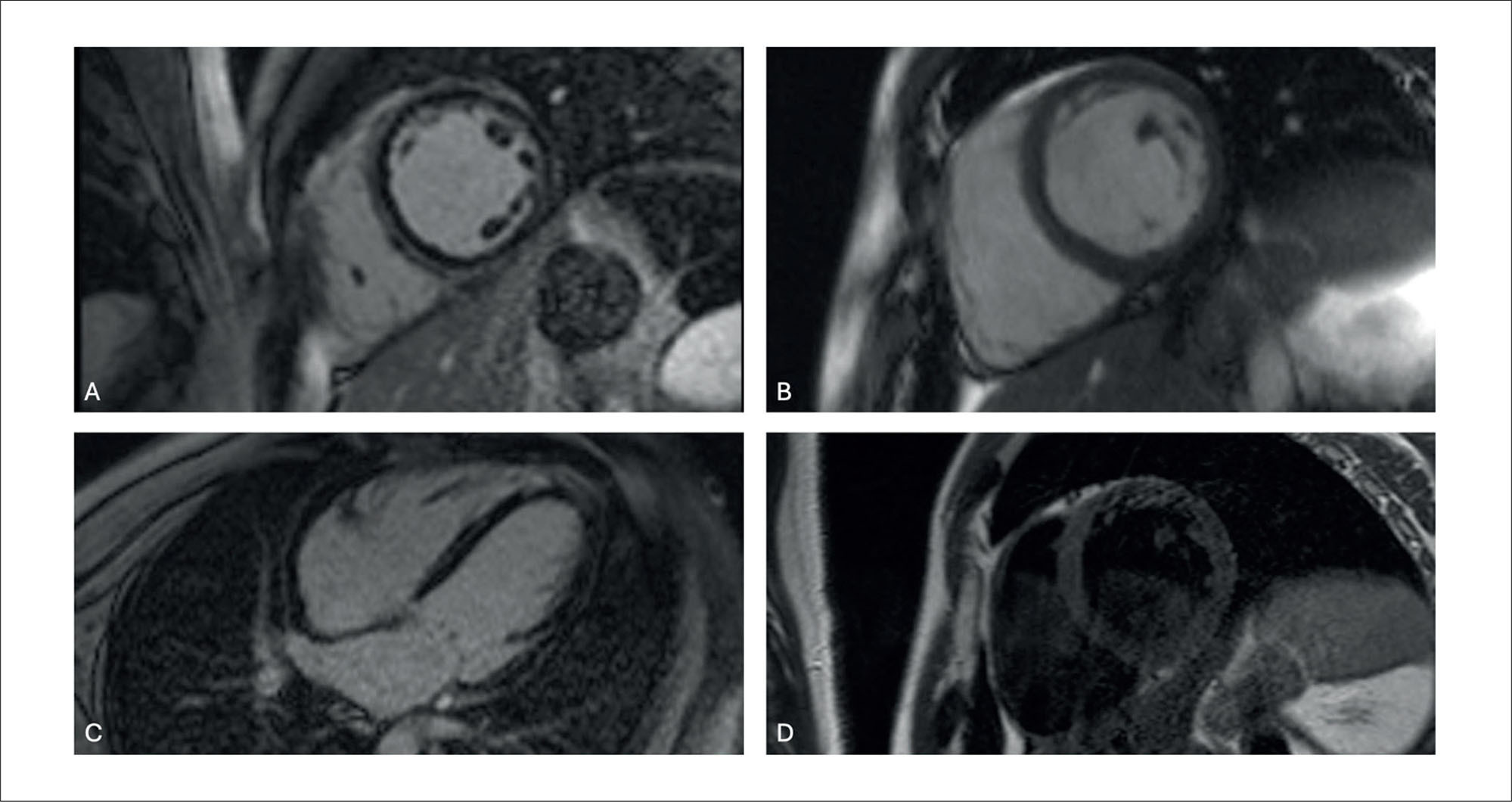
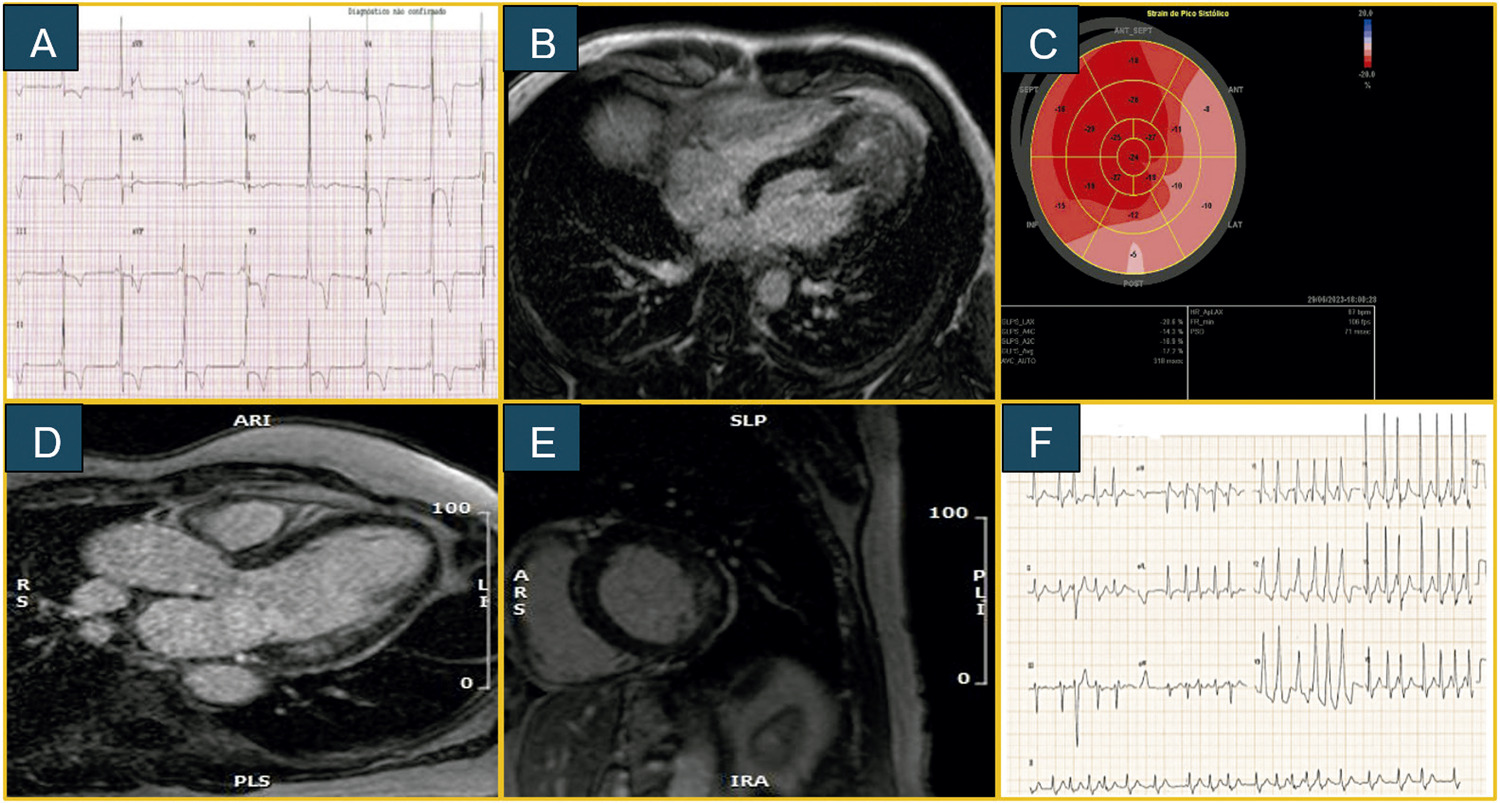
Long-term Follow-Up of a Patient with FLNC Gene Mutation-Related Cardiomyopathy: A Case Report

Isabela Bispo Santos da Silva Costa et al. Bruno Soares da Silva Rangel Antonio Tito Paladino Filho Bruno Normande Colombo … Thamara Carvalho Morais Ludhmila Abrahão Hajjar

Introduction

Heart Failure (HF) is estimated to affect approximately 26 million people worldwide., In Brazil, prevalence is high, with about 2 million diagnosed patients and an incidence of roughly 240,000 new cases every year. Between 2011 and 2021, more than 2.5 million HF-related hospitalizations were recorded in the Brazilian Unified Health System (SUS), underscoring the relevance of the disease in the national context. These figures highlight the need for early diagnostic strategies and etiological definition for the appropriate management of these patients. Establishing an etiological diagnosis is often challenging but essential to provide disease-specific treatments and improve prognosis. Diagnosis encompasses multimodality cardiac imaging, with Cardiac Magnetic Resonance imaging (CMR) being a useful tool for evaluating non-ischemic cardiomyopathy phenotypes and establishing an etiological diagnosis.

[…]

  • Arrhythmias Cardiac
  • Cardiac Magnetic Resonance Imaging
  • Cardiomyopathies
  • Genetics
  • Sudden Cardiac Death
Read Full Article
Creative Commons Attribution (CC BY) Creative Commons license
03/12/2025 DOI: 10.36660/abcimg.20250071i
Figure 1
ABC
Research Letter

Unveiling the Genetic Puzzle: Asymmetric Hypertrophy in a Heart Transplant Recipient Linked to Birt-Hogg-Dubé Syndrome

Silas Ramos Furquim et al. Lucas Vieira Lacerda Pires Nara Alves Buriti Mariana Lombardi Peres de Carvalho … Emanuelle Leonilia Marques Bianca Domit Werner Linnenkamp Luciana Sacilotto Fabiana G. Marcondes-Braga Iascara Wozniak de Campos Luis Fernando Bernal da Costa Seguro Sandrigo Mangini Monica S. Avila Fernando Bacal José Eduardo Krieger

Abstract

A case of a 54-year-old man who underwent a heart transplant with early asymmetric hypertrophy unrelated to rejection. Donor’s genetic analysis revealed a variant in folliculin gene, associated with Birt-Hogg-Dubé Syndrome. Screening of the donor’s family uncovered a similar hypertrophy and same genetic variant in the donor’s father. Although genetic evaluation of donors’ tissues is not routine, it can be crucial for understanding changes unrelated to the transplant procedure and identifying carriers of pathogenic variants.

  • Genetics
  • Heart Transplantation
  • Hypertrophic Cardiomyopathy
Read Full Article
Creative Commons Attribution (CC BY) Creative Commons license
02/05/2025 DOI: 10.36660/abc.20240444i Views 4
Figure 1
ABC
Research Letter

Fabry Disease and Its Different Phenotypes

Murillo Oliveira Antunes et al. Rafael Ruas Nastari Edmundo Arteaga-Fernandez Marcelle G. Henriques Lizandro … William Batah El-Feghaly Guilherme José dos Santos Ferreira Alan Silva Martins Juliana Alzira Gonzales Oliveira Leguizamon Vinicius Machado Correia Vagner Madrini Junior Fábio Fernandes

Abstract

Fabry disease (FD) is an X-linked genetic condition caused by variants in the GLA gene causing enzyme α-galactosidase A deficiency and accumulation of globotriaosylceramide (Gb3) in tissues such as the heart, kidneys, and the nervous system. This study reports a case series of patients with FD, highlighting the phenotypic diversity of the disease, which can be confused with other cardiological conditions. When properly indicated, genetic evaluation, combined with biomarker dosage and α-galactosidase enzymatic activity, is key for an accurate diagnosis. Early diagnosis of FD is fundamental for initiating treatments that can slow disease progression and prevent serious complications, reinforcing the need for greater awareness about this condition among cardiologists.

  • Cardiomyopathies
  • Fabry Disease
  • Genetics
Read Full Article
Creative Commons Attribution (CC BY) Creative Commons license
24/03/2025 DOI: 10.36660/abc.20240535i Views 3
ABC
Editorial

Sleep Duration, Genetics, and Atherosclerosis: Challenges and Opportunities

Ana Vitoria Vitoreti Martins et al. Larissa T. Krul Luciano F. Drager

Atherosclerosis, the unifying mechanism for most of the non-fatal and fatal myocardial infarction and stroke events, is a multifactorial process that has been increasing in prevalence worldwide. Traditional risk factors for atherosclerosis have been extensively studied, but recent evidence pointed out that they explained approximately only 40-50% of the variability of markers of arterial damage and atherosclerosis. Therefore, growing interest has been devoted to exploring the relative role of the “nontraditional’ risk factors. One of the promising candidates is sleep disorders. Indeed, the relationship between sleep and cardiovascular health has been increasingly explored in the literature., While most of the evidence relies on the impact of obstructive sleep apnea (OSA) on atherosclerosis, the potential atherogenic effects of extremes of sleep duration has been recently investigated,, considering its positive association with poor cardiovascular outcomes. Interestingly, previous evidence consistently showed that not only short but long sleep duration (usually defined as >8 or >9hs) increased the risk for these events, confirming a U-shaped association between sleep duration and cardiovascular outcomes. This previous evidence paves the way for exploring potential mechanisms by which sleep duration extremes may increase cardiovascular risk.

In this edition of the Arquivos Brasileiros de Cardiologia, Xu et al. evaluated the association between sleep duration and the risk of atherosclerosis using a Mendelian randomization (MR) approach with data from genome-wide association studies (GWAS). Two large cohorts from Europe were included for analysis. The main results indicated that contrary to the initial hypothesis, there is no significant causal association between sleep duration and atherosclerosis. The study concluded that genetically predicted sleep duration does not affect the risk of atherosclerosis and suggested further research to explore this relationship in greater detail. Strengths of the study include the large sample size and the use of a MR study. This strategy allows for avoiding common biases observed in observational studies. However, important limitations deserve appropriate comments precluding definitive conclusions in this important research area: 1) a subjective question defined sleep duration. It is not uncommon to find misperceptions about the real sleep duration; 2) the chosen Single Nucleotide Polymorphism (SNPs) only partially explain the variability of subjective sleep duration in this investigation. This fact may contribute to lower statistical power in identifying situations with poor correlations; 3) ‘atherosclerosis’ was identified by using the International Classification of Diseases (ICD) rather than objective measurements. There is certainly an underreport of the real burden of atherosclerosis in this population; 4) other sleep disorders (highlighting the role of OSA) are consistently associated with prevalent and incident markers of atherosclerosis– but were not studied in the present investigation; 5) the applicability of the results to non-European populations deserve further investigations.

[…]

  • Atherosclerosis
  • Cardiovascular disease
  • Genetics
  • Sleep
Read Full Article
Creative Commons Attribution (CC BY) Creative Commons license
22/11/2024 DOI: 10.36660/abc.20240593i Views 1
Central Illustration
ABC
Review Article

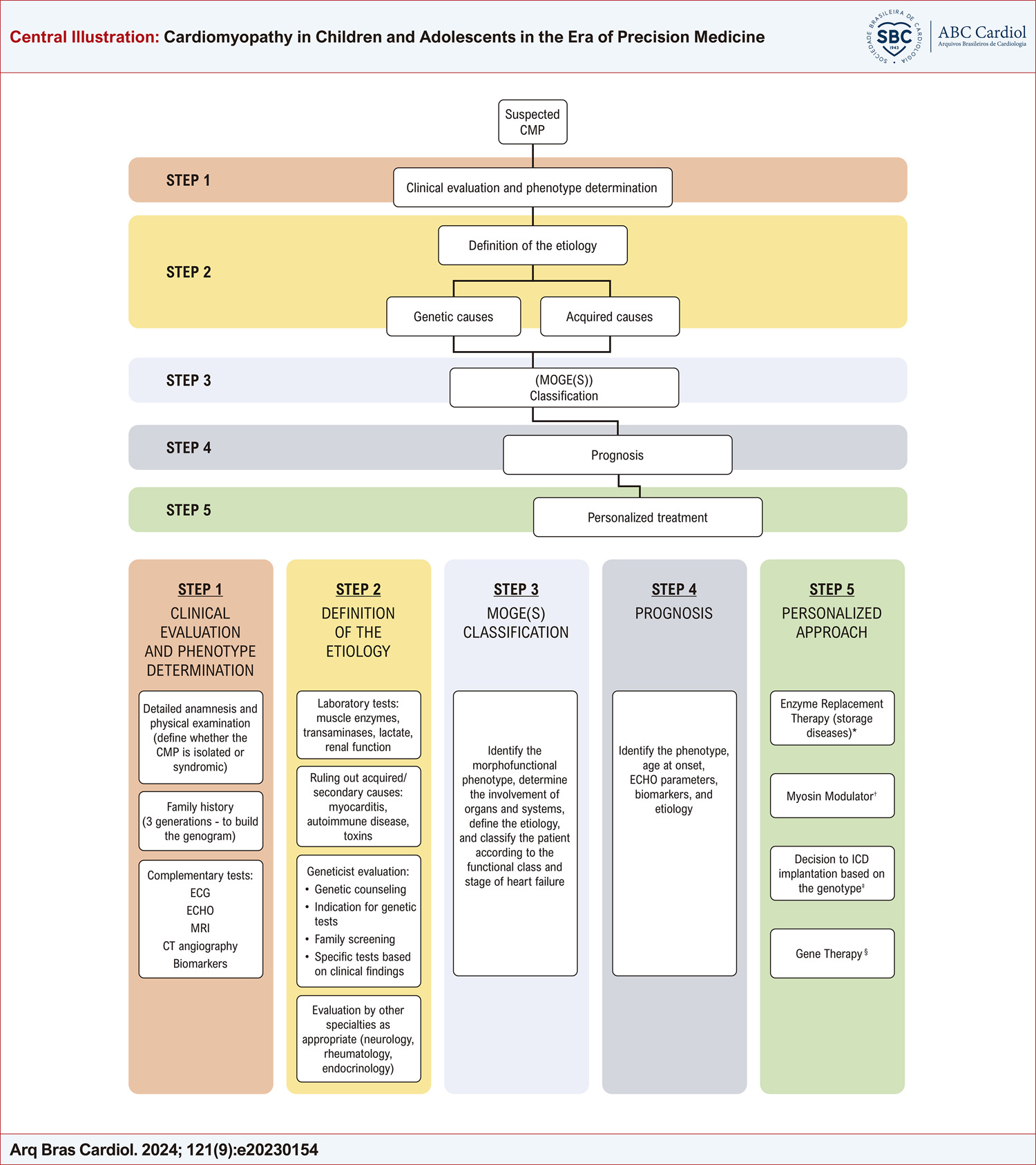
Cardiomyopathy in Children and Adolescents in the Era of Precision Medicine

Ana Flávia Mallheiros Torbey et al. Raquel Germer Toja Couto Aurea Grippa Eduarda Corrêa Maia … Sara Aimée Miranda Marcos Adriano Cardoso dos Santos Elion Tavares Peres Olimpio Patrick Silva Costa Everton Mattos de Oliveira Evandro Tinoco Mesquita

Abstract

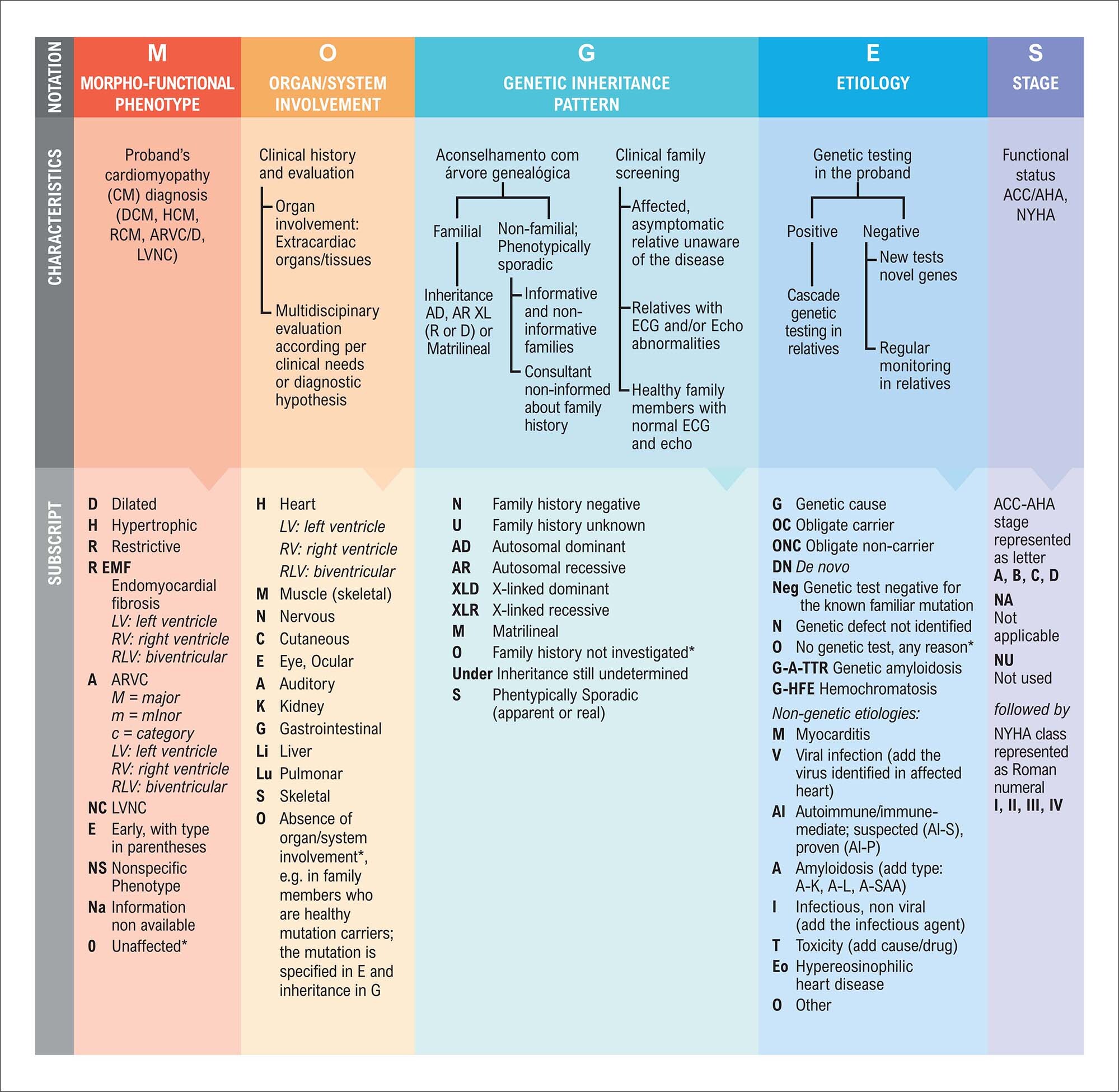
In childhood and adolescence, cardiomyopathies have their own characteristics and are an important cause of heart failure, arrhythmias, sudden death, and indication for heart transplantation. Diagnosis is a challenge in daily practice due to its varied clinical presentation, heterogeneous etiologies, and limited knowledge of tools related to clinical and molecular genetics. However, it is essential to recognize the different phenotypes and prioritize the search for the etiology. Recent advances in precision medicine have made molecular diagnosis accessible, which makes it possible to individualize therapeutic approaches, stratify the prognosis, and identify individuals in the family who are at risk of developing the disease. The objective of this review is to emphasize the particularities of cardiomyopathies in pediatrics and how the individualized approach impacts the therapy and prognosis of the patient. Through a systematized approach, the five-stage protocol used in our service is presented. These stages bring together clinical evaluation for determining the morphofunctional phenotype, identification of etiology, classification, establishment of prognosis, and the search for personalized therapies.

  • Cardiomyopathies
  • Child
  • Genetics
  • Heart Failure
  • Precision Medicine
Read Full Article
Creative Commons Attribution (CC BY) Creative Commons license
21/10/2024 DOI: 10.36660/abc.20230154i Views 1
ABC
Editorial

PRKAG2 Syndrome: Is Screening with Early Echocardiography Effective in Children with a Positive Genotype?

Maria Elisa Lucena Sales de Melo Assunção et al. Norma Lucena Cavalcanti Licínio da Silva Mychelle Pascoaline de Miranda Silva

Described for the first time in 2001 by Gollob et al., the syndrome determined by the mutation of the PRKAG2 gene is rare, autosomal dominant, with high penetrance and unknown prevalence in the population. It manifests with the phenotype of myocardial hypertrophy and associated ventricular pre-excitation. Tachyarrhythmias are common in this genetic syndrome, as are disturbances in the cardiac conduction system that lead, in some cases, to pacemaker implantation at an early age.

The PRKAG2 gene mutation usually presents as a phenocopy of hypertrophic cardiomyopathy, differing from this in that there are no sarcomeric changes and, rather, accumulation of glycogen in cardiac myocytes. The definitive diagnosis is given by genetic study, but the presentation with left ventricular (LV) hypertrophy and conduction system disorders also form a differential diagnosis with Danon and Anderson-Fabry diseases.

[…]

  • Cardiac Arrhythmias
  • Cardiomegaly
  • Cardiomyopathies
  • Child
  • Genetics
Read Full Article
Creative Commons Attribution (CC BY) Creative Commons license
27/09/2024 DOI: 10.36660/abc.20240543i
Genetic Testing in Cardiomyopathy: Decoding Molecular Underpinnings and Influencing Treatment Decisions
IJCS
Review Article

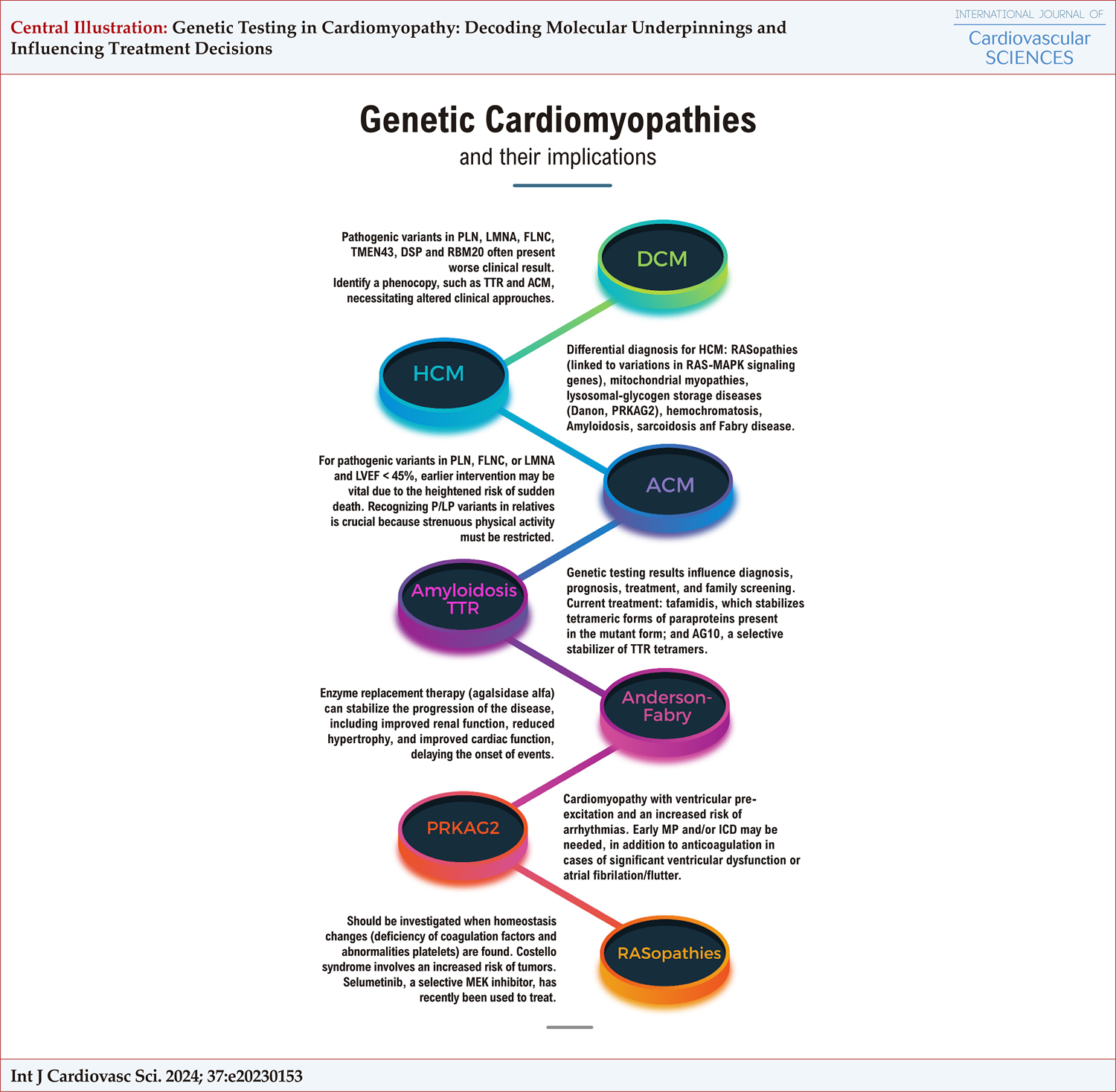
Genetic Testing in Cardiomyopathy: Decoding Molecular Underpinnings and Influencing Treatment Decisions

Silas Ramos Furquim et al. Layara Fernanda Vicente Pereira Lipari Fernanda Almeida Andrade Vinícius Machado Correia … Natália Quintella Sangiorgi Olivetti Lucas Vieira Lacerda Pires Luciana Sacilotto Fábio Fernandes José Eduardo Krieger

Abstract

Cardiomyopathy is characterized by structural and functional abnormalities in the heart muscle that are not influenced by coronary disease, hypertension, valve disease, or congenital heart defects. Genetic testing, which helps diagnose the molecular bases of cardiomyopathy, can affect prognostication and clinical decisions. Recent guidelines advocate classifying cardiomyopathies based on phenotypic categories, which encompass a range of clinical presentations, underlying causes, and outcomes. Beyond deepening our grasp of the disease, genetic testing can distinguish between diseases with similar presentations, known as genocopies, which can profoundly influence treatment decisions. Genetic testing is also essential for reproductive counseling and risk evaluation among family members. Combined with advanced imaging techniques such as magnetic resonance imaging, genetic investigation offers a comprehensive understanding of the disease. Thus, as the nature of cardiomyopathies continues to be unraveled, cardiologists must stay updated on advances in genetic testing and their practical applications.

  • Cardiomyopathies
  • Genetic Testing
  • Genetics
Read Full Article
Creative Commons Attribution (CC BY) Creative Commons license
19/08/2024 DOI: 10.36660/ijcs.20230153 Views 1
Figure 1
ABC
Case Report

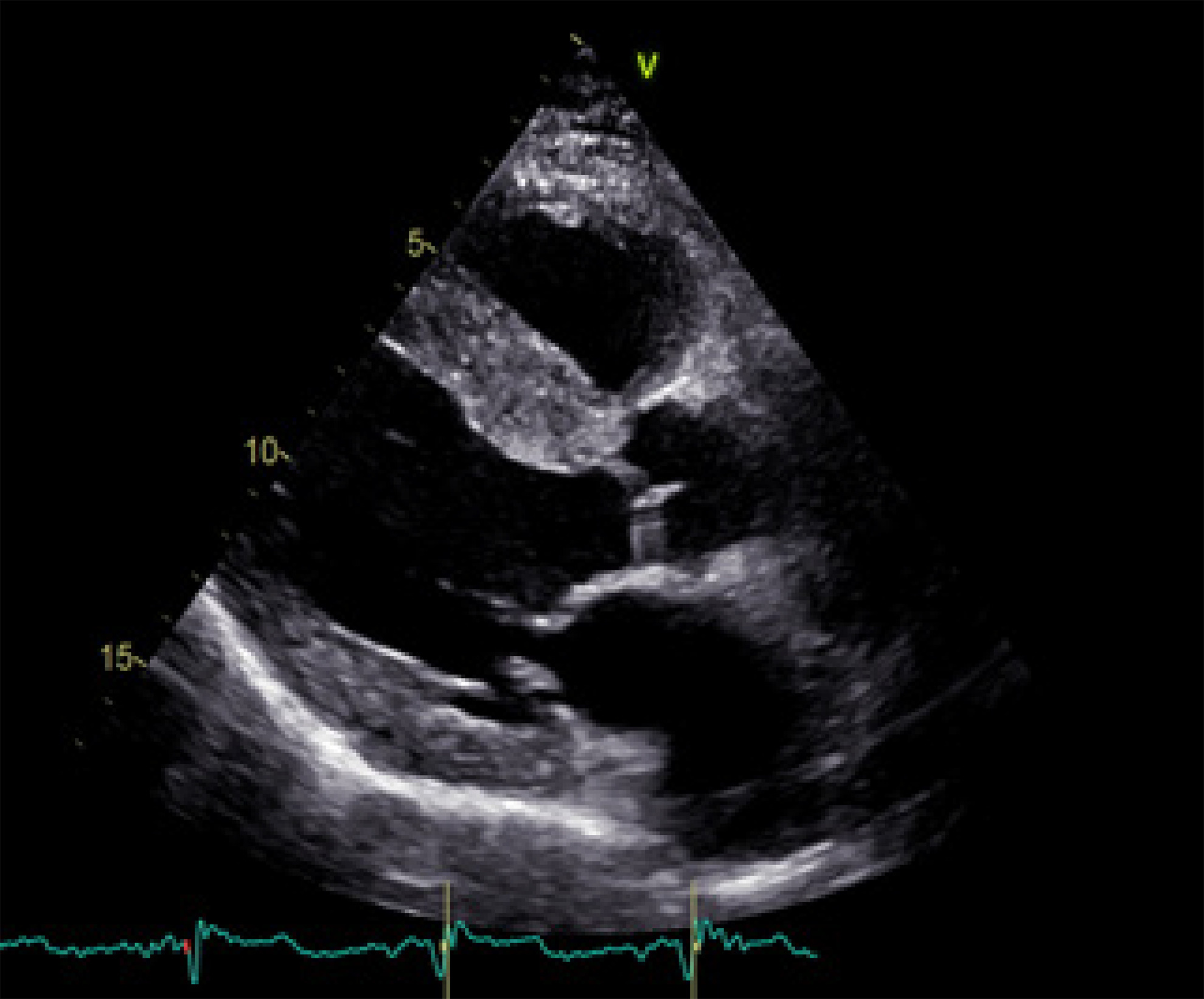
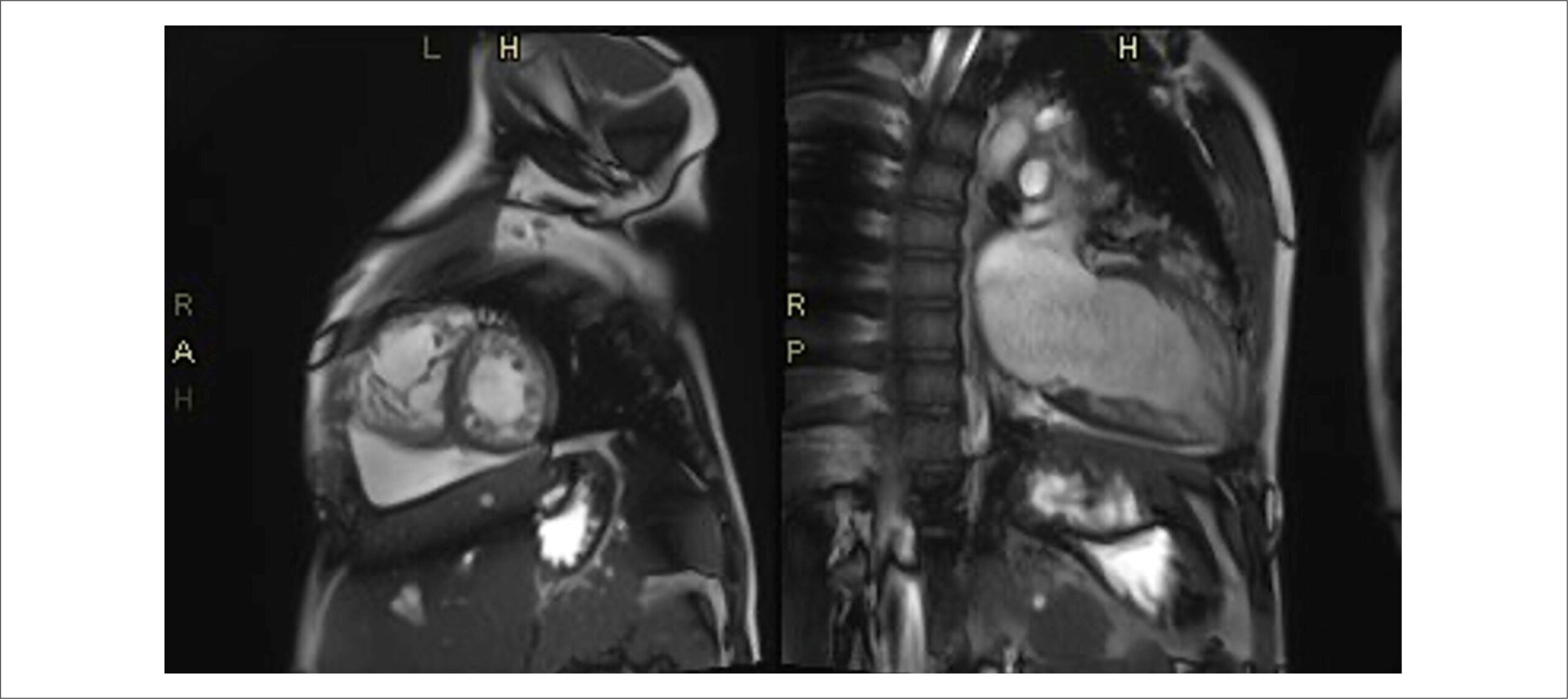
FLNC Associated Restrictive Cardiomyopathy and Hypertrabeculation, a Rare Association

Ana M. Aristizabal et al. Carlos Alberto Guzmán-Serrano María Isabel Lizcano Walter Mosquera … Juliana Lores Harry Pachajoa Cesar Cely

Abstract

A six-year-old girl with restrictive cardiomyopathy and hypertrabeculation, due to the early onset of her disease, whole exome sequencing was conducted, revealing the presence of a novel heterozygous missense variant in the FLNC gene. The same gene variant was also identified in her father, who, at an adult age, displayed normal imaging results and was symptom-free. This variant has not been reported in population databases or current medical literature and is classified as likely pathogenic.

  • Filamins
  • Genetics
  • Restrictive cardiomyopathy
Read Full Article
Creative Commons Attribution (CC BY) Creative Commons license
24/06/2024 DOI: 10.36660/abc.20230790i Views 1
ABC
Editorial

Influence of Genetics on Hypertension Development

Thais Beuren

Primary hypertension is one of the most common diseases worldwide, estimated to affect 20% of females and 25% of males. It is a risk factor for half of the ten leading causes of death globally, including the ranking leader, cardiovascular disease, and right next to it, brain, and kidney disease. For a long time, major efforts have been made to unravel the mechanisms that contribute to this – mostly – silent but devastating condition. Some advocate that hypertension is not a disease but a syndrome; a condition with multiple etiological factors which have as common sign an elevated blood pressure. Amongst intrinsic and environmental factors related to primary hypertension, some are already well established, e.g., obesity, smoking, disbalance of the renin-angiotensin-aldosterone-system (RAAS), mental stress, etc. The role of genetics in this scenario, nevertheless, has a vague and complex-to-characterize influence on hypertension development. Despite several studies dedicated to enlighten the matter, its polygenic nature makes every case unique regarding the impact of each predisposing factor. Several polymorphisms in different genes were pointed to correlate with hypertension, including the G-protein β3 subunit (GNB3) C825T polymorphism (rs5443:C>T). Guanine nucleotide-binding proteins (G proteins) are expressed in most human tissues and function as transductors in intracellular signaling pathways, regulating a wide variety of physiological processes. The 825T allele was previously associated with hypertension and obesity; however, a few studies were controversial, and the frequencies of the T allele differed amongst different ethnicities (fT≈0,8 in black Africans, fT≈0,45 in Asians, and fT≈0,3 in whites).

The study by Agostini et al. aimed to characterize a sample of 155 hypertensive Brazilian individuals in order to assess the prevalence of the C825T polymorphism and correlate it with clinical features. Unlike most of the other studies, the group found no association between the genetic variant and hypertension. The identification and selection of hypertensive subjects were based solely on interview data from medical records (use or not of anti-hypertensive medication and register or lack of register of a previous diagnosis), which might have interfered with their findings. Also, it was shown previously that the frequency of the T allele between ethnicities is often not equal, as well as hypertension prevalence. Thus, even though the idea of genetically characterizing the Brazilian population as a unity can be interesting, the Brazilian population is one of the most heterogeneous in the globe. Therefore, looking at ethnical groups separately could have enriched the analysis. The metabolic profile was also compared between groups and found positive associations of hypertensive individuals presenting the polymorphism with higher levels of triglycerides, glucose, uric acid, and obesity, similar to previous reports. The elucidation of hypertension pathways is a very complex subject, especially regarding genetics, so every effort to identify predisposing factors adds a new valuable piece to this puzzle.

[…]

  • Brazil
  • Genetics
  • Hypertension
Read Full Article
Creative Commons Attribution (CC BY) Creative Commons license
04/03/2024 DOI: 10.36660/abc.20230755 Views 2
Central Illustration
ABC
Review Article

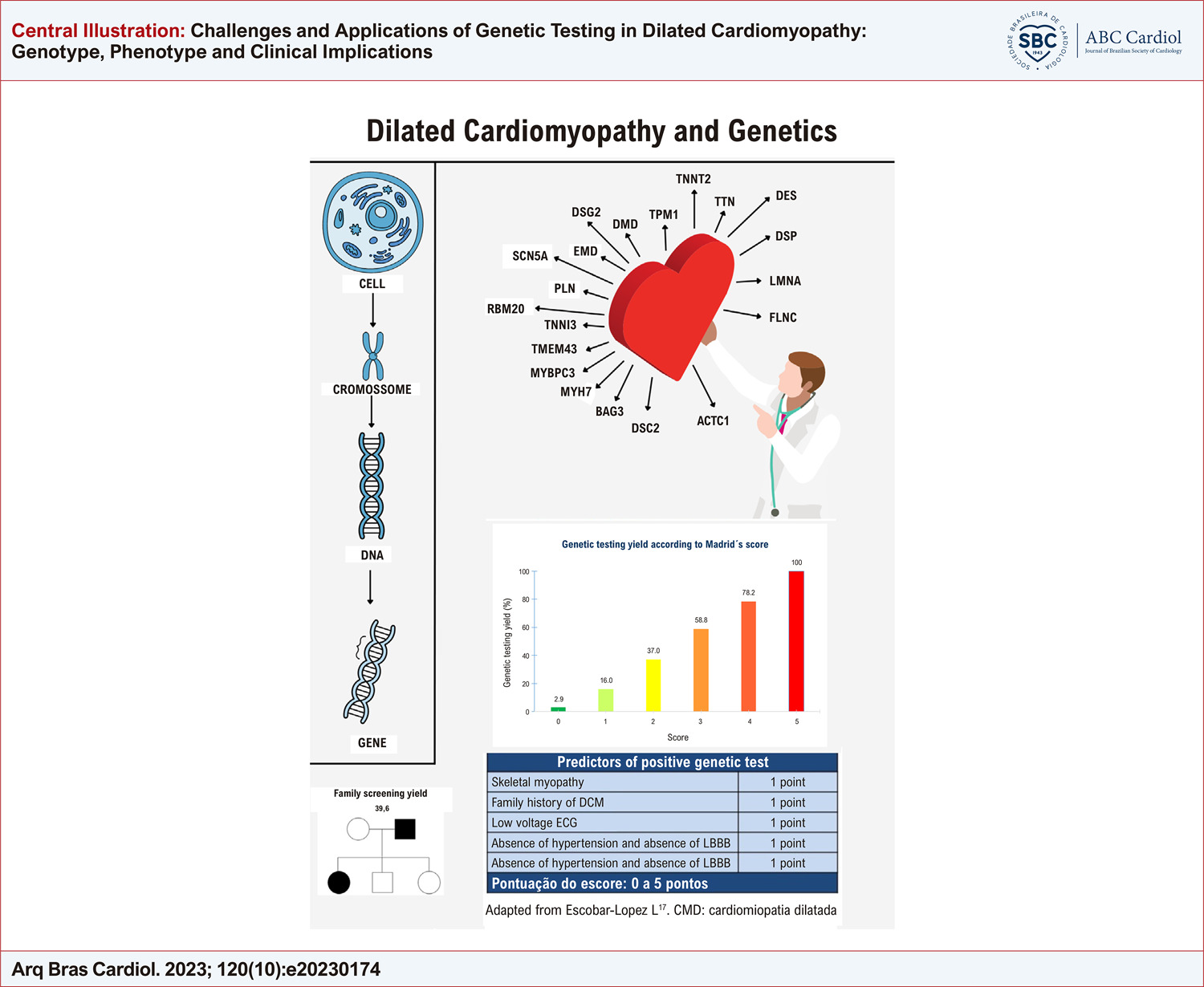
Challenges and Applications of Genetic Testing in Dilated Cardiomyopathy: Genotype, Phenotype and Clinical Implications

Silas Ramos Furquim et al. Bianca Linnenkamp Natália Quintella Sangiorgi Olivetti Fernando Rabioglio Giugni … Layara Fernanda Vicente Pereira Lipari Fernanda Almeida Andrade José Eduardo Krieger

Abstract

Genetic tests for dilated cardiomyopathy (DCM) have a diagnostic yield of up to 40%, but there is significant genetic heterogeneity and other challenges, such as variable expressivity and incomplete penetrance. Pedigree analysis is essential for distinguishing between sporadic and familial DCM cases by assessing family history. Familial DCM yields higher results in genetic testing, but sporadic DCM does not rule out the possibility of a genetic cause. Some genes have specific phenotypes, with the Lamin gene ( LMNA ) being associated with a phenotype of malignant arrhythmias and advanced heart failure (HF). The presence of a causal genetic variant can also aid in prognostic evaluation, identifying more severe cases with lower rates of reverse remodeling (RR) compared to individuals with a negative genotype. Current guidelines recommend genetic evaluation and counseling for individuals with DCM, along with cascade screening in first-degree relatives in cases where one or more variants are identified, offering an opportunity for early diagnosis and treatment. Relatives with a positive genotype and negative phenotype are candidates for serial evaluation, with frequency varying by age. Genotype also assists in individualized recommendations for implantable cardioverter-defibrillator (ICD) placement and advice regarding physical activity and family planning. Ongoing studies are progressively elucidating the details of genotype/phenotype relationships for a large number of variants, making molecular genetics increasingly integrated into clinical practice.

  • Cardiomyopathy, Dilated
  • Genetic Testing
  • Genetics
Read Full Article
Creative Commons Attribution (CC BY) Creative Commons license
24/11/2023 DOI: 10.36660/abc.20230174 Views 1
Figure 1
ABCHF
Viewpoint

Clinical Reasoning and Classification of Cardiomyopathies

Vagner Madrini Junior et al. Evandro Tinoco Mesquita Diane Xavier de Avila Fabio Fernandes

Definition

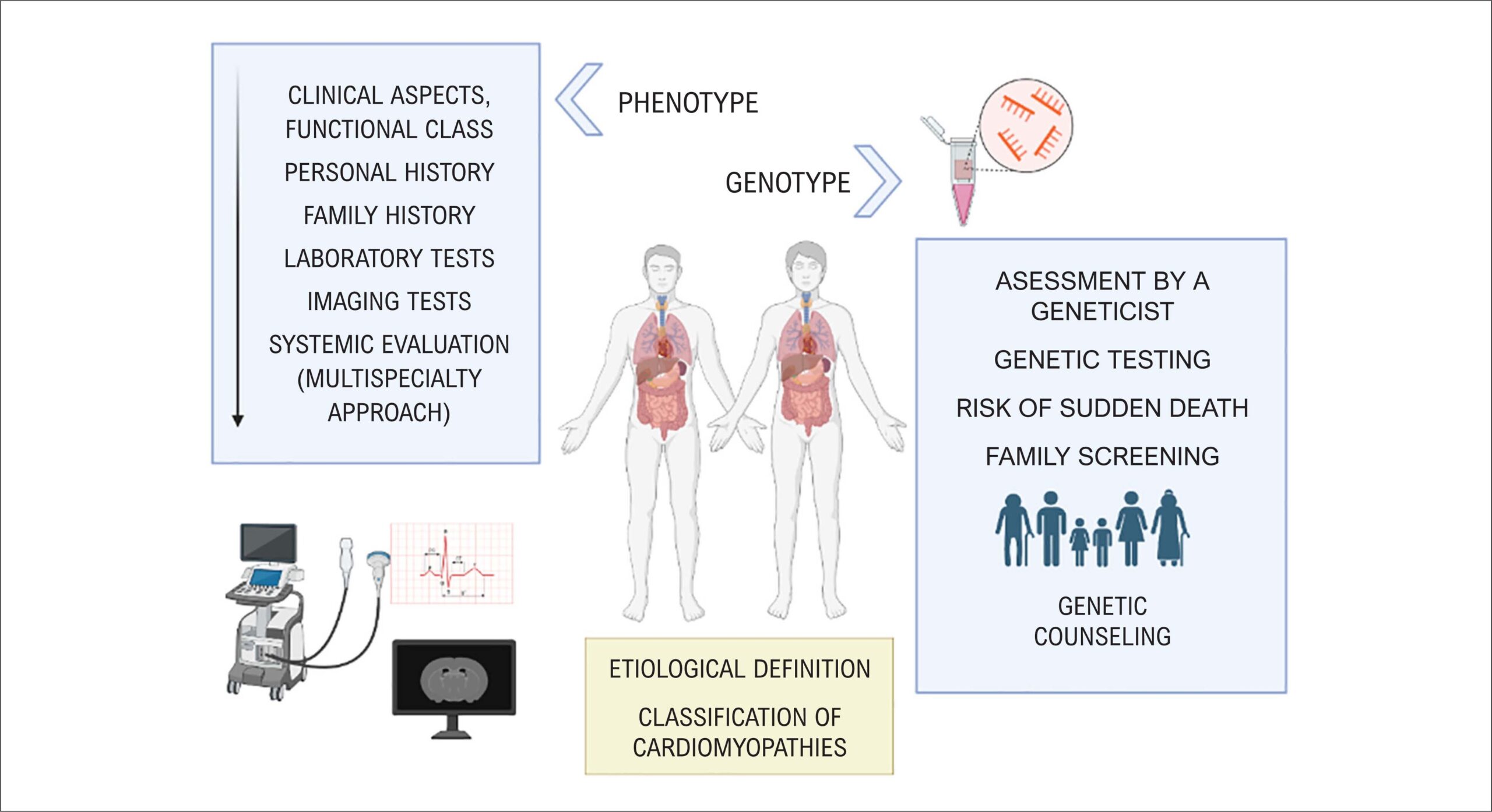
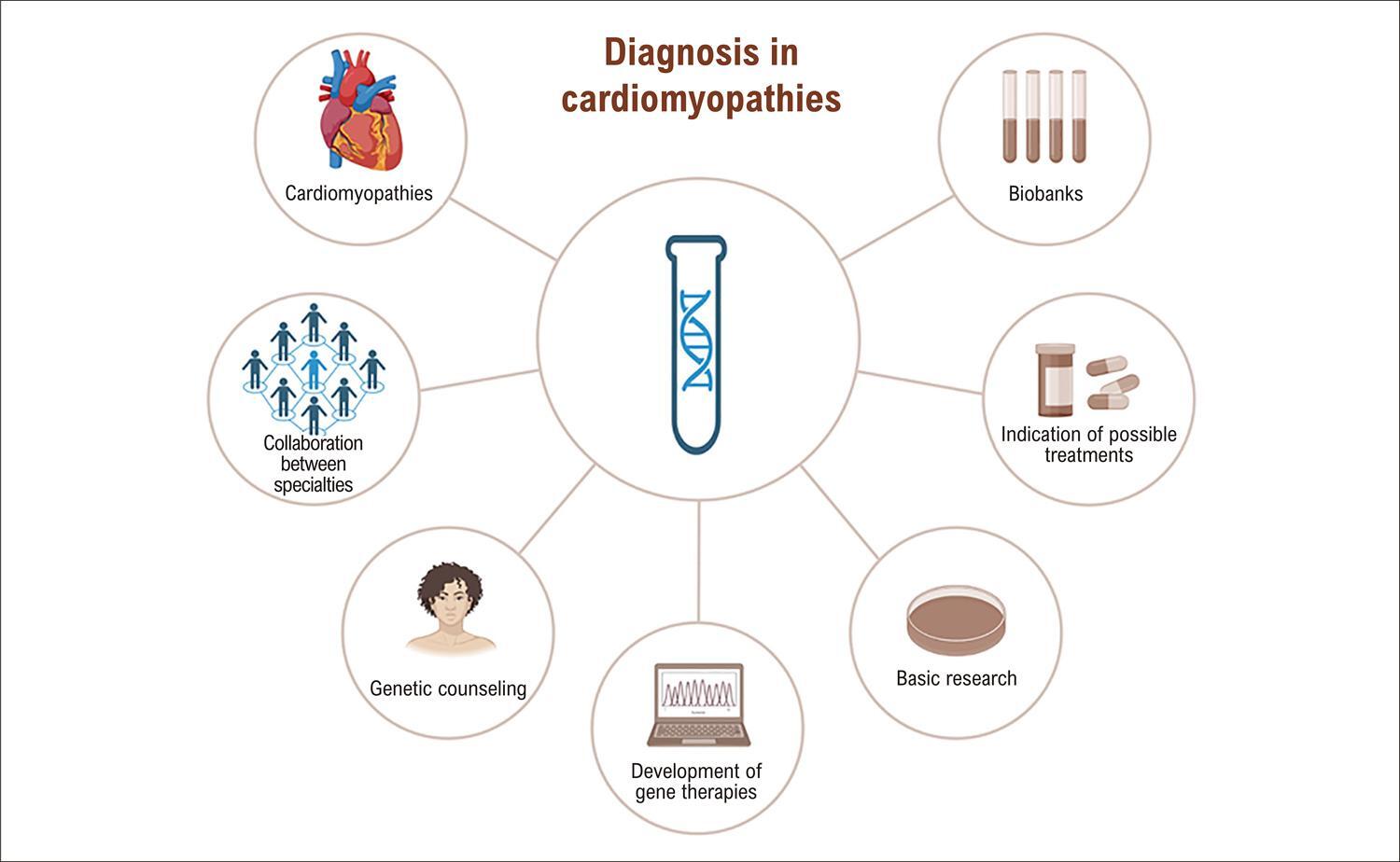
Cardiomyopathies (CMPs) are a group of diseases with multiple etiologies and heterogeneous phenotypes, ranging from microscopic changes in cardiomyocytes in asymptomatic patients to cases of fulminant heart failure with fluid retention, and perfusion and heart rhythm changes. A CMP was initially defined as a heart muscle disease caused by genetic defects, myocyte injury or myocardial infiltration, and characterized by structural and functional abnormalities in the absence of congenital disease, valvular disease or hypertension. The initial approach of patients with CMP consists of clinical evaluation and complementary imaging techniques and genetic testing, in search of diagnostic evidence and the need for specific tests ().,

[…]

  • Cardiomyopathies
  • Genetics
  • Hypertrophy
Read Full Article
Creative Commons Attribution (CC BY) Creative Commons license
17/08/2023 DOI: 10.36660/abchf.20230013 Views 1
Figure 1
ABCHF
Review Article

Genetics in Cardiomyopathies – Genetic Tests Decoded for the Clinical Cardiologist

Arsonval Lamounier Júnior et al. Diane Xavier de Ávila Roberto Barriales-Villa

Abstract

The era of personalized medicine emphasizes the provision of health care guided by the cardiomyopathy phenotypes described, their interpretation based on genotype, and genetic counseling. The identification of high-risk cardiomyopathy subtypes and the diagnosis of rare etiologies with potential therapies cannot be neglected. Genetic sequencing of these patients, in addition to advances in cardiac imaging techniques, has indicated a new perspective for these concepts, and consequently possible new classifications of cardiomyopathies and new clinical practices. The interaction between multidisciplinary teams and cardiology genetic experts is fundamental for a more appropriate management of gene variants, especially variants of uncertain significance that may be relevant in the expression of cardiomyopathies. This article helps cardiologists in the ordering of genetic tests and their indications, provides information about pathogenicity of variants and emphasizes family screening, challenges that may be overcome in daily practice.

  • Cardiomyopathies
  • Familial Screening
  • Genetics
  • NGS
Read Full Article
Creative Commons Attribution (CC BY) Creative Commons license
17/08/2023 DOI: 10.36660/abchf.20230036 Views 2
Figure 1
ABCHF
Special Article

Cardiomyopathies: Yesterday, Today, and Tomorrow

Charles Mady et al. Diane Xavier de Ávila Vagner Madrini Junior Evandro Tinoco Mesquita

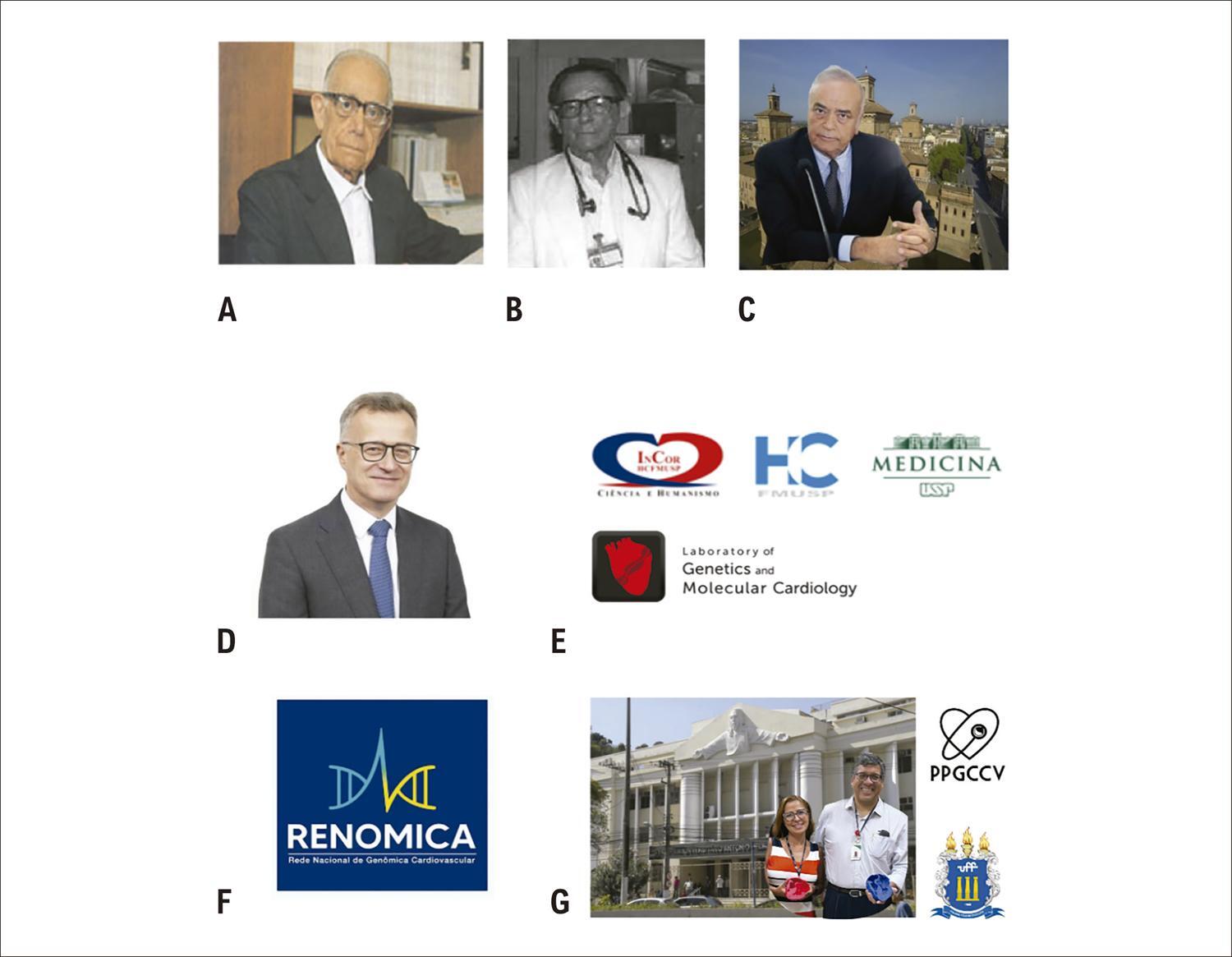
The interest in myocardial damage is very old, but only in recent decades has there been a reasonable advance in greater knowledge thereof. Ancient peoples were limited to rudimentary observations on the morphology and physiology of the circulatory system, but with special interest directed to the heart. Texts in cuneiform scripts from Sumer, considered the first civilization in human history; others from the Library of Ashurbanipal, with inscriptions on clay tiles, discovered intact under the sands at Nineveh; Egyptian hieroglyphs in stone and ink; and writings by the Mayans, the only people in the Americas to leave reports in their alphabet as well as books, of which we have only copies in some cases (the Spanish invaders took it upon themselves to destroy and burn many originals) all demonstrate an ancient interest in human anatomy and the heart. With the limitations of their times, they demonstrated curiosity about the constitution of the human body, reaching academic-level descriptions by Leonardo da Vinci’s time. Recent developments have brought us new knowledge about the etiopathogenesis and pathophysiology of the diseases that affect the heart, but they are not sufficient to generate greater therapeutic advances. There are reasons for this.

As these diseases are predominantly clinically treated, cardiology has spent the past few decades committed to understanding and disseminating themes considered more relevant in surgical areas, such as coronary, congenital, and valve diseases, which were and are subjected to highly developed treatments in the recent past, with more immediate results. The drug and equipment industries have understood the size of the doors open to their interests, actively participating in research associated with academic institutions. There is no doubt that the evolution in these fields has been enormous, with remarkable material interests, massively concentrating research, symposiums, congresses, and publications on these themes. Spaces for cardiomyopathies were very limited, due to almost total lack of interest, and therapy in these fields was limited to digitalis and diuretics, indicated for heart failure, and not for underlying diseases. It was a world apart within cardiology. It took a long time for new drugs to be studied and released on the market, but only for the treatment of dysfunction as a syndrome. There was a long delay in creating laboratories to promote understanding of the etiological factors of myocardial aggression, in an attempt to understand, reduce, or eliminate the lethality of these diseases, many of which are still little known, and to attempt to develop specific treatments for each cause. Unfortunately, we are still a long way from this goal. As an example, I cite the old and current Chagas cardiomyopathy. We treat the consequences, heart failure, thromboembolisms, and arrhythmias, but to date we do not have any truly effective specific treatment, in a society that contains a significant part of the infected population. Even prevention, which is inexpensive, given that it simply uses insecticides, is carried out on a modest scale. It has become conventional to use the terminology “disease of the poor” to justify this lack of interest. Nonetheless, this delay generates a huge social cost in the health area.

[…]

  • Cardiomyopathies
  • Classification
  • Genetics
Read Full Article
Creative Commons Attribution (CC BY) Creative Commons license
01/08/2023 DOI: 10.36660/abchf.20230022 Views 1
Figure 1
ABCHF
Viewpoint

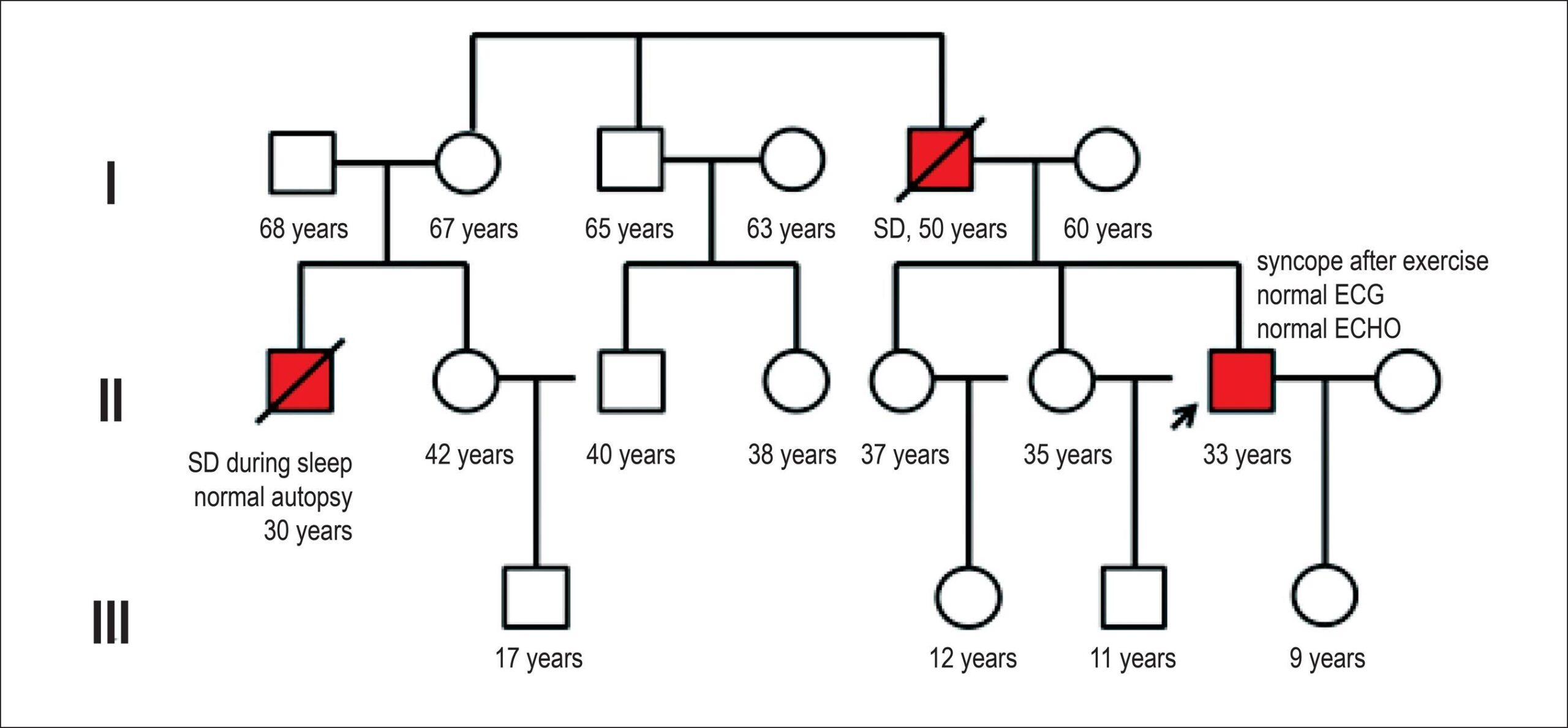
Genetic Counseling and Pedigree in Cardiomyopathies – the Role of the Clinical Geneticist

Diane Xavier de Ávila et al. Frank Nunes Raquel Germer Ana Flávia Malheiros Torbey

Introduction

Twenty years ago, the Human Genome Project made history by announcing the sequencing of 92% of the human genome through the development of modern genetic sequencing techniques. In 2022, the complete sequencing of human DNA was announced. This knowledge made it possible to better understand how genetics influences the functioning of the human body and, at the same time, facilitated the identification of genetic variants that can cause diseases.

In the field of cardiology, genetic study assists the assessment of aortopathy, familial hypercholesterolemia, channelopathies, and especially cardiomyopathies.

[…]

  • Cardiomyopathies
  • Genetic Counseling
  • Genetic Testing
  • Genetics
Read Full Article
Creative Commons Attribution (CC BY) Creative Commons license
01/08/2023 DOI: 10.36660/abchf.20230023 Views 1
Figure 1
ABCIC
Editorial

How to Perform a Diagnostic and Prognostic Analysis of Hypertrophic Cardiomyopathy in 2022: Should we Divide to Improve Treatment?

Alexandra Toste et al. Nuno Cardim

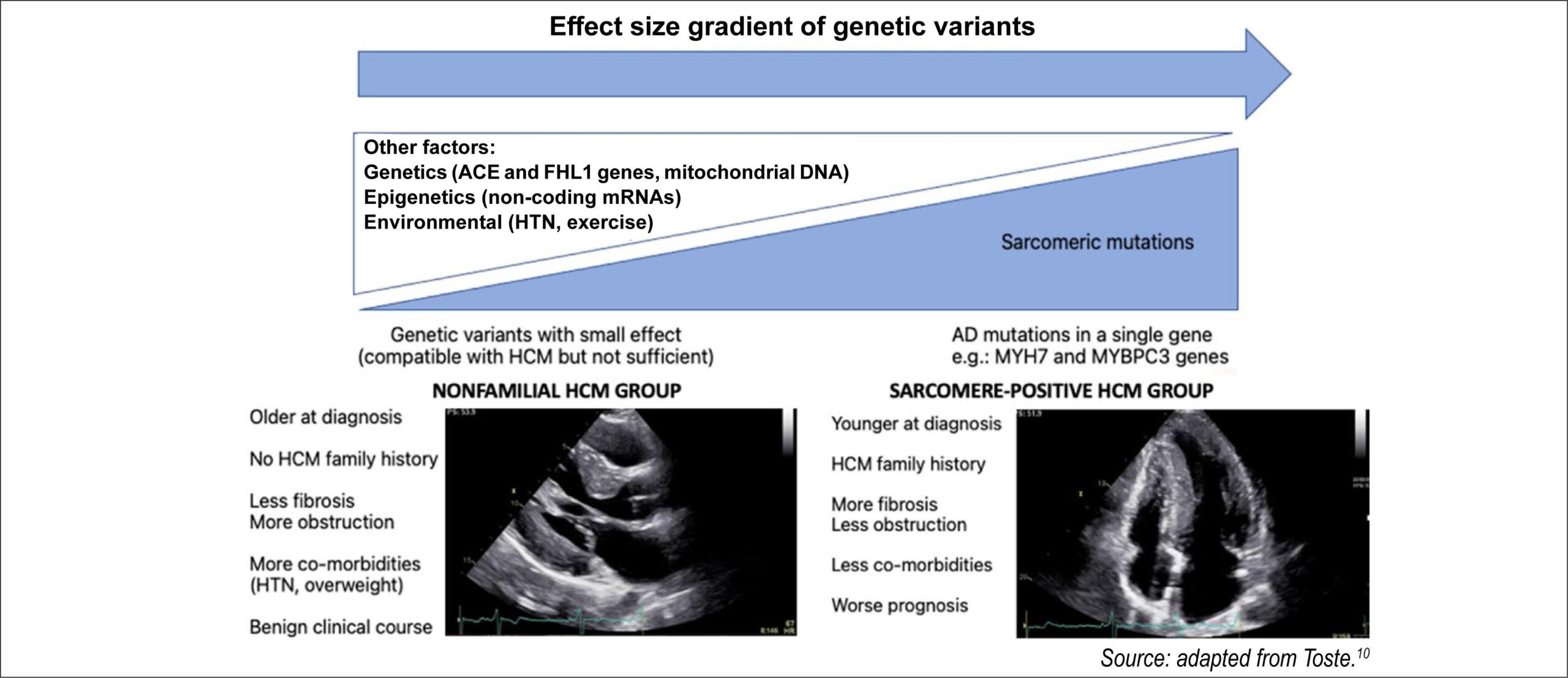
Hypertrophic cardiomyopathy (HCM), the most common genetic heart disease, has an estimated prevalence in the general population of 1:500–1:200. The diagnosis is based on the presence of left ventricular hypertrophy (LVH) that is not fully explained by loading conditions, and HCM occurs in the absence of other cardiac, systemic, or metabolic disease or in the context of a multiorgan syndrome associated with LVH.

Despite being considered a genetic disease, the initial diagnosis of HCM does not require genetic testing. The diagnostic power of current genetic panels is modest, just 46%; therefore, failure to detect a mutation does not exclude the diagnosis. Current guidelines recommend genetic testing, especially when the possibility of cascading familial genetic screening is anticipated or in cases in which the clinical presentation suggests a specific non-sarcomeric etiology potentially treatable with specific therapy, such as Anderson-Fabry disease, Danon disease, or familial amyloidosis.

[…]

  • Diagnosis
  • Genetics
  • Hypertrophic Cardiomyopathy
  • Prognosis
  • Sarcomere-Positive, Nonfamilial
Read Full Article
Creative Commons Attribution (CC BY) Creative Commons license
01/12/2022 DOI: 10.47593/2675-312X/20223504eed_23i Views 1
Figure 1
ABCHF
Case Report

Overlapping Etiologies in a Young Patient with Severe Myocarditis: A Case Report

Thaís Martins de Oliveira et al. Fernando Luis Scolari Fabiano de Oliveira Poswar Francine Hehn de Oliveira … Ricardo Stein Lívia Adams Goldraich

Introduction

Etiological identification of young patients with heart failure should always be a medical goal. In this scenario, infectious myocarditis is a possible diagnosis and, when it occurs, it has a benign course in the majority of cases. However, congenital heart diseases or familial forms of cardiomyopathy should be considered in differential diagnosis and/or concomitantly, particularly in more severe presentations of myocarditis. In these cases, in addition to specific investigation for myocarditis, which may include clinical evaluation, imaging exams, laboratory tests, and endomyocardial biopsy with viral agent testing in myocardial tissue, genetic study is also worth considering. Associated etiologies can have an impact on clinical presentation and evolution, but data are still scarce, which means that there is still a gap to be explored in the literature. In this report, we describe the case of a young man with cardiogenic shock secondary to myocarditis caused by Epstein Barr virus (EBV), which led to identification of a pathogenic mutation in the PKP2 gene.

[…]

  • Arrhythmogenic Cardiomyopathy
  • Genetics
  • Inflammation
  • Myocardial Injury
Read Full Article
Creative Commons Attribution (CC BY) Creative Commons license
12/04/2022 DOI: 10.36660/abchf.20220022 Views 1
ABC
Editorial

Chronological Age or Biological Age, Mainly a Matter of Lifestyle

Paulo César B. Veiga Jardim et al. Thiago de Souza Veiga Jardim

Despite the significant global socioeconomic disparities, the world’s population has grown exponentially, and the average life continues to increase significantly.–

If at the beginning of the 19th century, life expectancy in Europe was around 35 years, at present, only the African continent has populations with an average life expectancy of fewer than 60 years.–

[…]

  • Aged
  • body mass index
  • Genetics
  • Healthy Aging
  • Life Style
  • Obesity
  • Sedentarism
  • Spirituality
  • Stress
  • Vascular Stiffness
Read Full Article
Creative Commons Attribution (CC BY) Creative Commons license
20/09/2021 DOI: 10.36660/abc.20210732
Figure 1
IJCS
Original Article

Plasma Renin in Women Using and not Using Combined Oral Contraceptive

Sidney de Souza Oliveira et al. Jefferson Petto Diego Passos Diogo Alan Carlos Nery dos Santos … Marvyn de Santana do Sacramento Ana Marice Teixeira Ladeia

Abstract

Backgroud:

Recent studies show that women on combined oral contraceptives (COC) present abnormal fasting lipid profile, increased postprandial lipemia, plasma C-reactive protein (CRP) and blood pressure (BP) compared to women not on combined oral contraceptives. Plasma renin is one of the factors responsible for abnormal BP.

Objectives:

To assess plasma renin levels in women using or not using COC, the correlation between renin and CRP, as well as divergences in lipid profile.

Methods:

A cross-sectional study with apparently healthy women aged 20 to 30, eutrophic, irregularly active, and with fasting triglycerides < 150 mg/dL. The sample was stratified into two groups: the No Combined Oral Contraceptive Group (NCOCG), comprised of women who did not use any type of hormone contraceptive, and the Combined Oral Contraceptive Group (COCG) comprised of women on low-dose COC for at least one year. After a 12-hour fast, 5 ml of blood was collected for renin dosing and PCR. Data were analyzed by the t-Test and bidirectional Mann-Whitney Test, both with significance < 0.05.

Results:

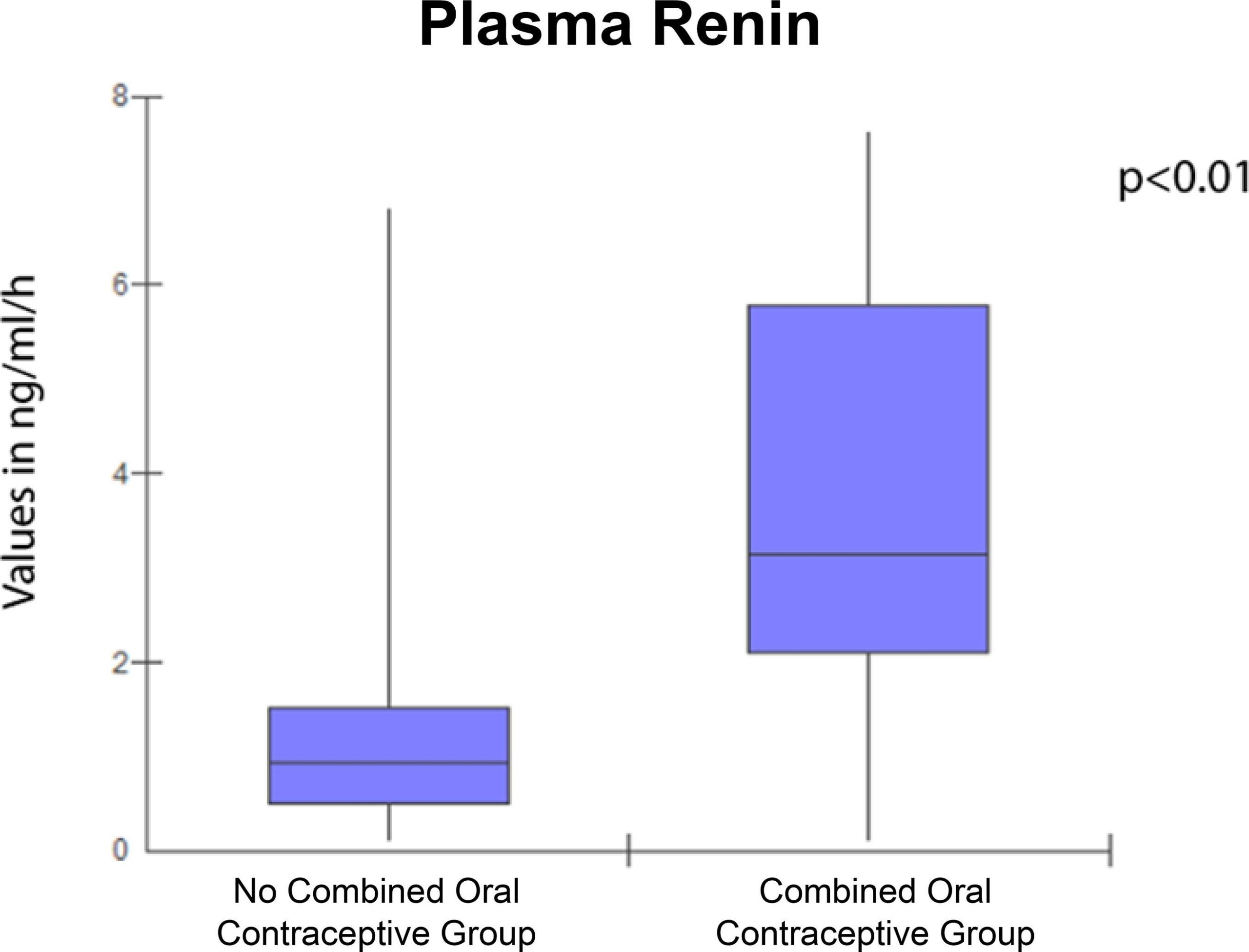
We evaluated 44 women equally distributed between the groups, age 23 ± 1.2 years, BMI 21.0 ± 3.2 kg/m2. Median and interquartile deviation of renin in the NCOCG and the COCG were, respectively, 0.5 (0.1-1.0) and 3.0 (2-6) (p < 0.01). A positive correlation between PCR and renin (p < 0.01 and r = 0.68) was found.

Conclusion:

The plasma renin levels of women using COC were higher, with a strong correlation with CRP.

  • Contraceptive Agents
  • Diabetes Mellitus
  • Dyslipidemias
  • Genetics
  • Hypertension
  • Metabolism
  • Risk Factors
  • Sedentarism, Women’s Health
Read Full Article
Creative Commons Attribution (CC BY) Creative Commons license
03/02/2020 DOI: 10.36660/ijcs.20180021 Views 1
Figure 1
ABC
Review Article

Genetic Evaluation, Familial Screening and Exercise

Ricardo Stein et al. Juan Pablo Trujillo Anderson Donelli da Silveira Arsonval Lamounier Júnior Lorenzo Monserrat Iglesias

Introduction

Regular physical activity practice benefits individuals of all ages, sexes and ethnicities. If on one hand the practice of moderate exercise is considered a healthy activity that favors the cardiovascular system, on the other, high-intensity exercise for a long period can increase the risk for sudden death (SD). Even considering the huge number of individuals exercising daily, SD in that context is rare. However, the prevention of SD can be difficult and it has significant repercussion, mainly among young practitioners of leisure exercise or athletes. From the epidemiological viewpoint, cardiac SD affects 200,000 to 400,000 individuals in the United States of America (USA) annually. In the sports scenario, around 200 athletes per year are estimated to have a fatal event. In Spain, the national registry of SD in athletes reported 180 cases from 1995 to 2007, suggesting an incidence of 15 to 20 cases per year.

For athletes, preparticipation evaluation (PPE) is indicated, and can be effective in preventing cardiac SD in that context. However, that type of screening has great variability between different countries and entities that perform it. In the sports context, genetic evaluation is performed only in specific cases.

[…]

  • Death, Sudden, Cardiac
  • Exercise
  • Genetics
  • Genotype
  • Heredity
  • Sports Medicine
Read Full Article
Creative Commons Attribution (CC BY) Creative Commons license
06/03/2017 DOI: 10.5935/abc.20170015 Views 3
ABC
Artigo Original

Genetic factors in familial aggregation of blood pressure of portuguese nuclear families

Rogério César Fermino et al. André Seabra Rui Garganta José António Ribeiro Maia

BACKGROUND: Despite of the increase in the prevalence of hypertension in Portugal, the importance of genetic factors in blood pressure (BP) has not been studied extensively in our country. OBJECTIVES: To verify the indirect presence of vertical transmission of genetic factors between parents and children in BP values, and to estimate the magnitude of genetic factors contributing for variation in BP values in the population. METHODS: Sample size comprises 367 individuals (164 parents and 203 children) pertaining the 107 nuclear families participating in “Familias Activas” project, proceeding from different regions of North Portugal. The BP was measured with Omron® model M6 (HEM-7001-E) digital device. SPSS 15.0 was used for data analysis; PEDSTATS was used to verify the structure of each family data. Familial correlations and heritability estimates were computed in FCOR and ASSOC modules of S.A.G.E. version 5.3. RESULTS: For systolic BP (SBP), correlation values were low to moderate (0,21< r <0,35); for diastolic BP (DBP) values were found to be moderate (0,24< r <0,50). Genetic factors explain 43 and 49% of the total variation in SBP and DBP, respectively. CONCLUSION: A moderate amount of the SBP and the DBP is accounted for by genetic factors.

  • Genetics
  • Heredity
  • Portugal
  • quantitative genetics
Read Full Article
Creative Commons Attribution (CC BY) Creative Commons license
17/04/2009 DOI: 10.1590/S0066-782X2009000300008
Genetic polymorphism, medical therapy and sequential cardiac function in patients with heart failure
ABC
Artigo Original

Genetic polymorphism, medical therapy and sequential cardiac function in patients with heart failure

Marco Antonio Romeo Cuoco et al. Alexandre Costa Pereira Glória de Fátima Alves da Mota José Eduardo Krieger Alfredo José Mansur

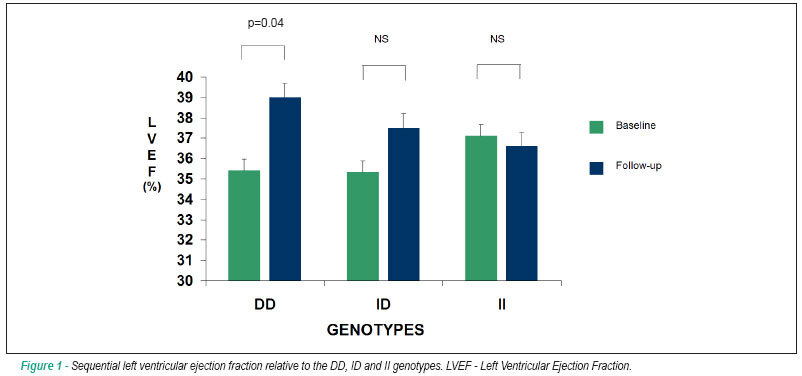
BACKGROUND: Functional variants of angiotensin-converting enzyme (ACE) gene may be associated with response to therapy in patients with heart failure (HF). OBJECTIVE: To test the hypothesis of differences in sequential echocardiographic evaluations of left ventricular ejection fraction in patients with HF on medical therapy, including ACE inhibitors in relation to insertion (I) / deletion (D) polymorphism of the ACE gene. METHODS: We studied 168 patients (mean age 43.3±10.1 years), 128 (76.2%) men, with HF and sequential echocardiograms. The I/D polymorphism was determined by polymerase chain reaction. Left ventricular ejection fraction (LVEF) was analyzed comparatively to genotypes. More than 90% of patients were on ACE inhibitors. RESULTS: There was a significantly greater increase in mean LVEF in patients with the D allele compared to patients with the II genotype (p=0.01) after a mean follow-up of 38.9 months. The D allele was associated with an increase of 8.8% in mean LVEF over the same period. Furthermore, there was a tendency toward a D allele “copy number” effect on the increase of mean LVEF over time: a 3.5% difference in LVEF variation between patients with the II and the ID genotypes (p = 0.03) and a 5% difference between patients with the II and DD genotypes (p=0.02). CONCLUSION: ACE gene deletion polymorphism may be operative in response to medical treatment that included ACE inhibitors in patients with HF. Further controlled studies may contribute to better understanding of genetic influences on response to therapy.

  • Angiotensin-Converting Enzyme Inhibitors
  • Genetics
  • Heart Failure
Read Full Article
Creative Commons Attribution (CC BY) Creative Commons license
29/05/2008 DOI: 10.1590/S0066-782X2008000400007

Could not load more articles. Please try again.

How to cite this article

EndNote RIS

Electronic Document Format (Vancouver)

Antunes MO. The Thickness That Deceives: The Role of Imaging, Biopsy, and Genetics in the Evaluation of Ventricular Hypertrophy. Arquivos Brasileiros de Cardiologia 2026;123(2):e20260119.

Electronic Document Format (ABNT)

Antunes, Murillo de Oliveira. The Thickness That Deceives: The Role of Imaging, Biopsy, and Genetics in the Evaluation of Ventricular Hypertrophy. Arquivos Brasileiros de Cardiologia, v. 123, n. 2, e20260119, May. 2026.

Electronic Document Format (APA)

Antunes, M. O. (2026). The Thickness That Deceives: The Role of Imaging, Biopsy, and Genetics in the Evaluation of Ventricular Hypertrophy. Arquivos Brasileiros de Cardiologia, 123(2), e20260119.

Electronic Document Format (ISO)

Antunes, Murillo de Oliveira. The Thickness That Deceives: The Role of Imaging, Biopsy, and Genetics in the Evaluation of Ventricular Hypertrophy. Arquivos Brasileiros de Cardiologia [online]. 2026, vol. 123, n. 2, [cited 2026-10-14], e20260119. Available from: <https://journals.cardiol.br/en/article/the-thickness-that-deceives-the-role-of-imaging-biopsy-and-genetics-in-the-evaluation-of-ventricular-hypertrophy/>. ISSN 0066-782X

EndNote RIS

Electronic Document Format (Vancouver)

Cazeiro DI, Cravo J, Silva MP, Inácio JR, Moldovan O, Sousa C, Resende CL, et al. Systemic Sclerosis Associated Pulmonary Arterial Hypertension with Venous Involvement – a Novel ABCC8 Pathogenic Variant. Arquivos Brasileiros de Cardiologia 2026;122(11):e20250175.

Electronic Document Format (ABNT)

Cazeiro, Daniel Inácio; Cravo, João; Silva, Mariana Pereira; Inácio, João R.; Moldovan, Oana; Sousa, Catarina; Resende, Catarina Lopes; Fonseca, João Eurico; Pinto, Fausto J.; Plácido, Rui. Systemic Sclerosis Associated Pulmonary Arterial Hypertension with Venous Involvement – a Novel ABCC8 Pathogenic Variant. Arquivos Brasileiros de Cardiologia, v. 122, n. 11, e20250175, Jan. 2026.

Electronic Document Format (APA)

Cazeiro, D. I., Cravo, J., Silva, M. P., Inácio, J. R., Moldovan, O., Sousa, C., Resende, C. L., Fonseca, J. E., Pinto, F. J., & Plácido, R. (2026). Systemic Sclerosis Associated Pulmonary Arterial Hypertension with Venous Involvement – a Novel ABCC8 Pathogenic Variant. Arquivos Brasileiros de Cardiologia, 122(11), e20250175.

Electronic Document Format (ISO)

Cazeiro, Daniel Inácio and Cravo, João and Silva, Mariana Pereira and Inácio, João R. and Moldovan, Oana and Sousa, Catarina and Resende, Catarina Lopes and Fonseca, João Eurico and Pinto, Fausto J. and Plácido, Rui. Systemic Sclerosis Associated Pulmonary Arterial Hypertension with Venous Involvement – a Novel ABCC8 Pathogenic Variant. Arquivos Brasileiros de Cardiologia [online]. 2026, vol. 122, n. 11, [cited 2026-10-14], e20250175. Available from: <https://journals.cardiol.br/en/article/systemic-sclerosis-associated-pulmonary-arterial-hypertension-with-venous-involvement-a-novel-abcc8-pathogenic-variant/>. ISSN 0066-782X

EndNote RIS

Electronic Document Format (Vancouver)

Bernardi HGB, Furquim S, Hames RL, Koroishi JHY, Pinheiro Junior JA, Martins SK. Reverse Remodeling and Genetics: A Review Based on a Clinical Case Description that Challenges Current Evidence and Logic. ABC Heart Fail Cardiomyop 2025;5(4):e20250026.

Electronic Document Format (ABNT)

Bernardi, Helena Garcia Betinardi; Furquim, Silas; Hames, Renata Lopes; Koroishi, Jorge Henrique Yoschimoto; Pinheiro Junior, Jairo Alves; Martins, Stevan Krieger. Reverse Remodeling and Genetics: A Review Based on a Clinical Case Description that Challenges Current Evidence and Logic. ABC Heart Fail Cardiomyop, v. 5, n. 4, e20250026, Dec. 2025.

Electronic Document Format (APA)

Bernardi, H. G. B., Furquim, S., Hames, R. L., Koroishi, J. H. Y., Pinheiro Junior, J. A., & Martins, S. K. (2025). Reverse Remodeling and Genetics: A Review Based on a Clinical Case Description that Challenges Current Evidence and Logic. ABC Heart Fail Cardiomyop, 5(4), e20250026.

Electronic Document Format (ISO)

Bernardi, Helena Garcia Betinardi and Furquim, Silas and Hames, Renata Lopes and Koroishi, Jorge Henrique Yoschimoto and Pinheiro Junior, Jairo Alves and Martins, Stevan Krieger. Reverse Remodeling and Genetics: A Review Based on a Clinical Case Description that Challenges Current Evidence and Logic. ABC Heart Fail Cardiomyop [online]. 2025, vol. 5, n. 4, [cited 2026-10-14], e20250026. Available from: <https://journals.cardiol.br/en/article/reverse-remodeling-and-genetics-a-review-based-on-a-clinical-case-description-that-challenges-current-evidence-and-logic/>

EndNote RIS

Electronic Document Format (Vancouver)

Costa IBSS, Rangel BSS, Paladino Filho AT, Colombo BN, Morais TC, Hajjar LA. Long-term Follow-Up of a Patient with FLNC Gene Mutation-Related Cardiomyopathy: A Case Report. ABC Imagem Cardiovascular 2025;38(3):e20250071.

Electronic Document Format (ABNT)

Costa, Isabela Bispo Santos da Silva; Rangel, Bruno Soares da Silva; Paladino Filho, Antonio Tito; Colombo, Bruno Normande; Morais, Thamara Carvalho; Hajjar, Ludhmila Abrahão. Long-term Follow-Up of a Patient with FLNC Gene Mutation-Related Cardiomyopathy: A Case Report. ABC Imagem Cardiovascular, v. 38, n. 3, e20250071, Dec. 2025.

Electronic Document Format (APA)

Costa, I. B. S. S., Rangel, B. S. S., Paladino Filho, A. T., Colombo, B. N., Morais, T. C., & Hajjar, L. A. (2025). Long-term Follow-Up of a Patient with FLNC Gene Mutation-Related Cardiomyopathy: A Case Report. ABC Imagem Cardiovascular, 38(3), e20250071.

Electronic Document Format (ISO)

Costa, Isabela Bispo Santos da Silva and Rangel, Bruno Soares da Silva and Paladino Filho, Antonio Tito and Colombo, Bruno Normande and Morais, Thamara Carvalho and Hajjar, Ludhmila Abrahão. Long-term Follow-Up of a Patient with FLNC Gene Mutation-Related Cardiomyopathy: A Case Report. ABC Imagem Cardiovascular [online]. 2025, vol. 38, n. 3, [cited 2026-10-14], e20250071. Available from: <https://journals.cardiol.br/en/article/long-term-follow-up-of-a-patient-with-flnc-gene-mutation-related-cardiomyopathy-a-case-report/>. ISSN 2318-8219

EndNote RIS

Electronic Document Format (Vancouver)

Furquim SR, Pires LVL, Buriti NA, Carvalho MLP, Marques EL, Linnenkamp BDW, Sacilotto L, et al. Unveiling the Genetic Puzzle: Asymmetric Hypertrophy in a Heart Transplant Recipient Linked to Birt-Hogg-Dubé Syndrome. Arquivos Brasileiros de Cardiologia 2025;122(3):e20240444.

Electronic Document Format (ABNT)

Furquim, Silas Ramos; Pires, Lucas Vieira Lacerda; Buriti, Nara Alves; Carvalho, Mariana Lombardi Peres de; Marques, Emanuelle Leonilia; Linnenkamp, Bianca Domit Werner; Sacilotto, Luciana; Marcondes-Braga, Fabiana G.; Campos, Iascara Wozniak de; Seguro, Luis Fernando Bernal da Costa; Mangini, Sandrigo; Avila, Monica S.; Bacal, Fernando; Krieger, José Eduardo. Unveiling the Genetic Puzzle: Asymmetric Hypertrophy in a Heart Transplant Recipient Linked to Birt-Hogg-Dubé Syndrome. Arquivos Brasileiros de Cardiologia, v. 122, n. 3, e20240444, May. 2025.

Electronic Document Format (APA)

Furquim, S. R., Pires, L. V. L., Buriti, N. A., Carvalho, M. L. P. , Marques, E. L., Linnenkamp, B. D. W., Sacilotto, L., Marcondes-Braga, F. G., Campos, I. W. , Seguro, L. F. B. C., Mangini, S., Avila, M. S., Bacal, F., & Krieger, J. E. (2025). Unveiling the Genetic Puzzle: Asymmetric Hypertrophy in a Heart Transplant Recipient Linked to Birt-Hogg-Dubé Syndrome. Arquivos Brasileiros de Cardiologia, 122(3), e20240444.

Electronic Document Format (ISO)

Furquim, Silas Ramos and Pires, Lucas Vieira Lacerda and Buriti, Nara Alves and Carvalho, Mariana Lombardi Peres de and Marques, Emanuelle Leonilia and Linnenkamp, Bianca Domit Werner and Sacilotto, Luciana and Marcondes-Braga, Fabiana G. and Campos, Iascara Wozniak de and Seguro, Luis Fernando Bernal da Costa and Mangini, Sandrigo and Avila, Monica S. and Bacal, Fernando and Krieger, José Eduardo. Unveiling the Genetic Puzzle: Asymmetric Hypertrophy in a Heart Transplant Recipient Linked to Birt-Hogg-Dubé Syndrome. Arquivos Brasileiros de Cardiologia [online]. 2025, vol. 122, n. 3, [cited 2026-10-14], e20240444. Available from: <https://journals.cardiol.br/en/article/unveiling-the-genetic-puzzle-asymmetric-hypertrophy-in-a-heart-transplant-recipient-linked-to-birt-hogg-dube-syndrome/>. ISSN 0066-782X

EndNote RIS

Electronic Document Format (Vancouver)

Antunes MO, Nastari RR, Arteaga-Fernandez E, Lizandro MGH, El-Feghaly WB, Ferreira GJS, Martins AS, et al. Fabry Disease and Its Different Phenotypes. Arquivos Brasileiros de Cardiologia 2025;122(2):e20240535.

Electronic Document Format (ABNT)

Antunes, Murillo Oliveira; Nastari, Rafael Ruas; Arteaga-Fernandez, Edmundo; Lizandro, Marcelle G. Henriques; El-Feghaly, William Batah; Ferreira, Guilherme José dos Santos; Martins, Alan Silva; Leguizamon, Juliana Alzira Gonzales Oliveira; Correia, Vinicius Machado; Madrini Junior, Vagner; Fernandes, Fábio. Fabry Disease and Its Different Phenotypes. Arquivos Brasileiros de Cardiologia, v. 122, n. 2, e20240535, Mar. 2025.

Electronic Document Format (APA)

Antunes, M. O., Nastari, R. R., Arteaga-Fernandez, E., Lizandro, M. G. H., El-Feghaly, W. B., Ferreira, G. J. S., Martins, A. S., Leguizamon, J. A. G. O., Correia, V. M., Madrini Junior, V., & Fernandes, F. (2025). Fabry Disease and Its Different Phenotypes. Arquivos Brasileiros de Cardiologia, 122(2), e20240535.

Electronic Document Format (ISO)

Antunes, Murillo Oliveira and Nastari, Rafael Ruas and Arteaga-Fernandez, Edmundo and Lizandro, Marcelle G. Henriques and El-Feghaly, William Batah and Ferreira, Guilherme José dos Santos and Martins, Alan Silva and Leguizamon, Juliana Alzira Gonzales Oliveira and Correia, Vinicius Machado and Madrini Junior, Vagner and Fernandes, Fábio. Fabry Disease and Its Different Phenotypes. Arquivos Brasileiros de Cardiologia [online]. 2025, vol. 122, n. 2, [cited 2026-10-14], e20240535. Available from: <https://journals.cardiol.br/en/article/fabry-disease-and-its-different-phenotypes/>. ISSN 0066-782X

EndNote RIS

Electronic Document Format (Vancouver)

Martins AVV, Krul LT, Drager LF. Sleep Duration, Genetics, and Atherosclerosis: Challenges and Opportunities. Arquivos Brasileiros de Cardiologia 2024;121(9):e20240593.

Electronic Document Format (ABNT)

Martins, Ana Vitoria Vitoreti; Krul, Larissa T.; Drager, Luciano F.. Sleep Duration, Genetics, and Atherosclerosis: Challenges and Opportunities. Arquivos Brasileiros de Cardiologia, v. 121, n. 9, e20240593, Nov. 2024.

Electronic Document Format (APA)

Martins, A. V. V., Krul, L. T., & Drager, L. F. (2024). Sleep Duration, Genetics, and Atherosclerosis: Challenges and Opportunities. Arquivos Brasileiros de Cardiologia, 121(9), e20240593.

Electronic Document Format (ISO)

Martins, Ana Vitoria Vitoreti and Krul, Larissa T. and Drager, Luciano F.. Sleep Duration, Genetics, and Atherosclerosis: Challenges and Opportunities. Arquivos Brasileiros de Cardiologia [online]. 2024, vol. 121, n. 9, [cited 2026-10-14], e20240593. Available from: <https://journals.cardiol.br/en/article/sleep-duration-genetics-and-atherosclerosis-challenges-and-opportunities/>. ISSN 0066-782X

EndNote RIS

Electronic Document Format (Vancouver)

Torbey AFM, Couto RGT, Grippa A, Maia EC, Miranda SA, Santos MAC, Peres ET, et al. Cardiomyopathy in Children and Adolescents in the Era of Precision Medicine. Arquivos Brasileiros de Cardiologia 2024;121(9):e20230154.

Electronic Document Format (ABNT)

Torbey, Ana Flávia Mallheiros; Couto, Raquel Germer Toja; Grippa, Aurea; Maia, Eduarda Corrêa; Miranda, Sara Aimée; Santos, Marcos Adriano Cardoso dos; Peres, Elion Tavares; Costa, Olimpio Patrick Silva; Oliveira, Everton Mattos de; Mesquita, Evandro Tinoco. Cardiomyopathy in Children and Adolescents in the Era of Precision Medicine. Arquivos Brasileiros de Cardiologia, v. 121, n. 9, e20230154, Oct. 2024.

Electronic Document Format (APA)

Torbey, A. F. M., Couto, R. G. T., Grippa, A., Maia, E. C., Miranda, S. A., Santos, M. A. C. , Peres, E. T., Costa, O. P. S., Oliveira, E. M. , & Mesquita, E. T. (2024). Cardiomyopathy in Children and Adolescents in the Era of Precision Medicine. Arquivos Brasileiros de Cardiologia, 121(9), e20230154.

Electronic Document Format (ISO)

Torbey, Ana Flávia Mallheiros and Couto, Raquel Germer Toja and Grippa, Aurea and Maia, Eduarda Corrêa and Miranda, Sara Aimée and Santos, Marcos Adriano Cardoso dos and Peres, Elion Tavares and Costa, Olimpio Patrick Silva and Oliveira, Everton Mattos de and Mesquita, Evandro Tinoco. Cardiomyopathy in Children and Adolescents in the Era of Precision Medicine. Arquivos Brasileiros de Cardiologia [online]. 2024, vol. 121, n. 9, [cited 2026-10-14], e20230154. Available from: <https://journals.cardiol.br/en/article/cardiomyopathy-in-children-and-adolescents-in-the-era-of-precision-medicine/>. ISSN 0066-782X

EndNote RIS

Electronic Document Format (Vancouver)

Assunção MELSM, Silva NLCL, Silva MPM. PRKAG2 Syndrome: Is Screening with Early Echocardiography Effective in Children with a Positive Genotype?. Arquivos Brasileiros de Cardiologia 2024;121(8):e20240543.

Electronic Document Format (ABNT)

Assunção, Maria Elisa Lucena Sales de Melo; Silva, Norma Lucena Cavalcanti Licínio da; Silva, Mychelle Pascoaline de Miranda. PRKAG2 Syndrome: Is Screening with Early Echocardiography Effective in Children with a Positive Genotype?. Arquivos Brasileiros de Cardiologia, v. 121, n. 8, e20240543, Sep. 2024.

Electronic Document Format (APA)

Assunção, M. E. L. S. M., Silva, N. L. C. L. , & Silva, M. P. M. (2024). PRKAG2 Syndrome: Is Screening with Early Echocardiography Effective in Children with a Positive Genotype?. Arquivos Brasileiros de Cardiologia, 121(8), e20240543.

Electronic Document Format (ISO)

Assunção, Maria Elisa Lucena Sales de Melo and Silva, Norma Lucena Cavalcanti Licínio da and Silva, Mychelle Pascoaline de Miranda. PRKAG2 Syndrome: Is Screening with Early Echocardiography Effective in Children with a Positive Genotype?. Arquivos Brasileiros de Cardiologia [online]. 2024, vol. 121, n. 8, [cited 2026-10-14], e20240543. Available from: <https://journals.cardiol.br/en/article/prkag2-syndrome-is-screening-with-early-echocardiography-effective-in-children-with-a-positive-genotype/>. ISSN 0066-782X

EndNote RIS

Electronic Document Format (Vancouver)

Furquim SR, Lipari LFVP, Andrade FA, Correia VM, Olivetti NQS, Pires LVL, Sacilotto L, et al. Genetic Testing in Cardiomyopathy: Decoding Molecular Underpinnings and Influencing Treatment Decisions. International Journal of Cardiovascular Sciences 2024;37:e20230153.

Electronic Document Format (ABNT)

Furquim, Silas Ramos; Lipari, Layara Fernanda Vicente Pereira; Andrade, Fernanda Almeida; Correia, Vinícius Machado; Olivetti, Natália Quintella Sangiorgi; Pires, Lucas Vieira Lacerda; Sacilotto, Luciana; Fernandes, Fábio; Krieger, José Eduardo. Genetic Testing in Cardiomyopathy: Decoding Molecular Underpinnings and Influencing Treatment Decisions. International Journal of Cardiovascular Sciences, v. 37, e20230153, Aug. 2024.

Electronic Document Format (APA)

Furquim, S. R., Lipari, L. F. V. P., Andrade, F. A., Correia, V. M., Olivetti, N. Q. S., Pires, L. V. L., Sacilotto, L., Fernandes, F., & Krieger, J. E. (2024). Genetic Testing in Cardiomyopathy: Decoding Molecular Underpinnings and Influencing Treatment Decisions. International Journal of Cardiovascular Sciences, 37, e20230153.

Electronic Document Format (ISO)

Furquim, Silas Ramos and Lipari, Layara Fernanda Vicente Pereira and Andrade, Fernanda Almeida and Correia, Vinícius Machado and Olivetti, Natália Quintella Sangiorgi and Pires, Lucas Vieira Lacerda and Sacilotto, Luciana and Fernandes, Fábio and Krieger, José Eduardo. Genetic Testing in Cardiomyopathy: Decoding Molecular Underpinnings and Influencing Treatment Decisions. International Journal of Cardiovascular Sciences [online]. 2024, vol. 37, [cited 2026-10-14], e20230153. Available from: <https://journals.cardiol.br/en/article/genetic-testing-in-cardiomyopathy-decoding-molecular-underpinnings-and-influencing-treatment-decisions/>. ISSN 2359-4802

EndNote RIS

Electronic Document Format (Vancouver)

Aristizabal AM, Guzmán-Serrano CA, Lizcano MI, Mosquera W, Lores J, Pachajoa H, Cely C, et al. FLNC Associated Restrictive Cardiomyopathy and Hypertrabeculation, a Rare Association. Arquivos Brasileiros de Cardiologia 2024;121(5):e20230790.

Electronic Document Format (ABNT)

Aristizabal, Ana M.; Guzmán-Serrano, Carlos Alberto; Lizcano, María Isabel; Mosquera, Walter; Lores, Juliana; Pachajoa, Harry; Cely, Cesar. FLNC Associated Restrictive Cardiomyopathy and Hypertrabeculation, a Rare Association. Arquivos Brasileiros de Cardiologia, v. 121, n. 5, e20230790, Jun. 2024.

Electronic Document Format (APA)

Aristizabal, A. M., Guzmán-Serrano, C. A., Lizcano, M. I., Mosquera, W., Lores, J., Pachajoa, H., & Cely, C. (2024). FLNC Associated Restrictive Cardiomyopathy and Hypertrabeculation, a Rare Association. Arquivos Brasileiros de Cardiologia, 121(5), e20230790.

Electronic Document Format (ISO)

Aristizabal, Ana M. and Guzmán-Serrano, Carlos Alberto and Lizcano, María Isabel and Mosquera, Walter and Lores, Juliana and Pachajoa, Harry and Cely, Cesar. FLNC Associated Restrictive Cardiomyopathy and Hypertrabeculation, a Rare Association. Arquivos Brasileiros de Cardiologia [online]. 2024, vol. 121, n. 5, [cited 2026-10-14], e20230790. Available from: <https://journals.cardiol.br/en/article/flnc-associated-restrictive-cardiomyopathy-and-hypertrabeculation-a-rare-association/>. ISSN 0066-782X

EndNote RIS

Electronic Document Format (Vancouver)

Beuren T. Influence of Genetics on Hypertension Development. Arquivos Brasileiros de Cardiologia 2024;120(12):e20230755.

Electronic Document Format (ABNT)

Beuren, Thais. Influence of Genetics on Hypertension Development. Arquivos Brasileiros de Cardiologia, v. 120, n. 12, e20230755, Mar. 2024.

Electronic Document Format (APA)

Beuren, T. (2024). Influence of Genetics on Hypertension Development. Arquivos Brasileiros de Cardiologia, 120(12), e20230755.

Electronic Document Format (ISO)

Beuren, Thais. Influence of Genetics on Hypertension Development. Arquivos Brasileiros de Cardiologia [online]. 2024, vol. 120, n. 12, [cited 2026-10-14], e20230755. Available from: <https://journals.cardiol.br/en/article/influence-of-genetics-on-hypertension-development/>. ISSN 0066-782X

EndNote RIS

Electronic Document Format (Vancouver)

Furquim SR, Linnenkamp B, Olivetti NQS, Giugni FR, Lipari LFVP, Andrade FA, Krieger JE, et al. Challenges and Applications of Genetic Testing in Dilated Cardiomyopathy: Genotype, Phenotype and Clinical Implications. Arquivos Brasileiros de Cardiologia 2023;120(10):e20230174.

Electronic Document Format (ABNT)

Furquim, Silas Ramos; Linnenkamp, Bianca; Olivetti, Natália Quintella Sangiorgi; Giugni, Fernando Rabioglio; Lipari, Layara Fernanda Vicente Pereira; Andrade, Fernanda Almeida; Krieger, José Eduardo. Challenges and Applications of Genetic Testing in Dilated Cardiomyopathy: Genotype, Phenotype and Clinical Implications. Arquivos Brasileiros de Cardiologia, v. 120, n. 10, e20230174, Nov. 2023.

Electronic Document Format (APA)

Furquim, S. R., Linnenkamp, B., Olivetti, N. Q. S., Giugni, F. R., Lipari, L. F. V. P., Andrade, F. A., & Krieger, J. E. (2023). Challenges and Applications of Genetic Testing in Dilated Cardiomyopathy: Genotype, Phenotype and Clinical Implications. Arquivos Brasileiros de Cardiologia, 120(10), e20230174.

Electronic Document Format (ISO)

Furquim, Silas Ramos and Linnenkamp, Bianca and Olivetti, Natália Quintella Sangiorgi and Giugni, Fernando Rabioglio and Lipari, Layara Fernanda Vicente Pereira and Andrade, Fernanda Almeida and Krieger, José Eduardo. Challenges and Applications of Genetic Testing in Dilated Cardiomyopathy: Genotype, Phenotype and Clinical Implications. Arquivos Brasileiros de Cardiologia [online]. 2023, vol. 120, n. 10, [cited 2026-10-14], e20230174. Available from: <https://journals.cardiol.br/en/article/challenges-and-applications-of-genetic-testing-in-dilated-cardiomyopathy-genotype-phenotype-and-clinical-implications/>. ISSN 0066-782X

EndNote RIS

Electronic Document Format (Vancouver)

Madrini Junior V, Mesquita ET, Avila DX, Fernandes F. Clinical Reasoning and Classification of Cardiomyopathies. ABC: Heart Failure & Cardiomyopathy 2023;3(1):e20230013.

Electronic Document Format (ABNT)

Madrini Junior, Vagner; Mesquita, Evandro Tinoco; Avila, Diane Xavier de; Fernandes, Fabio. Clinical Reasoning and Classification of Cardiomyopathies. ABC: Heart Failure & Cardiomyopathy, v. 3, n. 1, e20230013, Aug. 2023.

Electronic Document Format (APA)

Madrini Junior, V., Mesquita, E. T., Avila, D. X. , & Fernandes, F. (2023). Clinical Reasoning and Classification of Cardiomyopathies. ABC: Heart Failure & Cardiomyopathy, 3(1), e20230013.

Electronic Document Format (ISO)

Madrini Junior, Vagner and Mesquita, Evandro Tinoco and Avila, Diane Xavier de and Fernandes, Fabio. Clinical Reasoning and Classification of Cardiomyopathies. ABC: Heart Failure & Cardiomyopathy [online]. 2023, vol. 3, n. 1, [cited 2026-10-14], e20230013. Available from: <https://journals.cardiol.br/en/article/clinical-reasoning-and-classification-of-cardiomyopathies/>

EndNote RIS

Electronic Document Format (Vancouver)

Lamounier Júnior A, Ávila DX, Barriales-Villa R. Genetics in Cardiomyopathies – Genetic Tests Decoded for the Clinical Cardiologist. ABC: Heart Failure & Cardiomyopathy 2023;3(1):e20230036.

Electronic Document Format (ABNT)

Lamounier Júnior, Arsonval; Ávila, Diane Xavier de; Barriales-Villa, Roberto. Genetics in Cardiomyopathies – Genetic Tests Decoded for the Clinical Cardiologist. ABC: Heart Failure & Cardiomyopathy, v. 3, n. 1, e20230036, Aug. 2023.

Electronic Document Format (APA)

Lamounier Júnior, A., Ávila, D. X. , & Barriales-Villa, R. (2023). Genetics in Cardiomyopathies – Genetic Tests Decoded for the Clinical Cardiologist. ABC: Heart Failure & Cardiomyopathy, 3(1), e20230036.

Electronic Document Format (ISO)

Lamounier Júnior, Arsonval and Ávila, Diane Xavier de and Barriales-Villa, Roberto. Genetics in Cardiomyopathies – Genetic Tests Decoded for the Clinical Cardiologist. ABC: Heart Failure & Cardiomyopathy [online]. 2023, vol. 3, n. 1, [cited 2026-10-14], e20230036. Available from: <https://journals.cardiol.br/en/article/genetics-in-cardiomyopathies-genetic-tests-decoded-for-the-clinical-cardiologist/>

EndNote RIS

Electronic Document Format (Vancouver)

Mady C, Ávila DX, Madrini Junior V, Mesquita ET. Cardiomyopathies: Yesterday, Today, and Tomorrow. ABC Heart Fail Cardiomyop 2023;3(1):e20230022.

Electronic Document Format (ABNT)

Mady, Charles; Ávila, Diane Xavier de; Madrini Junior, Vagner; Mesquita, Evandro Tinoco. Cardiomyopathies: Yesterday, Today, and Tomorrow. ABC Heart Fail Cardiomyop, v. 3, n. 1, e20230022, Jul. 2023.

Electronic Document Format (APA)

Mady, C., Ávila, D. X. , Madrini Junior, V., & Mesquita, E. T. (2023). Cardiomyopathies: Yesterday, Today, and Tomorrow. ABC Heart Fail Cardiomyop, 3(1), e20230022.

Electronic Document Format (ISO)

Mady, Charles and Ávila, Diane Xavier de and Madrini Junior, Vagner and Mesquita, Evandro Tinoco. Cardiomyopathies: Yesterday, Today, and Tomorrow. ABC Heart Fail Cardiomyop [online]. 2023, vol. 3, n. 1, [cited 2026-10-14], e20230022. Available from: <https://journals.cardiol.br/en/article/cardiomyopathies-yesterday-today-and-tomorrow/>

EndNote RIS

Electronic Document Format (Vancouver)

Ávila DX, Nunes F, Germer R, Torbey AFM. Genetic Counseling and Pedigree in Cardiomyopathies – the Role of the Clinical Geneticist. ABC Heart Fail Cardiomyop 2023;3(1):e20230023.

Electronic Document Format (ABNT)

Ávila, Diane Xavier de; Nunes, Frank; Germer, Raquel; Torbey, Ana Flávia Malheiros. Genetic Counseling and Pedigree in Cardiomyopathies – the Role of the Clinical Geneticist. ABC Heart Fail Cardiomyop, v. 3, n. 1, e20230023, Jul. 2023.

Electronic Document Format (APA)

Ávila, D. X. , Nunes, F., Germer, R., & Torbey, A. F. M. (2023). Genetic Counseling and Pedigree in Cardiomyopathies – the Role of the Clinical Geneticist. ABC Heart Fail Cardiomyop, 3(1), e20230023.

Electronic Document Format (ISO)

Ávila, Diane Xavier de and Nunes, Frank and Germer, Raquel and Torbey, Ana Flávia Malheiros. Genetic Counseling and Pedigree in Cardiomyopathies – the Role of the Clinical Geneticist. ABC Heart Fail Cardiomyop [online]. 2023, vol. 3, n. 1, [cited 2026-10-14], e20230023. Available from: <https://journals.cardiol.br/en/article/genetic-counseling-and-pedigree-in-cardiomyopathies-the-role-of-the-clinical-geneticist/>

EndNote RIS

Electronic Document Format (Vancouver)

Toste A, Cardim N. How to Perform a Diagnostic and Prognostic Analysis of Hypertrophic Cardiomyopathy in 2022: Should we Divide to Improve Treatment?. ABC Imagem Cardiovascular 2022;35(4):eed_23.

Electronic Document Format (ABNT)

Toste, Alexandra; Cardim, Nuno. How to Perform a Diagnostic and Prognostic Analysis of Hypertrophic Cardiomyopathy in 2022: Should we Divide to Improve Treatment?. ABC Imagem Cardiovascular, v. 35, n. 4, eed_23, Nov. 2022.

Electronic Document Format (APA)

Toste, A., & Cardim, N. (2022). How to Perform a Diagnostic and Prognostic Analysis of Hypertrophic Cardiomyopathy in 2022: Should we Divide to Improve Treatment?. ABC Imagem Cardiovascular, 35(4), eed_23.

Electronic Document Format (ISO)

Toste, Alexandra and Cardim, Nuno. How to Perform a Diagnostic and Prognostic Analysis of Hypertrophic Cardiomyopathy in 2022: Should we Divide to Improve Treatment?. ABC Imagem Cardiovascular [online]. 2022, vol. 35, n. 4, [cited 2026-10-14], eed_23. Available from: <https://journals.cardiol.br/en/article/how-to-perform-a-diagnostic-and-prognostic-analysis-of-hypertrophic-cardiomyopathy-in-2022-should-we-divide-to-improve-treatment/>. ISSN 2318-8219

EndNote RIS

Electronic Document Format (Vancouver)

Oliveira TM, Scolari FL, Poswar FO, Oliveira FH, Stein R, Goldraich LA. Overlapping Etiologies in a Young Patient with Severe Myocarditis: A Case Report. ABC Heart Fail Cardiomyop 2022;2(1):116-9.

Electronic Document Format (ABNT)

Oliveira, Thaís Martins de; Scolari, Fernando Luis; Poswar, Fabiano de Oliveira; Oliveira, Francine Hehn de; Stein, Ricardo; Goldraich, Lívia Adams. Overlapping Etiologies in a Young Patient with Severe Myocarditis: A Case Report. ABC Heart Fail Cardiomyop, v. 2, n. 1, p. 116-119, Apr. 2022.

Electronic Document Format (APA)

Oliveira, T. M. , Scolari, F. L., Poswar, F. O., Oliveira, F. H. , Stein, R., & Goldraich, L. A. (2022). Overlapping Etiologies in a Young Patient with Severe Myocarditis: A Case Report. ABC Heart Fail Cardiomyop, 2(1), 116-119.

Electronic Document Format (ISO)

Oliveira, Thaís Martins de and Scolari, Fernando Luis and Poswar, Fabiano de Oliveira and Oliveira, Francine Hehn de and Stein, Ricardo and Goldraich, Lívia Adams. Overlapping Etiologies in a Young Patient with Severe Myocarditis: A Case Report. ABC Heart Fail Cardiomyop [online]. 2022, vol. 2, n. 1, [cited 2026-10-14], pp. 116-119. Available from: <https://journals.cardiol.br/en/article/overlapping-etiologies-in-a-young-patient-with-severe-myocarditis-a-case-report/>

EndNote RIS

Electronic Document Format (Vancouver)

Jardim PCBV, Jardim TSV. Chronological Age or Biological Age, Mainly a Matter of Lifestyle. Arquivos Brasileiros de Cardiologia 2021;117(3):463-4.

Electronic Document Format (ABNT)

Jardim, Paulo César B. Veiga; Jardim, Thiago de Souza Veiga. Chronological Age or Biological Age, Mainly a Matter of Lifestyle. Arquivos Brasileiros de Cardiologia, v. 117, n. 3, p. 463-464, Sep. 2021.

Electronic Document Format (APA)

Jardim, P. C. B. V., & Jardim, T. S. V. (2021). Chronological Age or Biological Age, Mainly a Matter of Lifestyle. Arquivos Brasileiros de Cardiologia, 117(3), 463-464.

Electronic Document Format (ISO)

Jardim, Paulo César B. Veiga and Jardim, Thiago de Souza Veiga. Chronological Age or Biological Age, Mainly a Matter of Lifestyle. Arquivos Brasileiros de Cardiologia [online]. 2021, vol. 117, n. 3, [cited 2026-10-14], pp. 463-464. Available from: <https://journals.cardiol.br/en/article/chronological-age-or-biological-age-mainly-a-matter-of-lifestyle/>. ISSN 0066-782X

EndNote RIS

Electronic Document Format (Vancouver)

Oliveira SS, Petto J, Diogo DP, Santos ACN, Sacramento MS, Ladeia AMT. Plasma Renin in Women Using and not Using Combined Oral Contraceptive. International Journal of Cardiovascular Sciences 2020;33(3):208-14.

Electronic Document Format (ABNT)

Oliveira, Sidney de Souza; Petto, Jefferson; Diogo, Diego Passos; Santos, Alan Carlos Nery dos; Sacramento, Marvyn de Santana do; Ladeia, Ana Marice Teixeira. Plasma Renin in Women Using and not Using Combined Oral Contraceptive. International Journal of Cardiovascular Sciences, v. 33, n. 3, p. 208-214, Feb. 2020.

Electronic Document Format (APA)

Oliveira, S. S., Petto, J., Diogo, D. P., Santos, A. C. N. , Sacramento, M. S. , & Ladeia, A. M. T. (2020). Plasma Renin in Women Using and not Using Combined Oral Contraceptive. International Journal of Cardiovascular Sciences, 33(3), 208-214.

Electronic Document Format (ISO)

Oliveira, Sidney de Souza and Petto, Jefferson and Diogo, Diego Passos and Santos, Alan Carlos Nery dos and Sacramento, Marvyn de Santana do and Ladeia, Ana Marice Teixeira. Plasma Renin in Women Using and not Using Combined Oral Contraceptive. International Journal of Cardiovascular Sciences [online]. 2020, vol. 33, n. 3, [cited 2026-10-14], pp. 208-214. Available from: <https://journals.cardiol.br/en/article/plasma-renin-in-women-using-and-not-using-combined-oral-contraceptive/>. ISSN 2359-4802

EndNote RIS

Electronic Document Format (Vancouver)

Stein R, Trujillo JP, Silveira AD, Lamounier Júnior A, Iglesias LM. Genetic Evaluation, Familial Screening and Exercise. Arquivos Brasileiros de Cardiologia 2017;108(3):263-70.

Electronic Document Format (ABNT)

Stein, Ricardo; Trujillo, Juan Pablo; Silveira, Anderson Donelli da; Lamounier Júnior, Arsonval; Iglesias, Lorenzo Monserrat. Genetic Evaluation, Familial Screening and Exercise. Arquivos Brasileiros de Cardiologia, v. 108, n. 3, p. 263-270, Mar. 2017.

Electronic Document Format (APA)

Stein, R., Trujillo, J. P., Silveira, A. D. , Lamounier Júnior, A., & Iglesias, L. M. (2017). Genetic Evaluation, Familial Screening and Exercise. Arquivos Brasileiros de Cardiologia, 108(3), 263-270.

Electronic Document Format (ISO)

Stein, Ricardo and Trujillo, Juan Pablo and Silveira, Anderson Donelli da and Lamounier Júnior, Arsonval and Iglesias, Lorenzo Monserrat. Genetic Evaluation, Familial Screening and Exercise. Arquivos Brasileiros de Cardiologia [online]. 2017, vol. 108, n. 3, [cited 2026-10-14], pp. 263-270. Available from: <https://journals.cardiol.br/en/article/genetic-evaluation-familial-screening-and-exercise/>. ISSN 0066-782X

EndNote RIS

Electronic Document Format (Vancouver)

Fermino RC, Seabra A, Garganta R, Maia JAR. Genetic factors in familial aggregation of blood pressure of portuguese nuclear families. Arquivos Brasileiros de Cardiologia 2009;92(3):209-15.

Electronic Document Format (ABNT)

Fermino, Rogério César; Seabra, André; Garganta, Rui; Maia, José António Ribeiro. Genetic factors in familial aggregation of blood pressure of portuguese nuclear families. Arquivos Brasileiros de Cardiologia, v. 92, n. 3, p. 209-215, Apr. 2009.

Electronic Document Format (APA)

Fermino, R. C., Seabra, A., Garganta, R., & Maia, J. A. R. (2009). Genetic factors in familial aggregation of blood pressure of portuguese nuclear families. Arquivos Brasileiros de Cardiologia, 92(3), 209-215.

Electronic Document Format (ISO)

Fermino, Rogério César and Seabra, André and Garganta, Rui and Maia, José António Ribeiro. Genetic factors in familial aggregation of blood pressure of portuguese nuclear families. Arquivos Brasileiros de Cardiologia [online]. 2009, vol. 92, n. 3, [cited 2026-10-14], pp. 209-215. Available from: <https://journals.cardiol.br/en/article/genetic-factors-in-familial-aggregation-of-blood-pressure-of-portuguese-nuclear-families/>. ISSN 0066-782X

EndNote RIS

Electronic Document Format (Vancouver)

Cuoco MAR, Pereira AC, Mota GFA, Krieger JE, Mansur AJ. Genetic polymorphism, medical therapy and sequential cardiac function in patients with heart failure. Arquivos Brasileiros de Cardiologia 2008;90(4):274-9.

Electronic Document Format (ABNT)

Cuoco, Marco Antonio Romeo; Pereira, Alexandre Costa; Mota, Glória de Fátima Alves da; Krieger, José Eduardo; Mansur, Alfredo José. Genetic polymorphism, medical therapy and sequential cardiac function in patients with heart failure. Arquivos Brasileiros de Cardiologia, v. 90, n. 4, p. 274-279, May. 2008.

Electronic Document Format (APA)

Cuoco, M. A. R., Pereira, A. C., Mota, G. F. A. , Krieger, J. E., & Mansur, A. J. (2008). Genetic polymorphism, medical therapy and sequential cardiac function in patients with heart failure. Arquivos Brasileiros de Cardiologia, 90(4), 274-279.

Electronic Document Format (ISO)

Cuoco, Marco Antonio Romeo and Pereira, Alexandre Costa and Mota, Glória de Fátima Alves da and Krieger, José Eduardo and Mansur, Alfredo José. Genetic polymorphism, medical therapy and sequential cardiac function in patients with heart failure. Arquivos Brasileiros de Cardiologia [online]. 2008, vol. 90, n. 4, [cited 2026-10-14], pp. 274-279. Available from: <https://journals.cardiol.br/en/article/genetic-polymorphism-medical-therapy-and-sequential-cardiac-function-in-patients-with-heart-failure/>. ISSN 0066-782X

  • About ABC Family
  • Internal Regulation
  • Editorial Board
  • Brazilian Society of Cardiology (SBC)

Issues

SBC Guidelines

  • Videos
  • Podcasts
  • News