ABC Family Arquivos Brasileiros de Cardiologia International Journal of Cardiovascular Sciences ABC Heart Failure & Cardiomyopathy ABC Imagem Cardiovascular
Português English
ABC Family
Português English
  • About
    • About ABC Family
    • Internal Regulation
    • Editorial Board
    • Brazilian Society of Cardiology (SBC)
  • Issues
  • SBC Guidelines
  • Content
    • Videos
    • Podcasts
    • News
  • About
    • About ABC Family
    • Internal Regulation
    • Editorial Board
    • Brazilian Society of Cardiology (SBC)
  • Issues
  • SBC Guidelines
  • Content
    • Videos
    • Podcasts
    • News

ABC Family

  • ABC Family
  • Arquivos Brasileiros de Cardiologia
  • International Journal of Cardiovascular Sciences
  • ABC Heart Failure & Cardiomyopathy
  • ABC Imagem Cardiovascular
Search in

No content found.

Journals
Ordering
Article types
Others

  1. Home
  2. Keyword: electrophysiology
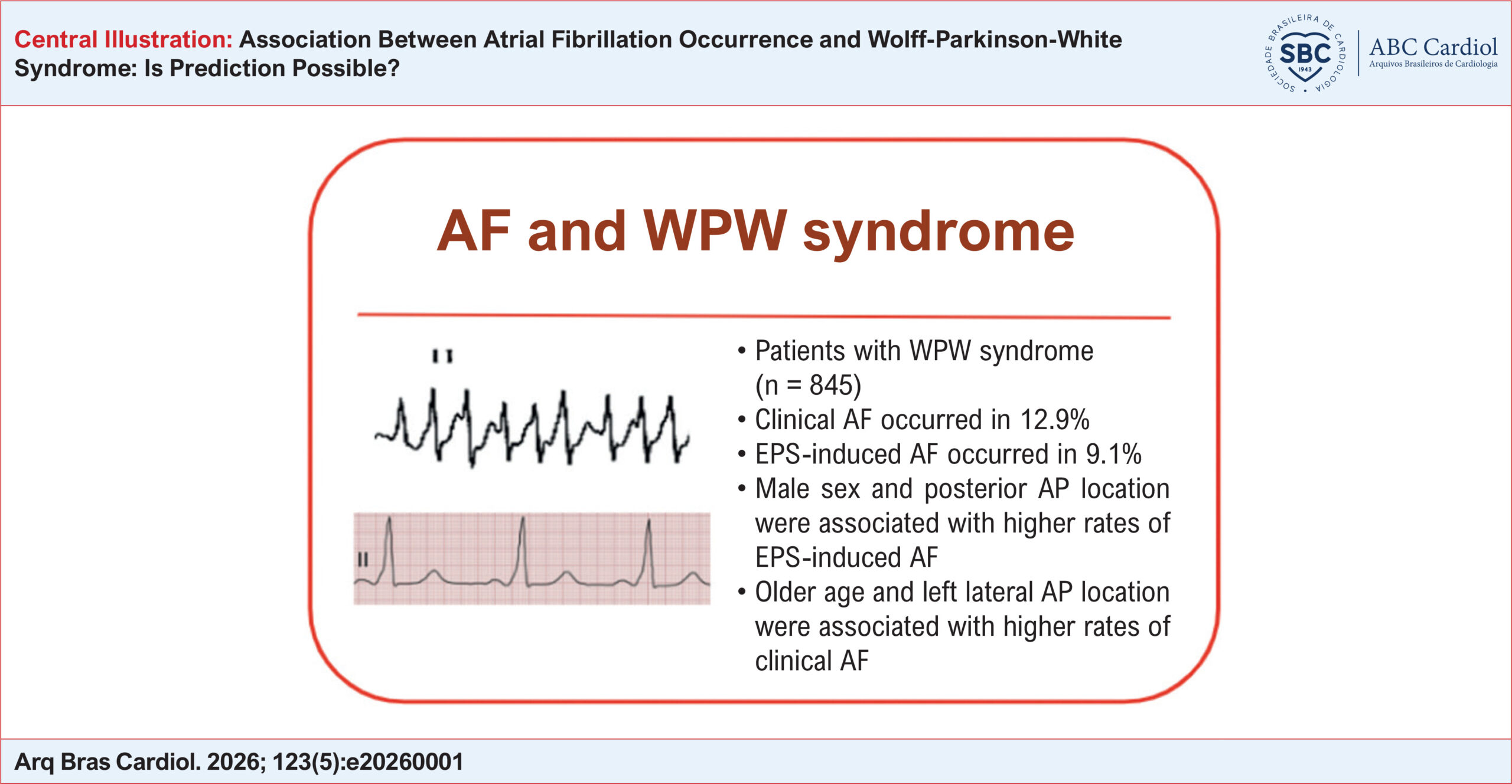
Association Between Atrial Fibrillation Occurrence and Wolff-Parkinson-White Syndrome: Is Prediction Possible?
ABC
Original Article

Association Between Atrial Fibrillation Occurrence and Wolff-Parkinson-White Syndrome: Is Prediction Possible?

Afonso Dalmazio Souza Mario et al. Eduardo Pelegrineti Targueta Francisco Carlos da Costa Darrieux Alexandra Regia Dantas Brigido … Alberto Pereira Ferraz Muhieddine Omar Chokr Cristiano F. Pisani Mauricio Ibrahim Scanavacca

Abstract

Background:

Patients with Wolff-Parkinson-White (WPW) syndrome frequently develop atrial fibrillation (AF); however, the factors associated with the occurrence of AF remain incompletely defined.

Objectives:

To evaluate the prevalence and associated factors of clinical AF and electrophysiological study (EPS)-induced AF in a large consecutive cohort of patients with WPW undergoing accessory pathway (AP) ablation.

Methods:

This retrospective analysis included 845 consecutive patients with WPW who underwent AP ablation at a single tertiary referral center. A standardized EPS protocol was applied throughout the study period. Study outcomes included clinical AF (documented by medical history or monitoring before EPS), EPS-induced AF, and any AF (composite outcome). Multivariable logistic regression models were used to estimate adjusted odds ratio (ORa) with 95% CIs. Statistical significance was set at p < 0.05.

Results:

Mean age was 33.2 ± 15.9 years, and 486 of 845 patients (57.5%) were male. Multiple APs were identified in 31 patients (3.7%). The most common AP locations were left lateral (327/845, 38.7%) and posterior (323/845, 38.2%). Clinical AF was present in 109 patients (12.9%), EPS-induced AF in 77 (9.1%), and any AF in 168 (19.9%). In multivariable analyses, a left lateral AP was independently associated with clinical AF (ORa, 2.31; 95% CI, 1.53-3.49; p < 0.001), whereas a posterior AP was associated with EPS-induced AF (ORa, 1.78; 95% CI, 1.07-2.91; p = 0.025). Female sex was associated with lower odds of EPS-induced AF (ORa, 0.56; 95% CI, 0.34-0.93; p = 0.025). Increasing age was independently associated with clinical AF (per-year ORa, 1.018; p = 0.007) and any AF (per-year ORa, 1.014; p = 0.009).

Conclusion:

In this large cohort of patients with WPW undergoing AP ablation, left lateral AP location and older age were independently associated with a higher prevalence of clinical AF. In contrast, posterior AP location and male sex were associated with a greater likelihood of EPS-induced AF.
  • Atrial Fibrillation
  • Cardiac Arrhythmias
  • electrophysiology
  • Wolff-Parkinson White Syndrome
Read Full Article
Creative Commons Attribution (CC BY) Creative Commons license
17/07/2026 DOI: 10.36660/abc.20260001i Views 1
ABC
Editorial

Southern Brazil Registry of Atrial Fibrillation (SBR-AF): Predictors of Atrial Arrhythmia Recurrence After First Catheter Ablation

Muhieddine Omar Chokr

Atrial fibrillation (AF) has established itself as a significant public health issue, affecting up to 4% of the population. Patients with AF experience increased mortality rates, stroke, and heart failure, as well as higher hospitalization rates and reduced quality of life.

Modern treatment of this arrhythmia involves managing cardiovascular risk factors, preventing cardioembolic events, and controlling heart rhythm. Among the therapeutic options, radiofrequency ablation has established itself as the therapy of choice, presenting the best results in the management of this clinical condition. In paroxysmal AF, triggers originating from the pulmonary veins are primarily responsible for initiating the arrhythmia. On the other hand, in the persistent form, different electrophysiological mechanisms are involved, making the invasive treatment strategy more complex as the disease progresses over time.

[…]

  • Atrial Fibrillation
  • Brazil
  • electrophysiology
  • Registries
Read Full Article
Creative Commons Attribution (CC BY) Creative Commons license
10/02/2025 DOI: 10.36660/abc.20240871i Views 1
Figure 1
ABC
Letter to the Editor

Septal Ablation with Radiofrequency and the Use of New Technologies in Patients with Hypertrophic Cardiomyopathy in an Electrophysiology Laboratory

Muhieddine Chokr et al. Marina Mayrink Pedro Mario Pinto Vandoni Pedro Vieira Linhares … Italo Bruno dos Santos Sousa Hélio José Castello Júnior Mauricio Scanavacca

Dear Editor,

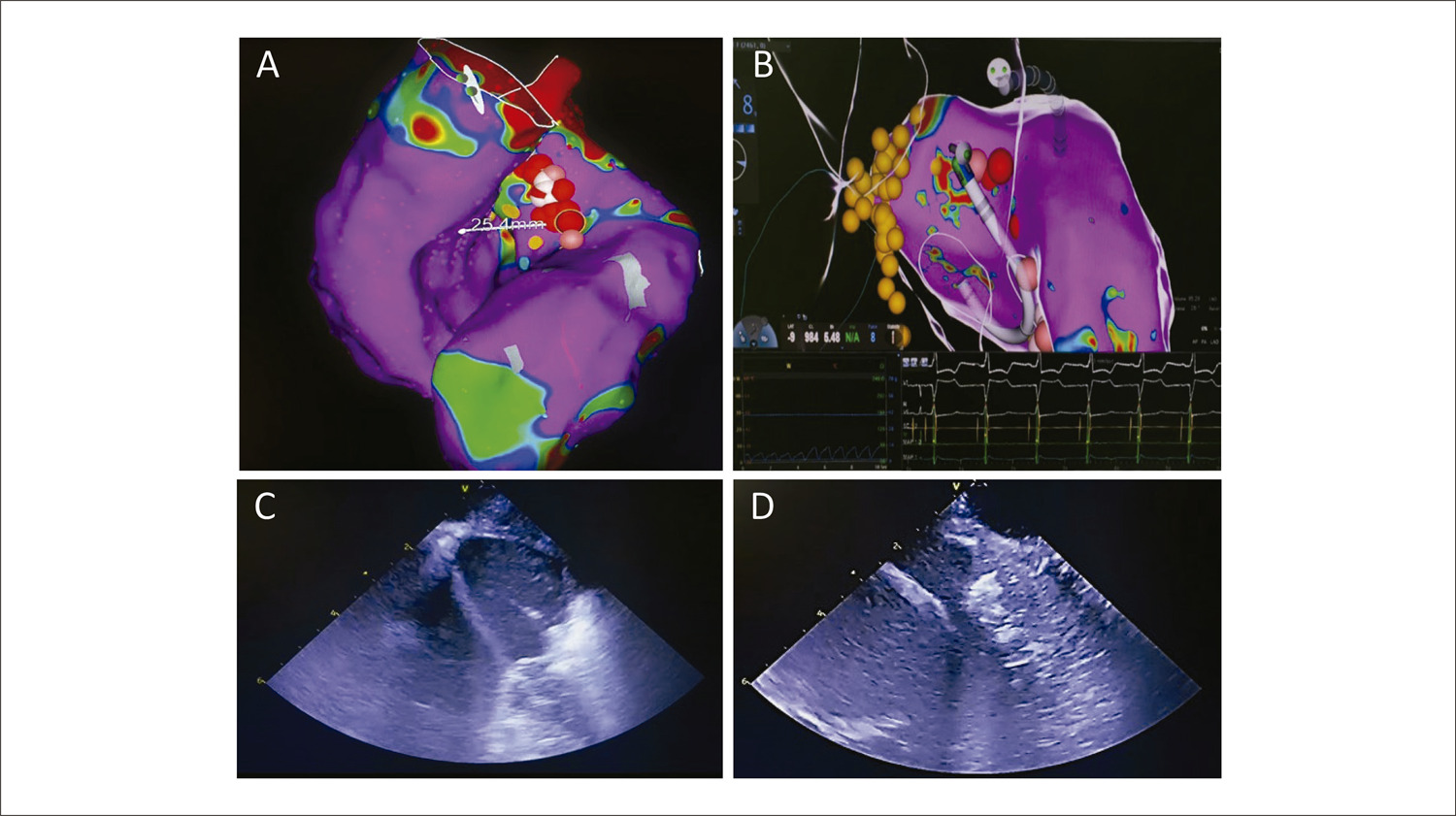
We have read, with great interest, the article “Septal ablation with catheters and radiofrequency guided by echocardiography for treatment in patients with obstructive hypertrophic cardiomyopathy (OHC): First experience”, published recently by Valdigem et al. in the journal Arquivos Brasileiros de Cardiologia .

[…]

  • electrophysiology
  • Hypertrophic Cardiomyopathy
  • Radiofrequency Ablation
Read Full Article
Creative Commons Attribution (CC BY) Creative Commons license
21/10/2022 DOI: 10.36660/abc.20220143
Figure 1
ABC
Original Article

F Wave Amplitude as a Predictor of Thromboembolism and Success of Electrical Cardioversion in Patients with Persistent Atrial Fibrillation

Renan Teixeira Campelo et al. Luciana Armaganijan Dalmo A. R. Moreira Matheus Kiszka Scheffer … Guilherme Dagostin de Carvalho João Italo Dias França

Abstract

Background

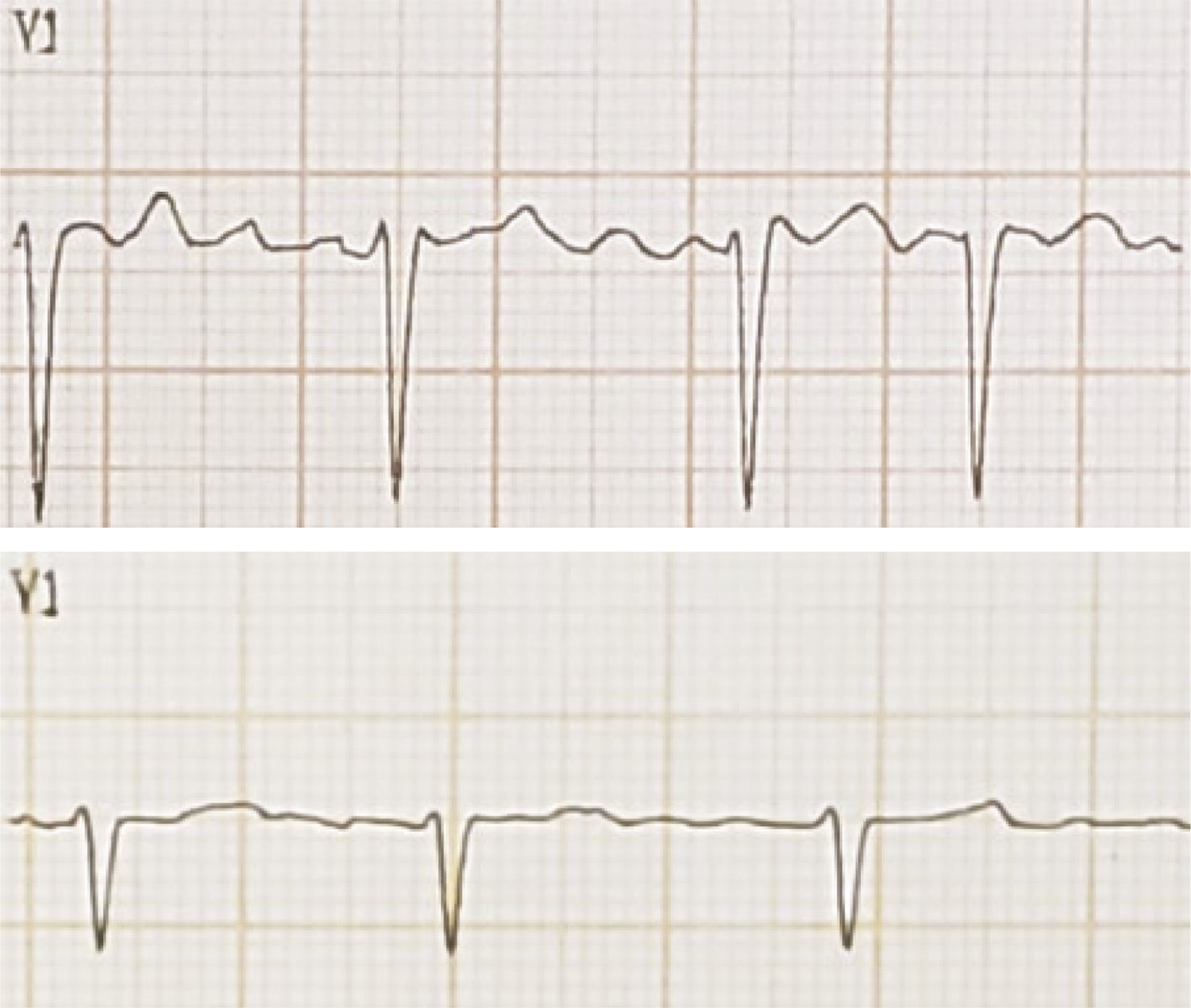
Atrial fibrillation (AF) is classified according to the amplitude of fibrillatory waves (f) into fine waves (fAF) and coarse waves (cAF).

Objectives

To correlate the amplitude of f waves with clinical, laboratory, electrocardiographic, and echocardiographic variables that indicate a high risk of thromboembolism and to assess their impact on the success of electrical cardioversion (ECV).

Methods

Retrospective, observational study that included 57 patients with persistent non-valvular AF who underwent ECV. The maximum amplitude of f waves was measured in lead V1. cAF was defined when f ≥ 1.0mm and fAF when f < 1.0mm. The findings were correlated with the indicated variables. Values of p < 0.05 were considered statistically significant.

Results

cAF (n = 35) was associated with greater success in ECV (94.3% vs. 72.7%, p = 0.036) even after adjusting for variables such as age and BMI (p = 0.026, OR = 11.8). Patients with fAF (n = 22) required more shocks and more energy to revert to sinus rhythm (p = 0.019 and p = 0.027, respectively). There was no significant association between f-wave amplitude and clinical, echocardiographic, and laboratory parameters.

Conclusions

The amplitude of f wave was not associated with echocardiographic, clinical and laboratory parameters that indicate a high risk of thromboembolism. cAF was associated with a higher chance of success reverting to sinus rhythm employing ECV. A greater number of shocks and energy were required for reversion to sinus rhythm in patients with fAF.

  • Atrial Fibrillation
  • Electrocardiography
  • electrophysiology
  • Thromboembolism
Read Full Article
Creative Commons Attribution (CC BY) Creative Commons license
15/09/2022 DOI: 10.36660/abc.20210410 Views 1
Figure 1
ABC
Editorial

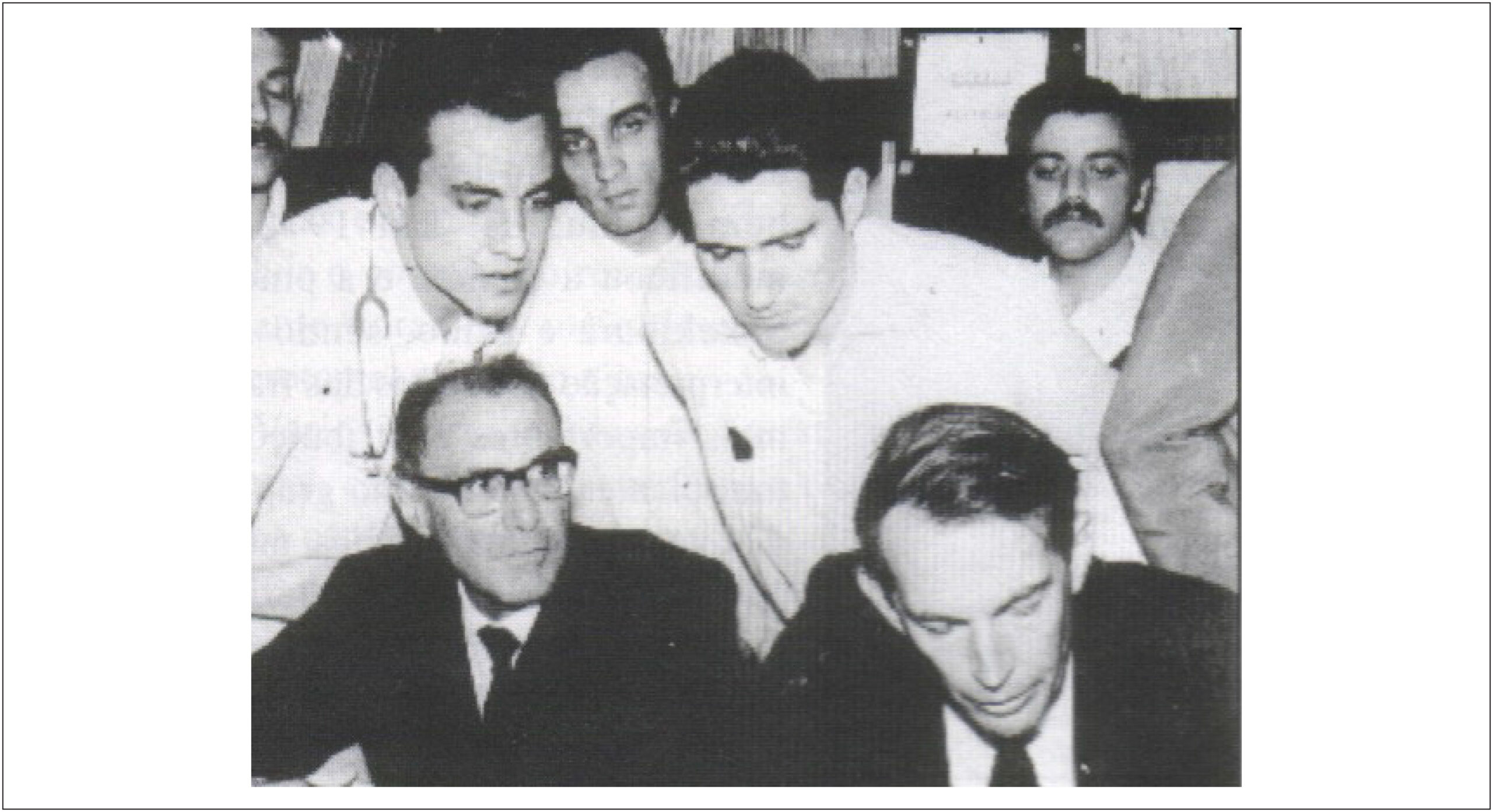
The legacy of Prof. Eduardo Sosa

José Antonio Franchini Ramires et al. Cesar Grupi Mauricio Ibrahim Scanavacca

A Short Background

Eduardo Argentino Sosa was born in Corrientes, Argentina, on January 25, 1942. He started a medical course at the School of Medical Sciences of Universidad Nacional del Nordeste, in his hometown, but due to the political situation that affected the university in Argentina at that time, he transferred to the School of Medical Sciences of Córdoba and later to the School of Medical Sciences of Universidad Nacional del Litoral, in the city of Rosário, where he completed studies in April 1965.

His interest in cardiology arose during his internship, when he was fascinated by the existing diagnostic methods, such as electrocardiography, vetocardiography, phono-cardiography and cardiac catheterization, which began at the time. Hence his first scientific study, presented at the 1st National Cardiology Day at the Argentine Federation of Cardiology, in the city of Carlos Paz, in Córdoba, entitled “Intermittent Left Branch Block. Phonographic and Polygraphic Study.” He was soon hired as an assistant physician in the cardiology service, where he met Miguel Barbero Marcial, who later became his personal friend and changed the course of his life.

[…]

  • Cardiology
  • Cardiovascular Diseases
  • Eduardo Sosa
  • Electrocardiography
  • Electrophysiologic Techniques Cardiac/trends
  • electrophysiology
  • Faculty/history
  • Research Personnel
Read Full Article
Creative Commons Attribution (CC BY) Creative Commons license
07/12/2020 DOI: 10.36660/abc.20201080
Figure 1
IJCS
Original Article

QT Interval Dispersion Behavior in Patients With and Without Obstructive Coronary Artery Disease Undergoing Exercise Test

Alexandre Maulaz Barcelos et al. Marcelo Perim Baldo Sérgio Lamego Rodrigues José Geraldo Mill

Abstract

Background:

Stress test is used to detect coronary artery disease (CAD). The QTc interval dispersion (dQTc) is an electrocardiographic index of ventricular repolarization heterogeneity. Some researchers have linked transient myocardial ischemia induced by physical exertion with increased heterogeneity of ventricular repolarization measured by dQTc.

Objectives:

To study the patterns of dQT in patients with and without chronic obstructive CAD and to define a reliable cutoff point for dQT that could become a diagnostic criterion for myocardial ischemia.

Methods:

We retrospectively analyzed the electrocardiogram in resting and in exercise of 63 patients submitted to exercise test and cardiac catheterization. We divided the patients into three groups: true negative (VN), true positive (VP) and false positive (FP). VN: patients with coronary lesion lower than 70% and exercise test without myocardial ischemia; VP: individuals with stenosis greater than 70% in coronary arteries and a test suggestive of myocardial ischemia; FP: people with stenosis lower than 70% in the coronary arteries and stress test with ischemia criteria. Values of p < 0.05 were considered statistically significant.

Results:

Resting dQTc was not different among the three groups. However, for the dispersion of the QTc interval in exercise was, respectively, 47 ± 17 ms, 72 ± 42 ms, and 61 ± 31 ms for VN, VP and FP (p = 0.003).

Conclusions:

Obstructive chronic coronary disease patients have an increase in dQTc during exercise. Measurement of dQTc may be helpful in the diagnosis of myocardial ischemia in the stress test.

  • Coronary Artery Disease/physiopathology
  • Electrocardiography/method
  • electrophysiology
  • Exercise Test/method
  • Myocardial Ischemia
  • QT Dispersion Interval
Read Full Article
Creative Commons Attribution (CC BY) Creative Commons license
03/02/2020 DOI: 10.36660/ijcs.201810681 Views 2
Effects of stimulation with pulsatile continuous electrical current on atrial electrophysiological properties: experimental study of atrial fibrillation in dogs
ABC
Artigo Original

Effects of stimulation with pulsatile continuous electrical current on atrial electrophysiological properties: experimental study of atrial fibrillation in dogs

Dalmo Antonio Ribeiro Moreira et al. Amanda Guerra Moraes Rego Sousa Paulo Valente Elizabete Hosri Leone

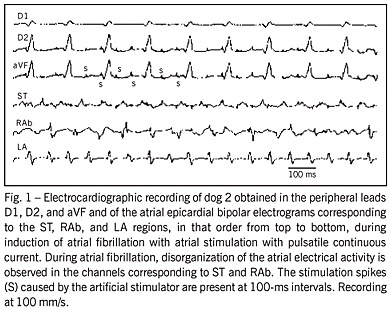
OBJECTIVE: To assess whether atrial stimulation with pulsatile continuous electrical current induces atrial fibrillation and to evaluate its effects on atrial electrophysiological properties as well as the atrial histological alterations. METHODS: Twenty-two dogs underwent right lateral thoracotomy and implantation of pacemaker electrodes in the sulcus terminalis (ST), in the right atrial appendix (RAb), and in the posteroinferior region of the left atrium (LA). A pair of electrodes was sutured to the right atrial appendix for stimulation with a 9-volt alkaline battery connected to a system (LM 555) that transforms the linear continuous energy of the battery into a pulsatile continuous current for 60 minutes. Atrial epicardial biopsy was performed before and after atrial stimulation. RESULTS: No differences were observed in the durations of the effective atrial refractory periods. The times of intra-atrial and interatrial conduction, as well as that of atrial extrastimuli, were prolonged. The duration of atrial electrograms was prolonged during sinus rhythm and programmed atrial stimulation; in 68% of the dogs, atrial fibrillation was induced and was sustained. Interstitial edema and bands of cellular contraction were observed in the subepicardium on optical microscopy, as were intense myofibrillar disorganization and an increase in the size of the mitochondria on electron microscopy. CONCLUSION: That technique of atrial stimulation induces atrial fibrillation and causes atrial changes that increase atrial vulnerability to the appearance of atrial fibrillation.

  • Atrial Fibrillation
  • Cardiac, Arrhythmia
  • electrophysiology
Read Full Article
Creative Commons Attribution (CC BY) Creative Commons license
13/12/2004 DOI: 10.1590/S0066-782X2004001900006
Characterization of the in vivo cardiac electrophysiologic effects of high-dose cocaine in closed-chest, anesthetized dogs with normal hearts
ABC
Original Article

Characterization of the in vivo cardiac electrophysiologic effects of high-dose cocaine in closed-chest, anesthetized dogs with normal hearts

Guilherme Fenelon et al. Júlio Uchoa José Roberto Otobone Marcos Reis … José Luiz Gomes do Amaral Angelo A. V. De Paola

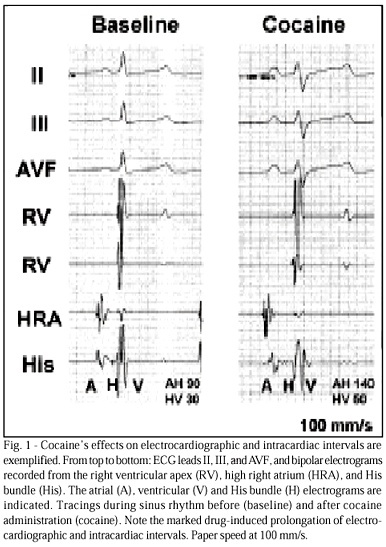
OBJECTIVE: To characterize the cardiac electrophysiologic effects of cocaine. METHODS: In 8 dogs (9-13 kg), electrophysiologic parameters and programmed stimulation were undertaken using transvenous catheters at baseline, and after cocaine intravenous infusion (12 mg/kg bolus followed by 0.22 mg/kg/min for 25 minutes). RESULTS: Cocaine plasma levels (n=5) rose to 6.73± 0.56 mg/mL. Cocaine did not affect sinus cycle length and arterial pressure. Cocaine prolonged P wave duration (54±6 vs 73±4 ms, P<0.001), PR interval (115±17 vs 164±15 ms, P<0.001), QRS duration (62±10 vs 88±14 ms, P<0.001), and QTc interval (344±28 vs 403±62 ms, P=0.03) but not JT interval (193±35 vs 226±53 ms, NS). Cocaine prolonged PA (9±6 vs 23±8 ms, P<0.001), AH (73±16 vs 92±15 ms; P=0.03), and HV (35±5 vs 45±3ms; P<0.001) intervals and Wenckebach point (247±26 vs 280±28 ms, P=0.04). An increase occurred in atrial (138±8 vs 184± 20 ms; P<0.001) and ventricular (160±15 vs 187±25 ms; P=0.03) refractoriness at a cycle length of 300 ms. Atrial arrhythmias were not induced in any dog. Ventricular fibrillation (VF) was induced in 2/8 dogs at baseline and 4/8 dogs after cocaine. CONCLUSION: High doses of cocaine exert significant class I effects and seem to enhance inducibility of VF but not of atrial arrhythmias.

  • cocaine
  • electrophysiology
  • Ventricular Fibrillation
Read Full Article
Creative Commons Attribution (CC BY) Creative Commons license
04/08/2003 DOI: 10.1590/S0066-782X2003000900002 Views 1

How to cite this article

EndNote RIS

Electronic Document Format (Vancouver)

Mario ADS, Targueta EP, Darrieux FCC, Brigido ARD, Ferraz AP, Chokr MO, Pisani CF, et al. Association Between Atrial Fibrillation Occurrence and Wolff-Parkinson-White Syndrome: Is Prediction Possible?. Arquivos Brasileiros de Cardiologia 2026;123(5):e20260001.

Electronic Document Format (ABNT)

Mario, Afonso Dalmazio Souza; Targueta, Eduardo Pelegrineti; Darrieux, Francisco Carlos da Costa; Brigido, Alexandra Regia Dantas; Ferraz, Alberto Pereira; Chokr, Muhieddine Omar; Pisani, Cristiano F.; Scanavacca, Mauricio Ibrahim. Association Between Atrial Fibrillation Occurrence and Wolff-Parkinson-White Syndrome: Is Prediction Possible?. Arquivos Brasileiros de Cardiologia, v. 123, n. 5, e20260001, Jul. 2026.

Electronic Document Format (APA)

Mario, A. D. S., Targueta, E. P., Darrieux, F. C. C., Brigido, A. R. D., Ferraz, A. P., Chokr, M. O., Pisani, C. F., & Scanavacca, M. I. (2026). Association Between Atrial Fibrillation Occurrence and Wolff-Parkinson-White Syndrome: Is Prediction Possible?. Arquivos Brasileiros de Cardiologia, 123(5), e20260001.

Electronic Document Format (ISO)

Mario, Afonso Dalmazio Souza and Targueta, Eduardo Pelegrineti and Darrieux, Francisco Carlos da Costa and Brigido, Alexandra Regia Dantas and Ferraz, Alberto Pereira and Chokr, Muhieddine Omar and Pisani, Cristiano F. and Scanavacca, Mauricio Ibrahim. Association Between Atrial Fibrillation Occurrence and Wolff-Parkinson-White Syndrome: Is Prediction Possible?. Arquivos Brasileiros de Cardiologia [online]. 2026, vol. 123, n. 5, [cited 2026-10-14], e20260001. Available from: <https://journals.cardiol.br/en/article/association-between-atrial-fibrillation-occurrence-and-wolff-parkinson-white-syndrome-is-prediction-possible/>. ISSN 0066-782X

EndNote RIS

Electronic Document Format (Vancouver)

Chokr MO. Southern Brazil Registry of Atrial Fibrillation (SBR-AF): Predictors of Atrial Arrhythmia Recurrence After First Catheter Ablation. Arquivos Brasileiros de Cardiologia 2025;122(1):e20240871.

Electronic Document Format (ABNT)

Chokr, Muhieddine Omar. Southern Brazil Registry of Atrial Fibrillation (SBR-AF): Predictors of Atrial Arrhythmia Recurrence After First Catheter Ablation. Arquivos Brasileiros de Cardiologia, v. 122, n. 1, e20240871, Feb. 2025.

Electronic Document Format (APA)

Chokr, M. O. (2025). Southern Brazil Registry of Atrial Fibrillation (SBR-AF): Predictors of Atrial Arrhythmia Recurrence After First Catheter Ablation. Arquivos Brasileiros de Cardiologia, 122(1), e20240871.

Electronic Document Format (ISO)

Chokr, Muhieddine Omar. Southern Brazil Registry of Atrial Fibrillation (SBR-AF): Predictors of Atrial Arrhythmia Recurrence After First Catheter Ablation. Arquivos Brasileiros de Cardiologia [online]. 2025, vol. 122, n. 1, [cited 2026-10-14], e20240871. Available from: <https://journals.cardiol.br/en/article/southern-brazil-registry-of-atrial-fibrillation-sbr-af-predictors-of-atrial-arrhythmia-recurrence-after-first-catheter-ablation/>. ISSN 0066-782X

EndNote RIS

Electronic Document Format (Vancouver)

Chokr M, Mayrink M, Vandoni PMP, Linhares PV, Sousa IBS, Castello Júnior HJ, Scanavacca M, et al. Septal Ablation with Radiofrequency and the Use of New Technologies in Patients with Hypertrophic Cardiomyopathy in an Electrophysiology Laboratory. Arquivos Brasileiros de Cardiologia 2022;119(4):635-7.

Electronic Document Format (ABNT)

Chokr, Muhieddine; Mayrink, Marina; Vandoni, Pedro Mario Pinto; Linhares, Pedro Vieira; Sousa, Italo Bruno dos Santos; Castello Júnior, Hélio José; Scanavacca, Mauricio. Septal Ablation with Radiofrequency and the Use of New Technologies in Patients with Hypertrophic Cardiomyopathy in an Electrophysiology Laboratory. Arquivos Brasileiros de Cardiologia, v. 119, n. 4, p. 635-637, Oct. 2022.

Electronic Document Format (APA)

Chokr, M., Mayrink, M., Vandoni, P. M. P., Linhares, P. V., Sousa, I. B. S., Castello Júnior, H. J., & Scanavacca, M. (2022). Septal Ablation with Radiofrequency and the Use of New Technologies in Patients with Hypertrophic Cardiomyopathy in an Electrophysiology Laboratory. Arquivos Brasileiros de Cardiologia, 119(4), 635-637.

Electronic Document Format (ISO)

Chokr, Muhieddine and Mayrink, Marina and Vandoni, Pedro Mario Pinto and Linhares, Pedro Vieira and Sousa, Italo Bruno dos Santos and Castello Júnior, Hélio José and Scanavacca, Mauricio. Septal Ablation with Radiofrequency and the Use of New Technologies in Patients with Hypertrophic Cardiomyopathy in an Electrophysiology Laboratory. Arquivos Brasileiros de Cardiologia [online]. 2022, vol. 119, n. 4, [cited 2026-10-14], pp. 635-637. Available from: <https://journals.cardiol.br/en/article/septal-ablation-with-radiofrequency-and-the-use-of-new-technologies-in-patients-with-hypertrophic-cardiomyopathy-in-an-electrophysiology-laboratory/>. ISSN 0066-782X

EndNote RIS

Electronic Document Format (Vancouver)

Campelo RT, Armaganijan L, Moreira DAR, Scheffer MK, Carvalho GD, França JID. F Wave Amplitude as a Predictor of Thromboembolism and Success of Electrical Cardioversion in Patients with Persistent Atrial Fibrillation. Arquivos Brasileiros de Cardiologia 2022;119(5):778-8.

Electronic Document Format (ABNT)

Campelo, Renan Teixeira; Armaganijan, Luciana; Moreira, Dalmo A. R.; Scheffer, Matheus Kiszka; Carvalho, Guilherme Dagostin de; França, João Italo Dias. F Wave Amplitude as a Predictor of Thromboembolism and Success of Electrical Cardioversion in Patients with Persistent Atrial Fibrillation. Arquivos Brasileiros de Cardiologia, v. 119, n. 5, p. 778-788, Sep. 2022.

Electronic Document Format (APA)

Campelo, R. T., Armaganijan, L., Moreira, D. A. R., Scheffer, M. K., Carvalho, G. D. , & França, J. I. D. (2022). F Wave Amplitude as a Predictor of Thromboembolism and Success of Electrical Cardioversion in Patients with Persistent Atrial Fibrillation. Arquivos Brasileiros de Cardiologia, 119(5), 778-788.

Electronic Document Format (ISO)

Campelo, Renan Teixeira and Armaganijan, Luciana and Moreira, Dalmo A. R. and Scheffer, Matheus Kiszka and Carvalho, Guilherme Dagostin de and França, João Italo Dias. F Wave Amplitude as a Predictor of Thromboembolism and Success of Electrical Cardioversion in Patients with Persistent Atrial Fibrillation. Arquivos Brasileiros de Cardiologia [online]. 2022, vol. 119, n. 5, [cited 2026-10-14], pp. 778-788. Available from: <https://journals.cardiol.br/en/article/f-wave-amplitude-as-a-predictor-of-thromboembolism-and-success-of-electrical-cardioversion-in-patients-with-persistent-atrial-fibrillation/>. ISSN 0066-782X

EndNote RIS

Electronic Document Format (Vancouver)

Ramires JAF, Grupi C, Scanavacca MI. The legacy of Prof. Eduardo Sosa. Arquivos Brasileiros de Cardiologia 2020;115(5):801-6.

Electronic Document Format (ABNT)

Ramires, José Antonio Franchini; Grupi, Cesar; Scanavacca, Mauricio Ibrahim. The legacy of Prof. Eduardo Sosa. Arquivos Brasileiros de Cardiologia, v. 115, n. 5, p. 801-806, Dec. 2020.

Electronic Document Format (APA)

Ramires, J. A. F., Grupi, C., & Scanavacca, M. I. (2020). The legacy of Prof. Eduardo Sosa. Arquivos Brasileiros de Cardiologia, 115(5), 801-806.

Electronic Document Format (ISO)

Ramires, José Antonio Franchini and Grupi, Cesar and Scanavacca, Mauricio Ibrahim. The legacy of Prof. Eduardo Sosa. Arquivos Brasileiros de Cardiologia [online]. 2020, vol. 115, n. 5, [cited 2026-10-14], pp. 801-806. Available from: <https://journals.cardiol.br/en/article/the-legacy-of-prof-eduardo-sosa/>. ISSN 0066-782X

EndNote RIS

Electronic Document Format (Vancouver)

Barcelos AM, Baldo MP, Rodrigues SL, Mill JG. QT Interval Dispersion Behavior in Patients With and Without Obstructive Coronary Artery Disease Undergoing Exercise Test. International Journal of Cardiovascular Sciences 2020;33(3):263-71.

Electronic Document Format (ABNT)

Barcelos, Alexandre Maulaz; Baldo, Marcelo Perim; Rodrigues, Sérgio Lamego; Mill, José Geraldo. QT Interval Dispersion Behavior in Patients With and Without Obstructive Coronary Artery Disease Undergoing Exercise Test. International Journal of Cardiovascular Sciences, v. 33, n. 3, p. 263-271, Feb. 2020.

Electronic Document Format (APA)

Barcelos, A. M., Baldo, M. P., Rodrigues, S. L., & Mill, J. G. (2020). QT Interval Dispersion Behavior in Patients With and Without Obstructive Coronary Artery Disease Undergoing Exercise Test. International Journal of Cardiovascular Sciences, 33(3), 263-271.

Electronic Document Format (ISO)

Barcelos, Alexandre Maulaz and Baldo, Marcelo Perim and Rodrigues, Sérgio Lamego and Mill, José Geraldo. QT Interval Dispersion Behavior in Patients With and Without Obstructive Coronary Artery Disease Undergoing Exercise Test. International Journal of Cardiovascular Sciences [online]. 2020, vol. 33, n. 3, [cited 2026-10-14], pp. 263-271. Available from: <https://journals.cardiol.br/en/article/qt-interval-dispersion-behavior-in-patients-with-and-without-obstructive-coronary-artery-disease-undergoing-exercise-test/>. ISSN 2359-4802

EndNote RIS

Electronic Document Format (Vancouver)

Moreira DAR, Sousa AGMR, Valente P, Leone EH. Effects of stimulation with pulsatile continuous electrical current on atrial electrophysiological properties: experimental study of atrial fibrillation in dogs. Arquivos Brasileiros de Cardiologia 2004;83(spe):26-33.

Electronic Document Format (ABNT)

Moreira, Dalmo Antonio Ribeiro; Sousa, Amanda Guerra Moraes Rego; Valente, Paulo; Leone, Elizabete Hosri. Effects of stimulation with pulsatile continuous electrical current on atrial electrophysiological properties: experimental study of atrial fibrillation in dogs. Arquivos Brasileiros de Cardiologia, v. 83, n. spe, p. 26-33, Dec. 2004.

Electronic Document Format (APA)

Moreira, D. A. R., Sousa, A. G. M. R., Valente, P., & Leone, E. H. (2004). Effects of stimulation with pulsatile continuous electrical current on atrial electrophysiological properties: experimental study of atrial fibrillation in dogs. Arquivos Brasileiros de Cardiologia, 83(spe), 26-33.

Electronic Document Format (ISO)

Moreira, Dalmo Antonio Ribeiro and Sousa, Amanda Guerra Moraes Rego and Valente, Paulo and Leone, Elizabete Hosri. Effects of stimulation with pulsatile continuous electrical current on atrial electrophysiological properties: experimental study of atrial fibrillation in dogs. Arquivos Brasileiros de Cardiologia [online]. 2004, vol. 83, n. spe, [cited 2026-10-14], pp. 26-33. Available from: <https://journals.cardiol.br/article/effects-of-stimulation-with-pulsatile-continuous-electrical-current-on-atrial-electrophysiological-properties-experimental-study-of-atrial-fibrillation-in-dogs/>. ISSN 0066-782X

EndNote RIS

Electronic Document Format (Vancouver)

Fenelon G, Uchoa J, Otobone JR, Reis M, Amaral JLG, Paola AAVD. Characterization of the in vivo cardiac electrophysiologic effects of high-dose cocaine in closed-chest, anesthetized dogs with normal hearts. Arquivos Brasileiros de Cardiologia 2003;81(1):29-34.

Electronic Document Format (ABNT)

Fenelon, Guilherme; Uchoa, Júlio; Otobone, José Roberto; Reis, Marcos; Amaral, José Luiz Gomes do; Paola, Angelo A. V. De. Characterization of the in vivo cardiac electrophysiologic effects of high-dose cocaine in closed-chest, anesthetized dogs with normal hearts. Arquivos Brasileiros de Cardiologia, v. 81, n. 1, p. 29-34, Aug. 2003.

Electronic Document Format (APA)

Fenelon, G., Uchoa, J., Otobone, J. R., Reis, M., Amaral, J. L. G. , & Paola, A. A. V. D. (2003). Characterization of the in vivo cardiac electrophysiologic effects of high-dose cocaine in closed-chest, anesthetized dogs with normal hearts. Arquivos Brasileiros de Cardiologia, 81(1), 29-34.

Electronic Document Format (ISO)

Fenelon, Guilherme and Uchoa, Júlio and Otobone, José Roberto and Reis, Marcos and Amaral, José Luiz Gomes do and Paola, Angelo A. V. De. Characterization of the in vivo cardiac electrophysiologic effects of high-dose cocaine in closed-chest, anesthetized dogs with normal hearts. Arquivos Brasileiros de Cardiologia [online]. 2003, vol. 81, n. 1, [cited 2026-10-14], pp. 29-34. Available from: <https://journals.cardiol.br/en/article/characterization-of-the-in-vivo-cardiac-electrophysiologic-effects-of-high-dose-cocaine-in-closed-chest-anesthetized-dogs-with-normal-hearts/>. ISSN 0066-782X

  • About ABC Family
  • Internal Regulation
  • Editorial Board
  • Brazilian Society of Cardiology (SBC)

Issues

SBC Guidelines

  • Videos
  • Podcasts
  • News