ABC Family Arquivos Brasileiros de Cardiologia International Journal of Cardiovascular Sciences ABC Heart Failure & Cardiomyopathy ABC Imagem Cardiovascular
Português English
ABC Family
Português English
  • About
    • About ABC Family
    • Internal Regulation
    • Editorial Board
    • Brazilian Society of Cardiology (SBC)
  • Issues
  • SBC Guidelines
  • Content
    • Videos
    • Podcasts
    • News
  • About
    • About ABC Family
    • Internal Regulation
    • Editorial Board
    • Brazilian Society of Cardiology (SBC)
  • Issues
  • SBC Guidelines
  • Content
    • Videos
    • Podcasts
    • News

ABC Family

  • ABC Family
  • Arquivos Brasileiros de Cardiologia
  • International Journal of Cardiovascular Sciences
  • ABC Heart Failure & Cardiomyopathy
  • ABC Imagem Cardiovascular
Search in

No content found.

Journals
Ordering
Article types
Others

  1. Home
  2. Keyword: Health Services Accessibility
IJCS
Letter to the Editor

Access to Guideline-Directed Heart Failure Therapy in Brazil: Methodological and Policy Considerations

Fatih Aydin

While the study’s findings are valuable, some methodological aspects could affect how we interpret them. The analysis is based solely on the presence of medications in Municipal Lists of Essential Medicines (REMUMEs), rather than on actual dispensing records or pharmacy inventory data. However, the fact that a medication is on an official list does not mean that patients can actually receive it in practice. Local procurement rules, supply chain issues, and prescribing practices can significantly affect the availability of drugs when patients need them. Conversely, medications absent from REMUMEs may still be accessible through other mechanisms within SUS. Therefore, relying solely on documentary evidence may not fully reflect the real accessibility of HF therapies. Dispensing records or pharmacy-level availability data could provide a more accurate representation of patient access.

Another important point to consider is how we understand the limited use of newer HF treatments, particularly angiotensin receptor–neprilysin inhibitors and sodium–glucose cotransporter-2 inhibitors. These treatments are often provided through specific national programs, such as the Specialized Pharmaceutical Assistance Component (CEAF), rather than being included in REMUMEs. Consequently, assessing REMUMEs alone may underestimate the availability of these agents within the broader SUS framework. Moreover, the regulatory and reimbursement processes for drugs like dapagliflozin and sacubitril/valsartan have changed quickly in recent years. This makes it especially important to understand how long they have been available.

[…]

  • Drug Therapy
  • Health Services Accessibility
  • Heart Failure
Read Full Article
Creative Commons Attribution (CC BY) Creative Commons license
07/08/2026 DOI: 10.36660/ijcs.20260067 Views 2
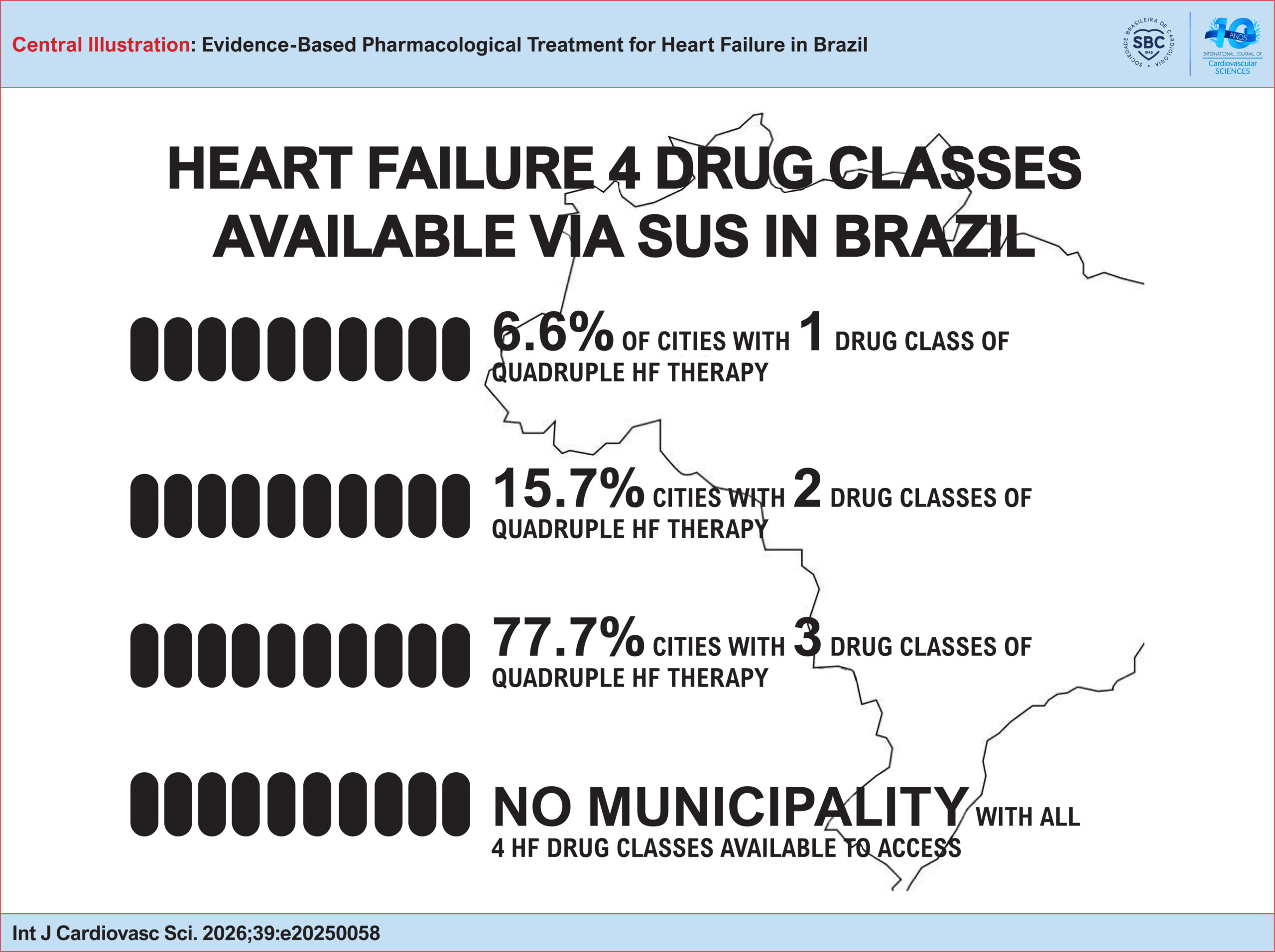
Evidence-Based Pharmacological Treatment for Heart Failure in Brazil
IJCS
Original Article

Evidence-Based Pharmacological Treatment for Heart Failure in Brazil

Luísa Preiss Marques da Rocha et al. Kathleen Asturian Isabel Machado Canabarro Lidia Einsfeld Diogo Pilger

Abstract

Background:

Heart failure (HF) affects an estimated 64 million individuals globally. Current guideline-directed medical therapy (GDMT) comprises four cornerstone pharmacological medications proven to reduce hospitalization and/or mortality: renin-angiotensin system inhibitors, beta-blockers, mineralocorticoid receptor antagonists (MRA), and sodium-glucose cotransporter 2 inhibitors (SGLT2i).

Objective:

This study aimed to describe, through an exploratory analysis, access to HF drug therapy in Primary Health Care in Brazil, via the Brazilian Unified Health System (SUS).

Methods:

This was a descriptive, cross-sectional study based on data extracted from Municipal Lists of Essential Medicines (REMUMEs) published on official municipalities’ websites from Brazilian metropolitan regions in June 2024.

Results:

A total of 387 municipalities were included, of which only 50.9% had a REMUME publicly available. Among these, 61.4% had been published within the previous 2 years. The frequency of each drug class was as follows: angiotensin-converting enzyme inhibitors in 92.4% of municipalities, angiotensin II receptor blockers in 80.2%, cardioselective beta-blockers in 91.9%, and MRAs in 85.8%. No REMUME simultaneously included all four GDMT medications. In 22.3% of the metropolitan cities, only two or fewer drug classes were available to patients’ access.

Conclusion:

The remarkable variability in the composition of REMUMEs, along with the frequent omission of at least one of the four essential pharmacological pillars, indicates a potential suboptimal management of HF at the population level. Given the importance of comprehensive pharmacological treatment in HF, these findings highlight ongoing challenges in access to essential medicines within the SUS, even in metropolitan areas.

  • Access to Essential Medicines and Health Technologies
  • Drug Therapy
  • Health Services Accessibility
  • Heart Failure
Read Full Article
Creative Commons Attribution (CC BY) Creative Commons license
13/03/2026 DOI: 10.36660/ijcs.20250058
Central Illustration
ABCHF
Brief Communication

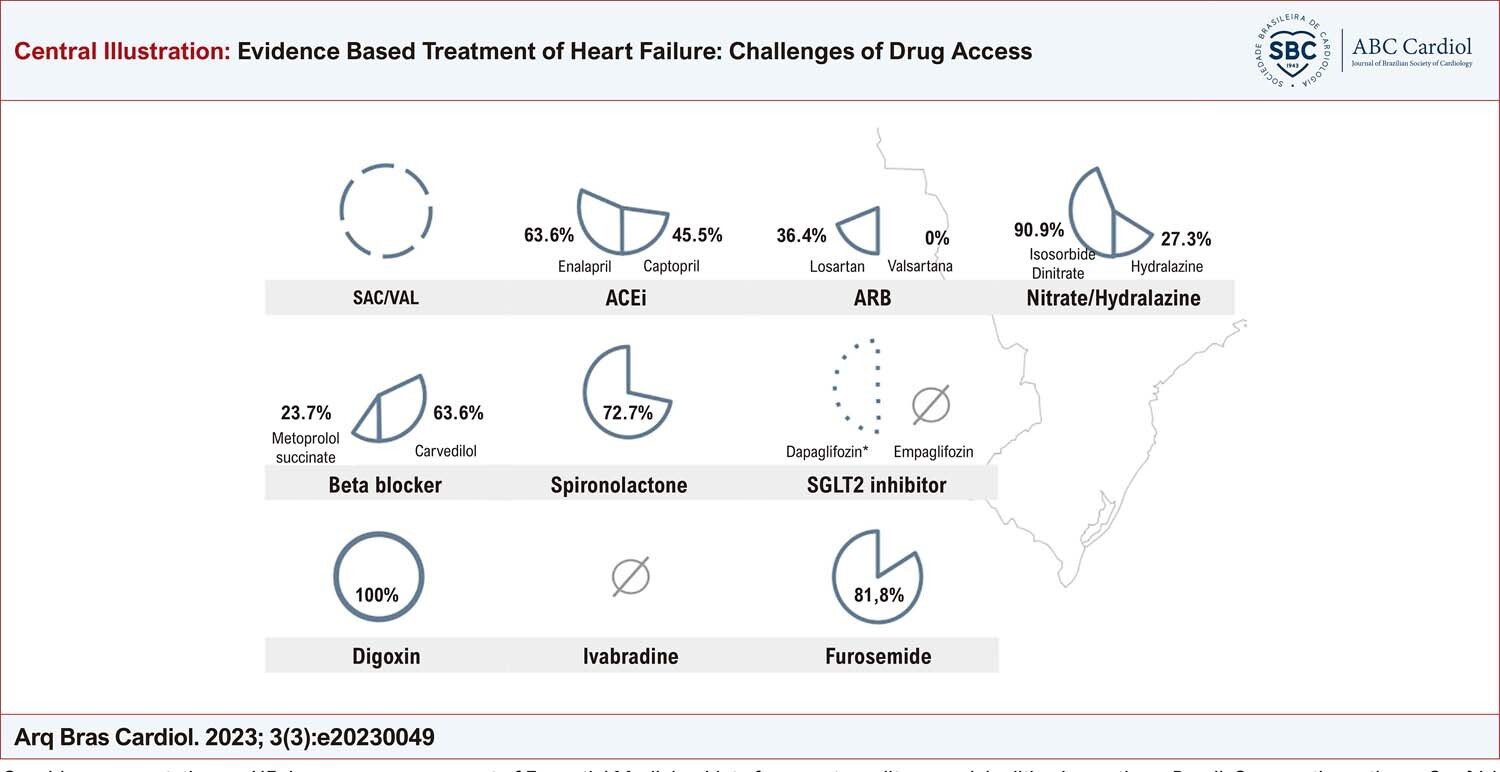
Evidence Based Treatment of Heart Failure: Challenges of Drug Access

Lidia Einsfeld et al. Diogo Pilger Cassiela Roman

Abstract

Heart failure (HF) is a complex clinical syndrome with high prevalence, significant morbi-mortality and is the leading cause of hospital admissions of Brazilian patients over 65 years of age. Drug therapy plays a key role in the care of HF patients, aimed to control symptoms, improve functional classification, reduce hospital readmissions and HF-related mortality rates. Despite the evidence of drug therapy proven benefits in HF, their access through the Unified Health System (Sistema Único de Saúde, SUS) remains unexplored. The present study aims to analyze the dynamics of access to HF therapy, based on the list of drugs made available by the SUS through a descriptive and documental methodology. Data were collected from the Municipal Lists of Essential Medicines in a metropolitan region in southern Brazil. Municipalities with a population over 80,000 inhabitants were included, and the respective lists of available drugs were reachable electronically by the health departments themselves. The results showed a partial access to HF treatment via the SUS, especially spironolactone and furosemide, present in 72.7% and 81.8% of the municipalities, respectively. Although drug treatment for HF has proven a high level of evidence, access via SUS represents a challenge to overcome in the continuum of care of patients with heart failure in Brazil

  • Access to Essential Medicines and Health Technologies
  • Drug Therapy
  • Health Services Accessibility
  • Heart Failure
Read Full Article
Creative Commons Attribution (CC BY) Creative Commons license
29/11/2023 DOI: 10.36660/abchf.20230049
Figure 1
IJCS
Editorial

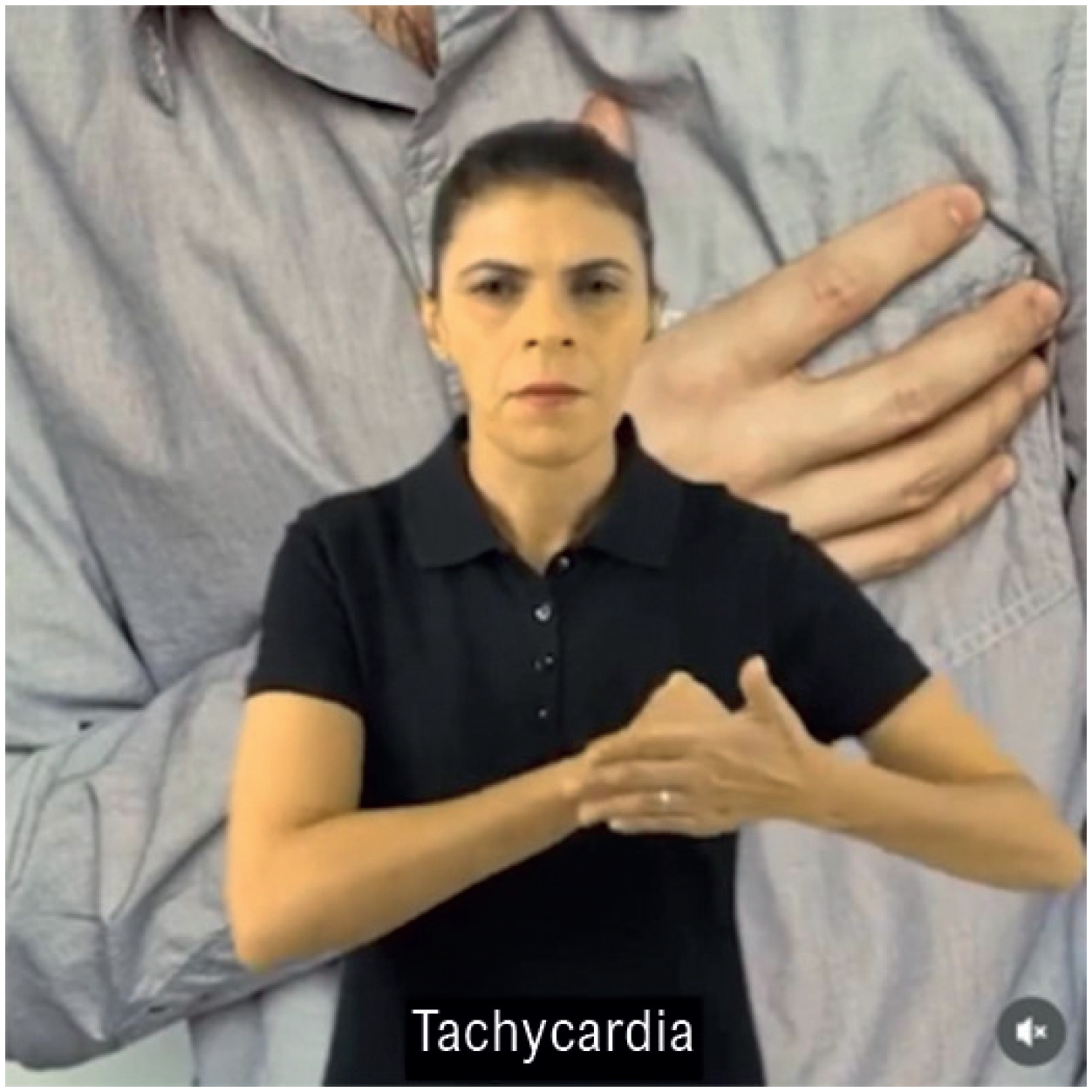
Access to Health Services Among Deaf People: An Issue of Inclusion and Linguistic Rights

Gildete da Silva Amorim Mendes Francisco et al. Claudio Tinoco Mesquita

Hearing loss and individualities

Studies have shed light on the physiology of the auditory system, which is fundamental to understanding the diversity found in the deaf community. A study by Silva discusses the 3 types of auditory load described in Silman & Silverman’s classification system: conductive, neurosensory, and mixed.

The first type is caused by inflammatory processes, excess cerumen in the external auditory canal, changes in the articulation of the auditory ossicles and tympanic membrane, malformations of the external ear, etc. Hearing function can be completely restored in most of these cases. The second type is caused by degeneration due to the natural aging process, industrial or environmental noise exposure, drugs, stress, metabolic alterations, chronic diseases, head trauma, and diseases of the inner ear, such as Ménière’s disease or auditory neuropathy, etc. Hearing loss of this type is considered irreversible, and the remaining sensory cells are stimulated through external amplifiers. The third category, defined as mixed hearing loss, occurs due to changes in the auditory system that can simultaneously affect the outer, middle, and inner ear.

[…]

  • Auditory Diseases
  • Deafness
  • Health Equity
  • Health Services Accessibility
  • Persons with Hearing Impairments/education
Read Full Article
Creative Commons Attribution (CC BY) Creative Commons license
27/01/2023 DOI: 10.36660/ijcs.20220196
IJCS
Editorial

Challenge in the Treatment of Children with Congenital Heart Disease: Reducing Waiting Time for Cardiac Surgery

Ana Flavia Malheiros Torbey et al. Aurea Grippa

Congenital heart disease is an important cause of mortality in the neonatal period. in Brazil, according to data from DATASUS from the period between 2012 and 2016, congenital heart disease is the third most common malformation in children younger than 28 days, with an estimated incidence of 1.3-1.7% and high mortality rate in this age range. They are also the third main cause of global mortality in the first 30 days of life, the main cause among congenital abnormalities. Therefore, 28,000 new cases per year are expected in Brazil. ,

The outcomes of congenital heart disease can be grouped into spontaneous resolution of minor lesions, such as some interatrial or interventricular communications or persistent arterial duct; conditions that require repair procedures (interventional catheterizations or surgeries); and those cases that only palliative procedures can be performed due to anatomical and physiological features. Thus, approximately 20% of cases do not require surgery and resolve spontaneously, and nearly half of the other 80% (22,400 children) will require cardiac surgery in the first year of life. ,

[…]

  • Health Services Accessibility
  • Heart Defects, Congenital/surgery
  • Public Health
  • Public Policy
Read Full Article
Creative Commons Attribution (CC BY) Creative Commons license
29/05/2020 DOI: 10.36660/ijcs.20190013

How to cite this article

EndNote RIS

Electronic Document Format (Vancouver)

Aydin F. Access to Guideline-Directed Heart Failure Therapy in Brazil: Methodological and Policy Considerations. International Journal of Cardiovascular Sciences 2026;39:e20260067.

Electronic Document Format (ABNT)

Aydin, Fatih. Access to Guideline-Directed Heart Failure Therapy in Brazil: Methodological and Policy Considerations. International Journal of Cardiovascular Sciences, v. 39, e20260067, Aug. 2026.

Electronic Document Format (APA)

Aydin, F. (2026). Access to Guideline-Directed Heart Failure Therapy in Brazil: Methodological and Policy Considerations. International Journal of Cardiovascular Sciences, 39, e20260067.

Electronic Document Format (ISO)

Aydin, Fatih. Access to Guideline-Directed Heart Failure Therapy in Brazil: Methodological and Policy Considerations. International Journal of Cardiovascular Sciences [online]. 2026, vol. 39, [cited 2026-10-14], e20260067. Available from: <https://journals.cardiol.br/en/article/access-to-guideline-directed-heart-failure-therapy-in-brazil-methodological-and-policy-considerations/>. ISSN 2359-4802

EndNote RIS

Electronic Document Format (Vancouver)

Rocha LPM, Asturian K, Canabarro IM, Einsfeld L, Pilger D. Evidence-Based Pharmacological Treatment for Heart Failure in Brazil. International Journal of Cardiovascular Sciences 2026;39:e20250058.

Electronic Document Format (ABNT)

Rocha, Luísa Preiss Marques da; Asturian, Kathleen; Canabarro, Isabel Machado; Einsfeld, Lidia; Pilger, Diogo. Evidence-Based Pharmacological Treatment for Heart Failure in Brazil. International Journal of Cardiovascular Sciences, v. 39, e20250058, Mar. 2026.

Electronic Document Format (APA)

Rocha, L. P. M. , Asturian, K., Canabarro, I. M., Einsfeld, L., & Pilger, D. (2026). Evidence-Based Pharmacological Treatment for Heart Failure in Brazil. International Journal of Cardiovascular Sciences, 39, e20250058.

Electronic Document Format (ISO)

Rocha, Luísa Preiss Marques da and Asturian, Kathleen and Canabarro, Isabel Machado and Einsfeld, Lidia and Pilger, Diogo. Evidence-Based Pharmacological Treatment for Heart Failure in Brazil. International Journal of Cardiovascular Sciences [online]. 2026, vol. 39, [cited 2026-10-14], e20250058. Available from: <https://journals.cardiol.br/en/article/evidence-based-pharmacological-treatment-for-heart-failure-in-brazil/>. ISSN 2359-4802

EndNote RIS

Electronic Document Format (Vancouver)

Einsfeld L, Pilger D, Roman C. Evidence Based Treatment of Heart Failure: Challenges of Drug Access. ABC Heart Fail Cardiomyop 2023;3(3):e20230049.

Electronic Document Format (ABNT)

Einsfeld, Lidia; Pilger, Diogo; Roman, Cassiela. Evidence Based Treatment of Heart Failure: Challenges of Drug Access. ABC Heart Fail Cardiomyop, v. 3, n. 3, e20230049, Nov. 2023.

Electronic Document Format (APA)

Einsfeld, L., Pilger, D., & Roman, C. (2023). Evidence Based Treatment of Heart Failure: Challenges of Drug Access. ABC Heart Fail Cardiomyop, 3(3), e20230049.

Electronic Document Format (ISO)

Einsfeld, Lidia and Pilger, Diogo and Roman, Cassiela. Evidence Based Treatment of Heart Failure: Challenges of Drug Access. ABC Heart Fail Cardiomyop [online]. 2023, vol. 3, n. 3, [cited 2026-10-14], e20230049. Available from: <https://journals.cardiol.br/en/article/evidence-based-treatment-of-heart-failure-challenges-of-drug-access/>

EndNote RIS

Electronic Document Format (Vancouver)

Francisco GSAM, Mesquita CT. Access to Health Services Among Deaf People: An Issue of Inclusion and Linguistic Rights. International Journal of Cardiovascular Sciences 2023;36:e20220196.

Electronic Document Format (ABNT)

Francisco, Gildete da Silva Amorim Mendes; Mesquita, Claudio Tinoco. Access to Health Services Among Deaf People: An Issue of Inclusion and Linguistic Rights. International Journal of Cardiovascular Sciences, v. 36, e20220196, Jan. 2023.

Electronic Document Format (APA)

Francisco, G. S. A. M., & Mesquita, C. T. (2023). Access to Health Services Among Deaf People: An Issue of Inclusion and Linguistic Rights. International Journal of Cardiovascular Sciences, 36, e20220196.

Electronic Document Format (ISO)

Francisco, Gildete da Silva Amorim Mendes and Mesquita, Claudio Tinoco. Access to Health Services Among Deaf People: An Issue of Inclusion and Linguistic Rights. International Journal of Cardiovascular Sciences [online]. 2023, vol. 36, [cited 2026-10-14], e20220196. Available from: <https://journals.cardiol.br/en/article/access-to-health-services-among-deaf-people-an-issue-of-inclusion-and-linguistic-rights/>. ISSN 2359-4802

EndNote RIS

Electronic Document Format (Vancouver)

Torbey AFM, Grippa A. Challenge in the Treatment of Children with Congenital Heart Disease: Reducing Waiting Time for Cardiac Surgery. International Journal of Cardiovascular Sciences 2020;33(3):206-7.

Electronic Document Format (ABNT)

Torbey, Ana Flavia Malheiros; Grippa, Aurea. Challenge in the Treatment of Children with Congenital Heart Disease: Reducing Waiting Time for Cardiac Surgery. International Journal of Cardiovascular Sciences, v. 33, n. 3, p. 206-207, May. 2020.

Electronic Document Format (APA)

Torbey, A. F. M., & Grippa, A. (2020). Challenge in the Treatment of Children with Congenital Heart Disease: Reducing Waiting Time for Cardiac Surgery. International Journal of Cardiovascular Sciences, 33(3), 206-207.

Electronic Document Format (ISO)

Torbey, Ana Flavia Malheiros and Grippa, Aurea. Challenge in the Treatment of Children with Congenital Heart Disease: Reducing Waiting Time for Cardiac Surgery. International Journal of Cardiovascular Sciences [online]. 2020, vol. 33, n. 3, [cited 2026-10-14], pp. 206-207. Available from: <https://journals.cardiol.br/en/article/challenge-in-the-treatment-of-children-with-congenital-heart-disease-reducing-waiting-time-for-cardiac-surgery/>. ISSN 2359-4802

  • About ABC Family
  • Internal Regulation
  • Editorial Board
  • Brazilian Society of Cardiology (SBC)

Issues

SBC Guidelines

  • Videos
  • Podcasts
  • News