ABC Family Arquivos Brasileiros de Cardiologia International Journal of Cardiovascular Sciences ABC Heart Failure & Cardiomyopathy ABC Imagem Cardiovascular
Português English
ABC Family
Português English
  • About
    • About ABC Family
    • Internal Regulation
    • Editorial Board
    • Brazilian Society of Cardiology (SBC)
  • Issues
  • SBC Guidelines
  • Content
    • Videos
    • Podcasts
    • News
  • About
    • About ABC Family
    • Internal Regulation
    • Editorial Board
    • Brazilian Society of Cardiology (SBC)
  • Issues
  • SBC Guidelines
  • Content
    • Videos
    • Podcasts
    • News

ABC Family

  • ABC Family
  • Arquivos Brasileiros de Cardiologia
  • International Journal of Cardiovascular Sciences
  • ABC Heart Failure & Cardiomyopathy
  • ABC Imagem Cardiovascular
Search in

No content found.

Journals
Ordering
Article types
Others

  1. Home
  2. Keyword: Heparin
ABC
Editorial

Does One Size Fit All? – Refining Parenteral Anticoagulant Therapy According to Body Weight

Remo Holanda de Mendonça Furtado

Parenteral anticoagulant is widely used in medicine. In acute coronary syndromes (ACS), the use of intravenous unfractionated heparin (UFH) has been largely replaced by low molecular weight heparins (LMWH) due to the ease of administration, more predictable effect, and superior efficacy of the latter in patients with ST-elevation myocardial infarction submitted to fibrinolysis. Current guidelines recommend anticoagulation with enoxaparin (class I) in a broad range of patients with ACS., However, one of the major limitations of LMWH remains in its use in patients with extremes of body weight. Some studies suggest a less trustable anticoagulation among patients weighing more than 100 kilograms or with body mass index (BMI) above 40 kg/m. Whether 1 mg/kg every 12 hours dosing for therapeutic anticoagulation should remain in extremely obese patients is still controversial., Currently, the Brazilian label from enoxaparin recommends a maximum dose of 100 mg every 12 hours, with additional dosing adjustments for patients older than 75 years and those with moderate to severe renal dysfunction.

The current issue of the Arquivos Brasileiros de Cardiologia brings an important meta-analysis that can help, in part, to clarify these questions. The authors performed a systematic review of studies enrolling patients being treated for several different conditions, most of them (87%) for ACS, with a parenteral anticoagulant (UFH, enoxaparin, or fondaparinux). Eligible studies compared two exposure groups (obese versus non-obese, being obese defined as a BMI ≥ 30 kg/m) in terms of death and bleeding outcomes. Because few studies reported endpoints of myocardial infarction and none analyzed stroke, these outcomes were not part of the current meta-analysis. Authors have found 6 studies, three of them secondary analyses from randomized clinical trials (RCT) and three retrospective cohort studies. The rates of bleeding did not differ according to the obesity status (with no apparent heterogeneity according to UFH versus LMWH). However, obesity was associated with lower mortality on parenteral anticoagulation. This last finding is not entirely surprising given it has been demonstrated before (the so called “obesity paradox”). The strengths of the current meta-analysis were the rigorous selection of studies in different databases, assessment of risk of bias, and estimates of heterogeneity with proper methods. The main limitation was that, although RCTs were included, the essential information, that is, the comparison between obese and non-obese patients, was based on observational data, with the inherent risk of bias due to unknown, unmeasured confounders. Apparent lower mortality in obese patients could be explained by the usually younger age (since aging is, in fact, a factor that may decrease body weight over time) and thus the lower prevalence of other age-related co-morbidities that per si are associated with higher mortality, thus creating this apparent paradox. This same issue may cover a potential signal for an increase in bleeding (if it does exist) among obese patients. If obesity were protective against death, we would not expect a mortality reduction favoring weight loss in RCTs testing a weight reduction medication, such as subcutaneous semaglutide, among patients with high cardiovascular risk.

[…]
  • Anticoagulants
  • Body weight
  • Heparin
  • Thrombosis
Read Full Article
Creative Commons Attribution (CC BY) Creative Commons license
16/06/2025 DOI: 10.36660/abc.20250251i
Figure 1
IJCS
Original Article

Enoxaparin Versus Unfractionated Heparin in Acute Coronary Syndrome Without St-Segment Elevation: A Systematic Review and Meta-Analysis

Edmundo Damiani Bertoli et al. Maria Luísa Siegloch Barros Eric Pasqualotto Pedro Lucas Gomes Lima … Raphael Camerotte Thiago Faraco Nienkötter Maria Eduarda Cavalcanti Souza Isabela Tonon Floriano Francinny Alves Kelly

Abstract

Introduction

Enoxaparin is a known alternative to the use of unfractionated heparin (UFH) in patients with acute coronary syndrome (ACS). However, the evidence about which of these medications would have the best benefit for these patients in 48 hours and 14 days is limited.

Objectives

Perform a meta-analysis of randomized controlled trials (RCTs) comparing the safety of enoxaparin versus UFH in ACS without ST-segment elevation (NSTE-ACS).

Methods

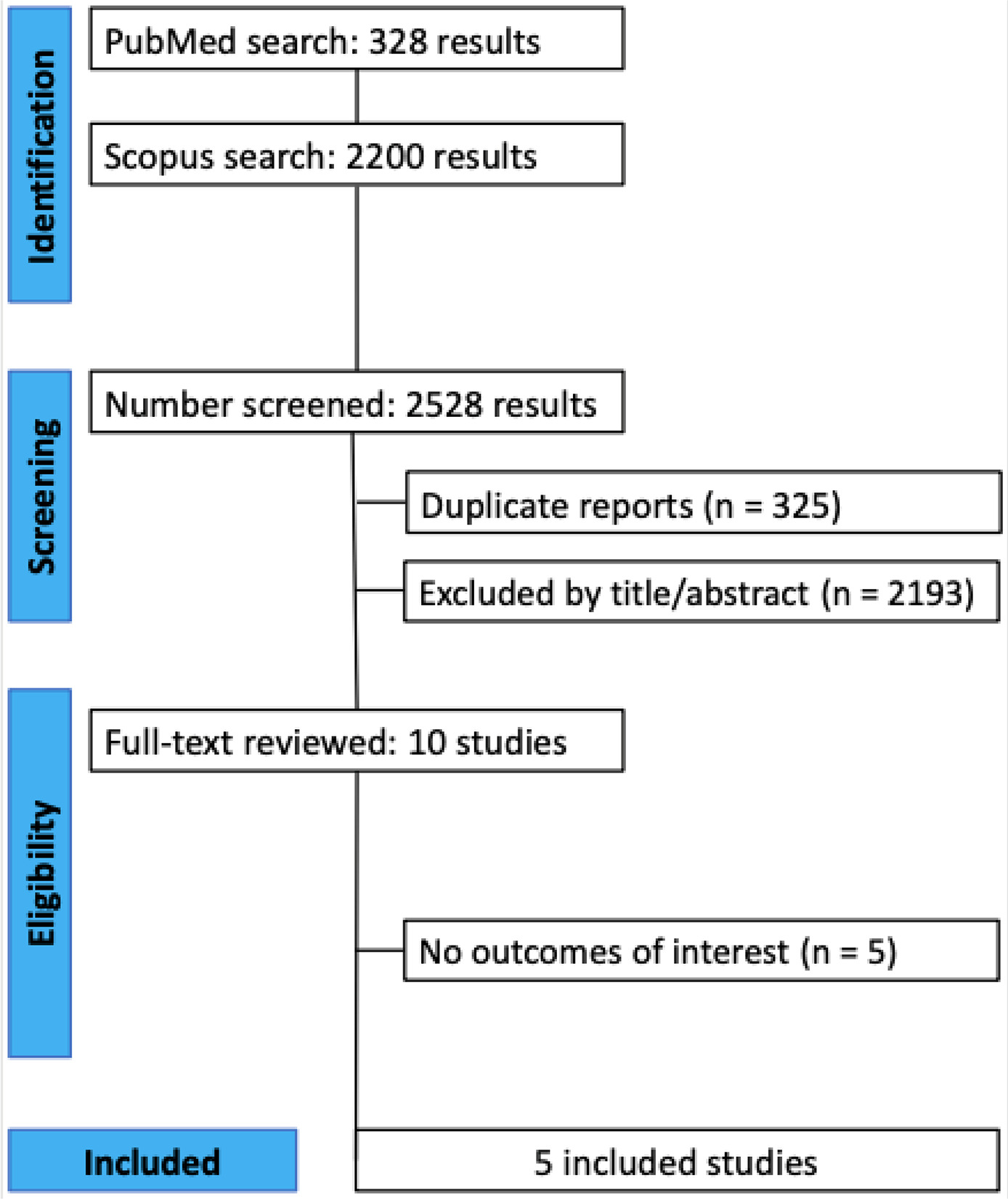
PubMed and Scopus databases were searched for RCTs that compared enoxaparin versus UFH in patients with NSTE-ACS. Risk ratios (RRs) for binary endpoints were computed with 95% confidence intervals (CIs). Heterogeneity was examined with I2 statistics. Statistical significance was defined as P-value <0.05.

Results

Five RCTs with 17,644 patients were included, of whom 8,898 (50.4%) were treated with enoxaparin. There were no significant differences between groups in myocardial infarction (MI) at 48h (RR 0.87; 95% CI 0.75-1.01) and 14 days (RR 0.91; 95% CI 0.79-1.05), all-cause mortality at 48h (RR 1.02; 95% CI 0.62-1.69) and 14 days (RR 0.93; 95% CI 0.74-1.18), composite endpoint of death or MI at 48h (RR 0.87; 95% CI 0.75-1.00) and 14 days (RR 0.91; 95% CI 0.82-1.01), and urgent revascularization at 48h (RR 0.40; 95% CI 0.08-1.95).

Conclusion

These findings suggest that the use of enoxaparin in the treatment of NSTE-ACS presents similar results to UFH.

  • Acute coronary syndrome
  • Enoxaparin
  • Heparin
Read Full Article
Creative Commons Attribution (CC BY) Creative Commons license
10/02/2025 DOI: 10.36660/ijcs.20240149 Views 1
IJCS
Editorial

Is Bovine Heparin, an Old Fellow, a Safe Anticoagulation Approach during Extracorporeal Circulation Inside the Cardiac Operating Room?

Ivis Levy Fernandes Martins et al. Christianne Bretas Vieira Scaramello

Antithrombotic agents include anticoagulants, antiplatelet and fibrinolytic drugs. They are prescribed in several situations related to hemostasis disturbances that favor thrombi formation. Since bleeding is a common adverse effect of these drugs, a cost-benefit analysis of antithrombotic therapy prior to surgery should be performed. In order to consider the preoperative therapy for patients undergoing cardiac surgery, the risk of thrombosis must outweigh the risk of bleeding. Nonetheless, the literature has reported the use of anticoagulant therapy with unfractionated heparin (UFH) during extracorporeal circulation (ECC) inside and outside the cardiac operating room. –

The development of the heart-lung machine made ECC possible. Therefore, heart surgery became a routine practice. The literature describes that complications related to ECC have diminished due to modern monitoring, highly trained staff, special cannulation methods, as well as the latest advances in techniques. However, some authors suggest that guidelines based on more researches would improve the safety of this procedure. During cardiac surgery, ECC preserves the functional characteristics of the heart, provides a clean surgical environment and offers safety to the team.

[…]

  • blood coagulation
  • Cardiac Surgical Prcedures
  • Extracorporeal Circulation
  • Heparin
  • Patient Safety
Read Full Article
Creative Commons Attribution (CC BY) Creative Commons license
29/05/2020 DOI: 10.36660/ijcs.20200077
Propositional debate on biosimilar enoxaparin in Brazil
ABC
Point of view

Propositional debate on biosimilar enoxaparin in Brazil

Paulo A.S. Mourão et al. Bianca F. Glauser Bruno C. Vairo Mariana S. Pereira

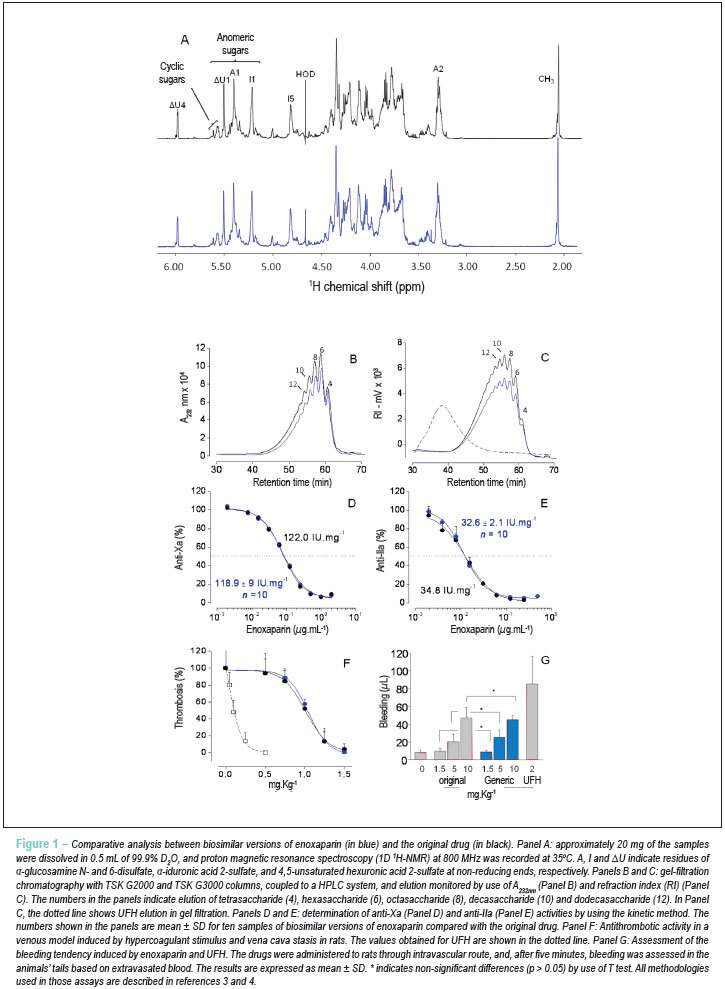
Some patents of low-molecular-weight heparins (LMWHs) have expired and others are about to expire. Biosimilar versions of those drugs are available for clinical use in several countries. However, skepticism persists about the possibility of obtaining preparations similar to the original drug, because of the complexity of the process to generate LMWHs. In recent years, our laboratory has analyzed biosimilar samples of enoxaparin available for clinical use in Brazil (30 different batches and 70 finished products). Those preparations were assessed regarding their chemical structure, molecular weight distribution, in vitro anticoagulant activity, and pharmacological effects in animal models of thrombosis and bleeding. Our results have clearly shown that biosimilar preparations of enoxaparin are similar to the original drug. Our results have shown that those biosimilar versions of enoxaparin are a valid therapeutic alternative, which are, however, in need of appropriate regulation to ensure compliance with regulatory requirements.

  • Enoxaparin
  • Fibrinolytic Agents
  • Heparin
  • heparin, low-molecular-weight
Read Full Article
Creative Commons Attribution (CC BY) Creative Commons license
08/02/2012 DOI: 10.1590/S0066-782X2012000100019 Views 2

How to cite this article

EndNote RIS

Electronic Document Format (Vancouver)

Furtado RHM. Does One Size Fit All? – Refining Parenteral Anticoagulant Therapy According to Body Weight. Arquivos Brasileiros de Cardiologia 2025;122(4):e20250251.

Electronic Document Format (ABNT)

Furtado, Remo Holanda de Mendonça. Does One Size Fit All? – Refining Parenteral Anticoagulant Therapy According to Body Weight. Arquivos Brasileiros de Cardiologia, v. 122, n. 4, e20250251, Jun. 2025.

Electronic Document Format (APA)

Furtado, R. H. M. (2025). Does One Size Fit All? – Refining Parenteral Anticoagulant Therapy According to Body Weight. Arquivos Brasileiros de Cardiologia, 122(4), e20250251.

Electronic Document Format (ISO)

Furtado, Remo Holanda de Mendonça. Does One Size Fit All? – Refining Parenteral Anticoagulant Therapy According to Body Weight. Arquivos Brasileiros de Cardiologia [online]. 2025, vol. 122, n. 4, [cited 2026-10-14], e20250251. Available from: <https://journals.cardiol.br/en/article/does-one-size-fit-all-refining-parenteral-anticoagulant-therapy-according-to-body-weight/>. ISSN 0066-782X

EndNote RIS

Electronic Document Format (Vancouver)

Bertoli ED, Barros MLS, Pasqualotto E, Lima PLG, Camerotte R, Nienkötter TF, Souza MEC, et al. Enoxaparin Versus Unfractionated Heparin in Acute Coronary Syndrome Without St-Segment Elevation: A Systematic Review and Meta-Analysis. International Journal of Cardiovascular Sciences 2025;38:e20240149.

Electronic Document Format (ABNT)

Bertoli, Edmundo Damiani; Barros, Maria Luísa Siegloch; Pasqualotto, Eric; Lima, Pedro Lucas Gomes; Camerotte, Raphael; Nienkötter, Thiago Faraco; Souza, Maria Eduarda Cavalcanti; Floriano, Isabela Tonon; Kelly, Francinny Alves. Enoxaparin Versus Unfractionated Heparin in Acute Coronary Syndrome Without St-Segment Elevation: A Systematic Review and Meta-Analysis. International Journal of Cardiovascular Sciences, v. 38, e20240149, Feb. 2025.

Electronic Document Format (APA)

Bertoli, E. D., Barros, M. L. S., Pasqualotto, E., Lima, P. L. G., Camerotte, R., Nienkötter, T. F., Souza, M. E. C., Floriano, I. T., & Kelly, F. A. (2025). Enoxaparin Versus Unfractionated Heparin in Acute Coronary Syndrome Without St-Segment Elevation: A Systematic Review and Meta-Analysis. International Journal of Cardiovascular Sciences, 38, e20240149.

Electronic Document Format (ISO)

Bertoli, Edmundo Damiani and Barros, Maria Luísa Siegloch and Pasqualotto, Eric and Lima, Pedro Lucas Gomes and Camerotte, Raphael and Nienkötter, Thiago Faraco and Souza, Maria Eduarda Cavalcanti and Floriano, Isabela Tonon and Kelly, Francinny Alves. Enoxaparin Versus Unfractionated Heparin in Acute Coronary Syndrome Without St-Segment Elevation: A Systematic Review and Meta-Analysis. International Journal of Cardiovascular Sciences [online]. 2025, vol. 38, [cited 2026-10-14], e20240149. Available from: <https://journals.cardiol.br/en/article/enoxaparin-versus-unfractionated-heparin-in-acute-coronary-syndrome-without-st-segment-elevation-a-systematic-review-and-meta-analysis/>. ISSN 2359-4802

EndNote RIS

Electronic Document Format (Vancouver)

Martins ILF, Scaramello CBV. Is Bovine Heparin, an Old Fellow, a Safe Anticoagulation Approach during Extracorporeal Circulation Inside the Cardiac Operating Room?. International Journal of Cardiovascular Sciences 2020;33(3):243-4.

Electronic Document Format (ABNT)

Martins, Ivis Levy Fernandes; Scaramello, Christianne Bretas Vieira. Is Bovine Heparin, an Old Fellow, a Safe Anticoagulation Approach during Extracorporeal Circulation Inside the Cardiac Operating Room?. International Journal of Cardiovascular Sciences, v. 33, n. 3, p. 243-244, May. 2020.

Electronic Document Format (APA)

Martins, I. L. F., & Scaramello, C. B. V. (2020). Is Bovine Heparin, an Old Fellow, a Safe Anticoagulation Approach during Extracorporeal Circulation Inside the Cardiac Operating Room?. International Journal of Cardiovascular Sciences, 33(3), 243-244.

Electronic Document Format (ISO)

Martins, Ivis Levy Fernandes and Scaramello, Christianne Bretas Vieira. Is Bovine Heparin, an Old Fellow, a Safe Anticoagulation Approach during Extracorporeal Circulation Inside the Cardiac Operating Room?. International Journal of Cardiovascular Sciences [online]. 2020, vol. 33, n. 3, [cited 2026-10-14], pp. 243-244. Available from: <https://journals.cardiol.br/en/article/is-bovine-heparin-an-old-fellow-a-safe-anticoagulation-approach-during-extracorporeal-circulation-inside-the-cardiac-operating-room/>. ISSN 2359-4802

EndNote RIS

Electronic Document Format (Vancouver)

Mourão PA, Glauser BF, Vairo BC, Pereira MS. Propositional debate on biosimilar enoxaparin in Brazil. Arquivos Brasileiros de Cardiologia 2012;98(1):e11-4.

Electronic Document Format (ABNT)

Mourão, Paulo A.S.; Glauser, Bianca F.; Vairo, Bruno C.; Pereira, Mariana S.. Propositional debate on biosimilar enoxaparin in Brazil. Arquivos Brasileiros de Cardiologia, v. 98, n. 1, p. e11-e14, Feb. 2012.

Electronic Document Format (APA)

Mourão, P. A., Glauser, B. F., Vairo, B. C., & Pereira, M. S. (2012). Propositional debate on biosimilar enoxaparin in Brazil. Arquivos Brasileiros de Cardiologia, 98(1), e11-e14.

Electronic Document Format (ISO)

Mourão, Paulo A.S. and Glauser, Bianca F. and Vairo, Bruno C. and Pereira, Mariana S.. Propositional debate on biosimilar enoxaparin in Brazil. Arquivos Brasileiros de Cardiologia [online]. 2012, vol. 98, n. 1, [cited 2026-10-14], pp. e11-e14. Available from: <https://journals.cardiol.br/en/article/propositional-debate-on-biosimilar-enoxaparin-in-brazil/>. ISSN 0066-782X

  • About ABC Family
  • Internal Regulation
  • Editorial Board
  • Brazilian Society of Cardiology (SBC)

Issues

SBC Guidelines

  • Videos
  • Podcasts
  • News