ABC Family Arquivos Brasileiros de Cardiologia International Journal of Cardiovascular Sciences ABC Heart Failure & Cardiomyopathy ABC Imagem Cardiovascular
Português English
ABC Family
Português English
  • About
    • About ABC Family
    • Internal Regulation
    • Editorial Board
    • Brazilian Society of Cardiology (SBC)
  • Issues
  • SBC Guidelines
  • Content
    • Videos
    • Podcasts
    • News
  • About
    • About ABC Family
    • Internal Regulation
    • Editorial Board
    • Brazilian Society of Cardiology (SBC)
  • Issues
  • SBC Guidelines
  • Content
    • Videos
    • Podcasts
    • News

ABC Family

  • ABC Family
  • Arquivos Brasileiros de Cardiologia
  • International Journal of Cardiovascular Sciences
  • ABC Heart Failure & Cardiomyopathy
  • ABC Imagem Cardiovascular
Search in

No content found.

Journals
Ordering
Article types
Others

  1. Home
  2. Keyword: Humans
IJCS
Editorial

Sex and Gender Equity in Research and Publishing: International Journal of Cardiovascular Sciences endorses SAGER Guidelines

Claudio Tinoco Mesquita et al. Aline Goneli de Lacerda

According to the recently published “Cardiovascular Statistics – Brazil 2020”, mortality from cardiovascular diseases (CVD) is proportionally higher in women compared to men. The INTERHEART study demonstrated that the population attributable risk for myocardial infarction associated with modifiable risk factors of smoking, alcohol use, high-risk diet, and physical inactivity, was significantly higher among women than men. Evidence from the VIRGO study (Variation in Recovery: Role of Gender on Outcomes of Young Acute Myocardial Infarction [AMI] Patients) indicates that both health professionals and women are unaware or neglect the development of cardiovascular heart disease (CHD) and the presence of cardiovascular risk factors in women.

Women are underrepresented in cardiovascular disease trials despite known sex differences across a broad range of risk, prevention, treatment, and outcome parameters. Gender influences many aspects of disease like its pathophysiology and clinical presentation, response to treatment, clinicians’ behavior, and access to health care, , and now it is clear that research must consider this to promote better diagnosis and treatment, and gender equity in health care.

[…]
  • Cardiovascular Diseases, mortality
  • Epidemiology
  • Female
  • Gender Indentity
  • Humans
  • Risk Factors
  • Social Determinants of Health
  • Women´s Health Services
Read Full Article
Creative Commons Attribution (CC BY) Creative Commons license
10/03/2023 DOI: 10.36660/ijcs.20210221 Views 1
Figure 1
IJCS
Original Article

Diagnostic and Prognostic Role of Liver Elastography in Heart Failure

Diane Xavier Ávila et al. Priscila Abreu Matos Gabriel Quintino Wolney de Andrade Martins … Dalmo Machado Claudio Tinoco Mesquita Humberto Villacorta Junior

Abstract

Background:

Hepatic congestion is a frequent finding in patients with heart failure (HF). Physical examination has limitations in quantifying systemic congestion and requires correlation with echocardiographic and laboratory data (usually B-type natriuretic peptide, BNP, or N-terminal pro-B type natriuretic peptide, NT-proBNP). Hepatic elastography evaluates liver stiffness using a transducer that transmits low-frequency vibrations (50 Hz), and the speed of shear waves propagating through the tissues is measured by ultrasound. The faster the vibrations propagate in the hepatic parenchyma, the stiffer the liver, which, in case of HF, can be correlated with hepatic congestion.

Objective:

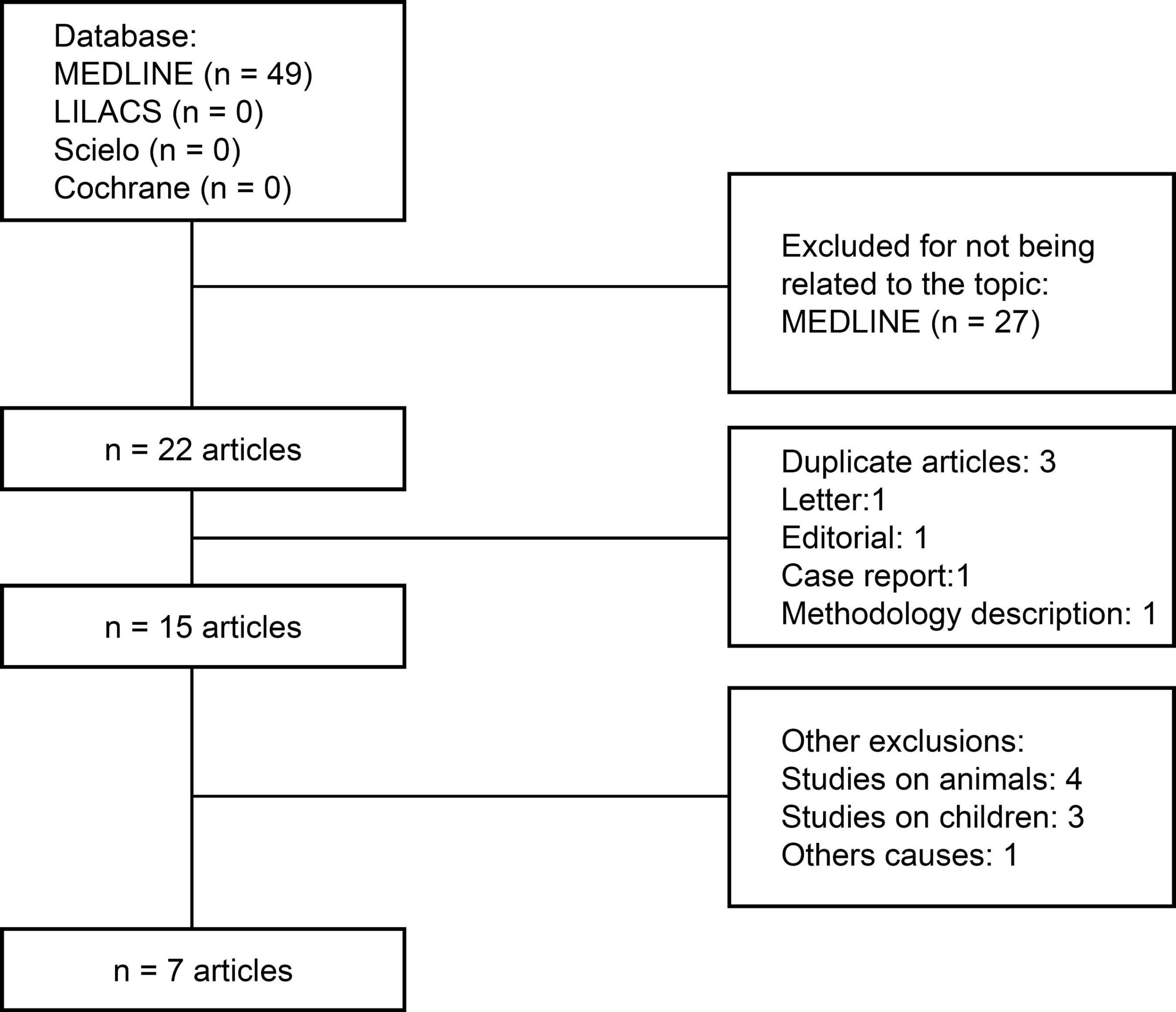
In this systematic review, case-controls, cohort studies, and randomized clinical trials were searched in MEDLINE, LILACS and Cochrane Database of Systematic Review, to evaluate the use of elastography in the detection of hepatic congestion in patients with HF.

Methods:

From the 49 articles retrieved, seven were selected for review, according to the inclusion and exclusion criteria. The most used methods for the diagnosis and evaluation of HF were echocardiography combined with BNP and NT-proBNP measurements.

Results:

Elastography performed at bedside was able to establish a significant correlation between increased liver stiffness and increased venous capillary pressure. In addition, liver elastography performed at hospital discharge was able to predict rehospitalization and mortality.

Conclusion:

Liver elastography is a non-invasive method that can be useful in predicting prognosis and mortality of individuals with HF, contributing to the clinical management of these patients.

  • Echocardiography/methods
  • Elastography
  • Heart Failure / mortality
  • Heart Failure/physiopathology
  • Hepatic Congestion
  • Hospitalizartion
  • Humans
  • Ultrassonography/ methods
Read Full Article
Creative Commons Attribution (CC BY) Creative Commons license
03/02/2020 DOI: 10.36660/ijcs.20190005 Views 1
Figure 1
ABC
Editorial

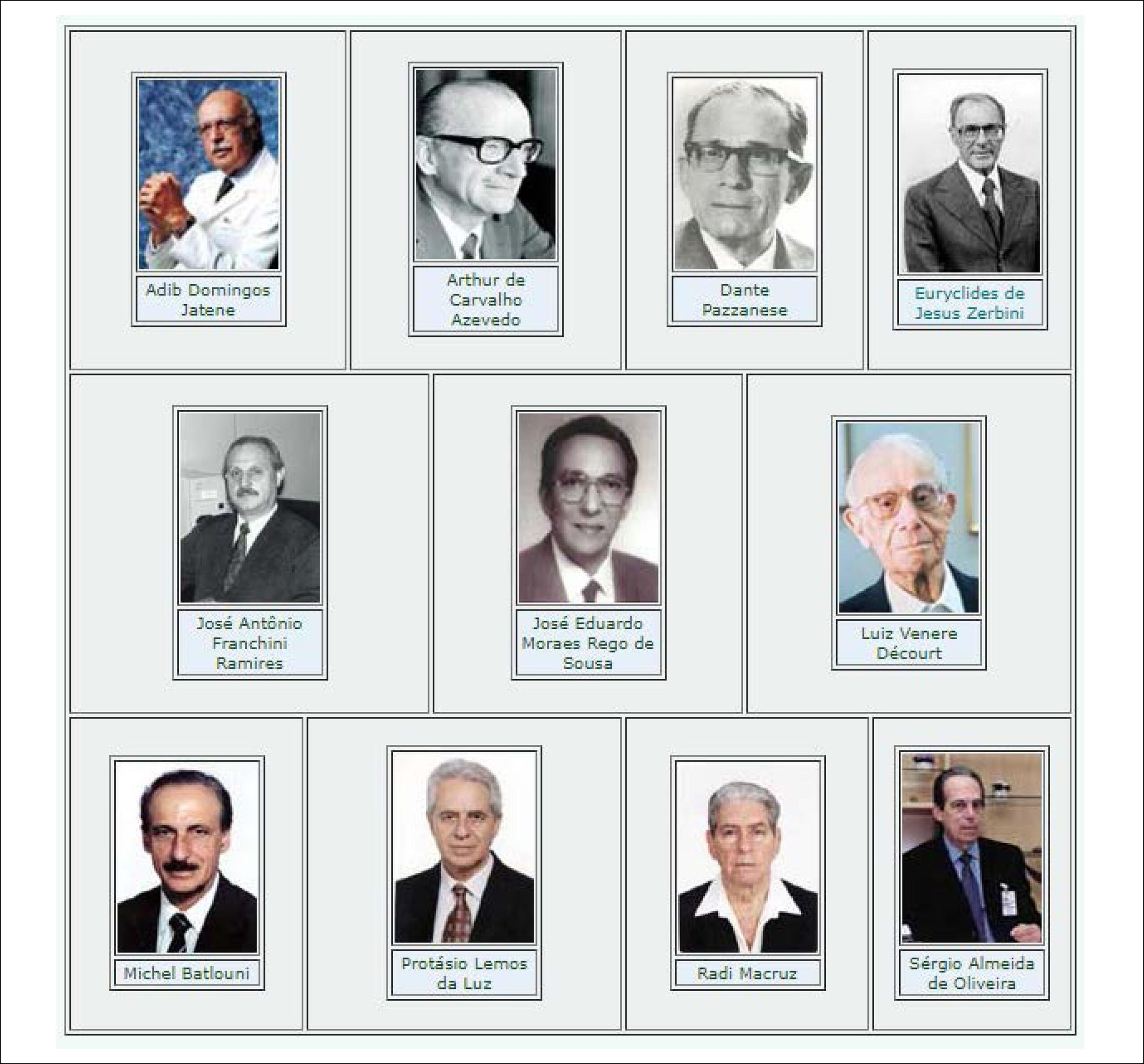
Cardiology and the Cardiologist – Yesterday, Today and Tomorrow

Evandro Tinoco Mesquita et al. Aurea Lucia Alves de Azevedo Grippa de Souza

[…]

  • Animals
  • Brazilian Society of Cardiology/history
  • Cardiology/history
  • Cardiology/trends
  • Heart Diseases/history
  • History,19th Century
  • History,20th Century
  • Humans
Read Full Article
Creative Commons Attribution (CC BY) Creative Commons license
10/10/2019 DOI: 10.5935/abc.20190207
Figure 1
ABC
Original Article

Right Atrial Deformation Analysis in Cardiac Amyloidosis – Results from the Three-Dimensional Speckle-Tracking Echocardiographic MAGYAR-Path Study

Attila Nemes et al. Dóra Földeák Péter Domsik Anita Kalapos … Árpád Kormányos Zita Borbényi Tamás Forster

Abstract

Background:

Light-chain (AL) cardiac amyloidosis (CA) is characterized by fibril deposits, which are composed of monoclonal immunoglobulin light chains. The right ventricle is mostly involved in AL-CA and impairment of its function is a predictor of worse prognosis.

Objectives:

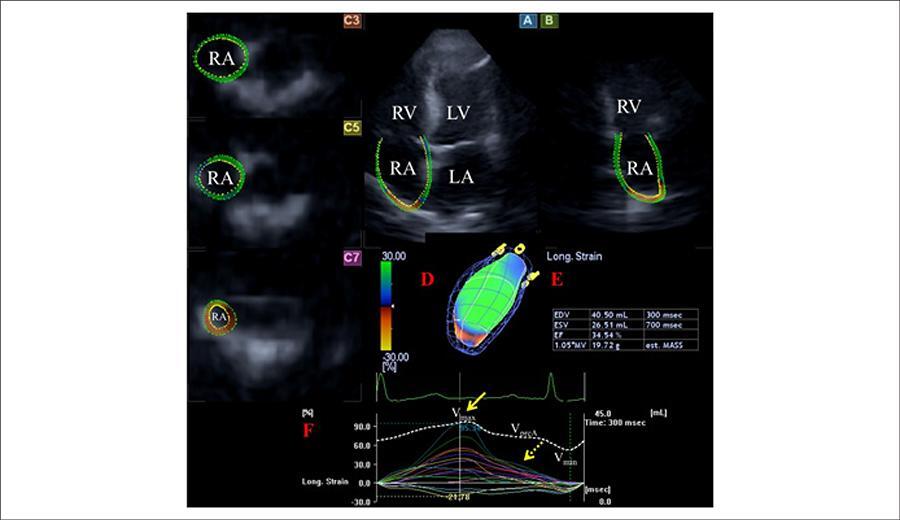
To characterize the volumetric and functional properties of the right atrium (RA) in AL-CA by three-dimensional speckle-tracking echocardiography (3DSTE).

Methods:

A total of 16 patients (mean age: 64.5 ± 10.1 years, 11 males) with AL-CA were examined. Their results were compared to that of 15 age- and gender-matched healthy controls (mean age: 58.9 ± 6.9 years, 8 males). All cases have undergone complete two-dimensional Doppler and 3DSTE. A two-tailed p value of less than 0.05 was considered statistically significant.

Results:

Significant differences could be demonstrated in RA volumes respecting cardiac cycle. Total (19.2 ± 9.3% vs. 27.9 ± 10.7%, p = 0.02) and active atrial emptying fractions (12.1 ± 8.1 vs. 18.6 ± 9.8%, p = 0.05) were significantly decreased in AL-CA patients. Peak global (16.7 ± 10.3% vs. 31.2 ± 19.4%, p = 0.01) and mean segmental (24.3 ± 11.1% vs. 38.6 ± 17.6%, p =0.01) RA area strains, together with some circumferential, longitudinal and segmental area strain parameters, proved to be reduced in patients with AL-CA. Global longitudinal (4.0 ± 5.2% vs. 8.2 ± 5.5%, p = 0.02) and area (7.8 ± 8.1% vs. 15.9 ± 10.3%, p = 0.03) strains at atrial contraction and some circumferential and area strain parameters at atrial contraction were reduced in AL-CA patients.

Conclusion:

Significantly increased RA volumes and deteriorated RA functions could be demonstrated in AL-CA.

  • Amyloidosis
  • Echocardiography, Three Dimensional / methods
  • Humans
  • Speckle Tracking
  • Ventricular Dysfunction Right
Read Full Article
Creative Commons Attribution (CC BY) Creative Commons license
20/08/2018 DOI: 10.5935/abc.20180150 Views 1
ABC
Editorial

Microcirculation and Cardiovascular Diseases

Eduardo Tibiriçá et al. Andrea De Lorenzo Gláucia Maria Moraes de Oliveira

Human microcirculation has some aspects that make it unique in its capacity to adjust the supply of oxygen and nutrients to the metabolic demands of all cells throughout the body by adjusting vascular tone and releasing different vasoactive substances. Endothelium-dependent vasodilation response in humans may vary according to age, gender, the vascular bed involved and the presence of atherosclerotic disease. Vascular smooth muscle cells undergo different hyperpolarization and relaxation when exposed to nitric oxide (NO), prostacyclin and endothelium-derived hyperpolarizing factors (EDHF), among others, as a result of the factors described above.

In the last decade, the importance of assessing microvascular function has become evident in research on the pathophysiology of cardiovascular disease and cardiovascular risk stratification. In this context, cutaneous microcirculation has been considered an accessible and representative vascular bed for assessing microvascular reactivity. Indeed, there is evidence of an association between cutaneous microvascular reactivity and the microcirculatory function in different vascular beds, concerning both the underlying mechanisms and the intensity of the endothelium-dependent vasodilation response. Therefore, assessing cutaneous microvascular reactivity has been proposed as a prognosis marker both for chronic disease and for the action of drugs related to the microvascular endothelial function.

[…]

  • Cardiovascular Diseases/physiopathology
  • Diagnostic Imaging
  • Endothelium, Vascular/pysiology
  • Humans
  • Microcirculation/physiology
  • Risk Factors
  • Vasodilatation/physiology
Read Full Article
Creative Commons Attribution (CC BY) Creative Commons license
01/08/2018 DOI: 10.5935/abc.20180149
IJCS
Viewpoint

Cardiology and Films: An Important Teaching Tool

Ana Luisa Rocha Mallet et al. Fatima Geovanini Luciana Andrade David Kestenberg

Conclusion

The use of films or film scenes is an important tool to discuss heart conditions, not only regarding the disease’s technical aspects, but also the social, ethical and existential aspects involved in the diagnosis of a severe heart disease. To quote Arthur Kleinman, the laureate films “Manchester by the Sea” and “I, Daniel Blake” are examples that can help us practice medicine in a more sensitive and reflexive, alert and morally responsible way in face of the emotional and experiential challenges presented by the profession.

[…]

  • Cardiovascular Diseases
  • Communication
  • Humans
  • Neoplasms
  • Physician-Patient Relations
  • Prognosis
  • Truth Disclosure
Read Full Article
Creative Commons Attribution (CC BY) Creative Commons license
01/01/2018 DOI: 10.5935/2359-4802.20180029 Views 1
ABC
Artigo Original

Ethics in research with human beings: from knowledge to practice

Sandro Gonçalves de Lima et al. Tatiana Albuquerque Gonçalves de Lima Larissa Araripe de Macedo Michel Pompeu Barros de Oliveira Sá … Marcela de Lima Vidal Rafael Alessandro Ferreira Gomes Laura Correia Oliveira Ana Maria Aguiar Santos

BACKGROUND: In Brazil, resolution 196/96 and its amendments regulate the preservation of rights, respect and dignity of human beings involved in research. OBJECTIVE: To analyze the adequacy of Free Communications (FC) presented during the XVIII Congresso Pernambucano de Cardiologia to resolution 196/96. METHODS: During a cross-sectional study, interviews were carried out with the authors of the FC presented at the Congress and the abstracts of the studies were assessed in order to identify the need for previous approval by a Research Ethics Committee (REC). RESULTS: A total of 90 FC were presented and, in most of them (86.8%), medical files were the most commonly used source of data. Only 23.1% of the FC were submitted to the assessment of a REC and 15.4% of them used a Free and Informed Consent Form (FICF). Among the authors whose studies were not assessed by a REC, 65.6% stated that this conduct was not necessary and 18% of them were unaware of the need to submit the study to such assessment. The written authorization given by the institution where the FC were carried out was not obtained in 56.6% of the studies. Most of the authors (80.0%) stated that they had never read Resolution 196/96. The proportion of FC submitted to a REC was significantly higher among authors that had read Resolution 196/96 (p = 0.005). The FC design influenced the non-submission of the studies to a REC (p < 0.001). Most of the FC that were authorized by the institution where they were carried out were submitted to a REC (p < 0.001). CONCLUSION: Most of the FC presented at the Congress did not follow the Brazilian regulations concerning the ethics in research.

  • Ethics, Research
  • Humans
  • Knowledge
  • Practice
Read Full Article
Creative Commons Attribution (CC BY) Creative Commons license
30/07/2010 DOI: 10.1590/S0066-782X2010005000097

How to cite this article

EndNote RIS

Electronic Document Format (Vancouver)

Mesquita CT, Lacerda AG. Sex and Gender Equity in Research and Publishing: International Journal of Cardiovascular Sciences endorses SAGER Guidelines. International Journal of Cardiovascular Sciences 2023;34(6):597-8.

Electronic Document Format (ABNT)

Mesquita, Claudio Tinoco; Lacerda, Aline Goneli de. Sex and Gender Equity in Research and Publishing: International Journal of Cardiovascular Sciences endorses SAGER Guidelines. International Journal of Cardiovascular Sciences, v. 34, n. 6, p. 597-598, Mar. 2023.

Electronic Document Format (APA)

Mesquita, C. T., & Lacerda, A. G. (2023). Sex and Gender Equity in Research and Publishing: International Journal of Cardiovascular Sciences endorses SAGER Guidelines. International Journal of Cardiovascular Sciences, 34(6), 597-598.

Electronic Document Format (ISO)

Mesquita, Claudio Tinoco and Lacerda, Aline Goneli de. Sex and Gender Equity in Research and Publishing: International Journal of Cardiovascular Sciences endorses SAGER Guidelines. International Journal of Cardiovascular Sciences [online]. 2023, vol. 34, n. 6, [cited 2026-10-14], pp. 597-598. Available from: <https://journals.cardiol.br/en/article/sex-and-gender-equity-in-research-and-publishing-international-journal-of-cardiovascular-sciences-endorses-sager-guidelines/>. ISSN 2359-4802

EndNote RIS

Electronic Document Format (Vancouver)

Ávila DX, Matos PA, Quintino G, Martins WA, Machado D, Mesquita CT, Villacorta Junior H, et al. Diagnostic and Prognostic Role of Liver Elastography in Heart Failure. International Journal of Cardiovascular Sciences 2020;33(3):227-32.

Electronic Document Format (ABNT)

Ávila, Diane Xavier; Matos, Priscila Abreu; Quintino, Gabriel; Martins, Wolney de Andrade; Machado, Dalmo; Mesquita, Claudio Tinoco; Villacorta Junior, Humberto. Diagnostic and Prognostic Role of Liver Elastography in Heart Failure. International Journal of Cardiovascular Sciences, v. 33, n. 3, p. 227-232, Feb. 2020.

Electronic Document Format (APA)

Ávila, D. X., Matos, P. A., Quintino, G., Martins, W. A., Machado, D., Mesquita, C. T., & Villacorta Junior, H. (2020). Diagnostic and Prognostic Role of Liver Elastography in Heart Failure. International Journal of Cardiovascular Sciences, 33(3), 227-232.

Electronic Document Format (ISO)

Ávila, Diane Xavier and Matos, Priscila Abreu and Quintino, Gabriel and Martins, Wolney de Andrade and Machado, Dalmo and Mesquita, Claudio Tinoco and Villacorta Junior, Humberto. Diagnostic and Prognostic Role of Liver Elastography in Heart Failure. International Journal of Cardiovascular Sciences [online]. 2020, vol. 33, n. 3, [cited 2026-10-14], pp. 227-232. Available from: <https://journals.cardiol.br/en/article/diagnostic-and-prognostic-role-of-liver-elastography-in-heart-failure/>. ISSN 2359-4802

EndNote RIS

Electronic Document Format (Vancouver)

Mesquita ET, Souza ALAAG. Cardiology and the Cardiologist – Yesterday, Today and Tomorrow. Arquivos Brasileiros de Cardiologia 2019;113(3):335-8.

Electronic Document Format (ABNT)

Mesquita, Evandro Tinoco; Souza, Aurea Lucia Alves de Azevedo Grippa de. Cardiology and the Cardiologist – Yesterday, Today and Tomorrow. Arquivos Brasileiros de Cardiologia, v. 113, n. 3, p. 335-338, Oct. 2019.

Electronic Document Format (APA)

Mesquita, E. T., & Souza, A. L. A. A. G. (2019). Cardiology and the Cardiologist – Yesterday, Today and Tomorrow. Arquivos Brasileiros de Cardiologia, 113(3), 335-338.

Electronic Document Format (ISO)

Mesquita, Evandro Tinoco and Souza, Aurea Lucia Alves de Azevedo Grippa de. Cardiology and the Cardiologist – Yesterday, Today and Tomorrow. Arquivos Brasileiros de Cardiologia [online]. 2019, vol. 113, n. 3, [cited 2026-10-14], pp. 335-338. Available from: <https://journals.cardiol.br/en/article/cardiology-and-the-cardiologist-yesterday-today-and-tomorrow/>. ISSN 0066-782X

EndNote RIS

Electronic Document Format (Vancouver)

Nemes A, Földeák D, Domsik P, Kalapos A, Kormányos , Borbényi Z, Forster T, et al. Right Atrial Deformation Analysis in Cardiac Amyloidosis – Results from the Three-Dimensional Speckle-Tracking Echocardiographic MAGYAR-Path Study. Arquivos Brasileiros de Cardiologia 2018;111(3):384-91.

Electronic Document Format (ABNT)

Nemes, Attila; Földeák, Dóra; Domsik, Péter; Kalapos, Anita; Kormányos, Árpád; Borbényi, Zita; Forster, Tamás. Right Atrial Deformation Analysis in Cardiac Amyloidosis – Results from the Three-Dimensional Speckle-Tracking Echocardiographic MAGYAR-Path Study. Arquivos Brasileiros de Cardiologia, v. 111, n. 3, p. 384-391, Aug. 2018.

Electronic Document Format (APA)

Nemes, A., Földeák, D., Domsik, P., Kalapos, A., Kormányos, , Borbényi, Z., & Forster, T. (2018). Right Atrial Deformation Analysis in Cardiac Amyloidosis – Results from the Three-Dimensional Speckle-Tracking Echocardiographic MAGYAR-Path Study. Arquivos Brasileiros de Cardiologia, 111(3), 384-391.

Electronic Document Format (ISO)

Nemes, Attila and Földeák, Dóra and Domsik, Péter and Kalapos, Anita and Kormányos, Árpád and Borbényi, Zita and Forster, Tamás. Right Atrial Deformation Analysis in Cardiac Amyloidosis – Results from the Three-Dimensional Speckle-Tracking Echocardiographic MAGYAR-Path Study. Arquivos Brasileiros de Cardiologia [online]. 2018, vol. 111, n. 3, [cited 2026-10-14], pp. 384-391. Available from: <https://journals.cardiol.br/en/article/right-atrial-deformation-analysis-in-cardiac-amyloidosis-results-from-the-three-dimensional-speckle-tracking-echocardiographic-magyar-path-study/>. ISSN 0066-782X

EndNote RIS

Electronic Document Format (Vancouver)

Tibiriçá E, Lorenzo AD, Oliveira GMM. Microcirculation and Cardiovascular Diseases. Arquivos Brasileiros de Cardiologia 2018;111(2):120-1.

Electronic Document Format (ABNT)

Tibiriçá, Eduardo; Lorenzo, Andrea De; Oliveira, Gláucia Maria Moraes de. Microcirculation and Cardiovascular Diseases. Arquivos Brasileiros de Cardiologia, v. 111, n. 2, p. 120-121, Jul. 2018.

Electronic Document Format (APA)

Tibiriçá, E., Lorenzo, A. D., & Oliveira, G. M. M. (2018). Microcirculation and Cardiovascular Diseases. Arquivos Brasileiros de Cardiologia, 111(2), 120-121.

Electronic Document Format (ISO)

Tibiriçá, Eduardo and Lorenzo, Andrea De and Oliveira, Gláucia Maria Moraes de. Microcirculation and Cardiovascular Diseases. Arquivos Brasileiros de Cardiologia [online]. 2018, vol. 111, n. 2, [cited 2026-10-14], pp. 120-121. Available from: <https://journals.cardiol.br/en/article/microcirculation-and-cardiovascular-diseases/>. ISSN 0066-782X

EndNote RIS

Electronic Document Format (Vancouver)

Mallet ALR, Geovanini F, Andrade L, Kestenberg D. Cardiology and Films: An Important Teaching Tool. International Journal of Cardiovascular Sciences 2018;31(4):451-3.

Electronic Document Format (ABNT)

Mallet, Ana Luisa Rocha; Geovanini, Fatima; Andrade, Luciana; Kestenberg, David. Cardiology and Films: An Important Teaching Tool. International Journal of Cardiovascular Sciences, v. 31, n. 4, p. 451-453, Dec. 2017.

Electronic Document Format (APA)

Mallet, A. L. R., Geovanini, F., Andrade, L., & Kestenberg, D. (2018). Cardiology and Films: An Important Teaching Tool. International Journal of Cardiovascular Sciences, 31(4), 451-453.

Electronic Document Format (ISO)

Mallet, Ana Luisa Rocha and Geovanini, Fatima and Andrade, Luciana and Kestenberg, David. Cardiology and Films: An Important Teaching Tool. International Journal of Cardiovascular Sciences [online]. 2018, vol. 31, n. 4, [cited 2026-10-14], pp. 451-453. Available from: <https://journals.cardiol.br/en/article/cardiology-and-films-an-important-teaching-tool/>. ISSN 2359-4802

EndNote RIS

Electronic Document Format (Vancouver)

Lima SG, Lima TAG, Macedo LA, Sá MPBO, Vidal ML, Gomes RAF, Oliveira LC, et al. Ethics in research with human beings: from knowledge to practice. Arquivos Brasileiros de Cardiologia 2010;95(3):289-94.

Electronic Document Format (ABNT)

Lima, Sandro Gonçalves de; Lima, Tatiana Albuquerque Gonçalves de; Macedo, Larissa Araripe de; Sá, Michel Pompeu Barros de Oliveira; Vidal, Marcela de Lima; Gomes, Rafael Alessandro Ferreira; Oliveira, Laura Correia; Santos, Ana Maria Aguiar. Ethics in research with human beings: from knowledge to practice. Arquivos Brasileiros de Cardiologia, v. 95, n. 3, p. 289-294, Jul. 2010.

Electronic Document Format (APA)

Lima, S. G. , Lima, T. A. G. , Macedo, L. A. , Sá, M. P. B. O., Vidal, M. L., Gomes, R. A. F., Oliveira, L. C., & Santos, A. M. A. (2010). Ethics in research with human beings: from knowledge to practice. Arquivos Brasileiros de Cardiologia, 95(3), 289-294.

Electronic Document Format (ISO)

Lima, Sandro Gonçalves de and Lima, Tatiana Albuquerque Gonçalves de and Macedo, Larissa Araripe de and Sá, Michel Pompeu Barros de Oliveira and Vidal, Marcela de Lima and Gomes, Rafael Alessandro Ferreira and Oliveira, Laura Correia and Santos, Ana Maria Aguiar. Ethics in research with human beings: from knowledge to practice. Arquivos Brasileiros de Cardiologia [online]. 2010, vol. 95, n. 3, [cited 2026-10-14], pp. 289-294. Available from: <https://journals.cardiol.br/en/article/ethics-in-research-with-human-beings-from-knowledge-to-practice/>. ISSN 0066-782X

  • About ABC Family
  • Internal Regulation
  • Editorial Board
  • Brazilian Society of Cardiology (SBC)

Issues

SBC Guidelines

  • Videos
  • Podcasts
  • News