ABC Family Arquivos Brasileiros de Cardiologia International Journal of Cardiovascular Sciences ABC Heart Failure & Cardiomyopathy ABC Imagem Cardiovascular
Português English
ABC Family
Português English
  • About
    • About ABC Family
    • Internal Regulation
    • Editorial Board
    • Brazilian Society of Cardiology (SBC)
  • Issues
  • SBC Guidelines
  • Content
    • Videos
    • Podcasts
    • News
  • About
    • About ABC Family
    • Internal Regulation
    • Editorial Board
    • Brazilian Society of Cardiology (SBC)
  • Issues
  • SBC Guidelines
  • Content
    • Videos
    • Podcasts
    • News

ABC Family

  • ABC Family
  • Arquivos Brasileiros de Cardiologia
  • International Journal of Cardiovascular Sciences
  • ABC Heart Failure & Cardiomyopathy
  • ABC Imagem Cardiovascular
Search in

No content found.

Journals
Ordering
Article types
Others

  1. Home
  2. Keyword: students
Figure 1
ABC
Original Article

Cardiometabolic Risk in Children and Adolescents: The Paradox between Body Mass Index and Cardiorespiratory Fitness

Luciana Tornquist et al. Debora Tornquist Letícia B. Schneiders Silvia I. R. Franke … Jane D. P. Renner Cézane P. Reuter

Abstract

Background

Cardiometabolic risk has been shown to be inversely associated with cardiorespiratory fitness (CRF) and positively associated with body mass index (BMI).

Objective

Our objective was to analyze the association of cardiometabolic risk factors with combined BMI and CRF in schoolchildren from a city in southern Brazil.

Methods

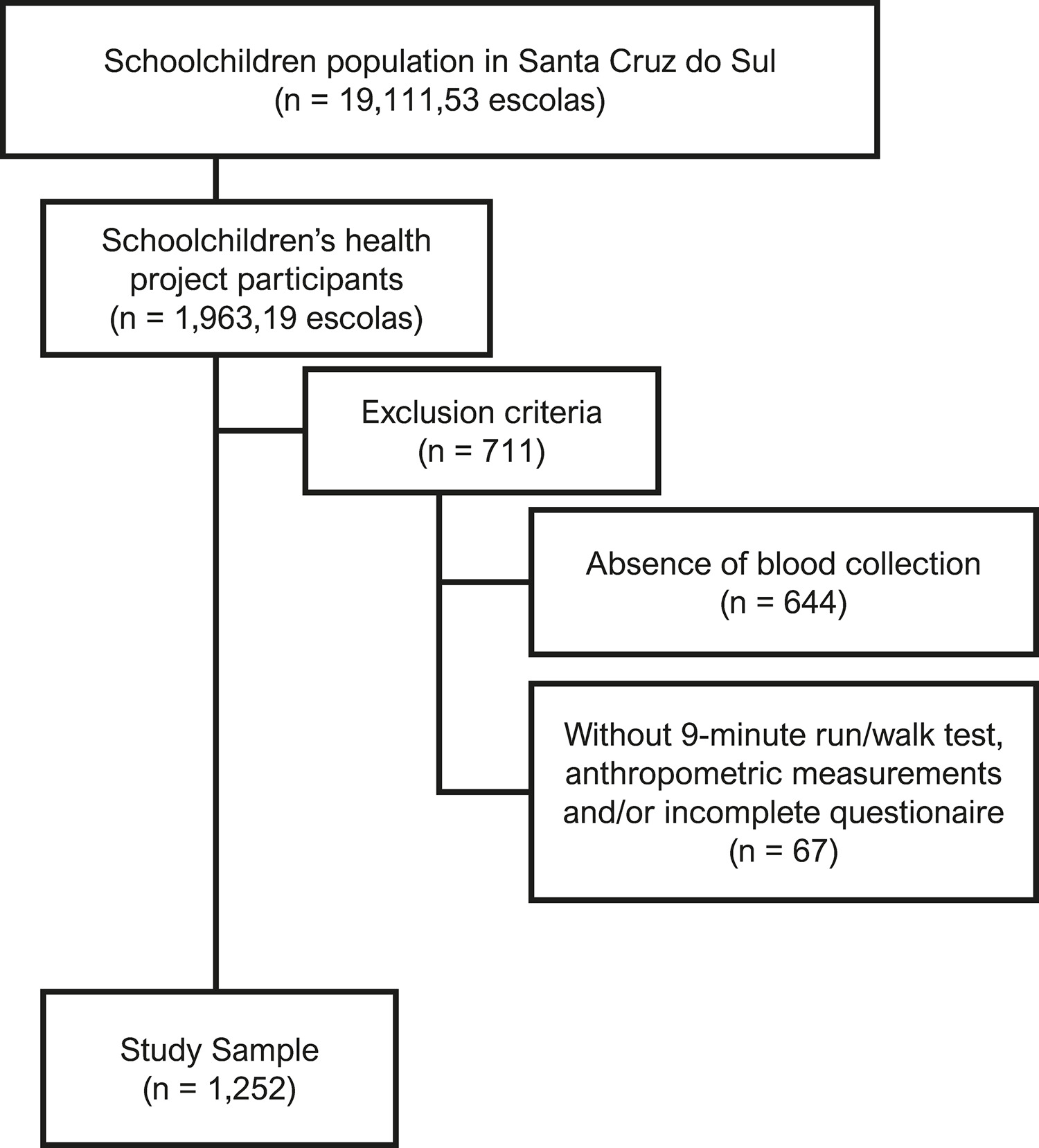
Cross-sectional study with a sample of 1252 schoolchildren aged seven to 17 years. Total cholesterol (TC), HDL-c, LDL-c, triglycerides (TG), systolic (SBP) and diastolic blood pressure (DBP) were evaluated. CRF and BMI were grouped into one variable and the schoolchildren were classified as eutrophic/fit, eutrophic/unfit, overweight-obese/fit, and overweight-obese/unfit. Crude and adjusted analyzes were performed using Poisson Regression and an alpha of 0.05 was adopted.

Results

Overweight-obese and fit schoolchildren showed a prevalence ratio (PR) of 1.50 (1.04 – 2.16) for altered TG, 3.05 (2.05 – 4.54) for elevated SBP, and 2.70 (1.87 – 3.88) for elevated DBP. Overweight-obese and unfit schoolchildren showed a PR for high TC of 1.24 (1.11 – 1.39) and 1.51(1.11 – 2.04) for low HDL levels. In addition, they had a risk of 2.07 (1.60 – 2.69) for altered TG, 3.36 (2.31 – 4.60) for elevated SBP and 2.42 (1.76 – 3.32) for altered DBP.

Conclusion

BMI played a central role in the association with risk and CRF was shown to attenuate the association between risk factors and obesity. Overweight-obese children and adolescents had a higher cardiometabolic risk, but the effect size was larger among the unfit.
  • Adolescent
  • Cardiorespiratory Fitness
  • Child
  • Obesity
  • Risk Factors
  • students
Read Full Article
Creative Commons Attribution (CC BY) Creative Commons license
02/05/2022 DOI: 10.36660/abc.20210593 Views 1
Figure 1
IJCS
Viewpoint

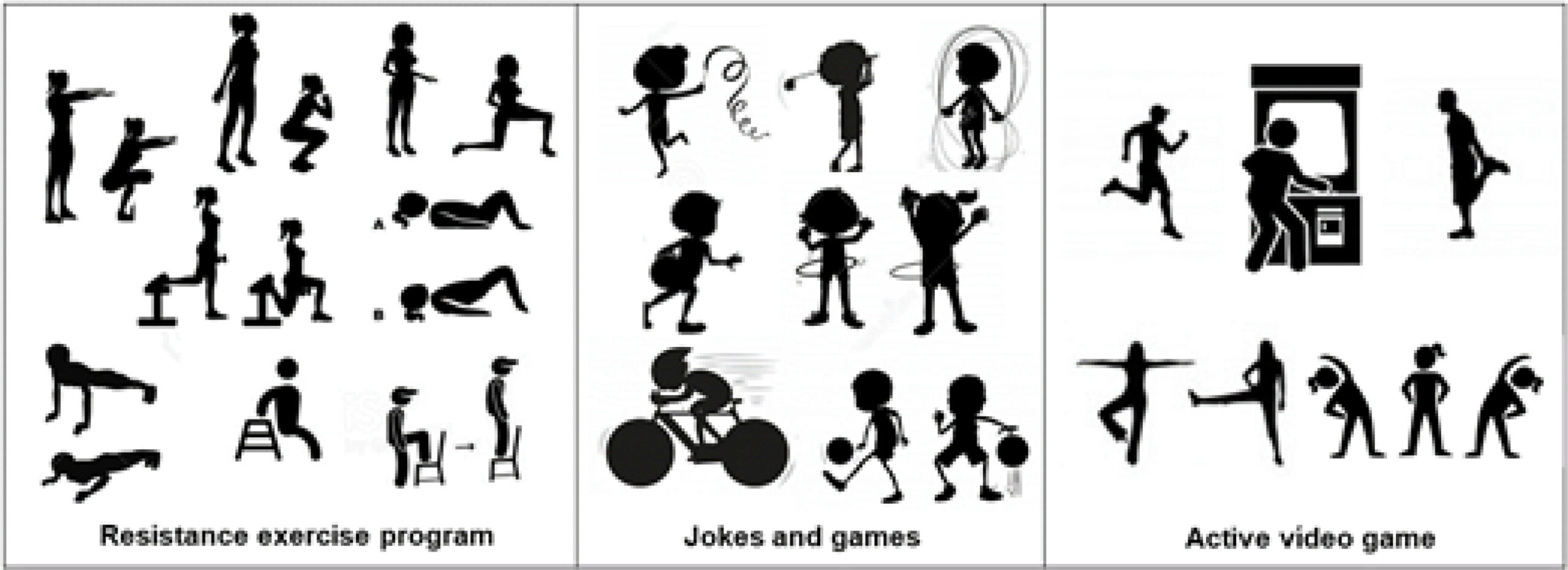
Home Physical Activity Programs for Children and Adolescents as a Healthy Strategy During Social Isolation Caused by COVID-19: viewpoint

Rafaela Catherine da Silva Cunha de Medeiros et al. Isis Kelly dos Santos Jason Azevedo de Medeiros Ricardo Ney Cobucci … Tatiane Andreza Lima da Silva Juliany de Souza Araujo Phelipe Wilde de Alcântara Varela Breno Guilherme de Araújo Tinoco Cabral Paulo Moreira Silva Dantas

Background

The recent outbreak of coronavirus disease (COVID-19) is considered a global health emergency. The global impact of this viral infection is of great concern to everyone. As the COVID-19 outbreak continues to appear unstoppable, preventive and hygiene measures have been implemented to safeguard against infection. Among these precautions, social isolation is considered to have the greatest potential for reducing contagion, at least until a vaccine becomes available. This isolation measure works as a kind of “necessary evil” for preventing a wide-reaching disaster. Thus, social distancing and staying home remain the most effective restrictive measures to prevent the exponential increase in contagion.

One of the crucial focal points of this strategy was oriented toward the closure of schools, thus affecting thousands of children and adolescents, who comprise approximately half of the global student population. The closure of educational institutions could have a significant impact on their lives, requiring them to adapt to new routines. Considering that they are now being confined to their homes due to the new situation generated by the pandemic, this cohort may experience moments of stress.

[…]

  • Adolescent
  • Betacoronavirus, Pandemics
  • Child
  • COVID-19
  • Exercises
  • Physical activity
  • Schools Closure
  • Social Isolation
  • Sports
  • students
Read Full Article
Creative Commons Attribution (CC BY) Creative Commons license
12/05/2021 DOI: 10.36660/ijcs.20200183 Views 1
IJCS
Editorial

A Burden of Physical Inactivity in School-Age Students: The Early Beginning of Cardiometabolic Risk

Pedro Paulo da Silva Soares et al. Gabriel Dias Rodrigues

It is well-known that sedentarism has a close association with the risk of cardiovascular and metabolic diseases. The physical inactivity lifestyle contributes to the prevalence of obesity and hypertension in children, highlighting a big health problem since most individuals who were hypertensive and obese in childhood/adolescence become hypertensive and obese adults. On the other hand, physical exercise is a frontline non-pharmacological strategy to control and treat hypertension, as well as to prevent obesity, which should be encouraged among children/adolescents to reduce cardiometabolic risk in adulthood. In this context, the mapping of risk factors associated with hypertension at the early age should be considered a primary step to plan public policies for disease prevention and health promotion, reducing the burden on healthcare resources. Both obesity and high blood pressure have multifactorial causes, among them low levels of physical activity in adults, children, and adolescents. It is of utmost relevance to investigate the prevalence of physical activity levels in scholars, mainly in a country such as Brazil, with enormous disparities among regions.

In the current issue of the International Journal of Cardiovascular Sciences, Azevêdo et al. investigated physical activity levels, as well as the anthropometric and cardiovascular profile in school-age students attending public schools in the state of Sergipe, northeast of Brazil. The study reported high rates of physical inactivity for both boys and girls, and increased blood pressure in overweight school-age students. Regarding anthropometric profiles, intriguing data showed a high prevalence of low body weight in the age group from 16 to 17 years for both sexes. In contrast, a previous study found a high prevalence of overweight/obesity in school-age students in a city of the Brazilian South region, suggesting a discrepancy between the Brazilian South and Northeast regions that must be considered for Brazilian public policies in health promoting at the primary care level. From a practical perspective, physical education classes, as well as the public schools’ pedagogic programs, must work together for health promoting and health education, and physical activity should be encouraged to prevent cardiovascular risk starting from childhood to adult life.

[…]

  • Adolecents
  • Exercise
  • Metabolic Diseases
  • Physical activity
  • Public Health
  • Risk Factors
  • Sedentarism
  • students
Read Full Article
Creative Commons Attribution (CC BY) Creative Commons license
03/05/2021 DOI: 10.36660/ijcs.20210100 Views 2
IJCS
Original Article

Physical Activity Level, Anthropometric and Cardiovascular Profile Among Students in Sergipe State Attending Public Schools

Luan Morais Azevêdo et al. Lucas Souza Santos Emerson Pardono Jeeser Alves Almeida Aldemir Smith Menezes

Abstract

Background

Cardiovascular diseases are the leading cause of mortality among adults. Evidence has shown that sedentary behaviors are the main preventable outcome, however, many sedentary children also become sedentary adults. Therefore, identifying potential risk factors as early as possible contributes to therapeutic success.

Objective

To achieve an anthropometric and cardiovascular mapping of school-age students from Sergipe State, Brazil.

Methods

A school-based cross-sectional study with a representative sample from public schools in the state of Sergipe (n= 4700). Anthropometric and blood pressure measurements were performed, and the Global School-based Student Health Survey was used to assess the physical activity level. An independent samples t-test was performed for all comparisons, and significance was established at 5% (p<0.05).

Results

Despite showing mean blood pressure values within reasonable limits (SBP = 114.1±12.4 mm Hg and DBP = 66.3±8.1 mm Hg), school-age students did not comply with global recommendations for health promotion. It was also observed a high rate of low body weight (42.6%), suggesting dietary compromises, which can interfere with the development of this population. In addition, only 7.3% of students met the minimum physical activity criteria proposed for maintaining their health status.

Conclusion

The findings of the present study emphasize the importance of maintaining Physical Education classes as an essential curricular component, since they provide several health benefits and ensure that this population reaches the minimum daily recommendations, preventing diseases in adult life. (Int J Cardiovasc Sci. 2020; [online].ahead print, PP.0-0)

  • Adolecents
  • Anthropometry
  • Epidemiology
  • Exercise
  • Hypertension
  • Prevalence
  • Public Schools
  • Risk Factors
  • Sedentarism
  • students
Read Full Article
Creative Commons Attribution (CC BY) Creative Commons license
08/01/2021 DOI: 10.36660/ijcs.20200050
ABC
Original Article

Metabolic Syndrome and Importance of Associated Variables in Children and Adolescents in Guabiruba – SC, Brazil

Nilton Rosini et al. Solange A. Z. Oppermann Moura Rodrigo Diegoli Rosini Marcos José Machado Edson Luiz da Silva

Background:

The risk factors that characterize metabolic syndrome (MetS) may be present in childhood and adolescence, increasing the risk of cardiovascular disease in adulthood.

Objective:

Evaluate the prevalence of MetS and the importance of its associated variables, including insulin resistance (IR), in children and adolescents in the city of Guabiruba-SC, Brazil.

Methods:

Cross-sectional study with 1011 students (6–14 years, 52.4% girls, 58.5% children). Blood samples were collected for measurement of biochemical parameters by routine laboratory methods. IR was estimated by the HOMA-IR index, and weight, height, waist circumference and blood pressure were determined. Multivariate logistic regression models were used to examine the associations between risk variables and MetS.

Results:

The prevalence of MetS, IR, overweight and obesity in the cohort were 14%, 8.5%, 21% and 13%, respectively. Among students with MetS, 27% had IR, 33% were overweight, 45.5% were obese and 22% were eutrophic. IR was more common in overweight (48%) and obese (41%) students when compared with eutrophic individuals (11%; p = 0.034). The variables with greatest influence on the development of MetS were obesity (OR = 32.7), overweight (OR = 6.1), IR (OR = 4.4; p ≤ 0.0001 for all) and age (OR = 1.15; p = 0.014).

Conclusion:

There was a high prevalence of MetS in children and adolescents evaluated in this study. Students who were obese, overweight or insulin resistant had higher chances of developing the syndrome.

  • Insulin Resistance
  • Metabolic Syndrome
  • Overweight
  • Risk Factors
  • students
Read Full Article
Creative Commons Attribution (CC BY) Creative Commons license
08/05/2015 DOI: 10.5935/abc.20150040 Views 1
Lipid Tetrad Index (LTI) and Lipid Pentad Index (LPI) in healthy subjects
ABC
Artigo Original

Lipid Tetrad Index (LTI) and Lipid Pentad Index (LPI) in healthy subjects

Charles Augusto dos Santos Morais et al. Samuel Henrique Vieira Oliveira Luciana Moreira Lima

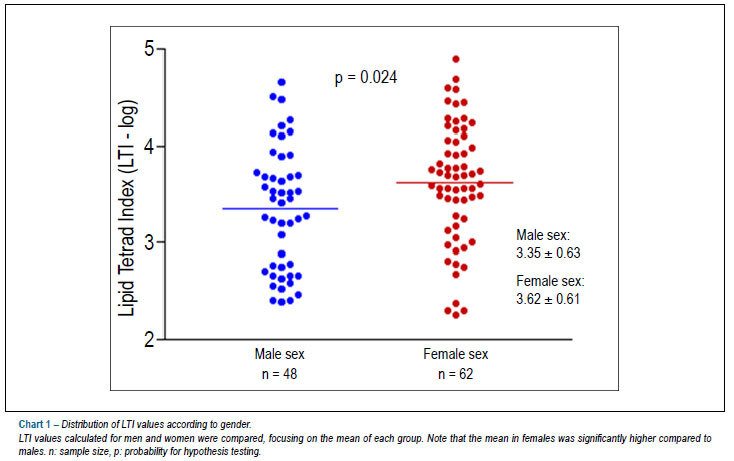
BACKGROUND: The prevalence of cardiovascular disease (CVD) has increased steadily in recent years. Literature data show that about 35% of atherosclerotic events occur in the absence of classic risk factors, requiring a broader assessment of the individual to better characterize the risk. Lipid Tetrad Index (LTI) and Lipid Pentad Index (LPI) constitute a new and efficient evaluation of the lipid profile and CVD risk. OBJECTIVE: This study assessed LTI and LPI in undergraduate students, seeking to establish the parameters of these indices in healthy subjects and correlate them with the conventional lipid profile. METHODS: The study included 110 students, 48 (44%) males and 62 (56%) females, mean age 20.9 ± 1.7. Apolipoprotein-AI, apolipoprotein B, total cholesterol, lipoprotein(a), triglycerides, high-density lipoprotein (HDL) and low-density lipoprotein (LDL) were assessed, using specific diagnostic methods. LTI and LPI indices were calculated using the equations LTI = [total cholesterol x triglycerides x lipoprotein(a) / HDL] and LPI = [total cholesterol x triglycerides x lipoprotein(a) x apolipoprotein B/apolipoprotein-AI], respectively. RESULTS: LTI and LPI values were significantly higher in females compared to males. As for the other parameters, there were significant differences between males and females only regarding total cholesterol, HDL and apolipoprotein-AI. There were significant and positive correlations between LDL and LTI and between LDL and LPI. CONCLUSIONS: Findings indicate that both LTI and LPI were associated with LDL, a parameter not used to calculate lipid indices and widely used in clinical practice for cardiovascular risk assessment.

  • Cardiovascular Diseases
  • Lipids
  • Risk Factors
  • students
Read Full Article
Creative Commons Attribution (CC BY) Creative Commons license
22/03/2013 DOI: 10.5935/abc.20130048 Views 1
ABC
Artigo Original

Dietary habits and risk factors for atherosclerosis in students from Bento Gonçalves (state of Rio Grande do Sul)

Hosana Maria Speranza Cimadon et al. Renata Geremia Lucia Campos Pellanda

BACKGROUND: Atherosclerotic cardiovascular disease begins its process in early childhood and is influenced throughout life by genetic factors and environmental exposure to potentially modifiable risk factors. OBJECTIVE: To investigate the prevalence of risk factors for atherosclerosis with emphasis on dietary habits in a predominantly Italian colonization town. METHODS: Population-based cross sectional study, involving 590 primary school students aged between 9 and 18 years, with a cluster sample. The following were collected: identification data, family history and personal history, and information regarding students’ eating habits. Dietary habits considered inappropriate included: consumption of fast food, sugary snacks, sugar-sweetened beverages and animal fats four or more times a week, and fruits, green vegetables, and leguminous vegetables less than four times a week. RESULTS: The prevalence of overweight among students was 24.6% (n = 145), high blood pressure, 11.1% (n = 65); passive smoking, 35.4% (n = 208); sedentary lifestyle, 52.3% (n = 306), family history of 1st degree disease: hypertension, 21.4%, obesity 36.5%. Food items eaten four or more times a week: fast food, 70.3% (n = 411); sugary snacks, 42.7% (n = 252), sugar-sweetened beverages, 71% (n = 419), and animal fats, 24.4% (n = 143). Food items eaten less than four times a week: fruits, 36.8% (n = 215), green vegetables, 49.5% (n = 292) and leguminous vegetables, 63.7% (n = 374). CONCLUSION: Interventions are needed to promote changes in students’ eating habits: higher level of consumption of fruits, green vegetables and leguminous vegetables, and increased level of physical activity.

  • Atherosclerosis
  • Bento Gonçalves (RS)
  • Brazil
  • Food habits
  • Risk Factors
  • students
Read Full Article
Creative Commons Attribution (CC BY) Creative Commons license
09/07/2010 DOI: 10.1590/S0066-782X2010005000088
Blood pressure, excess weight and level of physical activity in students of a public university
ABC
Artigo Original

Blood pressure, excess weight and level of physical activity in students of a public university

Maria do Carmo de Carvalho e Martins et al. Irapuá Ferreira Ricarte Cláudio Henrique Lima Rocha Rodrigo Batista Maia … Vitor Brito da Silva André Bastos Veras Manoel Dias de Souza Filho

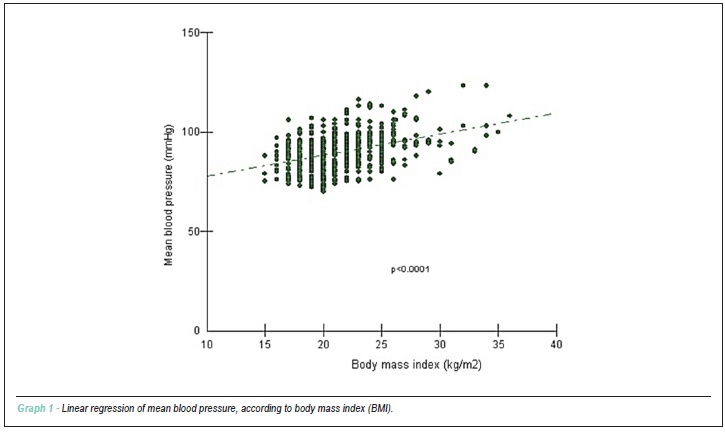
BACKGROUND: High blood pressure, excess weight and sedentary lifestyle are important risk factors for cardiovascular diseases, and they are closely associated. OBJECTIVE: To evaluate the nutritional status, level of physical activity and blood pressure levels of students of Universidade Federal do Piauí, Teresina, Brazil. METHODS: Cross-sectional study with a sample of 605 students (46.1% males and 53.9% females), with a mean age of 21.7 ± 3.7 years. The nutritional status was classified according to body mass index (BMI), and central adiposity according to waist circumference (WC). The level of physical activity was evaluated using the short version of the International Physical Activity Questionnaire (IPAQ). Elevated blood pressure was defined as systolic blood pressure > 140 mmHg and/or diastolic blood pressure > 90 mmHg. RESULTS: The prevalence of elevated blood pressure was 9.7%, and was higher among men. Excess weight (BMI > 25 kg/m²) was found in 18.2% of the students, with overweight and obesity rates of 15.2% and 3%, respectively. Abdominal obesity was found in 2.4% of the students regardless of gender, and sedentary lifestyle in 52%. The mean blood pressure increased with increasing BMI and WC. No association was found between the levels of physical activity and blood pressure. CONCLUSION: An association of increased body weight and waist circumference with higher blood pressure levels was observed among the participants. Instruments for an early assessment of the cardiovascular risk and preventive advice should be established for these young individuals.

  • Blood Pressure
  • Motor Activity
  • Overweight
  • students
Read Full Article
Creative Commons Attribution (CC BY) Creative Commons license
18/06/2010 DOI: 10.1590/S0066-782X2010005000069 Views 1
Body mass index as a marker of dyslipidemia in children
ABC
Artigo Original

Body mass index as a marker of dyslipidemia in children

Cláudia Cruz Lunardi et al. Édio Luiz Petroski

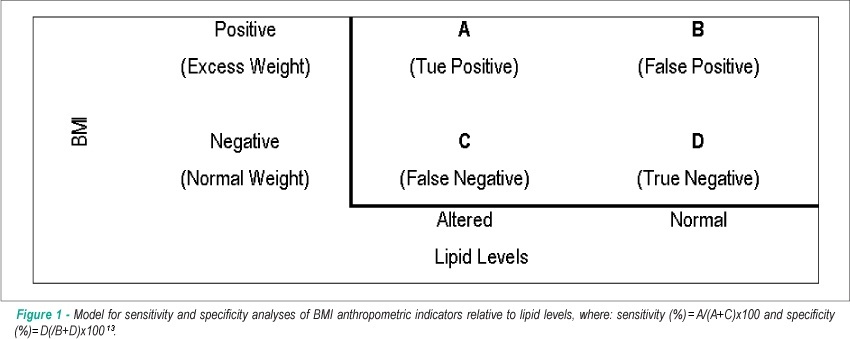
BACKGROUND: Obesity is very frequently associated with conditions such as dyslipidemia e diabetes. OBJECTIVE: To verify the diagnostic value of the cut-off points proposed by the International Obesity Task Force (IOTF) and Conde & Monteiro (C&M) for the screening and identification of dyslipidemia in children between 10 and 12 years of age. METHODS: The Body Mass Index (BMI) of 374 children of the school network of the city of Santa Maria-RS was ascertained. The children were selected in a stratified manner from a population of 4,083 children. Lipid levels (reference standard) were determined by means of analysis of total cholesterol (TC), LDL-C, HDL-C and triglycerides (TG). The cut-off points of the IOTF and C&M were used to classify the BMI. Descriptive statistics and analysis of sensitivity and specificity were employed. RESULTS: There was a statistical difference in excess weight prevalence between both proposals (24.7% and 28.6% for IOTF and C&M, respectively). A variation was observed in sensitivity (33% to 83%) and specificity (62% to 80%) between the cut-off points as to the detection of dyslipidemia. The percentage of false negatives was lower than the percentage of false positives. CONCLUSION: The proposals may be used to screen elevated TC and LDL-C in male individuals. Either the IOTF or the C&M classification may be used to identify subjects without dyslipidemia, as these proposals presented high specificity.

  • body mass index
  • dyslipidemia
  • Sensitivity and Specificity
  • students
Read Full Article
Creative Commons Attribution (CC BY) Creative Commons license
13/10/2009 DOI: 10.1590/S0066-782X2009000700005 Views 1
Dyslipidemia in schoolchildren from private schools in Belém
ABC
Artigo Original

Dyslipidemia in schoolchildren from private schools in Belém

Simone Augusta Ribas et al. Luiz Carlos Santana da Silva

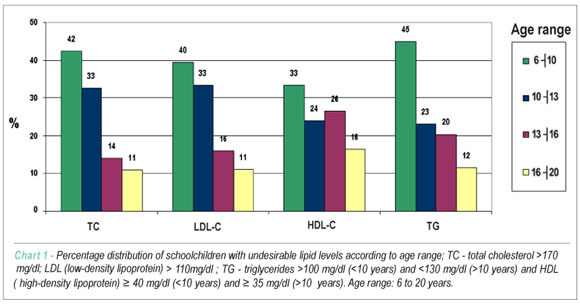
BACKGROUND: Currently, childhood dyslipidemia, associated to other non-transmissible diseases such as diabetes, hypertension and obesity, represent a significant public health problem in Brazil. OBJECTIVE: To investigate the prevalence of dyslipidemia in children and adolescents from private schools in the city of Belem, state of Para, Brazil. METHODS: Transversal and prospective study that assessed 437 schoolchildren, paired by sex. The age range was established between 6 and 19 years of age and stratified in four subgroups (6 to 9 years; 10 to 12 years; 13 to 15 years and 16 to 19 years). To obtain the anthropometric variables, weight and height were measured for the calculation of the body mass index and skin folds were measured for the calculation of body fat percentage. The serum lipoprotein profile was obtained through the measurement of total cholesterol, triglycerides, LDL-cholesterol and HDL-cholesterol after a 12-hour fasting period, by enzymatic methods. RESULTS: Of the total number of schoolchildren analyzed, 126 (28.8%) were overweight and 158 (36.2%) presented a high adiposity index. The children (33.6%) presented a higher prevalence of obesity when compared to the adolescents (10.1%; p < 0.001). Regarding the biochemical characteristics, it was observed that 214 (41%) presented some alteration in the lipid profile and that children and adolescents in the age range of 10 to 15 years were the age groups that presented the highest rates of dyslipidemia (34.6% and 25.5%), respectively. CONCLUSION: These findings demonstrate the importance of establishing an early diagnosis of the lipid profile, mainly if it is already associated to another risk factor, such as obesity.

  • Adolescent
  • Belém (PA)-Brazil
  • Cardiovascular Diseases
  • Dyslipidemias
  • Public Health
  • students
Read Full Article
Creative Commons Attribution (CC BY) Creative Commons license
17/07/2009 DOI: 10.1590/S0066-782X2009000600006

How to cite this article

EndNote RIS

Electronic Document Format (Vancouver)

Tornquist L, Tornquist D, Schneiders LB, Franke SIR, Renner JDP, Reuter CP. Cardiometabolic Risk in Children and Adolescents: The Paradox between Body Mass Index and Cardiorespiratory Fitness. Arquivos Brasileiros de Cardiologia 2022;119(2):236-43.

Electronic Document Format (ABNT)

Tornquist, Luciana; Tornquist, Debora; Schneiders, Letícia B.; Franke, Silvia I. R.; Renner, Jane D. P.; Reuter, Cézane P.. Cardiometabolic Risk in Children and Adolescents: The Paradox between Body Mass Index and Cardiorespiratory Fitness. Arquivos Brasileiros de Cardiologia, v. 119, n. 2, p. 236-243, May. 2022.

Electronic Document Format (APA)

Tornquist, L., Tornquist, D., Schneiders, L. B., Franke, S. I. R., Renner, J. D. P., & Reuter, C. P. (2022). Cardiometabolic Risk in Children and Adolescents: The Paradox between Body Mass Index and Cardiorespiratory Fitness. Arquivos Brasileiros de Cardiologia, 119(2), 236-243.

Electronic Document Format (ISO)

Tornquist, Luciana and Tornquist, Debora and Schneiders, Letícia B. and Franke, Silvia I. R. and Renner, Jane D. P. and Reuter, Cézane P.. Cardiometabolic Risk in Children and Adolescents: The Paradox between Body Mass Index and Cardiorespiratory Fitness. Arquivos Brasileiros de Cardiologia [online]. 2022, vol. 119, n. 2, [cited 2026-10-14], pp. 236-243. Available from: <https://journals.cardiol.br/en/article/cardiometabolic-risk-in-children-and-adolescents-the-paradox-between-body-mass-index-and-cardiorespiratory-fitness/>. ISSN 0066-782X

EndNote RIS

Electronic Document Format (Vancouver)

Medeiros RCSC, Santos IK, Medeiros JA, Cobucci RN, Silva TAL, Araujo JS, Varela PWA, et al. Home Physical Activity Programs for Children and Adolescents as a Healthy Strategy During Social Isolation Caused by COVID-19: viewpoint. International Journal of Cardiovascular Sciences 2021;34(5):582-7.

Electronic Document Format (ABNT)

Medeiros, Rafaela Catherine da Silva Cunha de; Santos, Isis Kelly dos; Medeiros, Jason Azevedo de; Cobucci, Ricardo Ney; Silva, Tatiane Andreza Lima da; Araujo, Juliany de Souza; Varela, Phelipe Wilde de Alcântara; Cabral, Breno Guilherme de Araújo Tinoco; Dantas, Paulo Moreira Silva. Home Physical Activity Programs for Children and Adolescents as a Healthy Strategy During Social Isolation Caused by COVID-19: viewpoint. International Journal of Cardiovascular Sciences, v. 34, n. 5, p. 582-587, May. 2021.

Electronic Document Format (APA)

Medeiros, R. C. S. C. , Santos, I. K. , Medeiros, J. A. , Cobucci, R. N., Silva, T. A. L. , Araujo, J. S., Varela, P. W. A., Cabral, B. G. A. T., & Dantas, P. M. S. (2021). Home Physical Activity Programs for Children and Adolescents as a Healthy Strategy During Social Isolation Caused by COVID-19: viewpoint. International Journal of Cardiovascular Sciences, 34(5), 582-587.

Electronic Document Format (ISO)

Medeiros, Rafaela Catherine da Silva Cunha de and Santos, Isis Kelly dos and Medeiros, Jason Azevedo de and Cobucci, Ricardo Ney and Silva, Tatiane Andreza Lima da and Araujo, Juliany de Souza and Varela, Phelipe Wilde de Alcântara and Cabral, Breno Guilherme de Araújo Tinoco and Dantas, Paulo Moreira Silva. Home Physical Activity Programs for Children and Adolescents as a Healthy Strategy During Social Isolation Caused by COVID-19: viewpoint. International Journal of Cardiovascular Sciences [online]. 2021, vol. 34, n. 5, [cited 2026-10-14], pp. 582-587. Available from: <https://journals.cardiol.br/en/article/home-physical-activity-programs-for-children-and-adolescents-as-a-healthy-strategy-during-social-isolation-caused-by-covid-19-viewpoint/>. ISSN 2359-4802

EndNote RIS

Electronic Document Format (Vancouver)

Soares PPS, Rodrigues GD. A Burden of Physical Inactivity in School-Age Students: The Early Beginning of Cardiometabolic Risk. International Journal of Cardiovascular Sciences 2021;34(3):262-3.

Electronic Document Format (ABNT)

Soares, Pedro Paulo da Silva; Rodrigues, Gabriel Dias. A Burden of Physical Inactivity in School-Age Students: The Early Beginning of Cardiometabolic Risk. International Journal of Cardiovascular Sciences, v. 34, n. 3, p. 262-263, May. 2021.

Electronic Document Format (APA)

Soares, P. P. S., & Rodrigues, G. D. (2021). A Burden of Physical Inactivity in School-Age Students: The Early Beginning of Cardiometabolic Risk. International Journal of Cardiovascular Sciences, 34(3), 262-263.

Electronic Document Format (ISO)

Soares, Pedro Paulo da Silva and Rodrigues, Gabriel Dias. A Burden of Physical Inactivity in School-Age Students: The Early Beginning of Cardiometabolic Risk. International Journal of Cardiovascular Sciences [online]. 2021, vol. 34, n. 3, [cited 2026-10-14], pp. 262-263. Available from: <https://journals.cardiol.br/en/article/a-burden-of-physical-inactivity-in-school-age-students-the-early-beginning-of-cardiometabolic-risk/>. ISSN 2359-4802

EndNote RIS

Electronic Document Format (Vancouver)

Azevêdo LM, Santos LS, Pardono E, Almeida JA, Menezes AS. Physical Activity Level, Anthropometric and Cardiovascular Profile Among Students in Sergipe State Attending Public Schools. International Journal of Cardiovascular Sciences 2021;34(3):255-61.

Electronic Document Format (ABNT)

Azevêdo, Luan Morais; Santos, Lucas Souza; Pardono, Emerson; Almeida, Jeeser Alves; Menezes, Aldemir Smith. Physical Activity Level, Anthropometric and Cardiovascular Profile Among Students in Sergipe State Attending Public Schools. International Journal of Cardiovascular Sciences, v. 34, n. 3, p. 255-261, Jan. 2021.

Electronic Document Format (APA)

Azevêdo, L. M., Santos, L. S., Pardono, E., Almeida, J. A., & Menezes, A. S. (2021). Physical Activity Level, Anthropometric and Cardiovascular Profile Among Students in Sergipe State Attending Public Schools. International Journal of Cardiovascular Sciences, 34(3), 255-261.

Electronic Document Format (ISO)

Azevêdo, Luan Morais and Santos, Lucas Souza and Pardono, Emerson and Almeida, Jeeser Alves and Menezes, Aldemir Smith. Physical Activity Level, Anthropometric and Cardiovascular Profile Among Students in Sergipe State Attending Public Schools. International Journal of Cardiovascular Sciences [online]. 2021, vol. 34, n. 3, [cited 2026-10-14], pp. 255-261. Available from: <https://journals.cardiol.br/en/article/physical-activity-level-anthropometric-and-cardiovascular-profile-among-students-in-sergipe-state-attending-public-schools/>. ISSN 2359-4802

EndNote RIS

Electronic Document Format (Vancouver)

Rosini N, Moura SAZO, Rosini RD, Machado MJ, Silva EL. Metabolic Syndrome and Importance of Associated Variables in Children and Adolescents in Guabiruba – SC, Brazil. Arquivos Brasileiros de Cardiologia 2015;105(1):37-44.

Electronic Document Format (ABNT)

Rosini, Nilton; Moura, Solange A. Z. Oppermann; Rosini, Rodrigo Diegoli; Machado, Marcos José; Silva, Edson Luiz da. Metabolic Syndrome and Importance of Associated Variables in Children and Adolescents in Guabiruba – SC, Brazil. Arquivos Brasileiros de Cardiologia, v. 105, n. 1, p. 37-44, May. 2015.

Electronic Document Format (APA)

Rosini, N., Moura, S. A. Z. O., Rosini, R. D., Machado, M. J., & Silva, E. L. (2015). Metabolic Syndrome and Importance of Associated Variables in Children and Adolescents in Guabiruba – SC, Brazil. Arquivos Brasileiros de Cardiologia, 105(1), 37-44.

Electronic Document Format (ISO)

Rosini, Nilton and Moura, Solange A. Z. Oppermann and Rosini, Rodrigo Diegoli and Machado, Marcos José and Silva, Edson Luiz da. Metabolic Syndrome and Importance of Associated Variables in Children and Adolescents in Guabiruba – SC, Brazil. Arquivos Brasileiros de Cardiologia [online]. 2015, vol. 105, n. 1, [cited 2026-10-14], pp. 37-44. Available from: <https://journals.cardiol.br/en/article/metabolic-syndrome-and-importance-of-associated-variables-in-children-and-adolescents-in-guabiruba-sc-brazil/>. ISSN 0066-782X

EndNote RIS

Electronic Document Format (Vancouver)

Morais CAS, Oliveira SHV, Lima LM. Lipid Tetrad Index (LTI) and Lipid Pentad Index (LPI) in healthy subjects. Arquivos Brasileiros de Cardiologia 2013;100(4):322-7.

Electronic Document Format (ABNT)

Morais, Charles Augusto dos Santos; Oliveira, Samuel Henrique Vieira; Lima, Luciana Moreira. Lipid Tetrad Index (LTI) and Lipid Pentad Index (LPI) in healthy subjects. Arquivos Brasileiros de Cardiologia, v. 100, n. 4, p. 322-327, Mar. 2013.

Electronic Document Format (APA)

Morais, C. A. S., Oliveira, S. H. V., & Lima, L. M. (2013). Lipid Tetrad Index (LTI) and Lipid Pentad Index (LPI) in healthy subjects. Arquivos Brasileiros de Cardiologia, 100(4), 322-327.

Electronic Document Format (ISO)

Morais, Charles Augusto dos Santos and Oliveira, Samuel Henrique Vieira and Lima, Luciana Moreira. Lipid Tetrad Index (LTI) and Lipid Pentad Index (LPI) in healthy subjects. Arquivos Brasileiros de Cardiologia [online]. 2013, vol. 100, n. 4, [cited 2026-10-14], pp. 322-327. Available from: <https://journals.cardiol.br/en/article/lipid-tetrad-index-lti-and-lipid-pentad-index-lpi-in-healthy-subjects/>. ISSN 0066-782X

EndNote RIS

Electronic Document Format (Vancouver)

Cimadon HMS, Geremia R, Pellanda LC. Dietary habits and risk factors for atherosclerosis in students from Bento Gonçalves (state of Rio Grande do Sul). Arquivos Brasileiros de Cardiologia 2010;95(2):166-72.

Electronic Document Format (ABNT)

Cimadon, Hosana Maria Speranza; Geremia, Renata; Pellanda, Lucia Campos. Dietary habits and risk factors for atherosclerosis in students from Bento Gonçalves (state of Rio Grande do Sul). Arquivos Brasileiros de Cardiologia, v. 95, n. 2, p. 166-172, Jul. 2010.

Electronic Document Format (APA)

Cimadon, H. M. S., Geremia, R., & Pellanda, L. C. (2010). Dietary habits and risk factors for atherosclerosis in students from Bento Gonçalves (state of Rio Grande do Sul). Arquivos Brasileiros de Cardiologia, 95(2), 166-172.

Electronic Document Format (ISO)

Cimadon, Hosana Maria Speranza and Geremia, Renata and Pellanda, Lucia Campos. Dietary habits and risk factors for atherosclerosis in students from Bento Gonçalves (state of Rio Grande do Sul). Arquivos Brasileiros de Cardiologia [online]. 2010, vol. 95, n. 2, [cited 2026-10-14], pp. 166-172. Available from: <https://journals.cardiol.br/en/article/dietary-habits-and-risk-factors-for-atherosclerosis-in-students-from-bento-goncalves-state-of-rio-grande-do-sul/>. ISSN 0066-782X

EndNote RIS

Electronic Document Format (Vancouver)

Martins MCC, Ricarte IF, Rocha CHL, Maia RB, Silva VB, Veras AB, Souza Filho MD, et al. Blood pressure, excess weight and level of physical activity in students of a public university. Arquivos Brasileiros de Cardiologia 2010;95(2):192-9.

Electronic Document Format (ABNT)

Martins, Maria do Carmo de Carvalho e; Ricarte, Irapuá Ferreira; Rocha, Cláudio Henrique Lima; Maia, Rodrigo Batista; Silva, Vitor Brito da; Veras, André Bastos; Souza Filho, Manoel Dias de. Blood pressure, excess weight and level of physical activity in students of a public university. Arquivos Brasileiros de Cardiologia, v. 95, n. 2, p. 192-199, Jun. 2010.

Electronic Document Format (APA)

Martins, M. C. C. , Ricarte, I. F., Rocha, C. H. L., Maia, R. B., Silva, V. B. , Veras, A. B., & Souza Filho, M. D. (2010). Blood pressure, excess weight and level of physical activity in students of a public university. Arquivos Brasileiros de Cardiologia, 95(2), 192-199.

Electronic Document Format (ISO)

Martins, Maria do Carmo de Carvalho e and Ricarte, Irapuá Ferreira and Rocha, Cláudio Henrique Lima and Maia, Rodrigo Batista and Silva, Vitor Brito da and Veras, André Bastos and Souza Filho, Manoel Dias de. Blood pressure, excess weight and level of physical activity in students of a public university. Arquivos Brasileiros de Cardiologia [online]. 2010, vol. 95, n. 2, [cited 2026-10-14], pp. 192-199. Available from: <https://journals.cardiol.br/en/article/blood-pressure-excess-weight-and-level-of-physical-activity-in-students-of-a-public-university/>. ISSN 0066-782X

EndNote RIS

Electronic Document Format (Vancouver)

Lunardi CC, Petroski L. Body mass index as a marker of dyslipidemia in children. Arquivos Brasileiros de Cardiologia 2009;93(1):22-7.

Electronic Document Format (ABNT)

Lunardi, Cláudia Cruz; Petroski, Édio Luiz. Body mass index as a marker of dyslipidemia in children. Arquivos Brasileiros de Cardiologia, v. 93, n. 1, p. 22-27, Oct. 2009.

Electronic Document Format (APA)

Lunardi, C. C., & Petroski, L. (2009). Body mass index as a marker of dyslipidemia in children. Arquivos Brasileiros de Cardiologia, 93(1), 22-27.

Electronic Document Format (ISO)

Lunardi, Cláudia Cruz and Petroski, Édio Luiz. Body mass index as a marker of dyslipidemia in children. Arquivos Brasileiros de Cardiologia [online]. 2009, vol. 93, n. 1, [cited 2026-10-14], pp. 22-27. Available from: <https://journals.cardiol.br/en/article/body-mass-index-as-a-marker-of-dyslipidemia-in-children/>. ISSN 0066-782X

EndNote RIS

Electronic Document Format (Vancouver)

Ribas SA, Silva LCS. Dyslipidemia in schoolchildren from private schools in Belém. Arquivos Brasileiros de Cardiologia 2009;92(6):446-51.

Electronic Document Format (ABNT)

Ribas, Simone Augusta; Silva, Luiz Carlos Santana da. Dyslipidemia in schoolchildren from private schools in Belém. Arquivos Brasileiros de Cardiologia, v. 92, n. 6, p. 446-451, Jul. 2009.

Electronic Document Format (APA)

Ribas, S. A., & Silva, L. C. S. (2009). Dyslipidemia in schoolchildren from private schools in Belém. Arquivos Brasileiros de Cardiologia, 92(6), 446-451.

Electronic Document Format (ISO)

Ribas, Simone Augusta and Silva, Luiz Carlos Santana da. Dyslipidemia in schoolchildren from private schools in Belém. Arquivos Brasileiros de Cardiologia [online]. 2009, vol. 92, n. 6, [cited 2026-10-14], pp. 446-451. Available from: <https://journals.cardiol.br/en/article/dyslipidemia-in-schoolchildren-from-private-schools-in-belem/>. ISSN 0066-782X

  • About ABC Family
  • Internal Regulation
  • Editorial Board
  • Brazilian Society of Cardiology (SBC)

Issues

SBC Guidelines

  • Videos
  • Podcasts
  • News