| ABC
ABC Family Arquivos Brasileiros de Cardiologia International Journal of Cardiovascular Sciences ABC Heart Failure & Cardiomyopathy ABC Imagem Cardiovascular
Português English
ABC Family | ABC
Português English
  • About
    • About the Journal
    • Internal Regulation
    • Editors Section
    • Editorial Board
    • History
    • SBC Award
  • Instructions to Authors
    • Guidelines for Publication
    • Editorial Policy
    • Ethics Policy
    • Policy on the Use of Artificial Intelligence
    • Mandatory Publication Form
    • Publication Fee
  • Issues
  • SBC Guidelines
  • Abstracts
    • How to Publish an Abstract Supplement?
    • Supplements from the Brazilian Congress of Cardiology
  • About
    • About the Journal
    • Internal Regulation
    • Editors Section
    • Editorial Board
    • History
    • SBC Award
  • Instructions to Authors
    • Guidelines for Publication
    • Editorial Policy
    • Ethics Policy
    • Policy on the Use of Artificial Intelligence
    • Mandatory Publication Form
    • Publication Fee
  • Issues
  • SBC Guidelines
  • Abstracts
    • How to Publish an Abstract Supplement?
    • Supplements from the Brazilian Congress of Cardiology

ABC Family

  • ABC Family
  • Arquivos Brasileiros de Cardiologia
  • International Journal of Cardiovascular Sciences
  • ABC Heart Failure & Cardiomyopathy
  • ABC Imagem Cardiovascular
Search in

No content found.

Journals
Ordering
Article types
Others

  1. Home
  2. ABC
  3. Issues
  4. 2023, Volume 120, Number 1
Figure 1
Editorial

Cardiovascular Magnetic Resonance and Cardiovascular Computed Tomography in the Present and Future Cardiology

Carlos E. Rochitte

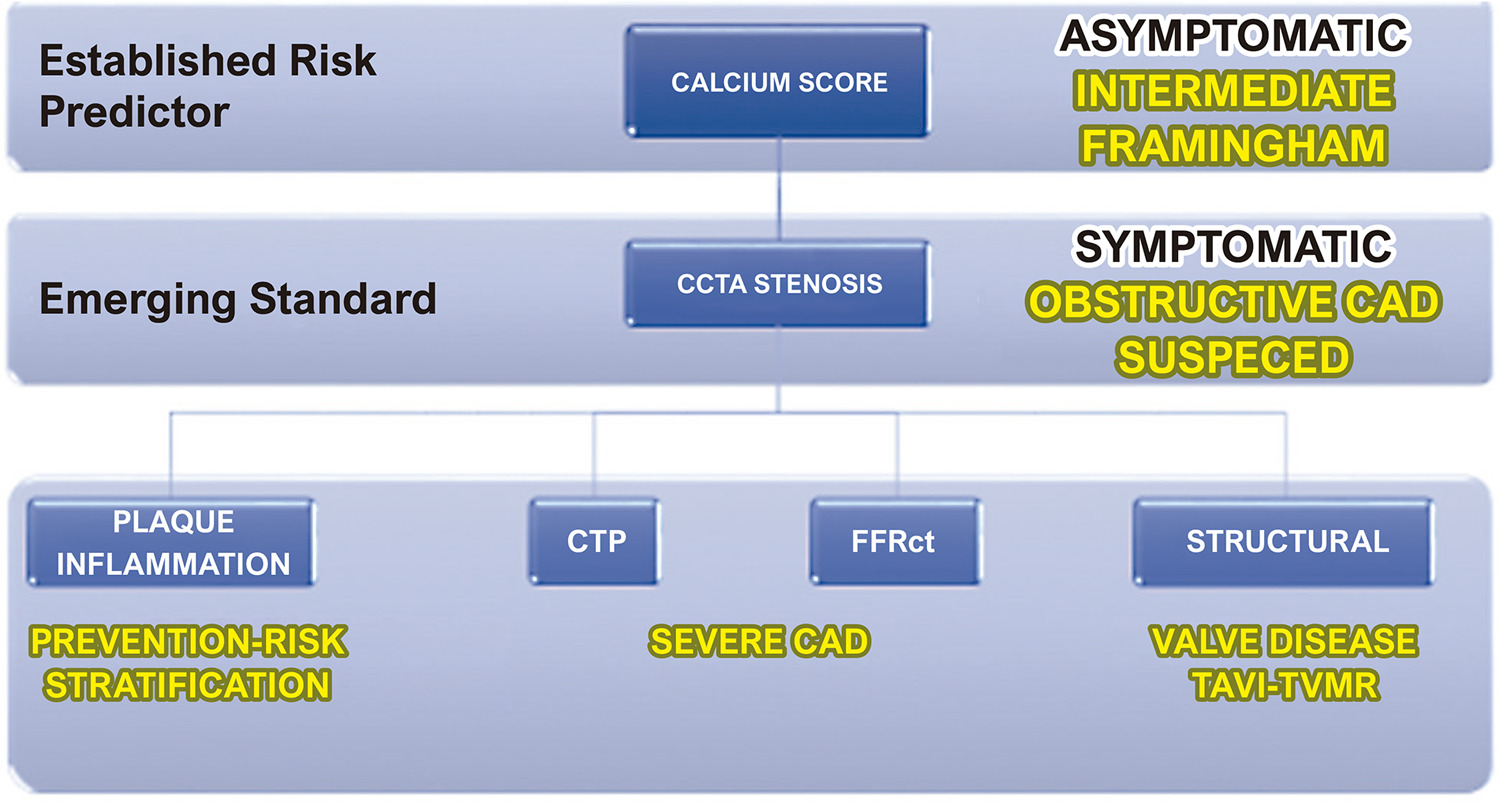
Modern non-invasive imaging techniques like cardiovascular computed tomography (CCT) and cardiovascular magnetic resonance (CMR) can diagnose and monitor a wide range of cardiovascular diseases with unprecedented accuracy and safety. – With advances in the understanding of cardiovascular diseases and increasing availability of new and revolutionary therapies, detailed and quantitative information of disease stage have become crucial for the appropriate decision-making for each patient, which is one of the pillars of personalized medicine.

As an example, we can mention the high accuracy of CCT in the diagnosis and quantification of coronary atherosclerosis and stenosis ( ), and assessment of functional significance by the fractional flow reserve (FFR) technique. Considering recent knowledge of the role of characteristics of the plaque and the global burden of the atherosclerotic plaque involving the coronary tree on the prognosis of coronary artery disease (CAD), CCT has turned out to be a key tool in therapeutic decision making, be it for stenosis revascularization, be it for prevention of adverse cardiovascular events. Another example is the ability of CCT in monitoring the response of atherosclerotic plaques to advanced therapies, like those including PCSK9 inhibition by monoclonal antibodies or RNA interference. – , –

[…]

  • Atherosclerosis
  • Coronary Artery Disease
  • Coronary stenosis
  • Diagnostic Imaging/trends/methods
  • Early diagnosis
  • Fhenotype
  • Genotype
Read Full Article
Creative Commons Attribution (CC BY) Creative Commons license
06/03/2023 DOI: 10.36660/abc.20230021
Editorial

Beetroot Juice May Be a Dietary Ingredient to Protect Vascular Endothelium

Roberto J. S. Franco

The first Dietary Recommendations originated in 1941 by order of President Franklin Roosevelt, when he convened the “National Conference on Nutrition in Defense” to guarantee a population fit for war, minimizing diseases due to deficiency of nutrients.In the same year, the American Medical Association declared that “nutrition research should be encouraged” with primary objectives of “estimating the amounts of essential nutrients in foods,” “detection of nutritional deficiency states,” and more precise determination of “optimal and minimum requirements” for each nutrient.

In humans, after absorption through the stomach wall, 25% of the nitrate consumed enters the entero-salivary circulation, where it is reduced to nitrite (NO2) by bacterial nitrate reductases of facultative anaerobes on the dorsal surface of the tongue. , This nitrite is swallowed and, in the stomach’s acidic environment, is reduced to nitric oxide (NO) or re-enters the circulation as nitrite. Thus, dietary nitrate may represent an intravascular source of the pleiotropic vasoprotective molecule NO and acts as a potent dilator of blood pressure and delays atherogenesis by inhibiting the recruitment of inflammatory cells and platelet aggregation. Thus, protecting the vascular endothelium influences numerous cardiovascular pathologies (prehypertension, hypertension, atherosclerosis, and stroke) associated with endothelial dysfunction and decreased NObioactivity. Recently, studies have shown that nitrite confers marked protection against ischemia/reperfusion (I/R) injury to the myocardium, kidney, lung, and cerebral vasculature. ,

[…]

  • Beta Vulgaris
  • Endothelium, Vascular
  • Oxide Nitric
  • Reactivity
  • stability
Read Full Article
Creative Commons Attribution (CC BY) Creative Commons license
13/02/2023 DOI: 10.36660/abc.20220906 Views 1
Editorial

Reducing Sex Disparities in STEMI Care and Outcomes: Turning the Tide for Women

F. Aaysha Cader et al. Cristina Gavina

Despite improvements in acute coronary syndromes (ACS) care, globally, sex disparities remain.Women with ST-segment elevation myocardial infarction (STEMI) present later, receive suboptimal care, and have worse outcomes than men. –

In a single-center retrospective analysis of 809 STEMI patients undergoing primary PCI in Braga, Portugal, Oliveira et al. reported sex disparities in presentation, management, and outcomes.Although ischemic heart disease and coronary death incidence are lower in Portugal than in other European countries,cardiovascular death remains the main cause of mortality.

[…]

  • acute coronary syndromes
  • Sex Disparities
  • ST Elevation Myocardial Infarction
  • Women
Read Full Article
Creative Commons Attribution (CC BY) Creative Commons license
13/02/2023 DOI: 10.36660/abc.20220884 Views 1
Figure 1
Image

Tuberous Sclerosis: Unusual Findings in the Setting of a Rare Disease

Ines Oliveira et al. Rafaela Lopes Isabel Cruz Bruno Bragança … João Azevedo Aurora Andrade

Case Description

A 40-year-old woman diagnosed with tuberous sclerosis (TS) at the age of one, with cognitive impairment, epilepsy and renal angiomyolipomas, was referred to Cardiology for complaints of fatigue. She had no known family history of TS. Although her mother could not confirm if a genetic test had been performed, the patient had a definite diagnosis of TS, according to International Tuberous Sclerosis Consensus Group revised criteria, due to the presence of several major criteria, as hypomelanotic macules, facial angiofibromas, cortical dysplasia and subependymal nodules.

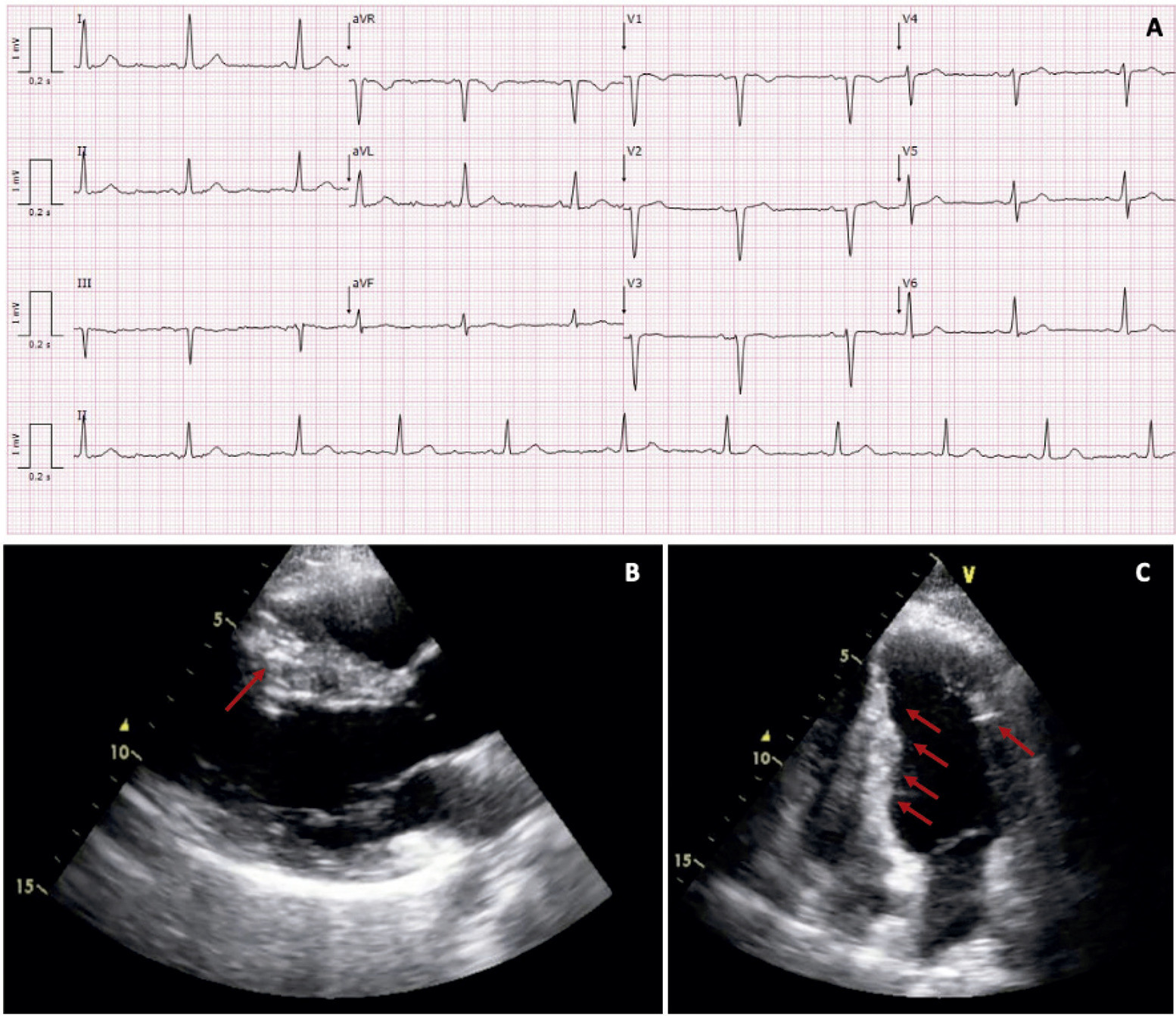
On cardiovascular evaluation, she had no dyspnea on exertion, chest pain, palpitations or history of syncope. On physical examination, she had multiple cutaneous angiofibromas and hypomelanotic macules, cardiac auscultation with no murmurs or signs of congestion. Electrocardiogram (ECG) showed nonspecific repolarization abnormalities ( ) and no arrhythmic events were detected by the Holter method. Transthoracic echocardiography revealed the presence of multiple intracardiac hyperechogenic lesions, with no blood flow obstruction or valvular impairment, and preserved ventricular systolic function ( ). Cardiac magnetic resonance (CMR) showed the nature of the lesions ( ) – homogeneous high signal intensity in T1 and T2-weighted images (A, B, C), with uniform suppression with the application of fat-saturation pulses, with an intensity similar to adipose tissue (D). The lesions also showed chemical shift , revealing its lipomatous nature (F). No evidence of perfusion, late gadolinium enhancement (E) or other masses. The patient remained asymptomatic after five years of follow-up, performing an annual ECG and echocardiogram, with no increase in the number or size of lipomas.

[…]

  • Atherosclerosis
  • Diagnostic Imaging
  • Familial Multiple Lipomatosis
  • Neoplasms
  • Tuberous Sclerosis/complications
  • Tumor Supressor/genetics
Read Full Article
Creative Commons Attribution (CC BY) Creative Commons license
13/02/2023 DOI: 10.36660/abc.20220147
Editorial

Takayasu’s Arteritis: Is Age a Differential Factor in the Diagnosis, Follow-Up, and Treatment of the Disease?

Fernanda Luciano Rodrigues

Takayasu’s arteritis (TAK) is a large-vessel inflammatory vasculitis, mainly affecting the aorta, its main divisional branches, and pulmonary arteries, being classically presenting in females aged 20 to 40 years. – TAK often presents with nonspecific symptoms such as fever, fatigue, abdominal pain, and weight-loss. ,

TAK is a difficult condition to deal with. Early identification of this disease is difficult and necessitates clinical suspicion and vigilance. Radiologic methods can identify diseased vessels but fail to distinguish between active and chronic lesions.Systemic vasculitis can lead to irreversible scars in affected organs, which may be caused by disease activity and/or therapeutic approaches such as corticosteroids and other immunosuppressives.Glucocorticoids remain the most effective and serve as a cornerstone first-line treatment.

[…]

  • Diagnosis
  • Glucocorticoids
  • Takayasu Arteritis
Read Full Article
Creative Commons Attribution (CC BY) Creative Commons license
13/02/2023 DOI: 10.36660/abc.20220877
Editorial

Revisiting the QT Interval: An Old Marker for a New Disease?

Luiz Eduardo Montenegro Camanho

The SARS-Cov-2 (Covid-19) infection had its first cases reported in December 2019 in China and quickly spread worldwide, being announced as a pandemic in March 2020 by the World Health Organization. Respiratory manifestations are classic; however, cardiovascular complications can occur due to an indirect cardiac involvement or a direct action of the virus in the myocardial tissue. Consequently, we can find heart failure, myocarditis, arrhythmias, and cardiogenic shock.

The QT interval, measured from the beginning of the QRS complex to the end of the T wave, represents the process of ventricular depolarization and repolarization and varies with heart rate. Normal values for the corrected QT interval (QTc) would be≥450 ms in men and≥460 ms in women. Prolongation of the QTc interval≥500 ms is strongly associated with the occurrence of malignant arrhythmias and sudden death. Every 10 ms of QTc interval increment, there is a 5 to 7% increase in the risk of torsade de Pointes (TdP); every 20 ms, there is a substantial imminent risk.

[…]

  • Long QT
  • Long QT Syndrome
  • QT interval
Read Full Article
Creative Commons Attribution (CC BY) Creative Commons license
13/02/2023 DOI: 10.36660/abc.20220878 Views 1
Editorial

Pharmacoinvasive Strategy in ST-elevation Myocardial Infarction: Particularities in the Elderly

Fernando Cesena

Managing myocardial infarction (MI) in older people differs from treating younger individuals. In the elderly, MI presentation is often atypical, more complex, and has a worse prognosis. Not only do the disease severity and the prevalence of comorbidities tend to be higher in the elderly, but adverse events from treatments are also more frequent, particularly bleeding facilitated by different antithrombotic medications. Moreover, decreased renal function and the higher susceptibility to drug interactions due to the concomitant use of multiple medications potentiate the chance of bad outcomes.

In ST-elevation MI (STEMI), fibrinolysis followed by the early percutaneous coronary intervention (PCI) to optimize coronary reperfusion, the so-called pharmacoinvasive strategy, is a guideline-recommended therapy when timely PCI is not available. –

[…]

  • Aged
  • Myocardial Revascularization
  • Percutaneous Coronary Intervention
  • ST Elevation Myocardial Infarction
  • Thrombolytic THerapy/methods
Read Full Article
Creative Commons Attribution (CC BY) Creative Commons license
13/02/2023 DOI: 10.36660/abc.20220885
Figure 1
Research Letter

Ten-Year Survival of Heart Failure Patients with Left Ventricular Ejection Fraction of 40-59%: A Potential Phenotypic Classification?

Luiz Claudio Danzmann et al. Luiz Carlos Bodanese Aline Petracco Petzold Anna Paula Tscheika … Ellen Hettwer Magedanz Lucas Celia Petersen Evgeny Belyavskiy Fernanda Lourega Chieza

Abstract

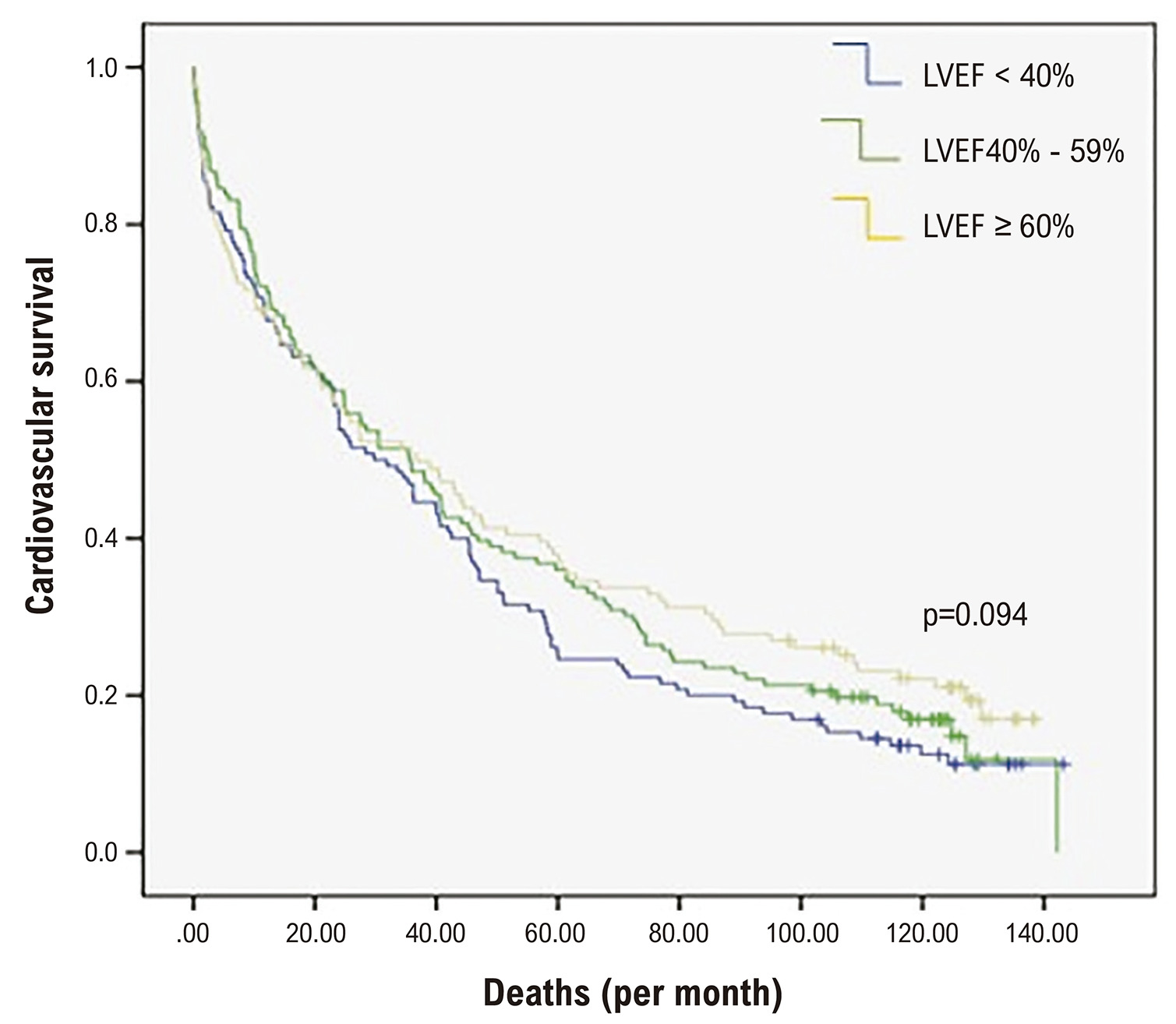
Definitions of left ventricular ejection fraction (LVEF) cut-off values for HF with mildly reduced LVEF (HFmrEF) have been a subject of debate, in the face of evidence that some drugs used in the treatment of HF with LFEV < 40% (HFrEF) are also effective in patients with LVEF < 60%. The aim of this study was to compare overall survival and cardiovascular survival in HF patients with LVEF of 40-59% in patients with HFrEF and HF with LVEF ≥ 60%. Patients with decompensated HF who met the Framingham diagnostic criteria at hospital admission between 2009 and 2011 were included. Patients were divided into HFrEF, HF with LVEF 40-59%, and HF with LVEF ≥ 60%. The Kaplan-Meier was used to determine ten-year overall survival and cardiovascular survival. The statistical significance was established at p<0.05. A total of 400 patients were included, with a mean age of 69 ± 14 years. Cardiovascular survival in patients with HF and LVEF of 40-59% was not significantly different than in patients with HFrEF (adjusted Hazard Ratio [HR] 0.86; 95% Confidence Interval [CI] 0.61-1.22, Ptrend = NS), but was statistically different compared with patients with LVEF ≥ 60% (adjusted HR of 0.64; 95% CI 0.44-0.94, Ptrend = 0.023). No difference was found in 10-year survival between the LVEF groups. Patients with HF and LVEF ≥ 60% had significantly higher cardiovascular survival compared with the other groups.

  • Heart Failure
  • Mortality
  • Stroke Volume
  • Survival
Read Full Article
Creative Commons Attribution (CC BY) Creative Commons license
13/02/2023 DOI: 10.36660/abc.20210772
Editorial

Diabetes Mellitus, Physical Exercise and Heart Rate Variability

Gustavo Augusto Ferreira Mota et al. Mariana Gatto Luana Urbano Pagan Suzana Erico Tanni Marina Politi Okoshi

The prevalence of diabetes mellitus (DM) has grown in recent decades.Risk factors for developing DM have been well established in clinical studies. Among these, sedentary lifestyles, aging and obesity stand out.DM, defined by increased plasma glucose concentration, is commonly accompanied by cardiovascular alterations such as hypertension, coronary disease, heart failure, and cardiac autonomic neuropathy.As cardiovascular diseases are currently the main causes of death and morbidity, studies aimed at better understanding the pathophysiological mechanisms inherent in DM are of great importance.

Cardiac autonomic neuropathy is characterized by changes in fibers that innervate the heart and blood vessels. , In this condition, changes in nerve function lead to reduced heart rate variability and altered baroreflex sensitivity.Physical exercise is considered an important non-pharmacological therapy to help prevent and control DM and its clinical consequences.Researchers have recently observed that exercise can also prevent and treat cardiac autonomic neuropathy.

[…]

  • Aged
  • Diabetes Mellitus/prevention and control
  • Exercise
  • Heart Rate
  • Obesity
  • Risk Factors
  • Sedentary Behavior
Read Full Article
Creative Commons Attribution (CC BY) Creative Commons license
13/02/2023 DOI: 10.36660/abc.20220902 Views 1
Editorial

The Rare Alternans Pre-Excitation Pattern: Is It a Genuinely Benign Phenomenon?

Mirella Facin et al. Nelson Samesima

The conduction system is a specialized myocardial cell arrangement that neatly generates and transmits electrical stimuli, leading to sequentially coordinated contractions in each cardiac cycle.A thick layer of fibrous tissue, the annulus fibrosus, almost entirely insulates the atrial from the ventricular myocardia, except in the region of the atrioventricular (AV) node and His-Purkinje system, which, in normal hearts, stands as the single electric pathway between the upper and lower chambers. ,

In some individuals, however, threads of myocardial tissue directly connecting atria to ventricles remain from previous developmental stages and endure after childbirth.The presence of additional atrioventricular conduits or accessory pathways (AP) allows the electrical stimuli to bypass the AV node, resulting in earlier activation of the ventricles or pre-excitation. Bypass tracts may cross the atrioventricular groove wherever atrial and ventricular myocardium are juxtaposed. Most are capable of bidirectional and non-decremental conduction and may serve as a limb to reentrant orthodromic/antidromic circuits or fast lanes for impulse transmission during other supraventricular tachycardias, such as atrial fibrillation (AF).

[…]

  • atrioventricular node
  • Prevalence
  • Risk Grade
  • Wolff-Parkinson White Syndrome
Read Full Article
Creative Commons Attribution (CC BY) Creative Commons license
10/02/2023 DOI: 10.36660/abc.20220864 Views 1
Editorial

Improving Cardiopulmonary Resuscitation

Paolo Blanco Villela

Cardiopulmonary arrest (CRA) is the most serious event in the health area and its prompt recognition with the consequent initiation of cardiopulmonary resuscitation (CPR) maneuvers are essential for the return of spontaneous circulation (ROSC). Despite the absence of robust epidemiological data, a meta-analysis of 141 studies including countries in North America, Europe, Asia and Oceania, demonstrated a ROSC rate below 30% in cases of out-of-hospital CA, and concluded that the chances of success were linked to the fact that the CPR was witnessed and in cases where CPR had been initiated by a bystander.

In Brazil, according to the guideline on Cardiopulmonary Resuscitation and Emergency Cardiovascular Care of the Brazilian Society of Cardiology, the survival rates of out-of-hospital CPA, when addressed within the first 5 minutes with early defibrillation, vary between 50% and 70% two. On the other hand, in the in-hospital environment, paradoxically, survival rates are less than 20%, probably due to associated clinical conditions and the greater severity of patients, which make asystole and pulseless electrical activity the most prevalent rhythms.

[…]

  • Borg Scale
  • Cardiopulmonary Ressuscitation
  • Eletric Countershock/methods
  • Heart Arrest
  • High Fidelity Simulation Training/methods
  • Hospitalization
  • Nursing Education Research
  • Survival Rate
Read Full Article
Creative Commons Attribution (CC BY) Creative Commons license
10/02/2023 DOI: 10.36660/abc.20220900
Editorial

Persistent Chest Pain after COVID-19 Infection. Can Strain Echo Parameters Play a Role in Diagnosis and Prognostication?

Marisa Trabulo

Almost three years after the outbreak of the COVID-19 pandemic, the number of serious cases is decreasing with the large-scale implementation of the vaccine, but many long-term side effects are still affecting many patients who have previously contracted the virus.

In a 2021 meta-analysis, the five most common long-term effects of COVID-19 infection were fatigue (58%), headache (44%), attention disorder (27%), hair loss (25%), and dyspnea (24%). Chest pain was present in 16% of the patients, and a similar prevalence was found in other studies.

[…]

  • COVID-19
  • Myocarditis
  • Stress Echocardiographies
Read Full Article
Creative Commons Attribution (CC BY) Creative Commons license
10/02/2023 DOI: 10.36660/abc.20220860 Views 1
Figure 1
Diretrizes

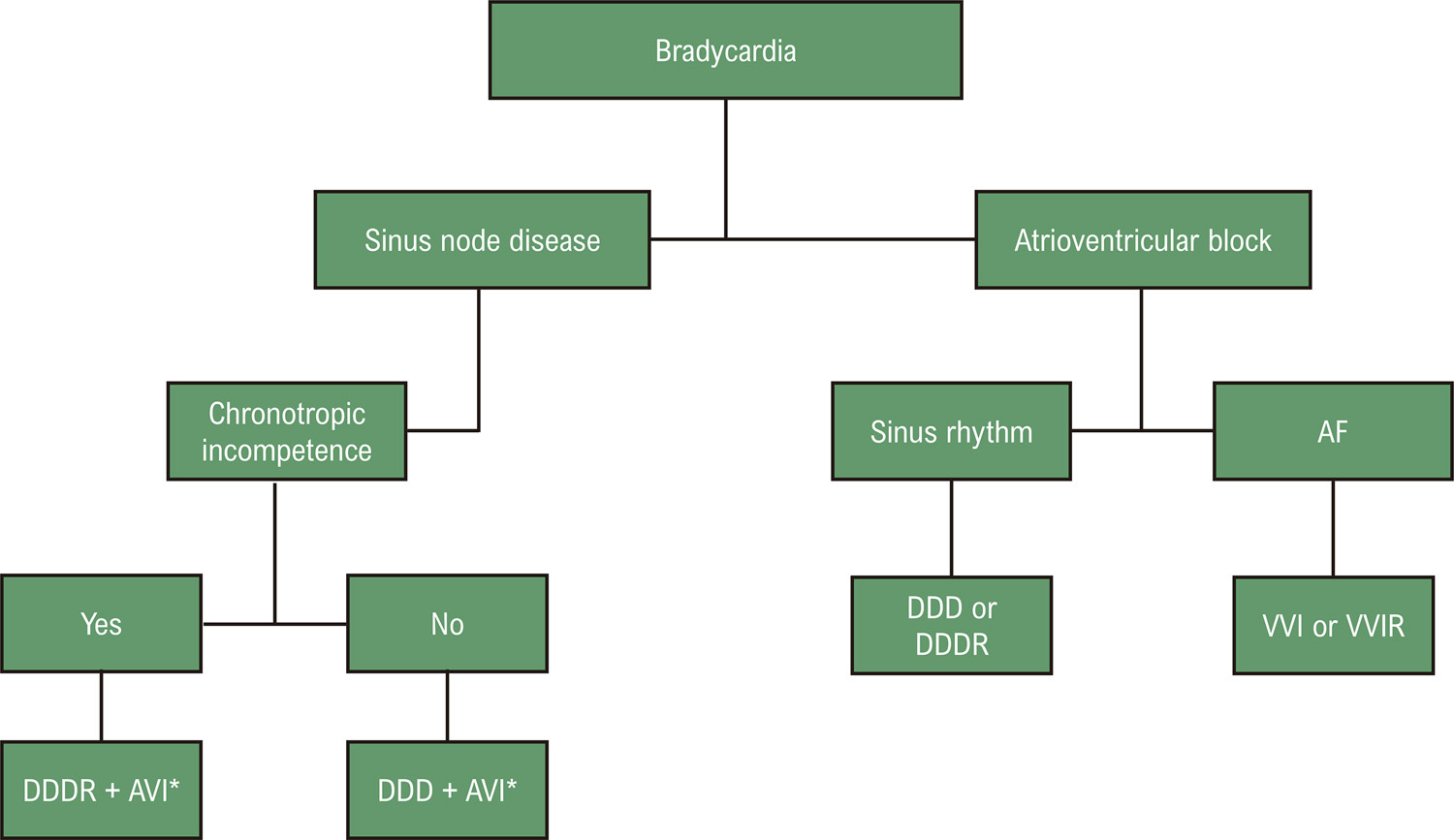
Brazilian Guidelines for Cardiac Implantable Electronic Devices – 2023

Ricardo Alkmim Teixeira et al. Alexsandro Alves Fagundes José Mário Baggio Junior Júlio César de Oliveira … Paulo de Tarso Jorge Medeiros Bruno Pereira Valdigem Luiz Antônio Castilho Teno Rodrigo Tavares Silva Celso Salgado de Melo Jorge Elias Neto Antonio Vitor Moraes Júnior Anisio Alexandre Andrade Pedrosa Fernando Mello Porto Hélio Lima de Brito Júnior Thiago Gonçalves Schroder e Souza José Carlos Pachón Mateos Luis Gustavo Belo de Moraes Alexander Romeno Janner Dal Forno Andre Luiz Buchele D’Avila Diogo Alberto de Magalhães Cavaco Ricardo Ryoshim Kuniyoshi Mauricio Pimentel Luiz Eduardo Montenegro Camanho Eduardo Benchimol Saad Leandro Ioschpe Zimerman Eduardo Bartholomay Oliveira Mauricio Ibrahim Scanavacca Martino Martinelli Filho Carlos Eduardo Batista de Lima Giselle de Lima Peixoto Francisco Carlos da Costa Darrieux Jussara de Oliveira Pinheiro Duarte Silas dos Santos Galvão Filho Eduardo Rodrigues Bento Costa Enrique Indalécio Pachón Mateo Sissy Lara De Melo Thiago da Rocha Rodrigues Eduardo Arrais Rocha Denise Tessariol Hachul Adalberto Menezes Lorga Filho Silvana Angelina D’Orio Nishioka Eduardo Barreto Gadelha Roberto Costa Veridiana Silva de Andrade Gustavo Gomes Torres Nestor Rodrigues de Oliveira Neto Fernando Antonio Lucchese Henrique Murad José Wanderley Neto Paulo Roberto Slud Brofman Rui M. S. Almeida João Carlos Ferreira Leal

Contents

1. General Recommendations 8

1.1 Operating Room 8

[…]

Read Full Article
Creative Commons Attribution (CC BY) Creative Commons license
23/01/2023 DOI: 10.36660/abc.20220892 Views 5
Figure 1
Research Letter

Spontaneous Coronary Artery Dissection: Are There Differences between Men and Women?

Teresa Alvarado et al. Marcos García-Guimaraes Juan Manuel Nogales Marcelo Jimenez-Kockar … Fernando Macaya Fernando Alfonso

Introduction

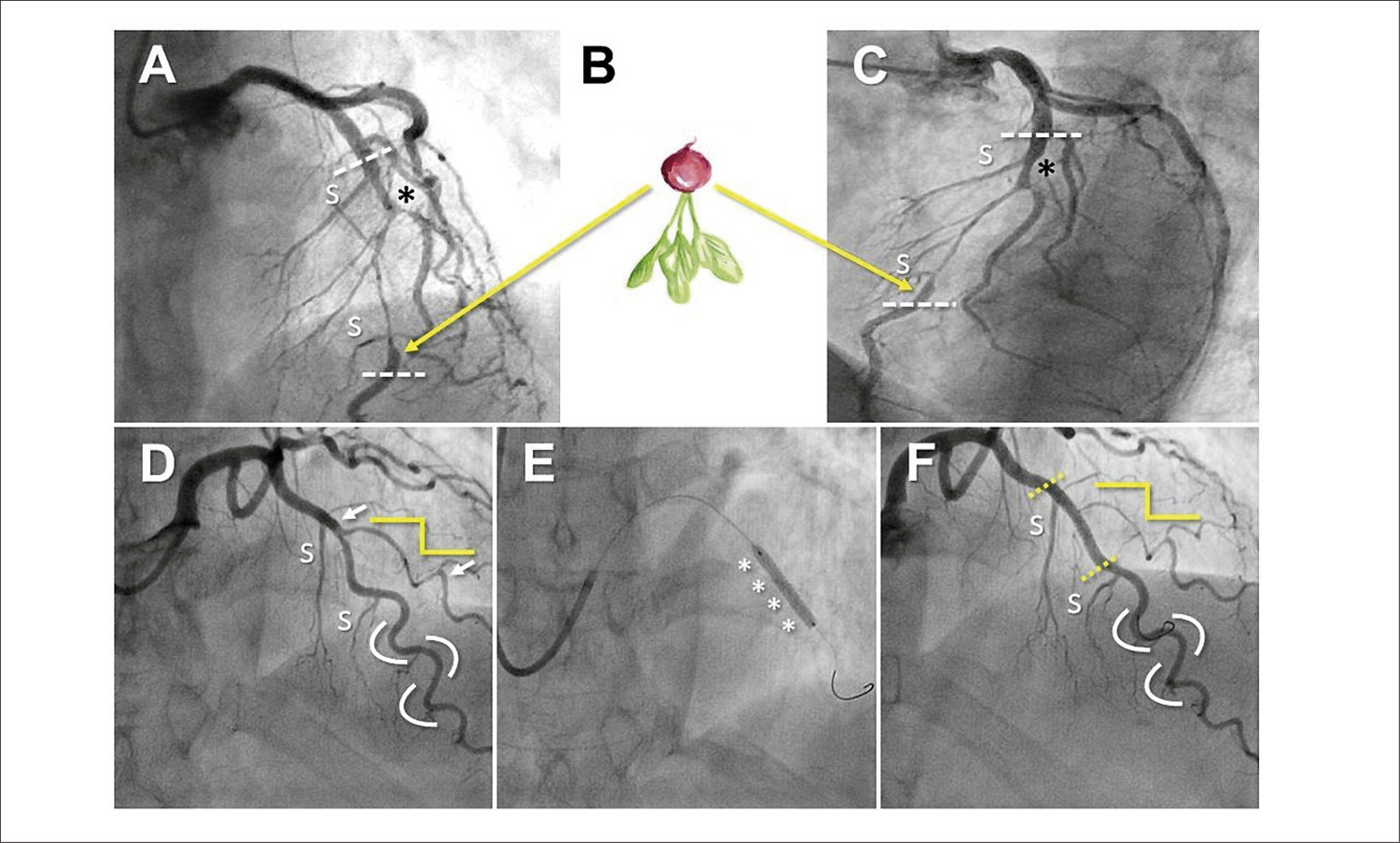
Spontaneous coronary artery dissection (SCAD) is an infrequent but increasingly recognized cause of acute coronary syndrome (ACS) that mainly affects women. It is the main cause of ACS during pregnancy and in up to one-third of women > 50 years old., Owing to a unique demographic profile and a low prevalence of traditional cardiovascular risk factors, its cause appears to be multifactorial, with contributions from genetic factors, hormonal influences, inherited or acquired arteriopathies, and systemic inflammatory diseases. SCAD is defined as a spontaneous – non-iatrogenic – separation of the coronary artery wall layers. Two main mechanisms could explain the pathophysiology of SCAD. In the first one, the primary event is hemorrhage within the media without intimal rupture; in the second mechanism, the primary event is the formation of a tear leading to an intimal flap. This initial disruption leads to the formation of an intramural hematoma or a true and false lumen that may cause myocardial ischemia., Our understanding of this disease has increased greatly in the last decade as a result of international research efforts., However, since ~90% of the cases affect women, the characteristics of SCAD in men and the potential clinical differences between sex remain poorly established. According to previous data, men with SCAD have different predisposing and precipitating factors compared to women. The presence of fibromuscular dysplasia (FMD) and an association with mental disorders seem to be less frequent in men, while intense physical exercise is most commonly observed as a trigger of SCAD in this group., The aim of this study was to compare baseline characteristics, clinical presentation, angiographic features, management strategies, and hospital course between men and women with SCAD.

[…]

  • Acute coronary syndrome
  • Arteries Dissection
  • Fibromuscular Dysplasia
  • Gender Diversity
  • Multicenter Study
Read Full Article
Creative Commons Attribution (CC BY) Creative Commons license
09/01/2023 DOI: 10.36660/abc.20210550
Original Article

Prolongation of the QTc Interval at Admission is Associated with Increased Mortality in Patients with SARS-COV-2 during Hospitalization

Stephany Barbosa et al. Oscar Mauricio Muñoz Alejandra Cañas Angel Alberto Garcia

Abstract

Background

Cardiovascular involvement associated with SARS-COV-2 infection is related to unfavorable outcomes during hospitalization. Therefore, the measurement at the admission of the QTc interval on the 12-lead electrocardiogram may be a prognostic marker.

Objective

To identify the relationship between QTc prolongation at admission during hospitalization and mortality from SARS-COV-2.

Method

Observational study based on a retrospective cohort of patients with confirmed SARS-COV-2 infection from San Ignacio University Hospital, Bogotá (Colombia), between March 19, 2020, and July 31, 2021. Mortality was compared in patients with prolonged and normal QTc at admission after controlling by clinical variables and comorbidities using bivariate and multivariate logistic regression models. A p-value <0.05 was considered statistically significant.

Results

1296 patients were analyzed, and 127 (9.8%) had prolonged QTc. Mortality was higher in patients with prolonged QTc (39.4% vs 25.3%, p=0.001), as was hospital stay (median 11vs.8 days; p=0.002). In the multivariate analysis, mortality was associated with prolonged QTc (OR 1.61, 95% CI: 1.02; 2.54, p=0.038), age (OR 1.03, 95% CI 1.02; 1.05, p<0.001), male sex (OR 2.15, 95% CI 1.60; 2.90, p 3 (OR 1.49, 95% CI 1.03; 2.17, p=0.035).

Conclusions

Hospital mortality due to SARS-COV-2 is associated with prolonging the QTc interval at the time of admission, even after adjusting for age, sex, comorbidities, and basal severity of infection. Additional research is needed to establish whether these findings are related to cardiac involvement by the virus, hypoxia, and systemic inflammation.

  • COVID-19
  • Electrocardiography
  • Mortality
Read Full Article
Creative Commons Attribution (CC BY) Creative Commons license
09/01/2023 DOI: 10.36660/abc.20220155
Figure 1
Original Article

The Use of the Borg Rating of Perceived Exertion Scale in Cardiopulmonary Resuscitation

Lucia Tobase et al. Heloisa Helena Ciqueto Peres Thatiane Facholi Polastri Sandra Helena Cardoso … Dhieizom Rodrigo Souza Debora Gugelmin Almeida Sergio Timerman

Abstract

Background

A cardiopulmonary arrest is a critical event whose survival rate is related to the quality of resuscitation maneuvers combined with the use of technology. It is important to understand the perception of fatigue during this procedure, aiming to improve the effectiveness of compressions to increase the chances of survival.

Objectives

To apply the Borg rating of perceived exertion scale (Borg scale) to analyze the exertion perceived by nurses during cardiopulmonary resuscitation maneuvers using a feedback device.

Methods

Experimental study with a randomized distribution of nurses in a teaching hospital. Perceived exertion during simulated cardiopulmonary resuscitation with/without a feedback device was assessed using the Borg scale. The statistical significance level of 5% was adopted.

Results

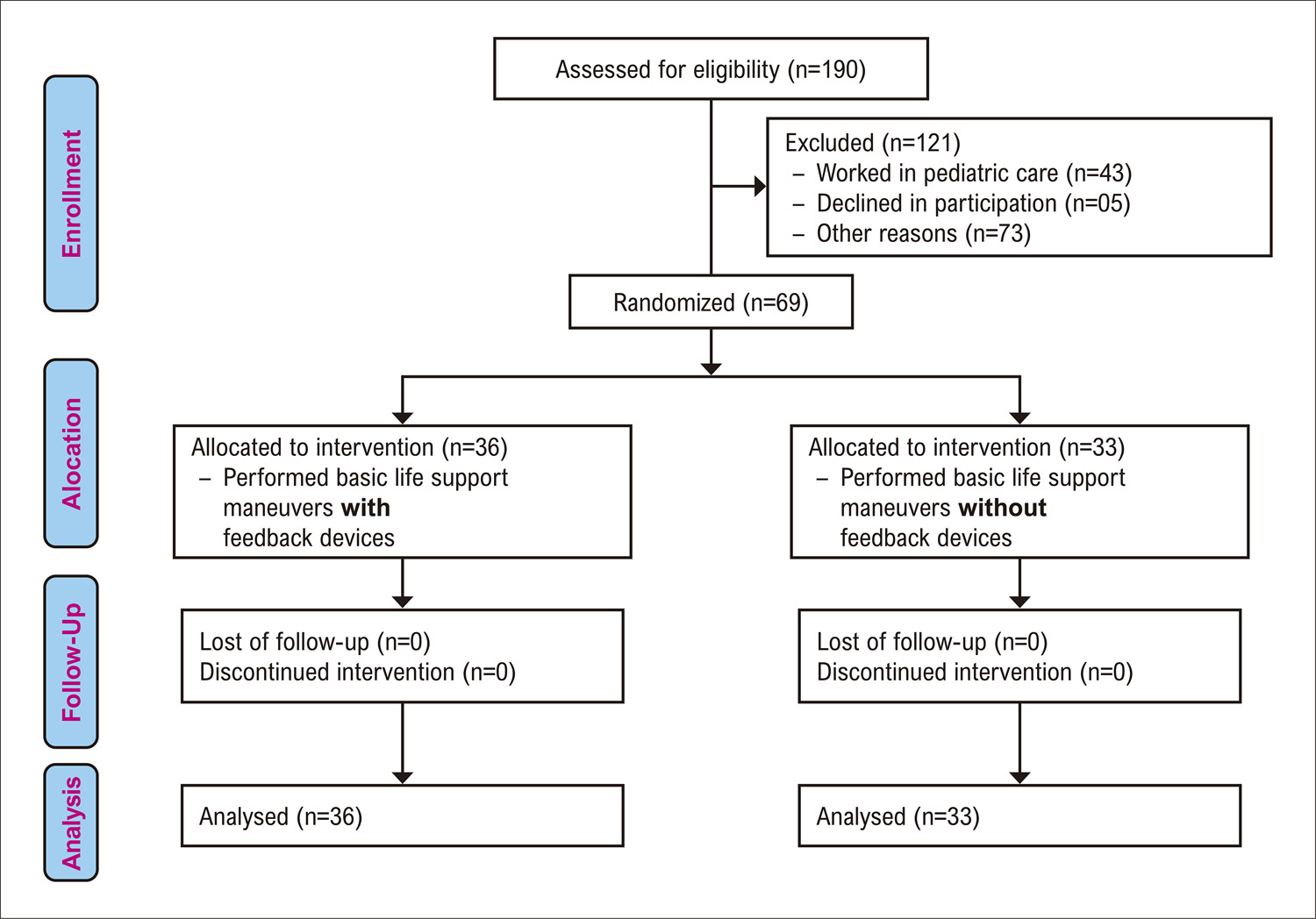
69 nurses working in critical and non-critical adult care units were included. Perceived exertion and heart rate were lower in the intervention group (p<0.001), influenced by the feedback device, with no significant difference between critical and non-critical units.

Conclusions

The Borg scale proved to be adequate for the proposed objectives. The feedback device contributed to lower exertion and heart rate reduction during resuscitation maneuvers. The low cost and ease of application favor its use during training and real-time resuscitation attempts to assess performance using a feedback device to reduce exertion and perception of fatigue. It allows reflection on the intervening factors and resources that can influence the quality of resuscitation attempts and the chances of survival.

  • Cardiopulmonary Resuscitation
  • Emergencies
  • Heart Arrest
  • Nursing Care
  • Physical Exertion
Read Full Article
Creative Commons Attribution (CC BY) Creative Commons license
09/01/2023 DOI: 10.36660/abc.20220240 Views 1
Figure 1
Original Article

Pharmacoinvasive Strategy in Elderly Up to 75 Years or Non-Elderly: Analysis of Biochemical and Cardiac Magnetic Resonance Imaging Parameters

Amanda S. Bacchin et al. Francisco A. H. Fonseca Rui Povoa Gilberto Szarf … Ibraim Masciarelli Pinto Adriano Mendes Caixeta Daniela Teixeira Ieda Longo Maugeri Mayari E. Ishimura Maria E. R. Coste Henrique Tria Bianco Carolina N. França Maria Cristina Izar

Abstract

Background

Pharmacoinvasive strategy is an alternative when primary percutaneous coronary intervention (PCI) is not feasible.

Objectives

This study aimed to evaluate the effects of early pharmacoinvasive strategy on the infarct size and left ventricular ejection fraction in elderly and non-elderly patients. The role of inflammatory markers was also examined.

Methods

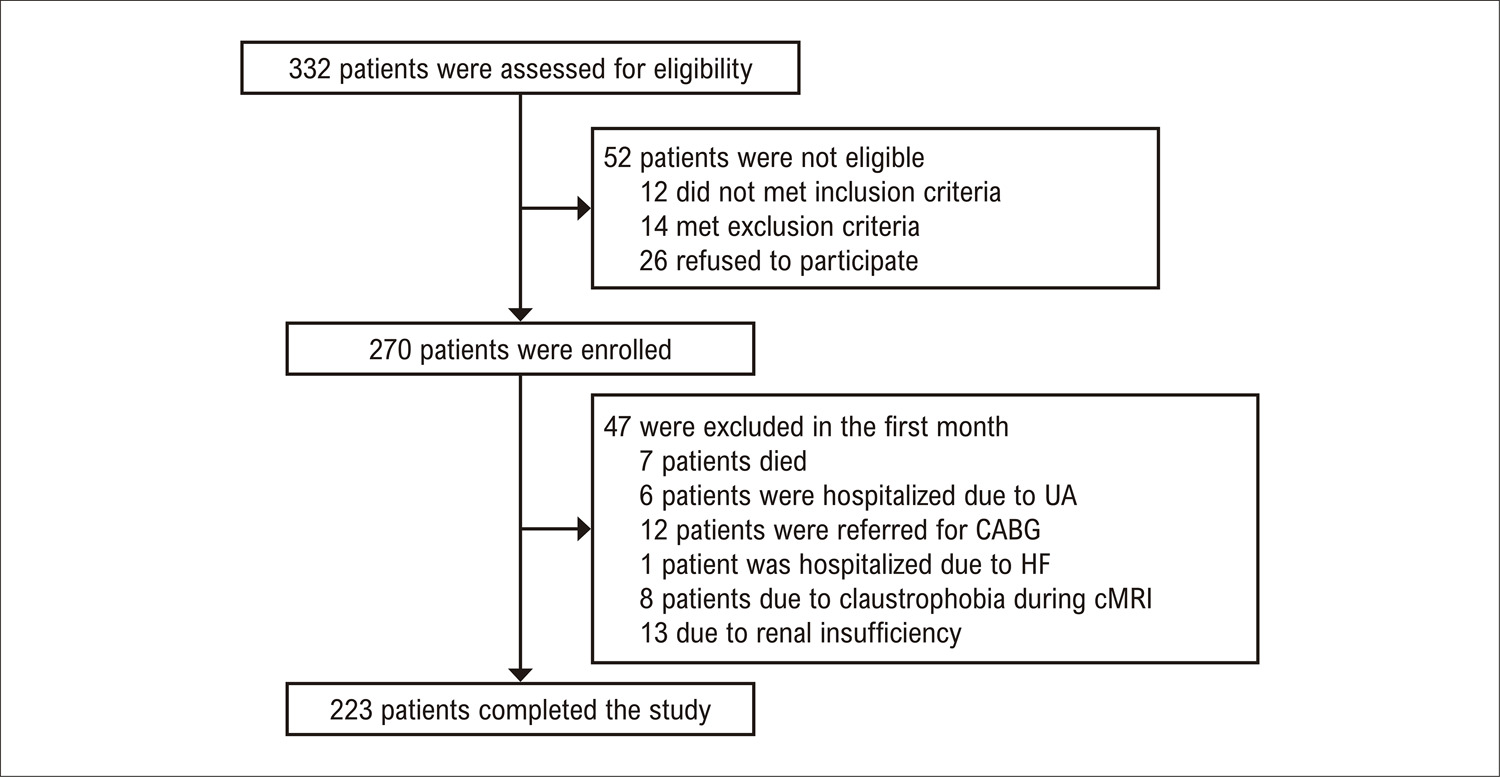
Patients (n=223) with ST segment elevation myocardial infarction (STEMI) were prospectively included and submitted to pharmacological thrombolysis in the first six hours, and underwent coronary angiogram and PCI when necessary, in the first 24 hours. Blood samples were collected in the first day (D1) and after 30 days (D30). Cardiac magnetic resonance imaging (cMRI) was performed at D30. Significance was set at p<0.05.

Results

Elderly and non-elderly patients showed similar percentage of infarcted mass (13.7 [6.9-17.0] vs. 14.0 [7.3-26.0], respectively, p=0.13) (median [interquartile range]). However, elderly patients had better left ventricular ejection fraction (53 [45-62] vs. 49 [39-58], p=0.025). Titers of interleukin (IL)1beta, IL-4, IL-6, and IL-10 did not differ between D1 and D30, but elderly patients had higher titers for IL-18 at D1 and D30. Absolute numbers of B and T lymphocytes were similar in both groups at D1 and D30, but elderly patients had higher neutrophil/lymphocyte ratio at D30. Multivariate linear regression analysis of cMRI outcomes in the whole population showed that the independent predictors were not different between elderly and non-elderly patients.

Conclusion

Pharmacoinvasive strategy in elderly patients was associated with small differences in inflammatory parameters, similar infarct size and better left ventricular function than non-elderly patients.

  • Cytokines
  • Lymphocytes
  • ST Elevation Myocardial Infarction
Read Full Article
Creative Commons Attribution (CC BY) Creative Commons license
09/01/2023 DOI: 10.36660/abc.20220177 Views 1
Central Illustration
Research Letter

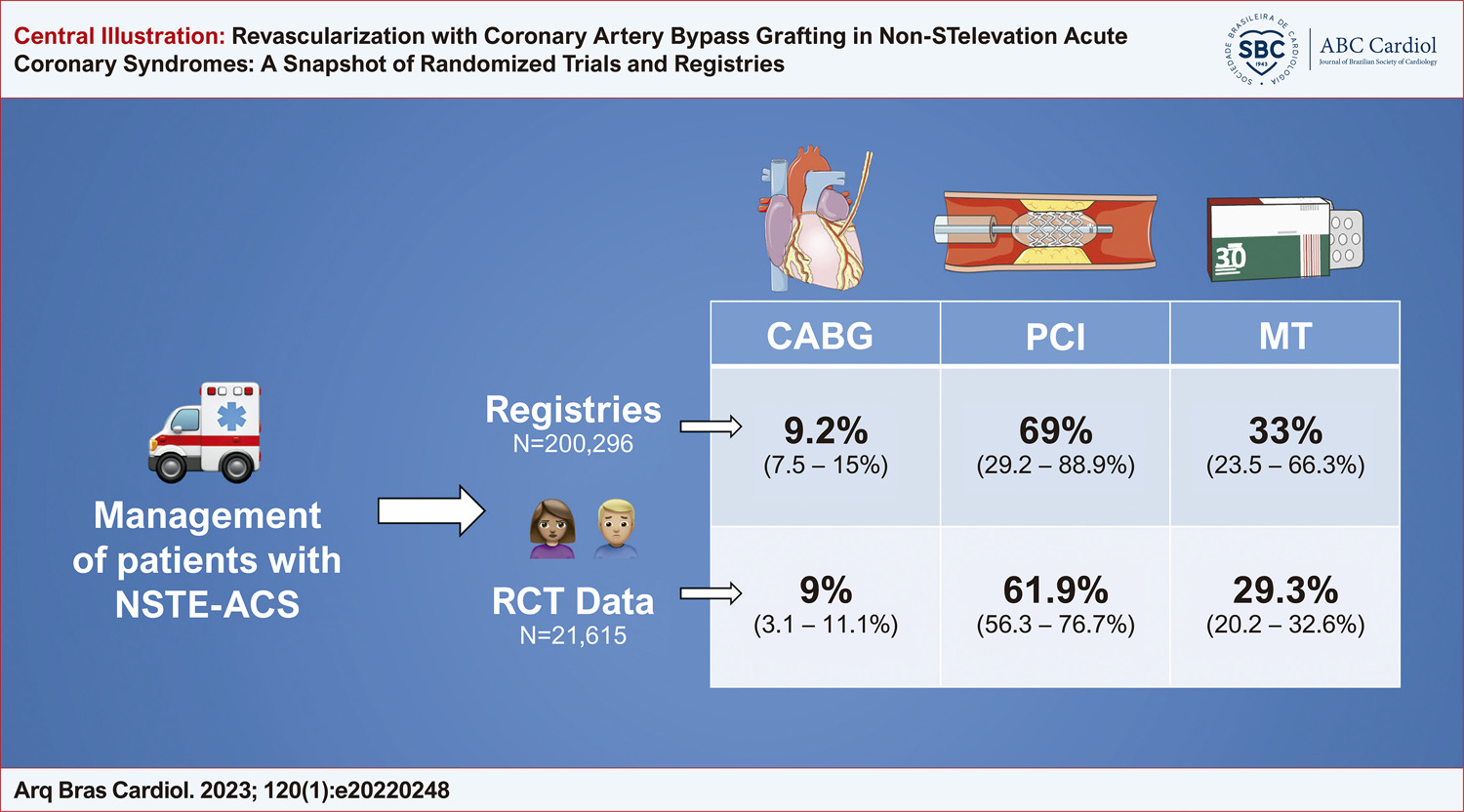
Revascularization with Coronary Artery Bypass Grafting in Non-ST-elevation Acute Coronary Syndromes: A Snapshot of Randomized Trials and Registries

Josip Andelo Borovac et al. Jerko Ferri-Certic Dino Miric Jaksa Zanchi … Mislav Lozo Anteo Bradaric Konstantin Schwarz Chun Shing Kwok

A recent European Society of Cardiology (ESC) guidelines for the management of patients presenting with acute coronary syndromes (ACS) without persistent ST-segment elevation (NSTE-ACS) do not recommend routine pretreatment with a P2Y12 receptor antagonist in patients in which the coronary anatomy is undetermined, and early invasive management is planned (class recommendation III, level of evidence A). The rationale for such recommendation was mainly based on the results obtained from two large randomized trials, ACCOAST and ISAR-REACT 5, and analysis from the Swedish Coronary Angiography and Angioplasty Registry (SCAAR), showing that administration of P2Y12 inhibitor before the knowledge of coronary anatomy in patients with NSTE-ACS did not improve ischemic outcomes and significantly increased risk of bleeding.

Some of the clinical concerns associated with upstream platelet inhibition in NSTE-ACS are based on the notion that such a strategy might be harmful in patients with other conditions mimicking NSTE-ACS, such as aortic dissection or may be at risk for major or fatal bleeding events such as intracranial bleeding. Likewise, NSTE-ACS patients who would need to undergo coronary artery bypass graft (CABG) surgery after their coronary anatomy is visualized by diagnostic coronary angiography might be at increased risk of bleeding complications and procedural delays due to receipt of P2Y12 inhibitor pretreatment since 3 to 7 days are required to allow for recovery of platelet function prior to CABG. Furthermore, there are complex discretion factors in real-life, such as surgical hesitancy or decline to operate on a patient on a current dual antiplatelet treatment (DAPT). It should also be noted that non-CABG-related bleeding is a relevant concern for clinicians, such as gastrointestinal bleeding or catheterization access bleeding, and these complications are likely to be more frequent with pretreatment use. Since the latest ESC guidelines state that “pretreatment strategy might be harmful to a relevant proportion “of such patients, we sought to determine what exactly is the proportion of patients with NSTE-ACS that were referred to CABG surgery following angiography and we report on the prevalence of high-risk features that might predispose them to a potential receipt of surgical revascularization.

[…]

  • Angiography
  • Myocardial Infarction
  • Purinergic P2Y Receptor Antagonists
Read Full Article
Creative Commons Attribution (CC BY) Creative Commons license
09/01/2023 DOI: 10.36660/abc.20220248
Figure 1
Original Article

ST-Segment Elevation Myocardial Infarction Differences between Genders – A Single Center Retrospective Analysis

Cátia Costa Oliveira et al. Filipe Vilela Carlos Braga João Costa Jorge Marques

Abstract

Background

Although outcomes in patients with ST-segment elevation myocardial infarction (STEMI) undergoing primary percutaneous coronary interventions (PCI) have improved, women show higher mortality.

Objectives

To assess gender differences in presentation, management and in-hospital mortality, at 30-days, 6-months and 1-year after STEMI.

Methods

We retrospectively collected data from 809 consecutive patients treated with primary PCI and compared the females versus males at the local intervention cardiology database. The level of significance used was p<0.05.

Results

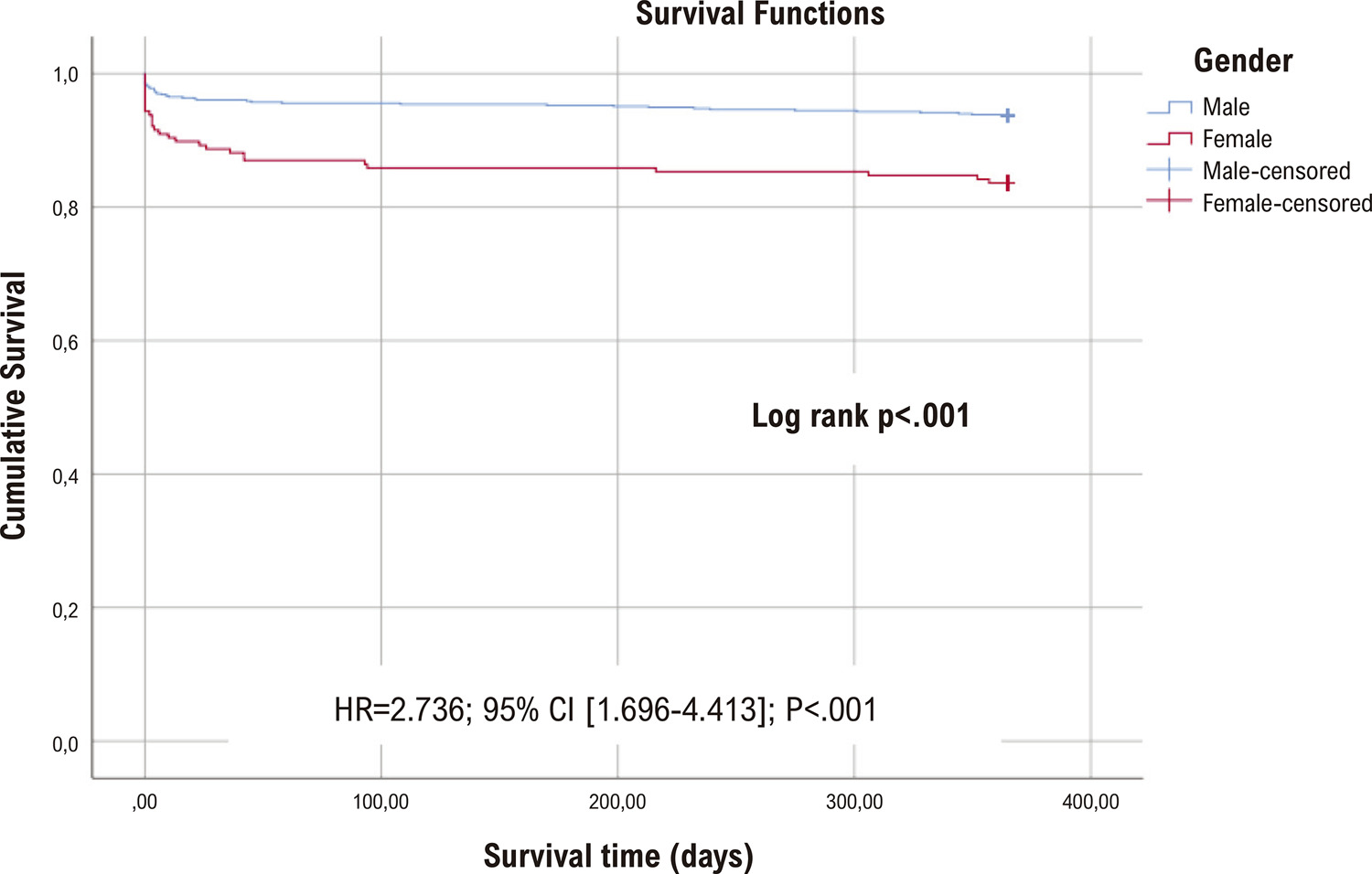
Women were older than man (69,1±14,6 vs. 58,5±12,7 years; p<.001) with higher prevalence of age over 75 years (36.7% vs. 11.7%; p<.001), diabetes (30,6% vs. 18,5%; p=.001), hypertension (60.5% vs. 45.9%; p=.001), chronic kidney disease (3.4% vs. 0.6%; p=.010) and acute ischemic stroke (6.8% vs. 3.0%; p=.021). At presentation, women had more atypical symptoms, less chest pain (p=.014) and were more frequently in cardiogenic shock (p=.011)). Women had longer time until reperfusion (p=.001) and were less likely to receive optimal medical therapy (p<0.05). In-hospital mortality (p=.001), at 30-days (p<.001), 6-months (p<.001) and 1-year (16.4% vs. p<.001) was higher in women. The multivariate analysis identified age over 75 years (HR=4.25; 95% CI[1.67-10.77];p=.002), Killip class II (HR=8.80; 95% CI[2.72-28.41];p<.001), III (HR=5.88; 95% CI [0.99-34.80]; p=.051) and IV (HR=9.60; 95% CI[1.86-48.59];p=.007), Acute Kidney Injury (HR=2.47; 95% CI[1.00-6.13];p=.051) and days of hospitalization (HR=1.04; 95% CI[1.01-1.08];p=.030) but not female gender (HR=0.83; 95% CI[0.33-2.10];p=.690) as independent prognostic factors of mortality.

Conclusions

Compared to men, women with STEMI undergoing primary PCI have higher mortality rates. Women admitted for STEMI have a worse risk profile, are treated with a higher reperfusion time related with system delays and are less likely to receive the recommended therapy. Female gender was not an independent prognostic factor for mortality in the studied population.

  • Mortality
  • ST Elevation Myocardial Infarction
  • Women
Read Full Article
Creative Commons Attribution (CC BY) Creative Commons license
09/01/2023 DOI: 10.36660/abc.20211040 Views 1
Figure 1
Original Article

Evaluation of Coronary Flow Level with Mots-C in Patients with STEMI Undergoing Primary PCI

Tolga Çakmak et al. Erdoğan Yaşar Esin Çakmak Suat Tekin … Yasin Karakuş Caner Türkoğlu Furkan Yüksel

Abstract

Background

The protective effects of mitochondrial open reading frame of the 12S rRNA-c (MOTS-C) on cardiovascular diseases have been shown in numerous studies. However, there is little documentation of the relationship between MOTS-C and coronary blood flow in ST-segment elevation myocardial infarction (STEMI).

Objective

We aimed to investigate the role of MOTS-C, which is known to have cytoprotective properties in the pathogenesis of the no-reflow phenomenon, by comparing the coronary flow rate and MOTS-C levels in patients with STEMI submitted to primary PCI.

Methods

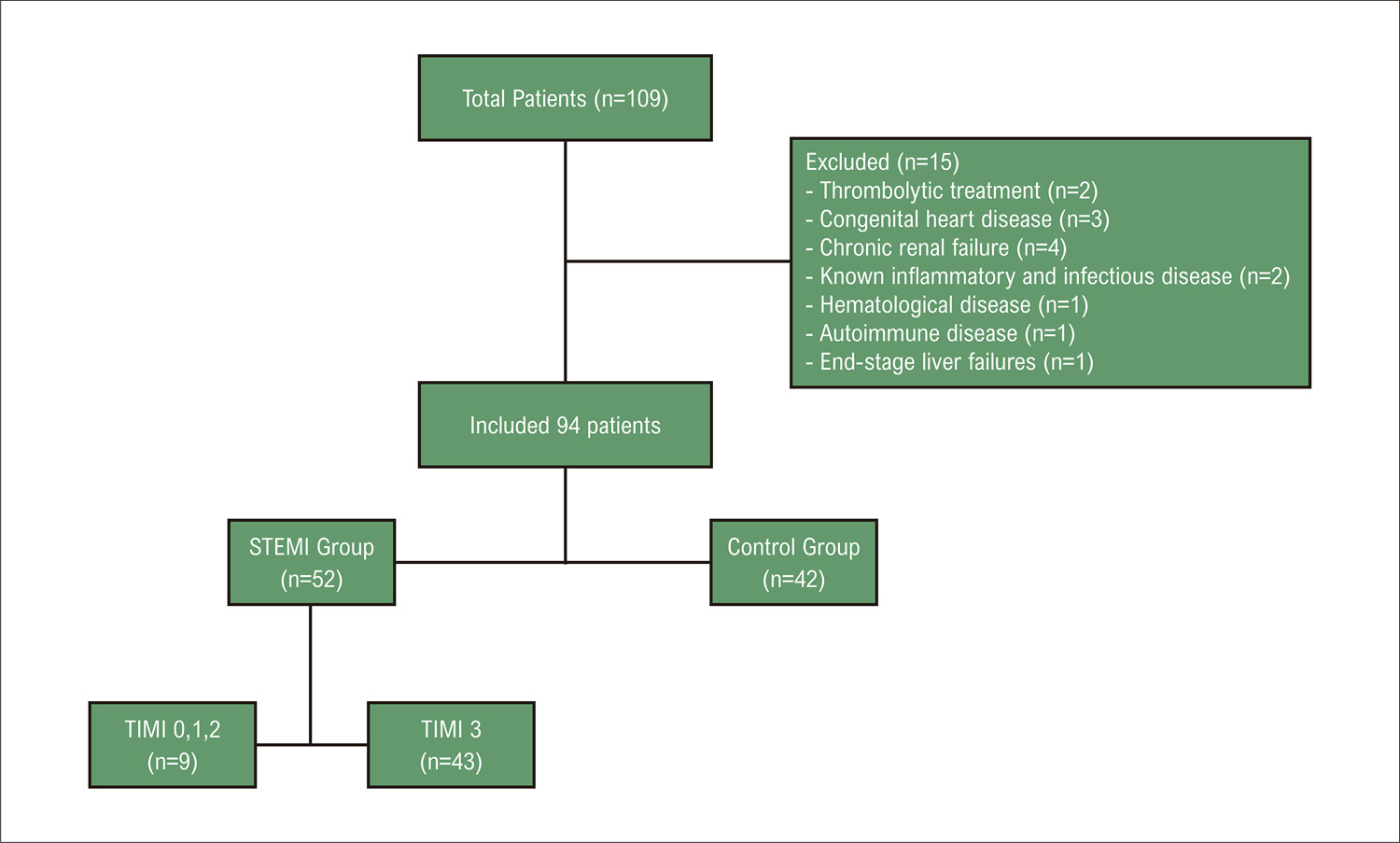
52 patients with STEMI and 42 patients without stenosis >50% in the coronary arteries were included in the study. The STEMI group was divided into two groups according to post-PCI TIMI (Thrombolysis In Myocardial Infarction) flow grade:(i) No-reflow: grade 0, 1, and 2 and (ii) grade 3(angiographic success). A p value of <0.05 was considered significant.

Results

MOTS-C levels were significantly lower in the STEMI group compared to the control group (91.9 ± 8.9 pg/mL vs. 171.8±12.5 pg/mL, p<0.001). In addition, the Receiver Operating Characteristics (ROC) curve analysis indicated that serum MOTS-C levels had a diagnostic value in predicting no-reflow (Area Under the ROC curve [AUC]:0.95, 95% CI:0.856-0.993, p<0.001). A MOTS-C ≥84.15 pg/mL measured at admission was shown to have 95.3% sensitivity and 88.9% specificity in predicting no-reflow.

Conclusion

MOTS-C is a strong and independent predictor of no-reflow and in-hospital MACE in patients with STEMI. It was also noted that low MOTS-C levels may be an important prognostic marker of and may have a role in the pathogenesis of STEMI.

  • No-Reflow Phenomenon
  • open reading frames
  • Percutaneous Coronary Intervention
  • ST Elevation Myocardial Infarction
Read Full Article
Creative Commons Attribution (CC BY) Creative Commons license
09/01/2023 DOI: 10.36660/abc.20220358 Views 1
Figure 1
Original Article

Acute Effects of Dietary Nitrate on Central Pressure and Endothelial Function in Hypertensive Patients: A Randomized, Placebo-Controlled Crossover Study

Samanta Mattos et al. Michelle Rabello Cunha Bianca Cristina Marques Jenifer d´El-Rei … Diego dos Santos Baião Vania M. F. Paschoalin Wille Oigman Mario Fritsch Neves Fernanda Medeiros

Abstract

Background

The diet’s inorganic nitrate (NO3–) may provide a physiological substrate for reducing nitrate (NO2–) to NO independent of the endothelium. Studies suggest that inorganic NO3– has beneficial effects on cardiovascular health.

Objective

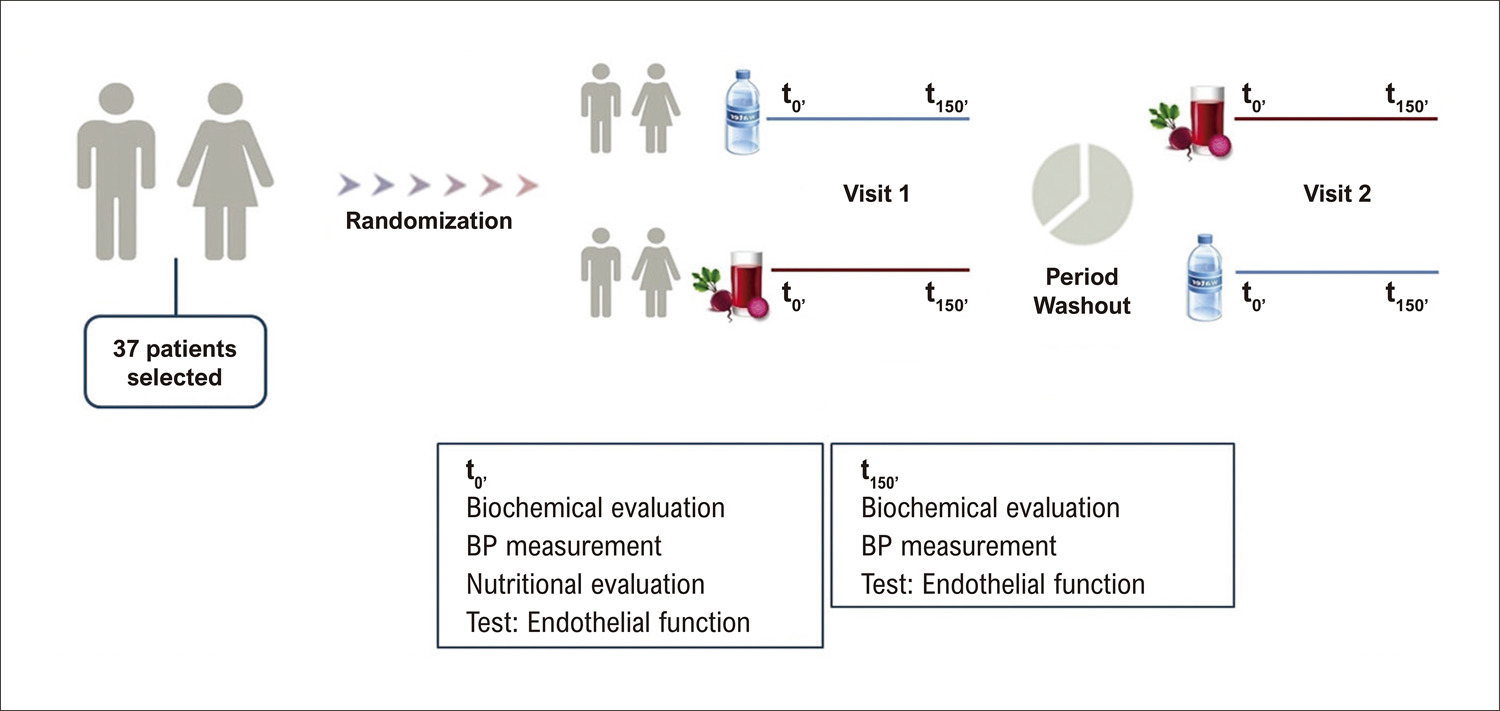
This study evaluated the acute effects of 500 mL nitrate-rich beetroot juice (BRJ; containing 11.5mmol NO3–) on blood pressure and endothelial function in treated hypertensive patients.

Methods

A randomized, placebo-controlled, crossover study was conducted in treated hypertensive patients (n=37; women=62%) who underwent clinical and nutritional evaluation and assessment of central hemodynamic parameters and microvascular reactivity. The significance level was p<0.05.

Results

The mean age was 59±7 years, and mean systolic and diastolic blood pressures were 142±10/83±9mmHg. There was a significant increase in the subendocardial viability ratio (SEVR; 149±25 vs. 165±30%, p<0.001) and reduction in ejection duration (ED; 37±4 vs. 34±4%, p<0.001) in the beetroot phase but no significant SEVR difference in the control phase. The % increase in perfusion (155 vs. 159 %, p=0.042) was significantly increased in the beetroot phase, which was not observed in the control phase. In the beetroot phase, the change in SEVR showed a significant correlation with the change in the area under the curve of post-occlusive reactive hyperemia (AUC-PORH) (r=0.45, p=0.012). The change in ED showed a significant correlation with the post-intervention perfusion peak (r=-0.37, p=0.031) and AUC-PORH (r=-0.36, p=0.046).

Conclusions

The acute ingestion of BRJ by hypertensive patients resulted in an improvement of endothelial function, which was associated with higher subendocardial viability and performance in myocardial contraction.

  • Beta Vulgaris
  • Endothelium
  • Hypertension
  • Nitric Oxide
Read Full Article
Creative Commons Attribution (CC BY) Creative Commons license
09/01/2023 DOI: 10.36660/abc.20220209 Views 2
Figure 1
Original Article

Effects of High-Intensity Interval Training and Continuous Training on Exercise Capacity, Heart Rate Variability and Isolated Hearts in Diabetic Rats

Eduardo Gomes de Souza Neto et al. João Victor Capelli Peixoto Claucio Rank Filho Ricardo Rasmussen Petterle … Rosalvo Tadeu Hochmuller Fogaça Beata Maria Wolska Fernando Augusto Lavezzo Dias

Abstract

Background

High-intensity interval training (HIIT) has been suggested as an alternative for continuous training (CT) in people with diabetes mellitus (DM) due to its short duration and potential to improve adherence to exercise. However, data on its impact on heart rate variability (HRV) are scarce.

Objectives

To assess and compare the effects of HIIT and CT on exercise capacity, HRV and isolated hearts in diabetic rats.

Methods

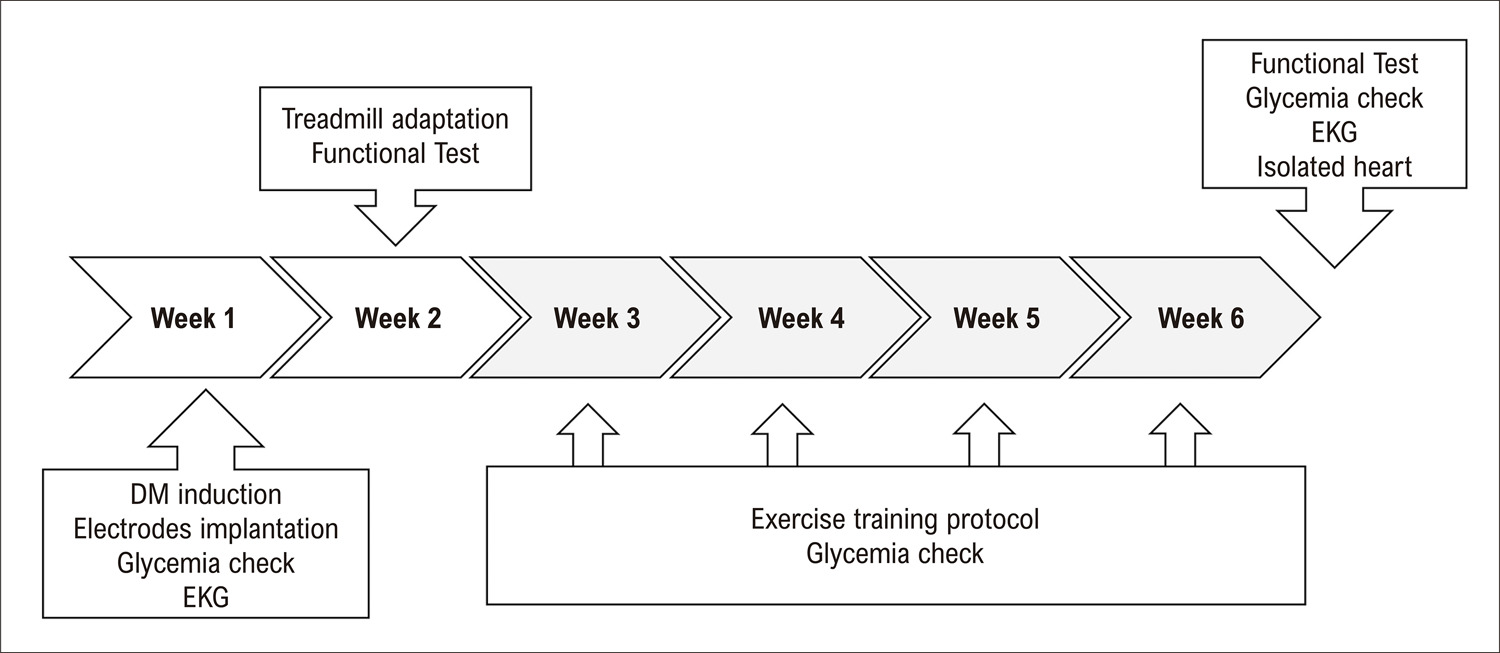
DM (intravenous streptozotocin, 45 mg.kg -1 ) and control (C) animals performed 20 sessions (5 days/week, 50 min, for 4 weeks) of CT on a treadmill (70% of maximal exercise capacity) or HIIT (cycles of 1:1min at 50% and 90% of maximal exercise capacity). HRV was assessed by continuous electrocardiogram, and cardiac function assessed in isolated perfused hearts. For data analysis, we used the framework of the multivariate covariance generalized linear model or one-way ANOVA followed by Tukey’s test, considering p<0.05 as significant.

Results

Higher exercise capacity (m/min) was achieved in HIIT (DM-HIIT: 36.5 [IQR 30.0-41.3]; C-HIIT: 41.5 [37.8-44.5], both n=10) compared to CT (DM-CT: 29.0 [23.8-33.0]; C-CT: 32.0 [29.5-37.0], both n=10) (p<0.001). Heart rate (bpm) was lower in DM compared to controls (p<0.001) both in vivo (DM-HIIT:348±51, C-HIIT:441±66, DM-CT:361±70, C-CT:437±38) and in isolated hearts. There were no differences in HRV between the groups. Maximum and minimal dP/dt were reduced in DM, except +dP/dt in DM-HIIT vs. C-HIIT (mean difference: 595.5±250.3, p=0.190).

Conclusion

Short-term HIIT promotes greater improvement in exercise performance compared to CT, including in DM, without causing significant changes in HRV.

  • Diabetes Mellitus
  • Exercise
  • Heart Rate
  • Physical Exertion
  • Rats
Read Full Article
Creative Commons Attribution (CC BY) Creative Commons license
09/01/2023 DOI: 10.36660/abc.20220396 Views 1
Figure 1
Original Article

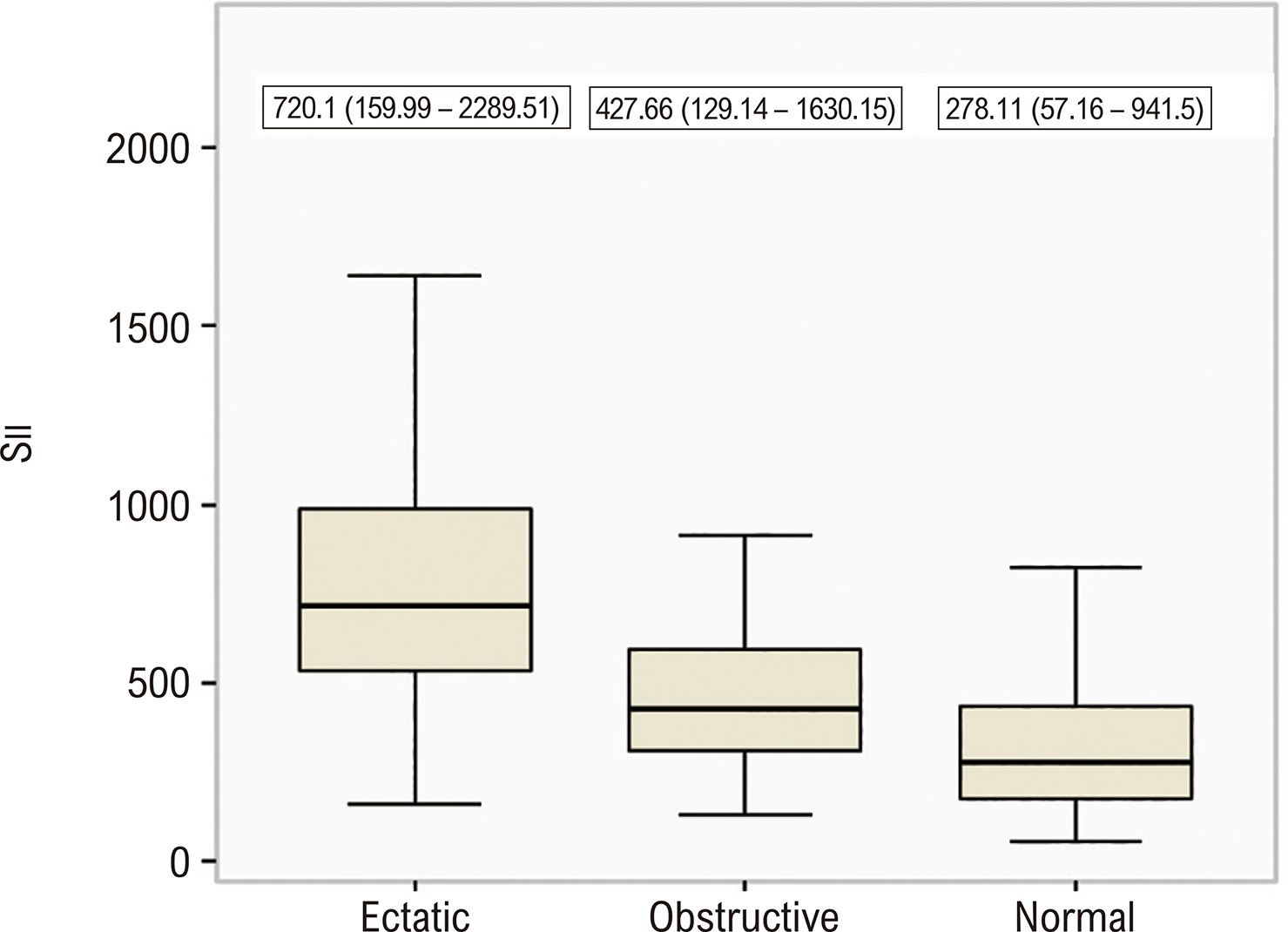
Systemic Immune Inflammation Index is a Novel Marker in Predicting the Presence and Severity of Isolated Coronary Artery Ectasia

Ferhat Dindas et al. Emin Koyun Erdem Turkyilmaz Ozge Ozcan Abacioglu … Arafat Yildirim Anil Sahin Baris Dindar Mustafa Dogdus Ozkan Candan

Abstract

Background

The underlying pathology of isolated coronary artery ectasia (CE) has not been fully elucidated.

Objective

We aimed to examine the relationship between the systemic immune inflammation index (Sıı), which corresponds to the multiplying of the neutrophil-to-lymphocyte ratio (NLR) and the platelet counts, and isolated CE.

Method

The retrospective study population included 200 patients with isolated CE, 200 consecutive with obstructive coronary artery disease, and 200 consecutive with a normal coronary artery angiogram. A 2-sided p-value of <0.05 was considered significant.

Results

Sıı, NLR, platelet-to-lymphocyte ratio (PLR), and monocyte-to-high density lipoprotein cholesterol ratio (MHR) were significantly higher in the CE group compared with the other groups (all p<0.001). In multivariate analysis, Sıı (p517.35 has 79% sensitivity, 76% specificity for the prediction of the CE [AUC: 0.832, (p<0.001)]. Sıı had a significant correlation with the number of ectatic coronary arteries and Markis classification (r:0.214 p=0.002; r:-0.195, p=0.006, respectively).

Conclusion

To the best of our knowledge, this is the first study that Sıı was significantly associated with isolated CE presence and anatomical severity.

  • Coronary Artery Disease / complications
  • Dilatation, Pathologic
  • Systemic Inflammation Immune
Read Full Article
Creative Commons Attribution (CC BY) Creative Commons license
09/01/2023 DOI: 10.36660/abc.20220056
Letter to the Editor

Comments Regarding the Athlete’s Electrocardiogram in the Brazilian Society of Cardiology Guidelines on the Analysis and Issuance of Electrocardiographic Reports – 2022

Filipe Ferrari et al. Anderson Donelli da Silveira Ricardo Stein

Dear Editor,

It was with great interest that we had access to the document entitled “Brazilian Society of Cardiology Guidelines on the Analysis and Issuance of Electrocardiographic Reports – 2022”, developed by Brazilian experts on the subject. It is our opinion that an update was necessary, as it is detailed and pleasant to read.

However, we draw attention to two pieces of information presented about the interpretation of the athlete’s electrocardiogram that caused us concern. The first is found in the section “ Cardiac Chambers Hypertrophy” (Page 18), in which the authors describe that the Sokolow-Lyon Criteria SHOULD NOT be used to determine left ventricular hypertrophy (LVH) IN ATHLETES.

[…]

  • Athletes
  • Electrocardiography
  • Practice Guideline
Read Full Article
Creative Commons Attribution (CC BY) Creative Commons license
09/01/2023 DOI: 10.36660/abc.20220670 Views 2

Could not load more articles. Please try again.

How to cite this article

EndNote RIS

Electronic Document Format (Vancouver)

Rochitte CE. Cardiovascular Magnetic Resonance and Cardiovascular Computed Tomography in the Present and Future Cardiology. Arquivos Brasileiros de Cardiologia 2023;120(1):e20230021.

Electronic Document Format (ABNT)

Rochitte, Carlos E.. Cardiovascular Magnetic Resonance and Cardiovascular Computed Tomography in the Present and Future Cardiology. Arquivos Brasileiros de Cardiologia, v. 120, n. 1, e20230021, Mar. 2023.

Electronic Document Format (APA)

Rochitte, C. E. (2023). Cardiovascular Magnetic Resonance and Cardiovascular Computed Tomography in the Present and Future Cardiology. Arquivos Brasileiros de Cardiologia, 120(1), e20230021.

Electronic Document Format (ISO)

Rochitte, Carlos E.. Cardiovascular Magnetic Resonance and Cardiovascular Computed Tomography in the Present and Future Cardiology. Arquivos Brasileiros de Cardiologia [online]. 2023, vol. 120, n. 1, [cited 2026-10-14], e20230021. Available from: <https://journals.cardiol.br/en/article/cardiovascular-magnetic-resonance-and-cardiovascular-computed-tomography-in-the-present-and-future-cardiology/>. ISSN 0066-782X

EndNote RIS

Electronic Document Format (Vancouver)

Franco RJS. Beetroot Juice May Be a Dietary Ingredient to Protect Vascular Endothelium. Arquivos Brasileiros de Cardiologia 2023;120(1):e20220906.

Electronic Document Format (ABNT)

Franco, Roberto J. S.. Beetroot Juice May Be a Dietary Ingredient to Protect Vascular Endothelium. Arquivos Brasileiros de Cardiologia, v. 120, n. 1, e20220906, Feb. 2023.

Electronic Document Format (APA)

Franco, R. J. S. (2023). Beetroot Juice May Be a Dietary Ingredient to Protect Vascular Endothelium. Arquivos Brasileiros de Cardiologia, 120(1), e20220906.

Electronic Document Format (ISO)

Franco, Roberto J. S.. Beetroot Juice May Be a Dietary Ingredient to Protect Vascular Endothelium. Arquivos Brasileiros de Cardiologia [online]. 2023, vol. 120, n. 1, [cited 2026-10-14], e20220906. Available from: <https://journals.cardiol.br/en/article/beetroot-juice-may-be-a-dietary-ingredient-to-protect-vascular-endothelium/>. ISSN 0066-782X

EndNote RIS

Electronic Document Format (Vancouver)

Cader FA, Gavina C. Reducing Sex Disparities in STEMI Care and Outcomes: Turning the Tide for Women. Arquivos Brasileiros de Cardiologia 2023;120(1):e20220884.

Electronic Document Format (ABNT)

Cader, F. Aaysha; Gavina, Cristina. Reducing Sex Disparities in STEMI Care and Outcomes: Turning the Tide for Women. Arquivos Brasileiros de Cardiologia, v. 120, n. 1, e20220884, Feb. 2023.

Electronic Document Format (APA)

Cader, F. A., & Gavina, C. (2023). Reducing Sex Disparities in STEMI Care and Outcomes: Turning the Tide for Women. Arquivos Brasileiros de Cardiologia, 120(1), e20220884.

Electronic Document Format (ISO)

Cader, F. Aaysha and Gavina, Cristina. Reducing Sex Disparities in STEMI Care and Outcomes: Turning the Tide for Women. Arquivos Brasileiros de Cardiologia [online]. 2023, vol. 120, n. 1, [cited 2026-10-14], e20220884. Available from: <https://journals.cardiol.br/en/article/reducing-sex-disparities-in-stemi-care-and-outcomes-turning-the-tide-for-women/>. ISSN 0066-782X

EndNote RIS

Electronic Document Format (Vancouver)

Oliveira I, Lopes R, Cruz I, Bragança B, Azevedo J, Andrade A. Tuberous Sclerosis: Unusual Findings in the Setting of a Rare Disease. Arquivos Brasileiros de Cardiologia 2023;120(1):e20220147.

Electronic Document Format (ABNT)

Oliveira, Ines; Lopes, Rafaela; Cruz, Isabel; Bragança, Bruno; Azevedo, João; Andrade, Aurora. Tuberous Sclerosis: Unusual Findings in the Setting of a Rare Disease. Arquivos Brasileiros de Cardiologia, v. 120, n. 1, e20220147, Feb. 2023.

Electronic Document Format (APA)

Oliveira, I., Lopes, R., Cruz, I., Bragança, B., Azevedo, J., & Andrade, A. (2023). Tuberous Sclerosis: Unusual Findings in the Setting of a Rare Disease. Arquivos Brasileiros de Cardiologia, 120(1), e20220147.

Electronic Document Format (ISO)

Oliveira, Ines and Lopes, Rafaela and Cruz, Isabel and Bragança, Bruno and Azevedo, João and Andrade, Aurora. Tuberous Sclerosis: Unusual Findings in the Setting of a Rare Disease. Arquivos Brasileiros de Cardiologia [online]. 2023, vol. 120, n. 1, [cited 2026-10-14], e20220147. Available from: <https://journals.cardiol.br/en/article/tuberous-sclerosis-unusual-findings-in-the-setting-of-a-rare-disease/>. ISSN 0066-782X

EndNote RIS

Electronic Document Format (Vancouver)

Rodrigues FL. Takayasu’s Arteritis: Is Age a Differential Factor in the Diagnosis, Follow-Up, and Treatment of the Disease?. Arquivos Brasileiros de Cardiologia 2023;120(1):e20220877.

Electronic Document Format (ABNT)

Rodrigues, Fernanda Luciano. Takayasu’s Arteritis: Is Age a Differential Factor in the Diagnosis, Follow-Up, and Treatment of the Disease?. Arquivos Brasileiros de Cardiologia, v. 120, n. 1, e20220877, Feb. 2023.

Electronic Document Format (APA)

Rodrigues, F. L. (2023). Takayasu’s Arteritis: Is Age a Differential Factor in the Diagnosis, Follow-Up, and Treatment of the Disease?. Arquivos Brasileiros de Cardiologia, 120(1), e20220877.

Electronic Document Format (ISO)

Rodrigues, Fernanda Luciano. Takayasu’s Arteritis: Is Age a Differential Factor in the Diagnosis, Follow-Up, and Treatment of the Disease?. Arquivos Brasileiros de Cardiologia [online]. 2023, vol. 120, n. 1, [cited 2026-10-14], e20220877. Available from: <https://journals.cardiol.br/en/article/takayasus-arteritis-is-age-a-differential-factor-in-the-diagnosis-follow-up-and-treatment-of-the-disease/>. ISSN 0066-782X

EndNote RIS

Electronic Document Format (Vancouver)

Camanho LEM. Revisiting the QT Interval: An Old Marker for a New Disease?. Arquivos Brasileiros de Cardiologia 2023;120(1):e20220878.

Electronic Document Format (ABNT)

Camanho, Luiz Eduardo Montenegro. Revisiting the QT Interval: An Old Marker for a New Disease?. Arquivos Brasileiros de Cardiologia, v. 120, n. 1, e20220878, Feb. 2023.

Electronic Document Format (APA)

Camanho, L. E. M. (2023). Revisiting the QT Interval: An Old Marker for a New Disease?. Arquivos Brasileiros de Cardiologia, 120(1), e20220878.

Electronic Document Format (ISO)

Camanho, Luiz Eduardo Montenegro. Revisiting the QT Interval: An Old Marker for a New Disease?. Arquivos Brasileiros de Cardiologia [online]. 2023, vol. 120, n. 1, [cited 2026-10-14], e20220878. Available from: <https://journals.cardiol.br/en/article/revisiting-the-qt-interval-an-old-marker-for-a-new-disease/>. ISSN 0066-782X

EndNote RIS

Electronic Document Format (Vancouver)

Cesena F. Pharmacoinvasive Strategy in ST-elevation Myocardial Infarction: Particularities in the Elderly. Arquivos Brasileiros de Cardiologia 2023;120(1):e20220885.

Electronic Document Format (ABNT)

Cesena, Fernando. Pharmacoinvasive Strategy in ST-elevation Myocardial Infarction: Particularities in the Elderly. Arquivos Brasileiros de Cardiologia, v. 120, n. 1, e20220885, Feb. 2023.

Electronic Document Format (APA)

Cesena, F. (2023). Pharmacoinvasive Strategy in ST-elevation Myocardial Infarction: Particularities in the Elderly. Arquivos Brasileiros de Cardiologia, 120(1), e20220885.

Electronic Document Format (ISO)

Cesena, Fernando. Pharmacoinvasive Strategy in ST-elevation Myocardial Infarction: Particularities in the Elderly. Arquivos Brasileiros de Cardiologia [online]. 2023, vol. 120, n. 1, [cited 2026-10-14], e20220885. Available from: <https://journals.cardiol.br/en/article/pharmacoinvasive-strategy-in-st-elevation-myocardial-infarction-particularities-in-the-elderly/>. ISSN 0066-782X

EndNote RIS

Electronic Document Format (Vancouver)

Danzmann LC, Bodanese LC, Petzold AP, Tscheika AP, Magedanz EH, Petersen LC, Belyavskiy E, et al. Ten-Year Survival of Heart Failure Patients with Left Ventricular Ejection Fraction of 40-59%: A Potential Phenotypic Classification?. Arquivos Brasileiros de Cardiologia 2023;120(1):e20210772.

Electronic Document Format (ABNT)

Danzmann, Luiz Claudio; Bodanese, Luiz Carlos; Petzold, Aline Petracco; Tscheika, Anna Paula; Magedanz, Ellen Hettwer; Petersen, Lucas Celia; Belyavskiy, Evgeny; Chieza, Fernanda Lourega. Ten-Year Survival of Heart Failure Patients with Left Ventricular Ejection Fraction of 40-59%: A Potential Phenotypic Classification?. Arquivos Brasileiros de Cardiologia, v. 120, n. 1, e20210772, Feb. 2023.

Electronic Document Format (APA)

Danzmann, L. C., Bodanese, L. C., Petzold, A. P., Tscheika, A. P., Magedanz, E. H., Petersen, L. C., Belyavskiy, E., & Chieza, F. L. (2023). Ten-Year Survival of Heart Failure Patients with Left Ventricular Ejection Fraction of 40-59%: A Potential Phenotypic Classification?. Arquivos Brasileiros de Cardiologia, 120(1), e20210772.

Electronic Document Format (ISO)

Danzmann, Luiz Claudio and Bodanese, Luiz Carlos and Petzold, Aline Petracco and Tscheika, Anna Paula and Magedanz, Ellen Hettwer and Petersen, Lucas Celia and Belyavskiy, Evgeny and Chieza, Fernanda Lourega. Ten-Year Survival of Heart Failure Patients with Left Ventricular Ejection Fraction of 40-59%: A Potential Phenotypic Classification?. Arquivos Brasileiros de Cardiologia [online]. 2023, vol. 120, n. 1, [cited 2026-10-14], e20210772. Available from: <https://journals.cardiol.br/en/article/ten-year-survival-of-heart-failure-patients-with-left-ventricular-ejection-fraction-of-40-59-a-potential-phenotypic-classification/>. ISSN 0066-782X

EndNote RIS

Electronic Document Format (Vancouver)

Mota GAF, Gatto M, Pagan LU, Tanni SE, Okoshi MP. Diabetes Mellitus, Physical Exercise and Heart Rate Variability. Arquivos Brasileiros de Cardiologia 2023;120(1):e20220902.

Electronic Document Format (ABNT)

Mota, Gustavo Augusto Ferreira; Gatto, Mariana; Pagan, Luana Urbano; Tanni, Suzana Erico; Okoshi, Marina Politi. Diabetes Mellitus, Physical Exercise and Heart Rate Variability. Arquivos Brasileiros de Cardiologia, v. 120, n. 1, e20220902, Feb. 2023.

Electronic Document Format (APA)

Mota, G. A. F., Gatto, M., Pagan, L. U., Tanni, S. E., & Okoshi, M. P. (2023). Diabetes Mellitus, Physical Exercise and Heart Rate Variability. Arquivos Brasileiros de Cardiologia, 120(1), e20220902.

Electronic Document Format (ISO)

Mota, Gustavo Augusto Ferreira and Gatto, Mariana and Pagan, Luana Urbano and Tanni, Suzana Erico and Okoshi, Marina Politi. Diabetes Mellitus, Physical Exercise and Heart Rate Variability. Arquivos Brasileiros de Cardiologia [online]. 2023, vol. 120, n. 1, [cited 2026-10-14], e20220902. Available from: <https://journals.cardiol.br/en/article/diabetes-mellitus-physical-exercise-and-heart-rate-variability/>. ISSN 0066-782X

EndNote RIS

Electronic Document Format (Vancouver)

Facin M, Samesima N. The Rare Alternans Pre-Excitation Pattern: Is It a Genuinely Benign Phenomenon?. Arquivos Brasileiros de Cardiologia 2023;120(1):e20220864.

Electronic Document Format (ABNT)

Facin, Mirella; Samesima, Nelson. The Rare Alternans Pre-Excitation Pattern: Is It a Genuinely Benign Phenomenon?. Arquivos Brasileiros de Cardiologia, v. 120, n. 1, e20220864, Feb. 2023.

Electronic Document Format (APA)

Facin, M., & Samesima, N. (2023). The Rare Alternans Pre-Excitation Pattern: Is It a Genuinely Benign Phenomenon?. Arquivos Brasileiros de Cardiologia, 120(1), e20220864.

Electronic Document Format (ISO)

Facin, Mirella and Samesima, Nelson. The Rare Alternans Pre-Excitation Pattern: Is It a Genuinely Benign Phenomenon?. Arquivos Brasileiros de Cardiologia [online]. 2023, vol. 120, n. 1, [cited 2026-10-14], e20220864. Available from: <https://journals.cardiol.br/en/article/the-rare-alternans-pre-excitation-pattern-is-it-a-genuinely-benign-phenomenon/>. ISSN 0066-782X

EndNote RIS

Electronic Document Format (Vancouver)

Villela PB. Improving Cardiopulmonary Resuscitation. Arquivos Brasileiros de Cardiologia 2023;120(1):e20220900.

Electronic Document Format (ABNT)

Villela, Paolo Blanco. Improving Cardiopulmonary Resuscitation. Arquivos Brasileiros de Cardiologia, v. 120, n. 1, e20220900, Feb. 2023.

Electronic Document Format (APA)

Villela, P. B. (2023). Improving Cardiopulmonary Resuscitation. Arquivos Brasileiros de Cardiologia, 120(1), e20220900.

Electronic Document Format (ISO)

Villela, Paolo Blanco. Improving Cardiopulmonary Resuscitation. Arquivos Brasileiros de Cardiologia [online]. 2023, vol. 120, n. 1, [cited 2026-10-14], e20220900. Available from: <https://journals.cardiol.br/en/article/improving-cardiopulmonary-resuscitation/>. ISSN 0066-782X

EndNote RIS

Electronic Document Format (Vancouver)

Trabulo M. Persistent Chest Pain after COVID-19 Infection. Can Strain Echo Parameters Play a Role in Diagnosis and Prognostication?. Arquivos Brasileiros de Cardiologia 2023;120(1):e20220860.

Electronic Document Format (ABNT)

Trabulo, Marisa. Persistent Chest Pain after COVID-19 Infection. Can Strain Echo Parameters Play a Role in Diagnosis and Prognostication?. Arquivos Brasileiros de Cardiologia, v. 120, n. 1, e20220860, Feb. 2023.

Electronic Document Format (APA)

Trabulo, M. (2023). Persistent Chest Pain after COVID-19 Infection. Can Strain Echo Parameters Play a Role in Diagnosis and Prognostication?. Arquivos Brasileiros de Cardiologia, 120(1), e20220860.

Electronic Document Format (ISO)

Trabulo, Marisa. Persistent Chest Pain after COVID-19 Infection. Can Strain Echo Parameters Play a Role in Diagnosis and Prognostication?. Arquivos Brasileiros de Cardiologia [online]. 2023, vol. 120, n. 1, [cited 2026-10-14], e20220860. Available from: <https://journals.cardiol.br/en/article/persistent-chest-pain-after-covid-19-infection-can-strain-echo-parameters-play-a-role-in-diagnosis-and-prognostication/>. ISSN 0066-782X

EndNote RIS

Electronic Document Format (Vancouver)

Teixeira RA, Fagundes AA, Baggio Junior JM, Oliveira JC, Medeiros PTJ, Valdigem BP, Teno LAC, et al. Brazilian Guidelines for Cardiac Implantable Electronic Devices – 2023. Arquivos Brasileiros de Cardiologia 2023;120(1):e20220892.

Electronic Document Format (ABNT)

Teixeira, Ricardo Alkmim; Fagundes, Alexsandro Alves; Baggio Junior, José Mário; Oliveira, Júlio César de; Medeiros, Paulo de Tarso Jorge; Valdigem, Bruno Pereira; Teno, Luiz Antônio Castilho; Silva, Rodrigo Tavares; Melo, Celso Salgado de; Elias Neto, Jorge; Moraes Júnior, Antonio Vitor; Pedrosa, Anisio Alexandre Andrade; Porto, Fernando Mello; Brito Júnior, Hélio Lima de; Souza, Thiago Gonçalves Schroder e; Mateos, José Carlos Pachón; Moraes, Luis Gustavo Belo de; Forno, Alexander Romeno Janner Dal; D’Avila, Andre Luiz Buchele; Cavaco, Diogo Alberto de Magalhães; Kuniyoshi, Ricardo Ryoshim; Pimentel, Mauricio; Camanho, Luiz Eduardo Montenegro; Saad, Eduardo Benchimol; Zimerman, Leandro Ioschpe; Oliveira, Eduardo Bartholomay; Scanavacca, Mauricio Ibrahim; Martinelli Filho, Martino; Lima, Carlos Eduardo Batista de; Peixoto, Giselle de Lima; Darrieux, Francisco Carlos da Costa; Duarte, Jussara de Oliveira Pinheiro; Galvão Filho, Silas dos Santos; Costa, Eduardo Rodrigues Bento; Mateo, Enrique Indalécio Pachón; Melo, Sissy Lara De; Rodrigues, Thiago da Rocha; Rocha, Eduardo Arrais; Hachul, Denise Tessariol; Lorga Filho, Adalberto Menezes; Nishioka, Silvana Angelina D’Orio; Gadelha, Eduardo Barreto; Costa, Roberto; Andrade, Veridiana Silva de; Torres, Gustavo Gomes; Oliveira Neto, Nestor Rodrigues de; Lucchese, Fernando Antonio; Murad, Henrique; Wanderley Neto, José; Brofman, Paulo Roberto Slud; Almeida, Rui M. S.; Leal, João Carlos Ferreira. Brazilian Guidelines for Cardiac Implantable Electronic Devices – 2023. Arquivos Brasileiros de Cardiologia, v. 120, n. 1, e20220892, Jan. 2023.

Electronic Document Format (APA)

Teixeira, R. A., Fagundes, A. A., Baggio Junior, J. M., Oliveira, J. C. , Medeiros, P. T. J., Valdigem, B. P., Teno, L. A. C., Silva, R. T., Melo, C. S. , Elias Neto, J., Moraes Júnior, A. V., Pedrosa, A. A. A., Porto, F. M., Brito Júnior, H. L. , Souza, T. G. S. , Mateos, J. C. P., Moraes, L. G. B. , Forno, A. R. J. D., D’Avila, A. L. B., Cavaco, D. A. M., Kuniyoshi, R. R., Pimentel, M., Camanho, L. E. M., Saad, E. B., Zimerman, L. I., Oliveira, E. B., Scanavacca, M. I., Martinelli Filho, M., Lima, C. E. B. , Peixoto, G. L., Darrieux, F. C. C., Duarte, J. O. P., Galvão Filho, S. S., Costa, E. R. B., Mateo, E. I. P., Melo, S. L. D., Rodrigues, T. R., Rocha, E. A., Hachul, D. T., Lorga Filho, A. M., Nishioka, S. A. D., Gadelha, E. B., Costa, R., Andrade, V. S. , Torres, G. G., Oliveira Neto, N. R. , Lucchese, F. A., Murad, H., Wanderley Neto, J., Brofman, P. R. S., Almeida, R. M. S., & Leal, J. C. F. (2023). Brazilian Guidelines for Cardiac Implantable Electronic Devices – 2023. Arquivos Brasileiros de Cardiologia, 120(1), e20220892.

Electronic Document Format (ISO)

Teixeira, Ricardo Alkmim and Fagundes, Alexsandro Alves and Baggio Junior, José Mário and Oliveira, Júlio César de and Medeiros, Paulo de Tarso Jorge and Valdigem, Bruno Pereira and Teno, Luiz Antônio Castilho and Silva, Rodrigo Tavares and Melo, Celso Salgado de and Elias Neto, Jorge and Moraes Júnior, Antonio Vitor and Pedrosa, Anisio Alexandre Andrade and Porto, Fernando Mello and Brito Júnior, Hélio Lima de and Souza, Thiago Gonçalves Schroder e and Mateos, José Carlos Pachón and Moraes, Luis Gustavo Belo de and Forno, Alexander Romeno Janner Dal and D’Avila, Andre Luiz Buchele and Cavaco, Diogo Alberto de Magalhães and Kuniyoshi, Ricardo Ryoshim and Pimentel, Mauricio and Camanho, Luiz Eduardo Montenegro and Saad, Eduardo Benchimol and Zimerman, Leandro Ioschpe and Oliveira, Eduardo Bartholomay and Scanavacca, Mauricio Ibrahim and Martinelli Filho, Martino and Lima, Carlos Eduardo Batista de and Peixoto, Giselle de Lima and Darrieux, Francisco Carlos da Costa and Duarte, Jussara de Oliveira Pinheiro and Galvão Filho, Silas dos Santos and Costa, Eduardo Rodrigues Bento and Mateo, Enrique Indalécio Pachón and Melo, Sissy Lara De and Rodrigues, Thiago da Rocha and Rocha, Eduardo Arrais and Hachul, Denise Tessariol and Lorga Filho, Adalberto Menezes and Nishioka, Silvana Angelina D’Orio and Gadelha, Eduardo Barreto and Costa, Roberto and Andrade, Veridiana Silva de and Torres, Gustavo Gomes and Oliveira Neto, Nestor Rodrigues de and Lucchese, Fernando Antonio and Murad, Henrique and Wanderley Neto, José and Brofman, Paulo Roberto Slud and Almeida, Rui M. S. and Leal, João Carlos Ferreira. Brazilian Guidelines for Cardiac Implantable Electronic Devices – 2023. Arquivos Brasileiros de Cardiologia [online]. 2023, vol. 120, n. 1, [cited 2026-10-14], e20220892. Available from: <https://journals.cardiol.br/en/article/brazilian-guidelines-for-cardiac-implantable-electronic-devices-2023/>. ISSN 0066-782X

EndNote RIS

Electronic Document Format (Vancouver)

Alvarado T, García-Guimaraes M, Nogales JM, Jimenez-Kockar M, Macaya F, Alfonso F. Spontaneous Coronary Artery Dissection: Are There Differences between Men and Women?. Arquivos Brasileiros de Cardiologia 2023;120(1):e20210550.

Electronic Document Format (ABNT)

Alvarado, Teresa; García-Guimaraes, Marcos; Nogales, Juan Manuel; Jimenez-Kockar, Marcelo; Macaya, Fernando; Alfonso, Fernando. Spontaneous Coronary Artery Dissection: Are There Differences between Men and Women?. Arquivos Brasileiros de Cardiologia, v. 120, n. 1, e20210550, Jan. 2023.

Electronic Document Format (APA)

Alvarado, T., García-Guimaraes, M., Nogales, J. M., Jimenez-Kockar, M., Macaya, F., & Alfonso, F. (2023). Spontaneous Coronary Artery Dissection: Are There Differences between Men and Women?. Arquivos Brasileiros de Cardiologia, 120(1), e20210550.

Electronic Document Format (ISO)

Alvarado, Teresa and García-Guimaraes, Marcos and Nogales, Juan Manuel and Jimenez-Kockar, Marcelo and Macaya, Fernando and Alfonso, Fernando. Spontaneous Coronary Artery Dissection: Are There Differences between Men and Women?. Arquivos Brasileiros de Cardiologia [online]. 2023, vol. 120, n. 1, [cited 2026-10-14], e20210550. Available from: <https://journals.cardiol.br/en/article/spontaneous-coronary-artery-dissection-are-there-differences-between-men-and-women/>. ISSN 0066-782X

EndNote RIS

Electronic Document Format (Vancouver)

Barbosa S, Muñoz OM, Cañas A, Garcia AA. Prolongation of the QTc Interval at Admission is Associated with Increased Mortality in Patients with SARS-COV-2 during Hospitalization. Arquivos Brasileiros de Cardiologia 2023;120(1):e20220155.

Electronic Document Format (ABNT)

Barbosa, Stephany; Muñoz, Oscar Mauricio; Cañas, Alejandra; Garcia, Angel Alberto. Prolongation of the QTc Interval at Admission is Associated with Increased Mortality in Patients with SARS-COV-2 during Hospitalization. Arquivos Brasileiros de Cardiologia, v. 120, n. 1, e20220155, Jan. 2023.

Electronic Document Format (APA)

Barbosa, S., Muñoz, O. M., Cañas, A., & Garcia, A. A. (2023). Prolongation of the QTc Interval at Admission is Associated with Increased Mortality in Patients with SARS-COV-2 during Hospitalization. Arquivos Brasileiros de Cardiologia, 120(1), e20220155.

Electronic Document Format (ISO)

Barbosa, Stephany and Muñoz, Oscar Mauricio and Cañas, Alejandra and Garcia, Angel Alberto. Prolongation of the QTc Interval at Admission is Associated with Increased Mortality in Patients with SARS-COV-2 during Hospitalization. Arquivos Brasileiros de Cardiologia [online]. 2023, vol. 120, n. 1, [cited 2026-10-14], e20220155. Available from: <https://journals.cardiol.br/en/article/prolongation-of-the-qtc-interval-at-admission-is-associated-with-increased-mortality-in-patients-with-sars-cov-2-during-hospitalization/>. ISSN 0066-782X

EndNote RIS

Electronic Document Format (Vancouver)

Tobase L, Peres HHC, Polastri TF, Cardoso SH, Souza DR, Almeida DG, Timerman S, et al. The Use of the Borg Rating of Perceived Exertion Scale in Cardiopulmonary Resuscitation. Arquivos Brasileiros de Cardiologia 2023;120(1):e20220240.

Electronic Document Format (ABNT)

Tobase, Lucia; Peres, Heloisa Helena Ciqueto; Polastri, Thatiane Facholi; Cardoso, Sandra Helena; Souza, Dhieizom Rodrigo; Almeida, Debora Gugelmin; Timerman, Sergio. The Use of the Borg Rating of Perceived Exertion Scale in Cardiopulmonary Resuscitation. Arquivos Brasileiros de Cardiologia, v. 120, n. 1, e20220240, Jan. 2023.

Electronic Document Format (APA)

Tobase, L., Peres, H. H. C., Polastri, T. F., Cardoso, S. H., Souza, D. R., Almeida, D. G., & Timerman, S. (2023). The Use of the Borg Rating of Perceived Exertion Scale in Cardiopulmonary Resuscitation. Arquivos Brasileiros de Cardiologia, 120(1), e20220240.

Electronic Document Format (ISO)

Tobase, Lucia and Peres, Heloisa Helena Ciqueto and Polastri, Thatiane Facholi and Cardoso, Sandra Helena and Souza, Dhieizom Rodrigo and Almeida, Debora Gugelmin and Timerman, Sergio. The Use of the Borg Rating of Perceived Exertion Scale in Cardiopulmonary Resuscitation. Arquivos Brasileiros de Cardiologia [online]. 2023, vol. 120, n. 1, [cited 2026-10-14], e20220240. Available from: <https://journals.cardiol.br/en/article/the-use-of-the-borg-rating-of-perceived-exertion-scale-in-cardiopulmonary-resuscitation/>. ISSN 0066-782X

EndNote RIS

Electronic Document Format (Vancouver)

Bacchin AS, Fonseca FAH, Povoa R, Szarf G, Pinto IM, Caixeta AM, Teixeira D, et al. Pharmacoinvasive Strategy in Elderly Up to 75 Years or Non-Elderly: Analysis of Biochemical and Cardiac Magnetic Resonance Imaging Parameters. Arquivos Brasileiros de Cardiologia 2023;120(1):e20220177.

Electronic Document Format (ABNT)

Bacchin, Amanda S.; Fonseca, Francisco A. H.; Povoa, Rui; Szarf, Gilberto; Pinto, Ibraim Masciarelli; Caixeta, Adriano Mendes; Teixeira, Daniela; Maugeri, Ieda Longo; Ishimura, Mayari E.; Coste, Maria E. R.; Bianco, Henrique Tria; França, Carolina N.; Izar, Maria Cristina. Pharmacoinvasive Strategy in Elderly Up to 75 Years or Non-Elderly: Analysis of Biochemical and Cardiac Magnetic Resonance Imaging Parameters. Arquivos Brasileiros de Cardiologia, v. 120, n. 1, e20220177, Jan. 2023.

Electronic Document Format (APA)

Bacchin, A. S., Fonseca, F. A. H., Povoa, R., Szarf, G., Pinto, I. M., Caixeta, A. M., Teixeira, D., Maugeri, I. L., Ishimura, M. E., Coste, M. E. R., Bianco, H. T., França, C. N., & Izar, M. C. (2023). Pharmacoinvasive Strategy in Elderly Up to 75 Years or Non-Elderly: Analysis of Biochemical and Cardiac Magnetic Resonance Imaging Parameters. Arquivos Brasileiros de Cardiologia, 120(1), e20220177.

Electronic Document Format (ISO)

Bacchin, Amanda S. and Fonseca, Francisco A. H. and Povoa, Rui and Szarf, Gilberto and Pinto, Ibraim Masciarelli and Caixeta, Adriano Mendes and Teixeira, Daniela and Maugeri, Ieda Longo and Ishimura, Mayari E. and Coste, Maria E. R. and Bianco, Henrique Tria and França, Carolina N. and Izar, Maria Cristina. Pharmacoinvasive Strategy in Elderly Up to 75 Years or Non-Elderly: Analysis of Biochemical and Cardiac Magnetic Resonance Imaging Parameters. Arquivos Brasileiros de Cardiologia [online]. 2023, vol. 120, n. 1, [cited 2026-10-14], e20220177. Available from: <https://journals.cardiol.br/en/article/pharmacoinvasive-strategy-in-elderly-up-to-75-years-or-non-elderly-analysis-of-biochemical-and-cardiac-magnetic-resonance-imaging-parameters/>. ISSN 0066-782X

EndNote RIS

Electronic Document Format (Vancouver)

Borovac JA, Ferri-Certic J, Miric D, Zanchi J, Lozo M, Bradaric A, Schwarz K, et al. Revascularization with Coronary Artery Bypass Grafting in Non-ST-elevation Acute Coronary Syndromes: A Snapshot of Randomized Trials and Registries. Arquivos Brasileiros de Cardiologia 2023;120(1):e20220248.

Electronic Document Format (ABNT)

Borovac, Josip Andelo; Ferri-Certic, Jerko; Miric, Dino; Zanchi, Jaksa; Lozo, Mislav; Bradaric, Anteo; Schwarz, Konstantin; Kwok, Chun Shing. Revascularization with Coronary Artery Bypass Grafting in Non-ST-elevation Acute Coronary Syndromes: A Snapshot of Randomized Trials and Registries. Arquivos Brasileiros de Cardiologia, v. 120, n. 1, e20220248, Jan. 2023.

Electronic Document Format (APA)

Borovac, J. A., Ferri-Certic, J., Miric, D., Zanchi, J., Lozo, M., Bradaric, A., Schwarz, K., & Kwok, C. S. (2023). Revascularization with Coronary Artery Bypass Grafting in Non-ST-elevation Acute Coronary Syndromes: A Snapshot of Randomized Trials and Registries. Arquivos Brasileiros de Cardiologia, 120(1), e20220248.

Electronic Document Format (ISO)

Borovac, Josip Andelo and Ferri-Certic, Jerko and Miric, Dino and Zanchi, Jaksa and Lozo, Mislav and Bradaric, Anteo and Schwarz, Konstantin and Kwok, Chun Shing. Revascularization with Coronary Artery Bypass Grafting in Non-ST-elevation Acute Coronary Syndromes: A Snapshot of Randomized Trials and Registries. Arquivos Brasileiros de Cardiologia [online]. 2023, vol. 120, n. 1, [cited 2026-10-14], e20220248. Available from: <https://journals.cardiol.br/en/article/revascularization-with-coronary-artery-bypass-grafting-in-non-st-elevation-acute-coronary-syndromes-a-snapshot-of-randomized-trials-and-registries/>. ISSN 0066-782X

EndNote RIS

Electronic Document Format (Vancouver)

Oliveira CC, Vilela F, Braga C, Costa J, Marques J. ST-Segment Elevation Myocardial Infarction Differences between Genders – A Single Center Retrospective Analysis. Arquivos Brasileiros de Cardiologia 2023;120(1):e20211040.

Electronic Document Format (ABNT)

Oliveira, Cátia Costa; Vilela, Filipe; Braga, Carlos; Costa, João; Marques, Jorge. ST-Segment Elevation Myocardial Infarction Differences between Genders – A Single Center Retrospective Analysis. Arquivos Brasileiros de Cardiologia, v. 120, n. 1, e20211040, Jan. 2023.

Electronic Document Format (APA)

Oliveira, C. C., Vilela, F., Braga, C., Costa, J., & Marques, J. (2023). ST-Segment Elevation Myocardial Infarction Differences between Genders – A Single Center Retrospective Analysis. Arquivos Brasileiros de Cardiologia, 120(1), e20211040.

Electronic Document Format (ISO)

Oliveira, Cátia Costa and Vilela, Filipe and Braga, Carlos and Costa, João and Marques, Jorge. ST-Segment Elevation Myocardial Infarction Differences between Genders – A Single Center Retrospective Analysis. Arquivos Brasileiros de Cardiologia [online]. 2023, vol. 120, n. 1, [cited 2026-10-14], e20211040. Available from: <https://journals.cardiol.br/en/article/st-segment-elevation-myocardial-infarction-differences-between-genders-a-single-center-retrospective-analysis/>. ISSN 0066-782X

EndNote RIS

Electronic Document Format (Vancouver)

Çakmak T, Yaşar E, Çakmak E, Tekin S, Karakuş Y, Türkoğlu C, Yüksel F, et al. Evaluation of Coronary Flow Level with Mots-C in Patients with STEMI Undergoing Primary PCI. Arquivos Brasileiros de Cardiologia 2023;120(1):e20220358.

Electronic Document Format (ABNT)

Çakmak, Tolga; Yaşar, Erdoğan; Çakmak, Esin; Tekin, Suat; Karakuş, Yasin; Türkoğlu, Caner; Yüksel, Furkan. Evaluation of Coronary Flow Level with Mots-C in Patients with STEMI Undergoing Primary PCI. Arquivos Brasileiros de Cardiologia, v. 120, n. 1, e20220358, Jan. 2023.

Electronic Document Format (APA)

Çakmak, T., Yaşar, E., Çakmak, E., Tekin, S., Karakuş, Y., Türkoğlu, C., & Yüksel, F. (2023). Evaluation of Coronary Flow Level with Mots-C in Patients with STEMI Undergoing Primary PCI. Arquivos Brasileiros de Cardiologia, 120(1), e20220358.

Electronic Document Format (ISO)

Çakmak, Tolga and Yaşar, Erdoğan and Çakmak, Esin and Tekin, Suat and Karakuş, Yasin and Türkoğlu, Caner and Yüksel, Furkan. Evaluation of Coronary Flow Level with Mots-C in Patients with STEMI Undergoing Primary PCI. Arquivos Brasileiros de Cardiologia [online]. 2023, vol. 120, n. 1, [cited 2026-10-14], e20220358. Available from: <https://journals.cardiol.br/en/article/evaluation-of-coronary-flow-level-with-mots-c-in-patients-with-stemi-undergoing-primary-pci/>. ISSN 0066-782X

EndNote RIS

Electronic Document Format (Vancouver)

Mattos S, Cunha MR, Marques BC, d´El-Rei J, Baião DS, Paschoalin VMF, Oigman W, et al. Acute Effects of Dietary Nitrate on Central Pressure and Endothelial Function in Hypertensive Patients: A Randomized, Placebo-Controlled Crossover Study. Arquivos Brasileiros de Cardiologia 2023;120(1):e20220209.

Electronic Document Format (ABNT)

Mattos, Samanta; Cunha, Michelle Rabello; Marques, Bianca Cristina; d´El-Rei, Jenifer; Baião, Diego dos Santos; Paschoalin, Vania M. F.; Oigman, Wille; Neves, Mario Fritsch; Medeiros, Fernanda. Acute Effects of Dietary Nitrate on Central Pressure and Endothelial Function in Hypertensive Patients: A Randomized, Placebo-Controlled Crossover Study. Arquivos Brasileiros de Cardiologia, v. 120, n. 1, e20220209, Jan. 2023.

Electronic Document Format (APA)

Mattos, S., Cunha, M. R., Marques, B. C., d´El-Rei, J., Baião, D. S., Paschoalin, V. M. F., Oigman, W., Neves, M. F., & Medeiros, F. (2023). Acute Effects of Dietary Nitrate on Central Pressure and Endothelial Function in Hypertensive Patients: A Randomized, Placebo-Controlled Crossover Study. Arquivos Brasileiros de Cardiologia, 120(1), e20220209.

Electronic Document Format (ISO)

Mattos, Samanta and Cunha, Michelle Rabello and Marques, Bianca Cristina and d´El-Rei, Jenifer and Baião, Diego dos Santos and Paschoalin, Vania M. F. and Oigman, Wille and Neves, Mario Fritsch and Medeiros, Fernanda. Acute Effects of Dietary Nitrate on Central Pressure and Endothelial Function in Hypertensive Patients: A Randomized, Placebo-Controlled Crossover Study. Arquivos Brasileiros de Cardiologia [online]. 2023, vol. 120, n. 1, [cited 2026-10-14], e20220209. Available from: <https://journals.cardiol.br/en/article/acute-effects-of-dietary-nitrate-on-central-pressure-and-endothelial-function-in-hypertensive-patients-a-randomized-placebo-controlled-crossover-study/>. ISSN 0066-782X

EndNote RIS

Electronic Document Format (Vancouver)

Souza Neto EG, Peixoto JVC, Rank Filho C, Petterle RR, Fogaça RTH, Wolska BM, Dias FAL, et al. Effects of High-Intensity Interval Training and Continuous Training on Exercise Capacity, Heart Rate Variability and Isolated Hearts in Diabetic Rats. Arquivos Brasileiros de Cardiologia 2023;120(1):e20220396.

Electronic Document Format (ABNT)

Souza Neto, Eduardo Gomes de; Peixoto, João Victor Capelli; Rank Filho, Claucio; Petterle, Ricardo Rasmussen; Fogaça, Rosalvo Tadeu Hochmuller; Wolska, Beata Maria; Dias, Fernando Augusto Lavezzo. Effects of High-Intensity Interval Training and Continuous Training on Exercise Capacity, Heart Rate Variability and Isolated Hearts in Diabetic Rats. Arquivos Brasileiros de Cardiologia, v. 120, n. 1, e20220396, Jan. 2023.

Electronic Document Format (APA)

Souza Neto, E. G. , Peixoto, J. V. C., Rank Filho, C., Petterle, R. R., Fogaça, R. T. H., Wolska, B. M., & Dias, F. A. L. (2023). Effects of High-Intensity Interval Training and Continuous Training on Exercise Capacity, Heart Rate Variability and Isolated Hearts in Diabetic Rats. Arquivos Brasileiros de Cardiologia, 120(1), e20220396.

Electronic Document Format (ISO)

Souza Neto, Eduardo Gomes de and Peixoto, João Victor Capelli and Rank Filho, Claucio and Petterle, Ricardo Rasmussen and Fogaça, Rosalvo Tadeu Hochmuller and Wolska, Beata Maria and Dias, Fernando Augusto Lavezzo. Effects of High-Intensity Interval Training and Continuous Training on Exercise Capacity, Heart Rate Variability and Isolated Hearts in Diabetic Rats. Arquivos Brasileiros de Cardiologia [online]. 2023, vol. 120, n. 1, [cited 2026-10-14], e20220396. Available from: <https://journals.cardiol.br/en/article/effects-of-high-intensity-interval-training-and-continuous-training-on-exercise-capacity-heart-rate-variability-and-isolated-hearts-in-diabetic-rats/>. ISSN 0066-782X

EndNote RIS

Electronic Document Format (Vancouver)

Dindas F, Koyun E, Turkyilmaz E, Abacioglu OO, Yildirim A, Sahin A, Dindar B, et al. Systemic Immune Inflammation Index is a Novel Marker in Predicting the Presence and Severity of Isolated Coronary Artery Ectasia. Arquivos Brasileiros de Cardiologia 2023;120(1):e20220056.

Electronic Document Format (ABNT)

Dindas, Ferhat; Koyun, Emin; Turkyilmaz, Erdem; Abacioglu, Ozge Ozcan; Yildirim, Arafat; Sahin, Anil; Dindar, Baris; Dogdus, Mustafa; Candan, Ozkan. Systemic Immune Inflammation Index is a Novel Marker in Predicting the Presence and Severity of Isolated Coronary Artery Ectasia. Arquivos Brasileiros de Cardiologia, v. 120, n. 1, e20220056, Jan. 2023.

Electronic Document Format (APA)

Dindas, F., Koyun, E., Turkyilmaz, E., Abacioglu, O. O., Yildirim, A., Sahin, A., Dindar, B., Dogdus, M., & Candan, O. (2023). Systemic Immune Inflammation Index is a Novel Marker in Predicting the Presence and Severity of Isolated Coronary Artery Ectasia. Arquivos Brasileiros de Cardiologia, 120(1), e20220056.

Electronic Document Format (ISO)

Dindas, Ferhat and Koyun, Emin and Turkyilmaz, Erdem and Abacioglu, Ozge Ozcan and Yildirim, Arafat and Sahin, Anil and Dindar, Baris and Dogdus, Mustafa and Candan, Ozkan. Systemic Immune Inflammation Index is a Novel Marker in Predicting the Presence and Severity of Isolated Coronary Artery Ectasia. Arquivos Brasileiros de Cardiologia [online]. 2023, vol. 120, n. 1, [cited 2026-10-14], e20220056. Available from: <https://journals.cardiol.br/en/article/systemic-immune-inflammation-index-is-a-novel-marker-in-predicting-the-presence-and-severity-of-isolated-coronary-artery-ectasia/>. ISSN 0066-782X

EndNote RIS

Electronic Document Format (Vancouver)

Ferrari F, Silveira AD, Stein R. Comments Regarding the Athlete’s Electrocardiogram in the Brazilian Society of Cardiology Guidelines on the Analysis and Issuance of Electrocardiographic Reports – 2022. Arquivos Brasileiros de Cardiologia 2023;120(1):e20220670.

Electronic Document Format (ABNT)

Ferrari, Filipe; Silveira, Anderson Donelli da; Stein, Ricardo. Comments Regarding the Athlete’s Electrocardiogram in the Brazilian Society of Cardiology Guidelines on the Analysis and Issuance of Electrocardiographic Reports – 2022. Arquivos Brasileiros de Cardiologia, v. 120, n. 1, e20220670, Jan. 2023.

Electronic Document Format (APA)

Ferrari, F., Silveira, A. D. , & Stein, R. (2023). Comments Regarding the Athlete’s Electrocardiogram in the Brazilian Society of Cardiology Guidelines on the Analysis and Issuance of Electrocardiographic Reports – 2022. Arquivos Brasileiros de Cardiologia, 120(1), e20220670.

Electronic Document Format (ISO)

Ferrari, Filipe and Silveira, Anderson Donelli da and Stein, Ricardo. Comments Regarding the Athlete’s Electrocardiogram in the Brazilian Society of Cardiology Guidelines on the Analysis and Issuance of Electrocardiographic Reports – 2022. Arquivos Brasileiros de Cardiologia [online]. 2023, vol. 120, n. 1, [cited 2026-10-14], e20220670. Available from: <https://journals.cardiol.br/en/article/comments-regarding-the-athletes-electrocardiogram-in-the-brazilian-society-of-cardiology-guidelines-on-the-analysis-and-issuance-of-electrocardiographic-reports-2022/>. ISSN 0066-782X

Sede – Rio de Janeiro
Av. Marechal Câmara, 160
3º andar – Sala: 330 – Centro
Rio de Janeiro – CEP: 20020-907
Tel.: (55 +21) 3478-2700
ou (21) 99386-3961
E-mail: revista@cardiol.br

Sede – São Paulo
Alameda Santos, 705 – 11º andar
Cerqueira César | São Paulo
CEP: 01419-001
Tel.: (55 +11) 3411-5500
E-mail: revista@cardiol.br

  • About the Journal
  • Internal Regulation
  • Editors Section
  • Editorial Board
  • History
  • SBC Award

  • Guidelines for Publication
  • Editorial Policy
  • Ethics Policy
  • Policy on the Use of Artificial Intelligence
  • Mandatory Publication Form
  • Publication Fee

Issues

SBC Guidelines

  • How to Publish an Abstract Supplement?
  • Supplements from the Brazilian Congress of Cardiology