ABC Family Arquivos Brasileiros de Cardiologia International Journal of Cardiovascular Sciences ABC Heart Failure & Cardiomyopathy ABC Imagem Cardiovascular
Português English
ABC Family
Português English
  • About
    • About ABC Family
    • Internal Regulation
    • Editorial Board
    • Brazilian Society of Cardiology (SBC)
  • Issues
  • SBC Guidelines
  • Content
    • Videos
    • Podcasts
    • News
  • About
    • About ABC Family
    • Internal Regulation
    • Editorial Board
    • Brazilian Society of Cardiology (SBC)
  • Issues
  • SBC Guidelines
  • Content
    • Videos
    • Podcasts
    • News

ABC Family

  • ABC Family
  • Arquivos Brasileiros de Cardiologia
  • International Journal of Cardiovascular Sciences
  • ABC Heart Failure & Cardiomyopathy
  • ABC Imagem Cardiovascular
Search in

No content found.

Journals
Ordering
Article types
Others

  1. Home
  2. Keyword: atrioventricular node
ABC
Editorial

The Rare Alternans Pre-Excitation Pattern: Is It a Genuinely Benign Phenomenon?

Mirella Facin et al. Nelson Samesima

The conduction system is a specialized myocardial cell arrangement that neatly generates and transmits electrical stimuli, leading to sequentially coordinated contractions in each cardiac cycle.A thick layer of fibrous tissue, the annulus fibrosus, almost entirely insulates the atrial from the ventricular myocardia, except in the region of the atrioventricular (AV) node and His-Purkinje system, which, in normal hearts, stands as the single electric pathway between the upper and lower chambers. ,

In some individuals, however, threads of myocardial tissue directly connecting atria to ventricles remain from previous developmental stages and endure after childbirth.The presence of additional atrioventricular conduits or accessory pathways (AP) allows the electrical stimuli to bypass the AV node, resulting in earlier activation of the ventricles or pre-excitation. Bypass tracts may cross the atrioventricular groove wherever atrial and ventricular myocardium are juxtaposed. Most are capable of bidirectional and non-decremental conduction and may serve as a limb to reentrant orthodromic/antidromic circuits or fast lanes for impulse transmission during other supraventricular tachycardias, such as atrial fibrillation (AF).

[…]

  • atrioventricular node
  • Prevalence
  • Risk Grade
  • Wolff-Parkinson White Syndrome
Read Full Article
Creative Commons Attribution (CC BY) Creative Commons license
10/02/2023 DOI: 10.36660/abc.20220864 Views 1
Graph 1
IJCS
Original Article

Prevalence of Atrial Fibrillation in Pacemaker Patients

Mario Augusto Cray da Costa et al. Jorge Felipe do Lago Pereira dos Santos Marcelo Derbli Schafranski

Abstract

Background:

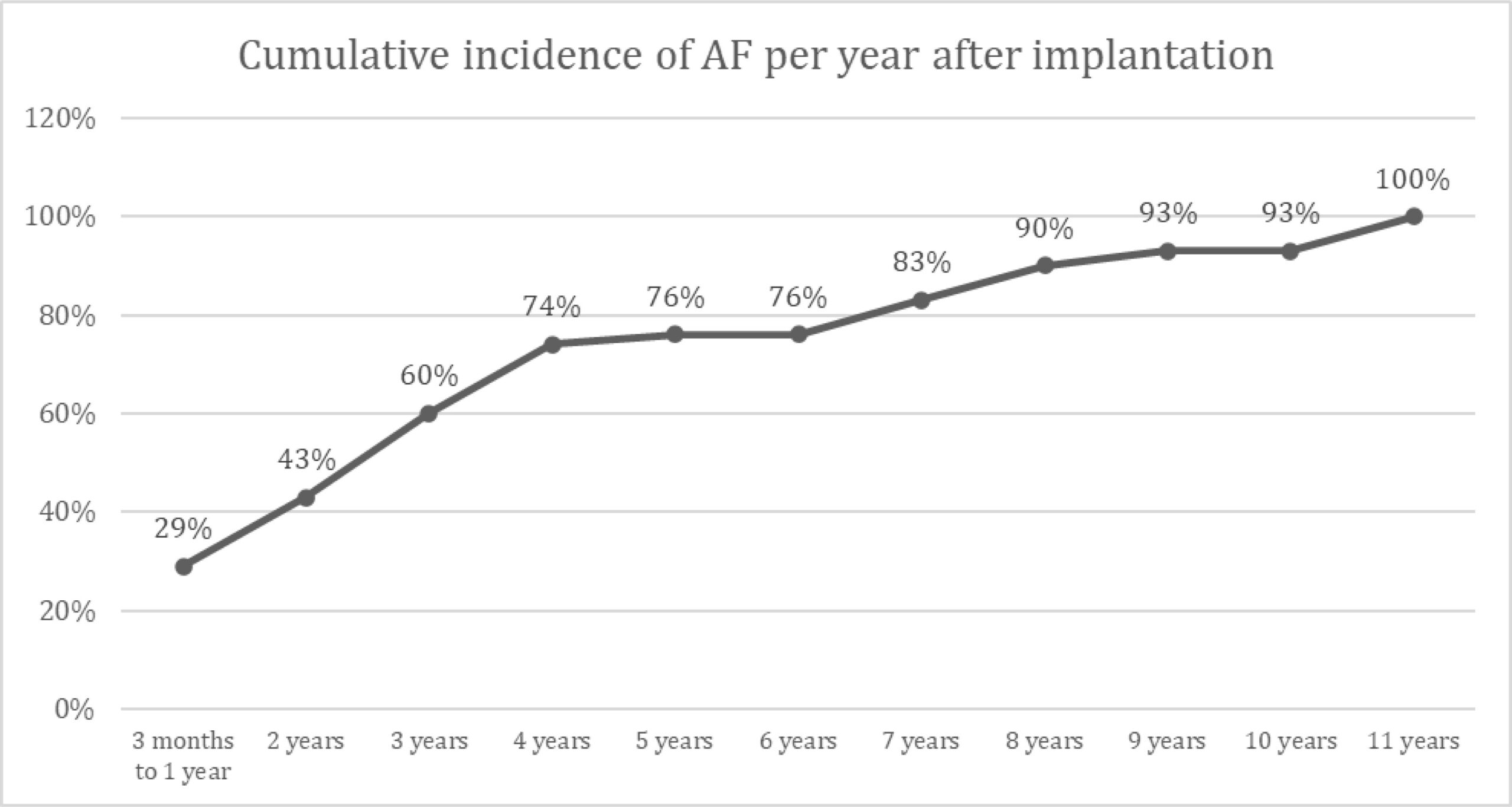
Current pacemakers allow for the continuous recording of the occurrence of arrhythmic events. One of the most frequent arrhythmias after implantation of a device is atrial fibrillation (AF), an important risk factor for embolic events. The frequency of this arrhythmia in pacemaker patients has not been widely studied.

Objectives:

This study aimed to evaluate the prevalence, incidence, and predictors of the occurrence of AF in patients with double-chamber pacemakers and without a history of atrial fibrillation prior to implantation.

Methods:

A dynamic, retrospective, and prospective cohort study was carried out with 186 patients undergoing biannual follow-up of the double-chamber pacemaker, without previous AF, in a single service, between 2016 and 2018. Clinical data were collected from the medical records and the telemetry of the device and the prevalence, incidence rate, relative risk by univariate analysis (by chi-square), and risk ratio were calculated by multivariate analysis (by Cox regression); values of p<0.05 were considered significant.

Results:

There was a prevalence of 25.3% FA, with an incidence of 5.64 cases / 100 persons-year. The median time for the development of arrhythmia was 27.5 months. Multivariate analysis identified 5 statistically significant predictors: male gender, OR: 2.54 [1.04–6.15]; coronary artery disease, OR: 2.98 [1.20–7.41]; hypothyroidism, OR: 3.63 [1.46–9.07]; prior heart surgery, OR: 2.67 [1.01–7]; and left atrial enlargement, OR: 2.72 [1.25–5.92].

Conclusions:

The prevalence and incidence of AF in this population are high. Risk factors for AF were: male gender, coronary artery disease, hypothyroidism, prior heart surgery, and left atrial enlargement.

  • Arrhythmias
  • Artificial
  • Atrial Fibrillation
  • atrioventricular node
  • cardiac complications
  • Embolism
  • Hypertension
  • Pacemaker
  • Risk Factors
Read Full Article
Creative Commons Attribution (CC BY) Creative Commons license
11/02/2022 DOI: 10.36660/ijcs.20200113
Figure 1
IJCS
Review Article

Translational Approach for Percutaneous Interventions for the Treatment of Cardiac Arrhythmias

Angelo Amato Vincenzo de Paola

Abstract

New translational concepts on cellular and tissue substrate of cardiac arrhythmias have been responsible for the development of non-pharmacological interventions, with important achievements compared to the conventional approach with antiarrhythmic drugs. In addition, the increasing knowledge of anatomical and electrophysiological studies, sophisticated mapping methods, special catheters, and controlled clinical trials have favored the progression of ablation of tachyarrhythmias, particularly of ventricular tachyarrhythmias and atrial fibrillation.

  • Anti-Arrhythmia Agents
  • Arrhythmias Cardiac/physiopathology
  • atrioventricular node
  • Catheter Ablation
  • Cryosurgery / methods
  • Echocardiography/methods
  • Tomography, X Ray-Computed/methods
  • Translational Medical Research
Read Full Article
Creative Commons Attribution (CC BY) Creative Commons license
09/10/2020 DOI: 10.36660/ijcs.20200152 Views 1
Origin of the sinoatrial and atrioventricular nodal arteries in South Indians: an angiographic study
ABC
Artigo Original

Origin of the sinoatrial and atrioventricular nodal arteries in South Indians: an angiographic study

Lakshmi Ramanathan et al. Prakash Shetty Soubhagya R. Nayak Ashwin Krishnamurthy … Ganesh K. Chettiar Annamalai Chockalingam

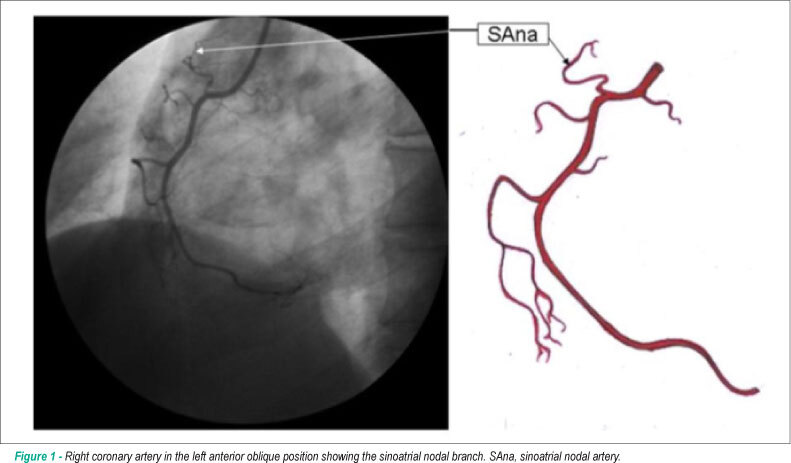
BACKGROUND: To study the arterial supply of the conducting system and its correlation with the dominance of the coronary arteries in the South Indian population. OBJECTIVE: To determine angiographically the origins of the sinoatrial nodal artery (SAna) and atrioventricular nodal artery (AVna) in Indians. METHODS: The study included 300 consecutive patients (114 females, 186 males; mean age, 55 years) living in the southern coastal region of India, who underwent coronary angiography either for the symptoms of chest pain, angina pectoris or positive Treadmill Test. The angiograms contained both coronary arteries (right and left) in the right and left anterior oblique position. The origin of SAna and AVna from the coronary arteries was observed and correlated with the arterial dominance. RESULTS: The SA (sinoatrial) node was supplied by the right coronary artery (RCA) in 53% of the cases, by the circumflex (Cx) branch of left coronary artery (LCA) in 42.66%, and by both coronary arteries in 4.33% of cases. The AV (atrioventricular) node was also more often supplied by the RCA (72.33% of cases) than by the Cx branch of the LCA (27.66%), and surprisingly in none of the cases was this node supplied by both coronary arteries. CONCLUSION: The results of the present study may help cardiac surgeons, particularly in surgeries related to certain valvular disorders, due to the proximity of the nodal branches to the valve complex.

  • Angiography
  • atrioventricular node
  • Coronary Vessels
  • sinoatrial node
Read Full Article
Creative Commons Attribution (CC BY) Creative Commons license
20/07/2009 DOI: 10.1590/S0066-782X2009000500002 Views 1

How to cite this article

EndNote RIS

Electronic Document Format (Vancouver)

Facin M, Samesima N. The Rare Alternans Pre-Excitation Pattern: Is It a Genuinely Benign Phenomenon?. Arquivos Brasileiros de Cardiologia 2023;120(1):e20220864.

Electronic Document Format (ABNT)

Facin, Mirella; Samesima, Nelson. The Rare Alternans Pre-Excitation Pattern: Is It a Genuinely Benign Phenomenon?. Arquivos Brasileiros de Cardiologia, v. 120, n. 1, e20220864, Feb. 2023.

Electronic Document Format (APA)

Facin, M., & Samesima, N. (2023). The Rare Alternans Pre-Excitation Pattern: Is It a Genuinely Benign Phenomenon?. Arquivos Brasileiros de Cardiologia, 120(1), e20220864.

Electronic Document Format (ISO)

Facin, Mirella and Samesima, Nelson. The Rare Alternans Pre-Excitation Pattern: Is It a Genuinely Benign Phenomenon?. Arquivos Brasileiros de Cardiologia [online]. 2023, vol. 120, n. 1, [cited 2026-10-14], e20220864. Available from: <https://journals.cardiol.br/en/article/the-rare-alternans-pre-excitation-pattern-is-it-a-genuinely-benign-phenomenon/>. ISSN 0066-782X

EndNote RIS

Electronic Document Format (Vancouver)

Costa MAC, Santos JFLP, Schafranski MD. Prevalence of Atrial Fibrillation in Pacemaker Patients. International Journal of Cardiovascular Sciences 2022;35(3):373-81.

Electronic Document Format (ABNT)

Costa, Mario Augusto Cray da; Santos, Jorge Felipe do Lago Pereira dos; Schafranski, Marcelo Derbli. Prevalence of Atrial Fibrillation in Pacemaker Patients. International Journal of Cardiovascular Sciences, v. 35, n. 3, p. 373-381, Feb. 2022.

Electronic Document Format (APA)

Costa, M. A. C. , Santos, J. F. L. P. , & Schafranski, M. D. (2022). Prevalence of Atrial Fibrillation in Pacemaker Patients. International Journal of Cardiovascular Sciences, 35(3), 373-381.

Electronic Document Format (ISO)

Costa, Mario Augusto Cray da and Santos, Jorge Felipe do Lago Pereira dos and Schafranski, Marcelo Derbli. Prevalence of Atrial Fibrillation in Pacemaker Patients. International Journal of Cardiovascular Sciences [online]. 2022, vol. 35, n. 3, [cited 2026-10-14], pp. 373-381. Available from: <https://journals.cardiol.br/en/article/prevalence-of-atrial-fibrillation-in-pacemaker-patients/>. ISSN 2359-4802

EndNote RIS

Electronic Document Format (Vancouver)

Paola AAV. Translational Approach for Percutaneous Interventions for the Treatment of Cardiac Arrhythmias. International Journal of Cardiovascular Sciences 2020;33(5):550-64.

Electronic Document Format (ABNT)

Paola, Angelo Amato Vincenzo de. Translational Approach for Percutaneous Interventions for the Treatment of Cardiac Arrhythmias. International Journal of Cardiovascular Sciences, v. 33, n. 5, p. 550-564, Oct. 2020.

Electronic Document Format (APA)

Paola, A. A. V. (2020). Translational Approach for Percutaneous Interventions for the Treatment of Cardiac Arrhythmias. International Journal of Cardiovascular Sciences, 33(5), 550-564.

Electronic Document Format (ISO)

Paola, Angelo Amato Vincenzo de. Translational Approach for Percutaneous Interventions for the Treatment of Cardiac Arrhythmias. International Journal of Cardiovascular Sciences [online]. 2020, vol. 33, n. 5, [cited 2026-10-14], pp. 550-564. Available from: <https://journals.cardiol.br/en/article/translational-approach-for-percutaneous-interventions-for-the-treatment-of-cardiac-arrhythmias/>. ISSN 2359-4802

EndNote RIS

Electronic Document Format (Vancouver)

Ramanathan L, Shetty P, Nayak SR, Krishnamurthy A, Chettiar GK, Chockalingam A. Origin of the sinoatrial and atrioventricular nodal arteries in South Indians: an angiographic study. Arquivos Brasileiros de Cardiologia 2009;92(5):342-8.

Electronic Document Format (ABNT)

Ramanathan, Lakshmi; Shetty, Prakash; Nayak, Soubhagya R.; Krishnamurthy, Ashwin; Chettiar, Ganesh K.; Chockalingam, Annamalai. Origin of the sinoatrial and atrioventricular nodal arteries in South Indians: an angiographic study. Arquivos Brasileiros de Cardiologia, v. 92, n. 5, p. 342-348, Jul. 2009.

Electronic Document Format (APA)

Ramanathan, L., Shetty, P., Nayak, S. R., Krishnamurthy, A., Chettiar, G. K., & Chockalingam, A. (2009). Origin of the sinoatrial and atrioventricular nodal arteries in South Indians: an angiographic study. Arquivos Brasileiros de Cardiologia, 92(5), 342-348.

Electronic Document Format (ISO)

Ramanathan, Lakshmi and Shetty, Prakash and Nayak, Soubhagya R. and Krishnamurthy, Ashwin and Chettiar, Ganesh K. and Chockalingam, Annamalai. Origin of the sinoatrial and atrioventricular nodal arteries in South Indians: an angiographic study. Arquivos Brasileiros de Cardiologia [online]. 2009, vol. 92, n. 5, [cited 2026-10-14], pp. 342-348. Available from: <https://journals.cardiol.br/en/article/origin-of-the-sinoatrial-and-atrioventricular-nodal-arteries-in-south-indians-an-angiographic-study/>. ISSN 0066-782X

  • About ABC Family
  • Internal Regulation
  • Editorial Board
  • Brazilian Society of Cardiology (SBC)

Issues

SBC Guidelines

  • Videos
  • Podcasts
  • News