ABC Family Arquivos Brasileiros de Cardiologia International Journal of Cardiovascular Sciences ABC Heart Failure & Cardiomyopathy ABC Imagem Cardiovascular
Português English
ABC Family
Português English
  • About
    • About ABC Family
    • Internal Regulation
    • Editorial Board
    • Brazilian Society of Cardiology (SBC)
  • Issues
  • SBC Guidelines
  • Content
    • Videos
    • Podcasts
    • News
  • About
    • About ABC Family
    • Internal Regulation
    • Editorial Board
    • Brazilian Society of Cardiology (SBC)
  • Issues
  • SBC Guidelines
  • Content
    • Videos
    • Podcasts
    • News

ABC Family

  • ABC Family
  • Arquivos Brasileiros de Cardiologia
  • International Journal of Cardiovascular Sciences
  • ABC Heart Failure & Cardiomyopathy
  • ABC Imagem Cardiovascular
Search in

No content found.

Journals
Ordering
Article types
Others

  1. Home
  2. Keyword: Cardiopulmonary Resuscitation
ABC
Editorial

Extracorporeal Cardiopulmonary Resuscitation in Latin America: It is Not All about the Money

Luiz Fernando Caneo

When conventional cardiopulmonary resuscitation fails to restore circulation after cardiac arrest, the window for survival with a favorable neurological outcome narrows rapidly. Extracorporeal cardiopulmonary resuscitation (ECPR) has emerged as a potential strategy to prolong this window by rapidly establishing circulatory and respiratory support through venoarterial extracorporeal membrane oxygenation (VA-ECMO). According to the Extracorporeal Life Support Organization (ELSO), ECPR is defined as the rapid initiation of VA-ECMO in patients with refractory cardiac arrest who do not achieve sustained return of spontaneous circulation (ROSC) through conventional resuscitation.

ECPR has become an established rescue strategy for refractory cardiac arrest in both in-hospital (IHCA) settings and selected out-of-hospital cases (OHCA) referred to specialized centers. Outcomes after cardiac arrest differ substantially between these settings. Patients with IHCA typically experience better survival and neurological outcomes than those with OHCA, primarily due to earlier recognition, immediate high-quality CPR, and rapid access to advanced interventions such as defibrillation and invasive monitoring. Conversely, OHCA is frequently associated with delays in recognition and treatment, prolonged no-flow and low-flow intervals, and variability in prehospital care. Timely intervention and rapid access to advanced therapies remain critical determinants of survival and neurological recovery.

[…]

  • Cardiopulmonary Resuscitation
  • Extracorporeal Membrane Oxygenation
  • Heart Arrest
Read Full Article
Creative Commons Attribution (CC BY) Creative Commons license
25/05/2026 DOI: 10.36660/abc.20260240i Views 2
Extracorporeal Cardiopulmonary Resuscitation for In-Hospital Cardiac Arrest: A Single-Center Experience in Latin America
ABC
Original Article

Extracorporeal Cardiopulmonary Resuscitation for In-Hospital Cardiac Arrest: A Single-Center Experience in Latin America

Lucrecia M. Burgos et al. Leonardo A. Seoane Ana Spaccavento Juan F. Furmento … Juan P. Costabel Rocio C. Baro Vila Maria A. de Bortoli Daniel O. Navia Fernando Piccinini Mariano Vrancic Mirta Diez

Abstract

Background:

Extracorporeal cardiopulmonary resuscitation (ECPR) is the use of extracorporeal membrane oxygenation (ECMO) in patients in whom conventional cardiopulmonary resuscitation measures have failed to achieve a sustained return of spontaneous circulation after cardiorespiratory arrest. Limited information is available in centers in Latin America.

Objective:

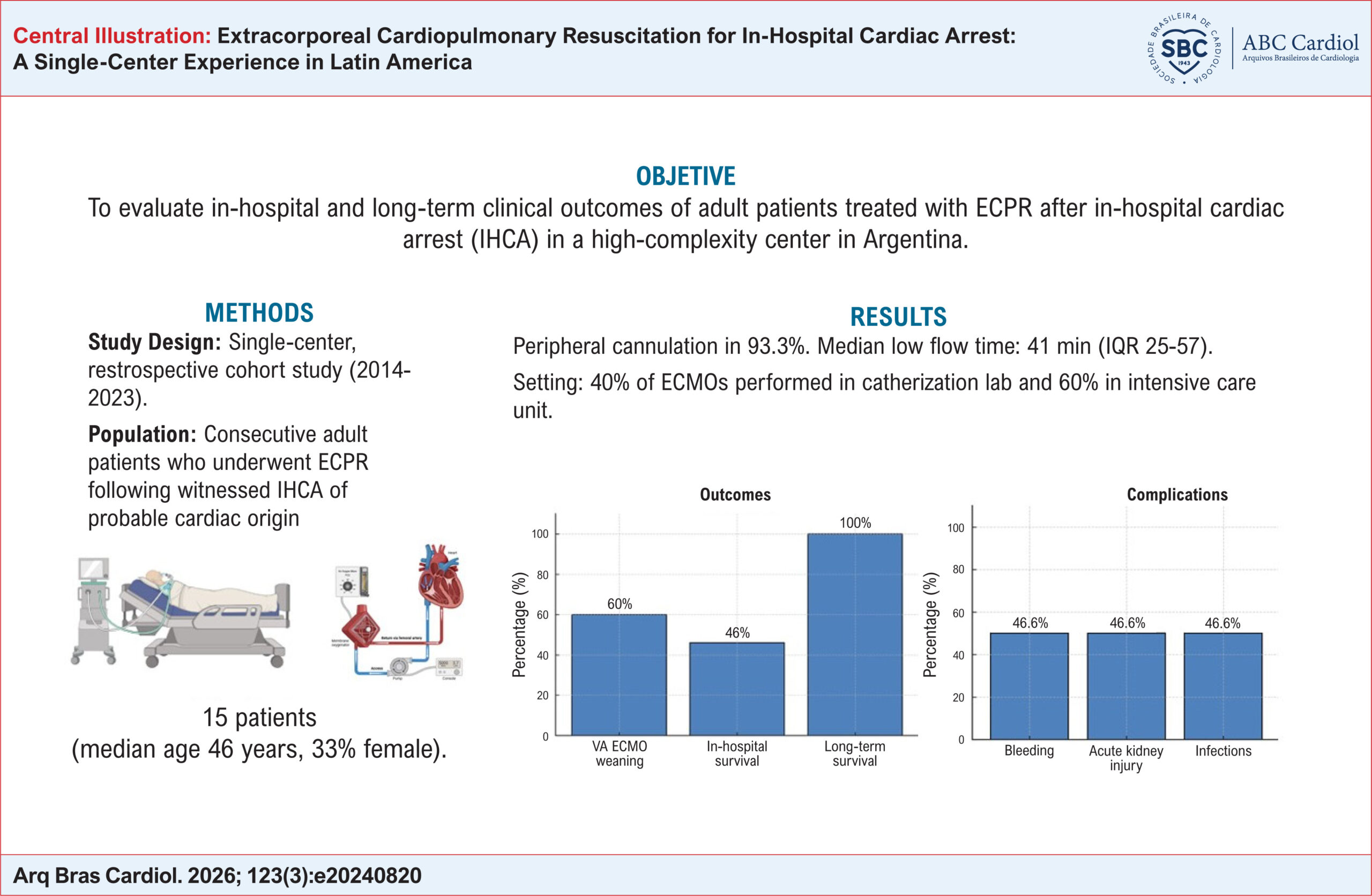
To evaluate in-hospital and long-term clinical outcomes of adult patients treated with ECPR after in-hospital cardiac arrest (IHCA) in a high-complexity center in Argentina.

Methods:

A single-center cohort study was performed. Consecutive adult patients who underwent ECPR between 2014 and 2023 were retrospectively analyzed. Witnessed IHCA cases of probable cardiac origin were included.

Results:

Fifteen patients were included in the analysis, representing 16% of the venoarterial ECMO cases implanted at the center during this period. The median age was 46 years (interquartile range [IQR]: 34 to 57); 33% were female. Cannulation was peripheral in 93.3%, and 66% of ECMO runs were placed with an initial bridging strategy to recovery. The median duration of circulatory support was 5 days (IQR: 2 to 9). Venoarterial ECMO was successfully removed in 60% of patients, and in-hospital survival was 46%. Median follow-up after discharge was 12 months (IQR: 3 to 34), with 100% long-term survival.

Conclusion:

Venoarterial ECMO as a treatment for IHCA in our center demonstrated acceptable survival to hospital discharge and long-term survival. Venoarterial ECMO may be an effective treatment in highly selected patients when conventional therapies fail and may be useful and applicable in a low- and middle-income country with limited access to other circulatory assist devices.

  • Cardiac arrest
  • Cardiopulmonary Resuscitation
  • Extracorporeal Membrane Oxygenation
Read Full Article
Creative Commons Attribution (CC BY) Creative Commons license
11/05/2026 DOI: 10.36660/abc.20240820i Views 1
Prospective Longitudinal Study on Mortality and Quality of Care for Ward Patients Following Rapid Response Team Implementation in Brazil
IJCS
Original Article

Prospective Longitudinal Study on Mortality and Quality of Care for Ward Patients Following Rapid Response Team Implementation in Brazil

Fernanda Aburesi Salvadori et al. Renata Kobayasi Maria Beatriz Perondi Edison Ferreira de Paiva

Abstract

Background:

A Rapid Response Team (RRT) is a multidisciplinary team trained to assist hospitalized patients experiencing cardiac arrest (CA) or sudden clinical deterioration. Its effectiveness, however, remains debatable.

Objectives:

This study aimed to characterize the changes that occurred in a quaternary, highly complex hospital following the adoption of the RRT and to ascertain whether its implementation was associated with a decline in the mortality rates of patients admitted to wards.

Methods:

This was a prospective observational study conducted from April 1st, 2014, to December 31, 2019. The study compared patient mortality and clinical outcomes after the implementation of the RRT, focusing on the frequency and outcomes of “code blue” (CA) and “code yellow” (other types of clinical deterioration) calls. Pearson’s chi-squared test (χ²) was employed to compare categorical variables, while the Student’s t-test was utilized to compare continuous variables for independent samples. P-values < 0.05 were considered statistically significant.

Results:

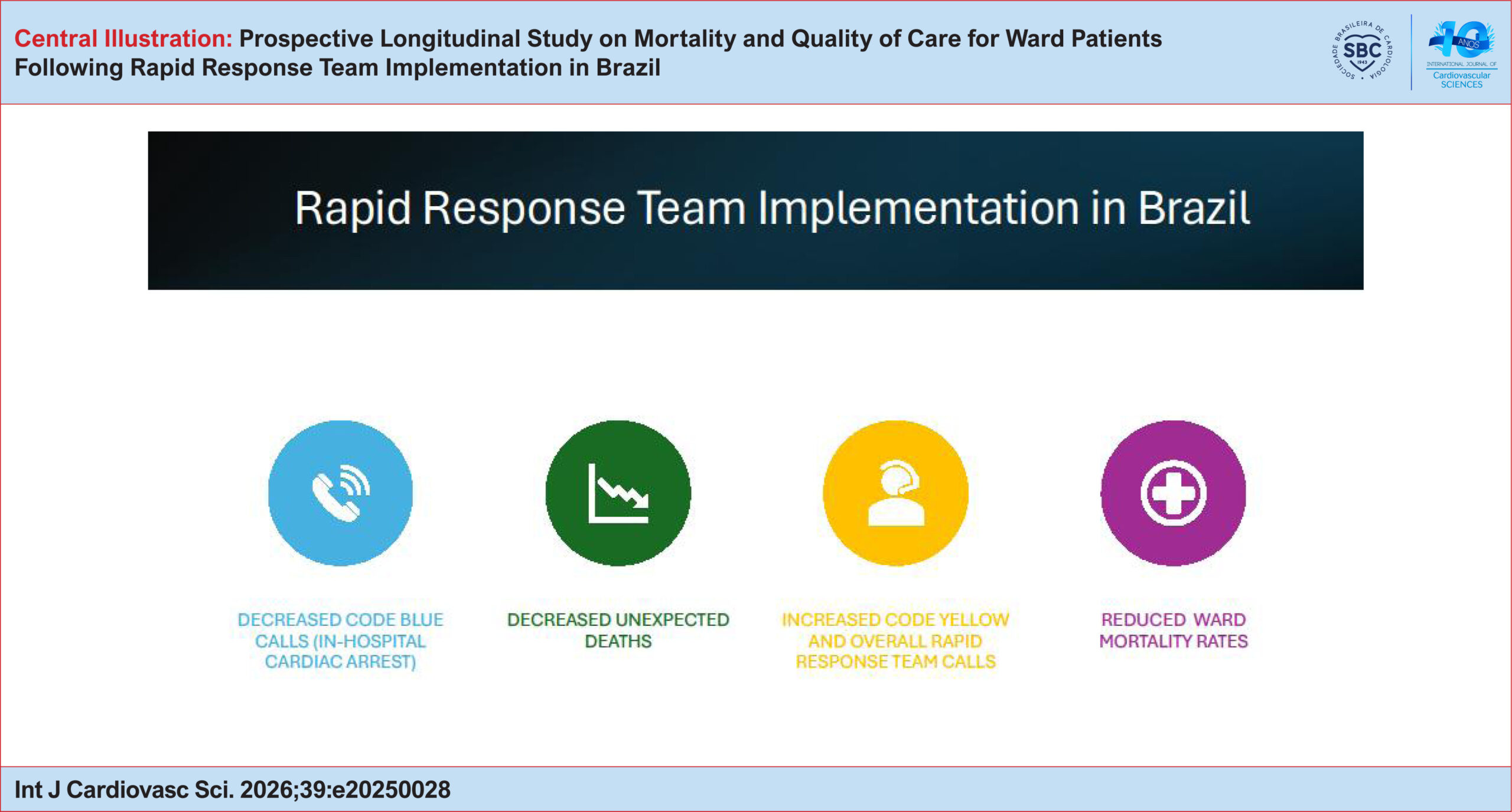
The team responded to a total of 2,194 inpatient calls, 495 for code blue and 1,699 for code yellow. In the years following the team’s implementation, the number of deaths and code blue calls decreased, while the number of code yellow and total RRT calls increased. When comparing the first and second three-year terms, there were no significant differences regarding code blue mortality (276/293 [94.2%] vs. 184/200 [92%], p = 0.338). Still, survival rates for patients assisted during code yellow calls increased (348/609 [57.1%] vs. 648/1,005 [64.5%], p = 0.003). This improvement in code yellow outcomes was associated with a reduction in the overall ward mortality rate (1,078/96,866 [1.1%] vs. 788/85,019 [0.9%], p < 0.001).

Conclusion:

The implementation of the RRT was associated with a decrease in the number of in-hospital CA and unexpected deaths over six years, as well as an increase in the number of code yellow and overall RRT calls. Overall ward mortality also declined.

  • Cardiopulmonary Resuscitation
  • Heart Arrest
  • Hospital Care
  • Hospital Rapid Response Team
  • Quality of Health Care
Read Full Article
Creative Commons Attribution (CC BY) Creative Commons license
13/03/2026 DOI: 10.36660/ijcs.20250028 Views 2
IJCS
Editorial

Rescuing Lives: Reflecting on the Future of Cardiopulmonary Arrest Care

Sergio Timerman

Current Overview

Between 2018 and 2022, data from 2,154 cases attended by a mobile emergency service were analyzed. This analysis not only reinforced the severity of CPA, with mortality rates still alarmingly high, but also emphasized the impact of early interventions. Bystander-initiated cardiopulmonary resuscitation (CPR), the use of automated external defibrillators (AEDs), and ongoing training of emergency teams are critical pillars for changing this scenario.,

However, the effectiveness of care is still heavily reliant on one critical factor: time. Every minute of delay drastically reduces survival chances, reinforcing the importance of robust and quick response systems, both in urban and rural settings.,

[…]

  • Artificial Intelligence
  • Cardiopulmonary Resuscitation
  • Heart Arrest
Read Full Article
Creative Commons Attribution (CC BY) Creative Commons license
17/04/2025 DOI: 10.36660/ijcs.20250010
Central Illustration
IJCS
Original Article

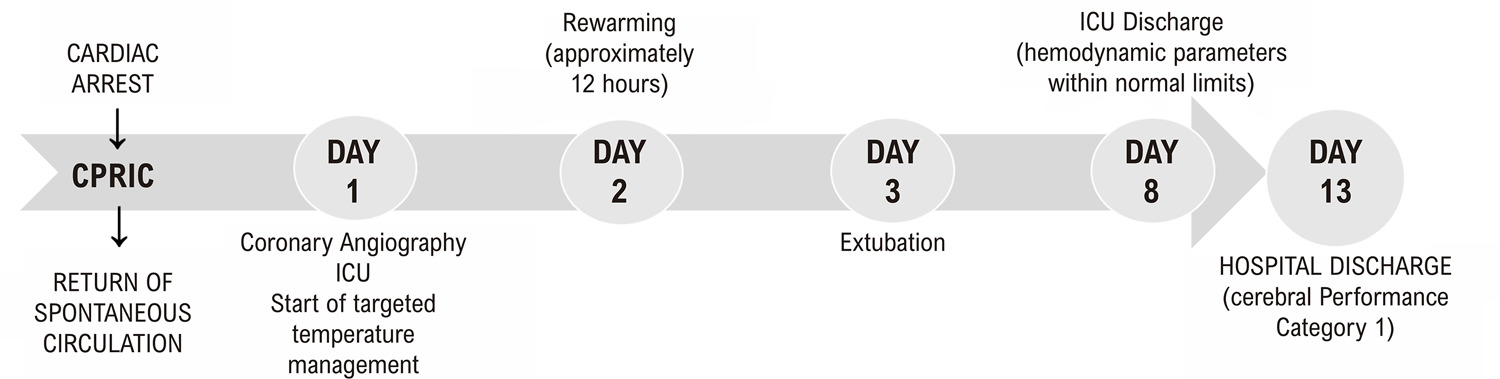
Cardiopulmonary Resuscitation-Induced Consciousness (CPRIC): Occurrence and Perception of Health Professionals and Firemen

Matheus Sousa Arci et al. Lívia Maria Coura de Sá Lucas Alves Oliveira Giulia Bortoloni Agria … Christian Morinaga Ricardo Toshio Enohi

Abstract

Background:

Cardiopulmonary Resuscitation-Induced Consciousness (CPRIC) is rare and poorly understood, impacting the effectiveness of Cardiopulmonary Resuscitation (CPR). In Brazil, investigating the prevalence and characteristics of CPRIC is essential in order to improve protocols and properly train health professionals and firefighters.

Objectives:

To investigate the occurrence of CPRIC and to verify the knowledge and experience of health professionals and firefighters concerning this phenomenon.

Methods:

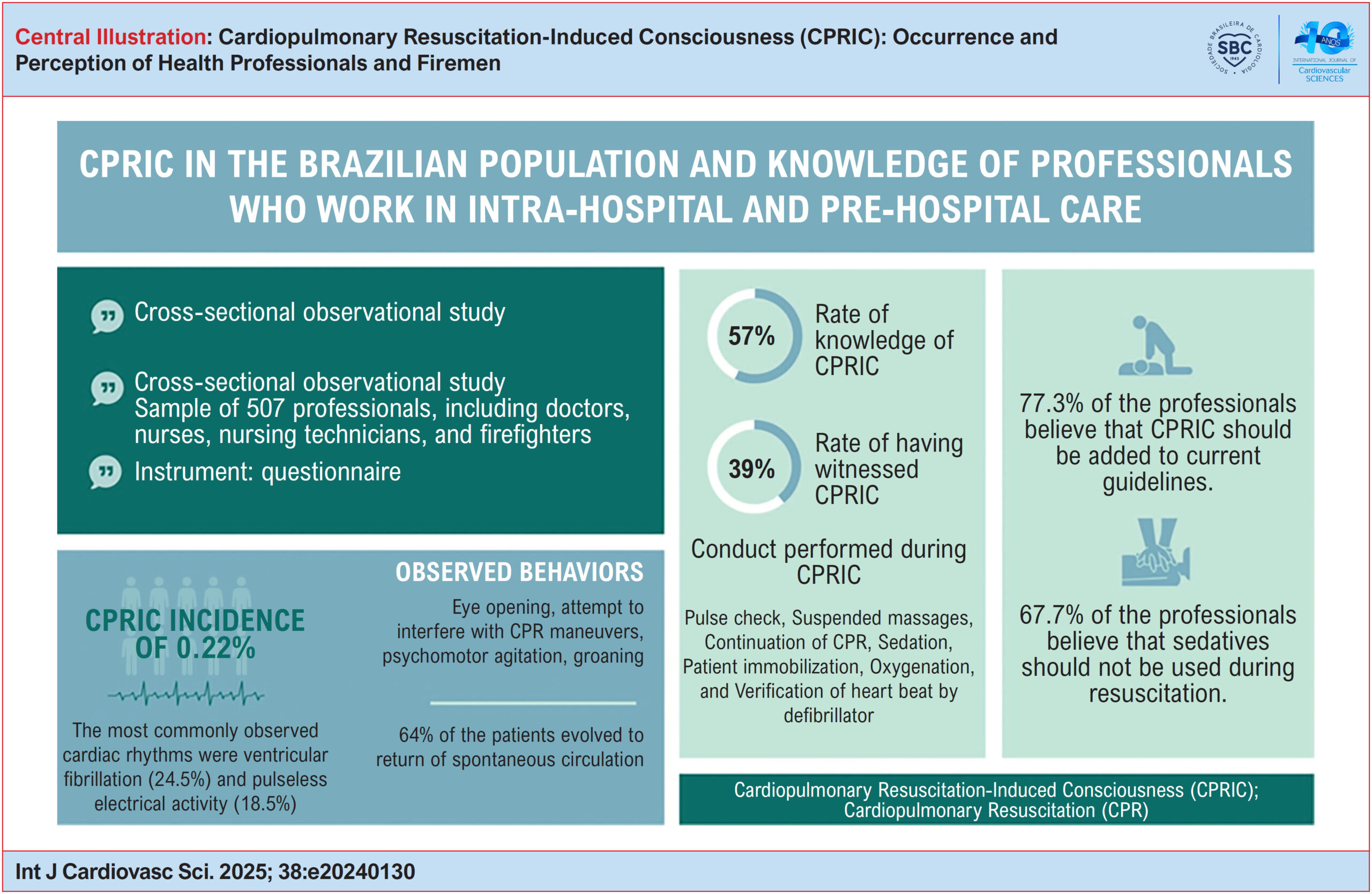
This work was a cross-sectional observational study conducted with 507 professionals from different regions of Brazil who work directly with resuscitation maneuvers. An online questionnaire, containing 19 questions about professional profile, experience in cardiopulmonary arrest (CPA), and knowledge and recognition of CPRIC, was used. Data were analyzed using descriptive and inferential statistical techniques, including unpaired Student’s t-test and chi-square test, along with logistic regression to calculate the odds ratio (OR). The level of statistical significance was p<0.05.

Results:

The CPRIC presence rate was 0.22%, with 57.2% of the professionals reporting prior knowledge of the phenomenon. Inferential analysis showed that profession, number of CPAs witnessed in the last year, and specialization were significantly associated with CPRIC knowledge.

Conclusion:

Limited understanding and variability in exposure highlight the need to update CPRIC management guidelines, incorporating specific guidance on CPRIC.

  • Cardiopulmonary Resuscitation
  • Consciousness
  • Heart Arrest
Read Full Article
Creative Commons Attribution (CC BY) Creative Commons license
11/04/2025 DOI: 10.36660/ijcs.20240130 Views 2
Retrospective Analysis of 2.154 Cardiopulmonary Arrest Assistance Provided by a Mobile Emergency Service From 2018-2022
IJCS
Original Article

Retrospective Analysis of 2.154 Cardiopulmonary Arrest Assistance Provided by a Mobile Emergency Service From 2018-2022

Roseana Boek Carvalho et al. Rodrigo Pereira de Almeida Bruna Marmett Liliane Appratto de Souza … Fabiano Barrionuevo Fernanda Donner Alves

Abstract

Background

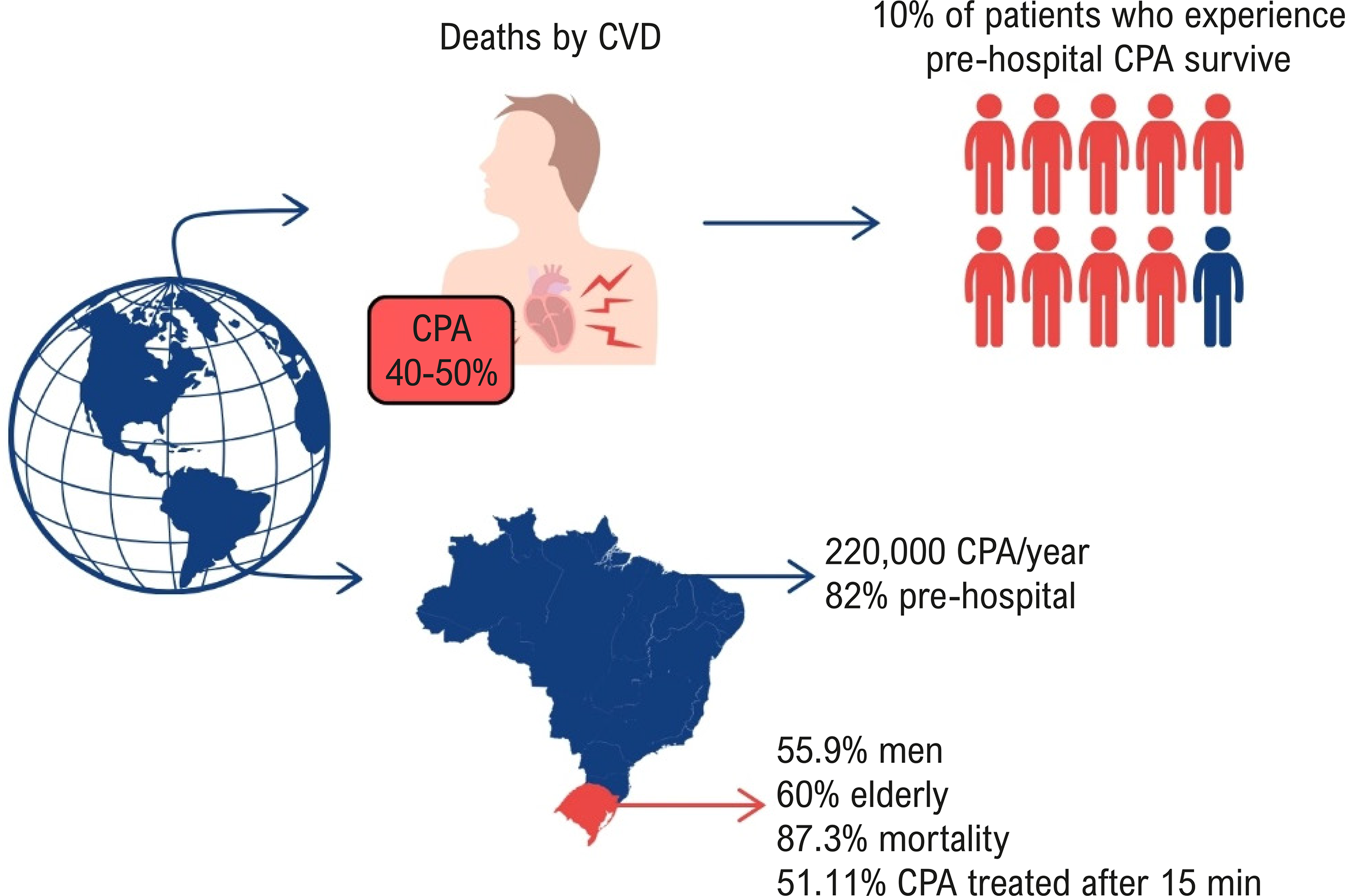
It is estimated that 1 in 10 patients will survive a cardiopulmonary arrest (CPA), with half of them occurring in an out-of-hospital setting. Mobile pre-hospital care services aim to reduce morbidity and mortality resulting from CPA.

Objective

To analyze five years of data regarding response time for assistance, mortality, and characteristics of victims of out-of-hospital CPA cases treated by a public mobile emergency service in Southern Brazil.

Methods

Data collected between 2018 and 2022 included the number of CPA cases, victim profile (age and sex), and details of each incident (day of the week, month, shift, city area, time elapsed before initiating basic life support [BLS], and mortality prior to arrival at the referral hospital). Pearson’s Chi-square and Mann-Whitney U tests were used with a significance level of 5%.

Results

The victims’ profile was mostly elderly (60%) and men (55.9%). The mortality rate from CPA was 87.3%, with over half of the cases (51.11%) requiring more than 15 minutes to initiate assistance. A longer response time was significantly associated with higher CPA mortality rates (p < 0.05).

Conclusion

The data showed a profile of victims that was mostly male and elderly. In more than half of the cases, BLS initiation took over 15 minutes, a delay that was linked to the high mortality rate of CPA, highlighting the association between mortality and time to assistance.

  • cardiopulmonary arrest
  • Cardiopulmonary Resuscitation
  • emergency medical system
Read Full Article
Creative Commons Attribution (CC BY) Creative Commons license
28/02/2025 DOI: 10.36660/ijcs.20240036
Figure 1
IJCS
Case Report

Cardiopulmonary Resuscitation Induced Consciousness: Case Report

Daniela Aparecida Morais et al. Anselmo Dornas Moura Daniel Claus Fruk Guelfi Cintia Maria Guedes de Moraes Guilherme Augusto Cruz Machado

Introduction

High-quality cardiopulmonary resuscitation (CPR) can generate cerebral blood flow capable of inducing different levels of consciousness in patients. This process, called CPR-induced consciousness (CPRIC), has been reported in the literature.–

The prevalence of CPRIC has been estimated at 0.3% to 0.9%. However, this low prevalence could be attributed to study design or sample size.

[…]

  • Cardiac arrest
  • Cardiopulmonary Resuscitation
  • Cases reports
  • Consciousness
Read Full Article
Creative Commons Attribution (CC BY) Creative Commons license
08/03/2024 DOI: 10.36660/ijcs.20220023 Views 1
ABC
Editorial

Ventilation and Respiratory Parameters in CPR: Where are We and Next Steps!

Hélio Penna Guimarães

The first mention of cardiopulmonary resuscitation refers to the moment of Adam’s creation, in which God “breathed into his mouth, giving him life.” The Bible also mentions, in the book of the Kings, prophet Elisha, a disciple of Elijah, who revived a young son of a Shunamite widow, whose description is less symbolic and more precise in its detailing, being considered by many historians to be the first account of CPR maneuvers. “… and he went up, and lay upon the child, and put his mouth upon his mouth, and his eyes upon his eyes, and his hands upon his hands: and he stretched himself upon the child; the child sneezed seven times, and the child opened his eyes,” maneuver performed by Elisha, narrated in II Kings 4:34-35141.

Paracelsus evaluated, in 1530, the use of fireplace bellows to introduce air into the lungs of apparently dead individuals, characterizing the first and rustic attempts at artificial ventilation, based on the current principle of positive pressure ventilation using the bag-valve-mask units.

[…]

  • Cardiopulmonary Resuscitation
  • Heart Arrest
  • ventilation
Read Full Article
Creative Commons Attribution (CC BY) Creative Commons license
18/09/2023 DOI: 10.36660/abc.20230492
Figure 1
ABC
Original Article

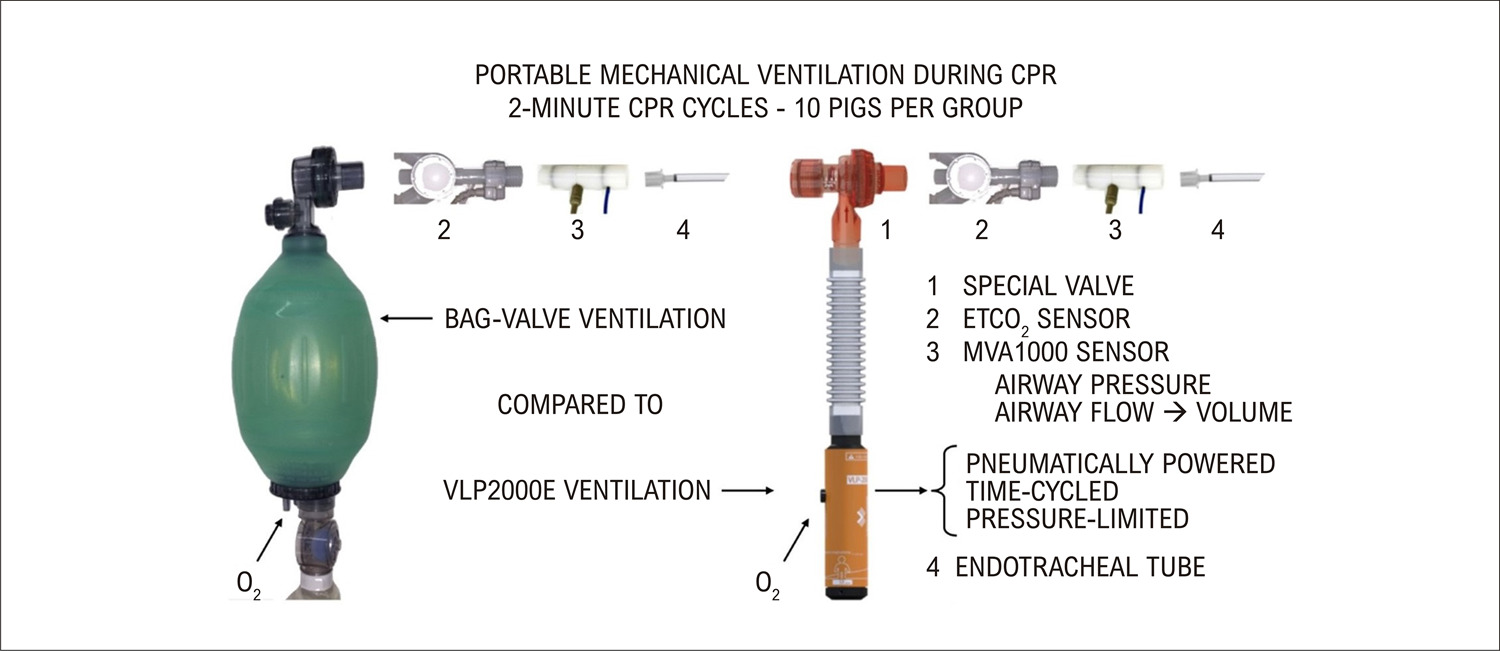
Use of a Portable Mechanical Ventilator during Cardiopulmonary Resuscitation is Feasible, Improves Respiratory Parameters, and Prevents the Decrease of Dynamic Lung Compliance

Manoel Ângelo Gomes Palácio et al. Edison Ferreira de Paiva Gustavo Bernardes de Figueiredo Oliveira Luciano César Pontes de Azevedo … Bruno Gregnanin Pedron Elizabete Silva dos Santos Ari Timerman

Abstract

Background

For practical and protective ventilation during cardiopulmonary resuscitation (CPR), a 150-grams mechanical ventilator (VLP2000E) that limits peak inspiratory pressure (PIP) during simultaneous ventilation with chest compressions was developed.

Objectives

To evaluate the feasibility of VLP2000E ventilation during CPR and to compare monitored parameters versus bag-valve ventilation.

Methods

A randomized experimental study with 10 intubated pigs per group. After seven minutes of ventricular fibrillation, 2-minute CPR cycles were delivered. All animals were placed on VLP2000E after achieving return of spontaneous circulation (ROSC).

Results

Bag-valve and VLP2000E groups had similar ROSC rate (60% vs. 50%, respectively) and arterial oxygen saturation in most CPR cycles, different baseline tidal volume [0.764 (0.068) vs. 0.591 (0.123) L, p = 0.0309, respectively] and, in 14 cycles, different PIP [52 (9) vs. 39 (5) cm H2O, respectively], tidal volume [0.635 (0.172) vs. 0.306 (0.129) L], ETCO2[14 (8) vs. 27 (9) mm Hg], and peak inspiratory flow [0.878 (0.234) vs. 0.533 (0.105) L/s], all p < 0.0001. Dynamic lung compliance (≥ 0.025 L/cm H2O) decreased after ROSC in bag-valve group but was maintained in VLP2000E group [0.019 (0.006) vs. 0.024 (0.008) L/cm H2O, p = 0.0003].

Conclusions

VLP2000E ventilation during CPR is feasible and equivalent to bag-valve ventilation in ROSC rate and arterial oxygen saturation. It produces better respiratory parameters, with lower airway pressure and tidal volume. VLP2000E ventilation also prevents the significant decrease of dynamic lung compliance observed after bag-valve ventilation. Further preclinical studies confirming these findings would be interesting.

  • Cardiopulmonary Resuscitation
  • Hyperventilation
  • Lung Compliance
  • Lung Injury
  • Ventilators Mechanical
Read Full Article
Creative Commons Attribution (CC BY) Creative Commons license
07/08/2023 DOI: 10.36660/abc.20220564
ABC
Editorial

Outcome Analysis after Out-of-Hospital Cardiac Arrest

Thais Rocha Salim et al. Gabriel Porto Soares

Cardiac arrest (CA) is defined as the cessation of mechanical activity of the heart, confirmed by the absence of signs of circulation, clinically manifested by unresponsiveness, absence of pulse, and breathing or gasping. CA is the final pathway and mechanism of death in various clinical or traumatic situations that vary with the patient’s age and the occurrence location. The reversal of CA and the prognosis after the event depend on identifying and implementing high-efficiency resuscitation measures. Rates of Return of Spontaneous Circulation (RSC), survival until hospital discharge, and short- and medium-term neurological condition are imprecise and vary in the literature. A meta-analysis of 141 studies from North America, Europe, Asia, and Oceania showed that RSC occurred in 29.7% of adult patients resuscitated in the out-of-hospital environment, and less than 10% survived until hospital discharge. The highest survival rates occurred in witnessed CA cases with early initiation of resuscitation maneuvers. In another meta-analysis that included 44 studies conducted in Europe, Asia, and North America, the use of extracorporeal circulation in out-of-hospital resuscitation resulted in survival rates of up to 24%, with 18% of patients having favorable neurological conditions. However, in the evaluated studies, the time for arrival of the mobile medical service was less than 5 minutes, which may have influenced the outcomes.

In Brazil, in the out-of-hospital environment, survival rates are related to the rhythm of CA. Shockable rhythms, ventricular tachycardia, or ventricular fibrillation account for nearly 80% of events, and when defibrillation is performed between 3-5 minutes from the onset of CA, the survival rate is around 50% to 70%. Meanwhile, non-shockable rhythms, such as pulseless electrical activity and asystole, have a survival rate of less than 17%. According to the Guidelines for Cardiopulmonary Resuscitation and Emergency Cardiovascular Care of the Sociedade Brasileira de Cardiologia , the survival rate in traumatic CA cases is less than 3%. An article published in the Arquivos Brasileiros de Cardiologia provides important information on survival rates and neurological conditions in out-of-hospital CAs in a Brazilian capital, allowing for the development of strategies to prevent such events and improve the cardiopulmonary resuscitation ( CPR) response teams. It is a cohort study conducted in Campo Grande, Mato Grosso do Sul (MS), Brazil. Retrospective data collection was performed from the Prehospital Care records of the Mobile Emergency Care Service, involving 852 victims over 18 years old who experienced out-of-hospital CA between January 2016 and December 2018. The cohort segment was established by collecting information from the medical records of the hospital units where the survivors were admitted or through interviews with the patients and their family members.

[…]

  • Cardiopulmonary Resuscitation
  • Heart Arrest
  • Out-of-Hospital Cardiac Arrest
Read Full Article
Creative Commons Attribution (CC BY) Creative Commons license
07/08/2023 DOI: 10.36660/abc.20230406
Central Illustration
ABC
Original Article

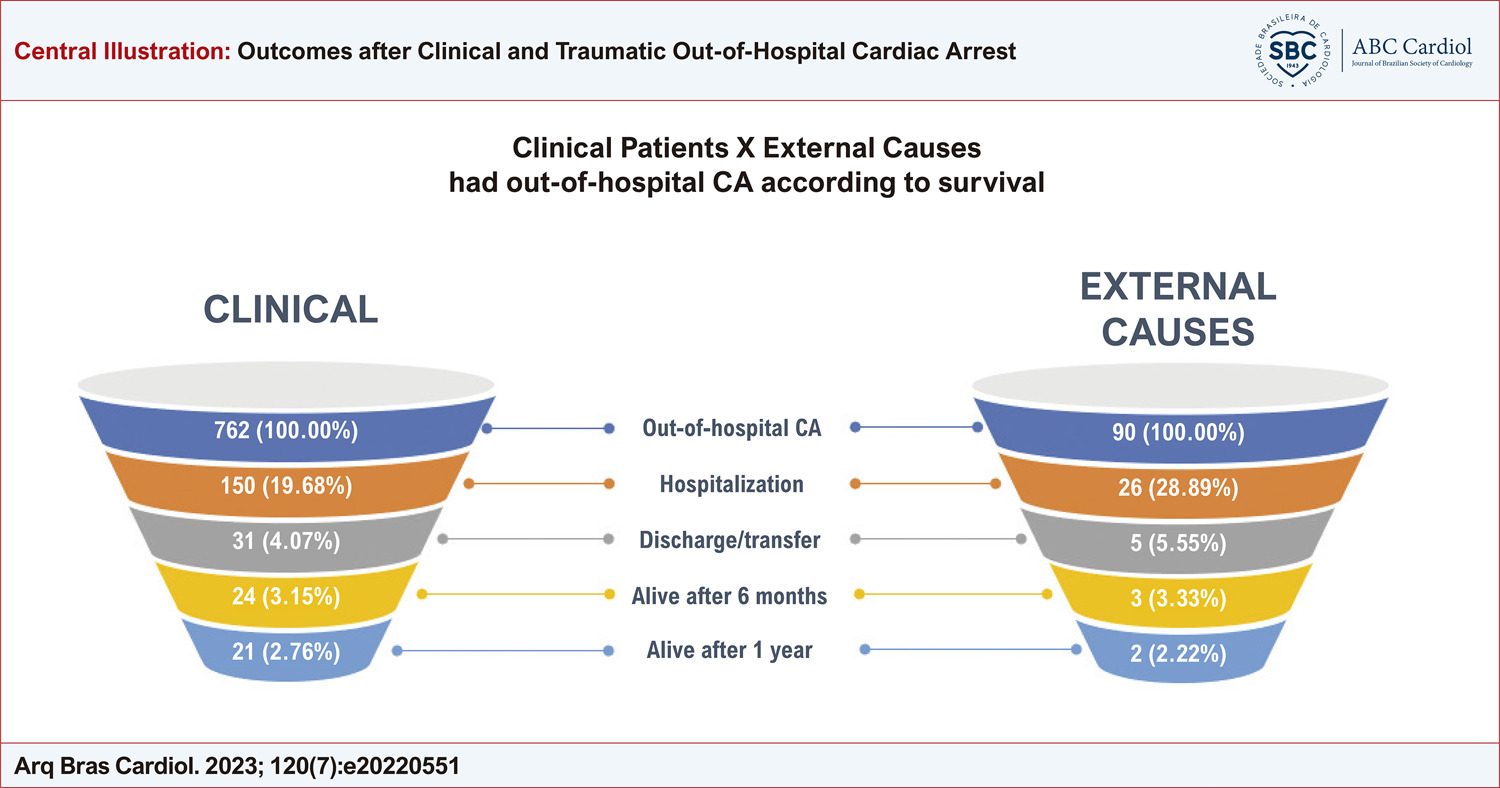
Outcomes after Clinical and Traumatic Out-of-Hospital Cardiac Arrest

Daiana Terra Nacer et al. Regina Márcia Cardoso de Sousa Anna Leticia Miranda

Abstract

Background

Data on out-of-hospital cardiac arrest are still scarce, very varied, and indicate a poor prognosis for traumatic events.

Objectives

To describe the out-of-hospital/in-hospital survival, survival time, and neurological conditions of those treated by advanced life support units and submitted to cardiopulmonary resuscitation and compare the results of clinical and traumatic cardiac arrests.

Methods

This is a cohort study carried out in three stages; in the first two, data were collected from the Mobile Emergency Care Service forms and medical records; then, the Brain Performance Category Scale was applied in the third stage. The sample consisted of resuscitated victims aged ≥18 years. Fisher’s and log-rank tests were used to compare the causes, considering a significance level of 5%.

Results

852 patients were analyzed; 20.66% were hospitalized, 4.23% survived until transfer or discharge, and 58.33% had a favorable outcome one year after arrest. There was an association between pre/in-hospital survival and the nature of the occurrence (p=0.026), but there was no difference between the survival curves (p=0.6).

Conclusions

Survival of hospitalization after out-of-hospital cardiac arrest was low; however, most who survived to be discharged achieved a favorable outcome after one year. The survival time of those hospitalized after clinical and traumatic events were similar, but pre-hospital survival was higher among trauma patients.

  • Cardiopulmonary Resuscitation
  • Emergency Medical Services
  • Heart Arrest
  • Out-of-Hospital Cardiac Arrest
  • Survivorship
Read Full Article
Creative Commons Attribution (CC BY) Creative Commons license
24/07/2023 DOI: 10.36660/abc.20220551 Views 1
Figure 1
ABC
Original Article

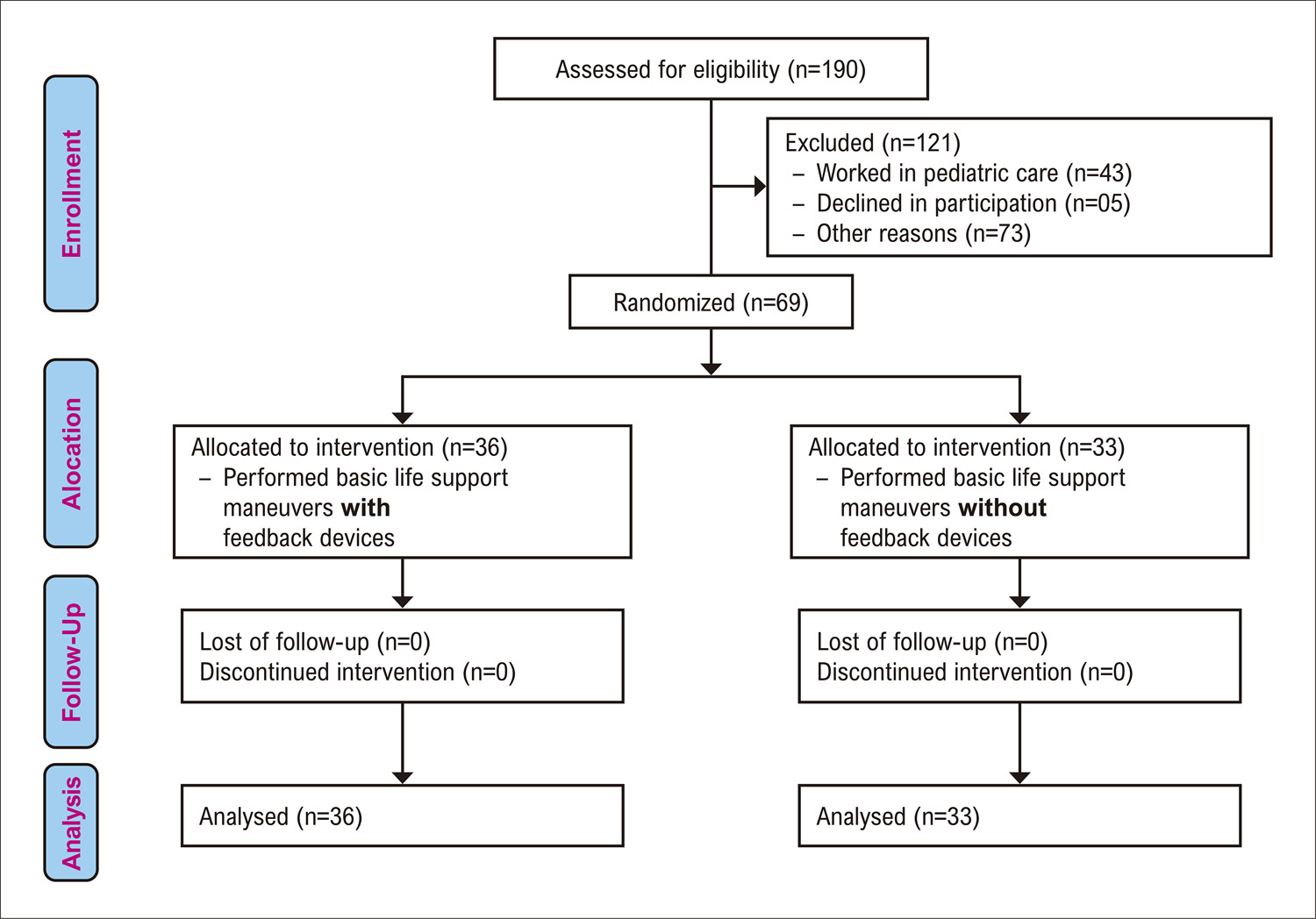
The Use of the Borg Rating of Perceived Exertion Scale in Cardiopulmonary Resuscitation

Lucia Tobase et al. Heloisa Helena Ciqueto Peres Thatiane Facholi Polastri Sandra Helena Cardoso … Dhieizom Rodrigo Souza Debora Gugelmin Almeida Sergio Timerman

Abstract

Background

A cardiopulmonary arrest is a critical event whose survival rate is related to the quality of resuscitation maneuvers combined with the use of technology. It is important to understand the perception of fatigue during this procedure, aiming to improve the effectiveness of compressions to increase the chances of survival.

Objectives

To apply the Borg rating of perceived exertion scale (Borg scale) to analyze the exertion perceived by nurses during cardiopulmonary resuscitation maneuvers using a feedback device.

Methods

Experimental study with a randomized distribution of nurses in a teaching hospital. Perceived exertion during simulated cardiopulmonary resuscitation with/without a feedback device was assessed using the Borg scale. The statistical significance level of 5% was adopted.

Results

69 nurses working in critical and non-critical adult care units were included. Perceived exertion and heart rate were lower in the intervention group (p<0.001), influenced by the feedback device, with no significant difference between critical and non-critical units.

Conclusions

The Borg scale proved to be adequate for the proposed objectives. The feedback device contributed to lower exertion and heart rate reduction during resuscitation maneuvers. The low cost and ease of application favor its use during training and real-time resuscitation attempts to assess performance using a feedback device to reduce exertion and perception of fatigue. It allows reflection on the intervening factors and resources that can influence the quality of resuscitation attempts and the chances of survival.

  • Cardiopulmonary Resuscitation
  • Emergencies
  • Heart Arrest
  • Nursing Care
  • Physical Exertion
Read Full Article
Creative Commons Attribution (CC BY) Creative Commons license
09/01/2023 DOI: 10.36660/abc.20220240 Views 1
Figure 1
ABC
Research Letter

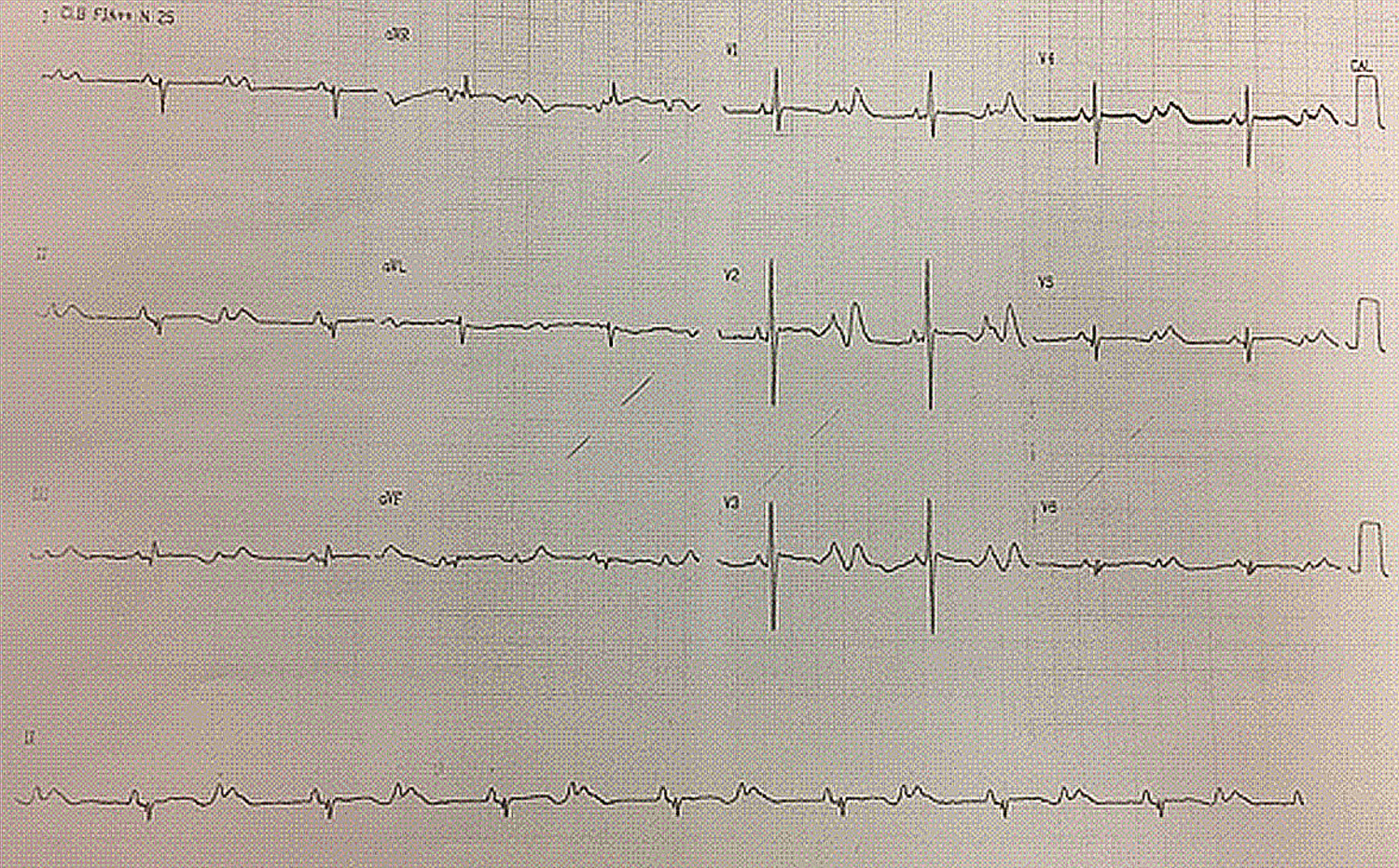
Mexiletine in a Newborn with Type 3 Long QT Syndrome: When Access is Difficult

Eduardo Nolla Silva Pereira et al. Luciana Sacilotto Gabrielle D’Arezzo Pessente Cinthya Guirao … Mariana Lombardi Peres de Carvalho Alexandre da Costa Pereira Francisco Carlos da Costa Darrieux Maurício Ibrahim Scanavacca

Introduction

Long QT syndrome type 3 (LQT3) is a highly lethal channelopathy. It is associated with delayed closing of sodium channels, resulting from mutations in the SCN5A gene, with an autosomal dominant pattern, responsible for 7-10% of all long QT syndromes (LQTSs). The initial presentation can have a wide spectrum, from asymptomatic to sudden death in the first year of life. The addition of class IB sodium channel blocker (mexiletine) to propranolol or nadolol is considered a gene-guided treatment, as its benefit is proven in LQT3. In some countries, such as Brazil, it is not feasible to treat patients with LQT3, because of the unavailability of mexiletine.

We present here a severe case of a child with LQT3, who underwent multiple implantable cardioverter-defibrillator (ICD) therapies because of difficult access to mexiletine in Brazil.

[…]

  • Cardiopulmonary Resuscitation
  • Infant, Newborn
  • Long QT Syndrome
  • Mexiletine/therapeutic
  • Tachycardia, Ventricular
  • Torsades de Pointes
Read Full Article
Creative Commons Attribution (CC BY) Creative Commons license
13/05/2022 DOI: 10.36660/abc.20210533 Views 2
Figure 1
ABC
Original Article

Retention of Cardiopulmonary Resuscitation Skills in Medical Students

Miguel Antônio Moretti et al. Adriana de Oliveira Camboim Caroline Awoki Ferrandez Isabela Corralo Ramos … Iaggo Bemini Costa Juliana Seidler Canonaco Vanessa Lopes Mathia João Fernando Monteiro Ferreira Antonio Carlos Palandri Chagas

Abstract

Background

Reduction of mortality and sequelae of cardiac arrest depends on an effective and fast intervention, started as soon as possible. Basic life support involves a series of steps that may be initiated out of the hospital setting and taught to any person in specific courses. However, it is important that the rescuers retain the knowledge and skills to perform cardiopulmonary resuscitation (CPR), as one never knows when they will be required. Studies have shown that a loss of skills occurs as early as 30 days after the training course, with variations according to personal and professional characteristics.

Objectives

to assess whether medical students are able to retain skills acquired in a BLS course for more than six months.

Methods

Prospective, case-control, observational study. Medical students attended a 40-hour course on sudden death and cardiac arrest. Skills acquired during the course were evaluated immediately after and six months after the course. Students’ individual scores were compared between these time points, the percentage of correct answers was evaluated, and overall performance was rated as excellent, good, and poor. Observers and evaluation criteria were the same immediately after the course and six months later. Data were analyzed using the paired t-test and the McNemar test. The 95% confidence interval was established, and a p < 0.05 was set as statistically significant.

Results

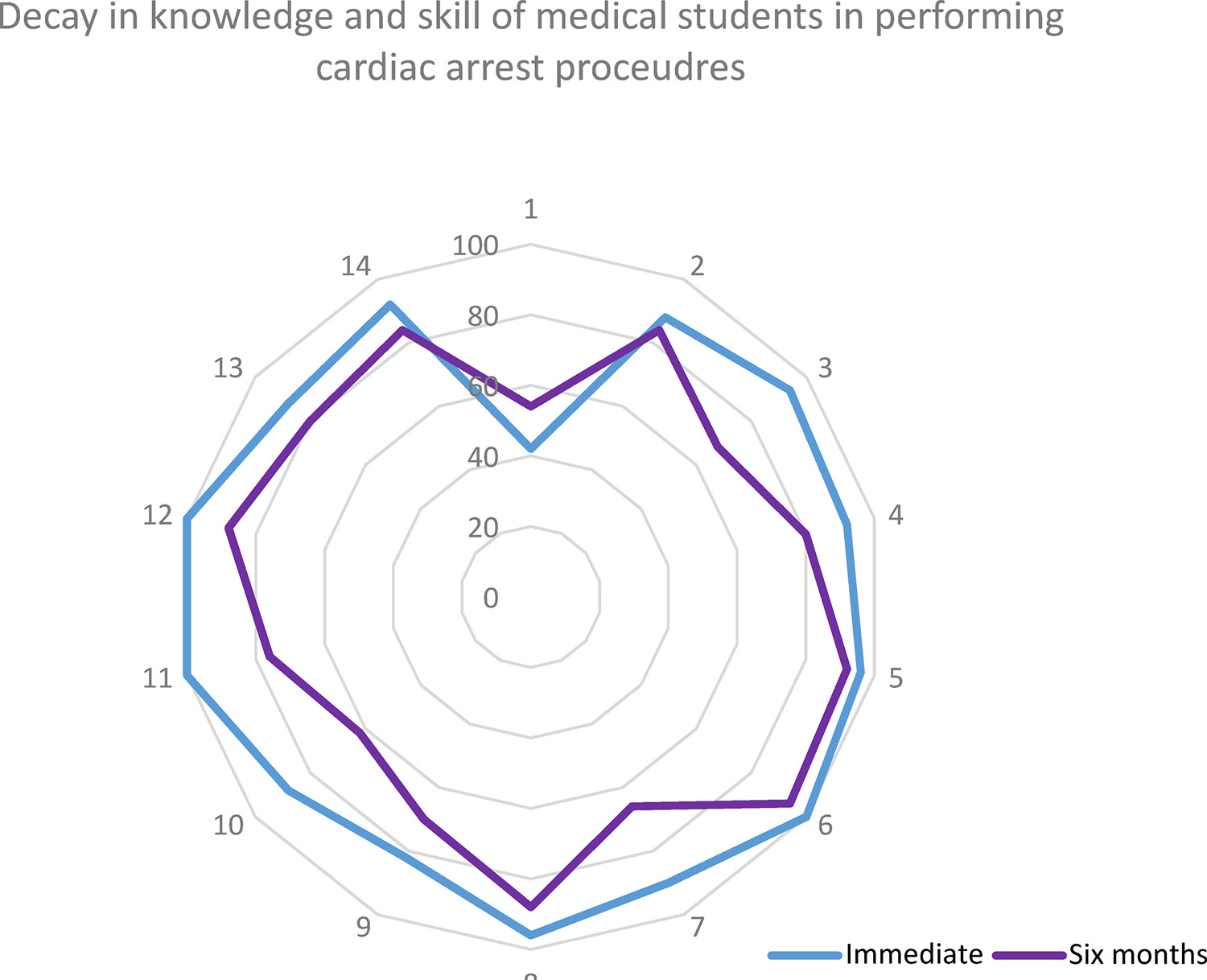
Fifty students (27 female) in the first year of medical school aged from 18 to 24 years (mean of 21 years) attended the course. The number of steps successfully completed by the students at six months was significantly lower than immediately after the course (10.8 vs 12.5 p < 0.001). Neither sex nor age affected the results. Overall performance of 78% of the students was considered excellent immediately after the course, and this percentage was significantly higher than six months later (p < 0.01). After six months, the steps that the students failed to complete at six months were those related to practical skills (such as a correct hand positioning).

Conclusion

A significant loss of skills was detected six months after the BLS course among medical students, compromising their overall performance.

  • Cardiopulmonary Resuscitation
  • Education
  • Hability
  • Heart Arrest
  • Learning
  • Medical Students
  • Mortality
Read Full Article
Creative Commons Attribution (CC BY) Creative Commons license
16/08/2021 DOI: 10.36660/abc.20200546 Views 1
Figure 1
IJCS
Case Report

Cardiac Arrest Due to Hypocalcemia

Fernanda Aburesi Salvadori et al. Eduardo Martelli Moreira Murilo Bacchini Dias Amaro Nunes Duarte-Neto Edison Ferreira de Paiva

Discussion

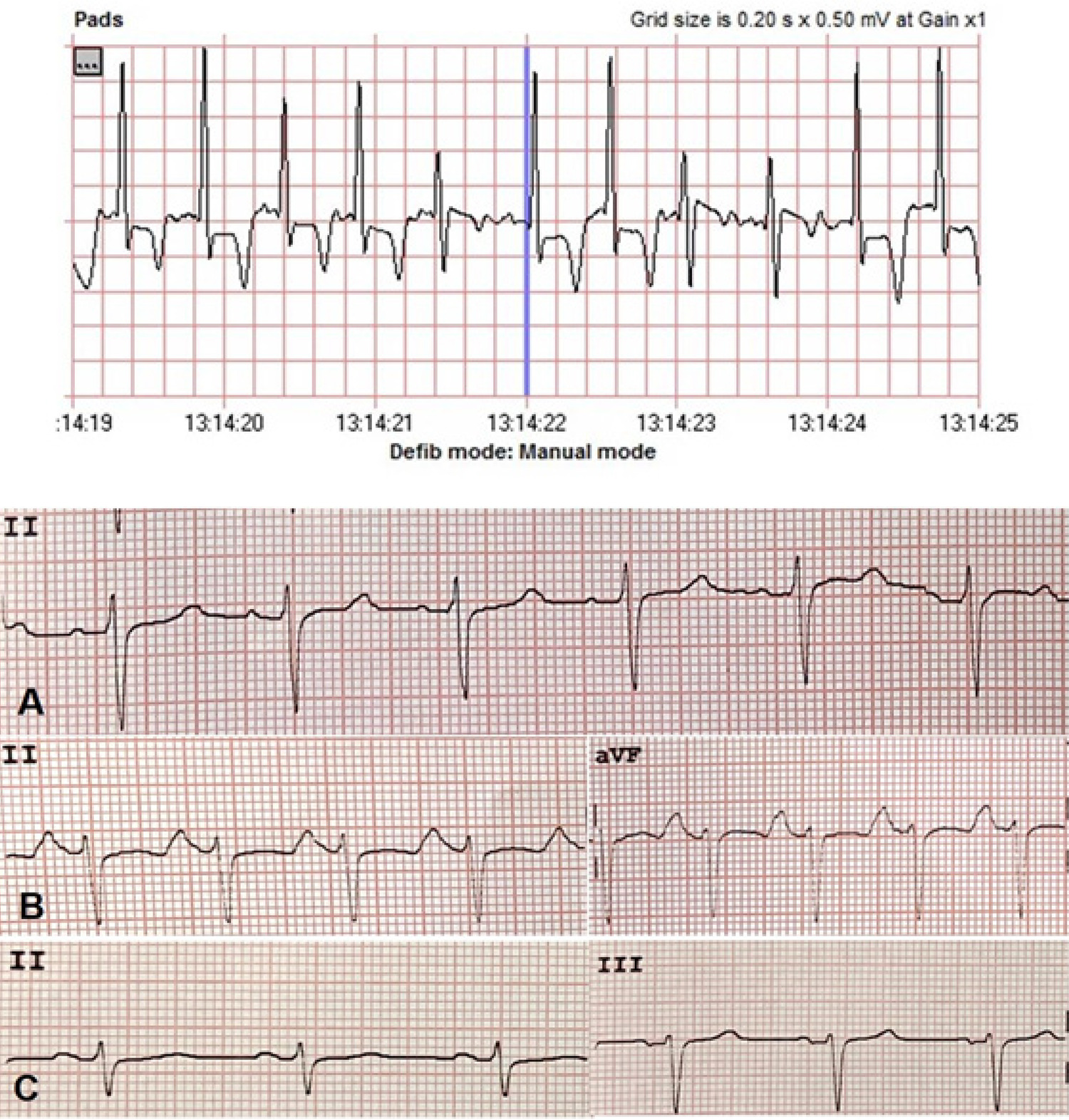
Long QT syndrome (LQTS) can be congenital or acquired. The causes of acquired LQTS include hypocalcemia, due to prolongation of the phase 2 of the action potential (AP), medications (amiodarone, antidepressants and neuroleptics), hypokalemia, hypomagnesemia and severe bradycardia. – LQTS is associated with a specific polymorphic ventricular tachycardia (VT), named as torsades de pointes (TdP), because of the characteristic shift in the QRS axis that gives the impression of a “torsion”.

The QT interval is a marker of the AP duration. In LQTS patients, the AP is prolonged unevenly across the myocardium, so as to cause high dispersion of repolarization. The AP prolongation favors the formation of early afterdepolarization (EAD), which are deformities in the plateau and rapid repolarization phases (2 and 3) capable of inducing ventricular extrasystoles. EADs in the unevenly repolarized myocardium are the cause of TdP. Tachycardia is sustained due to focal electric activity and/or a reentrant mechanism. It may either cease spontaneously or degenerate into ventricular fibrillation and cardiac arrest , .

[…]

  • Cardiopulmonary Resuscitation
  • Heart Arrest
  • Hypertension
  • Hypocalcemia
  • Kidney Transplantation
  • renal dialysis
  • Renal Insufficiency
  • Tachycardia, Ventricular
Read Full Article
Creative Commons Attribution (CC BY) Creative Commons license
23/11/2020 DOI: 10.36660/ijcs.20200034
Figure 1
IJCS
Original Article

Medical Behavior in Cardiorespiratory Arrest before and After Simulation Based on Advanced Cardiac Life Support (ACLS) Course

Douglas Marostica Catolino et al. José Knofholz

Abstract

Background:

The Advanced Cardiac Life Support (ACLS) course is designed to teach cardiovascular emergency, aiming to promote a harmonious and synchronized work of the entire hospital team, making the multidisciplinary job more effective in the execution of cardiopulmonary resuscitation (CPR).

Objective:

To compare the effectiveness of CPR performed between physicians trained on ACLS and non-trained physicians.

Methods:

A questionnaire was applied to physicians working at the emergency room of hospitals in Curitiba, state of Paraná, whose resolution required theoretical and practical knowledge about CPR. For analysis, descriptive statistics and Fisher’s association analysis were used, and the medians of the groups were evaluated by Mann-Whitney/Kruskal-Wallis with significance of 5%.

Results:

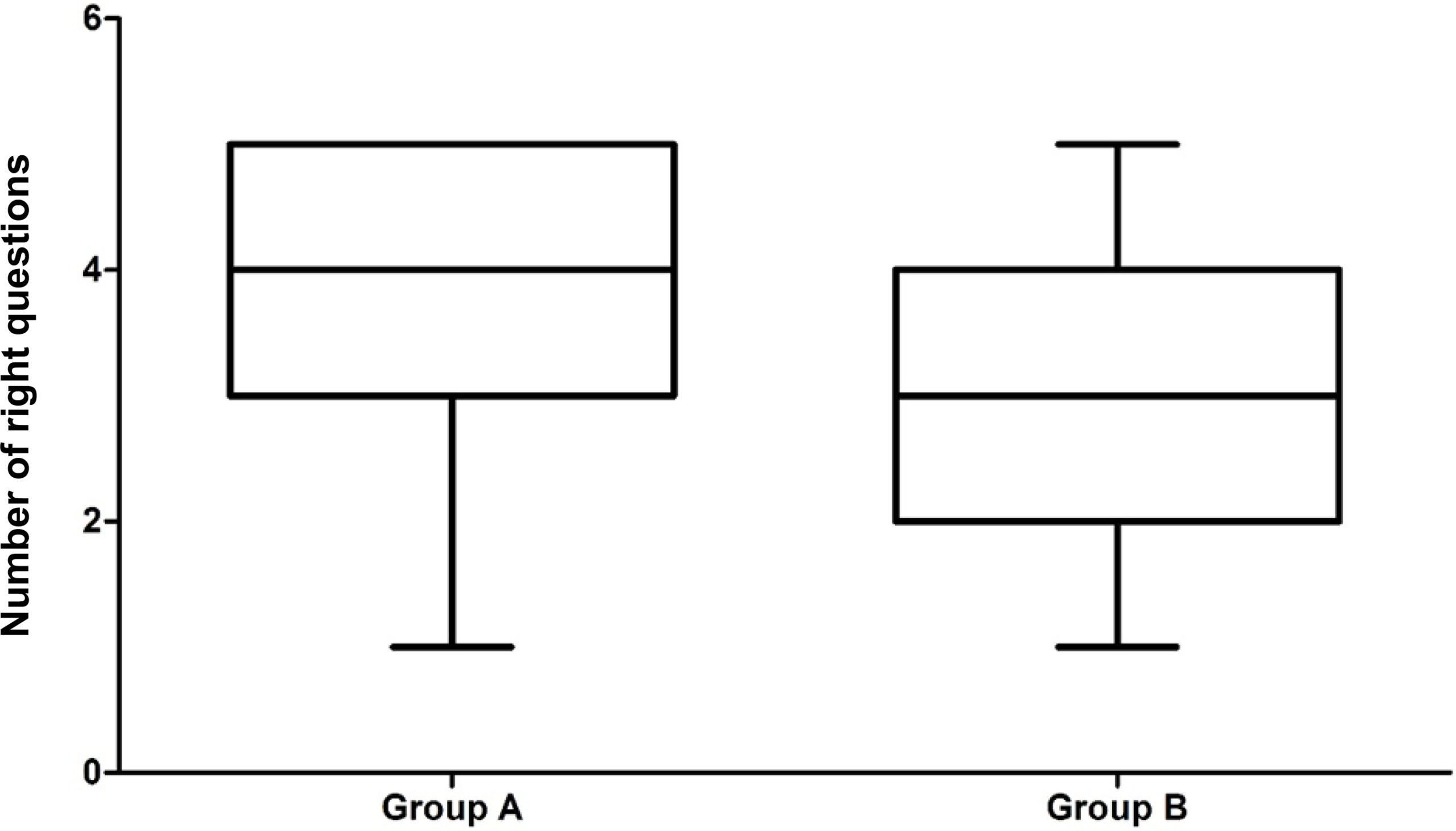
Thirty-four physicians were volunteers, of whom 20 had taken the ACLS course (Group A) and 14 had not (Group B). The trained physicians obtained the highest median (4.00 vs. 3.00, p = 0.06) of correct answers. Group A scored at least 3 of the 5 questions in the questionnaire, showing better performance than Group B (OR = 6.75, 95% CI, 1.1 < OR < 41.0, p = 0.04). The year of the course did not significantly change the performance in the questionnaire.

Conclusion:

It is suggested that the ACLS course was effective in qualifying physicians to handle situations of cardiorespiratory arrest properly, which was reproduced by the better performance in the resolution of the questionnaire. It is believed that when the sample of volunteers is increased, the trends found materialize the other hypotheses proposed.

  • Advanced Cardiac Life Support/training
  • Cardiopulmonary Resuscitation
  • Heart Arrest
Read Full Article
Creative Commons Attribution (CC BY) Creative Commons license
24/10/2019 DOI: 10.5935/2359-4802.20190084 Views 2
Figure 1
ABC
Original Article

Teaching Basic Life Support to Students of Public and Private High Schools

José Maria Gonçalves Fernandes et al. Amanda Lira dos Santos Leite Bruna de Sá Duarte Auto José Elson Gama de Lima … Ivan Romero Rivera Maria Alayde Mendonça

Background:

Despite being recommended as a compulsory part of the school curriculum, the teaching of basic life support (BLS) has yet to be implemented in high schools in most countries.

Objectives:

To compare prior knowledge and degree of immediate and delayed learning between students of one public and one private high school after these students received BLS training.

Methods:

Thirty students from each school initially answered a questionnaire on cardiopulmonary resuscitation (CPR) and use of the automated external defibrillator (AED). They then received theoretical-practical BLS training, after which they were given two theory assessments: one immediately after the course and the other six months later.

Results:

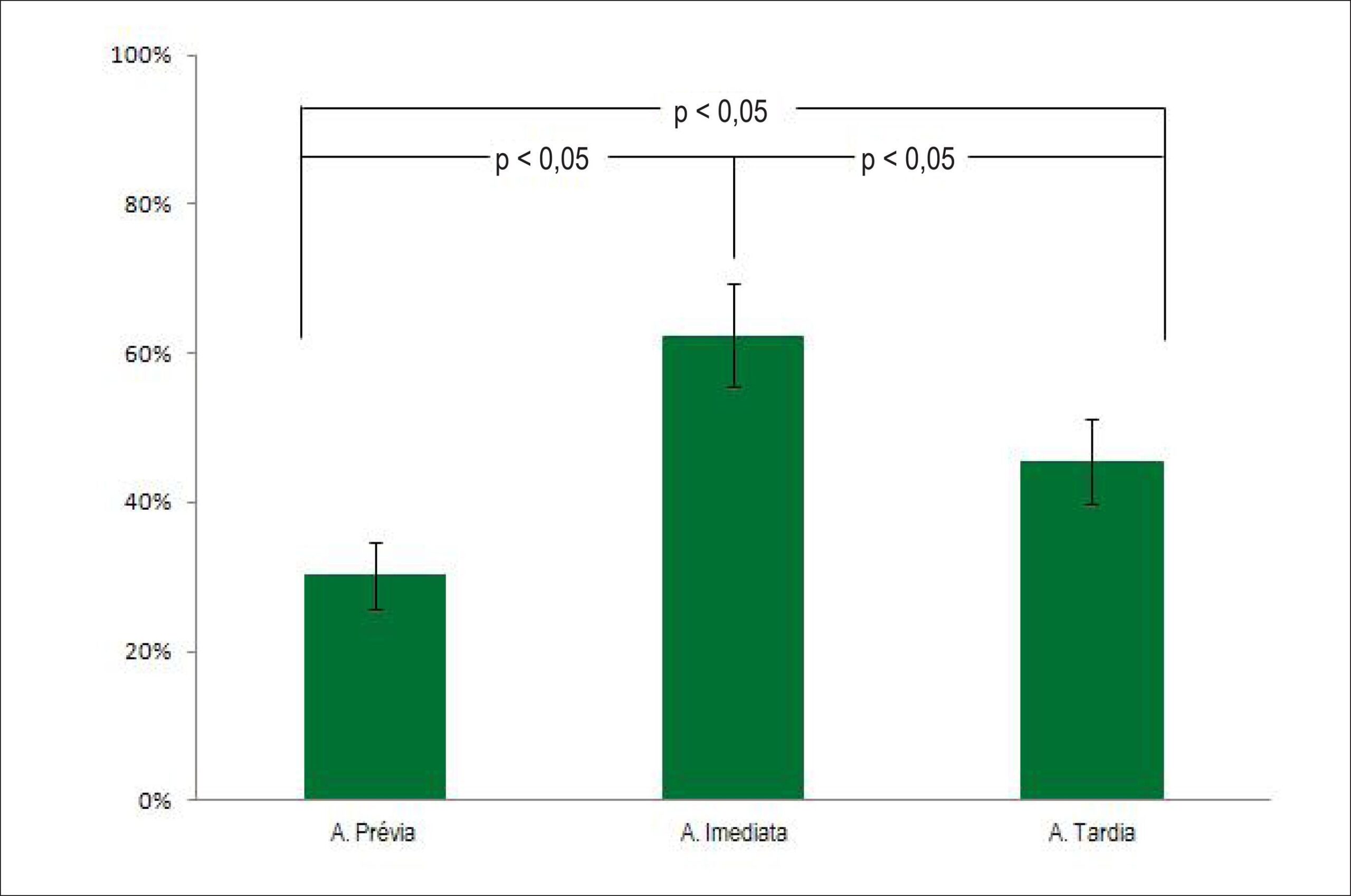
The overall success rates in the prior, immediate, and delayed assessments were significantly different between groups, with better performance shown overall by private school students than by public school students: 42% ± 14% vs. 30.2% ± 12.2%, p = 0.001; 86% ± 7.8% vs. 62.4% ± 19.6%, p < 0.001; and 65% ± 12.4% vs. 45.6% ± 16%, p < 0.001, respectively. The total odds ratio of the questions showed that the private school students performed the best on all three assessments, respectively: 1.66 (CI95% 1.26-2.18), p < 0.001; 3.56 (CI95% 2.57-4.93), p < 0.001; and 2.21 (CI95% 1.69-2.89), p < 0.001.

Conclusions:

Before training, most students had insufficient knowledge about CPR and AED; after BLS training a significant immediate and delayed improvement in learning was observed in students, especially in private school students.

  • Basic Life Support
  • Cardiopulmonary Resuscitation
  • Education
  • High School Students
Read Full Article
Creative Commons Attribution (CC BY) Creative Commons license
06/06/2014 DOI: 10.5935/abc.20140071 Views 1
Figure 1
ABC
Case Report

Prolonged Cardiopulmonary Arrest Treated Successfully in the São Paulo's Subway

Renan Gianotto-Oliveira et al. Maria Helena Favarato Maria Margarita Gonzalez Thiago Liguori … Sergio Timerman Roberto Kalil Filho

Introduction

In Brazil, circulatory diseases, including CPA (Cardiopulmonary Arrests), were the leading cause of death in 2010. Estimates are that, in Brazil, around 220,000 CPAs happen every year, including ventricular fibrillation, 180,000 in pre-hospital environment and 40,000 in-hospital.

Recent observational studies of victims of CPA in extra-hospital environment revealed that only CCC (Continuous Chest Compressions) – hands-only CPR – were equivalent or higher than conventional CPR (Cardiopulmonary Resuscitation) (using a 30:2 ratio of compressions/ventilations) in adult patients, mainly with regard to neurological benefits – .

[…]

  • Cardiopulmonary Resuscitation
  • Electric Countershock
  • Heart Massage
  • Out-of-Hospital Cardiac Arrest
  • Ventricular Fibrillation
Read Full Article
Creative Commons Attribution (CC BY) Creative Commons license
01/05/2014 DOI: 10.5935/abc.20140058
Experimental cardiac arrest treatment with adrenaline, vasopressin, or placebo
ABC
Artigo Original

Experimental cardiac arrest treatment with adrenaline, vasopressin, or placebo

Manoel Ângelo Gomes Palácio et al. Edison Ferreira de Paiva Luciano Cesar Pontes de Azevedo Ari Timerman

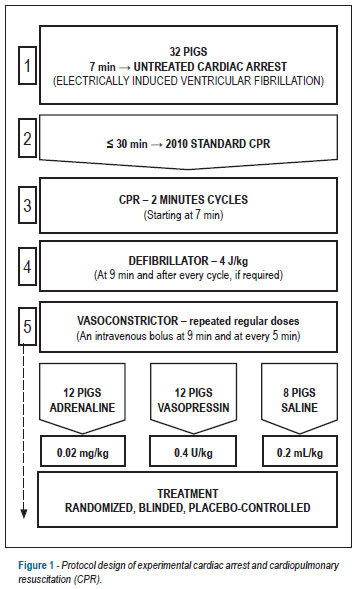
BACKGROUND: The effect of vasoconstrictors in prolonged cardiopulmonary resuscitation (CPR) has not been fully clarified. OBJECTIVES: To evaluate adrenaline and vasopressin pressure effect, and observe the return of spontaneous circulation (ROSC). METHODS: A prospective, randomized, blinded, and placebo-controlled study. After seven minutes of untreated ventricular fibrillation, pigs received two minutes cycles of CPR. Defibrillation was attempted (4 J/kg) once at 9 minutes, and after every cycle if a shockable rhythm was present, after what CPR was immediately resumed. At 9 minutes and every five minutes intervals, 0.02 mg/kg (n = 12 pigs) adrenaline, or 0.4 U/kg (n = 12) vasopressin, or 0.2 mL/kg (n = 8) 0.9% saline solution was administered. CPR continued for 30 minutes or until the ROSC. RESULTS: Coronary perfusion pressure increased to about 20 mmHg in the three groups. Following vasoconstrictors doses, pressure level reached 35 mmHg versus 15 mmHg with placebo (p < 0.001). Vasopressin effect remained at 15-20 mmHg after three doses versus zero with adrenaline or placebo. ROSC rate differed (p = 0.031) among adrenaline (10/12), vasopressin (6/12), and placebo (2/8). Time-to-ROSC did not differ (16 minutes), nor the number of doses previously received (one or two). There was no difference between vasoconstrictors, but against placebo, only adrenaline significantly increased the ROSC rate (p = 0.019). CONCLUSION: The vasoconstrictors initial pressure effect was equivalent and vasopressin maintained a late effect at prolonged resuscitation. Nevertheless, when compared with placebo, only adrenaline significantly increased the ROSC rate.

  • Arginine vasopressin
  • Cardiopulmonary Resuscitation
  • Epinephrine
  • Models, Animal
  • Ventricular Fibrillation
Read Full Article
Creative Commons Attribution (CC BY) Creative Commons license
01/11/2013 DOI: 10.5935/abc.20130213 Views 1
ABC
Artigo Original

Medical students teaching cardiopulmonary resuscitation to middle school Brazilian students

Lucas Gaspar Ribeiro et al. Rafael Germano Pedro Lugarinho Menezes André Schmidt Antônio Pazin-Filho

BACKGROUND: Diseases of the circulatory system are the most common cause of death in Brazil. Because the general population is often the first to identify problems related to the circulatory system, it is important that they are trained. However, training is challenging owing to the number of persons to be trained and the maintenance of training. OBJECTIVES: To assess the delivery of a medical-student led cardiopulmonary resuscitation (CPR) training program and to assess prior knowledge of CPR as well as immediate and delayed retention of CPR training among middle school students. METHODS: Two public and two private schools were selected. CPR training consisted of a video class followed by practice on manikins that was supervised by medical students. Multiple choice questionnaires were provided before, immediately after, and at 6 months after CPR training. The questions were related to general knowledge, the sequence of procedures, and the method to administer each component (ventilation, chest compression, and automated external defibrillation). The instructors met in a focus group after the sessions to identify the potential problems faced. RESULTS: In total, 147 students completed the 6-month follow-up. The public school students had a lower prior knowledge, but this difference disappeared immediately after training. After the 6-month follow-up period, these public school students demonstrated lower retention. The main problem faced was teaching mouth-to-mouth resuscitation. CONCLUSIONS: The method used by medical students to teach middle school students was based on the see-and-practice technique. This method was effective in achieving both immediate and late retention of acquired knowledge. The greater retention of knowledge among private school students may reflect cultural factors.

  • Cardiopulmonary Resuscitation
  • Education, Primary and Secondary
  • Students, Medical
Read Full Article
Creative Commons Attribution (CC BY) Creative Commons license
14/08/2013 DOI: 10.5935/abc.20130165
I guideline for cardiopulmonary resuscitation and emergency cardiovascular care - Brazilian Society of Cardiology: executive summary
ABC
Special Article

I guideline for cardiopulmonary resuscitation and emergency cardiovascular care – Brazilian Society of Cardiology: executive summary

Maria Margarita Gonzalez et al. Sergio Timerman Renan Gianotto de Oliveira Thatiane Facholi Polastri … Luis Augusto Palma Dallan Sebastião Araújo Silvia Gelás Lage André Schmidt Claudia San Martín de Bernoche Manoel Fernandes Canesin Frederico José Neves Mancuso Maria Helena Favarato

Despite advances related to the prevention and treatment in the past few years, many lives are lost to cardiac arrest and cardiovascular events in general in Brazil every year. Basic Life Support involves cardiovascular emergency treatment mainly in the pre-hospital environment, with emphasis on the early recognition and delivery of cardiopulmonary resuscitation maneuvers focused on high-quality thoracic compressions and rapid defibrillation by means of the implementation of public access-to-defibrillation programs. These aspects are of the utmost importance and may make the difference on the patient’s outcomes, such as on hospital survival with no permanent neurological damage. Early initiation of the Advanced Cardiology Life Support also plays an essential role by keeping the quality of thoracic compressions; adequate airway management; specific treatment for the different arrest rhythms; defibrillation; and assessment and treatment of the possible causes during all the assistance. More recently, emphasis has been given to post-resuscitation care, with the purpose of reducing mortality by means of early recognition and treatment of the post-cardiac arrest syndrome. Therapeutic hypothermia has provided significant improvement of neurological damage and should be performed in comatose individuals post-cardiac arrest. For physicians working in the emergency department or intensive care unit, it is extremely important to improve the treatment given to these patients by means of specific training, thus giving them the chance of higher success and of better survival rates.

  • Cardiopulmonary Resuscitation
  • Heart Arrest
  • hypothermia
Read Full Article
Creative Commons Attribution (CC BY) Creative Commons license
11/03/2013 DOI: 10.5935/abc.20130022 Views 3
Initial evaluation of the Mobile Emergency Medical Services in the city of Porto Alegre, Brazil
ABC
Artigo Original

Initial evaluation of the Mobile Emergency Medical Services in the city of Porto Alegre, Brazil

Gladis Semensato et al. Leandro Zimerman Luis Eduardo Rohde

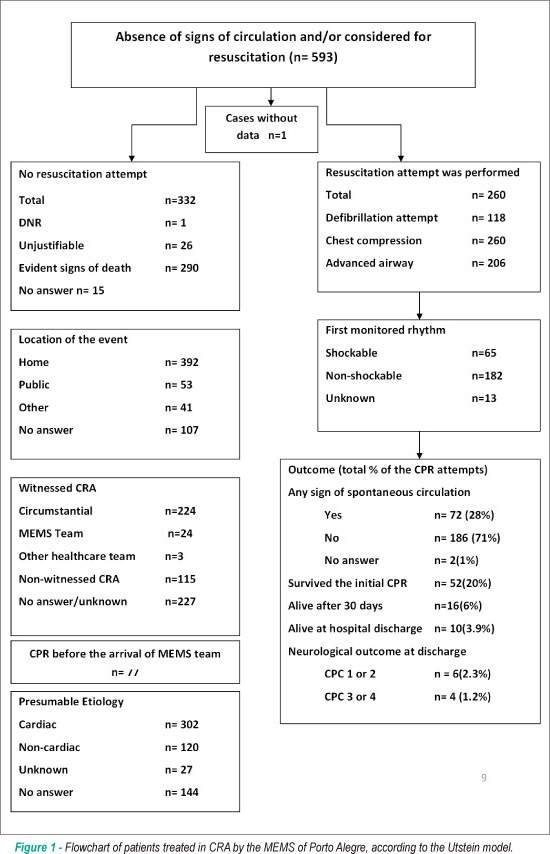
BACKGROUND: Little is known about the immediate outcomes of the Mobile Emergency Medical Services (SAMU) in Brazil. OBJECTIVE: To evaluate clinical predictors of survival of patients in cardiorespiratory arrest (CRA) in the nonhospital environment treated by the SAMU in the city of Porto Alegre. METHODS: The present study has a prospective and observational design. The evaluated outcomes were 30-day survival and hospital discharge, in addition to the Cerebral Performance Category (CPC) score I-II. RESULTS: From January to October 2008, a total of 593 patients in nontraumatic CRA were treated and 260 cardiopulmonary resuscitation (CPR) attempts were made. There was an initial successful outcome in 52 (20.0%) cases, with 16 patients (6.0%) alive on the 30th day and 10 being discharged from the hospital (3.9%), of which 6 (2.3%) presented CPC I-II score. The CPR at home was inversely associated with 30-day survival (p = 0.001) and hospital discharge survival (p = 0.02). An initial “shockable” rhythm (p = 0.008) was associated with 30-day survival. The response-time and collapse-time intervals until CPR start were significantly shorter in 30-day survivors. At multivariate analysis, independent 30-day mortality predictors were an initial shockable rhythm (odds ratio [OR] = 0.28 and 95% confidence interval [95%CI] = 0.10 – 0.81; p = 0.02) and CPR at home (OR = 3.0 and 95CI% = 1.04 – 8.7; p = 0.04). CONCLUSION: The pre-hospital care of CRA in the city of Porto Alegre has limited results; however, they are comparable to the results from other international locations. It is necessary to reinforce each link of the survival chain to improve pre-hospital care, aiming at improving clinically relevant outcomes.

  • air ambulance
  • Ambulances
  • Cardiopulmonary Resuscitation
  • Emergency Medical Services
  • Heart Arrest
Read Full Article
Creative Commons Attribution (CC BY) Creative Commons license
25/02/2011 DOI: 10.1590/S0066-782X2011005000019 Views 1
ABC
Artigo Original

Effects of the use of theoretical versus theoretical-practical training on Cardiopulmonary Resuscitation

Heberth César Miotto et al. Felipe Ribeiro da Silva Camargos Cristiano Valério Ribeiro Eugenio MA Goulart Maria da Consolação Vieira Moreira

BACKGROUND: Theoretical knowledge and skill to perform good quality cardiopulmonary resuscitation (CPR) are essential for the survival of patients with sudden death. OBJECTIVE: To determine whether a theoretical course alone is sufficient to promote good quality CPR training and knowledge for health professionals in comparison to a theoretical-practical basic life support training. METHODS: Twenty volunteer nurses participated in the theoretical CPR and automated external defibrillation (AED) training by means of a theoretical class and video used in the Basic Life Support Training of the American Heart Association (BLS-AHA; group A). They were compared to other 26 health professionals who attended regular theoretical-practical BLS-AHA training (group B). After the training, the participants took theoretical and practical tests as recommended in BLS-AHA courses. The practical tests were recorded and were later scored by three experienced instructors. The theoretical test was a multiple choice test used in regular BLS-AHA courses. RESULTS: No difference was observed in the theoretical tests (p = ns). However, the practical tests were consistently worse in group A, as evaluated by the three examiners (p < 0.05). CONCLUSION: The use of CPR videos and theoretical training did not improve the individuals' psychomotor ability to perform good quality CPR; however, it may improve their cognitive ability (knowledge). Critical areas of intervention are the primary ABCD and the correct use of AED.

  • advanced cardiac life support
  • Cardiopulmonary Resuscitation
  • Inservice Training
Read Full Article
Creative Commons Attribution (CC BY) Creative Commons license
13/08/2010 DOI: 10.1590/S0066-782X2010005000104
ABC
Artigo Original

Permanent Education in BLS and ACLS: impact on the knowledge of nursing professionals

Sandro Gonçalves de Lima et al. Larissa Araripe de Macedo Marcela de Lima Vidal Michel Pompeu Barros de Oliveira Sá

BACKGROUND: The theoretical knowledge and practical skills of the Basic Life Support (BLS) and the Advanced Life Support (ALS) are among the most important determining factors of the cardiopulmonary reanimation success rates. OBJECTIVE: Assess the impact of a permanent training program in BLS and ALS on the knowledge of nursing professionals. METHOD: Cross-sectional study. Population was made of nursing professionals of a tertiary level hospital. Assessments were carried out before and after training. The critical points of the International Liaison Committee on Resuscitation (ILCOR) analysis were addressed. RESULTS: 213 professionals were assessed (76 nurses, 35.7%; 38 assistants, 17.8%; and 99 technicians, 46.7%). Pre-course assessment average grades were statistically different (p<0.001) among assistants (3.25), technicians (3.96) and nurses (4.69). Single professional without kids showed performance significantly superior to married professional with kids (p=0.02 and 0.004 respectively). Pre-training level of knowledge was inversely proportional to the time elapsed since the completion of undergraduate course or technical course. Main deficiencies were related to the initial approach of airways, to post-resuscitation cares and to the external cardiac massage technique. The post-course general average grade was 7.26. Assistants achieved a performance of 131.2%, technicians, of 78.9% and the nurses, of 85%, with no significant statistic difference (p=0.43). CONCLUSION: The permanent training program in BLS and ALS resulted in important increment in the level of knowledge of nursing professionals.

  • advanced cardiac life support
  • Cardiac arrest
  • Cardiopulmonary Resuscitation
  • permanent education
Read Full Article
Creative Commons Attribution (CC BY) Creative Commons license
05/05/2010 DOI: 10.1590/S0066-782X2009001200012 Views 1

Could not load more articles. Please try again.

How to cite this article

EndNote RIS

Electronic Document Format (Vancouver)

Caneo LF. Extracorporeal Cardiopulmonary Resuscitation in Latin America: It is Not All about the Money. Arquivos Brasileiros de Cardiologia 2026;123(3):e20260240.

Electronic Document Format (ABNT)

Caneo, Luiz Fernando. Extracorporeal Cardiopulmonary Resuscitation in Latin America: It is Not All about the Money. Arquivos Brasileiros de Cardiologia, v. 123, n. 3, e20260240, May. 2026.

Electronic Document Format (APA)

Caneo, L. F. (2026). Extracorporeal Cardiopulmonary Resuscitation in Latin America: It is Not All about the Money. Arquivos Brasileiros de Cardiologia, 123(3), e20260240.

Electronic Document Format (ISO)

Caneo, Luiz Fernando. Extracorporeal Cardiopulmonary Resuscitation in Latin America: It is Not All about the Money. Arquivos Brasileiros de Cardiologia [online]. 2026, vol. 123, n. 3, [cited 2026-10-14], e20260240. Available from: <https://journals.cardiol.br/en/article/extracorporeal-cardiopulmonary-resuscitation-in-latin-america-it-is-not-all-about-the-money/>. ISSN 0066-782X

EndNote RIS

Electronic Document Format (Vancouver)

Burgos LM, Seoane LA, Spaccavento A, Furmento JF, Costabel JP, Vila RCB, Bortoli MA, et al. Extracorporeal Cardiopulmonary Resuscitation for In-Hospital Cardiac Arrest: A Single-Center Experience in Latin America. Arquivos Brasileiros de Cardiologia 2026;123(3):e20240820.

Electronic Document Format (ABNT)

Burgos, Lucrecia M.; Seoane, Leonardo A.; Spaccavento, Ana; Furmento, Juan F.; Costabel, Juan P.; Vila, Rocio C. Baro; Bortoli, Maria A. de; Navia, Daniel O.; Piccinini, Fernando; Vrancic, Mariano; Diez, Mirta. Extracorporeal Cardiopulmonary Resuscitation for In-Hospital Cardiac Arrest: A Single-Center Experience in Latin America. Arquivos Brasileiros de Cardiologia, v. 123, n. 3, e20240820, May. 2026.

Electronic Document Format (APA)

Burgos, L. M., Seoane, L. A., Spaccavento, A., Furmento, J. F., Costabel, J. P., Vila, R. C. B., Bortoli, M. A. , Navia, D. O., Piccinini, F., Vrancic, M., & Diez, M. (2026). Extracorporeal Cardiopulmonary Resuscitation for In-Hospital Cardiac Arrest: A Single-Center Experience in Latin America. Arquivos Brasileiros de Cardiologia, 123(3), e20240820.

Electronic Document Format (ISO)

Burgos, Lucrecia M. and Seoane, Leonardo A. and Spaccavento, Ana and Furmento, Juan F. and Costabel, Juan P. and Vila, Rocio C. Baro and Bortoli, Maria A. de and Navia, Daniel O. and Piccinini, Fernando and Vrancic, Mariano and Diez, Mirta. Extracorporeal Cardiopulmonary Resuscitation for In-Hospital Cardiac Arrest: A Single-Center Experience in Latin America. Arquivos Brasileiros de Cardiologia [online]. 2026, vol. 123, n. 3, [cited 2026-10-14], e20240820. Available from: <https://journals.cardiol.br/en/article/extracorporeal-cardiopulmonary-resuscitation-for-in-hospital-cardiac-arrest-a-single-center-experience-in-latin-america/>. ISSN 0066-782X

EndNote RIS

Electronic Document Format (Vancouver)

Salvadori FA, Kobayasi R, Perondi MB, Paiva EF. Prospective Longitudinal Study on Mortality and Quality of Care for Ward Patients Following Rapid Response Team Implementation in Brazil. International Journal of Cardiovascular Sciences 2026;39:e20250028.

Electronic Document Format (ABNT)

Salvadori, Fernanda Aburesi; Kobayasi, Renata; Perondi, Maria Beatriz; Paiva, Edison Ferreira de. Prospective Longitudinal Study on Mortality and Quality of Care for Ward Patients Following Rapid Response Team Implementation in Brazil. International Journal of Cardiovascular Sciences, v. 39, e20250028, Mar. 2026.

Electronic Document Format (APA)

Salvadori, F. A., Kobayasi, R., Perondi, M. B., & Paiva, E. F. (2026). Prospective Longitudinal Study on Mortality and Quality of Care for Ward Patients Following Rapid Response Team Implementation in Brazil. International Journal of Cardiovascular Sciences, 39, e20250028.

Electronic Document Format (ISO)

Salvadori, Fernanda Aburesi and Kobayasi, Renata and Perondi, Maria Beatriz and Paiva, Edison Ferreira de. Prospective Longitudinal Study on Mortality and Quality of Care for Ward Patients Following Rapid Response Team Implementation in Brazil. International Journal of Cardiovascular Sciences [online]. 2026, vol. 39, [cited 2026-10-14], e20250028. Available from: <https://journals.cardiol.br/en/article/prospective-longitudinal-study-on-mortality-and-quality-of-care-for-ward-patients-following-rapid-response-team-implementation-in-brazil/>. ISSN 2359-4802

EndNote RIS

Electronic Document Format (Vancouver)

Timerman S. Rescuing Lives: Reflecting on the Future of Cardiopulmonary Arrest Care. International Journal of Cardiovascular Sciences 2025;38:e20250010.

Electronic Document Format (ABNT)

Timerman, Sergio. Rescuing Lives: Reflecting on the Future of Cardiopulmonary Arrest Care. International Journal of Cardiovascular Sciences, v. 38, e20250010, Apr. 2025.

Electronic Document Format (APA)

Timerman, S. (2025). Rescuing Lives: Reflecting on the Future of Cardiopulmonary Arrest Care. International Journal of Cardiovascular Sciences, 38, e20250010.

Electronic Document Format (ISO)

Timerman, Sergio. Rescuing Lives: Reflecting on the Future of Cardiopulmonary Arrest Care. International Journal of Cardiovascular Sciences [online]. 2025, vol. 38, [cited 2026-10-14], e20250010. Available from: <https://journals.cardiol.br/en/article/rescuing-lives-reflecting-on-the-future-of-cardiopulmonary-arrest-care/>. ISSN 2359-4802

EndNote RIS

Electronic Document Format (Vancouver)

Arci MS, Sá LMC, Oliveira LA, Agria GB, Morinaga C, Enohi RT. Cardiopulmonary Resuscitation-Induced Consciousness (CPRIC): Occurrence and Perception of Health Professionals and Firemen. International Journal of Cardiovascular Sciences 2025;38:e20240130.

Electronic Document Format (ABNT)

Arci, Matheus Sousa; Sá, Lívia Maria Coura de; Oliveira, Lucas Alves; Agria, Giulia Bortoloni; Morinaga, Christian; Enohi, Ricardo Toshio. Cardiopulmonary Resuscitation-Induced Consciousness (CPRIC): Occurrence and Perception of Health Professionals and Firemen. International Journal of Cardiovascular Sciences, v. 38, e20240130, Apr. 2025.

Electronic Document Format (APA)

Arci, M. S., Sá, L. M. C. , Oliveira, L. A., Agria, G. B., Morinaga, C., & Enohi, R. T. (2025). Cardiopulmonary Resuscitation-Induced Consciousness (CPRIC): Occurrence and Perception of Health Professionals and Firemen. International Journal of Cardiovascular Sciences, 38, e20240130.

Electronic Document Format (ISO)

Arci, Matheus Sousa and Sá, Lívia Maria Coura de and Oliveira, Lucas Alves and Agria, Giulia Bortoloni and Morinaga, Christian and Enohi, Ricardo Toshio. Cardiopulmonary Resuscitation-Induced Consciousness (CPRIC): Occurrence and Perception of Health Professionals and Firemen. International Journal of Cardiovascular Sciences [online]. 2025, vol. 38, [cited 2026-10-14], e20240130. Available from: <https://journals.cardiol.br/en/article/cardiopulmonary-resuscitation-induced-consciousness-cpric-occurrence-and-perception-of-health-professionals-and-firemen/>. ISSN 2359-4802

EndNote RIS

Electronic Document Format (Vancouver)

Carvalho RB, Almeida RP, Marmett B, Souza LA, Barrionuevo F, Alves FD. Retrospective Analysis of 2.154 Cardiopulmonary Arrest Assistance Provided by a Mobile Emergency Service From 2018-2022. International Journal of Cardiovascular Sciences 2025;38:e20240036.

Electronic Document Format (ABNT)

Carvalho, Roseana Boek; Almeida, Rodrigo Pereira de; Marmett, Bruna; Souza, Liliane Appratto de; Barrionuevo, Fabiano; Alves, Fernanda Donner. Retrospective Analysis of 2.154 Cardiopulmonary Arrest Assistance Provided by a Mobile Emergency Service From 2018-2022. International Journal of Cardiovascular Sciences, v. 38, e20240036, Feb. 2025.

Electronic Document Format (APA)

Carvalho, R. B., Almeida, R. P. , Marmett, B., Souza, L. A. , Barrionuevo, F., & Alves, F. D. (2025). Retrospective Analysis of 2.154 Cardiopulmonary Arrest Assistance Provided by a Mobile Emergency Service From 2018-2022. International Journal of Cardiovascular Sciences, 38, e20240036.

Electronic Document Format (ISO)

Carvalho, Roseana Boek and Almeida, Rodrigo Pereira de and Marmett, Bruna and Souza, Liliane Appratto de and Barrionuevo, Fabiano and Alves, Fernanda Donner. Retrospective Analysis of 2.154 Cardiopulmonary Arrest Assistance Provided by a Mobile Emergency Service From 2018-2022. International Journal of Cardiovascular Sciences [online]. 2025, vol. 38, [cited 2026-10-14], e20240036. Available from: <https://journals.cardiol.br/en/article/retrospective-analysis-of-2-154-cardiopulmonary-arrest-assistance-provided-by-a-mobile-emergency-service-from-2018-2022/>. ISSN 2359-4802

EndNote RIS

Electronic Document Format (Vancouver)

Morais DA, Moura AD, Guelfi DCF, Moraes CMG, Machado GAC. Cardiopulmonary Resuscitation Induced Consciousness: Case Report. International Journal of Cardiovascular Sciences 2024;37:e20220023.

Electronic Document Format (ABNT)

Morais, Daniela Aparecida; Moura, Anselmo Dornas; Guelfi, Daniel Claus Fruk; Moraes, Cintia Maria Guedes de; Machado, Guilherme Augusto Cruz. Cardiopulmonary Resuscitation Induced Consciousness: Case Report. International Journal of Cardiovascular Sciences, v. 37, e20220023, Mar. 2024.

Electronic Document Format (APA)

Morais, D. A., Moura, A. D., Guelfi, D. C. F., Moraes, C. M. G. , & Machado, G. A. C. (2024). Cardiopulmonary Resuscitation Induced Consciousness: Case Report. International Journal of Cardiovascular Sciences, 37, e20220023.

Electronic Document Format (ISO)

Morais, Daniela Aparecida and Moura, Anselmo Dornas and Guelfi, Daniel Claus Fruk and Moraes, Cintia Maria Guedes de and Machado, Guilherme Augusto Cruz. Cardiopulmonary Resuscitation Induced Consciousness: Case Report. International Journal of Cardiovascular Sciences [online]. 2024, vol. 37, [cited 2026-10-14], e20220023. Available from: <https://journals.cardiol.br/en/article/cardiopulmonary-resuscitation-induced-consciousness-case-report/>. ISSN 2359-4802

EndNote RIS

Electronic Document Format (Vancouver)

Guimarães HP. Ventilation and Respiratory Parameters in CPR: Where are We and Next Steps!. Arquivos Brasileiros de Cardiologia 2023;120(7):e20230492.

Electronic Document Format (ABNT)

Guimarães, Hélio Penna. Ventilation and Respiratory Parameters in CPR: Where are We and Next Steps!. Arquivos Brasileiros de Cardiologia, v. 120, n. 7, e20230492, Sep. 2023.

Electronic Document Format (APA)

Guimarães, H. P. (2023). Ventilation and Respiratory Parameters in CPR: Where are We and Next Steps!. Arquivos Brasileiros de Cardiologia, 120(7), e20230492.

Electronic Document Format (ISO)

Guimarães, Hélio Penna. Ventilation and Respiratory Parameters in CPR: Where are We and Next Steps!. Arquivos Brasileiros de Cardiologia [online]. 2023, vol. 120, n. 7, [cited 2026-10-14], e20230492. Available from: <https://journals.cardiol.br/en/article/ventilation-and-respiratory-parameters-in-cpr-where-are-we-and-next-steps/>. ISSN 0066-782X

EndNote RIS

Electronic Document Format (Vancouver)

Palácio MG, Paiva EF, Oliveira GBF, Azevedo LCP, Pedron BG, Santos ES, Timerman A, et al. Use of a Portable Mechanical Ventilator during Cardiopulmonary Resuscitation is Feasible, Improves Respiratory Parameters, and Prevents the Decrease of Dynamic Lung Compliance. Arquivos Brasileiros de Cardiologia 2023;120(7):e20220564.

Electronic Document Format (ABNT)

Palácio, Manoel Ângelo Gomes; Paiva, Edison Ferreira de; Oliveira, Gustavo Bernardes de Figueiredo; Azevedo, Luciano César Pontes de; Pedron, Bruno Gregnanin; Santos, Elizabete Silva dos; Timerman, Ari. Use of a Portable Mechanical Ventilator during Cardiopulmonary Resuscitation is Feasible, Improves Respiratory Parameters, and Prevents the Decrease of Dynamic Lung Compliance. Arquivos Brasileiros de Cardiologia, v. 120, n. 7, e20220564, Aug. 2023.

Electronic Document Format (APA)

Palácio, M. G., Paiva, E. F. , Oliveira, G. B. F., Azevedo, L. C. P. , Pedron, B. G., Santos, E. S. , & Timerman, A. (2023). Use of a Portable Mechanical Ventilator during Cardiopulmonary Resuscitation is Feasible, Improves Respiratory Parameters, and Prevents the Decrease of Dynamic Lung Compliance. Arquivos Brasileiros de Cardiologia, 120(7), e20220564.

Electronic Document Format (ISO)

Palácio, Manoel Ângelo Gomes and Paiva, Edison Ferreira de and Oliveira, Gustavo Bernardes de Figueiredo and Azevedo, Luciano César Pontes de and Pedron, Bruno Gregnanin and Santos, Elizabete Silva dos and Timerman, Ari. Use of a Portable Mechanical Ventilator during Cardiopulmonary Resuscitation is Feasible, Improves Respiratory Parameters, and Prevents the Decrease of Dynamic Lung Compliance. Arquivos Brasileiros de Cardiologia [online]. 2023, vol. 120, n. 7, [cited 2026-10-14], e20220564. Available from: <https://journals.cardiol.br/en/article/use-of-a-portable-mechanical-ventilator-during-cardiopulmonary-resuscitation-is-feasible-improves-respiratory-parameters-and-prevents-the-decrease-of-dynamic-lung-compliance/>. ISSN 0066-782X

EndNote RIS

Electronic Document Format (Vancouver)

Salim TR, Soares GP. Outcome Analysis after Out-of-Hospital Cardiac Arrest. Arquivos Brasileiros de Cardiologia 2023;120(7):e20230406.

Electronic Document Format (ABNT)

Salim, Thais Rocha; Soares, Gabriel Porto. Outcome Analysis after Out-of-Hospital Cardiac Arrest. Arquivos Brasileiros de Cardiologia, v. 120, n. 7, e20230406, Aug. 2023.

Electronic Document Format (APA)

Salim, T. R., & Soares, G. P. (2023). Outcome Analysis after Out-of-Hospital Cardiac Arrest. Arquivos Brasileiros de Cardiologia, 120(7), e20230406.

Electronic Document Format (ISO)

Salim, Thais Rocha and Soares, Gabriel Porto. Outcome Analysis after Out-of-Hospital Cardiac Arrest. Arquivos Brasileiros de Cardiologia [online]. 2023, vol. 120, n. 7, [cited 2026-10-14], e20230406. Available from: <https://journals.cardiol.br/en/article/outcome-analysis-after-out-of-hospital-cardiac-arrest/>. ISSN 0066-782X

EndNote RIS

Electronic Document Format (Vancouver)

Nacer DT, Sousa RMC, Miranda AL. Outcomes after Clinical and Traumatic Out-of-Hospital Cardiac Arrest. Arquivos Brasileiros de Cardiologia 2023;120(7):e20220551.

Electronic Document Format (ABNT)

Nacer, Daiana Terra; Sousa, Regina Márcia Cardoso de; Miranda, Anna Leticia. Outcomes after Clinical and Traumatic Out-of-Hospital Cardiac Arrest. Arquivos Brasileiros de Cardiologia, v. 120, n. 7, e20220551, Jul. 2023.

Electronic Document Format (APA)

Nacer, D. T., Sousa, R. M. C. , & Miranda, A. L. (2023). Outcomes after Clinical and Traumatic Out-of-Hospital Cardiac Arrest. Arquivos Brasileiros de Cardiologia, 120(7), e20220551.

Electronic Document Format (ISO)

Nacer, Daiana Terra and Sousa, Regina Márcia Cardoso de and Miranda, Anna Leticia. Outcomes after Clinical and Traumatic Out-of-Hospital Cardiac Arrest. Arquivos Brasileiros de Cardiologia [online]. 2023, vol. 120, n. 7, [cited 2026-10-14], e20220551. Available from: <https://journals.cardiol.br/en/article/outcomes-after-clinical-and-traumatic-out-of-hospital-cardiac-arrest/>. ISSN 0066-782X

EndNote RIS

Electronic Document Format (Vancouver)

Tobase L, Peres HHC, Polastri TF, Cardoso SH, Souza DR, Almeida DG, Timerman S, et al. The Use of the Borg Rating of Perceived Exertion Scale in Cardiopulmonary Resuscitation. Arquivos Brasileiros de Cardiologia 2023;120(1):e20220240.

Electronic Document Format (ABNT)

Tobase, Lucia; Peres, Heloisa Helena Ciqueto; Polastri, Thatiane Facholi; Cardoso, Sandra Helena; Souza, Dhieizom Rodrigo; Almeida, Debora Gugelmin; Timerman, Sergio. The Use of the Borg Rating of Perceived Exertion Scale in Cardiopulmonary Resuscitation. Arquivos Brasileiros de Cardiologia, v. 120, n. 1, e20220240, Jan. 2023.

Electronic Document Format (APA)

Tobase, L., Peres, H. H. C., Polastri, T. F., Cardoso, S. H., Souza, D. R., Almeida, D. G., & Timerman, S. (2023). The Use of the Borg Rating of Perceived Exertion Scale in Cardiopulmonary Resuscitation. Arquivos Brasileiros de Cardiologia, 120(1), e20220240.

Electronic Document Format (ISO)

Tobase, Lucia and Peres, Heloisa Helena Ciqueto and Polastri, Thatiane Facholi and Cardoso, Sandra Helena and Souza, Dhieizom Rodrigo and Almeida, Debora Gugelmin and Timerman, Sergio. The Use of the Borg Rating of Perceived Exertion Scale in Cardiopulmonary Resuscitation. Arquivos Brasileiros de Cardiologia [online]. 2023, vol. 120, n. 1, [cited 2026-10-14], e20220240. Available from: <https://journals.cardiol.br/en/article/the-use-of-the-borg-rating-of-perceived-exertion-scale-in-cardiopulmonary-resuscitation/>. ISSN 0066-782X

EndNote RIS

Electronic Document Format (Vancouver)

Pereira ENS, Sacilotto L, Pessente GD, Guirao C, Carvalho MLP, Pereira AC, Darrieux FCC, et al. Mexiletine in a Newborn with Type 3 Long QT Syndrome: When Access is Difficult. Arquivos Brasileiros de Cardiologia 2022;118(5):989-91.

Electronic Document Format (ABNT)

Pereira, Eduardo Nolla Silva; Sacilotto, Luciana; Pessente, Gabrielle D’Arezzo; Guirao, Cinthya; Carvalho, Mariana Lombardi Peres de; Pereira, Alexandre da Costa; Darrieux, Francisco Carlos da Costa; Scanavacca, Maurício Ibrahim. Mexiletine in a Newborn with Type 3 Long QT Syndrome: When Access is Difficult. Arquivos Brasileiros de Cardiologia, v. 118, n. 5, p. 989-991, May. 2022.

Electronic Document Format (APA)

Pereira, E. N. S., Sacilotto, L., Pessente, G. D., Guirao, C., Carvalho, M. L. P. , Pereira, A. C., Darrieux, F. C. C., & Scanavacca, M. I. (2022). Mexiletine in a Newborn with Type 3 Long QT Syndrome: When Access is Difficult. Arquivos Brasileiros de Cardiologia, 118(5), 989-991.

Electronic Document Format (ISO)

Pereira, Eduardo Nolla Silva and Sacilotto, Luciana and Pessente, Gabrielle D’Arezzo and Guirao, Cinthya and Carvalho, Mariana Lombardi Peres de and Pereira, Alexandre da Costa and Darrieux, Francisco Carlos da Costa and Scanavacca, Maurício Ibrahim. Mexiletine in a Newborn with Type 3 Long QT Syndrome: When Access is Difficult. Arquivos Brasileiros de Cardiologia [online]. 2022, vol. 118, n. 5, [cited 2026-10-14], pp. 989-991. Available from: <https://journals.cardiol.br/en/article/mexiletine-in-a-newborn-with-type-3-long-qt-syndrome-when-access-is-difficult/>. ISSN 0066-782X

EndNote RIS

Electronic Document Format (Vancouver)

Moretti MA, Camboim AO, Ferrandez CA, Ramos IC, Costa IB, Canonaco JS, Mathia VL, et al. Retention of Cardiopulmonary Resuscitation Skills in Medical Students. Arquivos Brasileiros de Cardiologia 2021;117(5):1030-5.

Electronic Document Format (ABNT)

Moretti, Miguel Antônio; Camboim, Adriana de Oliveira; Ferrandez, Caroline Awoki; Ramos, Isabela Corralo; Costa, Iaggo Bemini; Canonaco, Juliana Seidler; Mathia, Vanessa Lopes; Ferreira, João Fernando Monteiro; Chagas, Antonio Carlos Palandri. Retention of Cardiopulmonary Resuscitation Skills in Medical Students. Arquivos Brasileiros de Cardiologia, v. 117, n. 5, p. 1030-1035, Aug. 2021.

Electronic Document Format (APA)

Moretti, M. A., Camboim, A. O., Ferrandez, C. A., Ramos, I. C., Costa, I. B., Canonaco, J. S., Mathia, V. L., Ferreira, J. F. M., & Chagas, A. C. P. (2021). Retention of Cardiopulmonary Resuscitation Skills in Medical Students. Arquivos Brasileiros de Cardiologia, 117(5), 1030-1035.

Electronic Document Format (ISO)

Moretti, Miguel Antônio and Camboim, Adriana de Oliveira and Ferrandez, Caroline Awoki and Ramos, Isabela Corralo and Costa, Iaggo Bemini and Canonaco, Juliana Seidler and Mathia, Vanessa Lopes and Ferreira, João Fernando Monteiro and Chagas, Antonio Carlos Palandri. Retention of Cardiopulmonary Resuscitation Skills in Medical Students. Arquivos Brasileiros de Cardiologia [online]. 2021, vol. 117, n. 5, [cited 2026-10-14], pp. 1030-1035. Available from: <https://journals.cardiol.br/en/article/retention-of-cardiopulmonary-resuscitation-skills-in-medical-students/>. ISSN 0066-782X

EndNote RIS

Electronic Document Format (Vancouver)

Salvadori FA, Moreira EM, Dias MB, Duarte-Neto AN, Paiva EF. Cardiac Arrest Due to Hypocalcemia. International Journal of Cardiovascular Sciences 2020;34(5 Supl 1):154-7.

Electronic Document Format (ABNT)

Salvadori, Fernanda Aburesi; Moreira, Eduardo Martelli; Dias, Murilo Bacchini; Duarte-Neto, Amaro Nunes; Paiva, Edison Ferreira de. Cardiac Arrest Due to Hypocalcemia. International Journal of Cardiovascular Sciences, v. 34, n. 5 Supl 1, p. 154-157, Nov. 2020.

Electronic Document Format (APA)

Salvadori, F. A., Moreira, E. M., Dias, M. B., Duarte-Neto, A. N., & Paiva, E. F. (2020). Cardiac Arrest Due to Hypocalcemia. International Journal of Cardiovascular Sciences, 34(5 Supl 1), 154-157.

Electronic Document Format (ISO)

Salvadori, Fernanda Aburesi and Moreira, Eduardo Martelli and Dias, Murilo Bacchini and Duarte-Neto, Amaro Nunes and Paiva, Edison Ferreira de. Cardiac Arrest Due to Hypocalcemia. International Journal of Cardiovascular Sciences [online]. 2020, vol. 34, n. 5 Supl 1, [cited 2026-10-14], pp. 154-157. Available from: <https://journals.cardiol.br/en/article/cardiac-arrest-due-to-hypocalcemia/>. ISSN 2359-4802

EndNote RIS

Electronic Document Format (Vancouver)

Catolino DM, Knofholz J. Medical Behavior in Cardiorespiratory Arrest before and After Simulation Based on Advanced Cardiac Life Support (ACLS) Course. International Journal of Cardiovascular Sciences 2019;33(2):151-7.

Electronic Document Format (ABNT)

Catolino, Douglas Marostica; Knofholz, José. Medical Behavior in Cardiorespiratory Arrest before and After Simulation Based on Advanced Cardiac Life Support (ACLS) Course. International Journal of Cardiovascular Sciences, v. 33, n. 2, p. 151-157, Oct. 2019.

Electronic Document Format (APA)

Catolino, D. M., & Knofholz, J. (2019). Medical Behavior in Cardiorespiratory Arrest before and After Simulation Based on Advanced Cardiac Life Support (ACLS) Course. International Journal of Cardiovascular Sciences, 33(2), 151-157.

Electronic Document Format (ISO)

Catolino, Douglas Marostica and Knofholz, José. Medical Behavior in Cardiorespiratory Arrest before and After Simulation Based on Advanced Cardiac Life Support (ACLS) Course. International Journal of Cardiovascular Sciences [online]. 2019, vol. 33, n. 2, [cited 2026-10-14], pp. 151-157. Available from: <https://journals.cardiol.br/en/article/medical-behavior-in-cardiorespiratory-arrest-before-and-after-simulation-based-on-advanced-cardiac-life-support-acls-course/>. ISSN 2359-4802

EndNote RIS

Electronic Document Format (Vancouver)

Fernandes JMG, Leite ALS, Auto BSD, Lima JEG, Rivera IR, Mendonça MA. Teaching Basic Life Support to Students of Public and Private High Schools. Arquivos Brasileiros de Cardiologia 2014;102(6):593-601.

Electronic Document Format (ABNT)

Fernandes, José Maria Gonçalves; Leite, Amanda Lira dos Santos; Auto, Bruna de Sá Duarte; Lima, José Elson Gama de; Rivera, Ivan Romero; Mendonça, Maria Alayde. Teaching Basic Life Support to Students of Public and Private High Schools. Arquivos Brasileiros de Cardiologia, v. 102, n. 6, p. 593-601, Jun. 2014.

Electronic Document Format (APA)

Fernandes, J. M. G., Leite, A. L. S., Auto, B. S. D., Lima, J. E. G. , Rivera, I. R., & Mendonça, M. A. (2014). Teaching Basic Life Support to Students of Public and Private High Schools. Arquivos Brasileiros de Cardiologia, 102(6), 593-601.

Electronic Document Format (ISO)

Fernandes, José Maria Gonçalves and Leite, Amanda Lira dos Santos and Auto, Bruna de Sá Duarte and Lima, José Elson Gama de and Rivera, Ivan Romero and Mendonça, Maria Alayde. Teaching Basic Life Support to Students of Public and Private High Schools. Arquivos Brasileiros de Cardiologia [online]. 2014, vol. 102, n. 6, [cited 2026-10-14], pp. 593-601. Available from: <https://journals.cardiol.br/en/article/teaching-basic-life-support-to-students-of-public-and-private-high-schools/>. ISSN 0066-782X

EndNote RIS

Electronic Document Format (Vancouver)

Gianotto-Oliveira R, Favarato MH, Gonzalez MM, Liguori T, Timerman S, Kalil Filho R. Prolonged Cardiopulmonary Arrest Treated Successfully in the São Paulo’s Subway. Arquivos Brasileiros de Cardiologia 2014;102(5):e52-4.

Electronic Document Format (ABNT)

Gianotto-Oliveira, Renan; Favarato, Maria Helena; Gonzalez, Maria Margarita; Liguori, Thiago; Timerman, Sergio; Kalil Filho, Roberto. Prolonged Cardiopulmonary Arrest Treated Successfully in the São Paulo’s Subway. Arquivos Brasileiros de Cardiologia, v. 102, n. 5, p. e52-e54, Apr. 2014.

Electronic Document Format (APA)

Gianotto-Oliveira, R., Favarato, M. H., Gonzalez, M. M., Liguori, T., Timerman, S., & Kalil Filho, R. (2014). Prolonged Cardiopulmonary Arrest Treated Successfully in the São Paulo’s Subway. Arquivos Brasileiros de Cardiologia, 102(5), e52-e54.

Electronic Document Format (ISO)

Gianotto-Oliveira, Renan and Favarato, Maria Helena and Gonzalez, Maria Margarita and Liguori, Thiago and Timerman, Sergio and Kalil Filho, Roberto. Prolonged Cardiopulmonary Arrest Treated Successfully in the São Paulo’s Subway. Arquivos Brasileiros de Cardiologia [online]. 2014, vol. 102, n. 5, [cited 2026-10-14], pp. e52-e54. Available from: <https://journals.cardiol.br/en/article/prolonged-cardiopulmonary-arrest-treated-successfully-in-the-sao-paulos-subway/>. ISSN 0066-782X

EndNote RIS

Electronic Document Format (Vancouver)

Palácio MG, Paiva EF, Azevedo LCP, Timerman A. Experimental cardiac arrest treatment with adrenaline, vasopressin, or placebo. Arquivos Brasileiros de Cardiologia 2013;101(6):536-44.

Electronic Document Format (ABNT)

Palácio, Manoel Ângelo Gomes; Paiva, Edison Ferreira de; Azevedo, Luciano Cesar Pontes de; Timerman, Ari. Experimental cardiac arrest treatment with adrenaline, vasopressin, or placebo. Arquivos Brasileiros de Cardiologia, v. 101, n. 6, p. 536-544, Oct. 2013.

Electronic Document Format (APA)

Palácio, M. G., Paiva, E. F. , Azevedo, L. C. P. , & Timerman, A. (2013). Experimental cardiac arrest treatment with adrenaline, vasopressin, or placebo. Arquivos Brasileiros de Cardiologia, 101(6), 536-544.

Electronic Document Format (ISO)

Palácio, Manoel Ângelo Gomes and Paiva, Edison Ferreira de and Azevedo, Luciano Cesar Pontes de and Timerman, Ari. Experimental cardiac arrest treatment with adrenaline, vasopressin, or placebo. Arquivos Brasileiros de Cardiologia [online]. 2013, vol. 101, n. 6, [cited 2026-10-14], pp. 536-544. Available from: <https://journals.cardiol.br/en/article/experimental-cardiac-arrest-treatment-with-adrenaline-vasopressin-or-placebo/>. ISSN 0066-782X

EndNote RIS

Electronic Document Format (Vancouver)

Ribeiro LG, Germano R, Menezes PL, Schmidt A, Pazin-Filho A. Medical students teaching cardiopulmonary resuscitation to middle school Brazilian students. Arquivos Brasileiros de Cardiologia 2013;101(4):328-35.

Electronic Document Format (ABNT)

Ribeiro, Lucas Gaspar; Germano, Rafael; Menezes, Pedro Lugarinho; Schmidt, André; Pazin-Filho, Antônio. Medical students teaching cardiopulmonary resuscitation to middle school Brazilian students. Arquivos Brasileiros de Cardiologia, v. 101, n. 4, p. 328-335, Aug. 2013.

Electronic Document Format (APA)

Ribeiro, L. G., Germano, R., Menezes, P. L., Schmidt, A., & Pazin-Filho, A. (2013). Medical students teaching cardiopulmonary resuscitation to middle school Brazilian students. Arquivos Brasileiros de Cardiologia, 101(4), 328-335.

Electronic Document Format (ISO)

Ribeiro, Lucas Gaspar and Germano, Rafael and Menezes, Pedro Lugarinho and Schmidt, André and Pazin-Filho, Antônio. Medical students teaching cardiopulmonary resuscitation to middle school Brazilian students. Arquivos Brasileiros de Cardiologia [online]. 2013, vol. 101, n. 4, [cited 2026-10-14], pp. 328-335. Available from: <https://journals.cardiol.br/en/article/medical-students-teaching-cardiopulmonary-resuscitation-to-middle-school-brazilian-students/>. ISSN 0066-782X

EndNote RIS

Electronic Document Format (Vancouver)

Gonzalez MM, Timerman S, Oliveira RG, Polastri TF, Dallan LAP, Araújo S, Lage SG, et al. I guideline for cardiopulmonary resuscitation and emergency cardiovascular care – Brazilian Society of Cardiology: executive summary. Arquivos Brasileiros de Cardiologia 2013;100(2):105-13.

Electronic Document Format (ABNT)

Gonzalez, Maria Margarita; Timerman, Sergio; Oliveira, Renan Gianotto de; Polastri, Thatiane Facholi; Dallan, Luis Augusto Palma; Araújo, Sebastião; Lage, Silvia Gelás; Schmidt, André; Bernoche, Claudia San Martín de; Canesin, Manoel Fernandes; Mancuso, Frederico José Neves; Favarato, Maria Helena. I guideline for cardiopulmonary resuscitation and emergency cardiovascular care – Brazilian Society of Cardiology: executive summary. Arquivos Brasileiros de Cardiologia, v. 100, n. 2, p. 105-113, Mar. 2013.

Electronic Document Format (APA)

Gonzalez, M. M., Timerman, S., Oliveira, R. G. , Polastri, T. F., Dallan, L. A. P., Araújo, S., Lage, S. G., Schmidt, A., Bernoche, C. S. M. , Canesin, M. F., Mancuso, F. J. N., & Favarato, M. H. (2013). I guideline for cardiopulmonary resuscitation and emergency cardiovascular care – Brazilian Society of Cardiology: executive summary. Arquivos Brasileiros de Cardiologia, 100(2), 105-113.

Electronic Document Format (ISO)

Gonzalez, Maria Margarita and Timerman, Sergio and Oliveira, Renan Gianotto de and Polastri, Thatiane Facholi and Dallan, Luis Augusto Palma and Araújo, Sebastião and Lage, Silvia Gelás and Schmidt, André and Bernoche, Claudia San Martín de and Canesin, Manoel Fernandes and Mancuso, Frederico José Neves and Favarato, Maria Helena. I guideline for cardiopulmonary resuscitation and emergency cardiovascular care – Brazilian Society of Cardiology: executive summary. Arquivos Brasileiros de Cardiologia [online]. 2013, vol. 100, n. 2, [cited 2026-10-14], pp. 105-113. Available from: <https://journals.cardiol.br/en/article/i-guideline-for-cardiopulmonary-resuscitation-and-emergency-cardiovascular-care-brazilian-society-of-cardiology-executive-summary/>. ISSN 0066-782X

EndNote RIS

Electronic Document Format (Vancouver)

Semensato G, Zimerman L, Rohde LE. Initial evaluation of the Mobile Emergency Medical Services in the city of Porto Alegre, Brazil. Arquivos Brasileiros de Cardiologia 2011;96(3):196-204.

Electronic Document Format (ABNT)

Semensato, Gladis; Zimerman, Leandro; Rohde, Luis Eduardo. Initial evaluation of the Mobile Emergency Medical Services in the city of Porto Alegre, Brazil. Arquivos Brasileiros de Cardiologia, v. 96, n. 3, p. 196-204, Feb. 2011.

Electronic Document Format (APA)

Semensato, G., Zimerman, L., & Rohde, L. E. (2011). Initial evaluation of the Mobile Emergency Medical Services in the city of Porto Alegre, Brazil. Arquivos Brasileiros de Cardiologia, 96(3), 196-204.

Electronic Document Format (ISO)

Semensato, Gladis and Zimerman, Leandro and Rohde, Luis Eduardo. Initial evaluation of the Mobile Emergency Medical Services in the city of Porto Alegre, Brazil. Arquivos Brasileiros de Cardiologia [online]. 2011, vol. 96, n. 3, [cited 2026-10-14], pp. 196-204. Available from: <https://journals.cardiol.br/en/article/initial-evaluation-of-the-mobile-emergency-medical-services-in-the-city-of-porto-alegre-brazil/>. ISSN 0066-782X

EndNote RIS

Electronic Document Format (Vancouver)

Miotto HC, Camargos FRS, Ribeiro CV, Goulart EM, Moreira MCV. Effects of the use of theoretical versus theoretical-practical training on Cardiopulmonary Resuscitation. Arquivos Brasileiros de Cardiologia 2010;95(3):328-31.

Electronic Document Format (ABNT)

Miotto, Heberth César; Camargos, Felipe Ribeiro da Silva; Ribeiro, Cristiano Valério; Goulart, Eugenio MA; Moreira, Maria da Consolação Vieira. Effects of the use of theoretical versus theoretical-practical training on Cardiopulmonary Resuscitation. Arquivos Brasileiros de Cardiologia, v. 95, n. 3, p. 328-331, Aug. 2010.

Electronic Document Format (APA)

Miotto, H. C., Camargos, F. R. S., Ribeiro, C. V., Goulart, E. M., & Moreira, M. C. V. (2010). Effects of the use of theoretical versus theoretical-practical training on Cardiopulmonary Resuscitation. Arquivos Brasileiros de Cardiologia, 95(3), 328-331.

Electronic Document Format (ISO)

Miotto, Heberth César and Camargos, Felipe Ribeiro da Silva and Ribeiro, Cristiano Valério and Goulart, Eugenio MA and Moreira, Maria da Consolação Vieira. Effects of the use of theoretical versus theoretical-practical training on Cardiopulmonary Resuscitation. Arquivos Brasileiros de Cardiologia [online]. 2010, vol. 95, n. 3, [cited 2026-10-14], pp. 328-331. Available from: <https://journals.cardiol.br/en/article/effects-of-the-use-of-theoretical-versus-theoretical-practical-training-on-cardiopulmonary-resuscitation/>. ISSN 0066-782X

EndNote RIS

Electronic Document Format (Vancouver)

Lima SG, Macedo LA, Vidal ML, Sá MPBO. Permanent Education in BLS and ACLS: impact on the knowledge of nursing professionals. Arquivos Brasileiros de Cardiologia 2010;93(6):630-6.

Electronic Document Format (ABNT)

Lima, Sandro Gonçalves de; Macedo, Larissa Araripe de; Vidal, Marcela de Lima; Sá, Michel Pompeu Barros de Oliveira. Permanent Education in BLS and ACLS: impact on the knowledge of nursing professionals. Arquivos Brasileiros de Cardiologia, v. 93, n. 6, p. 630-636, May. 2010.

Electronic Document Format (APA)

Lima, S. G. , Macedo, L. A. , Vidal, M. L., & Sá, M. P. B. O. (2010). Permanent Education in BLS and ACLS: impact on the knowledge of nursing professionals. Arquivos Brasileiros de Cardiologia, 93(6), 630-636.

Electronic Document Format (ISO)

Lima, Sandro Gonçalves de and Macedo, Larissa Araripe de and Vidal, Marcela de Lima and Sá, Michel Pompeu Barros de Oliveira. Permanent Education in BLS and ACLS: impact on the knowledge of nursing professionals. Arquivos Brasileiros de Cardiologia [online]. 2010, vol. 93, n. 6, [cited 2026-10-14], pp. 630-636. Available from: <https://journals.cardiol.br/en/article/permanent-education-in-bls-and-acls-impact-on-the-knowledge-of-nursing-professionals/>. ISSN 0066-782X

  • About ABC Family
  • Internal Regulation
  • Editorial Board
  • Brazilian Society of Cardiology (SBC)

Issues

SBC Guidelines

  • Videos
  • Podcasts
  • News