ABC Family Arquivos Brasileiros de Cardiologia International Journal of Cardiovascular Sciences ABC Heart Failure & Cardiomyopathy ABC Imagem Cardiovascular
Português English
ABC Family
Português English
  • About
    • About ABC Family
    • Internal Regulation
    • Editorial Board
    • Brazilian Society of Cardiology (SBC)
  • Issues
  • SBC Guidelines
  • Content
    • Videos
    • Podcasts
    • News
  • About
    • About ABC Family
    • Internal Regulation
    • Editorial Board
    • Brazilian Society of Cardiology (SBC)
  • Issues
  • SBC Guidelines
  • Content
    • Videos
    • Podcasts
    • News

ABC Family

  • ABC Family
  • Arquivos Brasileiros de Cardiologia
  • International Journal of Cardiovascular Sciences
  • ABC Heart Failure & Cardiomyopathy
  • ABC Imagem Cardiovascular
Search in

No content found.

Journals
Ordering
Article types
Others

  1. Home
  2. Keyword: Essential Hypertension
Figure 1
ABC
Editorial

Technologies for Better Blood Pressure Control: Do the Applications Offer the Necessary Quality?

Roberto Dischinger Miranda et al. Bruna de Oliveira Laurindo Maria Eduarda Augusto Licco

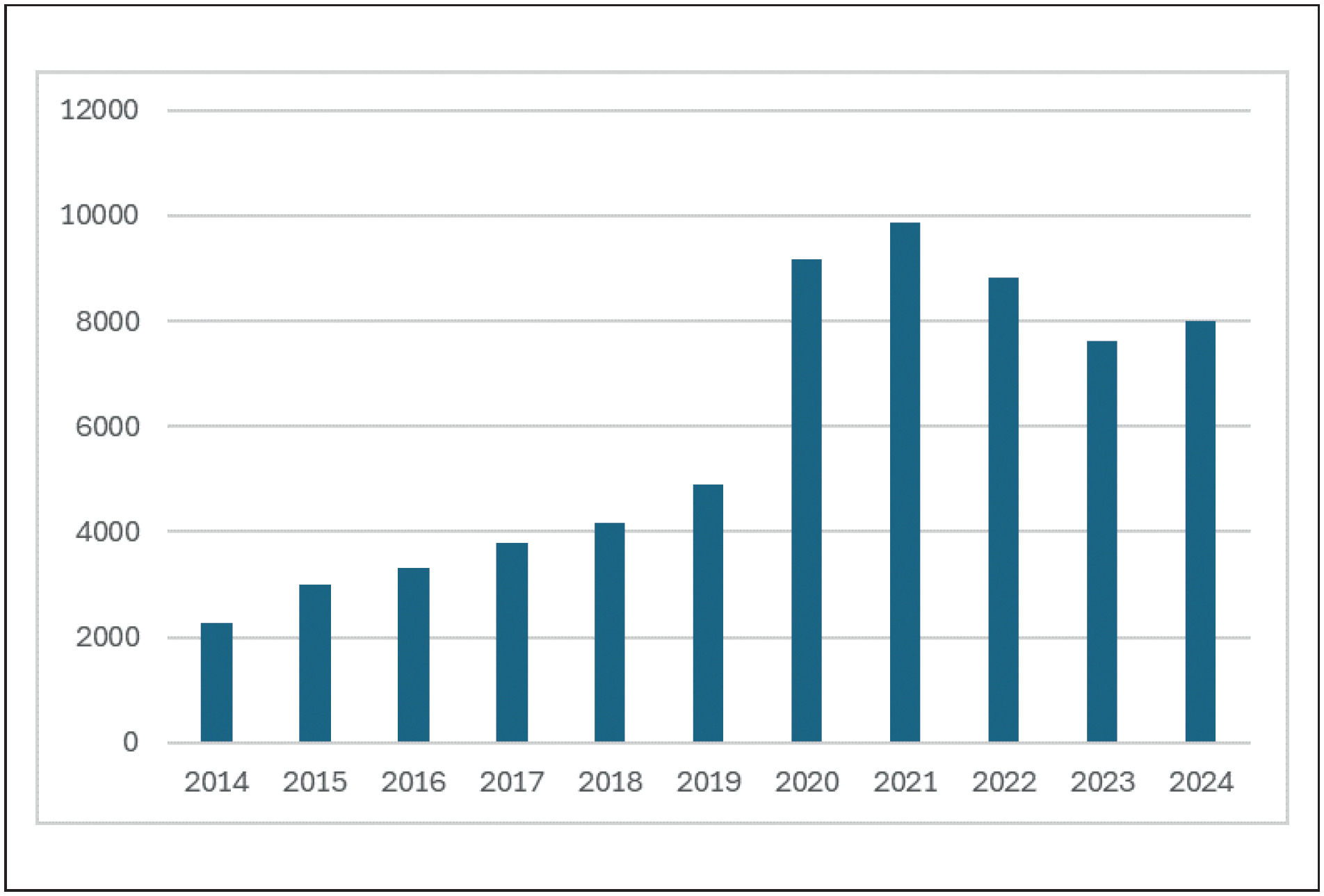
Chronic diseases are highly prevalent among the Brazilian adult population, with a tendency to increase in the coming years, mainly due to population aging. Among them, systemic arterial hypertension (AH) stands out, affecting Around 27.9% of Brazilians. This condition is the main modifiable risk factor for cardiovascular disease, chronic kidney disease, and premature death, and in 2021, the mortality rate from hypertension reached the highest value in the last ten years, with 18.7 deaths per 100,000 inhabitants.,

Among the challenges in controlling hypertension is the fact that it is an asymptomatic condition, which makes it difficult to adhere to treatment, which includes lifestyle changes and regular use of antihypertensive medications. It is estimated that, among hypertensive patients, less than half use their medications properly, and poor medication adherence has been declared a public health problem by the World Health Organization. Among the causes of poor adherence are the reported lack of health education, lack of perception of improvement with the use of medication, the occurrence of adverse effects, and forgetting about the use of medications.,

[…]
  • Essential Hypertension
  • Hypertension
  • medication adherence
  • Mobile Applications
  • Smartphone
  • Technology
Read Full Article
Creative Commons Attribution (CC BY) Creative Commons license
28/04/2025 DOI: 10.36660/abc.20250085i Views 1
The Association Between Presystolic Wave and Subclinical Left Ventricular Dysfunction in Asymptomatic Hypertensive Patients: Speckle-Tracking Echocardiographic Study
IJCS
Original Article

The Association Between Presystolic Wave and Subclinical Left Ventricular Dysfunction in Asymptomatic Hypertensive Patients: Speckle-Tracking Echocardiographic Study

Mohamed Yahia et al. Mahmoud Soliman Mohamed Hashem

Abstract

Background

Presystolic waves are often found during Doppler evaluation of the left ventricular outflow tract (LVOT) in hypertensive individuals. LV stiffness and altered LV compliance are potential mechanisms for presystolic waves.

Objectives

This study’s objective was to examine the relationship between presystolic wave and subclinical left ventricular (LV) impairment in asymptomatic individuals with essential hypertension.

Methods

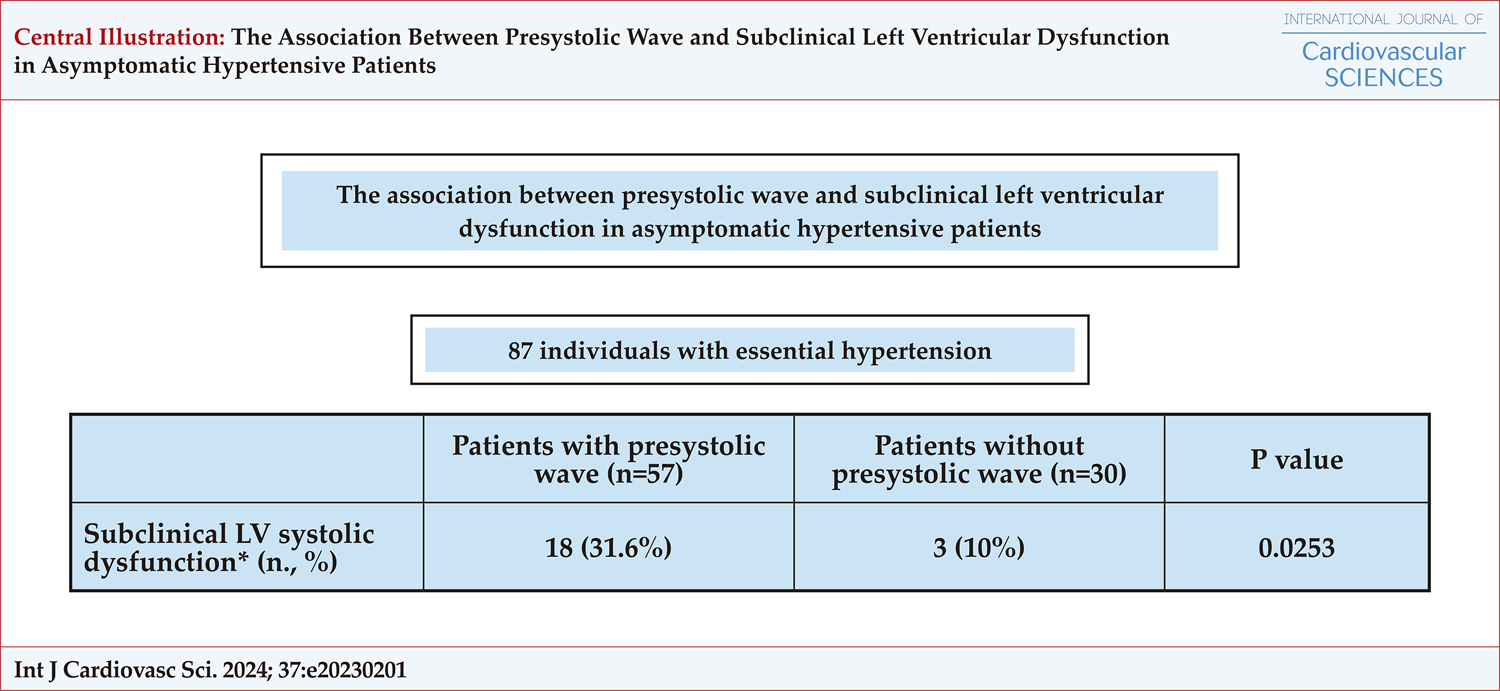
This observational research comprised 87 individuals with essential hypertension. All patients had two-dimensional and Doppler echocardiography performed. Based on the existence or absence of a presystolic wave, patients were separated into two groups. Using speckle-tracking echocardiography, subclinical LV systolic impairment was identified. Data were analyzed using IBM SPSS version 20.0. The significance level adopted in the statistical analysis was 5%.

Results

The mean age of the studied patients was 51 ± 9 years, with a male percentage of 57.4%. Among them, 57 patients (65%) had a presystolic wave, and 30 (35%) did not. Left ventricular mass index (LVMI) was greater in patients with a presystolic wave in comparison with patients without it (105.8 ± 16.1 g/m2 versus 99.8 ± 9.47 g/m2, p-value = 0.03). Left atrial volume index (LAVI) was higher in patients with a presystolic wave in comparison with patients without it (28.9 ± 5.25 ml/m2 versus 26.3 ± 2.74 ml/m2, p-value = 0.016). Patients with presystolic wave demonstrated LV diastolic dysfunction more than patients without it (p-value = 0.024). Left ventricular global longitudinal strain (LVGLS) was lower in patients with a presystolic wave in comparison with patients without it (-20.2 ± 2.55 versus -21.7 ± 2.27 % with p-value = 0.008). Patients with presystolic wave demonstrated more subclinical LV systolic dysfunction than patients without it (p-value = 0.025).

Conclusion

The presystolic wave was linked to subclinical LV impairment. The existence of a presystolic wave may indicate hypertensive people who are at risk of developing overt heart failure.

  • Echocardiography
  • Essential Hypertension
  • Vascular Stiffness
Read Full Article
Creative Commons Attribution (CC BY) Creative Commons license
09/08/2024 DOI: 10.36660/ijcs.20230201
ABC
Artigo Original

Combined analysis of genetic and environmental factors on essential hypertension in a brazilian rural population in the Amazon region

Silvia Regina Sampaio Freitas et al. Pedro Hernan Cabello Rodrigo Soares Moura-Neto Luciana Cresta Dolinsky Marcio Neves Bóia

OBJECTIVE: In the present study, we evaluated the contribution of six genetic polymorphisms of the Renin-Angiotensis-Aldosterone system (RAAS) and clinical risk factors in the development of essential hypertension in a Brazilian rural population in the Amazon region. METHODS: Eighty-two hypertensive patients and seventy-eight normotensive individuals were evaluated. Genotyping for renin (REN G1051A), angiotensinogen (AGT) M235T, insertion/deletion of angiotensin-converting enzyme (ACE I/D), angiotensin II type 1 receptor (AGTR1) A1166C and aldosterone synthase (CYP11B2) C344T polymorphisms were performed using polymerase chain reaction, with further restriction analysis when required. The influence of genetic polymorphisms and clinical risk factors on blood pressure variation was assessed by stepwise linear regression. RESULTS: We report the co-occurrence of clinical risk factors and angiotensin-converting enzyme (ACE) gene polymorphism in a Brazilian rural population in the Amazon region. Our results indicate that increase of systolic blood pressure (SBP) is favored by ACE I/D- D allele and advanced age, while alcohol consumption and aging are associated with high diastolic blood pressure (DBP). CONCLUSION: These findings suggest that in the Santa Isabel do Rio Negro population, the residents that carry ACE-D allele or have an alcohol consumption habit present higher values of SBP and DBP, respectively, with the passing of years.

  • environmental risks
  • Essential Hypertension
  • Genetic
  • Polymorphisms
Read Full Article
Creative Commons Attribution (CC BY) Creative Commons license
24/05/2007 DOI: 10.1590/S0066-782X2007000400014
ABC
Artigo Original

Manidipine in the treatment of stage I and II essential hypertensive patients with overweight or android obesity. A brazilian multicentre study of efficacy, tolerability and metabolic effects

Osvaldo Kohlmann Júnior et al. Artur Beltrame Ribeiro

OBJECTIVE: To evaluate the efficacy, metabolic effects and tolerability of manidipine used in the treatment of stage I and II essential hypertensive patients with overweight or android obesity. METHODS: By an open-label, non comparative protocol in 11 Brazilian clinical research centers 102 hypertensive patients of both sexes with over weight or central obesity were treated with manidipine 10 to 20mg once daily for 12 weeks. Blood pressure, heart rate and adverse events were monitored. Fasting plasma glucose, total, HDL and LDL-cholesterol and triglicerides were determined at both placebo period and end of active treatment. Also in 12 patients, insulin sensitivity index was evaluated during placebo and manidipine treatment. RESULTS: Blood pressure was reduced from 159±15 / 102±5mmHg to 141±15 / 90±8mmHg with the treatment without any noticeable change in heart rate. Manidipine-efficacy rate was 71.9% with 51.1% of blood pressure normalization. No significant changes in metabolic parameters were noticed. Tolerability to manidipine was very high and at the last visit 87.1% of the treated patients were free of any adverse event. CONCLUSION: Manidipine is an adequate, highly effective, exempt of metabolic effects and safe option for treatment of stage I and II essential hypertensive patients with overweight or android obesity.

  • android obesity
  • Essential Hypertension
  • manidipine
Read Full Article
Creative Commons Attribution (CC BY) Creative Commons license
31/01/2007 DOI: 10.1590/S0066-782X2001001100007
Left Ventricular Hypertrophy Evaluation in Obese Hypertensive Patients: Effect of Left Ventricular Mass Index Criteria
ABC
Original Article

Left Ventricular Hypertrophy Evaluation in Obese Hypertensive Patients: Effect of Left Ventricular Mass Index Criteria

Eduardo Cantoni Rosa et al. Valdir Ambrósio Moysés Ricardo Cintra Sesso Frida Liane Plavnik … Fernando Flexa Ribeiro Nárcia E. B. Kohlmann Artur Beltrame Ribeiro Maria Tereza Zanella Osvaldo Kohlmann Jr.

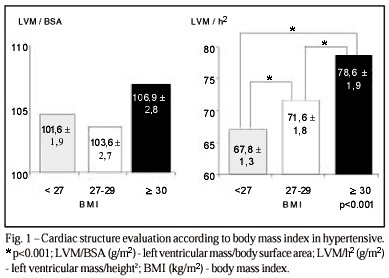
PURPOSE: To evaluate left ventricular mass (LVM) index in hypertensive and normotensive obese individuals. METHODS: Using M mode echocardiography, 544 essential hypertensive and 106 normotensive patients were evaluated, and LVM was indexed for body surface area (LVM/BSA) and for height² (LVM/h²). The 2 indexes were then compared in both populations, in subgroups stratified according to body mass index (BMI): or = 30kg/m². RESULTS: The BSA index does not allow identification of significant differences between BMI subgroups. Indexing by height² provides significantly increased values for high BMI subgroups in normotensive and hypertensive populations. CONCLUSION: Left ventricular hypertrophy (LVH) has been underestimated in the obese with the use of LVM/BSA because this index considers obesity as a physiological variable. Indexing by height² allows differences between BMI subgroups to become apparent and seems to be more appropriate for detecting LVH in obese populations.

  • Essential Hypertension
  • Left Ventricular Hypertrophy
  • left ventricular mass index
  • Obesity
Read Full Article
Creative Commons Attribution (CC BY) Creative Commons license
31/01/2007 DOI: 10.1590/S0066-782X2002000400001 Views 1
Left Ventricular Diastolic Function in Essential Hypertensive Patients: Influence of Age and Left Ventricular Geometry
ABC
Original Article

Left Ventricular Diastolic Function in Essential Hypertensive Patients: Influence of Age and Left Ventricular Geometry

Eduardo Cantoni Rosa et al. Valdir Ambrósio Moysés Ivan Rivera Ricardo da Cintra Sesso … Nárcia Kohlmann Maria Tereza Zanella Artur Beltrame Ribeiro Osvaldo Kohlmann Jr.

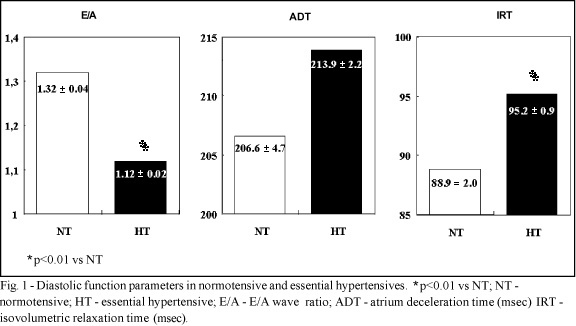
PURPOSE – To evaluate diastolic dysfunction (DD) in essential hypertension and the influence of age and cardiac geometry on this parameter. METHODS – Four hundred sixty essential hypertensive patients (HT) underwent Doppler echocardiography to obtain E/A wave ratio (E/A), atrial deceleration time (ADT), and isovolumetric relaxation time (IRT). All patients were grouped according to cardiac geometric patterns (NG – normal geometry; CR – concentric remodeling; CH- concentric hypertrophy; EH – eccentric hypertrophy) and to age (60 years). One hundred six normotensives (NT) persons were also evaluated. RESULTS – A worsening of diastolic function in the HT compared with the NT, including HT with NG (E/A: NT – 1.38±0.03 vs HT – 1.27±0.02, p<0.01), was observed. A higher prevalence of DD occurred parallel to age and cardiac geometry also in the prehypertrophic groups (CR). Multiple regression analysis identified age as the most important predictor of DD (r²=0.30, p<0.01). CONCLUSION – DD was prevalent in this hypertensive population, being highly affected by age and less by heart structural parameters. DD is observed in incipient stages of hypertensive heart disease, and thus its early detection may help in the risk stratification of hypertensive patients.

  • age
  • cardiac geometry
  • Diastolic Function
  • Essential Hypertension
Read Full Article
Creative Commons Attribution (CC BY) Creative Commons license
13/08/2002 DOI: 10.1590/S0066-782X2002000500004 Views 2
ABC
Original Article

Distribution of cardiac geometric patterns on echocardiography in essential hypertension. Impact of two criteria of stratification

Eduardo Cantoni Rosa et al. Valdir Ambrósio Moisés Ricardo Cintra Sesso Nárcia E. B. Kohlmann … Frida Liane Plavnik Maria Teresa Zanella Artur Beltrame Ribeiro Osvaldo Kohlmann Júnior

PURPOSE: To evaluate 2 left ventricular mass index (LVMI) normality criteria for the prevalence of left ventricular geometric patterns in a hypertensive population ( HT ) . METHODS: 544 essential hypertensive patients, were evaluated by echocardiography, and different left ventricular hypertrophy criteria were applied: 1 – classic : men – 134 g/m² and women – 110 g/m² ; 2- obtained from the 95th percentil of LVMI from a normotensive population (NT). RESULTS: The prevalence of 4 left ventricular geometric patterns, respectively for criteria 1 and 2, were: normal geometry – 47.7% and 39.3%; concentric remodelying – 25.4% and 14.3%; concentric hypertrophy – 18.4% and 27.7% and excentric hypertrophy – 8.8% and 16.7%, which confered abnormal geometry to 52.6% and 60.7% of hypertensive. The comparative analysis between NT and normal geometry hypertensive group according to criteria 1, detected significative stuctural differences,”( *p < 0.05):LVMI- 78.4 ± 1.50 vs 85.9 ±0.95 g/m² *; posterior wall thickness -8.5 ± 0.1 vs 8.9 ± 0.05 mm*; left atrium – 33.3 ± 0.41 vs 34.7 ± 0.30 mm *. With criteria 2, significative structural differences between the 2 groups were not observed. CONCLUSION: The use of a reference population based criteria, increased the abnormal left ventricular geometry prevalence in hypertensive patients and seemed more appropriate for left ventricular hypertrophy detection and risk stratification.

  • criteria of hypertrophy
  • Essential Hypertension
  • Left Ventricular Hypertrophy
Read Full Article
Creative Commons Attribution (CC BY) Creative Commons license
08/01/2002 DOI: 10.1590/S0066-782X2001000500002 Views 1

How to cite this article

EndNote RIS

Electronic Document Format (Vancouver)

Miranda RD, Laurindo BO, Licco MEA. Technologies for Better Blood Pressure Control: Do the Applications Offer the Necessary Quality?. Arquivos Brasileiros de Cardiologia 2025;122(2):e20250085.

Electronic Document Format (ABNT)

Miranda, Roberto Dischinger; Laurindo, Bruna de Oliveira; Licco, Maria Eduarda Augusto. Technologies for Better Blood Pressure Control: Do the Applications Offer the Necessary Quality?. Arquivos Brasileiros de Cardiologia, v. 122, n. 2, e20250085, Apr. 2025.

Electronic Document Format (APA)

Miranda, R. D., Laurindo, B. O., & Licco, M. E. A. (2025). Technologies for Better Blood Pressure Control: Do the Applications Offer the Necessary Quality?. Arquivos Brasileiros de Cardiologia, 122(2), e20250085.

Electronic Document Format (ISO)

Miranda, Roberto Dischinger and Laurindo, Bruna de Oliveira and Licco, Maria Eduarda Augusto. Technologies for Better Blood Pressure Control: Do the Applications Offer the Necessary Quality?. Arquivos Brasileiros de Cardiologia [online]. 2025, vol. 122, n. 2, [cited 2026-10-14], e20250085. Available from: <https://journals.cardiol.br/en/article/technologies-for-better-blood-pressure-control-do-the-applications-offer-the-necessary-quality/>. ISSN 0066-782X

EndNote RIS

Electronic Document Format (Vancouver)

Yahia M, Soliman M, Hashem M. The Association Between Presystolic Wave and Subclinical Left Ventricular Dysfunction in Asymptomatic Hypertensive Patients: Speckle-Tracking Echocardiographic Study. International Journal of Cardiovascular Sciences 2024;37:e20230201.

Electronic Document Format (ABNT)

Yahia, Mohamed; Soliman, Mahmoud; Hashem, Mohamed. The Association Between Presystolic Wave and Subclinical Left Ventricular Dysfunction in Asymptomatic Hypertensive Patients: Speckle-Tracking Echocardiographic Study. International Journal of Cardiovascular Sciences, v. 37, e20230201, Aug. 2024.

Electronic Document Format (APA)

Yahia, M., Soliman, M., & Hashem, M. (2024). The Association Between Presystolic Wave and Subclinical Left Ventricular Dysfunction in Asymptomatic Hypertensive Patients: Speckle-Tracking Echocardiographic Study. International Journal of Cardiovascular Sciences, 37, e20230201.

Electronic Document Format (ISO)

Yahia, Mohamed and Soliman, Mahmoud and Hashem, Mohamed. The Association Between Presystolic Wave and Subclinical Left Ventricular Dysfunction in Asymptomatic Hypertensive Patients: Speckle-Tracking Echocardiographic Study. International Journal of Cardiovascular Sciences [online]. 2024, vol. 37, [cited 2026-10-14], e20230201. Available from: <https://journals.cardiol.br/en/article/the-association-between-presystolic-wave-and-subclinical-left-ventricular-dysfunction-in-asymptomatic-hypertensive-patients-speckle-tracking-echocardiographic-study/>. ISSN 2359-4802

EndNote RIS

Electronic Document Format (Vancouver)

Freitas SRS, Cabello PH, Moura-Neto RS, Dolinsky LC, Bóia MN. Combined analysis of genetic and environmental factors on essential hypertension in a brazilian rural population in the Amazon region. Arquivos Brasileiros de Cardiologia 2007;88(4):447-51.

Electronic Document Format (ABNT)

Freitas, Silvia Regina Sampaio; Cabello, Pedro Hernan; Moura-Neto, Rodrigo Soares; Dolinsky, Luciana Cresta; Bóia, Marcio Neves. Combined analysis of genetic and environmental factors on essential hypertension in a brazilian rural population in the Amazon region. Arquivos Brasileiros de Cardiologia, v. 88, n. 4, p. 447-451, May. 2007.

Electronic Document Format (APA)

Freitas, S. R. S., Cabello, P. H., Moura-Neto, R. S., Dolinsky, L. C., & Bóia, M. N. (2007). Combined analysis of genetic and environmental factors on essential hypertension in a brazilian rural population in the Amazon region. Arquivos Brasileiros de Cardiologia, 88(4), 447-451.

Electronic Document Format (ISO)

Freitas, Silvia Regina Sampaio and Cabello, Pedro Hernan and Moura-Neto, Rodrigo Soares and Dolinsky, Luciana Cresta and Bóia, Marcio Neves. Combined analysis of genetic and environmental factors on essential hypertension in a brazilian rural population in the Amazon region. Arquivos Brasileiros de Cardiologia [online]. 2007, vol. 88, n. 4, [cited 2026-10-14], pp. 447-451. Available from: <https://journals.cardiol.br/en/article/combined-analysis-of-genetic-and-environmental-factors-on-essential-hypertension-in-a-brazilian-rural-population-in-the-amazon-region/>. ISSN 0066-782X

EndNote RIS

Electronic Document Format (Vancouver)

Kohlmann Júnior O, Ribeiro AB. Manidipine in the treatment of stage I and II essential hypertensive patients with overweight or android obesity. A brazilian multicentre study of efficacy, tolerability and metabolic effects. Arquivos Brasileiros de Cardiologia 2007;77(5):463-70.

Electronic Document Format (ABNT)

Kohlmann Júnior, Osvaldo; Ribeiro, Artur Beltrame. Manidipine in the treatment of stage I and II essential hypertensive patients with overweight or android obesity. A brazilian multicentre study of efficacy, tolerability and metabolic effects. Arquivos Brasileiros de Cardiologia, v. 77, n. 5, p. 463-470, Jan. 2007.

Electronic Document Format (APA)

Kohlmann Júnior, O., & Ribeiro, A. B. (2007). Manidipine in the treatment of stage I and II essential hypertensive patients with overweight or android obesity. A brazilian multicentre study of efficacy, tolerability and metabolic effects. Arquivos Brasileiros de Cardiologia, 77(5), 463-470.

Electronic Document Format (ISO)

Kohlmann Júnior, Osvaldo and Ribeiro, Artur Beltrame. Manidipine in the treatment of stage I and II essential hypertensive patients with overweight or android obesity. A brazilian multicentre study of efficacy, tolerability and metabolic effects. Arquivos Brasileiros de Cardiologia [online]. 2007, vol. 77, n. 5, [cited 2026-10-14], pp. 463-470. Available from: <https://journals.cardiol.br/en/article/manidipine-in-the-treatment-of-stage-i-and-ii-essential-hypertensive-patients-with-overweight-or-android-obesity-a-brazilian-multicentre-study-of-efficacy-tolerability-and-metabolic-effects/>. ISSN 0066-782X

EndNote RIS

Electronic Document Format (Vancouver)

Rosa EC, Moysés VA, Sesso RC, Plavnik FL, Ribeiro FF, Kohlmann NEB, Ribeiro AB, et al. Left Ventricular Hypertrophy Evaluation in Obese Hypertensive Patients: Effect of Left Ventricular Mass Index Criteria. Arquivos Brasileiros de Cardiologia 2007;78(4):347-51.

Electronic Document Format (ABNT)

Rosa, Eduardo Cantoni; Moysés, Valdir Ambrósio; Sesso, Ricardo Cintra; Plavnik, Frida Liane; Ribeiro, Fernando Flexa; Kohlmann, Nárcia E. B.; Ribeiro, Artur Beltrame; Zanella, Maria Tereza; Kohlmann Jr., Osvaldo. Left Ventricular Hypertrophy Evaluation in Obese Hypertensive Patients: Effect of Left Ventricular Mass Index Criteria. Arquivos Brasileiros de Cardiologia, v. 78, n. 4, p. 347-351, Jan. 2007.

Electronic Document Format (APA)

Rosa, E. C., Moysés, V. A., Sesso, R. C., Plavnik, F. L., Ribeiro, F. F., Kohlmann, N. E. B., Ribeiro, A. B., Zanella, M. T., & Kohlmann Jr., O. (2007). Left Ventricular Hypertrophy Evaluation in Obese Hypertensive Patients: Effect of Left Ventricular Mass Index Criteria. Arquivos Brasileiros de Cardiologia, 78(4), 347-351.

Electronic Document Format (ISO)

Rosa, Eduardo Cantoni and Moysés, Valdir Ambrósio and Sesso, Ricardo Cintra and Plavnik, Frida Liane and Ribeiro, Fernando Flexa and Kohlmann, Nárcia E. B. and Ribeiro, Artur Beltrame and Zanella, Maria Tereza and Kohlmann Jr., Osvaldo. Left Ventricular Hypertrophy Evaluation in Obese Hypertensive Patients: Effect of Left Ventricular Mass Index Criteria. Arquivos Brasileiros de Cardiologia [online]. 2007, vol. 78, n. 4, [cited 2026-10-14], pp. 347-351. Available from: <https://journals.cardiol.br/en/article/left-ventricular-hypertrophy-evaluation-in-obese-hypertensive-patients-effect-of-left-ventricular-mass-index-criteria/>. ISSN 0066-782X

EndNote RIS

Electronic Document Format (Vancouver)

Rosa EC, Moysés VA, Rivera I, Sesso RC, Kohlmann N, Zanella MT, Ribeiro AB, et al. Left Ventricular Diastolic Function in Essential Hypertensive Patients: Influence of Age and Left Ventricular Geometry. Arquivos Brasileiros de Cardiologia 2002;78(5):472-7.

Electronic Document Format (ABNT)

Rosa, Eduardo Cantoni; Moysés, Valdir Ambrósio; Rivera, Ivan; Sesso, Ricardo da Cintra; Kohlmann, Nárcia; Zanella, Maria Tereza; Ribeiro, Artur Beltrame; Kohlmann Jr., Osvaldo. Left Ventricular Diastolic Function in Essential Hypertensive Patients: Influence of Age and Left Ventricular Geometry. Arquivos Brasileiros de Cardiologia, v. 78, n. 5, p. 472-477, Aug. 2002.

Electronic Document Format (APA)

Rosa, E. C., Moysés, V. A., Rivera, I., Sesso, R. C., Kohlmann, N., Zanella, M. T., Ribeiro, A. B., & Kohlmann Jr., O. (2002). Left Ventricular Diastolic Function in Essential Hypertensive Patients: Influence of Age and Left Ventricular Geometry. Arquivos Brasileiros de Cardiologia, 78(5), 472-477.

Electronic Document Format (ISO)

Rosa, Eduardo Cantoni and Moysés, Valdir Ambrósio and Rivera, Ivan and Sesso, Ricardo da Cintra and Kohlmann, Nárcia and Zanella, Maria Tereza and Ribeiro, Artur Beltrame and Kohlmann Jr., Osvaldo. Left Ventricular Diastolic Function in Essential Hypertensive Patients: Influence of Age and Left Ventricular Geometry. Arquivos Brasileiros de Cardiologia [online]. 2002, vol. 78, n. 5, [cited 2026-10-14], pp. 472-477. Available from: <https://journals.cardiol.br/en/article/left-ventricular-diastolic-function-in-essential-hypertensive-patients-influence-of-age-and-left-ventricular-geometry/>. ISSN 0066-782X

EndNote RIS

Electronic Document Format (Vancouver)

Rosa EC, Moisés VA, Sesso RC, Kohlmann NEB, Plavnik FL, Zanella MT, Ribeiro AB, et al. Distribution of cardiac geometric patterns on echocardiography in essential hypertension. Impact of two criteria of stratification. Arquivos Brasileiros de Cardiologia 2002;76(5):362-8.

Electronic Document Format (ABNT)

Rosa, Eduardo Cantoni; Moisés, Valdir Ambrósio; Sesso, Ricardo Cintra; Kohlmann, Nárcia E. B.; Plavnik, Frida Liane; Zanella, Maria Teresa; Ribeiro, Artur Beltrame; Kohlmann Júnior, Osvaldo. Distribution of cardiac geometric patterns on echocardiography in essential hypertension. Impact of two criteria of stratification. Arquivos Brasileiros de Cardiologia, v. 76, n. 5, p. 362-368, Jan. 2002.

Electronic Document Format (APA)

Rosa, E. C., Moisés, V. A., Sesso, R. C., Kohlmann, N. E. B., Plavnik, F. L., Zanella, M. T., Ribeiro, A. B., & Kohlmann Júnior, O. (2002). Distribution of cardiac geometric patterns on echocardiography in essential hypertension. Impact of two criteria of stratification. Arquivos Brasileiros de Cardiologia, 76(5), 362-368.

Electronic Document Format (ISO)

Rosa, Eduardo Cantoni and Moisés, Valdir Ambrósio and Sesso, Ricardo Cintra and Kohlmann, Nárcia E. B. and Plavnik, Frida Liane and Zanella, Maria Teresa and Ribeiro, Artur Beltrame and Kohlmann Júnior, Osvaldo. Distribution of cardiac geometric patterns on echocardiography in essential hypertension. Impact of two criteria of stratification. Arquivos Brasileiros de Cardiologia [online]. 2002, vol. 76, n. 5, [cited 2026-10-14], pp. 362-368. Available from: <https://journals.cardiol.br/en/article/distribution-of-cardiac-geometric-patterns-on-echocardiography-in-essential-hypertension-impact-of-two-criteria-of-stratification/>. ISSN 0066-782X

  • About ABC Family
  • Internal Regulation
  • Editorial Board
  • Brazilian Society of Cardiology (SBC)

Issues

SBC Guidelines

  • Videos
  • Podcasts
  • News