ABC Family Arquivos Brasileiros de Cardiologia International Journal of Cardiovascular Sciences ABC Heart Failure & Cardiomyopathy ABC Imagem Cardiovascular
Português English
ABC Family
Português English
  • About
    • About ABC Family
    • Internal Regulation
    • Editorial Board
    • Brazilian Society of Cardiology (SBC)
  • Issues
  • SBC Guidelines
  • Content
    • Videos
    • Podcasts
    • News
  • About
    • About ABC Family
    • Internal Regulation
    • Editorial Board
    • Brazilian Society of Cardiology (SBC)
  • Issues
  • SBC Guidelines
  • Content
    • Videos
    • Podcasts
    • News

ABC Family

  • ABC Family
  • Arquivos Brasileiros de Cardiologia
  • International Journal of Cardiovascular Sciences
  • ABC Heart Failure & Cardiomyopathy
  • ABC Imagem Cardiovascular
Search in

No content found.

Journals
Ordering
Article types
Others

  1. Home
  2. Keyword: erectile dysfunction
ABC
Editorial

Aortic Stiffness and the Response to Phosphodiesterase-5 Inhibitors in Patients Receiving Treatment for Erectile Dysfunction: Predictive Role or an Epiphenomenon?

Eduardo Tibiriça

Erectile dysfunction (ED), a health problem with multifactorial pathogenesis and high prevalence, is directly correlated with patient age and is related to endothelial dysfunction and an increased risk of cardiovascular disease (CVD). Vascular endothelial dysfunction is currently considered to be the link between vasculogenic ED and cardiometabolic diseases, including hypertension, diabetes, and atherosclerosis., The association between ED and CVD has long been recognized, and studies suggest that ED may be an independent marker of CVD risk, including the presence of subclinical coronary artery disease in otherwise asymptomatic men.

In this context, the general use of type 5 phosphodiesterase inhibitors (iPDE-5) has led more patients with ED to seek medical help, providing an excellent opportunity for the identification and correction of possible cardiovascular risk factors. In addition to functional and structural vascular alterations in the systemic circulation that occur during ED, local microcirculatory disturbances and fibrosis are thought to contribute to the pathogenesis of ED., Moreover, penile endothelium-dependent microvascular function has been shown to improve after continuous use of sildenafil in hypertensive patients with ED.

[…]

  • erectile dysfunction
  • Phosphodiesterase 5 Inhibitors
  • Vascular Stiffness
Read Full Article
Creative Commons Attribution (CC BY) Creative Commons license
22/04/2024 DOI: 10.36660/abc.20240092i Views 1
Role of Aortic Stiffness in Predicting Response to Phosphodiesterase-5 Inhibitors in the Treatment of Erectile Dysfunction
ABC
Original Article

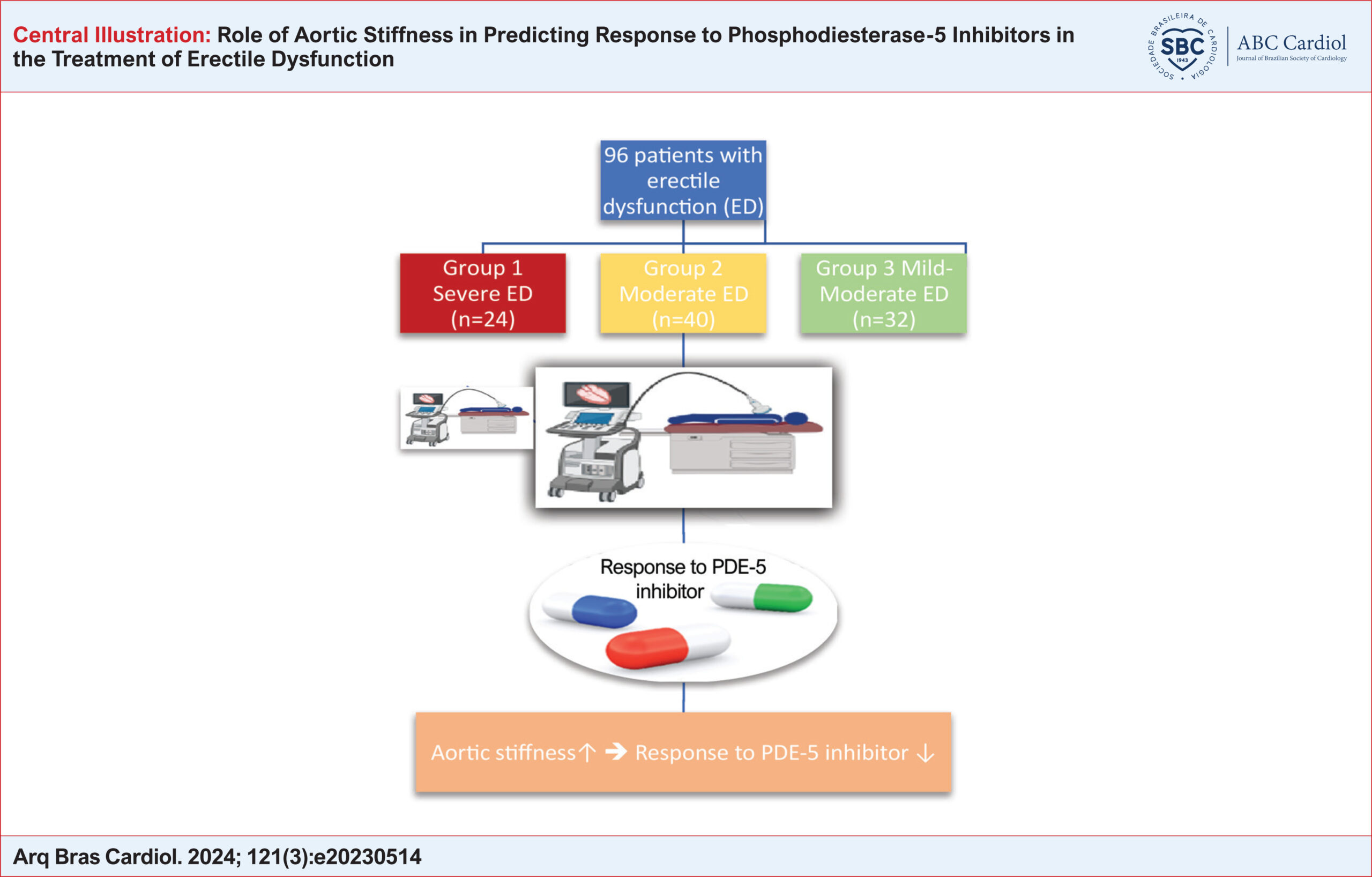
Role of Aortic Stiffness in Predicting Response to Phosphodiesterase-5 Inhibitors in the Treatment of Erectile Dysfunction

Ömer Faruk Çiçek et al. Halil Ferat Öncel Remzi Salar

Abstract

Background:

It is known that aortic stiffness (AS) increases in patients with erectile dysfunction (ED). Phosphodiesterase type-5 (PDE-5) enzyme inhibitors are used in the treatment of ED, and patients’ responses to this treatment may vary.

Objectives:

We aimed to investigate the role of AS in predicting the response of patients planned to take PDE-5 enzyme inhibitors due to ED.

Methods:

A total of 96 male patients with ED were included in the study. The International Index of Erectile Function (IIEF) questionnaire was used to evaluate the presence and severity of ED and the response to treatment. Transthoracic echocardiography was used to evaluate AS.

Results:

There was a statistically significant difference between the aortic strain and aortic distensibility values of the study groups (p<0.001). The delta IIEF score had a high level of positive correlation with aortic strain (p<0.01, r=0.758) and a moderate level of positive correlation with aortic distensibility (p<0.01, r=0.574).

Conclusion:

We determined that in patients with ED, aortic strain and aortic distensibility measured non-invasively using transthoracic echocardiography are important parameters in predicting patients’ response to PDE-5 inhibitor therapy.

  • Echocardiography
  • erectile dysfunction
  • Phosphodiesterase 5 Inhibitors
Read Full Article
Creative Commons Attribution (CC BY) Creative Commons license
05/04/2024 DOI: 10.36660/abc.20230514 Views 1
IJCS
Original Article

Association between Erectile Dysfunction and Quality of Life in Patients with Coronary Artery Disease

André Tabosa et al. Dinaldo Cavalcanti de Oliveira Vitor H. Stangler Henrique Araújo … Vitor Nunes Maria Isabel Gadelha Danielle A. G. C. Oliveira Emmanuelle Tenório

Abstract

Background:

Erectile dysfunction (ED) and coronary artery disease (CAD) share the same risk factors and the associations between ED, quality of life (QoL) and CAD have been the subject of recent studies.

Objective:

To evaluate whether ED is associated with worsening QoL in patients with CAD.

Methods:

A cross-sectional, multicenter, prospective and analytic study was carried out from EDcember 2014 to April 2016, which recruited 304 men (mean age: 57 ± 9.9 years) with clinical diagnosis of CAD. QoL was assessed using Short Form-36 and ED by the International Erectile Function InEDx. EDscriptive and analytical statistical analyzes were performed, and the Kruskal-Wallis non-parametric test was used to test whether there are significant differences in each quality of life domain when comparing different types of ED. For all tests, p ≤ 0.05 was consiEDred significant.

Results:

The prevalence of ED was 76.3%. The median and percentiles 25 and 75 of each life quality domain according to the absence of ED; mild ED, mild to moderate, moderate and severe ED and severe ED, respectively, were: Functional capacity: 85 (63-100), 75 (50 -95), 60 (32-85), 55 (35-75), 50 (30-70), p < 0.001; Physical aspects: 87 (0-100), 40 (0-100), 0 (0-100), 0 (0-31), 0 (0-12), p < 0.001; Pain: 72 (51-100), 66 (51-100), 74 (51-100), 62 (51-100), 51 (31-62), p = 0.001; General state of health: 77 (62-87), 72 (57-77), 67 (55-82), 67 (59-75), 52 (37-68), p < 0.001; Vitality: 75 (60-85), 65 (50-75), 65 (55-75), 60 (43-75), 50 (32-65), p < 0.001; Social Aspects: 87 (62-100), 87 (62-100), 87 (68-100), 75 (62-100), 75 (50-93), p = 0.139; Emotional Aspects: 100 (58-100), 100 (33-100), 100 (33-100), 100 (0-100), 0 (0-100), p = 0.001; Mental health: 80 (67-89), 72 (60-84), 72 (66-80), 68 (58-80), 56 (50-74), p < 0.001.

Conclusions:

The prevalence of erectile dysfunction was high. ED was associated with worsening of QoL in patients with CAD.

  • Coronary Artery Disease
  • erectile dysfunction
  • Life Style
  • Risk Factors
Read Full Article
Creative Commons Attribution (CC BY) Creative Commons license
01/01/2017 DOI: 10.5935/2359-4802.20170042 Views 1
ABC
Artigo Original

Validation of the International Index of Erectile Function (IIFE) for use in Brazil

Ana Inês Gonzáles et al. Sabrina Weiss Sties Priscilla Geraldine Wittkopf Lourenço Sampaio de Mara … Anderson Zampier Ulbrich Fernando Luiz Cardoso Tales de Carvalho

BACKGROUND: The International Index of Erectile Function has been proposed as a method for assessing sexual function assisting the diagnosis and classification of erectile dysfunction. However, IIEF was not validated for the Portuguese language. OBJECTIVE: Validate the International Index of Erectile Function in patients with cardiopulmonary and metabolic diseases. METHODS: The sample consisted of 108 participants of to Cardiopulmonary and Metabolic program Rehabilitation (CPMR) in southern Brazil. The clarity assessment of the instrument was performed using a scale ranging from zero to 10. The construct validity was carried out by confirmatory factor analysis (KMO = 0.85; Barllet p < 0.001), internal consistency by Cronbach's alpha and reproducibility and interrater reliability via the test retest method. RESULTS: The items were considered very clear with averages superior to 9. The internal consistency resulted in 0.89. The majority of items related correctly with their domains, with exception of three questions from sexual satisfaction domain, and one from erectile function. All items showed excellent stability of measure and substantial to almost perfect agreement. CONCLUSION: The present study showed that the IIEF is valid and reliable for use in participants of a cardiopulmonary and metabolic rehabilitation program.

  • Cardiovascular Diseases
  • erectile dysfunction
  • Rehabilitation
  • Sexual Health
Read Full Article
Creative Commons Attribution (CC BY) Creative Commons license
09/07/2013 DOI: 10.5935/abc.20130141 Views 1
Simplified International Index of Erectile Function (IIEF-5) and coronary artery disease in hypertensive patients
ABC
Artigo Original

Simplified International Index of Erectile Function (IIEF-5) and coronary artery disease in hypertensive patients

Antonio Carlos Cordeiro et al. Carolina Christianini Mizzaci Rafael Modesto Fernandes Afrânio Galdino Araujo-Junior … Paulo Oliveira Cardoso Lucas Velloso Dutra Amanda Guerra Moraes Rego Sousa Celso Amodeo

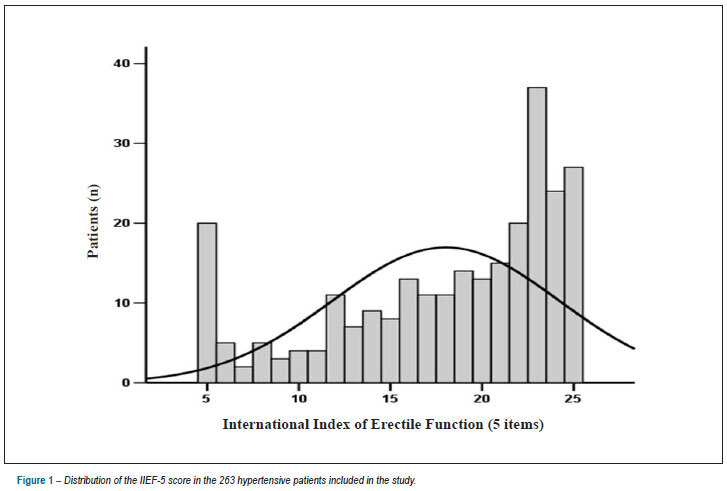
BACKGROUND: Erectile Dysfunction (ED) is associated with increased risk of coronary artery disease (CAD). OBJECTIVE: To evaluate the association between ED, determined by the Simplified International Index of Erectile Function (IIEF-5) and CAD. METHODS: This was a cross-sectional cohort study that evaluated 263 hypertensive patients (55 [50-61] years). ED was assessed through the IIEF-5 and CAD by the history of previous myocardial revascularization and/or coronary angiography. RESULTS: The IIEF-5 correlated with creatinine clearance [CrCl] (Rho = 0.23, p <0.001) and age (Rho = -0.22, p <0.001). Forty-two patients had CAD, and IIEF-5 was able to discriminate them (area under the ROC curve = 0.63, p = 0.006). Patients were divided into two groups: IIEF-5 20 (n = 123); those with lower IIEF-5 scores were older (57 [52-61] vs. 54 [45-60] years, p = 0.002), had higher prevalence of CAD (22% vs. 9%, p = 0.004), smoking (64% vs. 47%, p = 0.009) and use of calcium channel inhibitors (65% vs. 43.%, p = 0.001), as well as lower CrCl (67.3 [30.8 to 88.6] vs. 82.6 [65.9 – 98.2] ml/min, p <0.001). The IIEF-5 < 21 was associated with increased risk of CAD in the logistic regression, both univariate (RR = 2.89 [95%CI: 1.39 – 6.05]), and after adjusting for age, diabetes, CrCl, smoking, mean arterial pressure and use of antihypertensive drugs (RR = 2.59 [95% CI: 1.01 – 6.61]). CONCLUSION: The IIEF-5 is associated with the diagnosis of CAD and its use can add information to cardiovascular risk staging in hypertensive patients.

  • Coronary Artery Disease
  • erectile dysfunction
  • Hypertension
Read Full Article
Creative Commons Attribution (CC BY) Creative Commons license
04/09/2012 DOI: 10.1590/S0066-782X2012005000081 Views 1
Cardiovascular repercussion of lodenafil carbonate, a new PDE5 inhibitor, with and without alcohol consumption
ABC
Artigo Original

Cardiovascular repercussion of lodenafil carbonate, a new PDE5 inhibitor, with and without alcohol consumption

Adauto Carvalho Silva et al. Odaly Toffoletto Luiz Antonio Galvão Lucio Paula Ferreira dos Santos … Jorge Barros Afiune João Massud Filho Sergio Tufik

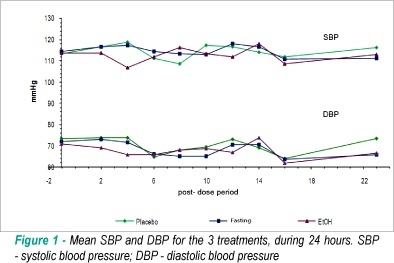
BACKGROUND: Millions of men around the world suffer from erectile dysfunction, for which phosphodiesterase 5 inhibitors (PDE-5 inhibitors) are currently the first treatment option. Sexual activity and alcohol consumption are closely related, and the simultaneous use of alcohol and PDE-5 inhibitors can happen. Lodenafil carbonate is a new PDE-5 inhibitor, developed by a Brazilian pharmaceutical company. OBJECTIVE: This work aimed at evaluating the cardiovascular safety of lodenafil carbonate, with and without simultaneous alcohol consumption. METHODS: Fifteen male volunteers received 160 mg lodenafil carbonate (LC), in three different moments. Participants were assigned to three groups, treated with LC in fasting condition, with alcohol or receiving only placebo. The volunteers were continuously monitored during 24 hours for physical impairment, blood pressure, heart rate, QT interval and lodenafil’s pharmacokinetic parameters. RESULTS: Lodenafil carbonate alone or with alcohol did not induce clinically relevant modifications in arterial blood pressure or heart rate. A statistically significant decrease in blood pressure was seen four hours after LC and alcohol intake, and an increase in heart rate six hours after intake of lodenafil carbonate alone. The QTc interval was not significantly modified. Lodenafil carbonate bioavailability was increased in 74% when drug intake was associated with alcohol. CONCLUSION: These results show that the use of lodenafil carbonate did not have clinically relevant effects on blood pressure or heart rate, and was not associated with QT interval prolongation. The association of lodenafil carbonate and alcohol affected its pharmacokinetic properties, increasing the bioavailability of the drug.

  • Alcohol Drinking
  • attributable risk
  • Cardiovascular System
  • erectile dysfunction
  • Phosphodiesterase Inhibitors
Read Full Article
Creative Commons Attribution (CC BY) Creative Commons license
05/05/2010 DOI: 10.1590/S0066-782X2010000200004 Views 2
Erectile dysfunction: a marker for myocardial perfusion impairment?
ABC
Artigo Original

Erectile dysfunction: a marker for myocardial perfusion impairment?

Juarez Ortiz et al. Sergio Tranchesi Ortiz Claudia Gianini Monaco Cristina Harumi Yamashita … Miriam Cássia Mendes Moreira Carlos Alberto F. Monaco

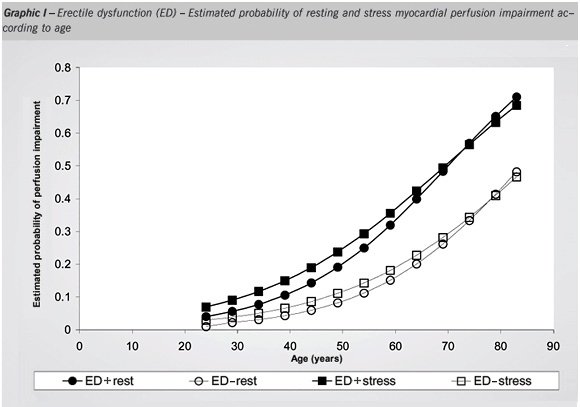
OBJECTIVE: To study the correlation between erectile dysfunction (ED) and myocardial perfusion impairment in men with suspected or diagnosed coronary artery disease (CAD). METHODS: In this prospective study a self-administered IIEF-5 questionnaire was answered by 287 patients that underwent myocardial perfusion imaging under both resting and stress condition with technetium-99m sestamibi, through gated SPECT nuclear scintigraphy technique, before and after physical or pharmacological stress. RESULTS: Some degree of erectile dysfunction (group ED+) was found in 137 (47.8%) patients and in these, age was significantly higher (60.60±9.84 vs 50.67±9.94 – p<0.001)) than in those without erectile dysfunction (group ED-). In the ED+ group, it was observed a higher prevalence of hypertension, diabetes, myocardial infarction (MI) and percutaneous coronary angioplasty (PCTA). Regardless of the age factor, ED+ patients also presented higher occurrence of myocardial perfusion impairment (necrosis and/or ischemia) and left ventricular systolic wall motion and thickening abnormalities. CONCLUSION: Patients with ED have higher estimated probability of presenting segmental myocardial perfusion and functional contraction impairment and, therefore, CAD, independent of the aging factor. The authors conclude that ED may be considered not only a marker for CAD but also a condition related to the occurrence of major coronary events such as MI and PCTA.

  • Atherosclerosis
  • Coronary Artery Disease
  • erectile dysfunction
  • myocardial perfusion
  • Nuclear Medicine
  • Risk Factors
Read Full Article
Creative Commons Attribution (CC BY) Creative Commons license
07/11/2005 DOI: 10.1590/S0066-782X2005001700003 Views 2

How to cite this article

EndNote RIS

Electronic Document Format (Vancouver)

Tibiriça E. Aortic Stiffness and the Response to Phosphodiesterase-5 Inhibitors in Patients Receiving Treatment for Erectile Dysfunction: Predictive Role or an Epiphenomenon?. Arquivos Brasileiros de Cardiologia 2024;121(3):e20240092.

Electronic Document Format (ABNT)

Tibiriça, Eduardo. Aortic Stiffness and the Response to Phosphodiesterase-5 Inhibitors in Patients Receiving Treatment for Erectile Dysfunction: Predictive Role or an Epiphenomenon?. Arquivos Brasileiros de Cardiologia, v. 121, n. 3, e20240092, Apr. 2024.

Electronic Document Format (APA)

Tibiriça, E. (2024). Aortic Stiffness and the Response to Phosphodiesterase-5 Inhibitors in Patients Receiving Treatment for Erectile Dysfunction: Predictive Role or an Epiphenomenon?. Arquivos Brasileiros de Cardiologia, 121(3), e20240092.

Electronic Document Format (ISO)

Tibiriça, Eduardo. Aortic Stiffness and the Response to Phosphodiesterase-5 Inhibitors in Patients Receiving Treatment for Erectile Dysfunction: Predictive Role or an Epiphenomenon?. Arquivos Brasileiros de Cardiologia [online]. 2024, vol. 121, n. 3, [cited 2026-10-14], e20240092. Available from: <https://journals.cardiol.br/en/article/aortic-stiffness-and-the-response-to-phosphodiesterase-5-inhibitors-in-patients-receiving-treatment-for-erectile-dysfunction-predictive-role-or-an-epiphenomenon/>. ISSN 0066-782X

EndNote RIS

Electronic Document Format (Vancouver)

Çiçek F, Öncel HF, Salar R. Role of Aortic Stiffness in Predicting Response to Phosphodiesterase-5 Inhibitors in the Treatment of Erectile Dysfunction. Arquivos Brasileiros de Cardiologia 2024;121(3):e20230514.

Electronic Document Format (ABNT)

Çiçek, Ömer Faruk; Öncel, Halil Ferat; Salar, Remzi. Role of Aortic Stiffness in Predicting Response to Phosphodiesterase-5 Inhibitors in the Treatment of Erectile Dysfunction. Arquivos Brasileiros de Cardiologia, v. 121, n. 3, e20230514, Apr. 2024.

Electronic Document Format (APA)

Çiçek, F., Öncel, H. F., & Salar, R. (2024). Role of Aortic Stiffness in Predicting Response to Phosphodiesterase-5 Inhibitors in the Treatment of Erectile Dysfunction. Arquivos Brasileiros de Cardiologia, 121(3), e20230514.

Electronic Document Format (ISO)

Çiçek, Ömer Faruk and Öncel, Halil Ferat and Salar, Remzi. Role of Aortic Stiffness in Predicting Response to Phosphodiesterase-5 Inhibitors in the Treatment of Erectile Dysfunction. Arquivos Brasileiros de Cardiologia [online]. 2024, vol. 121, n. 3, [cited 2026-10-14], e20230514. Available from: <https://journals.cardiol.br/en/article/role-of-aortic-stiffness-in-predicting-response-to-phosphodiesterase-5-inhibitors-in-the-treatment-of-erectile-dysfunction/>. ISSN 0066-782X

EndNote RIS

Electronic Document Format (Vancouver)

Tabosa A, Oliveira DC, Stangler VH, Araújo H, Nunes V, Gadelha MI, Oliveira DAGC, et al. Association between Erectile Dysfunction and Quality of Life in Patients with Coronary Artery Disease. International Journal of Cardiovascular Sciences 2017;30(3):219-26.

Electronic Document Format (ABNT)

Tabosa, André; Oliveira, Dinaldo Cavalcanti de; Stangler, Vitor H.; Araújo, Henrique; Nunes, Vitor; Gadelha, Maria Isabel; Oliveira, Danielle A. G. C.; Tenório, Emmanuelle. Association between Erectile Dysfunction and Quality of Life in Patients with Coronary Artery Disease. International Journal of Cardiovascular Sciences, v. 30, n. 3, p. 219-226, Dec. 2016.

Electronic Document Format (APA)

Tabosa, A., Oliveira, D. C. , Stangler, V. H., Araújo, H., Nunes, V., Gadelha, M. I., Oliveira, D. A. G. C., & Tenório, E. (2017). Association between Erectile Dysfunction and Quality of Life in Patients with Coronary Artery Disease. International Journal of Cardiovascular Sciences, 30(3), 219-226.

Electronic Document Format (ISO)

Tabosa, André and Oliveira, Dinaldo Cavalcanti de and Stangler, Vitor H. and Araújo, Henrique and Nunes, Vitor and Gadelha, Maria Isabel and Oliveira, Danielle A. G. C. and Tenório, Emmanuelle. Association between Erectile Dysfunction and Quality of Life in Patients with Coronary Artery Disease. International Journal of Cardiovascular Sciences [online]. 2017, vol. 30, n. 3, [cited 2026-10-14], pp. 219-226. Available from: <https://journals.cardiol.br/en/article/association-between-erectile-dysfunction-and-quality-of-life-in-patients-with-coronary-artery-disease/>. ISSN 2359-4802

EndNote RIS

Electronic Document Format (Vancouver)

Gonzáles AI, Sties SW, Wittkopf PG, Mara LS, Ulbrich AZ, Cardoso FL, Carvalho T, et al. Validation of the International Index of Erectile Function (IIFE) for use in Brazil. Arquivos Brasileiros de Cardiologia 2013;101(2):176-82.

Electronic Document Format (ABNT)

Gonzáles, Ana Inês; Sties, Sabrina Weiss; Wittkopf, Priscilla Geraldine; Mara, Lourenço Sampaio de; Ulbrich, Anderson Zampier; Cardoso, Fernando Luiz; Carvalho, Tales de. Validation of the International Index of Erectile Function (IIFE) for use in Brazil. Arquivos Brasileiros de Cardiologia, v. 101, n. 2, p. 176-182, Jul. 2013.

Electronic Document Format (APA)

Gonzáles, A. I., Sties, S. W., Wittkopf, P. G., Mara, L. S. , Ulbrich, A. Z., Cardoso, F. L., & Carvalho, T. (2013). Validation of the International Index of Erectile Function (IIFE) for use in Brazil. Arquivos Brasileiros de Cardiologia, 101(2), 176-182.

Electronic Document Format (ISO)

Gonzáles, Ana Inês and Sties, Sabrina Weiss and Wittkopf, Priscilla Geraldine and Mara, Lourenço Sampaio de and Ulbrich, Anderson Zampier and Cardoso, Fernando Luiz and Carvalho, Tales de. Validation of the International Index of Erectile Function (IIFE) for use in Brazil. Arquivos Brasileiros de Cardiologia [online]. 2013, vol. 101, n. 2, [cited 2026-10-14], pp. 176-182. Available from: <https://journals.cardiol.br/en/article/validation-of-the-international-index-of-erectile-function-iife-for-use-in-brazil/>. ISSN 0066-782X

EndNote RIS

Electronic Document Format (Vancouver)

Cordeiro AC, Mizzaci CC, Fernandes RM, Araujo-Junior AG, Cardoso PO, Dutra LV, Sousa AGMR, et al. Simplified International Index of Erectile Function (IIEF-5) and coronary artery disease in hypertensive patients. Arquivos Brasileiros de Cardiologia 2012;99(4):924-30.

Electronic Document Format (ABNT)

Cordeiro, Antonio Carlos; Mizzaci, Carolina Christianini; Fernandes, Rafael Modesto; Araujo-Junior, Afrânio Galdino; Cardoso, Paulo Oliveira; Dutra, Lucas Velloso; Sousa, Amanda Guerra Moraes Rego; Amodeo, Celso. Simplified International Index of Erectile Function (IIEF-5) and coronary artery disease in hypertensive patients. Arquivos Brasileiros de Cardiologia, v. 99, n. 4, p. 924-930, Sep. 2012.

Electronic Document Format (APA)

Cordeiro, A. C., Mizzaci, C. C., Fernandes, R. M., Araujo-Junior, A. G., Cardoso, P. O., Dutra, L. V., Sousa, A. G. M. R., & Amodeo, C. (2012). Simplified International Index of Erectile Function (IIEF-5) and coronary artery disease in hypertensive patients. Arquivos Brasileiros de Cardiologia, 99(4), 924-930.

Electronic Document Format (ISO)

Cordeiro, Antonio Carlos and Mizzaci, Carolina Christianini and Fernandes, Rafael Modesto and Araujo-Junior, Afrânio Galdino and Cardoso, Paulo Oliveira and Dutra, Lucas Velloso and Sousa, Amanda Guerra Moraes Rego and Amodeo, Celso. Simplified International Index of Erectile Function (IIEF-5) and coronary artery disease in hypertensive patients. Arquivos Brasileiros de Cardiologia [online]. 2012, vol. 99, n. 4, [cited 2026-10-14], pp. 924-930. Available from: <https://journals.cardiol.br/en/article/simplified-international-index-of-erectile-function-iief-5-and-coronary-artery-disease-in-hypertensive-patients/>. ISSN 0066-782X

EndNote RIS

Electronic Document Format (Vancouver)

Silva AC, Toffoletto O, Lucio LAG, Santos PF, Afiune JB, Massud Filho J, Tufik S, et al. Cardiovascular repercussion of lodenafil carbonate, a new PDE5 inhibitor, with and without alcohol consumption. Arquivos Brasileiros de Cardiologia 2010;94(2):160-7.

Electronic Document Format (ABNT)

Silva, Adauto Carvalho; Toffoletto, Odaly; Lucio, Luiz Antonio Galvão; Santos, Paula Ferreira dos; Afiune, Jorge Barros; Massud Filho, João; Tufik, Sergio. Cardiovascular repercussion of lodenafil carbonate, a new PDE5 inhibitor, with and without alcohol consumption. Arquivos Brasileiros de Cardiologia, v. 94, n. 2, p. 160-167, May. 2010.

Electronic Document Format (APA)

Silva, A. C., Toffoletto, O., Lucio, L. A. G., Santos, P. F. , Afiune, J. B., Massud Filho, J., & Tufik, S. (2010). Cardiovascular repercussion of lodenafil carbonate, a new PDE5 inhibitor, with and without alcohol consumption. Arquivos Brasileiros de Cardiologia, 94(2), 160-167.

Electronic Document Format (ISO)

Silva, Adauto Carvalho and Toffoletto, Odaly and Lucio, Luiz Antonio Galvão and Santos, Paula Ferreira dos and Afiune, Jorge Barros and Massud Filho, João and Tufik, Sergio. Cardiovascular repercussion of lodenafil carbonate, a new PDE5 inhibitor, with and without alcohol consumption. Arquivos Brasileiros de Cardiologia [online]. 2010, vol. 94, n. 2, [cited 2026-10-14], pp. 160-167. Available from: <https://journals.cardiol.br/en/article/cardiovascular-repercussion-of-lodenafil-carbonate-a-new-pde5-inhibitor-with-and-without-alcohol-consumption/>. ISSN 0066-782X

EndNote RIS

Electronic Document Format (Vancouver)

Ortiz J, Ortiz ST, Monaco CG, Yamashita CH, Moreira MCM, Monaco CAF. Erectile dysfunction: a marker for myocardial perfusion impairment?. Arquivos Brasileiros de Cardiologia 2005;85(4):241-6.

Electronic Document Format (ABNT)

Ortiz, Juarez; Ortiz, Sergio Tranchesi; Monaco, Claudia Gianini; Yamashita, Cristina Harumi; Moreira, Miriam Cássia Mendes; Monaco, Carlos Alberto F.. Erectile dysfunction: a marker for myocardial perfusion impairment?. Arquivos Brasileiros de Cardiologia, v. 85, n. 4, p. 241-246, Nov. 2005.

Electronic Document Format (APA)

Ortiz, J., Ortiz, S. T., Monaco, C. G., Yamashita, C. H., Moreira, M. C. M., & Monaco, C. A. F. (2005). Erectile dysfunction: a marker for myocardial perfusion impairment?. Arquivos Brasileiros de Cardiologia, 85(4), 241-246.

Electronic Document Format (ISO)

Ortiz, Juarez and Ortiz, Sergio Tranchesi and Monaco, Claudia Gianini and Yamashita, Cristina Harumi and Moreira, Miriam Cássia Mendes and Monaco, Carlos Alberto F.. Erectile dysfunction: a marker for myocardial perfusion impairment?. Arquivos Brasileiros de Cardiologia [online]. 2005, vol. 85, n. 4, [cited 2026-10-14], pp. 241-246. Available from: <https://journals.cardiol.br/en/article/erectile-dysfunction-a-marker-for-myocardial-perfusion-impairment/>. ISSN 0066-782X

  • About ABC Family
  • Internal Regulation
  • Editorial Board
  • Brazilian Society of Cardiology (SBC)

Issues

SBC Guidelines

  • Videos
  • Podcasts
  • News