ABC Family Arquivos Brasileiros de Cardiologia International Journal of Cardiovascular Sciences ABC Heart Failure & Cardiomyopathy ABC Imagem Cardiovascular
Português English
ABC Family
Português English
  • About
    • About ABC Family
    • Internal Regulation
    • Editorial Board
    • Brazilian Society of Cardiology (SBC)
  • Issues
  • SBC Guidelines
  • Content
    • Videos
    • Podcasts
    • News
  • About
    • About ABC Family
    • Internal Regulation
    • Editorial Board
    • Brazilian Society of Cardiology (SBC)
  • Issues
  • SBC Guidelines
  • Content
    • Videos
    • Podcasts
    • News

ABC Family

  • ABC Family
  • Arquivos Brasileiros de Cardiologia
  • International Journal of Cardiovascular Sciences
  • ABC Heart Failure & Cardiomyopathy
  • ABC Imagem Cardiovascular
Search in

No content found.

Journals
Ordering
Article types
Others

  1. Home
  2. Keyword: vascular endothelium
Effects of Acupuncture on Arterial Hypertension and Endothelial Dysfunction: The AHEaD Trial
ABC
Original Article

Effects of Acupuncture on Arterial Hypertension and Endothelial Dysfunction: The AHEaD Trial

Amanda Rodrigues Bitencourt et al. Ana Luiza Lima Sousa Paulo Cesar B. Veiga Jardim Alexandre Massao Yoshizumi … Mikaelle Costa Correia Priscila Valverde de Oliveira Vitorino Sandro Rogério Rodrigues Batista Weimar Kunz Sebba Barroso

Abstract

Background

Sympathetic overactivity, oxidative stress, and impaired nitric oxide (NO)-mediated vasodilation are key mechanisms involved in the pathogenesis of hypertension. Acupuncture may decrease blood pressure by modulating autonomic nervous system activity, increasing NO bioavailability, attenuating sympathoexcitatory responses, and promoting vasodilation.

Objective

To evaluate whether acupuncture decreases peripheral systolic blood pressure (pSBP), peripheral diastolic blood pressure (pDBP), central systolic blood pressure (cSBP), central diastolic blood pressure (cDBP), and pulse wave velocity (PWV), and improves flow-mediated dilation (FMD).

Methods

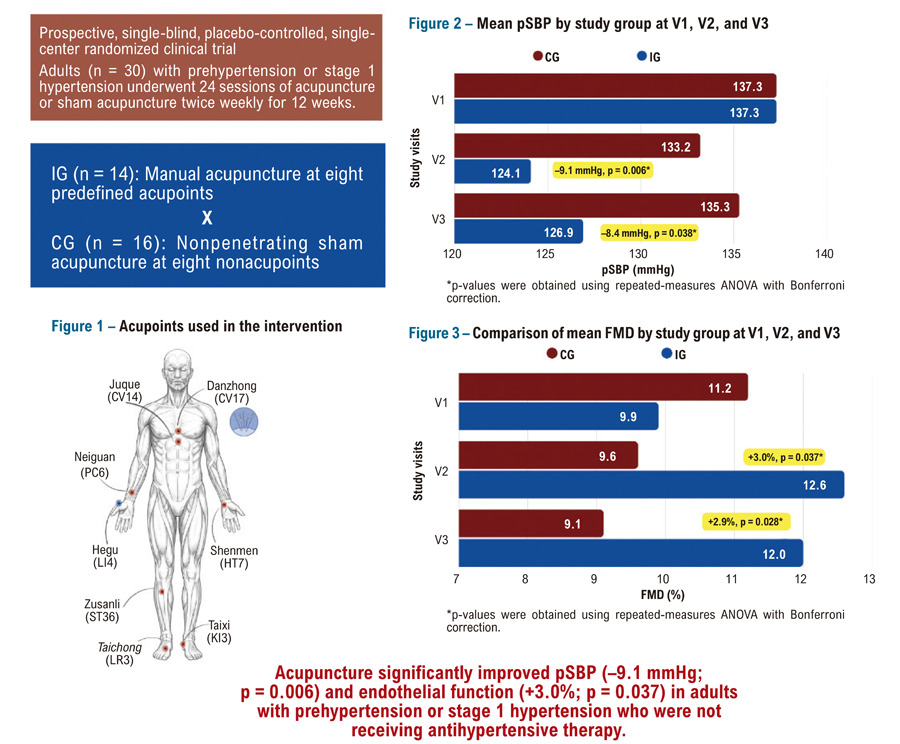
This prospective, single-blind, placebo-controlled, single-center randomized clinical trial included adults with prehypertension or stage 1 hypertension who were at low cardiovascular risk and were not receiving antihypertensive therapy. Participants were randomly assigned to an intervention group receiving manual acupuncture (n = 14) or a control group receiving nonpenetrating sham acupuncture (n = 16). Both groups underwent two 30-minute sessions per week for 12 weeks. The primary outcome was the between-group difference in pSBP measured at baseline (V1), after 12 weeks of treatment (V2), and at the 30-day end-study visit (V3). Statistical significance was defined as p < 0.05.

Results

Baseline characteristics were comparable between the groups. At V2, acupuncture decreased pSBP by 13.2 mmHg (p = 0.003) and increased FMD by 2.7% (p = 0.016). In the control group, pSBP decreased by 4.1 mmHg (p = 0.035), whereas FMD increased by 1.6% (p = 0.029). Compared with the control group, the intervention group demonstrated significantly greater improvements in pSBP (−9.1 mmHg, p = 0.006) and FMD (+3.0%, p = 0.037) at V2. These between-group differences remained significant at V3 (pSBP: −8.4 mmHg, p = 0.038; FMD: +2.9%, p = 0.028).

Conclusion

Acupuncture significantly improved endothelial function and decreased pSBP in adults with prehypertension or stage 1 hypertension who were not receiving antihypertensive therapy after 12 weeks of treatment.
  • Acupuncture
  • Hypertension
  • vascular endothelium
Read Full Article
Creative Commons Attribution (CC BY) Creative Commons license
17/08/2026 DOI: 10.36660/abc.20260462i Views 2
Endothelial Function by Flow-Mediated Dilation (FMD) in the Brachial Artery in Hypertensive Patients
ABC
Original Article

Endothelial Function by Flow-Mediated Dilation (FMD) in the Brachial Artery in Hypertensive Patients

Elaine Alves Santos Tessier et al. Carla Daltro Eduardo Martins Netto Glauco Moniz de Aragão Doria … Andrea Jimena Gutierrez Peredo Fabio Bulhões Roque Aras Ryan A. Harris

Abstract

Background

High blood pressure (BP) values have traditionally been associated with the risk of ischemic heart disease, stroke, chronic kidney disease, and early mortality. The brachial artery FMD after cuff deflation has become the standard parameter for quantifying endothelial function, being a useful surrogate outcome due to its non-invasiveness, close correlation with coronary endothelial function, and association with the incidence of long-term coronary events.

Objectives

To test hypotheses of correlation between the FMD and several blood parameters and to compare parameters between altered and non-altered FMD groups, and between hypertensive patients in the resistant hypertension groups (RHTN and non-RHTN).

Methods

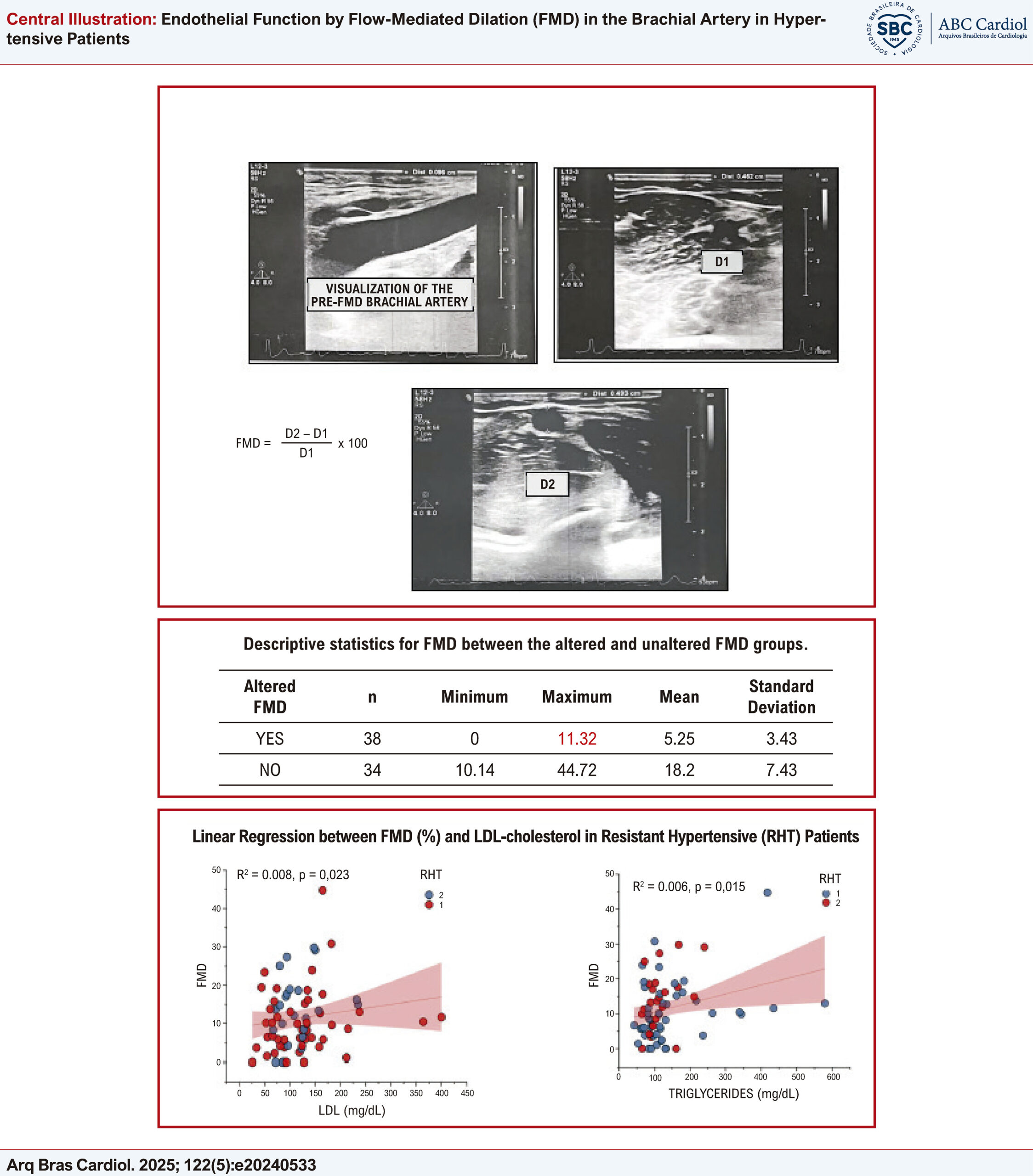
Seventy-two volunteers from a referral hypertension outpatient clinic participated in this prospective cross-sectional study, in which several patient variables were compared between the altered FMD (n = 38) and non-altered FMD (n = 34) groups, and also between the RHTN (n = 49) and non-RHTN (n = 23) groups. The variables that would explain the FMD were also investigated in this study. Statistical analyses were performed using parametric methods when the assumptions were met, and non-parametric methods otherwise. The significance level adopted in the statistical analysis was 5%.

Results

The results showed a significant positive correlation between the FMD and LDL (p = 0.204, p = 0.042) and between FMD and triglycerides (p = 0.247, p = 0.037). Glycated hemoglobin was higher in the RHTN group (p = 0.020), potassium was higher in the non-RHTN group (p = 0.029), and C-reactive protein was higher in the RHTN group (p = 0.04). For the other comparisons, no statistically significant differences were found.

Conclusion

LDL and triglycerides are FMD predictors, and the RHTN and non-RHTN groups differ in terms of the amount of potassium, protein C, and glycated hemoglobin. The altered and non-altered FMD groups differ only in terms of triglycerides.

  • Brachial Artery
  • Hypertension
  • vascular endothelium
Read Full Article
Creative Commons Attribution (CC BY) Creative Commons license
02/06/2025 DOI: 10.36660/abc.20240533i Views 2
Osteoprotegerin and Vascular Dysfunction in Patients with Stage 3 Chronic Kidney Disease and Those without Renal Dysfunction: A Case-Control Study
ABC
Original Article

Osteoprotegerin and Vascular Dysfunction in Patients with Stage 3 Chronic Kidney Disease and Those without Renal Dysfunction: A Case-Control Study

Thalita de Oliveira Matos et al. Priscila Valverde de Oliveira Vitorino Rogerio Orlow Átila de Oliveira Melo … Diogo da Silva Amorim Gleidson Junio Oliveira Sousa Vanda Jorgetti Ana Luiza Lima Sousa Rodrigo Bezerra Weimar Kunz Sebba Barroso

Abstract

Background

Osteoprotegerin (OPG) is a marker of vascular calcification and cardiovascular risk in patients with chronic kidney disease (CKD).

Objective

This study aimed to compare and correlate OPG values with flow-mediated dilation (FMD) and pulse wave velocity (PWV) measurements in patients in stage 3 CKD and those without renal dysfunction.

Methods

This case-control study was conducted in a specialized hypertension center in 2022. A total of 79 patients over 18 years of age participated in the study. The case group consisted of 30 patients with moderate renal dysfunction (CKD stage 3) and the control group included 49 individuals with glomerular filtration rate ≥ 60 mL/min/1.73 m2. The significance level adopted in the statistical analysis was 5%.

Results

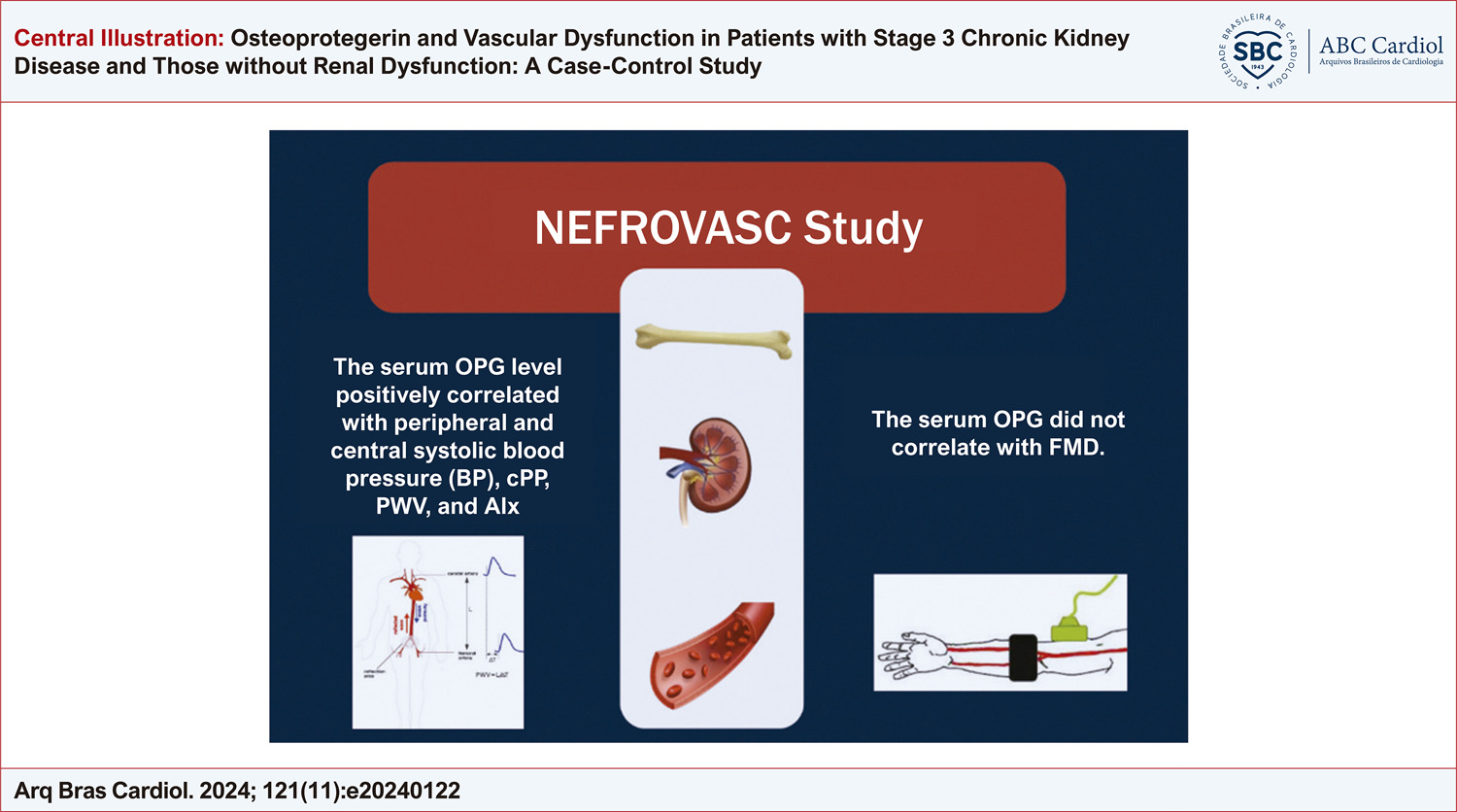
Central pulse pressure (cPP), PWV, and augmentation index (AIx) were higher in patients with renal dysfunction. The serum OPG level positively correlated with peripheral and central systolic blood pressure, cPP, PWV, and AIx. Conversely, the serum OPG did not correlate with FMD.

Conclusions

OPG and PWV are possible biomarkers of vascular dysfunction that are altered in patients with moderate renal dysfunction. Despite limitations of this study, including that it was a case-control study conducted at a single center, it has the potential, as a proof of concept, to generate the hypothesis of OPG and PWV as biomarkers of early vascular damage in this population.

  • Cardiovascular Diseases
  • chronic renal insufficiency
  • Osteoprotegerin
  • Vascular Calcification
  • vascular endothelium
  • Vascular Stiffness
Read Full Article
Creative Commons Attribution (CC BY) Creative Commons license
25/11/2024 DOI: 10.36660/abc.20240122i Views 2
Acute effects of the use of estrogens in association with progestogens on postprandial triglyceridemia and vascular reactivity
ABC
Artigo Original

Acute effects of the use of estrogens in association with progestogens on postprandial triglyceridemia and vascular reactivity

Silvio C.M. Santos et al. Jaime Augusto Canashiro Otavio C.E. Gebara José Mendes Aldrighi … Nubia Vieira Amit Nussbacher Humberto Pierri João Serro-Azul Maurício Wajngarten Giuseppe Rosano Jose A. F. Ramires

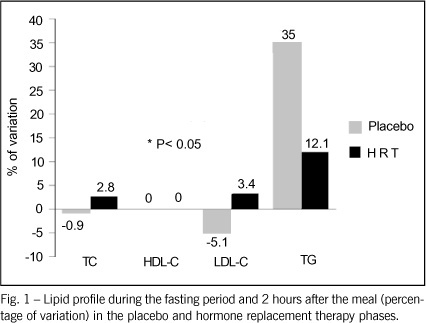
OBJECTIVE: To assess whether hormone replacement therapy with estrogens in association with progestogens in postmenopausal hypertensive women alters postprandial triglyceridemia and vascular reactivity. METHODS: A double-blind, placebo-controlled, crossover study was carried out with 15 postmenopausal women (age range: 50 to 70 years, mean = 61.6 ± 6 years) randomly assigned to 2 weeks of placebo or oral ingestion of 0.625 mg of equine conjugated estrogens and 2.5 mg of medroxyprogesterone, fed a high-fat diet (897 calories; 50.1% fat). Vascular reactivity (VR – % of vessel diameter variation in the fasting period and 2 hours after meals) was measured by using the automated ultrasound method. Lipid profile and glycemia during the fasting period and 2 hours after a high-fat meal were measured. RESULTS: With placebo, vascular reactivity (VR) decreased from 3.20 ± 17% during the fasting period to -2.1 ± 30% 2 hours after the meal (P=0.041). With the hormone replacement therapy, vascular reactivity decreased from 6.14 ± 27% during the fasting period to – 0.05 ± 18% 2 hours after the meal (P=NS). Postprandial triglyceridemia increased as follows: 35 ± 25% with placebo; and 12 ± 10% with hormone replacement therapy (P < 0.05). CONCLUSION: In postmenopausal hypertensive women, 2 weeks of hormone replacement with an association of estrogens and progestogens decreased hypertriglyceridemia after a high-fat meal, an effect that may reduce the endothelial dysfunction occurring in the postprandial period.

  • hormone replacement therapy
  • triglyceridemia
  • vascular endothelium
Read Full Article
Creative Commons Attribution (CC BY) Creative Commons license
11/11/2004 DOI: 10.1590/S0066-782X2004001700005 Views 1

How to cite this article

EndNote RIS

Electronic Document Format (Vancouver)

Bitencourt AR, Sousa ALL, Jardim PCBV, Yoshizumi AM, Correia MC, Vitorino PVO, Batista SRR, et al. Effects of Acupuncture on Arterial Hypertension and Endothelial Dysfunction: The AHEaD Trial. Arquivos Brasileiros de Cardiologia 2026;123(7):e20260462.

Electronic Document Format (ABNT)

Bitencourt, Amanda Rodrigues; Sousa, Ana Luiza Lima; Jardim, Paulo Cesar B. Veiga; Yoshizumi, Alexandre Massao; Correia, Mikaelle Costa; Vitorino, Priscila Valverde de Oliveira; Batista, Sandro Rogério Rodrigues; Barroso, Weimar Kunz Sebba. Effects of Acupuncture on Arterial Hypertension and Endothelial Dysfunction: The AHEaD Trial. Arquivos Brasileiros de Cardiologia, v. 123, n. 7, e20260462, Aug. 2026.

Electronic Document Format (APA)

Bitencourt, A. R., Sousa, A. L. L., Jardim, P. C. B. V., Yoshizumi, A. M., Correia, M. C., Vitorino, P. V. O., Batista, S. R. R., & Barroso, W. K. S. (2026). Effects of Acupuncture on Arterial Hypertension and Endothelial Dysfunction: The AHEaD Trial. Arquivos Brasileiros de Cardiologia, 123(7), e20260462.

Electronic Document Format (ISO)

Bitencourt, Amanda Rodrigues and Sousa, Ana Luiza Lima and Jardim, Paulo Cesar B. Veiga and Yoshizumi, Alexandre Massao and Correia, Mikaelle Costa and Vitorino, Priscila Valverde de Oliveira and Batista, Sandro Rogério Rodrigues and Barroso, Weimar Kunz Sebba. Effects of Acupuncture on Arterial Hypertension and Endothelial Dysfunction: The AHEaD Trial. Arquivos Brasileiros de Cardiologia [online]. 2026, vol. 123, n. 7, [cited 2026-10-14], e20260462. Available from: <https://journals.cardiol.br/en/article/effects-of-acupuncture-on-arterial-hypertension-and-endothelial-dysfunction-the-ahead-trial/>. ISSN 0066-782X

EndNote RIS

Electronic Document Format (Vancouver)

Tessier EAS, Daltro C, Netto EM, Doria GMA, Peredo AJG, Bulhões F, Aras R, et al. Endothelial Function by Flow-Mediated Dilation (FMD) in the Brachial Artery in Hypertensive Patients. Arquivos Brasileiros de Cardiologia 2025;122(5):e20240533.

Electronic Document Format (ABNT)

Tessier, Elaine Alves Santos; Daltro, Carla; Netto, Eduardo Martins; Doria, Glauco Moniz de Aragão; Peredo, Andrea Jimena Gutierrez; Bulhões, Fabio; Aras, Roque; Harris, Ryan A.. Endothelial Function by Flow-Mediated Dilation (FMD) in the Brachial Artery in Hypertensive Patients. Arquivos Brasileiros de Cardiologia, v. 122, n. 5, e20240533, Jun. 2025.

Electronic Document Format (APA)

Tessier, E. A. S., Daltro, C., Netto, E. M., Doria, G. M. A., Peredo, A. J. G., Bulhões, F., Aras, R., & Harris, R. A. (2025). Endothelial Function by Flow-Mediated Dilation (FMD) in the Brachial Artery in Hypertensive Patients. Arquivos Brasileiros de Cardiologia, 122(5), e20240533.

Electronic Document Format (ISO)

Tessier, Elaine Alves Santos and Daltro, Carla and Netto, Eduardo Martins and Doria, Glauco Moniz de Aragão and Peredo, Andrea Jimena Gutierrez and Bulhões, Fabio and Aras, Roque and Harris, Ryan A.. Endothelial Function by Flow-Mediated Dilation (FMD) in the Brachial Artery in Hypertensive Patients. Arquivos Brasileiros de Cardiologia [online]. 2025, vol. 122, n. 5, [cited 2026-10-14], e20240533. Available from: <https://journals.cardiol.br/en/article/endothelial-function-by-flow-mediated-dilation-fmd-in-the-brachial-artery-in-hypertensive-patients/>. ISSN 0066-782X

EndNote RIS

Electronic Document Format (Vancouver)

Matos TO, Vitorino PVO, Orlow R, Melo O, Amorim DS, Sousa GJO, Jorgetti V, et al. Osteoprotegerin and Vascular Dysfunction in Patients with Stage 3 Chronic Kidney Disease and Those without Renal Dysfunction: A Case-Control Study. Arquivos Brasileiros de Cardiologia 2024;121(11):e20240122.

Electronic Document Format (ABNT)

Matos, Thalita de Oliveira; Vitorino, Priscila Valverde de Oliveira; Orlow, Rogerio; Melo, Átila de Oliveira; Amorim, Diogo da Silva; Sousa, Gleidson Junio Oliveira; Jorgetti, Vanda; Sousa, Ana Luiza Lima; Bezerra, Rodrigo; Barroso, Weimar Kunz Sebba. Osteoprotegerin and Vascular Dysfunction in Patients with Stage 3 Chronic Kidney Disease and Those without Renal Dysfunction: A Case-Control Study. Arquivos Brasileiros de Cardiologia, v. 121, n. 11, e20240122, Nov. 2024.

Electronic Document Format (APA)

Matos, T. O., Vitorino, P. V. O., Orlow, R., Melo, O., Amorim, D. S., Sousa, G. J. O., Jorgetti, V., Sousa, A. L. L., Bezerra, R., & Barroso, W. K. S. (2024). Osteoprotegerin and Vascular Dysfunction in Patients with Stage 3 Chronic Kidney Disease and Those without Renal Dysfunction: A Case-Control Study. Arquivos Brasileiros de Cardiologia, 121(11), e20240122.

Electronic Document Format (ISO)

Matos, Thalita de Oliveira and Vitorino, Priscila Valverde de Oliveira and Orlow, Rogerio and Melo, Átila de Oliveira and Amorim, Diogo da Silva and Sousa, Gleidson Junio Oliveira and Jorgetti, Vanda and Sousa, Ana Luiza Lima and Bezerra, Rodrigo and Barroso, Weimar Kunz Sebba. Osteoprotegerin and Vascular Dysfunction in Patients with Stage 3 Chronic Kidney Disease and Those without Renal Dysfunction: A Case-Control Study. Arquivos Brasileiros de Cardiologia [online]. 2024, vol. 121, n. 11, [cited 2026-10-14], e20240122. Available from: <https://journals.cardiol.br/en/article/osteoprotegerin-and-vascular-dysfunction-in-patients-with-stage-3-chronic-kidney-disease-and-those-without-renal-dysfunction-a-case-control-study/>. ISSN 0066-782X

EndNote RIS

Electronic Document Format (Vancouver)

Santos SC, Canashiro JA, Gebara OC, Aldrighi JM, Vieira N, Nussbacher A, Pierri H, et al. Acute effects of the use of estrogens in association with progestogens on postprandial triglyceridemia and vascular reactivity. Arquivos Brasileiros de Cardiologia 2004;83(5):385-90.

Electronic Document Format (ABNT)

Santos, Silvio C.M.; Canashiro, Jaime Augusto; Gebara, Otavio C.E.; Aldrighi, José Mendes; Vieira, Nubia; Nussbacher, Amit; Pierri, Humberto; Serro-Azul, João; Wajngarten, Maurício; Rosano, Giuseppe; Ramires, Jose A. F.. Acute effects of the use of estrogens in association with progestogens on postprandial triglyceridemia and vascular reactivity. Arquivos Brasileiros de Cardiologia, v. 83, n. 5, p. 385-390, Nov. 2004.

Electronic Document Format (APA)

Santos, S. C., Canashiro, J. A., Gebara, O. C., Aldrighi, J. M., Vieira, N., Nussbacher, A., Pierri, H., Serro-Azul, J., Wajngarten, M., Rosano, G., & Ramires, J. A. F. (2004). Acute effects of the use of estrogens in association with progestogens on postprandial triglyceridemia and vascular reactivity. Arquivos Brasileiros de Cardiologia, 83(5), 385-390.

Electronic Document Format (ISO)

Santos, Silvio C.M. and Canashiro, Jaime Augusto and Gebara, Otavio C.E. and Aldrighi, José Mendes and Vieira, Nubia and Nussbacher, Amit and Pierri, Humberto and Serro-Azul, João and Wajngarten, Maurício and Rosano, Giuseppe and Ramires, Jose A. F.. Acute effects of the use of estrogens in association with progestogens on postprandial triglyceridemia and vascular reactivity. Arquivos Brasileiros de Cardiologia [online]. 2004, vol. 83, n. 5, [cited 2026-10-14], pp. 385-390. Available from: <https://journals.cardiol.br/en/article/acute-effects-of-the-use-of-estrogens-in-association-with-progestogens-on-postprandial-triglyceridemia-and-vascular-reactivity/>. ISSN 0066-782X

  • About ABC Family
  • Internal Regulation
  • Editorial Board
  • Brazilian Society of Cardiology (SBC)

Issues

SBC Guidelines

  • Videos
  • Podcasts
  • News