Association between Arterial Stiffness and Higher Burden of Atrial Arrhythmia in Elderly Hypertensive Patients without Atrial Fibrillation
Abstract
Background:
Increased arterial stiffness is currently an independent risk factor for atrial fibrillation, but the pathophysiological mechanisms of this arrhythmia remain an area of knowledge gap to be explored.
Objectives:
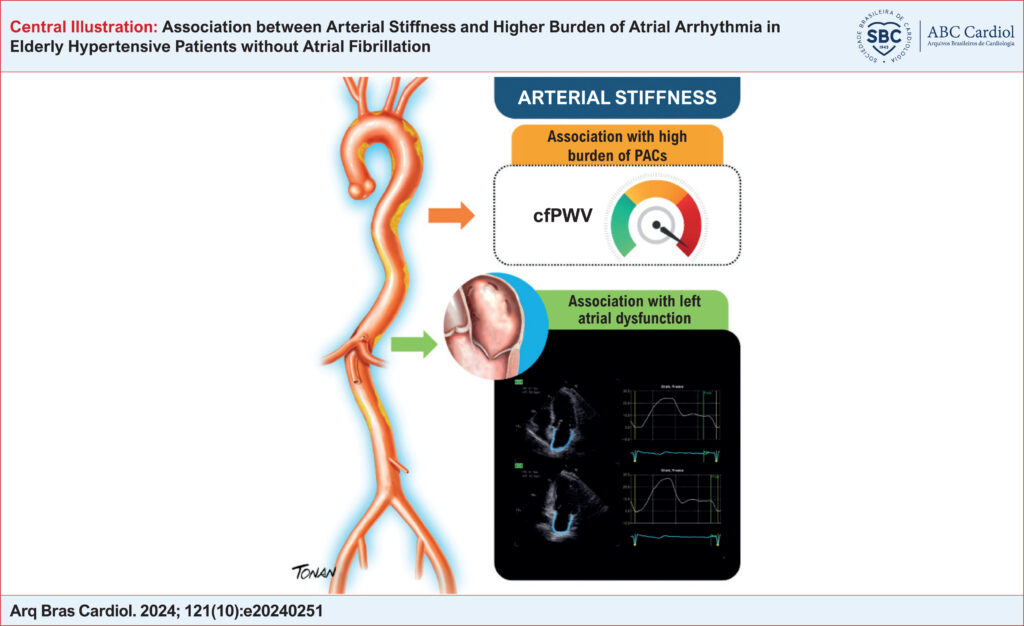
To investigate the existence of an association between arterial stiffness and the density of premature atrial contractions (PACs) in hypertensive individuals without atrial fibrillation.
Methods:
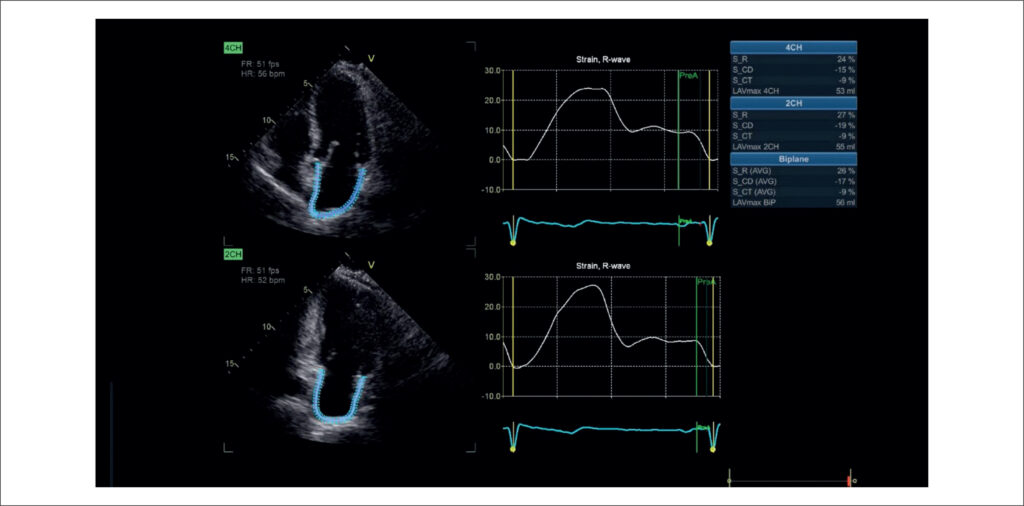
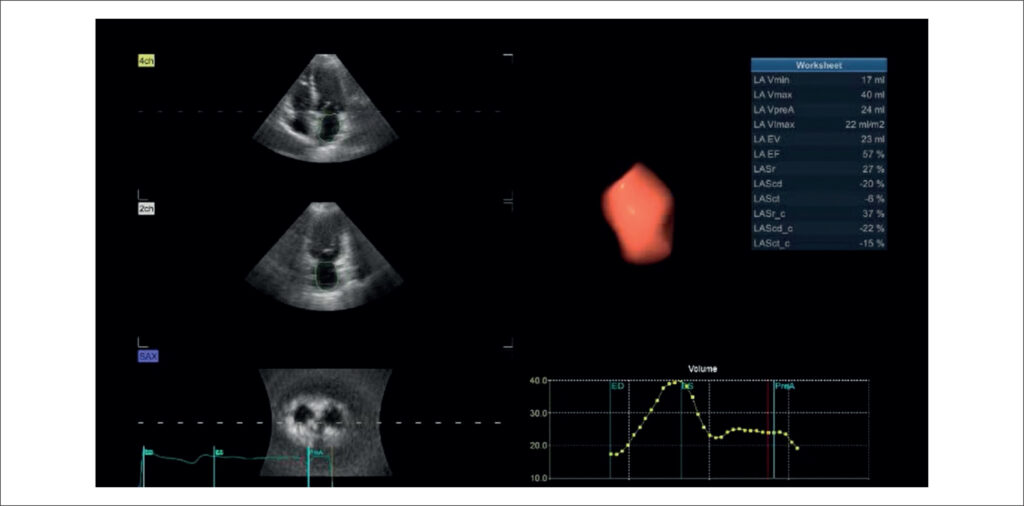
Cross-sectional study with hypertensive patients without diagnosed atrial fibrillation, who were studied with speckle-tracking echocardiography to assess left atrial (LA) strain and carotid-femoral pulse wave velocity (cfPWV) to assess arterial stiffness. All patients underwent 24h-ECG Holter and laboratory tests. Significance level was set at p<0.05.
Results:
Seventy participants from a single centre without overt cardiovascular disease were included. The cfPWV was correlated with higher density of PACs in 24h-Holter monitoring, independently of LV mass index (1.48 [1.08-2.03], p-value 0.005). Increased cfPWV was correlated with decreased LA strain values, with Spearman correlation coefficients of −0.27 (p-value 0.027) and −0.29 (p-value 0.018) for reservoir and conduit 2D Strain, respectively.
Conclusions:
In this study with hypertensive patients, it was possible to demonstrate an association between arterial stiffness and higher density of atrial arrhythmias. Furthermore, arterial stiffness was associated with lower left atrial strain values for reservoir and conduit functions.
Images
Image gallery fullscreen viewer
Comments are moderated by the editorial team before publication. Discussions should be evidence-based and use scientific language. Conflicts of interest should be declared.