ABC Family Arquivos Brasileiros de Cardiologia International Journal of Cardiovascular Sciences ABC Heart Failure & Cardiomyopathy ABC Imagem Cardiovascular
Português English
ABC Family
Português English
  • About
    • About ABC Family
    • Internal Regulation
    • Editorial Board
    • Brazilian Society of Cardiology (SBC)
  • Issues
  • SBC Guidelines
  • Content
    • Videos
    • Podcasts
    • News
  • About
    • About ABC Family
    • Internal Regulation
    • Editorial Board
    • Brazilian Society of Cardiology (SBC)
  • Issues
  • SBC Guidelines
  • Content
    • Videos
    • Podcasts
    • News

ABC Family

  • ABC Family
  • Arquivos Brasileiros de Cardiologia
  • International Journal of Cardiovascular Sciences
  • ABC Heart Failure & Cardiomyopathy
  • ABC Imagem Cardiovascular
Search in

No content found.

Journals
Ordering
Article types
Others

  1. Home
  2. Keyword: High-Intensity Interval Training
ABC
Editorial

Photobiomodulation Therapy with Cardiac Rehabilitation in HFrEF/HFmrEF: Promise, Parameters, and the Primacy of Exercise

Ricardo Carvalheiro et al. Ana Raquel Santos António Valentim Gonçalves

Exercise intolerance in heart failure (HF) is not solely a central pump problem. Peripheral mechanisms, such as impaired skeletal-muscle oxygen extraction and mitochondrial dysfunction, are major limiting factors and correlate with early fatigue and poorer outcomes. On this basis, low-level light/laser photobiomodulation therapy (PBMT) has attracted interest as an adjunct to rehabilitation: by targeting cytochrome-c oxidase, PBMT may boost mitochondrial ATP generation, modulate redox signaling, and enhance microvascular perfusion.

In this edition, the article by Busin et al. evaluates whether the addition of PBMT to either continuous moderate-intensity training (CMT) or high-intensity interval training (HIIT) augments gains in peak oxygen uptake (VO2peak) and other CPET indices among symptomatic, clinically stable HFrEF/HFmrEF patients. In a non-randomized, five-arm design (CMT, HIIT, CMT+PBMT, HIIT+PBMT, and a control group) with 49 participants, the authors observed significant improvements in exercise tolerance across all intervention groups, but no additional benefit from PBMT on VO2peak, ventilatory efficiency (VE/VCO2 slope), or oxygen uptake efficiency slope (OUES). Numerical trends favored some PBMT arms, yet between-group differences were not statistically significant. The HIIT arms performed particularly well, but PBMT (applied only before sessions and at a modest dose) did not yield additional improvements.

[…]
  • Cardiac Rehabilitation
  • cardiopulmonary exercise testing
  • Heart failure with reduced ejection fraction
  • High-Intensity Interval Training
  • Photobiomodulation Therapy
Read Full Article
Creative Commons Attribution (CC BY) Creative Commons license
19/01/2026 DOI: 10.36660/abc.20250677i
Figure 1
ABC
Review Article

Effects of High-Intensity Interval Training on Central Blood Pressure: A Systematic Review and Meta-Analysis

Gustavo Henrique de Oliveira et al. Rogério Toshiro Passos Okawa Caroline Ferraz Simões João Carlos Locatelli … Victor Hugo de Souza Mendes Higor Barbosa Reck Wendell Arthur Lopes

Abstract

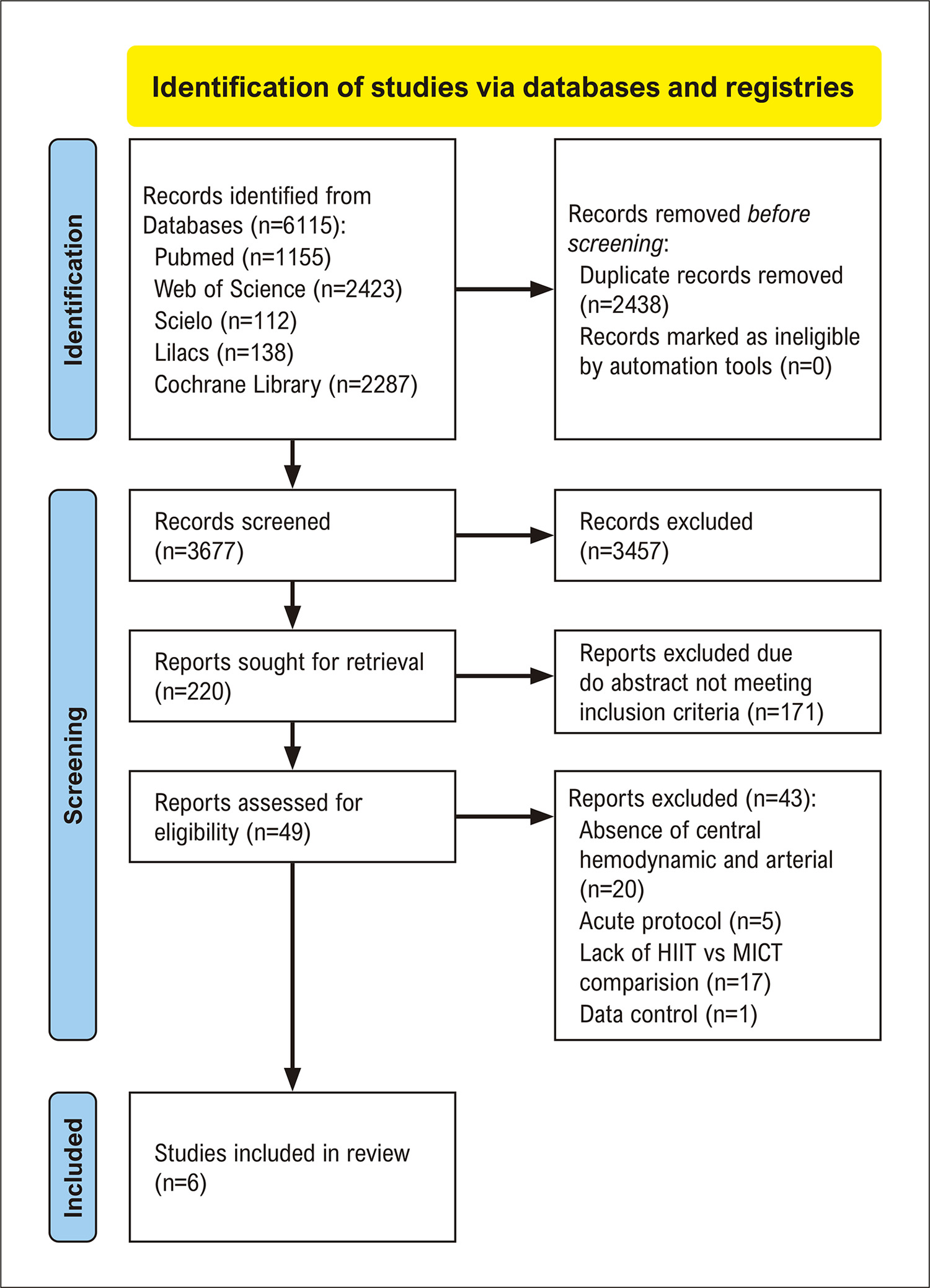
Central blood pressure (cBP) is considered an independent predictor of organ damage, cardiovascular events and all-cause mortality. Evidence has shown that high intensity interval training (HIIT) is superior to moderate-intensity continuous training (MICT) for improving cardiorespiratory fitness and vascular function. However, the effects of these aerobic training modalities on cBP have not yet been properly reviewed.This meta-analysis aims to investigate to effects of HIIT versus MICT on cBP.We conducted a meta-analysis of randomized controlled trials that compared HIIT versus MICT on cBP. Primary outcomes were measures of central systolic blood pressure (cSBP) and central diastolic blood pressure (cDBP). Peripheral systolic blood pressure (pSBP) and diastolic blood pressure (pDBP), pulse wave velocity (PWV) and maximal oxygen uptake (VO2max) were analyzed as second outcomes. Meta-analysis of mean differences (MD) was conducted using the random effects model.Our study included 163 patients enrolled in six trials. We found that HIIT was superior to MICT in reducing the cSBP (MD = -3.12 mmHg, 95% CI: -4.75 to -1.50, p = 0.0002) and SBP (MD = -2.67 mmHg, 95% CI: -5.18 to -0.16, p = 0.04), and increasing VO2max(MD = 2.49 mL/kg/min, 95% CI: 1.25 to 3.73, p = 0.001). However, no significant differences were reported for cDBP, DBP and PWV.HIIT was superior to MICT in reducing the cSBP, which suggests its potential role as a non-pharmacological therapy for high blood pressure.

  • Blood Pressure
  • Endurance Training
  • Hemodynamics
  • High-Intensity Interval Training
  • Vascular Stiffness
Read Full Article
Creative Commons Attribution (CC BY) Creative Commons license
21/04/2023 DOI: 10.36660/abc.20220398 Views 1
Figure 1
IJCS
Original Article

Effects of Physical Exercise on Lipid and Inflammatory Profile of Women Using Combined Oral Contraceptive: A Cross-Over Study

Vinícius Afonso Gomes et al. Marvyn de Santana do Sacramento Lucas Mendes Santa Cecilia Daniela Santos de Jesus … Juliane Santos Barbosa Fernanda Oliveira Baptista de Almeida Elaine Carvalho de Oliveira Jefferson Petto

Abstract

Background:

The use of combined oral contraceptives (COC) is a risk factor for atherosclerotic disease, and physical exercise can minimize this condition.

Objective:

To verify if high intensity interval training (HIIT) promotes changes in the lipid and inflammatory profile of women using COC.

Methods:

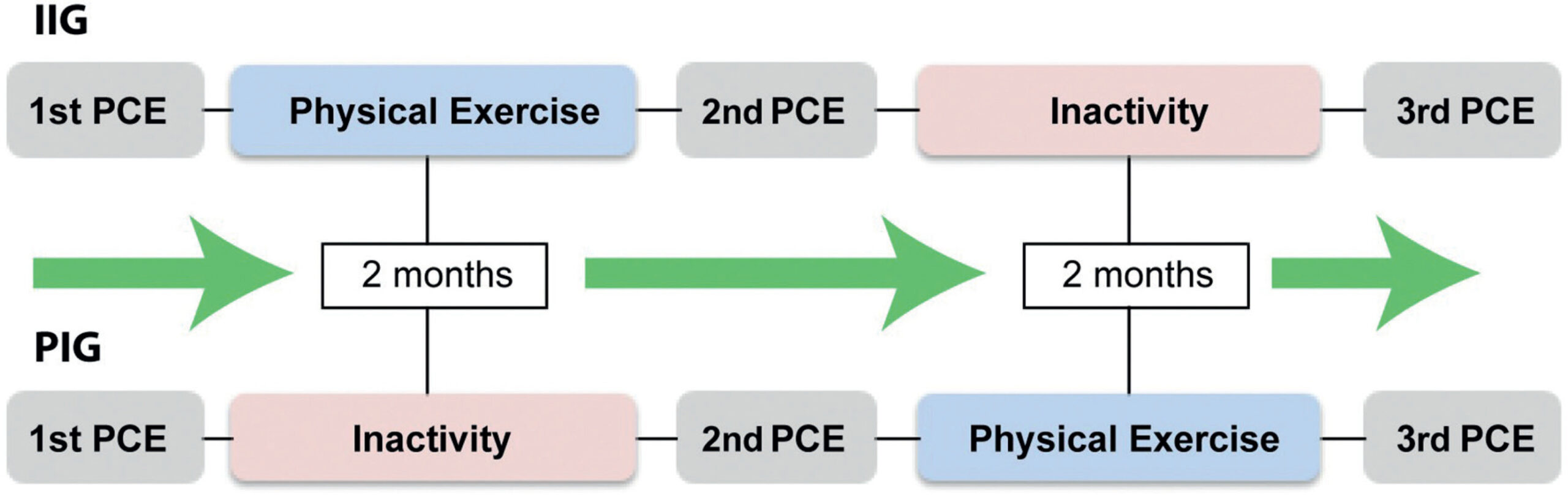
Sequential crossover study with women aged 20-30 years, classified as irregularly active by the international physical activity questionnaire (IPAQ), when using COC. A physical-clinical assessment was performed with anthropometric measurements, VO2max, and analysis of lipid and inflammatory profile. Participants were divided into 2 groups: the initial intervention group (GII), which began practicing HIIT for 2 months, and the posterior intervention group (GIP), which remained inactive for the same period. The GII and GIP would then alternate their conditions. The collected data was divided into: Initial moment (IM), post-exercise moment (PEM) and post-inactivity (PIM). The statistical analyses were performed using the Statistical Package for the Social Sciences, adopting a significance level of p <0.05 .

Results:

Twelve women were evaluated. After crossing the GII and GIP data, there was a difference in the C-reactive protein values between the IM of 4 (1.6-6.3 mg/dL) vs. PEM 2 (1.5-5 mg/dL); as well as between the PEM vs. the PIM= 4 (1.5-5.8 mg/dL), with a p -value = 0.04 in the comparisons. There was no change between the “moments” of the lipid profile, although it was possible to notice a reduction in resting HR and an increase in indirect VO2max.

Conclusion:

The HIIT program was able to reduce the inflammatory profile, but it did not alter the lipid profile of irregularly active women using COC.

  • Atherosclerosis
  • Contraceptives, Oral, Combined
  • High-Intensity Interval Training
  • Inflammation
  • Lipids
  • Physical activity
  • Risk Factors
  • Women
Read Full Article
Creative Commons Attribution (CC BY) Creative Commons license
21/03/2022 DOI: 10.36660/ijcs.20200399 Views 1
IJCS
Editorial

Exercise-based Cardiovascular Rehabilitation in Chronic Heart Failure: does Exercise Intensity Matter?

Gabriel Dias Rodrigues

It is well recognized that chronic heart failure (CHF) is a multifactorial syndrome that reduces physical exercise tolerance. Exercise-based cardiac rehabilitation program is on the frontline of non-pharmacological therapies for CHF patients, counterbalancing the disease-induced issues of physical capacity.

Since a successful exercise rehabilitation program should be efficient and safe, the search for optimal combinations of exercise volume and intensity has sparked interest in the current literature. Although studies have shown feasible combinations of low volume and high intensity, and vice versa, the optimal dose-response of exercise in cardiovascular rehabilitation remains unknown. Classically, aerobic training with moderate intensity (i.e., between 60% and 80% VO2peak or heart rate reserve – HRreserve) is a safe approach to improve physical capacity and provide a cardioprotective effect in CHF disease. As a promising method, short bouts of high-intensity exercise, called high-intensity interval training, seems to be superior than moderate continuous training to reverse left ventricle remodeling and improve aerobic capacity, endothelial function, and quality of life in post-infarction heart failure patients.

[…]

  • Cardiac Rehabilitation
  • Exercise
  • Heart Diseases
  • High-Intensity Interval Training
Read Full Article
Creative Commons Attribution (CC BY) Creative Commons license
15/09/2021 DOI: 10.36660/ijcs.20210128 Views 1

How to cite this article

EndNote RIS

Electronic Document Format (Vancouver)

Carvalheiro R, Santos AR, Gonçalves AV. Photobiomodulation Therapy with Cardiac Rehabilitation in HFrEF/HFmrEF: Promise, Parameters, and the Primacy of Exercise. Arquivos Brasileiros de Cardiologia 2026;122(11):e20250677.

Electronic Document Format (ABNT)

Carvalheiro, Ricardo; Santos, Ana Raquel; Gonçalves, António Valentim. Photobiomodulation Therapy with Cardiac Rehabilitation in HFrEF/HFmrEF: Promise, Parameters, and the Primacy of Exercise. Arquivos Brasileiros de Cardiologia, v. 122, n. 11, e20250677, Jan. 2026.

Electronic Document Format (APA)

Carvalheiro, R., Santos, A. R., & Gonçalves, A. V. (2026). Photobiomodulation Therapy with Cardiac Rehabilitation in HFrEF/HFmrEF: Promise, Parameters, and the Primacy of Exercise. Arquivos Brasileiros de Cardiologia, 122(11), e20250677.

Electronic Document Format (ISO)

Carvalheiro, Ricardo and Santos, Ana Raquel and Gonçalves, António Valentim. Photobiomodulation Therapy with Cardiac Rehabilitation in HFrEF/HFmrEF: Promise, Parameters, and the Primacy of Exercise. Arquivos Brasileiros de Cardiologia [online]. 2026, vol. 122, n. 11, [cited 2026-10-14], e20250677. Available from: <https://journals.cardiol.br/en/article/photobiomodulation-therapy-with-cardiac-rehabilitation-in-hfref-hfmref-promise-parameters-and-the-primacy-of-exercise/>. ISSN 0066-782X

EndNote RIS

Electronic Document Format (Vancouver)

Oliveira GH, Okawa RTP, Simões CF, Locatelli JC, Mendes VHS, Reck HB, Lopes WA, et al. Effects of High-Intensity Interval Training on Central Blood Pressure: A Systematic Review and Meta-Analysis. Arquivos Brasileiros de Cardiologia 2023;120(4):e20220398.

Electronic Document Format (ABNT)

Oliveira, Gustavo Henrique de; Okawa, Rogério Toshiro Passos; Simões, Caroline Ferraz; Locatelli, João Carlos; Mendes, Victor Hugo de Souza; Reck, Higor Barbosa; Lopes, Wendell Arthur. Effects of High-Intensity Interval Training on Central Blood Pressure: A Systematic Review and Meta-Analysis. Arquivos Brasileiros de Cardiologia, v. 120, n. 4, e20220398, Apr. 2023.

Electronic Document Format (APA)

Oliveira, G. H. , Okawa, R. T. P., Simões, C. F., Locatelli, J. C., Mendes, V. H. S., Reck, H. B., & Lopes, W. A. (2023). Effects of High-Intensity Interval Training on Central Blood Pressure: A Systematic Review and Meta-Analysis. Arquivos Brasileiros de Cardiologia, 120(4), e20220398.

Electronic Document Format (ISO)

Oliveira, Gustavo Henrique de and Okawa, Rogério Toshiro Passos and Simões, Caroline Ferraz and Locatelli, João Carlos and Mendes, Victor Hugo de Souza and Reck, Higor Barbosa and Lopes, Wendell Arthur. Effects of High-Intensity Interval Training on Central Blood Pressure: A Systematic Review and Meta-Analysis. Arquivos Brasileiros de Cardiologia [online]. 2023, vol. 120, n. 4, [cited 2026-10-14], e20220398. Available from: <https://journals.cardiol.br/en/article/effects-of-high-intensity-interval-training-on-central-blood-pressure-a-systematic-review-and-meta-analysis/>. ISSN 0066-782X

EndNote RIS

Electronic Document Format (Vancouver)

Gomes VA, Sacramento MS, Cecilia LMS, Jesus DS, Barbosa JS, Almeida FOB, Oliveira EC, et al. Effects of Physical Exercise on Lipid and Inflammatory Profile of Women Using Combined Oral Contraceptive: A Cross-Over Study. International Journal of Cardiovascular Sciences 2022;35(4):500-1.

Electronic Document Format (ABNT)

Gomes, Vinícius Afonso; Sacramento, Marvyn de Santana do; Cecilia, Lucas Mendes Santa; Jesus, Daniela Santos de; Barbosa, Juliane Santos; Almeida, Fernanda Oliveira Baptista de; Oliveira, Elaine Carvalho de; Petto, Jefferson. Effects of Physical Exercise on Lipid and Inflammatory Profile of Women Using Combined Oral Contraceptive: A Cross-Over Study. International Journal of Cardiovascular Sciences, v. 35, n. 4, p. 500-510, Mar. 2022.

Electronic Document Format (APA)

Gomes, V. A., Sacramento, M. S. , Cecilia, L. M. S., Jesus, D. S. , Barbosa, J. S., Almeida, F. O. B. , Oliveira, E. C. , & Petto, J. (2022). Effects of Physical Exercise on Lipid and Inflammatory Profile of Women Using Combined Oral Contraceptive: A Cross-Over Study. International Journal of Cardiovascular Sciences, 35(4), 500-510.

Electronic Document Format (ISO)

Gomes, Vinícius Afonso and Sacramento, Marvyn de Santana do and Cecilia, Lucas Mendes Santa and Jesus, Daniela Santos de and Barbosa, Juliane Santos and Almeida, Fernanda Oliveira Baptista de and Oliveira, Elaine Carvalho de and Petto, Jefferson. Effects of Physical Exercise on Lipid and Inflammatory Profile of Women Using Combined Oral Contraceptive: A Cross-Over Study. International Journal of Cardiovascular Sciences [online]. 2022, vol. 35, n. 4, [cited 2026-10-14], pp. 500-510. Available from: <https://journals.cardiol.br/en/article/effects-of-physical-exercise-on-lipid-and-inflammatory-profile-of-women-using-combined-oral-contraceptive-a-cross-over-study/>. ISSN 2359-4802

EndNote RIS

Electronic Document Format (Vancouver)

Rodrigues GD. Exercise-based Cardiovascular Rehabilitation in Chronic Heart Failure: does Exercise Intensity Matter?. International Journal of Cardiovascular Sciences 2021;34(5):515-6.

Electronic Document Format (ABNT)

Rodrigues, Gabriel Dias. Exercise-based Cardiovascular Rehabilitation in Chronic Heart Failure: does Exercise Intensity Matter?. International Journal of Cardiovascular Sciences, v. 34, n. 5, p. 515-516, Sep. 2021.

Electronic Document Format (APA)

Rodrigues, G. D. (2021). Exercise-based Cardiovascular Rehabilitation in Chronic Heart Failure: does Exercise Intensity Matter?. International Journal of Cardiovascular Sciences, 34(5), 515-516.

Electronic Document Format (ISO)

Rodrigues, Gabriel Dias. Exercise-based Cardiovascular Rehabilitation in Chronic Heart Failure: does Exercise Intensity Matter?. International Journal of Cardiovascular Sciences [online]. 2021, vol. 34, n. 5, [cited 2026-10-14], pp. 515-516. Available from: <https://journals.cardiol.br/en/article/exercise-based-cardiovascular-rehabilitation-in-chronic-heart-failure-does-exercise-intensity-matter/>. ISSN 2359-4802

  • About ABC Family
  • Internal Regulation
  • Editorial Board
  • Brazilian Society of Cardiology (SBC)

Issues

SBC Guidelines

  • Videos
  • Podcasts
  • News