ABC Family Arquivos Brasileiros de Cardiologia International Journal of Cardiovascular Sciences ABC Heart Failure & Cardiomyopathy ABC Imagem Cardiovascular
Português English
ABC Family
Português English
  • About
    • About ABC Family
    • Internal Regulation
    • Editorial Board
    • Brazilian Society of Cardiology (SBC)
  • Issues
  • SBC Guidelines
  • Content
    • Videos
    • Podcasts
    • News
  • About
    • About ABC Family
    • Internal Regulation
    • Editorial Board
    • Brazilian Society of Cardiology (SBC)
  • Issues
  • SBC Guidelines
  • Content
    • Videos
    • Podcasts
    • News

ABC Family

  • ABC Family
  • Arquivos Brasileiros de Cardiologia
  • International Journal of Cardiovascular Sciences
  • ABC Heart Failure & Cardiomyopathy
  • ABC Imagem Cardiovascular
Search in

No content found.

Journals
Ordering
Article types
Others

  1. Home
  2. Keyword: hypothermia
Figure 1
IJCS
Original Article

Efficacy and Risks of Therapeutic Hypothermia after Pediatric Cardiac Arrest: A Systematic Review

Anna Luíza Machado Nogueira et al. Ana Luísa dos Santos Maciel Amanda Campos Querubino Roberta Teixeira Prado Jussara Regina Martins

Abstract

Background:

Therapeutic hypothermia is used in adults and neonates after cardiac arrest, but its efficiency in children under 18 years old is still uncertain.

Objective:

To evaluate the effectiveness and risks of therapeutic hypothermia after cardiac arrest in children under 18 years of age through a systematic review.

Methods:

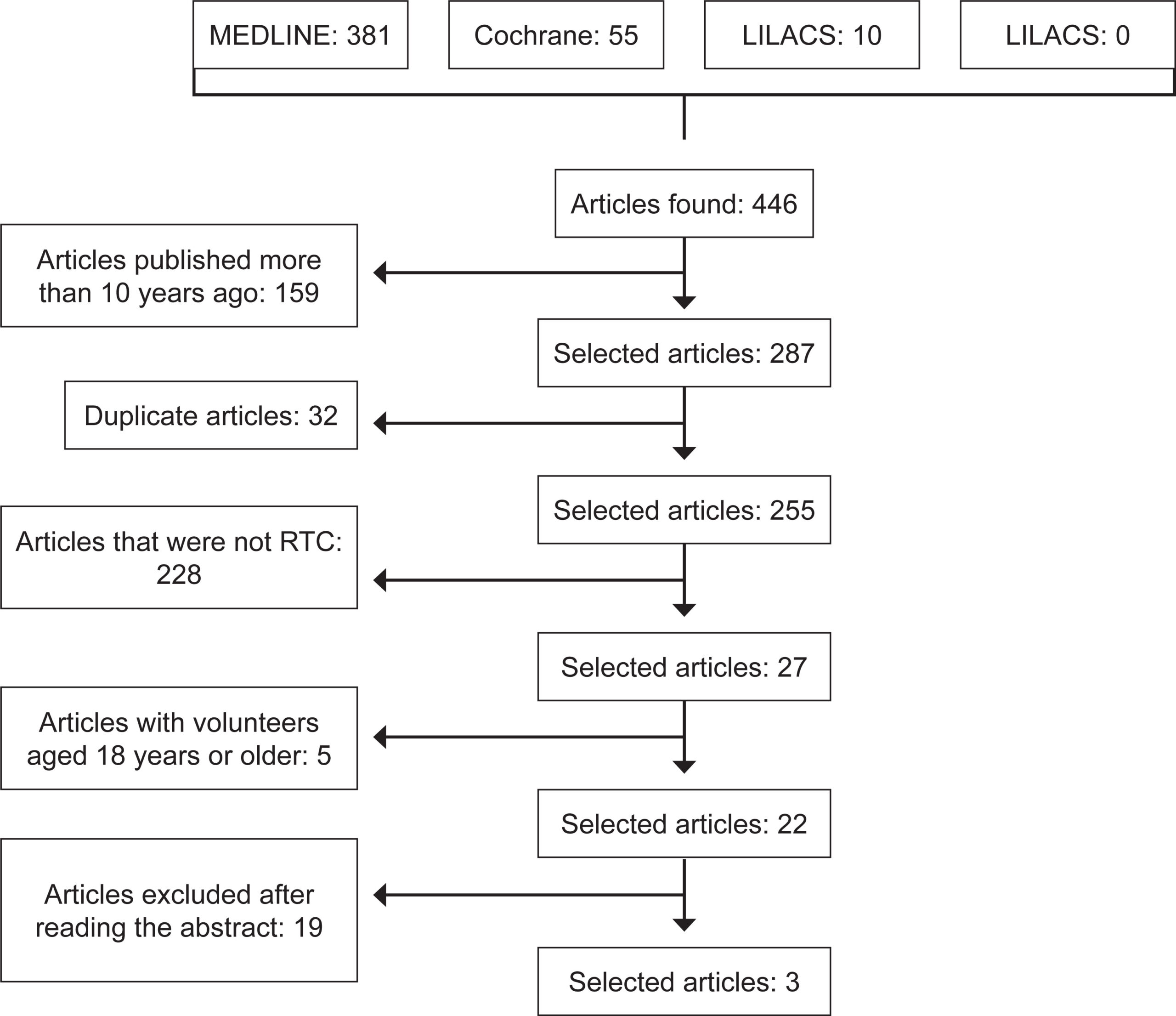
A systematic review was performed in January 2022 in the MEDLINE, SciELO, Cochrane, and LILACS databases. Inclusion criteria: randomized controlled trials (RCTs) performed in humans. Articles from other typologies, published more than 10 years ago, or with volunteers over 18 years old were excluded.

Results:

Four studies were identified, of which 3 were analyzed; all of them were of moderate quality according to the Jadad Scale and the Cochrane Collaboration tool. The studies indicated that lowering the temperature did not improve data on mortality and adverse events. Two studies did not identify statistically significant differences (p > 0.05) considering hypothermia in relation to normothermia in terms of survival, safety, and global neurobehavioral and cognitive function. The other study did not show improved serum biomarker concentrations.

Conclusion:

The results found in this review do not support the use of therapeutic hypothermia after pediatric cardiac arrest, as this intervention did not provide any apparent benefits in terms of safety, adverse events, survival, and neurological impact. We recommend the conduction of new RCTs using the measurement of serum biomarkers to better evaluate the effectiveness of the intervention.
  • Child
  • Heart Arrest
  • hypothermia
  • Induced
  • Meta-Analysis
  • systematic review
Read Full Article
Creative Commons Attribution (CC BY) Creative Commons license
22/04/2022 DOI: 10.36660/ijcs.20210246
Figure 1
ABC
Image

Hypothermia-Induced Electrocardiographic Changes

Ana Marques et al. Daniel Caldeira Alexandra Briosa Isabel João Hélder Pereira

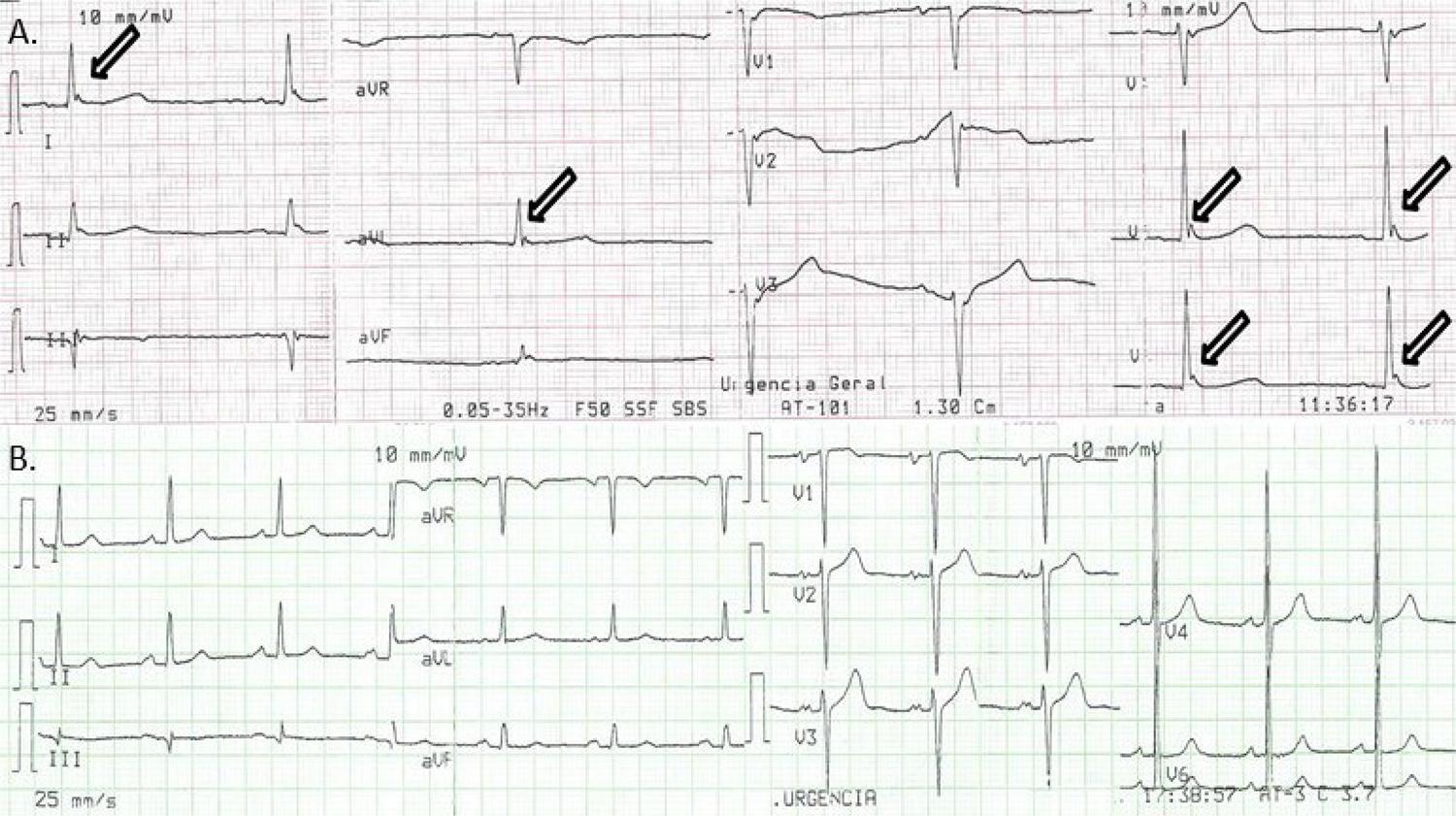
An elderly female patient was brought to the Emergency Department due to loss of consciousness. The past medical history was remarkable for hypercholesterolemia and essential hypertension. The patient was not treated with any negative chronotropic drug. At the admission, the patient’s blood pressure was 90/60 mmHg, she had bradycardia (42/minute), and hypothermia (33ºC). Electrocardiogram (ECG) showed sinus bradycardia, 1st grade atrioventricular block, long corrected QT interval, and Osborn waves at the end of QRS complexes ( , arrowheads). Accordingly, these positive notching deflections were best seen in lateral precordial leads and disappeared after warming the patient to 36ºC ( ). The bradycardia, atrioventricular block, and QT prolongation were also resolved ( ). During the inward stay, head computed tomography scan, 24-hour Holter, and laboratory analysis were unremarkable for pathological findings. Transthoracic echocardiogram only revealed degenerative aortic and mitral valve changes. This case is illustrative of hypothermia-induced electrocardiographic changes, namely prolongation of the PR, RR and QT intervals and particularly the presence of Osborn Waves. ,

[…]

  • Atrioventricular block
  • Bradycardia
  • Electrocardiography/methods
  • hypothermia
  • Osborn Waves
Read Full Article
Creative Commons Attribution (CC BY) Creative Commons license
03/07/2020 DOI: 10.36660/abc.20200081 Views 1
I guideline for cardiopulmonary resuscitation and emergency cardiovascular care - Brazilian Society of Cardiology: executive summary
ABC
Special Article

I guideline for cardiopulmonary resuscitation and emergency cardiovascular care – Brazilian Society of Cardiology: executive summary

Maria Margarita Gonzalez et al. Sergio Timerman Renan Gianotto de Oliveira Thatiane Facholi Polastri … Luis Augusto Palma Dallan Sebastião Araújo Silvia Gelás Lage André Schmidt Claudia San Martín de Bernoche Manoel Fernandes Canesin Frederico José Neves Mancuso Maria Helena Favarato

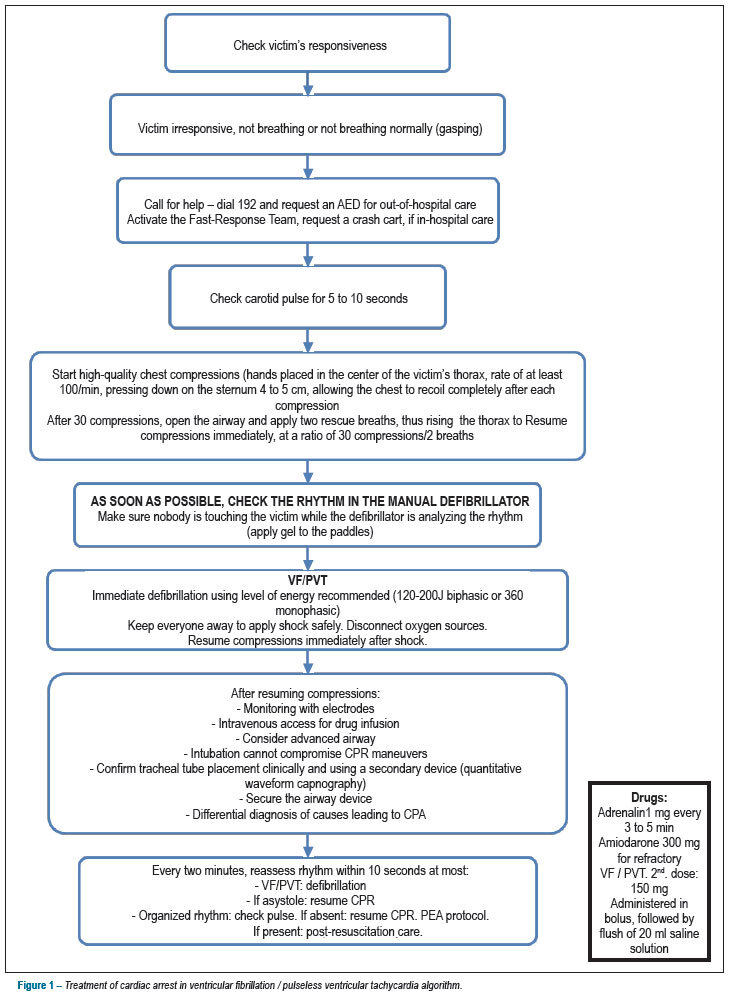
Despite advances related to the prevention and treatment in the past few years, many lives are lost to cardiac arrest and cardiovascular events in general in Brazil every year. Basic Life Support involves cardiovascular emergency treatment mainly in the pre-hospital environment, with emphasis on the early recognition and delivery of cardiopulmonary resuscitation maneuvers focused on high-quality thoracic compressions and rapid defibrillation by means of the implementation of public access-to-defibrillation programs. These aspects are of the utmost importance and may make the difference on the patient’s outcomes, such as on hospital survival with no permanent neurological damage. Early initiation of the Advanced Cardiology Life Support also plays an essential role by keeping the quality of thoracic compressions; adequate airway management; specific treatment for the different arrest rhythms; defibrillation; and assessment and treatment of the possible causes during all the assistance. More recently, emphasis has been given to post-resuscitation care, with the purpose of reducing mortality by means of early recognition and treatment of the post-cardiac arrest syndrome. Therapeutic hypothermia has provided significant improvement of neurological damage and should be performed in comatose individuals post-cardiac arrest. For physicians working in the emergency department or intensive care unit, it is extremely important to improve the treatment given to these patients by means of specific training, thus giving them the chance of higher success and of better survival rates.

  • Cardiopulmonary Resuscitation
  • Heart Arrest
  • hypothermia
Read Full Article
Creative Commons Attribution (CC BY) Creative Commons license
11/03/2013 DOI: 10.5935/abc.20130022 Views 3
Correction of thoracic and thoracoabdominal aortic aneurysms: central cannulation technique
ABC
Artigo Original

Correction of thoracic and thoracoabdominal aortic aneurysms: central cannulation technique

Salomón Soriano Ordinola Rojas et al. Viviane Cordeiro Veiga Januário Manoel de Souza Marcos Fassheber Berlinck … Dante Fanganiello Senra Reinaldo Wilson Vieira Luiz Alberto Magna Domingo Marcolino Braile Sérgio Almeida de Oliveira

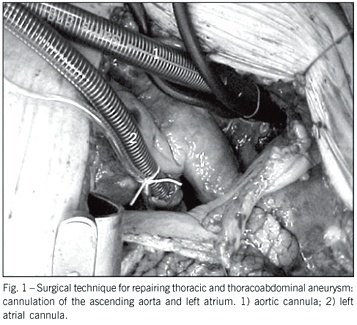
OBJECTIVE: To demonstrate the viability of the use of extracorporeal circulation established between the left atrium and ascending aorta to induce deep hypothermia for correcting thoracic and thoracoabdominal aortic aneurysms. METHODS: From January 1994 to July 2001, 38 patients (mean age, 54.6 ± 12.7 years) were operated on as follows: 12 (31.6%) patients underwent repair of thoracoabdominal aortic aneurysm, and 26 patients underwent repair of descending thoracic aneurysms. Deep hypothermia was induced by use of extracorporeal circulation, with pharyngeal temperature ranging from 15 to 25ºC (20.6 ± 3.2ºC). RESULTS: Of the neurological complications, paraplegia occurred in 2 (5.3%) patients. One patient developed paraparesis, and another evolved with convulsion. Twelve (31.6%) patients had respiratory complications, and 2 (16.7%) patients died. Two other patients were operated on on an emergency basis and ended up dying. Total mortality was 18.4% (7 patients). CONCLUSION: Repair of descending thoracic and thoracoabdominal aortic aneurysms with deep hypothermia by use of extracorporeal circulation established between the left atrium and ascending aorta proved to be a viable method for correcting those aneurysms.

  • hypothermia
  • thoracic aortic aneurysms
  • thoracoabdominal aortic aneurysms
Read Full Article
Creative Commons Attribution (CC BY) Creative Commons license
03/05/2005 DOI: 10.1590/S0066-782X2005000400005

How to cite this article

EndNote RIS

Electronic Document Format (Vancouver)

Nogueira ALM, Maciel ALS, Querubino AC, Prado RT, Martins JR. Efficacy and Risks of Therapeutic Hypothermia after Pediatric Cardiac Arrest: A Systematic Review. International Journal of Cardiovascular Sciences 2022;35(6):740-8.

Electronic Document Format (ABNT)

Nogueira, Anna Luíza Machado; Maciel, Ana Luísa dos Santos; Querubino, Amanda Campos; Prado, Roberta Teixeira; Martins, Jussara Regina. Efficacy and Risks of Therapeutic Hypothermia after Pediatric Cardiac Arrest: A Systematic Review. International Journal of Cardiovascular Sciences, v. 35, n. 6, p. 740-748, Apr. 2022.

Electronic Document Format (APA)

Nogueira, A. L. M., Maciel, A. L. S., Querubino, A. C., Prado, R. T., & Martins, J. R. (2022). Efficacy and Risks of Therapeutic Hypothermia after Pediatric Cardiac Arrest: A Systematic Review. International Journal of Cardiovascular Sciences, 35(6), 740-748.

Electronic Document Format (ISO)

Nogueira, Anna Luíza Machado and Maciel, Ana Luísa dos Santos and Querubino, Amanda Campos and Prado, Roberta Teixeira and Martins, Jussara Regina. Efficacy and Risks of Therapeutic Hypothermia after Pediatric Cardiac Arrest: A Systematic Review. International Journal of Cardiovascular Sciences [online]. 2022, vol. 35, n. 6, [cited 2026-10-14], pp. 740-748. Available from: <https://journals.cardiol.br/en/article/efficacy-and-risks-of-therapeutic-hypothermia-after-pediatric-cardiac-arrest-a-systematic-review/>. ISSN 2359-4802

EndNote RIS

Electronic Document Format (Vancouver)

Marques A, Caldeira D, Briosa A, João I, Pereira H. Hypothermia-Induced Electrocardiographic Changes. Arquivos Brasileiros de Cardiologia 2020;114(6):1076-7.

Electronic Document Format (ABNT)

Marques, Ana; Caldeira, Daniel; Briosa, Alexandra; João, Isabel; Pereira, Hélder. Hypothermia-Induced Electrocardiographic Changes. Arquivos Brasileiros de Cardiologia, v. 114, n. 6, p. 1076-1077, Jul. 2020.

Electronic Document Format (APA)

Marques, A., Caldeira, D., Briosa, A., João, I., & Pereira, H. (2020). Hypothermia-Induced Electrocardiographic Changes. Arquivos Brasileiros de Cardiologia, 114(6), 1076-1077.

Electronic Document Format (ISO)

Marques, Ana and Caldeira, Daniel and Briosa, Alexandra and João, Isabel and Pereira, Hélder. Hypothermia-Induced Electrocardiographic Changes. Arquivos Brasileiros de Cardiologia [online]. 2020, vol. 114, n. 6, [cited 2026-10-14], pp. 1076-1077. Available from: <https://journals.cardiol.br/en/article/hypothermia-induced-electrocardiographic-changes/>. ISSN 0066-782X

EndNote RIS

Electronic Document Format (Vancouver)

Gonzalez MM, Timerman S, Oliveira RG, Polastri TF, Dallan LAP, Araújo S, Lage SG, et al. I guideline for cardiopulmonary resuscitation and emergency cardiovascular care – Brazilian Society of Cardiology: executive summary. Arquivos Brasileiros de Cardiologia 2013;100(2):105-13.

Electronic Document Format (ABNT)

Gonzalez, Maria Margarita; Timerman, Sergio; Oliveira, Renan Gianotto de; Polastri, Thatiane Facholi; Dallan, Luis Augusto Palma; Araújo, Sebastião; Lage, Silvia Gelás; Schmidt, André; Bernoche, Claudia San Martín de; Canesin, Manoel Fernandes; Mancuso, Frederico José Neves; Favarato, Maria Helena. I guideline for cardiopulmonary resuscitation and emergency cardiovascular care – Brazilian Society of Cardiology: executive summary. Arquivos Brasileiros de Cardiologia, v. 100, n. 2, p. 105-113, Mar. 2013.

Electronic Document Format (APA)

Gonzalez, M. M., Timerman, S., Oliveira, R. G. , Polastri, T. F., Dallan, L. A. P., Araújo, S., Lage, S. G., Schmidt, A., Bernoche, C. S. M. , Canesin, M. F., Mancuso, F. J. N., & Favarato, M. H. (2013). I guideline for cardiopulmonary resuscitation and emergency cardiovascular care – Brazilian Society of Cardiology: executive summary. Arquivos Brasileiros de Cardiologia, 100(2), 105-113.

Electronic Document Format (ISO)

Gonzalez, Maria Margarita and Timerman, Sergio and Oliveira, Renan Gianotto de and Polastri, Thatiane Facholi and Dallan, Luis Augusto Palma and Araújo, Sebastião and Lage, Silvia Gelás and Schmidt, André and Bernoche, Claudia San Martín de and Canesin, Manoel Fernandes and Mancuso, Frederico José Neves and Favarato, Maria Helena. I guideline for cardiopulmonary resuscitation and emergency cardiovascular care – Brazilian Society of Cardiology: executive summary. Arquivos Brasileiros de Cardiologia [online]. 2013, vol. 100, n. 2, [cited 2026-10-14], pp. 105-113. Available from: <https://journals.cardiol.br/en/article/i-guideline-for-cardiopulmonary-resuscitation-and-emergency-cardiovascular-care-brazilian-society-of-cardiology-executive-summary/>. ISSN 0066-782X

EndNote RIS

Electronic Document Format (Vancouver)

Rojas SSO, Veiga VC, Souza JM, Berlinck MF, Senra DF, Vieira RW, Magna LA, et al. Correction of thoracic and thoracoabdominal aortic aneurysms: central cannulation technique. Arquivos Brasileiros de Cardiologia 2005;84(4):297-303.

Electronic Document Format (ABNT)

Rojas, Salomón Soriano Ordinola; Veiga, Viviane Cordeiro; Souza, Januário Manoel de; Berlinck, Marcos Fassheber; Senra, Dante Fanganiello; Vieira, Reinaldo Wilson; Magna, Luiz Alberto; Braile, Domingo Marcolino; Oliveira, Sérgio Almeida de. Correction of thoracic and thoracoabdominal aortic aneurysms: central cannulation technique. Arquivos Brasileiros de Cardiologia, v. 84, n. 4, p. 297-303, May. 2005.

Electronic Document Format (APA)

Rojas, S. S. O., Veiga, V. C., Souza, J. M. , Berlinck, M. F., Senra, D. F., Vieira, R. W., Magna, L. A., Braile, D. M., & Oliveira, S. A. (2005). Correction of thoracic and thoracoabdominal aortic aneurysms: central cannulation technique. Arquivos Brasileiros de Cardiologia, 84(4), 297-303.

Electronic Document Format (ISO)

Rojas, Salomón Soriano Ordinola and Veiga, Viviane Cordeiro and Souza, Januário Manoel de and Berlinck, Marcos Fassheber and Senra, Dante Fanganiello and Vieira, Reinaldo Wilson and Magna, Luiz Alberto and Braile, Domingo Marcolino and Oliveira, Sérgio Almeida de. Correction of thoracic and thoracoabdominal aortic aneurysms: central cannulation technique. Arquivos Brasileiros de Cardiologia [online]. 2005, vol. 84, n. 4, [cited 2026-10-14], pp. 297-303. Available from: <https://journals.cardiol.br/en/article/correction-of-thoracic-and-thoracoabdominal-aortic-aneurysms-central-cannulation-technique/>. ISSN 0066-782X

  • About ABC Family
  • Internal Regulation
  • Editorial Board
  • Brazilian Society of Cardiology (SBC)

Issues

SBC Guidelines

  • Videos
  • Podcasts
  • News