ABC Family Arquivos Brasileiros de Cardiologia International Journal of Cardiovascular Sciences ABC Heart Failure & Cardiomyopathy ABC Imagem Cardiovascular
Português English
ABC Family
Português English
  • About
    • About ABC Family
    • Internal Regulation
    • Editorial Board
    • Brazilian Society of Cardiology (SBC)
  • Issues
  • SBC Guidelines
  • Content
    • Videos
    • Podcasts
    • News
  • About
    • About ABC Family
    • Internal Regulation
    • Editorial Board
    • Brazilian Society of Cardiology (SBC)
  • Issues
  • SBC Guidelines
  • Content
    • Videos
    • Podcasts
    • News

ABC Family

  • ABC Family
  • Arquivos Brasileiros de Cardiologia
  • International Journal of Cardiovascular Sciences
  • ABC Heart Failure & Cardiomyopathy
  • ABC Imagem Cardiovascular
Search in

No content found.

Journals
Ordering
Article types
Others

  1. Home
  2. Keyword: Glycogen Storage Disease
Central Illustration
ABCIC
Review Article

Echocardiographic Characteristics of PRKAG2 Syndrome: An Integrative Review

José Luiz Barros Pena et al. Igor de Souza Neto Alice Pinheiro Barbosa Dinamar Amador dos Santos Neto

Abstract

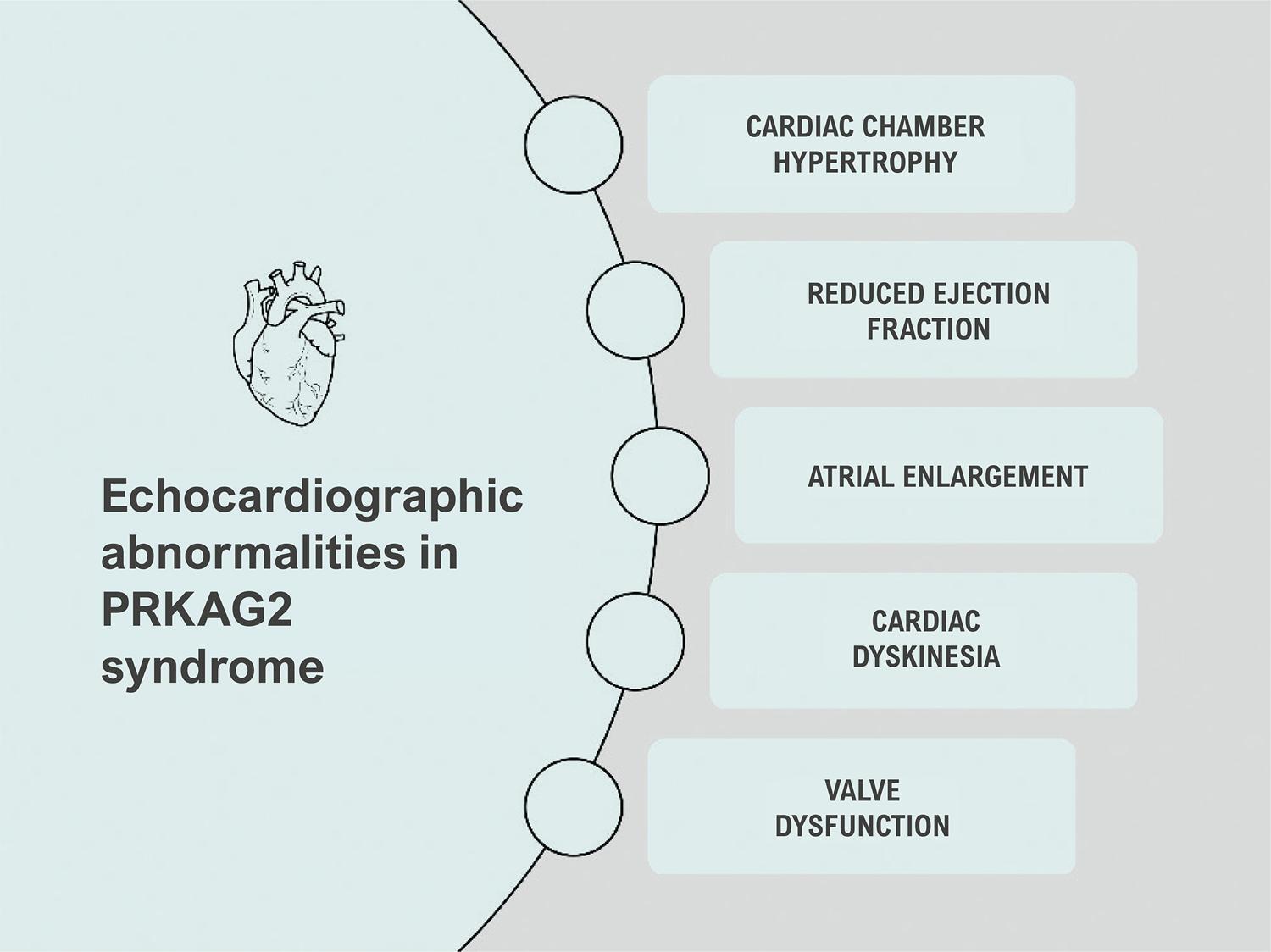
PRKAG2 syndrome is a rare, early-onset, autosomal dominant, inherited lysosomal glycogen storage disease that develops with ventricular preexcitation syndrome, supraventricular arrhythmias, and cardiac hypertrophy. The disease is caused by mutations in the gene encoding the adenosine monophosphate-activated protein kinase (AMPK) protein, leading to glycogen accumulation in cardiomyocytes. Echocardiography is a noninvasive, widely available, and highly effective technique for identifying and quantifying left ventricular hypertrophy (LVH). Therefore, this review focuses mainly on echocardiographic patterns, describing the main alterations in patients with PRKAG2 syndrome. O objective of this paper is to conduct an integrative review of the echocardiographic features presented by patients with PRKAG2 syndrome. We conducted an integrative review of echocardiographic features in PRKAG2 syndrome by searching PubMed, SciELO, IBECS, and LILACS electronic databases using the following keywords: “PRKAG2 syndrome” and “PRKAG2.” The predominant echocardiographic finding in patients with PRKAG2 syndrome was cardiac chamber hypertrophy, particularly affecting the left ventricle. In addition, other findings included abnormal ejection fraction, changes in strain patterns, and heart valve abnormalities. Cardiac chamber hypertrophy was demonstrated in most studies, with a predominance of LVH. Reduced ejection fraction was also described, both in the left and right ventricles. Other features reported included atrial enlargement, cardiac dyskinesia, and valve dysfunction. However, the findings varied widely, highlighting the phenotypic variability of this syndrome.
  • Cardiomyopathy, Hypertrophic
  • Echocardiography
  • Glycogen Storage Disease
Read Full Article
Creative Commons Attribution (CC BY) Creative Commons license
09/08/2023 DOI: 10.36660/abcimg.20230047i Views 1
ABC
Editorial

PRKAG2 Cardiomyopathy

Eduardo Back Sternick

Magalhães et al. assessed atrial flutter’s clinical, electrocardiographic, and electrophysiologic characteristics in patients with and without PRKAG2 cardiomyopathy. Although genetic sequencing was not carried out in their control patients, the absence of clinical features of this pathology is acceptable evidence of a non-carrier state. In humans, mutations in the PRKAG2 gene result in a highly penetrant phenotype. It is dominated by the cardiac features of left ventricular hypertrophy, ventricular pre-excitation, atrial tachyarrhythmia, cardiac conduction disease, and myocardial glycogen storage. It would be very unlikely to find a patient with a positive genotype for PRKAG2 in the setting of a negative phenotype.

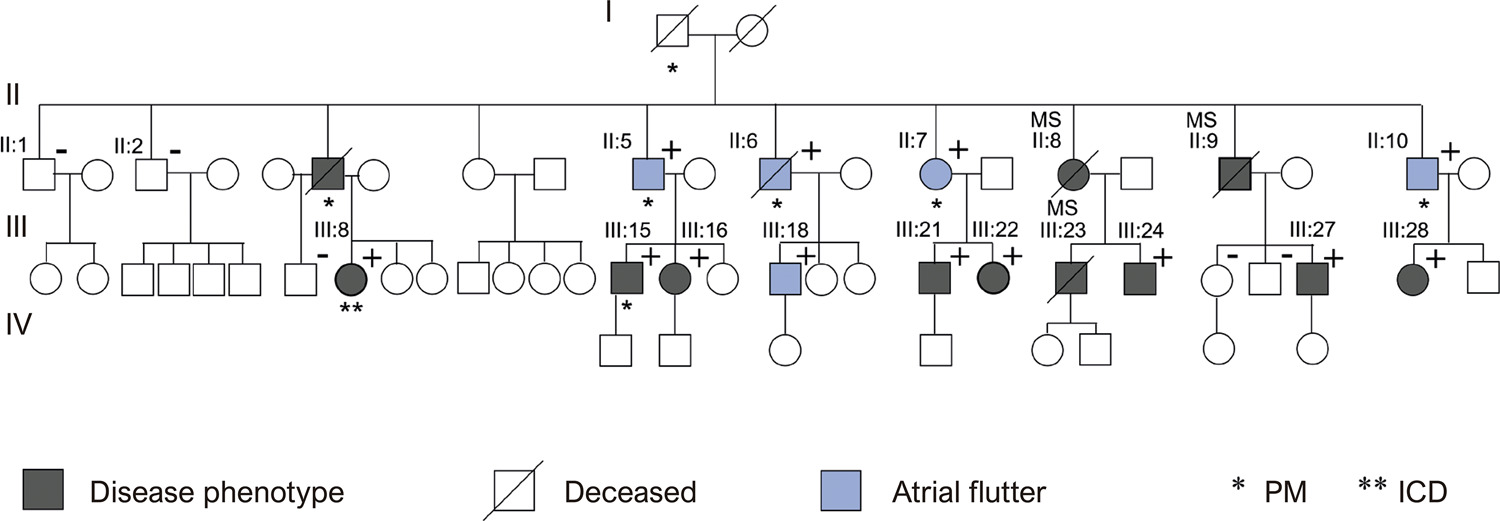
Our group pioneered the study of PRKAG2 cardiomyopathy in Brazil. The first patient was assessed in 1994, a 36-years old male, with mild hypertension, with recurrent episodes of common atrial flutter. The electrocardiogram showed ventricular pre-excitation, enlarged P waves, a significant increase in the QRS voltage, and sinus bradycardia. Of 8 brothers, six had very similar electrocardiographic findings. Their mother had had a pacemaker implanted at the age of 42. The echocardiogram showed a non-obstructive form of asymmetric left ventricular hypertrophy and mild left atrial enlargement. There were sufficient elements to allow a presumptive diagnosis of a phenocopy of hypertrophic cardiomyopathy! In 1994, however, we were not able to make the diagnosis. The mutations of the PRKAG2 gene had yet to be reported in 1994, but it would be 7 years later. Then, in 2004, we undertook genetic sequencing of the patients. We presented our experience during the NASPE Congress of 2005. Our research received the first prize in clinical arrhythmia during the Brazilian Congress of Cardiac Arrhythmias of 2004.

[…]

  • Arrhythmias Cardiac
  • Atrial flutter
  • Atrioventricular block
  • Cardiomyopathy, Hypertrophic
  • Glycogen Storage Disease
  • Hypertrophy Left Ventricular
Read Full Article
Creative Commons Attribution (CC BY) Creative Commons license
25/11/2022 DOI: 10.36660/abc.20220694 Views 1
Figure 1
ABC
Original Article

Atrial Flutter in PRKAG2 Syndrome: Clinical and Electrophysiological Characteristics

Eduardo Faria Soares de Magalhães et al. Luiz Pereira de Magalhães Jussara de Oliveira Pinheiro Alex Teixeira Guabiru Roque Aras

Abstract

Background

PRKAG2 syndrome is a rare autosomal dominant disease, a phenocopy of hypertrophic cardiomyopathy characterized by intracellular glycogen accumulation. Clinical manifestations include ventricular preexcitation, cardiac conduction disorder, ventricular hypertrophy, and atrial arrhythmias.

Objective

To compare the clinical and electrophysiological characteristics observed in patients with atrial flutter, with and without PRKAG2 syndrome.

Methods

An observational study comparing patients with atrial flutter: group A consisted of five patients with PRKAG2 syndrome from a family, and group B consisted of 25 patients without phenotype of PRKAG2 syndrome. The level of significance was 5%.

Results

All patients in group A had ventricular preexcitation and right branch block, and four had pacemakers (80%). Patients in group A were younger (39±5.4 vs 58.6±17.6 years, p=0.021), had greater interventricular septum (median=18 vs 10 mm; p<0.001) and posterior wall thickness (median=14 vs 10 mm; p=0.001). In group A, four patients were submitted to an electrophysiological study, showing a fasciculoventricular pathway, and atrial flutter ablation was performed in tree. All patients in group B were submitted to ablation of atrial flutter, with no evidence of accessory pathway. Group B had a higher prevalence of hypertension, diabetes mellitus, coronary artery disease and sleep apnea, with no statistically significant difference.

Conclusion

Patients with PRKAG2 syndrome presented atrial flutter at an earlier age and had fewer comorbidities when compared to patients with atrial flutter without mutation phenotype. The occurrence of atrial flutter in young individuals, especially in the presence of ventricular preexcitation and familial ventricular hypertrophy, should raise the suspicion of PRKAG2 syndrome.

  • Atrial flutter
  • Atrioventricular block
  • Cardiac Arrhythmias
  • Cardiomyopathy, Hypertrophic
  • Glycogen Storage Disease
  • Hypertrophy Left Ventricular
Read Full Article
Creative Commons Attribution (CC BY) Creative Commons license
06/09/2022 DOI: 10.36660/abc.20210792 Views 1

How to cite this article

EndNote RIS

Electronic Document Format (Vancouver)

Pena JLB, Souza Neto I, Barbosa AP, Santos Neto DA. Echocardiographic Characteristics of PRKAG2 Syndrome: An Integrative Review. ABC Imagem Cardiovascular 2023;36(3):e20230047.

Electronic Document Format (ABNT)

Pena, José Luiz Barros; Souza Neto, Igor de; Barbosa, Alice Pinheiro; Santos Neto, Dinamar Amador dos. Echocardiographic Characteristics of PRKAG2 Syndrome: An Integrative Review. ABC Imagem Cardiovascular, v. 36, n. 3, e20230047, Aug. 2023.

Electronic Document Format (APA)

Pena, J. L. B., Souza Neto, I. , Barbosa, A. P., & Santos Neto, D. A. (2023). Echocardiographic Characteristics of PRKAG2 Syndrome: An Integrative Review. ABC Imagem Cardiovascular, 36(3), e20230047.

Electronic Document Format (ISO)

Pena, José Luiz Barros and Souza Neto, Igor de and Barbosa, Alice Pinheiro and Santos Neto, Dinamar Amador dos. Echocardiographic Characteristics of PRKAG2 Syndrome: An Integrative Review. ABC Imagem Cardiovascular [online]. 2023, vol. 36, n. 3, [cited 2026-10-14], e20230047. Available from: <https://journals.cardiol.br/en/article/echocardiographic-characteristics-of-prkag2-syndrome-an-integrative-review/>. ISSN 2318-8219

EndNote RIS

Electronic Document Format (Vancouver)

Sternick EB. PRKAG2 Cardiomyopathy. Arquivos Brasileiros de Cardiologia 2022;119(5):689-90.

Electronic Document Format (ABNT)

Sternick, Eduardo Back. PRKAG2 Cardiomyopathy. Arquivos Brasileiros de Cardiologia, v. 119, n. 5, p. 689-690, Nov. 2022.

Electronic Document Format (APA)

Sternick, E. B. (2022). PRKAG2 Cardiomyopathy. Arquivos Brasileiros de Cardiologia, 119(5), 689-690.

Electronic Document Format (ISO)

Sternick, Eduardo Back. PRKAG2 Cardiomyopathy. Arquivos Brasileiros de Cardiologia [online]. 2022, vol. 119, n. 5, [cited 2026-10-14], pp. 689-690. Available from: <https://journals.cardiol.br/en/article/prkag2-cardiomyopathy/>. ISSN 0066-782X

EndNote RIS

Electronic Document Format (Vancouver)

Magalhães EFS, Magalhães LP, Pinheiro JO, Guabiru AT, Aras R. Atrial Flutter in PRKAG2 Syndrome: Clinical and Electrophysiological Characteristics. Arquivos Brasileiros de Cardiologia 2022;119(5):681-8.

Electronic Document Format (ABNT)

Magalhães, Eduardo Faria Soares de; Magalhães, Luiz Pereira de; Pinheiro, Jussara de Oliveira; Guabiru, Alex Teixeira; Aras, Roque. Atrial Flutter in PRKAG2 Syndrome: Clinical and Electrophysiological Characteristics. Arquivos Brasileiros de Cardiologia, v. 119, n. 5, p. 681-688, Sep. 2022.

Electronic Document Format (APA)

Magalhães, E. F. S. , Magalhães, L. P. , Pinheiro, J. O., Guabiru, A. T., & Aras, R. (2022). Atrial Flutter in PRKAG2 Syndrome: Clinical and Electrophysiological Characteristics. Arquivos Brasileiros de Cardiologia, 119(5), 681-688.

Electronic Document Format (ISO)

Magalhães, Eduardo Faria Soares de and Magalhães, Luiz Pereira de and Pinheiro, Jussara de Oliveira and Guabiru, Alex Teixeira and Aras, Roque. Atrial Flutter in PRKAG2 Syndrome: Clinical and Electrophysiological Characteristics. Arquivos Brasileiros de Cardiologia [online]. 2022, vol. 119, n. 5, [cited 2026-10-14], pp. 681-688. Available from: <https://journals.cardiol.br/en/article/atrial-flutter-in-prkag2-syndrome-clinical-and-electrophysiological-characteristics/>. ISSN 0066-782X

  • About ABC Family
  • Internal Regulation
  • Editorial Board
  • Brazilian Society of Cardiology (SBC)

Issues

SBC Guidelines

  • Videos
  • Podcasts
  • News