ABC Family Arquivos Brasileiros de Cardiologia International Journal of Cardiovascular Sciences ABC Heart Failure & Cardiomyopathy ABC Imagem Cardiovascular
Português English
ABC Family
Português English
  • About
    • About ABC Family
    • Internal Regulation
    • Editorial Board
    • Brazilian Society of Cardiology (SBC)
  • Issues
  • SBC Guidelines
  • Content
    • Videos
    • Podcasts
    • News
  • About
    • About ABC Family
    • Internal Regulation
    • Editorial Board
    • Brazilian Society of Cardiology (SBC)
  • Issues
  • SBC Guidelines
  • Content
    • Videos
    • Podcasts
    • News

ABC Family

  • ABC Family
  • Arquivos Brasileiros de Cardiologia
  • International Journal of Cardiovascular Sciences
  • ABC Heart Failure & Cardiomyopathy
  • ABC Imagem Cardiovascular
Search in

No content found.

Journals
Ordering
Article types
Others

  1. Home
  2. Keyword: Arrhythmias, Cardiac/complications
ABC
Editorial

Catheter Ablation as First-Line Therapy in the Treatment of Atrial Fibrillation – Should We Always Indicate it?

Luiz Eduardo Montenegro Camanho et al. Gustavo Vignoli dos Santos

Atrial fibrillation (AF) is the most common cardiac arrhythmia in clinical practice, affecting approximately 1 to 2% of the general population and is associated with an increased risk of cardioembolic events and a negative impact on quality of life. The cardiovascular mortality rate described is approximately 5% per year, and it is estimated that the risk of cardiovascular complications is higher in the first year after the diagnosis of arrhythmia. The recurrence rate of AF without adequate preventive treatment is around 90%, which expresses the magnitude of the problem.

Thus, it seems quite reasonable to postulate the concept that an early approach to AF brings relevant clinical benefits to these patients. Recent data obtained from the EAST-AFNET4 study clearly demonstrated that this approach is a valid and effective strategy. The study involved 2789 patients diagnosed with AF for at least 12 months who were randomized to early treatment of AF (ablation: 8% and AAD: 87%) or conservative treatment. At a median follow-up period of 5.1 years, the early treatment group demonstrated a significant reduction in the primary endpoint of cardiovascular death compared to the conservative group. The risk of stroke, hospitalization for HF or acute coronary syndrome was also lower in the early approach group. The study design was not primarily intended to assess the safety and effectiveness of early treatment components (ablation vs. antiarrhythmic drugs – AAD). Therefore, the authors concluded that an early heart rhythm control strategy was associated with a lower risk of unfavorable outcomes than usual care in patients with AF and associated cardiovascular conditions.

[…]

  • Arrhythmias, Cardiac/complications
  • Atrial Fibrillation/complications
  • Catheter Ablation/methods
  • Thromboembolism/mortality
  • Thrombolytic Therapy/adverse effects
Read Full Article
Creative Commons Attribution (CC BY) Creative Commons license
11/07/2022 DOI: 10.36660/abc.20220362
Figure 1
IJCS
Case Report

Commotio Cordis Secondary to Aggression

Luisa Gonçalves et al. Inês Pires João Santos Joana Laranjeira Correia … Davide Moreira Inês Almeida

Case report

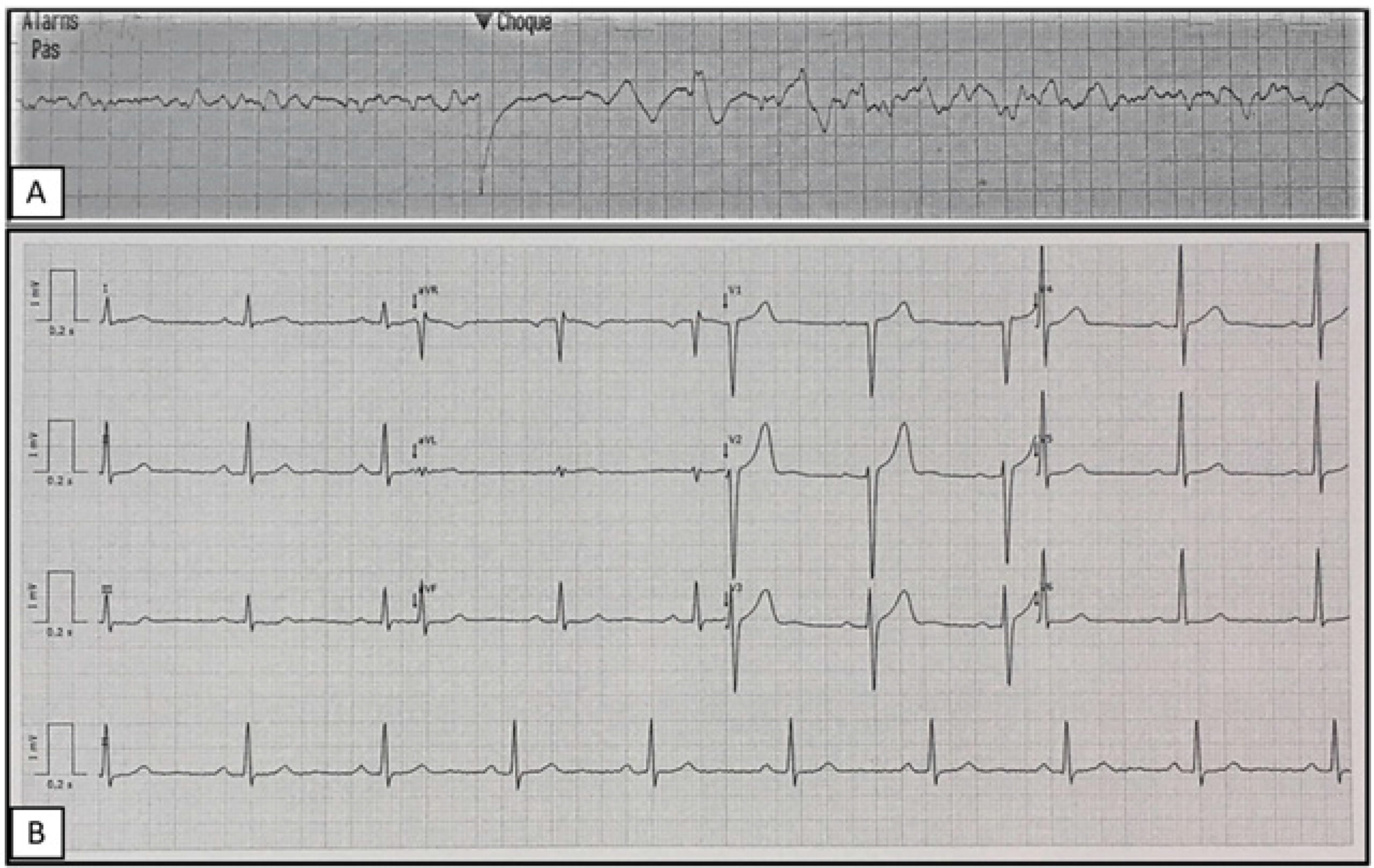
A 35-year-old man was admitted following a recovered cardiorespiratory arrest. He was attacked by another man with multiples blunts by a wood stick in the chest and head. An eyewitness statement indicated that the victim had lost consciousness and collapsed after being hit in the chest. He was in cardiac arrest, and a nearby healthcare professional provided first aid with cardiopulmonary resuscitation. The first electrocardiogram (ECG) rhythm strip, fifteen minutes later, identified ventricular fibrillation (VF) (). Sixteen electrical shocks were delivered, always with VF, before restoration of sinus rhythm and circulation. A 12-lead-ECG revealed sinus rhythm without ST deviations and a corrected QT interval of 414 msec. On admission, he was under ventilatory support, with a heart rate of 80 beats per minute, blood pressure of 121/70mmHg, and no signs of shock. There was no previously known medical condition, besides being an active smoker and a binge drinker, and no family history of early coronary disease, cardiomyopathy, or sudden death. He was under the influence of alcohol, as was confirmed by blood tests (blood alcohol level of 1.31g/L), and had a discretely elevated cardiac troponin-T of 0.9ng/ml (normal range, 0 to 0.08 ng/ml). The remaining analyzes, cranial and cervical CT scan, chest X-ray, and abdominal eco FAST were normal. An initial echocardiogram in the emergency department demonstrated normal-sized chambers and global ventricular systolic dysfunction explained by a prolonged cardiac arrest. He was admitted to the intensive care unit for post-resuscitation care with therapeutic hypothermia and temporary ventilatory support. At 48 hours of admission, there was a normalization of systolic function with a normal ejection fraction by echocardiogram (). Coronary angiography excluded coronary disease (). Serial electrocardiograms were not suggestive of an arrhythmogenic substrate (). The sudden cardiac arrest was assumed secondary to a commotio cordis (CC), and for this reason, the patient was not proposed for an implantable cardioverter-defibrillator (ICD). The clinical outcome was favorable, and the patient was discharged. He remained asymptomatic during three years of follow-up, with normal ECG, echocardiogram with strain-rate imaging, exercise stress test, and 24-hour-Holter. During mid-term follow-up, a cardiac magnetic resonance imaging (MRI) showed normal-sized chambers, global and regional function, and no myocardial edema or myocardial scar by late focal hyperenhancement (-).

[…]

  • Arrhythmias, Cardiac/complications
  • Atrioventricular block
  • Cardiovascular Diseases/complications
  • Commotio Cordis
  • Diagnosis, Dfferential
  • Heart Arrest
  • Ventricular Fibrillation
Read Full Article
Creative Commons Attribution (CC BY) Creative Commons license
09/08/2021 DOI: 10.36660/ijcs.20200356 Views 1
Figure 1
IJCS
Case Report

Aborted Sudden Death Due to Severe Ventricular Arrhythmia in Timothy Syndrome

Erivelton Nascimento et al. Carollina Fernandes Tinoco Camila Diniz Silva Fabiana Ferreira Mitidieri Cortez Renato Kaufman

Abstract

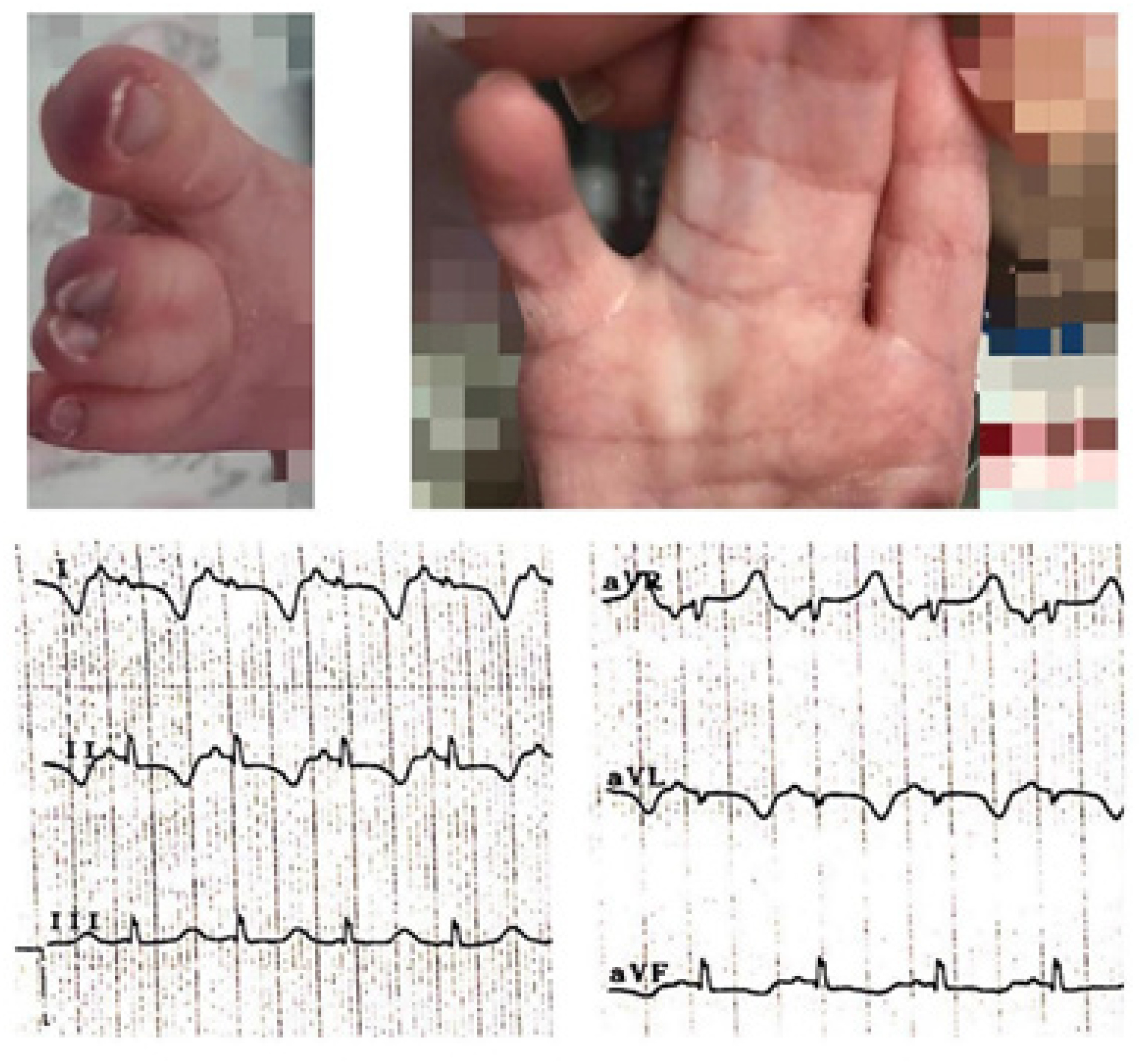
Timothy Syndrome is a rare autosomal dominant multisystem genetic condition. The CACNA1C gene, codifier of the CaV1.2 calcium channel, is affected, resulting in the loss of voltage-dependent calcium channel inactivation. Relevant clinical characteristics: (1) corrected QT interval greater than 480ms; (2) syndactyly. Death often occurs during childhood, and results from ventricular tachyarrhythmias. This study presents the case of a female newborn who suffered a cardiorespiratory arrest, secondary to ventricular arrhythmia. A prolonged QT interval, combined with 2:1 AV block, was also identified, requiring a definitive cardiac pacemaker implant that, during inpatient care, developed pulmonary sepsis, followed by death.

  • Arrhythmias, Cardiac/complications
  • Child
  • Death, Sudden
  • Long QT Syndrome
  • Syndactyly/genetics
Read Full Article
Creative Commons Attribution (CC BY) Creative Commons license
30/04/2021 DOI: 10.36660/ijcs.20200061 Views 1
Chart 1
IJCS
Original Article

Left Atrial Size Contribution to the Predictive Capacity of Two Scores for Atrial Fibrillation in the Postoperative Period of Cardiac Surgeries

Natália Aline da Silva et al. Rita de Cássia Gengo e Silva Butcher

Abstract

Background:

Postoperative atrial fibrillation (POAF) is a common complication associated with undesirable outcomes; hence, the provision of appropriate tools is important to help identify patients at risk.

Objectives:

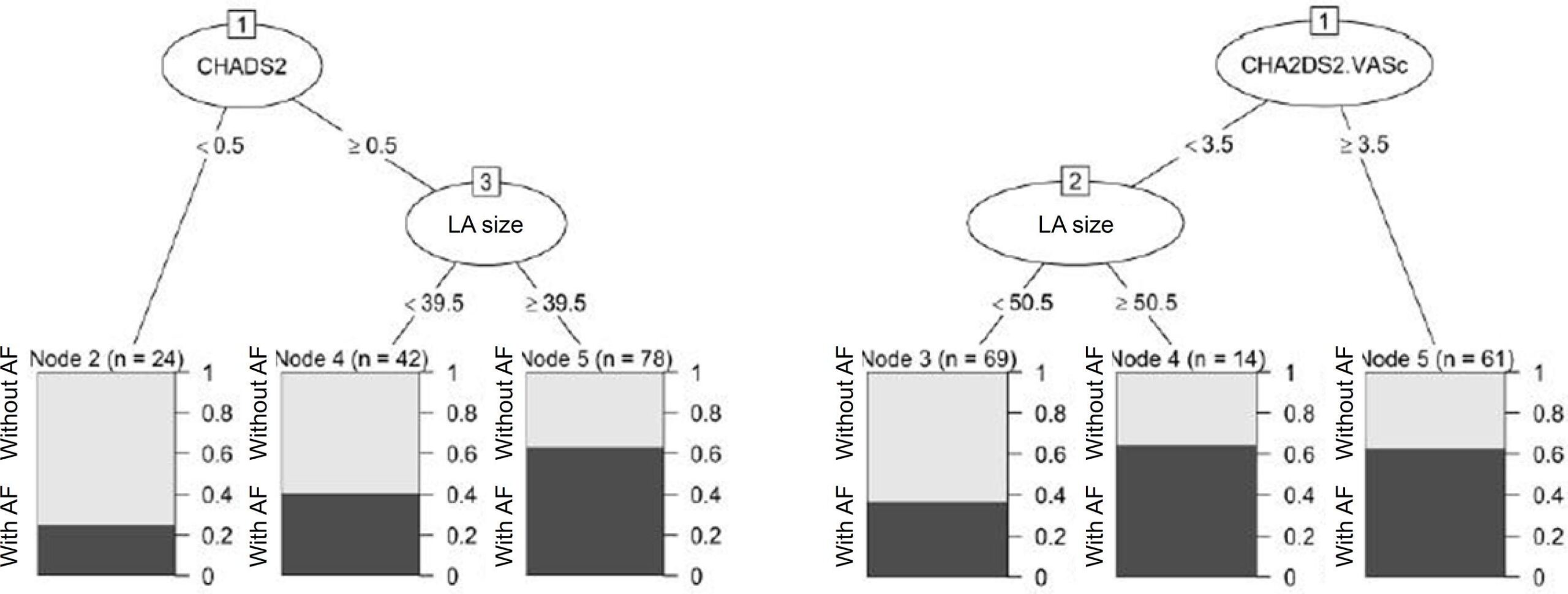
To evaluate the predictive capacity of the CHADS2 and CHA2DS2-VASc scores, alone and combined with left atrial (LA) size, for the onset of POAF in patients undergoing coronary artery bypass grafting and/or valvular surgery.

Methods:

We performed a retrospective cohort study on 144 patients. A decision tree was used to identify the cut-off values of the CHADS2 and CHA2DS2-VASc scores and LA size in order to calculate sensitivity, specificity, predictive-value positive (PVP), and predictive-value negative (PVN), in addition to regression models. The receiver operating characteristic (ROC) curve was used to estimate the accuracy of the models. The level of significance adopted was 5%.

Results:

Patients who developed POAF were older (p = 0.050), had reduced left ventricular ejection fraction (p = 0.045), longer hospital length of stay (p = 0,018), but their mean CHADS2 (p = 0.077) and CHA2DS2-VASc (p = 0.109) scores were similar to those of patients with no arrhythmia. LA size improved the predictive capacity of the CHADS2 score, in terms of specificity and PVP, and of the CHA2DS2-VASc score, in terms of sensitivity and PVN. However, the CHADS2 (OR = 1.198; CI95% = 0.859-1.156) and CHA2DS2-VASc (OR = 1.047; CI95% = 0.784-1.401) scores were not predictors of POAF, either alone or in combination with LA size (OR = 1.163; CI95% = 0.829-1.648 and OR = 1.065; CI95% = 0.795-1.433).

Conclusion:

The CHADS2 and CHA2DS2-VASc scores alone or in combination with LA size did not show good predictive capacity for POAF.

  • Arrhythmias, Cardiac/complications
  • Atrial Fibrillation
  • Cardiac Surgical Procedures
  • postoperative complications
Read Full Article
Creative Commons Attribution (CC BY) Creative Commons license
08/08/2019 DOI: 10.5935/2359-4802.20190042
ABC
Editorial

Carotid Sinus Massage in Syncope Evaluation: A Nonspecific and Dubious Diagnostic Method

José Carlos Pachón Mateos

The study by Wu et al. questions the value of carotid sinus massage (CSM) for the investigation of syncope. It was well conducted, with two reasonably equivalent groups, with and without previous syncope, submitted to the same type of bilateral CSM, under rigorous evaluation of symptoms, cardiac rhythm and blood pressure. The authors found no difference in the response to CSM between the two groups. They concluded that CSM in the assessment of unexplained syncope would be a nonspecific and dubious diagnostic method. The results are clear and well structured. We agree with the authors’ conclusion about the study findings. The limitations suggested are rightful. There is no doubt that CSM is an empiric method, of uncertain results, and this type of study serves to alert to its drawbacks. However, why is CSM still included in the guidelines? Certainly because it is a simple, well-tolerated, low-cost, low-risk procedure as long as the technique and the contraindications are respected, and can be performed rapidly during tilt-test, establishing the diagnosis in up to 30% of elderly patients with syncope of unknown origin. However, as any other investigative method, it has important limitations that should be addressed cautiously. It is worth noting that the response to CSM depends on several investigator’s and patient’s factors, having value only when positive, when reproducing the spontaneous symptoms and when the patient’s clinical findings are compatible with reflex syncope. In addition, it has no power of exclusion.

Thus, despite these drawbacks, CSM continues valid according to the European Society of Cardiology guidelines, which consider it is indicated as class I, level of evidence B, for patients older than 40 years of age with syncope of unknown origin compatible with reflex origin. The diagnosis of carotid sinus syndrome (CSS) is confirmed if the CSM causes bradycardia (asystole) and/or hypotension that reproduce the spontaneous symptoms, and if the patients have clinical features compatible with the reflex mechanism of syncope, class I, level of evidence B. Although neurological complications are rare, the maneuver should be avoided in patients who already had an ischemic stroke, have a carotid murmur or important carotid vasculopathy. The history of syncope with positive CSM reproducing the symptoms confirms the diagnosis of CSS. However, a positive CSM without a history of syncope characterizes carotid sinus hypersensitivity, which, in elderly patients with unexplained syncope, can be a nonspecific finding and should be considered cautiously in the assessment of the syncope mechanism, because it is present in up to 40% of the cases.

[…]

  • Arrhythmias, Cardiac/complications
  • Carotid sinus/physiology
  • Syncope/etiology
  • Syncope/physiopathology
Read Full Article
Creative Commons Attribution (CC BY) Creative Commons license
01/07/2018 DOI: 10.5935/abc.20180134
ABC
Original Article

Association between Microvolt T-Wave Alternans and Malignant Ventricular Arrhythmias in Chagas Disease

Bárbara Carolina Silva Almeida et al. André Assis Lopes do Carmo Marco Paulo Tomaz Barbosa José Luiz Padilha da Silva Antonio Luiz Pinho Ribeiro

Abstract

Background:

Sudden cardiac death is the most frequent death mechanism in Chagas disease, responsible for 55% to 65% of the deaths of patients with chronic Chagas cardiomyopathy (CCC). The most often involved electrophysiological mechanisms are ventricular tachycardia and ventricular fibrillation. The implantable cardioverter defibrillator (ICD) has a beneficial role in preventing sudden death due to malignant ventricular arrhythmias, and, thus the correct identification of patients at risk is required. The association of microvolt T-wave alternans (MTWA) with the appearance of ventricular arrhythmias has been assessed in different heart diseases. The role of MTWA is mostly unknown in patients with CCC.

Objectives:

To evaluate the association between MTWA and the occurrence of malignant ventricular arrhythmias in patients with CCC.

Method:

This is a case-control study including patients with CCC and ICD, with history of malignant ventricular arrhythmias (case group), and patients with CCC and no history of those arrhythmias (control group). The MTWA test results were classified as negative and non-negative (positive and indeterminate). The significance level adopted was a = 0.05.

Results:

We recruited 96 patients, 45 cases (46.8%) and 51 controls (53.1%). The MTWA test was non-negative in 36/45 cases (80%) and 15/51 controls (29.4%) [OR = 9.60 (95%CI: 3.41 – 27.93)]. After adjustment for known confounding factors in a logistic regression model, the non-negative result continued to be associated with malignant ventricular arrhythmias [OR = 5.17 (95%CI: 1.05 – 25.51)].

Conclusion:

Patients with CCC and history of malignant ventricular arrhythmias more often have a non-negative MTWA test as compared to patients with no history of arrhythmia.

  • Arrhythmias, Cardiac/complications
  • Chagas Cardiomyopathy
  • Chagas disease
  • Death, Sudden, Cardiac
  • Defibrillators,Implantable
Read Full Article
Creative Commons Attribution (CC BY) Creative Commons license
09/04/2018 DOI: 10.5935/abc.20180056 Views 1

How to cite this article

EndNote RIS

Electronic Document Format (Vancouver)

Camanho LEM, Santos GV. Catheter Ablation as First-Line Therapy in the Treatment of Atrial Fibrillation – Should We Always Indicate it?. Arquivos Brasileiros de Cardiologia 2022;119(1):95-6.

Electronic Document Format (ABNT)

Camanho, Luiz Eduardo Montenegro; Santos, Gustavo Vignoli dos. Catheter Ablation as First-Line Therapy in the Treatment of Atrial Fibrillation – Should We Always Indicate it?. Arquivos Brasileiros de Cardiologia, v. 119, n. 1, p. 95-96, Jul. 2022.

Electronic Document Format (APA)

Camanho, L. E. M., & Santos, G. V. (2022). Catheter Ablation as First-Line Therapy in the Treatment of Atrial Fibrillation – Should We Always Indicate it?. Arquivos Brasileiros de Cardiologia, 119(1), 95-96.

Electronic Document Format (ISO)

Camanho, Luiz Eduardo Montenegro and Santos, Gustavo Vignoli dos. Catheter Ablation as First-Line Therapy in the Treatment of Atrial Fibrillation – Should We Always Indicate it?. Arquivos Brasileiros de Cardiologia [online]. 2022, vol. 119, n. 1, [cited 2026-10-14], pp. 95-96. Available from: <https://journals.cardiol.br/en/article/catheter-ablation-as-first-line-therapy-in-the-treatment-of-atrial-fibrillation-should-we-always-indicate-it/>. ISSN 0066-782X

EndNote RIS

Electronic Document Format (Vancouver)

Gonçalves L, Pires I, Santos J, Correia JL, Moreira D, Almeida I. Commotio Cordis Secondary to Aggression. International Journal of Cardiovascular Sciences 2021;35(2):293-6.

Electronic Document Format (ABNT)

Gonçalves, Luisa; Pires, Inês; Santos, João; Correia, Joana Laranjeira; Moreira, Davide; Almeida, Inês. Commotio Cordis Secondary to Aggression. International Journal of Cardiovascular Sciences, v. 35, n. 2, p. 293-296, Aug. 2021.

Electronic Document Format (APA)

Gonçalves, L., Pires, I., Santos, J., Correia, J. L., Moreira, D., & Almeida, I. (2021). Commotio Cordis Secondary to Aggression. International Journal of Cardiovascular Sciences, 35(2), 293-296.

Electronic Document Format (ISO)

Gonçalves, Luisa and Pires, Inês and Santos, João and Correia, Joana Laranjeira and Moreira, Davide and Almeida, Inês. Commotio Cordis Secondary to Aggression. International Journal of Cardiovascular Sciences [online]. 2021, vol. 35, n. 2, [cited 2026-10-14], pp. 293-296. Available from: <https://journals.cardiol.br/en/article/commotio-cordis-secondary-to-aggression/>. ISSN 2359-4802

EndNote RIS

Electronic Document Format (Vancouver)

Nascimento E, Tinoco CF, Silva CD, Cortez FFM, Kaufman R. Aborted Sudden Death Due to Severe Ventricular Arrhythmia in Timothy Syndrome. International Journal of Cardiovascular Sciences 2021;34(6):743-6.

Electronic Document Format (ABNT)

Nascimento, Erivelton; Tinoco, Carollina Fernandes; Silva, Camila Diniz; Cortez, Fabiana Ferreira Mitidieri; Kaufman, Renato. Aborted Sudden Death Due to Severe Ventricular Arrhythmia in Timothy Syndrome. International Journal of Cardiovascular Sciences, v. 34, n. 6, p. 743-746, Apr. 2021.

Electronic Document Format (APA)

Nascimento, E., Tinoco, C. F., Silva, C. D., Cortez, F. F. M., & Kaufman, R. (2021). Aborted Sudden Death Due to Severe Ventricular Arrhythmia in Timothy Syndrome. International Journal of Cardiovascular Sciences, 34(6), 743-746.

Electronic Document Format (ISO)

Nascimento, Erivelton and Tinoco, Carollina Fernandes and Silva, Camila Diniz and Cortez, Fabiana Ferreira Mitidieri and Kaufman, Renato. Aborted Sudden Death Due to Severe Ventricular Arrhythmia in Timothy Syndrome. International Journal of Cardiovascular Sciences [online]. 2021, vol. 34, n. 6, [cited 2026-10-14], pp. 743-746. Available from: <https://journals.cardiol.br/en/article/aborted-sudden-death-due-to-severe-ventricular-arrhythmia-in-timothy-syndrome/>. ISSN 2359-4802

EndNote RIS

Electronic Document Format (Vancouver)

Silva NA, Butcher RCGS. Left Atrial Size Contribution to the Predictive Capacity of Two Scores for Atrial Fibrillation in the Postoperative Period of Cardiac Surgeries. International Journal of Cardiovascular Sciences 2019;32(6):585-93.

Electronic Document Format (ABNT)

Silva, Natália Aline da; Butcher, Rita de Cássia Gengo e Silva. Left Atrial Size Contribution to the Predictive Capacity of Two Scores for Atrial Fibrillation in the Postoperative Period of Cardiac Surgeries. International Journal of Cardiovascular Sciences, v. 32, n. 6, p. 585-593, Aug. 2019.

Electronic Document Format (APA)

Silva, N. A. , & Butcher, R. C. G. S. (2019). Left Atrial Size Contribution to the Predictive Capacity of Two Scores for Atrial Fibrillation in the Postoperative Period of Cardiac Surgeries. International Journal of Cardiovascular Sciences, 32(6), 585-593.

Electronic Document Format (ISO)

Silva, Natália Aline da and Butcher, Rita de Cássia Gengo e Silva. Left Atrial Size Contribution to the Predictive Capacity of Two Scores for Atrial Fibrillation in the Postoperative Period of Cardiac Surgeries. International Journal of Cardiovascular Sciences [online]. 2019, vol. 32, n. 6, [cited 2026-10-14], pp. 585-593. Available from: <https://journals.cardiol.br/en/article/left-atrial-size-contribution-to-the-predictive-capacity-of-two-scores-for-atrial-fibrillation-in-the-postoperative-period-of-cardiac-surgeries/>. ISSN 2359-4802

EndNote RIS

Electronic Document Format (Vancouver)

Mateos JCP. Carotid Sinus Massage in Syncope Evaluation: A Nonspecific and Dubious Diagnostic Method. Arquivos Brasileiros de Cardiologia 2018;111(1):92-3.

Electronic Document Format (ABNT)

Mateos, José Carlos Pachón. Carotid Sinus Massage in Syncope Evaluation: A Nonspecific and Dubious Diagnostic Method. Arquivos Brasileiros de Cardiologia, v. 111, n. 1, p. 92-93, Jun. 2018.

Electronic Document Format (APA)

Mateos, J. C. P. (2018). Carotid Sinus Massage in Syncope Evaluation: A Nonspecific and Dubious Diagnostic Method. Arquivos Brasileiros de Cardiologia, 111(1), 92-93.

Electronic Document Format (ISO)

Mateos, José Carlos Pachón. Carotid Sinus Massage in Syncope Evaluation: A Nonspecific and Dubious Diagnostic Method. Arquivos Brasileiros de Cardiologia [online]. 2018, vol. 111, n. 1, [cited 2026-10-14], pp. 92-93. Available from: <https://journals.cardiol.br/en/article/carotid-sinus-massage-in-syncope-evaluation-a-nonspecific-and-dubious-diagnostic-method/>. ISSN 0066-782X

EndNote RIS

Electronic Document Format (Vancouver)

Almeida BCS, Carmo AAL, Barbosa MPT, Silva JLP, Ribeiro ALP. Association between Microvolt T-Wave Alternans and Malignant Ventricular Arrhythmias in Chagas Disease. Arquivos Brasileiros de Cardiologia 2018;110(5):412-7.

Electronic Document Format (ABNT)

Almeida, Bárbara Carolina Silva; Carmo, André Assis Lopes do; Barbosa, Marco Paulo Tomaz; Silva, José Luiz Padilha da; Ribeiro, Antonio Luiz Pinho. Association between Microvolt T-Wave Alternans and Malignant Ventricular Arrhythmias in Chagas Disease. Arquivos Brasileiros de Cardiologia, v. 110, n. 5, p. 412-417, Apr. 2018.

Electronic Document Format (APA)

Almeida, B. C. S., Carmo, A. A. L. , Barbosa, M. P. T., Silva, J. L. P. , & Ribeiro, A. L. P. (2018). Association between Microvolt T-Wave Alternans and Malignant Ventricular Arrhythmias in Chagas Disease. Arquivos Brasileiros de Cardiologia, 110(5), 412-417.

Electronic Document Format (ISO)

Almeida, Bárbara Carolina Silva and Carmo, André Assis Lopes do and Barbosa, Marco Paulo Tomaz and Silva, José Luiz Padilha da and Ribeiro, Antonio Luiz Pinho. Association between Microvolt T-Wave Alternans and Malignant Ventricular Arrhythmias in Chagas Disease. Arquivos Brasileiros de Cardiologia [online]. 2018, vol. 110, n. 5, [cited 2026-10-14], pp. 412-417. Available from: <https://journals.cardiol.br/en/article/association-between-microvolt-t-wave-alternans-and-malignant-ventricular-arrhythmias-in-chagas-disease/>. ISSN 0066-782X

  • About ABC Family
  • Internal Regulation
  • Editorial Board
  • Brazilian Society of Cardiology (SBC)

Issues

SBC Guidelines

  • Videos
  • Podcasts
  • News