| ABC
ABC Family Arquivos Brasileiros de Cardiologia International Journal of Cardiovascular Sciences ABC Heart Failure & Cardiomyopathy ABC Imagem Cardiovascular
Português English
ABC Family | ABC
Português English
  • About
    • About the Journal
    • Internal Regulation
    • Editors Section
    • Editorial Board
    • History
    • SBC Award
  • Instructions to Authors
    • Guidelines for Publication
    • Editorial Policy
    • Ethics Policy
    • Policy on the Use of Artificial Intelligence
    • Mandatory Publication Form
    • Publication Fee
  • Issues
  • SBC Guidelines
  • Abstracts
    • How to Publish an Abstract Supplement?
    • Supplements from the Brazilian Congress of Cardiology
  • About
    • About the Journal
    • Internal Regulation
    • Editors Section
    • Editorial Board
    • History
    • SBC Award
  • Instructions to Authors
    • Guidelines for Publication
    • Editorial Policy
    • Ethics Policy
    • Policy on the Use of Artificial Intelligence
    • Mandatory Publication Form
    • Publication Fee
  • Issues
  • SBC Guidelines
  • Abstracts
    • How to Publish an Abstract Supplement?
    • Supplements from the Brazilian Congress of Cardiology

ABC Family

  • ABC Family
  • Arquivos Brasileiros de Cardiologia
  • International Journal of Cardiovascular Sciences
  • ABC Heart Failure & Cardiomyopathy
  • ABC Imagem Cardiovascular
Search in

No content found.

Journals
Ordering
Article types
Others

  1. Home
  2. ABC
  3. Issues
  4. 2026, Volume 123, Number 7
Editorial

Beyond Baseline: Dynamic Prognostic Assessment in Acute Pulmonary Embolism

Marcio Roberto Moraes de Carvalho

Acute pulmonary embolism (PE) remains one of the most challenging cardiovascular emergencies. Diagnostic accuracy has improved substantially, and current therapeutic strategies include systemic thrombolysis, catheter-based interventions, and multidisciplinary response teams. However, the greatest clinical uncertainty persists in patients with intermediate-to-high-risk PE, in whom the natural progression of right ventricular (RV) dysfunction must be balanced against the risk of bleeding associated with reperfusion therapy.

This uncertainty reflects a major limitation of current risk assessment. Contemporary prognostic models rely largely on variables measured at hospital admission. Clinical scores, biomarkers, and imaging studies have substantially improved early prognostic discrimination; however, they derive their prognostic value primarily from the initial assessment (PESI). Acute PE is inherently a dynamic disease. RV adaptation, pulmonary vascular resistance, systemic arterial pressure, and myocardial injury continue to evolve after treatment begins. Consequently, prognostic information should also reflect the patient’s physiological trajectory.

[…]

  • Prognosis
  • Pulmonary embolism
  • Right Ventricular Dysfunction
Read Full Article
Creative Commons Attribution (CC BY) Creative Commons license
21/09/2026 DOI: 10.36660/abc.20260580i Views 1
Editorial

HFREF Therapy: Randomized Evidence and Real-World Perspectives

Daniella Motta da Costa Dan

Abstract

Heart failure with reduced ejection fraction (HFrEF) has seen significant therapeutic advances with the consolidation of the four pharmacological pillars that modify prognosis. The widespread use of these therapies is associated with a substantial reduction in cardiovascular death and hospitalizations for heart failure, supporting contemporary strategies for rapid introduction and subsequent optimization to target or maximum tolerated doses. In this context, sacubitril/valsartan demonstrated prognostic benefit in PARADIGM-HF and a greater reduction in NT-proBNP in PIONEER-HF. However, different results were observed in other settings, such as PARADISE-MI and LIFE, helping to define the populations in which its benefit was demonstrated. The study published in this issue of the Arquivos Brasileiros de Cardiologia evaluated, in a real-world observational cohort, patients with HFrEF treated with maximum doses of sacubitril/valsartan, enalapril, or losartan. Compared to the group treated with enalapril or losartan, sacubitril/valsartan was not associated with a statistically significant reduction in hospitalization or mortality, although it was associated with an improvement in functional class. These findings should be interpreted considering methodological limitations, such as observational design, lack of randomization, limited number of events, and heterogeneity of the comparator group. Real-world studies broaden the understanding of the effectiveness, applicability, and implementation of therapies and should be analyzed in conjunction with the consolidated evidence from randomized clinical trials.

Heart failure (HF) is a complex and serious syndrome associated with high hospitalization and mortality rates. In heart failure with reduced ejection fraction (HFrEF), large clinical trials have established four pharmacological pillars that modify the prognosis: beta-blockers, which attenuate the activation of the sympathetic nervous system; inhibition of the renin-angiotensin system, through the use of angiotensin receptor and neprilysin inhibitors (ARNIs), angiotensin-converting enzyme inhibitors (ACEIs), or angiotensin receptor blockers (ARBs); mineralocorticoid receptor antagonists (MRAs); and sodium-glucose cotransporter type 2 inhibitors (SGLT2i).,

[…]

  • Evidence-Based Practice
  • Heart Failure
  • Systolic Heart Failure
Read Full Article
Creative Commons Attribution (CC BY) Creative Commons license
21/09/2026 DOI: 10.36660/abc.20260588i Views 3
Editorial

Women's Cardiovascular Health: A Current Challenge

Paolo Blanco Villela et al. Larissa Franco de Andrade

The growing attention paid to women’s cardiovascular health reflects a necessary paradigm shift in contemporary medicine. This transformation is based on evidence that cardiovascular diseases (CVD) are the leading cause of death among women, accounting for approximately 35% of all global female deaths, surpassing mortality from all cancers combined.

Despite the expansion of awareness campaigns and advances in scientific knowledge on the subject, a worrying stagnation in the reduction of the global burden of these diseases has been observed in the last decade. Women still face less recognition of their cardiovascular risk, delays in diagnosis, and less access to evidence-based therapies., In Latin America and the Caribbean (LAC), this scenario is even more challenging, as the presence of social and structural inequalities imposes additional barriers to the diagnosis and adequate treatment of CVD.,

[…]

  • Caribbean Region
  • Epidemiology
  • Latin America
  • Mortality
  • Women's Health
Read Full Article
Creative Commons Attribution (CC BY) Creative Commons license
21/09/2026 DOI: 10.36660/abc.20260532i Views 2
Effects of Pacemakers on Ventricular Functions and Early Variables Associated with Induced Cardiomyopathy
Original Article

Effects of Pacemakers on Ventricular Functions and Early Variables Associated with Induced Cardiomyopathy

Sanjeev Kumar et al. Chandra Bhan Meena Navida Babbar Anil Bhandari … Dhananjay Singh Shekhawat Ankita Meel

Abstract

Background

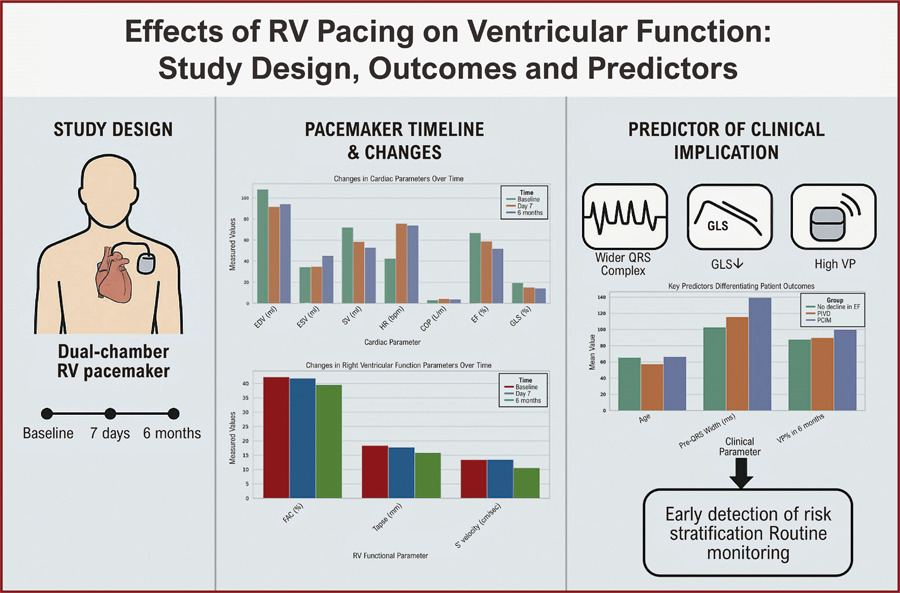
Right ventricular (RV) pacing can alter ventricular mechanics and may lead to ventricular dysfunction, even in patients with preserved baseline left ventricular ejection fraction (LVEF) and structurally normal hearts.

Objective

This study examines the hemodynamic effects of right ventricular pacing on left ventricular function and volume, and identifies early variables associated with pacemaker-induced left ventricular dysfunction and cardiomyopathy in patients with dual-chamber RV pacemakers.

Methods

The study enrolled patients undergoing dual-chamber RV pacemaker implantation without any structural abnormality of the heart. Data on biventricular functions, LV volumes, and global longitudinal strain (GLS) were collected with 2D, speckle tracking, and 3D echocardiography. Paired continuous variables were compared using two-sided tests with a significance level of 0.05.

Result

Out of 75 patients, 20 experienced LV systolic dysfunction, 15 developed PIVD, and five developed PICM. In comparison to the control group, patients with PICM had lower GLS (17.02 vs. 19.27; p<0.05), wider QRS width (139.57 vs. 102.75; p < 0.05), and greater ventricular pacing percentage (VP%; 94.32 vs. 84.03; p = 0.06).

Conclusion

RV pacing resulted in a substantial decline in LV systolic function in the short and long term. Concurrently, RV functions declined over the long term (six months). Diminished GLS at seven days, a broader pre-implantation QRS complex, and an elevation in VP% are early indicators of PIVD and PICM. Routine patient monitoring for these indicators can be beneficial for timely intervention on a case-by-case basis.

  • Artificial Pacemaker
  • Cardiomyopathies
  • Heart Failure
  • Three-Dimensional Echocardiography
Read Full Article
Creative Commons Attribution (CC BY) Creative Commons license
18/09/2026 DOI: 10.36660/abc.20250566i Views 1
Original Article

Persistent Right Ventricular Dysfunction and Hemodynamic Evolution Predict In-Hospital Deterioration in Intermediate-High- and High-Risk Pulmonary Embolism

Miguel A. Quintana et al. Joaquín Perea Ricardo Villarreal Mauricio Soto … Marildes Castro Rafael Cortês Patricio Sanhueza Iván Saavedra Yhaquelina Quispe Roger Tenezaca Roberto Colque Alexandra Arias Alex Rivera Toquica Manuel Álvarez Ysmenia D. Pérez Paola Morejón Karina G. Fernández Adriana Mogollón Marcelo Cardona Gonzalo Emanuel Pérez Arnaldo López-Ruiz

Abstract

Background

Risk stratification in acute pulmonary embolism (PE) is based primarily on findings obtained at hospital admission. However, whether serial assessment of right ventricular (RV) dysfunction and hemodynamic changes provides incremental prognostic value beyond the initial risk stratification remains uncertain.

Objectives

To evaluate longitudinal clinical and imaging variables associated with adverse in-hospital outcomes in patients with intermediate-high- and high-risk acute PE.

Methods

This prospective registry included patients with intermediate-high- and high-risk acute PE. The primary composite endpoint comprised in-hospital mortality, invasive mechanical ventilation, persistent shock or hypotension, and extracorporeal membrane oxygenation. Longitudinal variables were assessed 24-72 hours after admission. All statistical tests were two-tailed, and a p-value < 0.05 was considered statistically significant. Multivariable logistic regression models were constructed, and discriminative performance was evaluated using the area under the receiver operating characteristic curve (AUC-ROC). A prespecified missing-data analysis was performed to assess the availability of follow-up computed tomography pulmonary angiography (CTPA).

Results

The primary composite endpoint occurred in 21.2% of the 151 patients, with an in-hospital mortality rate of 9.3%. Persistent RV dysfunction on follow-up CTPA (χ2 = 15.48; p < 0.001) and follow-up systolic blood pressure (SBP; p < 0.001) were the strongest individual predictors of adverse outcomes. In the longitudinal multivariable model (n = 60), persistent RV dysfunction on follow-up CTPA (OR 9.70; 95%CI, 1.96-47.89; p = 0.005) and follow-up SBP (OR 0.90; 95%CI, 0.83-0.96; p = 0.003) remained independent predictors. The model demonstrated excellent discrimination (AUC-ROC = 0.874) and adequate calibration. The missing-data analysis showed that patients without follow-up CTPA were more severely ill at baseline, consistent with a missing not at random mechanism.

Conclusions

Reassessment of established risk markers during hospitalization may improve identification of patients who remain at high risk despite initial risk classification and treatment. Persistent RV dysfunction and lower follow-up SBP were independently associated with adverse in-hospital outcomes, which supports the use of dynamic risk stratification in acute PE.

  • Cardiogenic shock
  • Hemodynamics
  • Logistic Models
  • Prognosis
  • Pulmonary embolism
  • Reperfusion
  • Right Ventricular Dysfunction
  • Thrombectomy
Read Full Article
Creative Commons Attribution (CC BY) Creative Commons license
18/09/2026 DOI: 10.36660/abc.20260468i Views 3
Figure 1
Case Report

Hypertrophic Phenotype in an Adolescent from the Amazon Region Associated with Combined Variants in the GLA, TTR, and PRKAG2 genes

Matheus Martins Monteiro et al. Kemelly Ferreira da Silva Jessica Vanina Ortiz Marcos Leite Barbosa Ferreira … Kátia do Nascimento Couceiro Rodrigo Fernandes de Castro Fábio Fernandes João Marcos Bemfica Barbosa Ferreira Investigadores do Mapa Genoma Brasil Investigadores do Mapa Genoma Brasil Bianca Domit Wener Linnenkamp Emanuelle Leonilia Marques José Eduardo Krieger

Introduction

Hypertrophic cardiomyopathy (HCM) phenotype is defined as increased wall thickness of the left and/or right ventricle without loading conditions that explain this. Its diagnosis is confirmed by imaging tests such as echocardiogram and cardiac magnetic resonance (CMR) with the presence of wall thickness ≥ 15 mm in any myocardial segment or 13 mm in first-grade relatives of patients with a confirmed diagnosis. The most common cause of this phenotype is genetic HCM caused by mutations in genes encoding sarcomeric proteins. Most patients with HCM are asymptomatic, but some patients may present significant symptoms, and this is an important cause of sudden death in young people. However, it is important to consider other conditions known as phenocopies because they may have similar characteristics in imaging tests, but with specific etiologies that have different pathophysiological mechanisms. Among these phenocopies, we highlight mitochondrial diseases, RASopathies, muscular dystrophies, PRKAG2 syndrome, Fabry disease, and cardiac amyloidosis. Their differential diagnosis is essential because these phenocopies present specific diagnostic and therapeutic strategies that can impact the natural evolution of disease. The present report reveals the case of a young patient in which this differential diagnosis was challenging, both due to difficulties in accessing specific exams and the overlapping of diseases that made his diagnosis hard, and describes the disease distribution in his family. This patient is part of a broader research project approved by the Research Ethics Committee of the Universidade do Estado do Amazonas under approval number 7.108.530 and CAAE 55200322.5.3009.516.

[…]

  • Fabry Disease
  • Familial Amyloidosis
  • Hypertrophic Cardiomyopathy
Read Full Article
Creative Commons Attribution (CC BY) Creative Commons license
18/09/2026 DOI: 10.36660/abc.20260122i Views 2
Figure 1
Research Letter

Idiopathic Primary Chylopericardium

Camila Helena Ruffo et al. Alfredo Aurélio Marinho Rosa Filho Guilherme Lima Favaro Juliana Sayuri Maia Hirose … Raissa Matias Lewinter Natan Melillo Leonardo Izzo Silva Ramez Anbar Murilo Martins Coelho Giuliano Generoso

Introduction

Chylopericardium is a rare entity, defined by the accumulation of chyle in the pericardial space, characterized by a high concentration of triglycerides and lymphocyte predominance. It was first described in 1954, and since then, this condition has remained infrequent, with most evidence coming from case reports and small series, which hinders early recognition and standardization of management.

The main causes include congenital lymphangiectasia, iatrogenic injury after cardiac or thoracic surgery, neoplasms, trauma, infection, radiation, pulmonary hypertension, subclavian vein thrombosis, and primary or idiopathic causes. Primary chylopericardium has a variable incidence in the literature and is a diagnosis of exclusion.

[…]

  • Diagnostic Imaging
  • Pericardial Effusion
  • Pericardium
Read Full Article
Creative Commons Attribution (CC BY) Creative Commons license
18/09/2026 DOI: 10.36660/abc.20260066i Views 1
Research Letter

Cardiac Resynchronization Therapy in Cardio-Oncology: Real-World Evidence of Benefit in Cancer Patients with Heart Failure

Catarina Gregório et al. Andreia Magalhães Beatriz Silva Inês Araújo … Marta Vilela Pedro Marques João de Sousa Miguel Nobre Menezes Fausto J. Pinto Manuela Fiuza

Introduction

Heart failure (HF) is a major cause of morbidity and mortality among patients with cancer. The incidence of HF in this high-risk population is increasing, partly due to the cardiotoxic effects associated with contemporary cancer therapies. Despite substantial advances in oncological treatments and the growing number of cancer survivors, HF remains a major determinant of adverse clinical outcomes.

Cardiac resynchronization therapy (CRT) is an established treatment that improves symptoms and reduces mortality in patients with chronic HF. However, patients with a history of cancer have been frequently excluded or underrepresented in pivotal CRT trials, resulting in a significant evidence gap regarding the efficacy and safety of CRT in this population. Concerns related to comorbidities, cancer prognosis, and procedural risk may further contribute to the underutilization of CRT in clinical practice.

[…]

  • Cardiac Resynchronization Therapy
  • Cardio-Oncology
  • Heart Failure
Read Full Article
Creative Commons Attribution (CC BY) Creative Commons license
18/09/2026 DOI: 10.36660/abc.20250888i Views 1
HALP Score as a Novel Marker Associated with Coronary Collateral Circulation in Patients with Chronic Total Occlusion
Original Article

HALP Score as a Novel Marker Associated with Coronary Collateral Circulation in Patients with Chronic Total Occlusion

Hasan Akkaya et al. Muhammet Öztürk

Abstract

Background

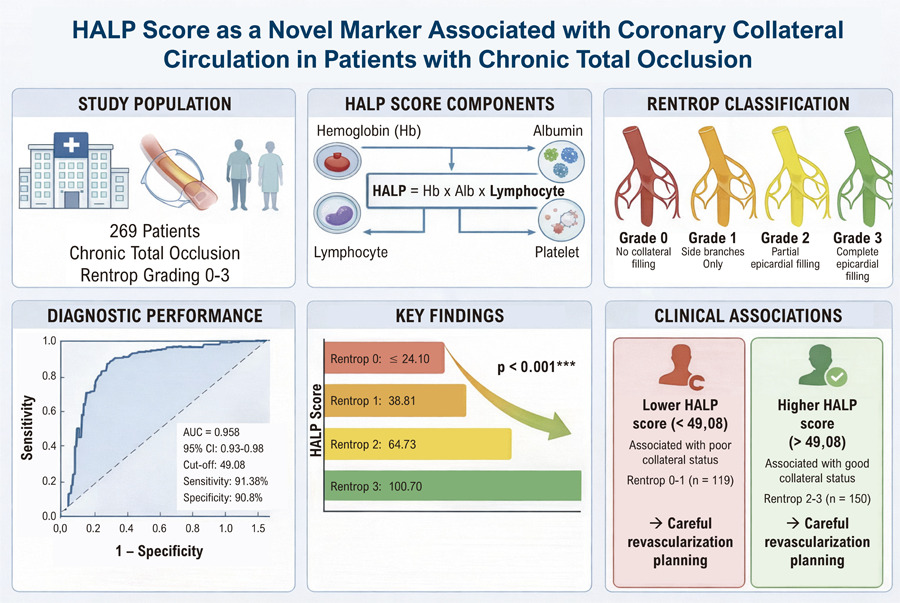
Coronary collateral circulation (CCC) is a key determinant of myocardial viability and prognosis in patients with chronic total occlusion (CTO). The hemoglobin, albumin, lymphocyte, and platelet (HALP) score reflects nutritional status, immune competence, and systemic inflammation.

Objectives

To investigate the association between HALP score and CCC in patients with CTO.

Methods

This retrospective, single-center study included 269 patients with chronic coronary syndrome and angiographically confirmed CTO. Patients were classified according to Rentrop grades and dichotomized into poor CCC (Rentrop 0–1; n=119) and good CCC (Rentrop 2–3; n=150). HALP score, inflammatory markers, atherogenic indices, and angiographic scores were compared between groups. Multivariate logistic regression and receiver operating characteristic (ROC) analyses were performed. A p-value <0.05 was considered statistically significant.

Results

HALP score increased significantly across Rentrop grades (p<0.001) and was higher in patients with good CCC than in those with poor CCC (75.52±13.91 vs. 35.10±11.29; p<0.001). In multivariable analysis, HALP score (OR:0.88, 95% CI: 0.83–0.93; p49.08 (91.3% sensitivity, 90.8% specificity). Atherogenic lipid indices were not significantly associated with CCC.

Conclusions

HALP score is an independent and readily available marker associated with CCC in CTO patients and may serve as a practical tool for risk stratification, highlighting the importance of inflammatory, nutritional, and immune pathways in collateral development.

  • Collateral Circulation
  • Coronary Occlusion
  • Inflammation
  • Prognosis
Read Full Article
Creative Commons Attribution (CC BY) Creative Commons license
17/08/2026 DOI: 10.36660/abc.20260206i Views 1
Effects of Acupuncture on Arterial Hypertension and Endothelial Dysfunction: The AHEaD Trial
Original Article

Effects of Acupuncture on Arterial Hypertension and Endothelial Dysfunction: The AHEaD Trial

Amanda Rodrigues Bitencourt et al. Ana Luiza Lima Sousa Paulo Cesar B. Veiga Jardim Alexandre Massao Yoshizumi … Mikaelle Costa Correia Priscila Valverde de Oliveira Vitorino Sandro Rogério Rodrigues Batista Weimar Kunz Sebba Barroso

Abstract

Background

Sympathetic overactivity, oxidative stress, and impaired nitric oxide (NO)-mediated vasodilation are key mechanisms involved in the pathogenesis of hypertension. Acupuncture may decrease blood pressure by modulating autonomic nervous system activity, increasing NO bioavailability, attenuating sympathoexcitatory responses, and promoting vasodilation.

Objective

To evaluate whether acupuncture decreases peripheral systolic blood pressure (pSBP), peripheral diastolic blood pressure (pDBP), central systolic blood pressure (cSBP), central diastolic blood pressure (cDBP), and pulse wave velocity (PWV), and improves flow-mediated dilation (FMD).

Methods

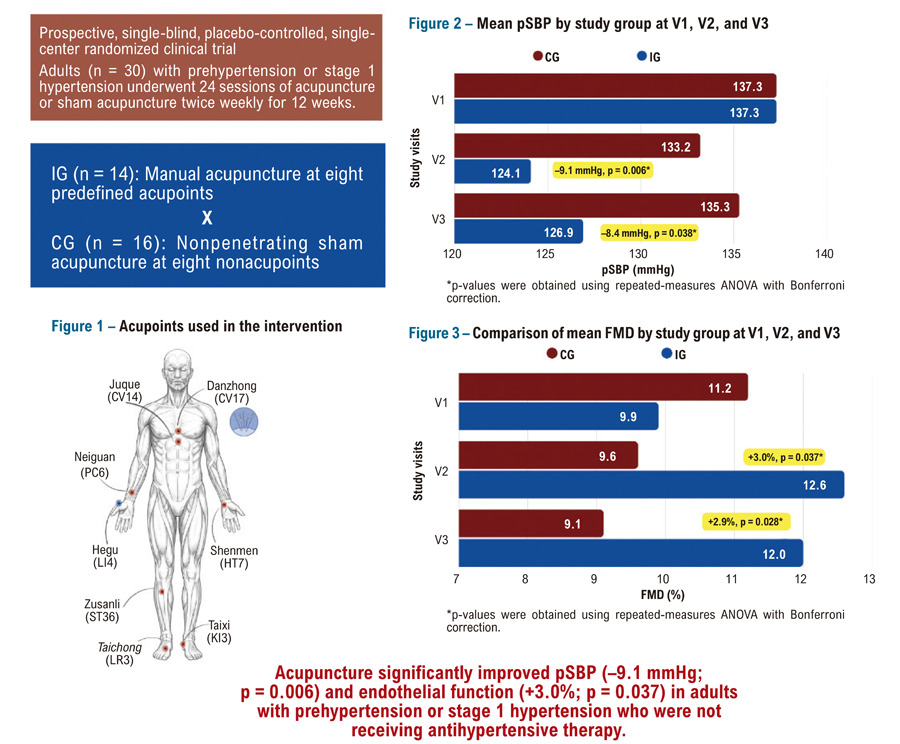
This prospective, single-blind, placebo-controlled, single-center randomized clinical trial included adults with prehypertension or stage 1 hypertension who were at low cardiovascular risk and were not receiving antihypertensive therapy. Participants were randomly assigned to an intervention group receiving manual acupuncture (n = 14) or a control group receiving nonpenetrating sham acupuncture (n = 16). Both groups underwent two 30-minute sessions per week for 12 weeks. The primary outcome was the between-group difference in pSBP measured at baseline (V1), after 12 weeks of treatment (V2), and at the 30-day end-study visit (V3). Statistical significance was defined as p < 0.05.

Results

Baseline characteristics were comparable between the groups. At V2, acupuncture decreased pSBP by 13.2 mmHg (p = 0.003) and increased FMD by 2.7% (p = 0.016). In the control group, pSBP decreased by 4.1 mmHg (p = 0.035), whereas FMD increased by 1.6% (p = 0.029). Compared with the control group, the intervention group demonstrated significantly greater improvements in pSBP (−9.1 mmHg, p = 0.006) and FMD (+3.0%, p = 0.037) at V2. These between-group differences remained significant at V3 (pSBP: −8.4 mmHg, p = 0.038; FMD: +2.9%, p = 0.028).

Conclusion

Acupuncture significantly improved endothelial function and decreased pSBP in adults with prehypertension or stage 1 hypertension who were not receiving antihypertensive therapy after 12 weeks of treatment.

  • Acupuncture
  • Hypertension
  • vascular endothelium
Read Full Article
Creative Commons Attribution (CC BY) Creative Commons license
17/08/2026 DOI: 10.36660/abc.20260462i Views 2
Risk Factors Associated with Preeclampsia and Their Impact on Maternal and Neonatal Morbidity and Mortality in the Dominican Republic
Original Article

Risk Factors Associated with Preeclampsia and Their Impact on Maternal and Neonatal Morbidity and Mortality in the Dominican Republic

Patricia Severino et al. Fulgencio Severino Rosa Cueto

Abstract

Background

Hypertensive disorders of pregnancy complicate 5%-10% of pregnancies and account for 23%-38% of maternal deaths in the Dominican Republic.

Objective

To identify factors associated with the development of preeclampsia and evaluate their relationship with maternal and perinatal morbidity and mortality.

Methods

This multicenter, prospective, observational, cross-sectional, analytical study included 469 parturients from 17 hospitals across the Dominican Republic over a 30-day period. Statistical significance was set at p < 0.05.

Results

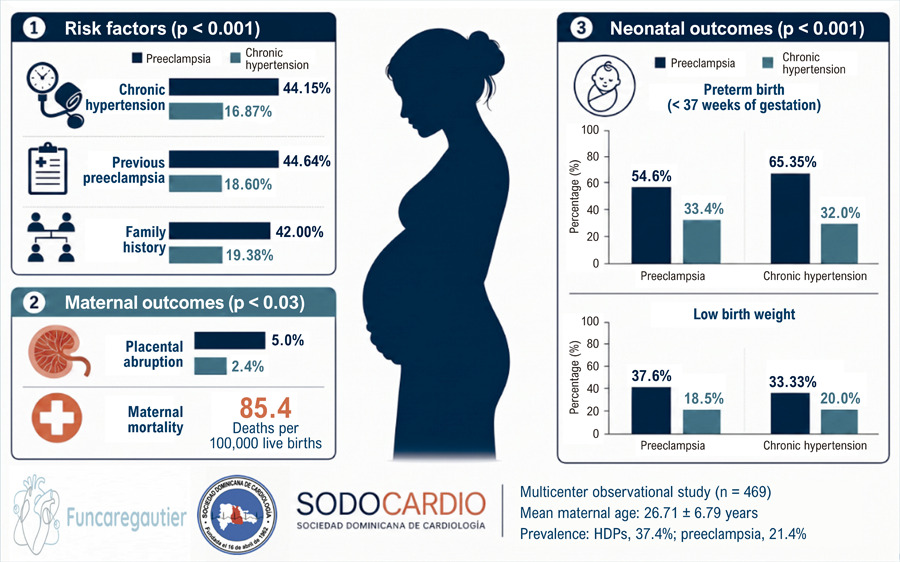
Preeclampsia was significantly associated with chronic hypertension (44.15% vs 16.87%; odds ratio [OR], 3.91; 95%CI, 2.51-6.09), previous preeclampsia (44.64% vs 18.60%; OR, 3.53; 95%CI, 2.24-5.56), and a family history of preeclampsia (42.0% vs 19.38%; OR, 3.01; 95%CI, 1.96-4.62). Preeclampsia was also associated with prematurity (54.6% vs 33.4%; OR, 2.40; 95%CI, 1.62-3.55), low birth weight (37.6% vs 18.5%; OR, 2.65; 95%CI, 1.73-4.07), and placental abruption (5.0% vs 2.4%; OR, 2.14; 95%CI, 0.81-5.62). Maternal and fetal mortality were not significantly associated with preeclampsia. In the multivariable logistic regression analysis, chronic hypertension (adjusted OR [AOR], 3.64; 95%CI, 2.25–5.88), a family history of preeclampsia (AOR, 2.86; 95%CI, 1.85-4.42), and pregestational obesity (AOR, 2.26; 95%CI, 1.52-3.36) emerged as independent predictors of preeclampsia (all p < 0.05).

Conclusion

Preeclampsia is associated with an increased risk of adverse maternal and neonatal outcomes, particularly prematurity and low birth weight.

  • Dominican Republic
  • Low Birth Weight Infant
  • Maternal mortality
  • Pre-Eclampsia
  • Pregnancy-Induced Hypertension
  • Premature Infant
Read Full Article
Creative Commons Attribution (CC BY) Creative Commons license
17/08/2026 DOI: 10.36660/abc.20260474i Views 1
Editorial

Beyond Lesion Complexity: Do We Need a New Score for Chronic Total Occlusions?

Pedro Beraldo de Andrade et al. Thyago Furquim

The Hemoglobin, Albumin, Lymphocyte, and Platelet (HALP) score is an index that combines readily available laboratory parameters and reflects an individual’s inflammatory and nutritional status. Traditionally used in oncologic and inflammatory diseases, it has recently emerged as a prognostic marker in various cardiovascular conditions, including acute coronary syndromes, heart failure, and non-valvular atrial fibrillation. Lower HALP values have been associated with a pro-inflammatory state, impaired hematologic homeostasis, and poorer nutritional status.

These factors may adversely affect vascular remodeling processes, leading to pathological angiogenesis. In this context, Akkaya and Öztürk retrospectively analyzed 269 patients with chronic total coronary occlusion identified by coronary angiography and demonstrated that the HALP score exhibited excellent discriminatory performance for the detection of well-developed collateral circulation. As reported in the current issue of the Arquivos Brasileiros de Cardiologia, the HALP score was significantly higher in patients with prominent collateral circulation compared with those with poorly developed collaterals (75.5 ± 13.9 vs. 35.1 ± 11.3; p < 0.001), and was an independent predictor of this angiographic finding (OR: 0.88; 95% CI: 0.83–0.93; p 49.08, yielding a sensitivity of 91.3% and a specificity of 90.8%. In a similar study, Süleymanoğlu et al. retrospectively evaluated 240 patients with chronic total coronary occlusion and confirmed that the HALP score was positively associated with collateral circulation quality, as assessed by the Werner classification, remaining a strong independent predictor in multivariable analysis.

[…]

  • Collateral Circulation
  • Coronary Occlusion
  • Inflammation
Read Full Article
Creative Commons Attribution (CC BY) Creative Commons license
17/08/2026 DOI: 10.36660/abc.20260506i Views 2
Cardiovascular Disease and Risk Factors in Women in Latin America and the Caribbean
Original Article

Cardiovascular Disease and Risk Factors in Women in Latin America and the Caribbean

Claudio T. Mesquita et al. Amalia Peix Diana I. Rodríguez Karen A. Dueñas-Criado … Claudia Gutiérrez-Villamil Adriana Puente Teresa Massardo Isabel Berrocal Andrea Astesiano Roberto N. Agüero Ryenne Bañolas Enrique Hiplan Mayra Sánchez Ana Ma. Barreda Vanessa V. Gómez Cynthia Fernández Silvia Portillo Yariela Herrera Aurelio Mendoza Miguel Kapitan Carlos Castellanos Enrique Estrada-Lobato Diana Paez

Abstract

Background

Cardiovascular disease (CVD) remains the leading cause of death among women in Latin America and the Caribbean (LAC), with ischemic heart disease as the primary contributor. Despite this burden, women’s health programs in the region have traditionally prioritized cancer prevention, often neglecting CVD.

Objective

To analyze the burden of CVD and the distribution of cardiovascular risk factors among women in LAC, highlighting sex-related differences and regional disparities.

Methods

This study analyzed epidemiological data on CVD mortality and cardiovascular risk factors across LAC countries, including behavioral, metabolic, and female-specific risk factors, and conducted comparisons with selected countries outside the region.

Results

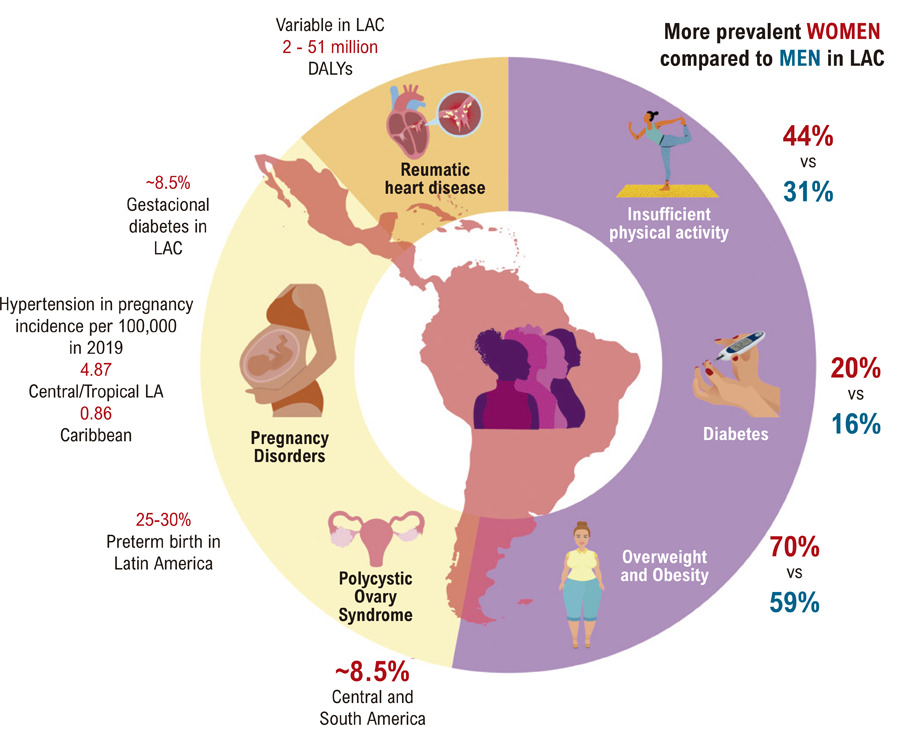
Women in LAC showed a higher prevalence of sedentary lifestyle, dyslipidemia, elevated fasting blood glucose, and overweight/obesity, whereas smoking was more frequent among men. Female-specific risk factors – such as teenage pregnancy, preterm birth, gestational diabetes, and hypertensive disorders of pregnancy – were highly prevalent yet under-recognized, largely shaped by socioeconomic determinants. In 2021, COVID-19 temporarily surpassed ischemic heart disease and stroke as the leading cause of death in the Americas (176.7 deaths per 100,000 population), highlighting the vulnerability of women with underlying cardiometabolic risk. Premature CVD mortality varied widely, with the highest female probabilities of death between ages 30 and 70 observed in Haiti (21.9%) and Guyana (15.2%), associated with poorly controlled hypertension and elevated cholesterol, respectively. In contrast, Canada showed the lowest premature mortality (1.7%), reflecting stronger healthcare systems and lower prevalence of metabolic risk factors.

Conclusion

CVD remains the leading cause of mortality among women in LAC, marked by substantial regional disparities and a significant burden of both traditional and female-specific risk factors. These findings highlight the urgent need for sex-specific, context-sensitive strategies that integrate cardiovascular prevention into comprehensive women’s health policies, moving beyond cancer-centered approaches.

  • Cardiovascular Diseases
  • Latin America
  • Multimodal Imaging
  • Women
Read Full Article
Creative Commons Attribution (CC BY) Creative Commons license
17/08/2026 DOI: 10.36660/abc.20250655i Views 1
Figure 1
Brief Communication

A Prospective Study of Lipid Profile in Incident Patients on Peritoneal Dialysis

Luiza K. R. P. Araújo et al. Dayana B. Dias Monique F. M. Santana Benedito J. Pereira … Hugo Abensur Rosa Moyses Marisa Passarelli Rosilene M. Elias

Introduction

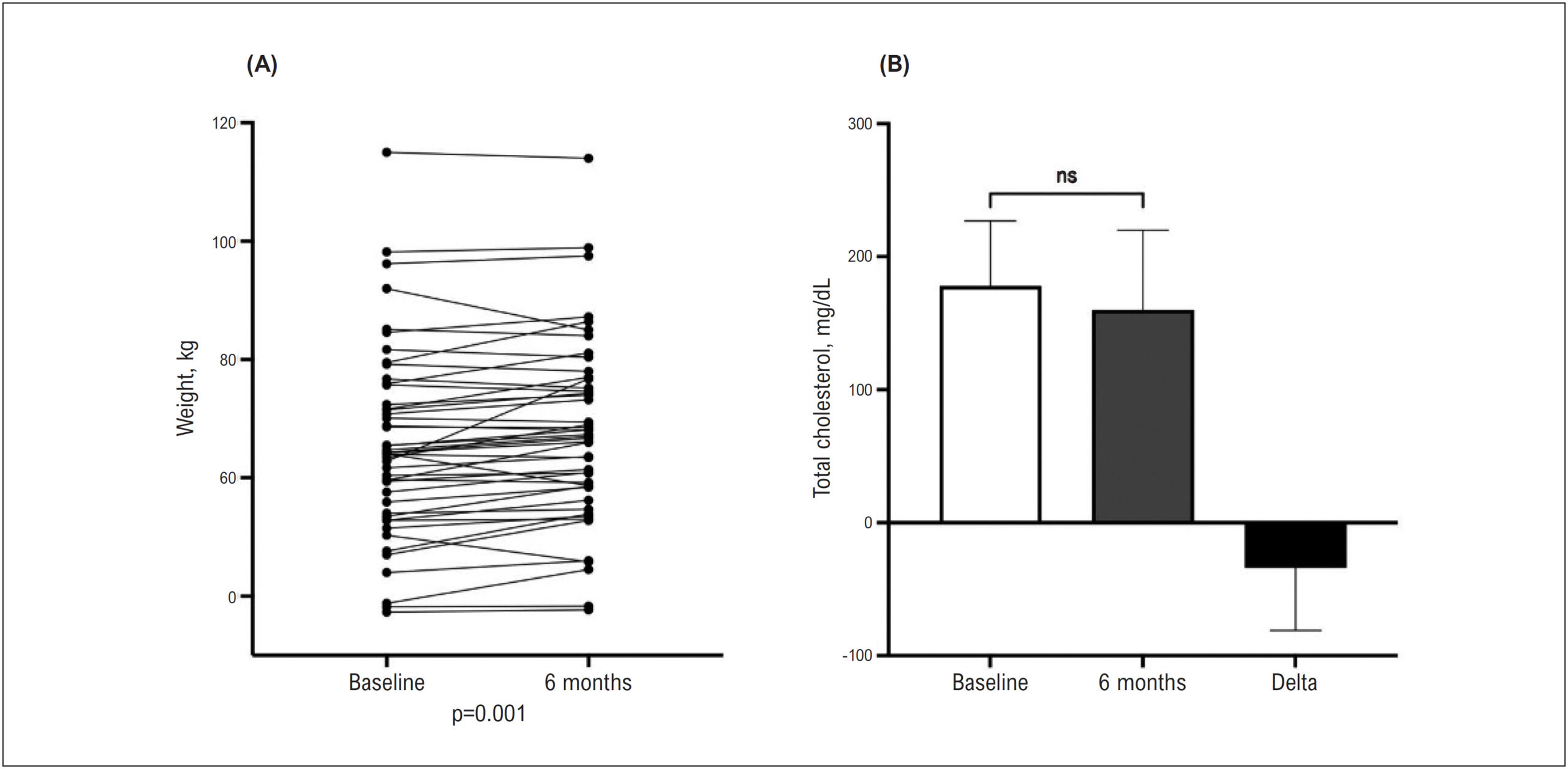
Dyslipidemia is a common metabolic complication in patients with chronic kidney disease (CKD). Although the underlying mechanisms are not fully understood, oxidative stress, inflammation, and insulin resistance are thought to contribute to accelerated atherosclerosis.

Peritoneal dialysis (PD) is a home-based therapy for patients with advanced CKD. In this modality, glucose is the predominant osmotic agent in the dialysate, leading to systemic metabolic effects., Patients undergoing PD tend to have a more atherogenic lipid profile than those receiving conservative treatment or hemodialysis. This atherogenic profile is generated both by protein loss in the dialysate and by the use of high-glucose dialysis solutions that stimulate cytokines promoting chronic inflammation.

[…]

  • Cholesterol
  • Chronic Kidney Failure
  • Dyslipidemias
Read Full Article
Creative Commons Attribution (CC BY) Creative Commons license
10/08/2026 DOI: 10.36660/abc.20260013i Views 1
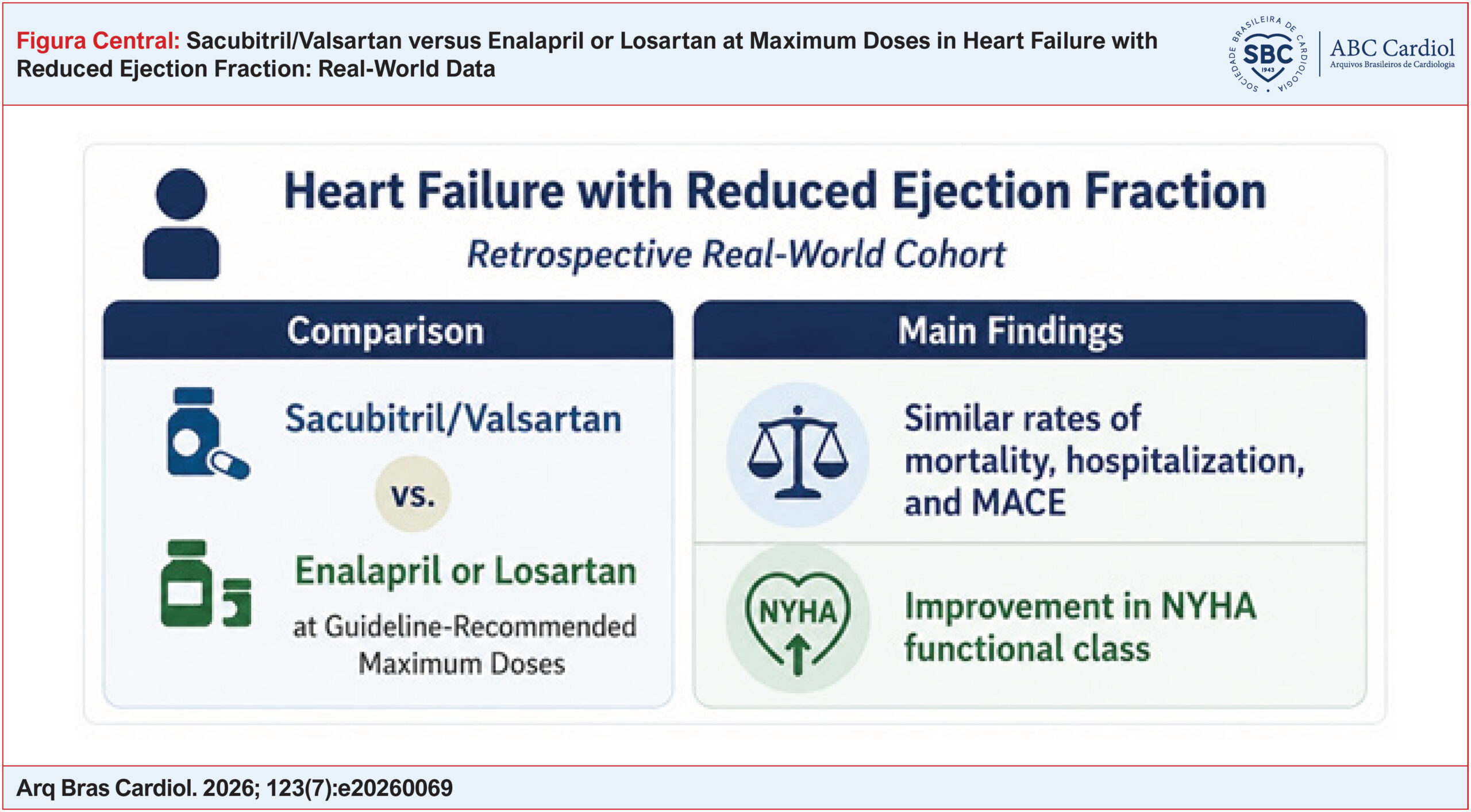
Sacubitril/Valsartan versus Enalapril or Losartan at Maximum Doses in Heart Failure with Reduced Ejection Fraction: Real-World Data
Original Article

Sacubitril/Valsartan versus Enalapril or Losartan at Maximum Doses in Heart Failure with Reduced Ejection Fraction: Real-World Data

Renato de Carvalho Barros et al. Vinícius C. Fiusa Gabrielle N. Tim Victoria T. V. Goulart … Caio Henrique M. Nascimento Gustavo T. de Moura Adriana J. B. A. Guimarães Sergio Henrique Rodolpho Ramalho Armindo Jreige Jr. Filipe A. Moura Luiz Sérgio Fernandes de Carvalho

Abstract

Background:

Sacubitril/valsartan reduced mortality and hospitalizations in patients with heart failure with reduced ejection fraction (HFrEF) compared to enalapril in pivotal clinical trials. However, real-world data under optimized dosing remain limited.

Objective:

To compare the outcomes of HFrEF patients treated with sacubitril/valsartan versus either enalapril or losartan at guideline-recommended maximum dosages.

Methods:

We analyzed data from an observational heart failure cohort (n = 2,314) including patients receiving care between August 2010 and September 2024 at six public hospitals in a large metropolitan area. The primary analysis included 254 HFrEF patients receiving the guideline-recommended maximum dosages of the investigated drugs. A sensitivity analysis included 452 patients receiving any submaximal dosages. The primary outcome was combined hospitalization or death. Baseline differences were adjusted using propensity score matching. A p-value < 0.05 was considered significant.

Results:

Among 254 HFrEF patients (mean age 63.6 ± 12.3 years, 61.4% male), 115 received sacubitril/valsartan 97/103mg twice daily, 33 enalapril 20 mg twice daily, and 106 losartan 100 mg daily. Over the median follow-up of 23.9 months (interquartile range 11.9–41.1), there were 70 primary endpoint events (56 first hospitalizations, 32 deaths). Compared to equivalent dosages of enalapril or losartan, sacubitril/valsartan was not associated with significant reductions in combined hospitalization or death (odds ratio 0.650, 95% confidence interval 0.354–1.195, p = 0.165), but it was associated with functional status improvement (odds ratio 3.902, 95% confidence interval 1.745–8.726, p = 0.001).

Conclusion:

This real-world study did not demonstrate significant reductions in hospitalization or mortality for sacubitril/valsartan compared with enalapril or losartan at guideline-recommended maximum dosages; however, sacubitril/valsartan was associated with improved functional status.

  • Enalapril
  • Systolic Heart Failure
  • Valsartan
Read Full Article
Creative Commons Attribution (CC BY) Creative Commons license
10/08/2026 DOI: 10.36660/abc.20260069i Views 1
Letter to the Editor

Pulmonary Regurgitation in Heart Failure: Causality or a Marker of Disease Severity?

Kayihan Karaman et al. Metin Karayakali

1. Severe Group Imbalance and Statistical Power

The striking disparity in group sizes—272 (No PR) and 162 (Mild PR) versus only 20 (Moderate PR) and 36 (Severe PR)—raises serious concerns about the statistical power of the multivariate models. In a multivariate model featuring five predictors (PR severity, age, LVEF, PASP, and hemoglobin), the reliability of the derived coefficients for the smaller subgroups may be compromised by the lack of statistical power. This imbalance raises additional concerns regarding the precision and stability of the reported regression coefficients (β=0.48 for pro-BNP and β=−0.39 for 6MWT). We urge the authors to report 95% confidence intervals for all beta coefficients and to consider bootstrap-based sensitivity analyses to assess the robustness.

[…]

  • Heart Failure
  • Natriuretic Peptides
  • Walk Test
Read Full Article
Creative Commons Attribution (CC BY) Creative Commons license
10/08/2026 DOI: 10.36660/abc.20260265i Views 1
Editorial

Arterial Stiffness and Functional Impairment in Post-COVID-19 Syndrome: A Multifactorial Puzzle

Mario Fritsch Neves et al. Michelle Rabello Cunha

The cross-sectional study presented in the manuscript “Arterial Stiffness, Clinical-Functional Outcomes, and Quality of Life in Post-COVID-19 Patients: A Cross-Sectional Study” contributes to our understanding of the persistent sequelae of SARS-CoV-2 infection. The authors demonstrate that individuals in the post-COVID-19 period, compared to healthy controls, have higher pulse wave velocity (PWV) values, the primary marker of arterial stiffness. They also report a higher augmentation index (AIx@75), which does not directly indicate arterial stiffness but is a parameter reflecting pulse wave reflection; this can be influenced by arterial stiffness as well as by other confounding factors. These findings are consistent with global evidence, such as the multicenter CARTESIAN study, which identified early vascular aging in survivors of the disease, with a particularly pronounced impact on women.

An intriguing aspect of the manuscript is the observation that, although PWV is elevated in the post-COVID group, the adjusted analysis suggests that this increase was predominantly driven by age and systolic blood pressure, rather than by the post-COVID-19 condition independently. On the other hand, some studies indicate that the deleterious effect of the virus on markers of arterial stiffness and endothelial function may persist for months after the acute phase has resolved.,

[…]

  • Post-Acute COVID-19 Syndrome
  • Vascular Stiffness
Read Full Article
Creative Commons Attribution (CC BY) Creative Commons license
10/08/2026 DOI: 10.36660/abc.20260519i
Editorial

Population Precision Medicine in Cardiology: Bridging Health Gaps Through Integrated Risk Stratification

Leonardo Pinto de Carvalho et al. Mark Y. Chan

Introduction

The paradigm of cardiovascular medicine is undergoing a profound transformation. For decades, the cornerstone of evidence-based cardiology has been the application of findings from large randomized clinical trials to individual patients. While this “one-size-fits-all” approach has undeniably reduced cardiovascular morbidity and mortality worldwide, it inherently assumes that the “average” patient represented in clinical trials accurately reflects the individual sitting in the consultation room. In practice, clinicians continue to struggle with substantial patient variability, delayed or imprecise diagnosis of both rare and common diseases, and treatments designed for the average patient often show limited effectiveness when applied across diverse populations.

We are now entering the era of precision medicine, which promises to replace imprecise care with data-driven strategies that integrate population-level information with molecular insights. This approach aims to generate targeted treatment and care plans based on each patient’s unique clinical, genomic, and lifestyle characteristics.

[…]

  • Cardiology
  • Integrated Risk Stratification
  • Population Precision Medicine
Read Full Article
Creative Commons Attribution (CC BY) Creative Commons license
10/08/2026 DOI: 10.36660/abc.20260546i Views 1
Erratum

Erratum: Guideline for Chronic Coronary Syndrome – 2025

In the article Cesar LAM, et al. Guideline for Chronic Coronary Syndrome – 2025. Arq Bras Cardiol. 2025;122(9). doi: https://doi.org/10.36660/abc.20250619i, two authors were added to the author list: Erika Maria Gonçalves Campana, affiliated with Hospital Universitário Pedro Ernesto, Rio de Janeiro, RJ – Brazil, included as affiliation 48; and Ricardo Stein, affiliated with Universidade Federal do Rio Grande do Sul, Porto Alegre, RS – Brazil, included as affiliation 49. In the Conflict of Interest Disclosures section (page 3), the following disclosures were added:

[…]

Read Full Article
Creative Commons Attribution (CC BY) Creative Commons license
10/08/2026 DOI: 10.36660/abc.20260565i Views 2
Arterial Stiffness, Clinical-Functional Outcomes, and Quality of Life in Post-COVID-19 Patients: A Cross-Sectional Study
Original Article

Arterial Stiffness, Clinical-Functional Outcomes, and Quality of Life in Post-COVID-19 Patients: A Cross-Sectional Study

Bruna Cavon Luna et al. Ana Cristina Lamezon Emilton Lima Junior Lêda Maria Rabelo Silvia Valderramas

Abstract

Background

Arterial remodeling leading to increased arterial stiffness involves mechanisms such as oxidative stress, reactive oxygen species production, neuroendocrine alterations, and genetic predisposition. These processes are also involved in the pathophysiology of COVID-19. However, the relationship between arterial stiffness, hemodynamic parameters, and clinical-functional outcomes in post-COVID-19 patients has not yet been adequately investigated.

Objectives

To investigate arterial stiffness, central and peripheral hemodynamic parameters, functional performance, quality of life, fatigue, dyspnea, and sleep quality in post-COVID-19 patients.

Methods

This cross-sectional study was conducted with individuals in the post-COVID-19 group (PCG) and matched individuals in the control group (n = 32). Arterial stiffness was assessed using pulse wave velocity (PWV) and the augmentation index corrected to a heart rate of 75 bpm (AIx@75). Functional performance was evaluated using the five-times sit-to-stand test, handgrip strength, quality of life (assessed with the 12-Item Short Form Survey), fatigue (assessed with the Brazilian version of the Fatigue Severity Scale), dyspnea (assessed with the modified Medical Research Council scale), and sleep quality.

Results

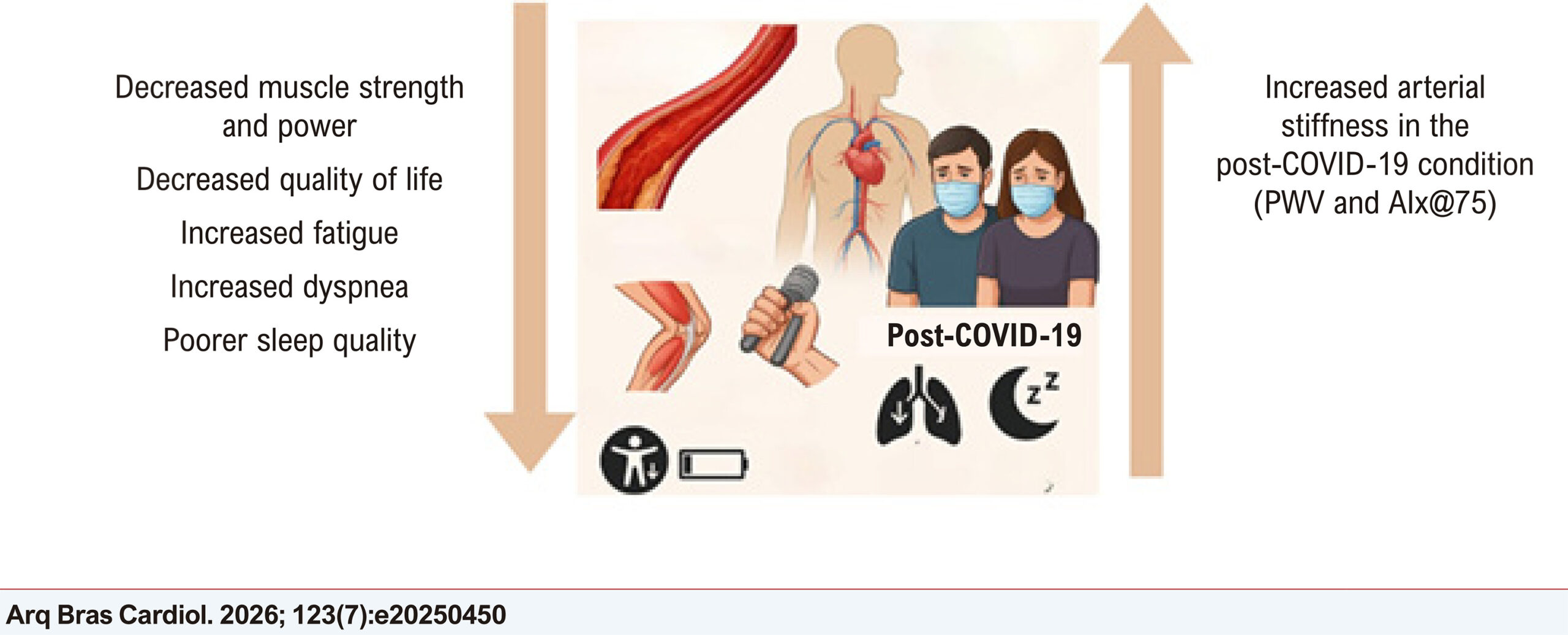
The PCG showed higher PWV values (Δ = 0.80 m/s; 95%CI, 0.08 to 1.52; p = 0.03) and AIx@75 (Δ = 8.34; 95%CI, 2.02 to 14.66; p = 0.01) as well as higher levels of central and peripheral blood pressure. Worse functional performance was observed (Δ = 4.39 s; 95%CI, 2.70 to 6.08; p < 0.01), along with poorer quality of life in the physical component (Δ = −9.35; 95%CI, −12.45 to −6.25; p < 0.01). Fatigue, dyspnea, and sleep quality outcomes were also significantly worse in the PCG. In the adjusted analysis, PWV was independently associated with age and systolic blood pressure, but not with post-COVID-19 status.

Conclusion

Post-COVID-19 patients exhibit greater arterial stiffness, hemodynamic alterations, and poorer clinical-functional performance. However, arterial stiffness appears to be predominantly determined by hemodynamic factors and aging rather than by post-COVID-19 status independently, suggesting that the observed functional impairment results from multifactorial mechanisms.

  • COVID-19
  • Hemodynamics
  • Physical Functional Performance
  • Vascular Stiffness
Read Full Article
Creative Commons Attribution (CC BY) Creative Commons license
03/08/2026 DOI: 10.36660/abc.20250450i Views 1
Figure 1
Image

Positron Emission Tomography Identification of Cardiovascular Implantable Electronic Device Infection

Raquel Montalvão et al. Margarida Matias Marisa Trabulo

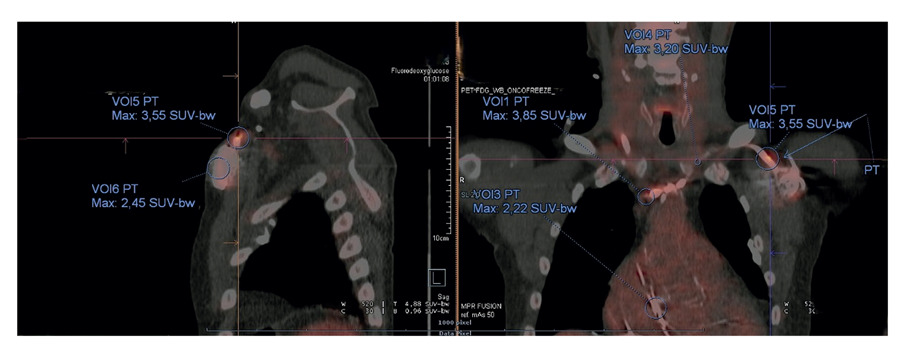
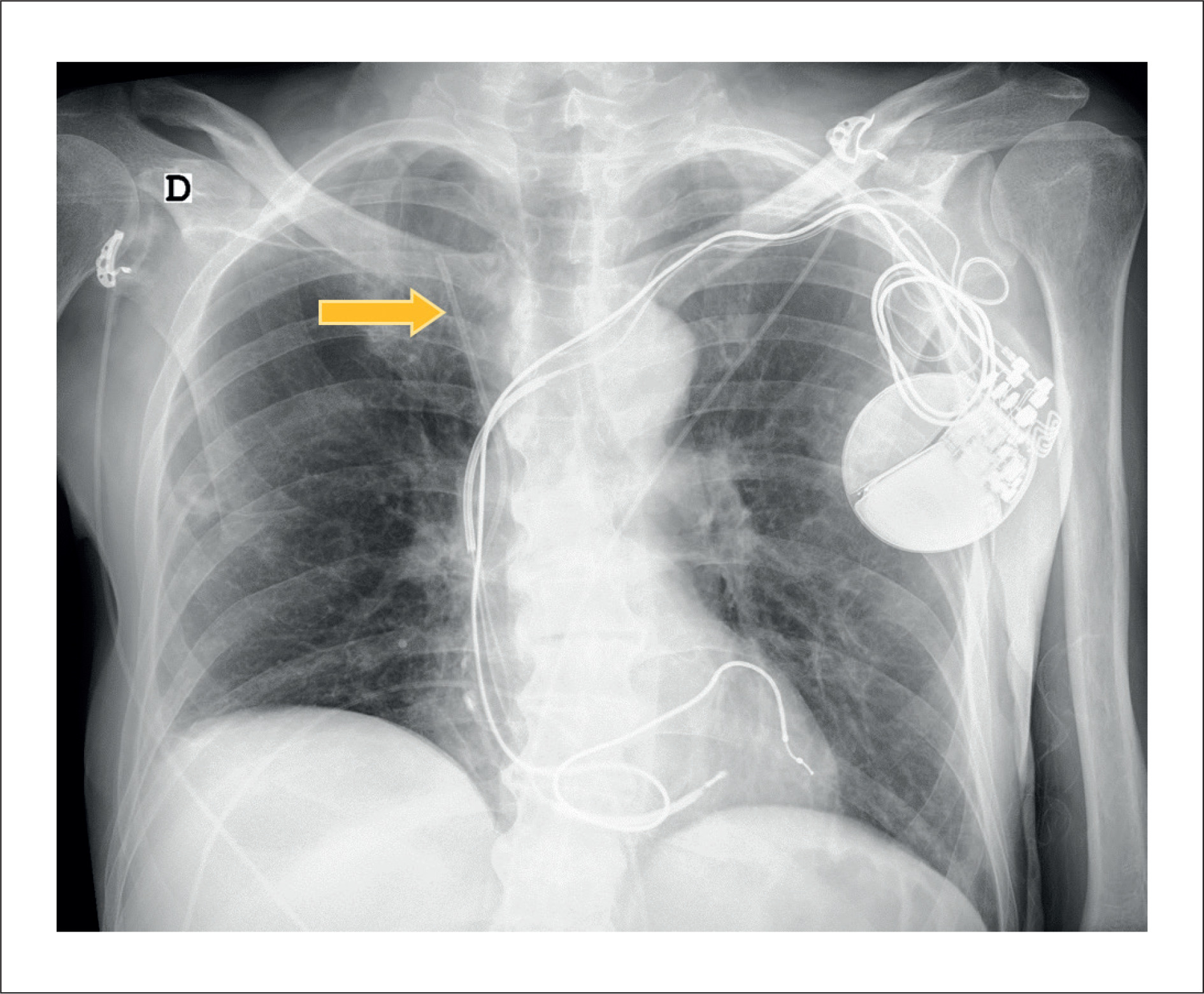
An 84-year-old man with hypertension, dyslipidemia, chronic kidney disease, permanent atrial fibrillation, and a pacemaker implanted for brady-tachy syndrome, with generator and lead replacement one year prior, presented with a 15-day fever, malaise, and fatigue. Physical examination revealed a holosystolic murmur. The skin overlying the pacemaker pocket showed no signs of inflammation. Laboratory testing showed leukocytosis with neutrophilia, C-reactive protein of 9.5 mg/dL, and procalcitonin of 1.3 ng/mL. The rapid respiratory viral panel was negative, and urinalysis was unremarkable. A pair of blood cultures yielded methicillin-susceptible Staphylococcus aureus (MSSA). Transthoracic and transesophageal echocardiography showed no valvular or lead involvement. 18F-fluorodeoxyglucose positron emission tomography /computed tomography (PET/CT) demonstrated increased uptake along the pacemaker lead and generator ( ), confirming cardiac implantable electronic device (CIED) infection. Complete system extraction was performed, and lead cultures confirmed MSSA. Three follow-up blood cultures were obtained, two before extraction and one after extraction, all of which were negative. He received 3 weeks of IV cefazolin pre-extraction and 3 weeks of IV flucloxacillin post-extraction, completing a total of 6 weeks of directed antibiotic therapy. Monitoring revealed permanent atrial fibrillation without pauses, and device reimplantation was not required.

[…]

  • Implantable Defibrillators
  • Positron Emission Tomography-Computed Tomography
Read Full Article
Creative Commons Attribution (CC BY) Creative Commons license
03/08/2026 DOI: 10.36660/abc.20260030i Views 1
Figure 1
Research Letter

Extraction of Totally Implantable Venous Access Devices Using the PISA Technique: A Small Case Series

Margarida G. Figueiredo et al. Hélder Santos Bruno Valente Mário Oliveira

Introduction

Technological progress has led to the widespread use of implantable medical devices across various conditions, significantly improving patient outcomes. In oncology, totally implantable central venous catheters (TICVCs) are commonly used to facilitate prolonged chemotherapy administration. The end of the therapy is the most common indication for removal. However, different complications associated with the use of these devices have been described, and some of them can justify their removal. Although historically performed by surgeons, removal of TICVC by interventional radiology has become much more frequent in recent decades. The removal of these devices can become technically challenging when significant fibrotic adhesion develops around the catheter tip or along its intravascular course.

The PISA technique, originally developed for extracting leads from cardiac implantable electronic devices, can be adapted for TICVC removal. It involves identification and exposure of the catheter’s proximal portion, followed by dissection to the vascular entry point. A polypropylene sheath is then advanced over the catheter using rotational motion and light traction to release adhesions and achieve complete extraction.

[…]

  • Case Reports
  • Central Venous Catheters
  • Equipment and Supplies
Read Full Article
Creative Commons Attribution (CC BY) Creative Commons license
03/08/2026 DOI: 10.36660/abc.20250569i
Artificial Intelligence Applied to Electrocardiogram-Based Cardiovascular Risk Assessment: A Systematic Review
Review Article

Artificial Intelligence Applied to Electrocardiogram-Based Cardiovascular Risk Assessment: A Systematic Review

Maria Clara Mantoan Pinheiro et al. Lívia Felberg Isadora Cristine Reis Sguizzato Bozzi Antônio Luiz Pinho Ribeiro Gabriela Miana de Mattos Paixão

Abstract

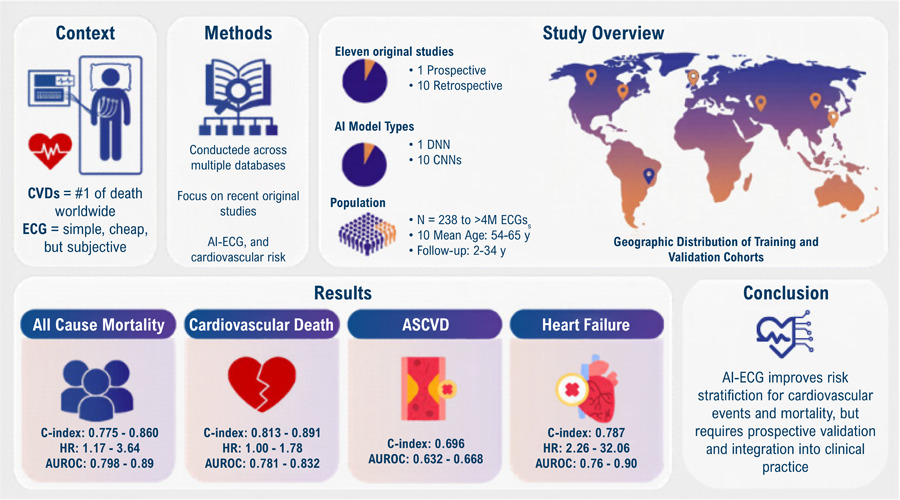
Cardiovascular diseases (CVDs) are the leading cause of mortality worldwide, underscoring the need for effective risk prediction and early detection. Although the electrocardiogram (ECG) is a widely available and low-cost diagnostic tool, its traditional interpretation is limited by subjectivity. Artificial intelligence (AI) has emerged as a promising approach, capable of extracting hidden prognostic information from ECG signals. This systematic review aimed to assess original studies applying AI techniques to ECGs for cardiovascular risk prediction and mortality. Original studies that used ECG signals as the sole input variable for AI models, focusing on cardiovascular risk outcomes, were included. A systematic search was conducted in different databases, and data were synthesized narratively. Eleven studies were included, predominantly retrospective cohorts applying convolutional neural networks (CNNs) to predict cardiovascular risk or mortality. The sample primarily consisted of adult populations in high-income countries. Primary outcomes included all-cause mortality, cardiovascular death, and major adverse cardiovascular events (MACE). Reported AUROC values ranged from 0.63 to 0.961 in training sets, with some models outperforming traditional risk scores. AI-ECG models demonstrated the potential to detect subclinical disease, enabling early risk stratification even in normal ECGs. However, challenges remain regarding population diversity, model interpretability, and prospective validation. The application of AI to ECG analysis represents a promising advancement in personalized cardiovascular risk assessment. Nonetheless, further research is needed to ensure the safety, effectiveness, and equitable clinical integration of these technologies.

  • Artificial Intelligence
  • Electrocardiography
  • Heart Disease Risk Factors
Read Full Article
Creative Commons Attribution (CC BY) Creative Commons license
03/08/2026 DOI: 10.36660/abc.20250790i
Letter to the Editor

Geometric Models in Left Main Coronary Bifurcation: Mathematical Accuracy and Clinical Limits in the Era of Intravascular Imaging

Guilherme O. Araújo et al. Henrique Barbosa Ribeiro

The geometry of coronary bifurcations plays a fundamental role in the pathophysiology of atherosclerosis and in the planning of percutaneous coronary intervention. Among these structures, the bifurcation of the left main coronary artery (LMCA) assumes singular relevance, not only due to the large myocardial territory it irrigates, but also due to the complex interaction between hemodynamic forces, vascular remodeling, and the progression of atherosclerotic disease. In this context, geometric models that estimate the diameter of the main vessel from the dimensions of the distal branches have been proposed as auxiliary tools for vessel sizing and for optimizing interventional strategies. However, studies systematically comparing these models with intravascular imaging tools, which are more precise in measuring coronary arteries, are lacking.–

Garzon et al. evaluated the reliability of the Murray, Finet, and Huo-Kassab models in estimating the dimensions of the LMCA bifurcation in arteries with moderate atherosclerosis, using quantitative coronary angiography (QCA) and Intravascular ultrasound (IVUS) as reference methods.The authors demonstrated that the Murray and Huo-Kassab models exhibit greater accuracy and precision compared to the Finet model, with the Murray model performing particularly better when IVUS is used as the reference standard. These findings are consistent with the theoretical robustness of models based on fluid dynamics principles and energy optimization, in contrast to the Finet model, which is empirically derived from angiographic fractal geometry.–

[…]

  • Angioplasty, Balloon, Coronary
  • Coronary Angiography
  • Interventional Ultrasonography
Read Full Article
Creative Commons Attribution (CC BY) Creative Commons license
03/08/2026 DOI: 10.36660/abc.20260239i Views 1

How to cite this article

EndNote RIS

Electronic Document Format (Vancouver)

Carvalho MRM. Beyond Baseline: Dynamic Prognostic Assessment in Acute Pulmonary Embolism. Arquivos Brasileiros de Cardiologia 2026;123(7):e2060580.

Electronic Document Format (ABNT)

Carvalho, Marcio Roberto Moraes de. Beyond Baseline: Dynamic Prognostic Assessment in Acute Pulmonary Embolism. Arquivos Brasileiros de Cardiologia, v. 123, n. 7, e2060580, Sep. 2026.

Electronic Document Format (APA)

Carvalho, M. R. M. (2026). Beyond Baseline: Dynamic Prognostic Assessment in Acute Pulmonary Embolism. Arquivos Brasileiros de Cardiologia, 123(7), e2060580.

Electronic Document Format (ISO)

Carvalho, Marcio Roberto Moraes de. Beyond Baseline: Dynamic Prognostic Assessment in Acute Pulmonary Embolism. Arquivos Brasileiros de Cardiologia [online]. 2026, vol. 123, n. 7, [cited 2026-10-14], e2060580. Available from: <https://journals.cardiol.br/en/article/beyond-baseline-dynamic-prognostic-assessment-in-acute-pulmonary-embolism/>. ISSN 0066-782X

EndNote RIS

Electronic Document Format (Vancouver)

Dan MC. HFREF Therapy: Randomized Evidence and Real-World Perspectives. Arquivos Brasileiros de Cardiologia 2026;123(7):e20260588.

Electronic Document Format (ABNT)

Dan, iella Motta da Costa. HFREF Therapy: Randomized Evidence and Real-World Perspectives. Arquivos Brasileiros de Cardiologia, v. 123, n. 7, e20260588, Sep. 2026.

Electronic Document Format (APA)

Dan, M. C. (2026). HFREF Therapy: Randomized Evidence and Real-World Perspectives. Arquivos Brasileiros de Cardiologia, 123(7), e20260588.

Electronic Document Format (ISO)

Dan, iella Motta da Costa. HFREF Therapy: Randomized Evidence and Real-World Perspectives. Arquivos Brasileiros de Cardiologia [online]. 2026, vol. 123, n. 7, [cited 2026-10-14], e20260588. Available from: <https://journals.cardiol.br/en/article/hfref-therapy-randomized-evidence-and-real-world-perspectives/>. ISSN 0066-782X

EndNote RIS

Electronic Document Format (Vancouver)

Villela PB, Andrade LF. Women’s Cardiovascular Health: A Current Challenge. Arquivos Brasileiros de Cardiologia 2026;123(7):e20260532.

Electronic Document Format (ABNT)

Villela, Paolo Blanco; Andrade, Larissa Franco de. Women’s Cardiovascular Health: A Current Challenge. Arquivos Brasileiros de Cardiologia, v. 123, n. 7, e20260532, Sep. 2026.

Electronic Document Format (APA)

Villela, P. B., & Andrade, L. F. (2026). Women’s Cardiovascular Health: A Current Challenge. Arquivos Brasileiros de Cardiologia, 123(7), e20260532.

Electronic Document Format (ISO)

Villela, Paolo Blanco and Andrade, Larissa Franco de. Women’s Cardiovascular Health: A Current Challenge. Arquivos Brasileiros de Cardiologia [online]. 2026, vol. 123, n. 7, [cited 2026-10-14], e20260532. Available from: <https://journals.cardiol.br/en/article/womens-cardiovascular-health-a-current-challenge/>. ISSN 0066-782X

EndNote RIS

Electronic Document Format (Vancouver)

Kumar S, Meena CB, Babbar N, Bhandari A, Shekhawat DS, Meel A. Effects of Pacemakers on Ventricular Functions and Early Variables Associated with Induced Cardiomyopathy. Arquivos Brasileiros de Cardiologia 2026;123(7):e20250566.

Electronic Document Format (ABNT)

Kumar, Sanjeev; Meena, Chandra Bhan; Babbar, Navida; Bhandari, Anil; Shekhawat, Dhananjay Singh; Meel, Ankita. Effects of Pacemakers on Ventricular Functions and Early Variables Associated with Induced Cardiomyopathy. Arquivos Brasileiros de Cardiologia, v. 123, n. 7, e20250566, Sep. 2026.

Electronic Document Format (APA)

Kumar, S., Meena, C. B., Babbar, N., Bhandari, A., Shekhawat, D. S., & Meel, A. (2026). Effects of Pacemakers on Ventricular Functions and Early Variables Associated with Induced Cardiomyopathy. Arquivos Brasileiros de Cardiologia, 123(7), e20250566.

Electronic Document Format (ISO)

Kumar, Sanjeev and Meena, Chandra Bhan and Babbar, Navida and Bhandari, Anil and Shekhawat, Dhananjay Singh and Meel, Ankita. Effects of Pacemakers on Ventricular Functions and Early Variables Associated with Induced Cardiomyopathy. Arquivos Brasileiros de Cardiologia [online]. 2026, vol. 123, n. 7, [cited 2026-10-14], e20250566. Available from: <https://journals.cardiol.br/en/article/effects-of-pacemakers-on-ventricular-functions-and-early-variables-associated-with-induced-cardiomyopathy/>. ISSN 0066-782X

EndNote RIS

Electronic Document Format (Vancouver)

Quintana MA, Perea J, Villarreal R, Soto M, Castro M, Cortês R, Sanhueza P, et al. Persistent Right Ventricular Dysfunction and Hemodynamic Evolution Predict In-Hospital Deterioration in Intermediate-High- and High-Risk Pulmonary Embolism. Arquivos Brasileiros de Cardiologia 2026;123(7):e20260468.

Electronic Document Format (ABNT)

Quintana, Miguel A.; Perea, Joaquín; Villarreal, Ricardo; Soto, Mauricio; Castro, Marildes; Cortês, Rafael; Sanhueza, Patricio; Saavedra, Iván; Quispe, Yhaquelina; Tenezaca, Roger; Colque, Roberto; Arias, Alexandra; Toquica, Alex Rivera; Álvarez, Manuel; Pérez, Ysmenia D.; Morejón, Paola; Fernández, Karina G.; Mogollón, Adriana; Cardona, Marcelo; Pérez, Gonzalo Emanuel; López-Ruiz, Arnaldo. Persistent Right Ventricular Dysfunction and Hemodynamic Evolution Predict In-Hospital Deterioration in Intermediate-High- and High-Risk Pulmonary Embolism. Arquivos Brasileiros de Cardiologia, v. 123, n. 7, e20260468, Sep. 2026.

Electronic Document Format (APA)

Quintana, M. A., Perea, J., Villarreal, R., Soto, M., Castro, M., Cortês, R., Sanhueza, P., Saavedra, I., Quispe, Y., Tenezaca, R., Colque, R., Arias, A., Toquica, A. R., Álvarez, M., Pérez, Y. D., Morejón, P., Fernández, K. G., Mogollón, A., Cardona, M., Pérez, G. E., & López-Ruiz, A. (2026). Persistent Right Ventricular Dysfunction and Hemodynamic Evolution Predict In-Hospital Deterioration in Intermediate-High- and High-Risk Pulmonary Embolism. Arquivos Brasileiros de Cardiologia, 123(7), e20260468.

Electronic Document Format (ISO)

Quintana, Miguel A. and Perea, Joaquín and Villarreal, Ricardo and Soto, Mauricio and Castro, Marildes and Cortês, Rafael and Sanhueza, Patricio and Saavedra, Iván and Quispe, Yhaquelina and Tenezaca, Roger and Colque, Roberto and Arias, Alexandra and Toquica, Alex Rivera and Álvarez, Manuel and Pérez, Ysmenia D. and Morejón, Paola and Fernández, Karina G. and Mogollón, Adriana and Cardona, Marcelo and Pérez, Gonzalo Emanuel and López-Ruiz, Arnaldo. Persistent Right Ventricular Dysfunction and Hemodynamic Evolution Predict In-Hospital Deterioration in Intermediate-High- and High-Risk Pulmonary Embolism. Arquivos Brasileiros de Cardiologia [online]. 2026, vol. 123, n. 7, [cited 2026-10-14], e20260468. Available from: <https://journals.cardiol.br/en/article/persistent-right-ventricular-dysfunction-and-hemodynamic-evolution-predict-in-hospital-deterioration-in-intermediate-high-and-high-risk-pulmonary-embolism/>. ISSN 0066-782X

EndNote RIS

Electronic Document Format (Vancouver)

Monteiro MM, Silva KF, Ortiz JV, Ferreira MLB, Couceiro KN, Castro RF, Fernandes F, et al. Hypertrophic Phenotype in an Adolescent from the Amazon Region Associated with Combined Variants in the GLA, TTR, and PRKAG2 genes. Arquivos Brasileiros de Cardiologia 2026;123(7):e20260122.

Electronic Document Format (ABNT)

Monteiro, Matheus Martins; Silva, Kemelly Ferreira da; Ortiz, Jessica Vanina; Ferreira, Marcos Leite Barbosa; Couceiro, Kátia do Nascimento; Castro, Rodrigo Fernandes de; Fernandes, Fábio; Ferreira, João Marcos Bemfica Barbosa; Brasil, Investigadores do Mapa Genoma; Brasil, Investigadores do Mapa Genoma; Linnenkamp, Bianca Domit Wener; Marques, Emanuelle Leonilia; Krieger, José Eduardo. Hypertrophic Phenotype in an Adolescent from the Amazon Region Associated with Combined Variants in the GLA, TTR, and PRKAG2 genes. Arquivos Brasileiros de Cardiologia, v. 123, n. 7, e20260122, Sep. 2026.

Electronic Document Format (APA)

Monteiro, M. M., Silva, K. F. , Ortiz, J. V., Ferreira, M. L. B., Couceiro, K. N., Castro, R. F. , Fernandes, F., Ferreira, J. M. B. B., Brasil, I. M. G., Brasil, I. M. G., Linnenkamp, B. D. W., Marques, E. L., & Krieger, J. E. (2026). Hypertrophic Phenotype in an Adolescent from the Amazon Region Associated with Combined Variants in the GLA, TTR, and PRKAG2 genes. Arquivos Brasileiros de Cardiologia, 123(7), e20260122.

Electronic Document Format (ISO)

Monteiro, Matheus Martins and Silva, Kemelly Ferreira da and Ortiz, Jessica Vanina and Ferreira, Marcos Leite Barbosa and Couceiro, Kátia do Nascimento and Castro, Rodrigo Fernandes de and Fernandes, Fábio and Ferreira, João Marcos Bemfica Barbosa and Brasil, Investigadores do Mapa Genoma and Brasil, Investigadores do Mapa Genoma and Linnenkamp, Bianca Domit Wener and Marques, Emanuelle Leonilia and Krieger, José Eduardo. Hypertrophic Phenotype in an Adolescent from the Amazon Region Associated with Combined Variants in the GLA, TTR, and PRKAG2 genes. Arquivos Brasileiros de Cardiologia [online]. 2026, vol. 123, n. 7, [cited 2026-10-14], e20260122. Available from: <https://journals.cardiol.br/en/article/hypertrophic-phenotype-in-an-adolescent-from-the-amazon-region-associated-with-combined-variants-in-the-gla-ttr-and-prkag2-genes/>. ISSN 0066-782X

EndNote RIS

Electronic Document Format (Vancouver)

Ruffo CH, Rosa Filho AAM, Favaro GL, Hirose JSM, Lewinter RM, Melillo N, Silva LI, et al. Idiopathic Primary Chylopericardium. Arquivos Brasileiros de Cardiologia 2026;123(7):e20260062.

Electronic Document Format (ABNT)

Ruffo, Camila Helena; Rosa Filho, Alfredo Aurélio Marinho; Favaro, Guilherme Lima; Hirose, Juliana Sayuri Maia; Lewinter, Raissa Matias; Melillo, Natan; Silva, Leonardo Izzo; Anbar, Ramez; Coelho, Murilo Martins; Generoso, Giuliano. Idiopathic Primary Chylopericardium. Arquivos Brasileiros de Cardiologia, v. 123, n. 7, e20260062, Sep. 2026.

Electronic Document Format (APA)

Ruffo, C. H., Rosa Filho, A. A. M., Favaro, G. L., Hirose, J. S. M., Lewinter, R. M., Melillo, N., Silva, L. I., Anbar, R., Coelho, M. M., & Generoso, G. (2026). Idiopathic Primary Chylopericardium. Arquivos Brasileiros de Cardiologia, 123(7), e20260062.

Electronic Document Format (ISO)

Ruffo, Camila Helena and Rosa Filho, Alfredo Aurélio Marinho and Favaro, Guilherme Lima and Hirose, Juliana Sayuri Maia and Lewinter, Raissa Matias and Melillo, Natan and Silva, Leonardo Izzo and Anbar, Ramez and Coelho, Murilo Martins and Generoso, Giuliano. Idiopathic Primary Chylopericardium. Arquivos Brasileiros de Cardiologia [online]. 2026, vol. 123, n. 7, [cited 2026-10-14], e20260062. Available from: <https://journals.cardiol.br/en/article/idiopathic-primary-chylopericardium/>. ISSN 0066-782X

EndNote RIS

Electronic Document Format (Vancouver)

Gregório C, Magalhães A, Silva B, Araújo I, Vilela M, Marques P, Sousa J, et al. Cardiac Resynchronization Therapy in Cardio-Oncology: Real-World Evidence of Benefit in Cancer Patients with Heart Failure. Arquivos Brasileiros de Cardiologia 2026;123(7):e20250888.

Electronic Document Format (ABNT)

Gregório, Catarina; Magalhães, Andreia; Silva, Beatriz; Araújo, Inês; Vilela, Marta; Marques, Pedro; Sousa, João de; Menezes, Miguel Nobre; Pinto, Fausto J.; Fiuza, Manuela. Cardiac Resynchronization Therapy in Cardio-Oncology: Real-World Evidence of Benefit in Cancer Patients with Heart Failure. Arquivos Brasileiros de Cardiologia, v. 123, n. 7, e20250888, Sep. 2026.

Electronic Document Format (APA)

Gregório, C., Magalhães, A., Silva, B., Araújo, I., Vilela, M., Marques, P., Sousa, J. , Menezes, M. N., Pinto, F. J., & Fiuza, M. (2026). Cardiac Resynchronization Therapy in Cardio-Oncology: Real-World Evidence of Benefit in Cancer Patients with Heart Failure. Arquivos Brasileiros de Cardiologia, 123(7), e20250888.

Electronic Document Format (ISO)

Gregório, Catarina and Magalhães, Andreia and Silva, Beatriz and Araújo, Inês and Vilela, Marta and Marques, Pedro and Sousa, João de and Menezes, Miguel Nobre and Pinto, Fausto J. and Fiuza, Manuela. Cardiac Resynchronization Therapy in Cardio-Oncology: Real-World Evidence of Benefit in Cancer Patients with Heart Failure. Arquivos Brasileiros de Cardiologia [online]. 2026, vol. 123, n. 7, [cited 2026-10-14], e20250888. Available from: <https://journals.cardiol.br/en/article/cardiac-resynchronization-therapy-in-cardio-oncology-real-world-evidence-of-benefit-in-cancer-patients-with-heart-failure/>. ISSN 0066-782X

EndNote RIS

Electronic Document Format (Vancouver)

Akkaya H, Öztürk M. HALP Score as a Novel Marker Associated with Coronary Collateral Circulation in Patients with Chronic Total Occlusion. Arquivos Brasileiros de Cardiologia 2026;123(7):e20260206.

Electronic Document Format (ABNT)

Akkaya, Hasan; Öztürk, Muhammet. HALP Score as a Novel Marker Associated with Coronary Collateral Circulation in Patients with Chronic Total Occlusion. Arquivos Brasileiros de Cardiologia, v. 123, n. 7, e20260206, Aug. 2026.

Electronic Document Format (APA)

Akkaya, H., & Öztürk, M. (2026). HALP Score as a Novel Marker Associated with Coronary Collateral Circulation in Patients with Chronic Total Occlusion. Arquivos Brasileiros de Cardiologia, 123(7), e20260206.

Electronic Document Format (ISO)

Akkaya, Hasan and Öztürk, Muhammet. HALP Score as a Novel Marker Associated with Coronary Collateral Circulation in Patients with Chronic Total Occlusion. Arquivos Brasileiros de Cardiologia [online]. 2026, vol. 123, n. 7, [cited 2026-10-14], e20260206. Available from: <https://journals.cardiol.br/en/article/halp-score-as-a-novel-marker-associated-with-coronary-collateral-circulation-in-patients-with-chronic-total-occlusion/>. ISSN 0066-782X

EndNote RIS

Electronic Document Format (Vancouver)

Bitencourt AR, Sousa ALL, Jardim PCBV, Yoshizumi AM, Correia MC, Vitorino PVO, Batista SRR, et al. Effects of Acupuncture on Arterial Hypertension and Endothelial Dysfunction: The AHEaD Trial. Arquivos Brasileiros de Cardiologia 2026;123(7):e20260462.

Electronic Document Format (ABNT)

Bitencourt, Amanda Rodrigues; Sousa, Ana Luiza Lima; Jardim, Paulo Cesar B. Veiga; Yoshizumi, Alexandre Massao; Correia, Mikaelle Costa; Vitorino, Priscila Valverde de Oliveira; Batista, Sandro Rogério Rodrigues; Barroso, Weimar Kunz Sebba. Effects of Acupuncture on Arterial Hypertension and Endothelial Dysfunction: The AHEaD Trial. Arquivos Brasileiros de Cardiologia, v. 123, n. 7, e20260462, Aug. 2026.

Electronic Document Format (APA)

Bitencourt, A. R., Sousa, A. L. L., Jardim, P. C. B. V., Yoshizumi, A. M., Correia, M. C., Vitorino, P. V. O., Batista, S. R. R., & Barroso, W. K. S. (2026). Effects of Acupuncture on Arterial Hypertension and Endothelial Dysfunction: The AHEaD Trial. Arquivos Brasileiros de Cardiologia, 123(7), e20260462.

Electronic Document Format (ISO)

Bitencourt, Amanda Rodrigues and Sousa, Ana Luiza Lima and Jardim, Paulo Cesar B. Veiga and Yoshizumi, Alexandre Massao and Correia, Mikaelle Costa and Vitorino, Priscila Valverde de Oliveira and Batista, Sandro Rogério Rodrigues and Barroso, Weimar Kunz Sebba. Effects of Acupuncture on Arterial Hypertension and Endothelial Dysfunction: The AHEaD Trial. Arquivos Brasileiros de Cardiologia [online]. 2026, vol. 123, n. 7, [cited 2026-10-14], e20260462. Available from: <https://journals.cardiol.br/en/article/effects-of-acupuncture-on-arterial-hypertension-and-endothelial-dysfunction-the-ahead-trial/>. ISSN 0066-782X

EndNote RIS

Electronic Document Format (Vancouver)

Severino P, Severino F, Cueto R. Risk Factors Associated with Preeclampsia and Their Impact on Maternal and Neonatal Morbidity and Mortality in the Dominican Republic. Arquivos Brasileiros de Cardiologia 2026;123(7):e20260474.

Electronic Document Format (ABNT)

Severino, Patricia; Severino, Fulgencio; Cueto, Rosa. Risk Factors Associated with Preeclampsia and Their Impact on Maternal and Neonatal Morbidity and Mortality in the Dominican Republic. Arquivos Brasileiros de Cardiologia, v. 123, n. 7, e20260474, Aug. 2026.

Electronic Document Format (APA)

Severino, P., Severino, F., & Cueto, R. (2026). Risk Factors Associated with Preeclampsia and Their Impact on Maternal and Neonatal Morbidity and Mortality in the Dominican Republic. Arquivos Brasileiros de Cardiologia, 123(7), e20260474.

Electronic Document Format (ISO)

Severino, Patricia and Severino, Fulgencio and Cueto, Rosa. Risk Factors Associated with Preeclampsia and Their Impact on Maternal and Neonatal Morbidity and Mortality in the Dominican Republic. Arquivos Brasileiros de Cardiologia [online]. 2026, vol. 123, n. 7, [cited 2026-10-14], e20260474. Available from: <https://journals.cardiol.br/en/article/risk-factors-associated-with-preeclampsia-and-their-impact-on-maternal-and-neonatal-morbidity-and-mortality-in-the-dominican-republic/>. ISSN 0066-782X

EndNote RIS

Electronic Document Format (Vancouver)

Andrade PB, Furquim T. Beyond Lesion Complexity: Do We Need a New Score for Chronic Total Occlusions?. Arquivos Brasileiros de Cardiologia 2026;123(7):e20260506.

Electronic Document Format (ABNT)

Andrade, Pedro Beraldo de; Furquim, Thyago. Beyond Lesion Complexity: Do We Need a New Score for Chronic Total Occlusions?. Arquivos Brasileiros de Cardiologia, v. 123, n. 7, e20260506, Aug. 2026.

Electronic Document Format (APA)

Andrade, P. B. , & Furquim, T. (2026). Beyond Lesion Complexity: Do We Need a New Score for Chronic Total Occlusions?. Arquivos Brasileiros de Cardiologia, 123(7), e20260506.

Electronic Document Format (ISO)

Andrade, Pedro Beraldo de and Furquim, Thyago. Beyond Lesion Complexity: Do We Need a New Score for Chronic Total Occlusions?. Arquivos Brasileiros de Cardiologia [online]. 2026, vol. 123, n. 7, [cited 2026-10-14], e20260506. Available from: <https://journals.cardiol.br/en/article/beyond-lesion-complexity-do-we-need-a-new-score-for-chronic-total-occlusions/>. ISSN 0066-782X

EndNote RIS

Electronic Document Format (Vancouver)

Mesquita CT, Peix A, Rodríguez DI, Dueñas-Criado KA, Gutiérrez-Villamil C, Puente A, Massardo T, et al. Cardiovascular Disease and Risk Factors in Women in Latin America and the Caribbean. Arquivos Brasileiros de Cardiologia 2026;123(7):e20250655.

Electronic Document Format (ABNT)

Mesquita, Claudio T.; Peix, Amalia; Rodríguez, Diana I.; Dueñas-Criado, Karen A.; Gutiérrez-Villamil, Claudia; Puente, Adriana; Massardo, Teresa; Berrocal, Isabel; Astesiano, Andrea; Agüero, Roberto N.; Bañolas, Ryenne; Hiplan, Enrique; Sánchez, Mayra; Barreda, Ana Ma.; Gómez, Vanessa V.; Fernández, Cynthia; Portillo, Silvia; Herrera, Yariela; Mendoza, Aurelio; Kapitan, Miguel; Castellanos, Carlos; Estrada-Lobato, Enrique; Paez, Diana. Cardiovascular Disease and Risk Factors in Women in Latin America and the Caribbean. Arquivos Brasileiros de Cardiologia, v. 123, n. 7, e20250655, Aug. 2026.

Electronic Document Format (APA)

Mesquita, C. T., Peix, A., Rodríguez, D. I., Dueñas-Criado, K. A., Gutiérrez-Villamil, C., Puente, A., Massardo, T., Berrocal, I., Astesiano, A., Agüero, R. N., Bañolas, R., Hiplan, E., Sánchez, M., Barreda, A. M., Gómez, V. V., Fernández, C., Portillo, S., Herrera, Y., Mendoza, A., Kapitan, M., Castellanos, C., Estrada-Lobato, E., & Paez, D. (2026). Cardiovascular Disease and Risk Factors in Women in Latin America and the Caribbean. Arquivos Brasileiros de Cardiologia, 123(7), e20250655.

Electronic Document Format (ISO)

Mesquita, Claudio T. and Peix, Amalia and Rodríguez, Diana I. and Dueñas-Criado, Karen A. and Gutiérrez-Villamil, Claudia and Puente, Adriana and Massardo, Teresa and Berrocal, Isabel and Astesiano, Andrea and Agüero, Roberto N. and Bañolas, Ryenne and Hiplan, Enrique and Sánchez, Mayra and Barreda, Ana Ma. and Gómez, Vanessa V. and Fernández, Cynthia and Portillo, Silvia and Herrera, Yariela and Mendoza, Aurelio and Kapitan, Miguel and Castellanos, Carlos and Estrada-Lobato, Enrique and Paez, Diana. Cardiovascular Disease and Risk Factors in Women in Latin America and the Caribbean. Arquivos Brasileiros de Cardiologia [online]. 2026, vol. 123, n. 7, [cited 2026-10-14], e20250655. Available from: <https://journals.cardiol.br/en/article/cardiovascular-disease-and-risk-factors-in-women-in-latin-america-and-the-caribbean/>. ISSN 0066-782X

EndNote RIS

Electronic Document Format (Vancouver)

Araújo LKRP, Dias DB, Santana MFM, Pereira BJ, Abensur H, Moyses R, Passarelli M, et al. A Prospective Study of Lipid Profile in Incident Patients on Peritoneal Dialysis. Arquivos Brasileiros de Cardiologia 2026;123(7):e20260013.

Electronic Document Format (ABNT)

Araújo, Luiza K. R. P.; Dias, Dayana B.; Santana, Monique F. M.; Pereira, Benedito J.; Abensur, Hugo; Moyses, Rosa; Passarelli, Marisa; Elias, Rosilene M.. A Prospective Study of Lipid Profile in Incident Patients on Peritoneal Dialysis. Arquivos Brasileiros de Cardiologia, v. 123, n. 7, e20260013, Aug. 2026.

Electronic Document Format (APA)

Araújo, L. K. R. P., Dias, D. B., Santana, M. F. M., Pereira, B. J., Abensur, H., Moyses, R., Passarelli, M., & Elias, R. M. (2026). A Prospective Study of Lipid Profile in Incident Patients on Peritoneal Dialysis. Arquivos Brasileiros de Cardiologia, 123(7), e20260013.

Electronic Document Format (ISO)

Araújo, Luiza K. R. P. and Dias, Dayana B. and Santana, Monique F. M. and Pereira, Benedito J. and Abensur, Hugo and Moyses, Rosa and Passarelli, Marisa and Elias, Rosilene M.. A Prospective Study of Lipid Profile in Incident Patients on Peritoneal Dialysis. Arquivos Brasileiros de Cardiologia [online]. 2026, vol. 123, n. 7, [cited 2026-10-14], e20260013. Available from: <https://journals.cardiol.br/en/article/a-prospective-study-of-lipid-profile-in-incident-patients-on-peritoneal-dialysis/>. ISSN 0066-782X

EndNote RIS

Electronic Document Format (Vancouver)

Barros RC, Fiusa VC, Tim GN, Goulart VTV, Nascimento CHM, Moura GT, Guimarães AJBA, et al. Sacubitril/Valsartan versus Enalapril or Losartan at Maximum Doses in Heart Failure with Reduced Ejection Fraction: Real-World Data. Arquivos Brasileiros de Cardiologia 2026;123(7):e20260069.

Electronic Document Format (ABNT)

Barros, Renato de Carvalho; Fiusa, Vinícius C.; Tim, Gabrielle N.; Goulart, Victoria T. V.; Nascimento, Caio Henrique M.; Moura, Gustavo T. de; Guimarães, Adriana J. B. A.; Ramalho, Sergio Henrique Rodolpho; Jreige Jr., Armindo; Moura, Filipe A.; Carvalho, Luiz Sérgio Fernandes de. Sacubitril/Valsartan versus Enalapril or Losartan at Maximum Doses in Heart Failure with Reduced Ejection Fraction: Real-World Data. Arquivos Brasileiros de Cardiologia, v. 123, n. 7, e20260069, Aug. 2026.

Electronic Document Format (APA)

Barros, R. C., Fiusa, V. C., Tim, G. N., Goulart, V. T. V., Nascimento, C. H. M., Moura, G. T. , Guimarães, A. J. B. A., Ramalho, S. H. R., Jreige Jr., A., Moura, F. A., & Carvalho, L. S. F. (2026). Sacubitril/Valsartan versus Enalapril or Losartan at Maximum Doses in Heart Failure with Reduced Ejection Fraction: Real-World Data. Arquivos Brasileiros de Cardiologia, 123(7), e20260069.

Electronic Document Format (ISO)

Barros, Renato de Carvalho and Fiusa, Vinícius C. and Tim, Gabrielle N. and Goulart, Victoria T. V. and Nascimento, Caio Henrique M. and Moura, Gustavo T. de and Guimarães, Adriana J. B. A. and Ramalho, Sergio Henrique Rodolpho and Jreige Jr., Armindo and Moura, Filipe A. and Carvalho, Luiz Sérgio Fernandes de. Sacubitril/Valsartan versus Enalapril or Losartan at Maximum Doses in Heart Failure with Reduced Ejection Fraction: Real-World Data. Arquivos Brasileiros de Cardiologia [online]. 2026, vol. 123, n. 7, [cited 2026-10-14], e20260069. Available from: <https://journals.cardiol.br/en/article/sacubitril-valsartan-versus-enalapril-or-losartan-at-maximum-doses-in-heart-failure-with-reduced-ejection-fraction-real-world-data/>. ISSN 0066-782X

EndNote RIS

Electronic Document Format (Vancouver)

Karaman K, Karayakali M. Pulmonary Regurgitation in Heart Failure: Causality or a Marker of Disease Severity?. Arquivos Brasileiros de Cardiologia 2026;123(7):e20260265.

Electronic Document Format (ABNT)

Karaman, Kayihan; Karayakali, Metin. Pulmonary Regurgitation in Heart Failure: Causality or a Marker of Disease Severity?. Arquivos Brasileiros de Cardiologia, v. 123, n. 7, e20260265, Aug. 2026.

Electronic Document Format (APA)

Karaman, K., & Karayakali, M. (2026). Pulmonary Regurgitation in Heart Failure: Causality or a Marker of Disease Severity?. Arquivos Brasileiros de Cardiologia, 123(7), e20260265.

Electronic Document Format (ISO)

Karaman, Kayihan and Karayakali, Metin. Pulmonary Regurgitation in Heart Failure: Causality or a Marker of Disease Severity?. Arquivos Brasileiros de Cardiologia [online]. 2026, vol. 123, n. 7, [cited 2026-10-14], e20260265. Available from: <https://journals.cardiol.br/en/article/pulmonary-regurgitation-in-heart-failure-causality-or-a-marker-of-disease-severity/>. ISSN 0066-782X

EndNote RIS

Electronic Document Format (Vancouver)

Neves MF, Cunha MR. Arterial Stiffness and Functional Impairment in Post-COVID-19 Syndrome: A Multifactorial Puzzle. Arquivos Brasileiros de Cardiologia 2026;123(7):e20260519.

Electronic Document Format (ABNT)

Neves, Mario Fritsch; Cunha, Michelle Rabello. Arterial Stiffness and Functional Impairment in Post-COVID-19 Syndrome: A Multifactorial Puzzle. Arquivos Brasileiros de Cardiologia, v. 123, n. 7, e20260519, Aug. 2026.

Electronic Document Format (APA)

Neves, M. F., & Cunha, M. R. (2026). Arterial Stiffness and Functional Impairment in Post-COVID-19 Syndrome: A Multifactorial Puzzle. Arquivos Brasileiros de Cardiologia, 123(7), e20260519.

Electronic Document Format (ISO)

Neves, Mario Fritsch and Cunha, Michelle Rabello. Arterial Stiffness and Functional Impairment in Post-COVID-19 Syndrome: A Multifactorial Puzzle. Arquivos Brasileiros de Cardiologia [online]. 2026, vol. 123, n. 7, [cited 2026-10-14], e20260519. Available from: <https://journals.cardiol.br/en/article/arterial-stiffness-and-functional-impairment-in-post-covid-19-syndrome-a-multifactorial-puzzle/>. ISSN 0066-782X

EndNote RIS

Electronic Document Format (Vancouver)

Carvalho LP, Chan MY. Population Precision Medicine in Cardiology: Bridging Health Gaps Through Integrated Risk Stratification. Arquivos Brasileiros de Cardiologia 2026;123(7):e20260546.

Electronic Document Format (ABNT)

Carvalho, Leonardo Pinto de; Chan, Mark Y.. Population Precision Medicine in Cardiology: Bridging Health Gaps Through Integrated Risk Stratification. Arquivos Brasileiros de Cardiologia, v. 123, n. 7, e20260546, Aug. 2026.

Electronic Document Format (APA)

Carvalho, L. P. , & Chan, M. Y. (2026). Population Precision Medicine in Cardiology: Bridging Health Gaps Through Integrated Risk Stratification. Arquivos Brasileiros de Cardiologia, 123(7), e20260546.

Electronic Document Format (ISO)

Carvalho, Leonardo Pinto de and Chan, Mark Y.. Population Precision Medicine in Cardiology: Bridging Health Gaps Through Integrated Risk Stratification. Arquivos Brasileiros de Cardiologia [online]. 2026, vol. 123, n. 7, [cited 2026-10-14], e20260546. Available from: <https://journals.cardiol.br/en/article/population-precision-medicine-in-cardiology-bridging-health-gaps-through-integrated-risk-stratification/>. ISSN 0066-782X

EndNote RIS

Electronic Document Format (Vancouver)

. Erratum: Guideline for Chronic Coronary Syndrome – 2025. Arquivos Brasileiros de Cardiologia 2026;123(7):e20260565.

Electronic Document Format (ABNT)

. Erratum: Guideline for Chronic Coronary Syndrome – 2025. Arquivos Brasileiros de Cardiologia, v. 123, n. 7, e20260565, Aug. 2026.

Electronic Document Format (APA)

(2026). Erratum: Guideline for Chronic Coronary Syndrome – 2025. Arquivos Brasileiros de Cardiologia, 123(7), e20260565.

Electronic Document Format (ISO)

. Erratum: Guideline for Chronic Coronary Syndrome – 2025. Arquivos Brasileiros de Cardiologia [online]. 2026, vol. 123, n. 7, [cited 2026-10-14], e20260565. Available from: <https://journals.cardiol.br/en/article/erratum-guideline-for-chronic-coronary-syndrome-2025/>. ISSN 0066-782X

EndNote RIS

Electronic Document Format (Vancouver)

Luna BC, Lamezon AC, Lima Junior E, Rabelo LM, Valderramas S. Arterial Stiffness, Clinical-Functional Outcomes, and Quality of Life in Post-COVID-19 Patients: A Cross-Sectional Study. Arquivos Brasileiros de Cardiologia 2026;123(7):e20250450.

Electronic Document Format (ABNT)

Luna, Bruna Cavon; Lamezon, Ana Cristina; Lima Junior, Emilton; Rabelo, Lêda Maria; Valderramas, Silvia. Arterial Stiffness, Clinical-Functional Outcomes, and Quality of Life in Post-COVID-19 Patients: A Cross-Sectional Study. Arquivos Brasileiros de Cardiologia, v. 123, n. 7, e20250450, Aug. 2026.

Electronic Document Format (APA)

Luna, B. C., Lamezon, A. C., Lima Junior, E., Rabelo, L. M., & Valderramas, S. (2026). Arterial Stiffness, Clinical-Functional Outcomes, and Quality of Life in Post-COVID-19 Patients: A Cross-Sectional Study. Arquivos Brasileiros de Cardiologia, 123(7), e20250450.

Electronic Document Format (ISO)

Luna, Bruna Cavon and Lamezon, Ana Cristina and Lima Junior, Emilton and Rabelo, Lêda Maria and Valderramas, Silvia. Arterial Stiffness, Clinical-Functional Outcomes, and Quality of Life in Post-COVID-19 Patients: A Cross-Sectional Study. Arquivos Brasileiros de Cardiologia [online]. 2026, vol. 123, n. 7, [cited 2026-10-14], e20250450. Available from: <https://journals.cardiol.br/en/article/arterial-stiffness-clinical-functional-outcomes-and-quality-of-life-in-post-covid-19-patients-a-cross-sectional-study/>. ISSN 0066-782X

EndNote RIS

Electronic Document Format (Vancouver)

Montalvão R, Matias M, Trabulo M. Positron Emission Tomography Identification of Cardiovascular Implantable Electronic Device Infection. Arquivos Brasileiros de Cardiologia 2026;123(7):e20260030.

Electronic Document Format (ABNT)

Montalvão, Raquel; Matias, Margarida; Trabulo, Marisa. Positron Emission Tomography Identification of Cardiovascular Implantable Electronic Device Infection. Arquivos Brasileiros de Cardiologia, v. 123, n. 7, e20260030, Aug. 2026.

Electronic Document Format (APA)

Montalvão, R., Matias, M., & Trabulo, M. (2026). Positron Emission Tomography Identification of Cardiovascular Implantable Electronic Device Infection. Arquivos Brasileiros de Cardiologia, 123(7), e20260030.

Electronic Document Format (ISO)

Montalvão, Raquel and Matias, Margarida and Trabulo, Marisa. Positron Emission Tomography Identification of Cardiovascular Implantable Electronic Device Infection. Arquivos Brasileiros de Cardiologia [online]. 2026, vol. 123, n. 7, [cited 2026-10-14], e20260030. Available from: <https://journals.cardiol.br/en/article/positron-emission-tomography-identification-of-cardiovascular-implantable-electronic-device-infection/>. ISSN 0066-782X

EndNote RIS

Electronic Document Format (Vancouver)

Figueiredo MG, Santos H, Valente B, Oliveira M. Extraction of Totally Implantable Venous Access Devices Using the PISA Technique: A Small Case Series. Arquivos Brasileiros de Cardiologia 2026;123(7):e20250569.

Electronic Document Format (ABNT)

Figueiredo, Margarida G.; Santos, Hélder; Valente, Bruno; Oliveira, Mário. Extraction of Totally Implantable Venous Access Devices Using the PISA Technique: A Small Case Series. Arquivos Brasileiros de Cardiologia, v. 123, n. 7, e20250569, Aug. 2026.

Electronic Document Format (APA)

Figueiredo, M. G., Santos, H., Valente, B., & Oliveira, M. (2026). Extraction of Totally Implantable Venous Access Devices Using the PISA Technique: A Small Case Series. Arquivos Brasileiros de Cardiologia, 123(7), e20250569.

Electronic Document Format (ISO)

Figueiredo, Margarida G. and Santos, Hélder and Valente, Bruno and Oliveira, Mário. Extraction of Totally Implantable Venous Access Devices Using the PISA Technique: A Small Case Series. Arquivos Brasileiros de Cardiologia [online]. 2026, vol. 123, n. 7, [cited 2026-10-14], e20250569. Available from: <https://journals.cardiol.br/en/article/extraction-of-totally-implantable-venous-access-devices-using-the-pisa-technique-a-small-case-series/>. ISSN 0066-782X

EndNote RIS

Electronic Document Format (Vancouver)

Pinheiro MCM, Felberg L, Bozzi ICRS, Ribeiro ALP, Paixão GMM. Artificial Intelligence Applied to Electrocardiogram-Based Cardiovascular Risk Assessment: A Systematic Review. Arquivos Brasileiros de Cardiologia 2026;123(7):e20250790.

Electronic Document Format (ABNT)

Pinheiro, Maria Clara Mantoan; Felberg, Lívia; Bozzi, Isadora Cristine Reis Sguizzato; Ribeiro, Antônio Luiz Pinho; Paixão, Gabriela Miana de Mattos. Artificial Intelligence Applied to Electrocardiogram-Based Cardiovascular Risk Assessment: A Systematic Review. Arquivos Brasileiros de Cardiologia, v. 123, n. 7, e20250790, Aug. 2026.

Electronic Document Format (APA)

Pinheiro, M. C. M., Felberg, L., Bozzi, I. C. R. S., Ribeiro, A. L. P., & Paixão, G. M. M. (2026). Artificial Intelligence Applied to Electrocardiogram-Based Cardiovascular Risk Assessment: A Systematic Review. Arquivos Brasileiros de Cardiologia, 123(7), e20250790.

Electronic Document Format (ISO)

Pinheiro, Maria Clara Mantoan and Felberg, Lívia and Bozzi, Isadora Cristine Reis Sguizzato and Ribeiro, Antônio Luiz Pinho and Paixão, Gabriela Miana de Mattos. Artificial Intelligence Applied to Electrocardiogram-Based Cardiovascular Risk Assessment: A Systematic Review. Arquivos Brasileiros de Cardiologia [online]. 2026, vol. 123, n. 7, [cited 2026-10-14], e20250790. Available from: <https://journals.cardiol.br/en/article/artificial-intelligence-applied-to-electrocardiogram-based-cardiovascular-risk-assessment-a-systematic-review/>. ISSN 0066-782X

EndNote RIS

Electronic Document Format (Vancouver)

Araújo GO, Ribeiro HB. Geometric Models in Left Main Coronary Bifurcation: Mathematical Accuracy and Clinical Limits in the Era of Intravascular Imaging. Arquivos Brasileiros de Cardiologia 2026;123(7):e20260239.

Electronic Document Format (ABNT)

Araújo, Guilherme O.; Ribeiro, Henrique Barbosa. Geometric Models in Left Main Coronary Bifurcation: Mathematical Accuracy and Clinical Limits in the Era of Intravascular Imaging. Arquivos Brasileiros de Cardiologia, v. 123, n. 7, e20260239, Aug. 2026.

Electronic Document Format (APA)

Araújo, G. O., & Ribeiro, H. B. (2026). Geometric Models in Left Main Coronary Bifurcation: Mathematical Accuracy and Clinical Limits in the Era of Intravascular Imaging. Arquivos Brasileiros de Cardiologia, 123(7), e20260239.

Electronic Document Format (ISO)

Araújo, Guilherme O. and Ribeiro, Henrique Barbosa. Geometric Models in Left Main Coronary Bifurcation: Mathematical Accuracy and Clinical Limits in the Era of Intravascular Imaging. Arquivos Brasileiros de Cardiologia [online]. 2026, vol. 123, n. 7, [cited 2026-10-14], e20260239. Available from: <https://journals.cardiol.br/en/article/geometric-models-in-left-main-coronary-bifurcation-mathematical-accuracy-and-clinical-limits-in-the-era-of-intravascular-imaging/>. ISSN 0066-782X

Sede – Rio de Janeiro
Av. Marechal Câmara, 160
3º andar – Sala: 330 – Centro
Rio de Janeiro – CEP: 20020-907
Tel.: (55 +21) 3478-2700
ou (21) 99386-3961
E-mail: revista@cardiol.br

Sede – São Paulo
Alameda Santos, 705 – 11º andar
Cerqueira César | São Paulo
CEP: 01419-001
Tel.: (55 +11) 3411-5500
E-mail: revista@cardiol.br

  • About the Journal
  • Internal Regulation
  • Editors Section
  • Editorial Board
  • History
  • SBC Award

  • Guidelines for Publication
  • Editorial Policy
  • Ethics Policy
  • Policy on the Use of Artificial Intelligence
  • Mandatory Publication Form
  • Publication Fee

Issues

SBC Guidelines

  • How to Publish an Abstract Supplement?
  • Supplements from the Brazilian Congress of Cardiology