ABC Family Arquivos Brasileiros de Cardiologia International Journal of Cardiovascular Sciences ABC Heart Failure & Cardiomyopathy ABC Imagem Cardiovascular
Português English
ABC Family
Português English
  • About
    • About ABC Family
    • Internal Regulation
    • Editorial Board
    • Brazilian Society of Cardiology (SBC)
  • Issues
  • SBC Guidelines
  • Content
    • Videos
    • Podcasts
    • News
  • About
    • About ABC Family
    • Internal Regulation
    • Editorial Board
    • Brazilian Society of Cardiology (SBC)
  • Issues
  • SBC Guidelines
  • Content
    • Videos
    • Podcasts
    • News

ABC Family

  • ABC Family
  • Arquivos Brasileiros de Cardiologia
  • International Journal of Cardiovascular Sciences
  • ABC Heart Failure & Cardiomyopathy
  • ABC Imagem Cardiovascular
Search in

No content found.

Journals
Ordering
Article types
Others

  1. Home
  2. Keyword: Women's Health
ABC
Editorial

Women's Cardiovascular Health: A Current Challenge

Paolo Blanco Villela et al. Larissa Franco de Andrade

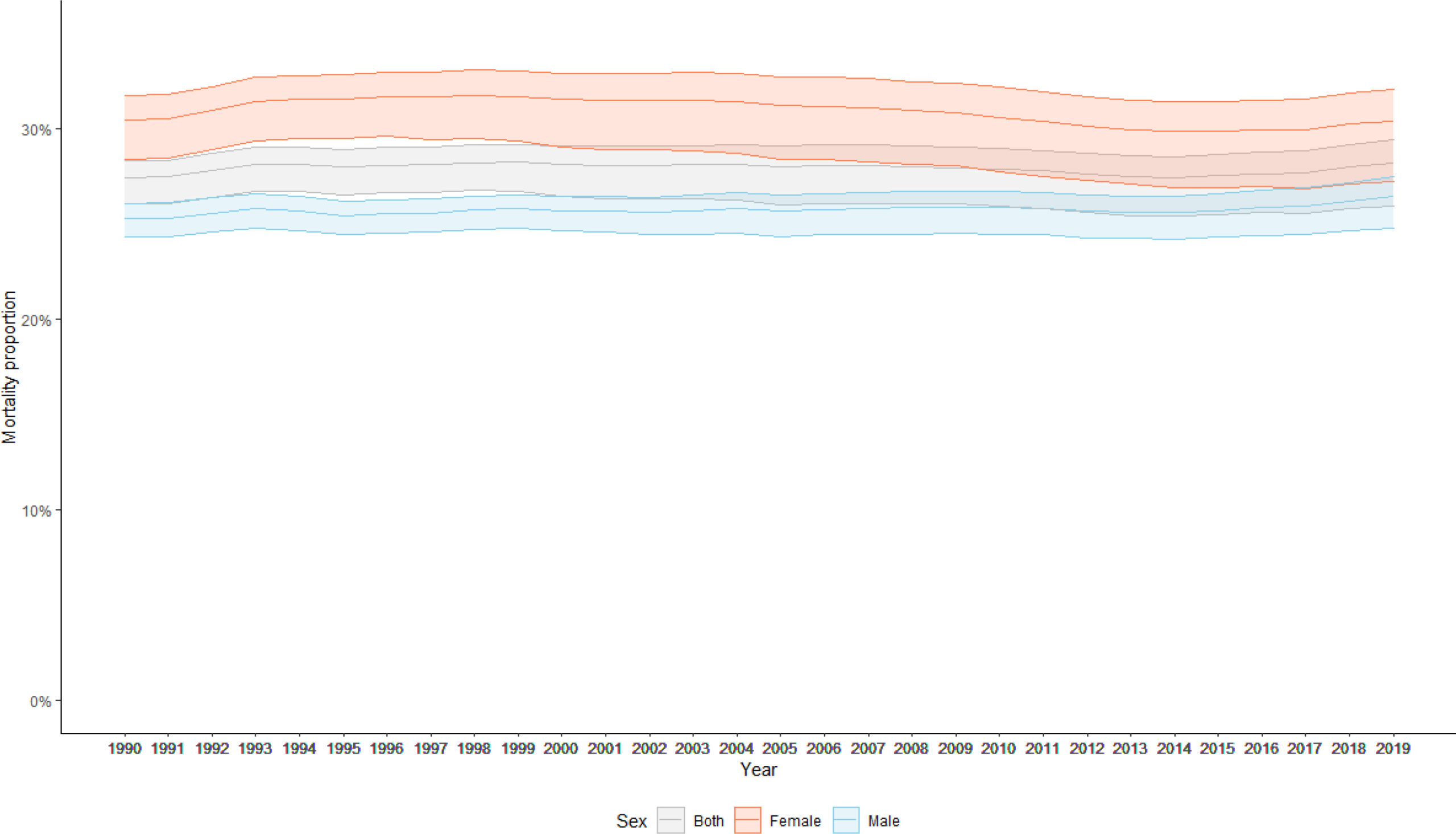
The growing attention paid to women’s cardiovascular health reflects a necessary paradigm shift in contemporary medicine. This transformation is based on evidence that cardiovascular diseases (CVD) are the leading cause of death among women, accounting for approximately 35% of all global female deaths, surpassing mortality from all cancers combined.

Despite the expansion of awareness campaigns and advances in scientific knowledge on the subject, a worrying stagnation in the reduction of the global burden of these diseases has been observed in the last decade. Women still face less recognition of their cardiovascular risk, delays in diagnosis, and less access to evidence-based therapies., In Latin America and the Caribbean (LAC), this scenario is even more challenging, as the presence of social and structural inequalities imposes additional barriers to the diagnosis and adequate treatment of CVD.,

[…]

  • Caribbean Region
  • Epidemiology
  • Latin America
  • Mortality
  • Women's Health
Read Full Article
Creative Commons Attribution (CC BY) Creative Commons license
21/09/2026 DOI: 10.36660/abc.20260532i Views 2
Figure 1
IJCS
Viewpoint

New Insights Into Ischemic Heart Disease in Women: The Central Role of Coronary Microvascular Dysfunction Current Insights, Diagnostic Advances, And Therapeutic Uncertainties

Elizabeth Regina Giunco Alexandre et al. Isabelle Salomão Larissa Neto-Espíndola Rafaela Penalva … Mayara Lídia Da Silva Claudio Tinoco Mesquita

Introduction

This viewpoint discusses emerging evidence and the clinical implications of coronary microvascular dysfunction (CMD) in women, offering a focused perspective on pathophysiologic, diagnostic, and therapeutic features that distinguish ischemic heart disease (IHD) in women from that in men. Beyond summarizing available data, we highlight the growing body of evidence supporting CMD as an important and often underrecognized contributor to ischemic symptoms and cardiovascular risk in women. We emphasize key concepts and ongoing controversies without intending to provide definitive therapeutic recommendations.

Ischemic heart disease (IHD) remains a leading cause of morbidity and mortality worldwide. Recent evidence also highlighted sex-based differences in ischemic pathophysiology and vascular aging in women.

[…]

  • microcirculation
  • Microvascular Angina
  • Myocardial Ischemia
  • Women's Health
Read Full Article
Creative Commons Attribution (CC BY) Creative Commons license
24/07/2026 DOI: 10.36660/ijcs.20250031 Views 1
Figure 1
ABC
Editorial

Nothing about Women without Women is for Women

Camila Perez de Souza Arthur et al. Omar Asdrúbal Vilca Mejia

Adjusted analyses show that women have higher mortality rates than men after coronary artery bypass grafting (CABG), in addition to receiving a lower-quality surgical technique., Current strategies focus on preoperative optimization and standardization of intra- and postoperative care, as well as including more women in research. Currently, women are underrepresented, reaching up to 16% of the sample in some trials. This reinforces the call for greater equity and greater inclusion of women in research projects, or, on the contrary, for specific studies on women. I believe that we have been slow to reflect on this reality, since female gender has been considered a predictor of mortality in CABG since the publication of CASS in 1981 and has remained constant, including in our setting as part of InsCor. This was once again recognized in this important article by Goncharov et al. Identifying female sex as a predictor of mortality in a single-center and retrospective study with 9,845 patients, where less than 20% were women. However, unlike other studies, the difference in mortality between women and men was lost after pairing.

The propensity score adjusts an analysis based on the observed variables, while randomized studies balance both known and unknown variables. Bias arises when differences in results may be a consequence of secondary characteristics of the patients, and this can be noticeable in a sample spanning almost 3 decades. Within this, perhaps the variable that may have most influenced these results was the inclusion of surgeries combined with CABG and not just CABG alone. Women in general are operated on with more comorbidities and arrive at a more advanced stage for surgery.

[…]

  • Cardiovascular Surgical Procedures
  • Outcomes Assessment in Health Care
  • Women's Health
Read Full Article
Creative Commons Attribution (CC BY) Creative Commons license
14/07/2025 DOI: 10.36660/abc.20250323i Views 2
Figure 1
IJCS
Brief Communication

Prevalence of Subclinical Left Ventricular Dysfunction Evaluated by Global Longitudinal Strain in Female Carriers of Duchenne Muscular Dystrophy

Eduarda Vieira Rodrigues et al. Antonio Pedro Lima Costa Pereira Wilson Braz Correa Filho Maria Angelica de Faria Domingues de Lima … Marcio Aloysio Freitas Siqueira Junior Ana Paula Cassetta dos Santos Nucera Fabio de Souza

Abstract

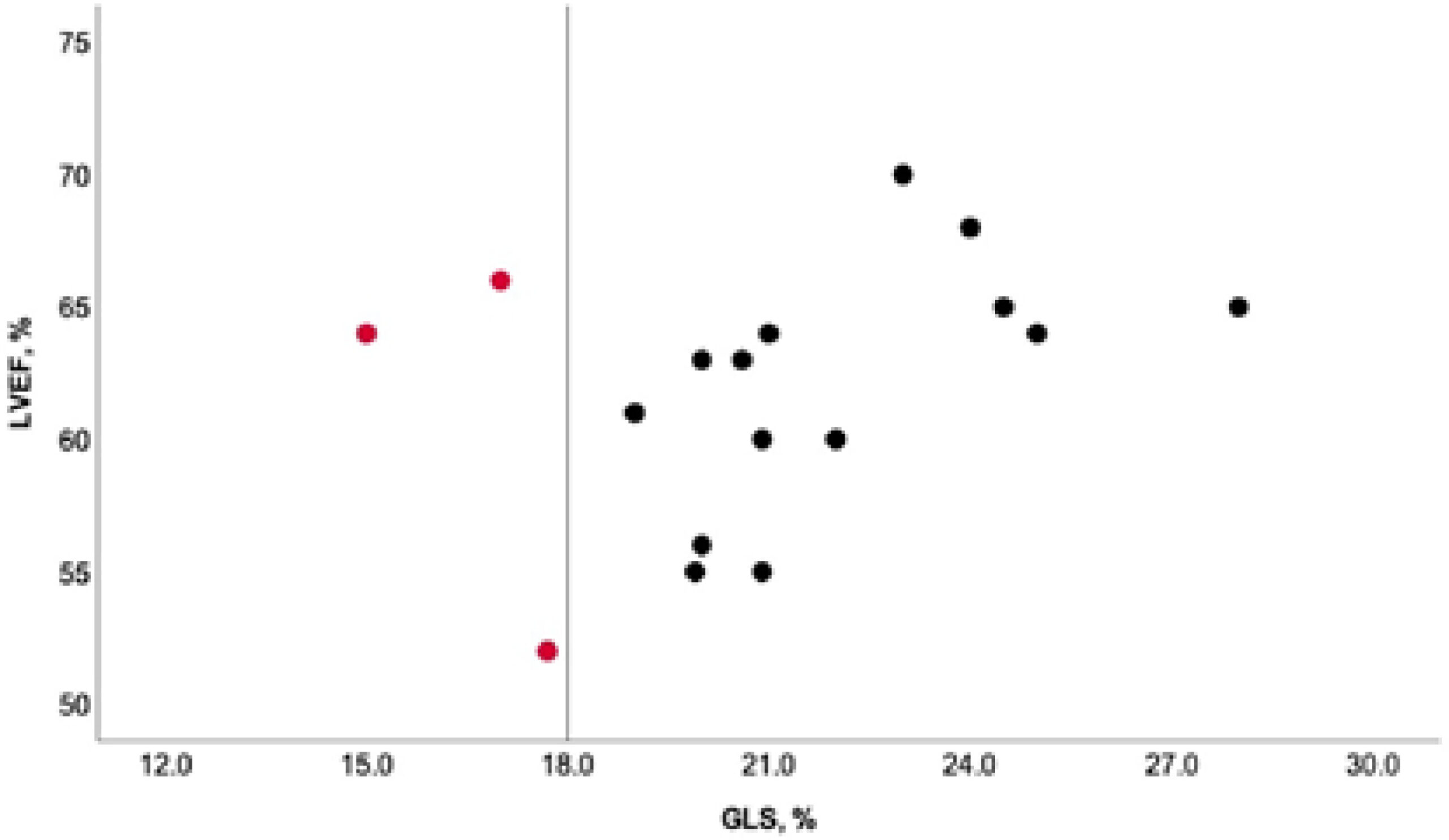
Duchenne muscular dystrophy (DMD) is a muscular disease genetically linked to the DMD gene, which encodes dystrophin, a protein that is crucial for the integrity of skeletal muscle and myocytes. This condition follows an X-linked inheritance pattern. Female carriers are typically asymptomatic; however, they may develop cardiomyopathy, making screening for structural heart disease advisable. We conducted a cross-sectional study to assess the prevalence of subclinical left ventricular (LV) dysfunction, defined by reduced global longitudinal strain (GLS), in asymptomatic female DMD carriers. Participants underwent 2-dimensional speckle tracking echocardiography following a standardized protocol, with GLS values ≤ 18% classified as reduced. Continuous variables were described as mean ± standard deviation and categorical variables as percentages. The association between left ventricular ejection fraction (LVEF) and GLS was assessed using Pearson’s correlation coefficient. The significance level adopted was 5%. Using a convenience sample, 17 participants (mean age 39 ± 5 years) were enrolled. No significant changes were observed in LV diameters, and the mean LVEF was 62% ± 5%. Reduced GLS was identified in 3 participants, indicating a prevalence of 17.6% for subclinical LV dysfunction. A weak correlation was found between GLS and LVEF (r = 0.366). Our findings indicate that approximately 1 in 6 female DMD carriers had subclinical LV dysfunction. These results highlight the need for genetic counseling for mothers of patients with DMD, as well as early screening with sensitive methods to detect heart disease in female DMD carriers.

  • Duchenne Muscular Dystrophy
  • Global Longitudinal Strain
  • Left Ventricular Dysfunction
  • Women's Health
  • X-Linked Genetic Diseases
Read Full Article
Creative Commons Attribution (CC BY) Creative Commons license
24/03/2025 DOI: 10.36660/ijcs.20230125
More Hospital Complications in Women after Cabg Even for Reduced Surgical Times: Call to Action for Equity in Quality Improvement
ABC
Original Article

More Hospital Complications in Women after Cabg Even for Reduced Surgical Times: Call to Action for Equity in Quality Improvement

Leonardo Lacava et al. Fabiane Letícia de Freitas Gabrielle Barbosa Borgomoni Pedro Gabriel Melo de Barros e Silva … Marcelo Arruda Nakazone Valquiria Pelisser Campagnucci Marcos Gradim Tiveron Luiz Augusto Lisboa Fabio Biscegli Jatene Omar Asdrúbal Vilca Mejia

Abstract

Background

Analyses of extensive registries indicate adverse outcomes for women undergoing coronary artery bypass grafting (CABG) surgery, while randomized studies often lack representativeness.

Objective

To compare adjusted hospital outcomes between men and women undergoing CABG.

Methods

From July 2017 to June 2019, 3991 patients underwent primary isolated CABG, both electively and urgently, in 5 hospitals in the state of São Paulo, Brazil. To mitigate demographic differences between men and women, populations were adjusted using propensity score matching (PSM). The outcomes considered for analysis were those used by the STS Adult Database. The analyses were performed using R software, with a significance set at p<0.05.

Results

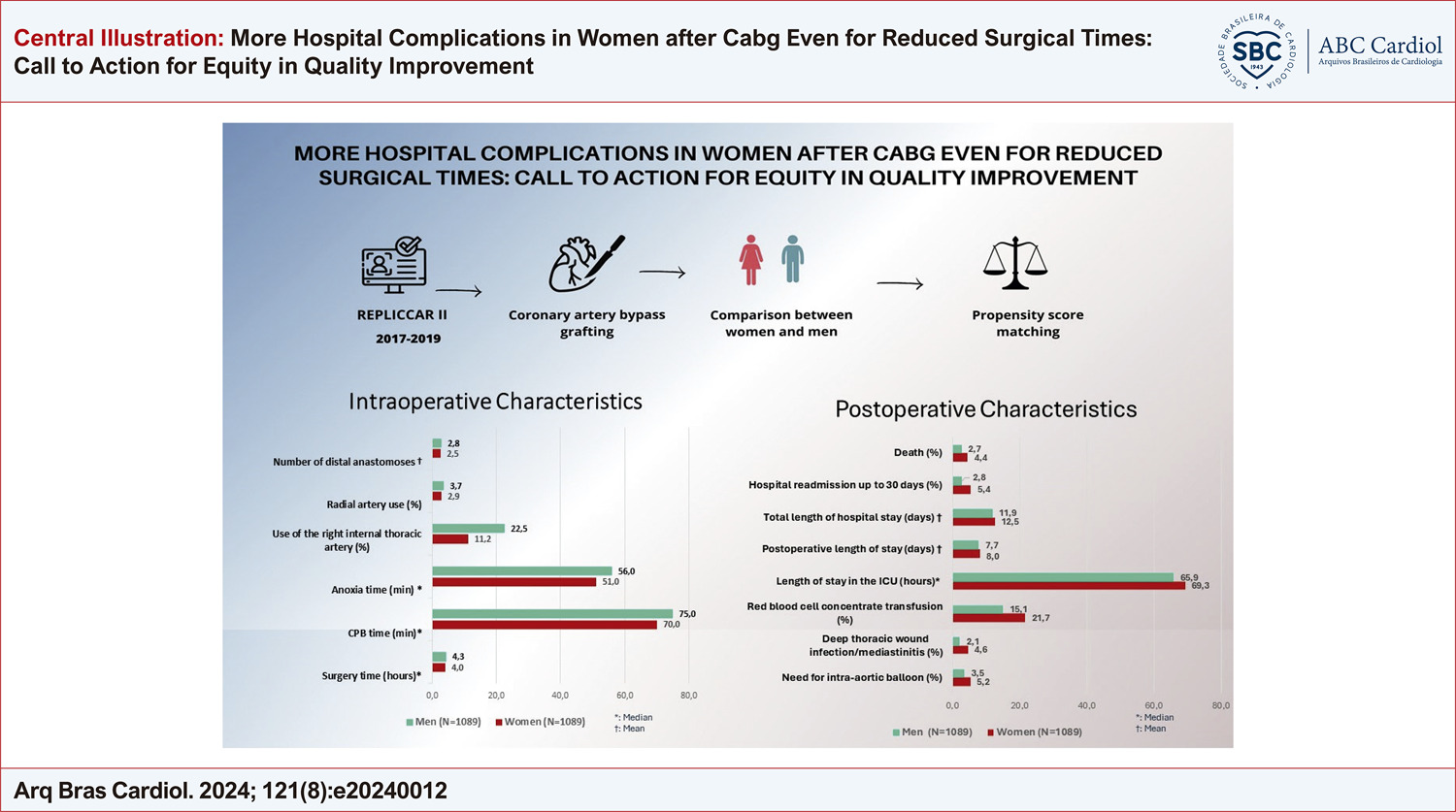
After PSM (1:1), each group included 1089 patients. Regarding intraoperative variables, men exhibited longer cardiopulmonary bypass (CPB) time (p<0.001), surgical time (p<0.001), a higher number of distal anastomoses (p<0.001), and increased use of arterial grafts. Regarding outcomes, women had a higher incidence of deep sternal wound infection (p=0.006), prolonged Intensive Care Unit stay (p=0.002), increased need for an intra-aortic balloon pump (p=0.04), higher blood transfusion rates (p<0.001), higher 30-day hospital readmission rates after surgery (p=0.002) and higher mortality rate (p=0.03).

Conclusions

Although men had longer CPB times, a greater number of arterial grafts, and a greater number of distal anastomoses, immediate results after CABG were poorer in women.

  • Cardiovascular Surgical Procedures
  • Outcome Assessment (Health Care)
  • Women's Health
Read Full Article
Creative Commons Attribution (CC BY) Creative Commons license
19/08/2024 DOI: 10.36660/abc.20240012i Views 1
Figure 1
IJCS
Editorial

Are Women the Fragile Sex? Or are They the Singular Sex?

Celi Marques-Santos et al. Gláucia Maria Moraes de Oliveira

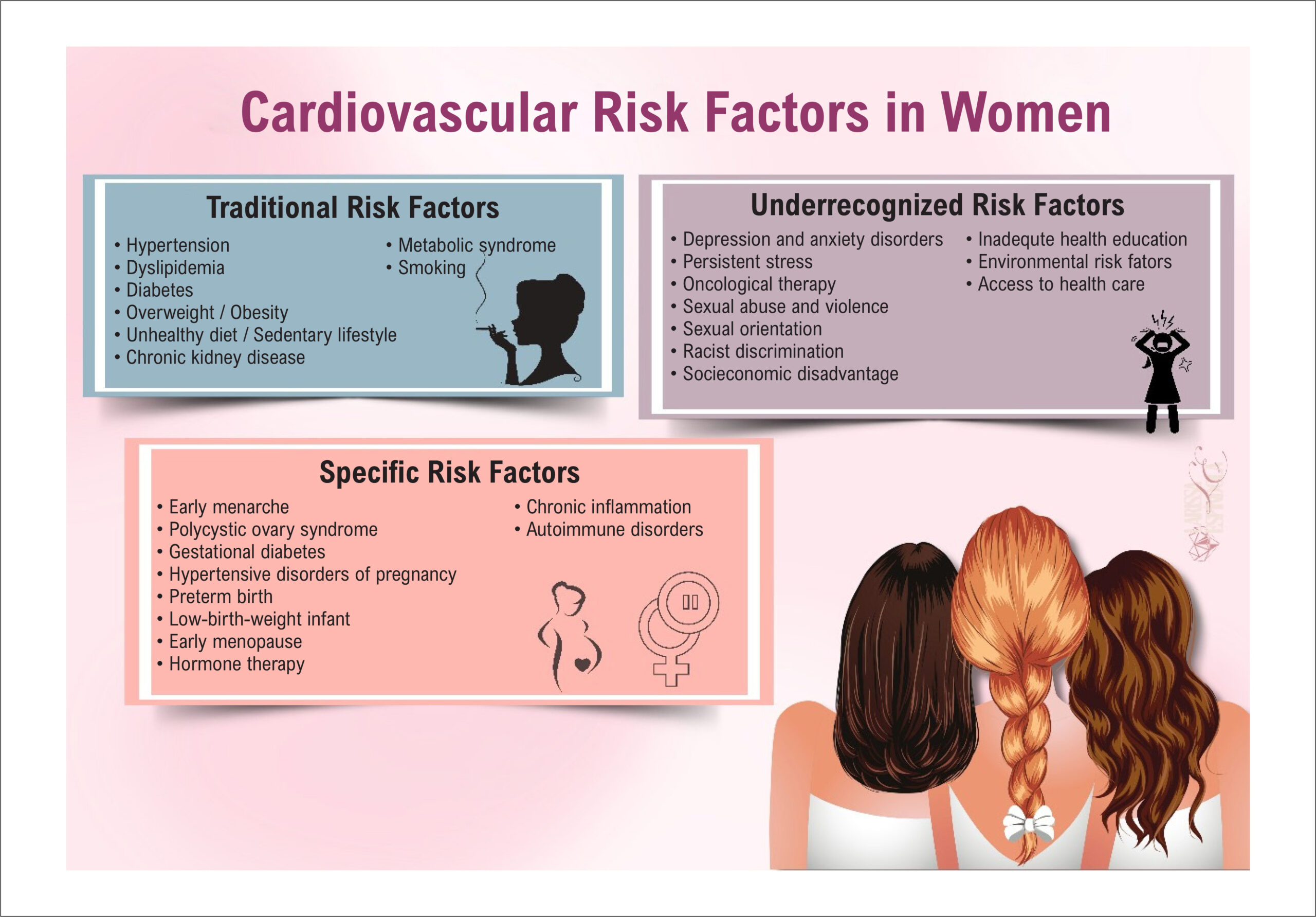
Women need specific intervention and information about their particularities, especially regarding CV risk factors, as well as the biological, pathophysiological, and social differences between the sexes. The majority of large clinical trials that address current cardiovascular diseases (CVD) were not conducted with enough women to generate robust evidence. CVD in women remains poorly studied, poorly recognized, underdiagnosed, and undertreated, generating worse outcomes. It is necessary to change this reality so that women are approached according to their singularities in order to reduce the burden of CVD by 2030.

Among the CV risk factors in Brazilian women, arterial hypertension, dietary risks, obesity, increased serum cholesterol, and fasting glucose stand out. Sex-related CV risk factors, which affect CVD throughout life, play a crucial role in women. Menopause, especially in women 40 years, promotes changes in body composition, with an increase in fat mass and a greater probability of metabolic syndrome., Hypertensive diseases of pregnancy, such as pre-eclampsia, gestational diabetes, and premature birth, increase CVD in adulthood. The use of contraceptive hormones associated with arterial hypertension increases the risk of myocardial infarction (MI) by 12 times. Polycystic ovary syndrome and autoimmune diseases contribute to increased cardiovascular risk.

[…]

  • Cardiovascular Diseases
  • Women
  • Women's Health
Read Full Article
Creative Commons Attribution (CC BY) Creative Commons license
19/07/2021 DOI: 10.36660/ijcs.20210171

How to cite this article

EndNote RIS

Electronic Document Format (Vancouver)

Villela PB, Andrade LF. Women’s Cardiovascular Health: A Current Challenge. Arquivos Brasileiros de Cardiologia 2026;123(7):e20260532.

Electronic Document Format (ABNT)

Villela, Paolo Blanco; Andrade, Larissa Franco de. Women’s Cardiovascular Health: A Current Challenge. Arquivos Brasileiros de Cardiologia, v. 123, n. 7, e20260532, Sep. 2026.

Electronic Document Format (APA)

Villela, P. B., & Andrade, L. F. (2026). Women’s Cardiovascular Health: A Current Challenge. Arquivos Brasileiros de Cardiologia, 123(7), e20260532.

Electronic Document Format (ISO)

Villela, Paolo Blanco and Andrade, Larissa Franco de. Women’s Cardiovascular Health: A Current Challenge. Arquivos Brasileiros de Cardiologia [online]. 2026, vol. 123, n. 7, [cited 2026-10-14], e20260532. Available from: <https://journals.cardiol.br/en/article/womens-cardiovascular-health-a-current-challenge/>. ISSN 0066-782X

EndNote RIS

Electronic Document Format (Vancouver)

Alexandre ERG, Salomão I, Neto-Espíndola L, Penalva R, Silva MLD, Mesquita CT. New Insights Into Ischemic Heart Disease in Women: The Central Role of Coronary Microvascular Dysfunction Current Insights, Diagnostic Advances, And Therapeutic Uncertainties. International Journal of Cardiovascular Sciences 2026;39:e20250031.

Electronic Document Format (ABNT)

Alexandre, Elizabeth Regina Giunco; Salomão, Isabelle; Neto-Espíndola, Larissa; Penalva, Rafaela; Silva, Mayara Lídia Da; Mesquita, Claudio Tinoco. New Insights Into Ischemic Heart Disease in Women: The Central Role of Coronary Microvascular Dysfunction Current Insights, Diagnostic Advances, And Therapeutic Uncertainties. International Journal of Cardiovascular Sciences, v. 39, e20250031, Jul. 2026.

Electronic Document Format (APA)

Alexandre, E. R. G., Salomão, I., Neto-Espíndola, L., Penalva, R., Silva, M. L. D., & Mesquita, C. T. (2026). New Insights Into Ischemic Heart Disease in Women: The Central Role of Coronary Microvascular Dysfunction Current Insights, Diagnostic Advances, And Therapeutic Uncertainties. International Journal of Cardiovascular Sciences, 39, e20250031.

Electronic Document Format (ISO)

Alexandre, Elizabeth Regina Giunco and Salomão, Isabelle and Neto-Espíndola, Larissa and Penalva, Rafaela and Silva, Mayara Lídia Da and Mesquita, Claudio Tinoco. New Insights Into Ischemic Heart Disease in Women: The Central Role of Coronary Microvascular Dysfunction Current Insights, Diagnostic Advances, And Therapeutic Uncertainties. International Journal of Cardiovascular Sciences [online]. 2026, vol. 39, [cited 2026-10-14], e20250031. Available from: <https://journals.cardiol.br/en/article/new-insights-into-ischemic-heart-disease-in-women-the-central-role-of-coronary-microvascular-dysfunction-current-insights-diagnostic-advances-and-therapeutic-uncertainties/>. ISSN 2359-4802

EndNote RIS

Electronic Document Format (Vancouver)

Arthur CPS, Mejia OAV. Nothing about Women without Women is for Women. Arquivos Brasileiros de Cardiologia 2025;122(5):e20250323.

Electronic Document Format (ABNT)

Arthur, Camila Perez de Souza; Mejia, Omar Asdrúbal Vilca. Nothing about Women without Women is for Women. Arquivos Brasileiros de Cardiologia, v. 122, n. 5, e20250323, Jul. 2025.

Electronic Document Format (APA)

Arthur, C. P. S., & Mejia, O. A. V. (2025). Nothing about Women without Women is for Women. Arquivos Brasileiros de Cardiologia, 122(5), e20250323.

Electronic Document Format (ISO)

Arthur, Camila Perez de Souza and Mejia, Omar Asdrúbal Vilca. Nothing about Women without Women is for Women. Arquivos Brasileiros de Cardiologia [online]. 2025, vol. 122, n. 5, [cited 2026-10-14], e20250323. Available from: <https://journals.cardiol.br/en/article/nothing-about-women-without-women-is-for-women/>. ISSN 0066-782X

EndNote RIS

Electronic Document Format (Vancouver)

Rodrigues EV, Pereira APLC, Correa Filho WB, Lima MAFD, Siqueira Junior MAF, Nucera APCS, Souza F, et al. Prevalence of Subclinical Left Ventricular Dysfunction Evaluated by Global Longitudinal Strain in Female Carriers of Duchenne Muscular Dystrophy. International Journal of Cardiovascular Sciences 2025;38:e20230125.

Electronic Document Format (ABNT)

Rodrigues, Eduarda Vieira; Pereira, Antonio Pedro Lima Costa; Correa Filho, Wilson Braz; Lima, Maria Angelica de Faria Domingues de; Siqueira Junior, Marcio Aloysio Freitas; Nucera, Ana Paula Cassetta dos Santos; Souza, Fabio de. Prevalence of Subclinical Left Ventricular Dysfunction Evaluated by Global Longitudinal Strain in Female Carriers of Duchenne Muscular Dystrophy. International Journal of Cardiovascular Sciences, v. 38, e20230125, Mar. 2025.

Electronic Document Format (APA)

Rodrigues, E. V., Pereira, A. P. L. C., Correa Filho, W. B., Lima, M. A. F. D. , Siqueira Junior, M. A. F., Nucera, A. P. C. S., & Souza, F. (2025). Prevalence of Subclinical Left Ventricular Dysfunction Evaluated by Global Longitudinal Strain in Female Carriers of Duchenne Muscular Dystrophy. International Journal of Cardiovascular Sciences, 38, e20230125.

Electronic Document Format (ISO)

Rodrigues, Eduarda Vieira and Pereira, Antonio Pedro Lima Costa and Correa Filho, Wilson Braz and Lima, Maria Angelica de Faria Domingues de and Siqueira Junior, Marcio Aloysio Freitas and Nucera, Ana Paula Cassetta dos Santos and Souza, Fabio de. Prevalence of Subclinical Left Ventricular Dysfunction Evaluated by Global Longitudinal Strain in Female Carriers of Duchenne Muscular Dystrophy. International Journal of Cardiovascular Sciences [online]. 2025, vol. 38, [cited 2026-10-14], e20230125. Available from: <https://journals.cardiol.br/en/article/prevalence-of-subclinical-left-ventricular-dysfunction-evaluated-by-global-longitudinal-strain-in-female-carriers-of-duchenne-muscular-dystrophy/>. ISSN 2359-4802

EndNote RIS

Electronic Document Format (Vancouver)

Lacava L, Freitas FL, Borgomoni GB, Silva PGMB, Nakazone MA, Campagnucci VP, Tiveron MG, et al. More Hospital Complications in Women after Cabg Even for Reduced Surgical Times: Call to Action for Equity in Quality Improvement. Arquivos Brasileiros de Cardiologia 2024;121(8):e20240012.

Electronic Document Format (ABNT)

Lacava, Leonardo; Freitas, Fabiane Letícia de; Borgomoni, Gabrielle Barbosa; Silva, Pedro Gabriel Melo de Barros e; Nakazone, Marcelo Arruda; Campagnucci, Valquiria Pelisser; Tiveron, Marcos Gradim; Lisboa, Luiz Augusto; Jatene, Fabio Biscegli; Mejia, Omar Asdrúbal Vilca. More Hospital Complications in Women after Cabg Even for Reduced Surgical Times: Call to Action for Equity in Quality Improvement. Arquivos Brasileiros de Cardiologia, v. 121, n. 8, e20240012, Aug. 2024.

Electronic Document Format (APA)

Lacava, L., Freitas, F. L. , Borgomoni, G. B., Silva, P. G. M. B. , Nakazone, M. A., Campagnucci, V. P., Tiveron, M. G., Lisboa, L. A., Jatene, F. B., & Mejia, O. A. V. (2024). More Hospital Complications in Women after Cabg Even for Reduced Surgical Times: Call to Action for Equity in Quality Improvement. Arquivos Brasileiros de Cardiologia, 121(8), e20240012.

Electronic Document Format (ISO)

Lacava, Leonardo and Freitas, Fabiane Letícia de and Borgomoni, Gabrielle Barbosa and Silva, Pedro Gabriel Melo de Barros e and Nakazone, Marcelo Arruda and Campagnucci, Valquiria Pelisser and Tiveron, Marcos Gradim and Lisboa, Luiz Augusto and Jatene, Fabio Biscegli and Mejia, Omar Asdrúbal Vilca. More Hospital Complications in Women after Cabg Even for Reduced Surgical Times: Call to Action for Equity in Quality Improvement. Arquivos Brasileiros de Cardiologia [online]. 2024, vol. 121, n. 8, [cited 2026-10-14], e20240012. Available from: <https://journals.cardiol.br/en/article/more-hospital-complications-in-women-after-cabg-even-for-reduced-surgical-times-call-to-action-for-equity-in-quality-improvement/>. ISSN 0066-782X

EndNote RIS

Electronic Document Format (Vancouver)

Marques-Santos C, Oliveira GMM. Are Women the Fragile Sex? Or are They the Singular Sex?. International Journal of Cardiovascular Sciences 2021;34(4):344-6.

Electronic Document Format (ABNT)

Marques-Santos, Celi; Oliveira, Gláucia Maria Moraes de. Are Women the Fragile Sex? Or are They the Singular Sex?. International Journal of Cardiovascular Sciences, v. 34, n. 4, p. 344-346, Jul. 2021.

Electronic Document Format (APA)

Marques-Santos, C., & Oliveira, G. M. M. (2021). Are Women the Fragile Sex? Or are They the Singular Sex?. International Journal of Cardiovascular Sciences, 34(4), 344-346.

Electronic Document Format (ISO)

Marques-Santos, Celi and Oliveira, Gláucia Maria Moraes de. Are Women the Fragile Sex? Or are They the Singular Sex?. International Journal of Cardiovascular Sciences [online]. 2021, vol. 34, n. 4, [cited 2026-10-14], pp. 344-346. Available from: <https://journals.cardiol.br/en/article/are-women-the-fragile-sex-or-are-they-the-singular-sex/>. ISSN 2359-4802

  • About ABC Family
  • Internal Regulation
  • Editorial Board
  • Brazilian Society of Cardiology (SBC)

Issues

SBC Guidelines

  • Videos
  • Podcasts
  • News