ABC Family Arquivos Brasileiros de Cardiologia International Journal of Cardiovascular Sciences ABC Heart Failure & Cardiomyopathy ABC Imagem Cardiovascular
Português English
ABC Family
Português English
  • About
    • About ABC Family
    • Internal Regulation
    • Editorial Board
    • Brazilian Society of Cardiology (SBC)
  • Issues
  • SBC Guidelines
  • Content
    • Videos
    • Podcasts
    • News
  • About
    • About ABC Family
    • Internal Regulation
    • Editorial Board
    • Brazilian Society of Cardiology (SBC)
  • Issues
  • SBC Guidelines
  • Content
    • Videos
    • Podcasts
    • News

ABC Family

  • ABC Family
  • Arquivos Brasileiros de Cardiologia
  • International Journal of Cardiovascular Sciences
  • ABC Heart Failure & Cardiomyopathy
  • ABC Imagem Cardiovascular
Search in

No content found.

Journals
Ordering
Article types
Others

  1. Home
  2. Keyword: Collateral Circulation
HALP Score as a Novel Marker Associated with Coronary Collateral Circulation in Patients with Chronic Total Occlusion
ABC
Original Article

HALP Score as a Novel Marker Associated with Coronary Collateral Circulation in Patients with Chronic Total Occlusion

Hasan Akkaya et al. Muhammet Öztürk

Abstract

Background

Coronary collateral circulation (CCC) is a key determinant of myocardial viability and prognosis in patients with chronic total occlusion (CTO). The hemoglobin, albumin, lymphocyte, and platelet (HALP) score reflects nutritional status, immune competence, and systemic inflammation.

Objectives

To investigate the association between HALP score and CCC in patients with CTO.

Methods

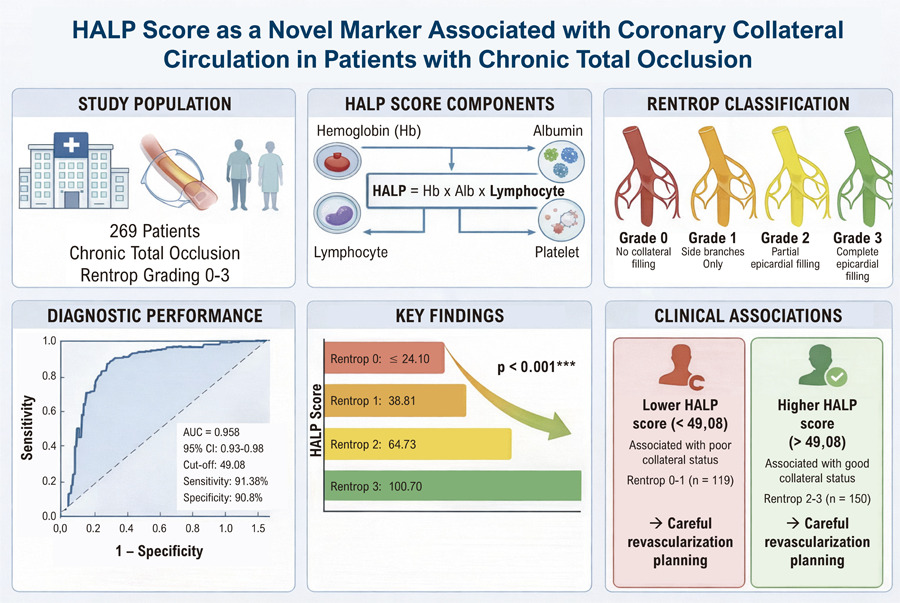
This retrospective, single-center study included 269 patients with chronic coronary syndrome and angiographically confirmed CTO. Patients were classified according to Rentrop grades and dichotomized into poor CCC (Rentrop 0–1; n=119) and good CCC (Rentrop 2–3; n=150). HALP score, inflammatory markers, atherogenic indices, and angiographic scores were compared between groups. Multivariate logistic regression and receiver operating characteristic (ROC) analyses were performed. A p-value <0.05 was considered statistically significant.

Results

HALP score increased significantly across Rentrop grades (p<0.001) and was higher in patients with good CCC than in those with poor CCC (75.52±13.91 vs. 35.10±11.29; p<0.001). In multivariable analysis, HALP score (OR:0.88, 95% CI: 0.83–0.93; p49.08 (91.3% sensitivity, 90.8% specificity). Atherogenic lipid indices were not significantly associated with CCC.

Conclusions

HALP score is an independent and readily available marker associated with CCC in CTO patients and may serve as a practical tool for risk stratification, highlighting the importance of inflammatory, nutritional, and immune pathways in collateral development.

  • Collateral Circulation
  • Coronary Occlusion
  • Inflammation
  • Prognosis
Read Full Article
Creative Commons Attribution (CC BY) Creative Commons license
17/08/2026 DOI: 10.36660/abc.20260206i Views 1
ABC
Editorial

Beyond Lesion Complexity: Do We Need a New Score for Chronic Total Occlusions?

Pedro Beraldo de Andrade et al. Thyago Furquim

The Hemoglobin, Albumin, Lymphocyte, and Platelet (HALP) score is an index that combines readily available laboratory parameters and reflects an individual’s inflammatory and nutritional status. Traditionally used in oncologic and inflammatory diseases, it has recently emerged as a prognostic marker in various cardiovascular conditions, including acute coronary syndromes, heart failure, and non-valvular atrial fibrillation. Lower HALP values have been associated with a pro-inflammatory state, impaired hematologic homeostasis, and poorer nutritional status.

These factors may adversely affect vascular remodeling processes, leading to pathological angiogenesis. In this context, Akkaya and Öztürk retrospectively analyzed 269 patients with chronic total coronary occlusion identified by coronary angiography and demonstrated that the HALP score exhibited excellent discriminatory performance for the detection of well-developed collateral circulation. As reported in the current issue of the Arquivos Brasileiros de Cardiologia, the HALP score was significantly higher in patients with prominent collateral circulation compared with those with poorly developed collaterals (75.5 ± 13.9 vs. 35.1 ± 11.3; p < 0.001), and was an independent predictor of this angiographic finding (OR: 0.88; 95% CI: 0.83–0.93; p 49.08, yielding a sensitivity of 91.3% and a specificity of 90.8%. In a similar study, Süleymanoğlu et al. retrospectively evaluated 240 patients with chronic total coronary occlusion and confirmed that the HALP score was positively associated with collateral circulation quality, as assessed by the Werner classification, remaining a strong independent predictor in multivariable analysis.

[…]

  • Collateral Circulation
  • Coronary Occlusion
  • Inflammation
Read Full Article
Creative Commons Attribution (CC BY) Creative Commons license
17/08/2026 DOI: 10.36660/abc.20260506i Views 2
ABC
Editorial

Does the Prognostic Nutritional Index Offer New Insights into Coronary Collateral Circulation in Stable Angina?

Ömer Faruk Çiçek

Coronary collateral circulation (CCC) plays a crucial role in maintaining myocardial blood supply, particularly in patients with chronic total occlusion (CTO) and stable coronary syndrome (SCS). Recent research has delved into the association between inflammatory markers and CCC development. However, a novel study sheds light on a different perspective by exploring the correlation between the prognostic nutritional index (PNI) and CCC formation in SCS patients with CTO. The study, conducted by Esenboga et al., involved 400 SCS patients with CTO, aiming to investigate the potential link between PNI and CCC. The findings revealed a significant association between lower PNI levels and poorly developed CCC, independent of other risk factors. This suggests that PNI could serve as a valuable biomarker for assessing CCC in SCS patients.

The significance of CCC lies in its ability to mitigate myocardial ischemia, alleviate anginal symptoms, and improve patient prognosis. While previous studies have explored various factors influencing CCC development, such as age, comorbidities, and inflammatory markers, this study pioneers the examination of PNI as a predictor. The PNI, calculated from serum albumin levels and total lymphocyte count, reflects the inflammatory status and nutritional status of an individual. Lower PNI values signify increased inflammatory burden and poorer nutritional status, which may impede CCC formation. The study proposes plausible mechanisms linking low PNI to poor CCC, involving endothelial dysfunction, decreased nitric oxide production, and impaired neovascular responses.

[…]

  • Collateral Circulation
  • Index Coronary
  • Prognostic Nutritional
Read Full Article
Creative Commons Attribution (CC BY) Creative Commons license
26/04/2024 DOI: 10.36660/abc.20240144 Views 1
Prognostic Nutritional Index is Associated with the Degree of Coronary Collateral Circulation in Stable Angina Patients with Chronic Total Occlusion
ABC
Original Article

Prognostic Nutritional Index is Associated with the Degree of Coronary Collateral Circulation in Stable Angina Patients with Chronic Total Occlusion

Kerim Esenboga et al. Alparslan Kurtul Yakup Yunus Yamanturk Volkan Kozluca Eralp Tutar

Abstract

Background:

Coronary collateral circulation (CCC) can effectively improve myocardial blood supply to the area of CTO (chronic total coronary occlusion) and can, thus, improve the prognosis of patients with stable coronary syndrome (SCS). The degree of inflammation and some inflammation markers were associated with the development of collaterals.

Objective:

To investigate whether prognostic nutritional index (PNI) has an association with the development of CCC in patients with SCS.

Methods:

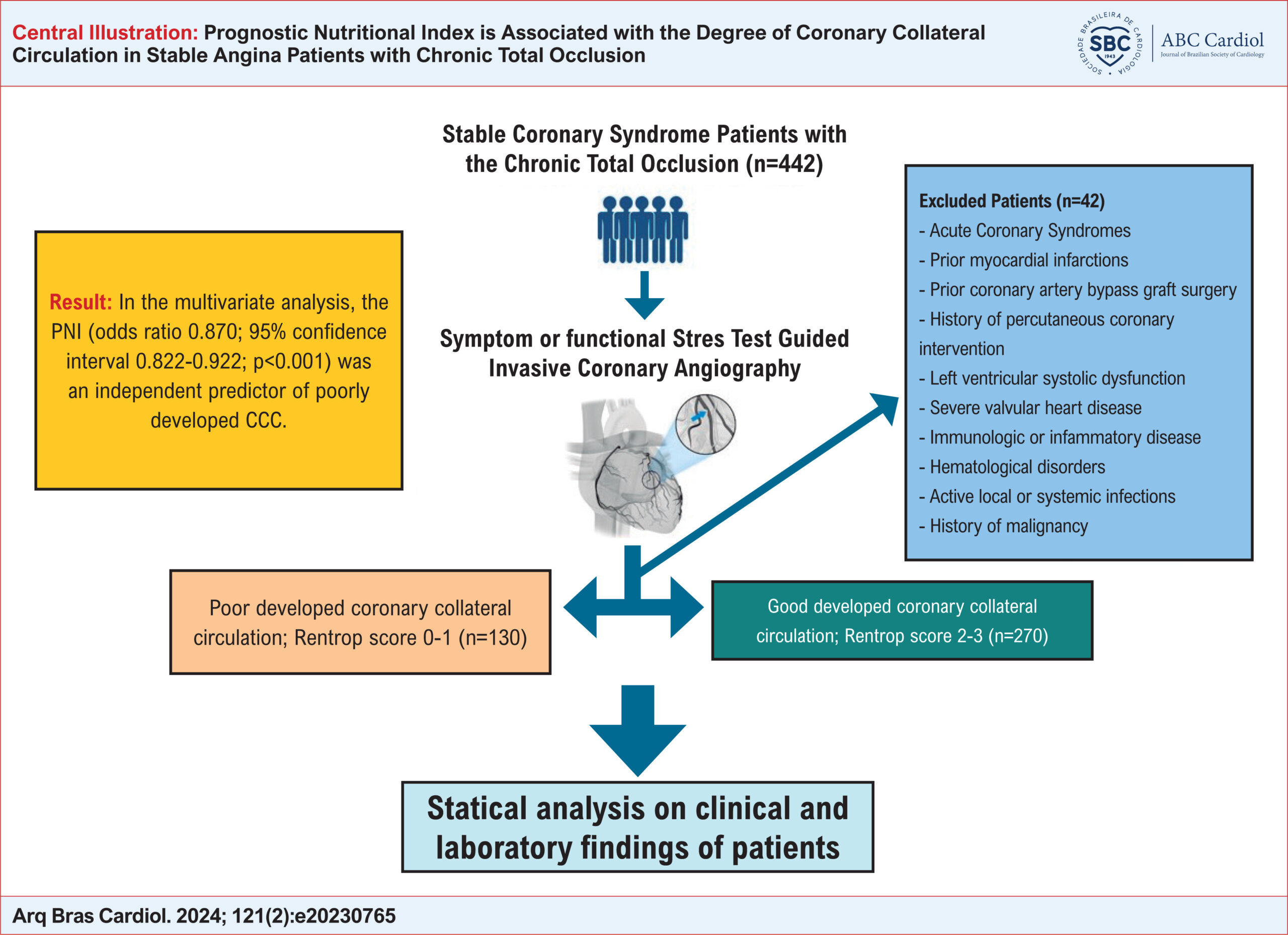
A total of 400 SCS patients with the presence of CTO in at least one major epicardial coronary artery were included in this study. The patients were divided into two groups according to the Rentrop score. Scores of 0 to 1 were considered poor developed CCC, and scores of 2 to 3 were accepted as good developed CCC. Statistical significance was set as a p-value < 0.05 for all analyses.

Results:

The mean age of the study cohort was 63±10 years; 273 (68.3%) were males. The poor-developed CCC group had a significantly lower PNI level compared with the good-developed CCC group (38.29±5.58 vs 41.23±3.85, p< 0.001). In the multivariate analysis, the PNI (odds ratio 0.870; 95% confidence interval 0.822-0.922; p< 0.001) was an independent predictor of poorly developed CCC.

Conclusion:

The PNI can be used as one of the independent predictors of CCC formation. It was positively associated with the development of coronary collaterals in SCS patients with CTO.

  • Collateral Circulation
  • Inflammation
  • Nutrition Assessment
Read Full Article
Creative Commons Attribution (CC BY) Creative Commons license
05/04/2024 DOI: 10.36660/abc.20230765 Views 1
ABC
Editorial

Another Player in Increasing Collateral Circulation in the Heart – Another Potential Therapeutic Target in Cardiovascular Medicine?

Luis Henrique Wolff Gowdak

Richard Lower of Amsterdam first called attention to channels connecting the right and left coronary arteries in 1669. The Swiss anatomist Albrecht von Haller demonstrated these anastomoses by dissecting the coronary arteries. So, for centuries now, the presence of a well-developed collateral network providing blood supply to an underperfused myocardium has gained significant interest in physiology and physiopathology, and later, in therapeutics. Many questions kept scientists working restlessly to unravel the key players favoring the development of collateral vessels in the heart.

The coronary collateral circulation is a preformed network of immature anastomoses which connect the territory supplied by one epicardial coronary artery with that supplied by another. In 1959, Pitt et al. studied the prevalence of interarterial coronary anastomoses in seventy-five hearts obtained from an autopsy. Of the 15 normal hearts, only one (6%) was found to have such anastomoses. In those cases with occlusive coronary artery disease, myocardium fibrosis, or infarction, anastomoses were found in 75% to 100% of the cases. It was clear, from the beginning, that the presence of sustained periods of tissue ischemia was a pre-requisite to incite de establishment of collateral circulation.

[…]

  • Adropin
  • Collateral Circulation
  • Coronary Artery Disease
  • Myocardial Ischemia
  • Neovascularization, Physiologc
Read Full Article
Creative Commons Attribution (CC BY) Creative Commons license
05/09/2022 DOI: 10.36660/abc.20220558 Views 1
Figure 1
ABC
Original Article

Relationship between Systemic Immune-Inflammation Index and Coronary Collateral Circulation in Patients with Chronic Total Occlusion

Mehmet Koray Adali et al. Ipek Buber Gursel Sen Samet Yilmaz

Abstract

Background

Inflammation plays a key role in the initiation and progression of coronary artery disease (CAD). The systemic immune-inflammation index (SII) is a novel inflammatory parameter that has been shown to be associated with CAD.

Objective

This study aimed to investigate the relationship between SII and coronary collateral circulation (CCC) in patients with stable CAD and chronic total occlusion (CTO).

Methods

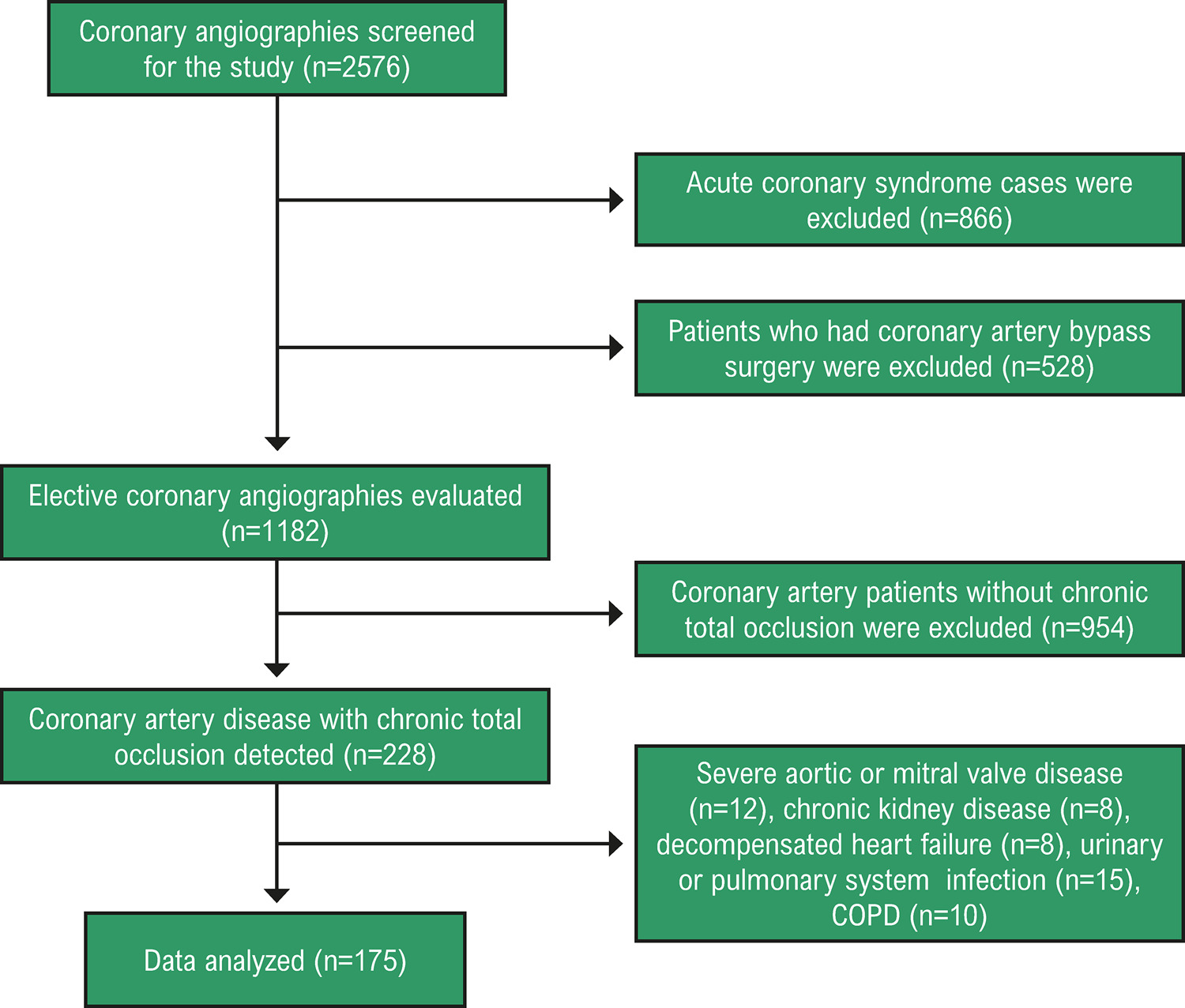
The patients were divided into two groups, with poor CCC and good CCC, according to the Rentrop Classification. Ninety-four patients had poor CCC, and 81 patients had good CCC. Inflammation parameters were calculated from the laboratory results. The statistical significance level applied was 0.05.

Results

High SII level (OR: 1.003, 95% CI: 1.001-1.004, p<0,001), absence of CTO in RCA (OR: 0.204, 95% CI: 0.096-0.436, p<0,001) and low Gensini score (OR: 0.980, 95% CI: 0.962-0.998, p=0,028) were significantly associated with poor CCC. The cutoff value of SII was 679.96 for the highest predictive power of poor CCC, with a sensitivity of 74.5% and specificity of 43.2%. Mortality rates were similar between the two groups during a mean follow-up of 21.5±10.8 months (p=0.107).

Conclusions

High SII level, the absence of CTO in the right coronary artery, and low Gensini score were significantly related to poor CCC. The rapid and cost-effective use of new inflammatory markers in clinical practice guides the prognosis of CAD.

  • Collateral Circulation
  • Coronary Occlusion
  • Coronary Vessels
Read Full Article
Creative Commons Attribution (CC BY) Creative Commons license
10/06/2022 DOI: 10.36660/abc.20210414 Views 2
ABC
Editorial

A New Pathway to Coronary Occlusion with Elabela?

Ricardo Wang et al. Estevão Lanna Figueiredo Fernando Carvalho Neuschwander

Total coronary occlusion (TCO) is characterized by an obstruction with an estimated duration of more than 3 months and is present in approximately 15–18% of all coronary angiographies performed. Clinical manifestations can range from asymptomatic, through stable angina, to varying degrees of ventricular dysfunction. This mainly depends on the degree of collateral circulation. If it is poor, it may compromise the viability of myocytes and associate with various degrees of necrosis and/or hibernating myocardium. In the presence of well-developed collaterals (Rentrop grade III), the patient may be asymptomatic and have a preserved contractile function. Therefore, the formation of a well-developed collateral circulation, especially before vessel occlusion, is essential for the preservation of myocytes.

Despite advances in the clinical treatment of stable angina, many patients with TCO undergo interventional procedures. Of these, most are referred for coronary artery bypass grafting surgery or percutaneous coronary intervention (PCI) with more advanced techniques, but also with a higher risk of complications. The study of mechanisms potentially stimulating arteriogenesis and angiogenesis (collateral circulation formation) opens up opportunities for the development of drugs that, in turn, would avoid unnecessary interventions and/or could benefit patients with symptoms refractory to optimized conventional clinical treatment and who are poor candidates for interventions (e.g., thin distal bed, diffuse coronary disease).

[…]

  • Biomarkers (Elabela)
  • Collateral Circulation
  • Coronary Occlusion
  • Microvascular Angina
  • Myocytes, Cardiac
Read Full Article
Creative Commons Attribution (CC BY) Creative Commons license
20/09/2021 DOI: 10.36660/abc.20210662
Figure 1
ABC
Clinicoradiological Correlation

Case 4/2019 – Pulmonary Atresia, Ventricular Septal Defect, and Systemic-Pulmonary Collateral Circulation developing after prior Blalock-Taussig, in a Symptomatic 47-Year-Old Adult

Edmar Atik et al. Maria Angélica Binotto Alessandra Costa Barreto Walther Ishikawa

Clinical data

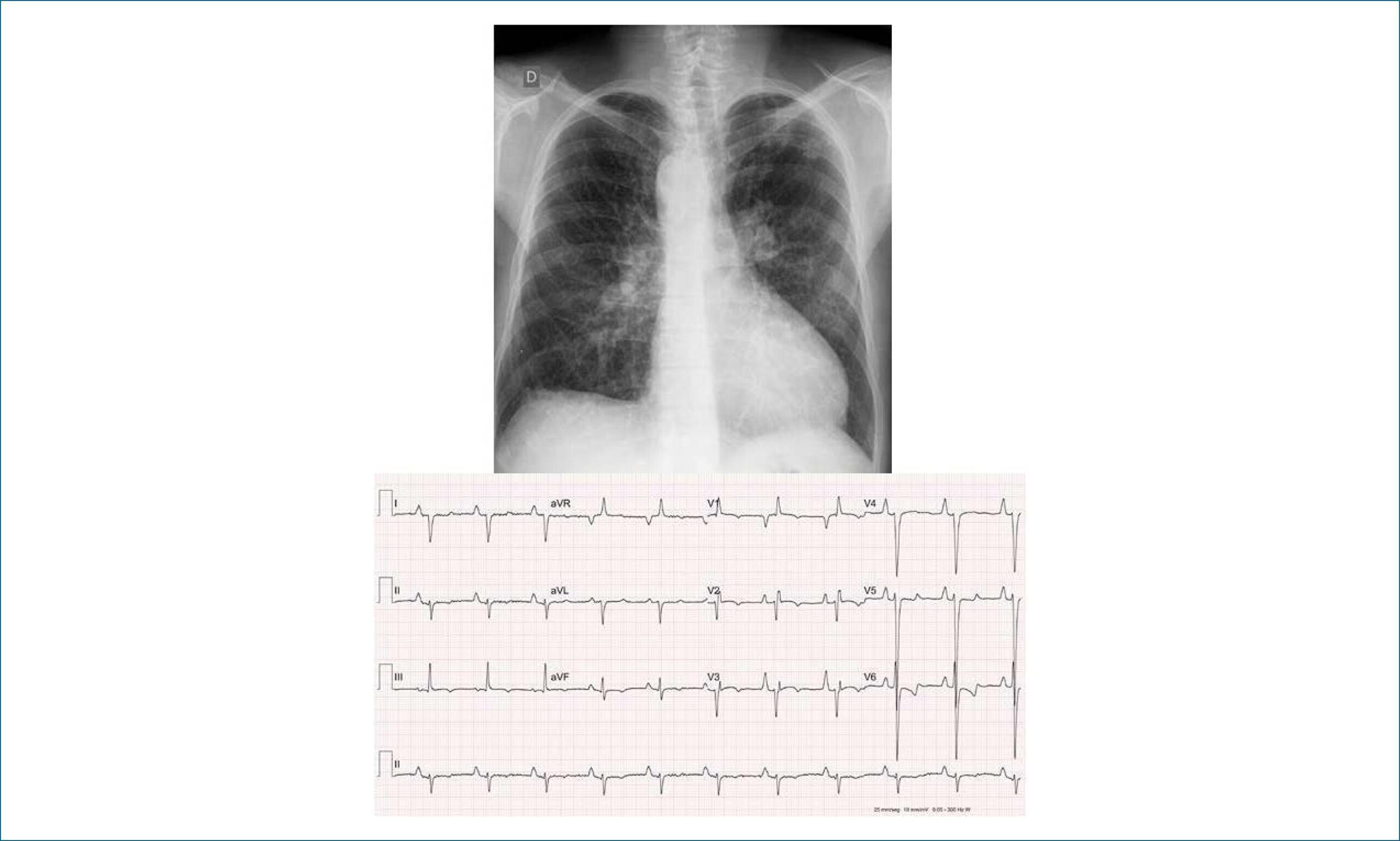
The patient had no symptoms from birth to young adulthood, when he developed more severe hypoxia, which required a Blalock-Taussig anastomosis on the right. Five years ago, worsening of hypoxia was again observed, with hemapheresis every 6 months, in addition to fatigue on small to medium exertion and with associated ventricular dysfunction. He used f warfarin, carvedilol and enalapril, in addition to nasal oxygen at night.

[…]

  • Adult
  • Clinical Evolution
  • Collateral Circulation
  • Heart Septal Defects, Ventricular
  • Pulmonary Atresia
Read Full Article
Creative Commons Attribution (CC BY) Creative Commons license
08/08/2019 DOI: 10.5935/abc.20190121 Views 2
ABC
Original Article

Which Coronary Lesions Are More Prone to Cause Acute Myocardial Infarction?

Taner Sen et al. Mehmet Ali Astarcioglu Osman Beton Lale Dinc Asarcikli Celal Kilit

Abstract

Background:

According to common belief, most myocardial infarctions (MIs) are due to the rupture of nonsevere, vulnerable plaques with < 70% obstruction. Data from recent trials challenge this belief, suggesting that the risk of coronary occlusion is, in fact, much higher after severe stenosis. The aim of this study was to investigate whether or not acute ST-elevation MIs result from high-grade stenoses by evaluating the presence of coronary collateral circulation (CCC).

Methods:

We retrospectively included 207 consecutive patients who had undergone primary percutaneous coronary intervention for acute ST-elevation MI. Collateral blood flow distal to the culprit lesion was assessed by two investigators using the Rentrop scoring system.

Results:

Out of the 207 patients included in the study, 153 (73.9%) had coronary collateral vessels (Rentrop 1-3). The Rentrop scores were 0, 1, 2, and 3 in 54 (26.1%), 50 (24.2%), 51 (24.6%), and 52 (25.1%) patients, respectively. Triglycerides, mean platelet volume (MPV), white cell (WBC) count, and neutrophil count were significantly lower in the group with good collateral vessels (p = 0.013, p = 0.002, p = 0.003, and p = 0.021, respectively).

Conclusion:

More than 70% of the patients with acute MI had CCC with Rentrop scores of 1-3 during primary coronary angiography. This shows that most cases of acute MI in our study originated from underlying high-grade stenoses, challenging the common believe. Higher serum triglycerides levels, greater MPV, and increased WBC and neutrophil counts were independently associated with impaired development of collateral vessels.

  • Collateral Circulation
  • Coronary Restenosis
  • Myocardial Infarction
  • Plaque, Atherosclerotic
  • Rupture
Read Full Article
Creative Commons Attribution (CC BY) Creative Commons license
16/01/2017 DOI: 10.5935/abc.20170003

How to cite this article

EndNote RIS

Electronic Document Format (Vancouver)

Akkaya H, Öztürk M. HALP Score as a Novel Marker Associated with Coronary Collateral Circulation in Patients with Chronic Total Occlusion. Arquivos Brasileiros de Cardiologia 2026;123(7):e20260206.

Electronic Document Format (ABNT)

Akkaya, Hasan; Öztürk, Muhammet. HALP Score as a Novel Marker Associated with Coronary Collateral Circulation in Patients with Chronic Total Occlusion. Arquivos Brasileiros de Cardiologia, v. 123, n. 7, e20260206, Aug. 2026.

Electronic Document Format (APA)

Akkaya, H., & Öztürk, M. (2026). HALP Score as a Novel Marker Associated with Coronary Collateral Circulation in Patients with Chronic Total Occlusion. Arquivos Brasileiros de Cardiologia, 123(7), e20260206.

Electronic Document Format (ISO)

Akkaya, Hasan and Öztürk, Muhammet. HALP Score as a Novel Marker Associated with Coronary Collateral Circulation in Patients with Chronic Total Occlusion. Arquivos Brasileiros de Cardiologia [online]. 2026, vol. 123, n. 7, [cited 2026-10-14], e20260206. Available from: <https://journals.cardiol.br/en/article/halp-score-as-a-novel-marker-associated-with-coronary-collateral-circulation-in-patients-with-chronic-total-occlusion/>. ISSN 0066-782X

EndNote RIS

Electronic Document Format (Vancouver)

Andrade PB, Furquim T. Beyond Lesion Complexity: Do We Need a New Score for Chronic Total Occlusions?. Arquivos Brasileiros de Cardiologia 2026;123(7):e20260506.

Electronic Document Format (ABNT)

Andrade, Pedro Beraldo de; Furquim, Thyago. Beyond Lesion Complexity: Do We Need a New Score for Chronic Total Occlusions?. Arquivos Brasileiros de Cardiologia, v. 123, n. 7, e20260506, Aug. 2026.

Electronic Document Format (APA)

Andrade, P. B. , & Furquim, T. (2026). Beyond Lesion Complexity: Do We Need a New Score for Chronic Total Occlusions?. Arquivos Brasileiros de Cardiologia, 123(7), e20260506.

Electronic Document Format (ISO)

Andrade, Pedro Beraldo de and Furquim, Thyago. Beyond Lesion Complexity: Do We Need a New Score for Chronic Total Occlusions?. Arquivos Brasileiros de Cardiologia [online]. 2026, vol. 123, n. 7, [cited 2026-10-14], e20260506. Available from: <https://journals.cardiol.br/en/article/beyond-lesion-complexity-do-we-need-a-new-score-for-chronic-total-occlusions/>. ISSN 0066-782X

EndNote RIS

Electronic Document Format (Vancouver)

Çiçek F. Does the Prognostic Nutritional Index Offer New Insights into Coronary Collateral Circulation in Stable Angina?. Arquivos Brasileiros de Cardiologia 2024;121(2):e20240144.

Electronic Document Format (ABNT)

Çiçek, Ömer Faruk. Does the Prognostic Nutritional Index Offer New Insights into Coronary Collateral Circulation in Stable Angina?. Arquivos Brasileiros de Cardiologia, v. 121, n. 2, e20240144, Apr. 2024.

Electronic Document Format (APA)

Çiçek, F. (2024). Does the Prognostic Nutritional Index Offer New Insights into Coronary Collateral Circulation in Stable Angina?. Arquivos Brasileiros de Cardiologia, 121(2), e20240144.

Electronic Document Format (ISO)

Çiçek, Ömer Faruk. Does the Prognostic Nutritional Index Offer New Insights into Coronary Collateral Circulation in Stable Angina?. Arquivos Brasileiros de Cardiologia [online]. 2024, vol. 121, n. 2, [cited 2026-10-14], e20240144. Available from: <https://journals.cardiol.br/en/article/does-the-prognostic-nutritional-index-offer-new-insights-into-coronary-collateral-circulation-in-stable-angina/>. ISSN 0066-782X

EndNote RIS

Electronic Document Format (Vancouver)

Esenboga K, Kurtul A, Yamanturk YY, Kozluca V, Tutar E. Prognostic Nutritional Index is Associated with the Degree of Coronary Collateral Circulation in Stable Angina Patients with Chronic Total Occlusion. Arquivos Brasileiros de Cardiologia 2024;121(2):e20230765.

Electronic Document Format (ABNT)

Esenboga, Kerim; Kurtul, Alparslan; Yamanturk, Yakup Yunus; Kozluca, Volkan; Tutar, Eralp. Prognostic Nutritional Index is Associated with the Degree of Coronary Collateral Circulation in Stable Angina Patients with Chronic Total Occlusion. Arquivos Brasileiros de Cardiologia, v. 121, n. 2, e20230765, Apr. 2024.

Electronic Document Format (APA)

Esenboga, K., Kurtul, A., Yamanturk, Y. Y., Kozluca, V., & Tutar, E. (2024). Prognostic Nutritional Index is Associated with the Degree of Coronary Collateral Circulation in Stable Angina Patients with Chronic Total Occlusion. Arquivos Brasileiros de Cardiologia, 121(2), e20230765.

Electronic Document Format (ISO)

Esenboga, Kerim and Kurtul, Alparslan and Yamanturk, Yakup Yunus and Kozluca, Volkan and Tutar, Eralp. Prognostic Nutritional Index is Associated with the Degree of Coronary Collateral Circulation in Stable Angina Patients with Chronic Total Occlusion. Arquivos Brasileiros de Cardiologia [online]. 2024, vol. 121, n. 2, [cited 2026-10-14], e20230765. Available from: <https://journals.cardiol.br/en/article/prognostic-nutritional-index-is-associated-with-the-degree-of-coronary-collateral-circulation-in-stable-angina-patients-with-chronic-total-occlusion/>. ISSN 0066-782X

EndNote RIS

Electronic Document Format (Vancouver)

Gowdak LHW. Another Player in Increasing Collateral Circulation in the Heart – Another Potential Therapeutic Target in Cardiovascular Medicine?. Arquivos Brasileiros de Cardiologia 2022;119(3):411-2.

Electronic Document Format (ABNT)

Gowdak, Luis Henrique Wolff. Another Player in Increasing Collateral Circulation in the Heart – Another Potential Therapeutic Target in Cardiovascular Medicine?. Arquivos Brasileiros de Cardiologia, v. 119, n. 3, p. 411-412, Sep. 2022.

Electronic Document Format (APA)

Gowdak, L. H. W. (2022). Another Player in Increasing Collateral Circulation in the Heart – Another Potential Therapeutic Target in Cardiovascular Medicine?. Arquivos Brasileiros de Cardiologia, 119(3), 411-412.

Electronic Document Format (ISO)

Gowdak, Luis Henrique Wolff. Another Player in Increasing Collateral Circulation in the Heart – Another Potential Therapeutic Target in Cardiovascular Medicine?. Arquivos Brasileiros de Cardiologia [online]. 2022, vol. 119, n. 3, [cited 2026-10-14], pp. 411-412. Available from: <https://journals.cardiol.br/en/article/another-player-in-increasing-collateral-circulation-in-the-heart-another-potential-therapeutic-target-in-cardiovascular-medicine/>. ISSN 0066-782X

EndNote RIS

Electronic Document Format (Vancouver)

Adali MK, Buber I, Sen G, Yilmaz S. Relationship between Systemic Immune-Inflammation Index and Coronary Collateral Circulation in Patients with Chronic Total Occlusion. Arquivos Brasileiros de Cardiologia 2022;119(1):69-75.

Electronic Document Format (ABNT)

Adali, Mehmet Koray; Buber, Ipek; Sen, Gursel; Yilmaz, Samet. Relationship between Systemic Immune-Inflammation Index and Coronary Collateral Circulation in Patients with Chronic Total Occlusion. Arquivos Brasileiros de Cardiologia, v. 119, n. 1, p. 69-75, Jun. 2022.

Electronic Document Format (APA)

Adali, M. K., Buber, I., Sen, G., & Yilmaz, S. (2022). Relationship between Systemic Immune-Inflammation Index and Coronary Collateral Circulation in Patients with Chronic Total Occlusion. Arquivos Brasileiros de Cardiologia, 119(1), 69-75.

Electronic Document Format (ISO)

Adali, Mehmet Koray and Buber, Ipek and Sen, Gursel and Yilmaz, Samet. Relationship between Systemic Immune-Inflammation Index and Coronary Collateral Circulation in Patients with Chronic Total Occlusion. Arquivos Brasileiros de Cardiologia [online]. 2022, vol. 119, n. 1, [cited 2026-10-14], pp. 69-75. Available from: <https://journals.cardiol.br/en/article/relationship-between-systemic-immune-inflammation-index-and-coronary-collateral-circulation-in-patients-with-chronic-total-occlusion/>. ISSN 0066-782X

EndNote RIS

Electronic Document Format (Vancouver)

Wang R, Figueiredo EL, Neuschwander FC. A New Pathway to Coronary Occlusion with Elabela?. Arquivos Brasileiros de Cardiologia 2021;117(3):511.

Electronic Document Format (ABNT)

Wang, Ricardo; Figueiredo, Estevão Lanna; Neuschwander, Fernando Carvalho. A New Pathway to Coronary Occlusion with Elabela?. Arquivos Brasileiros de Cardiologia, v. 117, n. 3, p. 511-511, Sep. 2021.

Electronic Document Format (APA)

Wang, R., Figueiredo, E. L., & Neuschwander, F. C. (2021). A New Pathway to Coronary Occlusion with Elabela?. Arquivos Brasileiros de Cardiologia, 117(3), 511-511.

Electronic Document Format (ISO)

Wang, Ricardo and Figueiredo, Estevão Lanna and Neuschwander, Fernando Carvalho. A New Pathway to Coronary Occlusion with Elabela?. Arquivos Brasileiros de Cardiologia [online]. 2021, vol. 117, n. 3, [cited 2026-10-14], pp. 511-511. Available from: <https://journals.cardiol.br/en/article/a-new-pathway-to-coronary-occlusion-with-elabela/>. ISSN 0066-782X

EndNote RIS

Electronic Document Format (Vancouver)

Atik E, Binotto MA, Barreto AC, Ishikawa W. Case 4/2019 – Pulmonary Atresia, Ventricular Septal Defect, and Systemic-Pulmonary Collateral Circulation developing after prior Blalock-Taussig, in a Symptomatic 47-Year-Old Adult. Arquivos Brasileiros de Cardiologia 2019;113(1):103-5.

Electronic Document Format (ABNT)

Atik, Edmar; Binotto, Maria Angélica; Barreto, Alessandra Costa; Ishikawa, Walther. Case 4/2019 – Pulmonary Atresia, Ventricular Septal Defect, and Systemic-Pulmonary Collateral Circulation developing after prior Blalock-Taussig, in a Symptomatic 47-Year-Old Adult. Arquivos Brasileiros de Cardiologia, v. 113, n. 1, p. 103-105, Aug. 2019.

Electronic Document Format (APA)

Atik, E., Binotto, M. A., Barreto, A. C., & Ishikawa, W. (2019). Case 4/2019 – Pulmonary Atresia, Ventricular Septal Defect, and Systemic-Pulmonary Collateral Circulation developing after prior Blalock-Taussig, in a Symptomatic 47-Year-Old Adult. Arquivos Brasileiros de Cardiologia, 113(1), 103-105.

Electronic Document Format (ISO)

Atik, Edmar and Binotto, Maria Angélica and Barreto, Alessandra Costa and Ishikawa, Walther. Case 4/2019 – Pulmonary Atresia, Ventricular Septal Defect, and Systemic-Pulmonary Collateral Circulation developing after prior Blalock-Taussig, in a Symptomatic 47-Year-Old Adult. Arquivos Brasileiros de Cardiologia [online]. 2019, vol. 113, n. 1, [cited 2026-10-14], pp. 103-105. Available from: <https://journals.cardiol.br/en/article/case-4-2019-pulmonary-atresia-ventricular-septal-defect-and-systemic-pulmonary-collateral-circulation-developing-after-prior-blalock-taussig-in-a-symptomatic-47-year-old-adult/>. ISSN 0066-782X

EndNote RIS

Electronic Document Format (Vancouver)

Sen T, Astarcioglu MA, Beton O, Asarcikli LD, Kilit C. Which Coronary Lesions Are More Prone to Cause Acute Myocardial Infarction?. Arquivos Brasileiros de Cardiologia 2017;108(2):149-53.

Electronic Document Format (ABNT)

Sen, Taner; Astarcioglu, Mehmet Ali; Beton, Osman; Asarcikli, Lale Dinc; Kilit, Celal. Which Coronary Lesions Are More Prone to Cause Acute Myocardial Infarction?. Arquivos Brasileiros de Cardiologia, v. 108, n. 2, p. 149-153, Jan. 2017.

Electronic Document Format (APA)

Sen, T., Astarcioglu, M. A., Beton, O., Asarcikli, L. D., & Kilit, C. (2017). Which Coronary Lesions Are More Prone to Cause Acute Myocardial Infarction?. Arquivos Brasileiros de Cardiologia, 108(2), 149-153.

Electronic Document Format (ISO)

Sen, Taner and Astarcioglu, Mehmet Ali and Beton, Osman and Asarcikli, Lale Dinc and Kilit, Celal. Which Coronary Lesions Are More Prone to Cause Acute Myocardial Infarction?. Arquivos Brasileiros de Cardiologia [online]. 2017, vol. 108, n. 2, [cited 2026-10-14], pp. 149-153. Available from: <https://journals.cardiol.br/en/article/which-coronary-lesions-are-more-prone-to-cause-acute-myocardial-infarction/>. ISSN 0066-782X

  • About ABC Family
  • Internal Regulation
  • Editorial Board
  • Brazilian Society of Cardiology (SBC)

Issues

SBC Guidelines

  • Videos
  • Podcasts
  • News