ABC Family Arquivos Brasileiros de Cardiologia International Journal of Cardiovascular Sciences ABC Heart Failure & Cardiomyopathy ABC Imagem Cardiovascular
Português English
ABC Family
Português English
  • About
    • About ABC Family
    • Internal Regulation
    • Editorial Board
    • Brazilian Society of Cardiology (SBC)
  • Issues
  • SBC Guidelines
  • Content
    • Videos
    • Podcasts
    • News
  • About
    • About ABC Family
    • Internal Regulation
    • Editorial Board
    • Brazilian Society of Cardiology (SBC)
  • Issues
  • SBC Guidelines
  • Content
    • Videos
    • Podcasts
    • News

ABC Family

  • ABC Family
  • Arquivos Brasileiros de Cardiologia
  • International Journal of Cardiovascular Sciences
  • ABC Heart Failure & Cardiomyopathy
  • ABC Imagem Cardiovascular
Search in

No content found.

Journals
Ordering
Article types
Others

  1. Home
  2. Keyword: Right Ventricular Dysfunction
ABC
Editorial

Beyond Baseline: Dynamic Prognostic Assessment in Acute Pulmonary Embolism

Marcio Roberto Moraes de Carvalho

Acute pulmonary embolism (PE) remains one of the most challenging cardiovascular emergencies. Diagnostic accuracy has improved substantially, and current therapeutic strategies include systemic thrombolysis, catheter-based interventions, and multidisciplinary response teams. However, the greatest clinical uncertainty persists in patients with intermediate-to-high-risk PE, in whom the natural progression of right ventricular (RV) dysfunction must be balanced against the risk of bleeding associated with reperfusion therapy.

This uncertainty reflects a major limitation of current risk assessment. Contemporary prognostic models rely largely on variables measured at hospital admission. Clinical scores, biomarkers, and imaging studies have substantially improved early prognostic discrimination; however, they derive their prognostic value primarily from the initial assessment (PESI). Acute PE is inherently a dynamic disease. RV adaptation, pulmonary vascular resistance, systemic arterial pressure, and myocardial injury continue to evolve after treatment begins. Consequently, prognostic information should also reflect the patient’s physiological trajectory.

[…]

  • Prognosis
  • Pulmonary embolism
  • Right Ventricular Dysfunction
Read Full Article
Creative Commons Attribution (CC BY) Creative Commons license
21/09/2026 DOI: 10.36660/abc.20260580i Views 1
Serial Echocardiographic Assessment of Right Ventricular Function and Its Association With Functional Capacity, Dyspnea, and Pulmonary Diffusion in Post-COVID-19 Survivors
ABCIC
Original Article

Serial Echocardiographic Assessment of Right Ventricular Function and Its Association With Functional Capacity, Dyspnea, and Pulmonary Diffusion in Post-COVID-19 Survivors

Marcelo Rogelin et al. Adriana Ferraz Martins Graça Aranha Fernanda Rodrigues Fonseca Rosemeri Maurici da Silva Guilherme Loureiro Fialho

Abstract

Background

Survivors of post-COVID-19 may experience persistent functional impairment and late cardiopulmonary sequelae. The right ventricle (RV) is particularly susceptible to injury, and RV free wall longitudinal strain (RVFWLS), measured by 2D speckle-tracking echocardiography (2D-STE), can detect subclinical RV systolic dysfunction.

Objective

To evaluate longitudinal changes in RV systolic function, assessed by RVFWLS, tricuspid annular plane systolic excursion (TAPSE), fractional area change (FAC), and tricuspid annular systolic velocity (S′), and to investigate their associations with functional capacity (30-second sit-to-stand test [30STS]), functional status (Post-COVID-19 Functional Status Scale [PCFS]), dyspnea (modified Medical Research Council [mMRC] scale), and carbon monoxide transfer coefficient (KCO) in post-COVID-19 survivors.

Methods

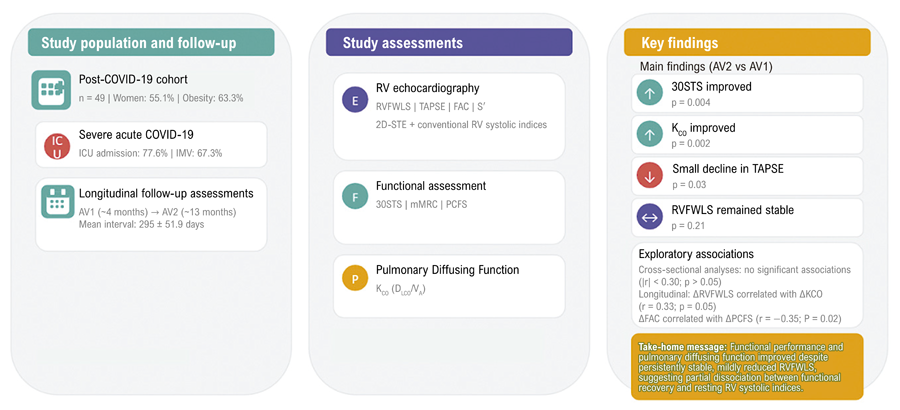
This observational analysis included participants from a prospective post-COVID-19 cohort evaluated at two follow-up visits (AV1 and AV2), approximately 4 and 13 months after the acute infection. Adults with confirmed SARS-CoV-2 infection and analyzable transthoracic echocardiography using 2D-STE were included. Statistical significance was defined as a two-sided p < 0.05.

Results

A total of 49 patients were included; 55.1% were women, the mean age was 50.7 ± 10.3 years, 63.3% had obesity, 77.6% required intensive care unit admission, and 67.3% underwent invasive mechanical ventilation. Performance on the 30STS improved (10.1 ± 3.3 vs 11.6 ± 3.1 repetitions; p = 0.004), and KCO increased (4.1 ± 0.7 vs 4.3 ± 0.8 mL/min/mmHg/L; p = 0.002), whereas mMRC scores (p = 0.43) and median PCFS scores (p = 0.11) remained unchanged. TAPSE decreased modestly but remained within the normal reference range (2.2 ± 0.3 vs 2.1 ± 0.2 cm; p = 0.03), while RVFWLS, FAC, and S′ showed no significant changes over time. Cross-sectional correlations between RV systolic indices and clinical outcomes were weak and nonsignificant at both AV1 and AV2 (|r| 0.05). Longitudinally, changes in RVFWLS were positively correlated with changes in KCO (r = 0.33; p = 0.05), whereas changes in FAC were inversely correlated with changes in PCFS scores (r = −0.35; p = 0.02).

Conclusios

In this cohort of post-COVID-19 survivors, functional capacity and pulmonary diffusing capacity improved over time, whereas RVFWLS remained persistently reduced without significant longitudinal change. These exploratory findings suggest that RV systolic indices should not be interpreted in isolation as markers of functional limitation during the late post-COVID-19 period and support the use of an integrated, multiparametric approach to patient assessment.

  • Echocardiography
  • Global Longitudinal Strain
  • Post-Acute COVID-19 Syndrome
  • Right Ventricular Dysfunction
Read Full Article
Creative Commons Attribution (CC BY) Creative Commons license
21/09/2026 DOI: 10.36660/abcimg.20260051i Views 2
ABC
Original Article

Persistent Right Ventricular Dysfunction and Hemodynamic Evolution Predict In-Hospital Deterioration in Intermediate-High- and High-Risk Pulmonary Embolism

Miguel A. Quintana et al. Joaquín Perea Ricardo Villarreal Mauricio Soto … Marildes Castro Rafael Cortês Patricio Sanhueza Iván Saavedra Yhaquelina Quispe Roger Tenezaca Roberto Colque Alexandra Arias Alex Rivera Toquica Manuel Álvarez Ysmenia D. Pérez Paola Morejón Karina G. Fernández Adriana Mogollón Marcelo Cardona Gonzalo Emanuel Pérez Arnaldo López-Ruiz

Abstract

Background

Risk stratification in acute pulmonary embolism (PE) is based primarily on findings obtained at hospital admission. However, whether serial assessment of right ventricular (RV) dysfunction and hemodynamic changes provides incremental prognostic value beyond the initial risk stratification remains uncertain.

Objectives

To evaluate longitudinal clinical and imaging variables associated with adverse in-hospital outcomes in patients with intermediate-high- and high-risk acute PE.

Methods

This prospective registry included patients with intermediate-high- and high-risk acute PE. The primary composite endpoint comprised in-hospital mortality, invasive mechanical ventilation, persistent shock or hypotension, and extracorporeal membrane oxygenation. Longitudinal variables were assessed 24-72 hours after admission. All statistical tests were two-tailed, and a p-value < 0.05 was considered statistically significant. Multivariable logistic regression models were constructed, and discriminative performance was evaluated using the area under the receiver operating characteristic curve (AUC-ROC). A prespecified missing-data analysis was performed to assess the availability of follow-up computed tomography pulmonary angiography (CTPA).

Results

The primary composite endpoint occurred in 21.2% of the 151 patients, with an in-hospital mortality rate of 9.3%. Persistent RV dysfunction on follow-up CTPA (χ2 = 15.48; p < 0.001) and follow-up systolic blood pressure (SBP; p < 0.001) were the strongest individual predictors of adverse outcomes. In the longitudinal multivariable model (n = 60), persistent RV dysfunction on follow-up CTPA (OR 9.70; 95%CI, 1.96-47.89; p = 0.005) and follow-up SBP (OR 0.90; 95%CI, 0.83-0.96; p = 0.003) remained independent predictors. The model demonstrated excellent discrimination (AUC-ROC = 0.874) and adequate calibration. The missing-data analysis showed that patients without follow-up CTPA were more severely ill at baseline, consistent with a missing not at random mechanism.

Conclusions

Reassessment of established risk markers during hospitalization may improve identification of patients who remain at high risk despite initial risk classification and treatment. Persistent RV dysfunction and lower follow-up SBP were independently associated with adverse in-hospital outcomes, which supports the use of dynamic risk stratification in acute PE.

  • Cardiogenic shock
  • Hemodynamics
  • Logistic Models
  • Prognosis
  • Pulmonary embolism
  • Reperfusion
  • Right Ventricular Dysfunction
  • Thrombectomy
Read Full Article
Creative Commons Attribution (CC BY) Creative Commons license
18/09/2026 DOI: 10.36660/abc.20260468i Views 3
Echocardiographic Parameters for Evaluating the Right Ventricle in Patients with Chronic Obstructive Pulmonary Disease: Literature Review
ABCHF
Review Article

Echocardiographic Parameters for Evaluating the Right Ventricle in Patients with Chronic Obstructive Pulmonary Disease: Literature Review

Irving Gabriel Araújo Bispo et al. Vitor Morais Brambila Gabriela Câmara Chagas Maria Luisa Ribeiro Gonçalves Pereira Maria Angélica Miqueri de Melo

Abstract

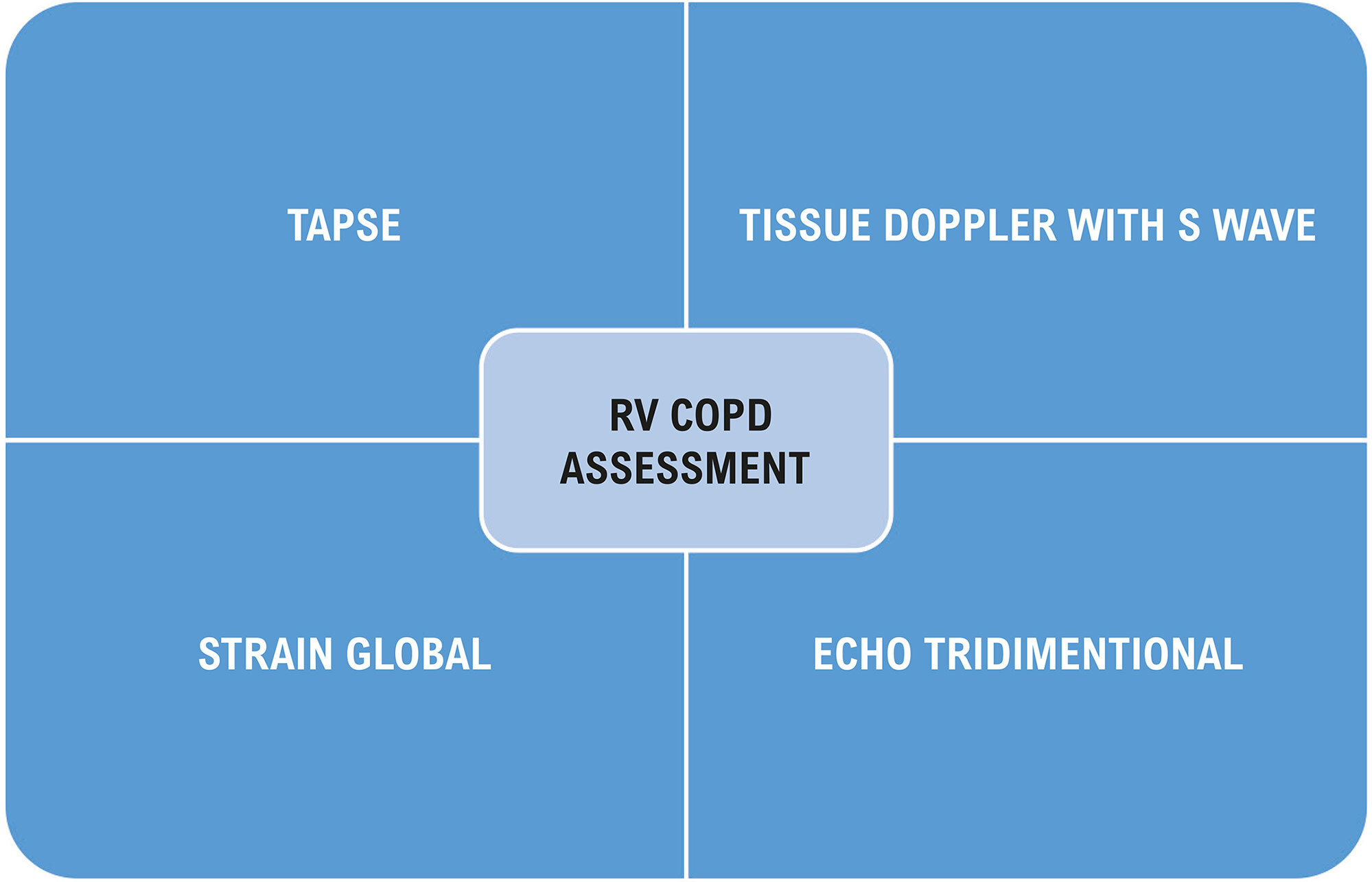
Chronic obstructive pulmonary disease (COPD) is a lung disease that often has an indolent course and systemic repercussions. Its main cause is constant and prolonged exposure to cigarette smoke or other gases. Such particles lead to reduced airflow and consequent lung hyperinflation with varying degrees of airway obstruction, also causing skeletal muscle dysfunction, respiratory failure, and decreased peripheral blood flow. COPD patients with concomitant cardiovascular disease (CVD) have a worse prognosis than simply the prognosis of each disease alone. However, it is difficult to establish what the risk is for a given group of patients due to the complex network of etiological and pathophysiological interactions underlying both diseases. Quantitative and qualitative echocardiographic assessment of right ventricular function is becoming of increasing interest in cardiac diseases that affect the right ventricle (RV), such as congenital heart disease and pulmonary hypertension (PH). However, it is still challenging due to the complex anatomy of the RV. The objective is to revisit the echocardiographic parameters that functionally assess the RV in patients with COPD, even if they do not present clinical signs of ventricular dysfunction.

  • Chronic Obstructive Pulmonary Disease
  • Doppler Echocardiography
  • Global Longitudinal Strain
  • Right Ventricular Dysfunction
Read Full Article
Creative Commons Attribution (CC BY) Creative Commons license
19/03/2025 DOI: 10.36660/abchf.20240046i Views 1
Study of Right Ventricular Strain Imaging in Patients with Acute Inferior Wall Myocardial Infarction in a Tertiary Care Hospital in Eastern India
IJCS
Original Article

Study of Right Ventricular Strain Imaging in Patients with Acute Inferior Wall Myocardial Infarction in a Tertiary Care Hospital in Eastern India

Pallab Biswas et al. Subhro Chakraborty Biswajit Majumder

Abstract

Background

Right ventricle (RV) involvement in inferior wall myocardial infarction (IWMI) is considered a strong predictor of in-hospital mortality and complications. However, assessment of RV involvement and function remains challenging due to difficulties in chamber visualization.

Objective

This study aimed to assess RV involvement in patients with IWMI using myocardial wall velocity (tissue Doppler imaging) and strain rate parameters with conventional echocardiographic indices, evaluating RV function and its correlations with in-hospital mortality and morbidity.

Methods

An observational study was conducted from May 2020 to April 2021 in 210 patients with IWMI visiting a tertiary care center. For each participant, demographics and clinical characteristics were obtained, and an electrocardiography (ECG) was recorded. Following this, right ventricular global longitudinal strain (RVGLS) and echocardiographic parameters (Tei index, right ventricular fractional area change [RVFAC], and tricuspid annular plane systolic excursion [TAPSE]) were estimated. Chi-square test was performed for differences in outcomes between patients with and without RV dysfunction. Correlation analysis was conducted between RVGLS, ECG, and other echocardiographic parameters. P < 0.05 was considered statistically significant.

Results

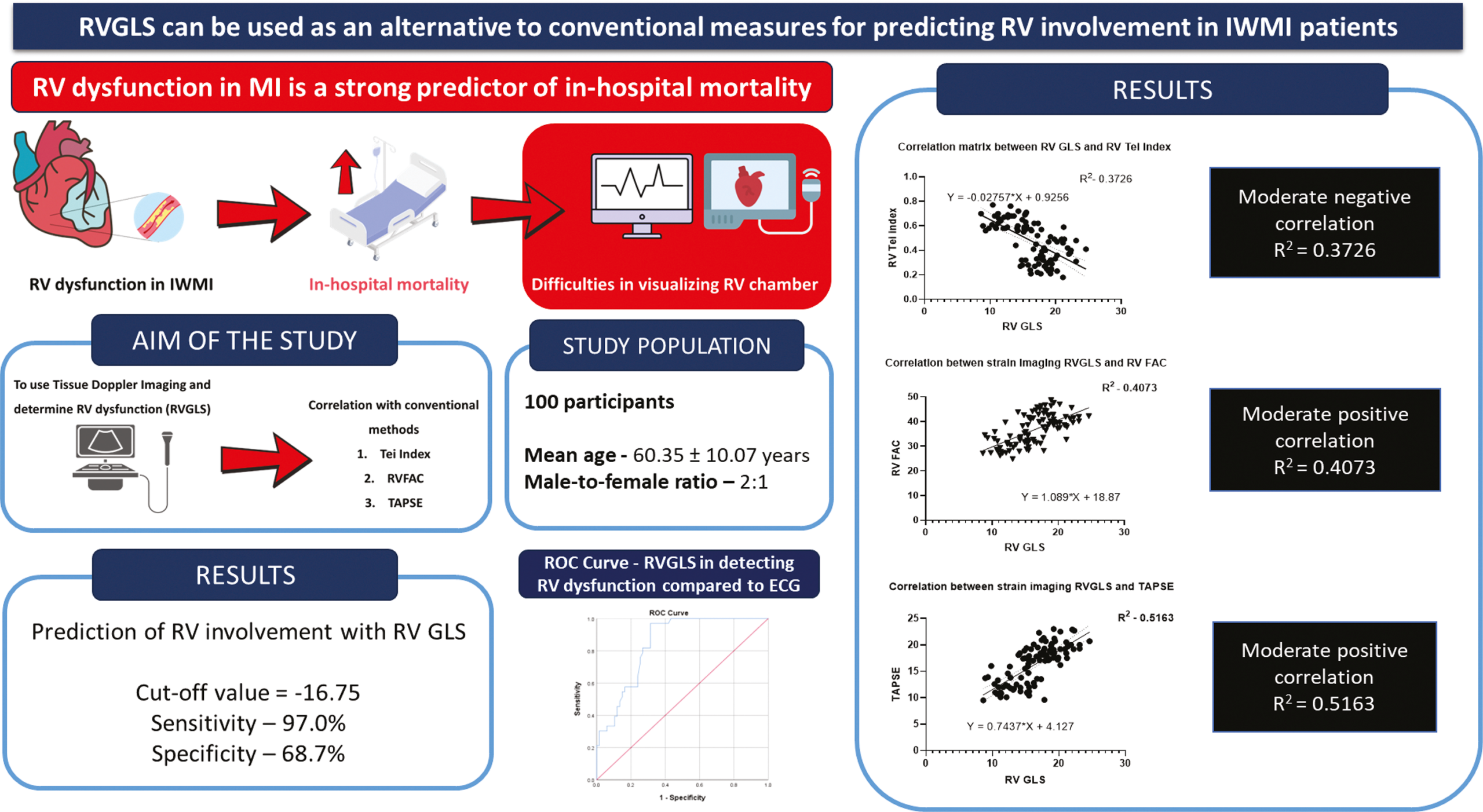
Pearson’s correlation analysis between RVGLS and Tei index among patients with IWMI indicated a moderate negative correlation (R = 0.610). Furthermore, RVGLS exhibited a moderate positive correlation with RVFAC (R = 0.635) and TAPSE (R = 0.718). At the cutoff of −16.75, RVGLS predicted RV involvement in patients with 97.0% sensitivity and 68.7% specificity. RVGLS predicted RV dysfunction in 44.8% of the patients in the mortality group.

Conclusion

RVGLS can be used as an alternative measure for predicting RV involvement in patients with IWMI.

  • Inferior Wall Myocardial Infarction
  • Myocardial Infarction
  • Right Ventricular Dysfunction
Read Full Article
Creative Commons Attribution (CC BY) Creative Commons license
28/02/2025 DOI: 10.36660/ijcs.20230137
ABC
Editorial

Pulmonary Arterial Hypertension and Cardioprotective Interventions

Elida Paula Benquique Ojopi et al. Carolina Rodrigues Tonon Katashi Okoshi Marina Politi Okoshi

The normal pulmonary vasculature is a low-pressure system compared with the systemic vasculature. Pulmonary hypertension is characterized by a mean pulmonary artery pressure higher than 25 mmHg. The primary pathophysiological process of pulmonary hypertension is a restriction of blood flow through the pulmonary circulation, which leads to increased pulmonary vascular resistance and eventual failure of the right ventricle. Pulmonary hypertension may be idiopathic (PAH) or aconsequence of chronic diseases, including left-sided heart failure, parenchymal lung diseases, and thromboembolic disease.

Pathological structural and functional changes of the ventricles are known as cardiac remodeling, which is associated with a poor prognosis in PAH. Currently, no specific treatment is recommended for PAH-induced cardiac remodeling.

[…]

  • Antioxidants
  • Homeostasis
  • Pulmonary Arterial Hypertension
  • Right Ventricular Dysfunction
Read Full Article
Creative Commons Attribution (CC BY) Creative Commons license
13/09/2024 DOI: 10.36660/abc.20240445i
Central Illustration
ABCIC
Review Article

My Approach To Echocardiographic Evaluation in Arrhythmogenic Cardiomyopathy

Danilo Bora Moleta et al. Cassio Carvalho Soeiro Machado Lucas Arraes de França Marcelo Luiz Campos Vieira

Abstract

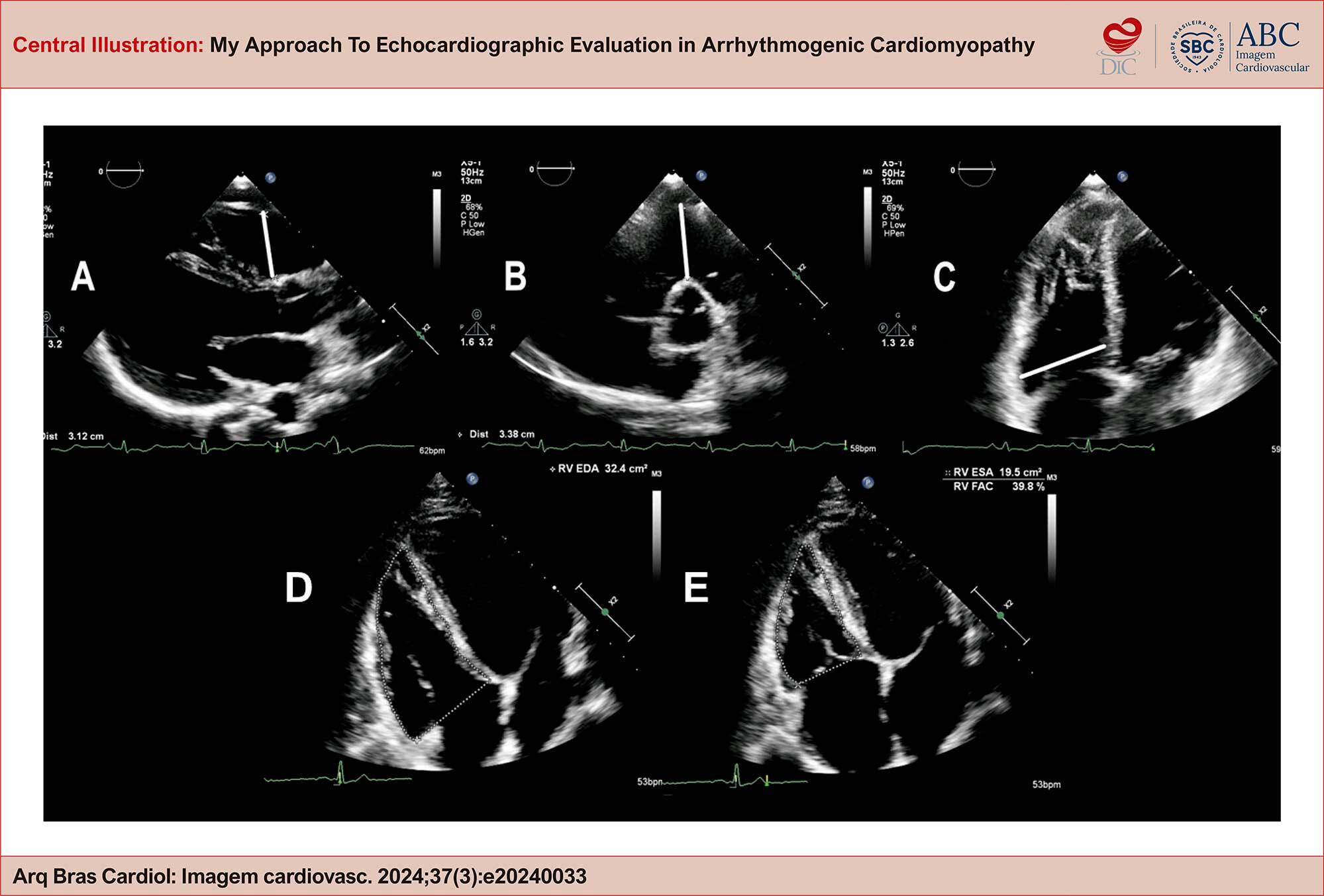
Careful echocardiographic evaluation of the right ventricle, although challenging and sometimes neglected, is of utmost importance in the diagnosis of certain pathologies, such as arrhythmogenic cardiomyopathy (ACM) — a hereditary myocardial disease associated with the development of ventricular arrhythmias, heart failure, and sudden death. This article aims to review the diagnostic criteria proposed in the 2010 Task Force and the modifications suggested by the 2020 Padua criteria, as well as illustrate the potential use of advanced echocardiography techniques for earlier detection and prognostic definition.

  • Arrhythmogenic right ventricular dysplasia;
  • Cardiomyopathies
  • Right Ventricular Dysfunction
  • Sudden Cardiac Death
  • Ventricular tachycardia
Read Full Article
Creative Commons Attribution (CC BY) Creative Commons license
27/08/2024 DOI: 10.36660/abcimg.20240033i Views 2

How to cite this article

EndNote RIS

Electronic Document Format (Vancouver)

Carvalho MRM. Beyond Baseline: Dynamic Prognostic Assessment in Acute Pulmonary Embolism. Arquivos Brasileiros de Cardiologia 2026;123(7):e2060580.

Electronic Document Format (ABNT)

Carvalho, Marcio Roberto Moraes de. Beyond Baseline: Dynamic Prognostic Assessment in Acute Pulmonary Embolism. Arquivos Brasileiros de Cardiologia, v. 123, n. 7, e2060580, Sep. 2026.

Electronic Document Format (APA)

Carvalho, M. R. M. (2026). Beyond Baseline: Dynamic Prognostic Assessment in Acute Pulmonary Embolism. Arquivos Brasileiros de Cardiologia, 123(7), e2060580.

Electronic Document Format (ISO)

Carvalho, Marcio Roberto Moraes de. Beyond Baseline: Dynamic Prognostic Assessment in Acute Pulmonary Embolism. Arquivos Brasileiros de Cardiologia [online]. 2026, vol. 123, n. 7, [cited 2026-10-14], e2060580. Available from: <https://journals.cardiol.br/en/article/beyond-baseline-dynamic-prognostic-assessment-in-acute-pulmonary-embolism/>. ISSN 0066-782X

EndNote RIS

Electronic Document Format (Vancouver)

Rogelin M, Aranha AFMG, Fonseca FR, Silva RM, Fialho GL. Serial Echocardiographic Assessment of Right Ventricular Function and Its Association With Functional Capacity, Dyspnea, and Pulmonary Diffusion in Post-COVID-19 Survivors. ABC Imagem Cardiovascular 2026;39(3):e20260051.

Electronic Document Format (ABNT)

Rogelin, Marcelo; Aranha, Adriana Ferraz Martins Graça; Fonseca, Fernanda Rodrigues; Silva, Rosemeri Maurici da; Fialho, Guilherme Loureiro. Serial Echocardiographic Assessment of Right Ventricular Function and Its Association With Functional Capacity, Dyspnea, and Pulmonary Diffusion in Post-COVID-19 Survivors. ABC Imagem Cardiovascular, v. 39, n. 3, e20260051, Sep. 2026.

Electronic Document Format (APA)

Rogelin, M., Aranha, A. F. M. G., Fonseca, F. R., Silva, R. M. , & Fialho, G. L. (2026). Serial Echocardiographic Assessment of Right Ventricular Function and Its Association With Functional Capacity, Dyspnea, and Pulmonary Diffusion in Post-COVID-19 Survivors. ABC Imagem Cardiovascular, 39(3), e20260051.

Electronic Document Format (ISO)

Rogelin, Marcelo and Aranha, Adriana Ferraz Martins Graça and Fonseca, Fernanda Rodrigues and Silva, Rosemeri Maurici da and Fialho, Guilherme Loureiro. Serial Echocardiographic Assessment of Right Ventricular Function and Its Association With Functional Capacity, Dyspnea, and Pulmonary Diffusion in Post-COVID-19 Survivors. ABC Imagem Cardiovascular [online]. 2026, vol. 39, n. 3, [cited 2026-10-14], e20260051. Available from: <https://journals.cardiol.br/en/article/serial-echocardiographic-assessment-of-right-ventricular-function-and-its-association-with-functional-capacity-dyspnea-and-pulmonary-diffusion-in-post-covid-19-survivors/>. ISSN 2318-8219

EndNote RIS

Electronic Document Format (Vancouver)

Quintana MA, Perea J, Villarreal R, Soto M, Castro M, Cortês R, Sanhueza P, et al. Persistent Right Ventricular Dysfunction and Hemodynamic Evolution Predict In-Hospital Deterioration in Intermediate-High- and High-Risk Pulmonary Embolism. Arquivos Brasileiros de Cardiologia 2026;123(7):e20260468.

Electronic Document Format (ABNT)

Quintana, Miguel A.; Perea, Joaquín; Villarreal, Ricardo; Soto, Mauricio; Castro, Marildes; Cortês, Rafael; Sanhueza, Patricio; Saavedra, Iván; Quispe, Yhaquelina; Tenezaca, Roger; Colque, Roberto; Arias, Alexandra; Toquica, Alex Rivera; Álvarez, Manuel; Pérez, Ysmenia D.; Morejón, Paola; Fernández, Karina G.; Mogollón, Adriana; Cardona, Marcelo; Pérez, Gonzalo Emanuel; López-Ruiz, Arnaldo. Persistent Right Ventricular Dysfunction and Hemodynamic Evolution Predict In-Hospital Deterioration in Intermediate-High- and High-Risk Pulmonary Embolism. Arquivos Brasileiros de Cardiologia, v. 123, n. 7, e20260468, Sep. 2026.

Electronic Document Format (APA)

Quintana, M. A., Perea, J., Villarreal, R., Soto, M., Castro, M., Cortês, R., Sanhueza, P., Saavedra, I., Quispe, Y., Tenezaca, R., Colque, R., Arias, A., Toquica, A. R., Álvarez, M., Pérez, Y. D., Morejón, P., Fernández, K. G., Mogollón, A., Cardona, M., Pérez, G. E., & López-Ruiz, A. (2026). Persistent Right Ventricular Dysfunction and Hemodynamic Evolution Predict In-Hospital Deterioration in Intermediate-High- and High-Risk Pulmonary Embolism. Arquivos Brasileiros de Cardiologia, 123(7), e20260468.

Electronic Document Format (ISO)

Quintana, Miguel A. and Perea, Joaquín and Villarreal, Ricardo and Soto, Mauricio and Castro, Marildes and Cortês, Rafael and Sanhueza, Patricio and Saavedra, Iván and Quispe, Yhaquelina and Tenezaca, Roger and Colque, Roberto and Arias, Alexandra and Toquica, Alex Rivera and Álvarez, Manuel and Pérez, Ysmenia D. and Morejón, Paola and Fernández, Karina G. and Mogollón, Adriana and Cardona, Marcelo and Pérez, Gonzalo Emanuel and López-Ruiz, Arnaldo. Persistent Right Ventricular Dysfunction and Hemodynamic Evolution Predict In-Hospital Deterioration in Intermediate-High- and High-Risk Pulmonary Embolism. Arquivos Brasileiros de Cardiologia [online]. 2026, vol. 123, n. 7, [cited 2026-10-14], e20260468. Available from: <https://journals.cardiol.br/en/article/persistent-right-ventricular-dysfunction-and-hemodynamic-evolution-predict-in-hospital-deterioration-in-intermediate-high-and-high-risk-pulmonary-embolism/>. ISSN 0066-782X

EndNote RIS

Electronic Document Format (Vancouver)

Bispo IGA, Brambila VM, Chagas GC, Pereira MLRG, Melo MAM. Echocardiographic Parameters for Evaluating the Right Ventricle in Patients with Chronic Obstructive Pulmonary Disease: Literature Review. ABC Heart Fail Cardiomyop 2025;5(1):e20240046.

Electronic Document Format (ABNT)

Bispo, Irving Gabriel Araújo; Brambila, Vitor Morais; Chagas, Gabriela Câmara; Pereira, Maria Luisa Ribeiro Gonçalves; Melo, Maria Angélica Miqueri de. Echocardiographic Parameters for Evaluating the Right Ventricle in Patients with Chronic Obstructive Pulmonary Disease: Literature Review. ABC Heart Fail Cardiomyop, v. 5, n. 1, e20240046, Mar. 2025.

Electronic Document Format (APA)

Bispo, I. G. A., Brambila, V. M., Chagas, G. C., Pereira, M. L. R. G., & Melo, M. A. M. (2025). Echocardiographic Parameters for Evaluating the Right Ventricle in Patients with Chronic Obstructive Pulmonary Disease: Literature Review. ABC Heart Fail Cardiomyop, 5(1), e20240046.

Electronic Document Format (ISO)

Bispo, Irving Gabriel Araújo and Brambila, Vitor Morais and Chagas, Gabriela Câmara and Pereira, Maria Luisa Ribeiro Gonçalves and Melo, Maria Angélica Miqueri de. Echocardiographic Parameters for Evaluating the Right Ventricle in Patients with Chronic Obstructive Pulmonary Disease: Literature Review. ABC Heart Fail Cardiomyop [online]. 2025, vol. 5, n. 1, [cited 2026-10-14], e20240046. Available from: <https://journals.cardiol.br/en/article/echocardiographic-parameters-for-evaluating-the-right-ventricle-in-patients-with-chronic-obstructive-pulmonary-disease-literature-review/>

EndNote RIS

Electronic Document Format (Vancouver)

Biswas P, Chakraborty S, Majumder B. Study of Right Ventricular Strain Imaging in Patients with Acute Inferior Wall Myocardial Infarction in a Tertiary Care Hospital in Eastern India. International Journal of Cardiovascular Sciences 2025;38:e20230137.

Electronic Document Format (ABNT)

Biswas, Pallab; Chakraborty, Subhro; Majumder, Biswajit. Study of Right Ventricular Strain Imaging in Patients with Acute Inferior Wall Myocardial Infarction in a Tertiary Care Hospital in Eastern India. International Journal of Cardiovascular Sciences, v. 38, e20230137, Feb. 2025.

Electronic Document Format (APA)

Biswas, P., Chakraborty, S., & Majumder, B. (2025). Study of Right Ventricular Strain Imaging in Patients with Acute Inferior Wall Myocardial Infarction in a Tertiary Care Hospital in Eastern India. International Journal of Cardiovascular Sciences, 38, e20230137.

Electronic Document Format (ISO)

Biswas, Pallab and Chakraborty, Subhro and Majumder, Biswajit. Study of Right Ventricular Strain Imaging in Patients with Acute Inferior Wall Myocardial Infarction in a Tertiary Care Hospital in Eastern India. International Journal of Cardiovascular Sciences [online]. 2025, vol. 38, [cited 2026-10-14], e20230137. Available from: <https://journals.cardiol.br/en/article/study-of-right-ventricular-strain-imaging-in-patients-with-acute-inferior-wall-myocardial-infarction-in-a-tertiary-care-hospital-in-eastern-india/>. ISSN 2359-4802

EndNote RIS

Electronic Document Format (Vancouver)

Ojopi EPB, Tonon CR, Okoshi K, Okoshi MP. Pulmonary Arterial Hypertension and Cardioprotective Interventions. Arquivos Brasileiros de Cardiologia 2024;121(7):e20240445.

Electronic Document Format (ABNT)

Ojopi, Elida Paula Benquique; Tonon, Carolina Rodrigues; Okoshi, Katashi; Okoshi, Marina Politi. Pulmonary Arterial Hypertension and Cardioprotective Interventions. Arquivos Brasileiros de Cardiologia, v. 121, n. 7, e20240445, Sep. 2024.

Electronic Document Format (APA)

Ojopi, E. P. B., Tonon, C. R., Okoshi, K., & Okoshi, M. P. (2024). Pulmonary Arterial Hypertension and Cardioprotective Interventions. Arquivos Brasileiros de Cardiologia, 121(7), e20240445.

Electronic Document Format (ISO)

Ojopi, Elida Paula Benquique and Tonon, Carolina Rodrigues and Okoshi, Katashi and Okoshi, Marina Politi. Pulmonary Arterial Hypertension and Cardioprotective Interventions. Arquivos Brasileiros de Cardiologia [online]. 2024, vol. 121, n. 7, [cited 2026-10-14], e20240445. Available from: <https://journals.cardiol.br/en/article/pulmonary-arterial-hypertension-and-cardioprotective-interventions/>. ISSN 0066-782X

EndNote RIS

Electronic Document Format (Vancouver)

Moleta DB, Machado CCS, França LA, Vieira MLC. My Approach To Echocardiographic Evaluation in Arrhythmogenic Cardiomyopathy. ABC Imagem Cardiovascular 2024;37(3):e20240033.

Electronic Document Format (ABNT)

Moleta, Danilo Bora; Machado, Cassio Carvalho Soeiro; França, Lucas Arraes de; Vieira, Marcelo Luiz Campos. My Approach To Echocardiographic Evaluation in Arrhythmogenic Cardiomyopathy. ABC Imagem Cardiovascular, v. 37, n. 3, e20240033, Aug. 2024.

Electronic Document Format (APA)

Moleta, D. B., Machado, C. C. S., França, L. A. , & Vieira, M. L. C. (2024). My Approach To Echocardiographic Evaluation in Arrhythmogenic Cardiomyopathy. ABC Imagem Cardiovascular, 37(3), e20240033.

Electronic Document Format (ISO)

Moleta, Danilo Bora and Machado, Cassio Carvalho Soeiro and França, Lucas Arraes de and Vieira, Marcelo Luiz Campos. My Approach To Echocardiographic Evaluation in Arrhythmogenic Cardiomyopathy. ABC Imagem Cardiovascular [online]. 2024, vol. 37, n. 3, [cited 2026-10-14], e20240033. Available from: <https://journals.cardiol.br/en/article/my-approach-to-echocardiographic-evaluation-in-arrhythmogenic-cardiomyopathy/>. ISSN 2318-8219

  • About ABC Family
  • Internal Regulation
  • Editorial Board
  • Brazilian Society of Cardiology (SBC)

Issues

SBC Guidelines

  • Videos
  • Podcasts
  • News