Mônica de Oliveira Gonçalo et al. André Alexandre dos Santos Gomes Matheus Martins Monteiro Nicolas Babilônia Cavalcanti … Fernando Almeida Bezerra Moisés Abtibol Machado Dênison Clark Corrêa de Miranda Kátia do Nascimento Couceiro João Marcos Bemfica Barbosa Ferreira
Introduction
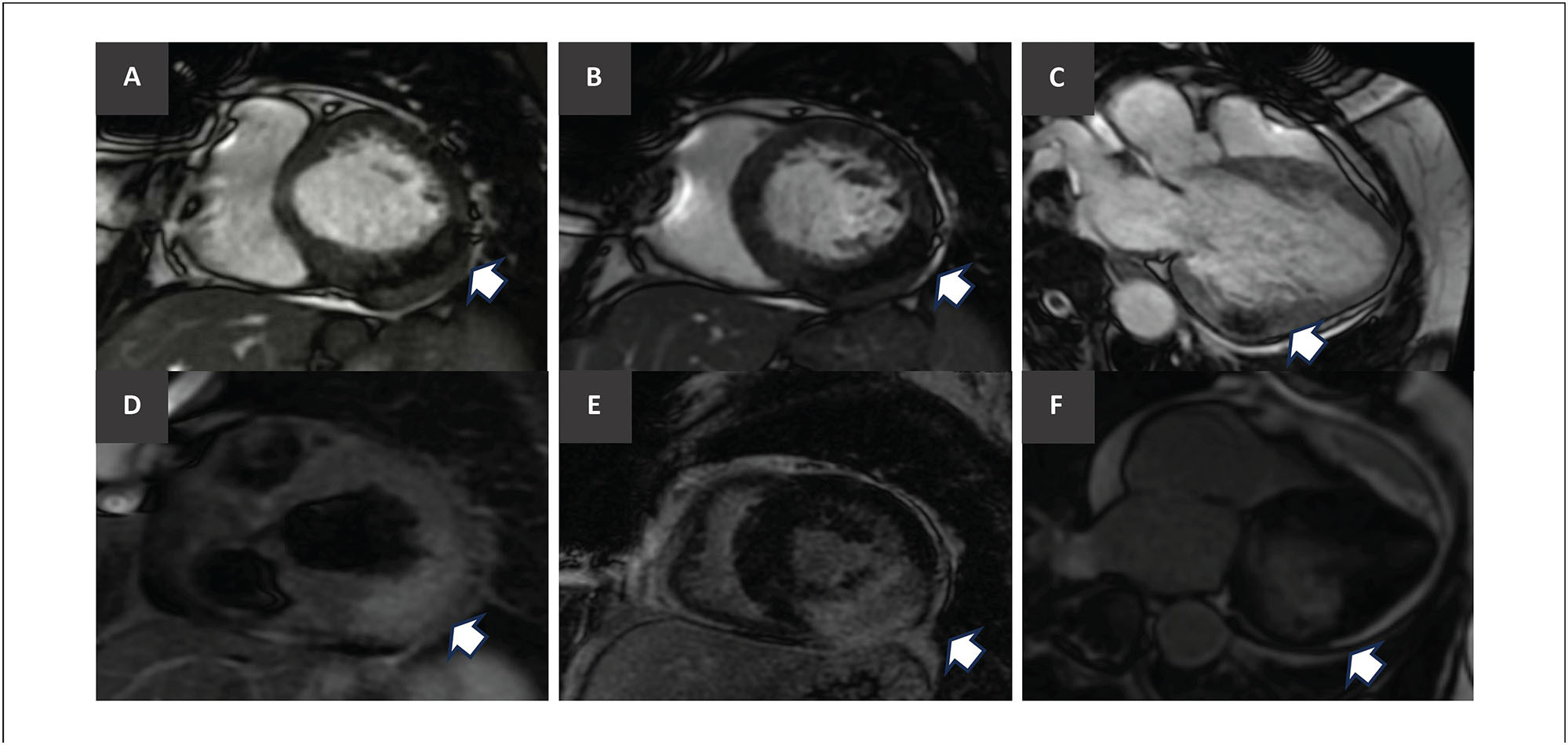
Ventricular hypertrabeculation, also known as ventricular noncompaction, is a myocardial phenotype characterized by excessive trabeculation and deep intertrabecular recesses caused by incomplete myocardial compaction during embryonic development. The earliest reported cases were associated with congenital heart defects, including ventricular outflow tract obstruction, complex cyanotic congenital heart disease, and coronary artery anomalies.,
The clinical presentation is highly heterogeneous and may include heart failure (HF), arrhythmias, thromboembolic events, and sudden cardiac death. In addition to ventricular structural abnormalities, ventricular hypertrabeculation may be associated with cardiac conduction disorders, atrial arrhythmias, and functional valvular regurgitation (FVR) secondary to cardiac chamber dilatation, all of which contribute to greater clinical complexity and a poorer prognosis.
[…]