ABC Family Arquivos Brasileiros de Cardiologia International Journal of Cardiovascular Sciences ABC Heart Failure & Cardiomyopathy ABC Imagem Cardiovascular
Português English
ABC Family
Português English
  • About
    • About ABC Family
    • Internal Regulation
    • Editorial Board
    • Brazilian Society of Cardiology (SBC)
  • Issues
  • SBC Guidelines
  • Content
    • Videos
    • Podcasts
    • News
  • About
    • About ABC Family
    • Internal Regulation
    • Editorial Board
    • Brazilian Society of Cardiology (SBC)
  • Issues
  • SBC Guidelines
  • Content
    • Videos
    • Podcasts
    • News

ABC Family

  • ABC Family
  • Arquivos Brasileiros de Cardiologia
  • International Journal of Cardiovascular Sciences
  • ABC Heart Failure & Cardiomyopathy
  • ABC Imagem Cardiovascular
Search in

No content found.

Journals
Ordering
Article types
Others

  1. Home
  2. Keyword: Systolic Heart Failure
ABC
Editorial

HFREF Therapy: Randomized Evidence and Real-World Perspectives

Daniella Motta da Costa Dan

Abstract

Heart failure with reduced ejection fraction (HFrEF) has seen significant therapeutic advances with the consolidation of the four pharmacological pillars that modify prognosis. The widespread use of these therapies is associated with a substantial reduction in cardiovascular death and hospitalizations for heart failure, supporting contemporary strategies for rapid introduction and subsequent optimization to target or maximum tolerated doses. In this context, sacubitril/valsartan demonstrated prognostic benefit in PARADIGM-HF and a greater reduction in NT-proBNP in PIONEER-HF. However, different results were observed in other settings, such as PARADISE-MI and LIFE, helping to define the populations in which its benefit was demonstrated. The study published in this issue of the Arquivos Brasileiros de Cardiologia evaluated, in a real-world observational cohort, patients with HFrEF treated with maximum doses of sacubitril/valsartan, enalapril, or losartan. Compared to the group treated with enalapril or losartan, sacubitril/valsartan was not associated with a statistically significant reduction in hospitalization or mortality, although it was associated with an improvement in functional class. These findings should be interpreted considering methodological limitations, such as observational design, lack of randomization, limited number of events, and heterogeneity of the comparator group. Real-world studies broaden the understanding of the effectiveness, applicability, and implementation of therapies and should be analyzed in conjunction with the consolidated evidence from randomized clinical trials.

Heart failure (HF) is a complex and serious syndrome associated with high hospitalization and mortality rates. In heart failure with reduced ejection fraction (HFrEF), large clinical trials have established four pharmacological pillars that modify the prognosis: beta-blockers, which attenuate the activation of the sympathetic nervous system; inhibition of the renin-angiotensin system, through the use of angiotensin receptor and neprilysin inhibitors (ARNIs), angiotensin-converting enzyme inhibitors (ACEIs), or angiotensin receptor blockers (ARBs); mineralocorticoid receptor antagonists (MRAs); and sodium-glucose cotransporter type 2 inhibitors (SGLT2i).,

[…]

  • Evidence-Based Practice
  • Heart Failure
  • Systolic Heart Failure
Read Full Article
Creative Commons Attribution (CC BY) Creative Commons license
21/09/2026 DOI: 10.36660/abc.20260588i Views 3
Correlating Invasive and Echocardiographic Hemodynamic Measures in Patients with Heart Failure with Reduced Ejection Fraction
ABCIC
Original Article

Correlating Invasive and Echocardiographic Hemodynamic Measures in Patients with Heart Failure with Reduced Ejection Fraction

João Pedro da Rosa Barbato et al. Fernando Luis Scolari Guilherme Pinheiro Machado André Barcellos Amon … Pedro Castilhos de Freitas Crivelaro Willian R. Menegazzo Solano Vinicius Berger Gustavo Neves de Araujo Felipe Homem Valle Rodrigo Vugman Wainstein

Abstract

Background:

The management of heart failure with reduced ejection fraction (HFrEF) has advanced with the use of invasive hemodynamic markers such as cardiac power output (CPO) and pulmonary artery pulsatility index (PAPI). Simultaneously, interest has grown in noninvasive prognostic indicators, especially the left ventricular outflow tract velocity–time integral (LVOT-VTI).

Objective:

This study aimed to assess the correlation between invasive and echocardiographic parameters, particularly CPO, PAPI, and LVOT-VTI, in patients with HFrEF.

Methods:

This cross-sectional, single-center study included inpatients and outpatients with chronic stable or acutely decompensated HFrEF. Individuals with cardiogenic shock (CS) were excluded. Right heart catheterization (RHC) and echocardiography were performed on the same day. Statistical significance was defined as a two-sided p value < 0.05.

Results:

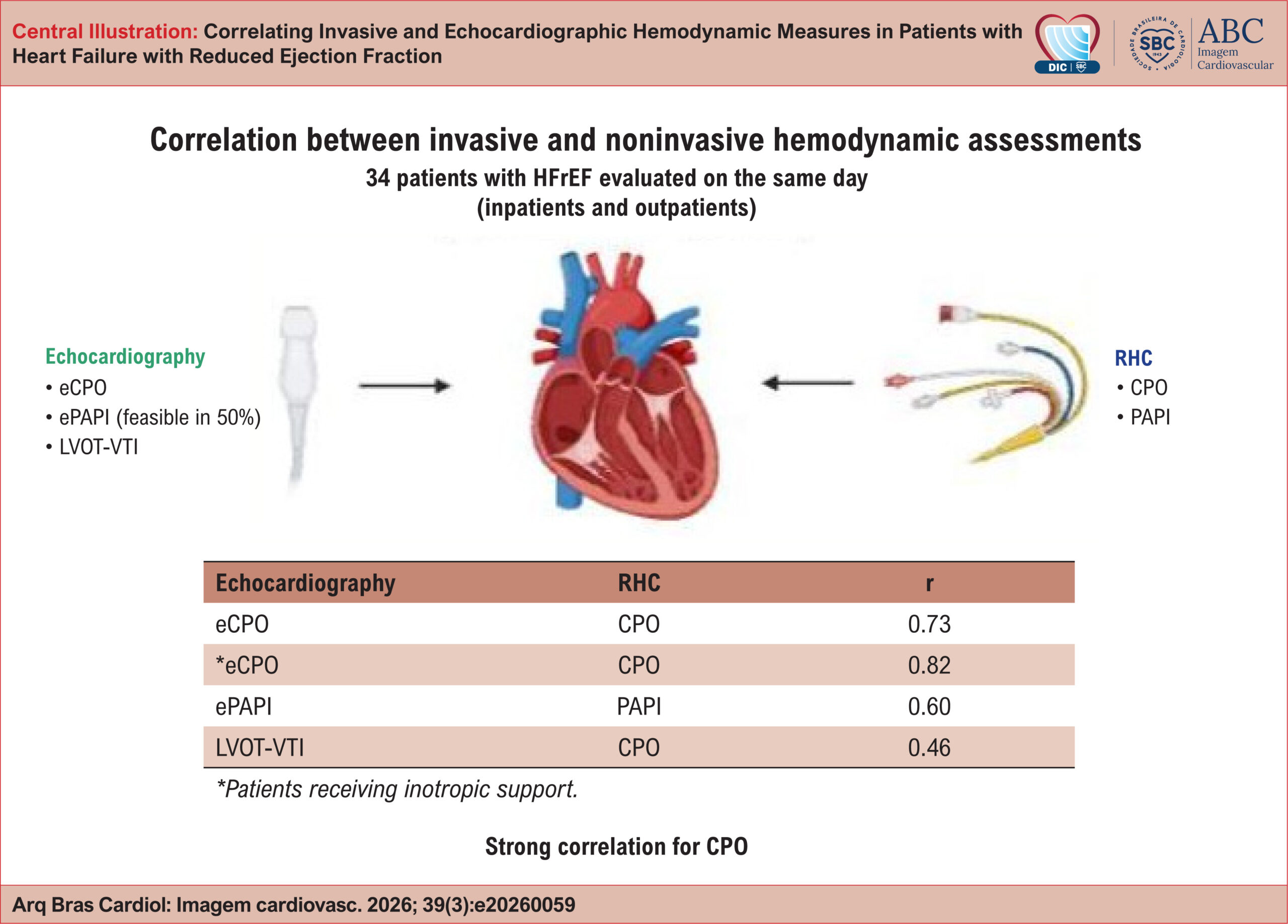
Significant correlations were observed between invasive and echocardiographic CPO (r = 0.737, p < 0.001) and PAPI (r = 0.604, p < 0.05). LVOT-VTI showed significant correlation with CPO measured via pulmonary artery catheter (PAC) (r = 0.469, p < 0.01). Echocardiographic PAPI was measurable in only 16 patients. A sensitivity analysis of those receiving inotropes showed an even stronger correlation between invasive and echocardiographic CPO (r = 0.812, p = 0.005).

Conclusion:

Echocardiographic and invasive hemodynamic parameters showed significant correlations in HFrEF, particularly CPO, supporting echocardiography as a potential alternative for hemodynamic assessment. However, the low feasibility of noninvasive PAPI measurement highlights important limitations in this population.

  • Echocardiography
  • Heart Rate
  • Hemodynamic Monitoring
  • Systolic Heart Failure
Read Full Article
Creative Commons Attribution (CC BY) Creative Commons license
03/09/2026 DOI: 10.36660/abcimg.20260059i Views 3
Sacubitril/Valsartan versus Enalapril or Losartan at Maximum Doses in Heart Failure with Reduced Ejection Fraction: Real-World Data
ABC
Original Article

Sacubitril/Valsartan versus Enalapril or Losartan at Maximum Doses in Heart Failure with Reduced Ejection Fraction: Real-World Data

Renato de Carvalho Barros et al. Vinícius C. Fiusa Gabrielle N. Tim Victoria T. V. Goulart … Caio Henrique M. Nascimento Gustavo T. de Moura Adriana J. B. A. Guimarães Sergio Henrique Rodolpho Ramalho Armindo Jreige Jr. Filipe A. Moura Luiz Sérgio Fernandes de Carvalho

Abstract

Background:

Sacubitril/valsartan reduced mortality and hospitalizations in patients with heart failure with reduced ejection fraction (HFrEF) compared to enalapril in pivotal clinical trials. However, real-world data under optimized dosing remain limited.

Objective:

To compare the outcomes of HFrEF patients treated with sacubitril/valsartan versus either enalapril or losartan at guideline-recommended maximum dosages.

Methods:

We analyzed data from an observational heart failure cohort (n = 2,314) including patients receiving care between August 2010 and September 2024 at six public hospitals in a large metropolitan area. The primary analysis included 254 HFrEF patients receiving the guideline-recommended maximum dosages of the investigated drugs. A sensitivity analysis included 452 patients receiving any submaximal dosages. The primary outcome was combined hospitalization or death. Baseline differences were adjusted using propensity score matching. A p-value < 0.05 was considered significant.

Results:

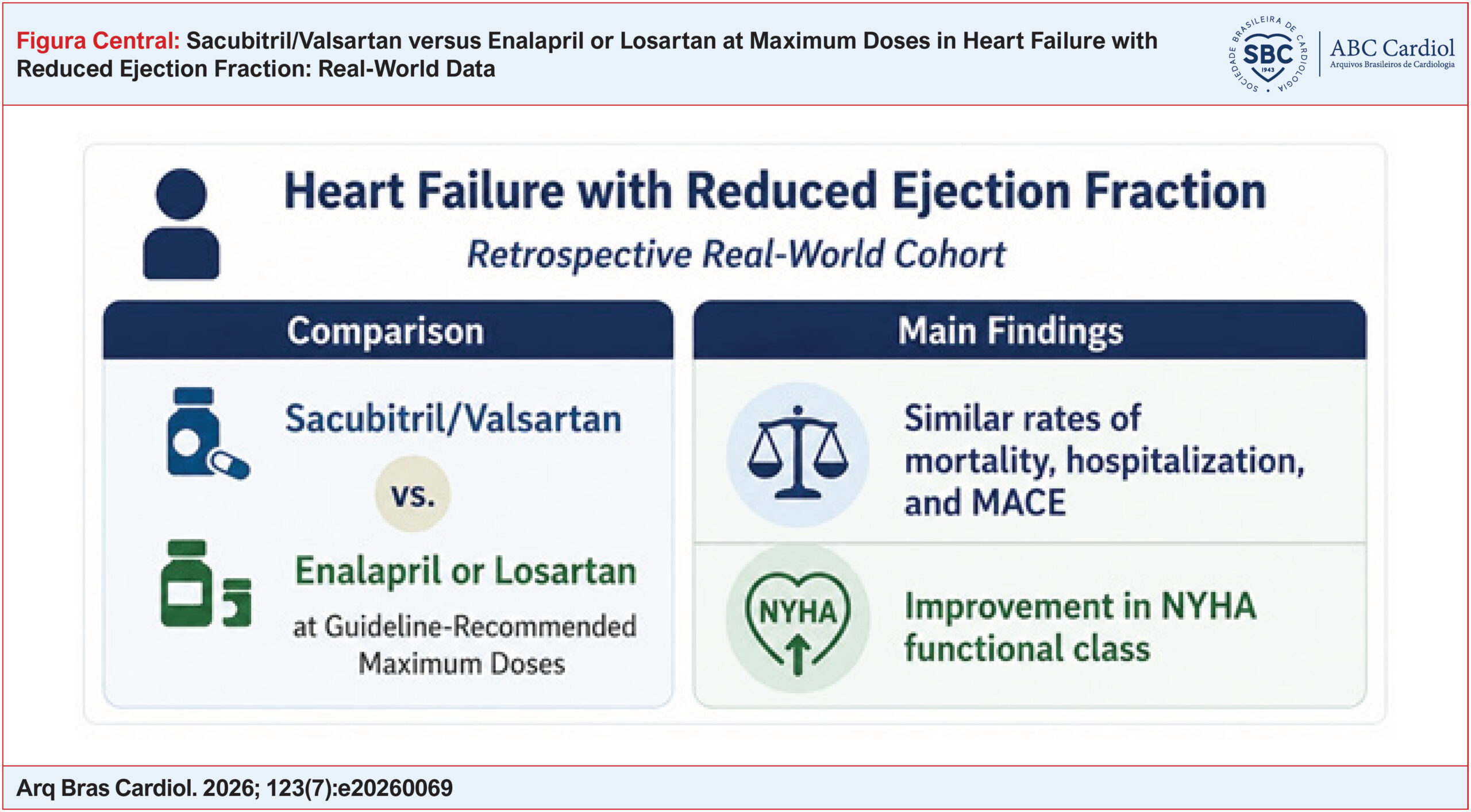
Among 254 HFrEF patients (mean age 63.6 ± 12.3 years, 61.4% male), 115 received sacubitril/valsartan 97/103mg twice daily, 33 enalapril 20 mg twice daily, and 106 losartan 100 mg daily. Over the median follow-up of 23.9 months (interquartile range 11.9–41.1), there were 70 primary endpoint events (56 first hospitalizations, 32 deaths). Compared to equivalent dosages of enalapril or losartan, sacubitril/valsartan was not associated with significant reductions in combined hospitalization or death (odds ratio 0.650, 95% confidence interval 0.354–1.195, p = 0.165), but it was associated with functional status improvement (odds ratio 3.902, 95% confidence interval 1.745–8.726, p = 0.001).

Conclusion:

This real-world study did not demonstrate significant reductions in hospitalization or mortality for sacubitril/valsartan compared with enalapril or losartan at guideline-recommended maximum dosages; however, sacubitril/valsartan was associated with improved functional status.

  • Enalapril
  • Systolic Heart Failure
  • Valsartan
Read Full Article
Creative Commons Attribution (CC BY) Creative Commons license
10/08/2026 DOI: 10.36660/abc.20260069i Views 1
Echocardiographic Changes Associated With Sacubitril/Valsartan Therapy in Patients With Heart Failure With Reduced Ejection Fraction (HFrEF): A Descriptive 12-Month Follow-Up Analysis
IJCS
Original Article

Echocardiographic Changes Associated With Sacubitril/Valsartan Therapy in Patients With Heart Failure With Reduced Ejection Fraction (HFrEF): A Descriptive 12-Month Follow-Up Analysis

Marcely Bonatto et al. Ana Karyn Ehrenfried de Freitas Caio Berwanger Takatuzi Luiz Gustavo Esmanhoto Franco … Danielle Rodrigues Vendramini Luka David Lechinewski Gustavo Gavazzoni Blume Lidia Zytynski Moura

Abstract

Background:

Although randomized controlled trials have demonstrated the efficacy of Sacubitril/Valsartan in heart failure (HF), real-world evidence regarding its impact on cardiac remodeling, particularly in Heart Failure With Reduced Ejection Fraction (HFrEF), remains limited.

Objectives:

This real-world study aimed to evaluate echocardiographic changes, including ejection fraction (EF), in a cohort of patients with HFrEF treated at a public hospital in Curitiba, Brazil, and to assess clinical outcomes at 6 and 12 months of follow-up.

Methods:

Longitudinal data were collected from 200 patients with HFrEF at baseline and at 6- and 12-month follow-up. Echocardiographic assessments included EF, left ventricular (LV) dimensions, and other cardiac parameters. Clinical outcomes included HF-related hospitalizations and New York Heart Association (NYHA) functional class.

Results:

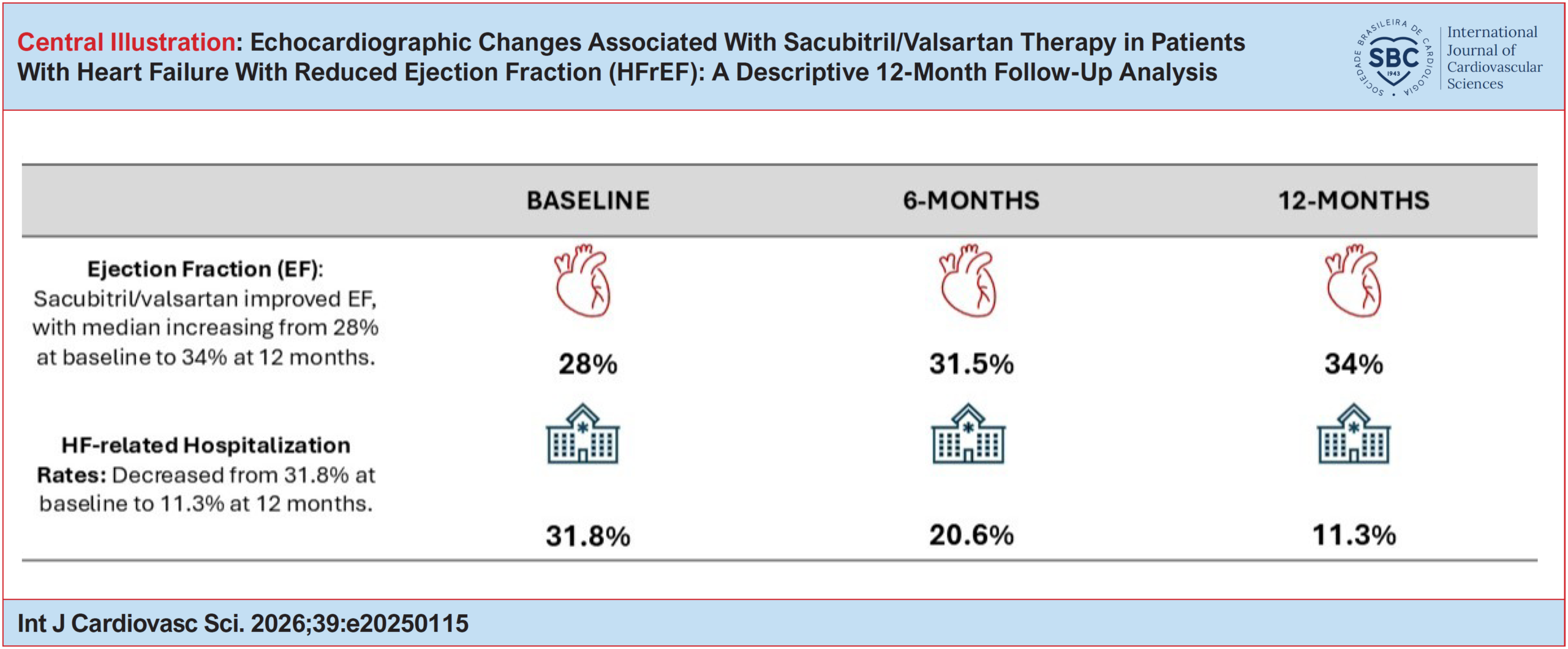
Sacubitril/Valsartan therapy was associated with improvements in EF, with the median increasing from 28% at baseline to 31.5% at 6 months and 34% at 12 months (Teichholz method). Structural remodeling was observed, including reductions in LV end-systolic and end-diastolic dimensions, as well as left atrial (LA) diameter. HF-related hospitalization rates decreased from 31.8% at baseline to 20.6% at 6 months and 11.3% at 12 months. NYHA functional class improved, with the proportion of patients in Classes III and IV decreasing from 53.2% at baseline to 17.4% at 6 months. Renal function remained stable throughout treatment. Improvements in EF were associated with a lower risk of hospitalization at 6 months (OR = 0.95) and 12 months (OR = 0.93), whereas a larger LA diameter was associated with a higher risk of hospitalization at 12 months (OR = 1.06).

Conclusions:

Sacubitril/Valsartan therapy was associated with improvements in EF, echocardiographic parameters, and NYHA functional class, as well as reductions in hospitalization rates. These findings underscore the role of the therapy in promoting reverse remodeling and suggest that its clinical benefits may extend beyond direct effects on cardiac structure.

  • Echocardiography
  • Heart Failure
  • Systolic Heart Failure
  • Ventricular Remodeling
Read Full Article
Creative Commons Attribution (CC BY) Creative Commons license
27/07/2026 DOI: 10.36660/ijcs.20250115 Views 3
Central Illustration
ABCHF
Original Article

Guideline-Directed Medical Therapy, Clinical Outcomes, and Quality of Life in Heart Failure: Insights from a Multicenter International Consortium for Health Outcomes Measurement-Based Brazilian Cohort

Suzana Alves Silva et al. Keila Amaral Sabrina Bernardez-Pereira Marcelo Franken … Daisa Mesquita Escobosa Carolina Ivo Leandro Menezes Alves da Costa Fabio Gomes da Conceição Laine Lisboa Thays Naomy Rizzi Bárbara Reis Tamburim Luciana Alves Lopes Siomara Tavares Fernandes Yamaguti Luiz Antonio Nasi Juçara Maccari Arthur Pille Jonas Michel Wolf Andre Volschan Marcelo Westerlund Montera Silvia Moreira Ayub Ferreira Luiz Francisco Cardoso Roberta Saretta Teresa Cristina D. C. Nascimento Olívia Margarido Camila Oliveira Evelyn Tiburzio Ary Ribeiro

Abstract

Background

Real-world evidence integrating clinical outcomes and patient-reported measures in heart failure with reduced ejection fraction (HFrEF) remains scarce in middle-income countries. Standardized outcome measurement frameworks may enable more consistent evaluation of care quality and treatment effectiveness.

Objective

To assess the association of guideline-directed medical therapy (GDMT) with clinical outcomes and patient-reported quality of life (QoL) in patients with HFrEF within 1 year after index hospitalization, using the International Consortium for Health Outcomes Measurement standard set in a multicenter Brazilian cohort.

Methods

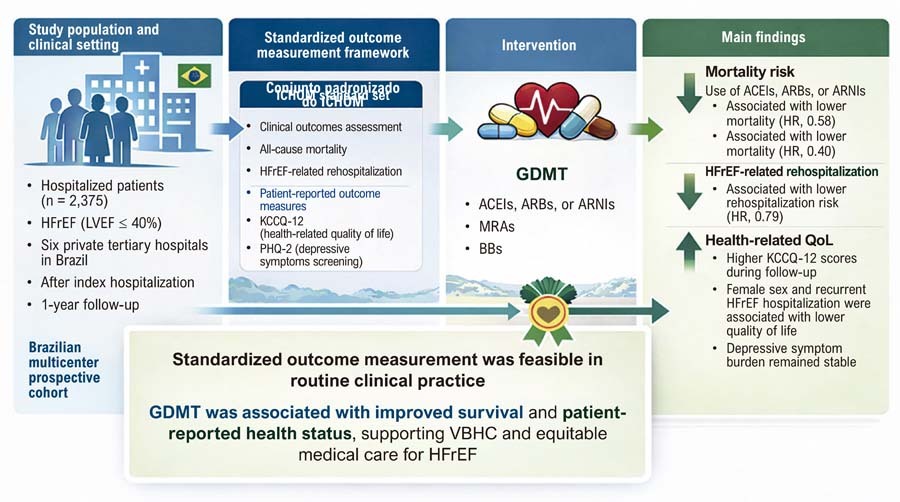
This prospective cohort study included adults hospitalized for decompensated HFrEF (ejection fraction ≤ 40%) across six private tertiary hospitals in Brazil. Clinical and patient-reported outcomes were collected using standardized instruments, including the Kansas City Cardiomyopathy Questionnaire-12 (KCCQ-12) and the Patient Health Questionnaire-2 (PHQ-2).

Results

A total of 2,375 patients were included (mean age, 75.9 ± 13.6 years; 69% male). During a median follow-up of 369 days, 26.1% died and 34.6% experienced heart failure-related rehospitalization. Older age was associated with higher risks of mortality and rehospitalization (p ≤ 0.003). Use of angiotensin-converting enzyme inhibitors, angiotensin receptor blockers, or angiotensin receptor-neprilysin inhibitors was associated with lower mortality (hazard ratio [HR], 0.58; p = 0.001), whereas beta-blockers showed a strong protective effect (HR, 0.40; p < 0.001). Mineralocorticoid receptor antagonists were associated with lower rehospitalization rates (HR, 0.79; p = 0.032). GDMT was associated with higher KCCQ-12 scores throughout follow-up (p < 0.05). Women and patients with recurrent rehospitalizations reported lower QoL (p < 0.02). PHQ-2 scores remained low and stable over time.

Conclusion

Standardized outcome measurement is feasible in real-world HFrEF care. GDMT was associated with improved survival and QoL, supporting more equitable and value-based management of HFrEF.

  • Patient Reported Outcome Measures
  • Quality of life
  • Systolic Heart Failure
Read Full Article
Creative Commons Attribution (CC BY) Creative Commons license
22/07/2026 DOI: 10.36660/abchf.20260001i Views 1
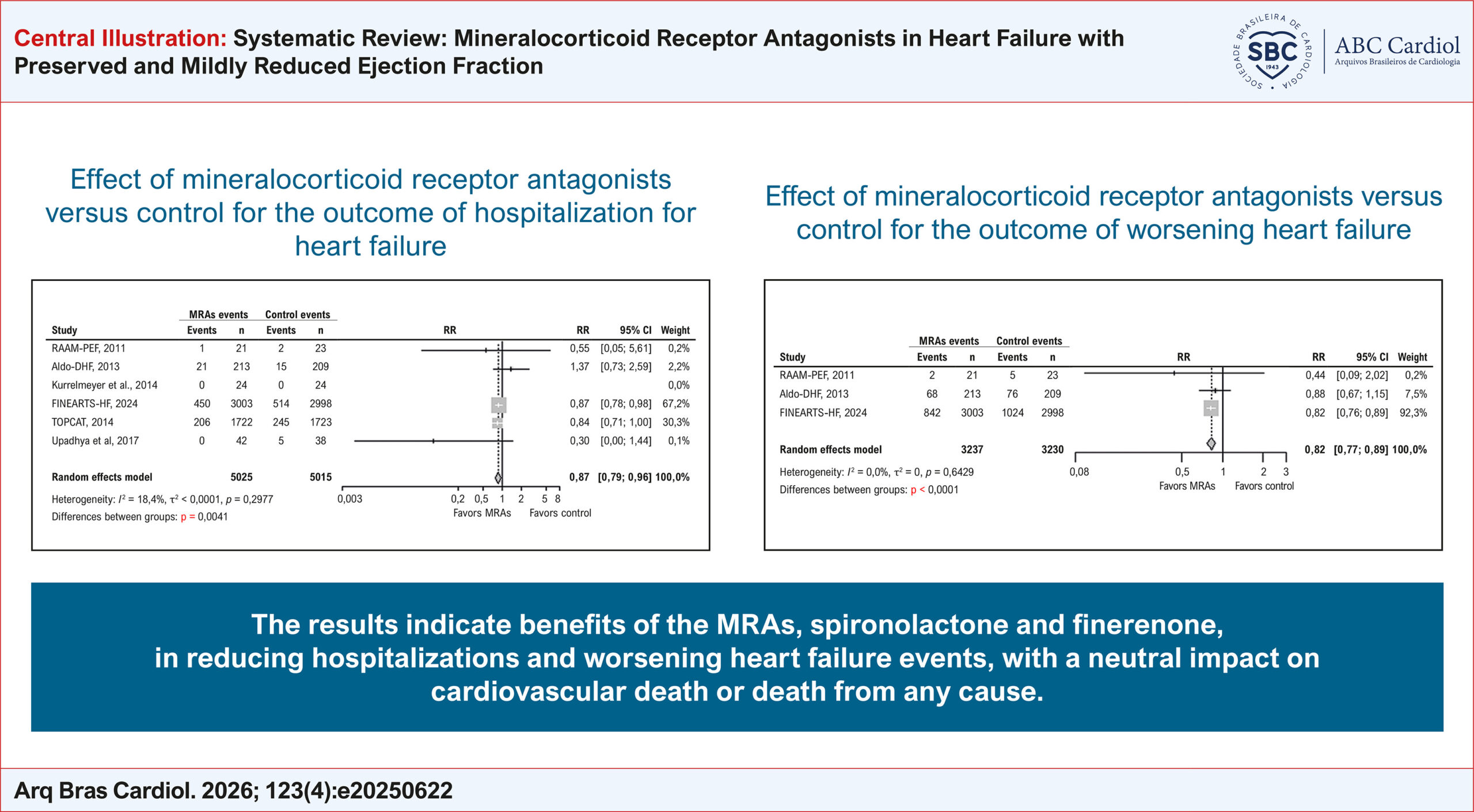
Systematic Review: Mineralocorticoid Receptor Antagonists in Heart Failure with Preserved and Mildly Reduced Ejection Fraction
ABC
Review Article

Systematic Review: Mineralocorticoid Receptor Antagonists in Heart Failure with Preserved and Mildly Reduced Ejection Fraction

Marcus Vinicius Simões et al. Luiz Claudio Danzmann Sílvia Marinho Martins José Albuquerque de Figueiredo Neto … Fabiana G. Marcondes-Braga Ricardo Mourilhe-Rocha Denilson Campos de Albuquerque Mucio Tavares de Oliveira Jr Lidia Ana Zytynski Moura

Abstract

Heart failure with preserved ejection fraction (HFpEF) or mildly reduced ejection fraction (HFmrEF) is a prevalent condition associated with significant morbidity and mortality, and the benefits of mineralocorticoid receptor antagonists (MRAs) remain unclear. To develop a systematic review on the use of MRAs in patients with HFpEF or HFmrEF, a systematic review and meta-analysis were conducted using a broad search strategy in the following databases: MEDLINE, Embase, and Cochrane Central Register of Controlled Trials (CENTRAL). Randomized controlled trials that evaluated the use of MRAs in patients with HFpEF compared to control groups were included. The quality of evidence and the strength of the recommendation were assessed according to the Grading of Recommendations Assessment, Development, and Evaluation (GRADE) methodology. Eight studies were included. No statistically significant differences were observed for the outcomes of overall mortality and cardiovascular mortality compared to the control group for any of the MRAs. A benefit was observed with a reduced risk of hospitalization for heart failure (relative risk: 0.87; 95% confidence interval: 0.79 to 0.96; moderate certainty of evidence) and of worsening heart failure events (relative risk: 0.83; 95% confidence interval: 0.77 to 0.89; high certainty of evidence). The results of the meta-analysis indicate a significant benefit from MRAs, spironolactone or finerenone, to reduce hospitalizations and worsening heart failure events in patients with HFpEF or HFmrEF. Mineralocorticoid Receptor Antagonists; Diastolic Heart Failure; Systolic Heart Failure; Systematic Review; Meta-Analysis.

  • Diastolic Heart Failure
  • Meta-Analysis
  • Mineralocorticoid Receptor Antagonists
  • systematic review
  • Systolic Heart Failure
Read Full Article
Creative Commons Attribution (CC BY) Creative Commons license
06/07/2026 DOI: 10.36660/abc.20250622i
Conduction System Pacing vs Biventricular Pacing in Chronic Heart Failure: Protocol for the Economic Analysis of the PhysioSync-HF Trial
ABC
Original Article

Conduction System Pacing vs Biventricular Pacing in Chronic Heart Failure: Protocol for the Economic Analysis of the PhysioSync-HF Trial

Sérgio R. R. Decker et al. Ana Paula Beck da S Etges André Zimerman Fernanda D. Alves … Caique M. Ternes Juliana S. Santos Leandro Zimerman Luis Eduardo Rohde Alexander Dal Forno André d’Avila Dhruv S. Kazi Eduardo G. Bertoldi Carisi A. Polanczyk

Abstract

Background

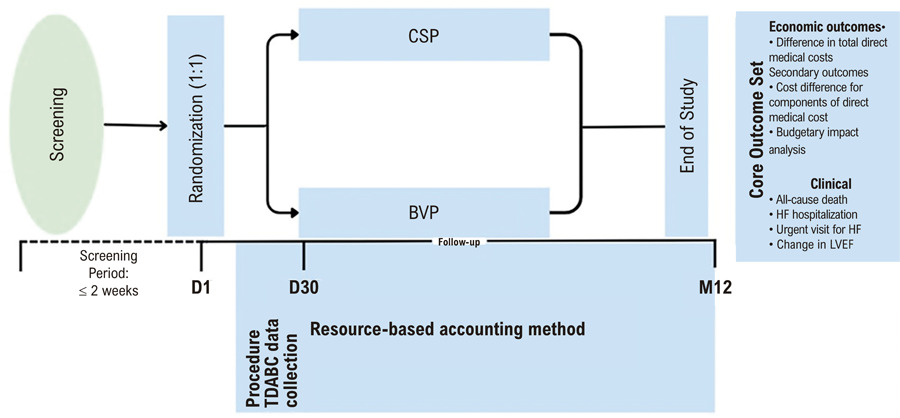
Conduction system pacing (CSP) has emerged as an alternative to biventricular pacing (BVP) for cardiac resynchronization therapy (CRT), with potential clinical benefits and lower costs. PhysioSync-HF is a multicenter, randomized trial comparing these strategies from both clinical and economic perspectives in patients with heart failure with reduced ejection fraction (HFrEF).

Objective

To describe the rationale and design of the trial-based economic evaluation embedded within the PhysioSync-HF trial.

Methods

The PhysioSync-HF trial enrolled 179 patients with 1-year follow-up. Procedural cost data will be collected using a time-driven activity-based costing approach. Costs associated with the device, adverse clinical events, and ambulatory care during follow-up will be estimated using resource-based accounting methods. Appropriate methods will address missing data, and statistical analyses will account for the skewed distribution of cost variables.

Results

The primary economic outcome is the between-group difference in total direct medical costs per patient over the 1-year follow-up (CSP vs BVP). Secondary outcomes include component-level cost breakdowns of direct medical expenses and a budget impact analysis estimating the annual effect on Brazil’s health care system if all eligible patients received CSP instead of BVP.

Conclusion

By leveraging a multicenter cardiovascular trial to measure costs of CSP versus BVP, this economic evaluation aims to identify cost-saving opportunities that could expand equitable access to CRT for individuals with HFrEF in Brazil, while providing insights relevant to other health care settings worldwide.

Trial Registration

NCT05572736.

  • Cardiac Resynchronization Therapy
  • Health Care Costs
  • Systolic Heart Failure
Read Full Article
Creative Commons Attribution (CC BY) Creative Commons license
27/02/2026 DOI: 10.36660/abc.20250254i Views 4
Figure 1
ABCHF
Original Article

Analysis of the Clinical and Epidemiological Profile of Patients with Heart Failure with Reduced Ejection Fraction in a Hospital in Southern Santa Catarina

Gabriela Aline Borges et al. Mateus De Luca Amanda Cirimbelli Bolan

Abstract

Background

Heart failure with reduced ejection fraction (HFrEF) accounts for approximately half of all heart failure hospitalizations, negatively impacts patients’ functional capacity and quality of life, and is associated with high financial costs in health care.

Objectives

To analyze the clinical and epidemiological profile of patients with heart failure with HFrEF in a hospital in southern Santa Catarina in the year 2023.

Methods

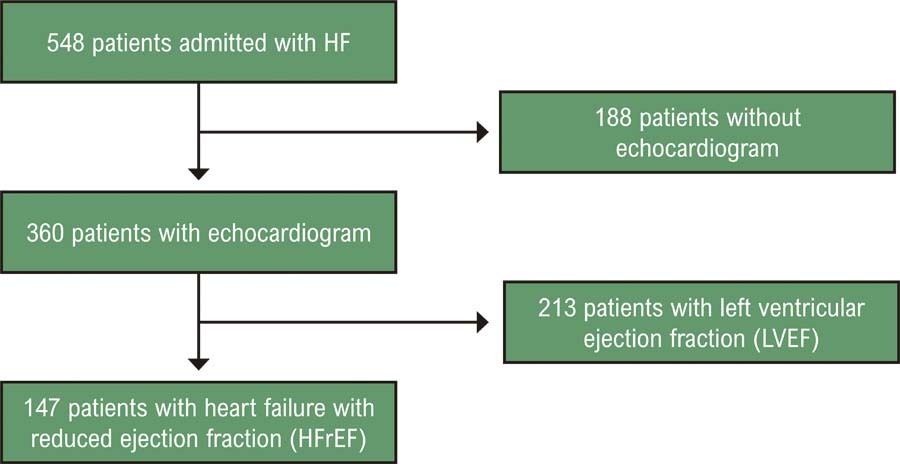
147 patients with HFrEF were evaluated in a reference hospital in southern Santa Catarina. The data were collected through electronic medical records from which information such as left ventricular ejection fraction (LVEF), sex, age, race/color, weight, height, medications in use, and associated conditions was extracted.

Results

The mean age of the study population was 68.14 ± 12.88 years. Males represented 57.8% of the patients, and 88.4% were white. Of the total, 25.5% presented some degree of obesity. Systemic arterial hypertension was observed in 68.7%, diabetes mellitus in 56.5%, and ischemic cardiomyopathies in 31.3% of the individuals. The mean LVEF value was 28.54 ± 6.72%. The recommended triple pharmacological therapy was present in 45.6% of the individuals, while the association with iSGLT2 was observed in 34.8%.

Conclusions

It was possible to identify the clinical and epidemiological profile of the study population and, above all, to highlight that more than half of this population was not using optimized drug therapy. Therefore, the importance of clinical and epidemiological data for reviewing and optimizing patient management is emphasized.

  • Clinical Epidemiology
  • Clinical Medicine
  • Systolic Heart Failure
Read Full Article
Creative Commons Attribution (CC BY) Creative Commons license
31/12/2025 DOI: 10.36660/abchf.20250027i
Central Illustration
ABCHF
Original Article

Prevalence and Clinical Determinants of Optimized Pharmacological Therapy in Heart Failure with Reduced Ejection Fraction

Anderson Oliveira Estevan et al. Ana Luísa Guedes de Franca e Silva Salvador Rassi Filho Aguinaldo Figueiredo de Freitas Júnior Salvador Rassi

Abstract

Background

In heart failure with reduced ejection fraction (HFrEF), optimized medical therapy (OMT) with beta-blockers, angiotensin-converting enzyme inhibitors (ACEIs), angiotensin II receptor blockers (ARBs) (or sacubitril/valsartan), spironolactone, and sodium-glucose cotransporter-2 inhibitors (SGLT2i), at target or maximally tolerated doses, reduces morbidity and mortality. However, real-world data show its underuse.

Objective

To estimate the prevalence and clinical associations that influence the use of OMT in clinical practice.

Methods

Cross-sectional observational study including outpatients with HFrEF treated at a tertiary hospital. Clinical factors associated with therapy were assessed using binary logistic regression (95% confidence interval).

Results

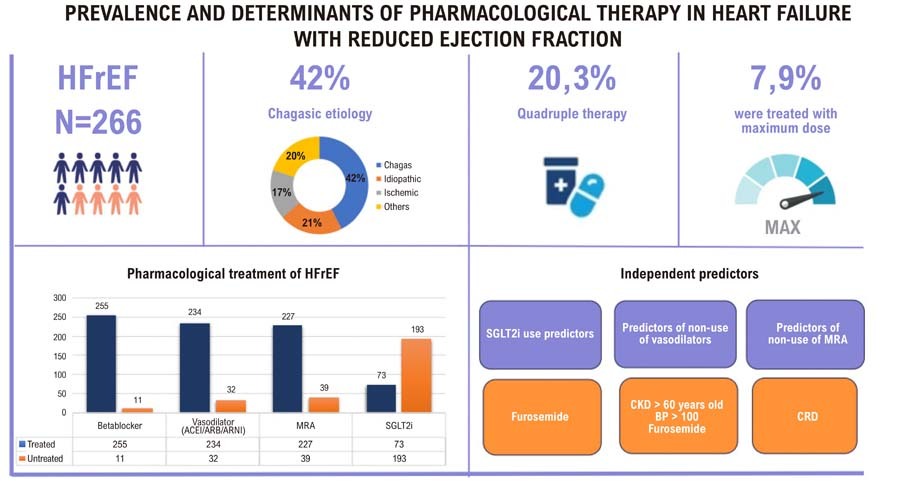
A total of 266 patients were analyzed (mean age 61 years; 62.4% male), 113 (42.5%) with Chagas disease etiology. Mean ejection fraction was 34.2%. Vasodilators, beta-blockers, spironolactone, and SGLT2i were prescribed in 88%, 95.9%, 85.3%, and 27.4% of patients, respectively. The prevalence of OMT was 7.9% (21 patients). Diabetes was associated with a higher likelihood of OMT use (p = 0.034). Chagas disease was associated with lower probability of receiving vasodilators (p = 0.015) and greater use of furosemide, amiodarone, and digoxin (p 60 years, systolic blood pressure < 100 mmHg, and use of furosemide were associated with lower use of vasodilators (p = 0.003; 0.025; 0.010; and 0.046). CKD was associated with lower use of spironolactone (p = 0.002). Diabetes (p = 0.002) and use of furosemide (p = 0.005) were associated with SGLT2i use.

Conclusion

Despite the high prevalence of prescription of disease-modifying drugs, the use of OMT was significantly lower than expected. CKD, advanced age, arterial hypotension, and concomitant use of furosemide were associated with a reduced likelihood of receiving these agents, whereas diabetes was associated with a higher probability of OMT use.

  • Drug Therapy
  • Heart Failure
  • Systolic Heart Failure
Read Full Article
Creative Commons Attribution (CC BY) Creative Commons license
31/12/2025 DOI: 10.36660/abchf.20250018i Views 1
Central Illustration
ABCHF
Original Article

Effect of Sacubitril/Valsartan on All-Cause Mortality Reduction in Patients Undergoing Cardiac Resynchronization Therapy: SALVA-CRT

Luiz Carlos Santana Passos et al. William Carvalho Jackson Pedro Barros-Pereira Clara Salles Figueiredo … Gabriela Pio Dourado Fernanda Pinheiro Martin Tapioca Caio Rebouças Fonseca Cafezeiro

Abstract

Background

Cardiac resynchronization therapy (CRT) is indicated for patients with heart failure with reduced ejection fraction (HFrEF) receiving conventional triple therapy (CTT). Although sacubitril/valsartan (S/V) is a cornerstone of modern triple therapy (MTT) for HFrEF, its effectiveness in patients undergoing CRT implantation has not been adequately evaluated.

Objective

To compare all-cause mortality between CRT recipients on CTT and those on MTT, with a minimum follow-up of 1 year.

Methods

Prospective, observational cohort including patients undergoing a first CRT implantation. Inclusion criteria were left ventricular ejection fraction (LVEF) ≤35% and bundle branch block with QRS ≥150 ms, with prior use of either CTT or MTT. Patients who discontinued any medication, initiated a sodium-glucose cotransporter-2 inhibitor (SGLT2i), or crossed over between CTT and MTT during follow-up were excluded. Statistical analyses used the unpaired Student’s t test (p < 0.05 for significance). Cox regression was applied to variables potentially associated with the outcome (p < 0.1).

Results

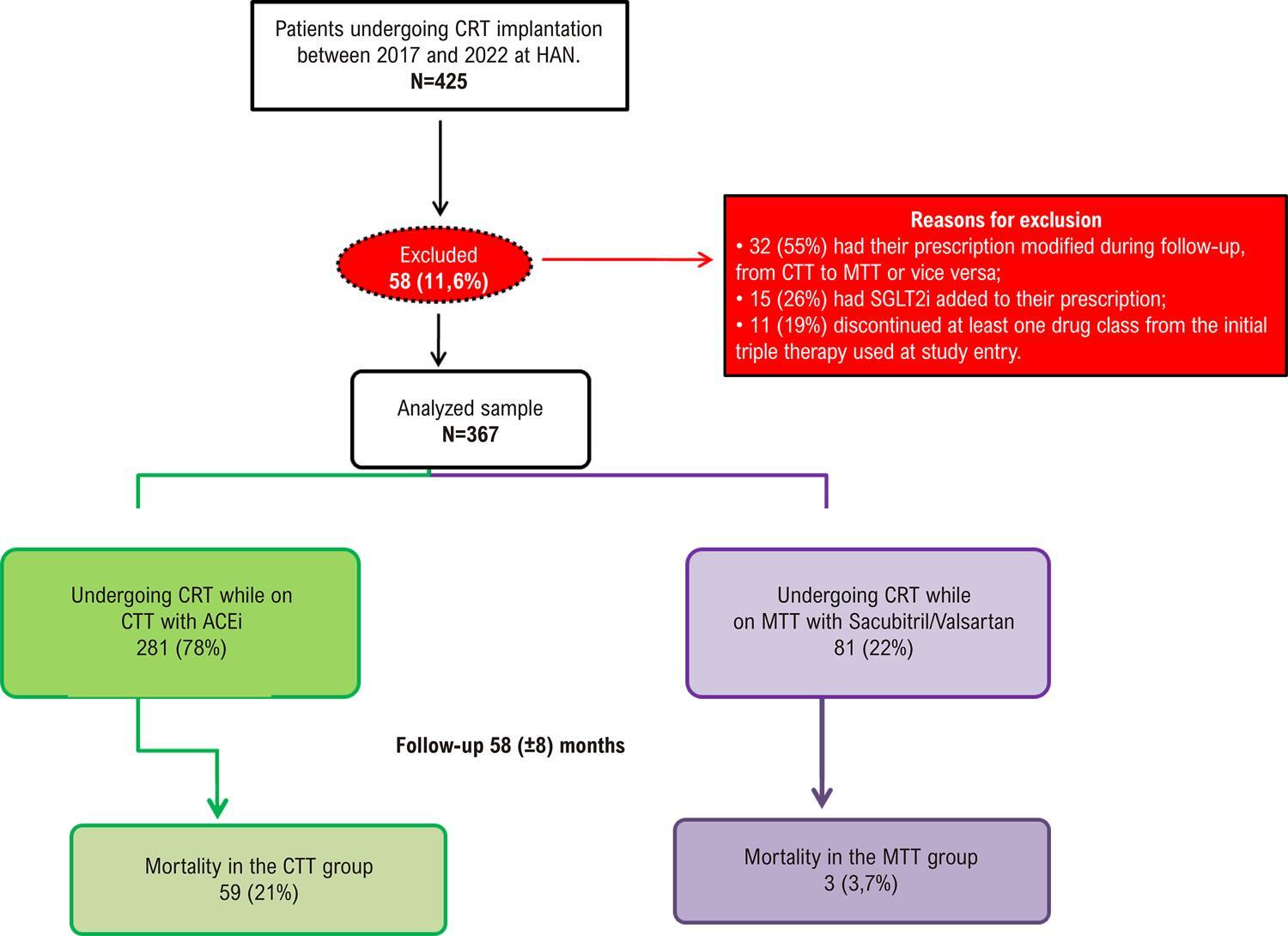
From 2017 to 2022, 425 CRT implantations were performed; 58 (13.6%) patients were excluded. Of the 367 analyzed, 286 (78%) were on CTT and 81 (22%) on MTT. Mean age was 61 (±12) years; mean LVEF was 26% (±6); Chagas disease was the most prevalent etiology (34.3%). Mean follow-up was 58 (±8) months, with 62 deaths (16.9%): 59 (21%) in the CTT group and 3 (3.7%) in the MTT group. The HR was 1.27 (95% CI 1.17–1.39) for CTT and 0.18 (95% CI 0.06–0.58) for MTT. In multivariable analysis, CTT use was the only independent predictor of mortality (HR 5.83; 95% CI 1.81–18.70; p = 0.003).

Conclusion

MTT including S/V significantly reduced all-cause mortality in patients undergoing CRT implantation.

  • Cardiac Resynchronization Therapy
  • Mortality
  • Systolic Heart Failure
Read Full Article
Creative Commons Attribution (CC BY) Creative Commons license
15/12/2025 DOI: 10.36660/abchf.20250003i Views 3
ABC
Editorial

A Step Forward in the Assessment of Handgrip Strength in Heart Failure

Evandro José Cesarino et al. Marildes Luiza de Castro Regina Célia Garcia de Andrade Carolina Baraldi Araujo Restini

Significance of Handgrip Strength in HF

HGS is a simple, non-invasive measure of muscle strength, correlating with physical condition and considered a prognostic marker in HF., A systematic review of 7,350 HF patients revealed that a 1 kg reduction in HGS increases mortality risk by 8% (RR 1.08, 95% CI 1.05–1.11). Unlike complex measures, such as cardiopulmonary exercise testing, HGS is low-cost, accessible, and feasible in all clinical settings, making it a straightforward tool to assess frailty and guide rehabilitation., However, existing HGS reference equations are mainly derived from healthy populations, failing to account for HF-specific factors, such as reduced cardiac output (CO) and muscle atrophy, leading to inaccurate conclusions. The manuscript’s development of an HF-specific HGS equation represents a timely advance.

[…]

  • Diastolic Heart Failure
  • Hand Strength
  • Heart Failure
  • Reference Values
  • Systolic Heart Failure
Read Full Article
Creative Commons Attribution (CC BY) Creative Commons license
14/11/2025 DOI: 10.36660/abc.20250579i Views 1
Central Illustration
ABCHF
Review Article

The Use of Sodium-Glucose Cotransporter2 (SGLT2) Inhibitors in Patients with Reduced Ejection Fraction: An Integrative Review

Irving Gabriel Araújo Bispo et al. Guilherme Martins Chaves Mariana Gonçalves Fernandes Larissa Hiromi Yamamoto Giulia Amorim Almeida

Abstract

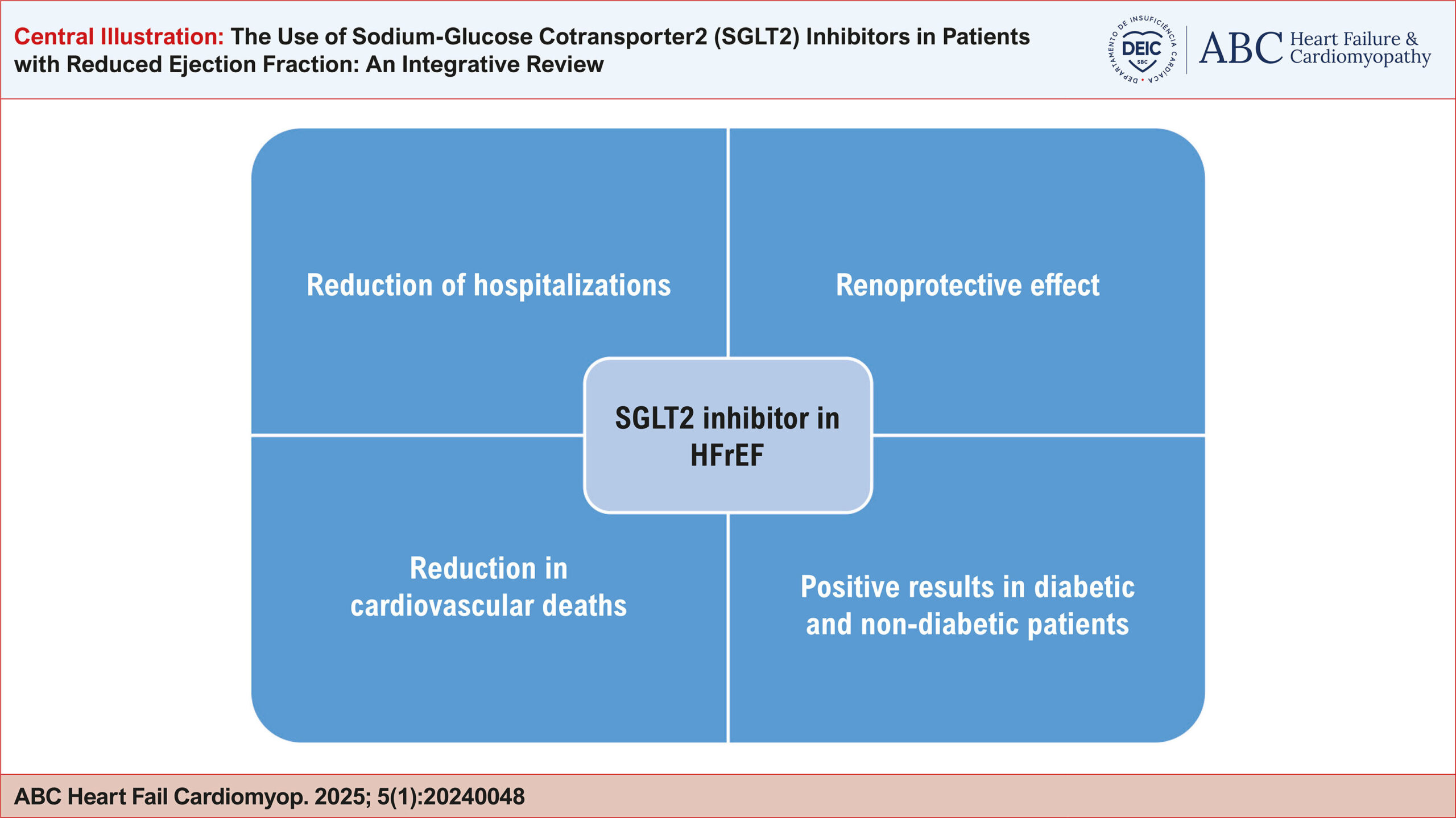
Heart failure (HF) is characterized as a clinical syndrome comprised of different etiologies. HF can be classified according to the left ventricular ejection fraction (LVEF) in heart failure with preserved ejection fraction (HFpEF) and heart failure with reduced ejection fraction (HFrEF). Studies have shown that sodium-glucose cotransporter2 (SGLT2) inhibitors can collaborate in the treatment of HF. To conduct a bibliographic survey in the form of an integrative qualitative review on the use of SGLT2 inhibitors in the treatment of heart failure. This study was carried out through the elaboration of an integrative literature review. Articles published in the last five years were selected from the PubMed, SciELO, LILACS, and Cochrane Library databases, using the following descriptors: “Diabetes Mellitus”, “Heart Failure”, “Heart Failure with Reduced Ejection Fraction” and “Sodium-Glucose Transporter 2 Inhibitors” A total of 1,504 articles, published in the PubMed, SciELO, Cochrane Library, and LILACS databases, were found. After analysis, in accordance with the inclusion and exclusion criteria; reading of the abstracts or full text; and exclusion of duplicate articles, 17 studies were selected, In the past five years, there has been a lack of conclusive studies on the use of SGLT2 inhibitors. Studies, such as DAPA-HF, have shown that dapagliflozin reduces hospitalizations and cardiovascular deaths in patients with HF, regardless of their glycemic status. Recent guidelines have already incorporated SGLT2 inhibitors for the treatment of HFrEF due to strong scientific evidence.

  • Diabetes Mellitus
  • Heart Failure
  • Sodium-Glucose Transporter 2 Inhibitors
  • Systolic Heart Failure
Read Full Article
Creative Commons Attribution (CC BY) Creative Commons license
01/04/2025 DOI: 10.36660/abchf.20240048i
ABC
Editorial

Heart Failure in Brazil: How Can We Improve its Natural History?

Filipe Ferrari et al. Arthur Proença Rossi Igor Rafael Miranda Ferreira Santander

Heart failure (HF) is a complex syndrome with high morbidity and mortality rates worldwide., Despite significant efforts, including several recent clinical trials involving tens of thousands of patients and various pharmacologic therapies,– reducing the burden of HF remains a challenge.

As of 2021, epidemiological data estimated that approximately 57 million people were affected by HF globally, and its prevalence is projected to rise by 34% in the coming decades. Patients hospitalized due to worsening HF are among the highest-risk groups, facing elevated rates of readmission and mortality, particularly during the vulnerable period shortly after discharge. The economic burden of HF is also significant; by 2030, HF-related costs in the U.S. are projected to exceed $70 billion annually.

[…]

  • Brazil
  • Heart Failure
  • Systolic Heart Failure
Read Full Article
Creative Commons Attribution (CC BY) Creative Commons license
02/12/2024 DOI: 10.36660/abc.20240644i Views 1
Association of Pan Immune-Inflammation Value with Long Term Outcomes of Acute Decompensated Heart Failure
ABC
Original Article

Association of Pan Immune-Inflammation Value with Long Term Outcomes of Acute Decompensated Heart Failure

Bektas Murat et al. Selda Murat Mehmet Eren Altınbas Halit Emre Yalvac … Fatih Enes Durmaz Kadir Ugur Mert Yüksel Cavusoglu

Abstract

Background

Although there have been significant improvements in the treatment of heart failure (HF) in recent decades, its prognosis remains poor. Although there are many biomarkers that can help predict the prognosis of patients with HF, there is a need for simpler, cheaper, and more easily available biomarkers.

Objective

To evaluate the predictive value of pan-immune-inflammation value (PIV) in patients with acute decompensated HF.

Methods

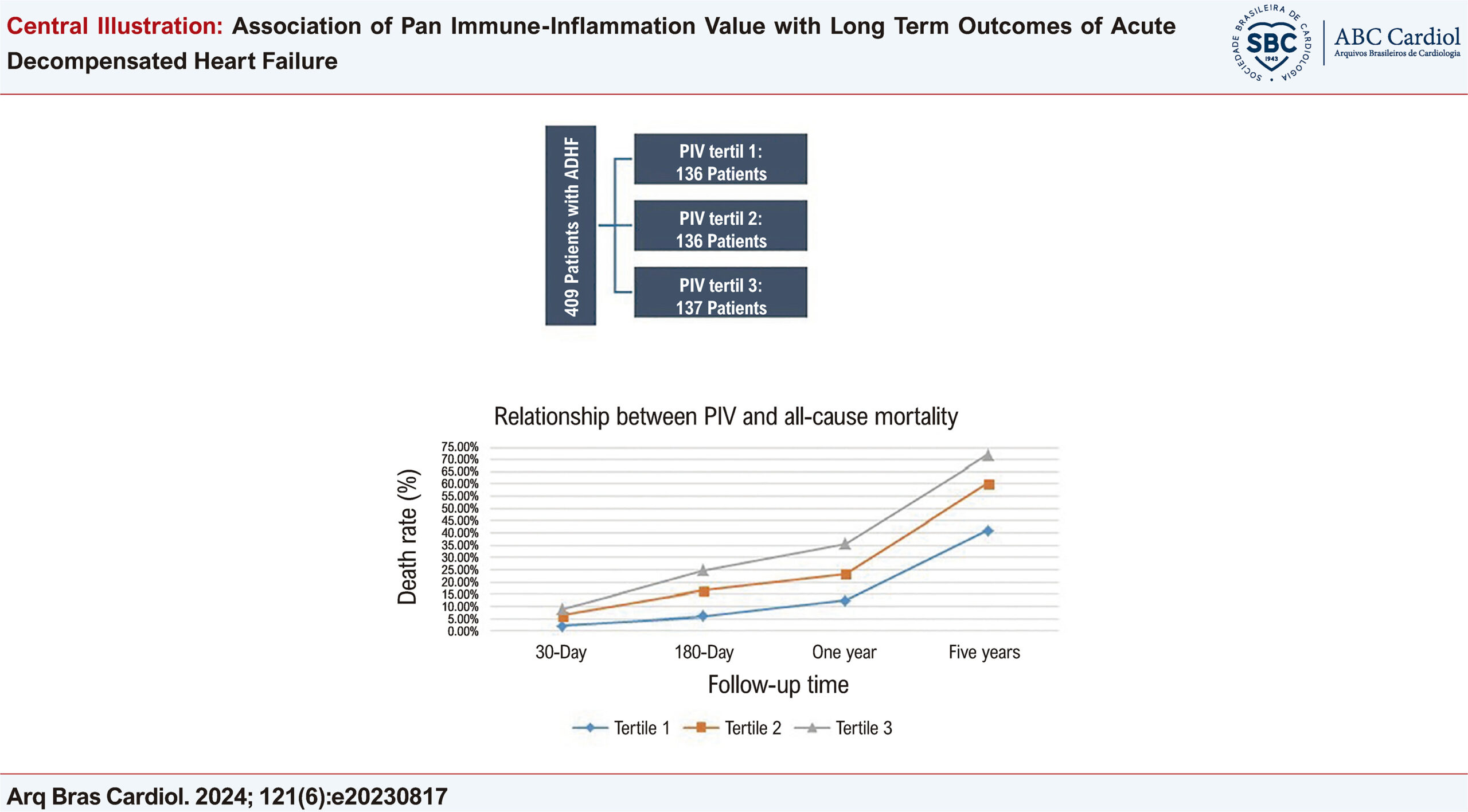
We analyzed 409 patients with HF with reduced ejection fraction who were hospitalized for acute decompensated HF. Patients were divided into 3 groups according to tertiles of PIV: tertile 1 (PIV < 357.25), tertile 2 (PIV ≥ 357.25 and < 834.55), and tertile 3 (PIV ≥ 834.55). P values < 0.05 were considered statistically significant. Kaplan-Meier curves and Cox proportional hazards regression models were used to evaluate the association between PIV and all-cause mortality. The primary outcome was 5-year all-cause mortality, and the secondary outcomes were in-hospital 30 days,, 180-day, and 1-year all-cause mortality.

Results

We showed that higher PIV value was associated with both primary and secondary outcomes. The Kaplan-Meier curve showed that patients with higher PIV values had an increased risk of short- and long-term all-cause mortality (log-rank p < 0.001). In the multivariate analysis, PIV was identified as an independent predictor of long-term all-cause mortality in patients with acute decompensated HF, and we observed a 1.96-fold increase in the hazard of an event (odds ratio: 1.96, 95% confidence interval: 1.330 to 2.908, p = 0.001).

Conclusions

Our study showed that the novel biomarker PIV can be used as a predictor of prognosis in patients with acute decompensated HF.

  • Biomarkers
  • Mortality
  • Systolic Heart Failure
Read Full Article
Creative Commons Attribution (CC BY) Creative Commons license
15/07/2024 DOI: 10.36660/abc.20230817i Views 1
Effect of Ticagrelor on Left Ventricular Function in Patients with Mildly Reduced Ejection Fraction after Acute Myocardial Infarction
IJCS
Original Article

Effect of Ticagrelor on Left Ventricular Function in Patients with Mildly Reduced Ejection Fraction after Acute Myocardial Infarction

Ilkin Guliyev et al. Engin Algül Gökhan Gökalp Faruk Aydınyılmaz … Nail Burak Özbeyaz Hamza Sunman

Abstract

Background

There are limited data about the effect of new P2Y12 inhibitors on left ventricular ejection fraction (LVEF) after acute myocardial infarction (AMI).

Objectives

We aimed to investigate the effect of ticagrelor on left ventricular function, compared to clopidogrel in patients with heart failure with mildly reduced ejection fraction (HFmrEF) after AMI.

Methods

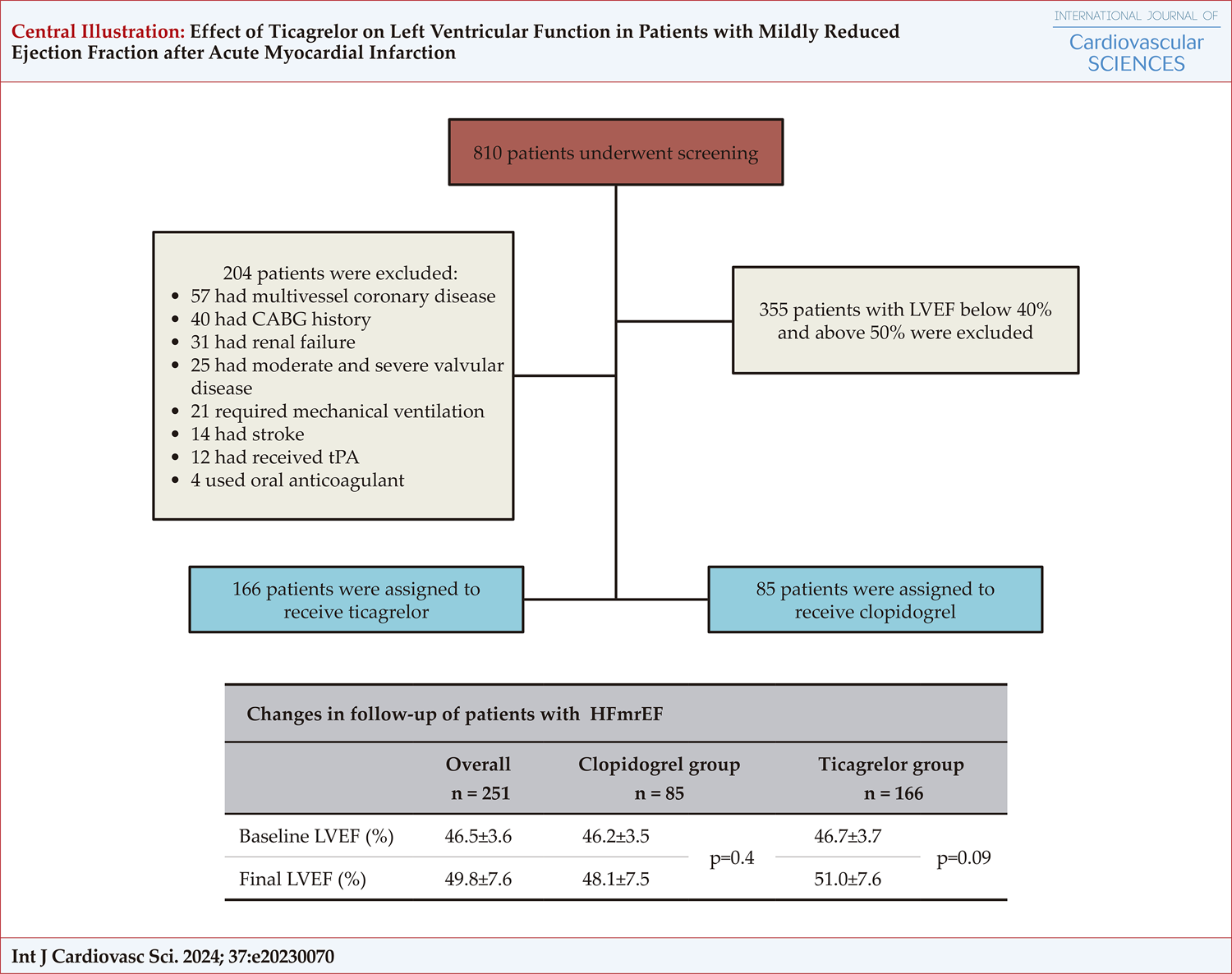
In this cross-sectional, single-center study, we included 251 patients with LVEF between 40% and 50% after AMI before discharge. The patients were divided into 2 groups according to the use of ticagrelor (166 patients) and clopidogrel (85 patients). At the end of the 12-month period, LVEF changes were assessed by echocardiography. P < 0.05 was considered statistically significant.

Results

The mean LVEF before discharge was 46.5% ± 3.6%, and no difference was observed between the ticagrelor and clopidogrel groups (p = 0.20). At the end of the first year, the mean LVEF of the patients increased to 49.8% ± 7.6% in both groups. The use of ticagrelor (β ± SE = 2.05 ± 0.93; p = 0.029), low creatinine level (β ± SE = −10.44 ± 2.35; p < 0.001), low troponin level (β ± SE = −0.38 ± 0.14; p = 0.006), and low heart rate (β ± SE = −0.98 ± 0.33; p = 0.003) were found to be independent predictors of the increase in LVEF (β ± SE 2.05 ± 0.93; 95% confidence interval: 0.21 to 3.90; p = 0.029).

Conclusion

In our study, ticagrelor improved left ventricular function in 12 months follow-up compared to clopidogrel in patients with HFmrEF after AMI.

  • Acute Myocardial Infarction
  • Clopidogrel
  • Systolic Heart Failure
  • Ticagrelor
Read Full Article
Creative Commons Attribution (CC BY) Creative Commons license
11/03/2024 DOI: 10.36660/ijcs.20230070

How to cite this article

EndNote RIS

Electronic Document Format (Vancouver)

Dan MC. HFREF Therapy: Randomized Evidence and Real-World Perspectives. Arquivos Brasileiros de Cardiologia 2026;123(7):e20260588.

Electronic Document Format (ABNT)

Dan, iella Motta da Costa. HFREF Therapy: Randomized Evidence and Real-World Perspectives. Arquivos Brasileiros de Cardiologia, v. 123, n. 7, e20260588, Sep. 2026.

Electronic Document Format (APA)

Dan, M. C. (2026). HFREF Therapy: Randomized Evidence and Real-World Perspectives. Arquivos Brasileiros de Cardiologia, 123(7), e20260588.

Electronic Document Format (ISO)

Dan, iella Motta da Costa. HFREF Therapy: Randomized Evidence and Real-World Perspectives. Arquivos Brasileiros de Cardiologia [online]. 2026, vol. 123, n. 7, [cited 2026-10-14], e20260588. Available from: <https://journals.cardiol.br/en/article/hfref-therapy-randomized-evidence-and-real-world-perspectives/>. ISSN 0066-782X

EndNote RIS

Electronic Document Format (Vancouver)

Barbato JPR, Scolari FL, Machado GP, Amon AB, Crivelaro PCF, Menegazzo WR, Berger SV, et al. Correlating Invasive and Echocardiographic Hemodynamic Measures in Patients with Heart Failure with Reduced Ejection Fraction. ABC Imagem Cardiovascular 2026;39(3):e20260059.

Electronic Document Format (ABNT)

Barbato, João Pedro da Rosa; Scolari, Fernando Luis; Machado, Guilherme Pinheiro; Amon, André Barcellos; Crivelaro, Pedro Castilhos de Freitas; Menegazzo, Willian R.; Berger, Solano Vinicius; Araujo, Gustavo Neves de; Valle, Felipe Homem; Wainstein, Rodrigo Vugman. Correlating Invasive and Echocardiographic Hemodynamic Measures in Patients with Heart Failure with Reduced Ejection Fraction. ABC Imagem Cardiovascular, v. 39, n. 3, e20260059, Sep. 2026.

Electronic Document Format (APA)

Barbato, J. P. R., Scolari, F. L., Machado, G. P., Amon, A. B., Crivelaro, P. C. F., Menegazzo, W. R., Berger, S. V., Araujo, G. N. , Valle, F. H., & Wainstein, R. V. (2026). Correlating Invasive and Echocardiographic Hemodynamic Measures in Patients with Heart Failure with Reduced Ejection Fraction. ABC Imagem Cardiovascular, 39(3), e20260059.

Electronic Document Format (ISO)

Barbato, João Pedro da Rosa and Scolari, Fernando Luis and Machado, Guilherme Pinheiro and Amon, André Barcellos and Crivelaro, Pedro Castilhos de Freitas and Menegazzo, Willian R. and Berger, Solano Vinicius and Araujo, Gustavo Neves de and Valle, Felipe Homem and Wainstein, Rodrigo Vugman. Correlating Invasive and Echocardiographic Hemodynamic Measures in Patients with Heart Failure with Reduced Ejection Fraction. ABC Imagem Cardiovascular [online]. 2026, vol. 39, n. 3, [cited 2026-10-14], e20260059. Available from: <https://journals.cardiol.br/en/article/correlating-invasive-and-echocardiographic-hemodynamic-measures-in-patients-with-heart-failure-with-reduced-ejection-fraction/>. ISSN 2318-8219

EndNote RIS

Electronic Document Format (Vancouver)

Barros RC, Fiusa VC, Tim GN, Goulart VTV, Nascimento CHM, Moura GT, Guimarães AJBA, et al. Sacubitril/Valsartan versus Enalapril or Losartan at Maximum Doses in Heart Failure with Reduced Ejection Fraction: Real-World Data. Arquivos Brasileiros de Cardiologia 2026;123(7):e20260069.

Electronic Document Format (ABNT)

Barros, Renato de Carvalho; Fiusa, Vinícius C.; Tim, Gabrielle N.; Goulart, Victoria T. V.; Nascimento, Caio Henrique M.; Moura, Gustavo T. de; Guimarães, Adriana J. B. A.; Ramalho, Sergio Henrique Rodolpho; Jreige Jr., Armindo; Moura, Filipe A.; Carvalho, Luiz Sérgio Fernandes de. Sacubitril/Valsartan versus Enalapril or Losartan at Maximum Doses in Heart Failure with Reduced Ejection Fraction: Real-World Data. Arquivos Brasileiros de Cardiologia, v. 123, n. 7, e20260069, Aug. 2026.

Electronic Document Format (APA)

Barros, R. C., Fiusa, V. C., Tim, G. N., Goulart, V. T. V., Nascimento, C. H. M., Moura, G. T. , Guimarães, A. J. B. A., Ramalho, S. H. R., Jreige Jr., A., Moura, F. A., & Carvalho, L. S. F. (2026). Sacubitril/Valsartan versus Enalapril or Losartan at Maximum Doses in Heart Failure with Reduced Ejection Fraction: Real-World Data. Arquivos Brasileiros de Cardiologia, 123(7), e20260069.

Electronic Document Format (ISO)

Barros, Renato de Carvalho and Fiusa, Vinícius C. and Tim, Gabrielle N. and Goulart, Victoria T. V. and Nascimento, Caio Henrique M. and Moura, Gustavo T. de and Guimarães, Adriana J. B. A. and Ramalho, Sergio Henrique Rodolpho and Jreige Jr., Armindo and Moura, Filipe A. and Carvalho, Luiz Sérgio Fernandes de. Sacubitril/Valsartan versus Enalapril or Losartan at Maximum Doses in Heart Failure with Reduced Ejection Fraction: Real-World Data. Arquivos Brasileiros de Cardiologia [online]. 2026, vol. 123, n. 7, [cited 2026-10-14], e20260069. Available from: <https://journals.cardiol.br/en/article/sacubitril-valsartan-versus-enalapril-or-losartan-at-maximum-doses-in-heart-failure-with-reduced-ejection-fraction-real-world-data/>. ISSN 0066-782X

EndNote RIS

Electronic Document Format (Vancouver)

Bonatto M, Freitas AKE, Takatuzi CB, Franco LGE, Vendramini DR, Lechinewski LD, Blume GG, et al. Echocardiographic Changes Associated With Sacubitril/Valsartan Therapy in Patients With Heart Failure With Reduced Ejection Fraction (HFrEF): A Descriptive 12-Month Follow-Up Analysis. International Journal of Cardiovascular Sciences 2026;39:e20250115.

Electronic Document Format (ABNT)

Bonatto, Marcely; Freitas, Ana Karyn Ehrenfried de; Takatuzi, Caio Berwanger; Franco, Luiz Gustavo Esmanhoto; Vendramini, Danielle Rodrigues; Lechinewski, Luka David; Blume, Gustavo Gavazzoni; Moura, Lidia Zytynski. Echocardiographic Changes Associated With Sacubitril/Valsartan Therapy in Patients With Heart Failure With Reduced Ejection Fraction (HFrEF): A Descriptive 12-Month Follow-Up Analysis. International Journal of Cardiovascular Sciences, v. 39, e20250115, Jul. 2026.

Electronic Document Format (APA)

Bonatto, M., Freitas, A. K. E. , Takatuzi, C. B., Franco, L. G. E., Vendramini, D. R., Lechinewski, L. D., Blume, G. G., & Moura, L. Z. (2026). Echocardiographic Changes Associated With Sacubitril/Valsartan Therapy in Patients With Heart Failure With Reduced Ejection Fraction (HFrEF): A Descriptive 12-Month Follow-Up Analysis. International Journal of Cardiovascular Sciences, 39, e20250115.

Electronic Document Format (ISO)

Bonatto, Marcely and Freitas, Ana Karyn Ehrenfried de and Takatuzi, Caio Berwanger and Franco, Luiz Gustavo Esmanhoto and Vendramini, Danielle Rodrigues and Lechinewski, Luka David and Blume, Gustavo Gavazzoni and Moura, Lidia Zytynski. Echocardiographic Changes Associated With Sacubitril/Valsartan Therapy in Patients With Heart Failure With Reduced Ejection Fraction (HFrEF): A Descriptive 12-Month Follow-Up Analysis. International Journal of Cardiovascular Sciences [online]. 2026, vol. 39, [cited 2026-10-14], e20250115. Available from: <https://journals.cardiol.br/en/article/echocardiographic-changes-associated-with-sacubitril-valsartan-therapy-in-patients-with-heart-failure-with-reduced-ejection-fraction-hfref-a-descriptive-12-month-follow-up-analysis/>. ISSN 2359-4802

EndNote RIS

Electronic Document Format (Vancouver)

Silva SA, Amaral K, Bernardez-Pereira S, Franken M, Escobosa DM, Ivo C, Costa LMA, et al. Guideline-Directed Medical Therapy, Clinical Outcomes, and Quality of Life in Heart Failure: Insights from a Multicenter International Consortium for Health Outcomes Measurement-Based Brazilian Cohort. ABC Heart Fail Cardiomyop 2026;6:e20260001.

Electronic Document Format (ABNT)

Silva, Suzana Alves; Amaral, Keila; Bernardez-Pereira, Sabrina; Franken, Marcelo; Escobosa, Daisa Mesquita; Ivo, Carolina; Costa, Leandro Menezes Alves da; Conceição, Fabio Gomes da; Lisboa, Laine; Rizzi, Thays Naomy; Tamburim, Bárbara Reis; Lopes, Luciana Alves; Yamaguti, Siomara Tavares Fernandes; Nasi, Luiz Antonio; Maccari, Juçara; Pille, Arthur; Wolf, Jonas Michel; Volschan, Andre; Montera, Marcelo Westerlund; Ferreira, Silvia Moreira Ayub; Cardoso, Luiz Francisco; Saretta, Roberta; Nascimento, Teresa Cristina D. C.; Margarido, Olívia; Oliveira, Camila; Tiburzio, Evelyn; Ribeiro, Ary. Guideline-Directed Medical Therapy, Clinical Outcomes, and Quality of Life in Heart Failure: Insights from a Multicenter International Consortium for Health Outcomes Measurement-Based Brazilian Cohort. ABC Heart Fail Cardiomyop, v. 6, e20260001, Jul. 2026.

Electronic Document Format (APA)

Silva, S. A., Amaral, K., Bernardez-Pereira, S., Franken, M., Escobosa, D. M., Ivo, C., Costa, L. M. A. , Conceição, F. G. , Lisboa, L., Rizzi, T. N., Tamburim, B. R., Lopes, L. A., Yamaguti, S. T. F., Nasi, L. A., Maccari, J., Pille, A., Wolf, J. M., Volschan, A., Montera, M. W., Ferreira, S. M. A., Cardoso, L. F., Saretta, R., Nascimento, T. C. D. C., Margarido, O., Oliveira, C., Tiburzio, E., & Ribeiro, A. (2026). Guideline-Directed Medical Therapy, Clinical Outcomes, and Quality of Life in Heart Failure: Insights from a Multicenter International Consortium for Health Outcomes Measurement-Based Brazilian Cohort. ABC Heart Fail Cardiomyop, 6, e20260001.

Electronic Document Format (ISO)

Silva, Suzana Alves and Amaral, Keila and Bernardez-Pereira, Sabrina and Franken, Marcelo and Escobosa, Daisa Mesquita and Ivo, Carolina and Costa, Leandro Menezes Alves da and Conceição, Fabio Gomes da and Lisboa, Laine and Rizzi, Thays Naomy and Tamburim, Bárbara Reis and Lopes, Luciana Alves and Yamaguti, Siomara Tavares Fernandes and Nasi, Luiz Antonio and Maccari, Juçara and Pille, Arthur and Wolf, Jonas Michel and Volschan, Andre and Montera, Marcelo Westerlund and Ferreira, Silvia Moreira Ayub and Cardoso, Luiz Francisco and Saretta, Roberta and Nascimento, Teresa Cristina D. C. and Margarido, Olívia and Oliveira, Camila and Tiburzio, Evelyn and Ribeiro, Ary. Guideline-Directed Medical Therapy, Clinical Outcomes, and Quality of Life in Heart Failure: Insights from a Multicenter International Consortium for Health Outcomes Measurement-Based Brazilian Cohort. ABC Heart Fail Cardiomyop [online]. 2026, vol. 6, [cited 2026-10-14], e20260001. Available from: <https://journals.cardiol.br/en/article/guideline-directed-medical-therapy-clinical-outcomes-and-quality-of-life-in-heart-failure-insights-from-a-multicenter-international-consortium-for-health-outcomes-measurement-based-brazilian-cohort/>

EndNote RIS

Electronic Document Format (Vancouver)

Simões MV, Danzmann LC, Martins SM, Figueiredo Neto JA, Marcondes-Braga FG, Mourilhe-Rocha R, Albuquerque DC, et al. Systematic Review: Mineralocorticoid Receptor Antagonists in Heart Failure with Preserved and Mildly Reduced Ejection Fraction. Arquivos Brasileiros de Cardiologia 2026;123(4):e20250622.

Electronic Document Format (ABNT)

Simões, Marcus Vinicius; Danzmann, Luiz Claudio; Martins, Sílvia Marinho; Figueiredo Neto, José Albuquerque de; Marcondes-Braga, Fabiana G.; Mourilhe-Rocha, Ricardo; Albuquerque, Denilson Campos de; Oliveira Jr, Mucio Tavares de; Moura, Lidia Ana Zytynski. Systematic Review: Mineralocorticoid Receptor Antagonists in Heart Failure with Preserved and Mildly Reduced Ejection Fraction. Arquivos Brasileiros de Cardiologia, v. 123, n. 4, e20250622, Jul. 2026.

Electronic Document Format (APA)

Simões, M. V., Danzmann, L. C., Martins, S. M., Figueiredo Neto, J. A. , Marcondes-Braga, F. G., Mourilhe-Rocha, R., Albuquerque, D. C. , Oliveira Jr, M. T. , & Moura, L. A. Z. (2026). Systematic Review: Mineralocorticoid Receptor Antagonists in Heart Failure with Preserved and Mildly Reduced Ejection Fraction. Arquivos Brasileiros de Cardiologia, 123(4), e20250622.

Electronic Document Format (ISO)

Simões, Marcus Vinicius and Danzmann, Luiz Claudio and Martins, Sílvia Marinho and Figueiredo Neto, José Albuquerque de and Marcondes-Braga, Fabiana G. and Mourilhe-Rocha, Ricardo and Albuquerque, Denilson Campos de and Oliveira Jr, Mucio Tavares de and Moura, Lidia Ana Zytynski. Systematic Review: Mineralocorticoid Receptor Antagonists in Heart Failure with Preserved and Mildly Reduced Ejection Fraction. Arquivos Brasileiros de Cardiologia [online]. 2026, vol. 123, n. 4, [cited 2026-10-14], e20250622. Available from: <https://journals.cardiol.br/en/article/systematic-review-mineralocorticoid-receptor-antagonists-in-heart-failure-with-preserved-and-mildly-reduced-ejection-fraction/>. ISSN 0066-782X

EndNote RIS

Electronic Document Format (Vancouver)

Decker SRR, Etges APBS, Zimerman A, Alves FD, Ternes CM, Santos JS, Zimerman L, et al. Conduction System Pacing vs Biventricular Pacing in Chronic Heart Failure: Protocol for the Economic Analysis of the PhysioSync-HF Trial. Arquivos Brasileiros de Cardiologia 2026;122(12):e20250254.

Electronic Document Format (ABNT)

Decker, Sérgio R. R.; Etges, Ana Paula Beck da S; Zimerman, André; Alves, Fernanda D.; Ternes, Caique M.; Santos, Juliana S.; Zimerman, Leandro; Rohde, Luis Eduardo; Forno, Alexander Dal; d’Avila, André; Kazi, Dhruv S.; Bertoldi, Eduardo G.; Polanczyk, Carisi A.. Conduction System Pacing vs Biventricular Pacing in Chronic Heart Failure: Protocol for the Economic Analysis of the PhysioSync-HF Trial. Arquivos Brasileiros de Cardiologia, v. 122, n. 12, e20250254, Feb. 2026.

Electronic Document Format (APA)

Decker, S. R. R., Etges, A. P. B. S., Zimerman, A., Alves, F. D., Ternes, C. M., Santos, J. S., Zimerman, L., Rohde, L. E., Forno, A. D., d’Avila, A., Kazi, D. S., Bertoldi, E. G., & Polanczyk, C. A. (2026). Conduction System Pacing vs Biventricular Pacing in Chronic Heart Failure: Protocol for the Economic Analysis of the PhysioSync-HF Trial. Arquivos Brasileiros de Cardiologia, 122(12), e20250254.

Electronic Document Format (ISO)

Decker, Sérgio R. R. and Etges, Ana Paula Beck da S and Zimerman, André and Alves, Fernanda D. and Ternes, Caique M. and Santos, Juliana S. and Zimerman, Leandro and Rohde, Luis Eduardo and Forno, Alexander Dal and d’Avila, André and Kazi, Dhruv S. and Bertoldi, Eduardo G. and Polanczyk, Carisi A.. Conduction System Pacing vs Biventricular Pacing in Chronic Heart Failure: Protocol for the Economic Analysis of the PhysioSync-HF Trial. Arquivos Brasileiros de Cardiologia [online]. 2026, vol. 122, n. 12, [cited 2026-10-14], e20250254. Available from: <https://journals.cardiol.br/en/article/conduction-system-pacing-vs-biventricular-pacing-in-chronic-heart-failure-protocol-for-the-economic-analysis-of-the-physiosync-hf-trial/>. ISSN 0066-782X

EndNote RIS

Electronic Document Format (Vancouver)

Borges GA, Luca MD, Bolan AC. Analysis of the Clinical and Epidemiological Profile of Patients with Heart Failure with Reduced Ejection Fraction in a Hospital in Southern Santa Catarina. ABC Heart Fail Cardiomyop 2025;5(3):e20250027.

Electronic Document Format (ABNT)

Borges, Gabriela Aline; Luca, Mateus De; Bolan, Amanda Cirimbelli. Analysis of the Clinical and Epidemiological Profile of Patients with Heart Failure with Reduced Ejection Fraction in a Hospital in Southern Santa Catarina. ABC Heart Fail Cardiomyop, v. 5, n. 3, e20250027, Dec. 2025.

Electronic Document Format (APA)

Borges, G. A., Luca, M. D., & Bolan, A. C. (2025). Analysis of the Clinical and Epidemiological Profile of Patients with Heart Failure with Reduced Ejection Fraction in a Hospital in Southern Santa Catarina. ABC Heart Fail Cardiomyop, 5(3), e20250027.

Electronic Document Format (ISO)

Borges, Gabriela Aline and Luca, Mateus De and Bolan, Amanda Cirimbelli. Analysis of the Clinical and Epidemiological Profile of Patients with Heart Failure with Reduced Ejection Fraction in a Hospital in Southern Santa Catarina. ABC Heart Fail Cardiomyop [online]. 2025, vol. 5, n. 3, [cited 2026-10-14], e20250027. Available from: <https://journals.cardiol.br/en/article/analysis-of-the-clinical-and-epidemiological-profile-of-patients-with-heart-failure-with-reduced-ejection-fraction-in-a-hospital-in-southern-santa-catarina/>

EndNote RIS

Electronic Document Format (Vancouver)

Estevan AO, Silva ALGF, Rassi Filho S, Freitas Júnior AF, Rassi S. Prevalence and Clinical Determinants of Optimized Pharmacological Therapy in Heart Failure with Reduced Ejection Fraction. ABC Heart Fail Cardiomyop 2025;5(4):e20250018.

Electronic Document Format (ABNT)

Estevan, Anderson Oliveira; Silva, Ana Luísa Guedes de Franca e; Rassi Filho, Salvador; Freitas Júnior, Aguinaldo Figueiredo de; Rassi, Salvador. Prevalence and Clinical Determinants of Optimized Pharmacological Therapy in Heart Failure with Reduced Ejection Fraction. ABC Heart Fail Cardiomyop, v. 5, n. 4, e20250018, Dec. 2025.

Electronic Document Format (APA)

Estevan, A. O., Silva, A. L. G. F. , Rassi Filho, S., Freitas Júnior, A. F. , & Rassi, S. (2025). Prevalence and Clinical Determinants of Optimized Pharmacological Therapy in Heart Failure with Reduced Ejection Fraction. ABC Heart Fail Cardiomyop, 5(4), e20250018.

Electronic Document Format (ISO)

Estevan, Anderson Oliveira and Silva, Ana Luísa Guedes de Franca e and Rassi Filho, Salvador and Freitas Júnior, Aguinaldo Figueiredo de and Rassi, Salvador. Prevalence and Clinical Determinants of Optimized Pharmacological Therapy in Heart Failure with Reduced Ejection Fraction. ABC Heart Fail Cardiomyop [online]. 2025, vol. 5, n. 4, [cited 2026-10-14], e20250018. Available from: <https://journals.cardiol.br/en/article/prevalence-and-clinical-determinants-of-optimized-pharmacological-therapy-in-heart-failure-with-reduced-ejection-fraction/>

EndNote RIS

Electronic Document Format (Vancouver)

Passos LCS, Carvalho W, Barros-Pereira JP, Figueiredo CS, Dourado GP, Tapioca FPM, Cafezeiro CRF, et al. Effect of Sacubitril/Valsartan on All-Cause Mortality Reduction in Patients Undergoing Cardiac Resynchronization Therapy: SALVA-CRT. ABC Heart Fail Cardiomyop 2025;5(2):e20250003.

Electronic Document Format (ABNT)

Passos, Luiz Carlos Santana; Carvalho, William; Barros-Pereira, Jackson Pedro; Figueiredo, Clara Salles; Dourado, Gabriela Pio; Tapioca, Fernanda Pinheiro Martin; Cafezeiro, Caio Rebouças Fonseca. Effect of Sacubitril/Valsartan on All-Cause Mortality Reduction in Patients Undergoing Cardiac Resynchronization Therapy: SALVA-CRT. ABC Heart Fail Cardiomyop, v. 5, n. 2, e20250003, Dec. 2025.

Electronic Document Format (APA)

Passos, L. C. S., Carvalho, W., Barros-Pereira, J. P., Figueiredo, C. S., Dourado, G. P., Tapioca, F. P. M., & Cafezeiro, C. R. F. (2025). Effect of Sacubitril/Valsartan on All-Cause Mortality Reduction in Patients Undergoing Cardiac Resynchronization Therapy: SALVA-CRT. ABC Heart Fail Cardiomyop, 5(2), e20250003.

Electronic Document Format (ISO)

Passos, Luiz Carlos Santana and Carvalho, William and Barros-Pereira, Jackson Pedro and Figueiredo, Clara Salles and Dourado, Gabriela Pio and Tapioca, Fernanda Pinheiro Martin and Cafezeiro, Caio Rebouças Fonseca. Effect of Sacubitril/Valsartan on All-Cause Mortality Reduction in Patients Undergoing Cardiac Resynchronization Therapy: SALVA-CRT. ABC Heart Fail Cardiomyop [online]. 2025, vol. 5, n. 2, [cited 2026-10-14], e20250003. Available from: <https://journals.cardiol.br/en/article/effect-of-sacubitril-valsartan-on-all-cause-mortality-reduction-in-patients-undergoing-cardiac-resynchronization-therapy-salva-crt/>

EndNote RIS

Electronic Document Format (Vancouver)

Cesarino EJ, Castro ML, Andrade RCG, Restini CBA. A Step Forward in the Assessment of Handgrip Strength in Heart Failure. Arquivos Brasileiros de Cardiologia 2025;122(9):e20250579.

Electronic Document Format (ABNT)

Cesarino, Evandro José; Castro, Marildes Luiza de; Andrade, Regina Célia Garcia de; Restini, Carolina Baraldi Araujo. A Step Forward in the Assessment of Handgrip Strength in Heart Failure. Arquivos Brasileiros de Cardiologia, v. 122, n. 9, e20250579, Nov. 2025.

Electronic Document Format (APA)

Cesarino, E. J., Castro, M. L. , Andrade, R. C. G. , & Restini, C. B. A. (2025). A Step Forward in the Assessment of Handgrip Strength in Heart Failure. Arquivos Brasileiros de Cardiologia, 122(9), e20250579.

Electronic Document Format (ISO)

Cesarino, Evandro José and Castro, Marildes Luiza de and Andrade, Regina Célia Garcia de and Restini, Carolina Baraldi Araujo. A Step Forward in the Assessment of Handgrip Strength in Heart Failure. Arquivos Brasileiros de Cardiologia [online]. 2025, vol. 122, n. 9, [cited 2026-10-14], e20250579. Available from: <https://journals.cardiol.br/en/article/a-step-forward-in-the-assessment-of-handgrip-strength-in-heart-failure/>. ISSN 0066-782X

EndNote RIS

Electronic Document Format (Vancouver)

Bispo IGA, Chaves GM, Fernandes MG, Yamamoto LH, Almeida GA. The Use of Sodium-Glucose Cotransporter2 (SGLT2) Inhibitors in Patients with Reduced Ejection Fraction: An Integrative Review. ABC Heart Fail Cardiomyop 2025;5(1):20240048.

Electronic Document Format (ABNT)

Bispo, Irving Gabriel Araújo; Chaves, Guilherme Martins; Fernandes, Mariana Gonçalves; Yamamoto, Larissa Hiromi; Almeida, Giulia Amorim. The Use of Sodium-Glucose Cotransporter2 (SGLT2) Inhibitors in Patients with Reduced Ejection Fraction: An Integrative Review. ABC Heart Fail Cardiomyop, v. 5, n. 1, 20240048, Mar. 2025.

Electronic Document Format (APA)

Bispo, I. G. A., Chaves, G. M., Fernandes, M. G., Yamamoto, L. H., & Almeida, G. A. (2025). The Use of Sodium-Glucose Cotransporter2 (SGLT2) Inhibitors in Patients with Reduced Ejection Fraction: An Integrative Review. ABC Heart Fail Cardiomyop, 5(1), 20240048.

Electronic Document Format (ISO)

Bispo, Irving Gabriel Araújo and Chaves, Guilherme Martins and Fernandes, Mariana Gonçalves and Yamamoto, Larissa Hiromi and Almeida, Giulia Amorim. The Use of Sodium-Glucose Cotransporter2 (SGLT2) Inhibitors in Patients with Reduced Ejection Fraction: An Integrative Review. ABC Heart Fail Cardiomyop [online]. 2025, vol. 5, n. 1, [cited 2026-10-14], 20240048. Available from: <https://journals.cardiol.br/en/article/the-use-of-sodium-glucose-cotransporter2-sglt2-inhibitors-in-patients-with-reduced-ejection-fraction-an-integrative-review/>

EndNote RIS

Electronic Document Format (Vancouver)

Ferrari F, Rossi AP, Santander IRMF. Heart Failure in Brazil: How Can We Improve its Natural History?. Arquivos Brasileiros de Cardiologia 2024;121(10):e20240644.

Electronic Document Format (ABNT)

Ferrari, Filipe; Rossi, Arthur Proença; Santander, Igor Rafael Miranda Ferreira. Heart Failure in Brazil: How Can We Improve its Natural History?. Arquivos Brasileiros de Cardiologia, v. 121, n. 10, e20240644, Dec. 2024.

Electronic Document Format (APA)

Ferrari, F., Rossi, A. P., & Santander, I. R. M. F. (2024). Heart Failure in Brazil: How Can We Improve its Natural History?. Arquivos Brasileiros de Cardiologia, 121(10), e20240644.

Electronic Document Format (ISO)

Ferrari, Filipe and Rossi, Arthur Proença and Santander, Igor Rafael Miranda Ferreira. Heart Failure in Brazil: How Can We Improve its Natural History?. Arquivos Brasileiros de Cardiologia [online]. 2024, vol. 121, n. 10, [cited 2026-10-14], e20240644. Available from: <https://journals.cardiol.br/en/article/heart-failure-in-brazil-how-can-we-improve-its-natural-history/>. ISSN 0066-782X

EndNote RIS

Electronic Document Format (Vancouver)

Murat B, Murat S, Altınbas ME, Yalvac HE, Durmaz FE, Mert KU, Cavusoglu Y, et al. Association of Pan Immune-Inflammation Value with Long Term Outcomes of Acute Decompensated Heart Failure. Arquivos Brasileiros de Cardiologia 2024;121(6):e20230817.

Electronic Document Format (ABNT)

Murat, Bektas; Murat, Selda; Altınbas, Mehmet Eren; Yalvac, Halit Emre; Durmaz, Fatih Enes; Mert, Kadir Ugur; Cavusoglu, Yüksel. Association of Pan Immune-Inflammation Value with Long Term Outcomes of Acute Decompensated Heart Failure. Arquivos Brasileiros de Cardiologia, v. 121, n. 6, e20230817, Jul. 2024.

Electronic Document Format (APA)

Murat, B., Murat, S., Altınbas, M. E., Yalvac, H. E., Durmaz, F. E., Mert, K. U., & Cavusoglu, Y. (2024). Association of Pan Immune-Inflammation Value with Long Term Outcomes of Acute Decompensated Heart Failure. Arquivos Brasileiros de Cardiologia, 121(6), e20230817.

Electronic Document Format (ISO)

Murat, Bektas and Murat, Selda and Altınbas, Mehmet Eren and Yalvac, Halit Emre and Durmaz, Fatih Enes and Mert, Kadir Ugur and Cavusoglu, Yüksel. Association of Pan Immune-Inflammation Value with Long Term Outcomes of Acute Decompensated Heart Failure. Arquivos Brasileiros de Cardiologia [online]. 2024, vol. 121, n. 6, [cited 2026-10-14], e20230817. Available from: <https://journals.cardiol.br/en/article/association-of-pan-immune-inflammation-value-with-long-term-outcomes-of-acute-decompensated-heart-failure/>. ISSN 0066-782X

EndNote RIS

Electronic Document Format (Vancouver)

Guliyev I, Algül E, Gökalp G, Aydınyılmaz F, Özbeyaz NB, Sunman H. Effect of Ticagrelor on Left Ventricular Function in Patients with Mildly Reduced Ejection Fraction after Acute Myocardial Infarction. International Journal of Cardiovascular Sciences 2024;37:e20230070.

Electronic Document Format (ABNT)

Guliyev, Ilkin; Algül, Engin; Gökalp, Gökhan; Aydınyılmaz, Faruk; Özbeyaz, Nail Burak; Sunman, Hamza. Effect of Ticagrelor on Left Ventricular Function in Patients with Mildly Reduced Ejection Fraction after Acute Myocardial Infarction. International Journal of Cardiovascular Sciences, v. 37, e20230070, Mar. 2024.

Electronic Document Format (APA)

Guliyev, I., Algül, E., Gökalp, G., Aydınyılmaz, F., Özbeyaz, N. B., & Sunman, H. (2024). Effect of Ticagrelor on Left Ventricular Function in Patients with Mildly Reduced Ejection Fraction after Acute Myocardial Infarction. International Journal of Cardiovascular Sciences, 37, e20230070.

Electronic Document Format (ISO)

Guliyev, Ilkin and Algül, Engin and Gökalp, Gökhan and Aydınyılmaz, Faruk and Özbeyaz, Nail Burak and Sunman, Hamza. Effect of Ticagrelor on Left Ventricular Function in Patients with Mildly Reduced Ejection Fraction after Acute Myocardial Infarction. International Journal of Cardiovascular Sciences [online]. 2024, vol. 37, [cited 2026-10-14], e20230070. Available from: <https://journals.cardiol.br/en/article/effect-of-ticagrelor-on-left-ventricular-function-in-patients-with-mildly-reduced-ejection-fraction-after-acute-myocardial-infarction/>. ISSN 2359-4802

  • About ABC Family
  • Internal Regulation
  • Editorial Board
  • Brazilian Society of Cardiology (SBC)

Issues

SBC Guidelines

  • Videos
  • Podcasts
  • News