ABC Family Arquivos Brasileiros de Cardiologia International Journal of Cardiovascular Sciences ABC Heart Failure & Cardiomyopathy ABC Imagem Cardiovascular
Português English
ABC Family
Português English
  • About
    • About ABC Family
    • Internal Regulation
    • Editorial Board
    • Brazilian Society of Cardiology (SBC)
  • Issues
  • SBC Guidelines
  • Content
    • Videos
    • Podcasts
    • News
  • About
    • About ABC Family
    • Internal Regulation
    • Editorial Board
    • Brazilian Society of Cardiology (SBC)
  • Issues
  • SBC Guidelines
  • Content
    • Videos
    • Podcasts
    • News

ABC Family

  • ABC Family
  • Arquivos Brasileiros de Cardiologia
  • International Journal of Cardiovascular Sciences
  • ABC Heart Failure & Cardiomyopathy
  • ABC Imagem Cardiovascular
Search in

No content found.

Journals
Ordering
Article types
Others

  1. Home
  2. Keyword: Equipment and Supplies
Figure 1
ABC
Research Letter

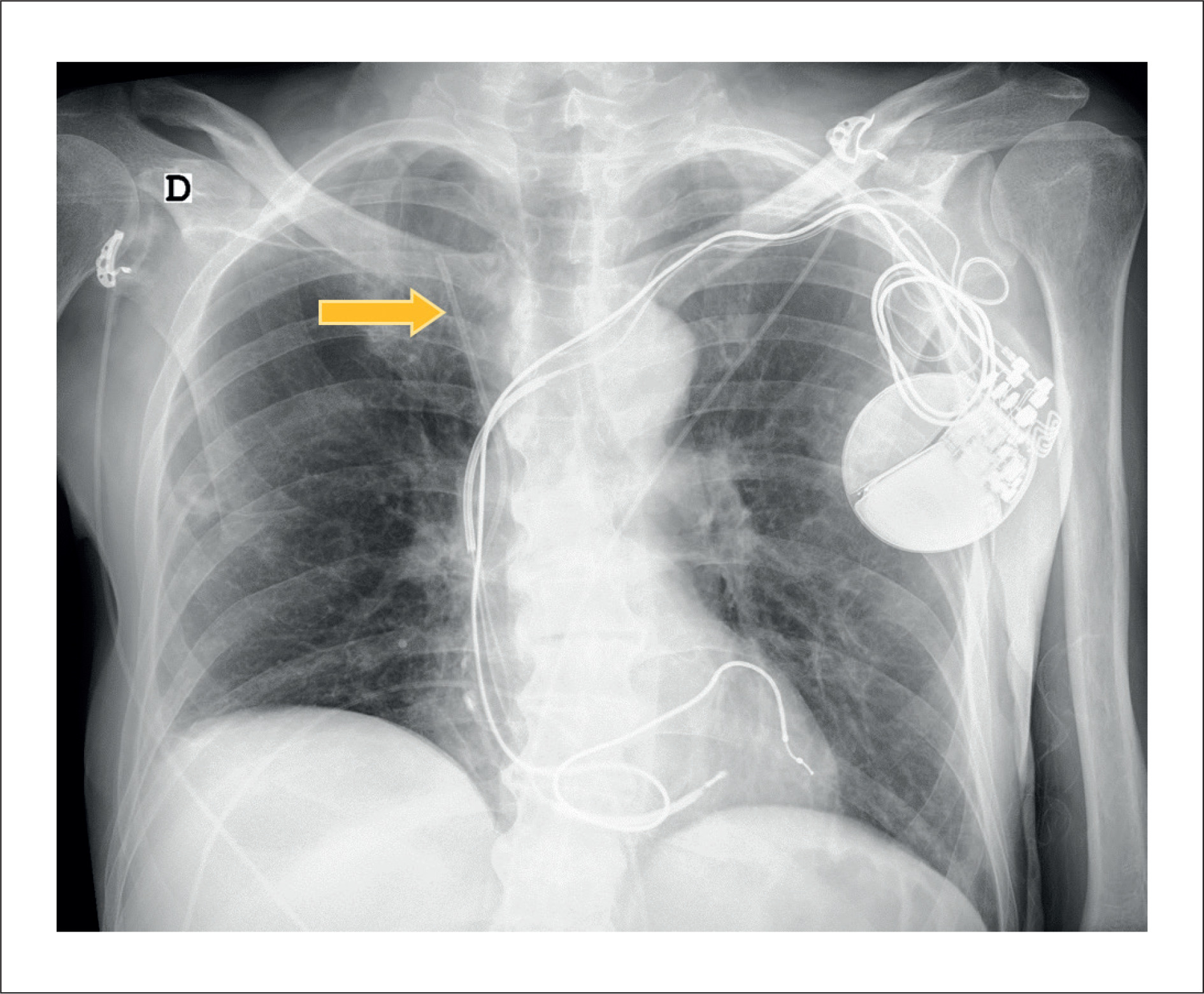
Extraction of Totally Implantable Venous Access Devices Using the PISA Technique: A Small Case Series

Margarida G. Figueiredo et al. Hélder Santos Bruno Valente Mário Oliveira

Introduction

Technological progress has led to the widespread use of implantable medical devices across various conditions, significantly improving patient outcomes. In oncology, totally implantable central venous catheters (TICVCs) are commonly used to facilitate prolonged chemotherapy administration. The end of the therapy is the most common indication for removal. However, different complications associated with the use of these devices have been described, and some of them can justify their removal. Although historically performed by surgeons, removal of TICVC by interventional radiology has become much more frequent in recent decades. The removal of these devices can become technically challenging when significant fibrotic adhesion develops around the catheter tip or along its intravascular course.

The PISA technique, originally developed for extracting leads from cardiac implantable electronic devices, can be adapted for TICVC removal. It involves identification and exposure of the catheter’s proximal portion, followed by dissection to the vascular entry point. A polypropylene sheath is then advanced over the catheter using rotational motion and light traction to release adhesions and achieve complete extraction.

[…]

  • Case Reports
  • Central Venous Catheters
  • Equipment and Supplies
Read Full Article
Creative Commons Attribution (CC BY) Creative Commons license
03/08/2026 DOI: 10.36660/abc.20250569i
ABC
Editorial

Moving from the "Check the Pulse" Era To "Check the ECG" in the Prevention of Thromboembolic Events in Atrial Fibrillation

Tan Chen Wu

Atrial fibrillation (AF) and chronic kidney disease (CKD) share common risk factors and often co-exist: 20% of patients with CKD have symptomatic AF, whereas around 50% of patients with AF will have some degree of renal impairment. Patients with both conditions have a five-fold increased risk of stroke, three-fold increased risk of congestive heart failure, higher cardiovascular morbidity, and all-cause mortality compared with patients who only have either AF or CKD. The incidence rates of AF in a large nationwide database from Taiwan were 5.0, 7.3, and 12.1 events per 1000 patient-years in the general population, the CKD cohort, and the end-stage kidney disease cohort, respectively. The risk of stroke or systemic embolismincreased by 7% for every 10 mL/min decline in eGFR. Early detection of AF may reduce the risk of stroke and other AF-related complications using oral anticoagulant therapy or left atrial appendage closure procedure..

In the first physician-based survey jointly conducted by European Heart Rhythm Association (EHRA) and European Renal Association (ERA)/European Dialysis and Transplantation Association (EDTA) in 2020 to gain insight into the management of AF in patients with CKD, when asked about screening for AF among CKD patient, overall, 132/295 respondents (44.7%) would routinely screen for the presence of AF in all CKD patients at their first presentation, 68/295 (23.1%) would screen for AF only in selected CKD patients, and 95/295 respondents (32.2%) would not screen for AF among CKD patients. Compared with ERA/EDTA respondents, EHRA respondents would more frequently screen for AF only in selected CKD patients (28.5% vs. 16.8%, p = 0.017 at their first presentation and 36.7% vs. 25.0%, p = 0.031 during follow-up). Therefore, there is a low utilization of screening for AF among CKD patients, most likely in patients with symptoms or a history of arrhythmia. More ERA/EDTA respondents would screen for AF among patients on dialysis or those with a functioning kidney transplant compared with EHRA respondents. The most common screening techniques were a single 12-lead electrocardiogram (ECG) recording (240/288 respondents, 83.3%) or ≥24-h Holter monitoring (181/288, 62.8%). The ERA/EDTA respondents still more frequently chose pulse palpation (67.4%), whereas the EHRA respondents more frequently opted for a cardiac rhythm monitoring strategy using a handheld device, telemetry, Holter monitoring, an implantable cardiac monitor, or cardiac implantable electronic device memory readings.

[…]

  • Atrial Fibrillation
  • chronic renal insufficiency
  • Dialysis
  • Equipment and Supplies
  • Triage
Read Full Article
Creative Commons Attribution (CC BY) Creative Commons license
20/06/2025 DOI: 10.36660/abc.20250193i Views 1

How to cite this article

EndNote RIS

Electronic Document Format (Vancouver)

Figueiredo MG, Santos H, Valente B, Oliveira M. Extraction of Totally Implantable Venous Access Devices Using the PISA Technique: A Small Case Series. Arquivos Brasileiros de Cardiologia 2026;123(7):e20250569.

Electronic Document Format (ABNT)

Figueiredo, Margarida G.; Santos, Hélder; Valente, Bruno; Oliveira, Mário. Extraction of Totally Implantable Venous Access Devices Using the PISA Technique: A Small Case Series. Arquivos Brasileiros de Cardiologia, v. 123, n. 7, e20250569, Aug. 2026.

Electronic Document Format (APA)

Figueiredo, M. G., Santos, H., Valente, B., & Oliveira, M. (2026). Extraction of Totally Implantable Venous Access Devices Using the PISA Technique: A Small Case Series. Arquivos Brasileiros de Cardiologia, 123(7), e20250569.

Electronic Document Format (ISO)

Figueiredo, Margarida G. and Santos, Hélder and Valente, Bruno and Oliveira, Mário. Extraction of Totally Implantable Venous Access Devices Using the PISA Technique: A Small Case Series. Arquivos Brasileiros de Cardiologia [online]. 2026, vol. 123, n. 7, [cited 2026-10-14], e20250569. Available from: <https://journals.cardiol.br/en/article/extraction-of-totally-implantable-venous-access-devices-using-the-pisa-technique-a-small-case-series/>. ISSN 0066-782X

EndNote RIS

Electronic Document Format (Vancouver)

Wu TC. Moving from the “Check the Pulse” Era To “Check the ECG” in the Prevention of Thromboembolic Events in Atrial Fibrillation. Arquivos Brasileiros de Cardiologia 2025;122(3):e20250193.

Electronic Document Format (ABNT)

Wu, Tan Chen. Moving from the “Check the Pulse” Era To “Check the ECG” in the Prevention of Thromboembolic Events in Atrial Fibrillation. Arquivos Brasileiros de Cardiologia, v. 122, n. 3, e20250193, Jun. 2025.

Electronic Document Format (APA)

Wu, T. C. (2025). Moving from the “Check the Pulse” Era To “Check the ECG” in the Prevention of Thromboembolic Events in Atrial Fibrillation. Arquivos Brasileiros de Cardiologia, 122(3), e20250193.

Electronic Document Format (ISO)

Wu, Tan Chen. Moving from the “Check the Pulse” Era To “Check the ECG” in the Prevention of Thromboembolic Events in Atrial Fibrillation. Arquivos Brasileiros de Cardiologia [online]. 2025, vol. 122, n. 3, [cited 2026-10-14], e20250193. Available from: <https://journals.cardiol.br/en/article/moving-from-the-check-the-pulse-era-to-check-the-ecg-in-the-prevention-of-thromboembolic-events-in-atrial-fibrillation/>. ISSN 0066-782X

  • About ABC Family
  • Internal Regulation
  • Editorial Board
  • Brazilian Society of Cardiology (SBC)

Issues

SBC Guidelines

  • Videos
  • Podcasts
  • News