HALP Score as a Novel Marker Associated with Coronary Collateral Circulation in Patients with Chronic Total Occlusion
Abstract
Background
Coronary collateral circulation (CCC) is a key determinant of myocardial viability and prognosis in patients with chronic total occlusion (CTO). The hemoglobin, albumin, lymphocyte, and platelet (HALP) score reflects nutritional status, immune competence, and systemic inflammation.
Objectives
To investigate the association between HALP score and CCC in patients with CTO.
Methods
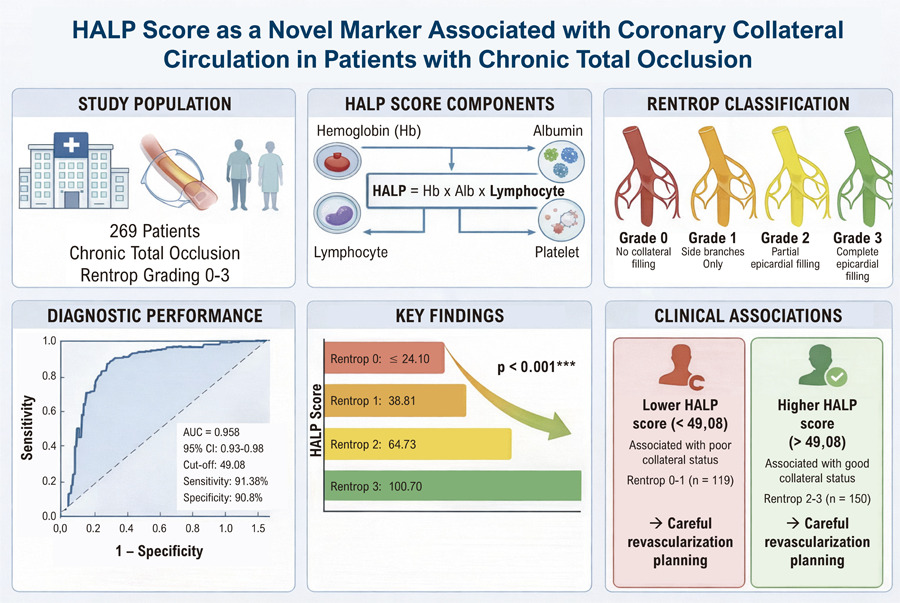
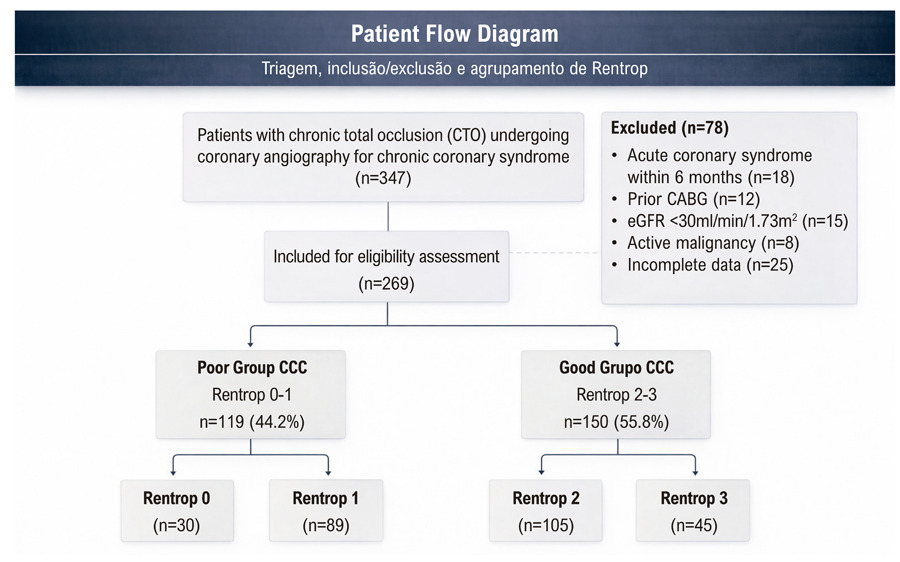
This retrospective, single-center study included 269 patients with chronic coronary syndrome and angiographically confirmed CTO. Patients were classified according to Rentrop grades and dichotomized into poor CCC (Rentrop 0–1; n=119) and good CCC (Rentrop 2–3; n=150). HALP score, inflammatory markers, atherogenic indices, and angiographic scores were compared between groups. Multivariate logistic regression and receiver operating characteristic (ROC) analyses were performed. A p-value <0.05 was considered statistically significant.
Results
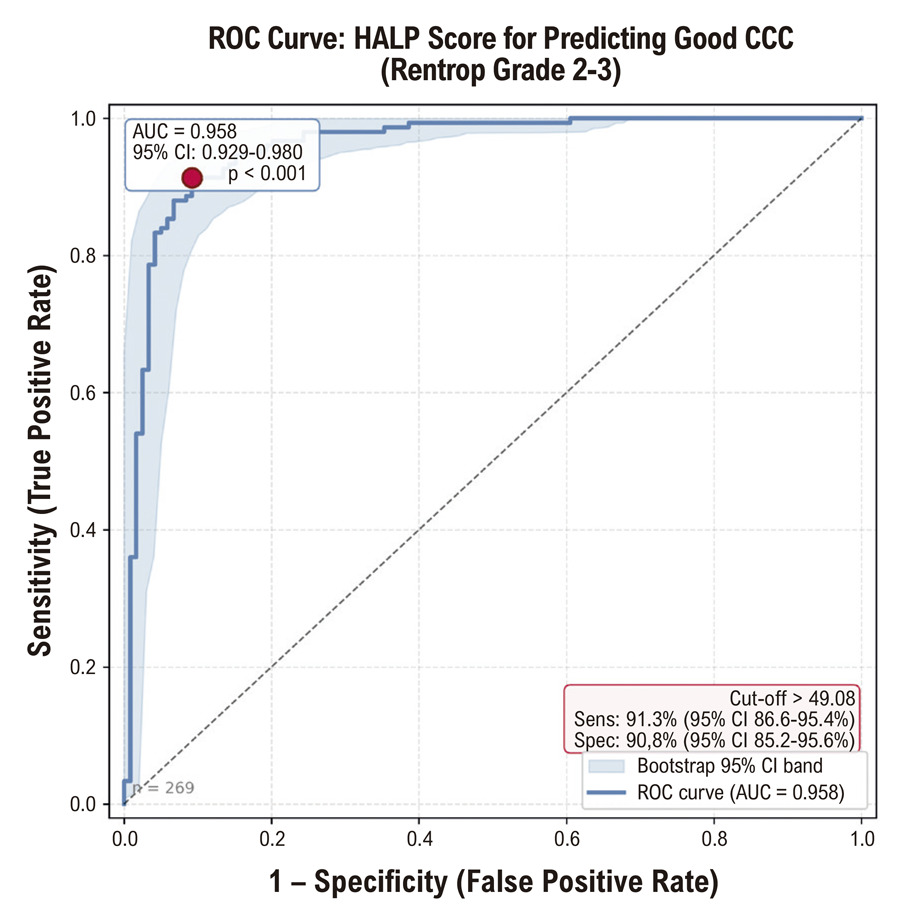
HALP score increased significantly across Rentrop grades (p<0.001) and was higher in patients with good CCC than in those with poor CCC (75.52±13.91 vs. 35.10±11.29; p<0.001). In multivariable analysis, HALP score (OR:0.88, 95% CI: 0.83–0.93; p49.08 (91.3% sensitivity, 90.8% specificity). Atherogenic lipid indices were not significantly associated with CCC.
Conclusions
HALP score is an independent and readily available marker associated with CCC in CTO patients and may serve as a practical tool for risk stratification, highlighting the importance of inflammatory, nutritional, and immune pathways in collateral development.
Images
Image gallery fullscreen viewer
Comments are moderated by the editorial team before publication. Discussions should be evidence-based and use scientific language. Conflicts of interest should be declared.