ABC Family Arquivos Brasileiros de Cardiologia International Journal of Cardiovascular Sciences ABC Heart Failure & Cardiomyopathy ABC Imagem Cardiovascular
Português English
ABC Family
Português English
  • About
    • About ABC Family
    • Internal Regulation
    • Editorial Board
    • Brazilian Society of Cardiology (SBC)
  • Issues
  • SBC Guidelines
  • Content
    • Videos
    • Podcasts
    • News
  • About
    • About ABC Family
    • Internal Regulation
    • Editorial Board
    • Brazilian Society of Cardiology (SBC)
  • Issues
  • SBC Guidelines
  • Content
    • Videos
    • Podcasts
    • News

ABC Family

  • ABC Family
  • Arquivos Brasileiros de Cardiologia
  • International Journal of Cardiovascular Sciences
  • ABC Heart Failure & Cardiomyopathy
  • ABC Imagem Cardiovascular
Search in

No content found.

Journals
Ordering
Article types
Others

  1. Home
  2. Keyword: Premature Infant
Risk Factors Associated with Preeclampsia and Their Impact on Maternal and Neonatal Morbidity and Mortality in the Dominican Republic
ABC
Original Article

Risk Factors Associated with Preeclampsia and Their Impact on Maternal and Neonatal Morbidity and Mortality in the Dominican Republic

Patricia Severino et al. Fulgencio Severino Rosa Cueto

Abstract

Background

Hypertensive disorders of pregnancy complicate 5%-10% of pregnancies and account for 23%-38% of maternal deaths in the Dominican Republic.

Objective

To identify factors associated with the development of preeclampsia and evaluate their relationship with maternal and perinatal morbidity and mortality.

Methods

This multicenter, prospective, observational, cross-sectional, analytical study included 469 parturients from 17 hospitals across the Dominican Republic over a 30-day period. Statistical significance was set at p < 0.05.

Results

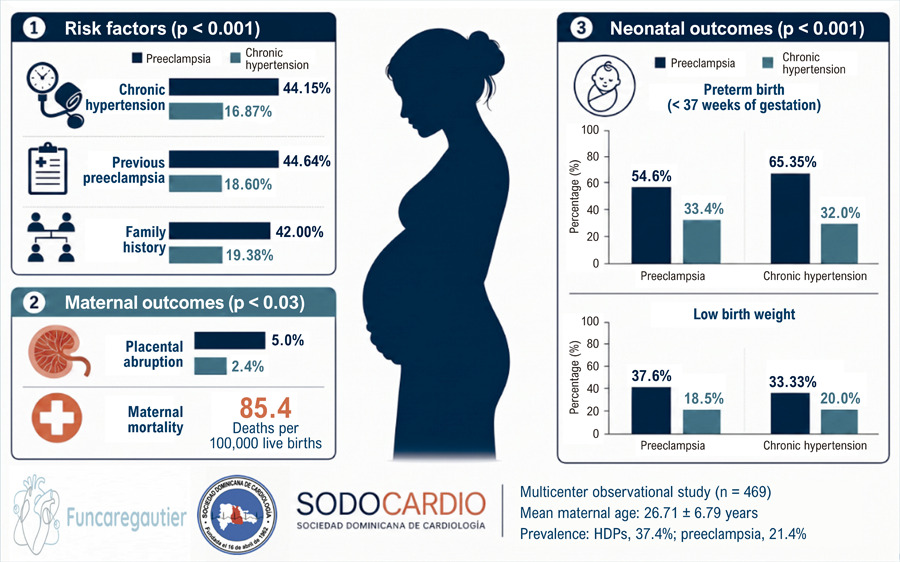
Preeclampsia was significantly associated with chronic hypertension (44.15% vs 16.87%; odds ratio [OR], 3.91; 95%CI, 2.51-6.09), previous preeclampsia (44.64% vs 18.60%; OR, 3.53; 95%CI, 2.24-5.56), and a family history of preeclampsia (42.0% vs 19.38%; OR, 3.01; 95%CI, 1.96-4.62). Preeclampsia was also associated with prematurity (54.6% vs 33.4%; OR, 2.40; 95%CI, 1.62-3.55), low birth weight (37.6% vs 18.5%; OR, 2.65; 95%CI, 1.73-4.07), and placental abruption (5.0% vs 2.4%; OR, 2.14; 95%CI, 0.81-5.62). Maternal and fetal mortality were not significantly associated with preeclampsia. In the multivariable logistic regression analysis, chronic hypertension (adjusted OR [AOR], 3.64; 95%CI, 2.25–5.88), a family history of preeclampsia (AOR, 2.86; 95%CI, 1.85-4.42), and pregestational obesity (AOR, 2.26; 95%CI, 1.52-3.36) emerged as independent predictors of preeclampsia (all p < 0.05).

Conclusion

Preeclampsia is associated with an increased risk of adverse maternal and neonatal outcomes, particularly prematurity and low birth weight.
  • Dominican Republic
  • Low Birth Weight Infant
  • Maternal mortality
  • Pre-Eclampsia
  • Pregnancy-Induced Hypertension
  • Premature Infant
Read Full Article
Creative Commons Attribution (CC BY) Creative Commons license
17/08/2026 DOI: 10.36660/abc.20260474i Views 1
Mean Platelet Volume to Platelet Distribution Width Ratio: The Most Effective Platelet Parameter in the Closer of Ductus Arteriosus
ABC
Original Article

Mean Platelet Volume to Platelet Distribution Width Ratio: The Most Effective Platelet Parameter in the Closer of Ductus Arteriosus

Ufuk Cakir et al. Cuneyt Tayman

Abstract

Background

The role of platelets and platelet indices in the closure of the ductus arteriosus in premature infants is still controversial. We aimed to determine whether the platelet count and all platelet-related indices are effective on the closer of patent ductus arteriosus (PDA).

Objectives

Demographic characteristics, prematurity morbidities, and platelet indices were compared between groups with and without hemodynamically significant PDA (hsPDA).

Methods

Data of premature infants with a gestational age of <30 weeks were evaluated retrospectively. All platelet-related data were recorded from the complete blood count in the first 24 hours of all patients. The statistical analysis was performed on the obtained data. A p-value of <0.05 was considered statistically significant.

Results

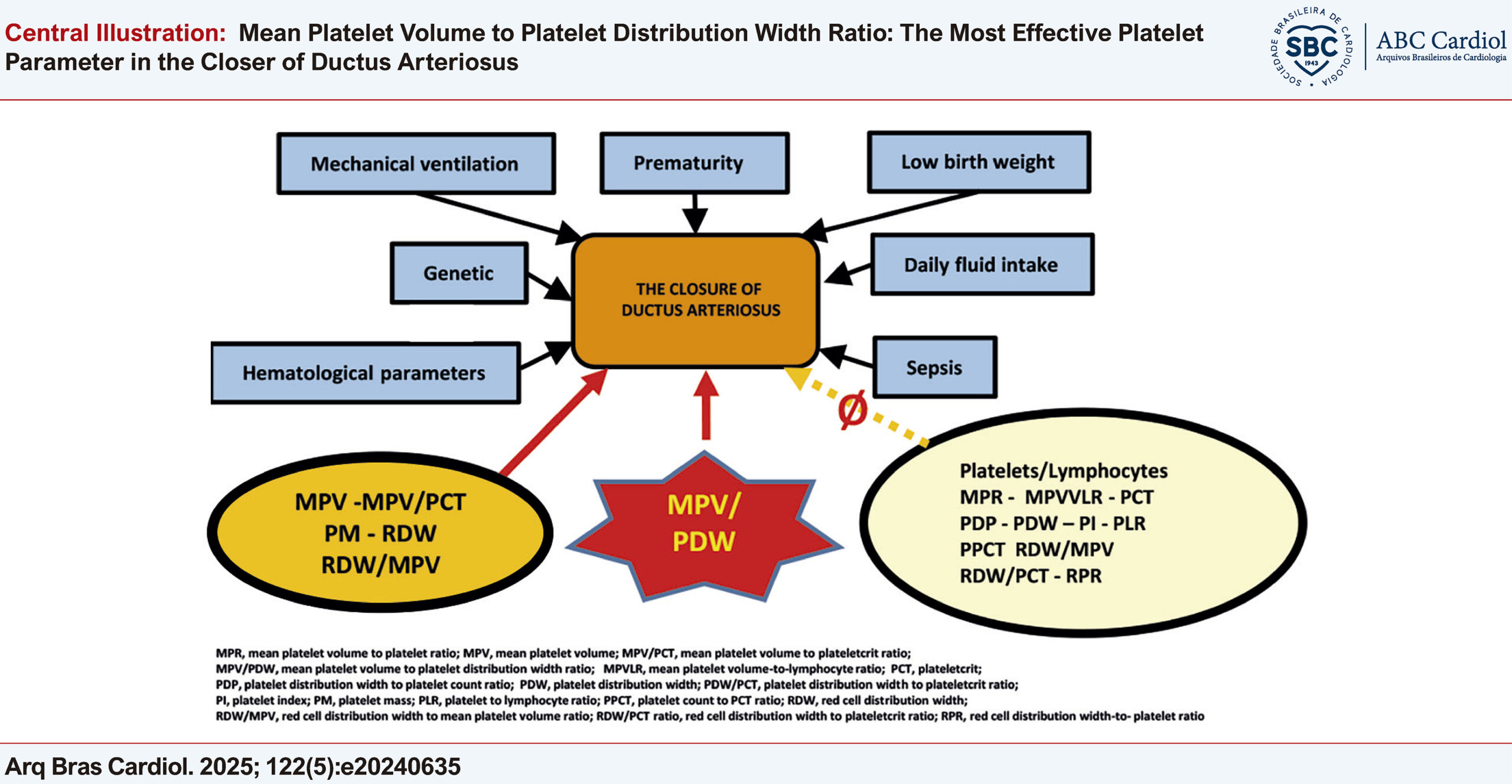
A total of 1151 patients were included in the study, including 426 patients in the hsPDA group and 725 patients in the non-hsPDA group. Platelet parameters mean platelet volume (MPV), MPV/ plateletcrit (PCT), MPV/ platelet distribution width (PDW), platelet mass (PM), red cell distribution width (RDW) values were found to be significantly lower in the hsPDA group compared to the non-hsPDA group (p<0.001, p<0.001, p<0.001, p=0.015, and p<0.001, respectively). MPV/PDW ratio with the highest AUC value (0.748) was found to be the most valuable parameter in estimating the closer of PDA.

Conclusions

The MPV/PDW ratio was found to be the most valuable parameter for the prediction of hsPDA among all platelet indices.

  • Blood Platelets
  • Mean Platelet Volume
  • patent ductus arteriosus
  • Premature Infant
Read Full Article
Creative Commons Attribution (CC BY) Creative Commons license
09/05/2025 DOI: 10.36660/abc.20240635i Views 1
Systemic Inflammatory Indices as New Biomarkers for Hemodynamically Significant Ductus Arteriosus
ABC
Original Article

Systemic Inflammatory Indices as New Biomarkers for Hemodynamically Significant Ductus Arteriosus

Ufuk Cakir et al. Cuneyt Tayman

Abstract

Background

Increased oxygen tension and decreased prostaglandin levels cause ductal closure. The diagnostic role of systemic inflammatory indices in hemodynamically significant ductus arteriosus (hsPDA) in premature infants is unknown.

Objectives

We aimed to evaluate the role of systemic inflammatory indices in the predictivity of hsPDA.

Methods

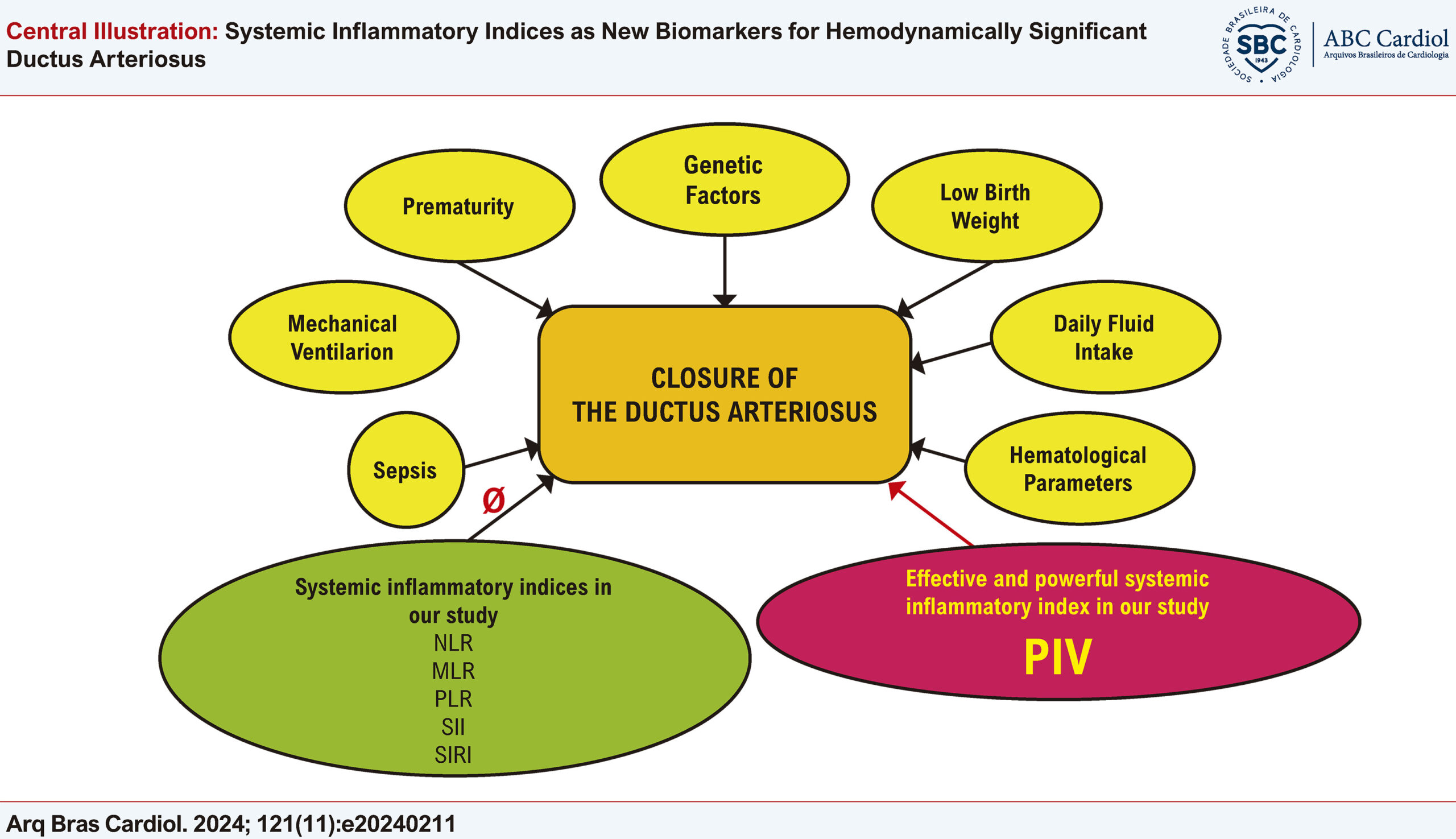
Premature infants with gestational weeks (GW) of <32 weeks were evaluated retrospectively. Systemic inflammatory indices neutrophil-lymphocyte ratio (NLR), monocyte-lymphocyte ratio (MLR), platelet-lymphocyte ratio (PLR), systemic immune-inflammation index (SII), pan-immune- inflammation value (PIV), and systemic inflammation response index (SIRI) were calculated. Systemic inflammatory indices were compared between hsPDA and non-hsPDA groups. A p <0.05 was considered as statistically significant.

Results

A total of 1228 patients were included in the study, including 447 patients in the hsPDA group and 781 patients in the non-hsPDA group. The PIV value [median (Q1 – Q3): 5.18 (2.38-10.42)] in the hsPDA group was statistically significantly higher than the PIV value [median (Q1 – Q3): 3.52 (1.41-6.45)] in the non-hsPDA group (p8.66. After even multiple logistic regression analyses, PIV was shown to be a significant parameter for the diagnosis of hsPDA (OR 1.972, 95% CI 1.114-3.011. p=0.001).

Conclusions

A high PIV value may be a quickly used indicator with low-cost, simple, and easily accessible for the early diagnosis of hsPDA.

  • Ductus Arteriosus
  • Inflammation
  • Newborn Infant
  • Premature Infant
Read Full Article
Creative Commons Attribution (CC BY) Creative Commons license
02/12/2024 DOI: 10.36660/abc.20240211i Views 1
Figure 1
ABCIC
Review Article

My Approach to Echocardiographic Assessment of the Premature Newborn

Karen Saori Shiraishi Sawamura et al. Márcio Miranda Brito

Abstract

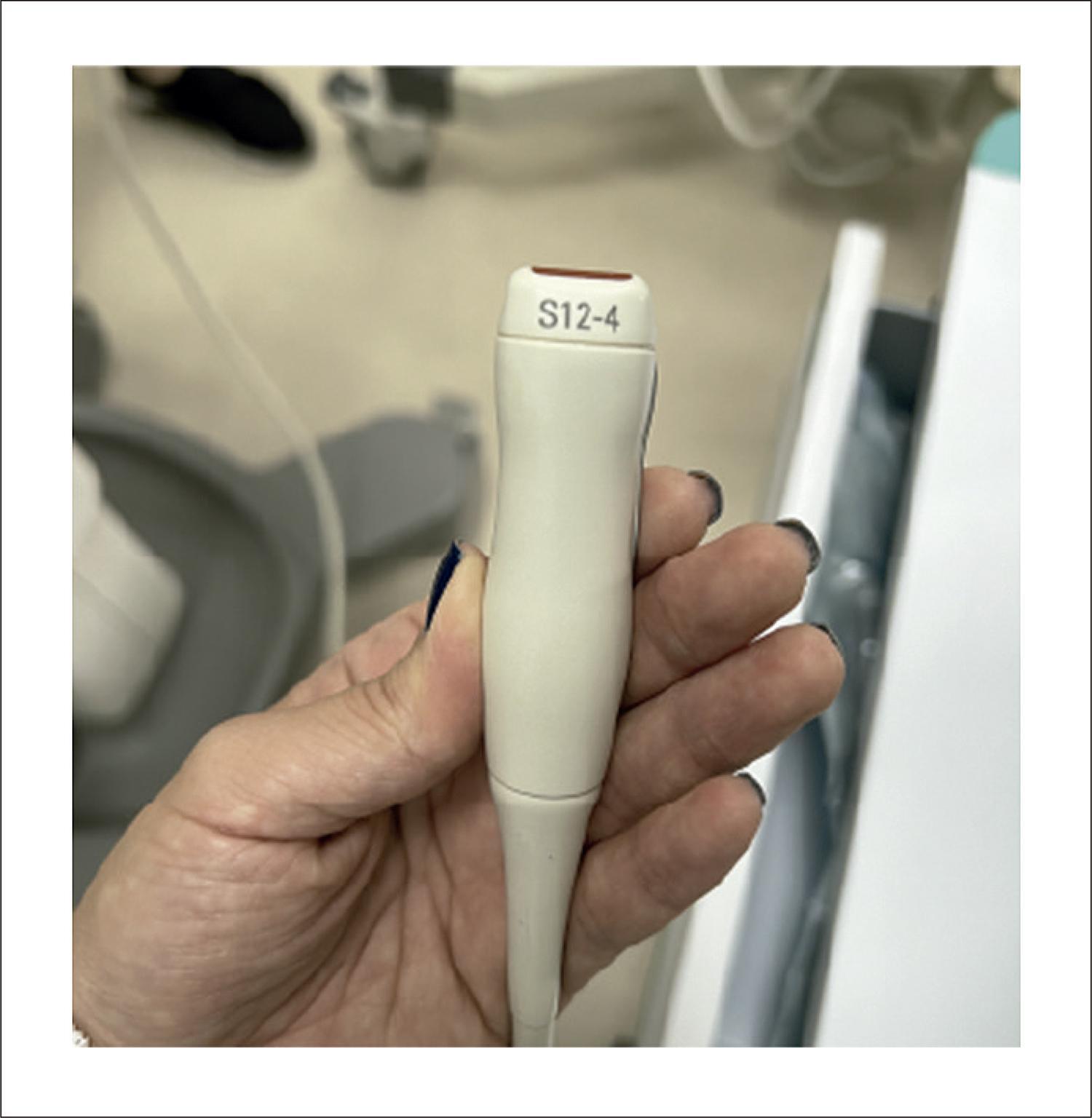
Echocardiographic assessment of preterm infants, why do it? The incidence of premature births has been increasing worldwide and already affects about 10% of live births. Extremely preterm newborns (PTNB) are at increased risk of developing pulmonary immaturity, leading to pulmonary hypertension (PH), in addition to cardiovascular immaturity and patent ductus arteriosus (PDA).Hemodynamic monitoring of this population is challenging and differs from critically ill pediatric patients due to hemodynamic lability. Thus, minimal manipulation is essential to avoid complications. In this context, non-invasive monitoring methods such as transthoracic echocardiography (TTE) gain importance for hemodynamic assessment. It is a low-cost, radiation-free test that offers good anatomical and functional visualization in pediatric patients, making it a useful tool in the clinical management of severe preterm newborns.What you will find in this article:We will take an objective, didactic, and at times humorous approach to the use of echocardiography in premature newborns in the neonatal intensive care unit (NICU), and we will discuss the echocardiographic particularities of premature infants, especially regarding equipment adjustments, PH, and persistence of the ductus arteriosus (DA).

  • Ductus Arteriosus
  • Echocardiography
  • Neonatology
  • Premature Infant
  • Pulmonary Hypertension
Read Full Article
Creative Commons Attribution (CC BY) Creative Commons license
27/06/2023 DOI: 10.36660/abcimg.20230035i Views 1

How to cite this article

EndNote RIS

Electronic Document Format (Vancouver)

Severino P, Severino F, Cueto R. Risk Factors Associated with Preeclampsia and Their Impact on Maternal and Neonatal Morbidity and Mortality in the Dominican Republic. Arquivos Brasileiros de Cardiologia 2026;123(7):e20260474.

Electronic Document Format (ABNT)

Severino, Patricia; Severino, Fulgencio; Cueto, Rosa. Risk Factors Associated with Preeclampsia and Their Impact on Maternal and Neonatal Morbidity and Mortality in the Dominican Republic. Arquivos Brasileiros de Cardiologia, v. 123, n. 7, e20260474, Aug. 2026.

Electronic Document Format (APA)

Severino, P., Severino, F., & Cueto, R. (2026). Risk Factors Associated with Preeclampsia and Their Impact on Maternal and Neonatal Morbidity and Mortality in the Dominican Republic. Arquivos Brasileiros de Cardiologia, 123(7), e20260474.

Electronic Document Format (ISO)

Severino, Patricia and Severino, Fulgencio and Cueto, Rosa. Risk Factors Associated with Preeclampsia and Their Impact on Maternal and Neonatal Morbidity and Mortality in the Dominican Republic. Arquivos Brasileiros de Cardiologia [online]. 2026, vol. 123, n. 7, [cited 2026-10-14], e20260474. Available from: <https://journals.cardiol.br/en/article/risk-factors-associated-with-preeclampsia-and-their-impact-on-maternal-and-neonatal-morbidity-and-mortality-in-the-dominican-republic/>. ISSN 0066-782X

EndNote RIS

Electronic Document Format (Vancouver)

Cakir U, Tayman C. Mean Platelet Volume to Platelet Distribution Width Ratio: The Most Effective Platelet Parameter in the Closer of Ductus Arteriosus. Arquivos Brasileiros de Cardiologia 2025;122(5):e20240635.

Electronic Document Format (ABNT)

Cakir, Ufuk; Tayman, Cuneyt. Mean Platelet Volume to Platelet Distribution Width Ratio: The Most Effective Platelet Parameter in the Closer of Ductus Arteriosus. Arquivos Brasileiros de Cardiologia, v. 122, n. 5, e20240635, May. 2025.

Electronic Document Format (APA)

Cakir, U., & Tayman, C. (2025). Mean Platelet Volume to Platelet Distribution Width Ratio: The Most Effective Platelet Parameter in the Closer of Ductus Arteriosus. Arquivos Brasileiros de Cardiologia, 122(5), e20240635.

Electronic Document Format (ISO)

Cakir, Ufuk and Tayman, Cuneyt. Mean Platelet Volume to Platelet Distribution Width Ratio: The Most Effective Platelet Parameter in the Closer of Ductus Arteriosus. Arquivos Brasileiros de Cardiologia [online]. 2025, vol. 122, n. 5, [cited 2026-10-14], e20240635. Available from: <https://journals.cardiol.br/en/article/mean-platelet-volume-to-platelet-distribution-width-ratio-the-most-effective-platelet-parameter-in-the-closer-of-ductus-arteriosus/>. ISSN 0066-782X

EndNote RIS

Electronic Document Format (Vancouver)

Cakir U, Tayman C. Systemic Inflammatory Indices as New Biomarkers for Hemodynamically Significant Ductus Arteriosus. Arquivos Brasileiros de Cardiologia 2024;121(11):e20240211.

Electronic Document Format (ABNT)

Cakir, Ufuk; Tayman, Cuneyt. Systemic Inflammatory Indices as New Biomarkers for Hemodynamically Significant Ductus Arteriosus. Arquivos Brasileiros de Cardiologia, v. 121, n. 11, e20240211, Dec. 2024.

Electronic Document Format (APA)

Cakir, U., & Tayman, C. (2024). Systemic Inflammatory Indices as New Biomarkers for Hemodynamically Significant Ductus Arteriosus. Arquivos Brasileiros de Cardiologia, 121(11), e20240211.

Electronic Document Format (ISO)

Cakir, Ufuk and Tayman, Cuneyt. Systemic Inflammatory Indices as New Biomarkers for Hemodynamically Significant Ductus Arteriosus. Arquivos Brasileiros de Cardiologia [online]. 2024, vol. 121, n. 11, [cited 2026-10-14], e20240211. Available from: <https://journals.cardiol.br/en/article/systemic-inflammatory-indices-as-new-biomarkers-for-hemodynamically-significant-ductus-arteriosus/>. ISSN 0066-782X

EndNote RIS

Electronic Document Format (Vancouver)

Sawamura KSS, Brito MM. My Approach to Echocardiographic Assessment of the Premature Newborn. ABC Imagem Cardiovascular 2023;36(2):e20230035.

Electronic Document Format (ABNT)

Sawamura, Karen Saori Shiraishi; Brito, Márcio Miranda. My Approach to Echocardiographic Assessment of the Premature Newborn. ABC Imagem Cardiovascular, v. 36, n. 2, e20230035, Jun. 2023.

Electronic Document Format (APA)

Sawamura, K. S. S., & Brito, M. M. (2023). My Approach to Echocardiographic Assessment of the Premature Newborn. ABC Imagem Cardiovascular, 36(2), e20230035.

Electronic Document Format (ISO)

Sawamura, Karen Saori Shiraishi and Brito, Márcio Miranda. My Approach to Echocardiographic Assessment of the Premature Newborn. ABC Imagem Cardiovascular [online]. 2023, vol. 36, n. 2, [cited 2026-10-14], e20230035. Available from: <https://journals.cardiol.br/en/article/my-approach-to-echocardiographic-assessment-of-the-premature-newborn/>. ISSN 2318-8219

  • About ABC Family
  • Internal Regulation
  • Editorial Board
  • Brazilian Society of Cardiology (SBC)

Issues

SBC Guidelines

  • Videos
  • Podcasts
  • News