ABC Family Arquivos Brasileiros de Cardiologia International Journal of Cardiovascular Sciences ABC Heart Failure & Cardiomyopathy ABC Imagem Cardiovascular
Português English
ABC Family
Português English
  • About
    • About ABC Family
    • Internal Regulation
    • Editorial Board
    • Brazilian Society of Cardiology (SBC)
  • Issues
  • SBC Guidelines
  • Content
    • Videos
    • Podcasts
    • News
  • About
    • About ABC Family
    • Internal Regulation
    • Editorial Board
    • Brazilian Society of Cardiology (SBC)
  • Issues
  • SBC Guidelines
  • Content
    • Videos
    • Podcasts
    • News

ABC Family

  • ABC Family
  • Arquivos Brasileiros de Cardiologia
  • International Journal of Cardiovascular Sciences
  • ABC Heart Failure & Cardiomyopathy
  • ABC Imagem Cardiovascular
Search in

No content found.

Journals
Ordering
Article types
Others

  1. Home
  2. Keyword: Evidence-Based Practice
ABC
Editorial

HFREF Therapy: Randomized Evidence and Real-World Perspectives

Daniella Motta da Costa Dan

Abstract

Heart failure with reduced ejection fraction (HFrEF) has seen significant therapeutic advances with the consolidation of the four pharmacological pillars that modify prognosis. The widespread use of these therapies is associated with a substantial reduction in cardiovascular death and hospitalizations for heart failure, supporting contemporary strategies for rapid introduction and subsequent optimization to target or maximum tolerated doses. In this context, sacubitril/valsartan demonstrated prognostic benefit in PARADIGM-HF and a greater reduction in NT-proBNP in PIONEER-HF. However, different results were observed in other settings, such as PARADISE-MI and LIFE, helping to define the populations in which its benefit was demonstrated. The study published in this issue of the Arquivos Brasileiros de Cardiologia evaluated, in a real-world observational cohort, patients with HFrEF treated with maximum doses of sacubitril/valsartan, enalapril, or losartan. Compared to the group treated with enalapril or losartan, sacubitril/valsartan was not associated with a statistically significant reduction in hospitalization or mortality, although it was associated with an improvement in functional class. These findings should be interpreted considering methodological limitations, such as observational design, lack of randomization, limited number of events, and heterogeneity of the comparator group. Real-world studies broaden the understanding of the effectiveness, applicability, and implementation of therapies and should be analyzed in conjunction with the consolidated evidence from randomized clinical trials.

Heart failure (HF) is a complex and serious syndrome associated with high hospitalization and mortality rates. In heart failure with reduced ejection fraction (HFrEF), large clinical trials have established four pharmacological pillars that modify the prognosis: beta-blockers, which attenuate the activation of the sympathetic nervous system; inhibition of the renin-angiotensin system, through the use of angiotensin receptor and neprilysin inhibitors (ARNIs), angiotensin-converting enzyme inhibitors (ACEIs), or angiotensin receptor blockers (ARBs); mineralocorticoid receptor antagonists (MRAs); and sodium-glucose cotransporter type 2 inhibitors (SGLT2i).,

[…]

  • Evidence-Based Practice
  • Heart Failure
  • Systolic Heart Failure
Read Full Article
Creative Commons Attribution (CC BY) Creative Commons license
21/09/2026 DOI: 10.36660/abc.20260588i Views 3
ABCIC
Review Article

My Approach To Myocardial Extracellular Volume Quantification Using Cardiac Computed Tomography

Gabriel C. Camargo et al. Letícia R. Sabioni

Abstract

The quantification of myocardial extracellular volume (ECV) has demonstrated both diagnostic and prognostic value in various heart diseases. While ECV is typically assessed using cardiac magnetic resonance imaging (CMR), it can also be measured through cardiac computed tomography (CCT) imaging. This article discusses the application of CCT for myocardial ECV calculation, detailing the technique, its advantages and disadvantages, and its potential clinical applications.

  • Cardiomyopathies
  • Evidence-Based Practice
  • X-Ray Computed Tomography
Read Full Article
Creative Commons Attribution (CC BY) Creative Commons license
18/03/2025 DOI: 10.36660/abcimg.20240112i Views 1
A Nationwide Initiative to Improve Cardiology Quality: The Best Practice in Cardiology Program in Brazil
ABC
Original Article

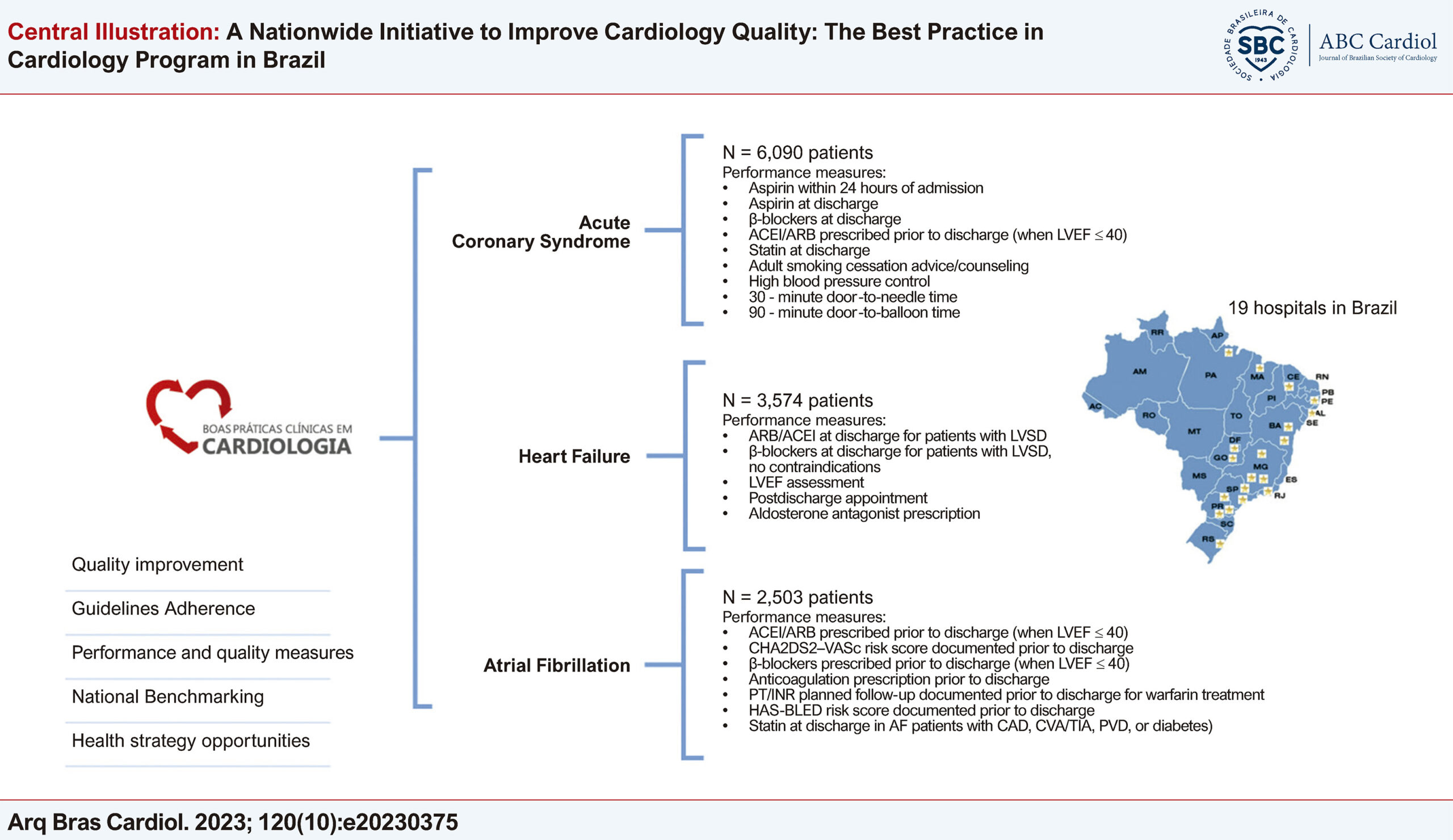
A Nationwide Initiative to Improve Cardiology Quality: The Best Practice in Cardiology Program in Brazil

Fabio Papa Taniguchi et al. Sabrina Bernardez-Pereira Antônio Luiz Pinho Ribeiro Louise Morgan … Anne B. Curtis Kathryn Taubert Denilson Campos de Albuquerque Sidney C Smith Jr Angêlo Amato Vincenzo de Paola

Abstract

Background

Despite significant progress in improving the quality of cardiovascular care, persistent gaps remain in terms of inconsistent adherence to guideline recommendations.

Objective

This study evaluates the effects of implementing a quality improvement program adapted from the American Heart Association’s Get with the Guidelines™ initiative on adherence to guideline-directed medical therapy for acute coronary syndrome (ACS), atrial fibrillation (AF), and heart failure (HF).

Methods

We examined demographics, quality measures, and short-term outcomes in patients hospitalized with ACS, AF, and HF enrolled in the Best Practice in Cardiology (BPC) Program from 2016 to 2022.

Results

This study included 12,167 patients in 19 hospitals in Brazil. Mean age was 62.5 [53.8-71] y/o; 61.1% were male, 68.7% had hypertension, 32.0% diabetes mellitus, and 24.1% had dyslipidemia. Composite score had a sustainable performance in the period from baseline to the last quarter: 65.8±36.2% to 73± 31.2% for AF (p=0.024), 81.0± 23.6% to 89.9 ± 19.3% for HF (p<0.001), and from 88.0 ± 19.1 to 91.2 ±14.9 for ACS (p<0.001).

Conclusions

The BPC program is a quality improvement program in Brazil in which real-time data, obtained using cardiology guideline metrics, were implemented in a quality improvement program resulting in an overall sustained improvement in AF, HF, and ACS management.

  • Cardiology
  • Evidence-Based Practice
  • Quality Improvement
Read Full Article
Creative Commons Attribution (CC BY) Creative Commons license
04/12/2023 DOI: 10.36660/abc.20230375 Views 1
ABC
Viewpoint

Positions, Guidelines and Standardizations. Vehicles of Assistance to Medical Practice

Antônio Carlos Sobral Sousa et al. Claudio Pereira da Cunha Lucélia Batista Neves Cunha Magalhães Sergio Emanuel Kaiser José Francisco Kerr Saraiva

Positioning document

These documents aim to address a particular topic (diagnostic, therapeutic or laboratory) of recognized clinical interest, for which there are no (or unlikely to exist) evidence of substantial quality or, especially, those from randomized clinical trials. These documents are complementary to the guidelines and are prepared by a team of professionals with established experience in the subject.

As an example, we could cite the use of direct anticoagulants in pregnant patients. In general, the guidelines contained in these documents are anchored in the best evidence available; however, often incorporate the personal opinion of specialists.

[…]

  • Delivery of Health Care
  • Evidence-Based Practice
  • Practice Guidelines as Topic
Read Full Article
Creative Commons Attribution (CC BY) Creative Commons license
01/10/2017 DOI: 10.5935/abc.20170133 Views 1
ABC
Special Article

I RBH – First Brazilian Hypertension Registry

Paulo César Brandão Veiga Jardim et al. Weimar Kunz Sebba Barroso de Souza Renato Delascio Lopes Andréa Araújo Brandão … Marcus V. Bolívar Malachias Marco Mota Gomes Heitor Moreno Júnior Eduardo Costa Duarte Barbosa Rui Manoel dos Santos Póvoa

Abstract

Background:

A registry assessing the care of hypertensive patients in daily clinical practice in public and private centers in various Brazilian regions has not been conducted to date. Such analysis is important to elucidate the effectiveness of this care.

Objective:

To document the current clinical practice for the treatment of hypertension with identification of the profile of requested tests, type of administered treatment, level of blood pressure (BP) control, and adherence to treatment.

Methods:

National, observational, prospective, and multicenter study that will include patients older than 18 years with hypertension for at least 4 weeks, following up in public and private centers and after signing a consent form. The study will exclude patients undergoing dialysis, hospitalized in the previous 30 days, with class III or IV heart failure, pregnant or nursing, with severe liver disease, stroke or acute myocardial infarction in the past 30 days, or with diseases with a survival prognosis < 1 year. Evaluations will be performed at baseline and after 1 year of follow-up. The parameters that will be evaluated include anthropometric data, lifestyle habits, BP levels, lipid profile, metabolic syndrome, and adherence to treatment. The primary outcomes will be hospitalization due to hypertensive crisis, cardiocirculatory events, and cardiovascular death, while secondary outcomes will be hospitalization for heart failure and requirement of dialysis. A subgroup analysis of 15% of the sample will include noninvasive central pressure evaluation at baseline and study end. The estimated sample size is 3,000 individuals for a prevalence of 5%, sample error of 2%, and 95% confidence interval.

Results:

The results will be presented after the final evaluation, which will occur at the end of a 1-year follow-up.

Conclusion:

The analysis of this registry will improve the knowledge and optimize the treatment of hypertension in Brazil, as a way of modifying the prognosis of cardiovascular disease in the country.

  • Epidemiology
  • Evidence-Based Practice
  • Hypertension
  • Multicenter Studies as Topic
  • Prevalence
  • Risk Factors
Read Full Article
Creative Commons Attribution (CC BY) Creative Commons license
01/08/2016 DOI: 10.5935/abc.20160120 Views 1
ABC
Special Article

Biomarkers in Cardiology – Part 2: In Coronary Heart Disease, Valve Disease and Special Situations

Expert Group on Biomarkers

Cardiovascular diseases are the main causes of mortality and morbidity in Brazil. Their primary and secondary preventions are a priority for the health system and require multiple approaches for increased effectiveness. Biomarkers are tools used to identify with greater accuracy high-risk individuals, establish a faster diagnosis, guide treatment, and determine prognosis. This review aims to highlight the importance of biomarkers in clinical cardiology practice and raise relevant points regarding their application and perspectives for the next few years. This document was divided into two parts. This second part addresses the application of biomarkers in coronary heart disease, valvular diseases, cardio-oncology, pulmonary embolism, and cardiorenal syndrome.

  • Biological Markers, Pharmacological
  • Cardio-Renal Syndrome
  • Coronary Artery Disease
  • Evidence-Based Practice
  • Heart Valve Diseases, Pulmonary Embolism
Read Full Article
Creative Commons Attribution (CC BY) Creative Commons license
01/05/2015 DOI: 10.5935/abc.20150061
ABC
Editorial

Effectiveness of Biomarkers in Cardiology

Luis Cláudio Lemos Correia

Besides providing diagnostic or prognostic accuracy, a biomarker must be effective to ensure its adequate use in routine clinical implementation. Effectiveness can be defined as an individual’s potential to benefit from using the biomarker. This benefit includes the prevention of undesirable clinical outcomes and improvement in an individual’s quality of life.

Assessment of a biomarker’s effectiveness should include two sequential criteria. First, the biomarker should add prognostic value in relation to basic clinical and laboratory data. Second, the information provided by the biomarker should promote changes in medical conduct in a way that ultimately benefits the patient. Beginning with the analysis of prognostic value, a new biomarker must have a prognostic value independent of conventional risk markers. However, this criterion of statistical significance is not enough to guarantee clinical significance. Once the statistical significance is confirmed by multivariate analysis, it is necessary to proceed and evaluate whether the biomarker increases our ability to identify individuals who will present the undesirable outcome. This is done by incremental analysis of the C-statistic and net reclassification analysis. For example, although high sensitivity C-reactive protein has an independent association with cardiovascular risk, it only slightly increases the discriminatory capacity in Framingham score. The coronary calcium score, on the other hand, can increase the C-statistic of Framingham score, in addition to correctly reclassifying a proportion of patients. This incremental value is an essential condition for a biomarker to be effective, because only then can its result correctly modify clinical decisions.

[…]

  • Biological Markers
  • Cardiovascular Diseases/genetic
  • Disease Prevention
  • Effectiveness
  • Evidence-Based Practice
Read Full Article
Creative Commons Attribution (CC BY) Creative Commons license
01/12/2014 DOI: 10.5935/abc.20140194
ABC
Special Article

Biomarkers in Cardiology – Part 1 – In Heart Failure and Specific Cardiomyopathies

EXpert Group on Biomarkers

Cardiovascular diseases are the leading causes of mortality and morbidity in Brazil. The primary and secondary preventions of those diseases are a priority for the health system and require multiple approaches to increase their effectiveness. Biomarkers are tools used to more accurately identify high-risk individuals, to speed the diagnosis, and to aid in treatment and prognosis determination. This review aims to highlight the importance of biomarkers in clinical cardiology practice, and to raise relevant points of their use and the promises for the coming years. This document was divided into two parts, and this first one discusses the use of biomarkers in specific cardiomyopathies and heart failure.

  • Biological Markers
  • Cardiomyopathies
  • Evidence-Based Practice
  • Heart Failure
Read Full Article
Creative Commons Attribution (CC BY) Creative Commons license
28/11/2014 DOI: 10.5935/abc.20140184
Figure 1
ABC
Artigo Original

Use of Evidence-Based Interventions in Acute Coronary Syndrome – Subanalysis of the ACCEPT Registry

Ricardo Wang et al. Fernando Carvalho Neuenschwander Augusto Lima Filho Celsa Maria Moreira … Elizabete Silva dos Santos Helder Jose Lima Reis Edson Renato Romano Luiz Alberto Piva e Mattos Otávio Berwanger Jadelson Pinheiro de Andrade

Background:

The recommendations in guidelines are based on evidence; however, there is a gap between recommendations and clinical practice.

Objective:

To describe the practice of prescribing evidence-based treatments for patients with acute coronary syndrome in Brazil.

Methods:

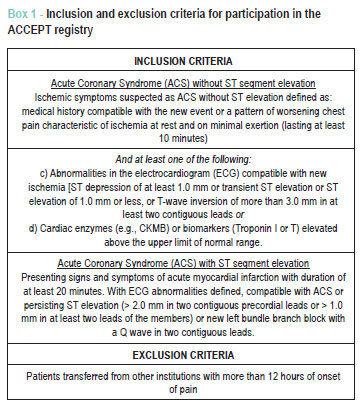
This study carried out a subanalysis of the ACCEPT registry, assessing epidemiological data and the prescription rate of acetylsalicylic acid, p2y12 inhibitors, antithrombotic drugs, beta-blockers, angiotensin-converting enzyme inhibitors/angiotensin-receptor blockers (IAT1RB), and statins. In addition, the quality of myocardial reperfusion in ST-segment elevation myocardial infarction was evaluated.

Results:

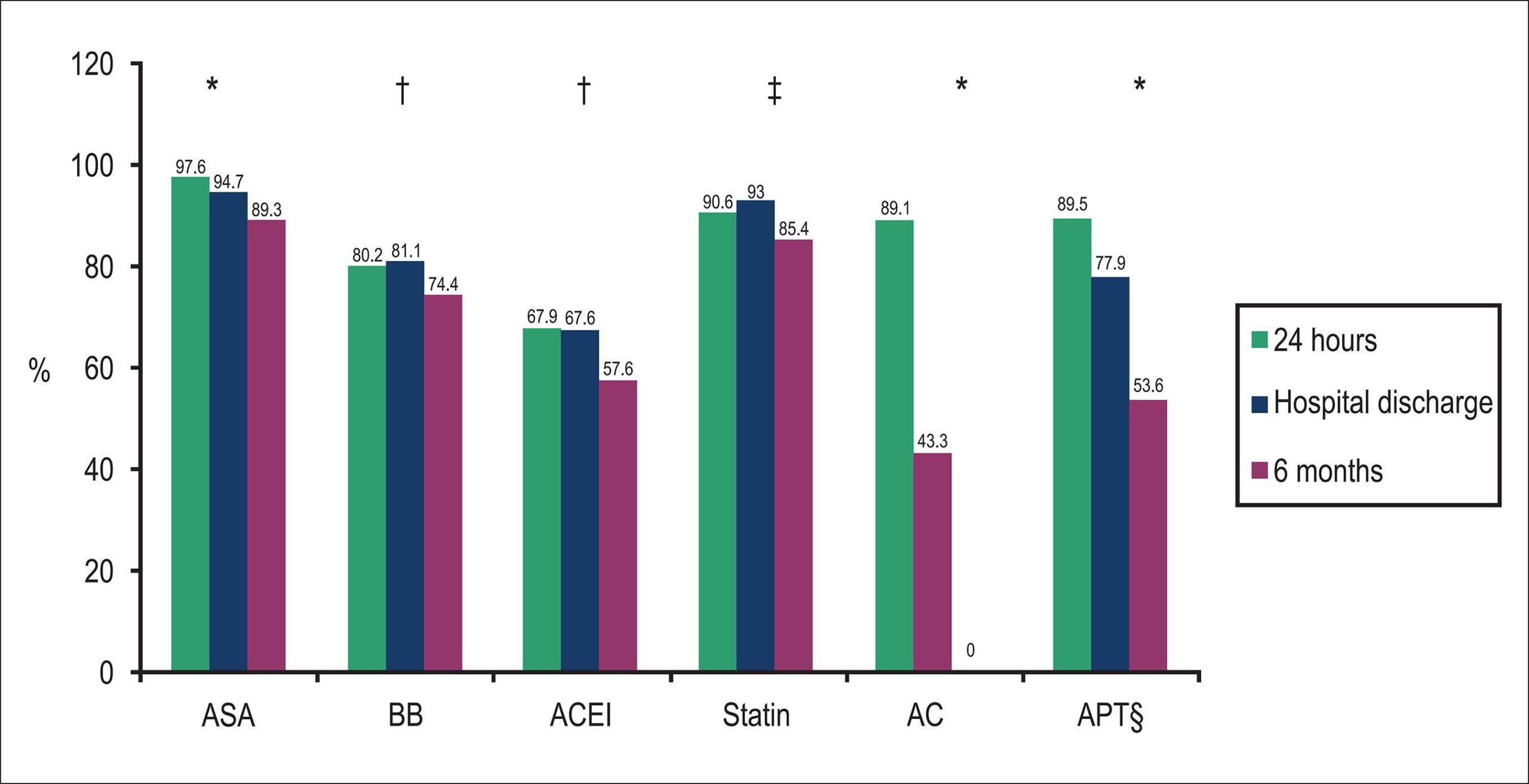
This study assessed 2,453 patients. The prescription rates of acetylsalicylic acid, p2y12 inhibitors, antithrombotic drugs, beta-blockers, angiotensin-converting enzyme inhibitors/IAT1RB, and statins were as follows: in 24 hours – 97.6%, 89.5%, 89.1%, 80.2%, 67.9% and 90.6%; and at six months – 89.3%, 53.6%, 0%, 74.4%, 57.6% and 85.4%, respectively. Regarding ST-segment elevation myocardial infarction, only 35.9% and 25.3% of the patients underwent primary angioplasty and thrombolysis, respectively, within the recommended times.

Conclusion:

This registry showed high initial prescription rates of antiplatelet drugs, antithrombotic drugs, and statins, and lower prescription rates of beta-blockers and angiotensin-converting enzyme inhibitors/IAT1RB. Independently of the class, the use of all drugs decreased by six months. Most patients with ST-segment elevation myocardial infarction did not undergo myocardial reperfusion within the time recommended.

  • Acute coronary syndrome
  • Disease registries
  • Epidemiology
  • Evidence-Based Practice
Read Full Article
Creative Commons Attribution (CC BY) Creative Commons license
17/02/2014 DOI: 10.5935/abc.20140033 Views 1
Rationality and methods of ACCEPT registry - Brazilian Registry of Clinical Practice in Acute Coronary Syndromes of the Brazilian Society of Cardiology
ABC
Special Article

Rationality and methods of ACCEPT registry – Brazilian Registry of Clinical Practice in Acute Coronary Syndromes of the Brazilian Society of Cardiology

Luiz Alberto Piva e Mattos

BACKGROUND: Assessing the Brazilian clinical practice in patients with acute coronary syndrome, in public and private hospitals to identify gaps in the incorporation of clinical interventions with proven benefit. OBJECTIVE:To develop a registry of patients diagnosed with acute coronary syndrome to assess demographics, morbidity, mortality, and standard practice in the care of this condition. Besides, to assess the prescription of evidence-based interventions such as aspirin, statins, beta blockers and reperfusion, among others. METHODS: Registry-type prospective observational study intended to document hospital clinical practices of acute coronary syndrome in public and private hospitals in Brazil. In addition, longitudinal follow-up will be held until discharge and measurement of mortality and occurrence of serious events at 30 days, 6 and 12 months. RESULTS: The findings will be presented one year after the start of collection (September 2011), and consolidated after a meeting with the population to discuss the objectives sought. CONCLUSION: The analysis of this multicenter registry will design a horizontal perspective for the treatment of patients suffering from cardiovascular disease in Brazil.

  • Acute coronary syndrome
  • Evidence-Based Practice
  • Multicenter Studies
Read Full Article
Creative Commons Attribution (CC BY) Creative Commons license
20/05/2011 DOI: 10.1590/S0066-782X2011005000064 Views 2
Rationality and methods: registry of clinical practice in high-risk cardiovascular patients
ABC
Special Article

Rationality and methods: registry of clinical practice in high-risk cardiovascular patients

Luiz Alberto Piva e Mattos

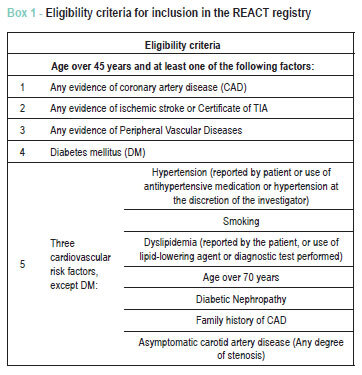
BACKGROUND: To date, no Brazilian registry has been designed to document the clinical practice regarding assistance to patients at high cardiovascular risk in a large representative sample of research centers, including public and private hospitals nationwide. Thus, this study will identify gaps in the incorporation of interventions with proven benefit in our area. OBJECTIVE: To record information on the Brazilian clinical practice with regard to the patients at high cardiovascular risk. METHODS: Registry-type prospective observational study intended to document the current clinical practice applied to outpatients at high cardiovascular risk classified by the presence of one of the following variables: evidence of coronary artery disease, cerebrovascular disease, peripheral vascular disease in diabetics or non-diabetics; or in the presence of at least three of the following cardiovascular risk factors: hypertension, active smoking, dyslipidemia, age over 70 years, chronic kidney disease, family history of coronary artery disease and/or asymptomatic carotid artery disease. Patients will be collected in 43 centers across Brazil, including public and private hospitals, as well as in basic health care units, and clinically reviewed for one year after inclusion. RESULTS: The findings will be presented one year after the start of collection (September 2011), and consolidated after a meeting with the population to discuss the objectives sought. CONCLUSION: The analysis of this multicenter registry will design a horizontal perspective for the treatment of patients suffering from cardiovascular disease in Brazil.

  • Cardiovascular Diseases
  • Evidence-Based Practice
  • Multicenter Studies
  • Risk Factors
Read Full Article
Creative Commons Attribution (CC BY) Creative Commons license
20/05/2011 DOI: 10.1590/S0066-782X2011005000062

How to cite this article

EndNote RIS

Electronic Document Format (Vancouver)

Dan MC. HFREF Therapy: Randomized Evidence and Real-World Perspectives. Arquivos Brasileiros de Cardiologia 2026;123(7):e20260588.

Electronic Document Format (ABNT)

Dan, iella Motta da Costa. HFREF Therapy: Randomized Evidence and Real-World Perspectives. Arquivos Brasileiros de Cardiologia, v. 123, n. 7, e20260588, Sep. 2026.

Electronic Document Format (APA)

Dan, M. C. (2026). HFREF Therapy: Randomized Evidence and Real-World Perspectives. Arquivos Brasileiros de Cardiologia, 123(7), e20260588.

Electronic Document Format (ISO)

Dan, iella Motta da Costa. HFREF Therapy: Randomized Evidence and Real-World Perspectives. Arquivos Brasileiros de Cardiologia [online]. 2026, vol. 123, n. 7, [cited 2026-10-14], e20260588. Available from: <https://journals.cardiol.br/en/article/hfref-therapy-randomized-evidence-and-real-world-perspectives/>. ISSN 0066-782X

EndNote RIS

Electronic Document Format (Vancouver)

Camargo GC, Sabioni LR. My Approach To Myocardial Extracellular Volume Quantification Using Cardiac Computed Tomography. ABC Imagem Cardiovascular 2025;38(1):e20240112.

Electronic Document Format (ABNT)

Camargo, Gabriel C.; Sabioni, Letícia R.. My Approach To Myocardial Extracellular Volume Quantification Using Cardiac Computed Tomography. ABC Imagem Cardiovascular, v. 38, n. 1, e20240112, Mar. 2025.

Electronic Document Format (APA)

Camargo, G. C., & Sabioni, L. R. (2025). My Approach To Myocardial Extracellular Volume Quantification Using Cardiac Computed Tomography. ABC Imagem Cardiovascular, 38(1), e20240112.

Electronic Document Format (ISO)

Camargo, Gabriel C. and Sabioni, Letícia R.. My Approach To Myocardial Extracellular Volume Quantification Using Cardiac Computed Tomography. ABC Imagem Cardiovascular [online]. 2025, vol. 38, n. 1, [cited 2026-10-14], e20240112. Available from: <https://journals.cardiol.br/en/article/my-approach-to-myocardial-extracellular-volume-quantification-using-cardiac-computed-tomography/>. ISSN 2318-8219

EndNote RIS

Electronic Document Format (Vancouver)

Taniguchi FP, Bernardez-Pereira S, Ribeiro ALP, Morgan L, Curtis AB, Taubert K, Albuquerque DC, et al. A Nationwide Initiative to Improve Cardiology Quality: The Best Practice in Cardiology Program in Brazil. Arquivos Brasileiros de Cardiologia 2023;120(10):e20230375.

Electronic Document Format (ABNT)

Taniguchi, Fabio Papa; Bernardez-Pereira, Sabrina; Ribeiro, Antônio Luiz Pinho; Morgan, Louise; Curtis, Anne B.; Taubert, Kathryn; Albuquerque, Denilson Campos de; Smith Jr, Sidney C; Paola, Angêlo Amato Vincenzo de. A Nationwide Initiative to Improve Cardiology Quality: The Best Practice in Cardiology Program in Brazil. Arquivos Brasileiros de Cardiologia, v. 120, n. 10, e20230375, Dec. 2023.

Electronic Document Format (APA)

Taniguchi, F. P., Bernardez-Pereira, S., Ribeiro, A. L. P., Morgan, L., Curtis, A. B., Taubert, K., Albuquerque, D. C. , Smith Jr, S. C., & Paola, A. A. V. (2023). A Nationwide Initiative to Improve Cardiology Quality: The Best Practice in Cardiology Program in Brazil. Arquivos Brasileiros de Cardiologia, 120(10), e20230375.

Electronic Document Format (ISO)

Taniguchi, Fabio Papa and Bernardez-Pereira, Sabrina and Ribeiro, Antônio Luiz Pinho and Morgan, Louise and Curtis, Anne B. and Taubert, Kathryn and Albuquerque, Denilson Campos de and Smith Jr, Sidney C and Paola, Angêlo Amato Vincenzo de. A Nationwide Initiative to Improve Cardiology Quality: The Best Practice in Cardiology Program in Brazil. Arquivos Brasileiros de Cardiologia [online]. 2023, vol. 120, n. 10, [cited 2026-10-14], e20230375. Available from: <https://journals.cardiol.br/en/article/a-nationwide-initiative-to-improve-cardiology-quality-the-best-practice-in-cardiology-program-in-brazil/>. ISSN 0066-782X

EndNote RIS

Electronic Document Format (Vancouver)

Sousa ACS, Cunha CP, Magalhães LBNC, Kaiser SE, Saraiva JFK. Positions, Guidelines and Standardizations. Vehicles of Assistance to Medical Practice. Arquivos Brasileiros de Cardiologia 2017;109(4):368-9.

Electronic Document Format (ABNT)

Sousa, Antônio Carlos Sobral; Cunha, Claudio Pereira da; Magalhães, Lucélia Batista Neves Cunha; Kaiser, Sergio Emanuel; Saraiva, José Francisco Kerr. Positions, Guidelines and Standardizations. Vehicles of Assistance to Medical Practice. Arquivos Brasileiros de Cardiologia, v. 109, n. 4, p. 368-369, Sep. 2017.

Electronic Document Format (APA)

Sousa, A. C. S., Cunha, C. P. , Magalhães, L. B. N. C., Kaiser, S. E., & Saraiva, J. F. K. (2017). Positions, Guidelines and Standardizations. Vehicles of Assistance to Medical Practice. Arquivos Brasileiros de Cardiologia, 109(4), 368-369.

Electronic Document Format (ISO)

Sousa, Antônio Carlos Sobral and Cunha, Claudio Pereira da and Magalhães, Lucélia Batista Neves Cunha and Kaiser, Sergio Emanuel and Saraiva, José Francisco Kerr. Positions, Guidelines and Standardizations. Vehicles of Assistance to Medical Practice. Arquivos Brasileiros de Cardiologia [online]. 2017, vol. 109, n. 4, [cited 2026-10-14], pp. 368-369. Available from: <https://journals.cardiol.br/en/article/positions-guidelines-and-standardizations-vehicles-of-assistance-to-medical-practice/>. ISSN 0066-782X

EndNote RIS

Electronic Document Format (Vancouver)

Jardim PCBV, Souza WKSB, Lopes RD, Brandão AA, Malachias MVB, Gomes MM, Moreno Júnior H, et al. I RBH – First Brazilian Hypertension Registry. Arquivos Brasileiros de Cardiologia 2016;107(2):93-8.

Electronic Document Format (ABNT)

Jardim, Paulo César Brandão Veiga; Souza, Weimar Kunz Sebba Barroso de; Lopes, Renato Delascio; Brandão, Andréa Araújo; Malachias, Marcus V. Bolívar; Gomes, Marco Mota; Moreno Júnior, Heitor; Barbosa, Eduardo Costa Duarte; Póvoa, Rui Manoel dos Santos. I RBH – First Brazilian Hypertension Registry. Arquivos Brasileiros de Cardiologia, v. 107, n. 2, p. 93-98, Jul. 2016.

Electronic Document Format (APA)

Jardim, P. C. B. V., Souza, W. K. S. B. , Lopes, R. D., Brandão, A. A., Malachias, M. V. B., Gomes, M. M., Moreno Júnior, H., Barbosa, E. C. D., & Póvoa, R. M. S. (2016). I RBH – First Brazilian Hypertension Registry. Arquivos Brasileiros de Cardiologia, 107(2), 93-98.

Electronic Document Format (ISO)

Jardim, Paulo César Brandão Veiga and Souza, Weimar Kunz Sebba Barroso de and Lopes, Renato Delascio and Brandão, Andréa Araújo and Malachias, Marcus V. Bolívar and Gomes, Marco Mota and Moreno Júnior, Heitor and Barbosa, Eduardo Costa Duarte and Póvoa, Rui Manoel dos Santos. I RBH – First Brazilian Hypertension Registry. Arquivos Brasileiros de Cardiologia [online]. 2016, vol. 107, n. 2, [cited 2026-10-14], pp. 93-98. Available from: <https://journals.cardiol.br/en/article/i-rbh-first-brazilian-hypertension-registry/>. ISSN 0066-782X

EndNote RIS

Electronic Document Format (Vancouver)

Biomarkers EG. Biomarkers in Cardiology – Part 2: In Coronary Heart Disease, Valve Disease and Special Situations. Arquivos Brasileiros de Cardiologia 2015;104(5):337-46.

Electronic Document Format (ABNT)

Biomarkers, Expert Group on. Biomarkers in Cardiology – Part 2: In Coronary Heart Disease, Valve Disease and Special Situations. Arquivos Brasileiros de Cardiologia, v. 104, n. 5, p. 337-346, Apr. 2015.

Electronic Document Format (APA)

Biomarkers, E. G. (2015). Biomarkers in Cardiology – Part 2: In Coronary Heart Disease, Valve Disease and Special Situations. Arquivos Brasileiros de Cardiologia, 104(5), 337-346.

Electronic Document Format (ISO)

Biomarkers, Expert Group on. Biomarkers in Cardiology – Part 2: In Coronary Heart Disease, Valve Disease and Special Situations. Arquivos Brasileiros de Cardiologia [online]. 2015, vol. 104, n. 5, [cited 2026-10-14], pp. 337-346. Available from: <https://journals.cardiol.br/en/article/biomarkers-in-cardiology-part-2-in-coronary-heart-disease-valve-disease-and-special-situations/>. ISSN 0066-782X

EndNote RIS

Electronic Document Format (Vancouver)

Correia LCL. Effectiveness of Biomarkers in Cardiology. Arquivos Brasileiros de Cardiologia 2014;103(6):449-50.

Electronic Document Format (ABNT)

Correia, Luis Cláudio Lemos. Effectiveness of Biomarkers in Cardiology. Arquivos Brasileiros de Cardiologia, v. 103, n. 6, p. 449-450, Nov. 2014.

Electronic Document Format (APA)

Correia, L. C. L. (2014). Effectiveness of Biomarkers in Cardiology. Arquivos Brasileiros de Cardiologia, 103(6), 449-450.

Electronic Document Format (ISO)

Correia, Luis Cláudio Lemos. Effectiveness of Biomarkers in Cardiology. Arquivos Brasileiros de Cardiologia [online]. 2014, vol. 103, n. 6, [cited 2026-10-14], pp. 449-450. Available from: <https://journals.cardiol.br/en/article/effectiveness-of-biomarkers-in-cardiology/>. ISSN 0066-782X

EndNote RIS

Electronic Document Format (Vancouver)

Biomarkers EG. Biomarkers in Cardiology – Part 1 – In Heart Failure and Specific Cardiomyopathies. Arquivos Brasileiros de Cardiologia 2014;103(6):451-9.

Electronic Document Format (ABNT)

Biomarkers, EXpert Group on. Biomarkers in Cardiology – Part 1 – In Heart Failure and Specific Cardiomyopathies. Arquivos Brasileiros de Cardiologia, v. 103, n. 6, p. 451-459, Nov. 2014.

Electronic Document Format (APA)

Biomarkers, E. G. (2014). Biomarkers in Cardiology – Part 1 – In Heart Failure and Specific Cardiomyopathies. Arquivos Brasileiros de Cardiologia, 103(6), 451-459.

Electronic Document Format (ISO)

Biomarkers, EXpert Group on. Biomarkers in Cardiology – Part 1 – In Heart Failure and Specific Cardiomyopathies. Arquivos Brasileiros de Cardiologia [online]. 2014, vol. 103, n. 6, [cited 2026-10-14], pp. 451-459. Available from: <https://journals.cardiol.br/en/article/biomarkers-in-cardiology-part-1-in-heart-failure-and-specific-cardiomyopathies/>. ISSN 0066-782X

EndNote RIS

Electronic Document Format (Vancouver)

Wang R, Neuenschwander FC, Lima Filho A, Moreira CM, Santos ES, Reis HJL, Romano ER, et al. Use of Evidence-Based Interventions in Acute Coronary Syndrome – Subanalysis of the ACCEPT Registry. Arquivos Brasileiros de Cardiologia 2014;102(4):319-26.

Electronic Document Format (ABNT)

Wang, Ricardo; Neuenschwander, Fernando Carvalho; Lima Filho, Augusto; Moreira, Celsa Maria; Santos, Elizabete Silva dos; Reis, Helder Jose Lima; Romano, Edson Renato; Mattos, Luiz Alberto Piva e; Berwanger, Otávio; Andrade, Jadelson Pinheiro de. Use of Evidence-Based Interventions in Acute Coronary Syndrome – Subanalysis of the ACCEPT Registry. Arquivos Brasileiros de Cardiologia, v. 102, n. 4, p. 319-326, Feb. 2014.

Electronic Document Format (APA)

Wang, R., Neuenschwander, F. C., Lima Filho, A., Moreira, C. M., Santos, E. S. , Reis, H. J. L., Romano, E. R., Mattos, L. A. P. , Berwanger, O., & Andrade, J. P. (2014). Use of Evidence-Based Interventions in Acute Coronary Syndrome – Subanalysis of the ACCEPT Registry. Arquivos Brasileiros de Cardiologia, 102(4), 319-326.

Electronic Document Format (ISO)

Wang, Ricardo and Neuenschwander, Fernando Carvalho and Lima Filho, Augusto and Moreira, Celsa Maria and Santos, Elizabete Silva dos and Reis, Helder Jose Lima and Romano, Edson Renato and Mattos, Luiz Alberto Piva e and Berwanger, Otávio and Andrade, Jadelson Pinheiro de. Use of Evidence-Based Interventions in Acute Coronary Syndrome – Subanalysis of the ACCEPT Registry. Arquivos Brasileiros de Cardiologia [online]. 2014, vol. 102, n. 4, [cited 2026-10-14], pp. 319-326. Available from: <https://journals.cardiol.br/en/article/use-of-evidence-based-interventions-in-acute-coronary-syndrome-subanalysis-of-the-accept-registry/>. ISSN 0066-782X

EndNote RIS

Electronic Document Format (Vancouver)

Mattos LAP. Rationality and methods of ACCEPT registry – Brazilian Registry of Clinical Practice in Acute Coronary Syndromes of the Brazilian Society of Cardiology. Arquivos Brasileiros de Cardiologia 2011;97(2):94-9.

Electronic Document Format (ABNT)

Mattos, Luiz Alberto Piva e. Rationality and methods of ACCEPT registry – Brazilian Registry of Clinical Practice in Acute Coronary Syndromes of the Brazilian Society of Cardiology. Arquivos Brasileiros de Cardiologia, v. 97, n. 2, p. 94-99, May. 2011.

Electronic Document Format (APA)

Mattos, L. A. P. (2011). Rationality and methods of ACCEPT registry – Brazilian Registry of Clinical Practice in Acute Coronary Syndromes of the Brazilian Society of Cardiology. Arquivos Brasileiros de Cardiologia, 97(2), 94-99.

Electronic Document Format (ISO)

Mattos, Luiz Alberto Piva e. Rationality and methods of ACCEPT registry – Brazilian Registry of Clinical Practice in Acute Coronary Syndromes of the Brazilian Society of Cardiology. Arquivos Brasileiros de Cardiologia [online]. 2011, vol. 97, n. 2, [cited 2026-10-14], pp. 94-99. Available from: <https://journals.cardiol.br/en/article/rationality-and-methods-of-accept-registry-brazilian-registry-of-clinical-practice-in-acute-coronary-syndromes-of-the-brazilian-society-of-cardiology/>. ISSN 0066-782X

EndNote RIS

Electronic Document Format (Vancouver)

Mattos LAP. Rationality and methods: registry of clinical practice in high-risk cardiovascular patients. Arquivos Brasileiros de Cardiologia 2011;97(1):03-7.

Electronic Document Format (ABNT)

Mattos, Luiz Alberto Piva e. Rationality and methods: registry of clinical practice in high-risk cardiovascular patients. Arquivos Brasileiros de Cardiologia, v. 97, n. 1, p. 03-07, May. 2011.

Electronic Document Format (APA)

Mattos, L. A. P. (2011). Rationality and methods: registry of clinical practice in high-risk cardiovascular patients. Arquivos Brasileiros de Cardiologia, 97(1), 03-07.

Electronic Document Format (ISO)

Mattos, Luiz Alberto Piva e. Rationality and methods: registry of clinical practice in high-risk cardiovascular patients. Arquivos Brasileiros de Cardiologia [online]. 2011, vol. 97, n. 1, [cited 2026-10-14], pp. 03-07. Available from: <https://journals.cardiol.br/en/article/rationality-and-methods-registry-of-clinical-practice-in-high-risk-cardiovascular-patients/>. ISSN 0066-782X

  • About ABC Family
  • Internal Regulation
  • Editorial Board
  • Brazilian Society of Cardiology (SBC)

Issues

SBC Guidelines

  • Videos
  • Podcasts
  • News