ABC Family Arquivos Brasileiros de Cardiologia International Journal of Cardiovascular Sciences ABC Heart Failure & Cardiomyopathy ABC Imagem Cardiovascular
Português English
ABC Family
Português English
  • About
    • About ABC Family
    • Internal Regulation
    • Editorial Board
    • Brazilian Society of Cardiology (SBC)
  • Issues
  • SBC Guidelines
  • Content
    • Videos
    • Podcasts
    • News
  • About
    • About ABC Family
    • Internal Regulation
    • Editorial Board
    • Brazilian Society of Cardiology (SBC)
  • Issues
  • SBC Guidelines
  • Content
    • Videos
    • Podcasts
    • News

ABC Family

  • ABC Family
  • Arquivos Brasileiros de Cardiologia
  • International Journal of Cardiovascular Sciences
  • ABC Heart Failure & Cardiomyopathy
  • ABC Imagem Cardiovascular
Search in

No content found.

Journals
Ordering
Article types
Others

  1. Home
  2. Keyword: Arrhythmias
Figure 1
ABC
Editorial

The Fascination of the Wolff-Parkinson-White Syndrome

Pedro Brugada

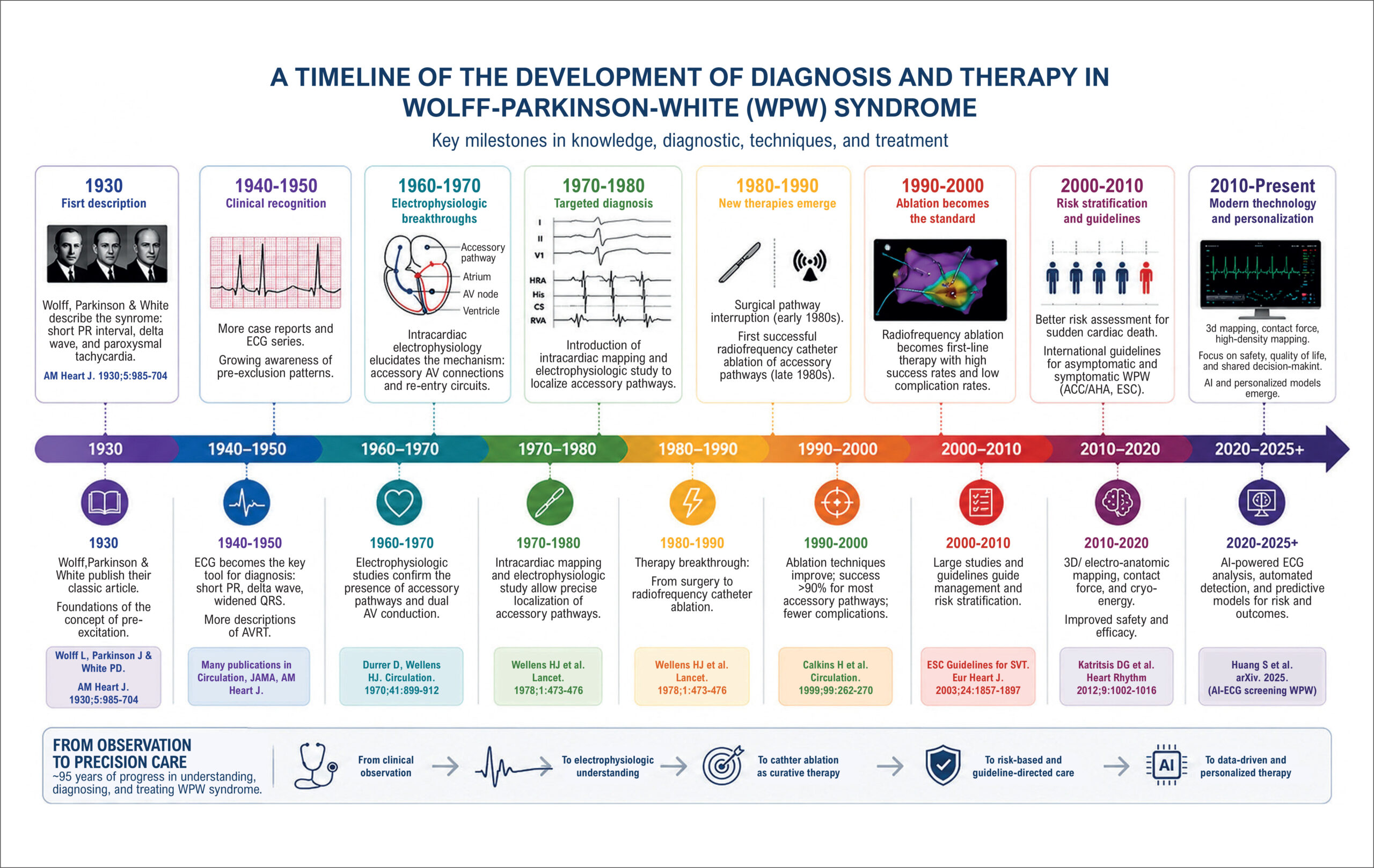
Almost a century after its initial description, the yearly number of publications dealing with the Wolff-Parkinson-White syndrome (WPW) continues to increase (). A fascinating phenomenon if one considers that already for quite a few years, we have at our disposal techniques to ablate and cure the disease. One could expect an attitude like “problem solved” thanks to ablation, and that interest in the disease would markedly decrease. illustrates the progress made since 1930. Each new publication still brings important information, and so is today with the study by Souza Mario and coworkers.

In a large cohort of patients with an accessory atrio-ventricular pathway, the authors found that older age and a left lateral location of the accessory pathway were associated with a significant occurrence of spontaneous atrial fibrillation, reaching 18.6% in the age group older than 60 years, thus almost one in five patients. Regretfully, data on the presence of overt (manifest) versus concealed accessory pathways were not available.

[…]

  • Arrhythmias
  • Atrial Fibrillation
  • Wolff-Parkinson White Syndrome
Read Full Article
Creative Commons Attribution (CC BY) Creative Commons license
03/08/2026 DOI: 10.36660/abc.20260471i Views 1
ABC
Editorial

The Electrocardiogram in the Pediatric Population in the 21st Century. How to Keep Evolving after 135 Years of the Method Discovery History

Rogerio Braga Andalaft

Knowledge of the electrocardiogram remains constantly evolving in medical practice. The new interfaces for electrocardiogram (ECG) correlation with cardiac images and heart functional changes increase the method’s applicability. However, in children and adolescents, the constant change generated by these young people’s body and functional development often generates doubts in the interpretation of electrocardiographic tracings, even in the most experienced professionals. Recently, important data on ECG interpretation were extensively reviewed in the IV Guidelines of the Sociedade Brasileira de Cardiologia on Analysis and Issuance of Electrocardiographic Reports published in 2022.

But what is the role of the electrocardiogram, especially applied to pediatrics, in the 21st century? What is normal for the child? What is the prevalence of electrocardiogram changes in asymptomatic patients?

[…]

  • Arrhythmias
  • Children
  • electrocardiogram
  • Pediatrics
Read Full Article
Creative Commons Attribution (CC BY) Creative Commons license
25/11/2022 DOI: 10.36660/abc.20220715 Views 1
Figure 1
ABC
Review Article

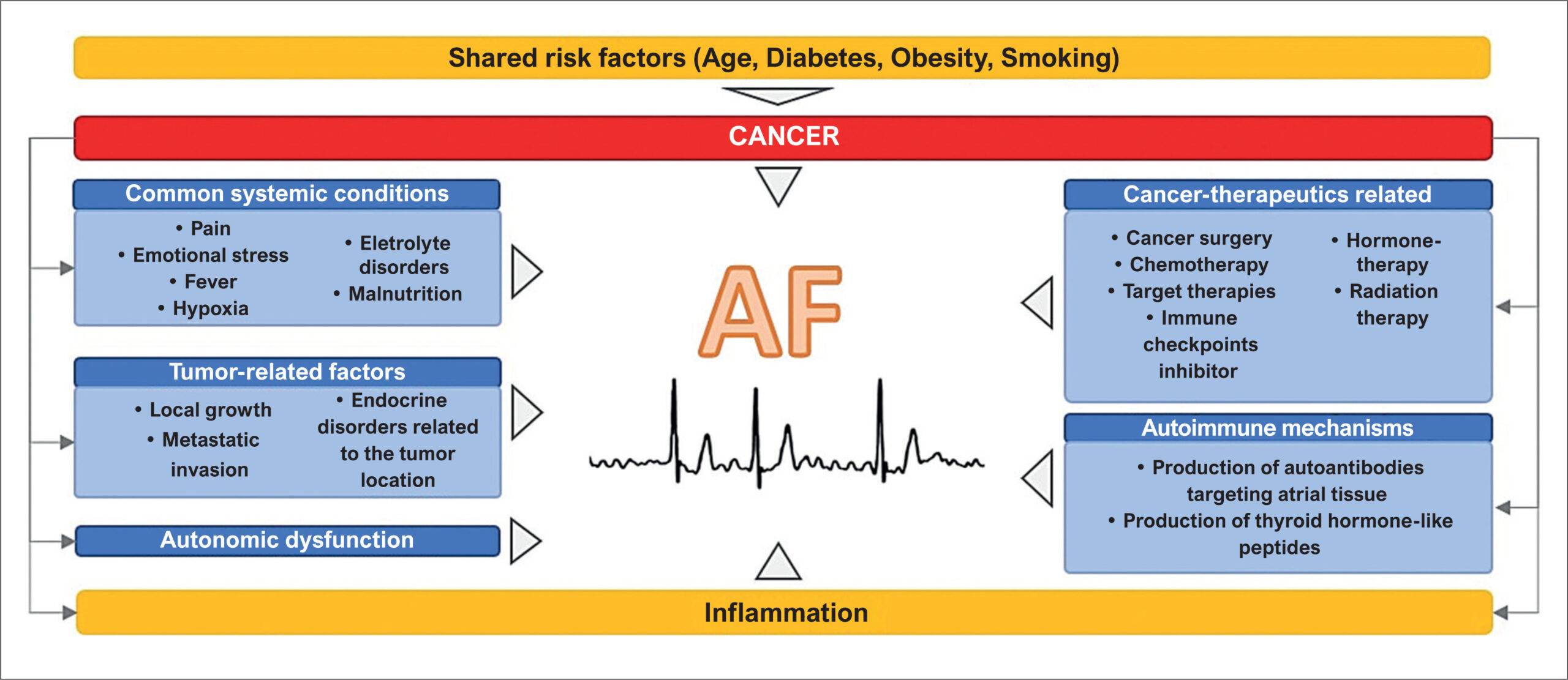
Screening, Diagnosis and Management of Atrial Fibrillation in Cancer Patients: Current Evidence and Future Perspectives

Pedro Gonçalves-Teixeira et al. Telma Costa Isabel Fragoso Diogo Ferreira … Mariana Brandão Adelino Leite-Moreira Francisco Sampaio José Ribeiro Ricardo Fontes-Carvalho

Abstract

Atrial fibrillation (AF) is the most common sustained cardiac arrhythmia in the general population, carrying a high morbimortality burden, and this also holds true in cancer patients. The association between AF and cancer goes even further, with some studies suggesting that AF can be a marker of occult cancer. There is, however, a remarkable paucity of data concerning specific challenges of AF management in cancer patients. AF prompt recognition and management in this special population can lessen the arrhythmia-related morbidity and have an important prognostic benefit. This review will focus on current AF diagnosis and management challenges in cancer patients, with special emphasis on AF screening strategies and devices, and anticoagulation therapy with non-vitamin K antagonist oral anti-coagulants (NOACs) for thromboembolic prevention in these patients. Some insights concerning future perspectives for AF prevention, diagnosis, and treatment in this special population will also be addressed.

  • Anticoagulants
  • Arrhythmias
  • Atrial Fibrillation
  • blood coagulation
  • cardiac
  • Cardio-Oncology
  • Cardiotoxicity
  • Mass Screening
  • Neoplasms
Read Full Article
Creative Commons Attribution (CC BY) Creative Commons license
05/08/2022 DOI: 10.36660/abc.20201362
Figure 1
ABC
Original Article

(-)-Carvone Modulates Intracellular Calcium Signaling with Antiarrhythmic Action in Rat Hearts

Gilmara Beatriz Andrade da Silva et al. Diego Santos Souza José Evaldo Rodrigues Menezes-Filho Júlio Alves da Silva-Neto … Jader dos Santos Cruz Danilo R. Roman-Campos Lucindo José Quintans-Júnior Carla Maria Lins de Vasconcelos

Abstract

Background:

(-)-Carvone is a monoterpene found in essential oils with antioxidant and anti-inflammatory activity.

Objective:

The aim of this paper was to analyze the antiarrhythmic property of (-)-carvone in the rat heart and its effects on the intracellular Ca2+ signaling.

Methods:

The effects of (-)-carvone were evaluated on the ventricular (0.5 mM) and atrial contractility (0.01 – 4 mM) and on electrocardiogram (0.5 mM). Fractional shortening, L-type calcium current (ICa,L) and Ca2+ signaling were measured in the isolated cardiomyocyte (0.5 mM). Antiarrhythmic effect was evaluated in arrhythmia model induced by calcium overload (0.5 mM) (n = 5). P < 0.05 was used as the significance level.

Results:

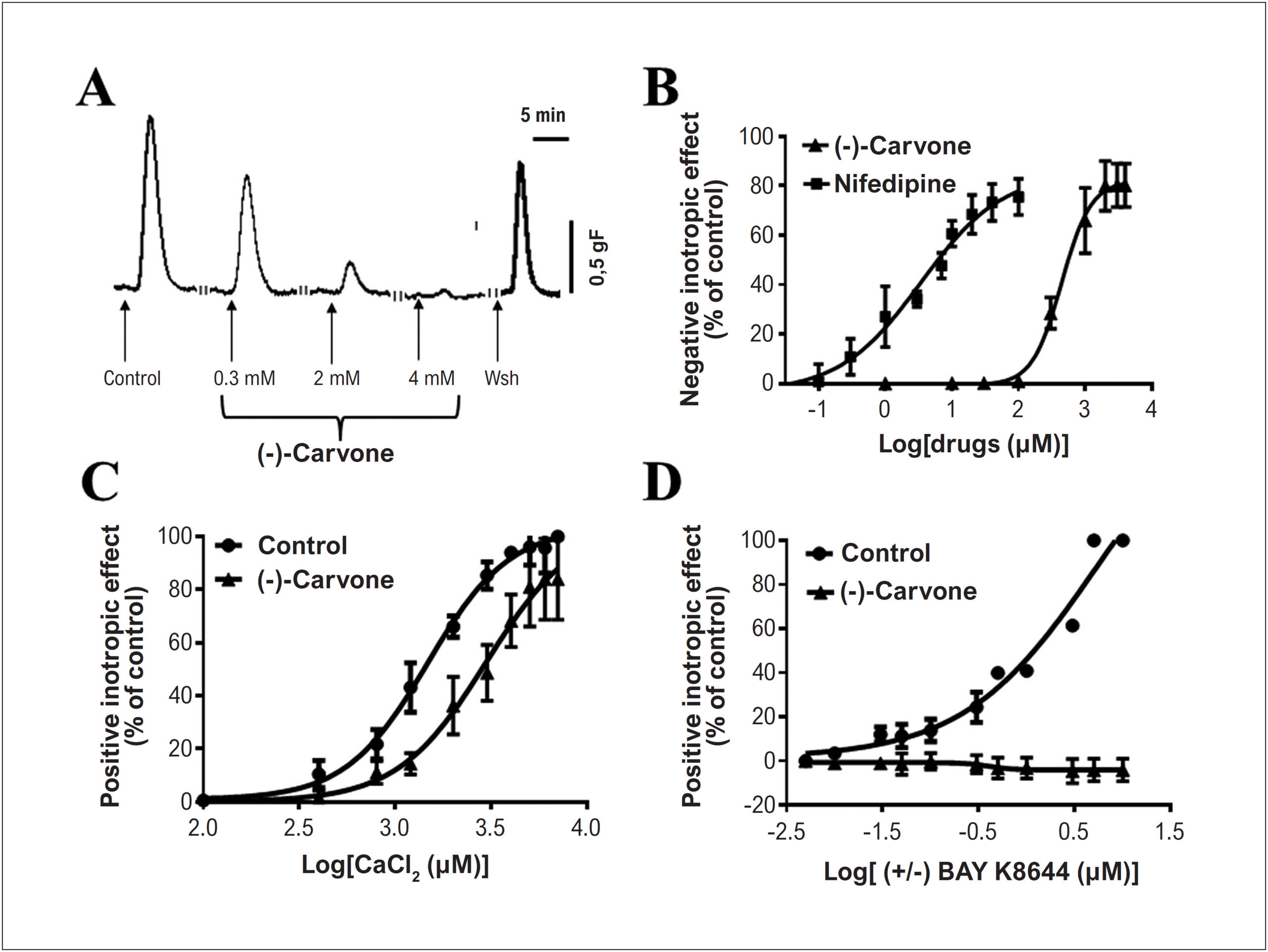
In the atrium, (-)-carvone evoked negative inotropism that was concentration-dependent (EC50 0.44 ± 0.11 mM) and decreased the positive inotropism evoked by CaCl2 (0.1 to 8.0 mM) or BAY K8644 (5 to 500 nM), an agonist of L-type Ca2+ channel. In isolated heart, (-)-carvone (0.5 mM) promoted reduction of ventricular contractility (73%) and heart rate (46%), increased PRi (30.7%, time from the onset of the P wave until the R wave) and QTc (9.2%, a measure of the depolarization and repolarization of the ventricles) without changing the QRS complex duration. (-)-Carvone decreased the fractional shortening (61%), ICa,L (79%) and Ca2+ intracellular transient (38%). Furthermore, (-)-carvone showed antiarrhythmic action, verified by decrease of the arrhythmia score (85%) and occurrence of ventricular fibrillation.

Conclusion:

(-)-Carvone decreases Ca2+ entry through L-type Ca2+ channels, reducing the cardiac contractility and intracellular Ca2+, and, therefore, presenting promising antiarrhythmic activity in the rat hearts.

  • Arrhythmias
  • cardiac
  • Monoterpenes
  • Rats
Read Full Article
Creative Commons Attribution (CC BY) Creative Commons license
05/08/2022 DOI: 10.36660/abc.20210499
Graph 1
IJCS
Original Article

Prevalence of Atrial Fibrillation in Pacemaker Patients

Mario Augusto Cray da Costa et al. Jorge Felipe do Lago Pereira dos Santos Marcelo Derbli Schafranski

Abstract

Background:

Current pacemakers allow for the continuous recording of the occurrence of arrhythmic events. One of the most frequent arrhythmias after implantation of a device is atrial fibrillation (AF), an important risk factor for embolic events. The frequency of this arrhythmia in pacemaker patients has not been widely studied.

Objectives:

This study aimed to evaluate the prevalence, incidence, and predictors of the occurrence of AF in patients with double-chamber pacemakers and without a history of atrial fibrillation prior to implantation.

Methods:

A dynamic, retrospective, and prospective cohort study was carried out with 186 patients undergoing biannual follow-up of the double-chamber pacemaker, without previous AF, in a single service, between 2016 and 2018. Clinical data were collected from the medical records and the telemetry of the device and the prevalence, incidence rate, relative risk by univariate analysis (by chi-square), and risk ratio were calculated by multivariate analysis (by Cox regression); values of p<0.05 were considered significant.

Results:

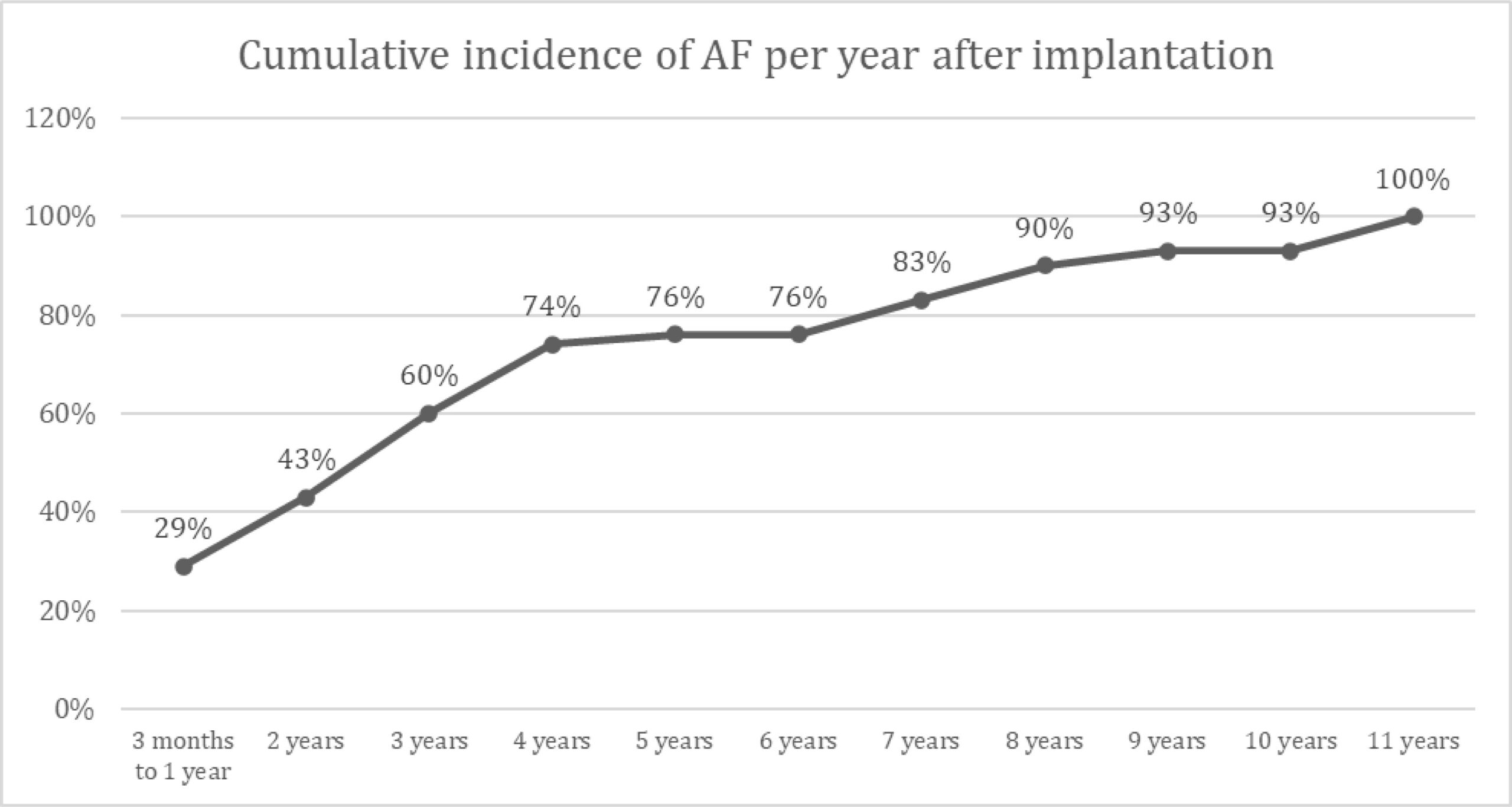
There was a prevalence of 25.3% FA, with an incidence of 5.64 cases / 100 persons-year. The median time for the development of arrhythmia was 27.5 months. Multivariate analysis identified 5 statistically significant predictors: male gender, OR: 2.54 [1.04–6.15]; coronary artery disease, OR: 2.98 [1.20–7.41]; hypothyroidism, OR: 3.63 [1.46–9.07]; prior heart surgery, OR: 2.67 [1.01–7]; and left atrial enlargement, OR: 2.72 [1.25–5.92].

Conclusions:

The prevalence and incidence of AF in this population are high. Risk factors for AF were: male gender, coronary artery disease, hypothyroidism, prior heart surgery, and left atrial enlargement.

  • Arrhythmias
  • Artificial
  • Atrial Fibrillation
  • atrioventricular node
  • cardiac complications
  • Embolism
  • Hypertension
  • Pacemaker
  • Risk Factors
Read Full Article
Creative Commons Attribution (CC BY) Creative Commons license
11/02/2022 DOI: 10.36660/ijcs.20200113
Figure 1
ABC
Viewpoint

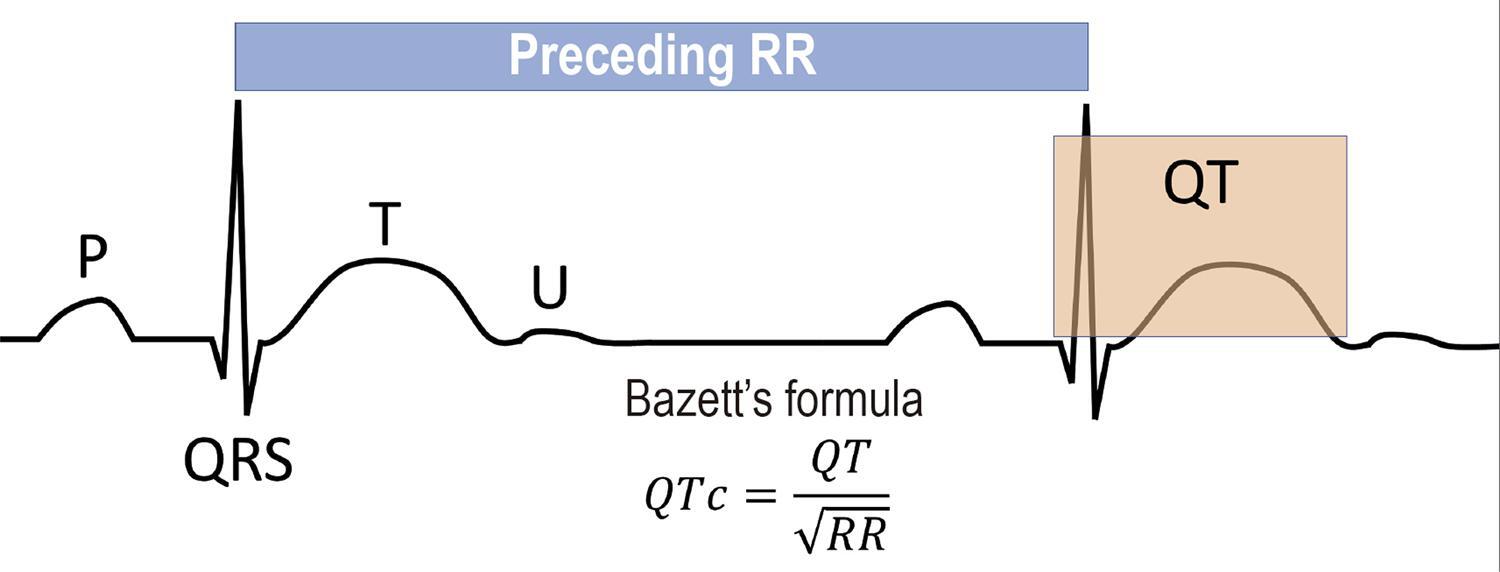
QT Interval Control to Prevent Torsades de Pointes during Use of Hydroxychloroquine and/or Azithromycin in Patients with COVID-19

Tan Chen Wu et al. Luciana Sacilotto Francisco Carlos da Costa Darrieux Cristiano Faria Pisani … Sissy Lara de Melo Denise Tessariol Hachul Mauricio Scanavacca

Introduction

In December 2019, the first cases of the novel coronavirus disease (COVID-19) were reported in Wuhan, China. Since the pandemic designation in March 2020 by the World Health Organization (WHO), with intercontinental spread of the disease, we are intensely seeking for a safe and effective treatment.

In vitro studies have demonstrated some effect of chloroquine against the new coronavirus, mediated by the glycosylation of SARS-CoV cell receptors and by increased endosomal pH, blocking cell invasion by the virus. In addition to this antiviral activity, chloroquine, which is traditionally an immunomodulator, has shown to be promising for treatment of pneumonia that installs approximately one week after onset of symptoms.

[…]

  • Arrhythmias
  • Coronavirus/complications
  • COVID-19, Pandemics
  • Hydroxychloroquine/therapeutic, use
  • Tachycardia,Ventricular
  • Torsades Pointes
Read Full Article
Creative Commons Attribution (CC BY) Creative Commons license
03/07/2020 DOI: 10.36660/abc.20200389
Figure 1
ABC
Original Article

Validity Evidence of the Brazilian Version of the Florida Shock Anxiety Scale for Patients with Implantable Cardioverter Defibrillators

Katia Regina Silva et al. Roberto Costa Giovanna Regina Garcia de Oliveira Melo Flávio Rebustini … Marcos Sidney Benedetto Marcia Mitie Nagumo Samuel F. Sears

Abstract

Background

In spite of proven effectiveness of implantable cardioverter defibrillators (ICDs), shock therapy delivered by the device may result in increased levels of anxiety and depression, leading to deleterious effects on quality of life.

Objective

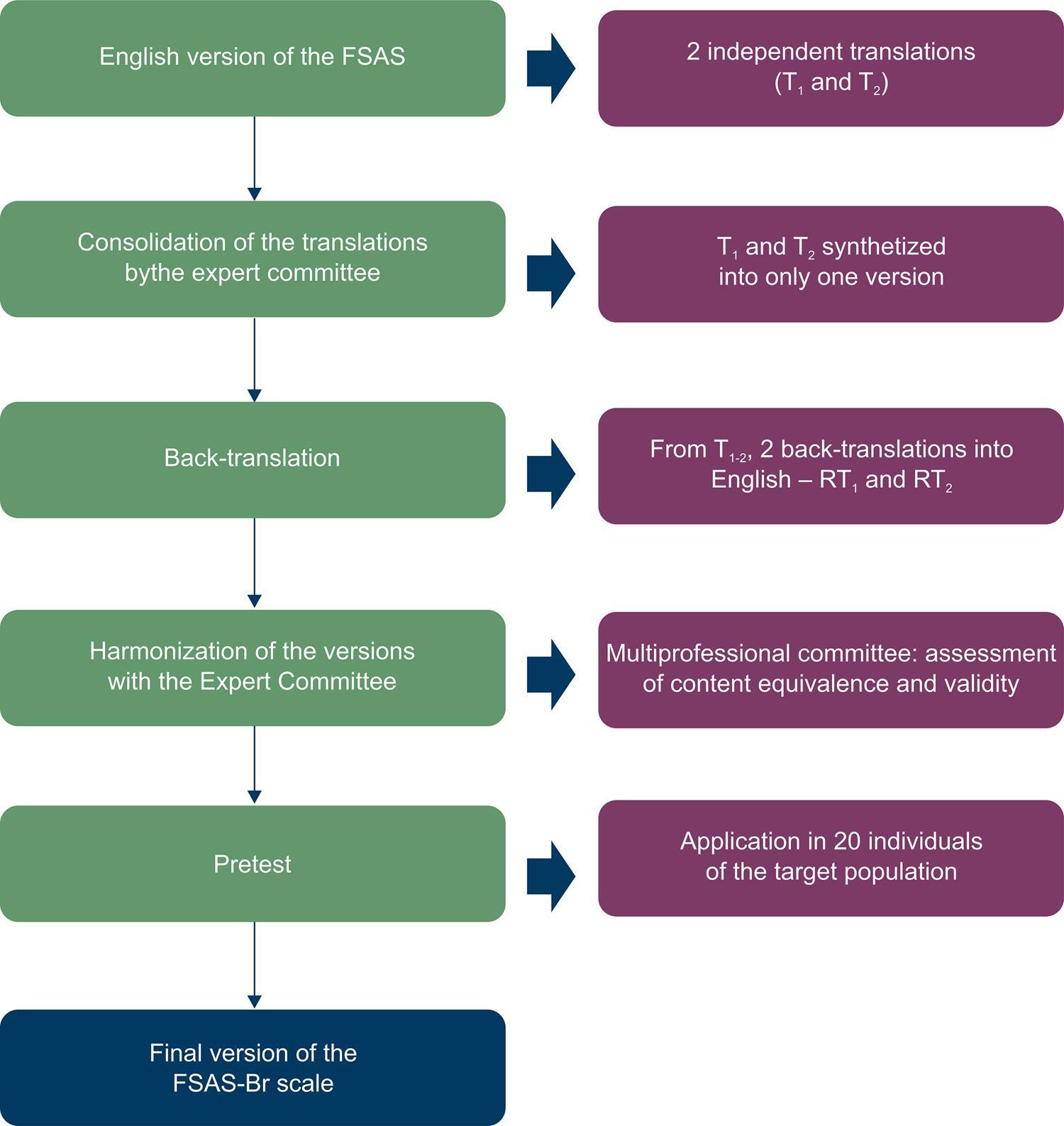
To carry out the translation, cross-cultural adaptation and validation of the Florida Shock Anxiety Scale (FSAS) scale into Brazilian Portuguese.

Methods

In this psychometric study, construct validity was performed by exploratory (EFA) and confirmatory (CFA) factor analyses, and by item response theory (IRT). The adjustment indexes of the CFA were: Robust Mean-Scaled Chi Square/df NNFI, CFI (Comparative Fit Index), GFI (Goodness Fit Index), AGFI (Adjusted Goodness Fit Index), RMSEA (Root Mean Square Error of Approximation) and RMSR (Root Mean Square of Residuals). Reliability was evaluated through Cronbach’s Alpha, McDonald’s Omega and Greatest Lower Bound (GLB). The analyses were carried out with the programs SPSS 23 and Factor 10.8.01. A 5 percent significance level was used.

Results

The final Portuguese version of the FSAS was administered to 151 ICD patients, with a mean age of 55.7 ± 14.1 years, and predominantly male. The parallel analysis indicated that the FSAS is unidimensional, with an explained variance of 64.4%. The correlations ranged from 0.31 to 0.77, factor loadings from 0.67 to 0.86, and communalities from 0.46 to 0.74. The adjustment indexes of the CFA were above the quality threshold. Satisfactory reliability evidence was provided by the FSAS.

Conclusions

The FSAS-Br showed consistent validity and reliability evidence. Therefore, it can be used in ICD patients in Brazil. (Arq Bras Cardiol. 2020; 114(5):764-772)

  • Anxiety
  • Arrhythmias
  • Implantable defibrillator
  • Psychometric
  • Shock therapies
Read Full Article
Creative Commons Attribution (CC BY) Creative Commons license
01/06/2020 DOI: 10.36660/abc.20190255 Views 2
Figure 1
ABC
Brief Communication

Inotropic and Antiarrhythmic Transmural Actions of Ranolazine in a Cellular Model of Type 3 Long QT Syndrome

Victor Martins Miranda et al. Samuel Santos Beserra Danilo Roman-Campos

Abstract

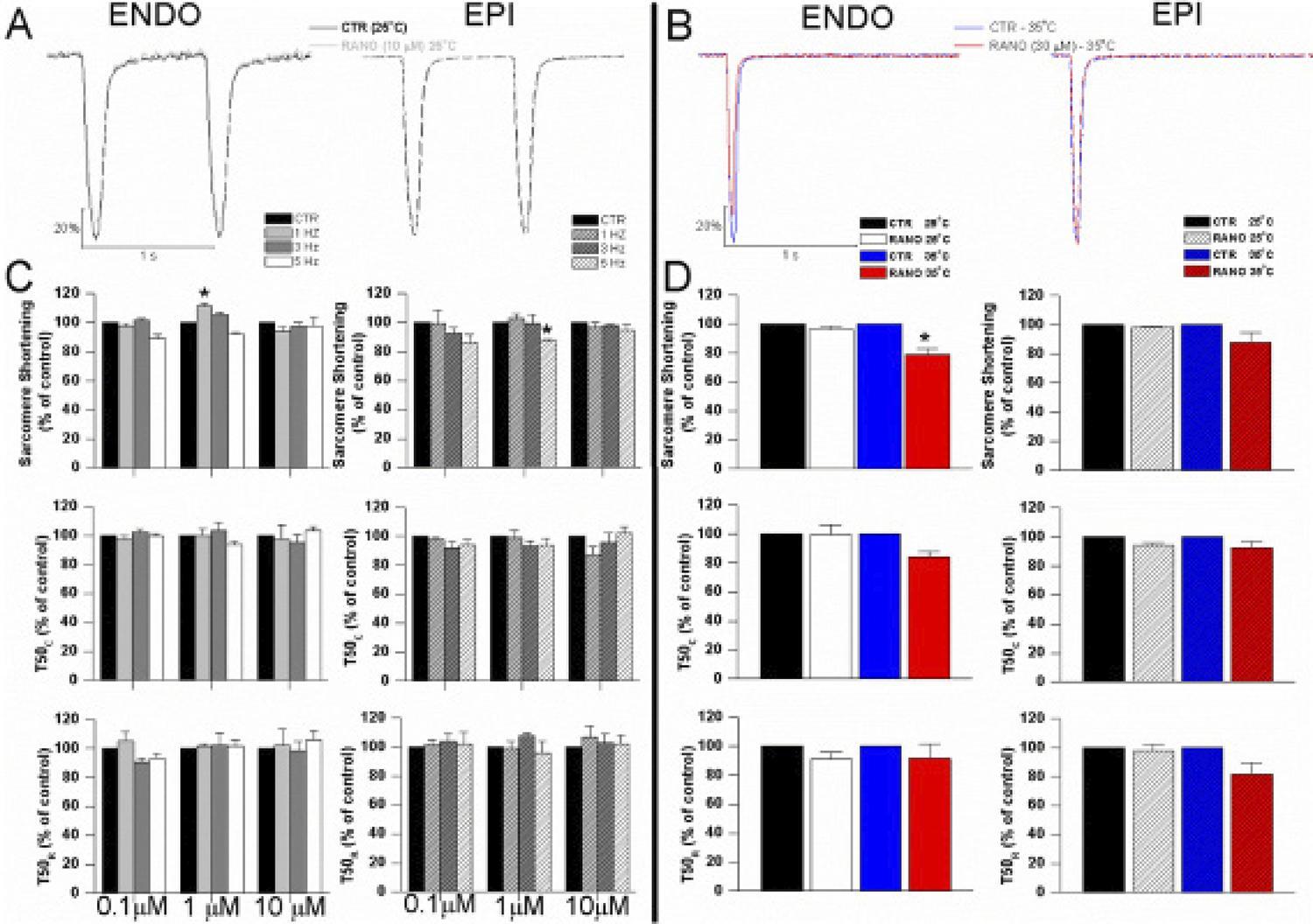
Ranolazine (RANO) prevents cardiac arrhythmia by blocking the late sodium current (INaL). A transmural gradient of Nav1.5 is found in the left ventricular wall of the heart. Thus, we investigated the effects of RANO in healthy cardiomyocytes and in a cellular model of type 3 long QT syndrome (LQT3). We used isolated endocardium (ENDO) and epicardium (EPI) cells and a video edge detection system and fluorescence microscopy to monitor calcium transients. RANO (0.1, 1, 10 and 30 uM, at 25oC) at a range of pacing frequencies showed a minor impact on both cell types, but RANO at 30uM and 35oC for ENDO cells attenuated sarcomere shortening by~21%. Next, to mimic LQT3, we exposed ENDO and EPI cells to anemone toxin II (ATX-II), which augments INaL. Cellular arrhythmias induced by ATX-II were abrogated by RANO (30 µM) at 35oC. Based on our results we can conclude that RANO has a minor impact on sarcomere shortening of healthy ENDO and EPI cells and it abrogates arrhythmias induced by INaLto a similar level in ENDO and EPI cells.

  • Arrhythmias
  • ATX-II
  • Contraction
  • Late Sodium current
  • Ranolazine
  • Type 3 Long QT Syndrome
Read Full Article
Creative Commons Attribution (CC BY) Creative Commons license
29/05/2020 DOI: 10.36660/abc.20190220
ABC
Editorial

The Nature of Cardiac Remodeling Due to Physical Exercise: More Evidence Towards to the Normal Adaptive Responses of the Heart

Lucas Helal et al. Anderson Donelli da Silveira

Cardiac remodeling due to exercise training overload (the so-called “athlete’s heart”) has been widely investigated since the 70’s and is still acknowledged by the scientific community. To differentiate normal adaptive responses (“benign”) from abnormal ones remains a challenge. Here we address some important issues related to the discussion on cardiac remodeling in exercise, recently revisited by Vidaletti-Silva and colleagues in this issue.

In terms of morphological adaptations, the left atrial and ventricular hypertrophy call attention due to their potential association with the onset of supraventricular tachyarrhythmias and also of ventricular arrhythmias, which may result in undesirable events.

[…]

  • Arrhythmias
  • Atrial Remodeling
  • Blood Pressure
  • Cardiac Remodeling
  • Exercise
  • Exercise Movement Techniques
  • Resistance Training
  • Running
  • Ventricular Remodeling
  • Weight Lifting
Read Full Article
Creative Commons Attribution (CC BY) Creative Commons license
01/12/2018 DOI: 10.5935/abc.20180238
ABC
Editorial

Current Atrial Fibrillation Ablation: An Alert for the Prevention and Treatment of Esophageal Lesions

Mauricio Scanavacca

Atrial fibrillation (AF) is recognized as the most frequent cardiac arrhythmia in clinical practice, and is responsible for the highest number of hospital admissions. In the general population, its prevalence is lower than 0.1% in individuals younger than 50 years, but increases exponentially with age, affecting about 8% of elderly individuals older than 80 years. Therefore, with the increase in the population’s life expectancy, a growing number of patients is or will be exposed to the risks of AF in the coming years.,

The recent introduction of new anticoagulants has brought considerable advances in the prevention of cerebral embolism, the most severe complication of AF., However, the development of more effective antiarrhythmic drugs failed to show progress during this period. Therefore, a large number of patients still live with the limitations imposed by AF, including decreased quality of life due to symptoms such as palpitations, reduced functional capacity, or manifestations of cardiac insufficiency, in addition to the psychological problems proper of these conditions.,

[…]

  • Anti-Arrhythmia Agents
  • Anticoagulants
  • Arrhythmias
  • Atrial Fibrillation
  • cardiac
  • Catheter Ablation
Read Full Article
Creative Commons Attribution (CC BY) Creative Commons license
01/05/2016 DOI: 10.5935/abc.20160078
Figure 1
ABC
Original Article

Evaluation of Electrocardiographic T-peak to T-end Interval in Subjects with Increased Epicardial Fat Tissue Thickness

Ozgur Kaplan et al. Ertugrul Kurtoglu Gokay Nar Erdogan Yasar … Gokhan Gozubuyuk Cem Dogan Ahmet Ugur Boz Sıho Hidayet Hasan Pekdemir

Abstract

Background:

The association between periatrial adiposity and atrial arrhythmias has been shown in previous studies. However, there are not enough available data on the association between epicardial fat tissue (EFT) thickness and parameters of ventricular repolarization. Thus, we aimed to evaluate the association of EFT thickness with indices of ventricular repolarization by using T-peak to T-end (Tp-e) interval and Tp-e/QT ratio.

Methods:

The present study included 50 patients whose EFT thickness ≥ 9 mm (group 1) and 40 control subjects with EFT thickness < 9 mm (group 2). Transthoracic echocardiographic examination was performed in all participants. QT parameters, Tp-e intervals and Tp-e/QT ratio were measured from the 12-lead electrocardiogram.

Results:

QTd (41.1 ± 2.5 vs 38.6 ± 3.2, p < 0.001) and corrected QTd (46.7 ± 4.7 vs 43.7 ± 4, p = 0.002) were significantly higher in group 1 when compared to group 2. The Tp-e interval (76.5 ± 6.3, 70.3 ± 6.8, p < 0.001), cTp-e interval (83.1 ± 4.3 vs. 76±4.9, p < 0.001), Tp-e/QT (0.20 ± 0.02 vs. 0.2 ± 0.02, p < 0.001) and Tp-e/QTc ratios (0.2 ± 0.01 vs. 0.18 ± 0.01, p < 0.001) were increased in group 1 in comparison to group 2. Significant positive correlations were found between EFT thickness and Tp-e interval (r = 0.548, p < 0.001), cTp-e interval (r = 0.259, p = 0.01), and Tp-e/QT (r = 0.662, p < 0.001) and Tp-e/QTc ratios (r = 0.560, p < 0.001).

Conclusion:

The present study shows that Tp-e and cTp-e interval, Tp-e/QT and Tp-e/QTc ratios were increased in subjects with increased EFT, which may suggest an increased risk of ventricular arrhythmia.

  • Adipose Tissue
  • Arrhythmias
  • cardiac
  • Electracardiography
  • Pericardium
  • Reference Values
Read Full Article
Creative Commons Attribution (CC BY) Creative Commons license
02/10/2015 DOI: 10.5935/abc.20150124
Figure 1
ABC
Original Article

Clinical Differences between Subtypes of Atrial Fibrillation and Flutter: Cross-Sectional Registry of 407 Patients

Eduardo Dytz Almeida et al. Raphael Boesche Guimarães Laura Siga Stephan Alexandre Kreling Medeiros … Katia Foltz Roberto Tofani Santanna Leonardo Martins Pires Marcelo Lapa Kruse Gustavo Glotz de Lima Tiago Luiz Luz Leiria

Introduction:

Atrial fibrillation and atrial flutter account for one third of hospitalizations due to arrhythmias, determining great social and economic impacts. In Brazil, data on hospital care of these patients is scarce.

Objective:

To investigate the arrhythmia subtype of atrial fibrillation and flutter patients in the emergency setting and compare the clinical profile, thromboembolic risk and anticoagulants use.

Methods:

Cross-sectional retrospective study, with data collection from medical records of every patient treated for atrial fibrillation and flutter in the emergency department of Instituto de Cardiologia do Rio Grande do Sul during the first trimester of 2012.

Results:

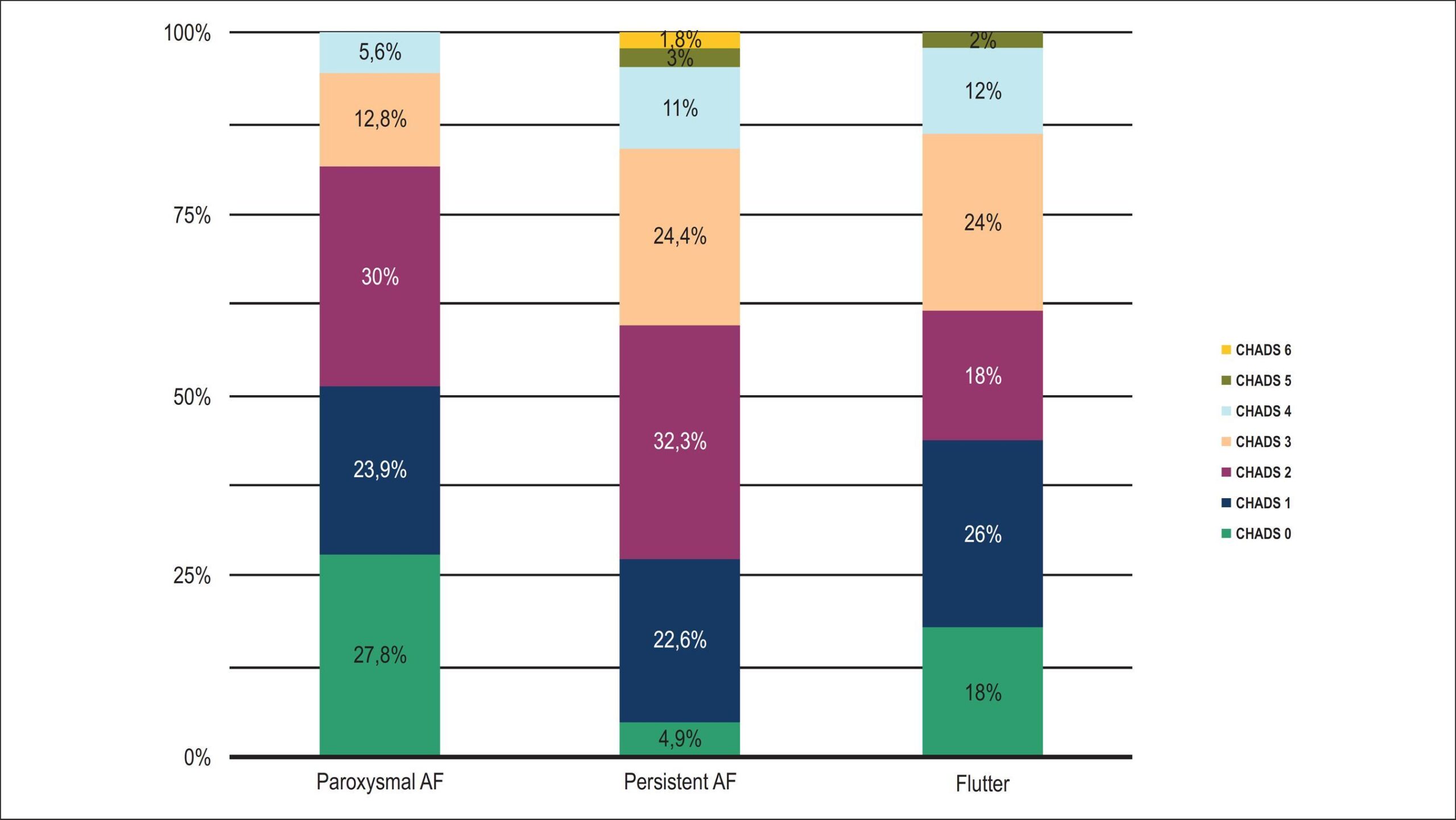
We included 407 patients (356 had atrial fibrillation and 51 had flutter). Patients with paroxysmal atrial fibrillation were in average 5 years younger than those with persistent atrial fibrillation. Compared to paroxysmal atrial fibrillation patients, those with persistent atrial fibrillation and flutter had larger atrial diameter (48.6 ± 7.2 vs. 47.2 ± 6.2 vs. 42.3 ± 6.4; p < 0.01) and lower left ventricular ejection fraction (66.8 ± 11 vs. 53.9 ± 17 vs. 57.4 ± 16; p < 0.01). The prevalence of stroke and heart failure was higher in persistent atrial fibrillation and flutter patients. Those with paroxysmal atrial fibrillation and flutter had higher prevalence of CHADS2 score of zero when compared to those with persistent atrial fibrillation (27.8% vs. 18% vs. 4.9%; p < 0.01). The prevalence of anticoagulation in patients with CHA2DS2-Vasc ≤ 2 was 40%.

Conclusions:

The population in our registry was similar in its comorbidities and demographic profile to those of North American and European registries. Despite the high thromboembolic risk, the use of anticoagulants was low, revealing difficulties for incorporating guideline recommendations. Public health strategies should be adopted in order to improve these rates.

  • Anticoagulants / adverse effects
  • Arrhythmias
  • Atrial Fibrillation
  • cardiac
  • Flutter Atrial
  • Stroke
Read Full Article
Creative Commons Attribution (CC BY) Creative Commons license
19/05/2015 DOI: 10.5935/abc.20150049 Views 1
ABC
Original Article

Electrophysiological Studies and Radiofrequency Ablations in Children and Adolescents with Arrhythmia

Mariana Fernandez Simão et al. Matheus Nardi Rios Tiago Luiz Luz Leiria Marcelo Lapa Kruse … Leonardo Martins Pires Roberto Tofani SantAnna Gustavo Glotz de Lima

Background:

Radiofrequency ablation is the standard non-pharmacological treatment for arrhythmias in pediatric patients. However, arrhythmias and their associated causes have particular features in this population.

Objective:

To analyze the epidemiological characteristics and findings of electrophysiological diagnostic studies and radiofrequency ablations in pediatric patients referred to the Electrophysiology Unit at Instituto de Cardiologia do Rio Grande do Sul, in order to characterize the particularities of this population.

Methods:

Cross-sectional study with 330 electrophysiological procedures performed in patients aged less than 20 years between June 1997 and August 2013.

Results:

In total, 330 procedures (9.6% of the overall procedures) were performed in patients aged less than 20 years (14.33 ± 3.25 years, age range 3 months to 19 years), 201 of which were males (60.9%). A total of 108 (32.7%) electrophysiological diagnostic studies were performed and of these, 48.1% showed abnormal findings. Overall, 219 radiofrequency ablations were performed (66.3%) with a success rate of 84.8%. The presence of an accessory pathway was the most prevalent finding, occurring in 158 cases (72.1%), followed by atrioventricular nodal reentrant tachycardia (16.8%), typical atrial flutter (3.1%) and extrasystoles originating from the right ventricular outflow tract (2.7%). Three patients developed complications during ablation (1.4%). Among congenital heart diseases, which occurred in 51 (15.4%) patients, atrial sept defect was the most frequent (27.4%), followed by ventricular sept defect (25.4%) and Ebstein’s anomaly (17.6%).

Conclusion:

Electrophysiological study and radiofrequency ablation are effective tools for diagnosis and treatment of arrhythmias in the pediatric population.

  • Adolescent
  • Arrhythmias
  • cardiac
  • Catheter Ablation
  • Child
  • Electrophysiologic Techniques, Cardiac
Read Full Article
Creative Commons Attribution (CC BY) Creative Commons license
04/11/2014 DOI: 10.5935/abc.20140163
Figure 1
ABC
Artigo Original

Relationship between Fibrosis and Ventricular Arrhythmias in Chagas Heart Disease Without Ventricular Dysfunction

Eduardo Marinho Tassi et al. Marcelo Abramoff Continentino Emília Matos do Nascimento Basílio de Bragança Pereira Roberto Coury Pedrosa

Background:

Patients with Chagas disease and segmental wall motion abnormality (SWMA) have worse prognosis independent of left ventricular ejection fraction (LVEF). Cardiac magnetic resonance (CMR) is currently the best method to detect SWMA and to assess fibrosis.

Objective:

To quantify fibrosis by using late gadolinium enhancement CMR in patients with Chagas disease and preserved or minimally impaired ventricular function (> 45%), and to detect patterns of dependence between fibrosis, SWMA and LVEF in the presence of ventricular arrhythmia.

Methods:

Electrocardiogram, treadmill exercise test, Holter and CMR were carried out in 61 patients, who were divided into three groups as follows: (1) normal electrocardiogram and CMR without SWMA; (2) abnormal electrocardiogram and CMR without SWMA; (3) CMR with SWMA independently of electrocardiogram.

Results:

The number of patients with ventricular arrhythmia in relation to the total of patients, the percentage of fibrosis, and the LVEF were, respectively: Group 1, 4/26, 0.74% and 74.34%; Group 2, 4/16, 3.96% and 68.5%; and Group 3, 11/19, 14.07% and 55.59%. Ventricular arrhythmia was found in 31.1% of the patients. Those with and without ventricular arrhythmia had mean LVEF of 59.87% and 70.18%, respectively, and fibrosis percentage of 11.03% and 3.01%, respectively. Of the variables SWMA, groups, age, LVEF and fibrosis, only the latter was significant for the presence of ventricular arrhythmia, with a cutoff point of 11.78% for fibrosis mass (p < 0.001).

Conclusion:

Even in patients with Chagas disease and preserved or minimally impaired ventricular function, electrical instability can be present. Regarding the presence of ventricular arrhythmia, fibrosis is the most important variable, its amount being proportional to the complexity of the groups.

  • Arrhythmias
  • cardiac
  • Chagas' heart disease
  • Myocardial fibrosis
  • Ventricular Dysfunction
Read Full Article
Creative Commons Attribution (CC BY) Creative Commons license
09/05/2014 DOI: 10.5935/abc.20140052
ABC
Artigo Original

Incidence of Ventricular Arrhythmias after Stem Cell Therapy in Patients with Chagas Cardiomyopathy

Adriana Sebba Barroso de Souza et al. Weimar Kunz Sebba Barroso Souza Sandra Araujo Costa Elis Marra de Moreira Freitas … Gustavo Carvalho Luís Antônio Batista Sá Salvador Rassi

Background:

Treatment with stem cells in several cardiomyopathies may be related to the increase in arrhythmias.

Objectives:

To determine whether intracoronary injection of stem cells in patients with Chagas cardiomyopathy is associated with increased incidence of ventricular arrhythmias, compared to the Control Group.

Methods:

A retrospective cohort study that evaluated the medical records of 60 patients who participated in a previous cross-sectional study. The following data were collected: age, gender, drugs used and Holter variables that demonstrated the presence of arrhythmias. Holter was performed in four stages: randomization, 2, 6 and 12 months segments. The Control Group received medical treatment and intracoronary injection of placebo and the Study Group had drug treatment and autologous stem cell implant.

Results:

There was no difference between Control Group and Study Group when analyzing the arrhythmia criteria. In the intra-group analysis, significant difference was found between the Holter tests of the Study Group for the variable total ventricular premature beats when compared with baseline, with p = 0.014 between Holter at randomization and Holter at 2 months, p = 0.004 between Holter at randomization and Holter at 6 months, and p = 0.014 between Holter at randomization and Holter at 12 months. The variable non-sustained ventricular tachycardia between Holter at randomization and Holter at 6 months showed p = 0.036.

Conclusion:

The intracoronary injection of stem cells did not increase the incidence of ventricular arrhythmias in patients with Chagas cardiomyopathy compared to the Control Group.

  • Arrhythmias
  • cardiac
  • Chagas Cardiomyopathy
  • stem cell transplantation
Read Full Article
Creative Commons Attribution (CC BY) Creative Commons license
09/05/2014 DOI: 10.5935/abc.20140053 Views 2
Successful improvement of frequency and symptoms of premature complexes after oral magnesium administration
ABC
Artigo Original

Successful improvement of frequency and symptoms of premature complexes after oral magnesium administration

Cristina Nádja Muniz Lima De Falco et al. Cesar Grupi Eduardo Sosa Maurício Scanavacca … Denise Hachul Sissy Lara Luciana Sacilotto Cristiano F. Pisani José A. F. Ramires Francisco Darrieux

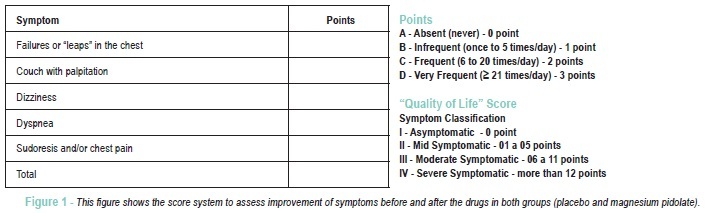
BACKGROUND: Premature ventricular and supraventricular complexes (PVC and PsVC) are frequent and often symptomatic. The magnesium (Mg) ion plays a role in the physiology of cell membranes and cardiac rhythm. OBJECTIVE: We evaluated whether the administration of Mg Pidolate (MgP) in patients with PVC and PsVC is superior to placebo (P) in improving symptoms and arrhythmia frequency. METHODS: Randomized double-blind study with 60 consecutive symptomatic patients with more than 240 PVC or PsVC on 24-hour Holter monitoring who were selected to receive placebo or MgP. To evaluate symptom improvement, a categorical and a specific questionnaire for symptoms related to PVC and PsVC was made. Improvement in premature complex density (PCD) per hour was considered significant if percentage reduction was >70% after treatment. The dose of MgP was 3.0 g/day for 30 days, equivalent to 260mg of Mg element. None of the patients had structural heart disease or renal failure. RESULTS: Of the 60 patients, 33 were female (55%). Ages ranged from 16 to 70 years old. In the MgP group, 76.6% of patients had a PCD reduction >70%, 10% of them >50% and only 13.4% <50%. In the P group, 40% showed slight improvement, <30%, in the premature complexes frequency (p < 0.001). Symptom improvement was achieved in 93.3% of patients in the MgP group, compared with only 16.7% in the P group (p < 0.001). CONCLUSION: Oral Mg supplementation decreases PCD, resulting in symptom improvement.

  • Arrhythmias
  • cardiac
  • ion channels
  • Magnesium
  • Ventricular Premature Complexes
Read Full Article
Creative Commons Attribution (CC BY) Creative Commons license
15/05/2012 DOI: 10.1590/S0066-782X2012005000043
Echocardiographic features of non-compaction cardiomyopathy: missed and misdiagnosed disease
ABC
Case Report

Echocardiographic features of non-compaction cardiomyopathy: missed and misdiagnosed disease

Francisco Martínez-Baca López et al. Rosa Marisol Alonso Bravo Domingo Arturo Rodríguez Huerta

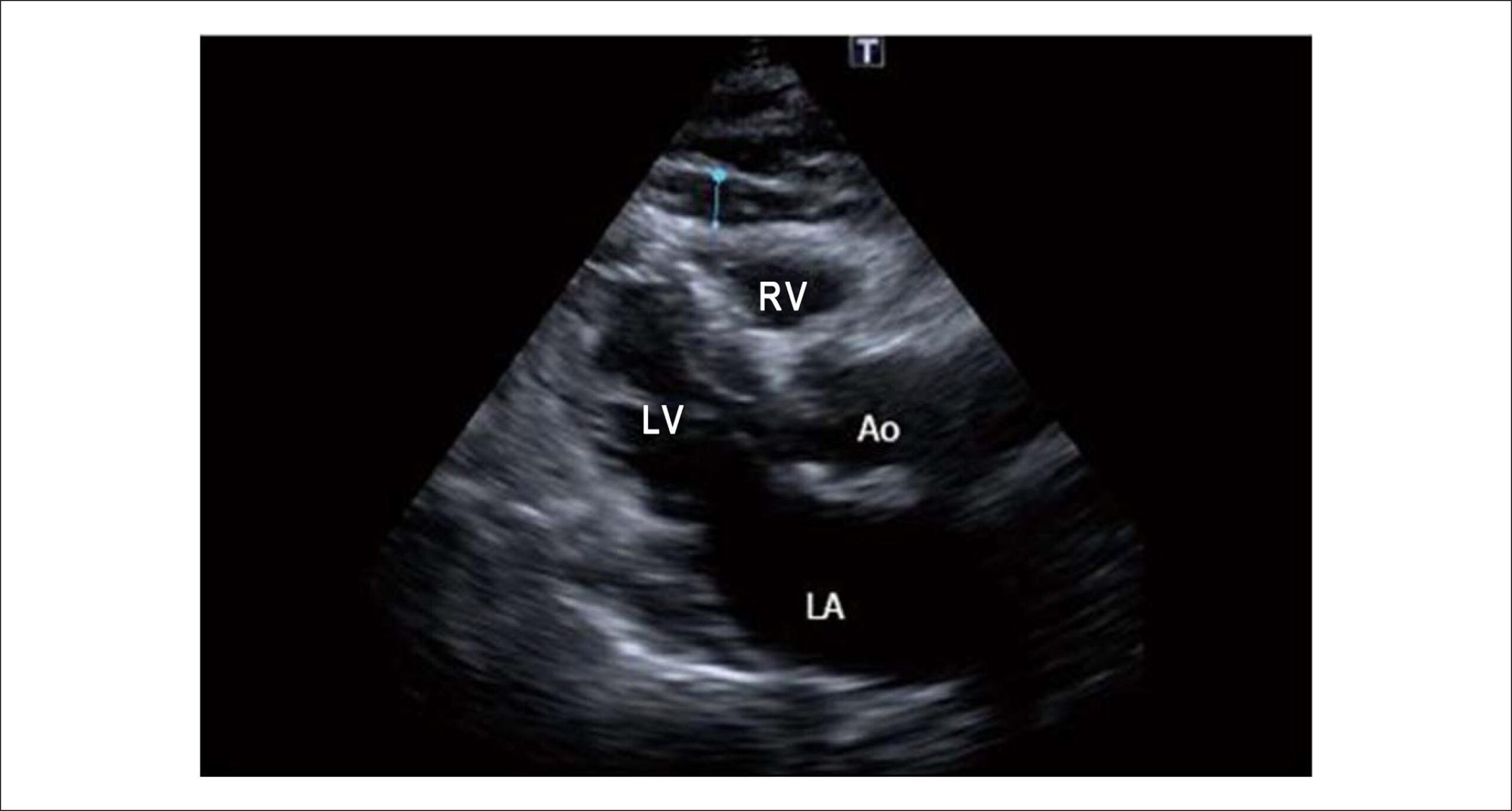
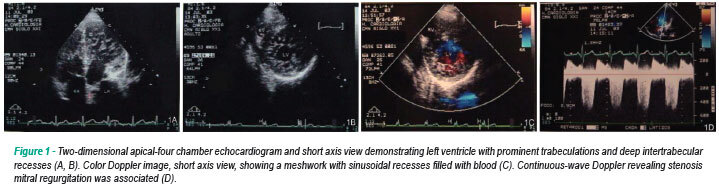
Non-compaction cardiomyopathy is a rare disease, anatomically characterized by a prominent trabecular pattern and deep intertrabecular recesses. Its clinical manifestations include severe left ventricular dysfunction, arrhythmias, systemic embolism, and sudden death. In this report, two cases of patients of different ages with non-compaction cardiomyopathy are described: a male schoolboy whose pathology was associated with mitral stenosis and regurgitation and a 50-year-old female with history of high blood pressure and cardiac failure.

  • Arrhythmias
  • cardiac
  • Cardiomyopathies
  • Death
  • Embolism
  • left
  • sudden
  • Ventricular Dysfunction
Read Full Article
Creative Commons Attribution (CC BY) Creative Commons license
13/10/2009 DOI: 10.1590/S0066-782X2009000800024 Views 1
ABC
Artigo Original

Favorable effects of the optimized drug treatment of heart failure on ventricular arrhythmias

Epotamenides Maria Good God et al. Maria da Consolação V. Moreira Antonio Carlos Pereira Barretto

BACKGROUND: Ventricular arrhythmic events have a strong impact on the mortality of patients with heart failure. The benefits of the optimized drug treatment of heart failure in reducing ventricular arrhythmia have not been well documented yet. OBJECTIVE: To analyze the effects of the optimized drug treatment of heart failure on ventricular arrhythmia. METHODS: This is a clinical study with a non-randomized design of 85 consecutive (open cohort) non-selected patients, with a mean age of 63.8±12.2 years; 42 were males and 43 were females. All patients had a diagnosis of heart failure (HF), NYHA Functional Class II to IV, EF < 0.40 and, after treatment optimization, they were followed from January 2002 to May 2004, regarding the ventricular arrhythmia behavior, at admission and at the end of the study. RESULTS: At the start of the study, 60% of patients presented more than 1,000 ventricular extrasystoles in 24 hours, 100% pairs and 100% nonsustained ventricular tachycardia (NSVT). During a follow-up period of 8 to 27 months (20.0 + 4.8 months) a significant decrease in the total number of ventricular extrasystoles/24 hrs, number of pairs and number of NSVT episodes was observed (p<0.05). The improvement in functional class and performance at the six-minute walk test was also observed. A decrease in hospital admissions was also observed in relation to the period prior to the study inclusion (4.8 hospital admissions/patient/year and at the end of the study, 2.7 hospital admissions/patient/year) (p<0.005). CONCLUSION: The optimized treatment of HF decreased the incidence of ventricular arrhythmias. The improvement in the functional class, physical performance and the decreased number of hospitalizations can be attributed to the optimized treatment of HF.

  • Arrhythmias
  • Heart Failure
Read Full Article
Creative Commons Attribution (CC BY) Creative Commons license
05/01/2009 DOI: 10.1590/S0066-782X2008001800007
Effect of local anesthetics with and without vasoconstrictor agent in patients with ventricular arrhythmias
ABC
Artigo Original

Effect of local anesthetics with and without vasoconstrictor agent in patients with ventricular arrhythmias

Maria Teresa Fernández Cáceres et al. Ana Cristina P. P. Ludovice Fabio Sândoli de Brito Francisco Carlos Darrieux … Ricardo Simões Neves Mauricio Ibrahim Scanavacca Eduardo A. Sosa Denise Tessariol Hachul

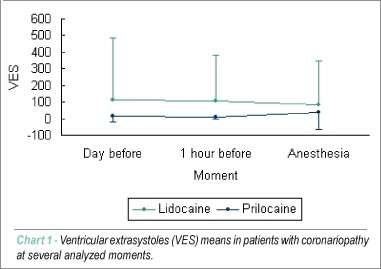
BACKGROUND: The routine use of local anesthetics associated to vasoconstrictors for the dental treatment of patients with cardiopathies is still controversial, due to the risk of adverse cardiovascular effects. OBJECTIVE: To evaluate and compare the hemodynamic effects of the use of local anesthetics with a non-adrenergic vasoconstrictor in patients with ventricular arrhythmia, when compared to the use of anesthetics without vasoconstrictor. METHODS: A prospective randomized study evaluated 33 patients with positive serology for Chagas’ disease and 32 patients with coronary artery disease that presented complex ventricular arrhythmia at Holter monitoring (>10 EV/h and NSVT), of which 21 were females, aged 54.73 + 7.94 years, submitted to routine dental treatment with pterygomandibular anesthesia. These patients were divided in two groups: group I received prilocaine 3% associated with felypressin 0.03 IU/ml and group II received lidocaine 2% without vasoconstrictor. The number and complexity of extrasystoles were analyzed, as well as the heart rate and systemic arterial pressure of the patients on the day before, one hour before, during the procedure and one hour after the dental procedure. RESULTS: No hemodynamic alterations or increase in the number and complexity of the ventricular arrhythmia related to the anesthetic used in the dental procedure were observed in either group. CONCLUSION: The results suggest that prilocaine 3% associated to a felypressin 0.03 IU/ml can be safely used in patients with Chagas’ disease or coronariopathy with complex ventricular arrhythmia.

  • Arrhythmias
  • Chagas'ic myocardiopathy
  • coronariopathy
  • local anesthetics
  • vasoconstrictors
Read Full Article
Creative Commons Attribution (CC BY) Creative Commons license
01/10/2008 DOI: 10.1590/S0066-782X2008001500002
Myotonic dystrophy and heart disease: behavior of arrhythmic events and conduction disturbances
ABC
Artigo Original

Myotonic dystrophy and heart disease: behavior of arrhythmic events and conduction disturbances

Silvana Angelina D'Orio Nishioka et al. Martino Martinelli Filho Suely Marie Mayana Zatz Roberto Costa

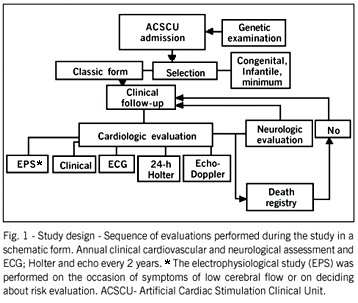
OBJECTIVE: To study the prevalence and natural evolution of arrhythmic events and conduction disturbances in myotonic dystrophy; to correlate the genetic defect with cardiovascular findings; to assess cardiac mortality, frequency, and predictive factors of sudden death; to correlate the severity of the neuromuscular and cardiac involvement; and to define the role of the electrophysiological study (EPS), in myotonic dystrophy. METHODS: Periodic clinical assessment and the following tests were performed in 83 consecutive patients with a mean follow-up of 42±30.63 months: complementary examinations, genetic tests, electrocardiography, echocardiography, and Holter; electrophysiological study was performed in 59 cases. RESULTS: Atrial tachyarrhythmia was observed in 10 (12%) patients, NSVT in 14 (17%), first-degree AVB in 24 (29%), LBBB in 19 (23%), and RBBB in 13 (16%). Symptoms, an increase in the PR interval, QRS enlargement, LVEF 70 ms in 34% and > 100 ms in 11% (postprocainamide). CONCLUSION: The prevalence of arrhythmic events and conduction disturbances ranged from 50% to 80% after 6 years, and did not correlate with the genetic defect. Atrial flutter was the most common sustained arrhythmia. Cardiac involvement increased as the neuromuscular disease became aggravated, but progression of the cardiac involvement was more rapid than that of the neuromuscular disease. Overall mortality was low (11%) and sudden death occurred in half of the cases. The EPS identified a group at risk for pacemaker implantation.

  • Arrhythmias
  • cardiac conduction system
  • Mortality
  • myotonic dystrophy
Read Full Article
Creative Commons Attribution (CC BY) Creative Commons license
03/05/2005 DOI: 10.1590/S0066-782X2005000400011 Views 1
Risk factors, morbidity, and mortality associated with atrial fibrillation in the postoperative period of cardiac surgery
ABC
Artigo Original

Risk factors, morbidity, and mortality associated with atrial fibrillation in the postoperative period of cardiac surgery

Rogério Gomes da Silva et al. Gustavo Glotz de Lima Andréia Laranjeira Altamiro Reis da Costa … Edemar Pereira Rubem Rodrigues

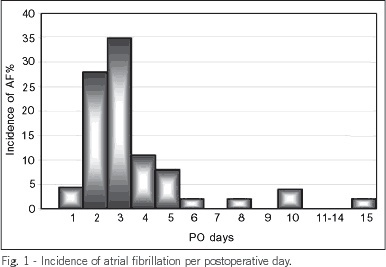
OBJECTIVE: To determine the incidence of atrial fibrillation in the postoperative period of cardiac surgery, its impact on morbidity, mortality, and hospital stay, and to analyze the risk factors in the pre, trans, and postoperative periods. METHOD: Contemporary cohort study with 158 adult patients undergoing cardiac surgery, of whom those with atrial fibrillation in the preoperative period were excluded. The patients were assessed with continuous cardiac monitoring and daily electrocardiograms. Any episode of irregular rhythm with the presence of f waves of variable morphology and amplitude was considered atrial fibrillation. RESULTS: The general incidence of atrial fibrillation was 28.5%, being 21.6% for revascularized patients and 44.3% for those undergoing valvular repair. Factors independently associated with atrial fibrillation were left heart failure in the preoperative period (p=0.05; RC=2.2), total fluid balance (p=0.01; RC=1.0), duration of surgery (p=0.03; RC=1.01) [and other associated factors, age > 70 years, aortic valvular disease, psychomotor agitation, length of installation of the drains, pulmonary congestion and respiratory insufficiency in the postoperative period]. The use of beta-blockers (p=0.01; RC=0.3) was a protective factor. Atrial fibrillation in the postoperative period was associated with an increase in the length of hospital stay (16.9±12.3 days versus 9.2±4.0 days, p<0.001) and a greater incidence of stroke or postoperative death (p=0.02). CONCLUSION: The incidence of atrial fibrillation in the postoperative period of cardiac surgery was high and caused a significant increase in morbidity, mortality, and the length of hospital stay. Among the independent risk factors, excessive fluid balance is significant. The use of beta-blockers was identified as a protective factor.

  • Arrhythmias
  • Atrial Fibrillation
  • Cardiac Surgery
  • Postoperative Care
  • Risk Factors
Read Full Article
Creative Commons Attribution (CC BY) Creative Commons license
17/08/2004 DOI: 10.1590/S0066-782X2004001400002 Views 1
Electrocardiographic and Blood Pressure Alterations During Electroconvulsive Therapy in Young Adults
ABC
Original Article

Electrocardiographic and Blood Pressure Alterations During Electroconvulsive Therapy in Young Adults

Demetrio Ortega Rumi et al. Maria Cecília Solimene Júlio Yoshio Takada César José Grupi … Dante Marcelo Giorgi Sérgio Paulo Rigonatti Protásio Lemos da Luz José Antonio Franchini Ramires

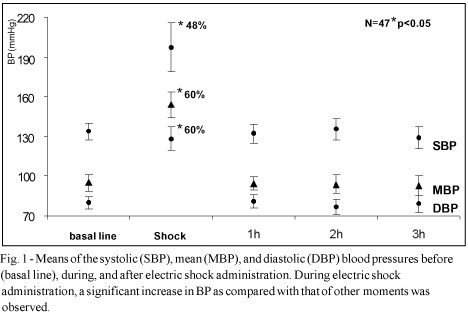
OBJECTIVE – To study cardiovascular alterations in young patients with no apparent organic disease who underwent electroconvulsive therapy. METHODS – The study comprised 47 healthy patients (22 males and 25 females) with a mean age of 30.3 years, who underwent electroconvulsive therapy. Ambulatory blood pressure monitoring and continuous electrocardiographic monitoring (Holter monitor) were performed during 24 hours. Blood pressure and heart rate were assessed 4 hours prior to electric shock administration, during electric shock administration, and 3 hours after electric shock administration. Arrhythmias and alterations in the ST segment in 24 hours were recorded. RESULTS – On electroconvulsive therapy, a significant increase in blood pressure and heart rate was observed and the measurements returned to basal values after 25 minutes. Three females had tracings with depression of the ST segment suggesting myocardial ischemia prior to and after electroconvulsive therapy. Coronary angiography was normal. No severe cardiac arrhythmias were diagnosed. CONCLUSION – 1) Electroconvulsive therapy is a safe therapeutic modality in psychiatry; 2) it causes a significant increase in blood pressure and heart rate; 3) it may be associated with myocardial ischemia in the absence of coronary obstructive disease; 4) electroconvulsive therapy was not associated with the occurrence of severe cardiac arrhythmias.

  • Arrhythmias
  • Blood Pressure
  • electroconvulsive therapy
  • Heart Rate
  • Myocardial Ischemia
Read Full Article
Creative Commons Attribution (CC BY) Creative Commons license
10/09/2002 DOI: 10.1590/S0066-782X2002001100007
ABC
Artigo Original

Fetal supraventricular tachyarrhythmias. Experience of a fetal cardiology reference center

Paulo Zielinsky et al. Rejane F. Dillenburg Gustavo G. de Lima Lúcia P. Zimmer

PURPOSE: To describe the presentation, diagnosis and treatment of fetal supraventricular tachyarrhythmias in a series of fetuses followed in a tertiary Fetal Cardiology Center. METHODS: Twenty-five fetuses with diagnosis of supraventricular tachyarrhytmia were reported from January 1989 to October 1997, among 3117 pregnant women referred for fetal cardiac evaluation. RESULTS: There were 17 fetuses with the diagnosis of supraventricular tachycardia (SVT) and 8 patients with atrial flutter (AF). Gestational age ranged from 26 to 40 weeks. Twelve patients were hydropic at presentation (6 with SVT and 6 AF). Four fetuses with SVT showed structural abnormalities (two with Ebsten’s anomaly and two with VSD). All patients were admitted to the Fetal Cardiology Unit for monitoring and treatment. Among 17 fetuses with SVT, twelve showed good response to digoxin administration, but this drug was not useful in any of the patients with flutter. In two patients with SVT and in six with AF, the pregnancy was interrupted to perform post-natal cardioversion. The mortality rate was 3/17 in the SVT group (including 2 patients with ebstein’s anomaly and 0/8 in the flutter group) CONCLUSION: Fetal supraventricular tachyarrithmias are rare in the general population. Nevertheless, the fetus may present with severe heart failure and death. Considering the satisfactory therapeutic response, accurate diagnosis and early treatment of these conditions are extremely important.

  • Arrhythmias
  • Echocardiography
  • fetal heart
Read Full Article
Creative Commons Attribution (CC BY) Creative Commons license
08/01/2002 DOI: 10.1590/S0066-782X1998000500006
ABC
Original Article

Evaluation of the heart rate and arrhythmias following the Maze procedure for chronic atrial fibrillation

Bartira Cunha et al. Renato A. K. Kalil Álvaro S. Albrecht Gustavo G. Lima José Cláudio L. Kruse

PURPOSE: To assess the presence and the prevalence of arrhythmias and the variability of the heart rate in the medium-term postoperative period following the maze procedure for chronic atrial fibrillation (AF). METHODS: Seventeen patients with a mean age of 51.7±12.9 years, who previously underwent the maze procedure without cryoablation for chronic atrial fibrillation, were evaluated with the 24 hour electrocardiogram (ECG) – Holter monitoring from the 6th month after the operation. Valvular and coronary procedures were concomitantly performed. RESULTS: The mean heart rate during Holter monitoring was 82±8bpm; the maximal heart rate was 126 ± 23bpm and the minimal heart rate 57±7bpm. Sinus rhythm was found in 10 (59%) patients and atrial rhythm was found in 7 (41%). Supraventricular extrasystoles had a rate of 2.3±5.5% of the total number of heartbeats and occurred in 16 (94%) patients. Six (35%) patients showed nonsustained atrial tachycardia. Ventricular extrasystoles, with a rate of 0.8±0.5% of the total heartbeats, occurred in 14 (82%) patients. The chronotropic competence was normal in 9 (53%) patients and attenuated in 8 (47%). The atrioventricular conduction (AV) was unchanged in 13 (76%) patients and there were 4 (24%) cases of first degree atrioventricular block (AVB). CONCLUSION: After the maze procedure, the values for the mean heart rate, AV conduction and chronotropic competence approach the normal range, although some cases show attenuation of the chronotropic response, first degree AV block or benign arrhythmias.

  • Arrhythmias
  • Atrial Fibrillation
  • Surgery
Read Full Article
Creative Commons Attribution (CC BY) Creative Commons license
27/10/2000 DOI: 10.1590/S0066-782X1999000500008 Views 1

Could not load more articles. Please try again.

How to cite this article

EndNote RIS

Electronic Document Format (Vancouver)

Brugada P. The Fascination of the Wolff-Parkinson-White Syndrome. Arquivos Brasileiros de Cardiologia 2026;123(5):e20260471.

Electronic Document Format (ABNT)

Brugada, Pedro. The Fascination of the Wolff-Parkinson-White Syndrome. Arquivos Brasileiros de Cardiologia, v. 123, n. 5, e20260471, Aug. 2026.

Electronic Document Format (APA)

Brugada, P. (2026). The Fascination of the Wolff-Parkinson-White Syndrome. Arquivos Brasileiros de Cardiologia, 123(5), e20260471.

Electronic Document Format (ISO)

Brugada, Pedro. The Fascination of the Wolff-Parkinson-White Syndrome. Arquivos Brasileiros de Cardiologia [online]. 2026, vol. 123, n. 5, [cited 2026-10-14], e20260471. Available from: <https://journals.cardiol.br/en/article/the-fascination-of-the-wolff-parkinson-white-syndrome/>. ISSN 0066-782X

EndNote RIS

Electronic Document Format (Vancouver)

Andalaft RB. The Electrocardiogram in the Pediatric Population in the 21st Century. How to Keep Evolving after 135 Years of the Method Discovery History. Arquivos Brasileiros de Cardiologia 2022;119(5):791-2.

Electronic Document Format (ABNT)

Andalaft, Rogerio Braga. The Electrocardiogram in the Pediatric Population in the 21st Century. How to Keep Evolving after 135 Years of the Method Discovery History. Arquivos Brasileiros de Cardiologia, v. 119, n. 5, p. 791-792, Nov. 2022.

Electronic Document Format (APA)

Andalaft, R. B. (2022). The Electrocardiogram in the Pediatric Population in the 21st Century. How to Keep Evolving after 135 Years of the Method Discovery History. Arquivos Brasileiros de Cardiologia, 119(5), 791-792.

Electronic Document Format (ISO)

Andalaft, Rogerio Braga. The Electrocardiogram in the Pediatric Population in the 21st Century. How to Keep Evolving after 135 Years of the Method Discovery History. Arquivos Brasileiros de Cardiologia [online]. 2022, vol. 119, n. 5, [cited 2026-10-14], pp. 791-792. Available from: <https://journals.cardiol.br/en/article/the-electrocardiogram-in-the-pediatric-population-in-the-21st-century-how-to-keep-evolving-after-135-years-of-the-method-discovery-history/>. ISSN 0066-782X

EndNote RIS

Electronic Document Format (Vancouver)

Gonçalves-Teixeira P, Costa T, Fragoso I, Ferreira D, Brandão M, Leite-Moreira A, Sampaio F, et al. Screening, Diagnosis and Management of Atrial Fibrillation in Cancer Patients: Current Evidence and Future Perspectives. Arquivos Brasileiros de Cardiologia 2022;119(2):328-41.

Electronic Document Format (ABNT)

Gonçalves-Teixeira, Pedro; Costa, Telma; Fragoso, Isabel; Ferreira, Diogo; Brandão, Mariana; Leite-Moreira, Adelino; Sampaio, Francisco; Ribeiro, José; Fontes-Carvalho, Ricardo. Screening, Diagnosis and Management of Atrial Fibrillation in Cancer Patients: Current Evidence and Future Perspectives. Arquivos Brasileiros de Cardiologia, v. 119, n. 2, p. 328-341, Aug. 2022.

Electronic Document Format (APA)

Gonçalves-Teixeira, P., Costa, T., Fragoso, I., Ferreira, D., Brandão, M., Leite-Moreira, A., Sampaio, F., Ribeiro, J., & Fontes-Carvalho, R. (2022). Screening, Diagnosis and Management of Atrial Fibrillation in Cancer Patients: Current Evidence and Future Perspectives. Arquivos Brasileiros de Cardiologia, 119(2), 328-341.

Electronic Document Format (ISO)

Gonçalves-Teixeira, Pedro and Costa, Telma and Fragoso, Isabel and Ferreira, Diogo and Brandão, Mariana and Leite-Moreira, Adelino and Sampaio, Francisco and Ribeiro, José and Fontes-Carvalho, Ricardo. Screening, Diagnosis and Management of Atrial Fibrillation in Cancer Patients: Current Evidence and Future Perspectives. Arquivos Brasileiros de Cardiologia [online]. 2022, vol. 119, n. 2, [cited 2026-10-14], pp. 328-341. Available from: <https://journals.cardiol.br/en/article/screening-diagnosis-and-management-of-atrial-fibrillation-in-cancer-patients-current-evidence-and-future-perspectives/>. ISSN 0066-782X

EndNote RIS

Electronic Document Format (Vancouver)

Silva GBA, Souza DS, Menezes-Filho JER, Silva-Neto JA, Cruz JS, Roman-Campos DR, Quintans-Júnior LJ, et al. (-)-Carvone Modulates Intracellular Calcium Signaling with Antiarrhythmic Action in Rat Hearts. Arquivos Brasileiros de Cardiologia 2022;119(2):294-30.

Electronic Document Format (ABNT)

Silva, Gilmara Beatriz Andrade da; Souza, Diego Santos; Menezes-Filho, José Evaldo Rodrigues; Silva-Neto, Júlio Alves da; Cruz, Jader dos Santos; Roman-Campos, Danilo R.; Quintans-Júnior, Lucindo José; Vasconcelos, Carla Maria Lins de. (-)-Carvone Modulates Intracellular Calcium Signaling with Antiarrhythmic Action in Rat Hearts. Arquivos Brasileiros de Cardiologia, v. 119, n. 2, p. 294-304, Aug. 2022.

Electronic Document Format (APA)

Silva, G. B. A. , Souza, D. S., Menezes-Filho, J. E. R., Silva-Neto, J. A. , Cruz, J. S., Roman-Campos, D. R., Quintans-Júnior, L. J., & Vasconcelos, C. M. L. (2022). (-)-Carvone Modulates Intracellular Calcium Signaling with Antiarrhythmic Action in Rat Hearts. Arquivos Brasileiros de Cardiologia, 119(2), 294-304.

Electronic Document Format (ISO)

Silva, Gilmara Beatriz Andrade da and Souza, Diego Santos and Menezes-Filho, José Evaldo Rodrigues and Silva-Neto, Júlio Alves da and Cruz, Jader dos Santos and Roman-Campos, Danilo R. and Quintans-Júnior, Lucindo José and Vasconcelos, Carla Maria Lins de. (-)-Carvone Modulates Intracellular Calcium Signaling with Antiarrhythmic Action in Rat Hearts. Arquivos Brasileiros de Cardiologia [online]. 2022, vol. 119, n. 2, [cited 2026-10-14], pp. 294-304. Available from: <https://journals.cardiol.br/en/article/carvone-modulates-intracellular-calcium-signaling-with-antiarrhythmic-action-in-rat-hearts/>. ISSN 0066-782X

EndNote RIS

Electronic Document Format (Vancouver)

Costa MAC, Santos JFLP, Schafranski MD. Prevalence of Atrial Fibrillation in Pacemaker Patients. International Journal of Cardiovascular Sciences 2022;35(3):373-81.

Electronic Document Format (ABNT)

Costa, Mario Augusto Cray da; Santos, Jorge Felipe do Lago Pereira dos; Schafranski, Marcelo Derbli. Prevalence of Atrial Fibrillation in Pacemaker Patients. International Journal of Cardiovascular Sciences, v. 35, n. 3, p. 373-381, Feb. 2022.

Electronic Document Format (APA)

Costa, M. A. C. , Santos, J. F. L. P. , & Schafranski, M. D. (2022). Prevalence of Atrial Fibrillation in Pacemaker Patients. International Journal of Cardiovascular Sciences, 35(3), 373-381.

Electronic Document Format (ISO)

Costa, Mario Augusto Cray da and Santos, Jorge Felipe do Lago Pereira dos and Schafranski, Marcelo Derbli. Prevalence of Atrial Fibrillation in Pacemaker Patients. International Journal of Cardiovascular Sciences [online]. 2022, vol. 35, n. 3, [cited 2026-10-14], pp. 373-381. Available from: <https://journals.cardiol.br/en/article/prevalence-of-atrial-fibrillation-in-pacemaker-patients/>. ISSN 2359-4802

EndNote RIS

Electronic Document Format (Vancouver)

Wu TC, Sacilotto L, Darrieux FCC, Pisani CF, Melo SL, Hachul DT, Scanavacca M, et al. QT Interval Control to Prevent Torsades de Pointes during Use of Hydroxychloroquine and/or Azithromycin in Patients with COVID-19. Arquivos Brasileiros de Cardiologia 2020;114(6):1061-6.

Electronic Document Format (ABNT)

Wu, Tan Chen; Sacilotto, Luciana; Darrieux, Francisco Carlos da Costa; Pisani, Cristiano Faria; Melo, Sissy Lara de; Hachul, Denise Tessariol; Scanavacca, Mauricio. QT Interval Control to Prevent Torsades de Pointes during Use of Hydroxychloroquine and/or Azithromycin in Patients with COVID-19. Arquivos Brasileiros de Cardiologia, v. 114, n. 6, p. 1061-1066, Jul. 2020.

Electronic Document Format (APA)

Wu, T. C., Sacilotto, L., Darrieux, F. C. C., Pisani, C. F., Melo, S. L. , Hachul, D. T., & Scanavacca, M. (2020). QT Interval Control to Prevent Torsades de Pointes during Use of Hydroxychloroquine and/or Azithromycin in Patients with COVID-19. Arquivos Brasileiros de Cardiologia, 114(6), 1061-1066.

Electronic Document Format (ISO)

Wu, Tan Chen and Sacilotto, Luciana and Darrieux, Francisco Carlos da Costa and Pisani, Cristiano Faria and Melo, Sissy Lara de and Hachul, Denise Tessariol and Scanavacca, Mauricio. QT Interval Control to Prevent Torsades de Pointes during Use of Hydroxychloroquine and/or Azithromycin in Patients with COVID-19. Arquivos Brasileiros de Cardiologia [online]. 2020, vol. 114, n. 6, [cited 2026-10-14], pp. 1061-1066. Available from: <https://journals.cardiol.br/en/article/qt-interval-control-to-prevent-torsades-de-pointes-during-use-of-hydroxychloroquine-and-or-azithromycin-in-patients-with-covid-19/>. ISSN 0066-782X

EndNote RIS

Electronic Document Format (Vancouver)

Silva KR, Costa R, Melo GRGO, Rebustini F, Benedetto MS, Nagumo MM, Sears SF, et al. Validity Evidence of the Brazilian Version of the Florida Shock Anxiety Scale for Patients with Implantable Cardioverter Defibrillators. Arquivos Brasileiros de Cardiologia 2020;114(5):764-72.

Electronic Document Format (ABNT)

Silva, Katia Regina; Costa, Roberto; Melo, Giovanna Regina Garcia de Oliveira; Rebustini, Flávio; Benedetto, Marcos Sidney; Nagumo, Marcia Mitie; Sears, Samuel F.. Validity Evidence of the Brazilian Version of the Florida Shock Anxiety Scale for Patients with Implantable Cardioverter Defibrillators. Arquivos Brasileiros de Cardiologia, v. 114, n. 5, p. 764-772, May. 2020.

Electronic Document Format (APA)

Silva, K. R., Costa, R., Melo, G. R. G. O., Rebustini, F., Benedetto, M. S., Nagumo, M. M., & Sears, S. F. (2020). Validity Evidence of the Brazilian Version of the Florida Shock Anxiety Scale for Patients with Implantable Cardioverter Defibrillators. Arquivos Brasileiros de Cardiologia, 114(5), 764-772.

Electronic Document Format (ISO)

Silva, Katia Regina and Costa, Roberto and Melo, Giovanna Regina Garcia de Oliveira and Rebustini, Flávio and Benedetto, Marcos Sidney and Nagumo, Marcia Mitie and Sears, Samuel F.. Validity Evidence of the Brazilian Version of the Florida Shock Anxiety Scale for Patients with Implantable Cardioverter Defibrillators. Arquivos Brasileiros de Cardiologia [online]. 2020, vol. 114, n. 5, [cited 2026-10-14], pp. 764-772. Available from: <https://journals.cardiol.br/en/article/validity-evidence-of-the-brazilian-version-of-the-florida-shock-anxiety-scale-for-patients-with-implantable-cardioverter-defibrillators/>. ISSN 0066-782X

EndNote RIS

Electronic Document Format (Vancouver)

Miranda VM, Beserra SS, Roman-Campos D. Inotropic and Antiarrhythmic Transmural Actions of Ranolazine in a Cellular Model of Type 3 Long QT Syndrome. Arquivos Brasileiros de Cardiologia 2020;114(4):732-5.

Electronic Document Format (ABNT)

Miranda, Victor Martins; Beserra, Samuel Santos; Roman-Campos, Danilo. Inotropic and Antiarrhythmic Transmural Actions of Ranolazine in a Cellular Model of Type 3 Long QT Syndrome. Arquivos Brasileiros de Cardiologia, v. 114, n. 4, p. 732-735, May. 2020.

Electronic Document Format (APA)

Miranda, V. M., Beserra, S. S., & Roman-Campos, D. (2020). Inotropic and Antiarrhythmic Transmural Actions of Ranolazine in a Cellular Model of Type 3 Long QT Syndrome. Arquivos Brasileiros de Cardiologia, 114(4), 732-735.

Electronic Document Format (ISO)

Miranda, Victor Martins and Beserra, Samuel Santos and Roman-Campos, Danilo. Inotropic and Antiarrhythmic Transmural Actions of Ranolazine in a Cellular Model of Type 3 Long QT Syndrome. Arquivos Brasileiros de Cardiologia [online]. 2020, vol. 114, n. 4, [cited 2026-10-14], pp. 732-735. Available from: <https://journals.cardiol.br/en/article/inotropic-and-antiarrhythmic-transmural-actions-of-ranolazine-in-a-cellular-model-of-type-3-long-qt-syndrome/>. ISSN 0066-782X

EndNote RIS

Electronic Document Format (Vancouver)

Helal L, Silveira AD. The Nature of Cardiac Remodeling Due to Physical Exercise: More Evidence Towards to the Normal Adaptive Responses of the Heart. Arquivos Brasileiros de Cardiologia 2018;111(6):782.

Electronic Document Format (ABNT)

Helal, Lucas; Silveira, Anderson Donelli da. The Nature of Cardiac Remodeling Due to Physical Exercise: More Evidence Towards to the Normal Adaptive Responses of the Heart. Arquivos Brasileiros de Cardiologia, v. 111, n. 6, p. 782-782, Nov. 2018.

Electronic Document Format (APA)

Helal, L., & Silveira, A. D. (2018). The Nature of Cardiac Remodeling Due to Physical Exercise: More Evidence Towards to the Normal Adaptive Responses of the Heart. Arquivos Brasileiros de Cardiologia, 111(6), 782-782.

Electronic Document Format (ISO)

Helal, Lucas and Silveira, Anderson Donelli da. The Nature of Cardiac Remodeling Due to Physical Exercise: More Evidence Towards to the Normal Adaptive Responses of the Heart. Arquivos Brasileiros de Cardiologia [online]. 2018, vol. 111, n. 6, [cited 2026-10-14], pp. 782-782. Available from: <https://journals.cardiol.br/en/article/the-nature-of-cardiac-remodeling-due-to-physical-exercise-more-evidence-towards-to-the-normal-adaptive-responses-of-the-heart/>. ISSN 0066-782X

EndNote RIS

Electronic Document Format (Vancouver)

Scanavacca M. Current Atrial Fibrillation Ablation: An Alert for the Prevention and Treatment of Esophageal Lesions. Arquivos Brasileiros de Cardiologia 2016;106(5):354-7.

Electronic Document Format (ABNT)

Scanavacca, Mauricio. Current Atrial Fibrillation Ablation: An Alert for the Prevention and Treatment of Esophageal Lesions. Arquivos Brasileiros de Cardiologia, v. 106, n. 5, p. 354-357, Apr. 2016.

Electronic Document Format (APA)

Scanavacca, M. (2016). Current Atrial Fibrillation Ablation: An Alert for the Prevention and Treatment of Esophageal Lesions. Arquivos Brasileiros de Cardiologia, 106(5), 354-357.

Electronic Document Format (ISO)

Scanavacca, Mauricio. Current Atrial Fibrillation Ablation: An Alert for the Prevention and Treatment of Esophageal Lesions. Arquivos Brasileiros de Cardiologia [online]. 2016, vol. 106, n. 5, [cited 2026-10-14], pp. 354-357. Available from: <https://journals.cardiol.br/en/article/current-atrial-fibrillation-ablation-an-alert-for-the-prevention-and-treatment-of-esophageal-lesions/>. ISSN 0066-782X

EndNote RIS

Electronic Document Format (Vancouver)

Kaplan O, Kurtoglu E, Nar G, Yasar E, Gozubuyuk G, Dogan C, Boz AU, et al. Evaluation of Electrocardiographic T-peak to T-end Interval in Subjects with Increased Epicardial Fat Tissue Thickness. Arquivos Brasileiros de Cardiologia 2015;105(6):566-72.

Electronic Document Format (ABNT)

Kaplan, Ozgur; Kurtoglu, Ertugrul; Nar, Gokay; Yasar, Erdogan; Gozubuyuk, Gokhan; Dogan, Cem; Boz, Ahmet Ugur; Hidayet, Sıho; Pekdemir, Hasan. Evaluation of Electrocardiographic T-peak to T-end Interval in Subjects with Increased Epicardial Fat Tissue Thickness. Arquivos Brasileiros de Cardiologia, v. 105, n. 6, p. 566-572, Oct. 2015.

Electronic Document Format (APA)

Kaplan, O., Kurtoglu, E., Nar, G., Yasar, E., Gozubuyuk, G., Dogan, C., Boz, A. U., Hidayet, S., & Pekdemir, H. (2015). Evaluation of Electrocardiographic T-peak to T-end Interval in Subjects with Increased Epicardial Fat Tissue Thickness. Arquivos Brasileiros de Cardiologia, 105(6), 566-572.

Electronic Document Format (ISO)

Kaplan, Ozgur and Kurtoglu, Ertugrul and Nar, Gokay and Yasar, Erdogan and Gozubuyuk, Gokhan and Dogan, Cem and Boz, Ahmet Ugur and Hidayet, Sıho and Pekdemir, Hasan. Evaluation of Electrocardiographic T-peak to T-end Interval in Subjects with Increased Epicardial Fat Tissue Thickness. Arquivos Brasileiros de Cardiologia [online]. 2015, vol. 105, n. 6, [cited 2026-10-14], pp. 566-572. Available from: <https://journals.cardiol.br/en/article/evaluation-of-electrocardiographic-t-peak-to-t-end-interval-in-subjects-with-increased-epicardial-fat-tissue-thickness/>. ISSN 0066-782X

EndNote RIS

Electronic Document Format (Vancouver)

Almeida ED, Guimarães RB, Stephan LS, Medeiros AK, Foltz K, Santanna RT, Pires LM, et al. Clinical Differences between Subtypes of Atrial Fibrillation and Flutter: Cross-Sectional Registry of 407 Patients. Arquivos Brasileiros de Cardiologia 2015;105(1):3-10.

Electronic Document Format (ABNT)

Almeida, Eduardo Dytz; Guimarães, Raphael Boesche; Stephan, Laura Siga; Medeiros, Alexandre Kreling; Foltz, Katia; Santanna, Roberto Tofani; Pires, Leonardo Martins; Kruse, Marcelo Lapa; Lima, Gustavo Glotz de; Leiria, Tiago Luiz Luz. Clinical Differences between Subtypes of Atrial Fibrillation and Flutter: Cross-Sectional Registry of 407 Patients. Arquivos Brasileiros de Cardiologia, v. 105, n. 1, p. 3-10, May. 2015.

Electronic Document Format (APA)

Almeida, E. D., Guimarães, R. B., Stephan, L. S., Medeiros, A. K., Foltz, K., Santanna, R. T., Pires, L. M., Kruse, M. L., Lima, G. G. , & Leiria, T. L. L. (2015). Clinical Differences between Subtypes of Atrial Fibrillation and Flutter: Cross-Sectional Registry of 407 Patients. Arquivos Brasileiros de Cardiologia, 105(1), 3-10.

Electronic Document Format (ISO)

Almeida, Eduardo Dytz and Guimarães, Raphael Boesche and Stephan, Laura Siga and Medeiros, Alexandre Kreling and Foltz, Katia and Santanna, Roberto Tofani and Pires, Leonardo Martins and Kruse, Marcelo Lapa and Lima, Gustavo Glotz de and Leiria, Tiago Luiz Luz. Clinical Differences between Subtypes of Atrial Fibrillation and Flutter: Cross-Sectional Registry of 407 Patients. Arquivos Brasileiros de Cardiologia [online]. 2015, vol. 105, n. 1, [cited 2026-10-14], pp. 3-10. Available from: <https://journals.cardiol.br/en/article/clinical-differences-between-subtypes-of-atrial-fibrillation-and-flutter-cross-sectional-registry-of-407-patients/>. ISSN 0066-782X

EndNote RIS

Electronic Document Format (Vancouver)

Simão MF, Rios MN, Leiria TLL, Kruse ML, Pires LM, SantAnna RT, Lima GG, et al. Electrophysiological Studies and Radiofrequency Ablations in Children and Adolescents with Arrhythmia. Arquivos Brasileiros de Cardiologia 2014;104(1):53-7.

Electronic Document Format (ABNT)

Simão, Mariana Fernandez; Rios, Matheus Nardi; Leiria, Tiago Luiz Luz; Kruse, Marcelo Lapa; Pires, Leonardo Martins; SantAnna, Roberto Tofani; Lima, Gustavo Glotz de. Electrophysiological Studies and Radiofrequency Ablations in Children and Adolescents with Arrhythmia. Arquivos Brasileiros de Cardiologia, v. 104, n. 1, p. 53-57, Nov. 2014.

Electronic Document Format (APA)

Simão, M. F., Rios, M. N., Leiria, T. L. L., Kruse, M. L., Pires, L. M., SantAnna, R. T., & Lima, G. G. (2014). Electrophysiological Studies and Radiofrequency Ablations in Children and Adolescents with Arrhythmia. Arquivos Brasileiros de Cardiologia, 104(1), 53-57.

Electronic Document Format (ISO)

Simão, Mariana Fernandez and Rios, Matheus Nardi and Leiria, Tiago Luiz Luz and Kruse, Marcelo Lapa and Pires, Leonardo Martins and SantAnna, Roberto Tofani and Lima, Gustavo Glotz de. Electrophysiological Studies and Radiofrequency Ablations in Children and Adolescents with Arrhythmia. Arquivos Brasileiros de Cardiologia [online]. 2014, vol. 104, n. 1, [cited 2026-10-14], pp. 53-57. Available from: <https://journals.cardiol.br/en/article/electrophysiological-studies-and-radiofrequency-ablations-in-children-and-adolescents-with-arrhythmia/>. ISSN 0066-782X

EndNote RIS

Electronic Document Format (Vancouver)

Tassi EM, Continentino MA, Nascimento EM, Pereira BB, Pedrosa RC. Relationship between Fibrosis and Ventricular Arrhythmias in Chagas Heart Disease Without Ventricular Dysfunction. Arquivos Brasileiros de Cardiologia 2014;102(5):456-64.

Electronic Document Format (ABNT)

Tassi, Eduardo Marinho; Continentino, Marcelo Abramoff; Nascimento, Emília Matos do; Pereira, Basílio de Bragança; Pedrosa, Roberto Coury. Relationship between Fibrosis and Ventricular Arrhythmias in Chagas Heart Disease Without Ventricular Dysfunction. Arquivos Brasileiros de Cardiologia, v. 102, n. 5, p. 456-464, May. 2014.

Electronic Document Format (APA)

Tassi, E. M., Continentino, M. A., Nascimento, E. M. , Pereira, B. B., & Pedrosa, R. C. (2014). Relationship between Fibrosis and Ventricular Arrhythmias in Chagas Heart Disease Without Ventricular Dysfunction. Arquivos Brasileiros de Cardiologia, 102(5), 456-464.

Electronic Document Format (ISO)

Tassi, Eduardo Marinho and Continentino, Marcelo Abramoff and Nascimento, Emília Matos do and Pereira, Basílio de Bragança and Pedrosa, Roberto Coury. Relationship between Fibrosis and Ventricular Arrhythmias in Chagas Heart Disease Without Ventricular Dysfunction. Arquivos Brasileiros de Cardiologia [online]. 2014, vol. 102, n. 5, [cited 2026-10-14], pp. 456-464. Available from: <https://journals.cardiol.br/en/article/relationship-between-fibrosis-and-ventricular-arrhythmias-in-chagas-heart-disease-without-ventricular-dysfunction/>. ISSN 0066-782X

EndNote RIS

Electronic Document Format (Vancouver)

Souza ASB, Souza WKSB, Costa SA, Freitas EMM, Carvalho G, Sá LAB, Rassi S, et al. Incidence of Ventricular Arrhythmias after Stem Cell Therapy in Patients with Chagas Cardiomyopathy. Arquivos Brasileiros de Cardiologia 2014;102(5):489-94.

Electronic Document Format (ABNT)

Souza, Adriana Sebba Barroso de; Souza, Weimar Kunz Sebba Barroso; Costa, Sandra Araujo; Freitas, Elis Marra de Moreira; Carvalho, Gustavo; Sá, Luís Antônio Batista; Rassi, Salvador. Incidence of Ventricular Arrhythmias after Stem Cell Therapy in Patients with Chagas Cardiomyopathy. Arquivos Brasileiros de Cardiologia, v. 102, n. 5, p. 489-494, May. 2014.

Electronic Document Format (APA)

Souza, A. S. B. , Souza, W. K. S. B., Costa, S. A., Freitas, E. M. M., Carvalho, G., Sá, L. A. B., & Rassi, S. (2014). Incidence of Ventricular Arrhythmias after Stem Cell Therapy in Patients with Chagas Cardiomyopathy. Arquivos Brasileiros de Cardiologia, 102(5), 489-494.

Electronic Document Format (ISO)

Souza, Adriana Sebba Barroso de and Souza, Weimar Kunz Sebba Barroso and Costa, Sandra Araujo and Freitas, Elis Marra de Moreira and Carvalho, Gustavo and Sá, Luís Antônio Batista and Rassi, Salvador. Incidence of Ventricular Arrhythmias after Stem Cell Therapy in Patients with Chagas Cardiomyopathy. Arquivos Brasileiros de Cardiologia [online]. 2014, vol. 102, n. 5, [cited 2026-10-14], pp. 489-494. Available from: <https://journals.cardiol.br/en/article/incidence-of-ventricular-arrhythmias-after-stem-cell-therapy-in-patients-with-chagas-cardiomyopathy/>. ISSN 0066-782X

EndNote RIS

Electronic Document Format (Vancouver)

Falco CNMLD, Grupi C, Sosa E, Scanavacca M, Hachul D, Lara S, Sacilotto L, et al. Successful improvement of frequency and symptoms of premature complexes after oral magnesium administration. Arquivos Brasileiros de Cardiologia 2012;98(6):480-7.

Electronic Document Format (ABNT)

Falco, Cristina Nádja Muniz Lima De; Grupi, Cesar; Sosa, Eduardo; Scanavacca, Maurício; Hachul, Denise; Lara, Sissy; Sacilotto, Luciana; Pisani, Cristiano F.; Ramires, José A. F.; Darrieux, Francisco. Successful improvement of frequency and symptoms of premature complexes after oral magnesium administration. Arquivos Brasileiros de Cardiologia, v. 98, n. 6, p. 480-487, May. 2012.

Electronic Document Format (APA)

Falco, C. N. M. L. D., Grupi, C., Sosa, E., Scanavacca, M., Hachul, D., Lara, S., Sacilotto, L., Pisani, C. F., Ramires, J. A. F., & Darrieux, F. (2012). Successful improvement of frequency and symptoms of premature complexes after oral magnesium administration. Arquivos Brasileiros de Cardiologia, 98(6), 480-487.

Electronic Document Format (ISO)

Falco, Cristina Nádja Muniz Lima De and Grupi, Cesar and Sosa, Eduardo and Scanavacca, Maurício and Hachul, Denise and Lara, Sissy and Sacilotto, Luciana and Pisani, Cristiano F. and Ramires, José A. F. and Darrieux, Francisco. Successful improvement of frequency and symptoms of premature complexes after oral magnesium administration. Arquivos Brasileiros de Cardiologia [online]. 2012, vol. 98, n. 6, [cited 2026-10-14], pp. 480-487. Available from: <https://journals.cardiol.br/en/article/successful-improvement-of-frequency-and-symptoms-of-premature-complexes-after-oral-magnesium-administration/>. ISSN 0066-782X

EndNote RIS

Electronic Document Format (Vancouver)

López FM, Bravo RMA, Huerta DAR. Echocardiographic features of non-compaction cardiomyopathy: missed and misdiagnosed disease. Arquivos Brasileiros de Cardiologia 2009;93(2):e33-5.

Electronic Document Format (ABNT)

López, Francisco Martínez-Baca; Bravo, Rosa Marisol Alonso; Huerta, Domingo Arturo Rodríguez. Echocardiographic features of non-compaction cardiomyopathy: missed and misdiagnosed disease. Arquivos Brasileiros de Cardiologia, v. 93, n. 2, p. e33-e35, Oct. 2009.

Electronic Document Format (APA)

López, F. M., Bravo, R. M. A., & Huerta, D. A. R. (2009). Echocardiographic features of non-compaction cardiomyopathy: missed and misdiagnosed disease. Arquivos Brasileiros de Cardiologia, 93(2), e33-e35.

Electronic Document Format (ISO)

López, Francisco Martínez-Baca and Bravo, Rosa Marisol Alonso and Huerta, Domingo Arturo Rodríguez. Echocardiographic features of non-compaction cardiomyopathy: missed and misdiagnosed disease. Arquivos Brasileiros de Cardiologia [online]. 2009, vol. 93, n. 2, [cited 2026-10-14], pp. e33-e35. Available from: <https://journals.cardiol.br/en/article/echocardiographic-features-of-non-compaction-cardiomyopathy-missed-and-misdiagnosed-disease/>. ISSN 0066-782X

EndNote RIS

Electronic Document Format (Vancouver)

God EMG, Moreira MCV, Barretto ACP. Favorable effects of the optimized drug treatment of heart failure on ventricular arrhythmias. Arquivos Brasileiros de Cardiologia 2009;91(6):395-401.

Electronic Document Format (ABNT)

God, Epotamenides Maria Good; Moreira, Maria da Consolação V.; Barretto, Antonio Carlos Pereira. Favorable effects of the optimized drug treatment of heart failure on ventricular arrhythmias. Arquivos Brasileiros de Cardiologia, v. 91, n. 6, p. 395-401, Jan. 2009.

Electronic Document Format (APA)

God, E. M. G., Moreira, M. C. V., & Barretto, A. C. P. (2009). Favorable effects of the optimized drug treatment of heart failure on ventricular arrhythmias. Arquivos Brasileiros de Cardiologia, 91(6), 395-401.

Electronic Document Format (ISO)

God, Epotamenides Maria Good and Moreira, Maria da Consolação V. and Barretto, Antonio Carlos Pereira. Favorable effects of the optimized drug treatment of heart failure on ventricular arrhythmias. Arquivos Brasileiros de Cardiologia [online]. 2009, vol. 91, n. 6, [cited 2026-10-14], pp. 395-401. Available from: <https://journals.cardiol.br/en/article/favorable-effects-of-the-optimized-drug-treatment-of-heart-failure-on-ventricular-arrhythmias/>. ISSN 0066-782X

EndNote RIS

Electronic Document Format (Vancouver)

Cáceres MTF, Ludovice ACPP, Brito FS, Darrieux FC, Neves RS, Scanavacca MI, Sosa EA, et al. Effect of local anesthetics with and without vasoconstrictor agent in patients with ventricular arrhythmias. Arquivos Brasileiros de Cardiologia 2008;91(3):142-7.

Electronic Document Format (ABNT)

Cáceres, Maria Teresa Fernández; Ludovice, Ana Cristina P. P.; Brito, Fabio Sândoli de; Darrieux, Francisco Carlos; Neves, Ricardo Simões; Scanavacca, Mauricio Ibrahim; Sosa, Eduardo A.; Hachul, Denise Tessariol. Effect of local anesthetics with and without vasoconstrictor agent in patients with ventricular arrhythmias. Arquivos Brasileiros de Cardiologia, v. 91, n. 3, p. 142-147, Sep. 2008.

Electronic Document Format (APA)

Cáceres, M. T. F., Ludovice, A. C. P. P., Brito, F. S. , Darrieux, F. C., Neves, R. S., Scanavacca, M. I., Sosa, E. A., & Hachul, D. T. (2008). Effect of local anesthetics with and without vasoconstrictor agent in patients with ventricular arrhythmias. Arquivos Brasileiros de Cardiologia, 91(3), 142-147.

Electronic Document Format (ISO)

Cáceres, Maria Teresa Fernández and Ludovice, Ana Cristina P. P. and Brito, Fabio Sândoli de and Darrieux, Francisco Carlos and Neves, Ricardo Simões and Scanavacca, Mauricio Ibrahim and Sosa, Eduardo A. and Hachul, Denise Tessariol. Effect of local anesthetics with and without vasoconstrictor agent in patients with ventricular arrhythmias. Arquivos Brasileiros de Cardiologia [online]. 2008, vol. 91, n. 3, [cited 2026-10-14], pp. 142-147. Available from: <https://journals.cardiol.br/en/article/effect-of-local-anesthetics-with-and-without-vasoconstrictor-agent-in-patients-with-ventricular-arrhythmias/>. ISSN 0066-782X

EndNote RIS

Electronic Document Format (Vancouver)

Nishioka SAD, Martinelli Filho M, Marie S, Zatz M, Costa R. Myotonic dystrophy and heart disease: behavior of arrhythmic events and conduction disturbances. Arquivos Brasileiros de Cardiologia 2005;84(4):330-6.

Electronic Document Format (ABNT)

Nishioka, Silvana Angelina D’Orio; Martinelli Filho, Martino; Marie, Suely; Zatz, Mayana; Costa, Roberto. Myotonic dystrophy and heart disease: behavior of arrhythmic events and conduction disturbances. Arquivos Brasileiros de Cardiologia, v. 84, n. 4, p. 330-336, May. 2005.

Electronic Document Format (APA)

Nishioka, S. A. D., Martinelli Filho, M., Marie, S., Zatz, M., & Costa, R. (2005). Myotonic dystrophy and heart disease: behavior of arrhythmic events and conduction disturbances. Arquivos Brasileiros de Cardiologia, 84(4), 330-336.

Electronic Document Format (ISO)

Nishioka, Silvana Angelina D’Orio and Martinelli Filho, Martino and Marie, Suely and Zatz, Mayana and Costa, Roberto. Myotonic dystrophy and heart disease: behavior of arrhythmic events and conduction disturbances. Arquivos Brasileiros de Cardiologia [online]. 2005, vol. 84, n. 4, [cited 2026-10-14], pp. 330-336. Available from: <https://journals.cardiol.br/en/article/myotonic-dystrophy-and-heart-disease-behavior-of-arrhythmic-events-and-conduction-disturbances/>. ISSN 0066-782X

EndNote RIS

Electronic Document Format (Vancouver)

Silva RG, Lima GG, Laranjeira A, Costa AR, Pereira E, Rodrigues R. Risk factors, morbidity, and mortality associated with atrial fibrillation in the postoperative period of cardiac surgery. Arquivos Brasileiros de Cardiologia 2004;83(2):99-104.

Electronic Document Format (ABNT)

Silva, Rogério Gomes da; Lima, Gustavo Glotz de; Laranjeira, Andréia; Costa, Altamiro Reis da; Pereira, Edemar; Rodrigues, Rubem. Risk factors, morbidity, and mortality associated with atrial fibrillation in the postoperative period of cardiac surgery. Arquivos Brasileiros de Cardiologia, v. 83, n. 2, p. 99-104, Aug. 2004.

Electronic Document Format (APA)

Silva, R. G. , Lima, G. G. , Laranjeira, A., Costa, A. R. , Pereira, E., & Rodrigues, R. (2004). Risk factors, morbidity, and mortality associated with atrial fibrillation in the postoperative period of cardiac surgery. Arquivos Brasileiros de Cardiologia, 83(2), 99-104.

Electronic Document Format (ISO)

Silva, Rogério Gomes da and Lima, Gustavo Glotz de and Laranjeira, Andréia and Costa, Altamiro Reis da and Pereira, Edemar and Rodrigues, Rubem. Risk factors, morbidity, and mortality associated with atrial fibrillation in the postoperative period of cardiac surgery. Arquivos Brasileiros de Cardiologia [online]. 2004, vol. 83, n. 2, [cited 2026-10-14], pp. 99-104. Available from: <https://journals.cardiol.br/en/article/risk-factors-morbidity-and-mortality-associated-with-atrial-fibrillation-in-the-postoperative-period-of-cardiac-surgery/>. ISSN 0066-782X

EndNote RIS

Electronic Document Format (Vancouver)

Rumi DO, Solimene MC, Takada JY, Grupi CJ, Giorgi DM, Rigonatti SP, Luz PL, et al. Electrocardiographic and Blood Pressure Alterations During Electroconvulsive Therapy in Young Adults. Arquivos Brasileiros de Cardiologia 2002;79(2):155-60.

Electronic Document Format (ABNT)

Rumi, Demetrio Ortega; Solimene, Maria Cecília; Takada, Júlio Yoshio; Grupi, César José; Giorgi, Dante Marcelo; Rigonatti, Sérgio Paulo; Luz, Protásio Lemos da; Ramires, José Antonio Franchini. Electrocardiographic and Blood Pressure Alterations During Electroconvulsive Therapy in Young Adults. Arquivos Brasileiros de Cardiologia, v. 79, n. 2, p. 155-160, Sep. 2002.

Electronic Document Format (APA)

Rumi, D. O., Solimene, M. C., Takada, J. Y., Grupi, C. J., Giorgi, D. M., Rigonatti, S. P., Luz, P. L. , & Ramires, J. A. F. (2002). Electrocardiographic and Blood Pressure Alterations During Electroconvulsive Therapy in Young Adults. Arquivos Brasileiros de Cardiologia, 79(2), 155-160.

Electronic Document Format (ISO)

Rumi, Demetrio Ortega and Solimene, Maria Cecília and Takada, Júlio Yoshio and Grupi, César José and Giorgi, Dante Marcelo and Rigonatti, Sérgio Paulo and Luz, Protásio Lemos da and Ramires, José Antonio Franchini. Electrocardiographic and Blood Pressure Alterations During Electroconvulsive Therapy in Young Adults. Arquivos Brasileiros de Cardiologia [online]. 2002, vol. 79, n. 2, [cited 2026-10-14], pp. 155-160. Available from: <https://journals.cardiol.br/en/article/electrocardiographic-and-blood-pressure-alterations-during-electroconvulsive-therapy-in-young-adults/>. ISSN 0066-782X

EndNote RIS

Electronic Document Format (Vancouver)

Zielinsky P, Dillenburg RF, Lima GG, Zimmer LP. Fetal supraventricular tachyarrhythmias. Experience of a fetal cardiology reference center. Arquivos Brasileiros de Cardiologia 2002;70(5):337-40.

Electronic Document Format (ABNT)

Zielinsky, Paulo; Dillenburg, Rejane F.; Lima, Gustavo G. de; Zimmer, Lúcia P.. Fetal supraventricular tachyarrhythmias. Experience of a fetal cardiology reference center. Arquivos Brasileiros de Cardiologia, v. 70, n. 5, p. 337-340, Jan. 2002.

Electronic Document Format (APA)

Zielinsky, P., Dillenburg, R. F., Lima, G. G. , & Zimmer, L. P. (2002). Fetal supraventricular tachyarrhythmias. Experience of a fetal cardiology reference center. Arquivos Brasileiros de Cardiologia, 70(5), 337-340.

Electronic Document Format (ISO)

Zielinsky, Paulo and Dillenburg, Rejane F. and Lima, Gustavo G. de and Zimmer, Lúcia P.. Fetal supraventricular tachyarrhythmias. Experience of a fetal cardiology reference center. Arquivos Brasileiros de Cardiologia [online]. 2002, vol. 70, n. 5, [cited 2026-10-14], pp. 337-340. Available from: <https://journals.cardiol.br/en/article/fetal-supraventricular-tachyarrhythmias-experience-of-a-fetal-cardiology-reference-center/>. ISSN 0066-782X

EndNote RIS

Electronic Document Format (Vancouver)

Cunha B, Kalil RAK, Albrecht S, Lima GG, Kruse JCL. Evaluation of the heart rate and arrhythmias following the Maze procedure for chronic atrial fibrillation. Arquivos Brasileiros de Cardiologia 2000;72(5):611-4.

Electronic Document Format (ABNT)

Cunha, Bartira; Kalil, Renato A. K.; Albrecht, Álvaro S.; Lima, Gustavo G.; Kruse, José Cláudio L.. Evaluation of the heart rate and arrhythmias following the Maze procedure for chronic atrial fibrillation. Arquivos Brasileiros de Cardiologia, v. 72, n. 5, p. 611-614, Oct. 2000.

Electronic Document Format (APA)

Cunha, B., Kalil, R. A. K., Albrecht, S., Lima, G. G., & Kruse, J. C. L. (2000). Evaluation of the heart rate and arrhythmias following the Maze procedure for chronic atrial fibrillation. Arquivos Brasileiros de Cardiologia, 72(5), 611-614.

Electronic Document Format (ISO)

Cunha, Bartira and Kalil, Renato A. K. and Albrecht, Álvaro S. and Lima, Gustavo G. and Kruse, José Cláudio L.. Evaluation of the heart rate and arrhythmias following the Maze procedure for chronic atrial fibrillation. Arquivos Brasileiros de Cardiologia [online]. 2000, vol. 72, n. 5, [cited 2026-10-14], pp. 611-614. Available from: <https://journals.cardiol.br/en/article/evaluation-of-the-heart-rate-and-arrhythmias-following-the-maze-procedure-for-chronic-atrial-fibrillation/>. ISSN 0066-782X

  • About ABC Family
  • Internal Regulation
  • Editorial Board
  • Brazilian Society of Cardiology (SBC)

Issues

SBC Guidelines

  • Videos
  • Podcasts
  • News