ABC Family Arquivos Brasileiros de Cardiologia International Journal of Cardiovascular Sciences ABC Heart Failure & Cardiomyopathy ABC Imagem Cardiovascular
Português English
ABC Family
Português English
  • About
    • About ABC Family
    • Internal Regulation
    • Editorial Board
    • Brazilian Society of Cardiology (SBC)
  • Issues
  • SBC Guidelines
  • Content
    • Videos
    • Podcasts
    • News
  • About
    • About ABC Family
    • Internal Regulation
    • Editorial Board
    • Brazilian Society of Cardiology (SBC)
  • Issues
  • SBC Guidelines
  • Content
    • Videos
    • Podcasts
    • News

ABC Family

  • ABC Family
  • Arquivos Brasileiros de Cardiologia
  • International Journal of Cardiovascular Sciences
  • ABC Heart Failure & Cardiomyopathy
  • ABC Imagem Cardiovascular
Search in

No content found.

Journals
Ordering
Article types
Others

  1. Home
  2. Keyword: Exercise Movement Techniques
Figure 1
ABC
Review Article

The Benefits of Exercise in Breast Cancer

Milena dos Santos Barros Campos et al. Roberta Helena Fernandes Feitosa Carolina Christianini Mizzaci Maria do Rosário Toscano von Flach … Betty Janny Maia Siqueira Luiz Eduardo Mastrocola

Abstract

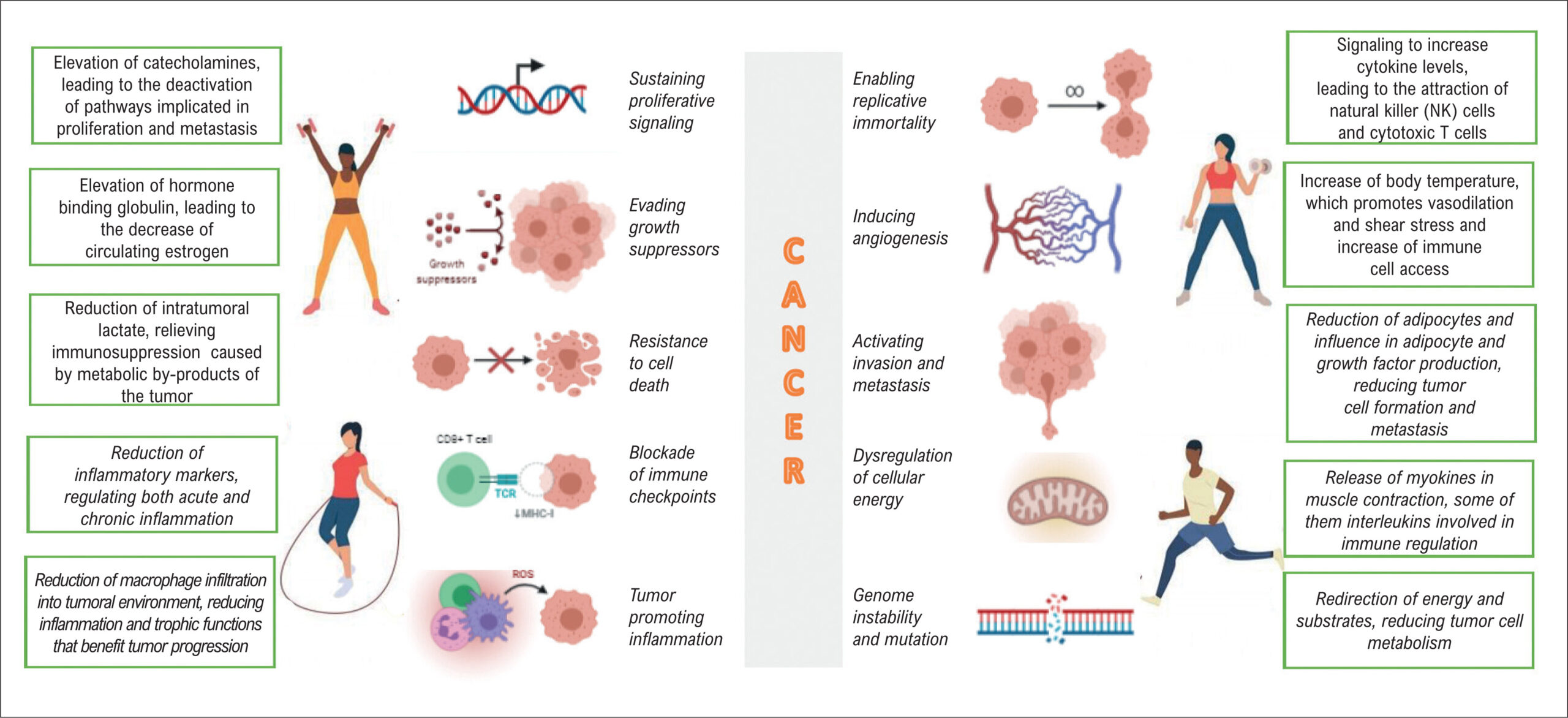
Breast cancer is the most prevalent cancer among women, accounting for nearly 30% of all cancers, while in men, it represents only 1% of cases. Breast cancer is the main cause of death for cancer, and its incidence and mortality vary according to patients’ ethnicity, geographic region, and socioeconomic status. Due to the low prevalence of breast cancer among men and the scarcity of studies in the literature, exercises have been prescribed based on extrapolations from studies on female patients. Scientific evidence has suggested beneficial effects of physical exercises on breast cancer prevention, treatment, and post-treatment. In addition to combatting sedentary behavior, it is essential to maintain a healthy body weight, limit alcohol consumption, and follow a balanced diet, rich in fruit, vegetables, grains and fibers, and limited in red meat. The effects of exercises are not restricted to breast cancer, but extend to controlling modifiable risk factors, and reducing the incidence of cardiovascular diseases, and all-cause and cardiovascular mortality.
  • Breast Neoplasms
  • Diet, Healthy
  • Exercise
  • Exercise Movement Techniques
Read Full Article
Creative Commons Attribution (CC BY) Creative Commons license
19/12/2022 DOI: 10.36660/abc.20220086 Views 1
Figure 1
ABC
Original Article

Clinical Implementation of Different Strategies for Exercise-Based Rehabilitation in Kidney and Liver Transplant Recipients: A Pilot Study

Paula A. B. Ribeiro et al. Mathieu Gradassi Sarah-Maude Martin Jonathan Leenknegt … Mathilde Baudet VyVan Le Marie-Pascale Pomey Agnes Räkel François Tournoux

Abstract

Background:

Cardiovascular disease is among the leading causes of death in solid organ transplant recipients with a functional graft. Although these patients could theoretically benefit from exercise-based rehabilitation (EBR) programs, their implementation is a challenge.

Objective:

We present our initial experience on different delivery modes of a pilot EBR program in kidney and liver transplant recipients.

Methods:

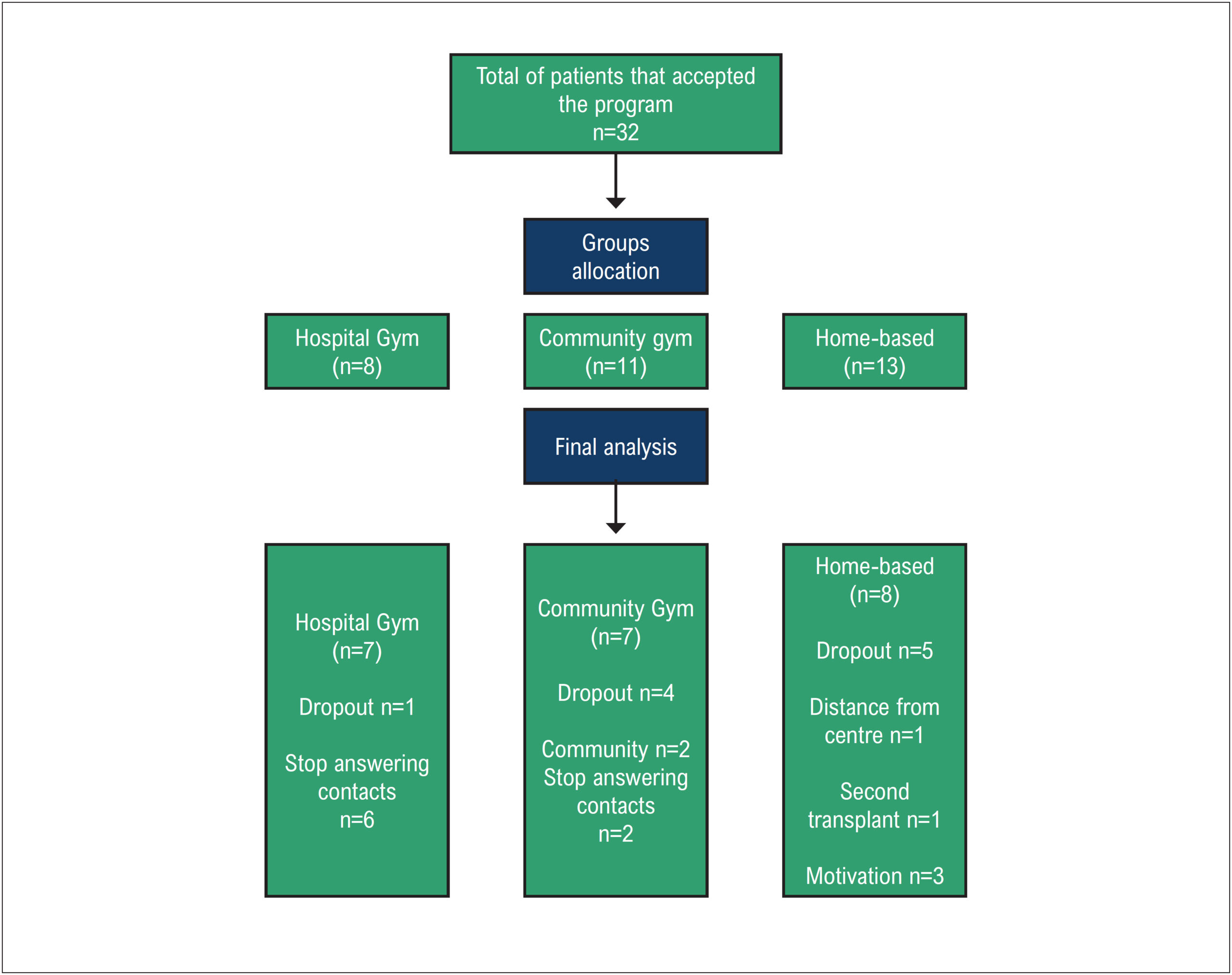
Thirty-two kidney or liver transplant recipients were invited for a 6-month EBR program delivered at the hospital gym, community gym or at home, according to the patient’s preference. The significance level adopted was 5%.

Results:

Ten patients (31%) did not complete their program. Among the 22 who did, 7 trained at the hospital gym, 7 at the community gym, and 8 at home. The overall effect was an 11.4% increase in maximum METs (Hedges’ effect size g = 0.39). The hospital gym group had an increase in METs of 25.5% (g= 0.58, medium effect size) versus 10% (g= 0.25), and 6.5% (g= 0.20) for the community gym and home groups, respectively. There was a beneficial effect on systolic and diastolic blood pressures, greater for the hospital gym (g= 0.51 and 0.40) and community gym (g= 0.60 and 1.15) groups than for the patients training at home (g= 0.07 and 0.10). No significant adverse event was reported during the follow-up.

Conclusion:

EBR programs in kidney and liver transplant recipients should be encouraged, even if they are delivered outside a hospital gym, since they are safe with positive effects on exercise capacity and cardiovascular risk factors.

  • Exercise
  • Exercise Movement Techniques
  • Exercise Therapy
  • Kidney Transplantation
  • Liver Transplantation
  • Physical Conditioning Human
Read Full Article
Creative Commons Attribution (CC BY) Creative Commons license
05/08/2022 DOI: 10.36660/abc.20210159 Views 2
Figure 1
IJCS
Original Article

Continuous Aerobic Training and High Intensity Interval Training Increase Exercise Tolerance in Heart Failure Patients: A Retrospective Study

Diego Busin et al. Alexandre M. Lehnen Olga S. Tairova Eduardo P. Comparsi … Daniela Carneiro Micael Potter Luís F. Deresz Pedro Dal Lago Ramiro B. Nunes

Abstract

Background:

Conventional aerobic training is the first choice in cardiac rehabilitation for patients with chronic heart failure (CHF). However, high-intensity interval training (HIIT) may be an alternative, although it has little evidence.

Objectives:

To evaluate the effect of continuous aerobic training (CAT) or HIIT on exercise tolerance in CHF patients.

Methods:

Retrospective study with 30 patients, of both genders, members of a 10-week CAT or HIIT program. The control group (CON) consisted of patients who did not participate voluntarily in the program. Peak oxygen uptake (VO2peak), thresholds (LV1 and LV2), and ventilatory efficiency in the production of dioxide (VE/VCO2 slope), oxygen uptake efficiency (OUES), and VO2 recovery kinetics were analyzed. A two-way or repeated measures ANOVA was used, followed by Fisher’s post-hoc test (p<0.05).

Results:

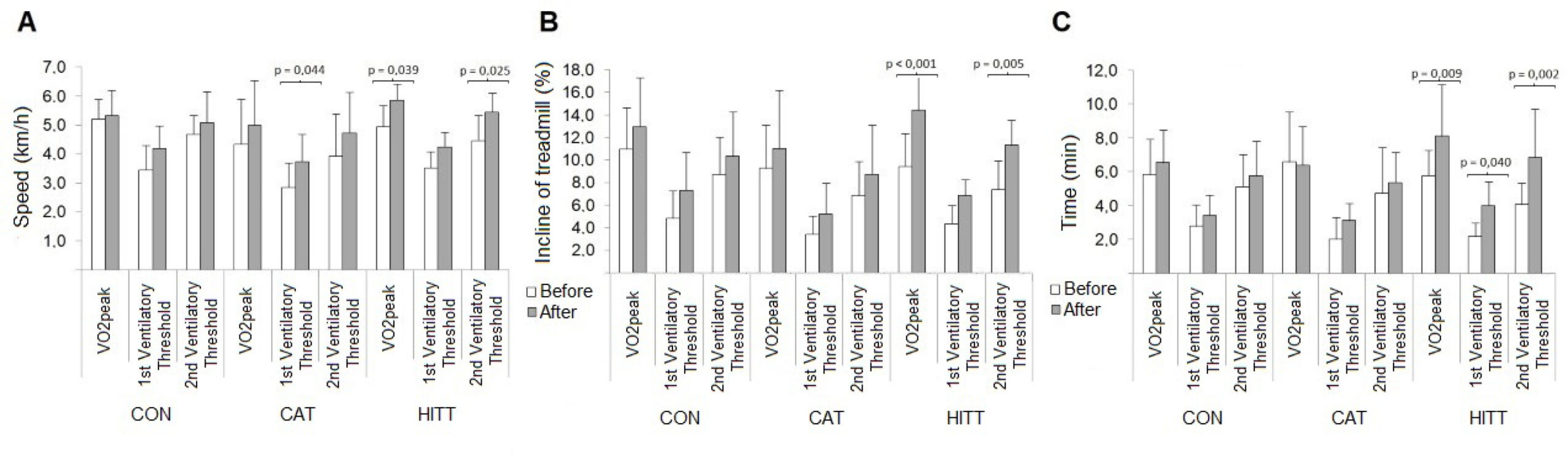
After 10 weeks of training, the CAT group increased the treadmill speed at LV1 (p=0.040), while the HIIT increased both the speed (p=0.030) and incline of the treadmill (p<0.001) for VO2peak and LV2, as well as the total time of the cardiopulmonary test. The VE/VCO2 slope was lower than that predicted for CAT (p=0.003) and HIIT (p=0.008). There was no change in VO2peak, recovery of heart rate (HR), and VO2, VE/VCO2, and OUES in both groups.

Conclusions:

After 10 weeks, both CAT and HIIT increased the tolerance to physical exercise. However, HIIT showed improvement in more parameters, differently from CAT.

  • Exercise Movement Techniques
  • Exercise Physical Exertion
  • Exercise Therapy
  • Heart Failure
  • Rehabilitation
Read Full Article
Creative Commons Attribution (CC BY) Creative Commons license
12/05/2021 DOI: 10.36660/ijcs.20200124 Views 1
IJCS
Editorial

Physical Activity, Exercise and Sports and Covid-19: What Really Matters

Claudio Gil Soares de Araújo

The ability to move is essential for an independent life. It is widely recognized that those who spend the most time either lying down or sitting and are physically inactive tend to have limited autonomy, poor health-related quality of life, and adverse prognosis of outcomes.

This editorial will briefly discuss the relationship between COVID-19 and physical movement. To better address this important relationship and for sake of clarity, some concepts should be defined first. In sport and exercise sciences, “physical activity” is defined as any bodily movement produced by skeletal muscles that results in energy expenditure, “exercise” is a subset of physical activity that is planned, structured, and repetitive and “sport” is an activity that most often, but not always, involves exercise and predetermined rules and participation in games or races or competitions.

[…]

  • Betacoronavirus
  • COVID-19
  • Exercise
  • Exercise Movement Techniques
  • Pandemics
  • Physical activity
  • Sports
Read Full Article
Creative Commons Attribution (CC BY) Creative Commons license
26/02/2021 DOI: 10.36660/ijcs.20210003 Views 1
Figure 1
ABC
Original Article

Controlled Study of Central Hemodynamic Changes in Inspiratory Exercise with Different Loads in Heart Failure

Luana de Decco Marchese et al. Sergio Chermont Danielle Warol Lucia Brandão de Oliveira … Sabrina Bernardez Pereira Mônica Quintão Evandro Tinoco Mesquita

Abstract

Background

Inspiratory muscle weakness contributes to exercise intolerance and decreased quality of life in patients with heart failure. Studies with inspiratory muscle training show improvement in inspiratory muscle strength, functional capacity and quality of life. However, little is known about the central hemodynamic response (CHR) during inspiratory exercise (IE).

Objective

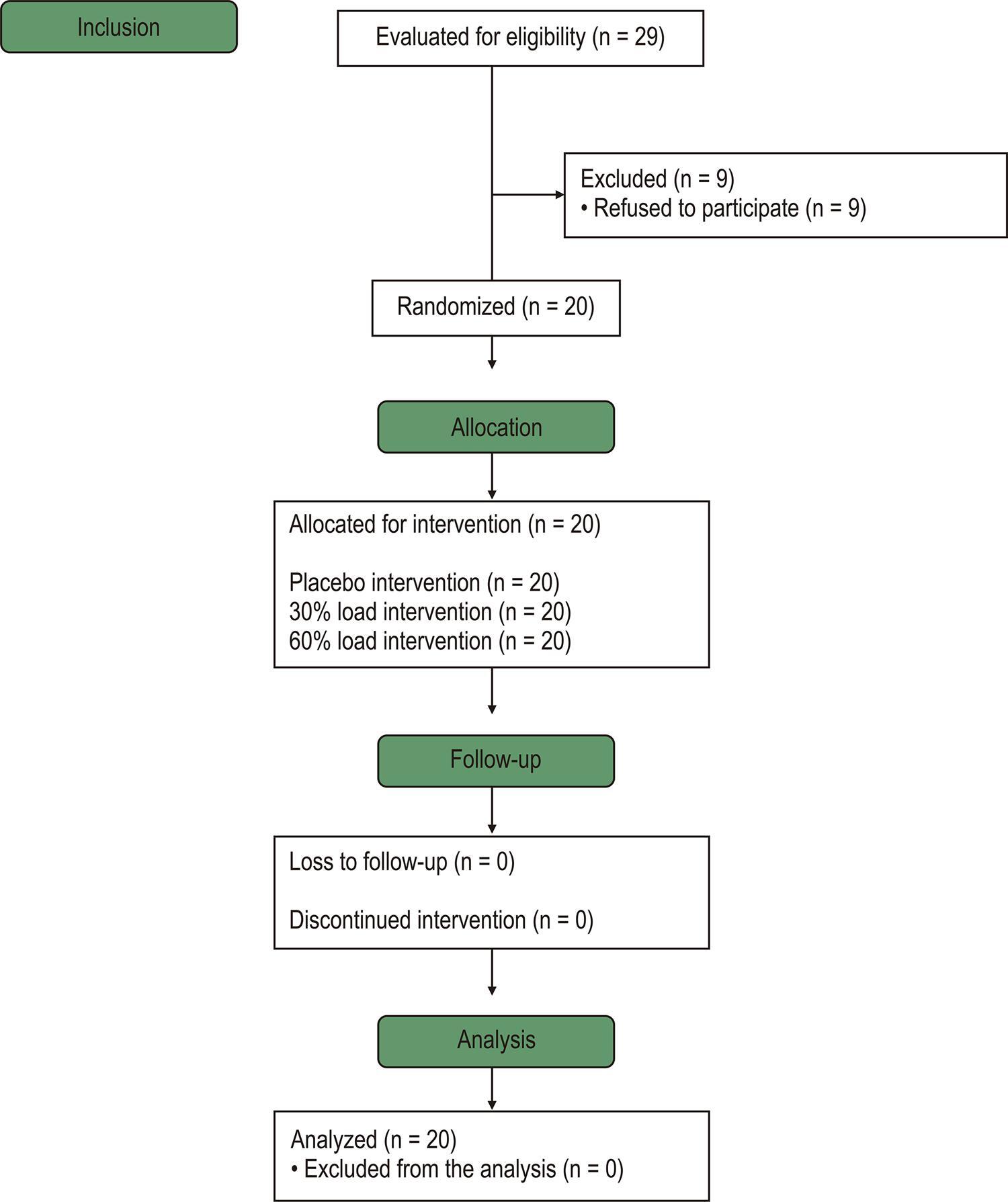
To evaluate CHR in a single IE session with different loads (placebo, 30% and 60%) in heart failure.

Methods

Randomized placebo-controlled clinical trial in patients with heart failure with reduced ejection fraction, functional class II and III. Twenty patients aged 65 ± 11 years completed a single session of inspiratory exercise, in 3 cycles of 15 minutes, with a 1-hour washout, involving loads of 30% (C30), 60% (C60) and placebo, using a linear load resistor (PowerBreathe Light). The noninvasive hemodynamic study was performed by cardiothoracic bioimpedance (Niccomo™ CardioScreen®). Statistical analysis was performed with Student’s t-test and Pearson’s correlation, and P≤0.05 was considered significant.

Results

An increase in heart rate (HR) was observed with C30 (64 ± 15 vs 69 ± 15 bpm; p = 0.005) and C60 (67 ± 14 vs 73 ± 14 bpm, p = 0.002). A decrease was observed in systolic volume (SV) with C30 (73 ± 26 vs 64 ± 20 ml; p = 0.004). Cardiac output (CO), on its turn, increased only with C60 (4.6 ± 1.5 vs 5.3 ± 1.7 l/min; p = -0.001).

Conclusion

When using the 60% load, in a single IE session, changes in CHR were observed. HR and CD increased, as did the Borg scales and subjective sensation of dyspnea. The 30% load reduced the SV. (Arq Bras Cardiol. 2020; 114(4):656-663)

  • Breathing Exercises
  • Exercise Movement Techniques
  • Exercise Therapy
  • Fatigue Syndrome, Chronic
  • Heart Failure
  • Hemodynamics
  • Muscle Weaknerss
  • Quality of life
Read Full Article
Creative Commons Attribution (CC BY) Creative Commons license
29/05/2020 DOI: 10.36660/abc.20180375 Views 1
IJCS
Viewpoint

Exercise, Sports & Cardiovascular Health: Relevant Questions and Answers

Claudio Gil Araujo et al. Barry Franklin Jari Laukkanen Jonathan Myers … Josef Niebauer Jurgen Scharhag Philip J. Millar

Introduction

Currently, it is quite common for a clinical cardiologist to be questioned about exercise and sports, topics that are rarely discussed during formal medical education. In this regard, there is a clear need to access high-quality data and evidence-based information to give patients and family members the best advice.

Aiming to present the state-of-the art scientific information on the topic, we have invited several experts from different countries, all of them “knowledge-producers” in exercise and sports cardiology, to contribute with their expertise by answering specific and relevant questions in the matter. The answers were limited to about 250 words and they were asked to preferentially refer to their own publications.

[…]

  • Exercise
  • Exercise Movement Techniques
  • Exercise Therapy
  • Hypertension
  • Muscle Strenght
  • Preventive Health Care
  • Sports
Read Full Article
Creative Commons Attribution (CC BY) Creative Commons license
12/08/2019 DOI: 10.5935/2359-4802.20190060
ABC
Editorial

Is There a Role For Whole Body Vibration in Protecting Cardiovascular Disease?

Leonardo Zornoff et al. Marcos Ferreira Minicucci

Cardiovascular disease is the leading cause of death worldwide. In this context, it is well accepted that physical activity plays a critical role as a powerful therapeutic strategy for prevention and progression of cardiovascular disease, both in experimental models and in different clinical situations.,

Whole body vibration training (WBV) is a new intriguing training program. Importantly, if vibration-induced protection is an effective method of exercise, it could be an alternative to exercise training especially for those who are unable to perform the traditional exercise. Therefore, the effects of WVB on different systems, including the cardiovascular system, has been investigated in recent years.

[…]

  • Cardiovascular Diseases
  • Exercise Movement Techniques
  • Exercise/prevention and control
  • Mobility
  • Mortality
  • Stroke/rehabilitation
  • Vibration
Read Full Article
Creative Commons Attribution (CC BY) Creative Commons license
01/01/2019 DOI: 10.5935/abc.20180257
ABC
Editorial

The Nature of Cardiac Remodeling Due to Physical Exercise: More Evidence Towards to the Normal Adaptive Responses of the Heart

Lucas Helal et al. Anderson Donelli da Silveira

Cardiac remodeling due to exercise training overload (the so-called “athlete’s heart”) has been widely investigated since the 70’s and is still acknowledged by the scientific community. To differentiate normal adaptive responses (“benign”) from abnormal ones remains a challenge. Here we address some important issues related to the discussion on cardiac remodeling in exercise, recently revisited by Vidaletti-Silva and colleagues in this issue.

In terms of morphological adaptations, the left atrial and ventricular hypertrophy call attention due to their potential association with the onset of supraventricular tachyarrhythmias and also of ventricular arrhythmias, which may result in undesirable events.

[…]

  • Arrhythmias
  • Atrial Remodeling
  • Blood Pressure
  • Cardiac Remodeling
  • Exercise
  • Exercise Movement Techniques
  • Resistance Training
  • Running
  • Ventricular Remodeling
  • Weight Lifting
Read Full Article
Creative Commons Attribution (CC BY) Creative Commons license
01/12/2018 DOI: 10.5935/abc.20180238
ABC
Original Article

Leisure-Time Physical Activity, but not Commuting Physical Activity, is Associated with Cardiovascular Risk among ELSA-Brasil Participants

Francisco José Gondim Pitanga et al. Sheila M.A. Matos Maria da Conceição Almeida Sandhi Maria Barreto Estela M. L. Aquino

Abstract

Background:

Despite reports in the literature that both leisure-time physical activity (LTPA) and commuting physical activity (CPA) can promote health benefits, the literature lacks studies comparing the associations of these domains of physical activity with cardiovascular risk scores.

Objective:

To investigate the association between LTPA and CPA with different cardiovascular risk scores in the cohort of the Longitudinal Study of Adult Health ELSA-Brasil.

Methods:

Cross-sectional study with data from 13,721 participants of both genders, aged 35-74 years, free of cardiovascular disease, from ELSA Brazil. Physical activity was measured using the International Physical Activity Questionnaire (IPAQ). Five cardiovascular risk scores were used: Framingham score – coronary heart disease (cholesterol); Framingham score – coronary heart disease (LDL-C); Framingham score – cardiovascular disease (cholesterol); Framingham score – cardiovascular disease (body mass index, BMI); and pooled cohort equations for atherosclerotic cardiovascular disease (ASCVD). Associations adjusted for confounding variables between physical activity and different cardiovascular risk scores were analyzed by logistic regression. Confidence interval of 95% (95%CI) was considered.

Results:

LTPA is inversely associated with almost all cardiovascular risk scores analyzed, while CPA shows no statistically significant association with any of them. Dose-response effect in association between LTPA and cardiovascular risk scores was also found, especially in men.

Conclusions:

LTPA was shown to be associated with the cardiovascular risk scores analyzed, but CPA not. The amount of physical activity (duration and intensity) was more significantly associated, especially in men, with cardiovascular risk scores in ELSA-Brasil.

  • Cardiovascular Diseases / prevention & control
  • Epidemiology
  • Exercise
  • Exercise Movement Techniques
  • Risk Factors
Read Full Article
Creative Commons Attribution (CC BY) Creative Commons license
01/02/2018 DOI: 10.5935/abc.20170178
IJCS
Editorial

The Heart of Physically Active Young Individuals can be Remodeled with an Intense 35-Week Military Training

Claudio Gil Soares de Araújo

Physicians are educated and trained to treat diseases and save lives. This is particularly noticeable and valued among cardiologists. However, not every physician, living a busy professional life, manages to see the other “extreme”. We quite often fall ill because we do not properly take care of our health, by failing to adopt a healthy lifestyle and to embrace the most recommended preventive strategies. It seems increasingly important to anticipate the disease and act to prevent it. In such context, the regular practice of physical exercise becomes a significant, if not the major priority. However, there is this natural clinical concern about “excessive” exercise practice, which would jeopardize the health and the physical integrity of the individuals. The study by our Portuguese and Swedish coleagues published in this issue of the International Journal of Cardiovascular Sciences is worth reading.

Dinis et al. have studied 76 young Portuguese individuals who had already achieved high levels of regular physical activity (> 10 hours/weeks) before entering a special military training program. That special training program consisted of 20 hours of different types of exercise practice at a purposely high intensity, divided into five days a week for 35 weeks. Because of the extremely rigorous characteristic of that special program, only 17 of those young individuals, all with previous experience on sports competition, managed to complete the 35-week training.

[…]

  • Aolescents
  • Arrhythmias, Cardiac/diagnostic imaging
  • Atrial Remodeling/physiology
  • Exercise
  • Exercise Movement Techniques
  • High-Intensity Internal Training
Read Full Article
Creative Commons Attribution (CC BY) Creative Commons license
01/01/2018 DOI: 10.5935/2359-4802.20180026 Views 2
Figure 1
IJCS
Original Article

Superior Cardiovascular Effect of the Periodized Model for Prescribed Exercises as Compared to the Conventional one in Coronary Diseases

Rafael Michel de Macedo et al. Ana Carolina Brandt de Macedo Jose R. Faria-Neto Costantino R. Costantini … Costantino O. Costantini Marcia Olandoski Flavio Sebastião Neto Rafael P. da Silveira Katherine A. Teixeira de Carvalho Luiz Cesar Guarita-Souza

Abstract

Background:

Physical exercise improves the survival and quality of life of coronary patients, but the ideal way of prescribing these exercises is still controversial.

Objective:

To create a new periodized model for the prescription of exercises for coronary patients and compare it with a conventional model.

Methods:

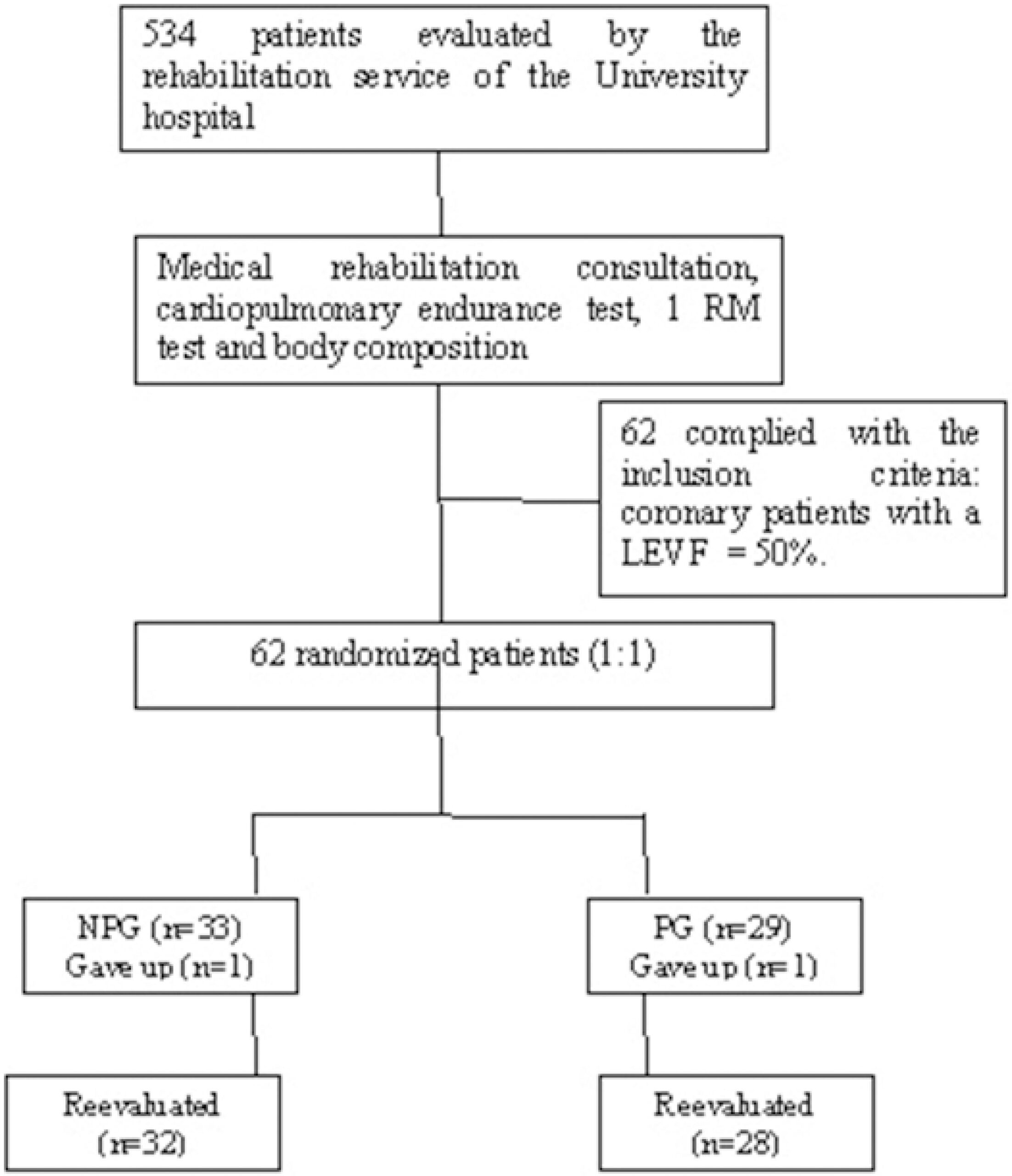
62 coronary patients under pharmacological treatment were randomized into two groups: conventional (NPG, n = 33) and periodized (PG, n = 29) training. The two groups were submitted to the same exercises during the 36 sessions making up the program, but prescribed in different ways. All patients underwent an evaluation consisting of: medical admission consultancy, cardiopulmonary endurance testing, 1 maximum repetition test (1MR) and body composition evaluation.

Results:

The VO2 peak improved in both groups, although more effectively in the PG (4% against 1.7%, p < 0.001). In addition, the functional capacity of this group improved by 13%, and there was a significant reduction in the percent body fat (2.1%, p < 0.005) and body weight (1.9 kg, p < 0.005). The muscle strength of both groups improved as diagnosed by the 1RM test for six different muscle groups (quadriceps, hamstrings, brachial biceps, brachial triceps, pectoral and large dorsal), and showed no significant difference between the groups, evidencing that the two models had the same efficiency.

Conclusions:

The present study showed that periodization of the training of cardiac patients can improve their cardiorespiratory capacity and reduce the percent body fat more effectively than the conventional one.

  • Coronary Artery Disease/physiopathology
  • Exercise
  • Exercise Movement Techniques
  • Exercise Therapy
  • Percutaneous Coronary Intervention
Read Full Article
Creative Commons Attribution (CC BY) Creative Commons license
01/01/2018 DOI: 10.5935/2359-4802.20180036 Views 2
Figure 1
ABC
Original Article

Kinetics of Hypotension during 50 Sessions of Resistance and Aerobic Training in Hypertensive Patients: a Randomized Clinical Trial

Igor Rodrigues Damorim et al. Tony Meireles Santos Gustavo Willames Pimentel Barros Paulo Roberto Cavalcanti Carvalho

Abstract

Background:

Resistance and aerobic training are recommended as an adjunctive treatment for hypertension. However, the number of sessions required until the hypotensive effect of the exercise has stabilized has not been clearly established.

Objective:

To establish the adaptive kinetics of the blood pressure (BP) responses as a function of time and type of training in hypertensive patients.

Methods:

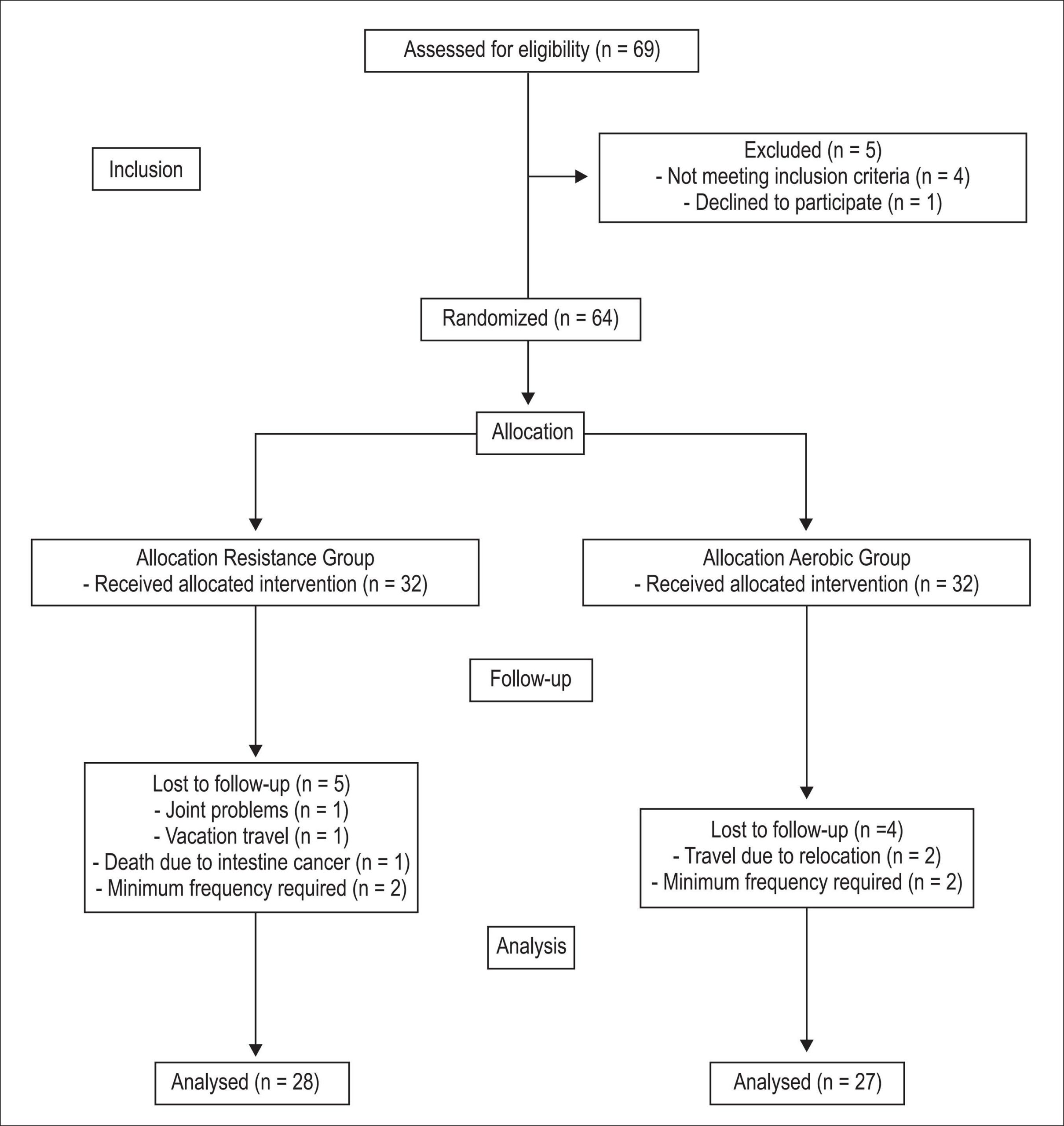
We recruited 69 patients with a mean age of 63.4 ± 2.1 years, randomized into one group of resistance training (n = 32) and another of aerobic training (n = 32). Anthropometric measurements were obtained, and one repetition maximum (1RM) testing was performed. BP was measured before each training session with a digital BP arm monitor. The 50 training sessions were categorized into quintiles. To compare the effect of BP reduction with both training methods, we used two-way analysis of covariance (ANCOVA) adjusted for the BP values obtained before the interventions. The differences between the moments were established by one-way analysis of variance (ANOVA).

Results:

The reductions in systolic (SBP) and diastolic BP (DBP) were 6.9 mmHg and 5.3 mmHg, respectively, with resistance training and 16.5 mmHg and 11.6 mmHg, respectively, with aerobic training. The kinetics of the hypotensive response of the SBP showed significant reductions until the 20th session in both groups. Stabilization of the DBP occurred in the 20th session of resistance training and in the 10th session of aerobic training.

Conclusion:

A total of 20 sessions of resistance or aerobic training are required to achieve the maximum benefits of BP reduction. The methods investigated yielded distinct adaptive kinetic patterns along the 50 sessions.

  • Clinical Trial
  • Exercise
  • Exercise Movement Techniques
  • Hypertension
  • Kinetics
Read Full Article
Creative Commons Attribution (CC BY) Creative Commons license
30/03/2017 DOI: 10.5935/abc.20170029
Pressure response after resistance exercise for different body segments in hypertensive people
ABC
Artigo Original

Pressure response after resistance exercise for different body segments in hypertensive people

Adriana Marques Battagin et al. Simone Dal Corso Carmen Lúcia Rondon Soares Silvia Ferreira … Agnes Letícia Cintia de Souza Carla Malaguti

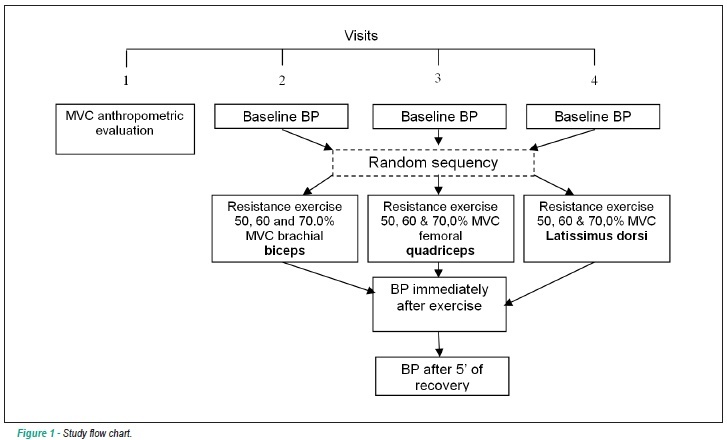
BACKGROUND: Resistance exercise has now been recommended as adjunct component of aerobic exercise on physical training program directed to the treatment and control of hypertension (HBP). However, it has not been widely incorporated yet into clinical practice, possibly by the scarcity of available evidence regarding the safe limits of the acute pressure response in this modality. OBJECTIVE: To investigate the acute effect of progressive resistance exercise of different body segments, the pressure response of patients with controled hypertension (HBP). METHODS: Twenty-five patients (14 women) with controled hypertension with medication (64.5 ± 10.8 years old) and sedentary, had three visits to a randomic progressive resistance exercise session, in the following muscle groups: femoral quadriceps, latissimus dorsi and brachial biceps. Blood pressure measurements were obtained at all visits at rest, immediately after each series of exercise and after 5 minutes of recovery. RESULTS: Immediately after acute resistance exercise, a significant increase in systolic blood pressures, without significant changes of diastolic pressure compared to pressure levels at rest for all muscle groups and for all intensities studied. Additionally, there was a greater tendency to elevation of systolic pressure when the femoral quadriceps muscle was exercised at high intensity. CONCLUSION: Resistance exercise in different body segments promoted similar increases and safe levels of systolic blood pressure, although with a tendency toward greater response of it when large muscle groups at high loads are exercised.

  • Exercise
  • Exercise Movement Techniques
  • Hypertension
Read Full Article
Creative Commons Attribution (CC BY) Creative Commons license
03/09/2010 DOI: 10.1590/S0066-782X2010005000117

How to cite this article

EndNote RIS

Electronic Document Format (Vancouver)

Campos MSB, Feitosa RHF, Mizzaci CC, Flach MRT, Siqueira BJM, Mastrocola LE. The Benefits of Exercise in Breast Cancer. Arquivos Brasileiros de Cardiologia 2022;119(6):981-90.

Electronic Document Format (ABNT)

Campos, Milena dos Santos Barros; Feitosa, Roberta Helena Fernandes; Mizzaci, Carolina Christianini; Flach, Maria do Rosário Toscano von; Siqueira, Betty Janny Maia; Mastrocola, Luiz Eduardo. The Benefits of Exercise in Breast Cancer. Arquivos Brasileiros de Cardiologia, v. 119, n. 6, p. 981-990, Dec. 2022.

Electronic Document Format (APA)

Campos, M. S. B., Feitosa, R. H. F., Mizzaci, C. C., Flach, M. R. T. , Siqueira, B. J. M., & Mastrocola, L. E. (2022). The Benefits of Exercise in Breast Cancer. Arquivos Brasileiros de Cardiologia, 119(6), 981-990.

Electronic Document Format (ISO)

Campos, Milena dos Santos Barros and Feitosa, Roberta Helena Fernandes and Mizzaci, Carolina Christianini and Flach, Maria do Rosário Toscano von and Siqueira, Betty Janny Maia and Mastrocola, Luiz Eduardo. The Benefits of Exercise in Breast Cancer. Arquivos Brasileiros de Cardiologia [online]. 2022, vol. 119, n. 6, [cited 2026-10-14], pp. 981-990. Available from: <https://journals.cardiol.br/en/article/the-benefits-of-exercise-in-breast-cancer/>. ISSN 0066-782X

EndNote RIS

Electronic Document Format (Vancouver)

Ribeiro PAB, Gradassi M, Martin S, Leenknegt J, Baudet M, Le V, Pomey M, et al. Clinical Implementation of Different Strategies for Exercise-Based Rehabilitation in Kidney and Liver Transplant Recipients: A Pilot Study. Arquivos Brasileiros de Cardiologia 2022;119(2):246-54.

Electronic Document Format (ABNT)

Ribeiro, Paula A. B.; Gradassi, Mathieu; Martin, Sarah-Maude; Leenknegt, Jonathan; Baudet, Mathilde; Le, VyVan; Pomey, Marie-Pascale; Räkel, Agnes; Tournoux, François. Clinical Implementation of Different Strategies for Exercise-Based Rehabilitation in Kidney and Liver Transplant Recipients: A Pilot Study. Arquivos Brasileiros de Cardiologia, v. 119, n. 2, p. 246-254, Aug. 2022.

Electronic Document Format (APA)

Ribeiro, P. A. B., Gradassi, M., Martin, S., Leenknegt, J., Baudet, M., Le, V., Pomey, M., Räkel, A., & Tournoux, F. (2022). Clinical Implementation of Different Strategies for Exercise-Based Rehabilitation in Kidney and Liver Transplant Recipients: A Pilot Study. Arquivos Brasileiros de Cardiologia, 119(2), 246-254.

Electronic Document Format (ISO)

Ribeiro, Paula A. B. and Gradassi, Mathieu and Martin, Sarah-Maude and Leenknegt, Jonathan and Baudet, Mathilde and Le, VyVan and Pomey, Marie-Pascale and Räkel, Agnes and Tournoux, François. Clinical Implementation of Different Strategies for Exercise-Based Rehabilitation in Kidney and Liver Transplant Recipients: A Pilot Study. Arquivos Brasileiros de Cardiologia [online]. 2022, vol. 119, n. 2, [cited 2026-10-14], pp. 246-254. Available from: <https://journals.cardiol.br/en/article/clinical-implementation-of-different-strategies-for-exercise-based-rehabilitation-in-kidney-and-liver-transplant-recipients-a-pilot-study/>. ISSN 0066-782X

EndNote RIS

Electronic Document Format (Vancouver)

Busin D, Lehnen AM, Tairova OS, Comparsi EP, Carneiro D, Potter M, Deresz LF, et al. Continuous Aerobic Training and High Intensity Interval Training Increase Exercise Tolerance in Heart Failure Patients: A Retrospective Study. International Journal of Cardiovascular Sciences 2021;34(5):508-14.

Electronic Document Format (ABNT)

Busin, Diego; Lehnen, Alexandre M.; Tairova, Olga S.; Comparsi, Eduardo P.; Carneiro, Daniela; Potter, Micael; Deresz, Luís F.; Lago, Pedro Dal; Nunes, Ramiro B.. Continuous Aerobic Training and High Intensity Interval Training Increase Exercise Tolerance in Heart Failure Patients: A Retrospective Study. International Journal of Cardiovascular Sciences, v. 34, n. 5, p. 508-514, May. 2021.

Electronic Document Format (APA)

Busin, D., Lehnen, A. M., Tairova, O. S., Comparsi, E. P., Carneiro, D., Potter, M., Deresz, L. F., Lago, P. D., & Nunes, R. B. (2021). Continuous Aerobic Training and High Intensity Interval Training Increase Exercise Tolerance in Heart Failure Patients: A Retrospective Study. International Journal of Cardiovascular Sciences, 34(5), 508-514.

Electronic Document Format (ISO)

Busin, Diego and Lehnen, Alexandre M. and Tairova, Olga S. and Comparsi, Eduardo P. and Carneiro, Daniela and Potter, Micael and Deresz, Luís F. and Lago, Pedro Dal and Nunes, Ramiro B.. Continuous Aerobic Training and High Intensity Interval Training Increase Exercise Tolerance in Heart Failure Patients: A Retrospective Study. International Journal of Cardiovascular Sciences [online]. 2021, vol. 34, n. 5, [cited 2026-10-14], pp. 508-514. Available from: <https://journals.cardiol.br/en/article/continuous-aerobic-training-and-high-intensity-interval-training-increase-exercise-tolerance-in-heart-failure-patients-a-retrospective-study/>. ISSN 2359-4802

EndNote RIS

Electronic Document Format (Vancouver)

Araújo CGS. Physical Activity, Exercise and Sports and Covid-19: What Really Matters. International Journal of Cardiovascular Sciences 2021;34(2):113-5.

Electronic Document Format (ABNT)

Araújo, Claudio Gil Soares de. Physical Activity, Exercise and Sports and Covid-19: What Really Matters. International Journal of Cardiovascular Sciences, v. 34, n. 2, p. 113-115, Feb. 2021.

Electronic Document Format (APA)

Araújo, C. G. S. (2021). Physical Activity, Exercise and Sports and Covid-19: What Really Matters. International Journal of Cardiovascular Sciences, 34(2), 113-115.

Electronic Document Format (ISO)

Araújo, Claudio Gil Soares de. Physical Activity, Exercise and Sports and Covid-19: What Really Matters. International Journal of Cardiovascular Sciences [online]. 2021, vol. 34, n. 2, [cited 2026-10-14], pp. 113-115. Available from: <https://journals.cardiol.br/en/article/physical-activity-exercise-and-sports-and-covid-19-what-really-matters/>. ISSN 2359-4802

EndNote RIS

Electronic Document Format (Vancouver)

Marchese LD, Chermont S, Warol D, Oliveira LB, Pereira SB, Quintão M, Mesquita ET, et al. Controlled Study of Central Hemodynamic Changes in Inspiratory Exercise with Different Loads in Heart Failure. Arquivos Brasileiros de Cardiologia 2020;114(4):656-63.

Electronic Document Format (ABNT)

Marchese, Luana de Decco; Chermont, Sergio; Warol, Danielle; Oliveira, Lucia Brandão de; Pereira, Sabrina Bernardez; Quintão, Mônica; Mesquita, Evandro Tinoco. Controlled Study of Central Hemodynamic Changes in Inspiratory Exercise with Different Loads in Heart Failure. Arquivos Brasileiros de Cardiologia, v. 114, n. 4, p. 656-663, May. 2020.

Electronic Document Format (APA)

Marchese, L. D., Chermont, S., Warol, D., Oliveira, L. B. , Pereira, S. B., Quintão, M., & Mesquita, E. T. (2020). Controlled Study of Central Hemodynamic Changes in Inspiratory Exercise with Different Loads in Heart Failure. Arquivos Brasileiros de Cardiologia, 114(4), 656-663.

Electronic Document Format (ISO)

Marchese, Luana de Decco and Chermont, Sergio and Warol, Danielle and Oliveira, Lucia Brandão de and Pereira, Sabrina Bernardez and Quintão, Mônica and Mesquita, Evandro Tinoco. Controlled Study of Central Hemodynamic Changes in Inspiratory Exercise with Different Loads in Heart Failure. Arquivos Brasileiros de Cardiologia [online]. 2020, vol. 114, n. 4, [cited 2026-10-14], pp. 656-663. Available from: <https://journals.cardiol.br/en/article/controlled-study-of-central-hemodynamic-changes-in-inspiratory-exercise-with-different-loads-in-heart-failure/>. ISSN 0066-782X

EndNote RIS

Electronic Document Format (Vancouver)

Araujo CG, Franklin B, Laukkanen J, Myers J, Niebauer J, Scharhag J, Millar PJ, et al. Exercise, Sports & Cardiovascular Health: Relevant Questions and Answers. International Journal of Cardiovascular Sciences 2019;32(4):319-25.

Electronic Document Format (ABNT)

Araujo, Claudio Gil; Franklin, Barry; Laukkanen, Jari; Myers, Jonathan; Niebauer, Josef; Scharhag, Jurgen; Millar, Philip J.. Exercise, Sports & Cardiovascular Health: Relevant Questions and Answers. International Journal of Cardiovascular Sciences, v. 32, n. 4, p. 319-325, Aug. 2019.

Electronic Document Format (APA)

Araujo, C. G., Franklin, B., Laukkanen, J., Myers, J., Niebauer, J., Scharhag, J., & Millar, P. J. (2019). Exercise, Sports & Cardiovascular Health: Relevant Questions and Answers. International Journal of Cardiovascular Sciences, 32(4), 319-325.

Electronic Document Format (ISO)

Araujo, Claudio Gil and Franklin, Barry and Laukkanen, Jari and Myers, Jonathan and Niebauer, Josef and Scharhag, Jurgen and Millar, Philip J.. Exercise, Sports & Cardiovascular Health: Relevant Questions and Answers. International Journal of Cardiovascular Sciences [online]. 2019, vol. 32, n. 4, [cited 2026-10-14], pp. 319-325. Available from: <https://journals.cardiol.br/en/article/exercise-sports-cardiovascular-health-relevant-questions-and-answers/>. ISSN 2359-4802

EndNote RIS

Electronic Document Format (Vancouver)

Zornoff L, Minicucci MF. Is There a Role For Whole Body Vibration in Protecting Cardiovascular Disease?. Arquivos Brasileiros de Cardiologia 2019;112(1):38-9.

Electronic Document Format (ABNT)

Zornoff, Leonardo; Minicucci, Marcos Ferreira. Is There a Role For Whole Body Vibration in Protecting Cardiovascular Disease?. Arquivos Brasileiros de Cardiologia, v. 112, n. 1, p. 38-39, Dec. 2018.

Electronic Document Format (APA)

Zornoff, L., & Minicucci, M. F. (2019). Is There a Role For Whole Body Vibration in Protecting Cardiovascular Disease?. Arquivos Brasileiros de Cardiologia, 112(1), 38-39.

Electronic Document Format (ISO)

Zornoff, Leonardo and Minicucci, Marcos Ferreira. Is There a Role For Whole Body Vibration in Protecting Cardiovascular Disease?. Arquivos Brasileiros de Cardiologia [online]. 2019, vol. 112, n. 1, [cited 2026-10-14], pp. 38-39. Available from: <https://journals.cardiol.br/en/article/is-there-a-role-for-whole-body-vibration-in-protecting-cardiovascular-disease/>. ISSN 0066-782X

EndNote RIS

Electronic Document Format (Vancouver)

Helal L, Silveira AD. The Nature of Cardiac Remodeling Due to Physical Exercise: More Evidence Towards to the Normal Adaptive Responses of the Heart. Arquivos Brasileiros de Cardiologia 2018;111(6):782.

Electronic Document Format (ABNT)

Helal, Lucas; Silveira, Anderson Donelli da. The Nature of Cardiac Remodeling Due to Physical Exercise: More Evidence Towards to the Normal Adaptive Responses of the Heart. Arquivos Brasileiros de Cardiologia, v. 111, n. 6, p. 782-782, Nov. 2018.

Electronic Document Format (APA)

Helal, L., & Silveira, A. D. (2018). The Nature of Cardiac Remodeling Due to Physical Exercise: More Evidence Towards to the Normal Adaptive Responses of the Heart. Arquivos Brasileiros de Cardiologia, 111(6), 782-782.

Electronic Document Format (ISO)

Helal, Lucas and Silveira, Anderson Donelli da. The Nature of Cardiac Remodeling Due to Physical Exercise: More Evidence Towards to the Normal Adaptive Responses of the Heart. Arquivos Brasileiros de Cardiologia [online]. 2018, vol. 111, n. 6, [cited 2026-10-14], pp. 782-782. Available from: <https://journals.cardiol.br/en/article/the-nature-of-cardiac-remodeling-due-to-physical-exercise-more-evidence-towards-to-the-normal-adaptive-responses-of-the-heart/>. ISSN 0066-782X

EndNote RIS

Electronic Document Format (Vancouver)

Pitanga FJG, Matos SM, Almeida MC, Barreto SM, Aquino EML. Leisure-Time Physical Activity, but not Commuting Physical Activity, is Associated with Cardiovascular Risk among ELSA-Brasil Participants. Arquivos Brasileiros de Cardiologia 2018;110(1):36-43.

Electronic Document Format (ABNT)

Pitanga, Francisco José Gondim; Matos, Sheila M.A.; Almeida, Maria da Conceição; Barreto, Sandhi Maria; Aquino, Estela M. L.. Leisure-Time Physical Activity, but not Commuting Physical Activity, is Associated with Cardiovascular Risk among ELSA-Brasil Participants. Arquivos Brasileiros de Cardiologia, v. 110, n. 1, p. 36-43, Jan. 2018.

Electronic Document Format (APA)

Pitanga, F. J. G., Matos, S. M., Almeida, M. C., Barreto, S. M., & Aquino, E. M. L. (2018). Leisure-Time Physical Activity, but not Commuting Physical Activity, is Associated with Cardiovascular Risk among ELSA-Brasil Participants. Arquivos Brasileiros de Cardiologia, 110(1), 36-43.

Electronic Document Format (ISO)

Pitanga, Francisco José Gondim and Matos, Sheila M.A. and Almeida, Maria da Conceição and Barreto, Sandhi Maria and Aquino, Estela M. L.. Leisure-Time Physical Activity, but not Commuting Physical Activity, is Associated with Cardiovascular Risk among ELSA-Brasil Participants. Arquivos Brasileiros de Cardiologia [online]. 2018, vol. 110, n. 1, [cited 2026-10-14], pp. 36-43. Available from: <https://journals.cardiol.br/en/article/leisure-time-physical-activity-but-not-commuting-physical-activity-is-associated-with-cardiovascular-risk-among-elsa-brasil-participants/>. ISSN 0066-782X

EndNote RIS

Electronic Document Format (Vancouver)

Araújo CGS. The Heart of Physically Active Young Individuals can be Remodeled with an Intense 35-Week Military Training. International Journal of Cardiovascular Sciences 2018;31(3):199-200.

Electronic Document Format (ABNT)

Araújo, Claudio Gil Soares de. The Heart of Physically Active Young Individuals can be Remodeled with an Intense 35-Week Military Training. International Journal of Cardiovascular Sciences, v. 31, n. 3, p. 199-200, Dec. 2017.

Electronic Document Format (APA)

Araújo, C. G. S. (2018). The Heart of Physically Active Young Individuals can be Remodeled with an Intense 35-Week Military Training. International Journal of Cardiovascular Sciences, 31(3), 199-200.

Electronic Document Format (ISO)

Araújo, Claudio Gil Soares de. The Heart of Physically Active Young Individuals can be Remodeled with an Intense 35-Week Military Training. International Journal of Cardiovascular Sciences [online]. 2018, vol. 31, n. 3, [cited 2026-10-14], pp. 199-200. Available from: <https://journals.cardiol.br/en/article/the-heart-of-physically-active-young-individuals-can-be-remodeled-with-an-intense-35-week-military-training/>. ISSN 2359-4802

EndNote RIS

Electronic Document Format (Vancouver)

Macedo RM, Macedo ACB, Faria-Neto JR, Costantini CR, Costantini CO, Olandoski M, Sebastião Neto F, et al. Superior Cardiovascular Effect of the Periodized Model for Prescribed Exercises as Compared to the Conventional one in Coronary Diseases. International Journal of Cardiovascular Sciences 2018;31(4):393-404.

Electronic Document Format (ABNT)

Macedo, Rafael Michel de; Macedo, Ana Carolina Brandt de; Faria-Neto, Jose R.; Costantini, Costantino R.; Costantini, Costantino O.; Olandoski, Marcia; Sebastião Neto, Flavio; Silveira, Rafael P. da; Carvalho, Katherine A. Teixeira de; Guarita-Souza, Luiz Cesar. Superior Cardiovascular Effect of the Periodized Model for Prescribed Exercises as Compared to the Conventional one in Coronary Diseases. International Journal of Cardiovascular Sciences, v. 31, n. 4, p. 393-404, Dec. 2017.

Electronic Document Format (APA)

Macedo, R. M. , Macedo, A. C. B. , Faria-Neto, J. R., Costantini, C. R., Costantini, C. O., Olandoski, M., Sebastião Neto, F., Silveira, R. P. , Carvalho, K. A. T. , & Guarita-Souza, L. C. (2018). Superior Cardiovascular Effect of the Periodized Model for Prescribed Exercises as Compared to the Conventional one in Coronary Diseases. International Journal of Cardiovascular Sciences, 31(4), 393-404.

Electronic Document Format (ISO)

Macedo, Rafael Michel de and Macedo, Ana Carolina Brandt de and Faria-Neto, Jose R. and Costantini, Costantino R. and Costantini, Costantino O. and Olandoski, Marcia and Sebastião Neto, Flavio and Silveira, Rafael P. da and Carvalho, Katherine A. Teixeira de and Guarita-Souza, Luiz Cesar. Superior Cardiovascular Effect of the Periodized Model for Prescribed Exercises as Compared to the Conventional one in Coronary Diseases. International Journal of Cardiovascular Sciences [online]. 2018, vol. 31, n. 4, [cited 2026-10-14], pp. 393-404. Available from: <https://journals.cardiol.br/en/article/superior-cardiovascular-effect-of-the-periodized-model-for-prescribed-exercises-as-compared-to-the-conventional-one-in-coronary-diseases/>. ISSN 2359-4802

EndNote RIS

Electronic Document Format (Vancouver)

Damorim IR, Santos TM, Barros GWP, Carvalho PRC. Kinetics of Hypotension during 50 Sessions of Resistance and Aerobic Training in Hypertensive Patients: a Randomized Clinical Trial. Arquivos Brasileiros de Cardiologia 2017;108(4):323-30.

Electronic Document Format (ABNT)

Damorim, Igor Rodrigues; Santos, Tony Meireles; Barros, Gustavo Willames Pimentel; Carvalho, Paulo Roberto Cavalcanti. Kinetics of Hypotension during 50 Sessions of Resistance and Aerobic Training in Hypertensive Patients: a Randomized Clinical Trial. Arquivos Brasileiros de Cardiologia, v. 108, n. 4, p. 323-330, Mar. 2017.

Electronic Document Format (APA)

Damorim, I. R., Santos, T. M., Barros, G. W. P., & Carvalho, P. R. C. (2017). Kinetics of Hypotension during 50 Sessions of Resistance and Aerobic Training in Hypertensive Patients: a Randomized Clinical Trial. Arquivos Brasileiros de Cardiologia, 108(4), 323-330.

Electronic Document Format (ISO)

Damorim, Igor Rodrigues and Santos, Tony Meireles and Barros, Gustavo Willames Pimentel and Carvalho, Paulo Roberto Cavalcanti. Kinetics of Hypotension during 50 Sessions of Resistance and Aerobic Training in Hypertensive Patients: a Randomized Clinical Trial. Arquivos Brasileiros de Cardiologia [online]. 2017, vol. 108, n. 4, [cited 2026-10-14], pp. 323-330. Available from: <https://journals.cardiol.br/en/article/kinetics-of-hypotension-during-50-sessions-of-resistance-and-aerobic-training-in-hypertensive-patients-a-randomized-clinical-trial/>. ISSN 0066-782X

EndNote RIS

Electronic Document Format (Vancouver)

Battagin AM, Corso SD, Soares CLR, Ferreira S, Letícia A, Souza C, Malaguti C, et al. Pressure response after resistance exercise for different body segments in hypertensive people. Arquivos Brasileiros de Cardiologia 2010;95(3):405-11.

Electronic Document Format (ABNT)

Battagin, Adriana Marques; Corso, Simone Dal; Soares, Carmen Lúcia Rondon; Ferreira, Silvia; Letícia, Agnes; Souza, Cintia de; Malaguti, Carla. Pressure response after resistance exercise for different body segments in hypertensive people. Arquivos Brasileiros de Cardiologia, v. 95, n. 3, p. 405-411, Sep. 2010.

Electronic Document Format (APA)

Battagin, A. M., Corso, S. D., Soares, C. L. R., Ferreira, S., Letícia, A., Souza, C. , & Malaguti, C. (2010). Pressure response after resistance exercise for different body segments in hypertensive people. Arquivos Brasileiros de Cardiologia, 95(3), 405-411.

Electronic Document Format (ISO)

Battagin, Adriana Marques and Corso, Simone Dal and Soares, Carmen Lúcia Rondon and Ferreira, Silvia and Letícia, Agnes and Souza, Cintia de and Malaguti, Carla. Pressure response after resistance exercise for different body segments in hypertensive people. Arquivos Brasileiros de Cardiologia [online]. 2010, vol. 95, n. 3, [cited 2026-10-14], pp. 405-411. Available from: <https://journals.cardiol.br/en/article/pressure-response-after-resistance-exercise-for-different-body-segments-in-hypertensive-people/>. ISSN 0066-782X

  • About ABC Family
  • Internal Regulation
  • Editorial Board
  • Brazilian Society of Cardiology (SBC)

Issues

SBC Guidelines

  • Videos
  • Podcasts
  • News