Jaqueline Fabiano Palazzo et al. Diego Augusto Medeiros Santos Bruno Adler Maccagnan Pinheiro Besen Caio Sambo … Gabriel Fialkovitz da Costa Leite Samuel Terra Gallafrio Danielle Menosi Gualandro Lani Paola Bonilla Cuello Marcus Vinicius Barbosa Santos Tania Mara Varejão Strabelli Pablo Maria Alberto Pomerantzeff Fabio Biscegli Jatene Rinaldo Siciliano
Abstract
Background
Although sternal surgical site infections (SSI) are an important complication after cardiac surgeries, predictors of treatment failure are poorly studied.
Objectives
The aim of this study is to assess the clinical and microbiology predictors of a sternal SSI therapeutic failure.
Methods
Patients who presented a sternal SSI were retrospectively analyzed. Data regarding demographic characteristics, clinical findings, initial laboratory and radiologic findings and treatment of index sternal SSI were evaluated. Primary outcome was treatment failure, comprising infection relapse (clinical sternal SSI after complete treatment) or infection persistence (outpatient antimicrobial treatment failure). The microbiology was assessed at the index infection and in the outcome. P-values < 0.05 were considered statistically significant.
Results
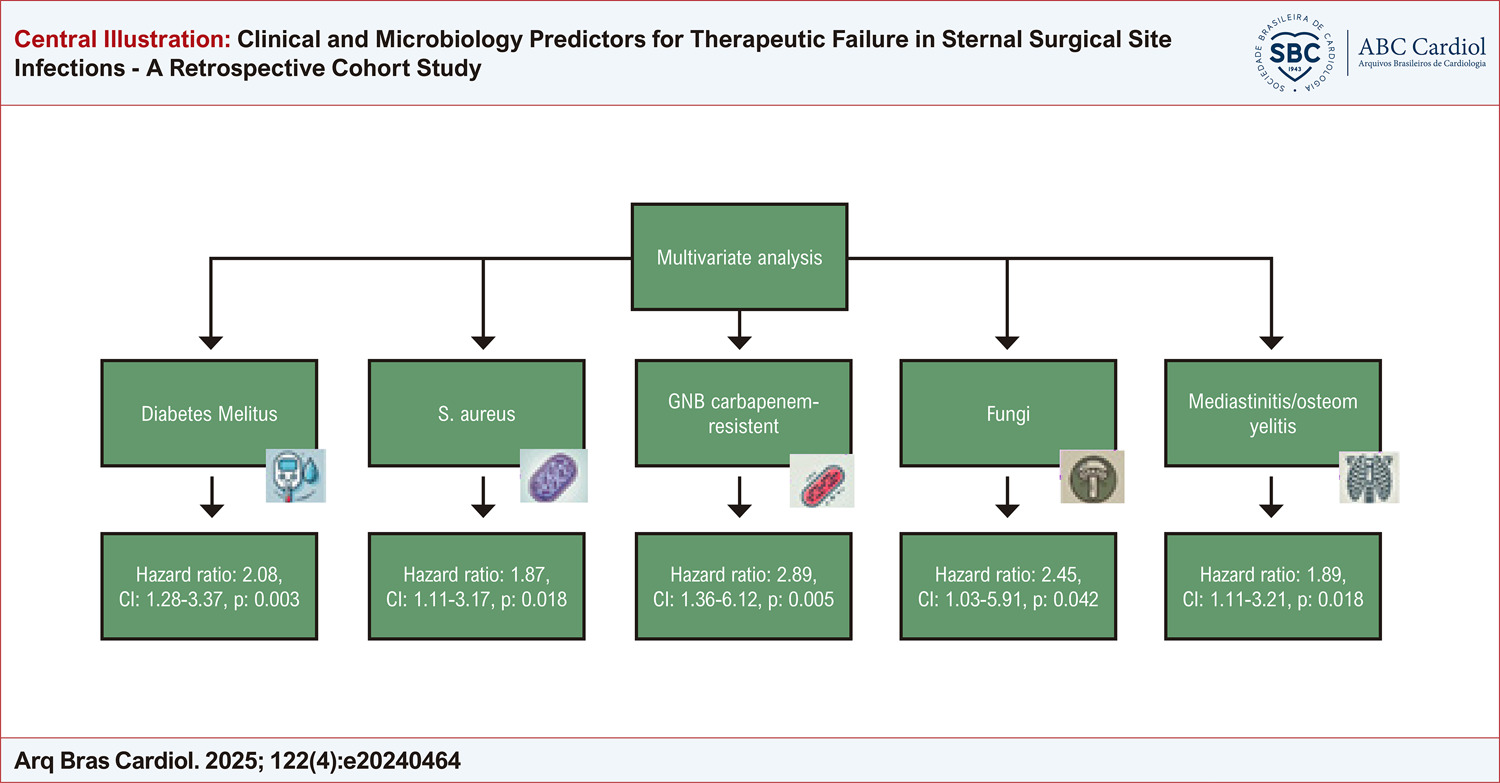
Among 489 included patients, mean age was 58 years, 265 (55%) were female, 185 (38%) had diabetes mellitus. The overall prevalence of therapeutic failure was 14% (67), occurring in a median of 174 days (±41) after index cardiac surgery. Most frequent etiologies were cocci Gram-positive and Klebsiella pneumoniae. None of laboratory or thoracic tomographic findings presented during the index sternal SSI was related to outcome. After multivariate analysis, Staphylococcus aureus, carbapenem-resistant Gram-negative bacilli (GNB), fungi, diabetes mellitus and presence of mediastinitis/osteomyelitis were positive predictors of therapeutic failure.
Conclusions
Emerging carbapenem-resistant GNB, fungi and S. aureus were etiologies associated with higher risk of therapeutic failure in sternal SSI. DM and deep sternal wound infections were also contributing factors. Its clinical implications and the exact role of multi-resistant microorganism itself are subject for more studies.