ABC Family Arquivos Brasileiros de Cardiologia International Journal of Cardiovascular Sciences ABC Heart Failure & Cardiomyopathy ABC Imagem Cardiovascular
Português English
ABC Family
Português English
  • About
    • About ABC Family
    • Internal Regulation
    • Editorial Board
    • Brazilian Society of Cardiology (SBC)
  • Issues
  • SBC Guidelines
  • Content
    • Videos
    • Podcasts
    • News
  • About
    • About ABC Family
    • Internal Regulation
    • Editorial Board
    • Brazilian Society of Cardiology (SBC)
  • Issues
  • SBC Guidelines
  • Content
    • Videos
    • Podcasts
    • News

ABC Family

  • ABC Family
  • Arquivos Brasileiros de Cardiologia
  • International Journal of Cardiovascular Sciences
  • ABC Heart Failure & Cardiomyopathy
  • ABC Imagem Cardiovascular
Search in

No content found.

Journals
Ordering
Article types
Others

  1. Home
  2. Keyword: Newborn Infant
Figure 1
ABCIC
Case Report

Implantation of a Post-Dilatable Stent in Aortic Coarctation Via Carotid Access in a Newborn With Ebstein's Anomaly: Case Report

Jonathan Guimarães Lombardi et al. Paulo Correia Calamita Orlando Carlos Barbosa Mayra Rosana Palmeira Barreto Giulliano Gardenghi

Introduction

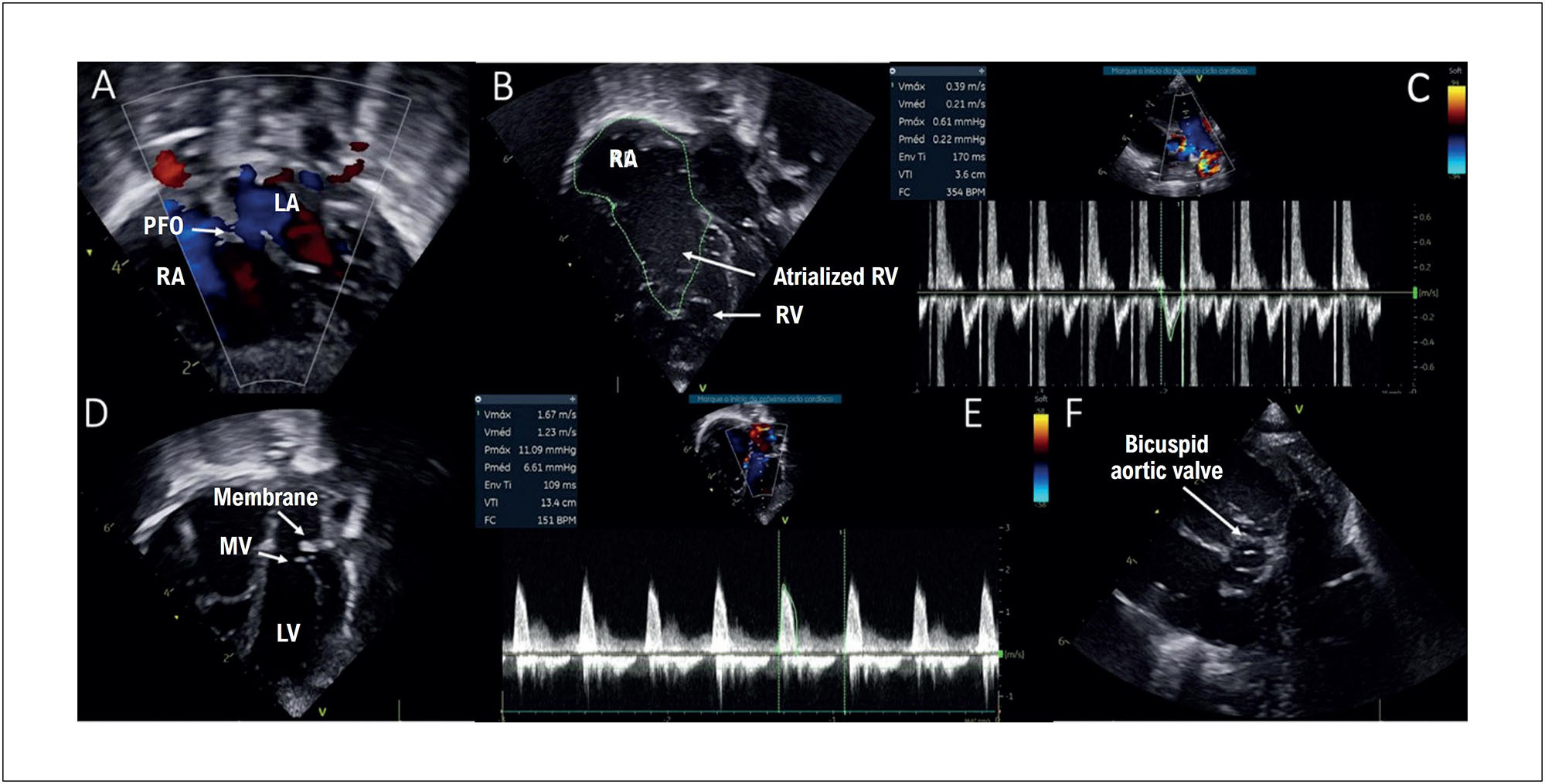
Ebstein’s anomaly is a complex congenital heart disease that occurs in one out of every 200,000 live births. Its association with left-sided obstructive lesions is rare and poses significant challenges for both clinical and surgical management. In this case report, we present a newborn patient with Ebstein’s anomaly associated with supravalvular mitral stenosis and coarctation of the aorta (CoA), who underwent cardiac catheterization for the implantation of a post-dilatable stent in the aortic isthmus via the carotid approach.

[…]

  • Aortic Coarctation
  • Cardiac Catheterization
  • Ebstein Anomaly
  • Newborn Infant
  • Stents
Read Full Article
Creative Commons Attribution (CC BY) Creative Commons license
04/03/2026 DOI: 10.36660/abcimg.20250085i Views 10
Therapeutic Efficacy and Safety of Paracetamol versus Ibuprofen in Patent Ductus Arteriosus in Newborns: A Systematic Review
ABC
Review Article

Therapeutic Efficacy and Safety of Paracetamol versus Ibuprofen in Patent Ductus Arteriosus in Newborns: A Systematic Review

Halecy Davidson Sousa da Silva et al. Eryvelton de Souza Franco Larissa Caroline de Almeida Sousa Lima Maria Bernadete de Sousa Maia

ABSTRACT

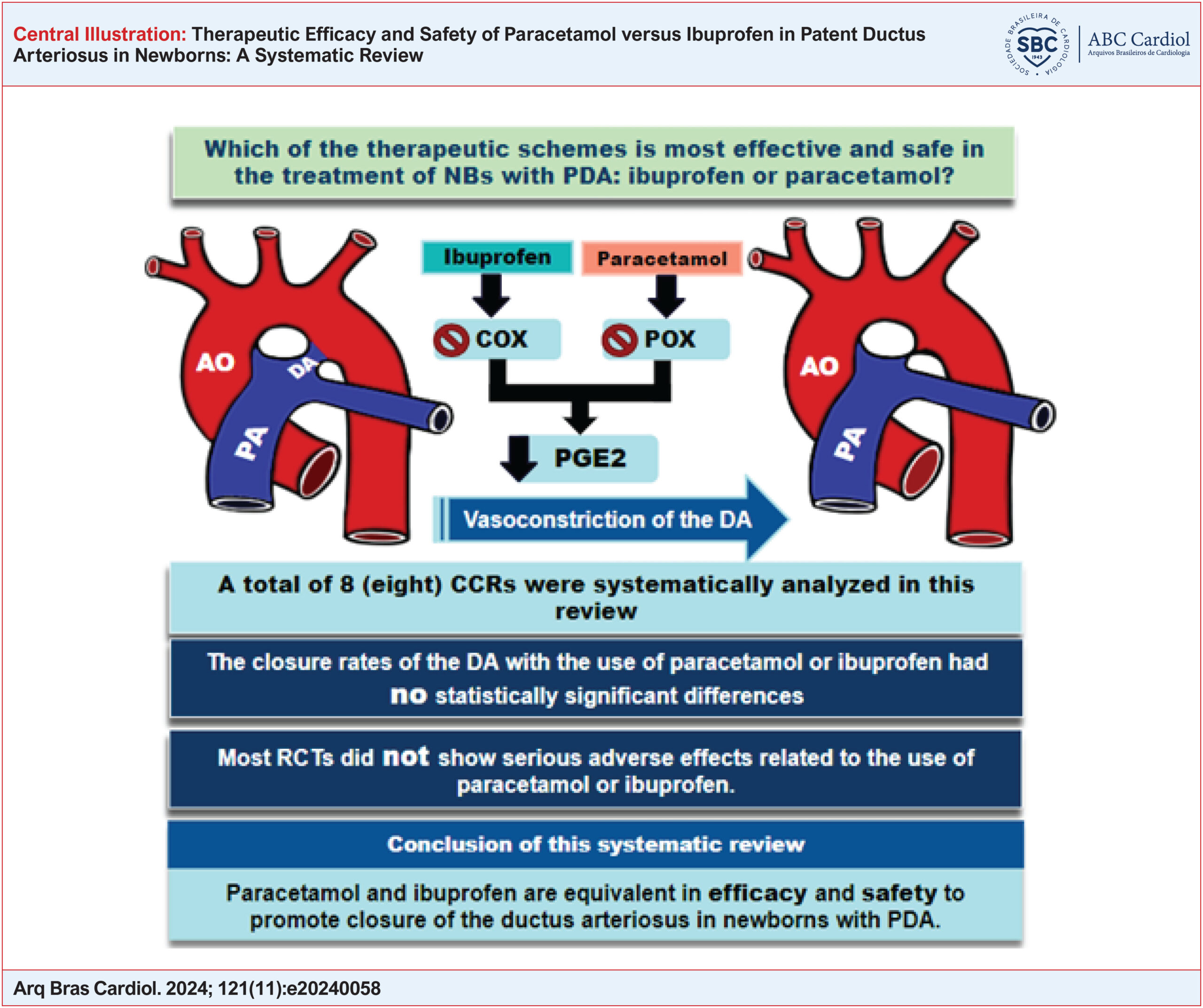
Closure of the ductus arteriosus (DA) using cyclooxygenase (COX) inhibitors is considered the first-line treatment for hemodynamically significant patent ductus arteriosus (PDA). Physiologically, prostaglandins have a recognized role in PDA. Admittedly, the comparative efficacy and safety between ibuprofen and acetaminophen need to be determined for rational choice of drug therapy for closure of the DA in clinical protocols.

This study aims to present the aspects of the efficacy and therapeutic safety of paracetamol versus ibuprofen in the treatment of PDA in premature newborns.

A systematic review of the literature was carried out, following the recommendations of the PRISMA protocol, using the Medline, Pubmed, LILACS, and SciELO databases. Studies from the last 10 years (2013-2023) that analyzed the efficacy and/or safety of acetaminophen compared to ibuprofen in newborns diagnosed with PDA were included.

Eight randomized clinical trials (RCTs) were selected for analysis, resulting in a sample size of 781 newborns with PDA treated with acetaminophen or ibuprofen. The efficacy of acetaminophen for DA closure is comparable to ibuprofen. There is no statistically significant difference in the incidence of related adverse effects between the two drugs in most studies.

There is equivalence in the efficacy and safety of ibuprofen and acetaminophen to promote closure of the DA in premature newborns with hsPDA.

  • Acetaminophen
  • Efficacy
  • Ibuprofen
  • Newborn Infant
  • patent ductus arteriosus
  • Safety
Read Full Article
Creative Commons Attribution (CC BY) Creative Commons license
06/12/2024 DOI: 10.36660/abc.20240058i Views 2
Systemic Inflammatory Indices as New Biomarkers for Hemodynamically Significant Ductus Arteriosus
ABC
Original Article

Systemic Inflammatory Indices as New Biomarkers for Hemodynamically Significant Ductus Arteriosus

Ufuk Cakir et al. Cuneyt Tayman

Abstract

Background

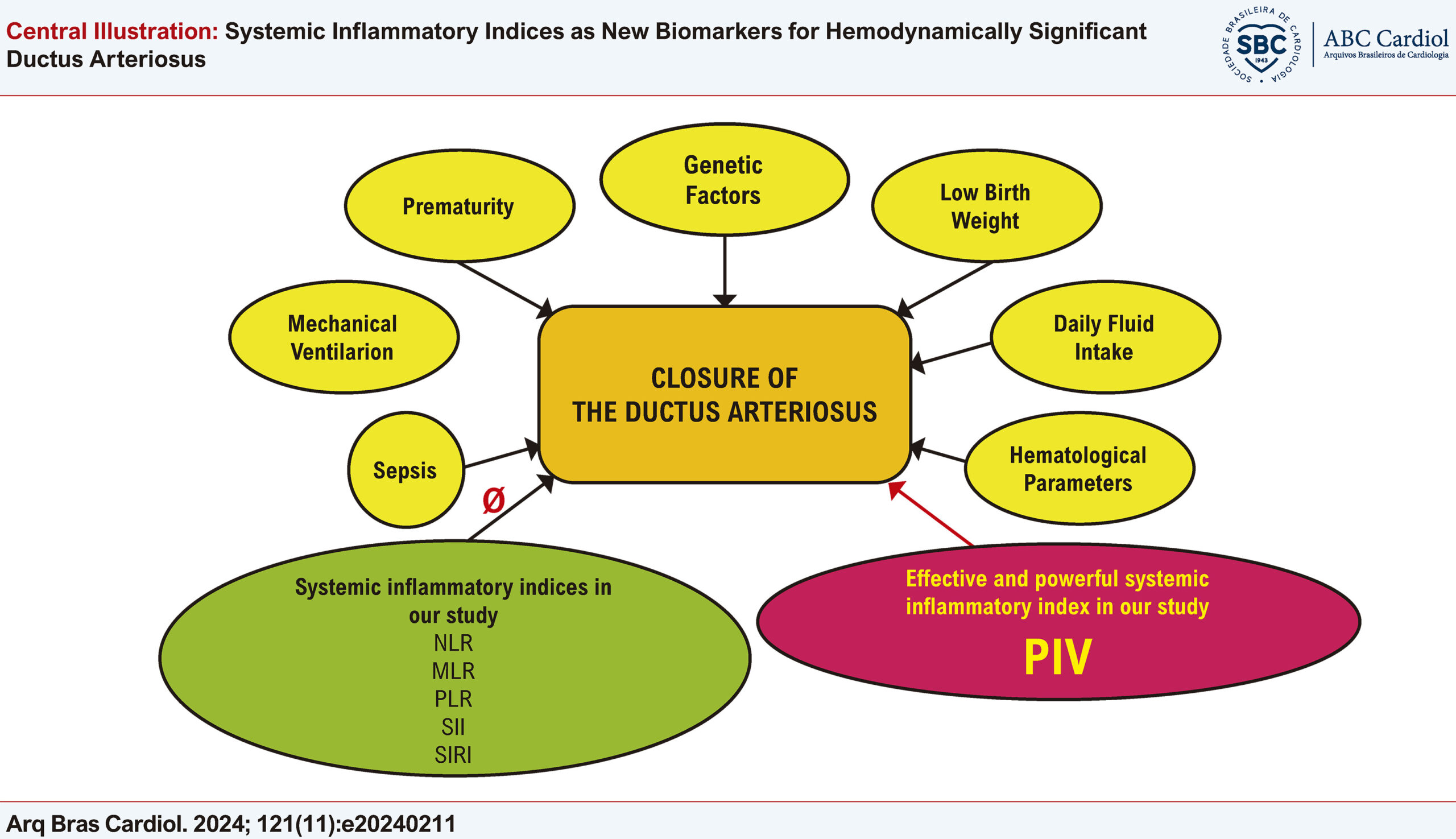
Increased oxygen tension and decreased prostaglandin levels cause ductal closure. The diagnostic role of systemic inflammatory indices in hemodynamically significant ductus arteriosus (hsPDA) in premature infants is unknown.

Objectives

We aimed to evaluate the role of systemic inflammatory indices in the predictivity of hsPDA.

Methods

Premature infants with gestational weeks (GW) of <32 weeks were evaluated retrospectively. Systemic inflammatory indices neutrophil-lymphocyte ratio (NLR), monocyte-lymphocyte ratio (MLR), platelet-lymphocyte ratio (PLR), systemic immune-inflammation index (SII), pan-immune- inflammation value (PIV), and systemic inflammation response index (SIRI) were calculated. Systemic inflammatory indices were compared between hsPDA and non-hsPDA groups. A p <0.05 was considered as statistically significant.

Results

A total of 1228 patients were included in the study, including 447 patients in the hsPDA group and 781 patients in the non-hsPDA group. The PIV value [median (Q1 – Q3): 5.18 (2.38-10.42)] in the hsPDA group was statistically significantly higher than the PIV value [median (Q1 – Q3): 3.52 (1.41-6.45)] in the non-hsPDA group (p8.66. After even multiple logistic regression analyses, PIV was shown to be a significant parameter for the diagnosis of hsPDA (OR 1.972, 95% CI 1.114-3.011. p=0.001).

Conclusions

A high PIV value may be a quickly used indicator with low-cost, simple, and easily accessible for the early diagnosis of hsPDA.

  • Ductus Arteriosus
  • Inflammation
  • Newborn Infant
  • Premature Infant
Read Full Article
Creative Commons Attribution (CC BY) Creative Commons license
02/12/2024 DOI: 10.36660/abc.20240211i Views 1
Figure 1
ABCIC
Review Article

My Approach to Targeted Echocardiography in the Neonatal Intensive Care Unit – Is It Fundamental?

Alessandro Cavalcanti Lianza et al. Samira Saady Morhy

Abstract

With technological advancement, physical examination is no longer sufficient for a more accurate assessment of critically ill patients, especially in premature newborns where clinical signs may not be interpreted objectively. Therefore, there is great interest in training neonatologists in its practice, with major global centers already incorporating it permanently into their residency and continuing medical education programs. This review article discusses our experience in teaching institutionally focused echocardiography.

  • Echocardiography
  • Neonatal Intensive Care Units
  • Newborn Infant
Read Full Article
Creative Commons Attribution (CC BY) Creative Commons license
13/09/2024 DOI: 10.36660/abcimg.20240039i
IJCS
Editorial

Is Pulse Oximetry a Reliable Method for Screening for Critical Congenital Heart Disease in Asymptomatic Neonates at 35 Weeks or More of Gestation?

Thais Salim et al. Gabriel Porto Soares

Congenital cardiovascular malformations (CCVMs) are structural abnormalities of the heart or blood vessels present during fetal life and at birth. From 2010 to 2017, the incidence of CCVMs was estimated at 9.4 cases per 1,000 live births in countries in Southeast Asia and the Northern Hemisphere. During the same period, rates in Brazil ranged from 9.7 (in the northern region) to 62.8 (in the southeastern region) per 1,000 live births, and similar values have been reported by the Global Burden of Disease. Variability in the incidence of CCVMs is explained by diagnostic challenges arising from its broad clinical spectrum, which ranges from asymptomatic to symptomatic heart disease with associated risk of mortality. Approximately 25% of all patients with CCVMs are considered critical and require intervention within the first year of life because of the life-threatening nature of CCVMs and the significant dependence on hospital-based medical care.,

Congenital malformations are the second leading cause of death in children under 1 year of age and the third leading cause of death in people under 20 years of age in the last decade in Brazil.,, Among these malformations, CCVMs account for nearly 50% of malformation-related deaths.,,, Despite their high incidence and significant impact on mortality, CCVMs are deemed preventable causes of death since early therapeutic intervention could alter their outcome. The high mortality rate of CCVMs is due to the lack of prenatal and perinatal diagnoses, which hinders or delays effective treatment and results in death.,,-

[…]

  • Congenital Heart Defects
  • Echocardiography
  • Newborn Infant
  • Oximetry
Read Full Article
Creative Commons Attribution (CC BY) Creative Commons license
26/04/2024 DOI: 10.36660/ijcs.20240030 Views 2
Figure 1
IJCS
Original Article

Congenital Heart Disesase: A Retrospective Analysis from a Tertiary Referral Centre in Portugal

Diogo Faim et al. Joaquim Tiago Rui Castelo Andreia Francisco … Rosa Alves António Pires

Abstract

Background:

Congenital heart disease is the leading cause of mortality among all congenital malformations.

Objectives:

To evaluate the incidence of congenital heart diseases in a central maternity hospital in Portugal from January 2003 to December 2018 and to determine survival in the first year of life.

Methods:

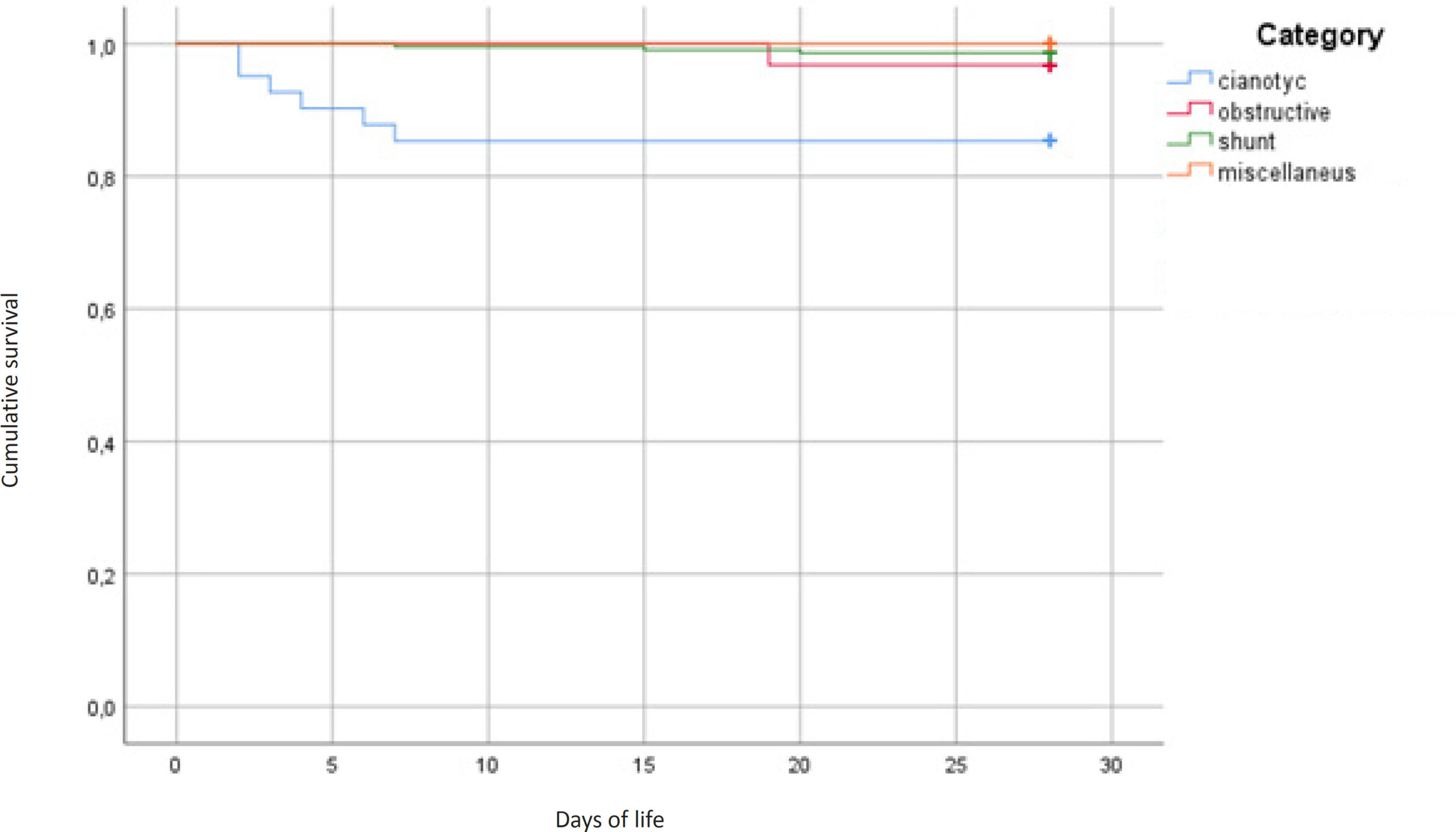
Retrospective analysis of newborns diagnosed with congenital heart diseases within 72 hours after birth. Malformations were divided according to pathophysiology. Cumulative survival analysis was performed by the Kaplan-Meier test. Stastical significance was set at p <0.05.

Results:

A total of 297 newborns with cardiac malformation was recorded among 47,198 live births (incidence of 6:1000), 16% associated with extra-cardiac disease. The most frequent congenital heart diseases were left-to-right shunt lesions (n = 216), followed by cyanotic (n = 41), acyanotic obstructive (n = 31) and miscellaneous (n = 9). Seventy (24%) patients had prenatal diagnosis, 88% of them cyanotic defects, and a positive association was found between prenatal diagnosis and mortality (p <0.001). Coarctation of the aorta was associated with gestational diabetes (p = 0.014). Atrial septal defect was more common in females (p = 0.02). Mortality rate due to heart disease was 3.4%. Patients with cyanotic disease, 99%, 97%, 97%, respectively, for patients with left-to-right shunt lesions, and 97%, 97%,97% for those with obstructive lesion cases.

Conclusion:

The incidence of congenital heart disease was 6:1000, mostly left-to-right shunt lesions. Heart disease accounted for only half of deaths, and cyanotic diseases have a high nonspecific mortality rate.
  • congenital heart defect
  • Neonatology
  • Newborn Infant
  • Survival
Read Full Article
Creative Commons Attribution (CC BY) Creative Commons license
28/07/2021 DOI: 10.36660/ijcs.20200238 Views 1
ABC
Artigo Original

Clinical-epidemiologic indications for echocardiographic investigation in the neonatal period. Value of risk groups

Lilian dos Santos Rodrigues Sadeck et al. Renato Azevedo Alfonso Julio Guedes Barbato Valdenise M. L. T. Calil … Maria do Rosário Dias de Oliveira Latorre Cléa Rodrigues Leone José Lauro Araújo Ramos

PURPOSE: An echocardiographic study was performed in newborns from risk groups, with the aim of to determining prevalence and to evaluate the indications for this test in the neonatal period. METHODS: One hundred fifty six newborns were studied . They were admitted to the Newborn ward of the Department of Obstetric of the HC-FMUSP, in the period of November 91 to April 93, from mothers with congenital heart disease or diabetes, low birth weight newborns, with extracardiac malformations, cardiac signs and/or congenital infections. RESULTS: The observed prevalence was 21.8%, greater than that of the general population (0.8-1.2%). The group composed by 27 children with extracardiac abnormalities presented the largest prevalence when compared with the other groups (40.7%). These data justify the use of echocardiography in high risk newborns for the detection of congenital heart disease.

  • congenital heart diseases
  • Echocardiography
  • Newborn Infant
Read Full Article
Creative Commons Attribution (CC BY) Creative Commons license
31/01/2001 DOI: 10.1590/S0066-782X1997001100003

How to cite this article

EndNote RIS

Electronic Document Format (Vancouver)

Lombardi JG, Calamita PC, Barbosa OC, Barreto MRP, Gardenghi G. Implantation of a Post-Dilatable Stent in Aortic Coarctation Via Carotid Access in a Newborn With Ebstein’s Anomaly: Case Report. ABC Imagem Cardiovascular 2026;39(1):e20250085.

Electronic Document Format (ABNT)

Lombardi, Jonathan Guimarães; Calamita, Paulo Correia; Barbosa, Orlando Carlos; Barreto, Mayra Rosana Palmeira; Gardenghi, Giulliano. Implantation of a Post-Dilatable Stent in Aortic Coarctation Via Carotid Access in a Newborn With Ebstein’s Anomaly: Case Report. ABC Imagem Cardiovascular, v. 39, n. 1, e20250085, Mar. 2026.

Electronic Document Format (APA)

Lombardi, J. G., Calamita, P. C., Barbosa, O. C., Barreto, M. R. P., & Gardenghi, G. (2026). Implantation of a Post-Dilatable Stent in Aortic Coarctation Via Carotid Access in a Newborn With Ebstein’s Anomaly: Case Report. ABC Imagem Cardiovascular, 39(1), e20250085.

Electronic Document Format (ISO)

Lombardi, Jonathan Guimarães and Calamita, Paulo Correia and Barbosa, Orlando Carlos and Barreto, Mayra Rosana Palmeira and Gardenghi, Giulliano. Implantation of a Post-Dilatable Stent in Aortic Coarctation Via Carotid Access in a Newborn With Ebstein’s Anomaly: Case Report. ABC Imagem Cardiovascular [online]. 2026, vol. 39, n. 1, [cited 2026-10-14], e20250085. Available from: <https://journals.cardiol.br/en/article/implantation-of-a-post-dilatable-stent-in-aortic-coarctation-via-carotid-access-in-a-newborn-with-ebsteins-anomaly-case-report/>. ISSN 2318-8219

EndNote RIS

Electronic Document Format (Vancouver)

Silva HDS, Franco ES, Lima LCAS, Maia MBS. Therapeutic Efficacy and Safety of Paracetamol versus Ibuprofen in Patent Ductus Arteriosus in Newborns: A Systematic Review. Arquivos Brasileiros de Cardiologia 2024;121(11):e20240058.

Electronic Document Format (ABNT)

Silva, Halecy Davidson Sousa da; Franco, Eryvelton de Souza; Lima, Larissa Caroline de Almeida Sousa; Maia, Maria Bernadete de Sousa. Therapeutic Efficacy and Safety of Paracetamol versus Ibuprofen in Patent Ductus Arteriosus in Newborns: A Systematic Review. Arquivos Brasileiros de Cardiologia, v. 121, n. 11, e20240058, Dec. 2024.

Electronic Document Format (APA)

Silva, H. D. S. , Franco, E. S., Lima, L. C. A. S., & Maia, M. B. S. (2024). Therapeutic Efficacy and Safety of Paracetamol versus Ibuprofen in Patent Ductus Arteriosus in Newborns: A Systematic Review. Arquivos Brasileiros de Cardiologia, 121(11), e20240058.

Electronic Document Format (ISO)

Silva, Halecy Davidson Sousa da and Franco, Eryvelton de Souza and Lima, Larissa Caroline de Almeida Sousa and Maia, Maria Bernadete de Sousa. Therapeutic Efficacy and Safety of Paracetamol versus Ibuprofen in Patent Ductus Arteriosus in Newborns: A Systematic Review. Arquivos Brasileiros de Cardiologia [online]. 2024, vol. 121, n. 11, [cited 2026-10-14], e20240058. Available from: <https://journals.cardiol.br/en/article/therapeutic-efficacy-and-safety-of-paracetamol-versus-ibuprofen-in-patent-ductus-arteriosus-in-newborns-a-systematic-review/>. ISSN 0066-782X

EndNote RIS

Electronic Document Format (Vancouver)

Cakir U, Tayman C. Systemic Inflammatory Indices as New Biomarkers for Hemodynamically Significant Ductus Arteriosus. Arquivos Brasileiros de Cardiologia 2024;121(11):e20240211.

Electronic Document Format (ABNT)

Cakir, Ufuk; Tayman, Cuneyt. Systemic Inflammatory Indices as New Biomarkers for Hemodynamically Significant Ductus Arteriosus. Arquivos Brasileiros de Cardiologia, v. 121, n. 11, e20240211, Dec. 2024.

Electronic Document Format (APA)

Cakir, U., & Tayman, C. (2024). Systemic Inflammatory Indices as New Biomarkers for Hemodynamically Significant Ductus Arteriosus. Arquivos Brasileiros de Cardiologia, 121(11), e20240211.

Electronic Document Format (ISO)

Cakir, Ufuk and Tayman, Cuneyt. Systemic Inflammatory Indices as New Biomarkers for Hemodynamically Significant Ductus Arteriosus. Arquivos Brasileiros de Cardiologia [online]. 2024, vol. 121, n. 11, [cited 2026-10-14], e20240211. Available from: <https://journals.cardiol.br/en/article/systemic-inflammatory-indices-as-new-biomarkers-for-hemodynamically-significant-ductus-arteriosus/>. ISSN 0066-782X

EndNote RIS

Electronic Document Format (Vancouver)

Lianza AC, Morhy SS. My Approach to Targeted Echocardiography in the Neonatal Intensive Care Unit – Is It Fundamental?. ABC Imagem Cardiovascular 2024;37(3):e20240039.

Electronic Document Format (ABNT)

Lianza, Alessandro Cavalcanti; Morhy, Samira Saady. My Approach to Targeted Echocardiography in the Neonatal Intensive Care Unit – Is It Fundamental?. ABC Imagem Cardiovascular, v. 37, n. 3, e20240039, Sep. 2024.

Electronic Document Format (APA)

Lianza, A. C., & Morhy, S. S. (2024). My Approach to Targeted Echocardiography in the Neonatal Intensive Care Unit – Is It Fundamental?. ABC Imagem Cardiovascular, 37(3), e20240039.

Electronic Document Format (ISO)

Lianza, Alessandro Cavalcanti and Morhy, Samira Saady. My Approach to Targeted Echocardiography in the Neonatal Intensive Care Unit – Is It Fundamental?. ABC Imagem Cardiovascular [online]. 2024, vol. 37, n. 3, [cited 2026-10-14], e20240039. Available from: <https://journals.cardiol.br/en/article/my-approach-to-targeted-echocardiography-in-the-neonatal-intensive-care-unit-is-it-fundamental/>. ISSN 2318-8219

EndNote RIS

Electronic Document Format (Vancouver)

Salim T, Soares GP. Is Pulse Oximetry a Reliable Method for Screening for Critical Congenital Heart Disease in Asymptomatic Neonates at 35 Weeks or More of Gestation?. International Journal of Cardiovascular Sciences 2024;37:e20240030.

Electronic Document Format (ABNT)

Salim, Thais; Soares, Gabriel Porto. Is Pulse Oximetry a Reliable Method for Screening for Critical Congenital Heart Disease in Asymptomatic Neonates at 35 Weeks or More of Gestation?. International Journal of Cardiovascular Sciences, v. 37, e20240030, Apr. 2024.

Electronic Document Format (APA)

Salim, T., & Soares, G. P. (2024). Is Pulse Oximetry a Reliable Method for Screening for Critical Congenital Heart Disease in Asymptomatic Neonates at 35 Weeks or More of Gestation?. International Journal of Cardiovascular Sciences, 37, e20240030.

Electronic Document Format (ISO)

Salim, Thais and Soares, Gabriel Porto. Is Pulse Oximetry a Reliable Method for Screening for Critical Congenital Heart Disease in Asymptomatic Neonates at 35 Weeks or More of Gestation?. International Journal of Cardiovascular Sciences [online]. 2024, vol. 37, [cited 2026-10-14], e20240030. Available from: <https://journals.cardiol.br/en/article/is-pulse-oximetry-a-reliable-method-for-screening-for-critical-congenital-heart-disease-in-asymptomatic-neonates-at-35-weeks-or-more-of-gestation/>. ISSN 2359-4802

EndNote RIS

Electronic Document Format (Vancouver)

Faim D, Tiago J, Castelo R, Francisco A, Alves R, Pires A. Congenital Heart Disesase: A Retrospective Analysis from a Tertiary Referral Centre in Portugal. International Journal of Cardiovascular Sciences 2021;34(5 Supl 1):105-13.

Electronic Document Format (ABNT)

Faim, Diogo; Tiago, Joaquim; Castelo, Rui; Francisco, Andreia; Alves, Rosa; Pires, António. Congenital Heart Disesase: A Retrospective Analysis from a Tertiary Referral Centre in Portugal. International Journal of Cardiovascular Sciences, v. 34, n. 5 Supl 1, p. 105-113, Jul. 2021.

Electronic Document Format (APA)

Faim, D., Tiago, J., Castelo, R., Francisco, A., Alves, R., & Pires, A. (2021). Congenital Heart Disesase: A Retrospective Analysis from a Tertiary Referral Centre in Portugal. International Journal of Cardiovascular Sciences, 34(5 Supl 1), 105-113.

Electronic Document Format (ISO)

Faim, Diogo and Tiago, Joaquim and Castelo, Rui and Francisco, Andreia and Alves, Rosa and Pires, António. Congenital Heart Disesase: A Retrospective Analysis from a Tertiary Referral Centre in Portugal. International Journal of Cardiovascular Sciences [online]. 2021, vol. 34, n. 5 Supl 1, [cited 2026-10-14], pp. 105-113. Available from: <https://journals.cardiol.br/en/article/congenital-heart-disesase-a-retrospective-analysis-from-a-tertiary-referral-centre-in-portugal/>. ISSN 2359-4802

EndNote RIS

Electronic Document Format (Vancouver)

Sadeck LSR, Azevedo R, Barbato AJG, Calil VMLT, Latorre MRDO, Leone CR, Ramos JLA, et al. Clinical-epidemiologic indications for echocardiographic investigation in the neonatal period. Value of risk groups. Arquivos Brasileiros de Cardiologia 2001;69(5):301-7.

Electronic Document Format (ABNT)

Sadeck, Lilian dos Santos Rodrigues; Azevedo, Renato; Barbato, Alfonso Julio Guedes; Calil, Valdenise M. L. T.; Latorre, Maria do Rosário Dias de Oliveira; Leone, Cléa Rodrigues; Ramos, José Lauro Araújo. Clinical-epidemiologic indications for echocardiographic investigation in the neonatal period. Value of risk groups. Arquivos Brasileiros de Cardiologia, v. 69, n. 5, p. 301-307, Jan. 2001.

Electronic Document Format (APA)

Sadeck, L. S. R., Azevedo, R., Barbato, A. J. G., Calil, V. M. L. T., Latorre, M. R. D. O., Leone, C. R., & Ramos, J. L. A. (2001). Clinical-epidemiologic indications for echocardiographic investigation in the neonatal period. Value of risk groups. Arquivos Brasileiros de Cardiologia, 69(5), 301-307.

Electronic Document Format (ISO)

Sadeck, Lilian dos Santos Rodrigues and Azevedo, Renato and Barbato, Alfonso Julio Guedes and Calil, Valdenise M. L. T. and Latorre, Maria do Rosário Dias de Oliveira and Leone, Cléa Rodrigues and Ramos, José Lauro Araújo. Clinical-epidemiologic indications for echocardiographic investigation in the neonatal period. Value of risk groups. Arquivos Brasileiros de Cardiologia [online]. 2001, vol. 69, n. 5, [cited 2026-10-14], pp. 301-307. Available from: <https://journals.cardiol.br/en/article/clinical-epidemiologic-indications-for-echocardiographic-investigation-in-the-neonatal-period-value-of-risk-groups/>. ISSN 0066-782X

  • About ABC Family
  • Internal Regulation
  • Editorial Board
  • Brazilian Society of Cardiology (SBC)

Issues

SBC Guidelines

  • Videos
  • Podcasts
  • News