ABC Family Arquivos Brasileiros de Cardiologia International Journal of Cardiovascular Sciences ABC Heart Failure & Cardiomyopathy ABC Imagem Cardiovascular
Português English
ABC Family
Português English
  • About
    • About ABC Family
    • Internal Regulation
    • Editorial Board
    • Brazilian Society of Cardiology (SBC)
  • Issues
  • SBC Guidelines
  • Content
    • Videos
    • Podcasts
    • News
  • About
    • About ABC Family
    • Internal Regulation
    • Editorial Board
    • Brazilian Society of Cardiology (SBC)
  • Issues
  • SBC Guidelines
  • Content
    • Videos
    • Podcasts
    • News

ABC Family

  • ABC Family
  • Arquivos Brasileiros de Cardiologia
  • International Journal of Cardiovascular Sciences
  • ABC Heart Failure & Cardiomyopathy
  • ABC Imagem Cardiovascular
Search in

No content found.

Journals
Ordering
Article types
Others

  1. Home
  2. Keyword: Education
ABC
Editorial

The Role of Low-Cost 3D Printing for Education in Congenital Heart Diseases

Vítor Ramos

Three-dimensional (3D) printing has emerged as a transformative technology in the management of congenital heart disease (CHD), offering new possibilities for anatomical visualization, procedural planning, and education.– By converting standard imaging datasets into tangible physical models, clinicians and trainees gain intuitive spatial insight into complex cardiac malformations that are often difficult to interpret using two-dimensional images alone.,

However, sustaining a 3D printing program requires careful financial planning. Costs related to infrastructure, equipment, materials, and dedicated personnel can limit long-term feasibility., Encouragingly, the increasing availability of free software and low-cost materials has significantly reduced financial barriers, making these workflows more accessible to institutions with limited resources.

[…]

  • Congenital Heart Defects
  • Education
  • Three-Dimensional Printing
Read Full Article
Creative Commons Attribution (CC BY) Creative Commons license
16/03/2026 DOI: 10.36660/abc.20250805i Views 1
IJCS
Editorial

How to Take Care of Your Body: Not an Obvious Insight, but an Essential School Lesson

José Francisco Kerr Saraiva et al. Natalia Rezende Baraldi

Over the years, the most traditional institutions provide modern concepts and philosophy, assuming the important role that schools play today. What is relatively new is the comprehension of the student in an active position in the learning process. This change of view has made it evident that, beyond the regular curriculum, there is the need to understand about the basic life skills of others. Bodily functions are one example, as they have a direct impact upon the learning process. Furthermore, the child’s capacity as a messenger or influencer is still consolidated as the one who brings knowledge home.

Beyond this scenario, a significant increase in cases of heart disease per year has been observed. Randomized trials demonstrate that a change in lifestyle is the first and foremost step toward preventing the most common incidences of heart diseases, such as myocardial infarction.

[…]

  • Cardiovascular Diseases
  • Disease Prevention
  • Education
Read Full Article
Creative Commons Attribution (CC BY) Creative Commons license
12/09/2022 DOI: 10.36660/ijcs.20220125 Views 1
Figure 1
ABC
Original Article

Retention of Cardiopulmonary Resuscitation Skills in Medical Students

Miguel Antônio Moretti et al. Adriana de Oliveira Camboim Caroline Awoki Ferrandez Isabela Corralo Ramos … Iaggo Bemini Costa Juliana Seidler Canonaco Vanessa Lopes Mathia João Fernando Monteiro Ferreira Antonio Carlos Palandri Chagas

Abstract

Background

Reduction of mortality and sequelae of cardiac arrest depends on an effective and fast intervention, started as soon as possible. Basic life support involves a series of steps that may be initiated out of the hospital setting and taught to any person in specific courses. However, it is important that the rescuers retain the knowledge and skills to perform cardiopulmonary resuscitation (CPR), as one never knows when they will be required. Studies have shown that a loss of skills occurs as early as 30 days after the training course, with variations according to personal and professional characteristics.

Objectives

to assess whether medical students are able to retain skills acquired in a BLS course for more than six months.

Methods

Prospective, case-control, observational study. Medical students attended a 40-hour course on sudden death and cardiac arrest. Skills acquired during the course were evaluated immediately after and six months after the course. Students’ individual scores were compared between these time points, the percentage of correct answers was evaluated, and overall performance was rated as excellent, good, and poor. Observers and evaluation criteria were the same immediately after the course and six months later. Data were analyzed using the paired t-test and the McNemar test. The 95% confidence interval was established, and a p < 0.05 was set as statistically significant.

Results

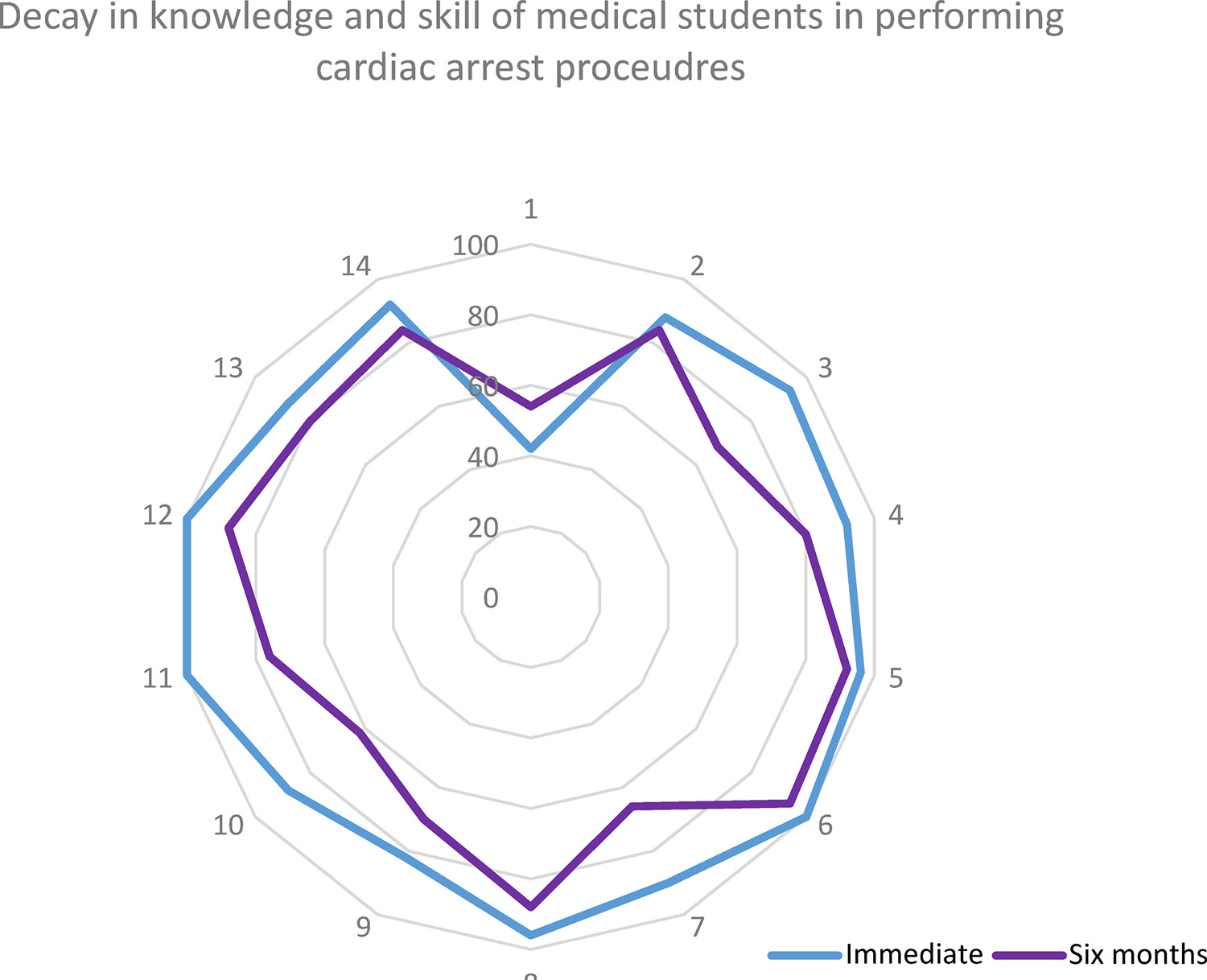
Fifty students (27 female) in the first year of medical school aged from 18 to 24 years (mean of 21 years) attended the course. The number of steps successfully completed by the students at six months was significantly lower than immediately after the course (10.8 vs 12.5 p < 0.001). Neither sex nor age affected the results. Overall performance of 78% of the students was considered excellent immediately after the course, and this percentage was significantly higher than six months later (p < 0.01). After six months, the steps that the students failed to complete at six months were those related to practical skills (such as a correct hand positioning).

Conclusion

A significant loss of skills was detected six months after the BLS course among medical students, compromising their overall performance.

  • Cardiopulmonary Resuscitation
  • Education
  • Hability
  • Heart Arrest
  • Learning
  • Medical Students
  • Mortality
Read Full Article
Creative Commons Attribution (CC BY) Creative Commons license
16/08/2021 DOI: 10.36660/abc.20200546 Views 1
ABC
Editorial

Current Cardiovascular Disease Death Rate in Rio De Janeiro State: More than Only a Dream in Rio

Antonio de Padua Mansur

Cardiovascular diseases (CVD) are the main causes of death in women and men in Brazil. Since 1980, there has been a significant reduction in mortality from these diseases. From 1980 to 2012, the smallest reduction was 31% for ischemic heart diseases (IHD) in men, and the largest reduction was 54% for cerebrovascular diseases (CBVD) in women. Despite an important reduction in mortality due to IHD, the reduction in mortality due to CBVD was the one that most contributed to the total reduction in mortality due to CVD. However, comparative analyses of the periods from 1980 to 2006 with those from 2007 to 2012 showed a greater percentage reduction in mortality from CVD, IHD, and CBVD in the period from 1980 to 2006. In the period from 2007 to 2012, there was a significant, but less intense, reduction in mortality from CVD and CBVD when compared to the previous period, while mortality from IHD remained unchanged in women and men. The same phenomenon was observed in the USA and in some European countries for this period, and this unfavorable trend has been associated with the increase in the incidence of obesity and diabetes mellitus and with the inadequate control of risk factors.– The control of the main risk factors for CVD reduces CVD mortality by at least 50%, and the highlight in this process is primary prevention by controlling the main risk factors, namely hypertension, smoking, diabetes, and dyslipidemia.,

Hypertension is the main risk factor in the genesis of CBVD, while the other risk factors also participate in the genesis of IHD, which leads to greater difficulty in preventing IHD, justifying the unfavorable tendency of IHD compared to CBVD. Currently, socioeconomic status (family income, employment, education, and environmental factors) is also considered an independent risk factor for CVD that is equivalent to traditional risk factors. The influence of socioeconomic status is one of the main factors responsible for the highest mortality from CVD in the least favored populations.

[…]

  • Cardiovascular Diseases, mortality
  • Diabetes Mellitus
  • dyslipidemia
  • Education
  • Hypertension
  • Myocardial Ischemia
  • Risk Factors
  • Socioeconomics Factors
Read Full Article
Creative Commons Attribution (CC BY) Creative Commons license
16/04/2021 DOI: 10.36660/abc.20210203 Views 1
Figure 1
ABC
Original Article

Teaching Basic Life Support to Students of Public and Private High Schools

José Maria Gonçalves Fernandes et al. Amanda Lira dos Santos Leite Bruna de Sá Duarte Auto José Elson Gama de Lima … Ivan Romero Rivera Maria Alayde Mendonça

Background:

Despite being recommended as a compulsory part of the school curriculum, the teaching of basic life support (BLS) has yet to be implemented in high schools in most countries.

Objectives:

To compare prior knowledge and degree of immediate and delayed learning between students of one public and one private high school after these students received BLS training.

Methods:

Thirty students from each school initially answered a questionnaire on cardiopulmonary resuscitation (CPR) and use of the automated external defibrillator (AED). They then received theoretical-practical BLS training, after which they were given two theory assessments: one immediately after the course and the other six months later.

Results:

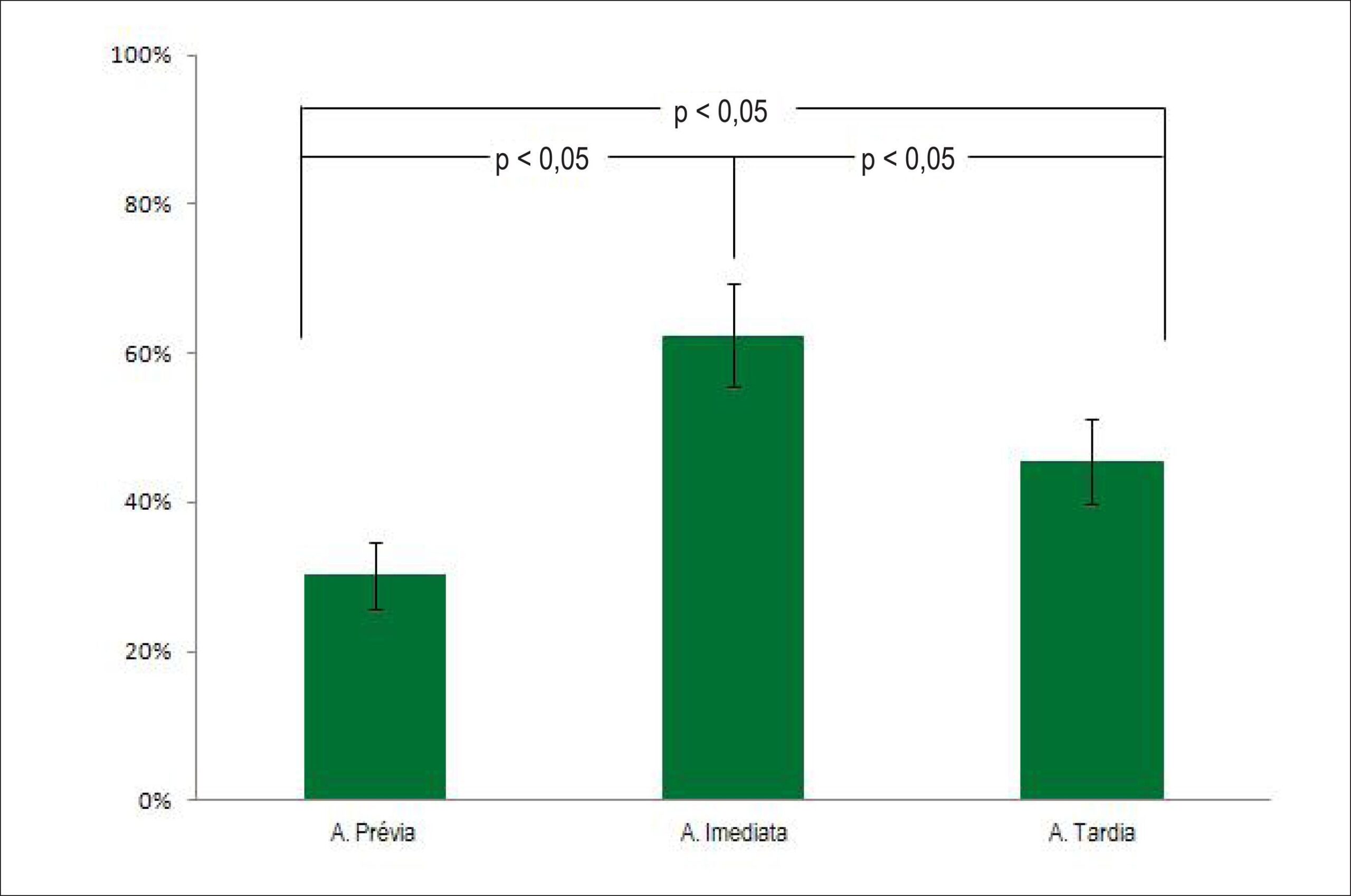
The overall success rates in the prior, immediate, and delayed assessments were significantly different between groups, with better performance shown overall by private school students than by public school students: 42% ± 14% vs. 30.2% ± 12.2%, p = 0.001; 86% ± 7.8% vs. 62.4% ± 19.6%, p < 0.001; and 65% ± 12.4% vs. 45.6% ± 16%, p < 0.001, respectively. The total odds ratio of the questions showed that the private school students performed the best on all three assessments, respectively: 1.66 (CI95% 1.26-2.18), p < 0.001; 3.56 (CI95% 2.57-4.93), p < 0.001; and 2.21 (CI95% 1.69-2.89), p < 0.001.

Conclusions:

Before training, most students had insufficient knowledge about CPR and AED; after BLS training a significant immediate and delayed improvement in learning was observed in students, especially in private school students.

  • Basic Life Support
  • Cardiopulmonary Resuscitation
  • Education
  • High School Students
Read Full Article
Creative Commons Attribution (CC BY) Creative Commons license
06/06/2014 DOI: 10.5935/abc.20140071 Views 1
Education and telephone monitoring by nurses of patients with heart failure: randomized clinical trial
ABC
Artigo Original

Education and telephone monitoring by nurses of patients with heart failure: randomized clinical trial

Fernanda B Domingues et al. Nadine Clausell Graziella B Aliti Daniela R Dominguez Eneida R Rabelo

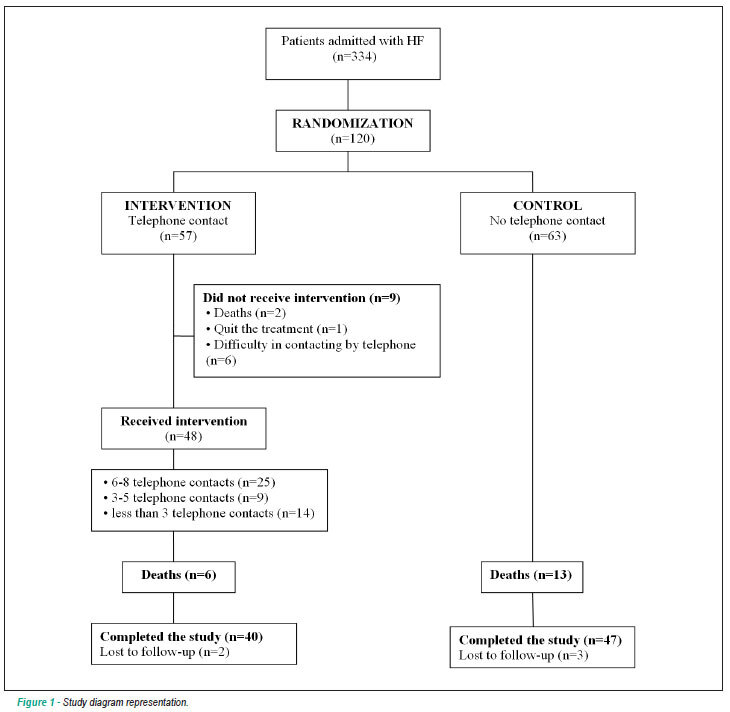
BACKGROUND: Nursing approaches to manage patients with heart failure (HF) showed benefits in reducing the morbidity and mortality. However, combining intra-hospital education with telephone contact after hospital discharge has been little explored. OBJECTIVE: To compare two nursing intervention groups among patients hospitalized due to decompensated HF: the intervention group (IG) received educational nursing intervention during hospitalization followed by telephone monitoring after discharge and the control group (CG) received in-hospital intervention only. Outcomes were levels of HF and self-care knowledge, the frequency of visits to the emergency room, rehospitalizations and deaths in a three-month period. METHODS: Randomized clinical trial. We studied adult HF patients with left ventricle ejection fraction (LVEF) < 45% who could be contacted by telephone after discharge. HF awareness was evaluated through a standardized questionnaire that also included questions regarding self-care knowledge, which was answered during the hospitalization period and three months later. For patients in the IG group contacts were made using phone calls and final interviews were conducted in both groups at end of the study. RESULTS: Forty-eight patients were assigned to the IG and 63 to the CG. Mean age (63 ± 13 years) and L (around 29%) were similar in the two groups. Scores for HF and self-care knowledge were similar at baseline. Three months later, both groups showed significantly improved HF awareness and self-care knowledge scores (P < 0.001). Other outcomes were similar. CONCLUSION: An in-hospital educational nursing intervention benefitted all HF patients in understanding their disease, regardless of telephone contact after discharge.

  • Clinical Trial
  • Education
  • Health Personnel
  • Heart Failure
  • nursing
  • telephone
Read Full Article
Creative Commons Attribution (CC BY) Creative Commons license
04/02/2011 DOI: 10.1590/S0066-782X2011005000014 Views 1
ABC
Artigo Original

Construction and validation of the CADE-Q for patient education in cardiac rehabilitation programs

Gabriela Lima de Melo Ghisi et al. Adriana Durieux Waldomiro Carlos Manfroi Artur Haddad Herdy … Tales de Carvalho Alexandre Andrade Magnus Benetti

BACKGROUND: Being aware of the coronary artery disease can be considered the first step to reduce the risk of cardiac complications. OBJECTIVE: Building and validating a tool to assess and describe coronary patients’ awareness in cardiac rehabilitation programs, with the purpose of education. METHODS: For the construction, we analyzed articles and field studies to submit items to multidisciplinary team associated to cardiac rehabilitation. After this analysis, we generated the version tested in a pilot study. The tool, named CADE-Q (Questionnaire for Coronary Patient Education) was applied in 155 patients aged 61 ± 9 (min = 36, max = 86) in response to cardiac rehabilitation programs. Out of the 155 patients, 114 were men. Internal consistency was measured by Cronbach’s alpha coefficient. Reproducibility was tested by the intraclass correlation coefficient (ICC) and construct validity was performed by exploratory factor analysis. The analysis compared the total scores as a function population characteristics and rehabilitation groups (private and public). RESULTS: The final version has 19 questions with 4 alternatives, with 4 quadrants of awareness. Cronbach’s alpha was 0.68 and ICC was 0.783. The factor analysis revealed 6 factors, covering three areas of awareness, which demonstrates the multifactorial nature of the instrument. The population characteristics as a function of the total score showed significant differences depending on the socioeconomic status variables (type of rehabilitation, household income and education level). CONCLUSION: CADE-Q has proper validity and reliability to be used in the Brazilian population in future research.

  • Coronary Diseases
  • Education
  • questionnaires
  • Rehabilitation
Read Full Article
Creative Commons Attribution (CC BY) Creative Commons license
07/05/2010 DOI: 10.1590/S0066-782X2010005000045 Views 1
ABC
Artigo Original

Influence of financial subsidy and venue on advanced cardiac life support courses, in the learning of cardiovascular emergency

Heberth C. Miotto et al. Eugênio M. A. Goulart Carlos Faria Santos Amaral Maria da Consolação V. Moreira

BACKGROUND: The success in learning of emergency depends on many factors that can be summarized as: student, instructors and course. OBJECTIVE: To evaluate the influence of financial subsidy and venue of course in learning cardiovascular emergency. METHODS: Data were analyzed regarding the courses of Advanced Cardiac Life Support (ACLS) in the period from December 2005 to December 2006. In agreement with the financial subsidy, they were divided in: group 1 – integral subsidy; group 2 – subsidy of 50%; and group 3 – without subsidy. As for the venue of the course, they were divided in: locality A – study in city with> 1 million inhabitants; and locality B – study in city with <1 million inhabitants. The practical and theoretical approval and the theoretical average were compared. RESULTS: 819 students participated in ACLS: 199 (24%) in group 1, 122 (15%) in 2 and 498 (61%) in 3. The practical and theoretical approval and the average in the theoretical exam were greater in group 3 than in other groups (p <0.05). Four hundred and eighty two (482) took the course in venue A (59%) and 337 (41%) in venue B. The practical approval was similar for both groups (p = 0.33), however the theoretical approval was greater in venue A (73% vs. 65% – p = 0.021 – OR = 1.44 and IC: 1.05 – 1.97). The theoretical average was greater in venue A (87.1 ± 10.4 and 86 ± 11, respectively p <0.05). CONCLUSION: The financial subsidy and venue of the course had influence in the theoretical and practical approval.

  • advanced cardiac life support – (ACLS)
  • Cardiopulmonary Resuscitation
  • continuing
  • Education
  • emergency
  • Health Education
  • Heart Arrest
  • medical
Read Full Article
Creative Commons Attribution (CC BY) Creative Commons license
27/03/2008 DOI: 10.1590/S0066-782X2008000300006 Views 1

How to cite this article

EndNote RIS

Electronic Document Format (Vancouver)

Ramos V. The Role of Low-Cost 3D Printing for Education in Congenital Heart Diseases. Arquivos Brasileiros de Cardiologia 2026;123(1):e20250805.

Electronic Document Format (ABNT)

Ramos, Vítor. The Role of Low-Cost 3D Printing for Education in Congenital Heart Diseases. Arquivos Brasileiros de Cardiologia, v. 123, n. 1, e20250805, Mar. 2026.

Electronic Document Format (APA)

Ramos, V. (2026). The Role of Low-Cost 3D Printing for Education in Congenital Heart Diseases. Arquivos Brasileiros de Cardiologia, 123(1), e20250805.

Electronic Document Format (ISO)

Ramos, Vítor. The Role of Low-Cost 3D Printing for Education in Congenital Heart Diseases. Arquivos Brasileiros de Cardiologia [online]. 2026, vol. 123, n. 1, [cited 2026-10-14], e20250805. Available from: <https://journals.cardiol.br/en/article/the-role-of-low-cost-3d-printing-for-education-in-congenital-heart-diseases/>. ISSN 0066-782X

EndNote RIS

Electronic Document Format (Vancouver)

Saraiva JFK, Baraldi NR. How to Take Care of Your Body: Not an Obvious Insight, but an Essential School Lesson. International Journal of Cardiovascular Sciences 2022;35(5):576-7.

Electronic Document Format (ABNT)

Saraiva, José Francisco Kerr; Baraldi, Natalia Rezende. How to Take Care of Your Body: Not an Obvious Insight, but an Essential School Lesson. International Journal of Cardiovascular Sciences, v. 35, n. 5, p. 576-577, Sep. 2022.

Electronic Document Format (APA)

Saraiva, J. F. K., & Baraldi, N. R. (2022). How to Take Care of Your Body: Not an Obvious Insight, but an Essential School Lesson. International Journal of Cardiovascular Sciences, 35(5), 576-577.

Electronic Document Format (ISO)

Saraiva, José Francisco Kerr and Baraldi, Natalia Rezende. How to Take Care of Your Body: Not an Obvious Insight, but an Essential School Lesson. International Journal of Cardiovascular Sciences [online]. 2022, vol. 35, n. 5, [cited 2026-10-14], pp. 576-577. Available from: <https://journals.cardiol.br/en/article/how-to-take-care-of-your-body-not-an-obvious-insight-but-an-essential-school-lesson/>. ISSN 2359-4802

EndNote RIS

Electronic Document Format (Vancouver)

Moretti MA, Camboim AO, Ferrandez CA, Ramos IC, Costa IB, Canonaco JS, Mathia VL, et al. Retention of Cardiopulmonary Resuscitation Skills in Medical Students. Arquivos Brasileiros de Cardiologia 2021;117(5):1030-5.

Electronic Document Format (ABNT)

Moretti, Miguel Antônio; Camboim, Adriana de Oliveira; Ferrandez, Caroline Awoki; Ramos, Isabela Corralo; Costa, Iaggo Bemini; Canonaco, Juliana Seidler; Mathia, Vanessa Lopes; Ferreira, João Fernando Monteiro; Chagas, Antonio Carlos Palandri. Retention of Cardiopulmonary Resuscitation Skills in Medical Students. Arquivos Brasileiros de Cardiologia, v. 117, n. 5, p. 1030-1035, Aug. 2021.

Electronic Document Format (APA)

Moretti, M. A., Camboim, A. O., Ferrandez, C. A., Ramos, I. C., Costa, I. B., Canonaco, J. S., Mathia, V. L., Ferreira, J. F. M., & Chagas, A. C. P. (2021). Retention of Cardiopulmonary Resuscitation Skills in Medical Students. Arquivos Brasileiros de Cardiologia, 117(5), 1030-1035.

Electronic Document Format (ISO)

Moretti, Miguel Antônio and Camboim, Adriana de Oliveira and Ferrandez, Caroline Awoki and Ramos, Isabela Corralo and Costa, Iaggo Bemini and Canonaco, Juliana Seidler and Mathia, Vanessa Lopes and Ferreira, João Fernando Monteiro and Chagas, Antonio Carlos Palandri. Retention of Cardiopulmonary Resuscitation Skills in Medical Students. Arquivos Brasileiros de Cardiologia [online]. 2021, vol. 117, n. 5, [cited 2026-10-14], pp. 1030-1035. Available from: <https://journals.cardiol.br/en/article/retention-of-cardiopulmonary-resuscitation-skills-in-medical-students/>. ISSN 0066-782X

EndNote RIS

Electronic Document Format (Vancouver)

Mansur AP. Current Cardiovascular Disease Death Rate in Rio De Janeiro State: More than Only a Dream in Rio. Arquivos Brasileiros de Cardiologia 2021;116(4):772-3.

Electronic Document Format (ABNT)

Mansur, Antonio de Padua. Current Cardiovascular Disease Death Rate in Rio De Janeiro State: More than Only a Dream in Rio. Arquivos Brasileiros de Cardiologia, v. 116, n. 4, p. 772-773, Apr. 2021.

Electronic Document Format (APA)

Mansur, A. P. (2021). Current Cardiovascular Disease Death Rate in Rio De Janeiro State: More than Only a Dream in Rio. Arquivos Brasileiros de Cardiologia, 116(4), 772-773.

Electronic Document Format (ISO)

Mansur, Antonio de Padua. Current Cardiovascular Disease Death Rate in Rio De Janeiro State: More than Only a Dream in Rio. Arquivos Brasileiros de Cardiologia [online]. 2021, vol. 116, n. 4, [cited 2026-10-14], pp. 772-773. Available from: <https://journals.cardiol.br/en/article/current-cardiovascular-disease-death-rate-in-rio-de-janeiro-state-more-than-only-a-dream-in-rio/>. ISSN 0066-782X

EndNote RIS

Electronic Document Format (Vancouver)

Fernandes JMG, Leite ALS, Auto BSD, Lima JEG, Rivera IR, Mendonça MA. Teaching Basic Life Support to Students of Public and Private High Schools. Arquivos Brasileiros de Cardiologia 2014;102(6):593-601.

Electronic Document Format (ABNT)

Fernandes, José Maria Gonçalves; Leite, Amanda Lira dos Santos; Auto, Bruna de Sá Duarte; Lima, José Elson Gama de; Rivera, Ivan Romero; Mendonça, Maria Alayde. Teaching Basic Life Support to Students of Public and Private High Schools. Arquivos Brasileiros de Cardiologia, v. 102, n. 6, p. 593-601, Jun. 2014.

Electronic Document Format (APA)

Fernandes, J. M. G., Leite, A. L. S., Auto, B. S. D., Lima, J. E. G. , Rivera, I. R., & Mendonça, M. A. (2014). Teaching Basic Life Support to Students of Public and Private High Schools. Arquivos Brasileiros de Cardiologia, 102(6), 593-601.

Electronic Document Format (ISO)

Fernandes, José Maria Gonçalves and Leite, Amanda Lira dos Santos and Auto, Bruna de Sá Duarte and Lima, José Elson Gama de and Rivera, Ivan Romero and Mendonça, Maria Alayde. Teaching Basic Life Support to Students of Public and Private High Schools. Arquivos Brasileiros de Cardiologia [online]. 2014, vol. 102, n. 6, [cited 2026-10-14], pp. 593-601. Available from: <https://journals.cardiol.br/en/article/teaching-basic-life-support-to-students-of-public-and-private-high-schools/>. ISSN 0066-782X

EndNote RIS

Electronic Document Format (Vancouver)

Domingues FB, Clausell N, Aliti GB, Dominguez DR, Rabelo ER. Education and telephone monitoring by nurses of patients with heart failure: randomized clinical trial. Arquivos Brasileiros de Cardiologia 2011;96(3):233-9.

Electronic Document Format (ABNT)

Domingues, Fernanda B; Clausell, Nadine; Aliti, Graziella B; Dominguez, Daniela R; Rabelo, Eneida R. Education and telephone monitoring by nurses of patients with heart failure: randomized clinical trial. Arquivos Brasileiros de Cardiologia, v. 96, n. 3, p. 233-239, Feb. 2011.

Electronic Document Format (APA)

Domingues, F. B., Clausell, N., Aliti, G. B., Dominguez, D. R., & Rabelo, E. R. (2011). Education and telephone monitoring by nurses of patients with heart failure: randomized clinical trial. Arquivos Brasileiros de Cardiologia, 96(3), 233-239.

Electronic Document Format (ISO)

Domingues, Fernanda B and Clausell, Nadine and Aliti, Graziella B and Dominguez, Daniela R and Rabelo, Eneida R. Education and telephone monitoring by nurses of patients with heart failure: randomized clinical trial. Arquivos Brasileiros de Cardiologia [online]. 2011, vol. 96, n. 3, [cited 2026-10-14], pp. 233-239. Available from: <https://journals.cardiol.br/en/article/education-and-telephone-monitoring-by-nurses-of-patients-with-heart-failure-randomized-clinical-trial/>. ISSN 0066-782X

EndNote RIS

Electronic Document Format (Vancouver)

Ghisi GLM, Durieux A, Manfroi WC, Herdy AH, Carvalho T, Andrade A, Benetti M, et al. Construction and validation of the CADE-Q for patient education in cardiac rehabilitation programs. Arquivos Brasileiros de Cardiologia 2010;94(6):813-22.

Electronic Document Format (ABNT)

Ghisi, Gabriela Lima de Melo; Durieux, Adriana; Manfroi, Waldomiro Carlos; Herdy, Artur Haddad; Carvalho, Tales de; Andrade, Alexandre; Benetti, Magnus. Construction and validation of the CADE-Q for patient education in cardiac rehabilitation programs. Arquivos Brasileiros de Cardiologia, v. 94, n. 6, p. 813-822, May. 2010.

Electronic Document Format (APA)

Ghisi, G. L. M., Durieux, A., Manfroi, W. C., Herdy, A. H., Carvalho, T. , Andrade, A., & Benetti, M. (2010). Construction and validation of the CADE-Q for patient education in cardiac rehabilitation programs. Arquivos Brasileiros de Cardiologia, 94(6), 813-822.

Electronic Document Format (ISO)

Ghisi, Gabriela Lima de Melo and Durieux, Adriana and Manfroi, Waldomiro Carlos and Herdy, Artur Haddad and Carvalho, Tales de and Andrade, Alexandre and Benetti, Magnus. Construction and validation of the CADE-Q for patient education in cardiac rehabilitation programs. Arquivos Brasileiros de Cardiologia [online]. 2010, vol. 94, n. 6, [cited 2026-10-14], pp. 813-822. Available from: <https://journals.cardiol.br/en/article/construction-and-validation-of-the-cade-q-for-patient-education-in-cardiac-rehabilitation-programs/>. ISSN 0066-782X

EndNote RIS

Electronic Document Format (Vancouver)

Miotto HC, Goulart EMA, Amaral CFS, Moreira MCV. Influence of financial subsidy and venue on advanced cardiac life support courses, in the learning of cardiovascular emergency. Arquivos Brasileiros de Cardiologia 2008;90(3):191-4.

Electronic Document Format (ABNT)

Miotto, Heberth C.; Goulart, Eugênio M. A.; Amaral, Carlos Faria Santos; Moreira, Maria da Consolação V.. Influence of financial subsidy and venue on advanced cardiac life support courses, in the learning of cardiovascular emergency. Arquivos Brasileiros de Cardiologia, v. 90, n. 3, p. 191-194, Mar. 2008.

Electronic Document Format (APA)

Miotto, H. C., Goulart, E. M. A., Amaral, C. F. S., & Moreira, M. C. V. (2008). Influence of financial subsidy and venue on advanced cardiac life support courses, in the learning of cardiovascular emergency. Arquivos Brasileiros de Cardiologia, 90(3), 191-194.

Electronic Document Format (ISO)

Miotto, Heberth C. and Goulart, Eugênio M. A. and Amaral, Carlos Faria Santos and Moreira, Maria da Consolação V.. Influence of financial subsidy and venue on advanced cardiac life support courses, in the learning of cardiovascular emergency. Arquivos Brasileiros de Cardiologia [online]. 2008, vol. 90, n. 3, [cited 2026-10-14], pp. 191-194. Available from: <https://journals.cardiol.br/en/article/influence-of-financial-subsidy-and-venue-on-advanced-cardiac-life-support-courses-in-the-learning-of-cardiovascular-emergency/>. ISSN 0066-782X

  • About ABC Family
  • Internal Regulation
  • Editorial Board
  • Brazilian Society of Cardiology (SBC)

Issues

SBC Guidelines

  • Videos
  • Podcasts
  • News