ABC Family Arquivos Brasileiros de Cardiologia International Journal of Cardiovascular Sciences ABC Heart Failure & Cardiomyopathy ABC Imagem Cardiovascular
Português English
ABC Family
Português English
  • About
    • About ABC Family
    • Internal Regulation
    • Editorial Board
    • Brazilian Society of Cardiology (SBC)
  • Issues
  • SBC Guidelines
  • Content
    • Videos
    • Podcasts
    • News
  • About
    • About ABC Family
    • Internal Regulation
    • Editorial Board
    • Brazilian Society of Cardiology (SBC)
  • Issues
  • SBC Guidelines
  • Content
    • Videos
    • Podcasts
    • News

ABC Family

  • ABC Family
  • Arquivos Brasileiros de Cardiologia
  • International Journal of Cardiovascular Sciences
  • ABC Heart Failure & Cardiomyopathy
  • ABC Imagem Cardiovascular
Search in

No content found.

Journals
Ordering
Article types
Others

  1. Home
  2. Keyword: Three-Dimensional Printing
ABC
Letter to the Editor

Development of 3D-Printed Congenital Heart Disease Models Using Feasible Low-Cost Workflow

Hinpetch Daungsupawong et al. Viroj Wiwanitkit

Dear Editor

The publication on “Development of 3D-Printed Congenital Heart Disease Models Using Feasible Low-Cost Workflow – A Potential Tool to Improve Pediatric Cardiology Education” is hereby discussed. This study presents an interesting concept of using 3D printing technology to create low-cost models of congenital heart disease, a potential approach to support anatomical and pathophysiological learning. However, a significant limitation of the study lies in its evaluation of outcomes, which relies primarily on subjective opinions from participants. Only resident physician satisfaction questionnaires were used, without quantitative learning achievement measures such as pre- and post-test scores or comparisons with other teaching aids like 2D images or digital models. Furthermore, the sample size of the evaluators was not clearly specified, potentially limiting the reliability of conclusions regarding educational effectiveness. Additionally, the “100% agreement” rating on several issues may reflect social desirability bias.

[…]

  • Cardiology
  • Three-Dimensional Printing
Read Full Article
Creative Commons Attribution (CC BY) Creative Commons license
07/08/2026 DOI: 10.36660/abc.20260186i Views 2
ABC
Editorial

The Role of Low-Cost 3D Printing for Education in Congenital Heart Diseases

Vítor Ramos

Three-dimensional (3D) printing has emerged as a transformative technology in the management of congenital heart disease (CHD), offering new possibilities for anatomical visualization, procedural planning, and education.– By converting standard imaging datasets into tangible physical models, clinicians and trainees gain intuitive spatial insight into complex cardiac malformations that are often difficult to interpret using two-dimensional images alone.,

However, sustaining a 3D printing program requires careful financial planning. Costs related to infrastructure, equipment, materials, and dedicated personnel can limit long-term feasibility., Encouragingly, the increasing availability of free software and low-cost materials has significantly reduced financial barriers, making these workflows more accessible to institutions with limited resources.

[…]

  • Congenital Heart Defects
  • Education
  • Three-Dimensional Printing
Read Full Article
Creative Commons Attribution (CC BY) Creative Commons license
16/03/2026 DOI: 10.36660/abc.20250805i Views 1
Development of 3D-Printed Congenital Heart Disease Models Using Feasible Low-Cost Workflow – A Potential Tool to Improve Pediatric Cardiology Education
ABC
Original Article

Development of 3D-Printed Congenital Heart Disease Models Using Feasible Low-Cost Workflow – A Potential Tool to Improve Pediatric Cardiology Education

Francisco Candido Monteiro Cajueiro et al. Ulisses Alexandre Croti Raimundo Francisco de Amorim Júnior Mariana Ribeiro Rodero Cardoso … Carlos Henrique Costa Carlos Henrique De Marchi Bruna Cury Borim Moacir Fernandes de Godoy Milton Benevides de Freitas Airton Camacho Moscardini

Abstract

Background

Congenital heart diseases (CHD) require an in-depth anatomopathological understanding. 3D printing is a promising educational tool for creating physical prototypes from imaging data, but costs are a major issue.

Objective

This study aimed to describe a feasible low-cost workflow for the development of 3D-printed (3DP) CHD models and create a shareable educational set.

Methods

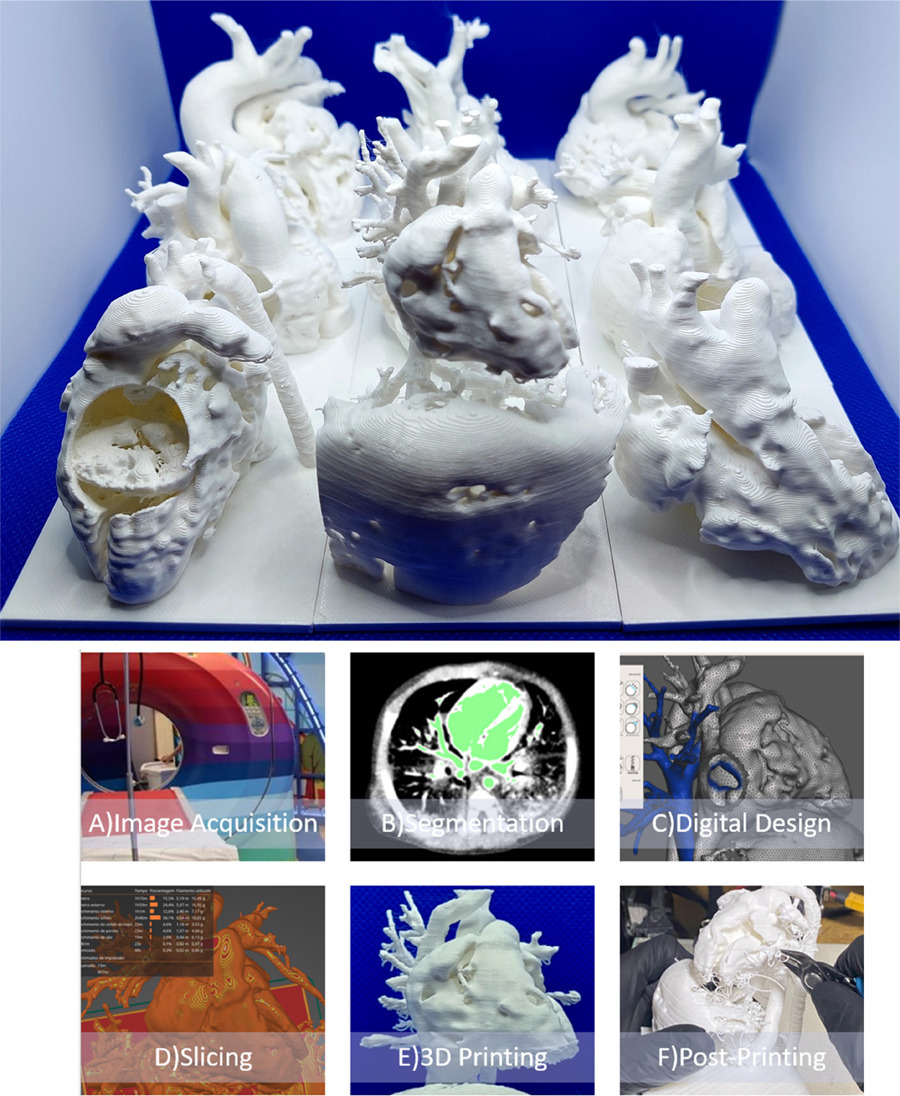
Data from cardiac tomography images were used, following the steps of image acquisition, segmentation, digital design, slicing, 3D printing, and post-printing. Valvar structures were created from echocardiographic data using the cartographic heightmap technique and inserted into prototypes. 3DP models were evaluated by an expert team, enhanced, and applied to medical residents during an educational session. Free software, a desktop 3D printer, and low-cost materials were used.

Results

Twelve 3DP models were developed, including ventricular septal defect with patent ductus arteriosus, atrial septal defect, Tetralogy of Fallot, transposition of the great arteries, atrioventricular septal defect, coarctation of the Aorta, hypoplastic left heart syndrome, tricuspid atresia, pulmonary atresia, total anomalous pulmonary venous connection, Truncus arteriosus, and interrupted aortic arch. All residents (100%) agreed that prototypes were “faithful to the anatomy”, “visually appealing”, “motivated the study”, and “allowed better spatial conceptualization”. They related 3DP CHD models “are an important pedagogical resource” and can potentially benefit the education of “undergraduate students” (100%), “interdisciplinary team” (100%), “cardiologists, surgeons and residents” (100%), and “families” (93%).

Conclusion

Development of 3DP CHD models using a low-cost workflow is feasible. Models developed are freely available for download and printing, intending to promote education to all interested in CHD.

  • Cardiology
  • Congenital Heart Defects
  • Three-Dimensional Printing
Read Full Article
Creative Commons Attribution (CC BY) Creative Commons license
05/02/2026 DOI: 10.36660/abc.20250419i Views 2
Figure 1
ABCIC
Research Letter

3D Printing of a Heart With Amyloidosis

Mariana de Paula Cruz et al. Davi Shunji Yahiro Daniel Gama das Neves Renato Pereira Barbosa … Alexandre Todorovic Fabro Pedro Manoel Marques Garibaldi Marcus Simões Claudio Tinoco Mesquita

Abstract

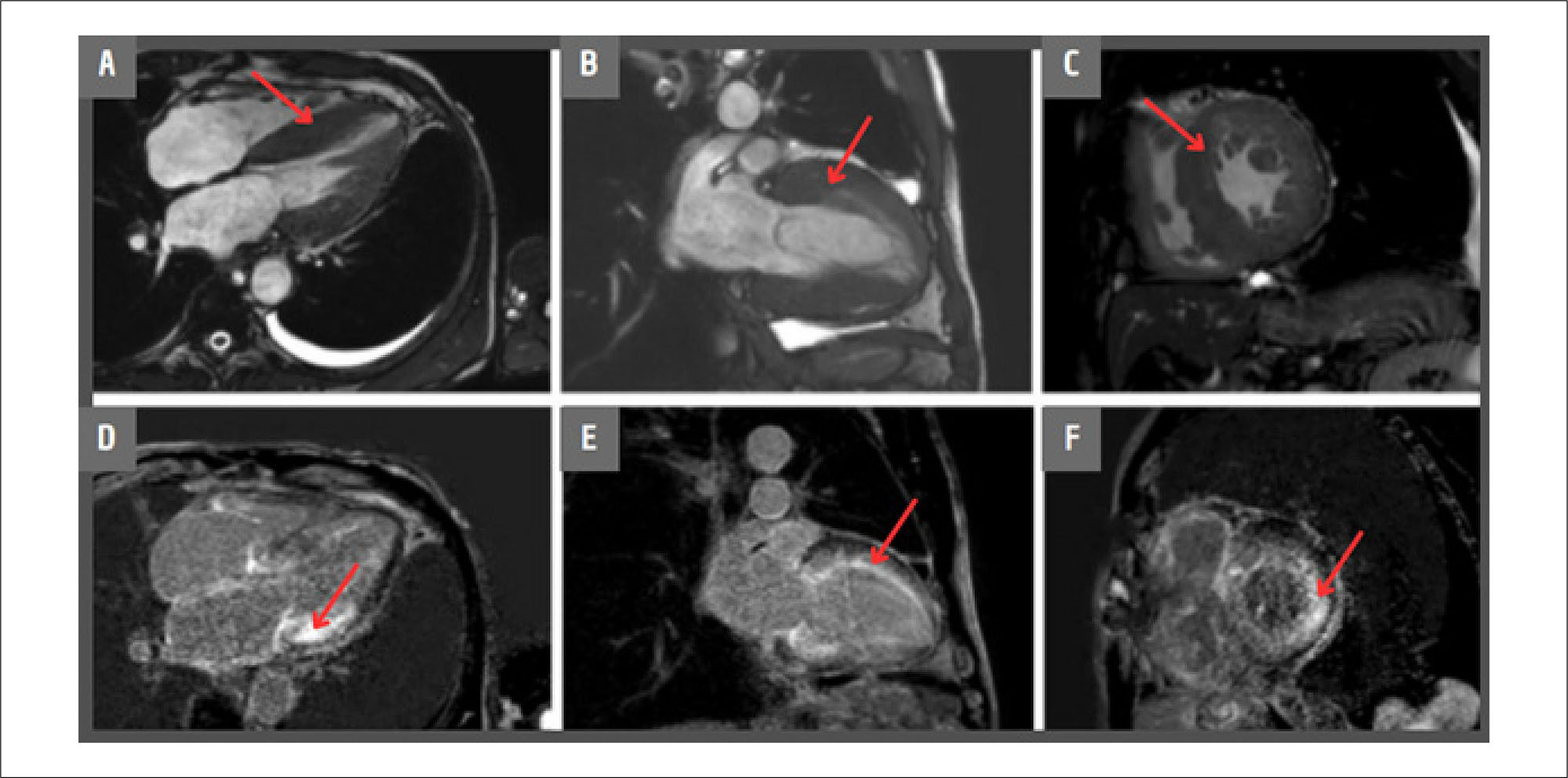
Cardiac Amyloidosis is a restrictive cardiomyopathy caused by the accumulation of amyloid protein in the heart. The advances in non-invasive diagnosis have been increasing its identification among patients with Heart Failure (HF), being previously considered to be a rare condition. Currently, it represents around 13% of the cases of Heart Failure with preserved Ejection Fraction (HFpEF). We report the case of a 72-year-old male patient who presented to the clinic reporting dyspnea and fatigue in low-effort activities. Laboratory exams were conducted, revealing increased cardiac markers, along with evidence of ventricular hypertrophy in electrocardiographic analysis. Cardiac imaging, serum free light chain (AL) assay, and endomyocardial biopsy indicated the diagnosis of AL amyloidosis. A three-dimensional model was constructed using magnetic resonance imaging (MRI) data. This model is intended to increase the awareness around amyloidosis as a possible differential diagnosis of HF, while also promoting patients’ and families’ education, demonstrating the typical structural abnormalities of the disease.

  • Amyloidosis
  • Heart Failure
  • Magnetic Resonance Imaging
  • Three-Dimensional Printing
Read Full Article
Creative Commons Attribution (CC BY) Creative Commons license
17/11/2025 DOI: 10.36660/abcimg.20250003i Views 1
Impact of 3D Printing on Cardiac Surgery in Congenital Heart Diseases: A Systematic Review and Meta-Analysis
ABC
Original Article

Impact of 3D Printing on Cardiac Surgery in Congenital Heart Diseases: A Systematic Review and Meta-Analysis

Davi Shunji Yahiro et al. Mariana de Paula Cruz Brenda Ficheira Coelho Ribeiro Luiza Meireles Teixeira … Maria Fernanda Ribeiro Mendes de Oliveira Aurea Lúcia Alves de Azevedo Grippa de Souza Ana Flávia Malheiros Torbey Juliana Serafim da Silveira Claudio Tinoco Mesquita

Abstract

Background

Congenital heart disease (CHD) poses significant challenges in surgical management due to the complexity of cardiac anatomy. Three-dimensional (3D) printing has emerged as a promising tool in preoperative planning, intraoperative guidance, and medical education for CHD surgeries.

Objectives

We aimed to systematically review the literature on the utilization and benefits of 3D printing technology in CHD surgical interventions.

Methods

A systematic search was conducted across PubMed and EMBASE for studies published up to February of 2024. We included controlled and uncontrolled studies investigating the surgical role of 3D printing in CHD patients. We conducted a single-arm meta-analysis estimating the proportion of change in treatment planning due to the use of 3D printed-models. Moreover, studies that compared 3D printing to conventional care were included into the meta-analysis. A p-value < 0.05 was considered statistically significant.

Results

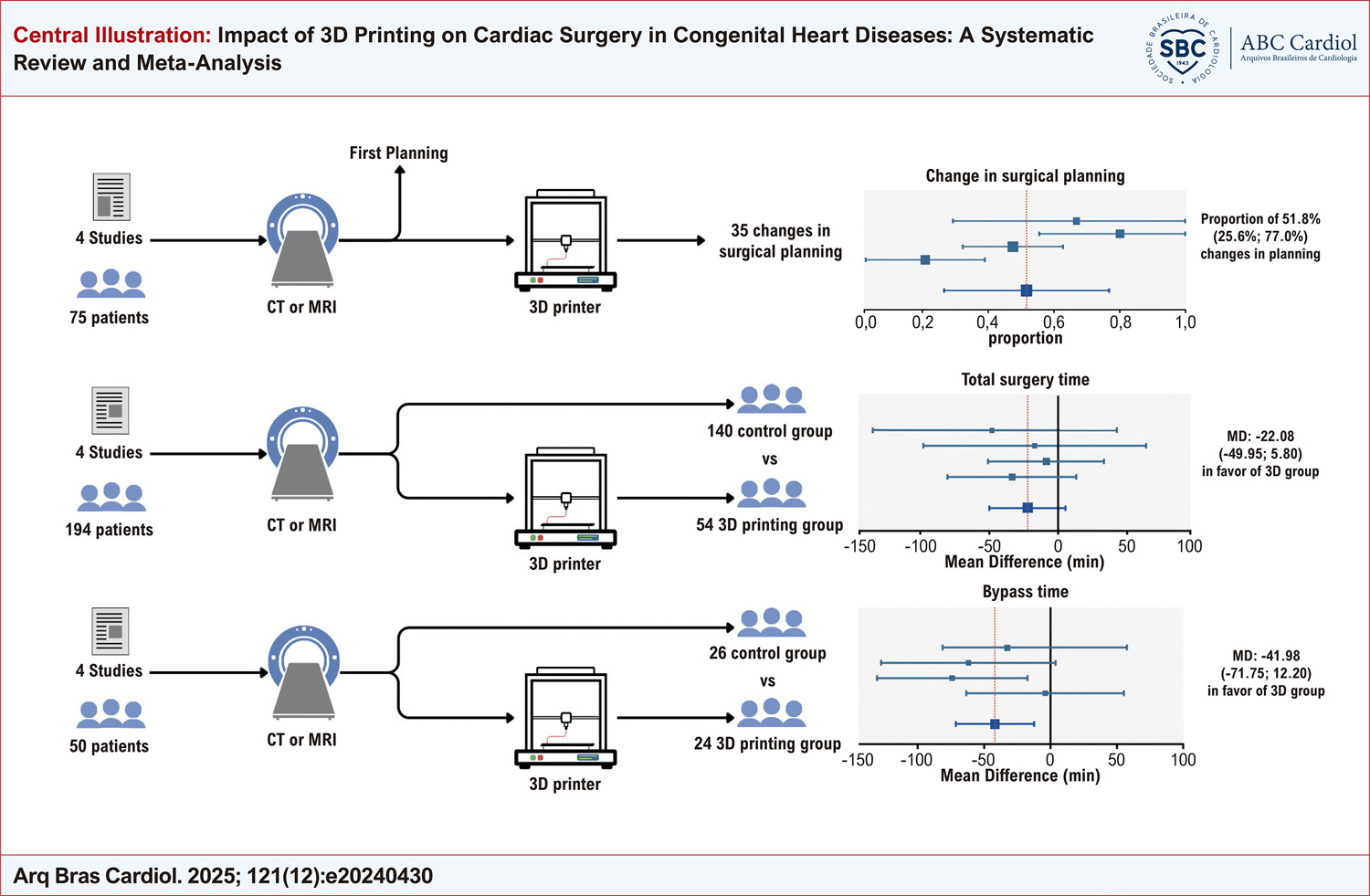
A total of 21 studies met the inclusion criteria, comprising 444 patients undergoing CHD surgeries with 3D printing assistance. Preoperative planning aided by 3D models led to changing surgical decisions in 35 of 75 cases (51.8%; 95% CI 26.6-77.0%, I2=80.68%, p=0.001) and reduced total operative time in 22.25 minutes in favor of the 3D printing group (95%CI 49.95; 5.80 min, I2=0%, p=0.817) but without statistical significance. Albeit in a smaller sample, other endpoints (mechanical ventilation and ICU time) demonstrated some benefit from the technology but without statistical significance.

Conclusions

By providing personalized anatomical models, 3D printing may facilitate surgical planning and execution. More studies are needed to investigate the effects of 3D printing on reducing intervention, hospitalization, and mechanical ventilation times.

  • Congenital Heart Defects
  • Precision Medicine
  • Preoperative Care
  • Three-Dimensional Printing
Read Full Article
Creative Commons Attribution (CC BY) Creative Commons license
14/02/2025 DOI: 10.36660/abc.20240430i
ABC
Editorial

The Role of 3D Printing in Cardiac Surgery for Congenital Heart Diseases

Vitor Ramos

3D printing is revolutionizing various industries, enabling the creation of intricate, customized physical models by layering materials such as silicone or polymers based on digital designs. Among its diverse applications, healthcare has seen significant advancements with this technology.

In cardiology, the adoption of 3D modeling has lagged compared to other fields, primarily due to the challenge of depicting the heart’s complex, dynamic nature. This pattern mirrors the initial slow integration of computed tomography and magnetic resonance imaging into cardiac care — technologies that were first widely used in non-cardiac specialties before transforming cardiovascular diagnosis and management., Over the last decade, however, 3D printing has emerged as a transformative tool in cardiac surgery, enhancing visualization, preoperative planning, and patient outcomes.

[…]

  • Congenital Heart Defects
  • Thoracic Surgery
  • Three-Dimensional Printing
Read Full Article
Creative Commons Attribution (CC BY) Creative Commons license
10/02/2025 DOI: 10.36660/abc.20240798i Views 3
Figure 1
ABCIC
Original Article

Use of a 3D Printer in the Prototyping of an Anatomical Model of the Human Heart with Morphophysiological Alterations

Kaio Gomes de Freitas et al. Ana Laura Barros Lana Vinícius Lana Ferreira Melissa Araújo Ulhôa Quintão

Abstract

Background:

Three-dimensional (3D) printing has a wide range of applications, including medicine and medical education. It presents itself as an alternative to traditional teaching-learning methods of human morphophysiology.

Objectives:

To report the initial experience in prototyping a 3D-printed anatomical model of the human heart with valvular heart disease, as well as its potential use in the active teaching-learning process in human morphophysiology.

Methods:

This is an experimental, descriptive study developed in three distinct stages: 1) Selection of the morphofunctional structure for manufacturing the 3D part; 2) design and adaptation of the object in 3D computer-aided design (CAD) software; and 3) printing and application of the prototype. Models extracted from the Thingiverse website, simulating cardiac structures, were used.

Results:

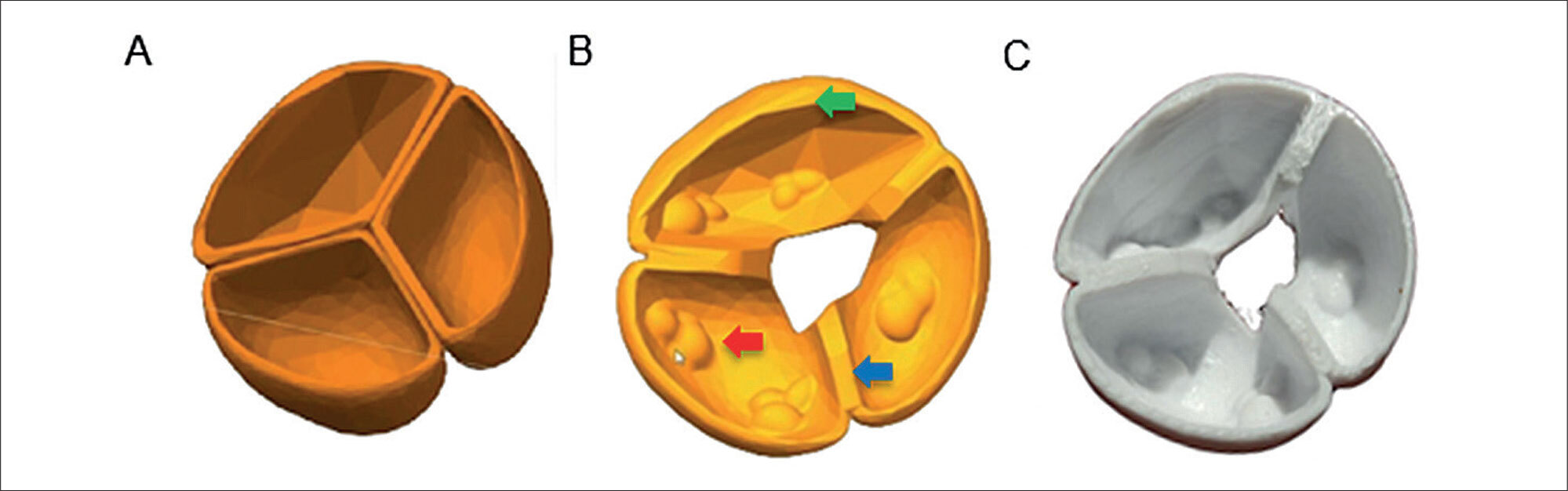
A cardiac prototype was 3D-printed to illustrate morphophysiological changes, including aortic stenosis and mitral insufficiency, modeled on the aortic and mitral valves, respectively.

Conclusion:

The valve diseases represented in the prototype accurately reflect the pathological changes used as the basis for the study, providing a detailed and precise view of the anatomy, which shows significant potential for enhancing the teaching-learning approaches in morphophysiology and medical pathology.

  • Anatomy
  • Medical Education
  • Proof of Concept Study
  • Three-Dimensional Printing
Read Full Article
Creative Commons Attribution (CC BY) Creative Commons license
28/05/2024 DOI: 10.36660/abcimg.20240012i Views 1
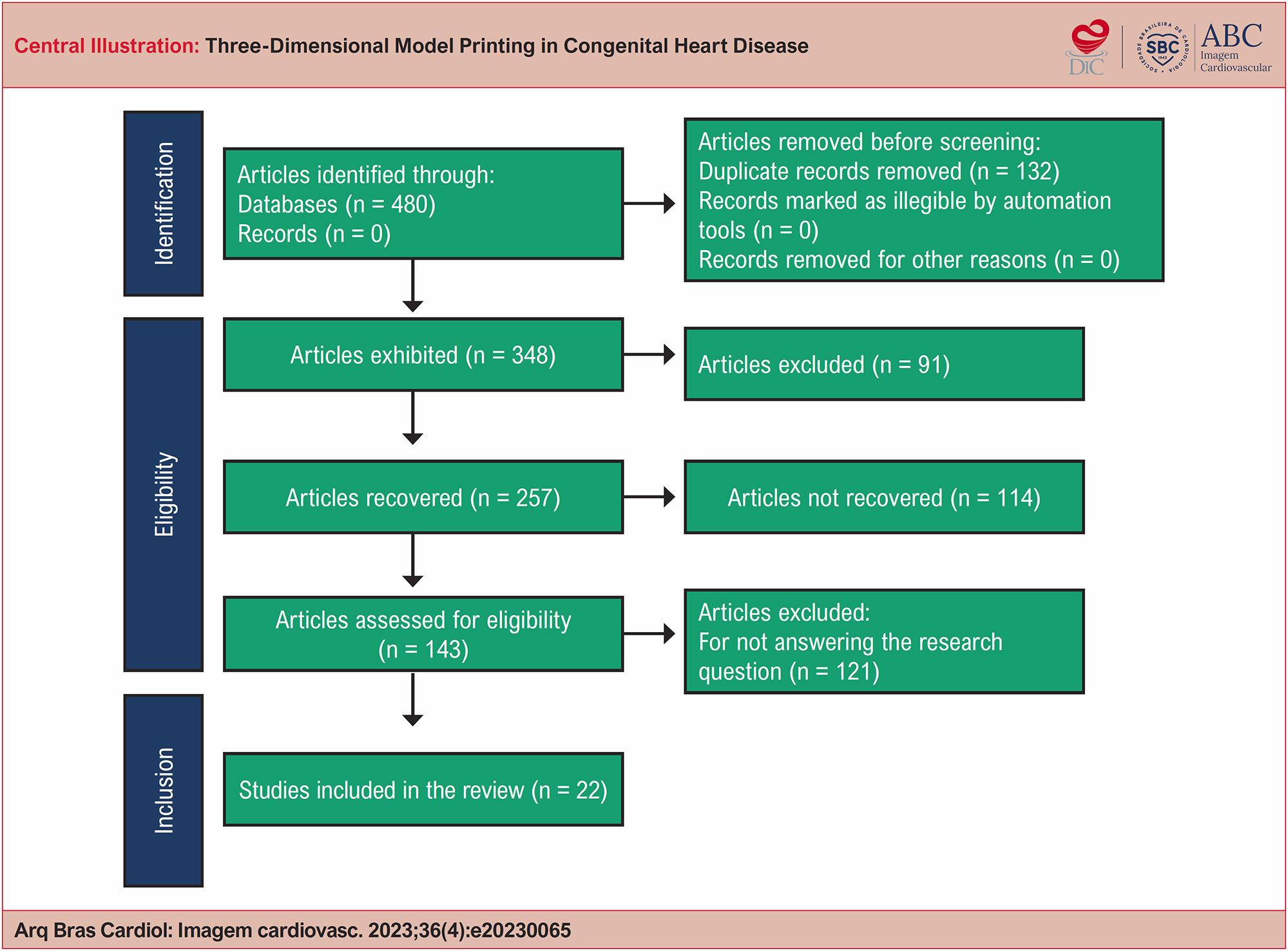
Three-Dimensional Model Printing in Congenital Heart Disease
ABCIC
Review Article

Three-Dimensional Model Printing in Congenital Heart Disease

Milton Benevides Freitas et al. Jose Luiz Figueiredo Francisco Candido Cajueiro Rafaela Melo Lima … Marcio Handerson Freitas Cristiane Maria Teixeira

Abstract

Introduction:

Three-dimensional (3D) printing refers to a set of methods used to create solid 3D objects, based on digital files. The use of 3D models can improve understanding and knowledge about congenital heart diseases. Their usefulness has been demonstrated in preoperative planning, simulation of interventional procedures, and in surgical decision-making. The objective of this study is to offer a review of the literature on the various rapid prototyping methods and their applicability in medical practice, especially in congenital heart diseases.

Methods:

This is a literature review study. Data for discussion were collected by consulting the following electronic database: LILACS, MEDLINE, SCOPUS, and the Scientific Electronic Library Online.

Results:

During the period evaluated by the study, a total of 480 articles were published addressing the topic of 3D printing (TDP) for heart disease, with 196 articles related to TDP for congenital heart disease. Of these, 22 were included in this study.

Conclusion:

TDP is a technology that is still under construction. It has the potential to assist physicians and surgical teams in therapeutic decision-making, to promote learning for students in specialization and postgraduate studies, to contribute to surgical skills training, and to clarify information for family members.

  • Cardiology
  • Congenital Heart Defects
  • Thoracic Surgery
  • Three-Dimensional Printing
Read Full Article
Creative Commons Attribution (CC BY) Creative Commons license
21/12/2023 DOI: 10.36660/abcimg.20230065i
ABCIC
Review Article

Using Three-Dimensional Printing in Surgical Mitral Valve Repairs

Rodrigo Bahiense Visconti et al. Luciano Herman Juaçaba Belem Antonio Carlos Dos Santos Nogueira Maria Claudia Lembo Cornélio Luis Henrique Weitzel

Abstract

Mitral regurgitation is an important cause of morbidity and mortality, and surgical mitral valve repair continues to be the treatment of choice when feasible. We use three-dimensional echocardiography associated with three-dimensional printing to create surgical models that allow trainees to practice or improve surgical techniques in order to improve the outcomes of surgical repairs, contributing to more advanced medical training.

  • Echocardiography
  • Mitral Valve Annuloplasty
  • Mitral Valve Insufficiency
  • Thoracic Surgery
  • Three-Dimensional Printing
Read Full Article
Creative Commons Attribution (CC BY) Creative Commons license
20/12/2023 DOI: 10.36660/abcimg.20230101i Views 1

How to cite this article

EndNote RIS

Electronic Document Format (Vancouver)

Daungsupawong H, Wiwanitkit V. Development of 3D-Printed Congenital Heart Disease Models Using Feasible Low-Cost Workflow. Arquivos Brasileiros de Cardiologia 2026;123(5):e20260186.

Electronic Document Format (ABNT)

Daungsupawong, Hinpetch; Wiwanitkit, Viroj. Development of 3D-Printed Congenital Heart Disease Models Using Feasible Low-Cost Workflow. Arquivos Brasileiros de Cardiologia, v. 123, n. 5, e20260186, Aug. 2026.

Electronic Document Format (APA)

Daungsupawong, H., & Wiwanitkit, V. (2026). Development of 3D-Printed Congenital Heart Disease Models Using Feasible Low-Cost Workflow. Arquivos Brasileiros de Cardiologia, 123(5), e20260186.

Electronic Document Format (ISO)

Daungsupawong, Hinpetch and Wiwanitkit, Viroj. Development of 3D-Printed Congenital Heart Disease Models Using Feasible Low-Cost Workflow. Arquivos Brasileiros de Cardiologia [online]. 2026, vol. 123, n. 5, [cited 2026-10-14], e20260186. Available from: <https://journals.cardiol.br/en/article/development-of-3d-printed-congenital-heart-disease-models-using-feasible-low-cost-workflow/>. ISSN 0066-782X

EndNote RIS

Electronic Document Format (Vancouver)

Ramos V. The Role of Low-Cost 3D Printing for Education in Congenital Heart Diseases. Arquivos Brasileiros de Cardiologia 2026;123(1):e20250805.

Electronic Document Format (ABNT)

Ramos, Vítor. The Role of Low-Cost 3D Printing for Education in Congenital Heart Diseases. Arquivos Brasileiros de Cardiologia, v. 123, n. 1, e20250805, Mar. 2026.

Electronic Document Format (APA)

Ramos, V. (2026). The Role of Low-Cost 3D Printing for Education in Congenital Heart Diseases. Arquivos Brasileiros de Cardiologia, 123(1), e20250805.

Electronic Document Format (ISO)

Ramos, Vítor. The Role of Low-Cost 3D Printing for Education in Congenital Heart Diseases. Arquivos Brasileiros de Cardiologia [online]. 2026, vol. 123, n. 1, [cited 2026-10-14], e20250805. Available from: <https://journals.cardiol.br/en/article/the-role-of-low-cost-3d-printing-for-education-in-congenital-heart-diseases/>. ISSN 0066-782X

EndNote RIS

Electronic Document Format (Vancouver)

Cajueiro FCM, Croti UA, Amorim Júnior RF, Cardoso MRR, Costa CH, Marchi CHD, Borim BC, et al. Development of 3D-Printed Congenital Heart Disease Models Using Feasible Low-Cost Workflow – A Potential Tool to Improve Pediatric Cardiology Education. Arquivos Brasileiros de Cardiologia 2026;123(1):e20250419.

Electronic Document Format (ABNT)

Cajueiro, Francisco Candido Monteiro; Croti, Ulisses Alexandre; Amorim Júnior, Raimundo Francisco de; Cardoso, Mariana Ribeiro Rodero; Costa, Carlos Henrique; Marchi, Carlos Henrique De; Borim, Bruna Cury; Godoy, Moacir Fernandes de; Freitas, Milton Benevides de; Moscardini, Airton Camacho. Development of 3D-Printed Congenital Heart Disease Models Using Feasible Low-Cost Workflow – A Potential Tool to Improve Pediatric Cardiology Education. Arquivos Brasileiros de Cardiologia, v. 123, n. 1, e20250419, Feb. 2026.

Electronic Document Format (APA)

Cajueiro, F. C. M., Croti, U. A., Amorim Júnior, R. F. , Cardoso, M. R. R., Costa, C. H., Marchi, C. H. D., Borim, B. C., Godoy, M. F. , Freitas, M. B. , & Moscardini, A. C. (2026). Development of 3D-Printed Congenital Heart Disease Models Using Feasible Low-Cost Workflow – A Potential Tool to Improve Pediatric Cardiology Education. Arquivos Brasileiros de Cardiologia, 123(1), e20250419.

Electronic Document Format (ISO)

Cajueiro, Francisco Candido Monteiro and Croti, Ulisses Alexandre and Amorim Júnior, Raimundo Francisco de and Cardoso, Mariana Ribeiro Rodero and Costa, Carlos Henrique and Marchi, Carlos Henrique De and Borim, Bruna Cury and Godoy, Moacir Fernandes de and Freitas, Milton Benevides de and Moscardini, Airton Camacho. Development of 3D-Printed Congenital Heart Disease Models Using Feasible Low-Cost Workflow – A Potential Tool to Improve Pediatric Cardiology Education. Arquivos Brasileiros de Cardiologia [online]. 2026, vol. 123, n. 1, [cited 2026-10-14], e20250419. Available from: <https://journals.cardiol.br/en/article/development-of-3d-printed-congenital-heart-disease-models-using-feasible-low-cost-workflow-a-potential-tool-to-improve-pediatric-cardiology-education/>. ISSN 0066-782X

EndNote RIS

Electronic Document Format (Vancouver)

Cruz MP, Yahiro DS, Neves DG, Barbosa RP, Fabro AT, Garibaldi PMM, Simões M, et al. 3D Printing of a Heart With Amyloidosis. ABC Imagem Cardiovascular 2025;38(3):e20250003.

Electronic Document Format (ABNT)

Cruz, Mariana de Paula; Yahiro, Davi Shunji; Neves, Daniel Gama das; Barbosa, Renato Pereira; Fabro, Alexandre Todorovic; Garibaldi, Pedro Manoel Marques; Simões, Marcus; Mesquita, Claudio Tinoco. 3D Printing of a Heart With Amyloidosis. ABC Imagem Cardiovascular, v. 38, n. 3, e20250003, Nov. 2025.

Electronic Document Format (APA)

Cruz, M. P., Yahiro, D. S., Neves, D. G. , Barbosa, R. P., Fabro, A. T., Garibaldi, P. M. M., Simões, M., & Mesquita, C. T. (2025). 3D Printing of a Heart With Amyloidosis. ABC Imagem Cardiovascular, 38(3), e20250003.

Electronic Document Format (ISO)

Cruz, Mariana de Paula and Yahiro, Davi Shunji and Neves, Daniel Gama das and Barbosa, Renato Pereira and Fabro, Alexandre Todorovic and Garibaldi, Pedro Manoel Marques and Simões, Marcus and Mesquita, Claudio Tinoco. 3D Printing of a Heart With Amyloidosis. ABC Imagem Cardiovascular [online]. 2025, vol. 38, n. 3, [cited 2026-10-14], e20250003. Available from: <https://journals.cardiol.br/en/article/3d-printing-of-a-heart-with-amyloidosis/>. ISSN 2318-8219

EndNote RIS

Electronic Document Format (Vancouver)

Yahiro DS, Cruz MP, Ribeiro BFC, Teixeira LM, Oliveira MFRM, Souza ALAAG, Torbey AFM, et al. Impact of 3D Printing on Cardiac Surgery in Congenital Heart Diseases: A Systematic Review and Meta-Analysis. Arquivos Brasileiros de Cardiologia 2025;121(12):e20240430.

Electronic Document Format (ABNT)

Yahiro, Davi Shunji; Cruz, Mariana de Paula; Ribeiro, Brenda Ficheira Coelho; Teixeira, Luiza Meireles; Oliveira, Maria Fernanda Ribeiro Mendes de; Souza, Aurea Lúcia Alves de Azevedo Grippa de; Torbey, Ana Flávia Malheiros; Silveira, Juliana Serafim da; Mesquita, Claudio Tinoco. Impact of 3D Printing on Cardiac Surgery in Congenital Heart Diseases: A Systematic Review and Meta-Analysis. Arquivos Brasileiros de Cardiologia, v. 121, n. 12, e20240430, Feb. 2025.

Electronic Document Format (APA)

Yahiro, D. S., Cruz, M. P., Ribeiro, B. F. C., Teixeira, L. M., Oliveira, M. F. R. M. , Souza, A. L. A. A. G. , Torbey, A. F. M., Silveira, J. S. , & Mesquita, C. T. (2025). Impact of 3D Printing on Cardiac Surgery in Congenital Heart Diseases: A Systematic Review and Meta-Analysis. Arquivos Brasileiros de Cardiologia, 121(12), e20240430.

Electronic Document Format (ISO)

Yahiro, Davi Shunji and Cruz, Mariana de Paula and Ribeiro, Brenda Ficheira Coelho and Teixeira, Luiza Meireles and Oliveira, Maria Fernanda Ribeiro Mendes de and Souza, Aurea Lúcia Alves de Azevedo Grippa de and Torbey, Ana Flávia Malheiros and Silveira, Juliana Serafim da and Mesquita, Claudio Tinoco. Impact of 3D Printing on Cardiac Surgery in Congenital Heart Diseases: A Systematic Review and Meta-Analysis. Arquivos Brasileiros de Cardiologia [online]. 2025, vol. 121, n. 12, [cited 2026-10-14], e20240430. Available from: <https://journals.cardiol.br/en/article/impact-of-3d-printing-on-cardiac-surgery-in-congenital-heart-diseases-a-systematic-review-and-meta-analysis/>. ISSN 0066-782X

EndNote RIS

Electronic Document Format (Vancouver)

Ramos V. The Role of 3D Printing in Cardiac Surgery for Congenital Heart Diseases. Arquivos Brasileiros de Cardiologia 2025;121(12):e20240798.

Electronic Document Format (ABNT)

Ramos, Vitor. The Role of 3D Printing in Cardiac Surgery for Congenital Heart Diseases. Arquivos Brasileiros de Cardiologia, v. 121, n. 12, e20240798, Feb. 2025.

Electronic Document Format (APA)

Ramos, V. (2025). The Role of 3D Printing in Cardiac Surgery for Congenital Heart Diseases. Arquivos Brasileiros de Cardiologia, 121(12), e20240798.

Electronic Document Format (ISO)

Ramos, Vitor. The Role of 3D Printing in Cardiac Surgery for Congenital Heart Diseases. Arquivos Brasileiros de Cardiologia [online]. 2025, vol. 121, n. 12, [cited 2026-10-14], e20240798. Available from: <https://journals.cardiol.br/en/article/the-role-of-3d-printing-in-cardiac-surgery-for-congenital-heart-diseases/>. ISSN 0066-782X

EndNote RIS

Electronic Document Format (Vancouver)

Freitas KG, Lana ALB, Ferreira VL, Quintão MAU. Use of a 3D Printer in the Prototyping of an Anatomical Model of the Human Heart with Morphophysiological Alterations. ABC Imagem Cardiovascular 2024;37(2):e20240012.

Electronic Document Format (ABNT)

Freitas, Kaio Gomes de; Lana, Ana Laura Barros; Ferreira, Vinícius Lana; Quintão, Melissa Araújo Ulhôa. Use of a 3D Printer in the Prototyping of an Anatomical Model of the Human Heart with Morphophysiological Alterations. ABC Imagem Cardiovascular, v. 37, n. 2, e20240012, May. 2024.

Electronic Document Format (APA)

Freitas, K. G. , Lana, A. L. B., Ferreira, V. L., & Quintão, M. A. U. (2024). Use of a 3D Printer in the Prototyping of an Anatomical Model of the Human Heart with Morphophysiological Alterations. ABC Imagem Cardiovascular, 37(2), e20240012.

Electronic Document Format (ISO)

Freitas, Kaio Gomes de and Lana, Ana Laura Barros and Ferreira, Vinícius Lana and Quintão, Melissa Araújo Ulhôa. Use of a 3D Printer in the Prototyping of an Anatomical Model of the Human Heart with Morphophysiological Alterations. ABC Imagem Cardiovascular [online]. 2024, vol. 37, n. 2, [cited 2026-10-14], e20240012. Available from: <https://journals.cardiol.br/en/article/use-of-a-3d-printer-in-the-prototyping-of-an-anatomical-model-of-the-human-heart-with-morphophysiological-alterations/>. ISSN 2318-8219

EndNote RIS

Electronic Document Format (Vancouver)

Freitas MB, Figueiredo JL, Cajueiro FC, Lima RM, Freitas MH, Teixeira CM. Three-Dimensional Model Printing in Congenital Heart Disease. ABC Imagem Cardiovascular 2023;36(4):e20230065.

Electronic Document Format (ABNT)

Freitas, Milton Benevides; Figueiredo, Jose Luiz; Cajueiro, Francisco Candido; Lima, Rafaela Melo; Freitas, Marcio Handerson; Teixeira, Cristiane Maria. Three-Dimensional Model Printing in Congenital Heart Disease. ABC Imagem Cardiovascular, v. 36, n. 4, e20230065, Dec. 2023.

Electronic Document Format (APA)

Freitas, M. B., Figueiredo, J. L., Cajueiro, F. C., Lima, R. M., Freitas, M. H., & Teixeira, C. M. (2023). Three-Dimensional Model Printing in Congenital Heart Disease. ABC Imagem Cardiovascular, 36(4), e20230065.

Electronic Document Format (ISO)

Freitas, Milton Benevides and Figueiredo, Jose Luiz and Cajueiro, Francisco Candido and Lima, Rafaela Melo and Freitas, Marcio Handerson and Teixeira, Cristiane Maria. Three-Dimensional Model Printing in Congenital Heart Disease. ABC Imagem Cardiovascular [online]. 2023, vol. 36, n. 4, [cited 2026-10-14], e20230065. Available from: <https://journals.cardiol.br/en/article/three-dimensional-model-printing-in-congenital-heart-disease/>. ISSN 2318-8219

EndNote RIS

Electronic Document Format (Vancouver)

Visconti RB, Belem LHJ, Nogueira ACDS, Cornélio MCL, Weitzel LH. Using Three-Dimensional Printing in Surgical Mitral Valve Repairs. ABC Imagem Cardiovascular 2023;36(4):e20230101.

Electronic Document Format (ABNT)

Visconti, Rodrigo Bahiense; Belem, Luciano Herman Juaçaba; Nogueira, Antonio Carlos Dos Santos; Cornélio, Maria Claudia Lembo; Weitzel, Luis Henrique. Using Three-Dimensional Printing in Surgical Mitral Valve Repairs. ABC Imagem Cardiovascular, v. 36, n. 4, e20230101, Dec. 2023.

Electronic Document Format (APA)

Visconti, R. B., Belem, L. H. J., Nogueira, A. C. D. S., Cornélio, M. C. L., & Weitzel, L. H. (2023). Using Three-Dimensional Printing in Surgical Mitral Valve Repairs. ABC Imagem Cardiovascular, 36(4), e20230101.

Electronic Document Format (ISO)

Visconti, Rodrigo Bahiense and Belem, Luciano Herman Juaçaba and Nogueira, Antonio Carlos Dos Santos and Cornélio, Maria Claudia Lembo and Weitzel, Luis Henrique. Using Three-Dimensional Printing in Surgical Mitral Valve Repairs. ABC Imagem Cardiovascular [online]. 2023, vol. 36, n. 4, [cited 2026-10-14], e20230101. Available from: <https://journals.cardiol.br/en/article/using-three-dimensional-printing-in-surgical-mitral-valve-repairs/>. ISSN 2318-8219

  • About ABC Family
  • Internal Regulation
  • Editorial Board
  • Brazilian Society of Cardiology (SBC)

Issues

SBC Guidelines

  • Videos
  • Podcasts
  • News