
| ABC
ABC Family Arquivos Brasileiros de Cardiologia International Journal of Cardiovascular Sciences ABC Heart Failure & Cardiomyopathy ABC Imagem Cardiovascular
Português English
ABC Family | ABC
Português English
  • About
    • About the Journal
    • Internal Regulation
    • Editors Section
    • Editorial Board
    • History
    • SBC Award
  • Instructions to Authors
    • Guidelines for Publication
    • Editorial Policy
    • Ethics Policy
    • Policy on the Use of Artificial Intelligence
    • Mandatory Publication Form
    • Publication Fee
  • Issues
  • SBC Guidelines
  • Abstracts
    • How to Publish an Abstract Supplement?
    • Supplements from the Brazilian Congress of Cardiology
  • About
    • About the Journal
    • Internal Regulation
    • Editors Section
    • Editorial Board
    • History
    • SBC Award
  • Instructions to Authors
    • Guidelines for Publication
    • Editorial Policy
    • Ethics Policy
    • Policy on the Use of Artificial Intelligence
    • Mandatory Publication Form
    • Publication Fee
  • Issues
  • SBC Guidelines
  • Abstracts
    • How to Publish an Abstract Supplement?
    • Supplements from the Brazilian Congress of Cardiology

ABC Family

  • ABC Family
  • Arquivos Brasileiros de Cardiologia
  • International Journal of Cardiovascular Sciences
  • ABC Heart Failure & Cardiomyopathy
  • ABC Imagem Cardiovascular
Search in

No content found.

Journals
Ordering
Article types
Others

  1. Home
  2. ABC
  3. Issues
  4. 2025, Volume 122, Number 5
Editorial

Will You Tell Them When They Are Wrong? Automation Bias and Artificial Intelligence in Medicine

Marcio Sommer Bittencourt

The use of decision support tools and automation in medical practice is not new. Early tools employed simple regression models to reduce heterogeneity and offer more structured care. In cardiology, initial examples of decision support tools included the Framingham risk scores for primary prevention risk stratification and automated sliding scale dose adjustments for heparin or warfarin. Since then, automation processes have become more sophisticated and are now widespread in many routine aspects of medical practice. In cardiology, these include automated preliminary interpretations of electrocardiography (ECG) tracings as well as automated measurements and image analysis in echocardiography, nuclear medicine, and cardiac magnetic resonance imaging. Other automated clinical decision support systems help reduce prescribing errors by alerting clinicians to drug-drug interactions or incorrect dosages, for example. With recent advances in artificial intelligence (AI), expectations for the future of such tools have grown dramatically. Yet, the potential negative implications of these technologies have received considerably less attention.

Clinical decision support systems can improve medical decision-making and patient outcomes. However, these systems are not flawless and may produce incorrect outputs. Most studies assessing their performance rely on conventional medical metrics such as sensitivity, specificity, accuracy, and area under the receiver operating characteristic curve. Yet, it is far more important to evaluate the real-world impact of these tools, particularly in light of how clinicians interact with them. This is especially relevant given that the European Union Artificial Intelligence Act mandates human oversight for high-risk AI systems. The issue becomes even more critical with the widespread use of generative AI chatbots, as the current generation of complex AI tools has led to a growing trend of overreliance on imperfect automation.

[…]

  • Artificial Intelligence
  • Bias
  • Cardiology
Read Full Article
Creative Commons Attribution (CC BY) Creative Commons license
14/07/2025 DOI: 10.36660/abc.20250300i Views 2
Editorial

Acute Heart Failure Due to Chagas Disease: Still a Challenge in the 21st Century

Roberto M. Saraiva et al. Luciana F. Portela Andréa R. Costa

Although new Chagas disease (CD) cases have decreased in the last decades through control of vector-borne and blood transfusion transmission, around 3,7 million Brazilians still live chronically affected by this disease. As around 30-40% of this population presents the cardiac form (CCC), and heart failure (HF) is present in about 10% of those with CCC, CD is a major cause of HF in endemic countries, ranging from 4% to 50%.– The paper by Silva et al. adds important updated epidemiological information that 8.7% of the patients admitted due to acute HF in a large Brazilian multicenter registry between 2011 and 2018 had CCC. Therefore, even nowadays, it is still imperative to include CD in the diagnosis workup of patients with HF of unknown etiology. Another important aspect of the HF due to CD is that it presents higher mortality,, and stroke incidence than HF related to other etiologies. The paper by Silva et al confirmed that among those admitted due to acute HF, patients with CD had a higher rate of the composite of death or heart transplant during hospital stay and a higher cumulative incidence of death after 3, 6, and 12 months after discharge.

The worst outcome in CD may be related to specific characteristics of the disease, including a progressive fibrosing myocarditis with a cumulative increase in myocardial fibrosis over time, more frequent cardioembolic phenomena, more frequent life-threatening arrhythmias, and worse hemodynamics and left ventricular (LV) systolic function. In fact, Silva et al. described a lower systolic blood pressure and LV ejection fraction among patients with CD. Another aspect described by Silva et al is that signs of right-sided HF were more frequent in patients with CCC.

[…]

  • Chagas disease
  • Heart Failure
  • Prognosis
Read Full Article
Creative Commons Attribution (CC BY) Creative Commons license
14/07/2025 DOI: 10.36660/abc.20250332i Views 3
Figure 1
Editorial

Nothing about Women without Women is for Women

Camila Perez de Souza Arthur et al. Omar Asdrúbal Vilca Mejia

Adjusted analyses show that women have higher mortality rates than men after coronary artery bypass grafting (CABG), in addition to receiving a lower-quality surgical technique., Current strategies focus on preoperative optimization and standardization of intra- and postoperative care, as well as including more women in research. Currently, women are underrepresented, reaching up to 16% of the sample in some trials. This reinforces the call for greater equity and greater inclusion of women in research projects, or, on the contrary, for specific studies on women. I believe that we have been slow to reflect on this reality, since female gender has been considered a predictor of mortality in CABG since the publication of CASS in 1981 and has remained constant, including in our setting as part of InsCor. This was once again recognized in this important article by Goncharov et al. Identifying female sex as a predictor of mortality in a single-center and retrospective study with 9,845 patients, where less than 20% were women. However, unlike other studies, the difference in mortality between women and men was lost after pairing.

The propensity score adjusts an analysis based on the observed variables, while randomized studies balance both known and unknown variables. Bias arises when differences in results may be a consequence of secondary characteristics of the patients, and this can be noticeable in a sample spanning almost 3 decades. Within this, perhaps the variable that may have most influenced these results was the inclusion of surgeries combined with CABG and not just CABG alone. Women in general are operated on with more comorbidities and arrive at a more advanced stage for surgery.

[…]

  • Cardiovascular Surgical Procedures
  • Outcomes Assessment in Health Care
  • Women's Health
Read Full Article
Creative Commons Attribution (CC BY) Creative Commons license
14/07/2025 DOI: 10.36660/abc.20250323i Views 2
Figure 1
Research Letter

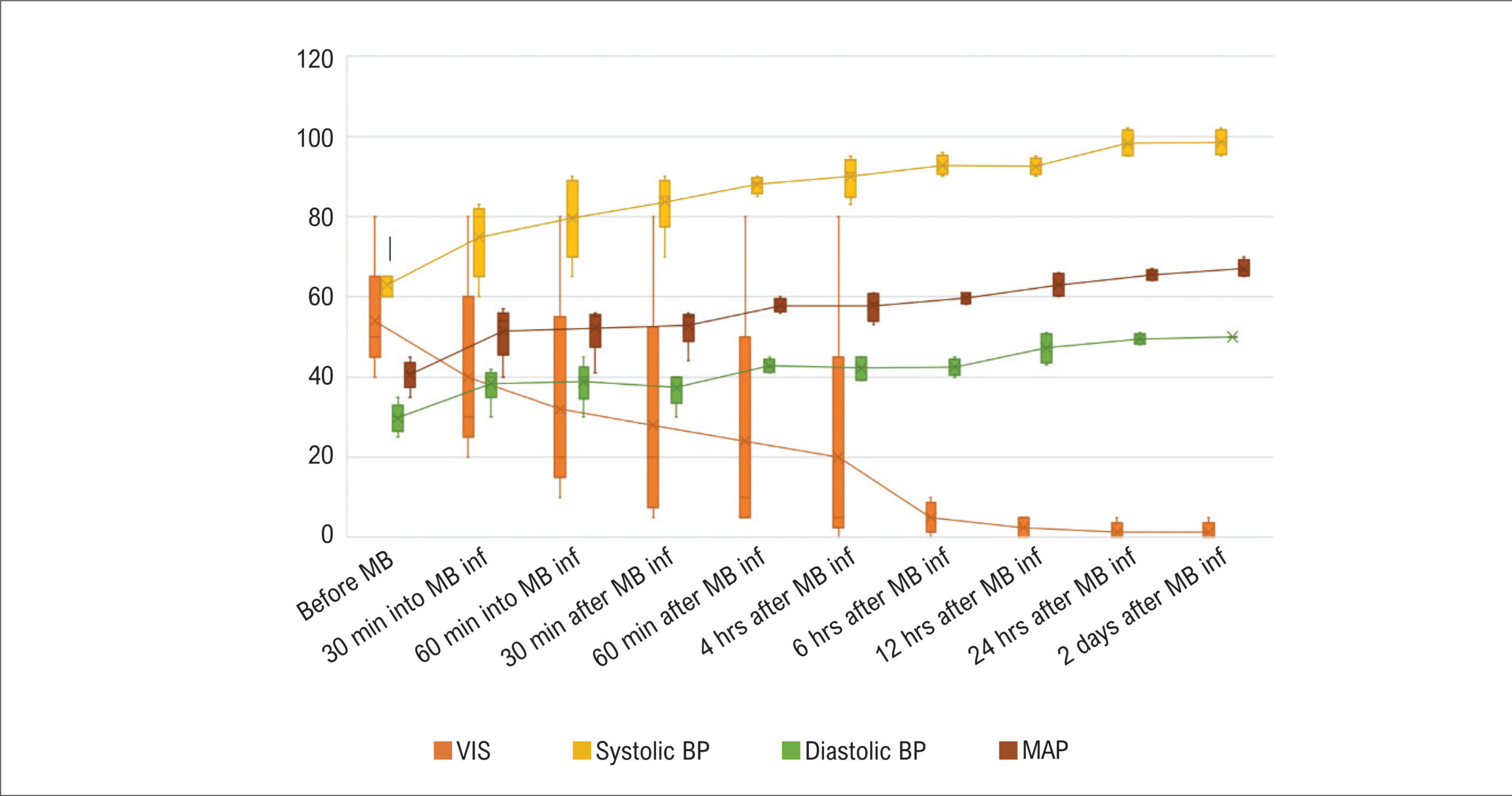
Vasoplegic Syndrome under Extracorporeal Membrane Oxygenation: Successful Treatment with Methylene Blue

Ahmet Aydin et al. Banu Katlan Selman Kesici

Abstract

A vasoplegic syndrome is a state of hypotension that develops due to low systemic vascular resistance and is associated with a high mortality rate. Methylene blue is known to improve hypotension and reduce vasopressor requirements by increasing resistance in vasoplegia by inhibiting nitric oxide synthase. Here, we aimed to report on the use and effectiveness of methylene blue to treat severely hypotensive five vasoplegic syndrome cases despite extracorporeal membrane oxygenation. We concluded that Methylene blue can be used as a lifesaving treatment for vasoplegic syndrome refractory to standard supportive treatments, including ECMO.

  • Extracorporeal Membrane Oxygenation
  • methylene blue
  • Vasoplegia
Read Full Article
Creative Commons Attribution (CC BY) Creative Commons license
07/07/2025 DOI: 10.36660/abc.20250070i Views 1
Editorial

Beyond Limits: What 366 Consecutive Marathons Reveal about the Human Heart

Fabricio Braga et al. Ricardo Stein

Western culture has always celebrated the pursuit of physical extremes — from ancient epics to modern ultramarathons, endurance has always been more than sport: it is narrative, identity, and defiance of perceived limits. Completing a single marathon already places substantial stress on the cardiovascular, metabolic, and musculoskeletal systems. Doing a Marathon 366 times over 366 consecutive days shifts the focus from physiology to philosophy: Just how far can the human heart truly go?

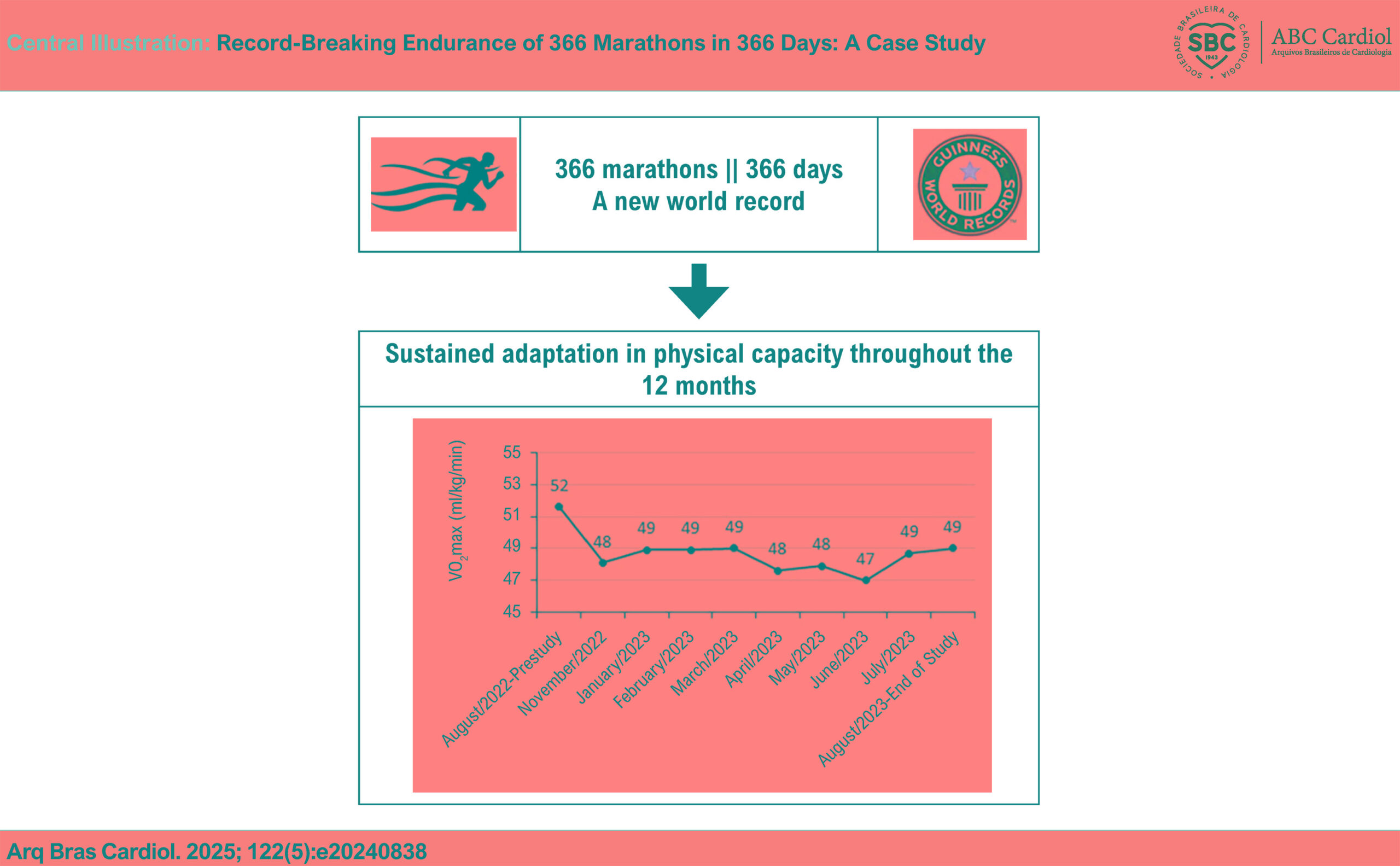
The case study published in this issue of Arquivos Brasileiros de Cardiologia documents a feat previously unimaginable: a Brazilian amateur athlete completed a full marathon every single day for a year — all under systematic medical supervision. More than a Guinness World Record, this is a real-time exploration of human adaptability. The athlete’s cardiovascular system remained remarkably stable throughout the year, with maximal oxygen uptake (VO2 max), cardiac structure, and biomarkers within physiological ranges, despite the extreme exercise volume.

[…]

  • Athlete's heart
  • Intense Exercise
  • Limits
  • Marathon
  • Running
Read Full Article
Creative Commons Attribution (CC BY) Creative Commons license
04/07/2025 DOI: 10.36660/abc.20250231i
Editorial

Echoes of the Past: The Intriguing Link between Chagas Disease and Insulin

Marcia M. Noya-Rabelo et al. Olga Souza

Chagas disease is currently classified as one of several neglected tropical diseases and as one of the five neglected parasitic infections prioritized by the World Health Organization and the Center for Disease Control for public health intervention. This underscores the fact that the causative agent of American trypanosomiasis has existed for approximately 9.000 years, with positive samples dating back to 7050 B.C. The life cycle of Trypanosoma cruzi (T. cruzi) comprises several morphological transformations involving both mammalian and vector hosts, where three different major developmental stages are identified: epimastigotes, trypomastigotes, and amastigotes. Traditionally, T. cruzi is known to target the heart and gastrointestinal tract; however, its parasitism also results in structural changes and pro-inflammatory effects in adipose tissue and the pancreas.

In this edition of the Arquivos Brasileiros de Cardiologia, a longitudinal study by Barbosa-Ferreira et al. evaluated the levels of insulin, adiponectin, and leptin before and after treatment of acute Chagas disease with benznidazole. Twenty-eight subjects were divided into two groups: a control group (15 subjects) and an acute Chagas disease group (13 subjects). The authors found no significant differences in serum levels of adiponectin and leptin between the groups. In contrast, serum levels of insulin were lower in the acute Chagas group, both before and after treatment, compared to the control group. Additionally, insulin levels were lower in the post-treatment phase compared to the pre-treatment phase.

[…]

  • Acute Chagas Disease
  • Insulin
Read Full Article
Creative Commons Attribution (CC BY) Creative Commons license
04/07/2025 DOI: 10.36660/abc.20250295i Views 1
Letter to the Editor

How to Assess Impaired Right Heart Electrical Conduction in Patients with Pulmonary Arterial Hypertension?

Naoya Kataoka et al. Teruhiko Imamura

To editor

The identification of an optimal modality to monitor the severity of pulmonary arterial hypertension (PAH) remains imperative. The authors demonstrated that a prolonged RS interval on the electrocardiogram was associated with adverse clinical outcomes in this cohort, under the hypothesis that right heart electrical conduction is compromised in patients with severe PAH. Nonetheless, several concerns merit consideration.

[…]

  • Bundle Branch Block
  • Electrocardiography
  • Heart Failure
Read Full Article
Creative Commons Attribution (CC BY) Creative Commons license
20/06/2025 DOI: 10.36660/abc.20250159i Views 2
Editorial

A New Era of Hypertension Assessment: Non-Invasive Central and Intracranial Waveform Analysis

Juan Carlos Yugar-Toledo et al. Heitor Moreno

The relationship between arterial hypertension and cerebral blood flow (CBF) has been extensively studied due to the role that blood pressure plays in maintaining adequate cerebral perfusion. Cerebral autoregulation is the mechanism by which cerebral blood flow remains relatively constant despite variations in perfusion pressure. In normotensive individuals, the autoregulation range is approximately between mean arterial pressures of 60 to 150 mmHg.,

In hypertensive patients, there is evidence that this curve shifts to higher values, causing: a) The hypertensive brain to tolerate higher blood pressures before vasodilation or vasoconstriction occurs; b) On the other hand, abrupt drops in blood pressure can result in cerebral hypoperfusion, since the lower threshold for autoregulation may be higher.

[…]

  • Circulação Cerebrovascular
  • Forma de Onda Intracraniana
  • Hipertensão
  • Pressão Arterial
Read Full Article
Creative Commons Attribution (CC BY) Creative Commons license
20/06/2025 DOI: 10.36660/abc.20250277i Views 1
Editorial

Non-sustained Ventricular Tachycardia and Hypertrophic Cardiomyopathy: When to Consider it as a Risk Factor for Sudden Death and Total Mortality?

Lucas Simonetto Faganello et al. Mauricio Pimentel

Hypertrophic cardiomyopathy (HCM) is an important cause of sudden cardiac death (SCD), particularly in young patients., The implantation of an implantable cardioverter-defibrillator (ICD) in high-risk patients is a pivotal aspect of HCM treatment. However, there are currently no randomized clinical trials to guide the selection of patients who are candidates for ICD implantation. Recommendations are based on retrospective cohorts that have identified the relationship between clinical characteristics and prognosis. Risk factors for SCD include history of syncope or ventricular tachyarrhythmia, family history of sudden death, left ventricular wall thickness, systolic dysfunction, apical aneurysm, late enhancement on magnetic resonance imaging, and the presence of non-sustained ventricular tachycardia (NSVT).

NSVT occurs in 20-30% of patients with HCM and is an independent predictor of SCD.– However, the strength of this evidence varies among published observational studies, often due to differences in the studied populations or diagnostic criteria. Research conducted in tertiary centers indicates that the presence of NSVT is associated with a higher risk of SCD, while studies from non-reference centers have not identified a statistically significant association. Another point of discussion is the characteristics of NSVT that should be considered. While the American guideline places greater emphasis on more frequent, longer, and faster arrhythmias, the European guideline argues that there is no robust evidence to support this., The Brazilian guideline considers NSVT relevant when it is frequent (≥ 3), longer (≥ 10 beats), and faster (≥ 200 beatsper minute).

[…]

  • Hypertrophic Cardiomyopathy
  • Mortality
  • Ventricular tachycardia
Read Full Article
Creative Commons Attribution (CC BY) Creative Commons license
16/06/2025 DOI: 10.36660/abc.20250233i Views 2
Letter to the Editor

How to Compare Clinical Outcomes between Cryoablation and Radiofrequency Ablation in Patients with Atrioventricular Nodal Reentrant Tachycardia?

Naoya Kataoka et al. Teruhiko Imamura

To Editor

The ablation of atrioventricular nodal reentrant tachycardia (AVNRT) using cryoablation has emerged as a viable alternative to radiofrequency (RF) ablation due to its reduced risk of inducing permanent atrioventricular block. However, this technique necessitates specific procedural considerations to minimize the recurrence of arrhythmias. The authors conducted a comparative analysis of clinical outcomes between cryoablation and conventional RF ablation, demonstrating that cryoablation was associated with reduced fluoroscopy time and was non-inferior to RF ablation in terms of efficacy and procedural feasibility for AVNRT management. Nonetheless, several critical concerns merit further discussion.

[…]

  • Cryosurgery
  • Radiofrequency Ablation
  • Tachycardia
Read Full Article
Creative Commons Attribution (CC BY) Creative Commons license
16/06/2025 DOI: 10.36660/abc.20250078i Views 3
Letter to the Editor

Broadening Insights into Implantable Cardioverter Defibrillator Appropriateness: The Role of Economic and Psychosocial Markers, Cardiomyopathy Subtypes, and Advanced Therapies

Ömer Faruk Yılmaz et al. Yusuf Ziya Şener

Dear Editor,

We read with great interest the article by Carvalho et al. titled “Potentially Inappropriate Cardioverter Defibrillator Implants in Secondary Prevention of Death”, which highlights the critical role of socioeconomic and psychosocial markers (EPSM) in predicting early mortality post-implantable cardioverter defibrillator (ICD) implantation. While the study provides valuable insights into multidisciplinary team (MDT) assessments, we would like to address two significant limitations that could refine future research and clinical practice.

[…]

  • Cardiomyopathies
  • Defibrillators
  • Heart Failure
  • Mortality
  • Therapeutics
Read Full Article
Creative Commons Attribution (CC BY) Creative Commons license
16/06/2025 DOI: 10.36660/abc.20250066i Views 1
Editorial

The Role of the Naples Prognostic Score in the Evaluation of SVG Patency Following CABG Surgery

Mustafa Ozan Gürsoy et al. Hakan Güneş

Cardiovascular diseases are responsible for approximately one-third of deaths worldwide, and ischemic heart disease is the most common form. Coronary artery bypass grafting (CABG) is a common procedure performed in the management of coronary artery disease, but the lower patency rates of grafts are the major limitations during the short and long-term follow-up. The graft failure ranges from 10%–50%, depending upon the type of conduit used, with the highest incidence found in saphenous vein grafts (SVGs).

Inflammatory mediators play essential roles in the development of atherosclerosis and have been extensively studied in various cardiac and noncardiac disorders., The Naples Prognostic Score (NPS) is a novel score developed according to the inflammatory and nutritional status that has been frequently studied in oncology, especially gastrointestinal cancers. It has also been proposed as an inflammatory biomarker and potential predictor of risk and prognosis in patients with coronary artery disease, including ST-elevation myocardial infarction (STEMI). NPS may provide information about a patient’s inflammatory and nutritional condition, including lymphocyte-to-monocyte ratio (LMR), neutrophil-to-lymphocyte ratio (NLR), total cholesterol (TC), and serum alpha levels. TC and serum albumin reflect the body’s nutritional status, whereas NLR and LMR represent its immunoinflammatory condition. This permits a more thorough assessment of the patient’s physical state.

[…]

  • Permeability
  • Prognosis
  • Saphenous Vein
Read Full Article
Creative Commons Attribution (CC BY) Creative Commons license
16/06/2025 DOI: 10.36660/abc.20250182i Views 1
Record-Breaking Endurance of 366 Marathons in 366 Days: A Case Study
Original Article

Record-Breaking Endurance of 366 Marathons in 366 Days: A Case Study

Francis Ribeiro de Souza et al. Renato Delascio Lopes Guilherme Wesley Peixoto da Fonseca Rodrigo Bellio de Mattos Barretto … Antonio Carlos Battaglia Filho Renata Margarida do Val Roberto Kalil-Filho Maria-Janieire de Nazaré Nunes Alves

Abstract

Background

A Brazilian athlete has proposed setting a new world record for consecutive marathons by running 366 marathons in 366 consecutive days. The impact of such a feat on the cardiovascular system is unknown.

Objective

To monitor the cardiovascular system to assess the athlete’s cardiovascular adaptations or maladaptations over the period.

Methods

During the pre-study evaluation, we conducted the pre-participation clinical evaluation (PPE) composed of anamnesis, electrocardiogram, blood test, and functional capacity by maximum cardiopulmonary exercise test (CPET). At follow-up, serial CPET, body composition assessment, blood sample, and echocardiogram were periodically performed for 12 months.

Results

At PPE, male, 43-year-old, height: 1.83 m, weight: 76.9 kg, maximum oxygen consumption (VO2max): 52 ml/kg/min, body fat: 12.6%, systolic and diastolic blood pressure: 120/80 mmHg, blood glucose: 92 mg/dL, total cholesterol (TC): 185 mg/dL, high-sensitivity C-reactive protein (hs-CRP): 0.08 mg/dL, creatine phosphokinase (CPK): 183 U/L, and high-sensitivity troponin T (hs-TnT): 7.1 ng/L. At follow-up, the average of VO2max remained at 48.7 ± 1.2 ml/kg/min, left ventricular ejection fraction (LVEF) at 62 ± 2%, LV strain global longitudinal at 19 ± 1%, LV mass index at 83 ± 7 g/m2, hs-CRP at 0.07 ± 0.01 mg/L, CPK at 169 ± 36 U/L, hs-TnT at 8.2 ± 1.4 ng/L, and no malignant arrhythmias were observed.

Conclusion

The athlete’s cardiovascular system had adapted to an extremely high volume of consecutive marathons at moderate intensity for one year and remained functioning at normal range. In addition, the athlete set a new world record for most consecutive days to run a marathon, recognized by Guinness World Records.

  • Cardiovascular System
  • Marathon Running
  • Physical Endurance
Read Full Article
Creative Commons Attribution (CC BY) Creative Commons license
13/06/2025 DOI: 10.36660/abc.20240838i Views 2
Acute Heart Failure in Patients with Chagas Cardiomyopathy: Results of the I Brazilian Heart Failure Registry (BREATHE)
Original Article

Acute Heart Failure in Patients with Chagas Cardiomyopathy: Results of the I Brazilian Heart Failure Registry (BREATHE)

Pedro Gabriel Melo de Barros e Silva et al. Denilson Campos Albuquerque Renato Delascio Lopes Paulo Roberto Nogueira … Aguinaldo F Freitas Jr Carlos Vieira Nascimento Charles Mady Elizabete Silva dos Santos Mauro Esteves Hernandes Maria Alayde Mendonça Rivera João David de Souza Neto Alvaro Rabelo Manoel Fernandes Canesin Helder Reis Anderson da Costa Armstrong Conrado Hoffmann Renato Hideo Nakagawa Santos Isabella de Andrade Jesuino Luis Eduardo Rohde Lidia Zytinsky Moura Fabiana Goulart Marcondes-Braga Evandro Tinoco Mesquita José Albuquerque de Figueiredo Neto Ricardo Mourilhe-Rocha Luís Beck-da-Silva Mucio Tavares Oliveira Junior Marcus Vinicius Simões

Abstract

Background

Although the clinical features of chronic Chagas’ cardiomyopathy (CCC) have been well established, clinical data about the patients are scarce.

Objectives

The current analysis reports the results of the I Brazilian Heart Failure Registry (BREATHE) assessing baseline characteristics and clinical outcomes of patients with acute heart failure due to CCC.

Methods

BREATHE enrolled a total of 3,013 adult patients hospitalized with acute heart failure. We analyzed comparatively 261 (8.7%) patients with chronic CCC and 2,752 (91.3%) patients with other etiologies. Clinical and demographic information, cardiac structure/function data on echocardiogram and outcomes during the hospital stay and after discharge were assessed in both groups. Uni and multivariate tests were performed and a p-value <0.05 was considered statistically significant.

Results

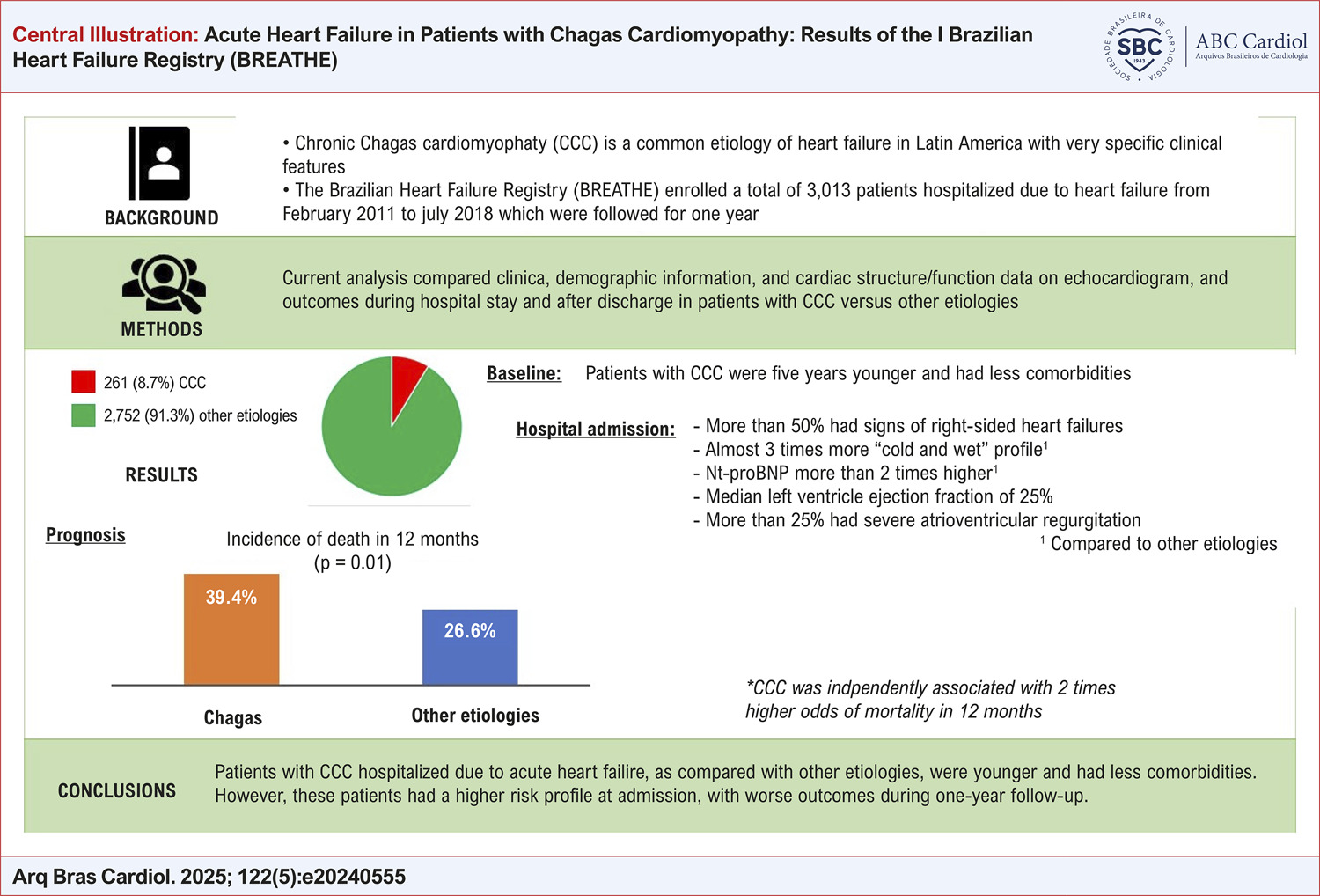
Patients with CCC presented lower systolic blood pressure (108.3 ± 26.1 vs 128.3 ± 30.3 mmHg, p<0.001) and left ventricle ejection fraction (25.4 [19 – 36]% vs 37 [27 – 54] %, p<0.001) with higher rates of jugular vein distension (54.8% vs 38.9%, p<0.001), hepatomegaly (47.9% vs 25.6%, p<0.001), and “cold and wet” clinical hemodynamic profile (27.2% vs 10.6%, p<0.001). Patients with CCC presented higher rate of the composite death or heart transplantation (17.4% vs. 11.1%, p=0.004), and higher cumulative incidence of death after 3 months (16.5% vs 10.8%, p=0.017), 6 months (25.3% vs 17.2%, p=0.006), and 12 months (39.4% vs 26.6%, p<0.001). Besides, CCC was independently associated with 12-month mortality risk with odds ratio = 2.02 (95% IC: 1.47-2.77).

Conclusion

Patients with CCC, hospitalized due to acute heart failure, in comparison to other etiologies, presented a higher risk profile that was associated with a poorer outcome during hospital stay and after discharge.

  • Chagas Cardiomyopathy
  • Chagas disease
  • Dilated Cardiomyopathy
  • Heart Failure
Read Full Article
Creative Commons Attribution (CC BY) Creative Commons license
06/06/2025 DOI: 10.36660/abc.20240555i Views 1
Endothelial Function by Flow-Mediated Dilation (FMD) in the Brachial Artery in Hypertensive Patients
Original Article

Endothelial Function by Flow-Mediated Dilation (FMD) in the Brachial Artery in Hypertensive Patients

Elaine Alves Santos Tessier et al. Carla Daltro Eduardo Martins Netto Glauco Moniz de Aragão Doria … Andrea Jimena Gutierrez Peredo Fabio Bulhões Roque Aras Ryan A. Harris

Abstract

Background

High blood pressure (BP) values have traditionally been associated with the risk of ischemic heart disease, stroke, chronic kidney disease, and early mortality. The brachial artery FMD after cuff deflation has become the standard parameter for quantifying endothelial function, being a useful surrogate outcome due to its non-invasiveness, close correlation with coronary endothelial function, and association with the incidence of long-term coronary events.

Objectives

To test hypotheses of correlation between the FMD and several blood parameters and to compare parameters between altered and non-altered FMD groups, and between hypertensive patients in the resistant hypertension groups (RHTN and non-RHTN).

Methods

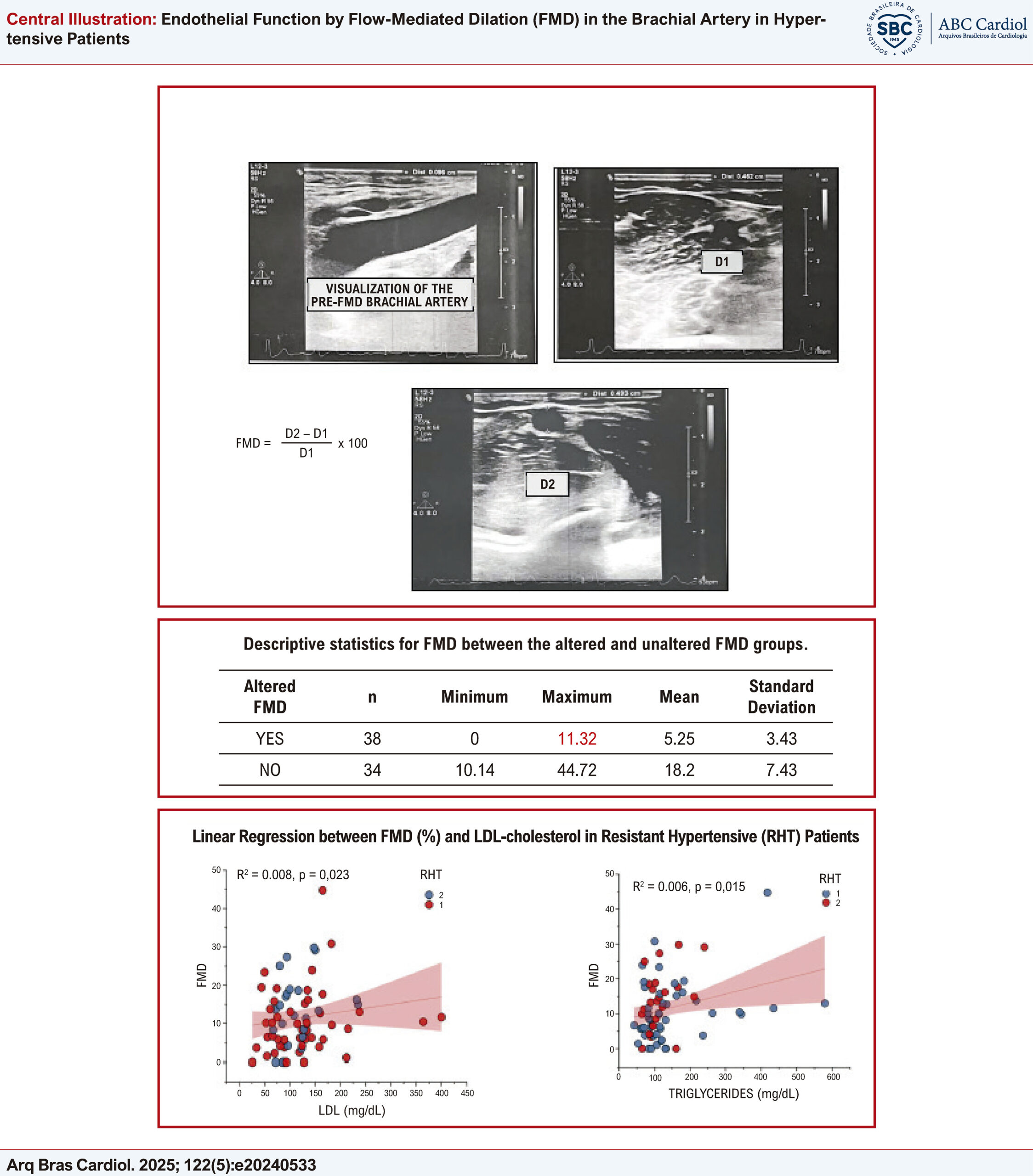
Seventy-two volunteers from a referral hypertension outpatient clinic participated in this prospective cross-sectional study, in which several patient variables were compared between the altered FMD (n = 38) and non-altered FMD (n = 34) groups, and also between the RHTN (n = 49) and non-RHTN (n = 23) groups. The variables that would explain the FMD were also investigated in this study. Statistical analyses were performed using parametric methods when the assumptions were met, and non-parametric methods otherwise. The significance level adopted in the statistical analysis was 5%.

Results

The results showed a significant positive correlation between the FMD and LDL (p = 0.204, p = 0.042) and between FMD and triglycerides (p = 0.247, p = 0.037). Glycated hemoglobin was higher in the RHTN group (p = 0.020), potassium was higher in the non-RHTN group (p = 0.029), and C-reactive protein was higher in the RHTN group (p = 0.04). For the other comparisons, no statistically significant differences were found.

Conclusion

LDL and triglycerides are FMD predictors, and the RHTN and non-RHTN groups differ in terms of the amount of potassium, protein C, and glycated hemoglobin. The altered and non-altered FMD groups differ only in terms of triglycerides.

  • Brachial Artery
  • Hypertension
  • vascular endothelium
Read Full Article
Creative Commons Attribution (CC BY) Creative Commons license
02/06/2025 DOI: 10.36660/abc.20240533i Views 2
Editorial

Endothelial Function and Arterial Hypertension

Rui Póvoa

A few years ago, it was believed that the endothelium was simply the inner lining of blood vessels, representing a simple mechanical barrier. Today, there is profound evidence of the importance of this thin layer of cells in the regulation of vascular tone and in several other functions, mainly in cell growth, interaction between leukocytes, tissue inflammation, and synthesis of vasoregulatory substances. The regulation of vascular tone involves the nitric oxide (NO) signaling pathway, which has strong vasodilatory, anti-inflammatory, and antioxidant properties.

A healthy endothelium is important for good vascular homeostasis since endothelial dysfunction plays a significant role in the pathogenesis of many diseases, such as arterial and pulmonary hypertension, cardiomyopathies, vasculitis, and, quite objectively, in the formation of atherosclerosis., The bioavailability of NO is considered one of the critical factors in hypertensive patients, including in the early stages of the disease and not only in the final event of the dysfunction, which is atherosclerosis.

[…]

  • Endothelium
  • Hypertension
  • Vasodilation
Read Full Article
Creative Commons Attribution (CC BY) Creative Commons license
02/06/2025 DOI: 10.36660/abc.20250179i Views 2
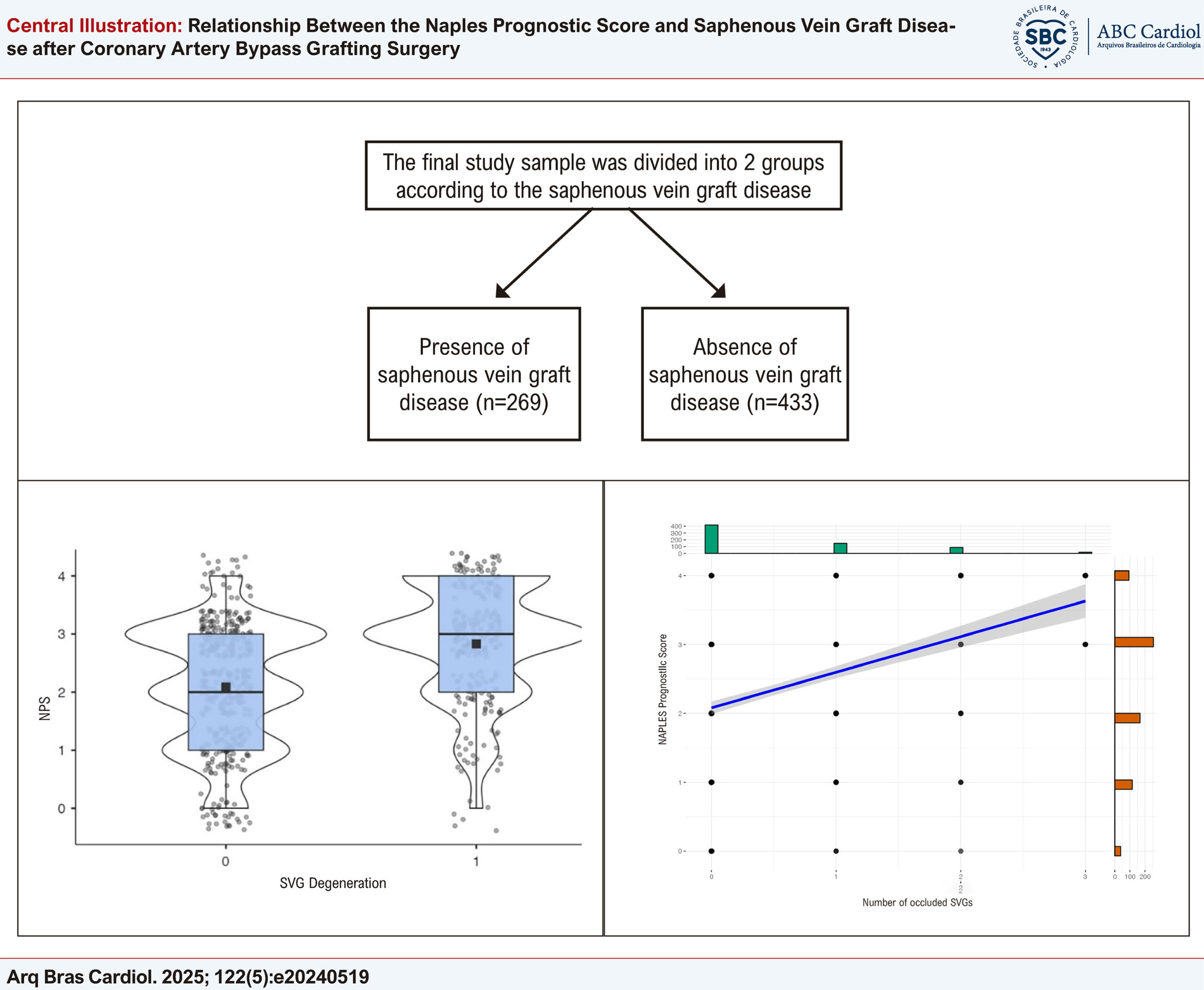
Relationship Between the Naples Prognostic Score and Saphenous Vein Graft Disease after Coronary Artery Bypass Grafting Surgery
Original Article

Relationship Between the Naples Prognostic Score and Saphenous Vein Graft Disease after Coronary Artery Bypass Grafting Surgery

Ahmet Karaduman et al. Cemalettin Yılmaz Muhammet Mucahit Tiryaki İsmail Balaban … Mustafa Ferhat Keten Tuba Unkun Servet İzci Suleyman Çağan Efe Elnur Alizade

Abstract

Background

Saphenous vein graft (SVG) patency remains a challenge in cases of coronary artery disease following coronary artery bypass grafting (CABG) surgery. The Naples prognostic score (NPS) constitutes a novel scoring system designed to assess both nutritional status and inflammation.

Objectives

Our study aimed to explore the association between the NPS and SVG disease in patients with a previous history of CABG surgery.

Methods

A total of 702 patients who had undergone CABG surgery and underwent coronary angiography were reviewed retrospectively. SVG disease was defined as the presence of ≥50% stenosis in at least one SVG. Patients were categorized into two groups based on the presence or absence of SVG disease. Values of p<0.05 were accepted as statistically significant.

Results

The study population consisted of 702 patients, with 269 (38.3%) having degenerative SVGs and 433 (61.7%) without degenerative SVGs. The NPS was higher in the group with saphenous vein degeneration and emerged as a significant predictor of SVG disease (OR: 1.596, 95% CI: 1.198-2.125, p=0.001). Additionally, hypertension (OR: 2.344, 95% CI: 1.137-4.833, p=0.02), chronic kidney disease (OR: 3.337, 95% CI: 1.554-7.168, p=0.002), statin usage (OR: 0.434, 95% CI: 0.239-0.789, p=0.006), time interval since CABG (OR: 1.138, 95% CI: 1.213-1.432, p<0.001), and number of SVGs (OR: 2.708, 95% CI: 1.902-3.855, p<0.001) were significant predictors of SVG disease.

Conclusion

The NPS, a useful tool for assessing inflammation and nutritional status, could provide valuable information about the patency of SVGs following CABG surgery. Patients with elevated NPS after CABG should undergo careful monitoring for the development of SVG disease.

  • Atherosclerosis
  • Inflammation
  • Myocardial Revascularization
  • Saphenous Vein
Read Full Article
Creative Commons Attribution (CC BY) Creative Commons license
02/06/2025 DOI: 10.36660/abc.20240519i Views 2
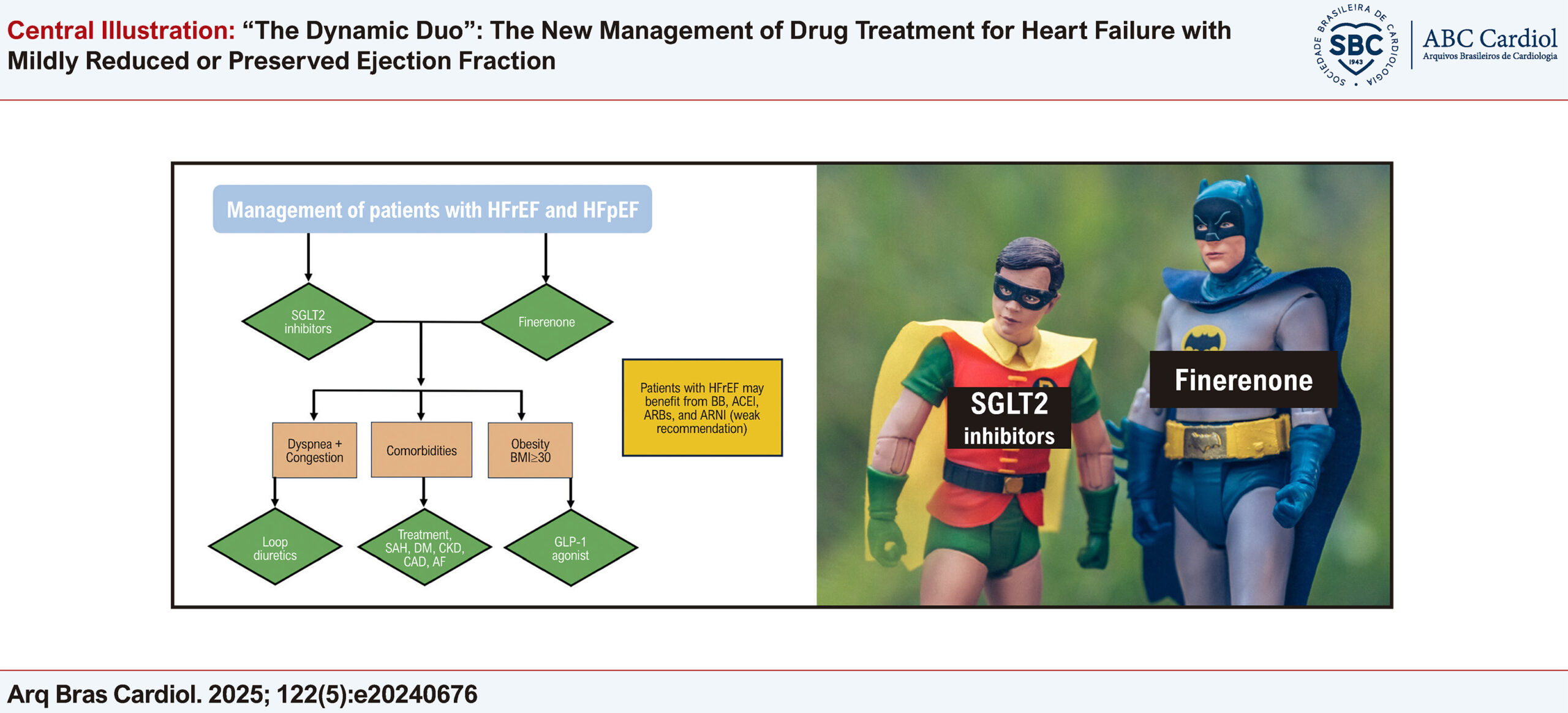
“The Dynamic Duo”: The New Management of Drug Treatment for Heart Failure with Mildly Reduced or Preserved Ejection Fraction
Review Article

“The Dynamic Duo”: The New Management of Drug Treatment for Heart Failure with Mildly Reduced or Preserved Ejection Fraction

Plínio José Whitaker Wolf et al. Edileide Barros Correia João Manoel Rossi Neto Marco Aurelio Finger … Carolina Casadei Santos Marcos de Oliveira Vasconcellos Larissa Ventura Ribeiro Bruscky Ana Cristina de Souza Murta Yoná Afonso Francisco Fabiano Castro Albrecht Juliana Jangelavicin Barbosa Eduardo Mikio Sassaki Bruno Noshang Blaas Bianca Fernandes Távora Arruda Fernanda de Brito Fortuna Victor Bemfica de Mello Mattos

Abstract

The “Fantastic Four,” a term coined in 2021 to refer to the four key drug pillars in the treatment of heart failure with reduced ejection fraction (beta-blockers, renin-angiotensin system and neprilysin inhibitors, mineralocorticoid receptor antagonists, and sodium-glucose cotransporter-2 inhibitors, or SGLT2 inhibitors), has demonstrated excellent performance in reducing morbidity and mortality in this setting. However, in heart failure with mildly reduced or preserved ejection fraction, the same benefits were not observed with this combined treatment where, for many years, management in this context was limited to diuretics and comorbidity control. Recently, however, new therapeutic options have emerged, demonstrating effectiveness in reducing cardiovascular outcomes in this specific group: the “Dynamic Duo”—comprising SGLT2 inhibitors and Finerenone—has shown promising results, alongside the introduction of semaglutide as a potential “wild card” treatment for patients with obesity. Despite the ongoing need for therapies that significantly reduce overall mortality, these new treatments have effectively lowered hospitalization rates and improved symptoms in such patients. As a result, a new era in heart failure management is beginning.

  • Heart Failure
  • Mineralocorticoid Receptor Antagonists
  • Sodium-Glucose Transporter 2 Inhibitors
Read Full Article
Creative Commons Attribution (CC BY) Creative Commons license
26/05/2025 DOI: 10.36660/abc.20240676i Views 1
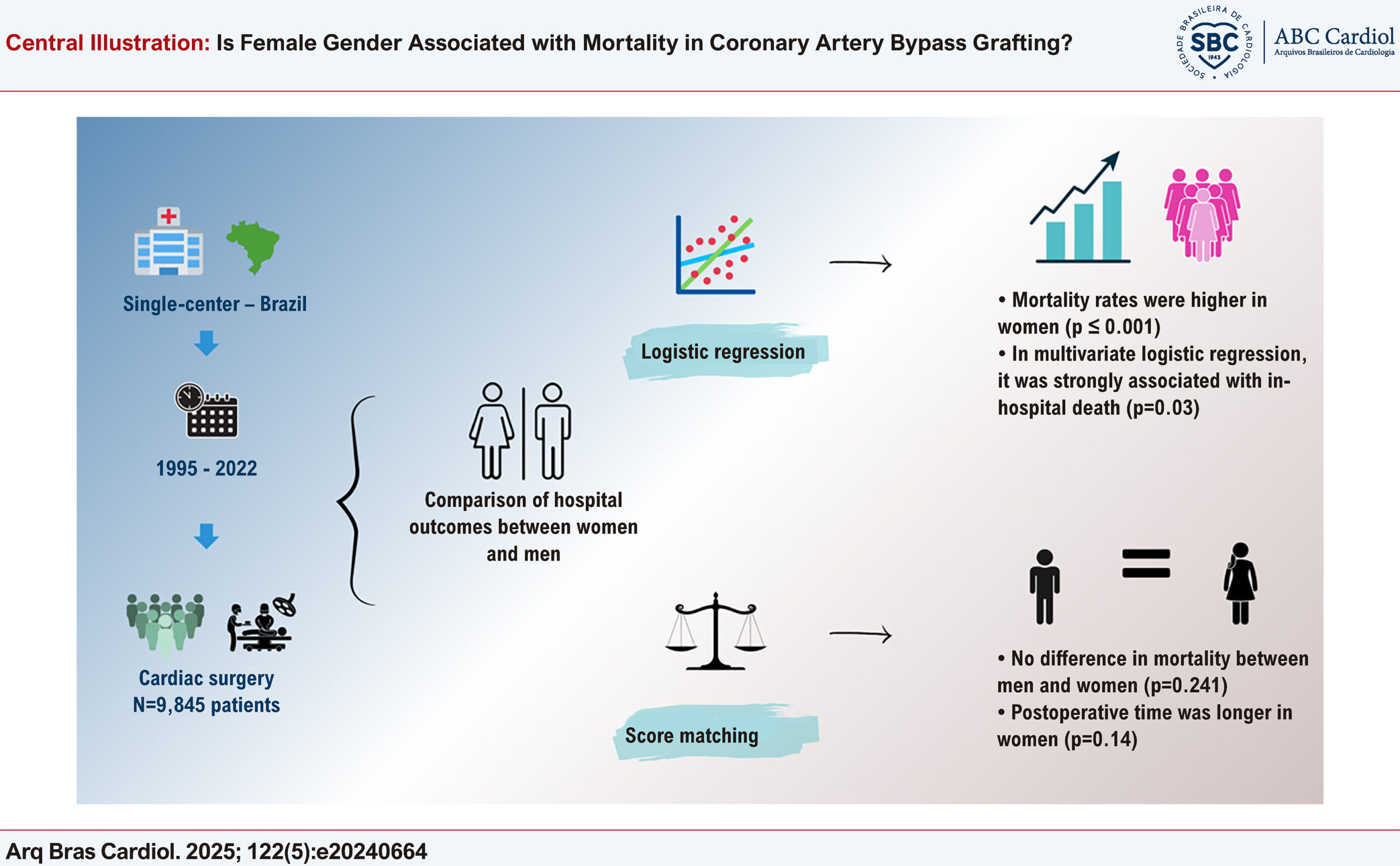
Is Female Gender Associated with Mortality in Coronary Artery Bypass Grafting?
Original Article

Is Female Gender Associated with Mortality in Coronary Artery Bypass Grafting?

Maxim Goncharov et al. Erlon Oliveira de Abreu Silva Pedro Gabriel Melo de Barros e Silva Fabiane Letícia de Freitas … Adriana Costa Moreira Lucas Tramujas Alexandre Biasi Cavalcanti Ieda Maria Liguori Fabio Biscegli Jatene Ieda Biscegli Jatene Claudia Maria Rodrigues Alves

Abstract

Background

Women undergoing coronary artery bypass grafting (CABG) tend to have worse in-hospital outcomes, but it is unclear whether these differences are due to gender or to clinical factors.

Objective

To compare in-hospital outcomes between women and men undergoing CABG.

Methods

This was a single-center, retrospective observational study analyzing data from 9,845 patients who underwent CABG between 1995 and 2022, of whom 1,947 (19.8%) were women. To evaluate female gender as a prognostic factor for in-hospital mortality, we used descriptive statistics, univariate and multivariate logistic regression, and propensity score matching. The significance level was set at 5%.

Results

Women were older (66.7 vs 62.19 years, p<0.001), had lower body mass index (26.91 vs 27.64, p<0.001), and had a higher prevalence of diabetes mellitus (34.0% vs 31.6%, p=0.045). They also had longer hospital stays (14.84 vs 13.13 days, p<0.001) and higher operative mortality (4.8% vs 2.4%, p<0.001). In logistic regression, female gender was associated with higher mortality (OR=1.51; 95% CI: 1.15-1.99; p=0.003). After matching, there was no significant difference in mortality (OR=1.20; 95% CI: 0.88-1.64; p=0.241), but length of hospital stay remained longer in women.

Conclusion

When clinical factors were matched between men and women, the mortality difference disappeared. This suggests that targeted interventions to reduce disparities may help improve mortality outcomes in women undergoing CABG.

  • Cardiovascular Surgical Procedures
  • Hospital Mortality
  • Women
Read Full Article
Creative Commons Attribution (CC BY) Creative Commons license
26/05/2025 DOI: 10.36660/abc.20240664i Views 2
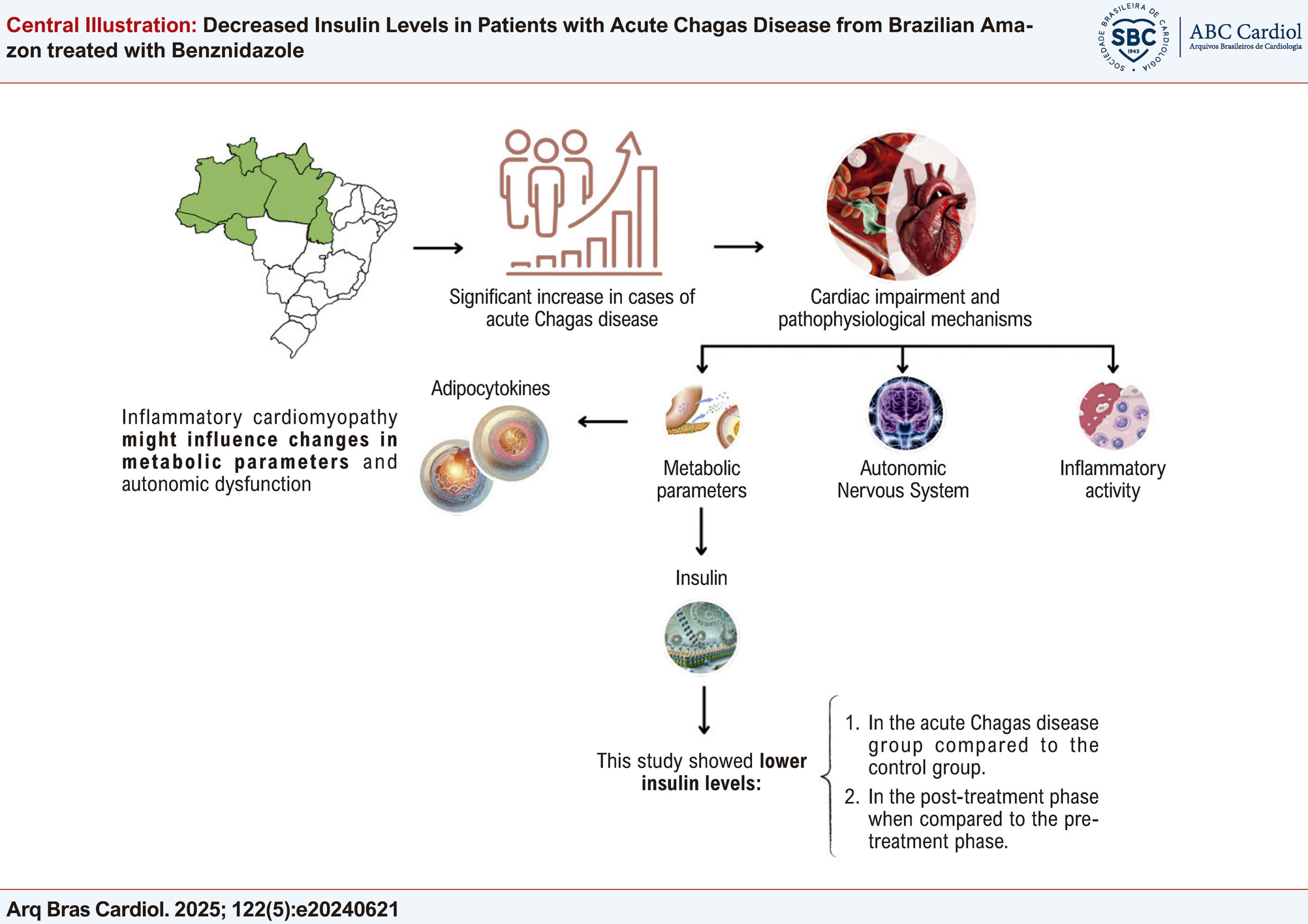
Decreased Insulin Levels in Patients with Acute Chagas Disease from Brazilian Amazon treated with Benznidazole
Original Article

Decreased Insulin Levels in Patients with Acute Chagas Disease from Brazilian Amazon treated with Benznidazole

João Marcos Barbosa-Ferreira et al. Jessica Vanina Ortiz Fernanda Gallinaro Pessoa Maria das Graças Vale Barbosa … Jorge Augusto de Oliveira Guerra Kátia do Nascimento Couceiro Mônica Regina Hosannah Silva e Silva Matheus Martins Monteiro Keila Cardoso Barbosa Fonseca Felix Alvarez Ramires Barbara Maria Ianni Charles Mady Fábio Fernandes

Abstract

Background

In the Amazon region, there has been a significant increase in the number of acute Chagas disease (ACD) leading to electrocardiographic and echocardiographic abnormalities. The main pathophysiological mechanisms involved in Chagas cardiomyopathy (CCM) are microvascular dysfunction, Autonomic Nervous System (ANS) dysfunction, direct parasite aggression, and inflammatory activity. Chagas disease (CD) is a perfect example of inflammatory cardiomyopathy that might influence changes in metabolic parameters and ANS. Studies on the measurement of adipocytokines and insulin levels in humans with ACD are scarce.

Objective

To evaluate adiponectin, leptin and insulin levels before and after the treatment of ACD with benznidazole and to correlate with ANS and cardiac function.

Methods

Twenty-eight subjects were divided into groups: control group (CG), with 15 subjects, and ACD group, with 13 subjects. All subjects underwent a standard 12-lead ECG, comprehensive transthoracic echocardiographic, evaluation of autonomic function and serum adiponectin, insulin and leptin levels. A level of significance of 5% (p-value < 0,05) was used.

Results

Insulin levels were lower in the ACD group both before and after the treatment when compared to the control group and lower in the post-treatment phase when compared to the pre-treatment phase. Adipocytokine, leptin and adiponectin levels showed no differences between groups.

Conclusion

Insulin levels were lower in the ACD group both before and after the treatment when compared to the control group and lower in the post-treatment phase when compared to the pre-treatment phase. There was no significant correlation between adipocytokine and insulin levels with cardiac function and the ANS parameters.

  • Adipokines
  • Amazonian Ecosystem
  • Chagas Cardiomyopathy
  • Chagas disease
  • Insulin
Read Full Article
Creative Commons Attribution (CC BY) Creative Commons license
26/05/2025 DOI: 10.36660/abc.20240621i Views 1
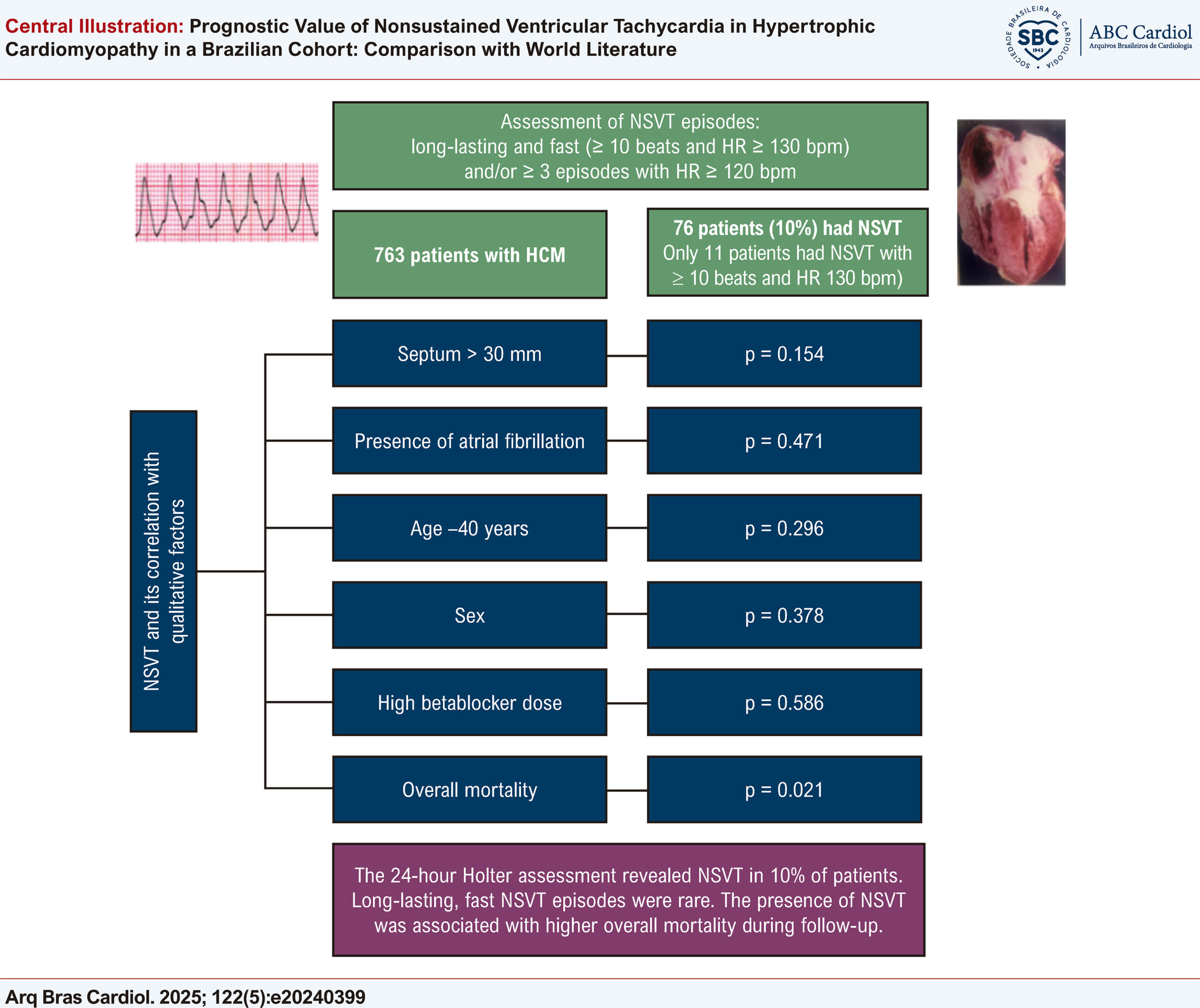
Prognostic Value of Nonsustained Ventricular Tachycardia in Hypertrophic Cardiomyopathy in a Brazilian Cohort: Comparison with World Literature
Original Article

Prognostic Value of Nonsustained Ventricular Tachycardia in Hypertrophic Cardiomyopathy in a Brazilian Cohort: Comparison with World Literature

Diego Araújo Silva et al. Edmundo Arteaga-Fernandez Viviane Tiemi Hotta Charles Mady … Barbara Ianni Felix Ramires Luciano Nastari Fábio Fernandes Juliano Novaes Cardoso

Abstract

Background

In hypertrophic cardiomyopathy (HCM), there is a well-known association between nonsustained ventricular tachycardia (NSVT) and the risk of sudden death.

Objectives

To assess the incidence of NSVT using 24-hour Holter monitoring in patients with HCM in a Brazilian cohort and correlate it with its characteristics and progression.

Methods

This retrospective study of patients with HCM used 24-hour Holter monitoring to assess the presence of long-lasting, fast NSVT (≥ 10 beats and heart rate ≥ 130 bpm) or the presence of at least 3 episodes of NSVT with ≥ 3 beats and heart rate ≥ 120 bpm. Continuous variables were shown as arithmetic means and standard deviations, and categorical variables were shown as absolute and relative frequencies. P < 0.05 was considered significant.

Results

We included 763 patients, 53.5% of whom were male. Their mean age was 52.6 years ± 16.7. NSVT was found in 10% (76 patients). Only 11 (1.4%) of them had NSVT with ≥ 10 beats and heart rate ≥ 130 bpm. There was no difference in the relationship between NSVT and sex, septum > 30 mm, age ≥ 40 years, betablocker dose, and presence of atrial fibrillation. In the group with NSVT, 15-year all-cause mortality was observed in 26.3%, compared to 15.9% in the group without NSVT (p = 0.021).

Conclusions

The presence of NSVT on 24-hour Holter monitoring occurred in 10% of patients. Long-lasting, fast NSVT was rare. The presence of NSVT was associated with higher overall mortality during follow-up.

  • Hypertrophic Cardiomyopathy
  • Risk Factors
  • Ventricular tachycardia
Read Full Article
Creative Commons Attribution (CC BY) Creative Commons license
26/05/2025 DOI: 10.36660/abc.20240399i Views 1
TIMI Risk Score for Secondary Prevention to Risk Stratify Chronic Coronary Syndrome Patients: External Validation Study
Original Article

TIMI Risk Score for Secondary Prevention to Risk Stratify Chronic Coronary Syndrome Patients: External Validation Study

Henrique Trombini Pinesi et al. Eduardo Martelli Moreira Marcelo Henrique Moreira Barbosa Fabio Grunspun Pitta … Fabiana Hanna Rached Eduardo Gomes Lima Eduardo Bello Martins Carlos Vicente Serrano Jr

Abstract

Background

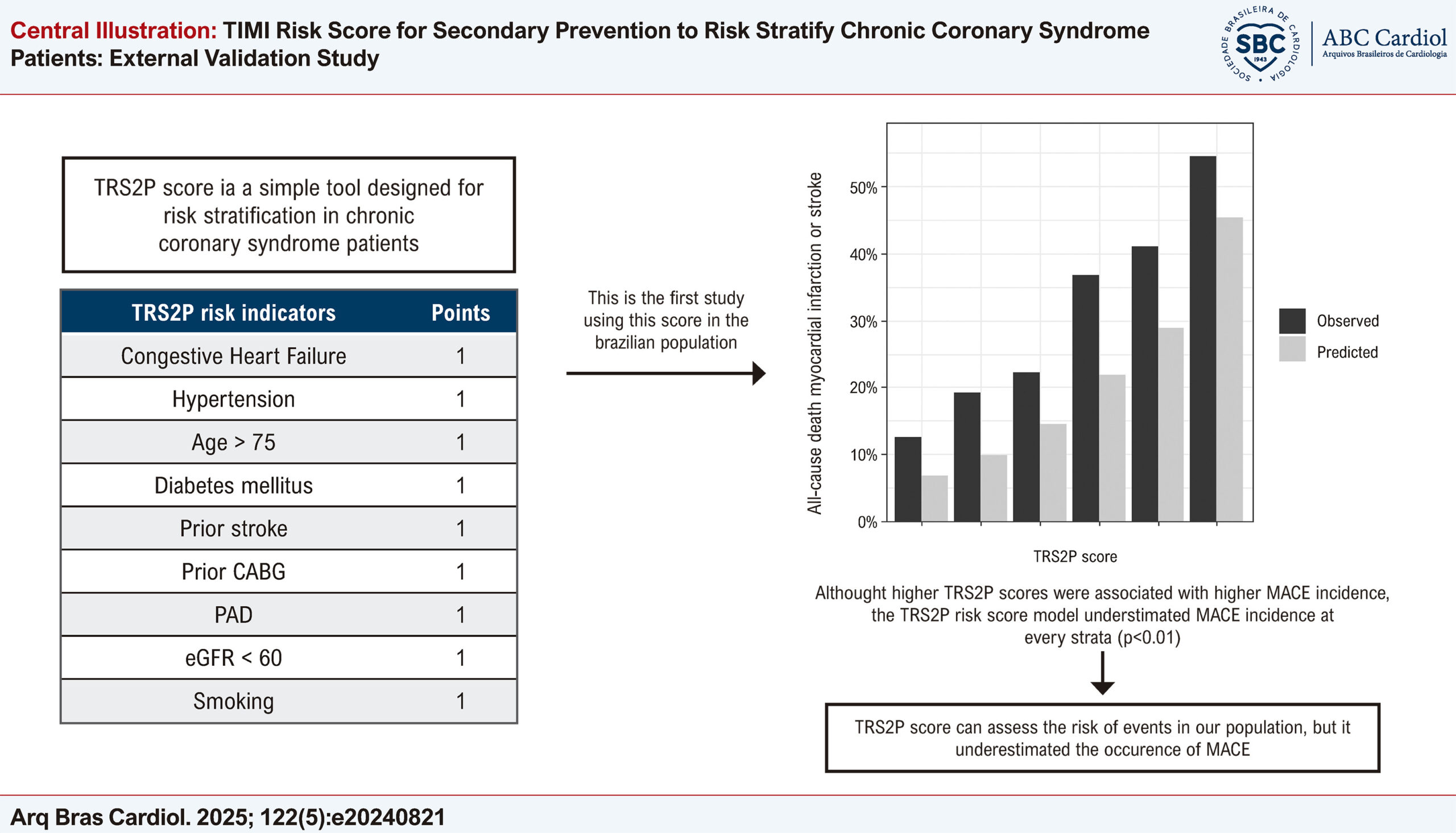
Risk stratification in chronic coronary syndrome (CCS) patients is challenging. TIMI Risk Score for Secondary Prevention (TRS2P) is a simple nine-point tool developed to predict cardiovascular death, myocardial infarction (MI), and ischemic stroke among post-MI patients. No studies have been conducted on it in the Brazilian population.

Objective

Validate the TRS2P score among CCS patients at a tertiary center in Brazil.

Methods

This is a registry-based study of patients with CCS, defined as having a previous revascularization procedure, previous MI, or ≥50% stenosis in at least one epicardial coronary artery. The primary outcome was the three-year incidence of MACE (death, MI or stroke). The predicted risk was as reported in the original derivation study. Calibration was assessed through a calibration plot and the Hosmer-Lemeshow test. Discrimination was evaluated through the concordance (C)-statistic. A significance level of 0.05 was adopted.

Results

The study sample consisted of 515 patients. There were 173 (34%) women, 75 (15%) aged over 75 years, 298 (58%) had diabetes, and 156 (30%) had chronic kidney disease. During follow-up, 126 MACE were documented. The estimated three-year incidence was 24% (95% confidence interval [CI] 21%-28%), whereas the predicted incidence was 15%. Although higher TRS2P scores were associated with higher MACE incidence, the TRS2P risk score model underestimated MACE incidence at every strata (p < 0.01). The C-statistic was 0.64 (95% CI 0.58-0.69).

Conclusion

The TRS2P score identifies patients with a higher risk of cardiovascular events but it underestimated MACE and presented poor discrimination in a Brazilian CCS cohort.

  • Coronary Artery Disease
  • Risk Assessment
  • Secondary Prevention
Read Full Article
Creative Commons Attribution (CC BY) Creative Commons license
26/05/2025 DOI: 10.36660/abc.20240821i Views 2
Non-Invasive Central Blood Pressure and Intracranial Waveform Assessment in Hypertensive Patients: A Cross-Sectional Study
Original Article

Non-Invasive Central Blood Pressure and Intracranial Waveform Assessment in Hypertensive Patients: A Cross-Sectional Study

Sayuri Inuzuka et al. Mikaelle Costa Correia Matheus Martins da Costa Thiago Oliveira Costa … Priscila Valverde de Oliveria Vitorino Polyana Vulcano de Toledo Piza Gustavo Frigieri Ana Luiza Lima Sousa Antonio Coca Weimar Kunz Sebba Barroso

Abstract

Background

There is a strong association between hypertension and cerebrovascular disease, mainly with stroke and cognitive impairment. However, but the mechanistic of this relationship are not completely understood.

Objective

To analyze the relationship of central, peripheral blood pressure (BP) and arterial stiffness, with intracranial pressure (ICP) in long-term chronic hypertensive patients.

Methods

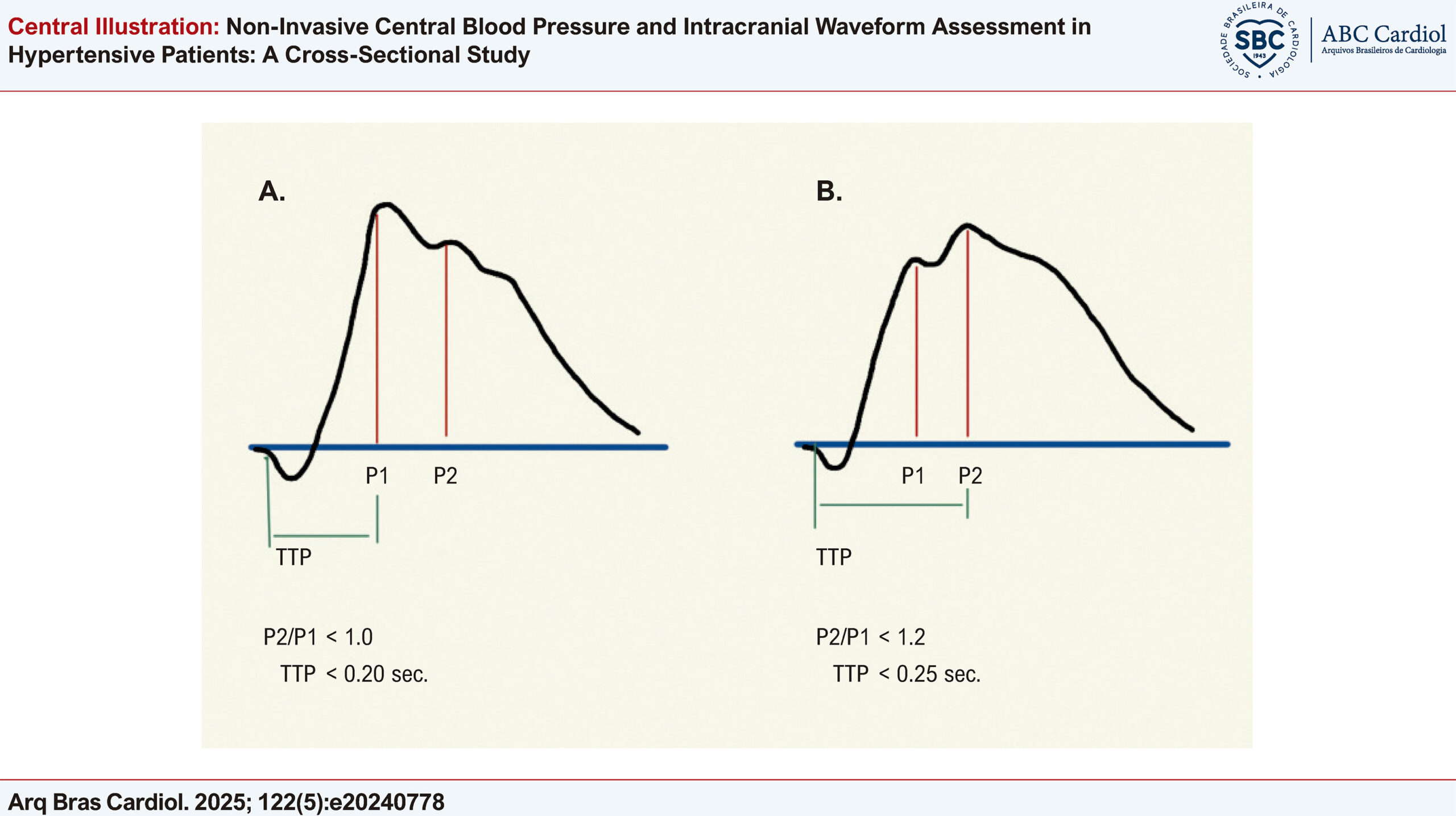
Adult individuals were consecutively included in the study from November 2022 to August 2023. The cut-off point identified to define intracranial hypertension (ICHT) by the wave peak (P2/P1) ratio was > 1.2, and the cut-off for time to peak (TTP) was > 0.25. The level of significance adopted in the statistical analysis was 5%.

Results

A total of 145 patients (32 male, 113 female) with long-term hypertension (average of time since diagnoses 20 ± 12 years) were evaluated over a period of 10 months. The median age was 69.0 (61.8 – 75.7) years and median body mass index 29.0 (25.4 – 33.1) kg/m2. Median value of P2/P1 ratio for all cohort was 1.4 (1.2 – 1.5) and TTP 0.24 (0.21 – 0.29). The analysis was performed considering presence or not of ICHT, and parameters of central BP and pulse wave velocity. There was higher central systolic (SBP), diastolic blood pressure (DBP), and peripheral DBP among patients with ICHT based on the P2/P1 ratio.

Conclusions

Central SBP levels are more linked to ICHT than office peripheral SBP measurements, while DBP measurements are similar, raising questions about the most suitable BP assessment method for hypertensive patients with cerebrovascular damage.

  • Cerebrovascular Disorders
  • Cognitive Dysfunction
  • Hypertension
  • Intracranial Pressure
  • Stroke
Read Full Article
Creative Commons Attribution (CC BY) Creative Commons license
09/05/2025 DOI: 10.36660/abc.20240778i Views 2
Mean Platelet Volume to Platelet Distribution Width Ratio: The Most Effective Platelet Parameter in the Closer of Ductus Arteriosus
Original Article

Mean Platelet Volume to Platelet Distribution Width Ratio: The Most Effective Platelet Parameter in the Closer of Ductus Arteriosus

Ufuk Cakir et al. Cuneyt Tayman

Abstract

Background

The role of platelets and platelet indices in the closure of the ductus arteriosus in premature infants is still controversial. We aimed to determine whether the platelet count and all platelet-related indices are effective on the closer of patent ductus arteriosus (PDA).

Objectives

Demographic characteristics, prematurity morbidities, and platelet indices were compared between groups with and without hemodynamically significant PDA (hsPDA).

Methods

Data of premature infants with a gestational age of <30 weeks were evaluated retrospectively. All platelet-related data were recorded from the complete blood count in the first 24 hours of all patients. The statistical analysis was performed on the obtained data. A p-value of <0.05 was considered statistically significant.

Results

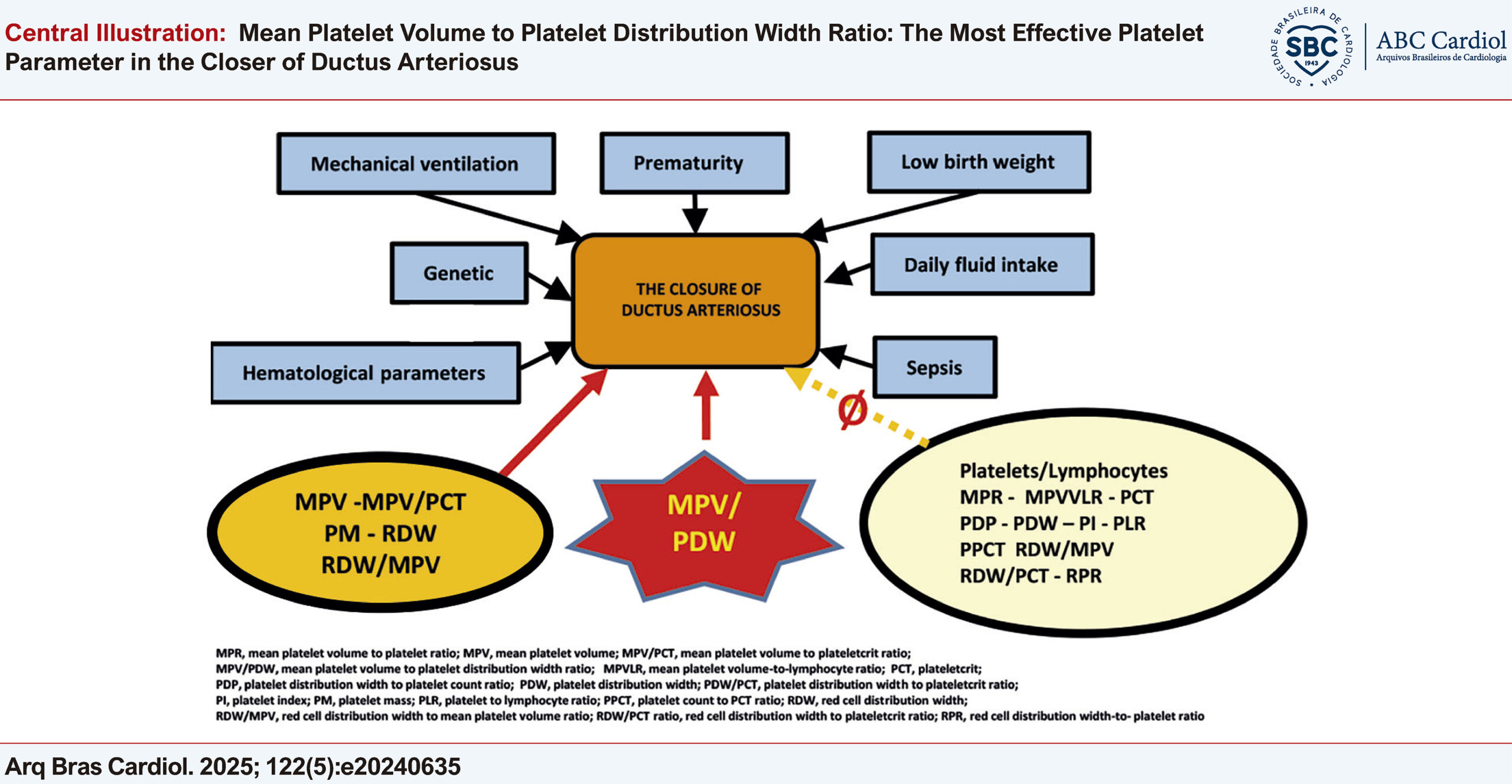
A total of 1151 patients were included in the study, including 426 patients in the hsPDA group and 725 patients in the non-hsPDA group. Platelet parameters mean platelet volume (MPV), MPV/ plateletcrit (PCT), MPV/ platelet distribution width (PDW), platelet mass (PM), red cell distribution width (RDW) values were found to be significantly lower in the hsPDA group compared to the non-hsPDA group (p<0.001, p<0.001, p<0.001, p=0.015, and p<0.001, respectively). MPV/PDW ratio with the highest AUC value (0.748) was found to be the most valuable parameter in estimating the closer of PDA.

Conclusions

The MPV/PDW ratio was found to be the most valuable parameter for the prediction of hsPDA among all platelet indices.

  • Blood Platelets
  • Mean Platelet Volume
  • patent ductus arteriosus
  • Premature Infant
Read Full Article
Creative Commons Attribution (CC BY) Creative Commons license
09/05/2025 DOI: 10.36660/abc.20240635i Views 1

How to cite this article

EndNote RIS

Electronic Document Format (Vancouver)

Bittencourt MS. Will You Tell Them When They Are Wrong? Automation Bias and Artificial Intelligence in Medicine. Arquivos Brasileiros de Cardiologia 2025;122(5):e20250300.

Electronic Document Format (ABNT)

Bittencourt, Marcio Sommer. Will You Tell Them When They Are Wrong? Automation Bias and Artificial Intelligence in Medicine. Arquivos Brasileiros de Cardiologia, v. 122, n. 5, e20250300, Jul. 2025.

Electronic Document Format (APA)

Bittencourt, M. S. (2025). Will You Tell Them When They Are Wrong? Automation Bias and Artificial Intelligence in Medicine. Arquivos Brasileiros de Cardiologia, 122(5), e20250300.

Electronic Document Format (ISO)

Bittencourt, Marcio Sommer. Will You Tell Them When They Are Wrong? Automation Bias and Artificial Intelligence in Medicine. Arquivos Brasileiros de Cardiologia [online]. 2025, vol. 122, n. 5, [cited 2026-10-14], e20250300. Available from: <https://journals.cardiol.br/en/article/will-you-tell-them-when-they-are-wrong-automation-bias-and-artificial-intelligence-in-medicine/>. ISSN 0066-782X

EndNote RIS

Electronic Document Format (Vancouver)

Saraiva RM, Portela LF, Costa AR. Acute Heart Failure Due to Chagas Disease: Still a Challenge in the 21st Century. Arquivos Brasileiros de Cardiologia 2025;122(5):e20250332.

Electronic Document Format (ABNT)

Saraiva, Roberto M.; Portela, Luciana F.; Costa, Andréa R.. Acute Heart Failure Due to Chagas Disease: Still a Challenge in the 21st Century. Arquivos Brasileiros de Cardiologia, v. 122, n. 5, e20250332, Jul. 2025.

Electronic Document Format (APA)

Saraiva, R. M., Portela, L. F., & Costa, A. R. (2025). Acute Heart Failure Due to Chagas Disease: Still a Challenge in the 21st Century. Arquivos Brasileiros de Cardiologia, 122(5), e20250332.

Electronic Document Format (ISO)

Saraiva, Roberto M. and Portela, Luciana F. and Costa, Andréa R.. Acute Heart Failure Due to Chagas Disease: Still a Challenge in the 21st Century. Arquivos Brasileiros de Cardiologia [online]. 2025, vol. 122, n. 5, [cited 2026-10-14], e20250332. Available from: <https://journals.cardiol.br/en/article/acute-heart-failure-due-to-chagas-disease-still-a-challenge-in-the-21st-century/>. ISSN 0066-782X

EndNote RIS

Electronic Document Format (Vancouver)

Arthur CPS, Mejia OAV. Nothing about Women without Women is for Women. Arquivos Brasileiros de Cardiologia 2025;122(5):e20250323.

Electronic Document Format (ABNT)

Arthur, Camila Perez de Souza; Mejia, Omar Asdrúbal Vilca. Nothing about Women without Women is for Women. Arquivos Brasileiros de Cardiologia, v. 122, n. 5, e20250323, Jul. 2025.

Electronic Document Format (APA)

Arthur, C. P. S., & Mejia, O. A. V. (2025). Nothing about Women without Women is for Women. Arquivos Brasileiros de Cardiologia, 122(5), e20250323.

Electronic Document Format (ISO)

Arthur, Camila Perez de Souza and Mejia, Omar Asdrúbal Vilca. Nothing about Women without Women is for Women. Arquivos Brasileiros de Cardiologia [online]. 2025, vol. 122, n. 5, [cited 2026-10-14], e20250323. Available from: <https://journals.cardiol.br/en/article/nothing-about-women-without-women-is-for-women/>. ISSN 0066-782X

EndNote RIS

Electronic Document Format (Vancouver)

Aydin A, Katlan B, Kesici S. Vasoplegic Syndrome under Extracorporeal Membrane Oxygenation: Successful Treatment with Methylene Blue. Arquivos Brasileiros de Cardiologia 2025;122(5):e20250070.

Electronic Document Format (ABNT)

Aydin, Ahmet; Katlan, Banu; Kesici, Selman. Vasoplegic Syndrome under Extracorporeal Membrane Oxygenation: Successful Treatment with Methylene Blue. Arquivos Brasileiros de Cardiologia, v. 122, n. 5, e20250070, Jul. 2025.

Electronic Document Format (APA)

Aydin, A., Katlan, B., & Kesici, S. (2025). Vasoplegic Syndrome under Extracorporeal Membrane Oxygenation: Successful Treatment with Methylene Blue. Arquivos Brasileiros de Cardiologia, 122(5), e20250070.

Electronic Document Format (ISO)

Aydin, Ahmet and Katlan, Banu and Kesici, Selman. Vasoplegic Syndrome under Extracorporeal Membrane Oxygenation: Successful Treatment with Methylene Blue. Arquivos Brasileiros de Cardiologia [online]. 2025, vol. 122, n. 5, [cited 2026-10-14], e20250070. Available from: <https://journals.cardiol.br/en/article/vasoplegic-syndrome-under-extracorporeal-membrane-oxygenation-successful-treatment-with-methylene-blue/>. ISSN 0066-782X

EndNote RIS

Electronic Document Format (Vancouver)

Braga F, Stein R. Beyond Limits: What 366 Consecutive Marathons Reveal about the Human Heart. Arquivos Brasileiros de Cardiologia 2025;122(5):e20250231.

Electronic Document Format (ABNT)

Braga, Fabricio; Stein, Ricardo. Beyond Limits: What 366 Consecutive Marathons Reveal about the Human Heart. Arquivos Brasileiros de Cardiologia, v. 122, n. 5, e20250231, Jul. 2025.

Electronic Document Format (APA)

Braga, F., & Stein, R. (2025). Beyond Limits: What 366 Consecutive Marathons Reveal about the Human Heart. Arquivos Brasileiros de Cardiologia, 122(5), e20250231.

Electronic Document Format (ISO)

Braga, Fabricio and Stein, Ricardo. Beyond Limits: What 366 Consecutive Marathons Reveal about the Human Heart. Arquivos Brasileiros de Cardiologia [online]. 2025, vol. 122, n. 5, [cited 2026-10-14], e20250231. Available from: <https://journals.cardiol.br/en/article/beyond-limits-what-366-consecutive-marathons-reveal-about-the-human-heart/>. ISSN 0066-782X

EndNote RIS

Electronic Document Format (Vancouver)

Noya-Rabelo MM, Souza O. Echoes of the Past: The Intriguing Link between Chagas Disease and Insulin. Arquivos Brasileiros de Cardiologia 2025;122(5):e20250295.

Electronic Document Format (ABNT)

Noya-Rabelo, Marcia M.; Souza, Olga. Echoes of the Past: The Intriguing Link between Chagas Disease and Insulin. Arquivos Brasileiros de Cardiologia, v. 122, n. 5, e20250295, Jul. 2025.

Electronic Document Format (APA)

Noya-Rabelo, M. M., & Souza, O. (2025). Echoes of the Past: The Intriguing Link between Chagas Disease and Insulin. Arquivos Brasileiros de Cardiologia, 122(5), e20250295.

Electronic Document Format (ISO)

Noya-Rabelo, Marcia M. and Souza, Olga. Echoes of the Past: The Intriguing Link between Chagas Disease and Insulin. Arquivos Brasileiros de Cardiologia [online]. 2025, vol. 122, n. 5, [cited 2026-10-14], e20250295. Available from: <https://journals.cardiol.br/en/article/echoes-of-the-past-the-intriguing-link-between-chagas-disease-and-insulin/>. ISSN 0066-782X

EndNote RIS

Electronic Document Format (Vancouver)

Kataoka N, Imamura T. How to Assess Impaired Right Heart Electrical Conduction in Patients with Pulmonary Arterial Hypertension?. Arquivos Brasileiros de Cardiologia 2025;122(5):e20250159.

Electronic Document Format (ABNT)

Kataoka, Naoya; Imamura, Teruhiko. How to Assess Impaired Right Heart Electrical Conduction in Patients with Pulmonary Arterial Hypertension?. Arquivos Brasileiros de Cardiologia, v. 122, n. 5, e20250159, Jun. 2025.

Electronic Document Format (APA)

Kataoka, N., & Imamura, T. (2025). How to Assess Impaired Right Heart Electrical Conduction in Patients with Pulmonary Arterial Hypertension?. Arquivos Brasileiros de Cardiologia, 122(5), e20250159.

Electronic Document Format (ISO)

Kataoka, Naoya and Imamura, Teruhiko. How to Assess Impaired Right Heart Electrical Conduction in Patients with Pulmonary Arterial Hypertension?. Arquivos Brasileiros de Cardiologia [online]. 2025, vol. 122, n. 5, [cited 2026-10-14], e20250159. Available from: <https://journals.cardiol.br/en/article/how-to-assess-impaired-right-heart-electrical-conduction-in-patients-with-pulmonary-arterial-hypertension/>. ISSN 0066-782X

EndNote RIS

Electronic Document Format (Vancouver)

Yugar-Toledo JC, Moreno H. A New Era of Hypertension Assessment: Non-Invasive Central and Intracranial Waveform Analysis. Arquivos Brasileiros de Cardiologia 2025;122(5):e20250277.

Electronic Document Format (ABNT)

Yugar-Toledo, Juan Carlos; Moreno, Heitor. A New Era of Hypertension Assessment: Non-Invasive Central and Intracranial Waveform Analysis. Arquivos Brasileiros de Cardiologia, v. 122, n. 5, e20250277, Jun. 2025.

Electronic Document Format (APA)

Yugar-Toledo, J. C., & Moreno, H. (2025). A New Era of Hypertension Assessment: Non-Invasive Central and Intracranial Waveform Analysis. Arquivos Brasileiros de Cardiologia, 122(5), e20250277.

Electronic Document Format (ISO)

Yugar-Toledo, Juan Carlos and Moreno, Heitor. A New Era of Hypertension Assessment: Non-Invasive Central and Intracranial Waveform Analysis. Arquivos Brasileiros de Cardiologia [online]. 2025, vol. 122, n. 5, [cited 2026-10-14], e20250277. Available from: <https://journals.cardiol.br/en/article/a-new-era-of-hypertension-assessment-non-invasive-central-and-intracranial-waveform-analysis/>. ISSN 0066-782X

EndNote RIS

Electronic Document Format (Vancouver)

Faganello LS, Pimentel M. Non-sustained Ventricular Tachycardia and Hypertrophic Cardiomyopathy: When to Consider it as a Risk Factor for Sudden Death and Total Mortality?. Arquivos Brasileiros de Cardiologia 2025;122(5):e20250233.

Electronic Document Format (ABNT)

Faganello, Lucas Simonetto; Pimentel, Mauricio. Non-sustained Ventricular Tachycardia and Hypertrophic Cardiomyopathy: When to Consider it as a Risk Factor for Sudden Death and Total Mortality?. Arquivos Brasileiros de Cardiologia, v. 122, n. 5, e20250233, Jun. 2025.

Electronic Document Format (APA)

Faganello, L. S., & Pimentel, M. (2025). Non-sustained Ventricular Tachycardia and Hypertrophic Cardiomyopathy: When to Consider it as a Risk Factor for Sudden Death and Total Mortality?. Arquivos Brasileiros de Cardiologia, 122(5), e20250233.

Electronic Document Format (ISO)

Faganello, Lucas Simonetto and Pimentel, Mauricio. Non-sustained Ventricular Tachycardia and Hypertrophic Cardiomyopathy: When to Consider it as a Risk Factor for Sudden Death and Total Mortality?. Arquivos Brasileiros de Cardiologia [online]. 2025, vol. 122, n. 5, [cited 2026-10-14], e20250233. Available from: <https://journals.cardiol.br/en/article/non-sustained-ventricular-tachycardia-and-hypertrophic-cardiomyopathy-when-to-consider-it-as-a-risk-factor-for-sudden-death-and-total-mortality/>. ISSN 0066-782X

EndNote RIS

Electronic Document Format (Vancouver)

Kataoka N, Imamura T. How to Compare Clinical Outcomes between Cryoablation and Radiofrequency Ablation in Patients with Atrioventricular Nodal Reentrant Tachycardia?. Arquivos Brasileiros de Cardiologia 2025;122(5):e20250078.

Electronic Document Format (ABNT)

Kataoka, Naoya; Imamura, Teruhiko. How to Compare Clinical Outcomes between Cryoablation and Radiofrequency Ablation in Patients with Atrioventricular Nodal Reentrant Tachycardia?. Arquivos Brasileiros de Cardiologia, v. 122, n. 5, e20250078, Jun. 2025.

Electronic Document Format (APA)

Kataoka, N., & Imamura, T. (2025). How to Compare Clinical Outcomes between Cryoablation and Radiofrequency Ablation in Patients with Atrioventricular Nodal Reentrant Tachycardia?. Arquivos Brasileiros de Cardiologia, 122(5), e20250078.

Electronic Document Format (ISO)

Kataoka, Naoya and Imamura, Teruhiko. How to Compare Clinical Outcomes between Cryoablation and Radiofrequency Ablation in Patients with Atrioventricular Nodal Reentrant Tachycardia?. Arquivos Brasileiros de Cardiologia [online]. 2025, vol. 122, n. 5, [cited 2026-10-14], e20250078. Available from: <https://journals.cardiol.br/en/article/how-to-compare-clinical-outcomes-between-cryoablation-and-radiofrequency-ablation-in-patients-with-atrioventricular-nodal-reentrant-tachycardia/>. ISSN 0066-782X

EndNote RIS

Electronic Document Format (Vancouver)

Yılmaz F, Şener YZ. Broadening Insights into Implantable Cardioverter Defibrillator Appropriateness: The Role of Economic and Psychosocial Markers, Cardiomyopathy Subtypes, and Advanced Therapies. Arquivos Brasileiros de Cardiologia 2025;122(5):e20250066.

Electronic Document Format (ABNT)

Yılmaz, Ömer Faruk; Şener, Yusuf Ziya. Broadening Insights into Implantable Cardioverter Defibrillator Appropriateness: The Role of Economic and Psychosocial Markers, Cardiomyopathy Subtypes, and Advanced Therapies. Arquivos Brasileiros de Cardiologia, v. 122, n. 5, e20250066, Jun. 2025.

Electronic Document Format (APA)

Yılmaz, F., & Şener, Y. Z. (2025). Broadening Insights into Implantable Cardioverter Defibrillator Appropriateness: The Role of Economic and Psychosocial Markers, Cardiomyopathy Subtypes, and Advanced Therapies. Arquivos Brasileiros de Cardiologia, 122(5), e20250066.

Electronic Document Format (ISO)

Yılmaz, Ömer Faruk and Şener, Yusuf Ziya. Broadening Insights into Implantable Cardioverter Defibrillator Appropriateness: The Role of Economic and Psychosocial Markers, Cardiomyopathy Subtypes, and Advanced Therapies. Arquivos Brasileiros de Cardiologia [online]. 2025, vol. 122, n. 5, [cited 2026-10-14], e20250066. Available from: <https://journals.cardiol.br/en/article/broadening-insights-into-implantable-cardioverter-defibrillator-appropriateness-the-role-of-economic-and-psychosocial-markers-cardiomyopathy-subtypes-and-advanced-therapies/>. ISSN 0066-782X

EndNote RIS

Electronic Document Format (Vancouver)

Gürsoy MO, Güneş H. The Role of the Naples Prognostic Score in the Evaluation of SVG Patency Following CABG Surgery. Arquivos Brasileiros de Cardiologia 2025;122(5):e20250182.

Electronic Document Format (ABNT)

Gürsoy, Mustafa Ozan; Güneş, Hakan. The Role of the Naples Prognostic Score in the Evaluation of SVG Patency Following CABG Surgery. Arquivos Brasileiros de Cardiologia, v. 122, n. 5, e20250182, Jun. 2025.

Electronic Document Format (APA)

Gürsoy, M. O., & Güneş, H. (2025). The Role of the Naples Prognostic Score in the Evaluation of SVG Patency Following CABG Surgery. Arquivos Brasileiros de Cardiologia, 122(5), e20250182.

Electronic Document Format (ISO)

Gürsoy, Mustafa Ozan and Güneş, Hakan. The Role of the Naples Prognostic Score in the Evaluation of SVG Patency Following CABG Surgery. Arquivos Brasileiros de Cardiologia [online]. 2025, vol. 122, n. 5, [cited 2026-10-14], e20250182. Available from: <https://journals.cardiol.br/en/article/the-role-of-the-naples-prognostic-score-in-the-evaluation-of-svg-patency-following-cabg-surgery/>. ISSN 0066-782X

EndNote RIS

Electronic Document Format (Vancouver)

Souza FR, Lopes RD, Fonseca GWP, Barretto RBM, Battaglia Filho AC, Val RM, Kalil-Filho R, et al. Record-Breaking Endurance of 366 Marathons in 366 Days: A Case Study. Arquivos Brasileiros de Cardiologia 2025;122(5):e20240838.

Electronic Document Format (ABNT)

Souza, Francis Ribeiro de; Lopes, Renato Delascio; Fonseca, Guilherme Wesley Peixoto da; Barretto, Rodrigo Bellio de Mattos; Battaglia Filho, Antonio Carlos; Val, Renata Margarida do; Kalil-Filho, Roberto; Alves, Maria-Janieire de Nazaré Nunes. Record-Breaking Endurance of 366 Marathons in 366 Days: A Case Study. Arquivos Brasileiros de Cardiologia, v. 122, n. 5, e20240838, Jun. 2025.

Electronic Document Format (APA)

Souza, F. R. , Lopes, R. D., Fonseca, G. W. P. , Barretto, R. B. M., Battaglia Filho, A. C., Val, R. M. , Kalil-Filho, R., & Alves, M. N. N. (2025). Record-Breaking Endurance of 366 Marathons in 366 Days: A Case Study. Arquivos Brasileiros de Cardiologia, 122(5), e20240838.

Electronic Document Format (ISO)

Souza, Francis Ribeiro de and Lopes, Renato Delascio and Fonseca, Guilherme Wesley Peixoto da and Barretto, Rodrigo Bellio de Mattos and Battaglia Filho, Antonio Carlos and Val, Renata Margarida do and Kalil-Filho, Roberto and Alves, Maria-Janieire de Nazaré Nunes. Record-Breaking Endurance of 366 Marathons in 366 Days: A Case Study. Arquivos Brasileiros de Cardiologia [online]. 2025, vol. 122, n. 5, [cited 2026-10-14], e20240838. Available from: <https://journals.cardiol.br/en/article/record-breaking-endurance-of-366-marathons-in-366-days-a-case-study/>. ISSN 0066-782X

EndNote RIS

Electronic Document Format (Vancouver)

Silva PGMB, Albuquerque DC, Lopes RD, Nogueira PR, Freitas Jr AF, Nascimento CV, Mady C, et al. Acute Heart Failure in Patients with Chagas Cardiomyopathy: Results of the I Brazilian Heart Failure Registry (BREATHE). Arquivos Brasileiros de Cardiologia 2025;122(5):e20240555.

Electronic Document Format (ABNT)

Silva, Pedro Gabriel Melo de Barros e; Albuquerque, Denilson Campos; Lopes, Renato Delascio; Nogueira, Paulo Roberto; Freitas Jr, Aguinaldo F; Nascimento, Carlos Vieira; Mady, Charles; Santos, Elizabete Silva dos; Hernandes, Mauro Esteves; Rivera, Maria Alayde Mendonça; Souza Neto, João David de; Rabelo, Alvaro; Canesin, Manoel Fernandes; Reis, Helder; Armstrong, Anderson da Costa; Hoffmann, Conrado; Santos, Renato Hideo Nakagawa; Jesuino, Isabella de Andrade; Rohde, Luis Eduardo; Moura, Lidia Zytinsky; Marcondes-Braga, Fabiana Goulart; Mesquita, Evandro Tinoco; Figueiredo Neto, José Albuquerque de; Mourilhe-Rocha, Ricardo; Beck-da-Silva, Luís; Oliveira Junior, Mucio Tavares; Simões, Marcus Vinicius. Acute Heart Failure in Patients with Chagas Cardiomyopathy: Results of the I Brazilian Heart Failure Registry (BREATHE). Arquivos Brasileiros de Cardiologia, v. 122, n. 5, e20240555, Jun. 2025.

Electronic Document Format (APA)

Silva, P. G. M. B. , Albuquerque, D. C., Lopes, R. D., Nogueira, P. R., Freitas Jr, A. F., Nascimento, C. V., Mady, C., Santos, E. S. , Hernandes, M. E., Rivera, M. A. M., Souza Neto, J. D. , Rabelo, A., Canesin, M. F., Reis, H., Armstrong, A. C., Hoffmann, C., Santos, R. H. N., Jesuino, I. A., Rohde, L. E., Moura, L. Z., Marcondes-Braga, F. G., Mesquita, E. T., Figueiredo Neto, J. A. , Mourilhe-Rocha, R., Beck-da-Silva, L., Oliveira Junior, M. T., & Simões, M. V. (2025). Acute Heart Failure in Patients with Chagas Cardiomyopathy: Results of the I Brazilian Heart Failure Registry (BREATHE). Arquivos Brasileiros de Cardiologia, 122(5), e20240555.

Electronic Document Format (ISO)

Silva, Pedro Gabriel Melo de Barros e and Albuquerque, Denilson Campos and Lopes, Renato Delascio and Nogueira, Paulo Roberto and Freitas Jr, Aguinaldo F and Nascimento, Carlos Vieira and Mady, Charles and Santos, Elizabete Silva dos and Hernandes, Mauro Esteves and Rivera, Maria Alayde Mendonça and Souza Neto, João David de and Rabelo, Alvaro and Canesin, Manoel Fernandes and Reis, Helder and Armstrong, Anderson da Costa and Hoffmann, Conrado and Santos, Renato Hideo Nakagawa and Jesuino, Isabella de Andrade and Rohde, Luis Eduardo and Moura, Lidia Zytinsky and Marcondes-Braga, Fabiana Goulart and Mesquita, Evandro Tinoco and Figueiredo Neto, José Albuquerque de and Mourilhe-Rocha, Ricardo and Beck-da-Silva, Luís and Oliveira Junior, Mucio Tavares and Simões, Marcus Vinicius. Acute Heart Failure in Patients with Chagas Cardiomyopathy: Results of the I Brazilian Heart Failure Registry (BREATHE). Arquivos Brasileiros de Cardiologia [online]. 2025, vol. 122, n. 5, [cited 2026-10-14], e20240555. Available from: <https://journals.cardiol.br/en/article/acute-heart-failure-in-patients-with-chagas-cardiomyopathy-results-of-the-i-brazilian-heart-failure-registry-breathe/>. ISSN 0066-782X

EndNote RIS

Electronic Document Format (Vancouver)

Tessier EAS, Daltro C, Netto EM, Doria GMA, Peredo AJG, Bulhões F, Aras R, et al. Endothelial Function by Flow-Mediated Dilation (FMD) in the Brachial Artery in Hypertensive Patients. Arquivos Brasileiros de Cardiologia 2025;122(5):e20240533.

Electronic Document Format (ABNT)

Tessier, Elaine Alves Santos; Daltro, Carla; Netto, Eduardo Martins; Doria, Glauco Moniz de Aragão; Peredo, Andrea Jimena Gutierrez; Bulhões, Fabio; Aras, Roque; Harris, Ryan A.. Endothelial Function by Flow-Mediated Dilation (FMD) in the Brachial Artery in Hypertensive Patients. Arquivos Brasileiros de Cardiologia, v. 122, n. 5, e20240533, Jun. 2025.

Electronic Document Format (APA)

Tessier, E. A. S., Daltro, C., Netto, E. M., Doria, G. M. A., Peredo, A. J. G., Bulhões, F., Aras, R., & Harris, R. A. (2025). Endothelial Function by Flow-Mediated Dilation (FMD) in the Brachial Artery in Hypertensive Patients. Arquivos Brasileiros de Cardiologia, 122(5), e20240533.

Electronic Document Format (ISO)

Tessier, Elaine Alves Santos and Daltro, Carla and Netto, Eduardo Martins and Doria, Glauco Moniz de Aragão and Peredo, Andrea Jimena Gutierrez and Bulhões, Fabio and Aras, Roque and Harris, Ryan A.. Endothelial Function by Flow-Mediated Dilation (FMD) in the Brachial Artery in Hypertensive Patients. Arquivos Brasileiros de Cardiologia [online]. 2025, vol. 122, n. 5, [cited 2026-10-14], e20240533. Available from: <https://journals.cardiol.br/en/article/endothelial-function-by-flow-mediated-dilation-fmd-in-the-brachial-artery-in-hypertensive-patients/>. ISSN 0066-782X

EndNote RIS

Electronic Document Format (Vancouver)

Póvoa R. Endothelial Function and Arterial Hypertension. Arquivos Brasileiros de Cardiologia 2025;122(5):e20250179.

Electronic Document Format (ABNT)

Póvoa, Rui. Endothelial Function and Arterial Hypertension. Arquivos Brasileiros de Cardiologia, v. 122, n. 5, e20250179, Jun. 2025.

Electronic Document Format (APA)

Póvoa, R. (2025). Endothelial Function and Arterial Hypertension. Arquivos Brasileiros de Cardiologia, 122(5), e20250179.

Electronic Document Format (ISO)

Póvoa, Rui. Endothelial Function and Arterial Hypertension. Arquivos Brasileiros de Cardiologia [online]. 2025, vol. 122, n. 5, [cited 2026-10-14], e20250179. Available from: <https://journals.cardiol.br/en/article/endothelial-function-and-arterial-hypertension/>. ISSN 0066-782X

EndNote RIS

Electronic Document Format (Vancouver)

Karaduman A, Yılmaz C, Tiryaki MM, Balaban , Keten MF, Unkun T, İzci S, et al. Relationship Between the Naples Prognostic Score and Saphenous Vein Graft Disease after Coronary Artery Bypass Grafting Surgery. Arquivos Brasileiros de Cardiologia 2025;122(5):e20240519.

Electronic Document Format (ABNT)

Karaduman, Ahmet; Yılmaz, Cemalettin; Tiryaki, Muhammet Mucahit; Balaban, İsmail; Keten, Mustafa Ferhat; Unkun, Tuba; İzci, Servet; Efe, Suleyman Çağan; Alizade, Elnur. Relationship Between the Naples Prognostic Score and Saphenous Vein Graft Disease after Coronary Artery Bypass Grafting Surgery. Arquivos Brasileiros de Cardiologia, v. 122, n. 5, e20240519, Jun. 2025.

Electronic Document Format (APA)

Karaduman, A., Yılmaz, C., Tiryaki, M. M., Balaban, , Keten, M. F., Unkun, T., İzci, S., Efe, S. , & Alizade, E. (2025). Relationship Between the Naples Prognostic Score and Saphenous Vein Graft Disease after Coronary Artery Bypass Grafting Surgery. Arquivos Brasileiros de Cardiologia, 122(5), e20240519.

Electronic Document Format (ISO)

Karaduman, Ahmet and Yılmaz, Cemalettin and Tiryaki, Muhammet Mucahit and Balaban, İsmail and Keten, Mustafa Ferhat and Unkun, Tuba and İzci, Servet and Efe, Suleyman Çağan and Alizade, Elnur. Relationship Between the Naples Prognostic Score and Saphenous Vein Graft Disease after Coronary Artery Bypass Grafting Surgery. Arquivos Brasileiros de Cardiologia [online]. 2025, vol. 122, n. 5, [cited 2026-10-14], e20240519. Available from: <https://journals.cardiol.br/en/article/relationship-between-the-naples-prognostic-score-and-saphenous-vein-graft-disease-after-coronary-artery-bypass-grafting-surgery/>. ISSN 0066-782X

EndNote RIS

Electronic Document Format (Vancouver)

Wolf PJW, Correia EB, Rossi Neto JM, Finger MA, Santos CC, Vasconcellos MO, Bruscky LVR, et al. “The Dynamic Duo”: The New Management of Drug Treatment for Heart Failure with Mildly Reduced or Preserved Ejection Fraction. Arquivos Brasileiros de Cardiologia 2025;122(5):e20240676.

Electronic Document Format (ABNT)

Wolf, Plínio José Whitaker; Correia, Edileide Barros; Rossi Neto, João Manoel; Finger, Marco Aurelio; Santos, Carolina Casadei; Vasconcellos, Marcos de Oliveira; Bruscky, Larissa Ventura Ribeiro; Murta, Ana Cristina de Souza; Francisco, Yoná Afonso; Albrecht, Fabiano Castro; Barbosa, Juliana Jangelavicin; Sassaki, Eduardo Mikio; Blaas, Bruno Noshang; Arruda, Bianca Fernandes Távora; Fortuna, Fernanda de Brito; Mattos, Victor Bemfica de Mello. “The Dynamic Duo”: The New Management of Drug Treatment for Heart Failure with Mildly Reduced or Preserved Ejection Fraction. Arquivos Brasileiros de Cardiologia, v. 122, n. 5, e20240676, May. 2025.

Electronic Document Format (APA)

Wolf, P. J. W., Correia, E. B., Rossi Neto, J. M., Finger, M. A., Santos, C. C., Vasconcellos, M. O., Bruscky, L. V. R., Murta, A. C. S., Francisco, Y. A., Albrecht, F. C., Barbosa, J. J., Sassaki, E. M., Blaas, B. N., Arruda, B. F. T., Fortuna, F. B., & Mattos, V. B. M. (2025). “The Dynamic Duo”: The New Management of Drug Treatment for Heart Failure with Mildly Reduced or Preserved Ejection Fraction. Arquivos Brasileiros de Cardiologia, 122(5), e20240676.

Electronic Document Format (ISO)

Wolf, Plínio José Whitaker and Correia, Edileide Barros and Rossi Neto, João Manoel and Finger, Marco Aurelio and Santos, Carolina Casadei and Vasconcellos, Marcos de Oliveira and Bruscky, Larissa Ventura Ribeiro and Murta, Ana Cristina de Souza and Francisco, Yoná Afonso and Albrecht, Fabiano Castro and Barbosa, Juliana Jangelavicin and Sassaki, Eduardo Mikio and Blaas, Bruno Noshang and Arruda, Bianca Fernandes Távora and Fortuna, Fernanda de Brito and Mattos, Victor Bemfica de Mello. “The Dynamic Duo”: The New Management of Drug Treatment for Heart Failure with Mildly Reduced or Preserved Ejection Fraction. Arquivos Brasileiros de Cardiologia [online]. 2025, vol. 122, n. 5, [cited 2026-10-14], e20240676. Available from: <https://journals.cardiol.br/en/article/the-dynamic-duo-the-new-management-of-drug-treatment-for-heart-failure-with-mildly-reduced-or-preserved-ejection-fraction/>. ISSN 0066-782X

EndNote RIS

Electronic Document Format (Vancouver)

Goncharov M, Silva EOA, Silva PGMB, Freitas FL, Moreira AC, Tramujas L, Cavalcanti AB, et al. Is Female Gender Associated with Mortality in Coronary Artery Bypass Grafting?. Arquivos Brasileiros de Cardiologia 2025;122(5):e20240664.

Electronic Document Format (ABNT)

Goncharov, Maxim; Silva, Erlon Oliveira de Abreu; Silva, Pedro Gabriel Melo de Barros e; Freitas, Fabiane Letícia de; Moreira, Adriana Costa; Tramujas, Lucas; Cavalcanti, Alexandre Biasi; Liguori, Ieda Maria; Jatene, Fabio Biscegli; Jatene, Ieda Biscegli; Alves, Claudia Maria Rodrigues. Is Female Gender Associated with Mortality in Coronary Artery Bypass Grafting?. Arquivos Brasileiros de Cardiologia, v. 122, n. 5, e20240664, May. 2025.

Electronic Document Format (APA)

Goncharov, M., Silva, E. O. A., Silva, P. G. M. B. , Freitas, F. L. , Moreira, A. C., Tramujas, L., Cavalcanti, A. B., Liguori, I. M., Jatene, F. B., Jatene, I. B., & Alves, C. M. R. (2025). Is Female Gender Associated with Mortality in Coronary Artery Bypass Grafting?. Arquivos Brasileiros de Cardiologia, 122(5), e20240664.

Electronic Document Format (ISO)

Goncharov, Maxim and Silva, Erlon Oliveira de Abreu and Silva, Pedro Gabriel Melo de Barros e and Freitas, Fabiane Letícia de and Moreira, Adriana Costa and Tramujas, Lucas and Cavalcanti, Alexandre Biasi and Liguori, Ieda Maria and Jatene, Fabio Biscegli and Jatene, Ieda Biscegli and Alves, Claudia Maria Rodrigues. Is Female Gender Associated with Mortality in Coronary Artery Bypass Grafting?. Arquivos Brasileiros de Cardiologia [online]. 2025, vol. 122, n. 5, [cited 2026-10-14], e20240664. Available from: <https://journals.cardiol.br/en/article/is-female-gender-associated-with-mortality-in-coronary-artery-bypass-grafting/>. ISSN 0066-782X

EndNote RIS

Electronic Document Format (Vancouver)

Barbosa-Ferreira JM, Ortiz JV, Pessoa FG, Barbosa MGV, Guerra JAO, Couceiro KN, Silva MRH, et al. Decreased Insulin Levels in Patients with Acute Chagas Disease from Brazilian Amazon treated with Benznidazole. Arquivos Brasileiros de Cardiologia 2025;122(5):e20240621.

Electronic Document Format (ABNT)

Barbosa-Ferreira, João Marcos; Ortiz, Jessica Vanina; Pessoa, Fernanda Gallinaro; Barbosa, Maria das Graças Vale; Guerra, Jorge Augusto de Oliveira; Couceiro, Kátia do Nascimento; Silva, Mônica Regina Hosannah e; Monteiro, Matheus Martins; Fonseca, Keila Cardoso Barbosa; Ramires, Felix Alvarez; Ianni, Barbara Maria; Mady, Charles; Fernandes, Fábio. Decreased Insulin Levels in Patients with Acute Chagas Disease from Brazilian Amazon treated with Benznidazole. Arquivos Brasileiros de Cardiologia, v. 122, n. 5, e20240621, May. 2025.

Electronic Document Format (APA)

Barbosa-Ferreira, J. M., Ortiz, J. V., Pessoa, F. G., Barbosa, M. G. V., Guerra, J. A. O., Couceiro, K. N., Silva, M. R. H. , Monteiro, M. M., Fonseca, K. C. B., Ramires, F. A., Ianni, B. M., Mady, C., & Fernandes, F. (2025). Decreased Insulin Levels in Patients with Acute Chagas Disease from Brazilian Amazon treated with Benznidazole. Arquivos Brasileiros de Cardiologia, 122(5), e20240621.

Electronic Document Format (ISO)

Barbosa-Ferreira, João Marcos and Ortiz, Jessica Vanina and Pessoa, Fernanda Gallinaro and Barbosa, Maria das Graças Vale and Guerra, Jorge Augusto de Oliveira and Couceiro, Kátia do Nascimento and Silva, Mônica Regina Hosannah e and Monteiro, Matheus Martins and Fonseca, Keila Cardoso Barbosa and Ramires, Felix Alvarez and Ianni, Barbara Maria and Mady, Charles and Fernandes, Fábio. Decreased Insulin Levels in Patients with Acute Chagas Disease from Brazilian Amazon treated with Benznidazole. Arquivos Brasileiros de Cardiologia [online]. 2025, vol. 122, n. 5, [cited 2026-10-14], e20240621. Available from: <https://journals.cardiol.br/en/article/decreased-insulin-levels-in-patients-with-acute-chagas-disease-from-brazilian-amazon-treated-with-benznidazole/>. ISSN 0066-782X

EndNote RIS

Electronic Document Format (Vancouver)

Silva DA, Arteaga-Fernandez E, Hotta VT, Mady C, Ianni B, Ramires F, Nastari L, et al. Prognostic Value of Nonsustained Ventricular Tachycardia in Hypertrophic Cardiomyopathy in a Brazilian Cohort: Comparison with World Literature. Arquivos Brasileiros de Cardiologia 2025;122(5):e20240399.

Electronic Document Format (ABNT)

Silva, Diego Araújo; Arteaga-Fernandez, Edmundo; Hotta, Viviane Tiemi; Mady, Charles; Ianni, Barbara; Ramires, Felix; Nastari, Luciano; Fernandes, Fábio; Cardoso, Juliano Novaes. Prognostic Value of Nonsustained Ventricular Tachycardia in Hypertrophic Cardiomyopathy in a Brazilian Cohort: Comparison with World Literature. Arquivos Brasileiros de Cardiologia, v. 122, n. 5, e20240399, May. 2025.

Electronic Document Format (APA)

Silva, D. A., Arteaga-Fernandez, E., Hotta, V. T., Mady, C., Ianni, B., Ramires, F., Nastari, L., Fernandes, F., & Cardoso, J. N. (2025). Prognostic Value of Nonsustained Ventricular Tachycardia in Hypertrophic Cardiomyopathy in a Brazilian Cohort: Comparison with World Literature. Arquivos Brasileiros de Cardiologia, 122(5), e20240399.

Electronic Document Format (ISO)

Silva, Diego Araújo and Arteaga-Fernandez, Edmundo and Hotta, Viviane Tiemi and Mady, Charles and Ianni, Barbara and Ramires, Felix and Nastari, Luciano and Fernandes, Fábio and Cardoso, Juliano Novaes. Prognostic Value of Nonsustained Ventricular Tachycardia in Hypertrophic Cardiomyopathy in a Brazilian Cohort: Comparison with World Literature. Arquivos Brasileiros de Cardiologia [online]. 2025, vol. 122, n. 5, [cited 2026-10-14], e20240399. Available from: <https://journals.cardiol.br/en/article/prognostic-value-of-nonsustained-ventricular-tachycardia-in-hypertrophic-cardiomyopathy-in-a-brazilian-cohort-comparison-with-world-literature/>. ISSN 0066-782X

EndNote RIS

Electronic Document Format (Vancouver)

Pinesi HT, Moreira EM, Barbosa MHM, Pitta FG, Rached FH, Lima EG, Martins EB, et al. TIMI Risk Score for Secondary Prevention to Risk Stratify Chronic Coronary Syndrome Patients: External Validation Study. Arquivos Brasileiros de Cardiologia 2025;122(5):e20240821.

Electronic Document Format (ABNT)

Pinesi, Henrique Trombini; Moreira, Eduardo Martelli; Barbosa, Marcelo Henrique Moreira; Pitta, Fabio Grunspun; Rached, Fabiana Hanna; Lima, Eduardo Gomes; Martins, Eduardo Bello; Serrano Jr, Carlos Vicente. TIMI Risk Score for Secondary Prevention to Risk Stratify Chronic Coronary Syndrome Patients: External Validation Study. Arquivos Brasileiros de Cardiologia, v. 122, n. 5, e20240821, May. 2025.

Electronic Document Format (APA)

Pinesi, H. T., Moreira, E. M., Barbosa, M. H. M., Pitta, F. G., Rached, F. H., Lima, E. G., Martins, E. B., & Serrano Jr, C. V. (2025). TIMI Risk Score for Secondary Prevention to Risk Stratify Chronic Coronary Syndrome Patients: External Validation Study. Arquivos Brasileiros de Cardiologia, 122(5), e20240821.

Electronic Document Format (ISO)

Pinesi, Henrique Trombini and Moreira, Eduardo Martelli and Barbosa, Marcelo Henrique Moreira and Pitta, Fabio Grunspun and Rached, Fabiana Hanna and Lima, Eduardo Gomes and Martins, Eduardo Bello and Serrano Jr, Carlos Vicente. TIMI Risk Score for Secondary Prevention to Risk Stratify Chronic Coronary Syndrome Patients: External Validation Study. Arquivos Brasileiros de Cardiologia [online]. 2025, vol. 122, n. 5, [cited 2026-10-14], e20240821. Available from: <https://journals.cardiol.br/en/article/timi-risk-score-for-secondary-prevention-to-risk-stratify-chronic-coronary-syndrome-patients-external-validation-study/>. ISSN 0066-782X

EndNote RIS

Electronic Document Format (Vancouver)

Inuzuka S, Correia MC, Costa MM, Costa TO, Vitorino PVO, Piza PVT, Frigieri G, et al. Non-Invasive Central Blood Pressure and Intracranial Waveform Assessment in Hypertensive Patients: A Cross-Sectional Study. Arquivos Brasileiros de Cardiologia 2025;122(5):e20240778.

Electronic Document Format (ABNT)

Inuzuka, Sayuri; Correia, Mikaelle Costa; Costa, Matheus Martins da; Costa, Thiago Oliveira; Vitorino, Priscila Valverde de Oliveria; Piza, Polyana Vulcano de Toledo; Frigieri, Gustavo; Sousa, Ana Luiza Lima; Coca, Antonio; Barroso, Weimar Kunz Sebba. Non-Invasive Central Blood Pressure and Intracranial Waveform Assessment in Hypertensive Patients: A Cross-Sectional Study. Arquivos Brasileiros de Cardiologia, v. 122, n. 5, e20240778, May. 2025.

Electronic Document Format (APA)

Inuzuka, S., Correia, M. C., Costa, M. M. , Costa, T. O., Vitorino, P. V. O., Piza, P. V. T., Frigieri, G., Sousa, A. L. L., Coca, A., & Barroso, W. K. S. (2025). Non-Invasive Central Blood Pressure and Intracranial Waveform Assessment in Hypertensive Patients: A Cross-Sectional Study. Arquivos Brasileiros de Cardiologia, 122(5), e20240778.

Electronic Document Format (ISO)

Inuzuka, Sayuri and Correia, Mikaelle Costa and Costa, Matheus Martins da and Costa, Thiago Oliveira and Vitorino, Priscila Valverde de Oliveria and Piza, Polyana Vulcano de Toledo and Frigieri, Gustavo and Sousa, Ana Luiza Lima and Coca, Antonio and Barroso, Weimar Kunz Sebba. Non-Invasive Central Blood Pressure and Intracranial Waveform Assessment in Hypertensive Patients: A Cross-Sectional Study. Arquivos Brasileiros de Cardiologia [online]. 2025, vol. 122, n. 5, [cited 2026-10-14], e20240778. Available from: <https://journals.cardiol.br/en/article/non-invasive-central-blood-pressure-and-intracranial-waveform-assessment-in-hypertensive-patients-a-cross-sectional-study/>. ISSN 0066-782X

EndNote RIS

Electronic Document Format (Vancouver)

Cakir U, Tayman C. Mean Platelet Volume to Platelet Distribution Width Ratio: The Most Effective Platelet Parameter in the Closer of Ductus Arteriosus. Arquivos Brasileiros de Cardiologia 2025;122(5):e20240635.

Electronic Document Format (ABNT)

Cakir, Ufuk; Tayman, Cuneyt. Mean Platelet Volume to Platelet Distribution Width Ratio: The Most Effective Platelet Parameter in the Closer of Ductus Arteriosus. Arquivos Brasileiros de Cardiologia, v. 122, n. 5, e20240635, May. 2025.

Electronic Document Format (APA)

Cakir, U., & Tayman, C. (2025). Mean Platelet Volume to Platelet Distribution Width Ratio: The Most Effective Platelet Parameter in the Closer of Ductus Arteriosus. Arquivos Brasileiros de Cardiologia, 122(5), e20240635.

Electronic Document Format (ISO)

Cakir, Ufuk and Tayman, Cuneyt. Mean Platelet Volume to Platelet Distribution Width Ratio: The Most Effective Platelet Parameter in the Closer of Ductus Arteriosus. Arquivos Brasileiros de Cardiologia [online]. 2025, vol. 122, n. 5, [cited 2026-10-14], e20240635. Available from: <https://journals.cardiol.br/en/article/mean-platelet-volume-to-platelet-distribution-width-ratio-the-most-effective-platelet-parameter-in-the-closer-of-ductus-arteriosus/>. ISSN 0066-782X

Sede – Rio de Janeiro
Av. Marechal Câmara, 160
3º andar – Sala: 330 – Centro
Rio de Janeiro – CEP: 20020-907
Tel.: (55 +21) 3478-2700
ou (21) 99386-3961
E-mail: revista@cardiol.br

Sede – São Paulo
Alameda Santos, 705 – 11º andar
Cerqueira César | São Paulo
CEP: 01419-001
Tel.: (55 +11) 3411-5500
E-mail: revista@cardiol.br

  • About the Journal
  • Internal Regulation
  • Editors Section
  • Editorial Board
  • History
  • SBC Award

  • Guidelines for Publication
  • Editorial Policy
  • Ethics Policy
  • Policy on the Use of Artificial Intelligence
  • Mandatory Publication Form
  • Publication Fee

Issues

SBC Guidelines

  • How to Publish an Abstract Supplement?
  • Supplements from the Brazilian Congress of Cardiology