ABC Family Arquivos Brasileiros de Cardiologia International Journal of Cardiovascular Sciences ABC Heart Failure & Cardiomyopathy ABC Imagem Cardiovascular
Português English
ABC Family
Português English
  • About
    • About ABC Family
    • Internal Regulation
    • Editorial Board
    • Brazilian Society of Cardiology (SBC)
  • Issues
  • SBC Guidelines
  • Content
    • Videos
    • Podcasts
    • News
  • About
    • About ABC Family
    • Internal Regulation
    • Editorial Board
    • Brazilian Society of Cardiology (SBC)
  • Issues
  • SBC Guidelines
  • Content
    • Videos
    • Podcasts
    • News

ABC Family

  • ABC Family
  • Arquivos Brasileiros de Cardiologia
  • International Journal of Cardiovascular Sciences
  • ABC Heart Failure & Cardiomyopathy
  • ABC Imagem Cardiovascular
Search in

No content found.

Journals
Ordering
Article types
Others

  1. Home
  2. Keyword: Tachycardia
ABC
Letter to the Editor

How to Compare Clinical Outcomes between Cryoablation and Radiofrequency Ablation in Patients with Atrioventricular Nodal Reentrant Tachycardia?

Naoya Kataoka et al. Teruhiko Imamura

To Editor

The ablation of atrioventricular nodal reentrant tachycardia (AVNRT) using cryoablation has emerged as a viable alternative to radiofrequency (RF) ablation due to its reduced risk of inducing permanent atrioventricular block. However, this technique necessitates specific procedural considerations to minimize the recurrence of arrhythmias. The authors conducted a comparative analysis of clinical outcomes between cryoablation and conventional RF ablation, demonstrating that cryoablation was associated with reduced fluoroscopy time and was non-inferior to RF ablation in terms of efficacy and procedural feasibility for AVNRT management. Nonetheless, several critical concerns merit further discussion.

[…]

  • Cryosurgery
  • Radiofrequency Ablation
  • Tachycardia
Read Full Article
Creative Commons Attribution (CC BY) Creative Commons license
16/06/2025 DOI: 10.36660/abc.20250078i Views 3
Figure 1
IJCS
Editorial

What Can Inflammatory Markers Tell Us About Tachycardia in Children?

Irving Gabriel Araújo Bispo et al. Eloisa Faggiani Santos Ana Beatriz Aparecida Rocha Millene Gonzalez Manente Marina Guerriero Morata

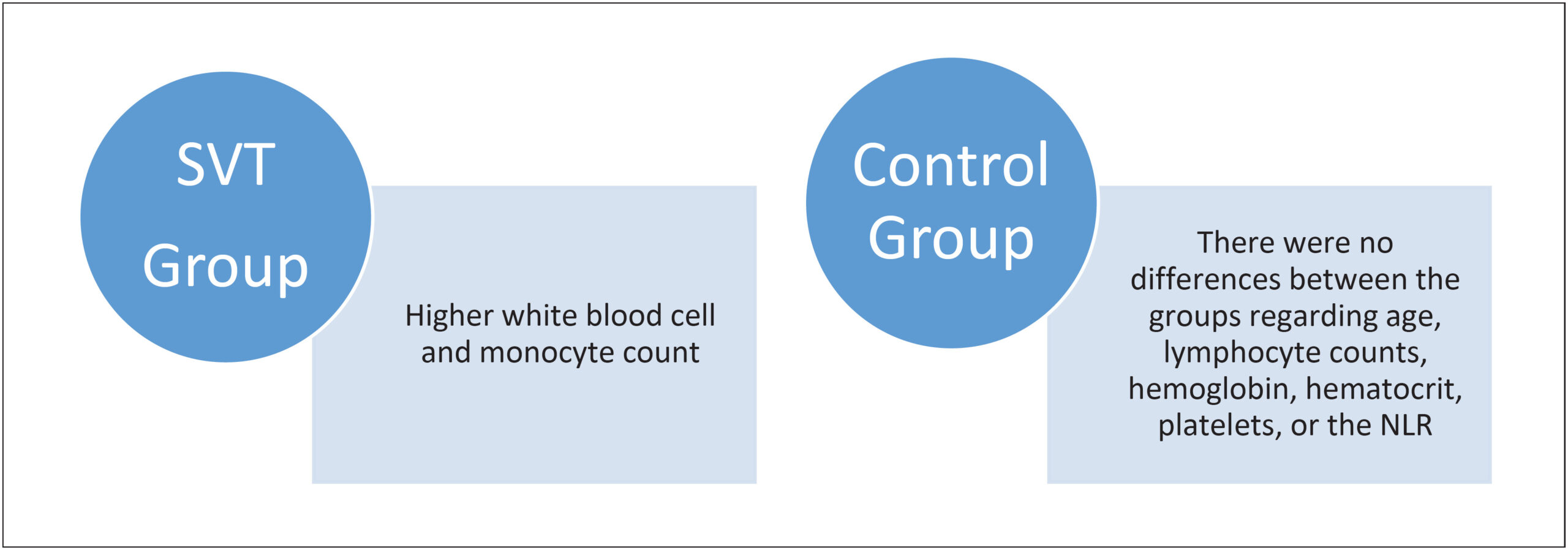
The supraventricular tachycardia (SVT) can be described as an irregular heart rhythm with an increased heart rate originating above the bundle of His. The heart rate is > 100 bpm. This condition can be particularly distressing for children and their families.

The incidence estimate of SVT in children is inaccurate because symptoms are usually nonspecific, such as sweating, pallor, apathy, inappetence, and tachycardia. Furthermore, spontaneous resolution can occur in some cases. Nonetheless, studies estimate that in children without congenital heart pathologies, the incidence is 24.4 per 100,000 live births. Still, the incidence is lower than in adults, and SVT emergencies are rare.

[…]

  • Echocardiography
  • Inflammation
  • Tachycardia
Read Full Article
Creative Commons Attribution (CC BY) Creative Commons license
11/04/2025 DOI: 10.36660/ijcs.20250024
High Power Short Duration Atrial Fibrillation Ablation: Long-Term Predictors of Success and Recurrence – A Multivariate Analysis
ABC
Original Article

High Power Short Duration Atrial Fibrillation Ablation: Long-Term Predictors of Success and Recurrence – A Multivariate Analysis

Fabricio Vassallo et al. Christiano Cunha Lucas Corsino Eduardo Serpa … Aloyr Simões Jr Dalton Hespanhol Carlos Volponi Lovatto Dalbian Gasparini Luiz Fernando Barbosa Andre Schmidt

Abstract

Background

Point-by-point ablation with a high-power short-duration (HPSD) technique in atrial fibrillation (AF) ablation is used worldwide. Little data is available with the HPSD and dragging technique (DT).

Objective

To perform a multivariate analysis of clinical and procedural predictors of success and recurrence in HPSD with DT.

Methods

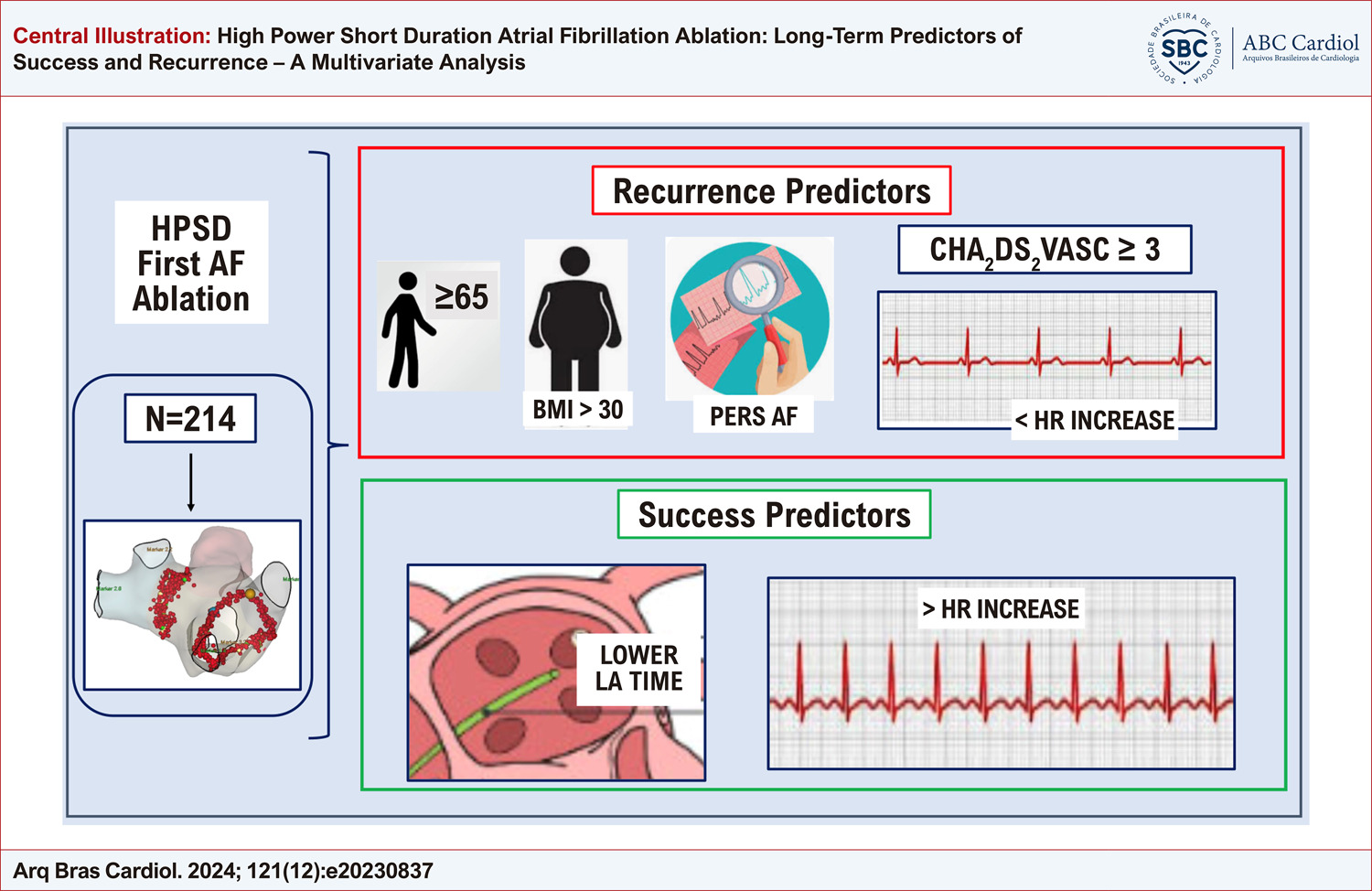
214 patients in the first AF ablation in sinus rhythm were prospectively enrolled. DT with radiofrequency power of 50 W and contact force (CF) of 10–20 g and 5–10 g at a flow rate of 40 mL/min were applied on the anterior and posterior walls, respectively. Statistical significance was defined as p < 0.05.

Results

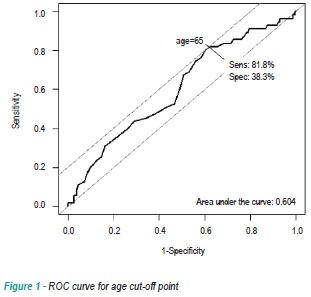
143 (66.8%) males, paroxysmal AF (PAF) in 124 (57.9%), with 61.1±12.3 years and followed for 32.8±13.2 months. After 90 days, AF occurred in 43 (20.1%) patients, 19 (15.3%) from PAF, and 24 (26.7%) in persistent AF (PersAF). Multivariate analysis indicated as clinical predictors of recurrence: age ≥ 65 years (p=0.006); obesity [body mass index > 30 (p=0.009)]; CHA2DS2VASC score ≥ 3 (p=0.003); and PersAF (p=0.045). The procedural predictor of recurrence was a heart rate increase < 10% (p=0.006). Predictors of success were an increase in heart rate ≥ 30% (p=0.04) and < 60 min in left atrium time (LAT) (p=0.007).

Conclusion

AF ablation with DT and HPSD clinical and procedural predictors of recurrence were ≥ 65 years, obesity, a CHA2DS2VASC ≥ 3, PersAF, and a heart rate increase of < 10% after ablation. Success predictors were an increase of ≥ 30% in heart rate and low LAT (< 60 min).

  • Atrial Fibrillation
  • Catheter Ablation
  • Recidivism
  • Tachycardia
Read Full Article
Creative Commons Attribution (CC BY) Creative Commons license
13/12/2024 DOI: 10.36660/abc.20230837i Views 1
Figure 1
ABCHF
Case Report

Post-COVID Tachycardia Syndrome: Could It Be Myocarditis? A Case Report of a Patient Treated with Ivabradine

Davyson Gerhardt de Souza et al. Vanessa do Amaral Tinoco Ligia Cordeiro Matos Faial Humberto Villacorta

Abstract

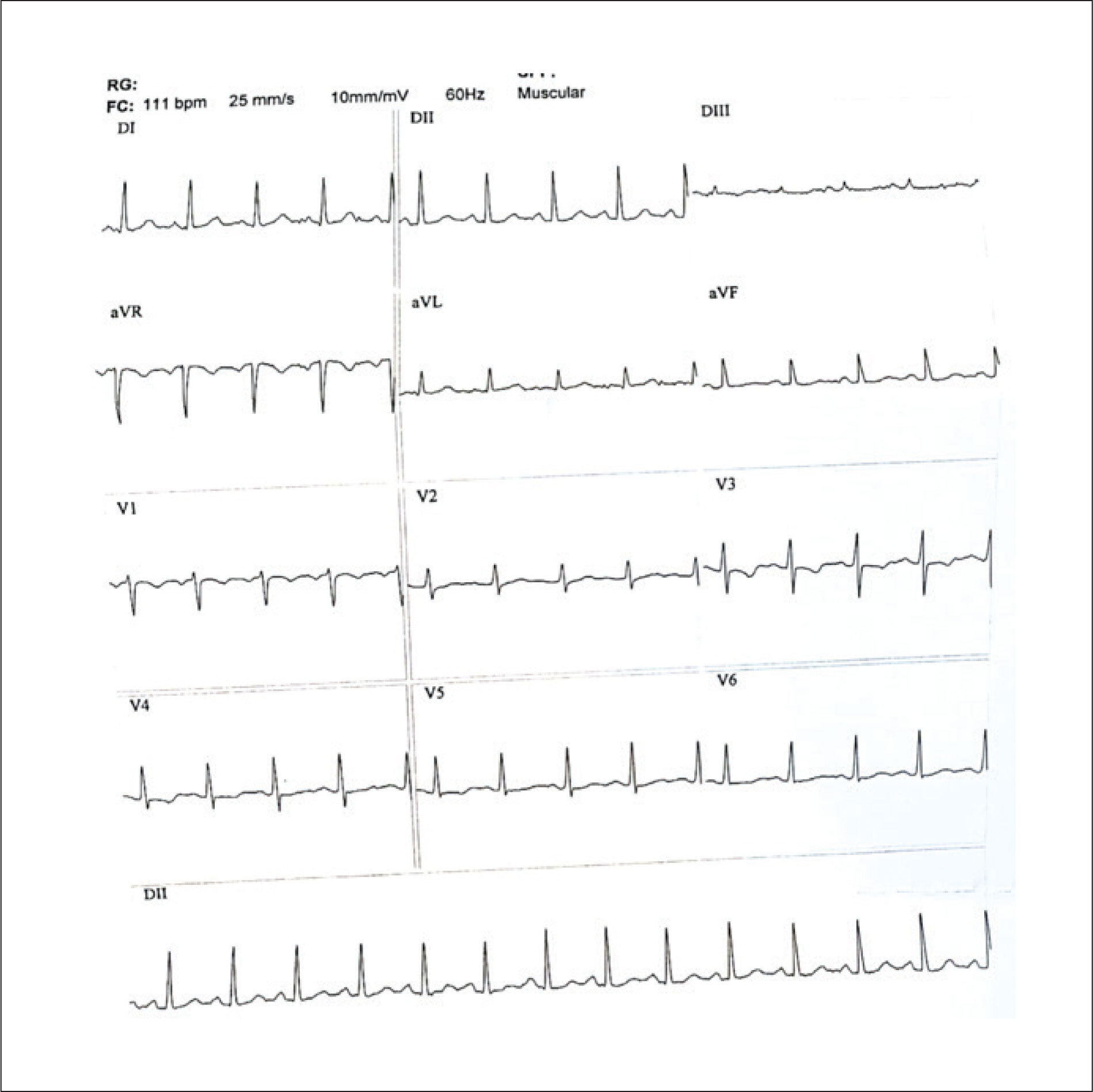
This report illustrates a case of acute myocarditis in a patient who was recently hospitalized for COVID-19. Myocarditis was suspected based on the presence of tachycardia, the only abnormality present on physical examination, as well as high levels of B-type natriuretic peptide. The diagnosis was confirmed with cardiac magnetic resonance image, which showed the presence of late enhancement, predominantly subepicardial, in the inferolateral and inferior walls of the left ventricle. The patient did not meet any of the criteria for endomyocardial biopsy (progressive heart failure, severe cardiac dysfunction, ventricular arrhythmias, atrioventricular blocks). Therefore, the treatment was focused on heart rate control. Beta-blocker is the first option for rate control, but the patient had a contraindication. Thus, ivabradine, a selective heart rate reducer was used. This drug has been poorly studied in the context of post-COVID-19 syndromes, and the present case suggests a benefit for heart rate control in patients with post-COVID-19 tachycardia syndrome.

  • Heart Injuries
  • Ivabradine
  • Myocarditis
  • Post-Acute COVID-19 Syndrome
  • Tachycardia
Read Full Article
Creative Commons Attribution (CC BY) Creative Commons license
31/12/2023 DOI: 10.36660/abchf.20230066 Views 3
IJCS
Editorial

Safety of Dental Anesthesia in ICD Recipients

Ricardo Alkmim Teixeira

Some anesthetic agents administered during general anesthesia can cause heart rhythm disorders, mainly associated with autonomic imbalance. Off-target cardiac sodium channel blockade is considered the canonical mechanism behind cardiotoxicity.

Lidocaine, the most common local anesthetic, produces a transient loss of sensory, motor, and autonomic function when the drug is injected or applied close to neural tissues; furthermore, it has a good safety margin before reaching toxic blood levels. However, care must be taken to keep track of the total dose given to minimize its systemic toxicity. In addition to direct nerve toxicity, systemic toxicity affecting the brain and/or cardiac muscle can also occur. Cardiovascular toxicity usually appears as tachycardia and hypertension; however, with increasing toxicity, bradycardia and hypotension can occur. Ventricular arrhythmias and cardiac arrest also have been described. Because of its potential effects upon the heart, it is also commonly used as an antiarrhythmic agent to depress ventricular arrhythmias in controlled doses.

[…]

  • Anesthesis,Dental
  • Anesthetics/adverse effects
  • Cardiac Arrhythmias
  • Cardiovascular Diseases/complications
  • Heart Rate
  • Hypertension
  • Lidocaine/complications
  • Tachycardia
Read Full Article
Creative Commons Attribution (CC BY) Creative Commons license
17/07/2023 DOI: 10.36660/ijcs.20230023
Figure 1
ABC
Research Letter

Predictors of Atrial Fibrillation in Holter Monitoring after Stroke – A Ten Year Flashback

Tânia Proença et al. Ricardo Alves Pinto Miguel Martins de Carvalho Carla Sousa … Paula Dias Manuel Campelo Filipe Macedo

Introduction

Atrial fibrillation (AF) is a major risk factor for thromboembolic events, increasing five times the risk of stroke; it is also associated with more severe events and a higher risk of stroke recurrence. , On the other hand, the diagnosis of AF as the cause of ischaemic stroke shifts the therapeutic approach with a major prognostic impact., Detection of previously unknown AF after stroke is crucial, and several studies have established the effectiveness of ECG monitoring for post-stroke AF detection. According to ESO Guidelines for managing ischaemic stroke and transient ischaemic attack (TIA), after the acute phase, a 24-hour Holter ECG monitoring should be performed. New ESC Guidelines recommend short-term ECG recording for at least the first 24 h and continuous ECG monitoring for at least 72 h whenever possible in cryptogenic stroke.

[…]

  • Ambulatory/methods
  • Atrial Fibrillation
  • ectopic atrial
  • Electrocardiography
  • Risk Factors
  • Stroke/therapy
  • Tachycardia
  • Thromboembolis/therapy
Read Full Article
Creative Commons Attribution (CC BY) Creative Commons license
05/08/2022 DOI: 10.36660/abc.20210660 Views 1
ABCIC
Case Report

Rare Cause of Chest Pain in Young Patient: Left Ventricular Myxoma

Gustavo Henrique Belarmino Góes et al. José Candido de Souza Ferraz Neto Ivaldo Pedrosa Calado Filho Ricardo de Carvalho Lima Dário Celestino Sobral Filho

[…]

  • Chest Pain
  • Dyspnea
  • Echocardiography/diagnostic Imaging
  • Heart Neoplasms
  • Myxoma/surgery
  • Syncope
  • Tachycardia
Read Full Article
Creative Commons Attribution (CC BY) Creative Commons license
20/01/2022 DOI: 10.5935/2318-8219.20190013
ABCIC
Editorial

My approach to the diagnosis and treatment of fetal tachycardias

Marcia Ferreira Alves Barberato

[…]

  • Diagnosis
  • Echocardiography
  • Fetus
  • Tachycardia
Read Full Article
Creative Commons Attribution (CC BY) Creative Commons license
14/01/2022 DOI: 10.5935/2318-8219.20200017
Figure 1
ABC
Original Article

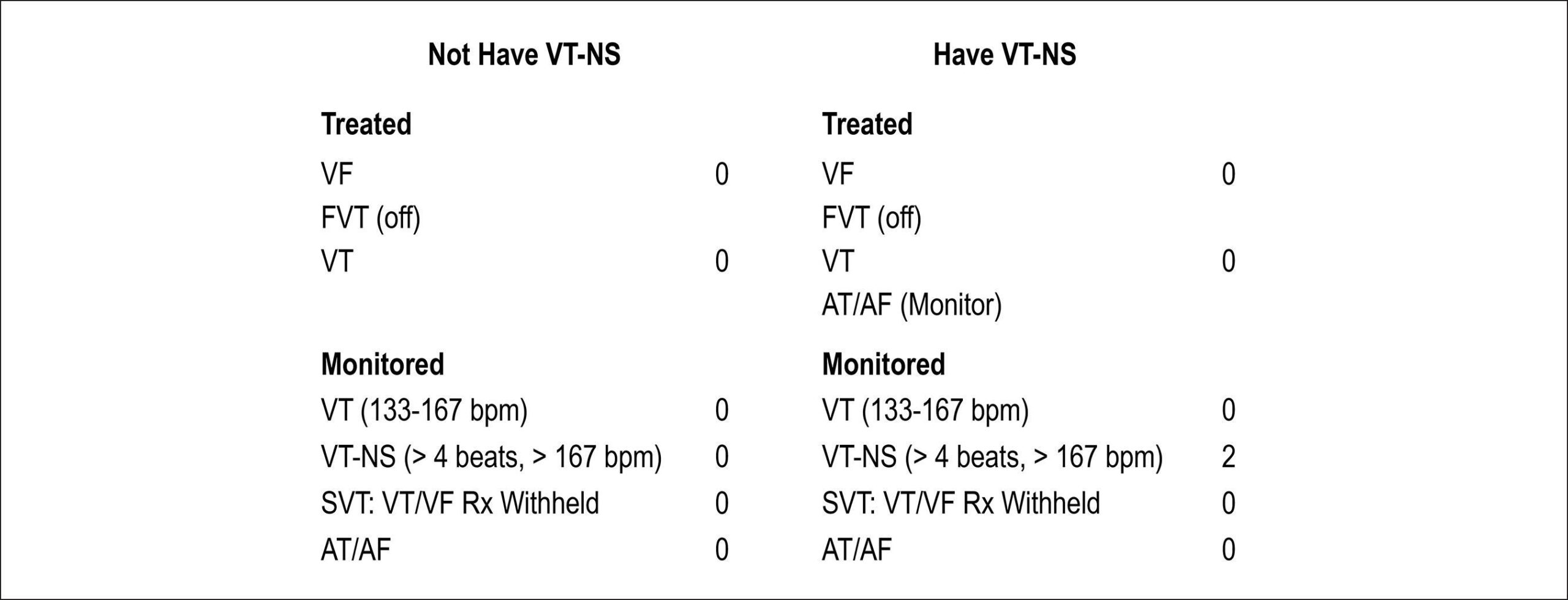
Non-Sustained Ventricular Tachycardia Episodes Predict Future Hospitalization in ICD Recipients with Heart Failure

Fatih Mehmet Uçar et al. Mustafa Adem Yilmaztepe Gökay Taylan Meryem Aktoz

Abstract

Background:

Implantable cardioverter-defibrillator (ICD) therapy is well known to reduce mortality in selected patients with heart failure (HF).

Objective:

To investigate whether monitored episodes of non-sustained ventricular tachycardia (NSVT) might predict future HF hospitalizations in ICD recipients with HF.

Methods:

We examined 104 ICD recipients (mean age: 60 ± 10.1 years, 80.8 % male) with HF who were referred to our outpatient clinic for device follow-up. After device interrogation, patients were divided into NSVT positive and negative groups. The primary endpoint was the rate of hospitalization within the next 6 months after initial ICD evaluation.

Results:

Device evaluation demonstrated at least one episode of monitored NSVT in 50 out of 104 patients. As expected, no device therapy (shock or anti-tachycardia) was needed for such episodes. At 6 months, 24 patients were hospitalized due to acute decompensated HF. Hospitalization rate was significantly lower in the NSVT negative as compared with positive groups (38% versus 62%; adjusted hazard ratio [HR] 0.166 ; 95% CI 0.056 to 0.492; p = 0.01).

Conclusions:

Monitored NSVT bouts in ICD recordings may serve as a predictor of future HF hospitalizations in ICD recipients with HF suggesting optimization of therapeutic modalities in these patients along with a close supervision in the clinical setting.

  • Defibrillators
  • Heart Failure
  • Hospitalization
  • Implantable
  • Tachycardia
  • Ventricular
Read Full Article
Creative Commons Attribution (CC BY) Creative Commons license
01/10/2017 DOI: 10.5935/abc.20170141
Figure 1
IJCS
Case Report

Tachycardiomyopathy and Extracorporeal Membrane Oxygenation: A Case Report

Joana Malheiro et al. João Almeida Daniel Caeiro Adelaide Dias … Marlene Fonseca Vasco Gama

Introduction

Tachycardiomyopathy (TCM) is a rare, but potentially reversible cause of cardiomyopathy and cardiogenic shock. It is defined by a global left ventricular systolic dysfunction secondary to persistent tachyarrhythmia, with partial (in patients with previous structural disease), or total recovery (in patients without previous structural disease) after cardiac rhythm normalization. The most commonly implicated arrhythmia is atrial fibrillation. The hemodynamic changes that characterize the patient with TCM include: increase in ventricular telediastolic and telesystolic volumes, global hypokinesis, increase in ventricular and pulmonary artery filling pressures, and, finally, decrease in ejection fraction (EF)., It manifests clinically by congestive heart failure, and, in some cases, it may develop into cardiogenic shock. There are no specific methods to identify the presence of TCM. The diagnosis is usually attained retrospectively with normalization or improvement of left ventricular dysfunction, through tachyarrhythmia reversion or control. The most frequent complications of TCM are embolic events, complications due to the evolution of arrhythmia severity with degeneration to Ventricular Tachycardia (VT)/Ventricular Fibrillation (VF) and cardiogenic shock.

The treatment includes measures of hemodynamic support, frequency control, and reversion to sinus rhythm, when possible. Extracorporeal Membrane Oxygenation (ECMO) is a mechanical device that ensures blood oxygenation and perfusion of the main organs for prolonged periods of time in patients with lung and/or heart failure. The use of this device allows the patient to remain alive and hemodynamically stable, working as a bridge to eventual recovery, transplantation, decision-making or even as a “bridge to another bridge” (for instance, as a bridge to left ventricular assist device – LVAD – as target therapeutics).

[…]

  • Atrial Fibrillation
  • Cardiogenic
  • Cardiomyopathies
  • Extracorporeal Membrane Oxygenation
  • Shock
  • Tachycardia
Read Full Article
Creative Commons Attribution (CC BY) Creative Commons license
01/01/2017 DOI: 10.5935/2359-4802.20170079
Case 2 – for index purposes: a 50 year old and past heavy drinker man admitted to treat decompensated heart failure
ABC
Anatomopathological Session

Case 2 – for index purposes: a 50 year old and past heavy drinker man admitted to treat decompensated heart failure

Wilma Noia Ribeiro et al. Alice Tatsuko Yamada Luiz Alberto Benvenuti

ANATOMOPATHOLOGICAL SESSION

Case 2 – for index purposes: a 50 year old and past heavy drinker man admitted to treat decompensated heart failure

[…]

  • Alcoholism
  • cardiomyopathy
  • Dilated
  • ectopic atrial
  • Heart Failure
  • Obesity
  • Tachycardia
Read Full Article
Creative Commons Attribution (CC BY) Creative Commons license
08/08/2012 DOI: 10.1590/S0066-782X2012000600015
Delayed enhancement cardiac magnetic resonance Imaging can identify the risk for ventricular tachycardia in chronic Chagas' heart disease
ABC
Artigo Original

Delayed enhancement cardiac magnetic resonance Imaging can identify the risk for ventricular tachycardia in chronic Chagas' heart disease

Ronaldo Peixoto de Mello et al. Gilberto Szarf Paulo Roberto Schvartzman Edson Minoru Nakano … Mariano Martinez Espinosa Denis Szejnfeld Verônica Fernandes João A. C. Lima Claudio Cirenza Angelo A.V. De Paola

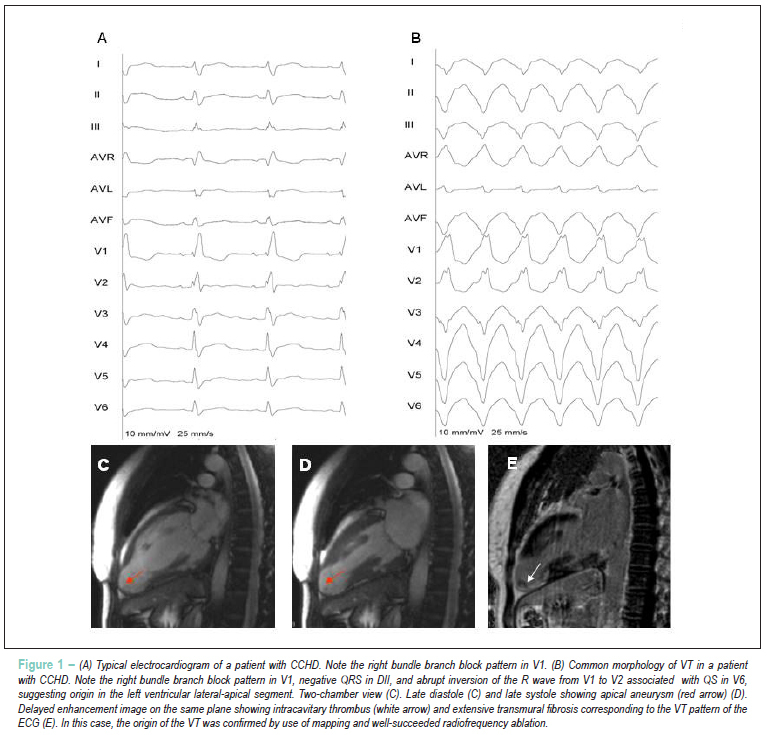
BACKGROUND: Invasive and non-invasive tests have been used to identify the risk of ventricular tachycardia (VT) in patients with chronic Chagas’ heart disease (CCHD). Cardiac magnetic resonance imaging (CMRI) using the delayed enhancement (DE) technique can be useful to select patients with global or segmentary ventricular dysfunction, with high degree of fibrosis and at higher risk for clinical VT. OBJECTIVE: To improve the identification of predictors of VT in patients with CCHD. METHOD: This study assessed 41 patients with CCHD [30 (72%) males; mean age, 55.1 ± 11.9 years]. Twenty-six patients had history of VT (VT group), and 15 had no VT (NVT group). All patients enrolled had DE and segmentary ventricular dysfunction. In each case, the following variables were determined: left ventricular volume; percentage of ventricular wall thickness impairment in each segment; and DE distribution. RESULTS: No statistical difference regarding the DE volume between both groups was observed: VT group = 30.0 ± 16.2%; NVT group = 21.7 ± 15.7%; p = 0.118. The probability of VT was greater in the presence of two or more contiguous transmural fibrosis areas, and that was a predictive factor of clinical VT (RR 4.1; p = 0,04). Agreement between observers was 100% regarding that criterion (p < 0.001). CONCLUSION: The identification of two or more segments of transmural DE by use of CMRI is associated with the occurrence of clinical VT in patients with CCHD. Thus, CMRI improved risk stratification in the population studied. (Arq Bras Cardiol. 2012; [online].ahead print, PP.0-0)

  • Chagas Cardiomyopathy
  • Magnetic Resonance
  • spectroscopy
  • Tachycardia
  • Ventricular
Read Full Article
Creative Commons Attribution (CC BY) Creative Commons license
29/03/2012 DOI: 10.1590/S0066-782X2012005000031
Predictors of hospital mortality in hemodynamically stable patients with pulmonary embolism
ABC
Artigo Original

Predictors of hospital mortality in hemodynamically stable patients with pulmonary embolism

André Volschan et al. Denilson Albuquerque Bernardo Rangel Tura Marcos Knibel … José Péricles Esteves Luiz Carlos Bodanese Francisco Silveira João Pantoja Paulo Cesar Pereira da Silva e Souza João Mansur Evandro Tinoco Mesquita

BACKGROUND: Pulmonary embolism is associated with high mortality in patients with hypotension or circulatory shock. However, the association between some clinical variables and mortality is still unclear in hemodynamically stable patients. OBJECTIVES: To derive an in-hospital mortality risk stratification model in hemodynamically stable patients with pulmonary embolism. METHODS: This is a prospective multicenter cohort study of 582 consecutive patients admitted in emergency units or intensive care units with clinically suspected pulmonary embolism and whose diagnosis was confirmed by one or more of the following tests: pulmonary arteriography, spiral CT angiography, magnetic resonance angiography, Doppler echocardiography, pulmonary scintigraphy, or venous duplex scan. Data on demographics, comorbidities and clinical manifestations were collected and included in a logistic regression analysis so as to build the prediction model. RESULTS: Overall mortality was 14.1%. The following parameters were identified as independent death risk variables: age > 65 years, bed rest > 72h, chronic cor pulmonale, sinus tachycardia, and tachypnea. After risk stratification, mortalities of 5.4%, 17.8%, and 31.3% were found in the low, moderate and high-risk subgroups, respectively. The model showed 65.5% sensitivity and 80% specificity, with a 0.77 area under the curve. CONCLUSION: In hemodynamically stable patients with pulmonary embolism, age > 65 years, bed rest > 72h, chronic cor pulmonale, sinus tachycardia and tachypnea were independent predictors of in-hospital mortality. However, further validation of the prediction model in other populations is required so that it can be incorporated into the clinical practice.

  • Hospital Mortality
  • Pulmonary embolism
  • Pulmonary Heart Disease
  • sinus
  • Tachycardia
Read Full Article
Creative Commons Attribution (CC BY) Creative Commons license
13/10/2009 DOI: 10.1590/S0066-782X2009000800011
Hypertrophic cardiomyopathy and tachyarrhythmias detected by a pacemaker
ABC
Case Report

Hypertrophic cardiomyopathy and tachyarrhythmias detected by a pacemaker

Adrian Baranchuk et al. Syamkumar Divakaramenon Sebastian Ribas Carlos A. Morillo

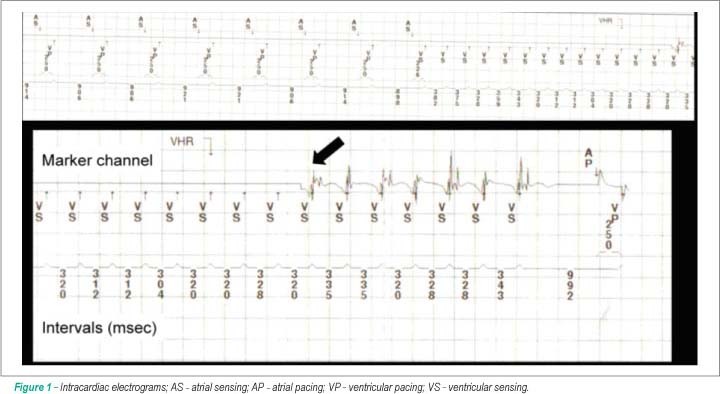
A 56-year-old man came to the Pacemaker Clinic for his regular pacemaker control. He had experienced a syncopal episode in the previous week. He had a previous diagnosis of non-obstructive hypertrophic cardiomyopathy. Due to a previous syncope and documented 2:1 infrahisian block, a dual-chamber permanent pacemaker had been implanted a few years before. The device was interrogated, showing several ventricular high rate episodes. A careful analysis of the stored intracardiac electrograms showed ventricular tachycardia (VT) with 2:1 ventriculoatrial conduction. The following presentation discusses the alternative diagnosis and clinical management in an unusual diagnosis of VT in the presence of non-obstructive hypertrophic cardiomyopathy.

  • Cardiomyopathy, Hypertrophic
  • Pacemaker, Artificial
  • Tachycardia
Read Full Article
Creative Commons Attribution (CC BY) Creative Commons license
17/04/2009 DOI: 10.1590/S0066-782X2009000300015

How to cite this article

EndNote RIS

Electronic Document Format (Vancouver)

Kataoka N, Imamura T. How to Compare Clinical Outcomes between Cryoablation and Radiofrequency Ablation in Patients with Atrioventricular Nodal Reentrant Tachycardia?. Arquivos Brasileiros de Cardiologia 2025;122(5):e20250078.

Electronic Document Format (ABNT)

Kataoka, Naoya; Imamura, Teruhiko. How to Compare Clinical Outcomes between Cryoablation and Radiofrequency Ablation in Patients with Atrioventricular Nodal Reentrant Tachycardia?. Arquivos Brasileiros de Cardiologia, v. 122, n. 5, e20250078, Jun. 2025.

Electronic Document Format (APA)

Kataoka, N., & Imamura, T. (2025). How to Compare Clinical Outcomes between Cryoablation and Radiofrequency Ablation in Patients with Atrioventricular Nodal Reentrant Tachycardia?. Arquivos Brasileiros de Cardiologia, 122(5), e20250078.

Electronic Document Format (ISO)

Kataoka, Naoya and Imamura, Teruhiko. How to Compare Clinical Outcomes between Cryoablation and Radiofrequency Ablation in Patients with Atrioventricular Nodal Reentrant Tachycardia?. Arquivos Brasileiros de Cardiologia [online]. 2025, vol. 122, n. 5, [cited 2026-10-14], e20250078. Available from: <https://journals.cardiol.br/en/article/how-to-compare-clinical-outcomes-between-cryoablation-and-radiofrequency-ablation-in-patients-with-atrioventricular-nodal-reentrant-tachycardia/>. ISSN 0066-782X

EndNote RIS

Electronic Document Format (Vancouver)

Bispo IGA, Santos EF, Rocha ABA, Manente MG, Morata MG. What Can Inflammatory Markers Tell Us About Tachycardia in Children?. International Journal of Cardiovascular Sciences 2025;38:e20250024.

Electronic Document Format (ABNT)

Bispo, Irving Gabriel Araújo; Santos, Eloisa Faggiani; Rocha, Ana Beatriz Aparecida; Manente, Millene Gonzalez; Morata, Marina Guerriero. What Can Inflammatory Markers Tell Us About Tachycardia in Children?. International Journal of Cardiovascular Sciences, v. 38, e20250024, Apr. 2025.

Electronic Document Format (APA)

Bispo, I. G. A., Santos, E. F., Rocha, A. B. A., Manente, M. G., & Morata, M. G. (2025). What Can Inflammatory Markers Tell Us About Tachycardia in Children?. International Journal of Cardiovascular Sciences, 38, e20250024.

Electronic Document Format (ISO)

Bispo, Irving Gabriel Araújo and Santos, Eloisa Faggiani and Rocha, Ana Beatriz Aparecida and Manente, Millene Gonzalez and Morata, Marina Guerriero. What Can Inflammatory Markers Tell Us About Tachycardia in Children?. International Journal of Cardiovascular Sciences [online]. 2025, vol. 38, [cited 2026-10-14], e20250024. Available from: <https://journals.cardiol.br/en/article/what-can-inflammatory-markers-tell-us-about-tachycardia-in-children/>. ISSN 2359-4802

EndNote RIS

Electronic Document Format (Vancouver)

Vassallo F, Cunha C, Corsino L, Serpa E, Simões Jr A, Hespanhol D, Lovatto CV, et al. High Power Short Duration Atrial Fibrillation Ablation: Long-Term Predictors of Success and Recurrence – A Multivariate Analysis. Arquivos Brasileiros de Cardiologia 2024;121(12):e20230837.

Electronic Document Format (ABNT)

Vassallo, Fabricio; Cunha, Christiano; Corsino, Lucas; Serpa, Eduardo; Simões Jr, Aloyr; Hespanhol, Dalton; Lovatto, Carlos Volponi; Gasparini, Dalbian; Barbosa, Luiz Fernando; Schmidt, Andre. High Power Short Duration Atrial Fibrillation Ablation: Long-Term Predictors of Success and Recurrence – A Multivariate Analysis. Arquivos Brasileiros de Cardiologia, v. 121, n. 12, e20230837, Dec. 2024.

Electronic Document Format (APA)

Vassallo, F., Cunha, C., Corsino, L., Serpa, E., Simões Jr, A., Hespanhol, D., Lovatto, C. V., Gasparini, D., Barbosa, L. F., & Schmidt, A. (2024). High Power Short Duration Atrial Fibrillation Ablation: Long-Term Predictors of Success and Recurrence – A Multivariate Analysis. Arquivos Brasileiros de Cardiologia, 121(12), e20230837.

Electronic Document Format (ISO)

Vassallo, Fabricio and Cunha, Christiano and Corsino, Lucas and Serpa, Eduardo and Simões Jr, Aloyr and Hespanhol, Dalton and Lovatto, Carlos Volponi and Gasparini, Dalbian and Barbosa, Luiz Fernando and Schmidt, Andre. High Power Short Duration Atrial Fibrillation Ablation: Long-Term Predictors of Success and Recurrence – A Multivariate Analysis. Arquivos Brasileiros de Cardiologia [online]. 2024, vol. 121, n. 12, [cited 2026-10-14], e20230837. Available from: <https://journals.cardiol.br/en/article/high-power-short-duration-atrial-fibrillation-ablation-long-term-predictors-of-success-and-recurrence-a-multivariate-analysis/>. ISSN 0066-782X

EndNote RIS

Electronic Document Format (Vancouver)

Souza DG, Tinoco VA, Faial LCM, Villacorta H. Post-COVID Tachycardia Syndrome: Could It Be Myocarditis? A Case Report of a Patient Treated with Ivabradine. ABC Heart Fail Cardiomyop 2023;3(3):e20230066.

Electronic Document Format (ABNT)

Souza, Davyson Gerhardt de; Tinoco, Vanessa do Amaral; Faial, Ligia Cordeiro Matos; Villacorta, Humberto. Post-COVID Tachycardia Syndrome: Could It Be Myocarditis? A Case Report of a Patient Treated with Ivabradine. ABC Heart Fail Cardiomyop, v. 3, n. 3, e20230066, Dec. 2023.

Electronic Document Format (APA)

Souza, D. G. , Tinoco, V. A., Faial, L. C. M., & Villacorta, H. (2023). Post-COVID Tachycardia Syndrome: Could It Be Myocarditis? A Case Report of a Patient Treated with Ivabradine. ABC Heart Fail Cardiomyop, 3(3), e20230066.

Electronic Document Format (ISO)

Souza, Davyson Gerhardt de and Tinoco, Vanessa do Amaral and Faial, Ligia Cordeiro Matos and Villacorta, Humberto. Post-COVID Tachycardia Syndrome: Could It Be Myocarditis? A Case Report of a Patient Treated with Ivabradine. ABC Heart Fail Cardiomyop [online]. 2023, vol. 3, n. 3, [cited 2026-10-14], e20230066. Available from: <https://journals.cardiol.br/en/article/post-covid-tachycardia-syndrome-could-it-be-myocarditis-a-case-report-of-a-patient-treated-with-ivabradine/>

EndNote RIS

Electronic Document Format (Vancouver)

Teixeira RA. Safety of Dental Anesthesia in ICD Recipients. International Journal of Cardiovascular Sciences 2023;36:e20230023.

Electronic Document Format (ABNT)

Teixeira, Ricardo Alkmim. Safety of Dental Anesthesia in ICD Recipients. International Journal of Cardiovascular Sciences, v. 36, e20230023, Jul. 2023.

Electronic Document Format (APA)

Teixeira, R. A. (2023). Safety of Dental Anesthesia in ICD Recipients. International Journal of Cardiovascular Sciences, 36, e20230023.

Electronic Document Format (ISO)

Teixeira, Ricardo Alkmim. Safety of Dental Anesthesia in ICD Recipients. International Journal of Cardiovascular Sciences [online]. 2023, vol. 36, [cited 2026-10-14], e20230023. Available from: <https://journals.cardiol.br/en/article/safety-of-dental-anesthesia-in-icd-recipients/>. ISSN 2359-4802

EndNote RIS

Electronic Document Format (Vancouver)

Proença T, Pinto RA, Carvalho MM, Sousa C, Dias P, Campelo M, Macedo F, et al. Predictors of Atrial Fibrillation in Holter Monitoring after Stroke – A Ten Year Flashback. Arquivos Brasileiros de Cardiologia 2022;119(2):346-8.

Electronic Document Format (ABNT)

Proença, Tânia; Pinto, Ricardo Alves; Carvalho, Miguel Martins de; Sousa, Carla; Dias, Paula; Campelo, Manuel; Macedo, Filipe. Predictors of Atrial Fibrillation in Holter Monitoring after Stroke – A Ten Year Flashback. Arquivos Brasileiros de Cardiologia, v. 119, n. 2, p. 346-348, Aug. 2022.

Electronic Document Format (APA)

Proença, T., Pinto, R. A., Carvalho, M. M. , Sousa, C., Dias, P., Campelo, M., & Macedo, F. (2022). Predictors of Atrial Fibrillation in Holter Monitoring after Stroke – A Ten Year Flashback. Arquivos Brasileiros de Cardiologia, 119(2), 346-348.

Electronic Document Format (ISO)

Proença, Tânia and Pinto, Ricardo Alves and Carvalho, Miguel Martins de and Sousa, Carla and Dias, Paula and Campelo, Manuel and Macedo, Filipe. Predictors of Atrial Fibrillation in Holter Monitoring after Stroke – A Ten Year Flashback. Arquivos Brasileiros de Cardiologia [online]. 2022, vol. 119, n. 2, [cited 2026-10-14], pp. 346-348. Available from: <https://journals.cardiol.br/en/article/predictors-of-atrial-fibrillation-in-holter-monitoring-after-stroke-a-ten-year-flashback/>. ISSN 0066-782X

EndNote RIS

Electronic Document Format (Vancouver)

Góes GHB, Ferraz Neto JCS, Calado Filho IP, Lima RC, Sobral Filho DC. Rare Cause of Chest Pain in Young Patient: Left Ventricular Myxoma. Arquivos Brasileiros de Cardiologia Imagem cardiovascular 2022;32(1):67-70.

Electronic Document Format (ABNT)

Góes, Gustavo Henrique Belarmino; Ferraz Neto, José Candido de Souza; Calado Filho, Ivaldo Pedrosa; Lima, Ricardo de Carvalho; Sobral Filho, Dário Celestino. Rare Cause of Chest Pain in Young Patient: Left Ventricular Myxoma. Arquivos Brasileiros de Cardiologia Imagem cardiovascular, v. 32, n. 1, p. 67-70, Jan. 2022.

Electronic Document Format (APA)

Góes, G. H. B., Ferraz Neto, J. C. S., Calado Filho, I. P., Lima, R. C., & Sobral Filho, D. C. (2022). Rare Cause of Chest Pain in Young Patient: Left Ventricular Myxoma. Arquivos Brasileiros de Cardiologia Imagem cardiovascular, 32(1), 67-70.

Electronic Document Format (ISO)

Góes, Gustavo Henrique Belarmino and Ferraz Neto, José Candido de Souza and Calado Filho, Ivaldo Pedrosa and Lima, Ricardo de Carvalho and Sobral Filho, Dário Celestino. Rare Cause of Chest Pain in Young Patient: Left Ventricular Myxoma. Arquivos Brasileiros de Cardiologia Imagem cardiovascular [online]. 2022, vol. 32, n. 1, [cited 2026-10-14], pp. 67-70. Available from: <https://journals.cardiol.br/en/article/rare-cause-of-chest-pain-in-young-patient-left-ventricular-myxoma/>. ISSN 2318-8219

EndNote RIS

Electronic Document Format (Vancouver)

Barberato MFA. My approach to the diagnosis and treatment of fetal tachycardias. Arquivos Brasileiros de Cardiologia Imagem cardiovascular 2022;33(2):1-3.

Electronic Document Format (ABNT)

Barberato, Marcia Ferreira Alves. My approach to the diagnosis and treatment of fetal tachycardias. Arquivos Brasileiros de Cardiologia Imagem cardiovascular, v. 33, n. 2, p. 1-3, Jan. 2022.

Electronic Document Format (APA)

Barberato, M. F. A. (2022). My approach to the diagnosis and treatment of fetal tachycardias. Arquivos Brasileiros de Cardiologia Imagem cardiovascular, 33(2), 1-3.

Electronic Document Format (ISO)

Barberato, Marcia Ferreira Alves. My approach to the diagnosis and treatment of fetal tachycardias. Arquivos Brasileiros de Cardiologia Imagem cardiovascular [online]. 2022, vol. 33, n. 2, [cited 2026-10-14], pp. 1-3. Available from: <https://journals.cardiol.br/en/article/my-approach-to-the-diagnosis-and-treatment-of-fetal-tachycardias/>. ISSN 2318-8219

EndNote RIS

Electronic Document Format (Vancouver)

Uçar FM, Yilmaztepe MA, Taylan G, Aktoz M. Non-Sustained Ventricular Tachycardia Episodes Predict Future Hospitalization in ICD Recipients with Heart Failure. Arquivos Brasileiros de Cardiologia 2017;109(4):284-9.

Electronic Document Format (ABNT)

Uçar, Fatih Mehmet; Yilmaztepe, Mustafa Adem; Taylan, Gökay; Aktoz, Meryem. Non-Sustained Ventricular Tachycardia Episodes Predict Future Hospitalization in ICD Recipients with Heart Failure. Arquivos Brasileiros de Cardiologia, v. 109, n. 4, p. 284-289, Sep. 2017.

Electronic Document Format (APA)

Uçar, F. M., Yilmaztepe, M. A., Taylan, G., & Aktoz, M. (2017). Non-Sustained Ventricular Tachycardia Episodes Predict Future Hospitalization in ICD Recipients with Heart Failure. Arquivos Brasileiros de Cardiologia, 109(4), 284-289.

Electronic Document Format (ISO)

Uçar, Fatih Mehmet and Yilmaztepe, Mustafa Adem and Taylan, Gökay and Aktoz, Meryem. Non-Sustained Ventricular Tachycardia Episodes Predict Future Hospitalization in ICD Recipients with Heart Failure. Arquivos Brasileiros de Cardiologia [online]. 2017, vol. 109, n. 4, [cited 2026-10-14], pp. 284-289. Available from: <https://journals.cardiol.br/en/article/non-sustained-ventricular-tachycardia-episodes-predict-future-hospitalization-in-icd-recipients-with-heart-failure/>. ISSN 0066-782X

EndNote RIS

Electronic Document Format (Vancouver)

Malheiro J, Almeida J, Caeiro D, Dias A, Fonseca M, Gama V. Tachycardiomyopathy and Extracorporeal Membrane Oxygenation: A Case Report. International Journal of Cardiovascular Sciences 2017;30(6):545-9.

Electronic Document Format (ABNT)

Malheiro, Joana; Almeida, João; Caeiro, Daniel; Dias, Adelaide; Fonseca, Marlene; Gama, Vasco. Tachycardiomyopathy and Extracorporeal Membrane Oxygenation: A Case Report. International Journal of Cardiovascular Sciences, v. 30, n. 6, p. 545-549, Dec. 2016.

Electronic Document Format (APA)

Malheiro, J., Almeida, J., Caeiro, D., Dias, A., Fonseca, M., & Gama, V. (2017). Tachycardiomyopathy and Extracorporeal Membrane Oxygenation: A Case Report. International Journal of Cardiovascular Sciences, 30(6), 545-549.

Electronic Document Format (ISO)

Malheiro, Joana and Almeida, João and Caeiro, Daniel and Dias, Adelaide and Fonseca, Marlene and Gama, Vasco. Tachycardiomyopathy and Extracorporeal Membrane Oxygenation: A Case Report. International Journal of Cardiovascular Sciences [online]. 2017, vol. 30, n. 6, [cited 2026-10-14], pp. 545-549. Available from: <https://journals.cardiol.br/en/article/tachycardiomyopathy-and-extracorporeal-membrane-oxygenation-a-case-report/>. ISSN 2359-4802

EndNote RIS

Electronic Document Format (Vancouver)

Ribeiro WN, Yamada AT, Benvenuti LA. Case 2 – for index purposes: a 50 year old and past heavy drinker man admitted to treat decompensated heart failure. Arquivos Brasileiros de Cardiologia 2012;98(6):e87-95.

Electronic Document Format (ABNT)

Ribeiro, Wilma Noia; Yamada, Alice Tatsuko; Benvenuti, Luiz Alberto. Case 2 – for index purposes: a 50 year old and past heavy drinker man admitted to treat decompensated heart failure. Arquivos Brasileiros de Cardiologia, v. 98, n. 6, p. e87-e95, Aug. 2012.

Electronic Document Format (APA)

Ribeiro, W. N., Yamada, A. T., & Benvenuti, L. A. (2012). Case 2 – for index purposes: a 50 year old and past heavy drinker man admitted to treat decompensated heart failure. Arquivos Brasileiros de Cardiologia, 98(6), e87-e95.

Electronic Document Format (ISO)

Ribeiro, Wilma Noia and Yamada, Alice Tatsuko and Benvenuti, Luiz Alberto. Case 2 – for index purposes: a 50 year old and past heavy drinker man admitted to treat decompensated heart failure. Arquivos Brasileiros de Cardiologia [online]. 2012, vol. 98, n. 6, [cited 2026-10-14], pp. e87-e95. Available from: <https://journals.cardiol.br/en/article/case-2-for-index-purposes-a-50-year-old-and-past-heavy-drinker-man-admitted-to-treat-decompensated-heart-failure/>. ISSN 0066-782X

EndNote RIS

Electronic Document Format (Vancouver)

Mello RP, Szarf G, Schvartzman PR, Nakano EM, Espinosa MM, Szejnfeld D, Fernandes V, et al. Delayed enhancement cardiac magnetic resonance Imaging can identify the risk for ventricular tachycardia in chronic Chagas’ heart disease. Arquivos Brasileiros de Cardiologia 2012;98(5):421-30.

Electronic Document Format (ABNT)

Mello, Ronaldo Peixoto de; Szarf, Gilberto; Schvartzman, Paulo Roberto; Nakano, Edson Minoru; Espinosa, Mariano Martinez; Szejnfeld, Denis; Fernandes, Verônica; Lima, João A. C.; Cirenza, Claudio; Paola, Angelo A.V. De. Delayed enhancement cardiac magnetic resonance Imaging can identify the risk for ventricular tachycardia in chronic Chagas’ heart disease. Arquivos Brasileiros de Cardiologia, v. 98, n. 5, p. 421-430, Mar. 2012.

Electronic Document Format (APA)

Mello, R. P. , Szarf, G., Schvartzman, P. R., Nakano, E. M., Espinosa, M. M., Szejnfeld, D., Fernandes, V., Lima, J. A. C., Cirenza, C., & Paola, A. A. D. (2012). Delayed enhancement cardiac magnetic resonance Imaging can identify the risk for ventricular tachycardia in chronic Chagas’ heart disease. Arquivos Brasileiros de Cardiologia, 98(5), 421-430.

Electronic Document Format (ISO)

Mello, Ronaldo Peixoto de and Szarf, Gilberto and Schvartzman, Paulo Roberto and Nakano, Edson Minoru and Espinosa, Mariano Martinez and Szejnfeld, Denis and Fernandes, Verônica and Lima, João A. C. and Cirenza, Claudio and Paola, Angelo A.V. De. Delayed enhancement cardiac magnetic resonance Imaging can identify the risk for ventricular tachycardia in chronic Chagas’ heart disease. Arquivos Brasileiros de Cardiologia [online]. 2012, vol. 98, n. 5, [cited 2026-10-14], pp. 421-430. Available from: <https://journals.cardiol.br/en/article/delayed-enhancement-cardiac-magnetic-resonance-imaging-can-identify-the-risk-for-ventricular-tachycardia-in-chronic-chagas-heart-disease/>. ISSN 0066-782X

EndNote RIS

Electronic Document Format (Vancouver)

Volschan A, Albuquerque D, Tura BR, Knibel M, Esteves JP, Bodanese LC, Silveira F, et al. Predictors of hospital mortality in hemodynamically stable patients with pulmonary embolism. Arquivos Brasileiros de Cardiologia 2009;93(2):135-40.

Electronic Document Format (ABNT)

Volschan, André; Albuquerque, Denilson; Tura, Bernardo Rangel; Knibel, Marcos; Esteves, José Péricles; Bodanese, Luiz Carlos; Silveira, Francisco; Pantoja, João; Souza, Paulo Cesar Pereira da Silva e; Mansur, João; Mesquita, Evandro Tinoco. Predictors of hospital mortality in hemodynamically stable patients with pulmonary embolism. Arquivos Brasileiros de Cardiologia, v. 93, n. 2, p. 135-140, Oct. 2009.

Electronic Document Format (APA)

Volschan, A., Albuquerque, D., Tura, B. R., Knibel, M., Esteves, J. P., Bodanese, L. C., Silveira, F., Pantoja, J., Souza, P. C. P. S. , Mansur, J., & Mesquita, E. T. (2009). Predictors of hospital mortality in hemodynamically stable patients with pulmonary embolism. Arquivos Brasileiros de Cardiologia, 93(2), 135-140.

Electronic Document Format (ISO)

Volschan, André and Albuquerque, Denilson and Tura, Bernardo Rangel and Knibel, Marcos and Esteves, José Péricles and Bodanese, Luiz Carlos and Silveira, Francisco and Pantoja, João and Souza, Paulo Cesar Pereira da Silva e and Mansur, João and Mesquita, Evandro Tinoco. Predictors of hospital mortality in hemodynamically stable patients with pulmonary embolism. Arquivos Brasileiros de Cardiologia [online]. 2009, vol. 93, n. 2, [cited 2026-10-14], pp. 135-140. Available from: <https://journals.cardiol.br/en/article/predictors-of-hospital-mortality-in-hemodynamically-stable-patients-with-pulmonary-embolism/>. ISSN 0066-782X

EndNote RIS

Electronic Document Format (Vancouver)

Baranchuk A, Divakaramenon S, Ribas S, Morillo CA. Hypertrophic cardiomyopathy and tachyarrhythmias detected by a pacemaker. Arquivos Brasileiros de Cardiologia 2009;92(3):e40-2.

Electronic Document Format (ABNT)

Baranchuk, Adrian; Divakaramenon, Syamkumar; Ribas, Sebastian; Morillo, Carlos A.. Hypertrophic cardiomyopathy and tachyarrhythmias detected by a pacemaker. Arquivos Brasileiros de Cardiologia, v. 92, n. 3, p. e40-e42, Apr. 2009.

Electronic Document Format (APA)

Baranchuk, A., Divakaramenon, S., Ribas, S., & Morillo, C. A. (2009). Hypertrophic cardiomyopathy and tachyarrhythmias detected by a pacemaker. Arquivos Brasileiros de Cardiologia, 92(3), e40-e42.

Electronic Document Format (ISO)

Baranchuk, Adrian and Divakaramenon, Syamkumar and Ribas, Sebastian and Morillo, Carlos A.. Hypertrophic cardiomyopathy and tachyarrhythmias detected by a pacemaker. Arquivos Brasileiros de Cardiologia [online]. 2009, vol. 92, n. 3, [cited 2026-10-14], pp. e40-e42. Available from: <https://journals.cardiol.br/en/article/hypertrophic-cardiomyopathy-and-tachyarrhythmias-detected-by-a-pacemaker/>. ISSN 0066-782X

  • About ABC Family
  • Internal Regulation
  • Editorial Board
  • Brazilian Society of Cardiology (SBC)

Issues

SBC Guidelines

  • Videos
  • Podcasts
  • News