ABC Family Arquivos Brasileiros de Cardiologia International Journal of Cardiovascular Sciences ABC Heart Failure & Cardiomyopathy ABC Imagem Cardiovascular
Português English
ABC Family
Português English
  • About
    • About ABC Family
    • Internal Regulation
    • Editorial Board
    • Brazilian Society of Cardiology (SBC)
  • Issues
  • SBC Guidelines
  • Content
    • Videos
    • Podcasts
    • News
  • About
    • About ABC Family
    • Internal Regulation
    • Editorial Board
    • Brazilian Society of Cardiology (SBC)
  • Issues
  • SBC Guidelines
  • Content
    • Videos
    • Podcasts
    • News

ABC Family

  • ABC Family
  • Arquivos Brasileiros de Cardiologia
  • International Journal of Cardiovascular Sciences
  • ABC Heart Failure & Cardiomyopathy
  • ABC Imagem Cardiovascular
Search in

No content found.

Journals
Ordering
Article types
Others

  1. Home
  2. Keyword: Insulin
ABC
Editorial

Echoes of the Past: The Intriguing Link between Chagas Disease and Insulin

Marcia M. Noya-Rabelo et al. Olga Souza

Chagas disease is currently classified as one of several neglected tropical diseases and as one of the five neglected parasitic infections prioritized by the World Health Organization and the Center for Disease Control for public health intervention. This underscores the fact that the causative agent of American trypanosomiasis has existed for approximately 9.000 years, with positive samples dating back to 7050 B.C. The life cycle of Trypanosoma cruzi (T. cruzi) comprises several morphological transformations involving both mammalian and vector hosts, where three different major developmental stages are identified: epimastigotes, trypomastigotes, and amastigotes. Traditionally, T. cruzi is known to target the heart and gastrointestinal tract; however, its parasitism also results in structural changes and pro-inflammatory effects in adipose tissue and the pancreas.

In this edition of the Arquivos Brasileiros de Cardiologia, a longitudinal study by Barbosa-Ferreira et al. evaluated the levels of insulin, adiponectin, and leptin before and after treatment of acute Chagas disease with benznidazole. Twenty-eight subjects were divided into two groups: a control group (15 subjects) and an acute Chagas disease group (13 subjects). The authors found no significant differences in serum levels of adiponectin and leptin between the groups. In contrast, serum levels of insulin were lower in the acute Chagas group, both before and after treatment, compared to the control group. Additionally, insulin levels were lower in the post-treatment phase compared to the pre-treatment phase.

[…]

  • Acute Chagas Disease
  • Insulin
Read Full Article
Creative Commons Attribution (CC BY) Creative Commons license
04/07/2025 DOI: 10.36660/abc.20250295i Views 1
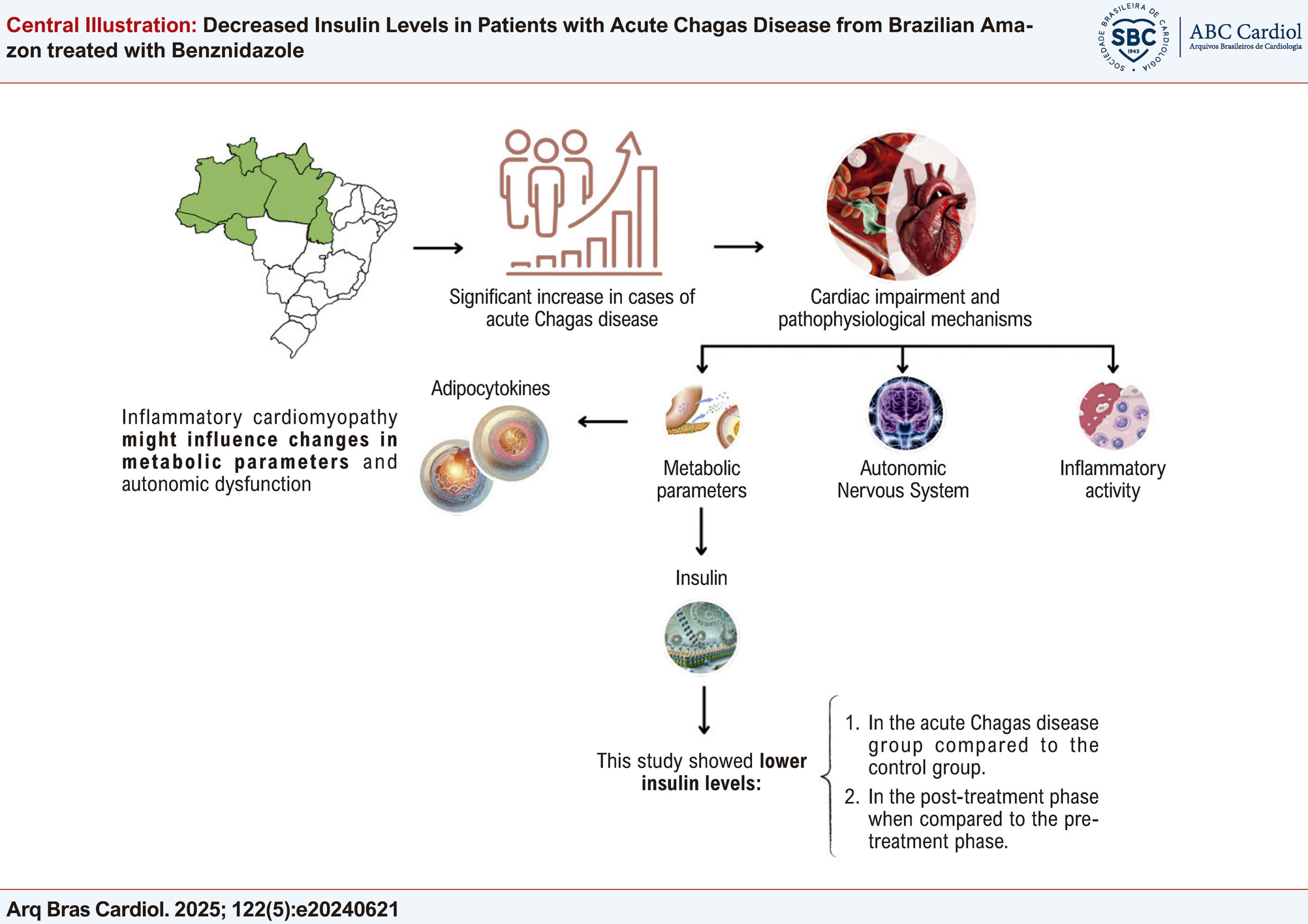
Decreased Insulin Levels in Patients with Acute Chagas Disease from Brazilian Amazon treated with Benznidazole
ABC
Original Article

Decreased Insulin Levels in Patients with Acute Chagas Disease from Brazilian Amazon treated with Benznidazole

João Marcos Barbosa-Ferreira et al. Jessica Vanina Ortiz Fernanda Gallinaro Pessoa Maria das Graças Vale Barbosa … Jorge Augusto de Oliveira Guerra Kátia do Nascimento Couceiro Mônica Regina Hosannah Silva e Silva Matheus Martins Monteiro Keila Cardoso Barbosa Fonseca Felix Alvarez Ramires Barbara Maria Ianni Charles Mady Fábio Fernandes

Abstract

Background

In the Amazon region, there has been a significant increase in the number of acute Chagas disease (ACD) leading to electrocardiographic and echocardiographic abnormalities. The main pathophysiological mechanisms involved in Chagas cardiomyopathy (CCM) are microvascular dysfunction, Autonomic Nervous System (ANS) dysfunction, direct parasite aggression, and inflammatory activity. Chagas disease (CD) is a perfect example of inflammatory cardiomyopathy that might influence changes in metabolic parameters and ANS. Studies on the measurement of adipocytokines and insulin levels in humans with ACD are scarce.

Objective

To evaluate adiponectin, leptin and insulin levels before and after the treatment of ACD with benznidazole and to correlate with ANS and cardiac function.

Methods

Twenty-eight subjects were divided into groups: control group (CG), with 15 subjects, and ACD group, with 13 subjects. All subjects underwent a standard 12-lead ECG, comprehensive transthoracic echocardiographic, evaluation of autonomic function and serum adiponectin, insulin and leptin levels. A level of significance of 5% (p-value < 0,05) was used.

Results

Insulin levels were lower in the ACD group both before and after the treatment when compared to the control group and lower in the post-treatment phase when compared to the pre-treatment phase. Adipocytokine, leptin and adiponectin levels showed no differences between groups.

Conclusion

Insulin levels were lower in the ACD group both before and after the treatment when compared to the control group and lower in the post-treatment phase when compared to the pre-treatment phase. There was no significant correlation between adipocytokine and insulin levels with cardiac function and the ANS parameters.

  • Adipokines
  • Amazonian Ecosystem
  • Chagas Cardiomyopathy
  • Chagas disease
  • Insulin
Read Full Article
Creative Commons Attribution (CC BY) Creative Commons license
26/05/2025 DOI: 10.36660/abc.20240621i Views 1
IJCS
Editorial

Integrating Insulin Resistance and Coronary Artery Disease Severity: Will Triglyceride-Glucose Index Be the Easiest Way?

Frederico Toledo Campo Dall’Orto et al. Flávia Bittar Brito Arantes Remo H. M. Furtado Pedro G. M. de Barros e Silva

Insulin resistance (IR) is a complex metabolic abnormality associated with genetic and environmental factors, which begins with low glucose metabolism in tissues, particularly in muscle, liver, and adipocytes, with consequent stimulation of pancreatic beta cells to increase insulin production and release.– Accumulation of lipids in a variety of tissues, including muscle, liver, and pancreas, contributes to this process in a phenomenon known as “lipotoxicity.” As IR increases, it stimulates hyperinsulinemia, and this negative cycle perpetuates a metabolic disorder that is a main cause of cardiovascular diseases. In addition, insulin also acts on lipid metabolism, increasing lipid synthesis in liver and adipose cells, in addition to turning off the release of triglycerides (TG) and fatty acids in adipose and muscle tissues.

Several tests are used to identify IR, such as the oral glucose tolerance test, insulin dosage, and the hyperinsulinemic-euglycemic clamp (HIEC), which is considered the gold standard. However, HIEC is complex and time-consuming, which limits its widespread use in clinical practice. Currently, the most widely used test to assess IR is the homeostasis model assessment of insulin resistance (HOMA-IR), which has several limitations including lack of standardization (e.g., variations in laboratory, patients using antidiabetic drugs, low body mass index), calculation based on fasting parameters (which may not be representative of the entire day), and assumptions about IR that are not totally true (e.g., the assumption that IR is proportional to insulin levels and is similar in the liver and peripheral tissues, without considering variation in beta cell function)., Recently, a new marker of IR has been designed, which is the triglyceride-glucose (TyG) index that predicts the risk of IR, diabetes, and cardiovascular disease. The TyG index is calculated by multiplying the TG value by the serum glucose level, in mg/dl, and dividing the result by 2. The TyG index is a non-invasive, low-cost marker for cardiovascular risk stratification. Since IR can be related to the development of more extensive coronary disease, this marker could also be useful to this evaluation.

[…]

  • Coronary Artery Disease
  • Insulin
  • Insulin Resistance
  • Triglyceride-Glucose Index
  • Triglycerides
Read Full Article
Creative Commons Attribution (CC BY) Creative Commons license
28/04/2025 DOI: 10.36660/ijcs.20240215 Views 2
Figure 1
IJCS
Original Article

Does Tight Glucose Control During the First 24 hours of Hospitalization Reduce Scintigraphic Infarct Size in STEMI Patients?

Kamil Gulsen et al. Burak Ayca Murat Baskurt Baris Okcun Murat Kazim Ersanli

Abstract

Background

Hyperglycemia at the time of admission is related to increased mortality and poor prognosis in patients diagnosed with ST-segment elevation myocardial infarction (STEMI).

Objective

We aimed to investigate whether tight glucose control during the first 24 hours of STEMI decreases the scintigraphic infarct size.

Methods

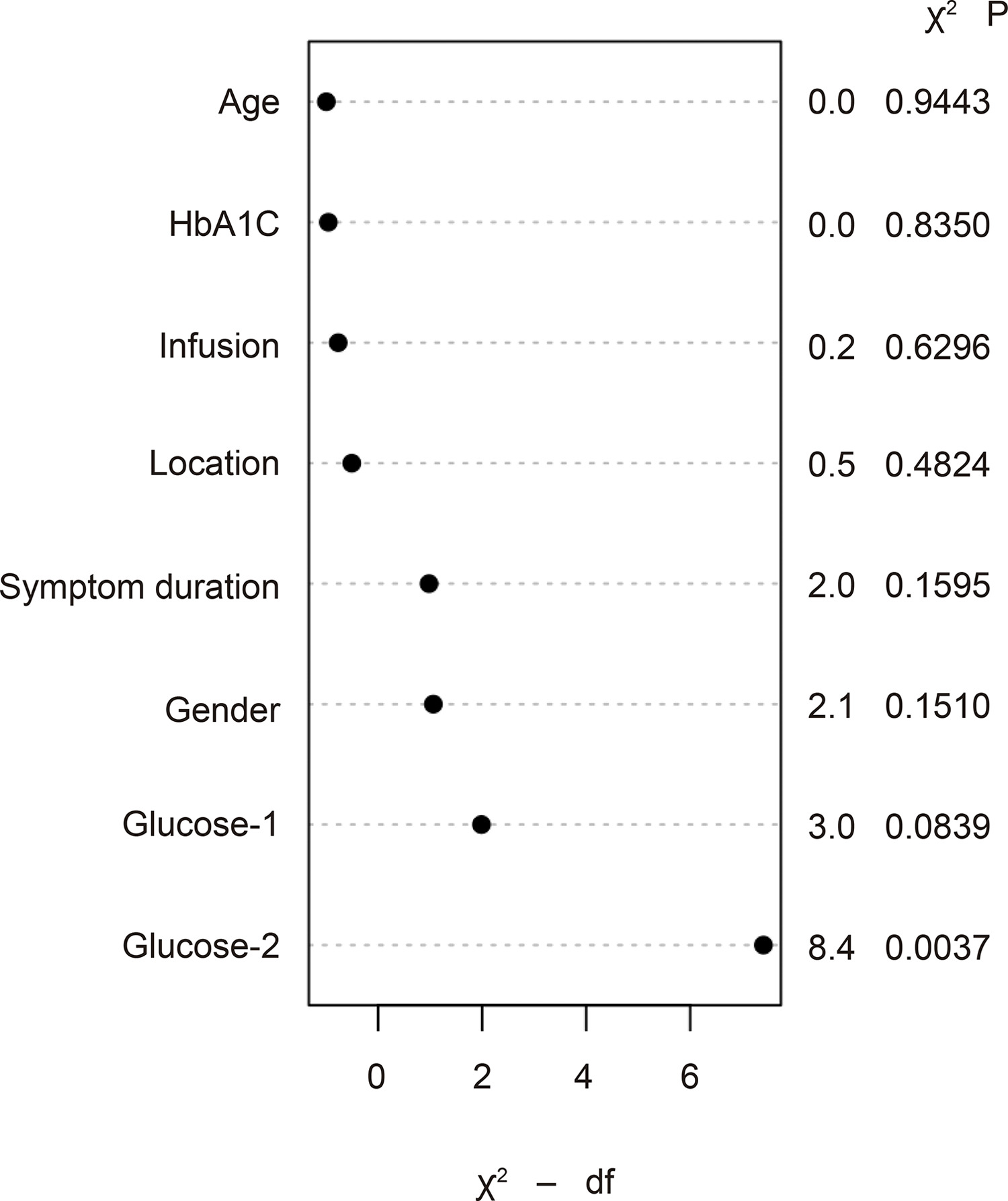
The study population consisted of 56 out of 134 consecutive patients hospitalized with STEMI in a coronary care unit. Twenty-eight patients were treated with continuous insulin infusion during the first 24 hours of hospitalization, while the other 28 patients were treated with subcutaneous insulin on an as-needed basis. The final infarct size was evaluated with single-photon emission computed tomography (SPECT) in all patients on days 4 to 10 of hospitalization. The groups were compared and then predictors of final infarct size were analyzed with univariate and multivariate linear regression analysis. A p-value < 0.05 was considered statistically significant.

Results

The mean glucose level in the first 24 hours was 130 ± 20 mg/dL in the infusion group and 152 ± 31 mg/dL in the standard care group (p = 0.002), while the mean final infarct size was 20 ± 12% and 27 ± 15% (p = 0.06), respectively. The multivariate linear regression analysis demonstrated that the mean 24-hour glucose level was an independent predictor of the final infarct size (beta 0.29, p = 0.026).

Conclusion

Tight glucose control with continuous insulin infusion was not associated with smaller infarct size when compared to standard care in STEMI patients. (Int J Cardiovasc Sci. 2020; [online].ahead print, PP.0-0)

  • Hospitalization
  • Hyperglycemia
  • Insulin
  • Myocardial Perfusion Imaging
  • ST-Elevation Myocardial Infarction/mortality/mortality
  • Tomography, Emission Computed,Single Photon/methods
Read Full Article
Creative Commons Attribution (CC BY) Creative Commons license
07/08/2020 DOI: 10.36660/ijcs.20200020 Views 1
IJCS
Original Article

Association between Insulin use and Infective Endocarditis: An Observational Study

Renato Lott Bezerra et al. Thales Figueiredo de Carvalho Ricardo dos Santos Batista Yago Machado da Silva … Bruno Fiuza Campos João Henrique Máximo de Castro Matheus de Carvalho Alves Pedro Ivo Palhares Monteiro Raimundo Matos Bezerra Filho Eduardo Luis Guimarães Machado

Abstract

Background:

The association between Diabetes Mellitus (DM) and Infective Endocarditis (IE) is controversial in the literature, since many controversial results have been published. However, when evaluating specifically the evidence on IE and individuals with DM using insulin, we found only two observational studies that considered this variable, with discordant results regarding the prognosis and prevalence of Staphylococcus sp in insulin users compared to non-users. Despite the lack of evidence, in clinical practice the insulin use could be interpreted as minor criteria “injection drug use”, using the modified Duke criteria for IE diagnosis.

Objectives:

To compare the microbiological and valvar profile, as well as the outcome of non-diabetic and diabetic patients with IE who were insulin users or not.

Methods:

This was an observational, analytical and retrospective study of patients diagnosed with IE between 2003 and 2015 in three tertiary care centers. A total of 211 patients were included, of which 17 were diabetics and 9 were insulin users. Patients were compared using the Shapiro-Wilk normality test and Fisher’s exact test, with a significance level of 5%.

Results:

The mortality from IE in diabetic individuals was higher than that of non-diabetic patients, but with no statistical significance (35.29% vs. 21.1%; p = 0.221), even when the groups were divided into insulin-user diabetic, non-insulin user diabetic and non-diabetic patients (33.3% vs. 37.5% vs. 21.1%, p = 0.229). There was a difference regarding the prevalence of IE caused by S. aureus (57.1% vs. 14.3% vs. 17.4%, p = 0.029) and the involvement of the tricuspid valve (33.3% vs. 0.00% vs. 10.0%, p = 0.034) among insulin users.

Conclusion:

In our sample, insulin use or the presence of DM did not mean higher in-hospital mortality from IE. It is not possible to generalize the microbiological and valvar findings due to the lack of studies evaluating insulin users in IE; however, particularities have been previously reported and may indicate a different behavior of IE in these patients. New studies considering the insulin use variable are required to elucidate the association between DM and IE.

  • Diabetes Mellitus
  • Endocarditis, bacterial
  • Heart Valve Diseases
  • Infections
  • Insulin
  • Inyeccion
Read Full Article
Creative Commons Attribution (CC BY) Creative Commons license
08/08/2019 DOI: 10.5935/2359-4802.20190049 Views 1
Graph 1
ABC
Original Article

Comparison of Postprandial Lipemia between Women who are on Oral Contraceptive Methods and Those who are not

Jefferson Petto et al. Leila Monique Reis Vasques Renata Leão Pinheiro Beatriz de Almeida Giesta … Alan Carlos Nery dos Santos Mansueto Gomes Neto Ana Marice Teixeira Ladeia

Background:

Postprandial Lipemia (PPL) is a physiological process that reflects the ability of the body to metabolize lipids. Even though the influence of oral contraceptives (OC) on PPL is not known, it is a known fact that their use increases fasting lipid values.

Objective:

To compare the PPL between women who are on OC and those who are not.

Methods:

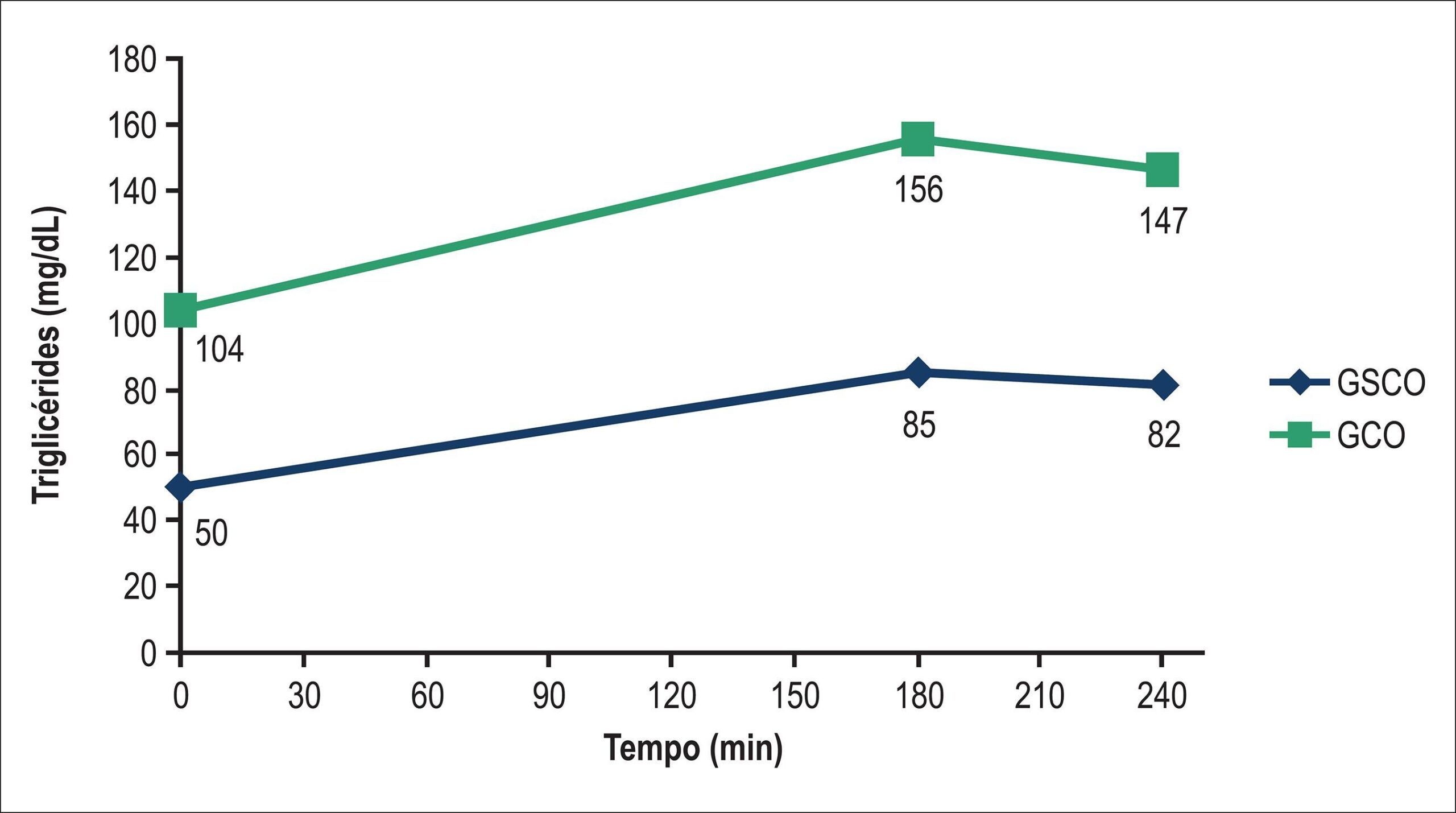
A prospective analytical study which assessed eutrophic women, aged between 18 and 28 years old, who were irregularly active and with fasting triglycerides ≤150 mg/dL. They were divided into two groups: oral contraceptive group (COG) and non-oral contraceptive group (NCOG). Volunteers were submitted to the PPL test, in which blood samples were collected in time 0 (12-hour fasting) and after the intake of lipids in times 180 and 240 minutes. In order to compare the triglyceride deltas, which reflect PPL, the two-tailed Mann-Whitney test was used for independent samples between fasting collections and 180 minutes (Δ1) and between fasting and 240 minutes (Δ2).

Results:

Forty women were assessed and equally divided between groups. In the fasting lipid profile, it was observed that HDL did not present significant differences and that triglycerides in COG were twice as high in comparison to NCOG. Medians of Δ1 and Δ2 presented significant differences in both comparisons (p ≤0.05).

Conclusion:

The results point out that women who are irregularly active and use OC present more PPL in relation to those who do not use OC, which suggests that in this population, its chronic use increases the risk of heart conditions.

  • Cholesterol
  • Contraceptives, Oral
  • Insulin
  • Metabolism
  • Triglycerides
  • Women
Read Full Article
Creative Commons Attribution (CC BY) Creative Commons license
13/06/2014 DOI: 10.5935/abc.20140080 Views 1
Lipoprotein (a) is associated with basal insulin levels in patients with type 2 Diabetes Mellitus
ABC
Artigo Original

Lipoprotein (a) is associated with basal insulin levels in patients with type 2 Diabetes Mellitus

Syed Shahid Habib et al. Muhammad Aslam Syed Fayaz Ahmad Shah Abdul Khaliq Naveed

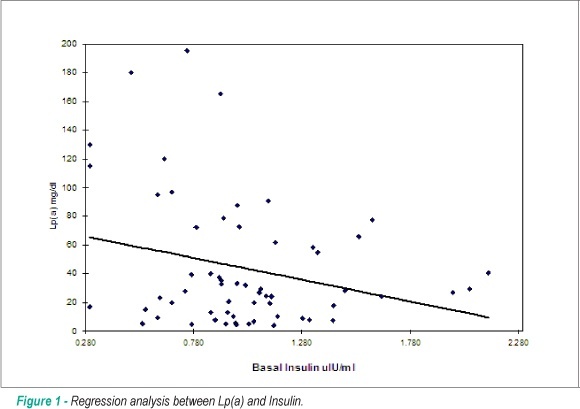
BACKGROUND: It has not been clearly established whether insulin resistance/deficiency leads directly to atherogenesis or through its association with other risk factors such as Lipoprotein(a) [Lp(a)]. OBJECTIVE: This project aimed at studying the association between basal Insulin, Lipids and Lipoprotein(a) levels in Patients with Type 2 Diabetes Mellitus. METHODS: Fasting blood samples were analyzed for Insulin, Lipoprotein(a), total cholesterol (TC), triglycerides (TG), low density lipoprotein cholesterol (LDL-C), high density lipoprotein cholesterol (HDL-C), glucose and glycosylated hemoglobin (HbA1c) levels in 60 patients with type 2 Diabetes Mellitus (DM) and 28 healthy subjects. We divided patients into two groups based on basal insulin levels: > 10 µIU/ml and < 10 µIU/ml. RESULTS: Insulin levels were higher in diabetic versus control individuals [p < 0.05]. TC (p< 0.01), LDL-C (p< 0.05), TC/HDL ratio (p< 0.01) and TG levels (p< 0.05) were higher and HDL- C levels were significantly lower (p 10 µIU/ml when compared to those with basal insulin < 10 µIU/ml (p < 0.05). Regression analysis revealed a significant relationship of Lp(a) with insulin levels (r = 0.262, p < 0.05) and Insulin Glucose ratio (r = 0.257, p < 0.05). CONCLUSION: Lp(a) levels correlate inversely with insulin levels in Type 2 diabetic patients. Lp(a) may be one of the cardiovascular risk factor in type 2 diabetic patients with longer duration of DM.

  • Diabetes Mellitus
  • Dyslipidemias
  • Insulin
  • lipoprotein (a)
Read Full Article
Creative Commons Attribution (CC BY) Creative Commons license
13/10/2009 DOI: 10.1590/S0066-782X2009000700006
Lipid transfer to HDL in type-2 diabetic patients: associations with microalbuminuria, statin, and insulin
ABC
Artigo Original

Lipid transfer to HDL in type-2 diabetic patients: associations with microalbuminuria, statin, and insulin

Gilson Soares Feitosa-Filho et al. Talita de Mattos Seydell Alina Coutinho Rodrigues Feitosa Raul Cavalcante Maranhão José Antônio Franchini Ramires

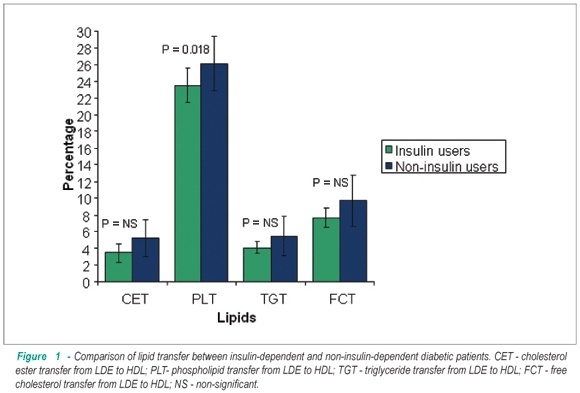
BACKGROUND: Type-2 diabetes mellitus (T2DM) is an isolated risk factor for coronary artery disease, especially when associated with microalbuminuria (MA). Structural and functional changes in lipoproteins have not yet been fully elucidated in this context. OBJECTIVE: To assess lipid transfer (T) to HDL in type-2 diabetic patients and its association with microalbuminuria and treatment with statins or insulin. METHODS: Thirty-three patients with type-2 diabetes mellitus and 34 age-matched control subjects were studied. A synthetic cholesterol-rich nanoemulsion radiolabeled with ³H- triglycerides (TG) and 14C-free cholesterol (FC) or ³H- cholesteryl ester (CE) and 14C-phospholipids (PL) was incubated with plasma. Both the nanoemulsion and lipoproteins were precipitated, except for HDL, which was counted for radioactivity. RESULTS: PLT (%) was higher in the T2DM group than in the control group (25.2 ± 3.2 and 19.7 ± 3.2 respectively; p < 0.001), as was free cholesterol (% FC): 9.1 ± 2.7 and 6.3 ± 1.5 respectively; p < 0.001. The diagnosis of microalbuminuria (MA) was not associated with changes in lipid transfers. Insulin therapy was associated with lower PLT rates: 23.5 ± 2.1 versus 26.1 ± 3.3; p = 0.018. Statin therapy, in turn, was associated with a drop in all lipid transfers – CET 3.5 ± 0.9; PLT: 23.8 ± 2.0; TGT: 3.9 ± 0.8; FCT: 7.4 ± 1.3 – as compared to the group that was not on statin therapy (CET: 5.9 ± 2.4; PLT: 26.9 ± 3.6; TGT: 6.4 ± 2.2; FCT: 11.1 ± 2.6). CONCLUSION:Type-2 diabetes mellitus increased lipid transfer to HDL particles, whereas statin therapy decreased all lipid transfers. The presence of MA was not associated with changes in lipid transfer.

  • albuminuria
  • Cholesterol, HDL
  • Diabetes Mellitus, Type 2
  • diabetic nephropathies
  • Hydroxymethylglutaryl-CoA Reductase Inhibitors
  • Insulin
  • Lipoproteins
Read Full Article
Creative Commons Attribution (CC BY) Creative Commons license
06/04/2009 DOI: 10.1590/S0066-782X2009000200005

How to cite this article

EndNote RIS

Electronic Document Format (Vancouver)

Noya-Rabelo MM, Souza O. Echoes of the Past: The Intriguing Link between Chagas Disease and Insulin. Arquivos Brasileiros de Cardiologia 2025;122(5):e20250295.

Electronic Document Format (ABNT)

Noya-Rabelo, Marcia M.; Souza, Olga. Echoes of the Past: The Intriguing Link between Chagas Disease and Insulin. Arquivos Brasileiros de Cardiologia, v. 122, n. 5, e20250295, Jul. 2025.

Electronic Document Format (APA)

Noya-Rabelo, M. M., & Souza, O. (2025). Echoes of the Past: The Intriguing Link between Chagas Disease and Insulin. Arquivos Brasileiros de Cardiologia, 122(5), e20250295.

Electronic Document Format (ISO)

Noya-Rabelo, Marcia M. and Souza, Olga. Echoes of the Past: The Intriguing Link between Chagas Disease and Insulin. Arquivos Brasileiros de Cardiologia [online]. 2025, vol. 122, n. 5, [cited 2026-10-14], e20250295. Available from: <https://journals.cardiol.br/en/article/echoes-of-the-past-the-intriguing-link-between-chagas-disease-and-insulin/>. ISSN 0066-782X

EndNote RIS

Electronic Document Format (Vancouver)

Barbosa-Ferreira JM, Ortiz JV, Pessoa FG, Barbosa MGV, Guerra JAO, Couceiro KN, Silva MRH, et al. Decreased Insulin Levels in Patients with Acute Chagas Disease from Brazilian Amazon treated with Benznidazole. Arquivos Brasileiros de Cardiologia 2025;122(5):e20240621.

Electronic Document Format (ABNT)

Barbosa-Ferreira, João Marcos; Ortiz, Jessica Vanina; Pessoa, Fernanda Gallinaro; Barbosa, Maria das Graças Vale; Guerra, Jorge Augusto de Oliveira; Couceiro, Kátia do Nascimento; Silva, Mônica Regina Hosannah e; Monteiro, Matheus Martins; Fonseca, Keila Cardoso Barbosa; Ramires, Felix Alvarez; Ianni, Barbara Maria; Mady, Charles; Fernandes, Fábio. Decreased Insulin Levels in Patients with Acute Chagas Disease from Brazilian Amazon treated with Benznidazole. Arquivos Brasileiros de Cardiologia, v. 122, n. 5, e20240621, May. 2025.

Electronic Document Format (APA)

Barbosa-Ferreira, J. M., Ortiz, J. V., Pessoa, F. G., Barbosa, M. G. V., Guerra, J. A. O., Couceiro, K. N., Silva, M. R. H. , Monteiro, M. M., Fonseca, K. C. B., Ramires, F. A., Ianni, B. M., Mady, C., & Fernandes, F. (2025). Decreased Insulin Levels in Patients with Acute Chagas Disease from Brazilian Amazon treated with Benznidazole. Arquivos Brasileiros de Cardiologia, 122(5), e20240621.

Electronic Document Format (ISO)

Barbosa-Ferreira, João Marcos and Ortiz, Jessica Vanina and Pessoa, Fernanda Gallinaro and Barbosa, Maria das Graças Vale and Guerra, Jorge Augusto de Oliveira and Couceiro, Kátia do Nascimento and Silva, Mônica Regina Hosannah e and Monteiro, Matheus Martins and Fonseca, Keila Cardoso Barbosa and Ramires, Felix Alvarez and Ianni, Barbara Maria and Mady, Charles and Fernandes, Fábio. Decreased Insulin Levels in Patients with Acute Chagas Disease from Brazilian Amazon treated with Benznidazole. Arquivos Brasileiros de Cardiologia [online]. 2025, vol. 122, n. 5, [cited 2026-10-14], e20240621. Available from: <https://journals.cardiol.br/en/article/decreased-insulin-levels-in-patients-with-acute-chagas-disease-from-brazilian-amazon-treated-with-benznidazole/>. ISSN 0066-782X

EndNote RIS

Electronic Document Format (Vancouver)

Dall’Orto FTC, Arantes FBB, Furtado RHM, Silva PGMB. Integrating Insulin Resistance and Coronary Artery Disease Severity: Will Triglyceride-Glucose Index Be the Easiest Way?. International Journal of Cardiovascular Sciences 2025;38:e20240215.

Electronic Document Format (ABNT)

Dall’Orto, Frederico Toledo Campo; Arantes, Flávia Bittar Brito; Furtado, Remo H. M.; Silva, Pedro G. M. de Barros e. Integrating Insulin Resistance and Coronary Artery Disease Severity: Will Triglyceride-Glucose Index Be the Easiest Way?. International Journal of Cardiovascular Sciences, v. 38, e20240215, Apr. 2025.

Electronic Document Format (APA)

Dall’Orto, F. T. C., Arantes, F. B. B., Furtado, R. H. M., & Silva, P. G. M. B. (2025). Integrating Insulin Resistance and Coronary Artery Disease Severity: Will Triglyceride-Glucose Index Be the Easiest Way?. International Journal of Cardiovascular Sciences, 38, e20240215.

Electronic Document Format (ISO)

Dall’Orto, Frederico Toledo Campo and Arantes, Flávia Bittar Brito and Furtado, Remo H. M. and Silva, Pedro G. M. de Barros e. Integrating Insulin Resistance and Coronary Artery Disease Severity: Will Triglyceride-Glucose Index Be the Easiest Way?. International Journal of Cardiovascular Sciences [online]. 2025, vol. 38, [cited 2026-10-14], e20240215. Available from: <https://journals.cardiol.br/en/article/integrating-insulin-resistance-and-coronary-artery-disease-severity-will-triglyceride-glucose-index-be-the-easiest-way/>. ISSN 2359-4802

EndNote RIS

Electronic Document Format (Vancouver)

Gulsen K, Ayca B, Baskurt M, Okcun B, Ersanli MK. Does Tight Glucose Control During the First 24 hours of Hospitalization Reduce Scintigraphic Infarct Size in STEMI Patients?. International Journal of Cardiovascular Sciences 2020;33(5):497-505.

Electronic Document Format (ABNT)

Gulsen, Kamil; Ayca, Burak; Baskurt, Murat; Okcun, Baris; Ersanli, Murat Kazim. Does Tight Glucose Control During the First 24 hours of Hospitalization Reduce Scintigraphic Infarct Size in STEMI Patients?. International Journal of Cardiovascular Sciences, v. 33, n. 5, p. 497-505, Aug. 2020.

Electronic Document Format (APA)

Gulsen, K., Ayca, B., Baskurt, M., Okcun, B., & Ersanli, M. K. (2020). Does Tight Glucose Control During the First 24 hours of Hospitalization Reduce Scintigraphic Infarct Size in STEMI Patients?. International Journal of Cardiovascular Sciences, 33(5), 497-505.

Electronic Document Format (ISO)

Gulsen, Kamil and Ayca, Burak and Baskurt, Murat and Okcun, Baris and Ersanli, Murat Kazim. Does Tight Glucose Control During the First 24 hours of Hospitalization Reduce Scintigraphic Infarct Size in STEMI Patients?. International Journal of Cardiovascular Sciences [online]. 2020, vol. 33, n. 5, [cited 2026-10-14], pp. 497-505. Available from: <https://journals.cardiol.br/en/article/does-tight-glucose-control-during-the-first-24-hours-of-hospitalization-reduce-scintigraphic-infarct-size-in-stemi-patients/>. ISSN 2359-4802

EndNote RIS

Electronic Document Format (Vancouver)

Bezerra RL, Carvalho TF, Batista RS, Silva YM, Campos BF, Castro JHM, Alves MC, et al. Association between Insulin use and Infective Endocarditis: An Observational Study. International Journal of Cardiovascular Sciences 2019;33(1):14-21.

Electronic Document Format (ABNT)

Bezerra, Renato Lott; Carvalho, Thales Figueiredo de; Batista, Ricardo dos Santos; Silva, Yago Machado da; Campos, Bruno Fiuza; Castro, João Henrique Máximo de; Alves, Matheus de Carvalho; Monteiro, Pedro Ivo Palhares; Bezerra Filho, Raimundo Matos; Machado, Eduardo Luis Guimarães. Association between Insulin use and Infective Endocarditis: An Observational Study. International Journal of Cardiovascular Sciences, v. 33, n. 1, p. 14-21, Aug. 2019.

Electronic Document Format (APA)

Bezerra, R. L., Carvalho, T. F. , Batista, R. S., Silva, Y. M. , Campos, B. F., Castro, J. H. M. , Alves, M. C., Monteiro, P. I. P., Bezerra Filho, R. M., & Machado, E. L. G. (2019). Association between Insulin use and Infective Endocarditis: An Observational Study. International Journal of Cardiovascular Sciences, 33(1), 14-21.

Electronic Document Format (ISO)

Bezerra, Renato Lott and Carvalho, Thales Figueiredo de and Batista, Ricardo dos Santos and Silva, Yago Machado da and Campos, Bruno Fiuza and Castro, João Henrique Máximo de and Alves, Matheus de Carvalho and Monteiro, Pedro Ivo Palhares and Bezerra Filho, Raimundo Matos and Machado, Eduardo Luis Guimarães. Association between Insulin use and Infective Endocarditis: An Observational Study. International Journal of Cardiovascular Sciences [online]. 2019, vol. 33, n. 1, [cited 2026-10-14], pp. 14-21. Available from: <https://journals.cardiol.br/en/article/association-between-insulin-use-and-infective-endocarditis-an-observational-study/>. ISSN 2359-4802

EndNote RIS

Electronic Document Format (Vancouver)

Petto J, Vasques LMR, Pinheiro RL, Giesta BA, Santos ACN, Gomes Neto M, Ladeia AMT, et al. Comparison of Postprandial Lipemia between Women who are on Oral Contraceptive Methods and Those who are not. Arquivos Brasileiros de Cardiologia 2014;103(3):245-50.

Electronic Document Format (ABNT)

Petto, Jefferson; Vasques, Leila Monique Reis; Pinheiro, Renata Leão; Giesta, Beatriz de Almeida; Santos, Alan Carlos Nery dos; Gomes Neto, Mansueto; Ladeia, Ana Marice Teixeira. Comparison of Postprandial Lipemia between Women who are on Oral Contraceptive Methods and Those who are not. Arquivos Brasileiros de Cardiologia, v. 103, n. 3, p. 245-250, Jun. 2014.

Electronic Document Format (APA)

Petto, J., Vasques, L. M. R., Pinheiro, R. L., Giesta, B. A., Santos, A. C. N. , Gomes Neto, M., & Ladeia, A. M. T. (2014). Comparison of Postprandial Lipemia between Women who are on Oral Contraceptive Methods and Those who are not. Arquivos Brasileiros de Cardiologia, 103(3), 245-250.

Electronic Document Format (ISO)

Petto, Jefferson and Vasques, Leila Monique Reis and Pinheiro, Renata Leão and Giesta, Beatriz de Almeida and Santos, Alan Carlos Nery dos and Gomes Neto, Mansueto and Ladeia, Ana Marice Teixeira. Comparison of Postprandial Lipemia between Women who are on Oral Contraceptive Methods and Those who are not. Arquivos Brasileiros de Cardiologia [online]. 2014, vol. 103, n. 3, [cited 2026-10-14], pp. 245-250. Available from: <https://journals.cardiol.br/en/article/comparison-of-postprandial-lipemia-between-women-who-are-on-oral-contraceptive-methods-and-those-who-are-not/>. ISSN 0066-782X

EndNote RIS

Electronic Document Format (Vancouver)

Habib SS, Aslam M, Shah SFA, Naveed AK. Lipoprotein (a) is associated with basal insulin levels in patients with type 2 Diabetes Mellitus. Arquivos Brasileiros de Cardiologia 2009;93(1):28-33.

Electronic Document Format (ABNT)

Habib, Syed Shahid; Aslam, Muhammad; Shah, Syed Fayaz Ahmad; Naveed, Abdul Khaliq. Lipoprotein (a) is associated with basal insulin levels in patients with type 2 Diabetes Mellitus. Arquivos Brasileiros de Cardiologia, v. 93, n. 1, p. 28-33, Oct. 2009.

Electronic Document Format (APA)

Habib, S. S., Aslam, M., Shah, S. F. A., & Naveed, A. K. (2009). Lipoprotein (a) is associated with basal insulin levels in patients with type 2 Diabetes Mellitus. Arquivos Brasileiros de Cardiologia, 93(1), 28-33.

Electronic Document Format (ISO)

Habib, Syed Shahid and Aslam, Muhammad and Shah, Syed Fayaz Ahmad and Naveed, Abdul Khaliq. Lipoprotein (a) is associated with basal insulin levels in patients with type 2 Diabetes Mellitus. Arquivos Brasileiros de Cardiologia [online]. 2009, vol. 93, n. 1, [cited 2026-10-14], pp. 28-33. Available from: <https://journals.cardiol.br/en/article/lipoprotein-a-is-associated-with-basal-insulin-levels-in-patients-with-type-2-diabetes-mellitus/>. ISSN 0066-782X

EndNote RIS

Electronic Document Format (Vancouver)

Feitosa-Filho GS, Seydell TM, Feitosa ACR, Maranhão RC, Ramires JAF. Lipid transfer to HDL in type-2 diabetic patients: associations with microalbuminuria, statin, and insulin. Arquivos Brasileiros de Cardiologia 2009;92(2):100-6.

Electronic Document Format (ABNT)

Feitosa-Filho, Gilson Soares; Seydell, Talita de Mattos; Feitosa, Alina Coutinho Rodrigues; Maranhão, Raul Cavalcante; Ramires, José Antônio Franchini. Lipid transfer to HDL in type-2 diabetic patients: associations with microalbuminuria, statin, and insulin. Arquivos Brasileiros de Cardiologia, v. 92, n. 2, p. 100-106, Apr. 2009.

Electronic Document Format (APA)

Feitosa-Filho, G. S., Seydell, T. M., Feitosa, A. C. R., Maranhão, R. C., & Ramires, J. A. F. (2009). Lipid transfer to HDL in type-2 diabetic patients: associations with microalbuminuria, statin, and insulin. Arquivos Brasileiros de Cardiologia, 92(2), 100-106.

Electronic Document Format (ISO)

Feitosa-Filho, Gilson Soares and Seydell, Talita de Mattos and Feitosa, Alina Coutinho Rodrigues and Maranhão, Raul Cavalcante and Ramires, José Antônio Franchini. Lipid transfer to HDL in type-2 diabetic patients: associations with microalbuminuria, statin, and insulin. Arquivos Brasileiros de Cardiologia [online]. 2009, vol. 92, n. 2, [cited 2026-10-14], pp. 100-106. Available from: <https://journals.cardiol.br/en/article/lipid-transfer-to-hdl-in-type-2-diabetic-patients-associations-with-microalbuminuria-statin-and-insulin/>. ISSN 0066-782X

  • About ABC Family
  • Internal Regulation
  • Editorial Board
  • Brazilian Society of Cardiology (SBC)

Issues

SBC Guidelines

  • Videos
  • Podcasts
  • News